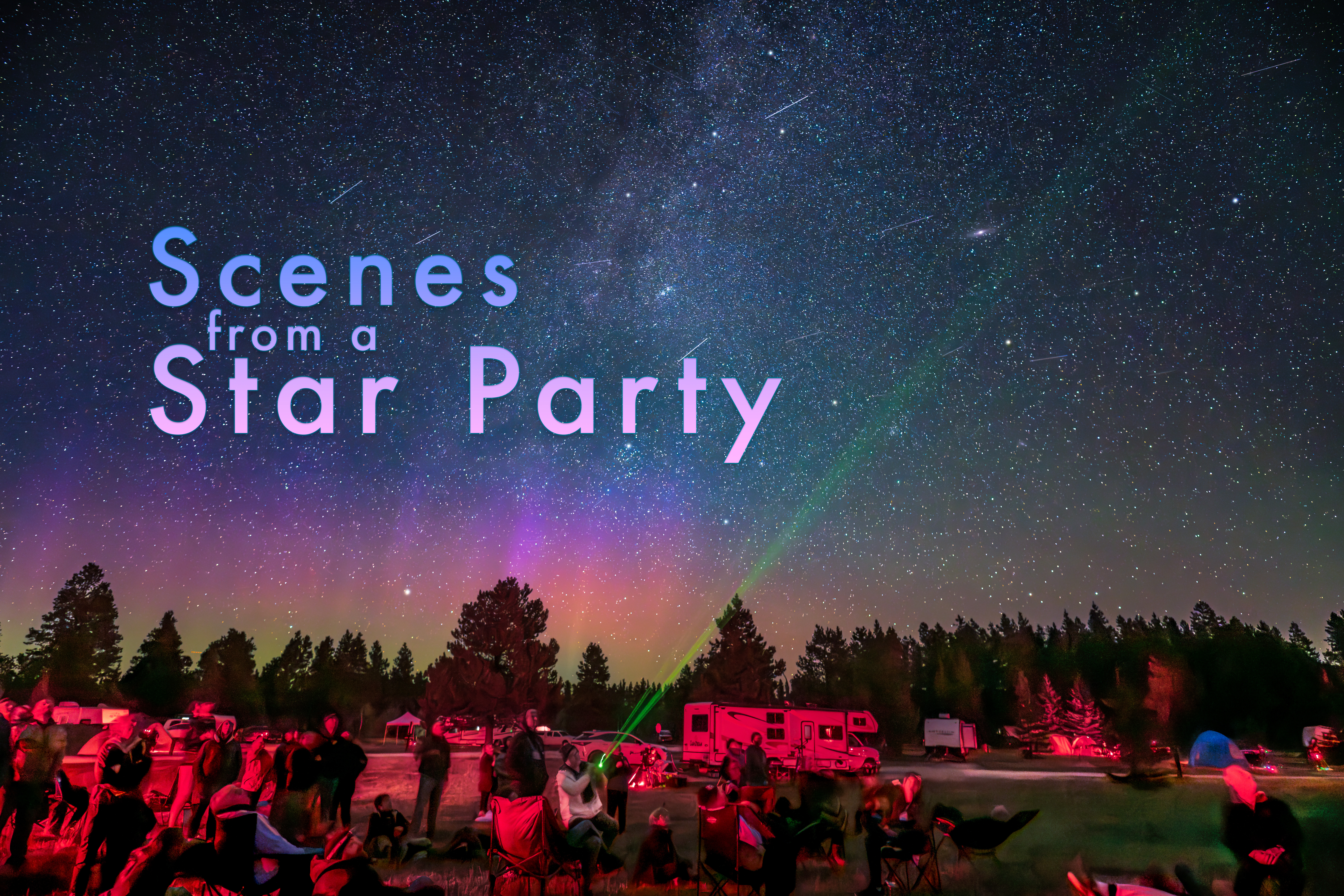
Amateur astronomers like nothing more than spending time under a dark night sky with a field of friends.
Star parties are a popular part of the hobby of amateur astronomy. They’re chances for stargazers to get under dark skies and meet up with others who love the night sky.
Each year I attend the biggest such event in my area in western Canada, the Saskatchewan Summer Star Party. It usually attracts about 320 sky lovers to the very dark skies of southwest Saskatchewan.
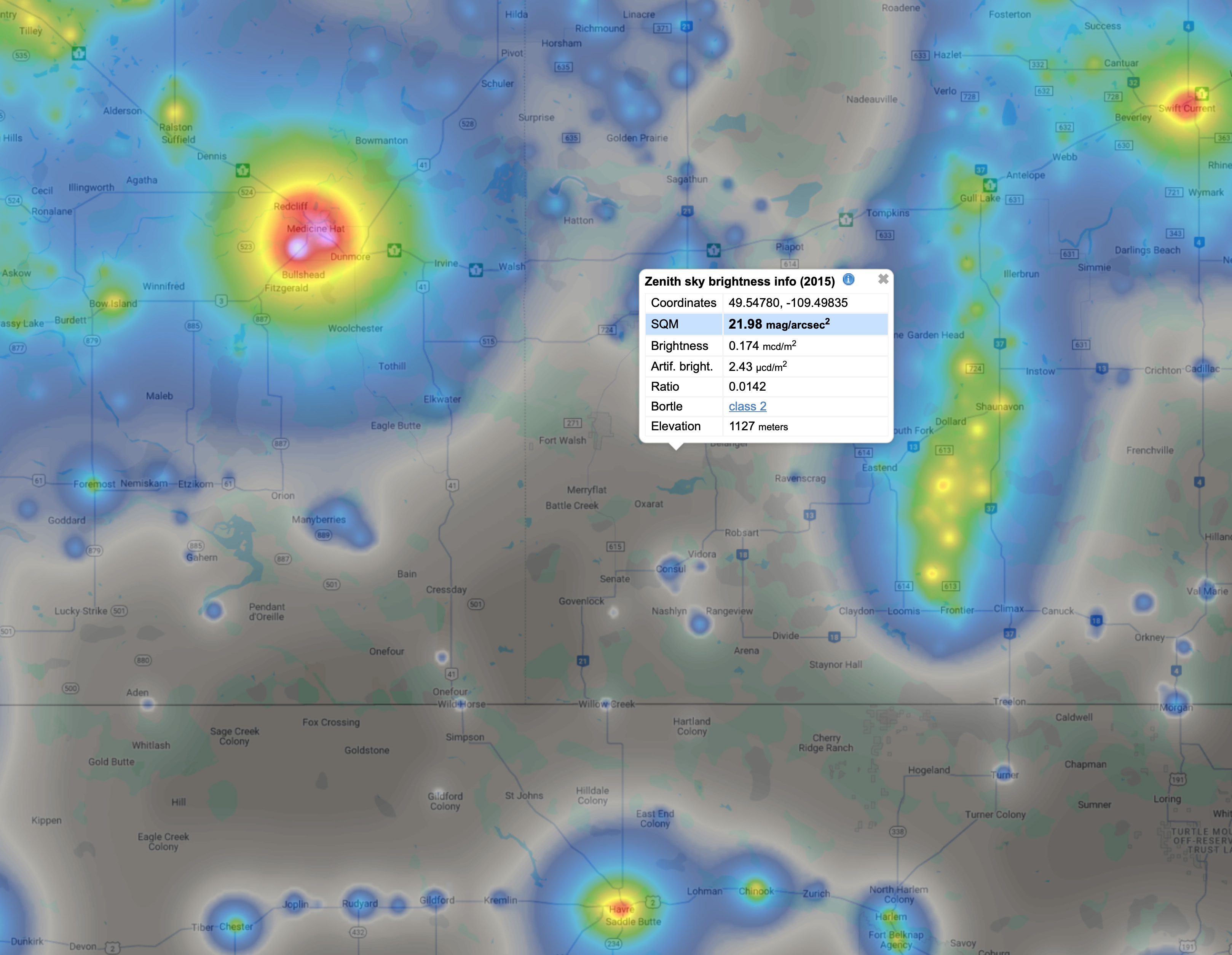
A light pollution map where grey = good!
The label marks the spot for the Party, in the Cypress Hills, and in the Cypress Hills Interprovincial Park, that straddles the border of Saskatchewan and Alberta. As per its name, the SSSP is held on the Saskatchewan side of the Park, in the Centre Block south of Maple Creek. (A complementary Southern Alberta Star Party is held on the Alberta side of the Cypress Hills, in September. I’ll be there!)
As the map shows, the Cypress Hills are far from any light pollution and offer “Bortle 2-class” skies — 1 being the darkest, and 9 being downtown Las Vegas!
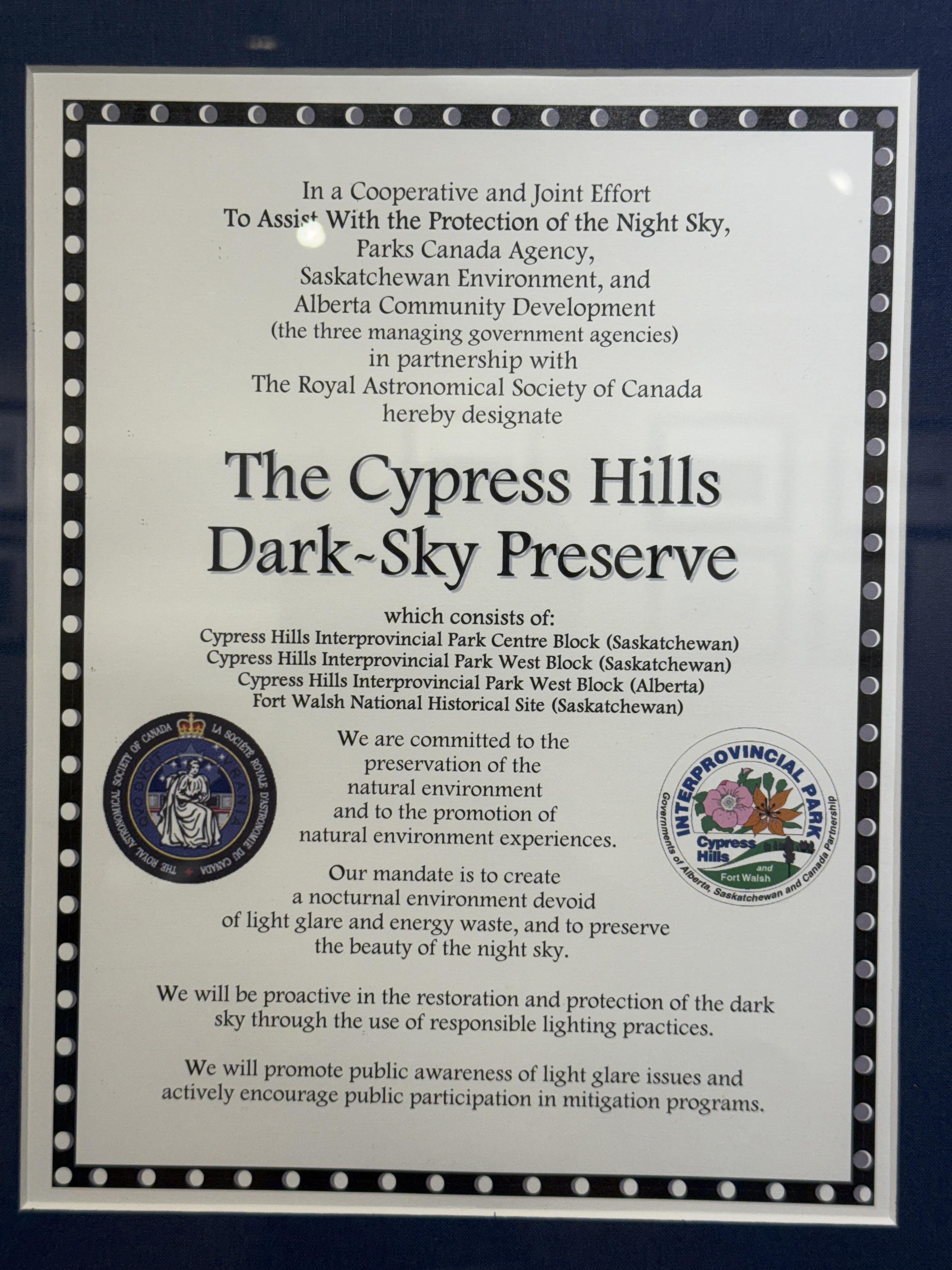
In fact, the Park is a Dark Sky Preserve, a designation awarded in 2004. Parks are increasingly aware of their role in not only conserving flora, fauna, and historical sites, but also the increasingly threatened night sky. As the saying goes, “Half the Park is after dark!”
The DSP Declaration
The Dark Sky Preserve designation, and efforts to refit what lighting is in the Park to “dark-sky friendly” fixtures, came about as a direct result of the Park, and Star Party, being the site of a comet discovery three years earlier.
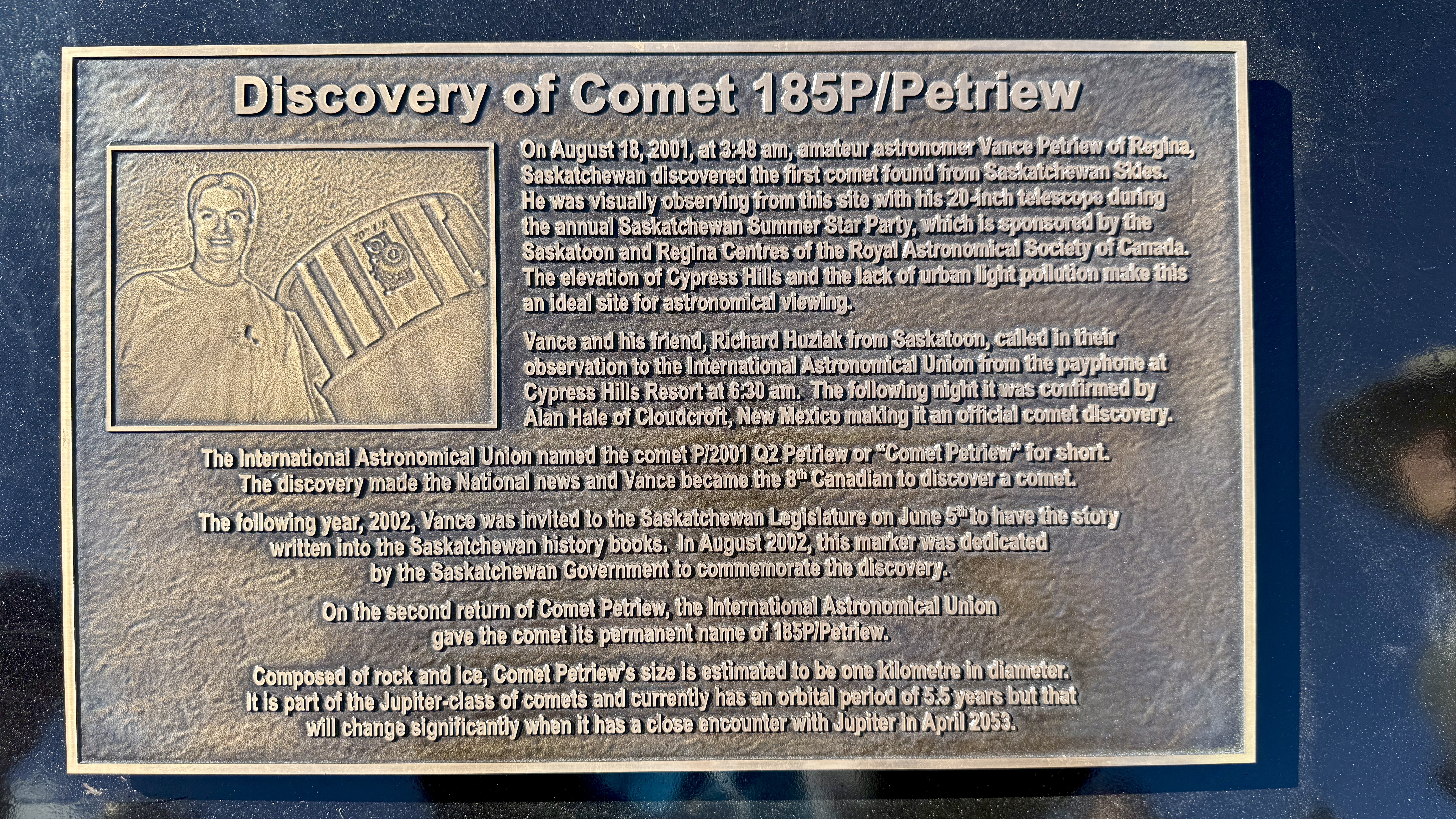
It was at the Star Party in August 2001 that Regina amateur astronomer Vance Petriew discovered a comet, an observing feat that merits a comet being named for the discoverer.
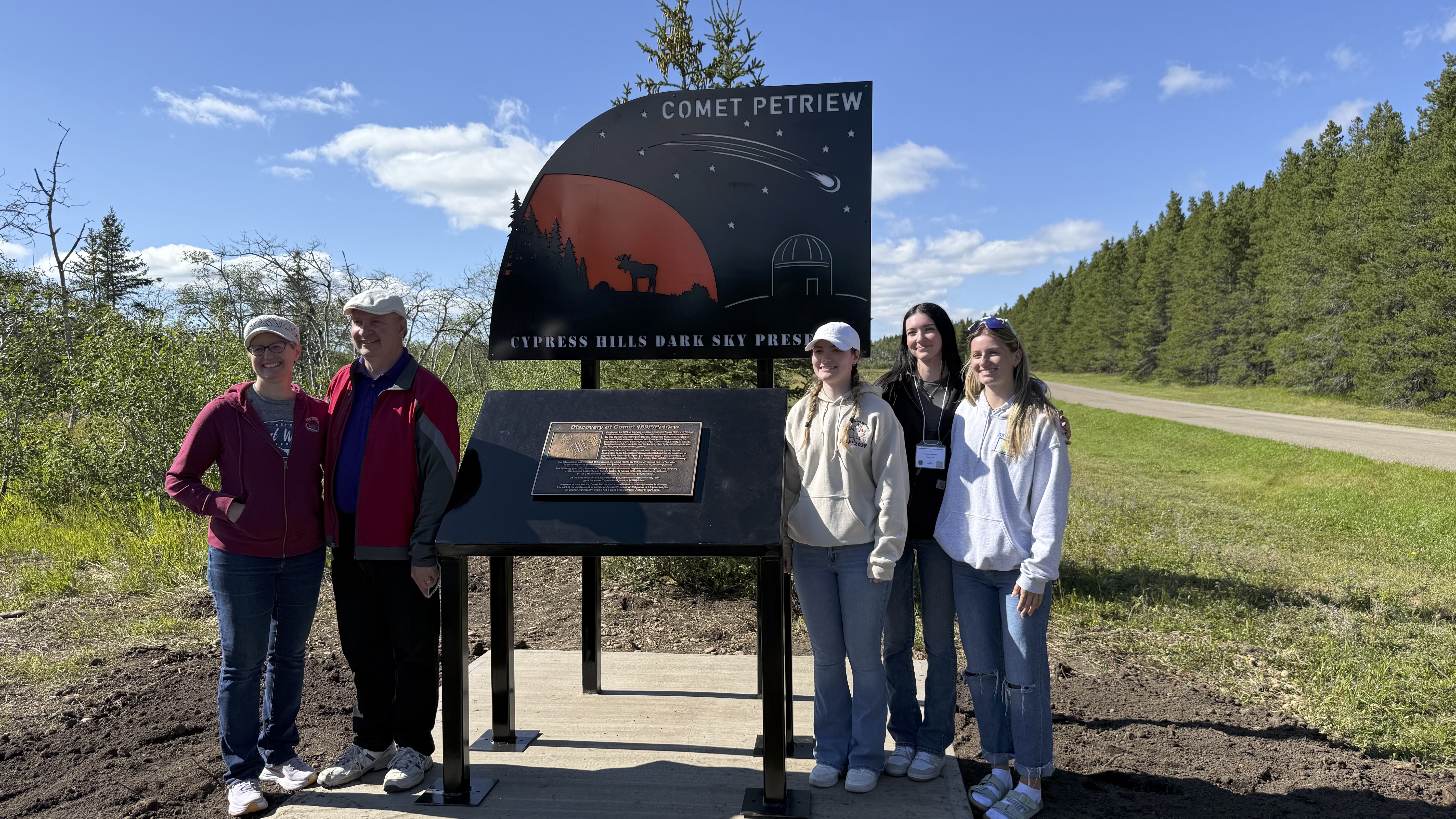
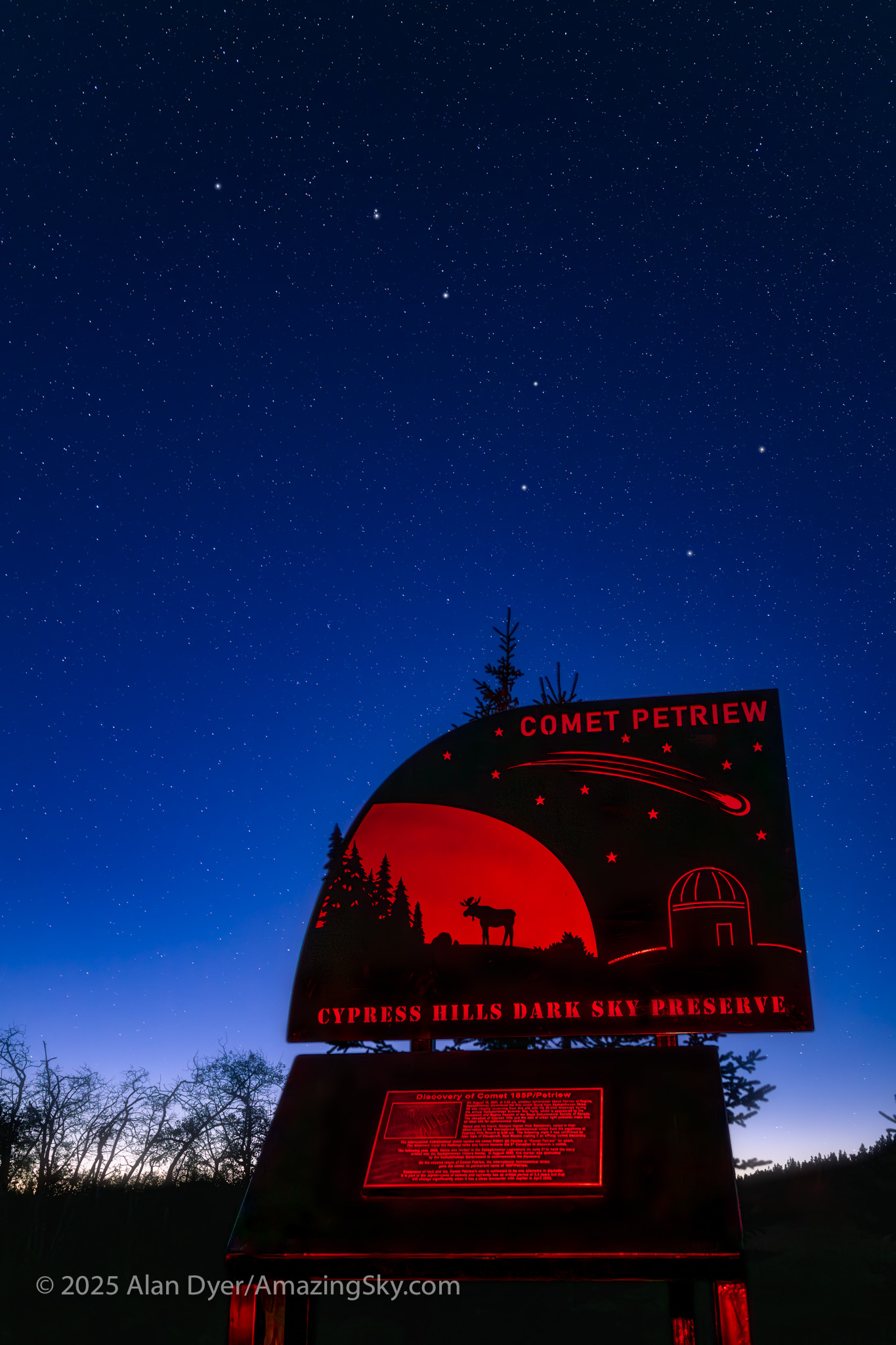
This year, a new sign and plaque were unveiled commemorating the discovery, replacing a cairn that had fallen into disrepair over 20 years. Here is the unveiling —
Park officials, fellow astronomers and Vance unveil the sign.
This was a fine event with all the star party folks in attendance, many of whom were there in 2001! — including the now adult daughters of the Petriew family.
Click on the images below to bring the photos up full screen.
The Petriew FamilyThe comet scope in 2025.Comet Petriew plaque
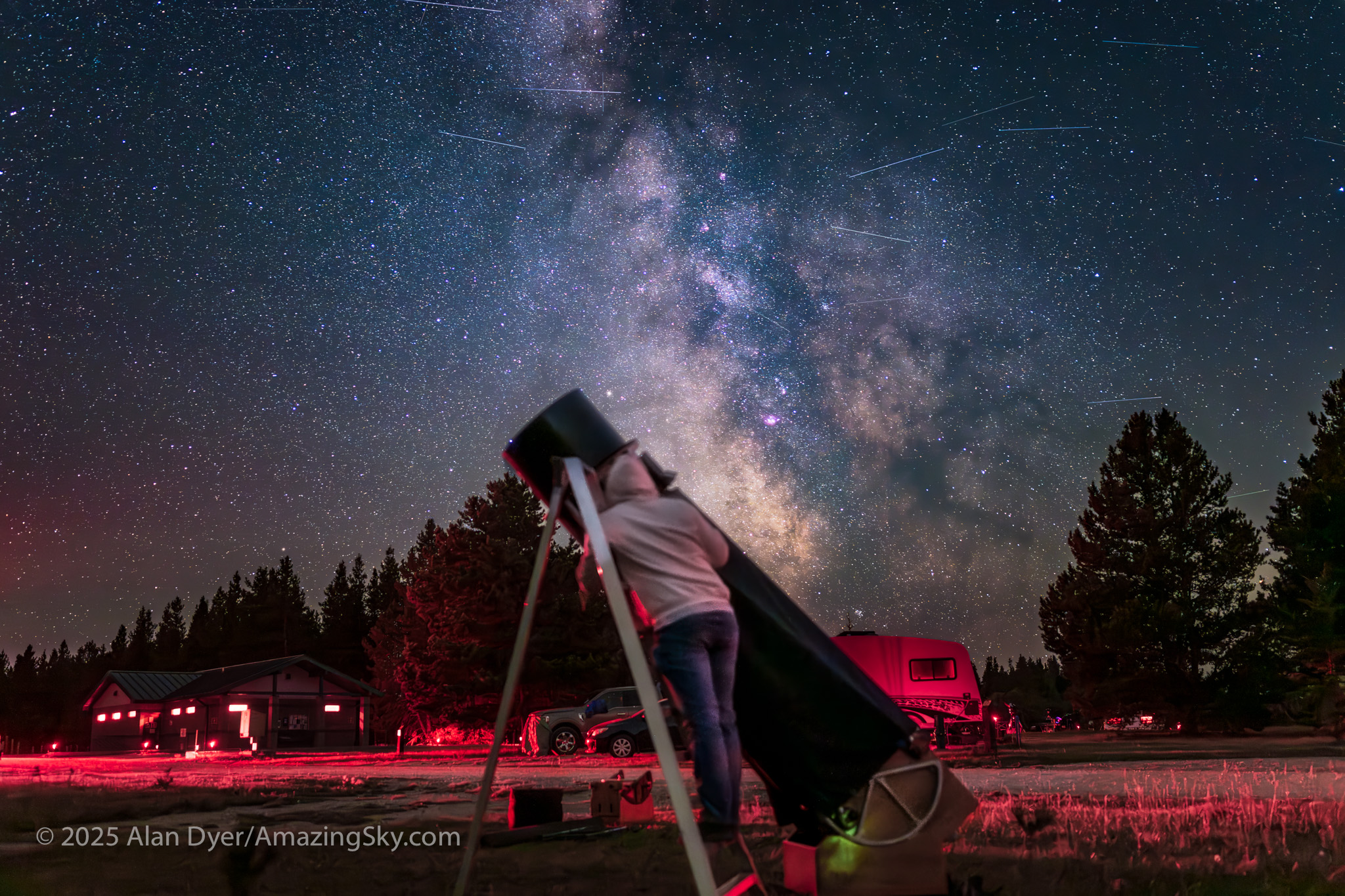
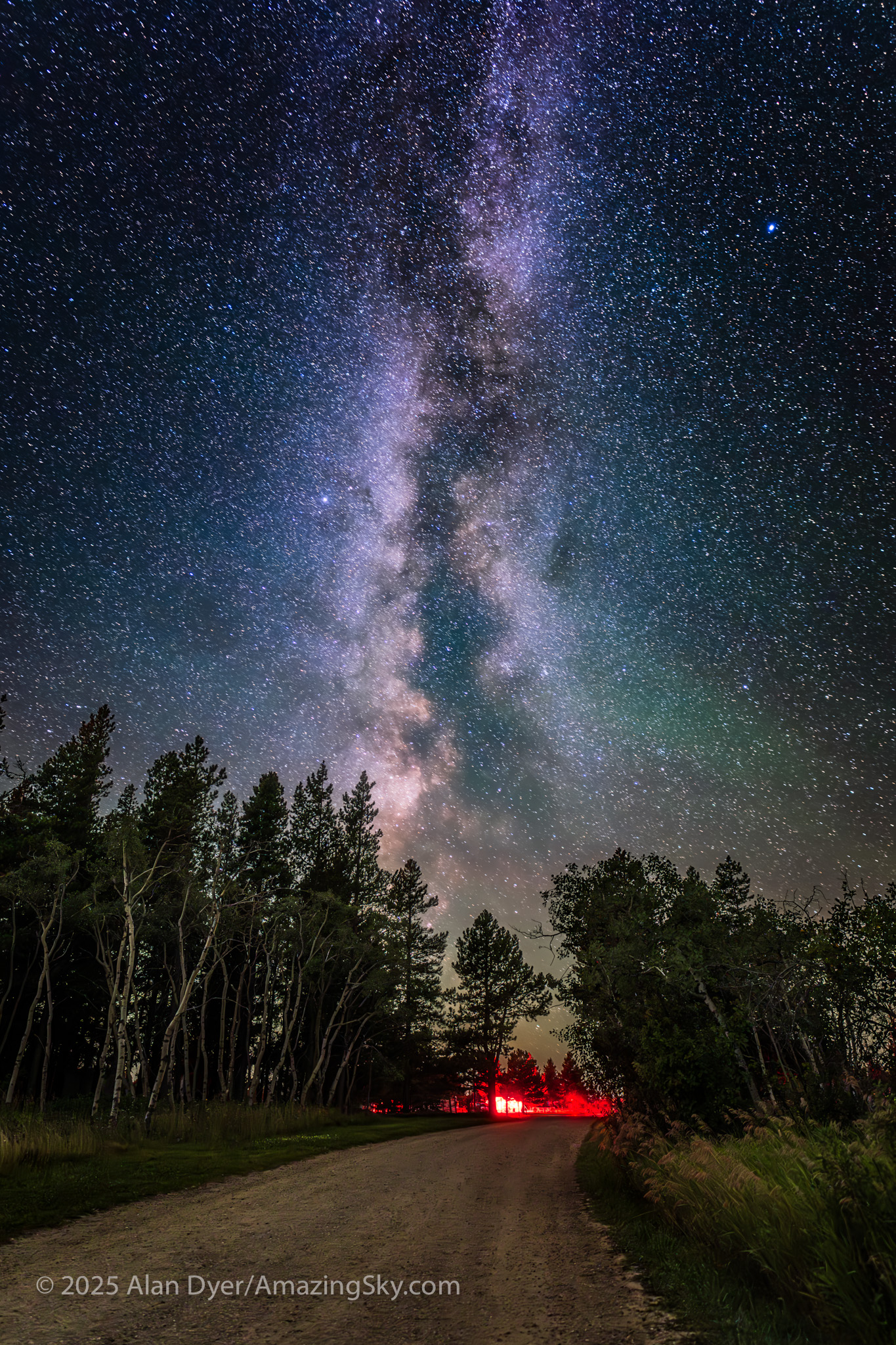
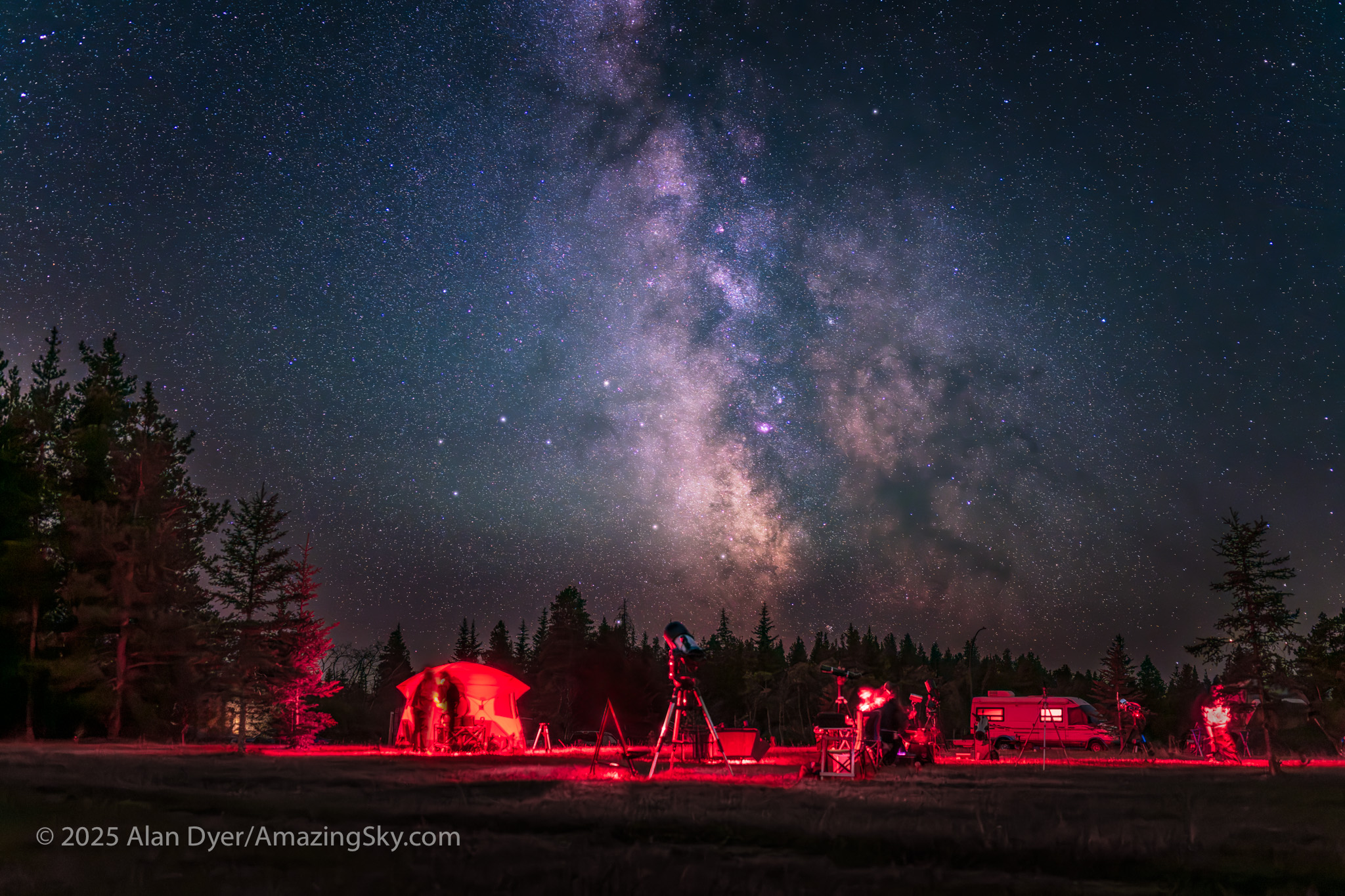
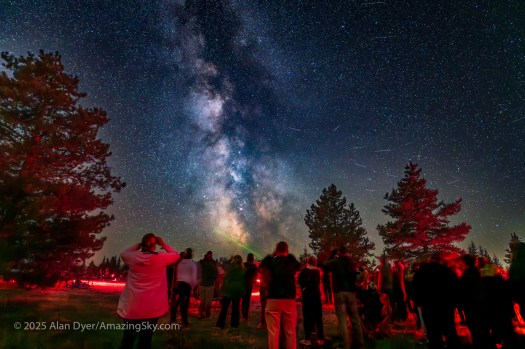
While that was a highlight of the week, the real show was the sky above. The Milky Way was on display in a sky clearer and darker than we had seen it for many years. No clouds, no smoke, and little dew and bugs! The Cypress Hills are a mecca for stargazing!
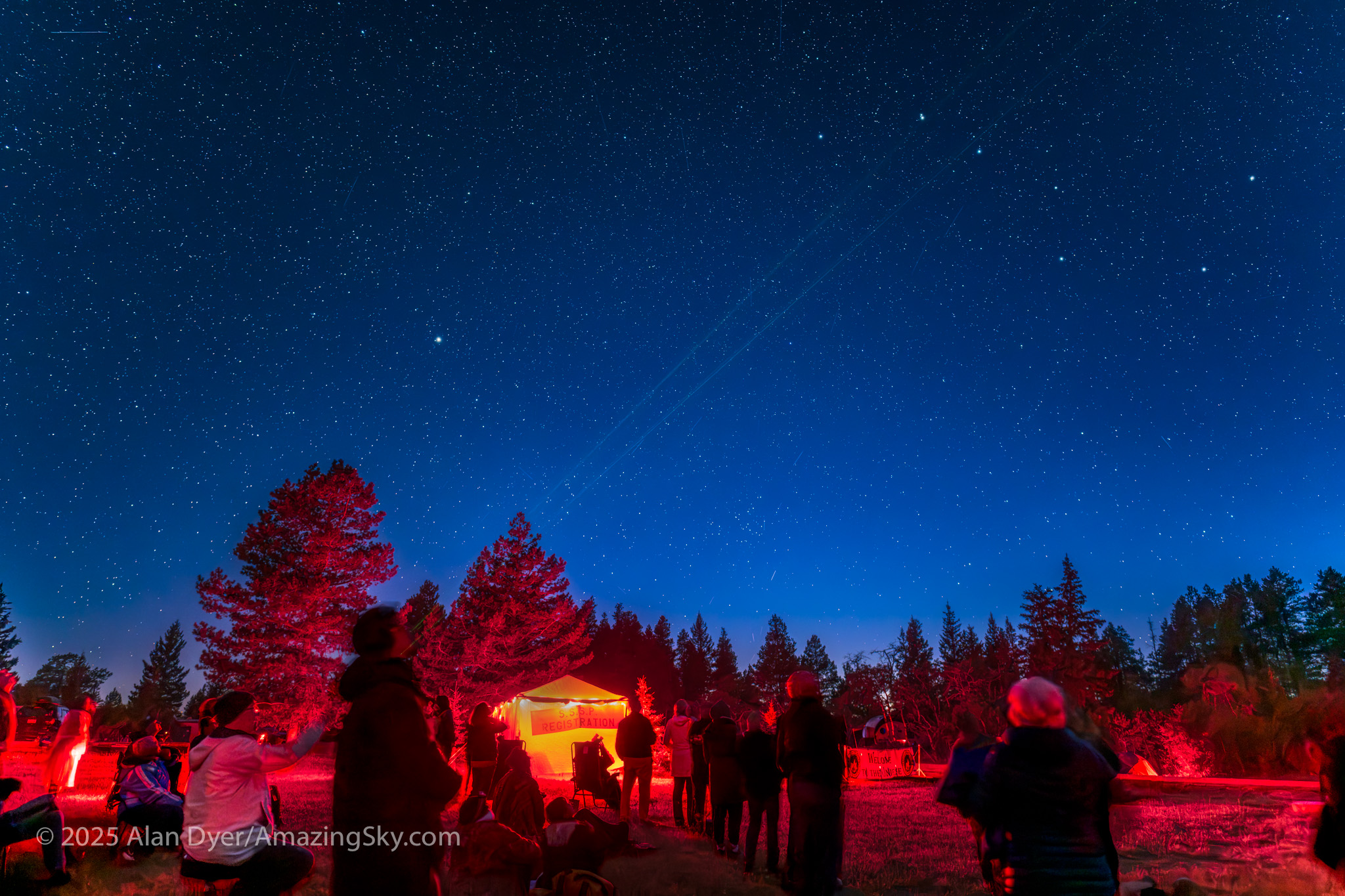
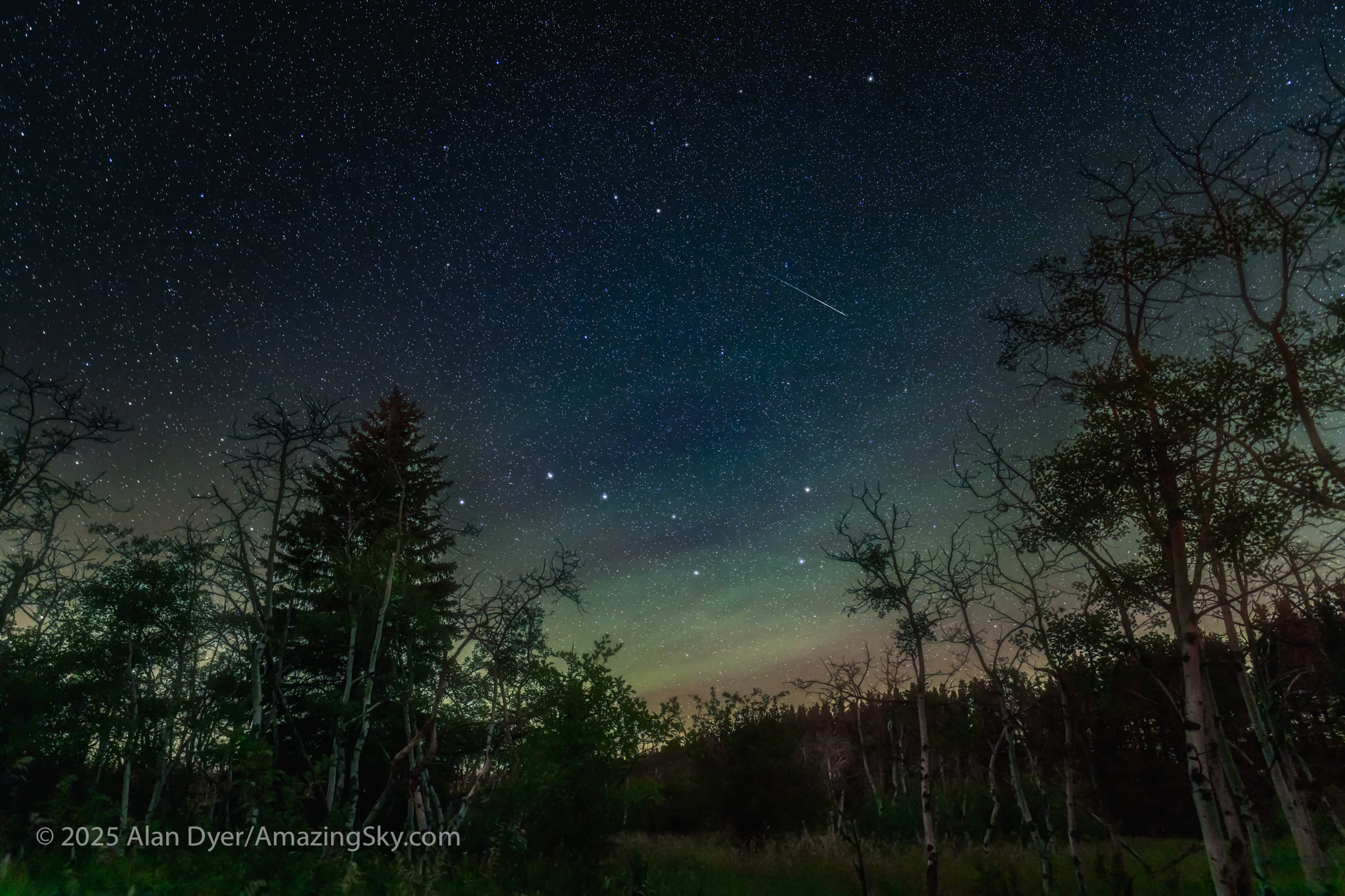
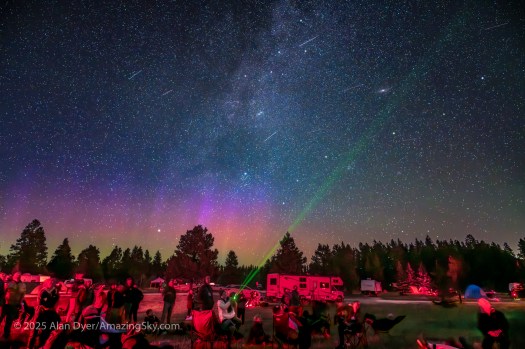
The road into the Meadows Campground, home to the Saskatchewan Summer Star Party. The SSSP is organized by the Royal Astronomical Society of Canada centres in Regina and Saskatoon. Telescopes and tents under the Milky Wa.yA sky tour in the early evening with blue twilight.The Big and Little Dippers in the Cypress Hills
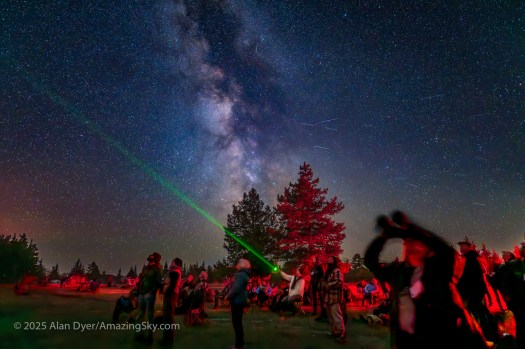
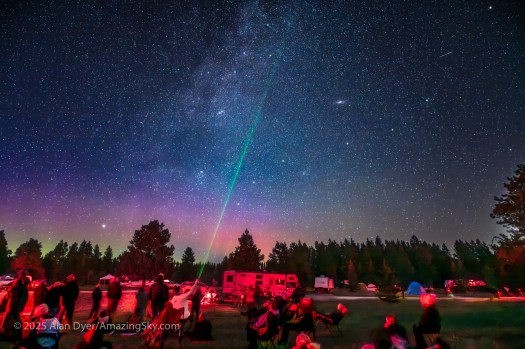
A popular part of this star party, as it is at many such events, is a laser-guided tour of naked-eye sights, where a guide points out the constellation patterns, and highlights objects that need nothing more than binoculars to see well.
In a slide show below, astronomer Ron Waldron from Saskatoon conducts the 2025 Friday night “star walk.” It’s BYOB — Bring Your Own Binoculars!
Laser touring the sky
Yes, there was an aurora
Look up! Look way up!
Peering into the Galactic Core
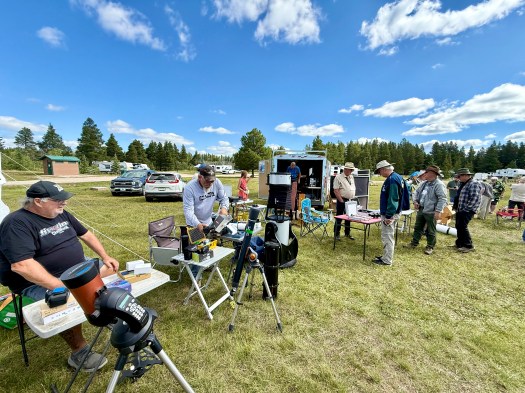
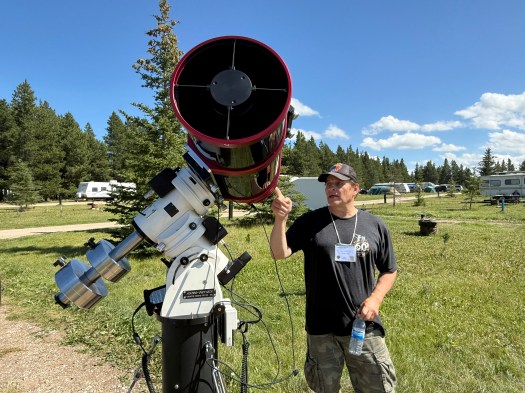
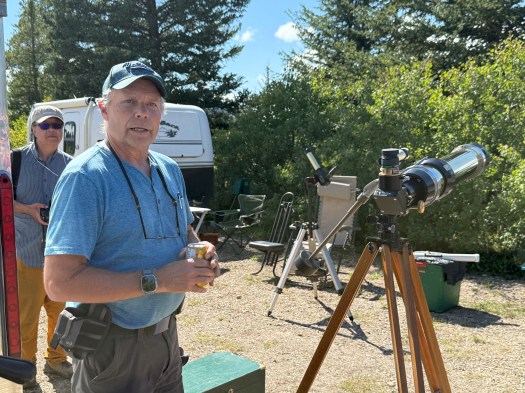
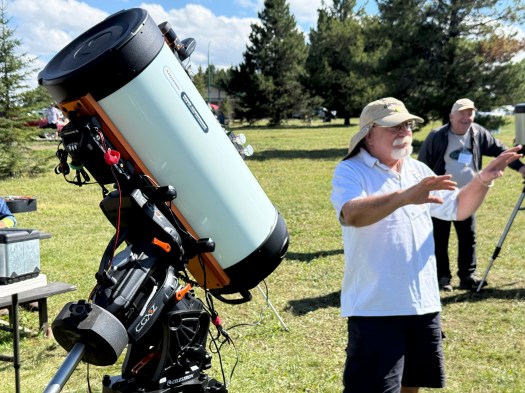
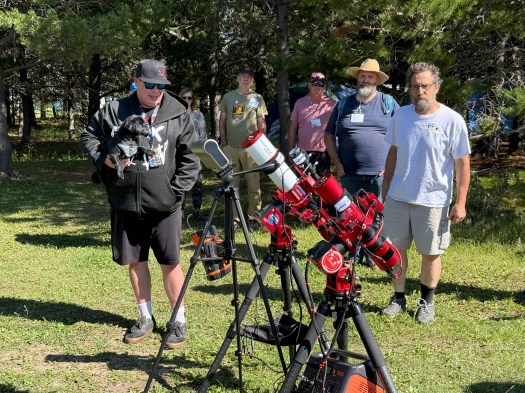
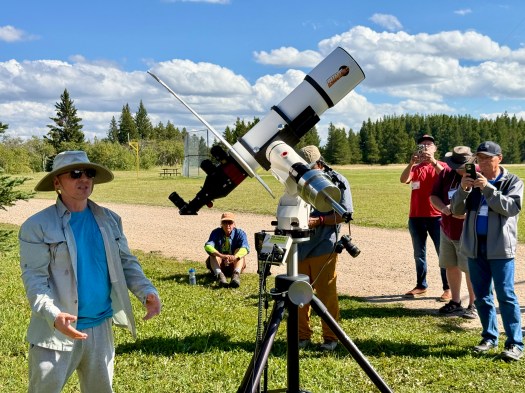
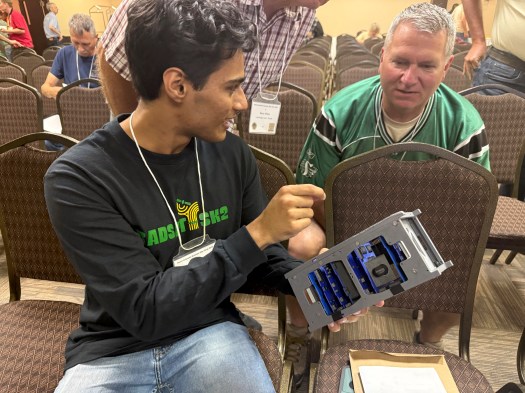
While participants stay up until the wee hours to enjoy all that the sky has to offer, every star party offers a range of daytime activities (but not happening too early!). Star parties are great places to see fields of telescopes of every description. This year the program included a formal “show-and-shine” tour of some notable gear for all to admire. And there’s the ever-popular swap meet with bargains on offer.
The Swap Meet
Kevin’s astrophoto rig
Wade’s classic refractor
Ed’s super astrophoto scope
Nick’s astrophoto array
Dan’s super solar scope
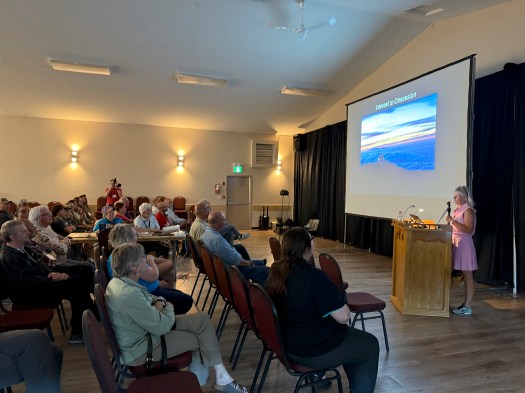
We enjoyed several talks on a range of astronomy topics, not just stargazing, but also the latest in science research. We heard about a satellite being built in Saskatchewan by U of S and U of R students, and about how the Mars Perseverance rover collects samples, in a talk from one of the researchers involved with the NASA mission.
Kimberly Sibbald delivered the opening keynote on her amazing astrophotos.
Dr. Chris Herd from the U of A explained Mars sample collection.
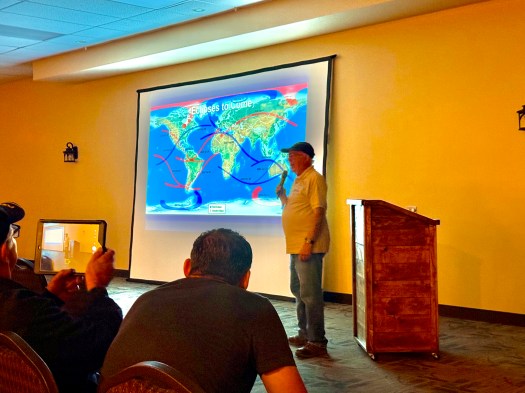
And I gave a short talk about eclipses coming up.
A 3D model of the Sask Sat
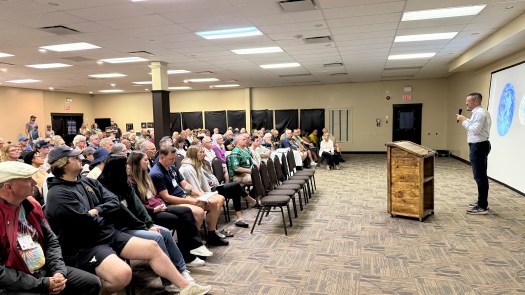
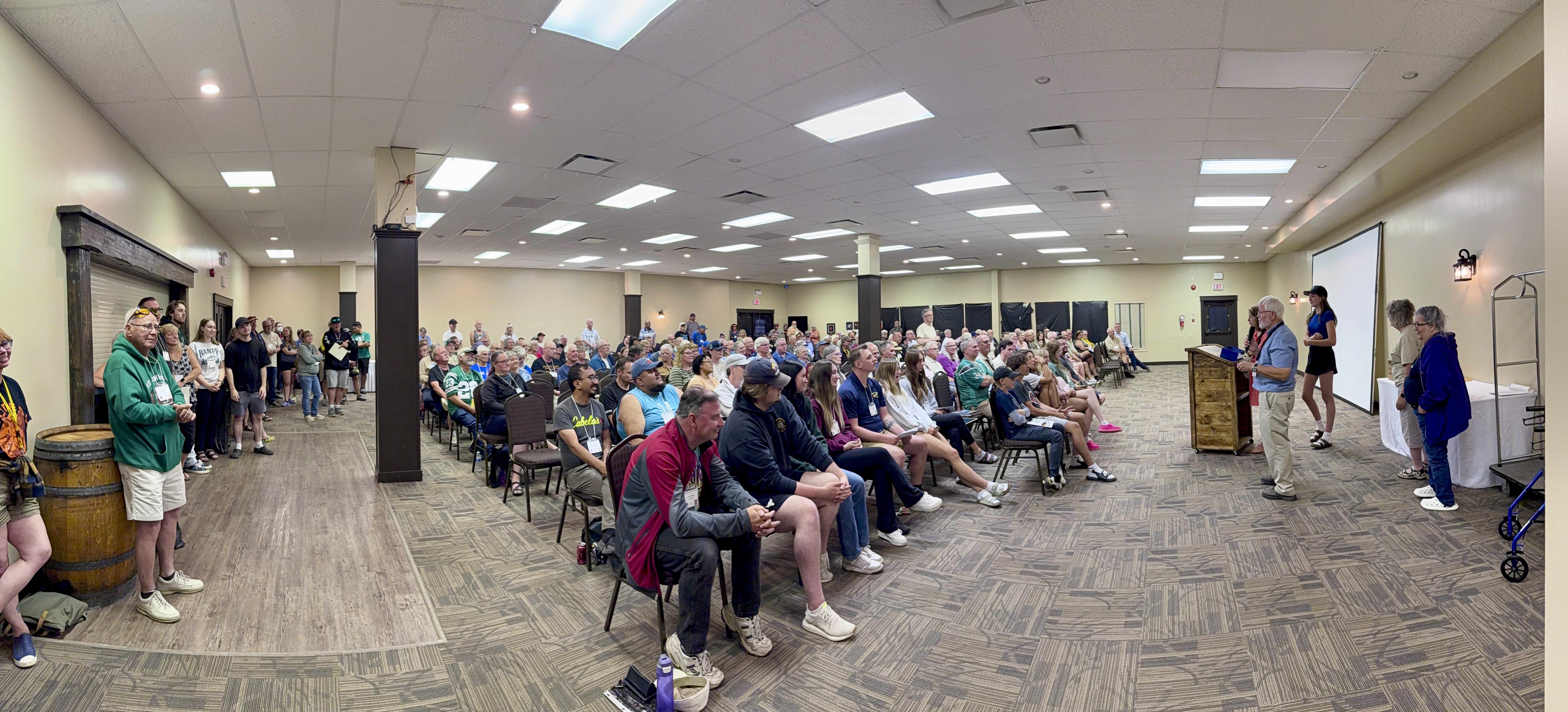
And of course there were awards and door prizes to be won! Always to a capacity crowd at the Cypress Resort conference room.
The door prizes being handed out. You must be in the room to win!
It was a superb 4 days of astronomy and stargazing. If you are in the area, I highly recommend attending. Next year’s SSSP will be August 12 to 15 inclusive — it’s always at New Moon. The website is here but won’t be updated for the 2026 event details until next year.
I won’t be there in 2026, as August 12 is the date of the next total eclipse of the Sun, which I discuss in my previous blog. I plan to be in Spain!
This is the new sign and plaque commemorating the discovery in 2001 of a comet here in the Cypress Hills Interprovincial Park by Vance Petriew.
But I highly recommend attending in 2026. As most people do, you may find yourself enjoying the weekend so much you make it an annual event in your calendar. I shall miss my annual August ritual of the SSSP in 2026 and in 2027 — there’s an eclipse that August, too!
But 2025 was certainly a fine year to enjoy all that the Cypress Hills have to offer under the stars.
I put two new fast 14mm lenses to the test: the Sigma 14mm f/1.8 Art vs. the Rokinon 14mm f/2.4 SP.
Much to the delight of nightscape and astrophotographers everywhere we have a great selection of new and fast wide-angle lenses to pick from.
Introduced in 2017 are two fast ultra-wide 14mm lenses, from Sigma and from Rokinon/Samyang. Both are rectilinear, not fish-eye, lenses.
I tested the Nikon version of the Sigma 14mm f/1.8 Art lens vs. the Canon version of the Rokinon 14mm f/2.4 SP. I used a Nikon D750 and Canon 6D MkII camera.
I also tested the new faster Rokinon SP against the older and still available Rokinon 14mm f/2.8, long a popular lens among nightscape photographers.
The Sigma 14mm is a fully automatic lens with auto focus. It is the latest in their highly regarded Art series of premium lenses. I have their 20mm and 24mm Art lenses and love them.
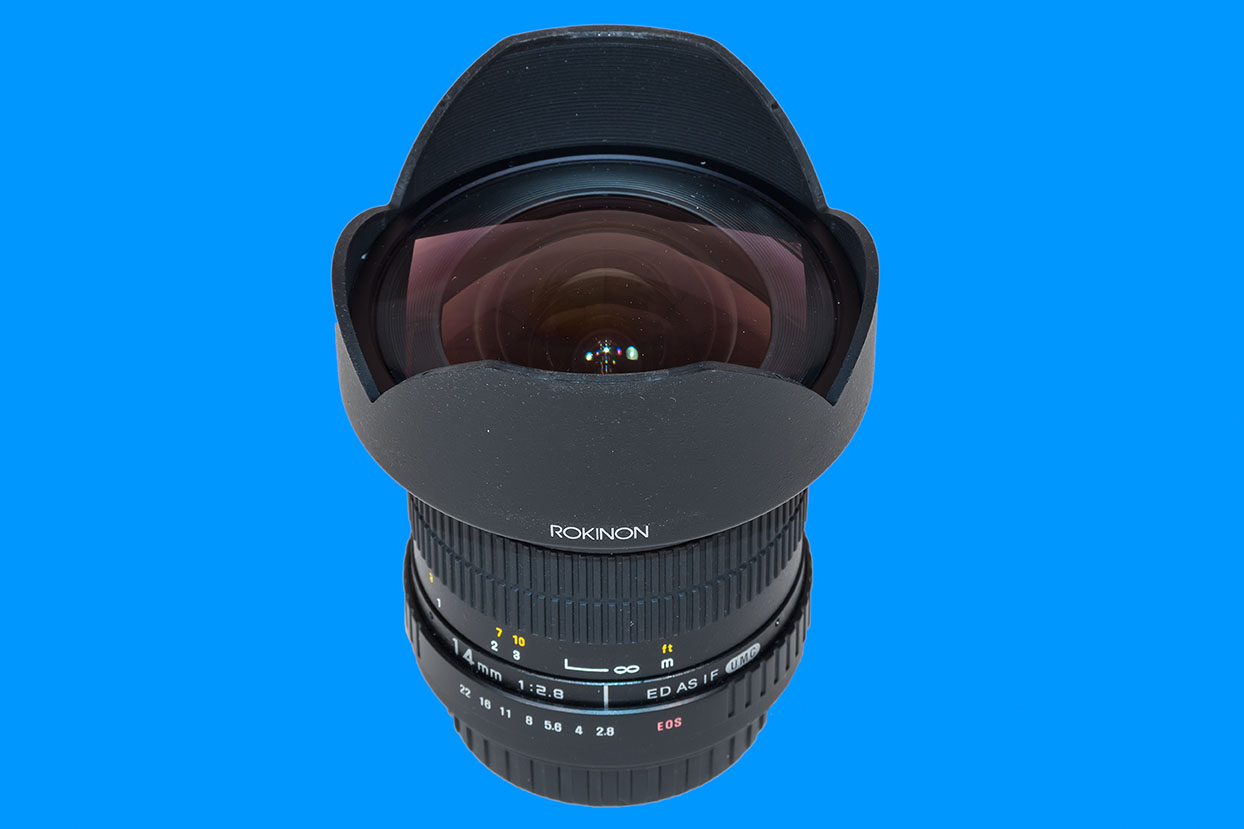
The Rokinon 14mm SP (also sold under the Samyang brand) is a manual focus lens, but with an AE chip so that it communicates with the camera. Adjusting the aperture is done on the camera, not by turning a manual aperture ring, as is the case with many of Rokinon’s lower cost series of manual lenses. The lens aperture is then recorded in each image’s EXIF metadata, an aid to later processing. It is part of Rokinon’s premium “Special Performance” SP series which includes an 85mm f/1.2 lens.
All units I tested were items purchased from stock, and were not supplied by manufacturers as samples for testing. I own these!
CONCLUSIONS
For those with no time to read the full review, here are the key points:
• The Sigma f/1.8 Art exhibits slightly more off-axis aberrations than the Rokinon 14mm SP, even at the same aperture. But aberrations are very well controlled.
• As its key selling point, the Sigma offers another full stop of aperture over the Rokinon SP (f/1.8 vs. f/2.4), making many types of images much more feasible, such as high-cadence aurora time-lapses and fixed-camera stills and time-lapses of a deeper, richer Milky Way.
• The Sigma also has lower levels of vignetting (darkening of the frame corners) than the Rokinon 14mm SP, even at the same apertures.
• Both the Sigma Art and Rokinon SP lenses showed very sharp star images at the centre of the frame.
• Comparing the new premium Rokinon 14mm SP against the older Rokinon 14mm f/2.8 revealed that the new SP model has reduced off-axis aberrations and lower levels of vignetting than the lower-cost f/2.8 model. However, so it should for double the price or more of the original f/2.8 lens.
• The Rokinon 14mm SP is a great choice for deep-sky imaging where optical quality is paramount. The Sigma 14mm Art’s extra speed will be superb for time-lapse imaging where the f/1.8 aperture provides more freedom to use shorter shutter speeds or lower ISO settings.
•Though exhibiting the lowest image quality of the three lenses, the original Rokinon 14mm f/2.8 remains a superb value, at its typical price of $350 to $500. For nightscapers on a budget, it’s an excellent choice.
TESTING PROCEDURES
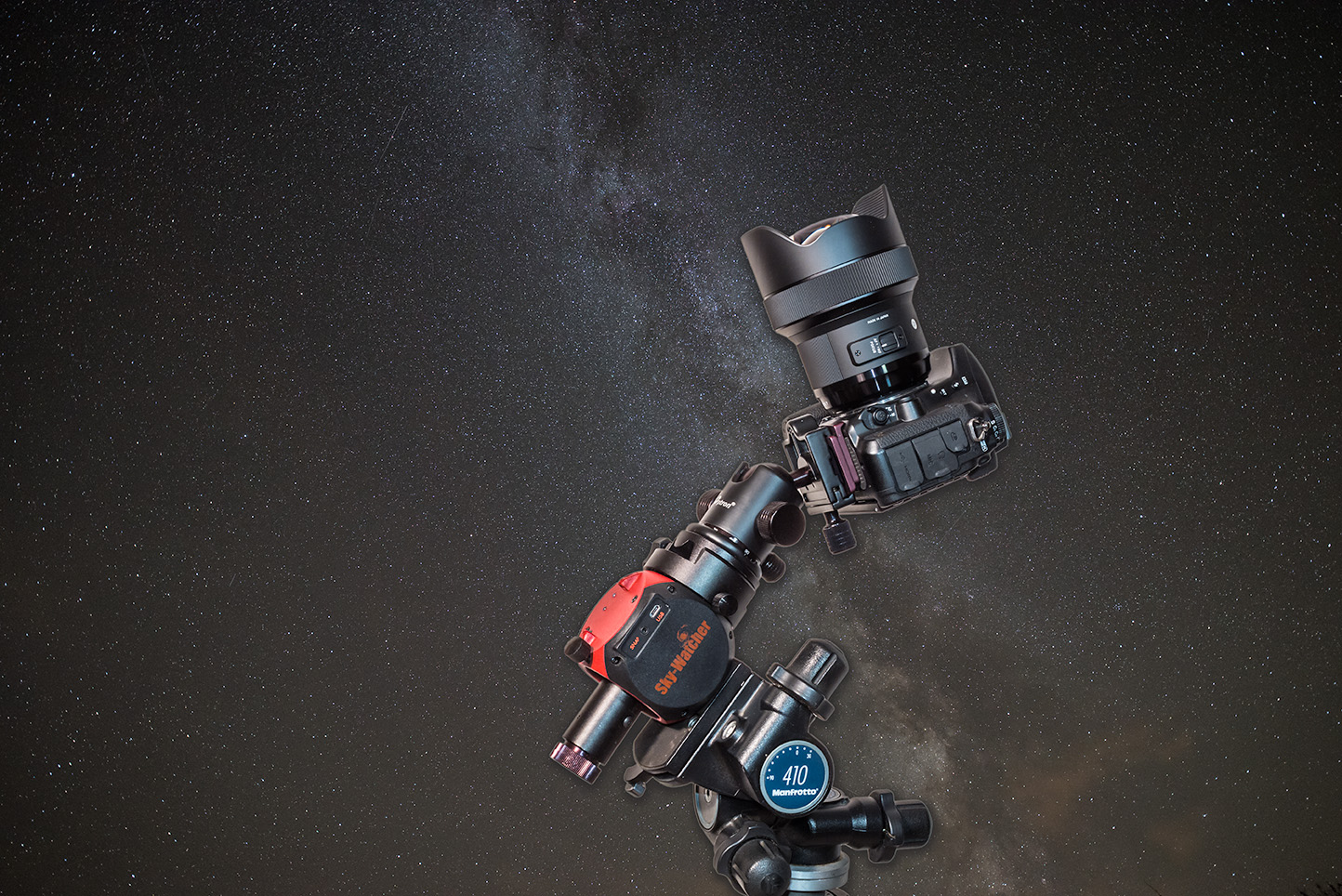
For all these tests I placed the camera and lens on a tracking mount, the Sky-Watcher Star Adventurer Mini shown below. This allowed the camera to follow the sky, preventing any star trailing. Any distortions you see are due to the lens, not sky motion.
Star Adventurer Mini Tracker (with Sigma 14mm on Nikon D750)
As I stopped down the aperture, I lengthened the exposure time to compensate, so all images were equally well exposed.
In developing the Raw files in Adobe Camera Raw, I applied a standard level of Contrast (25) and Clarity (50) boost, and a modest colour correction to neutralize the background sky colour. I also applied a standard level of noise reduction and sharpening.
However, I did not apply any lens corrections that, if applied, would reduce lateral chromatic aberrations and compensate for lens vignetting.
So what you see here is what the lens produced out of the camera, with no corrections. Keep in mind that the vignetting you see can be largely compensated for in Raw development, with the provisos noted below. But I wanted to show how much vignetting each lens exhibited.
OFF-AXIS ABERRATIONS
Stars are the severest test of any lens. Not test charts, not day shots of city skylines. Stars.
The first concern with any fast lens is how sharp the stars are not only in the centre of the frame, but also across the frame to the corners. Every lens design requires manufacturers to make compromises on what lens aberrations they are going to suppress at the expense of other lens characteristics. You can never have it all!
However, for astrophotography we do look for stars to be as pinpoint as possible to the corners, with little coma and astigmatism splaying stars into seagull and comet shapes. Stars should also not become rainbow-coloured blobs from lateral chromatic aberration.
SIGMA 14mm ART
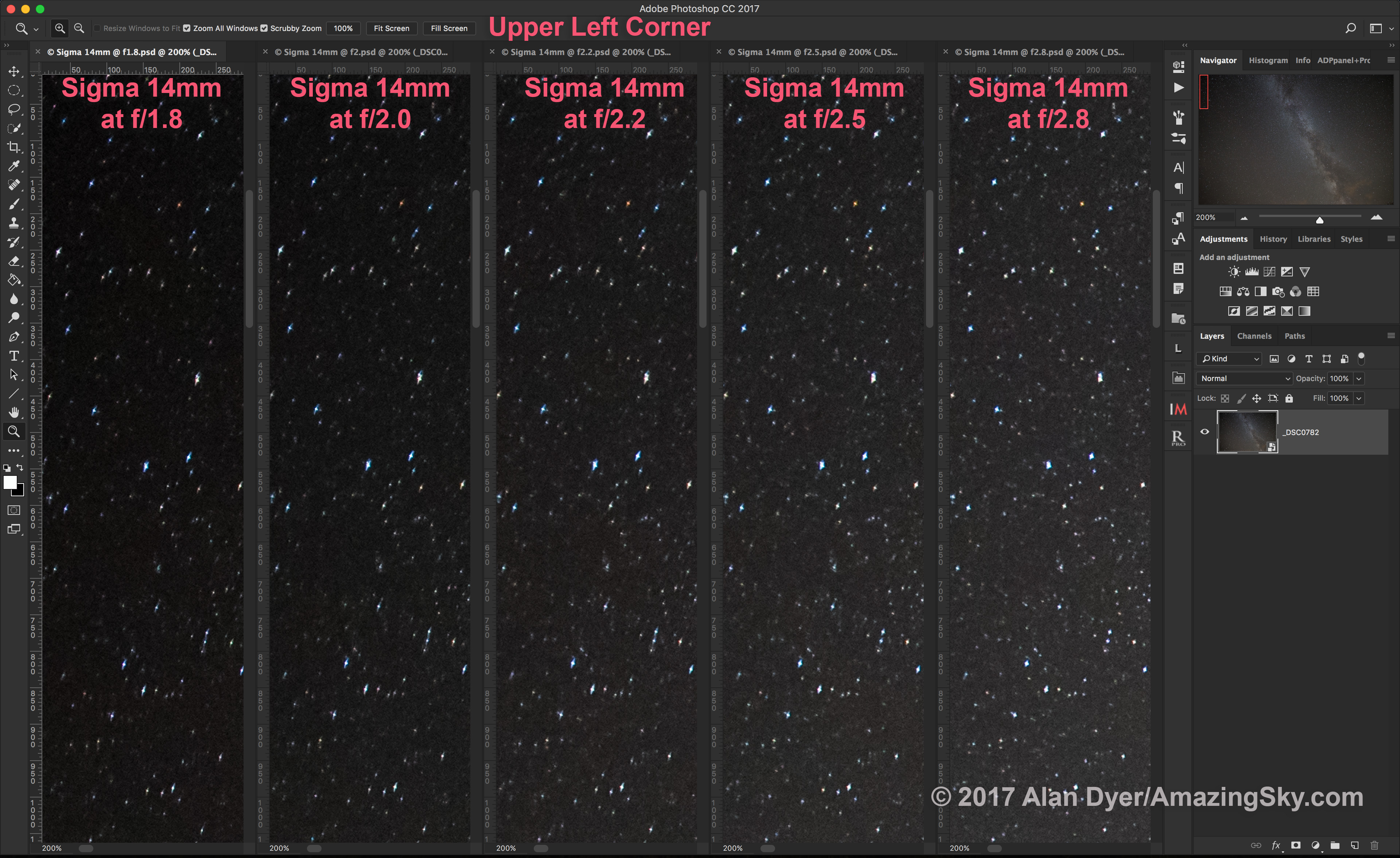
Sigma 14mm Art – Upper Left Corner Close-up at 5 Apertures
Sigma 14mm Art – Upper Right Corner Close-up at 5 Apertures
These images show 200% blowups of the two upper corners of the Sigma 14mm Art lens, each at five apertures, from wide open at f/1.8, then stopped down at 1/3rd stop increments to f/2.8. As you would expect, performance improves as you stop down the lens, though some astigmatism and coma are still present at f/2.8.
But even wide open at f/1.8, off-axis aberrations are very well controlled and minimal. You have to zoom up this much to see them.
There was no detectable lateral chromatic aberration.
Aberrations were also equal at each corner, showing good lens centering and tight assembly tolerances.
ROKINON 14mm SP
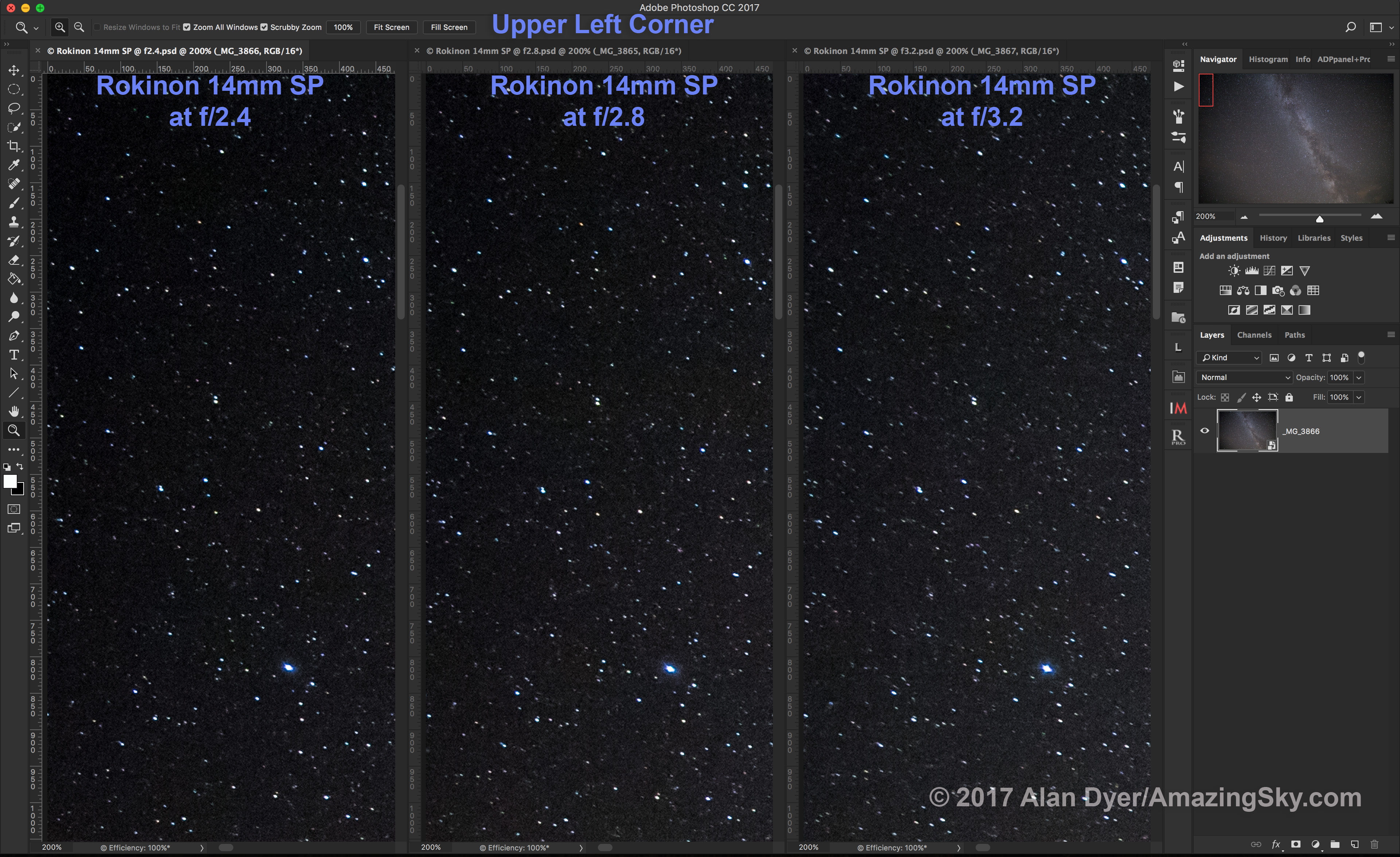
Rokinon 14mm SP at 3 Apertures
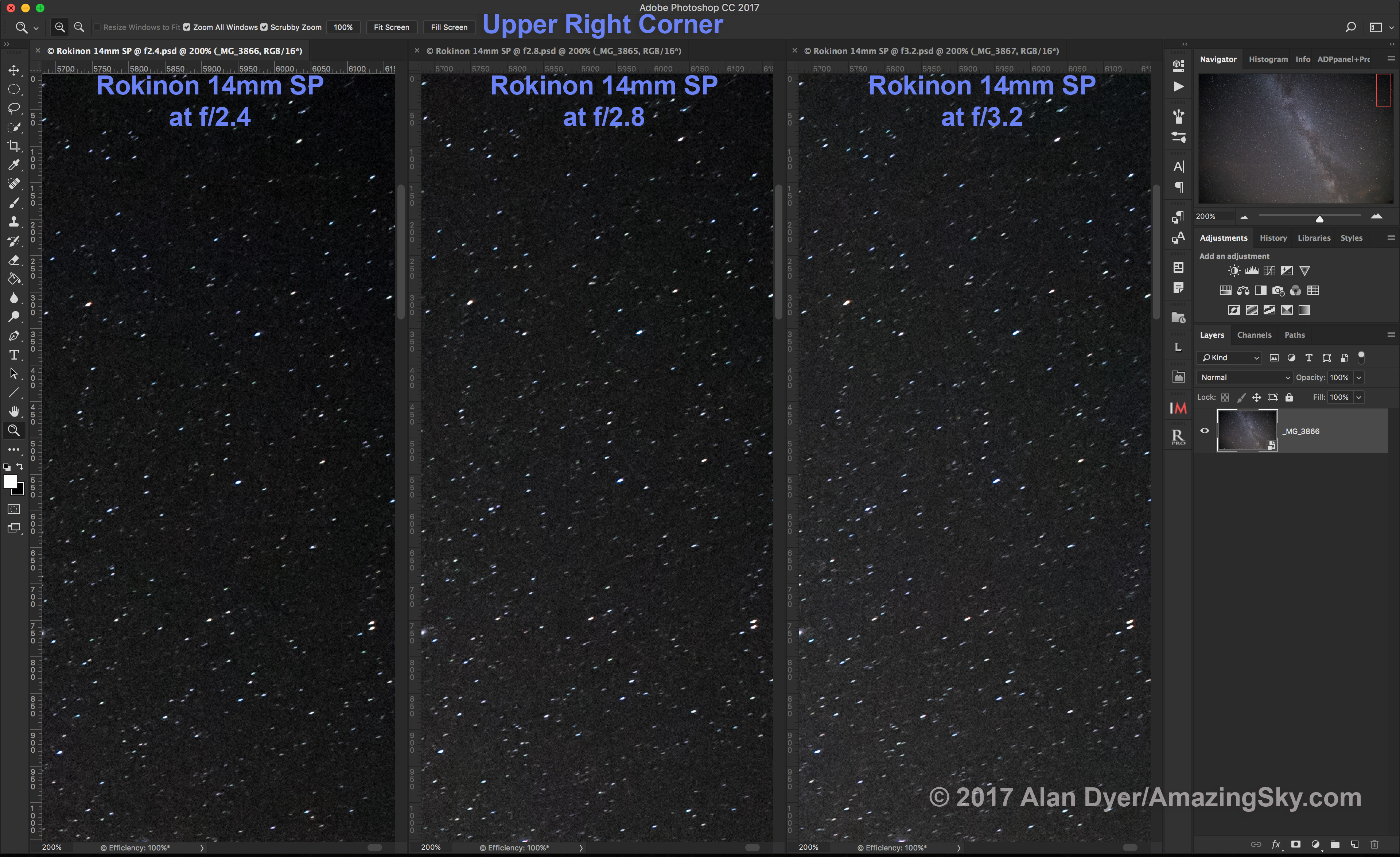
Rokinon 14mm SP at 3 Apertures
Similarly, these images show 200% blow-ups of the upper corners of the Rokinon SP, at its three widest apertures: f/2.4, f/2.8 and f/3.2.
Star images look tighter and less aberrated in the Rokinon, even when compared at the same apertures.
But images look better on the left side of the frame than on the right, indicating a slight lens de-centering or variation in lens position or figuring, a flaw noted by other users in testing Rokinon lenses. The difference is not great and takes pixel-peeping to see. Nevertheless, it is there, and may vary from unit to unit. This should not be the case with any “premium” lens.
SIGMA vs. ROKINON
Rokinon vs. Sigma Corner Aberrations Compared
This image shows both lenses in one frame, at the same apertures, for a more direct comparison. The Rokinon SP is better, but of course, doesn’t go to f/1.8 as does the Sigma.
ON-AXIS ABERRATIONS
We don’t want good performance at the corners if it means sacrificing sharp images at the centre of the frame, where other aberrations such as spherical aberration can take their toll and blur images.
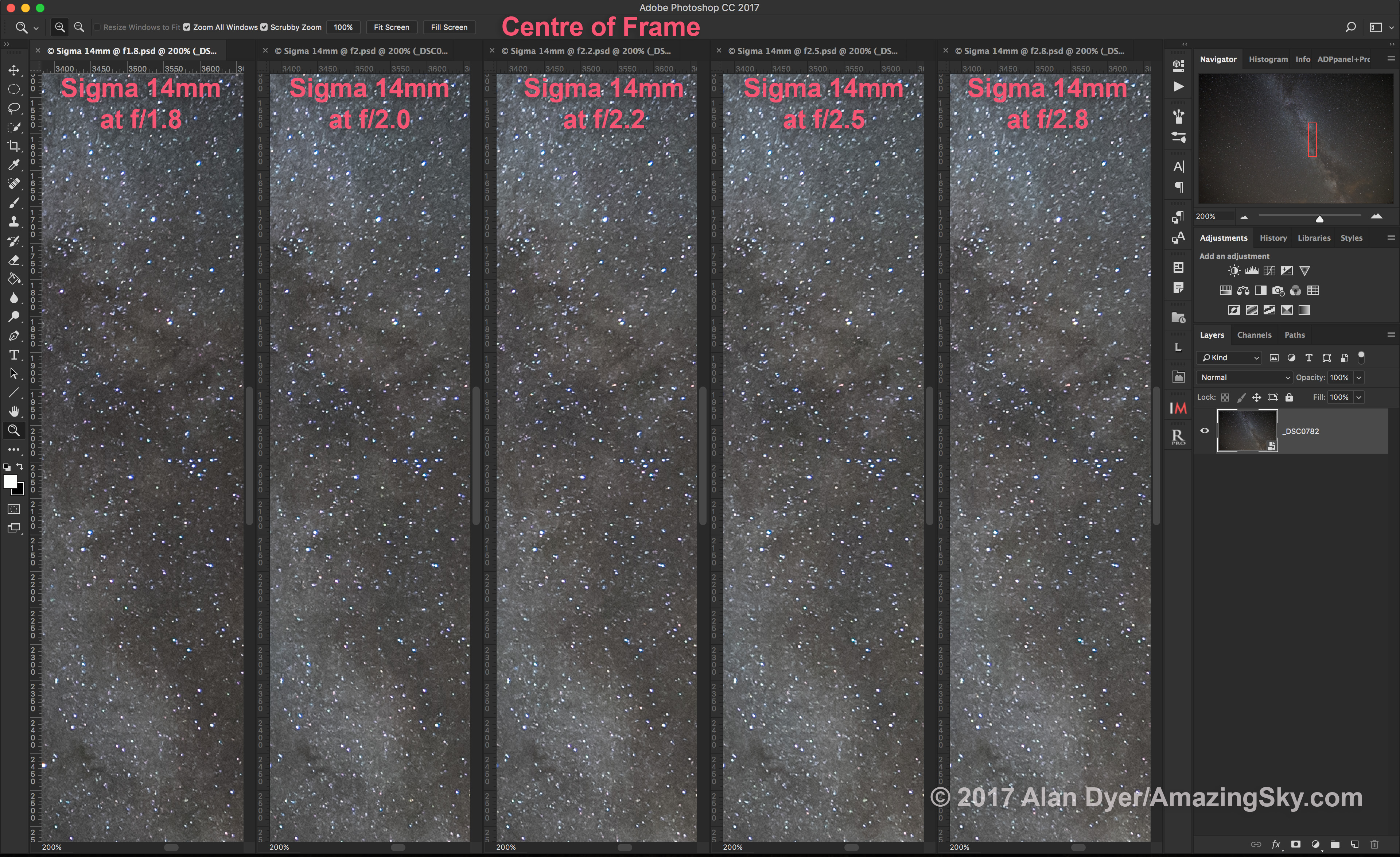
These images compare the two lenses in 200% blow-ups of an area in the Cygnus Milky Way that includes the Coathanger star cluster. Both lenses look equally as sharp.
SIGMA 14mm ART
Sigma 14mm Art – Centre of Frame Close-up
Even when wide open at f/1.8 the Sigma Art shows very sharp star images, with little improvement when stopped down. Excellent!
ROKINON 14mm SP
Rokinon 14mm SP – Centre of Frame Close-up
The same can be said for the Rokinon SP. It performs very well when wide open at f/2.4, with star images as sharp as when stopped down 2/3rds of an f-stop to f/3.2
SIGMA vs. ROKINON
Sigma vs. Rokinon Centre Sharpness Compared
This image shows both lenses in one frame, but with the Sigma wide open at f/1.8 and stopped down to f/2.8, vs. the Rokinon wide open at f/2.4 and stopped to f/2.8. All look superb.
VIGNETTING
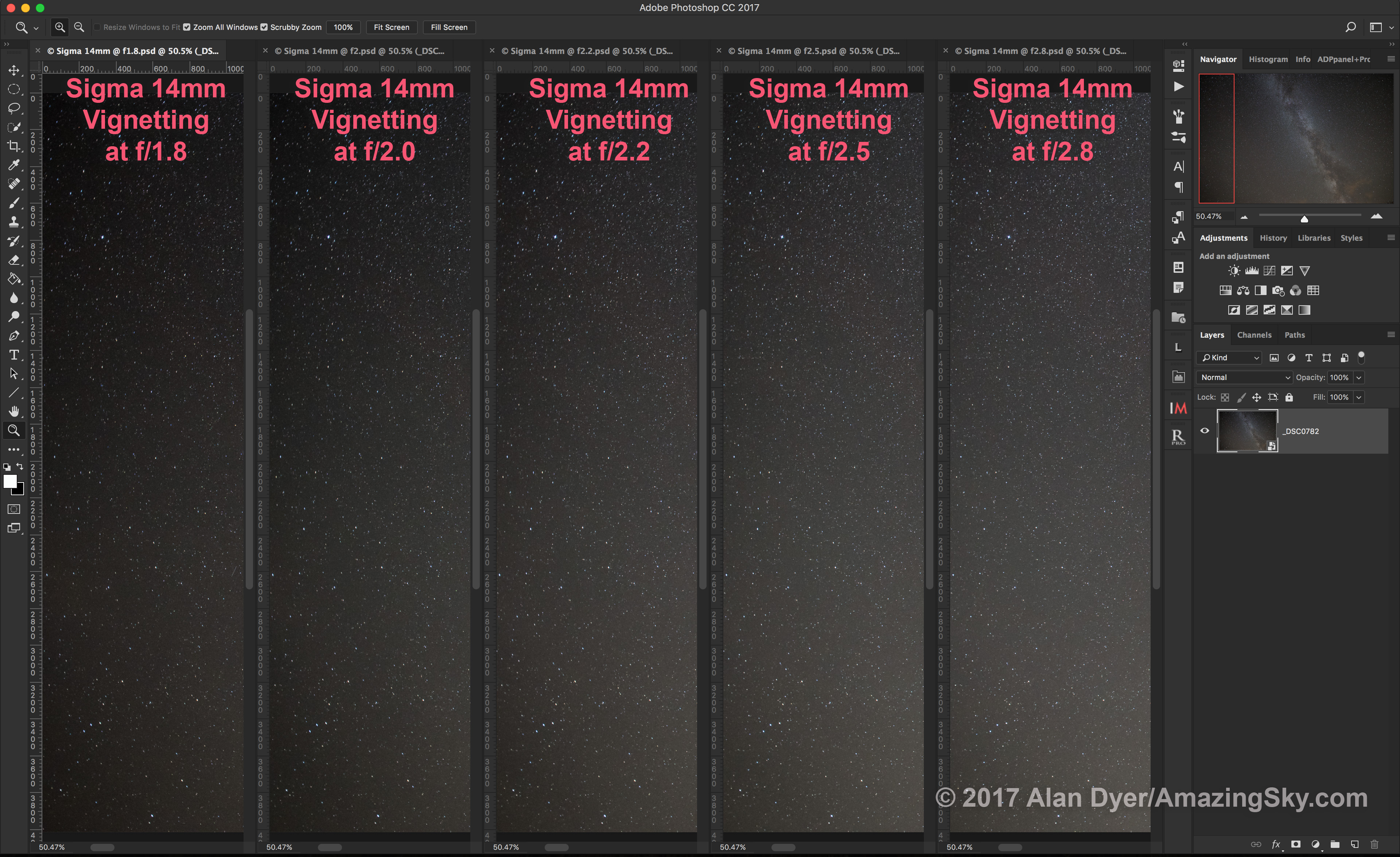
The bane of wide-angle lenses is the light fall-off that is inevitable as lens focal lengths decrease. We’d like this vignetting to be minimal. While it can be corrected for later when developing the Raw files, doing so can raise the visibility of noise and discolouration, such as magenta casts. The less vignetting we have to deal with the better.
As with off-axis aberrations, vignetting decreases as lenses are stopped down. Images become more uniformly illuminated across the frame, with less of a “hot spot” in the centre.
SIGMA 14mm ART
Sigma 14mm Art – Vignetting Compared at 5 Apertures
This set compares the left edge of the frame in the Sigma SP at five apertures, from f/1.8 to f/2.8. You can see how the image gets brighter and more uniform as the lens is stopped down. (The inset image at upper right show what part of the frame I am zooming into.)
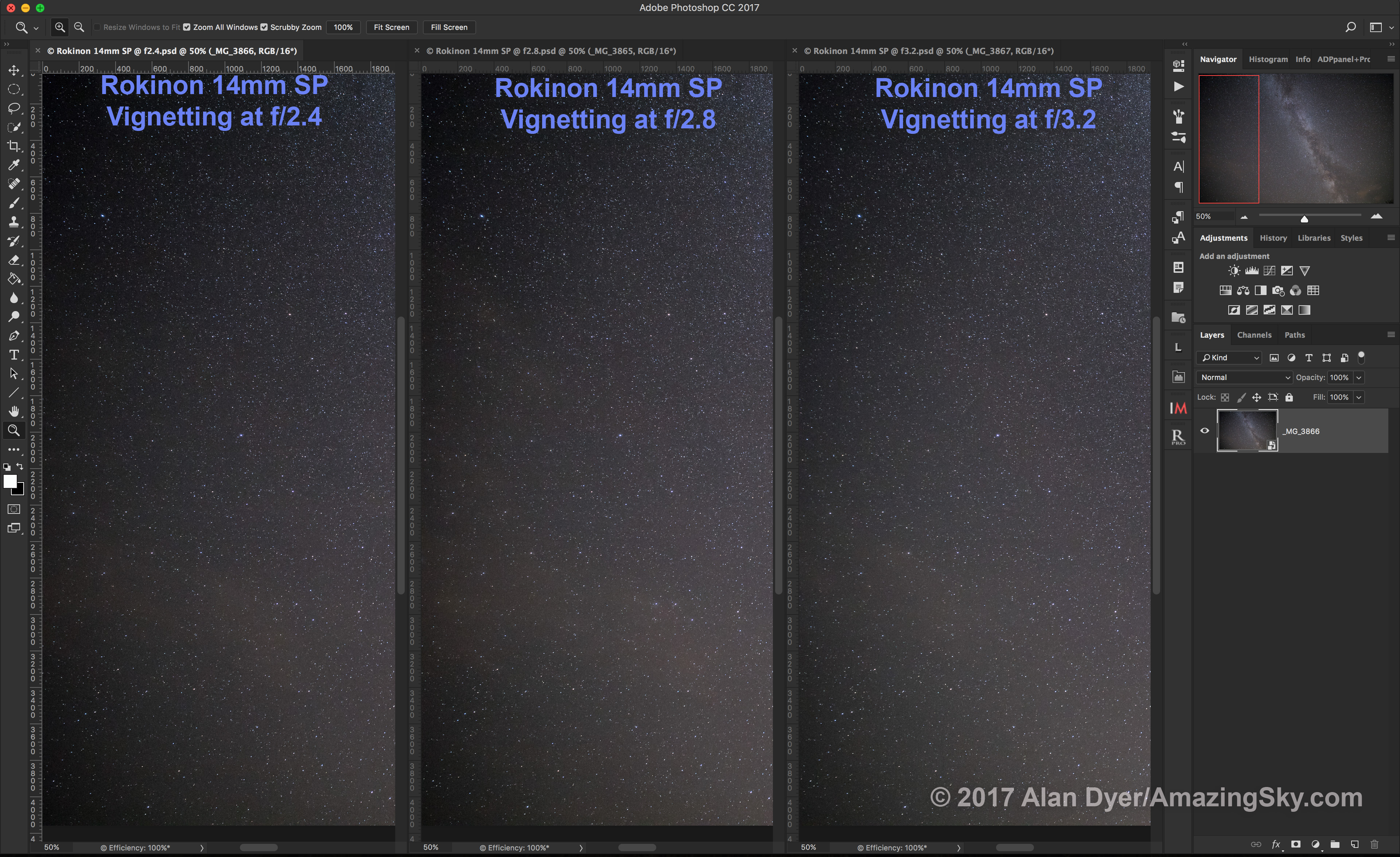
ROKINON 14mm SP
Rokinon 14mm SP – Vignetting Compared at 3 Apertures
This similar set compares the frame’s left edge in the Rokinon SP at its three widest apertures, from f/2.4 to f/3.2. Again, vignetting improves but is still present at f/3.2.
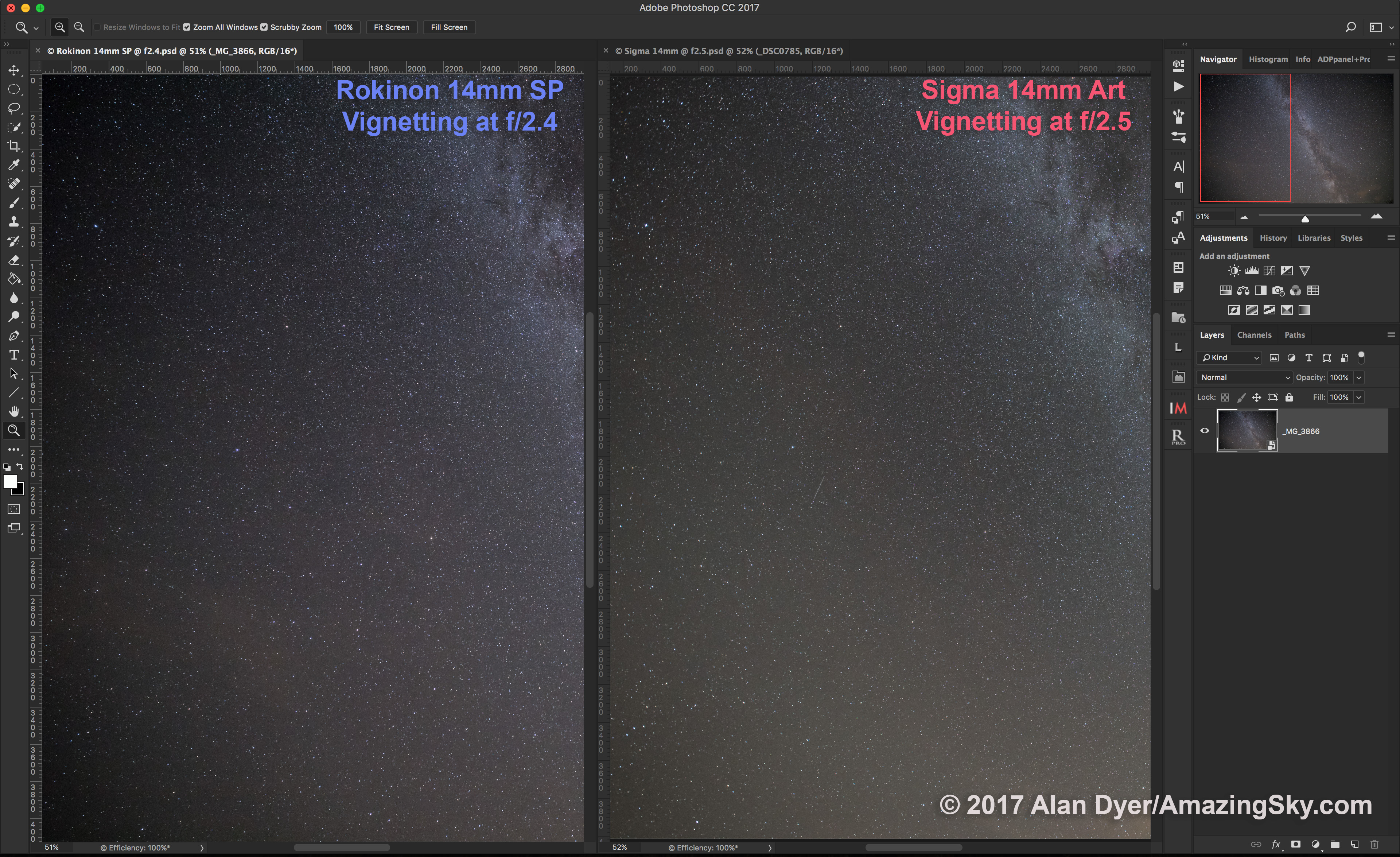
SIGMA vs. ROKINON
Rokinon vs. Sigma – Vignetting Compared
This compares both lenses at similar apertures side by side for a direct comparison. The Sigma is better than the Rokinon with a much more uniform illumination across the frame.
Sigma 14mm Art – Vignetting at f/1.8 Maximum Aperture
Rokinon 14mm SP – Vignetting at f/2.4 Maximum Aperture
In these two images, above, of the entire frame at their respectively widest apertures, I’d say the Sigma exhibits less vignetting than the Rokinon, even when wide open at f/1.8. The cost for this performance, other than in dollars, is that the Sigma is a large, heavy lens with a massive front lens element.
ROKINON 14mm f/2.4 SP vs. ROKINON 14mm f/2.8 Standard
Even the Rokinon 14mm SP, though a manual lens, carries a premium price, at $800 to $1000 U.S., depending on the lens mount.
The 14mm Rokinon/Samyang f/2.8 Lens
For those looking for a low-cost, ultra-wide lens, the original Rokinon/Samyang 14mm f/2.8 (shown above) is still available and popular. It is a fully manual lens, though versions are available with a AE chip to communicate lens aperture information to the camera.
I happily used this f/2.8 lens for several years. Before I sold it earlier in 2017 (before I acquired the Sigma 14mm), I tested it against Rokinon’s premium SP version.
The older f/2.8 lens exhibited worse off-axis and on-axis aberrations and vignetting than the SP, even with the SP lens set to the same f/2.8 aperture. But image quality of the original lens is still very good, and the price is attractive, at half the price or less, than the 14mm SP Rokinon.
TWO 14mm ROKINONS: OFF-AXIS ABERRATIONS
Two Rokinons (Older “Standard” vs. new SP) – Upper Left Corner Close-up
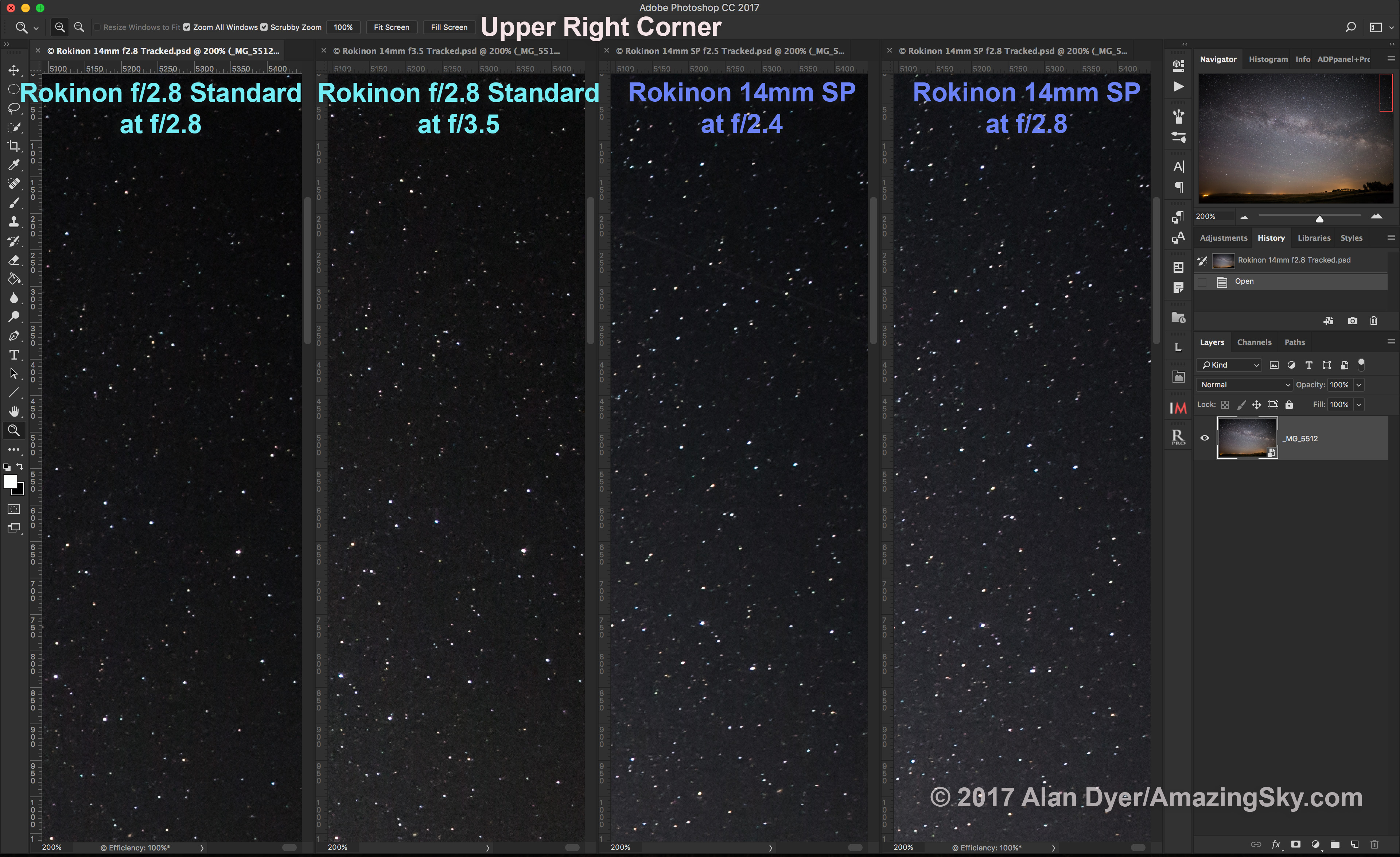
Two Rokinons (Older “Standard” vs. new SP) – Upper Right Corner Close-up
Here, in closeups of the upper corners, I show the difference between the two Rokinons, the older standard lens on the left, and the new SP on the right.
The SP, as it should, shows lower aberrations and tighter star images, though with the improvement most marked on the left corner; not so much on the right corner. The original f/2.8 lens holds its own quite well.
TWO 14mm ROKINONS: ON-AXIS ABERRATIONS
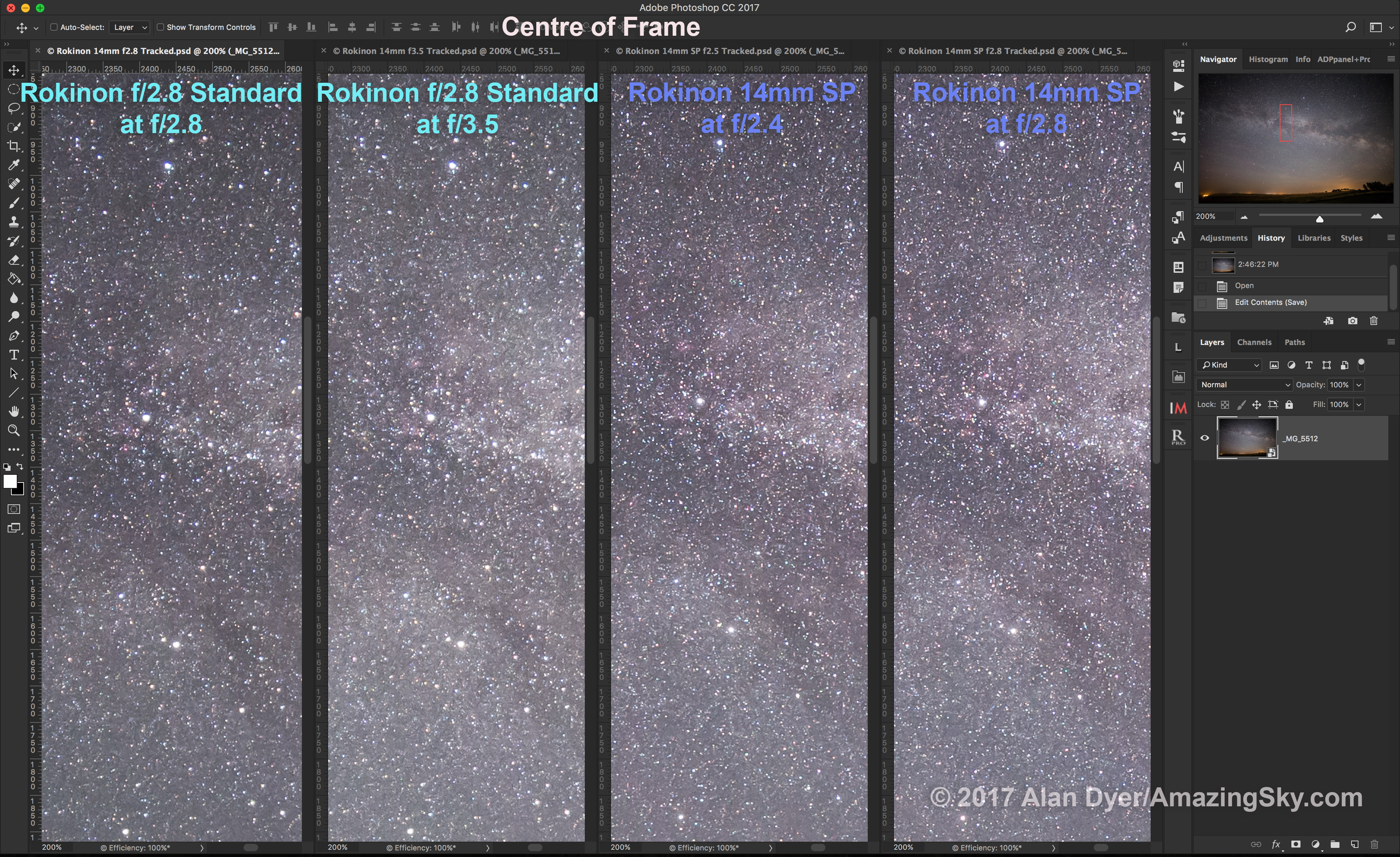
Two Rokinons (Older “Standard” vs. new SP) – Centre of Frame Close-up
At the centre of the frame, the difference is more apparent, with the SP lens exhibiting sharper star images than the old 14mm with its generally softer, larger star images. The latter likely has more spherical aberration.
TWO 14mm ROKINONS: VIGNETTING
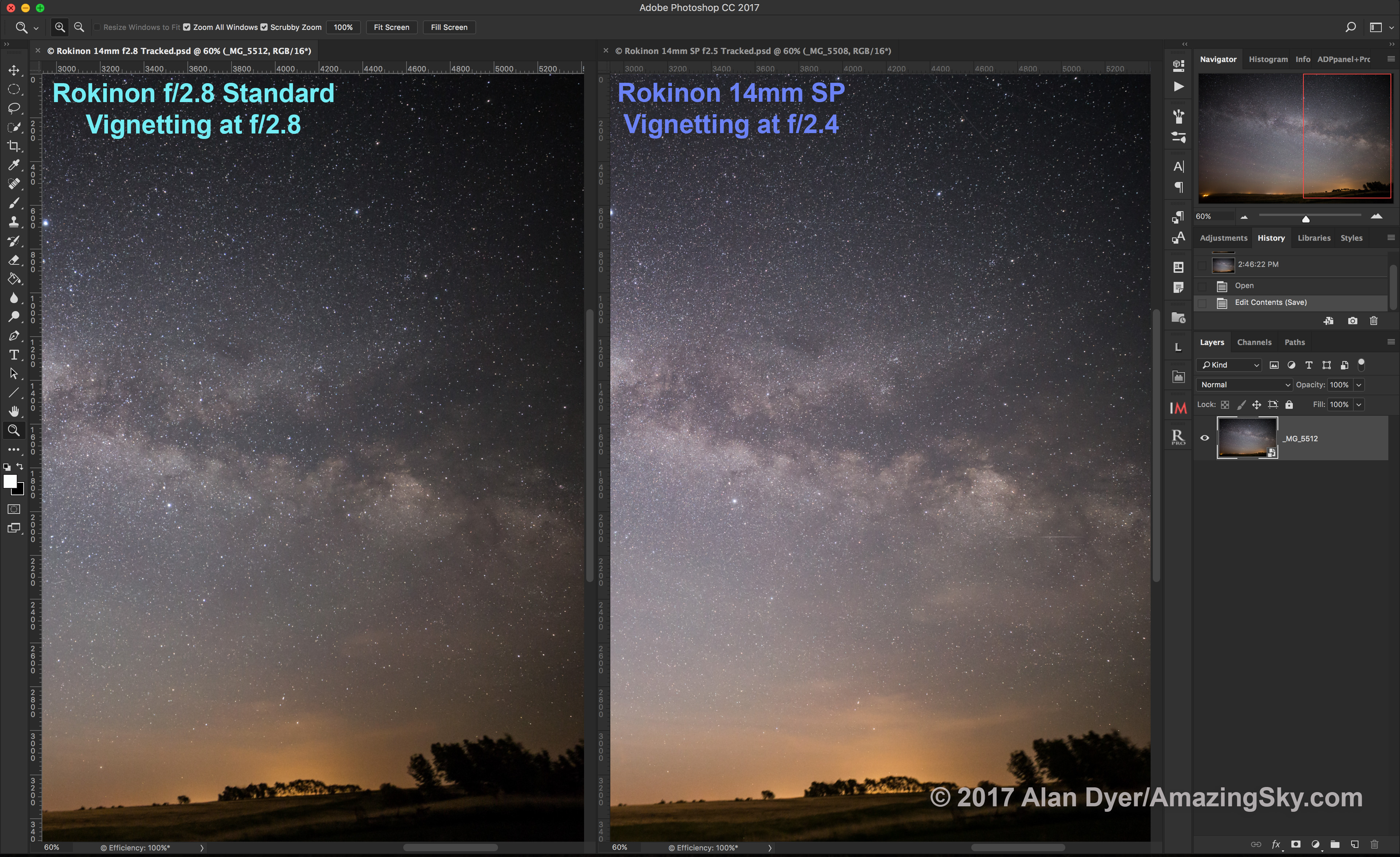
Two Rokinons (Older “Standard” vs. new SP) – Vignetting Compared
The new SP lens clearly has the advantage here, with less vignetting and brighter corners even when wide open at f/2.4 than the older lens does at its widest aperture of f/2.8. This is another reason to go for the new SP if image quality is paramount
PRICES
The new Sigma 14mm Art lens is costly, at $1600 U.S., though with a price commensurate with its focal length and aperture. Other premium lenses in this focal length range, either prime or zoom, from Nikon and Canon sell for much more, and have only an f/2.8 maximum aperture. So in that sense, the Sigma Art is a bargain.
The new Rokinon 14mm SP sells for $800 to $1000, still a premium price for a manual focus lens. But its optical quality competes with the best.
The older Rokinon 14mm f/2.8 is a fantastic value at $350 to $500, depending on lens mount and AE chip. For anyone getting into nightscape and Milky Way photography, it is a great choice.
RECOMMENDATIONS
With such a huge range in price, what should you buy?
A 14mm is a superb lens for nightscape shooting – for sky-filling auroras, for panoramas along the Milky Way, or of the entire sky. But the lens needs to be fast. All three lenses on offer here satisfy that requirement.
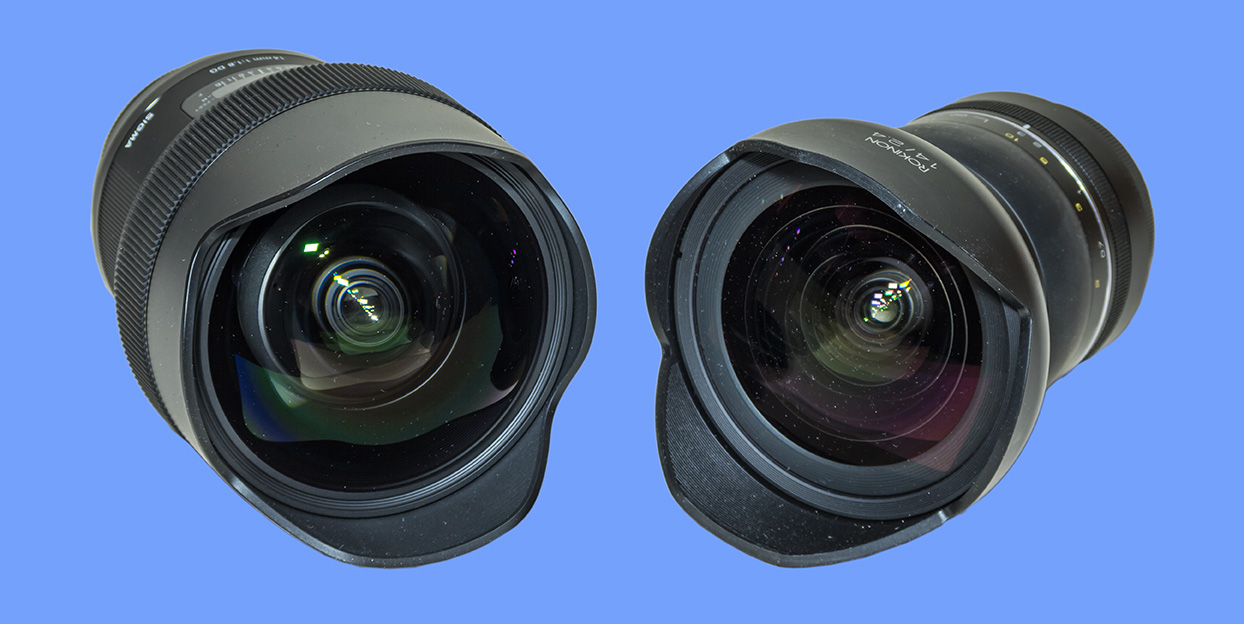
Sigma 14mm Art (left) and Rokinon 14mm SP (right)
SIGMA 14mm f/1.8 ART
If you want sheer speed, this is the lens. It offers a full stop gain over the already fast Rokinon f/2.5, allowing exposures to be half the length, or shooting at half the ISO speed for less noise.
Its fast speed comes into its own for rapid cadence aurora time-lapses, to freeze auroral motion as much as possible in exposures as short as 1 to 2 seconds at a high ISO. The fast speed might also make real-time movies of the aurora possible on cameras sensitive and noiseless enough to allow video shooting at ISO 25,000 and higher, such as the Sony a7s models.
The Sigma’s fast speed also allows grabbing rich images of the Milky Way in exposures short enough to avoid star trailing, either in still images or in time-lapses of the Milky Way in motion.
While the Sigma does exhibit some edge aberrations, they are very well controlled (much less than I see with some 24mm and 35mm lenses I have) and are a reasonable tradeoff for the speed and low level of vignetting, which results in less noisy corners.
Photographers obsess over corner aberrations when, for fixed-camera nightscape shooting, a low level of vignetting is probably more critical. Correcting excessive vignetting introduces noise, while the corner aberrations may well be masked by star trailing. Only in tracked images do corner aberrations become more visible, as in the test images here.
I’d suggest the Sigma is the best choice for nightscape and time-lapse shooting, with its speed allowing for kinds of shots not possible otherwise.
The Sigma also appears to be the best coated of all the lenses, as you can see in the reflections in the lenses in the opening image, and below. However, I did not test the lenses for flares and ghosting.
As a footnote, none of the lenses allow front-mounted filters, and none have filter drawers.
ROKINON 14mm f/2.4 SP
For less money you get excellent optical quality, though with perhaps some worrisome variation in how well the lens elements are figured or assembled, as evidenced by the inconsistent level of aberration from corner to corner.
Nevertheless, stars are tight on- and off-axis, and vignetting is quite low, for corners that will be less noisy when the shadows are recovered in processing.
I’d suggest the Rokinon SP is a great choice if tracked deep-sky images are your prime interest, where off-axis performance is most visible. However, the SP’s inconsistent aberrations from corner to corner are evidence of lower manufacturing tolerances than Sigma’s, so your unit may not perform like mine.
For nightscape work, the SP’s f/2.4 aperture might seem a minor gain over Rokinon’s lower-cost f/2.8 lens. But it is 1/3 of an f-stop. That means, for example, untracked Milky Way exposures could be 30 seconds instead of 40 seconds, short enough to avoid obvious star trailing. At night, every fraction of an f-stop gain is welcome and significant.
ROKINON 14mm f/2.8 Standard
You might never see the difference in quality between this lens and its premium SP brother in images intended for time-lapse movies, even at 4K resolution.
But those intending to do long-exposure deep-sky imaging, as these test images are, will want the sharpest stars possible across the frame. In which case, consider the 14mm SP.
But if price is a prime consideration, the original f/2.8 Rokinon is a fine choice. You’ll need to apply a fair amount of lens correction in processing, but the lens exists in the Camera Raw/Lightroom database, so correction is just a click away.
That was a lengthy report, I know! But there’s no point in providing recommendations without the evidence to back them up.
All images, other than the opening “beauty shot,” can be clicked/tapped on to download a full-resolution original JPG for closer inspection.
As I’ve just received the Sigma Art lens I’ve not had a chance to shoot any “real” nightscape images with it yet, just these test shots. But for a real life deep-sky image of the Milky Way shot with the Rokinon SP, see this image from Australia. https://flic.kr/p/SSQm7G
I hope you found the test of value in helping you choose a lens.









 The Amazing Sky