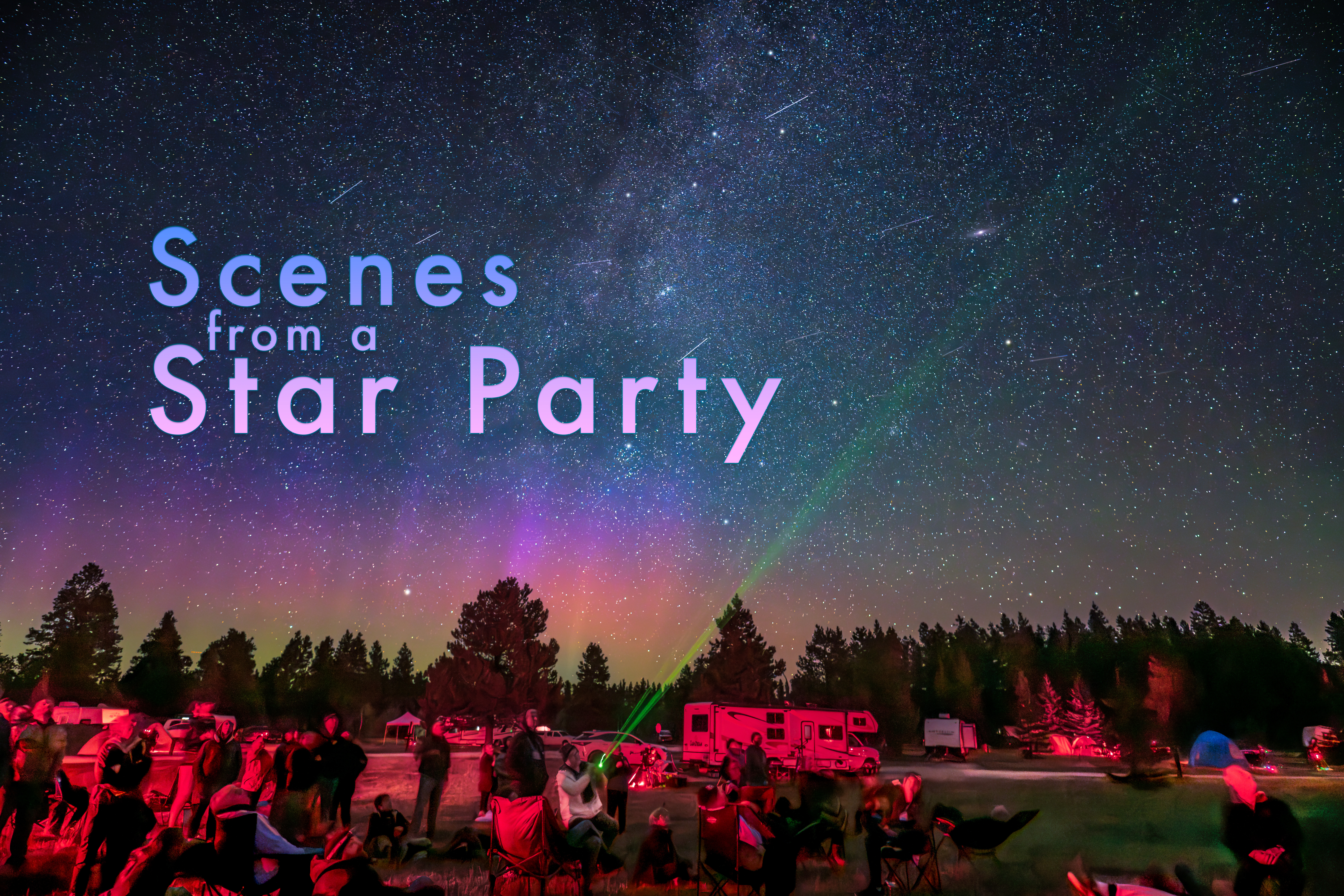
Scenes from a Star Party


Amateur astronomers like nothing more than spending time under a dark night sky with a field of friends.

Star parties are a popular part of the hobby of amateur astronomy. They’re chances for stargazers to get under dark skies and meet up with others who love the night sky.

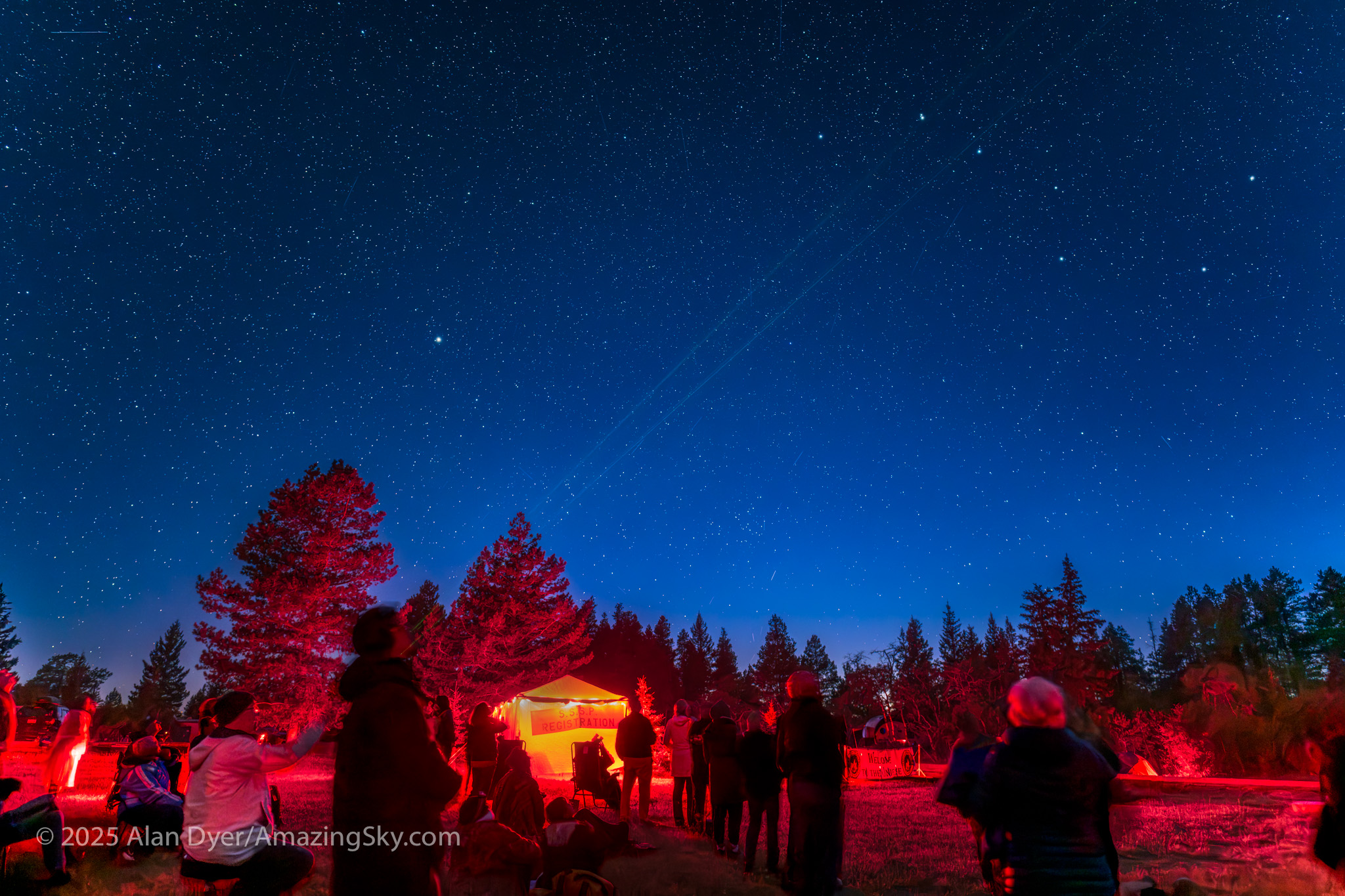
Each year I attend the biggest such event in my area in western Canada, the Saskatchewan Summer Star Party. It usually attracts about 320 sky lovers to the very dark skies of southwest Saskatchewan.
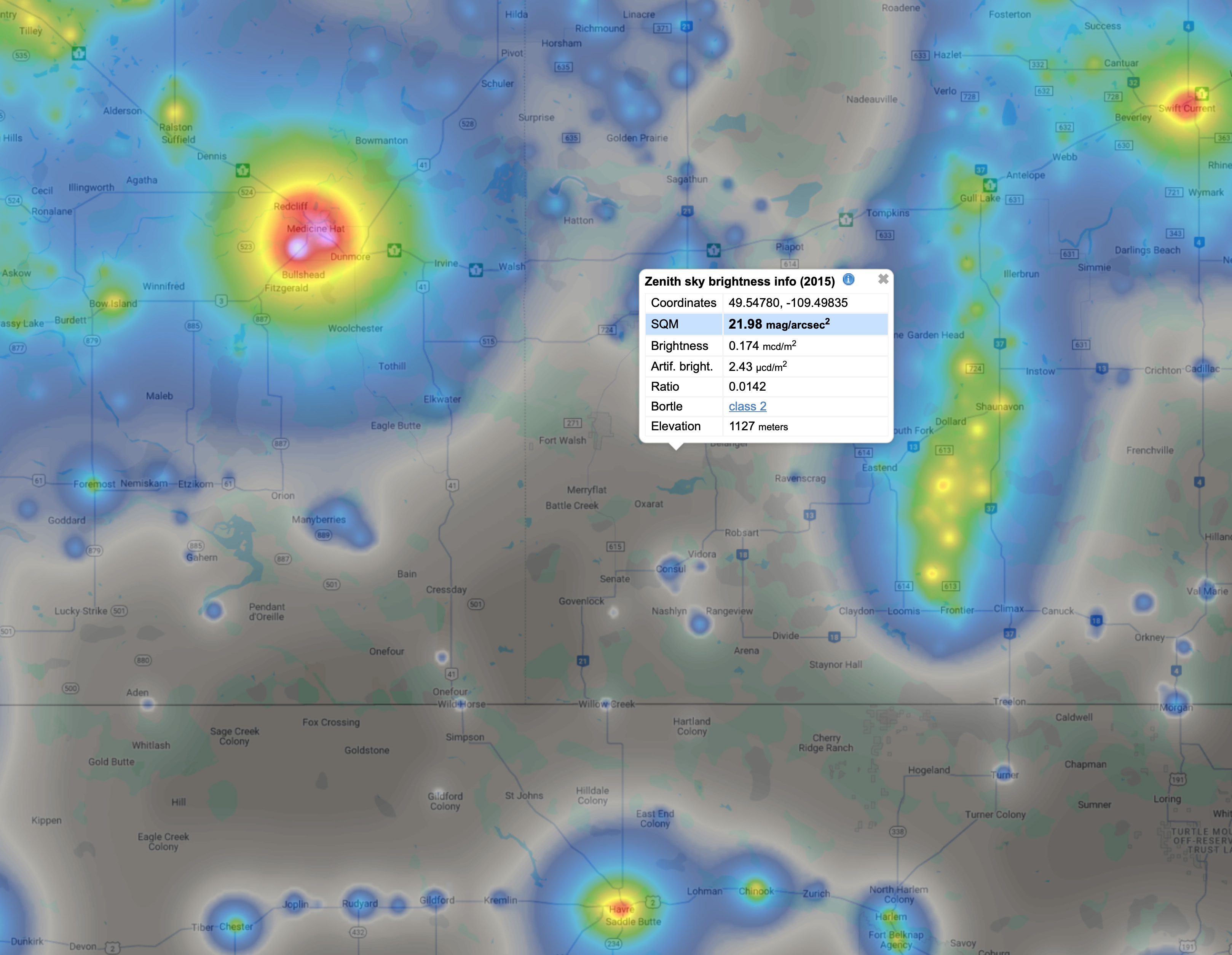
A light pollution map where grey = good!

The label marks the spot for the Party, in the Cypress Hills, and in the Cypress Hills Interprovincial Park, that straddles the border of Saskatchewan and Alberta. As per its name, the SSSP is held on the Saskatchewan side of the Park, in the Centre Block south of Maple Creek. (A complementary Southern Alberta Star Party is held on the Alberta side of the Cypress Hills, in September. I’ll be there!)

As the map shows, the Cypress Hills are far from any light pollution and offer “Bortle 2-class” skies — 1 being the darkest, and 9 being downtown Las Vegas!

In fact, the Park is a Dark Sky Preserve, a designation awarded in 2004. Parks are increasingly aware of their role in not only conserving flora, fauna, and historical sites, but also the increasingly threatened night sky. As the saying goes, “Half the Park is after dark!”
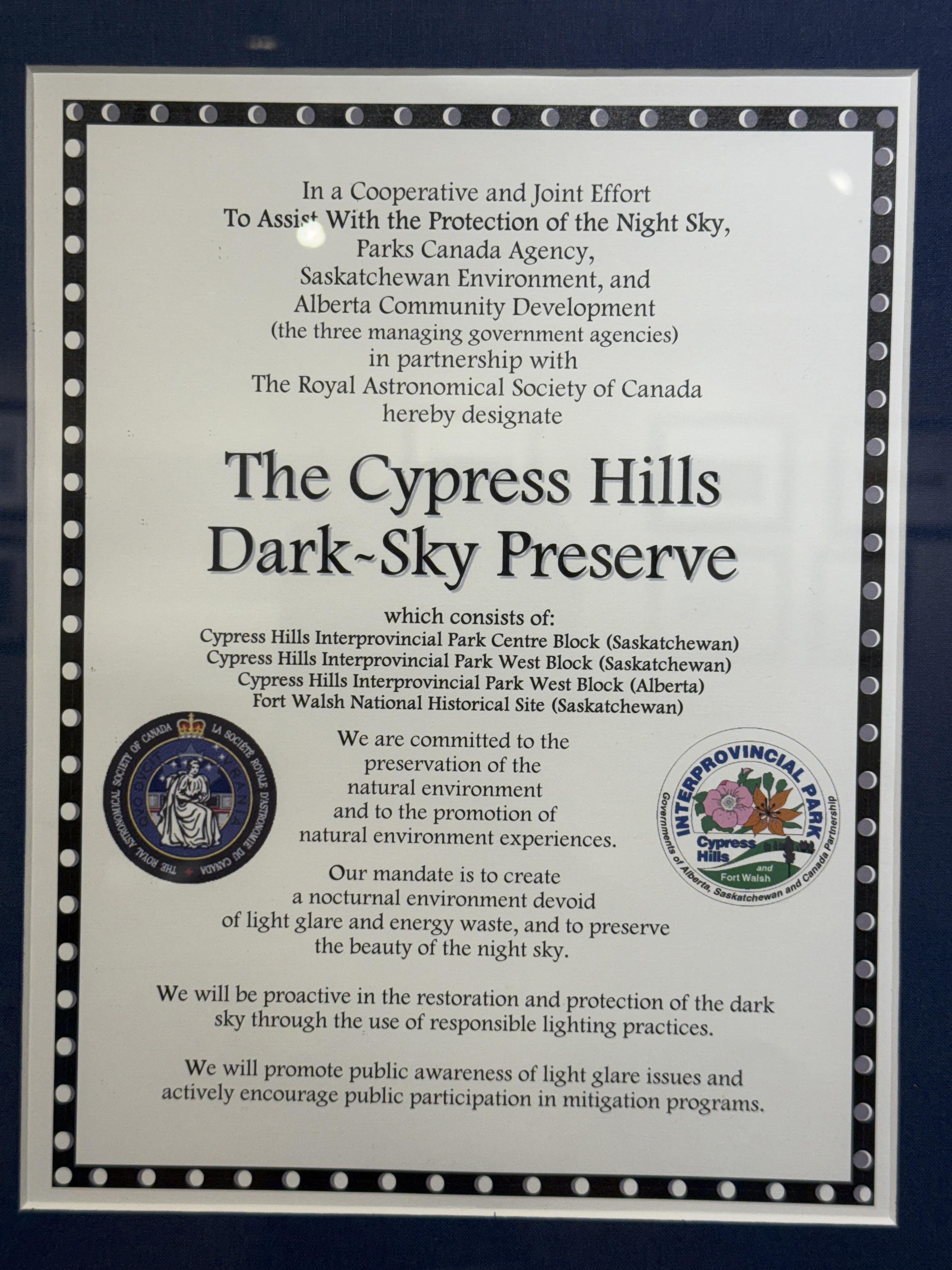
The DSP Declaration

The Dark Sky Preserve designation, and efforts to refit what lighting is in the Park to “dark-sky friendly” fixtures, came about as a direct result of the Park, and Star Party, being the site of a comet discovery three years earlier.

It was at the Star Party in August 2001 that Regina amateur astronomer Vance Petriew discovered a comet, an observing feat that merits a comet being named for the discoverer.

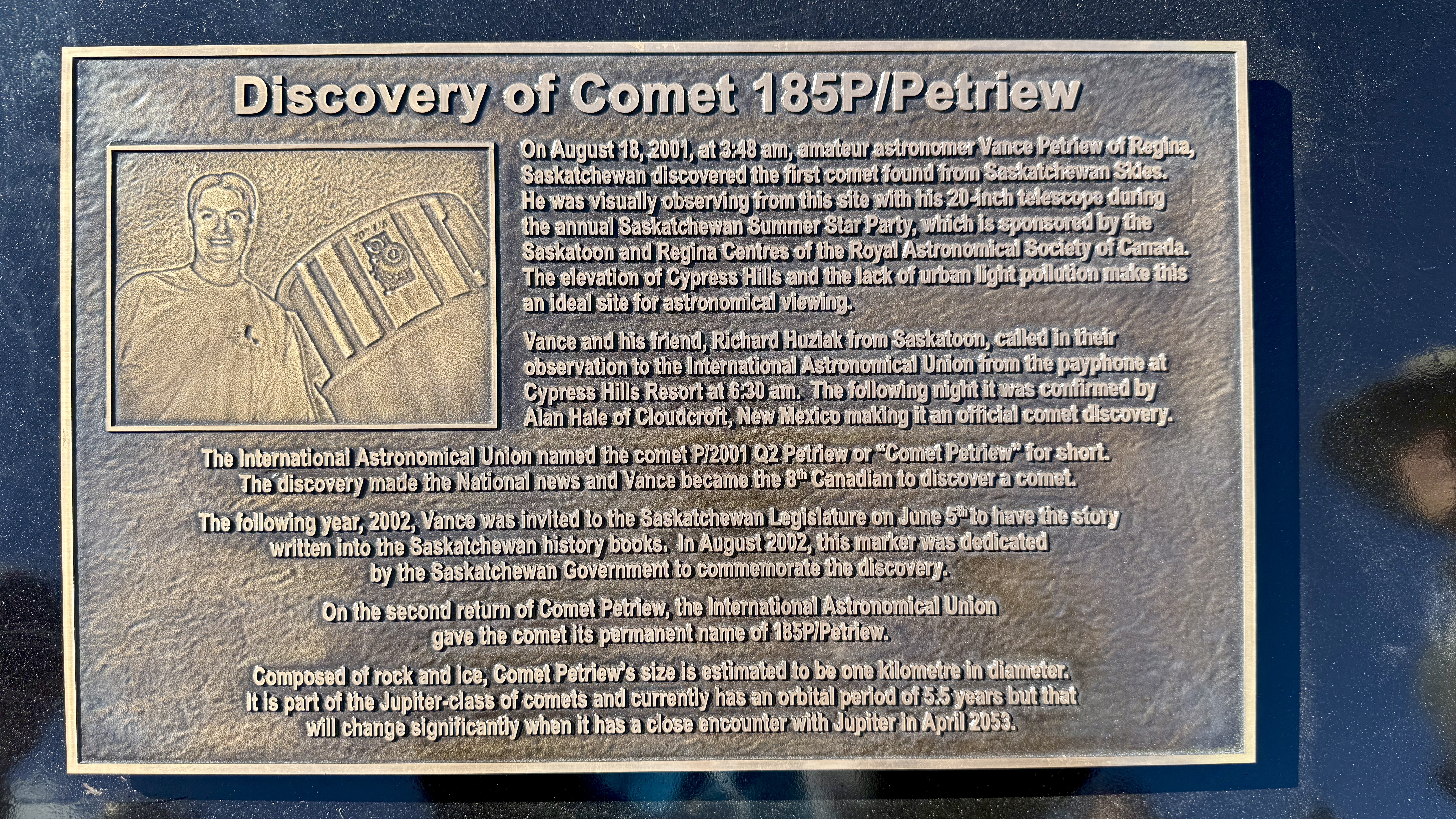
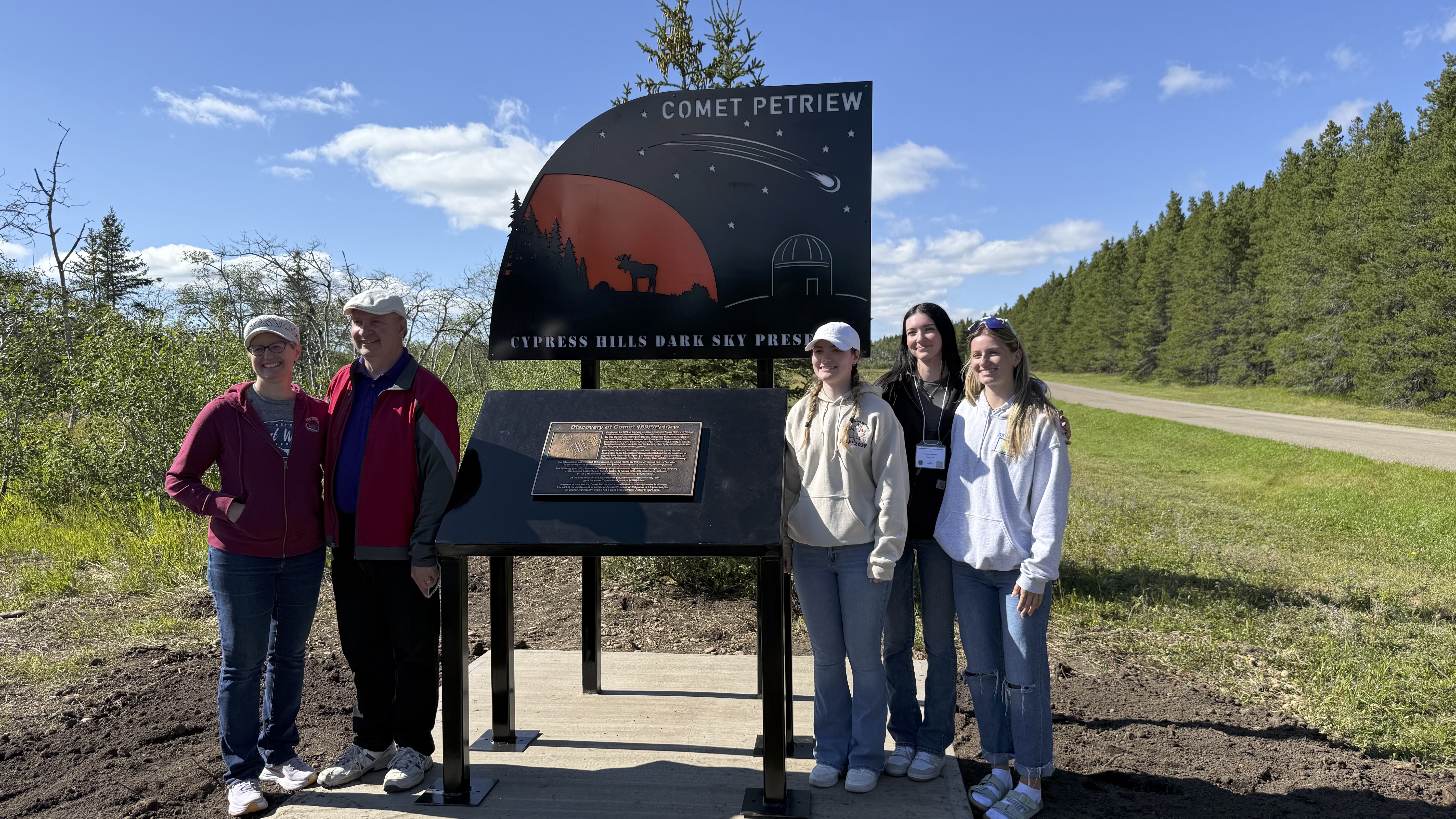
This year, a new sign and plaque were unveiled commemorating the discovery, replacing a cairn that had fallen into disrepair over 20 years. Here is the unveiling —

Park officials, fellow astronomers and Vance unveil the sign.

This was a fine event with all the star party folks in attendance, many of whom were there in 2001! — including the now adult daughters of the Petriew family.

Click on the images below to bring the photos up full screen.
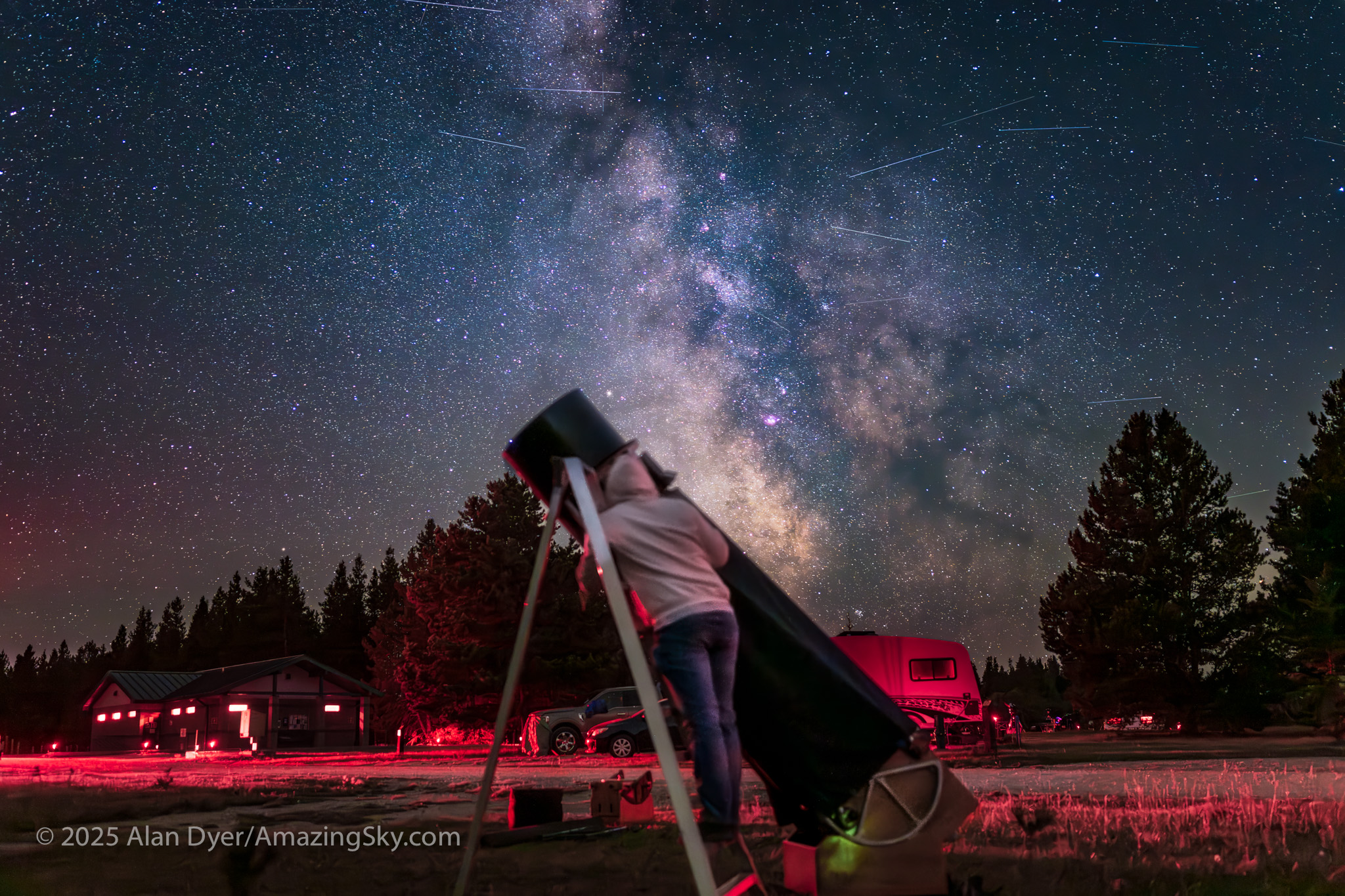
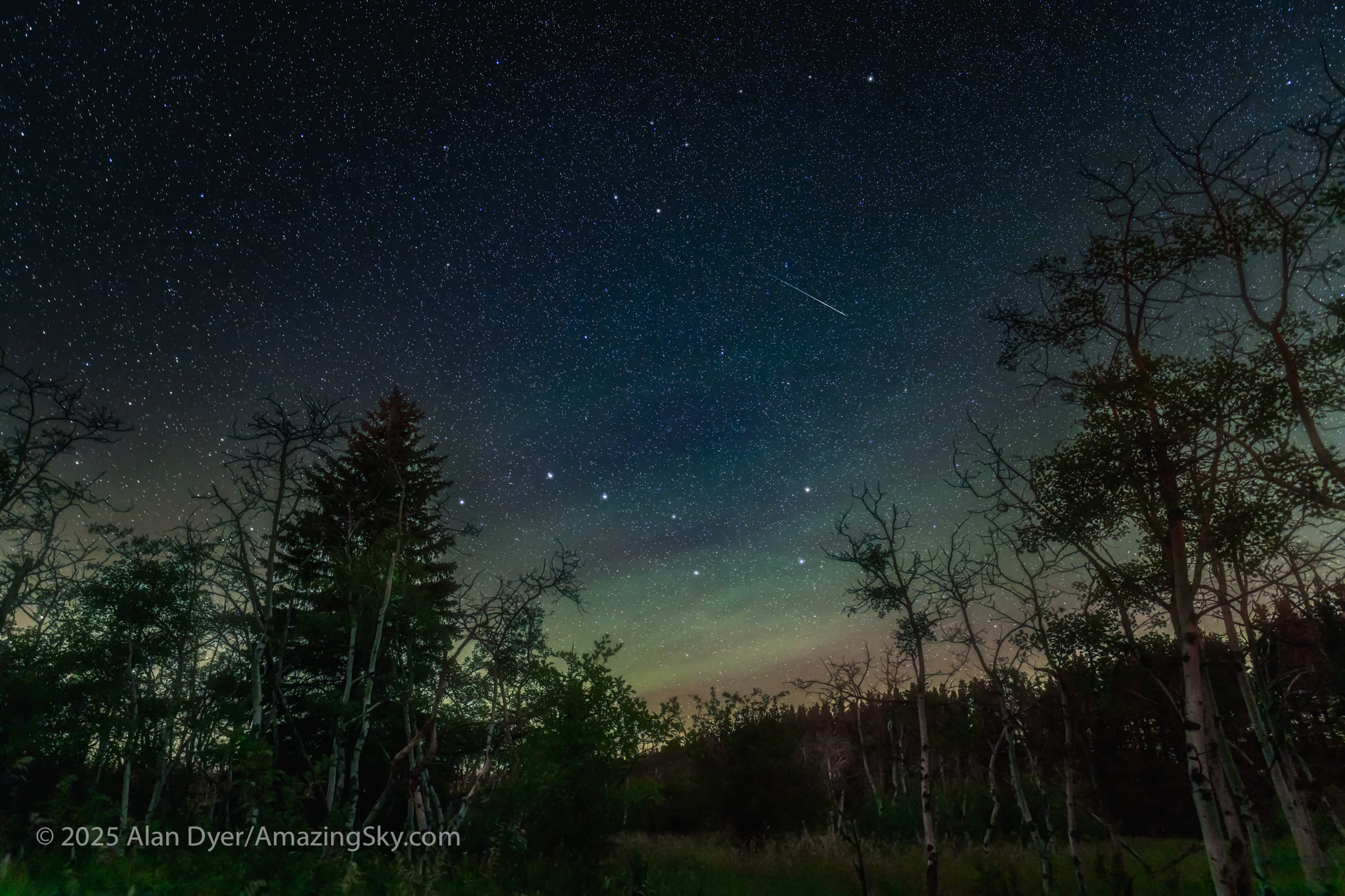
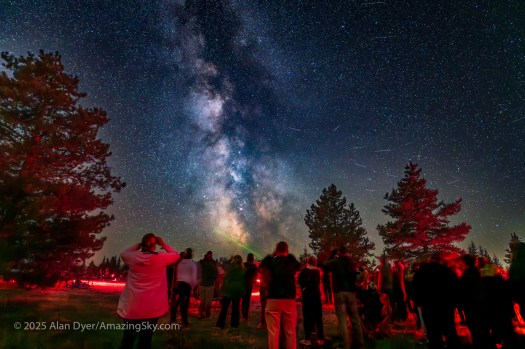
While that was a highlight of the week, the real show was the sky above. The Milky Way was on display in a sky clearer and darker than we had seen it for many years. No clouds, no smoke, and little dew and bugs! The Cypress Hills are a mecca for stargazing!
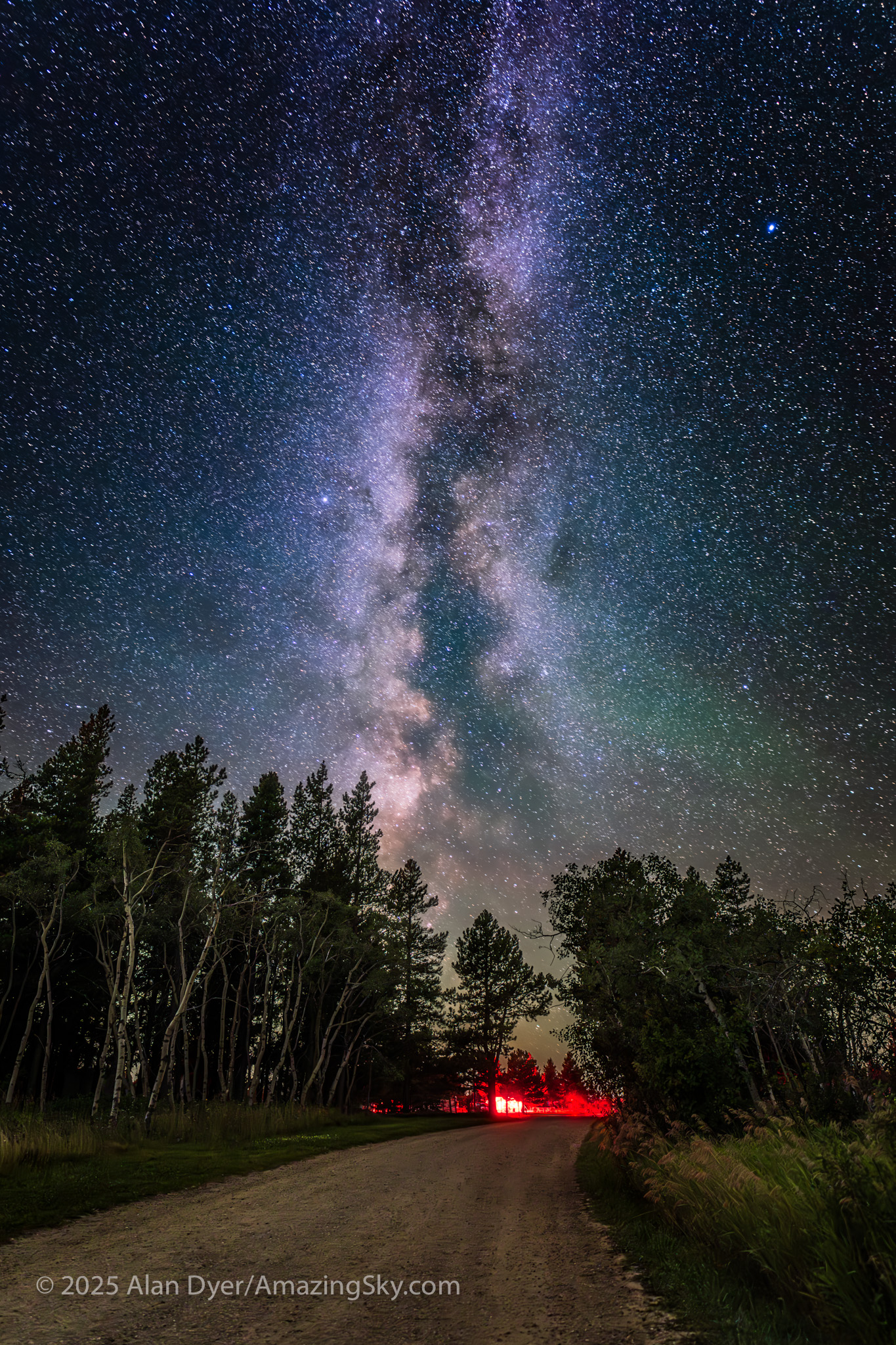
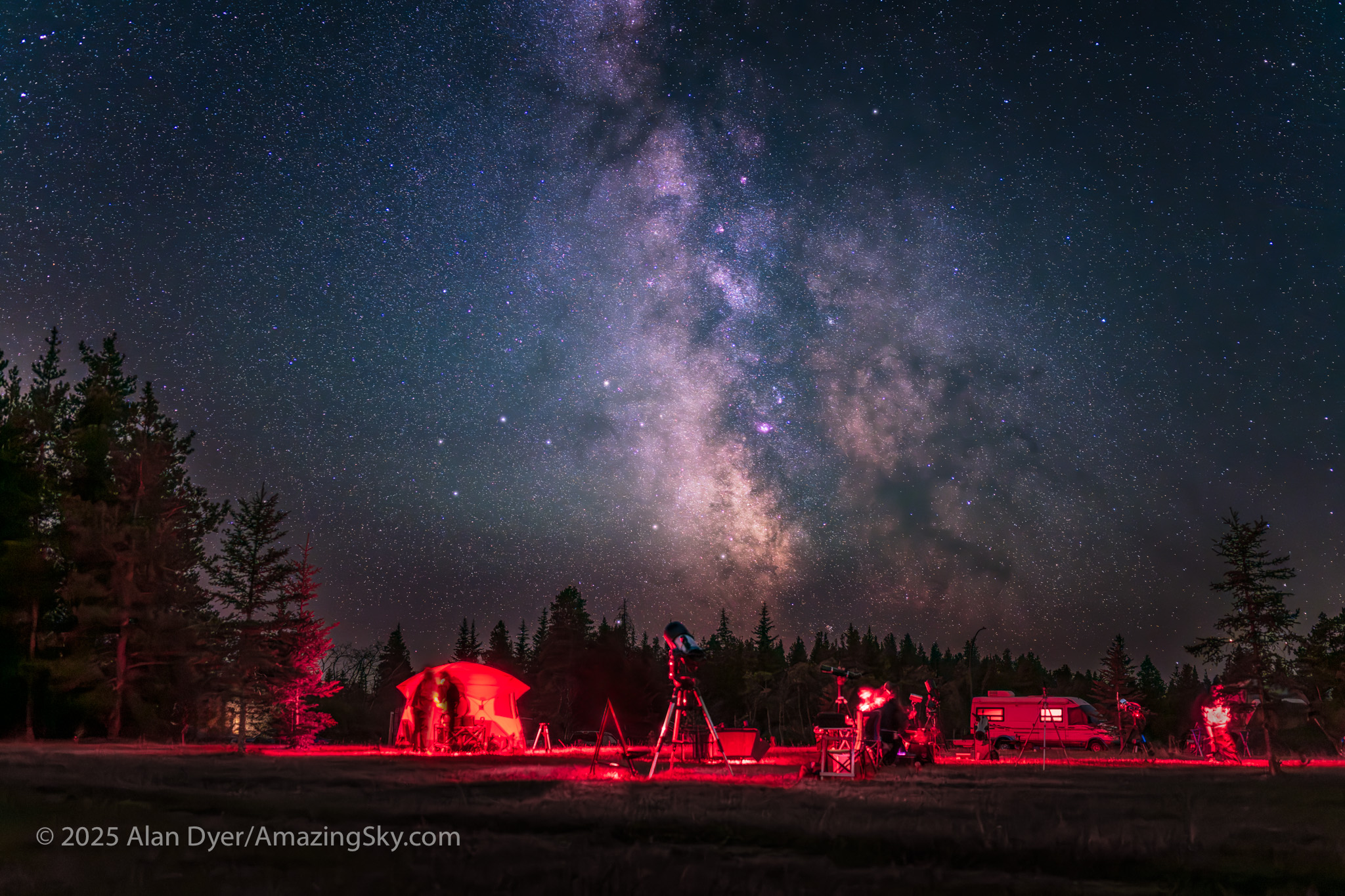
The road into the Meadows Campground, home to the Saskatchewan Summer Star Party. The SSSP is organized by the Royal Astronomical Society of Canada centres in Regina and Saskatoon.

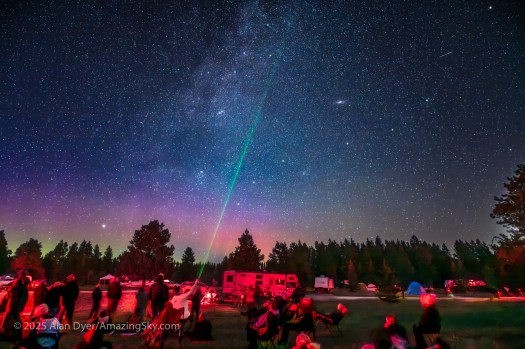
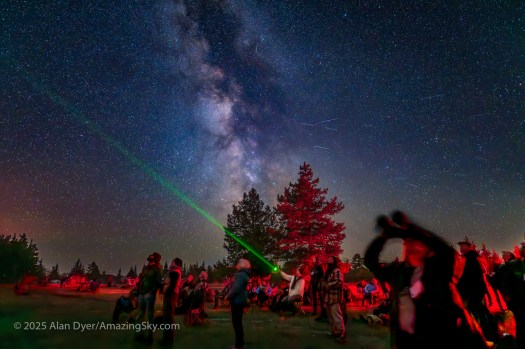
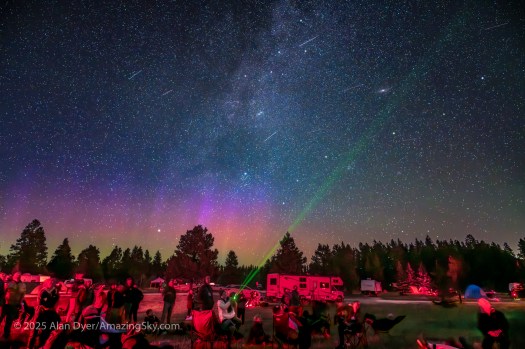
A popular part of this star party, as it is at many such events, is a laser-guided tour of naked-eye sights, where a guide points out the constellation patterns, and highlights objects that need nothing more than binoculars to see well.

In a slide show below, astronomer Ron Waldron from Saskatoon conducts the 2025 Friday night “star walk.” It’s BYOB — Bring Your Own Binoculars!
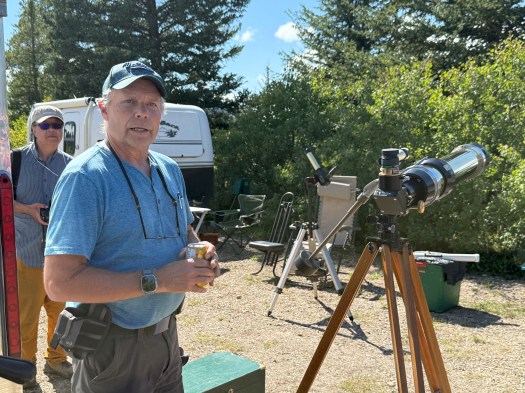
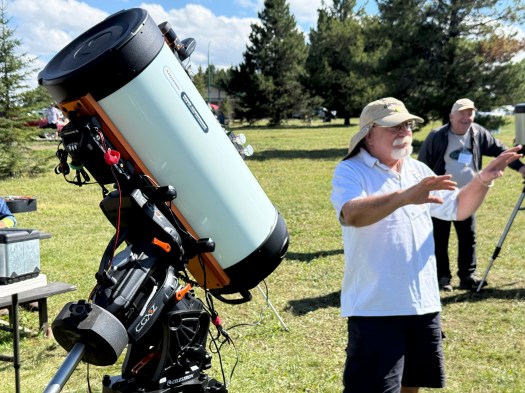
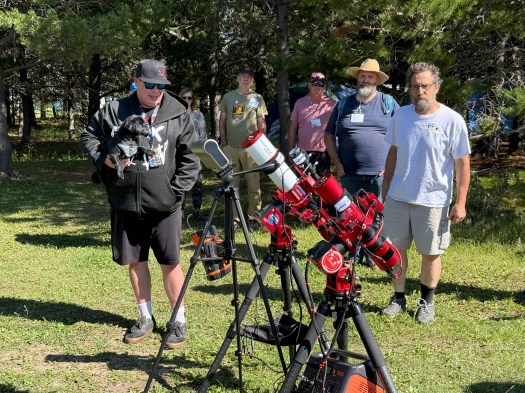
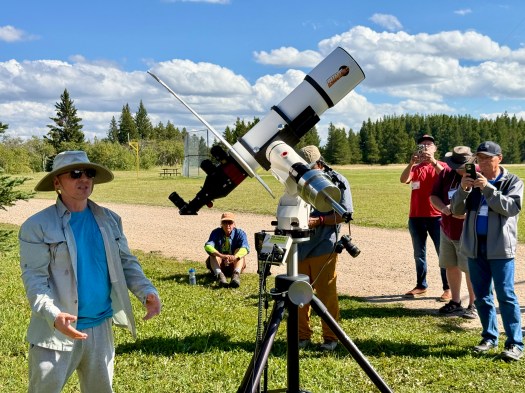
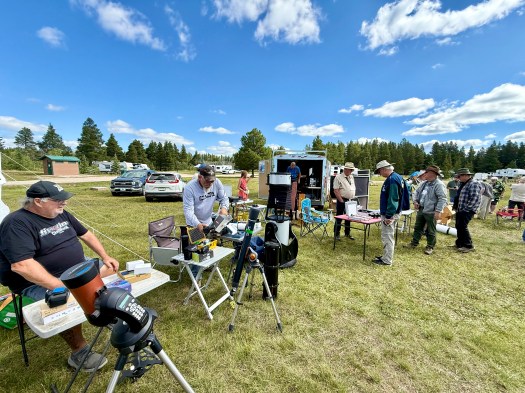
While participants stay up until the wee hours to enjoy all that the sky has to offer, every star party offers a range of daytime activities (but not happening too early!). Star parties are great places to see fields of telescopes of every description. This year the program included a formal “show-and-shine” tour of some notable gear for all to admire. And there’s the ever-popular swap meet with bargains on offer.
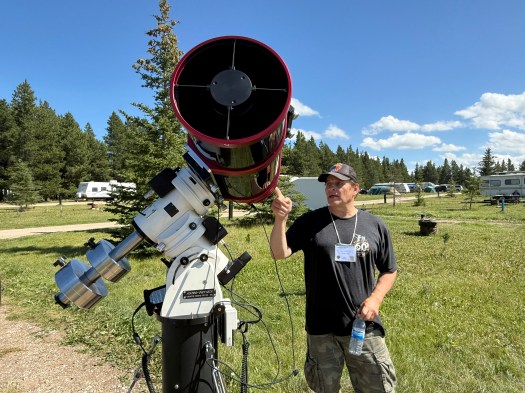
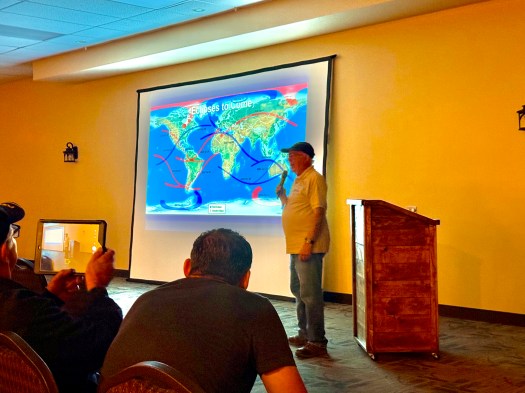
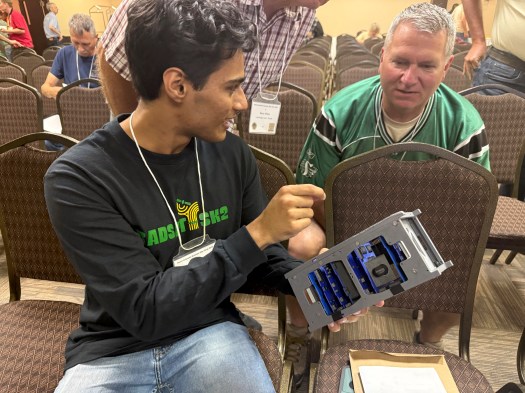
We enjoyed several talks on a range of astronomy topics, not just stargazing, but also the latest in science research. We heard about a satellite being built in Saskatchewan by U of S and U of R students, and about how the Mars Perseverance rover collects samples, in a talk from one of the researchers involved with the NASA mission.
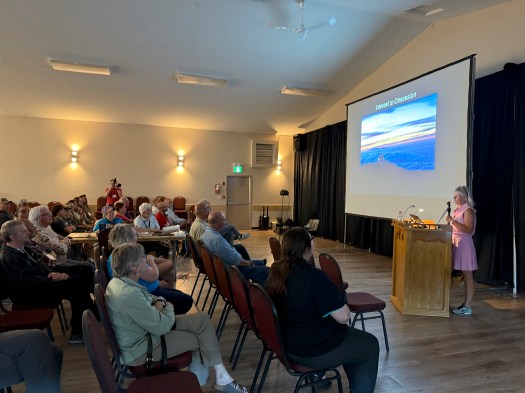
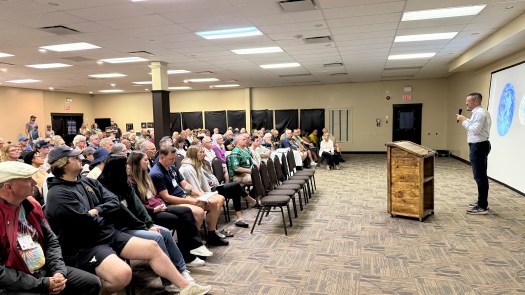
And of course there were awards and door prizes to be won! Always to a capacity crowd at the Cypress Resort conference room.
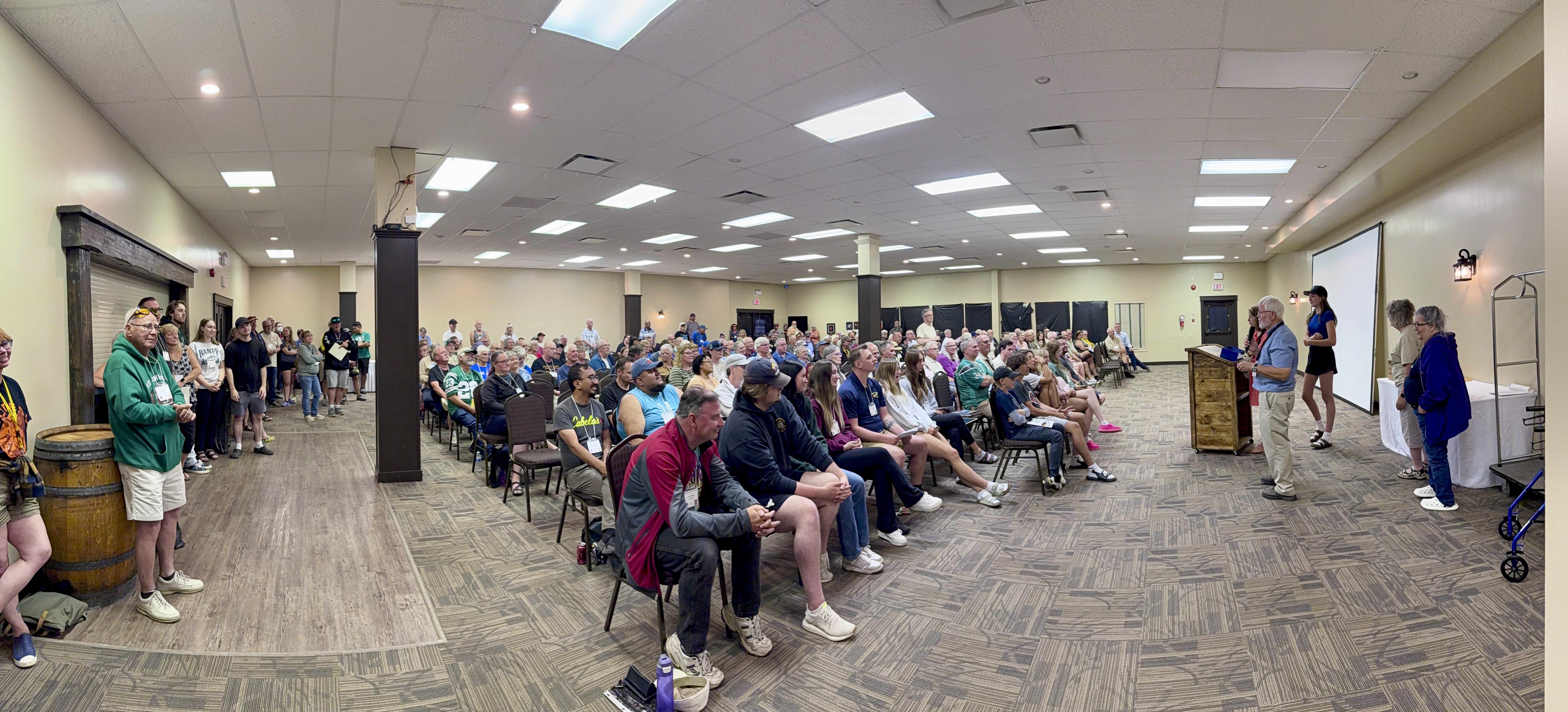
The door prizes being handed out. You must be in the room to win!

It was a superb 4 days of astronomy and stargazing. If you are in the area, I highly recommend attending. Next year’s SSSP will be August 12 to 15 inclusive — it’s always at New Moon. The website is here but won’t be updated for the 2026 event details until next year.

I won’t be there in 2026, as August 12 is the date of the next total eclipse of the Sun, which I discuss in my previous blog. I plan to be in Spain!
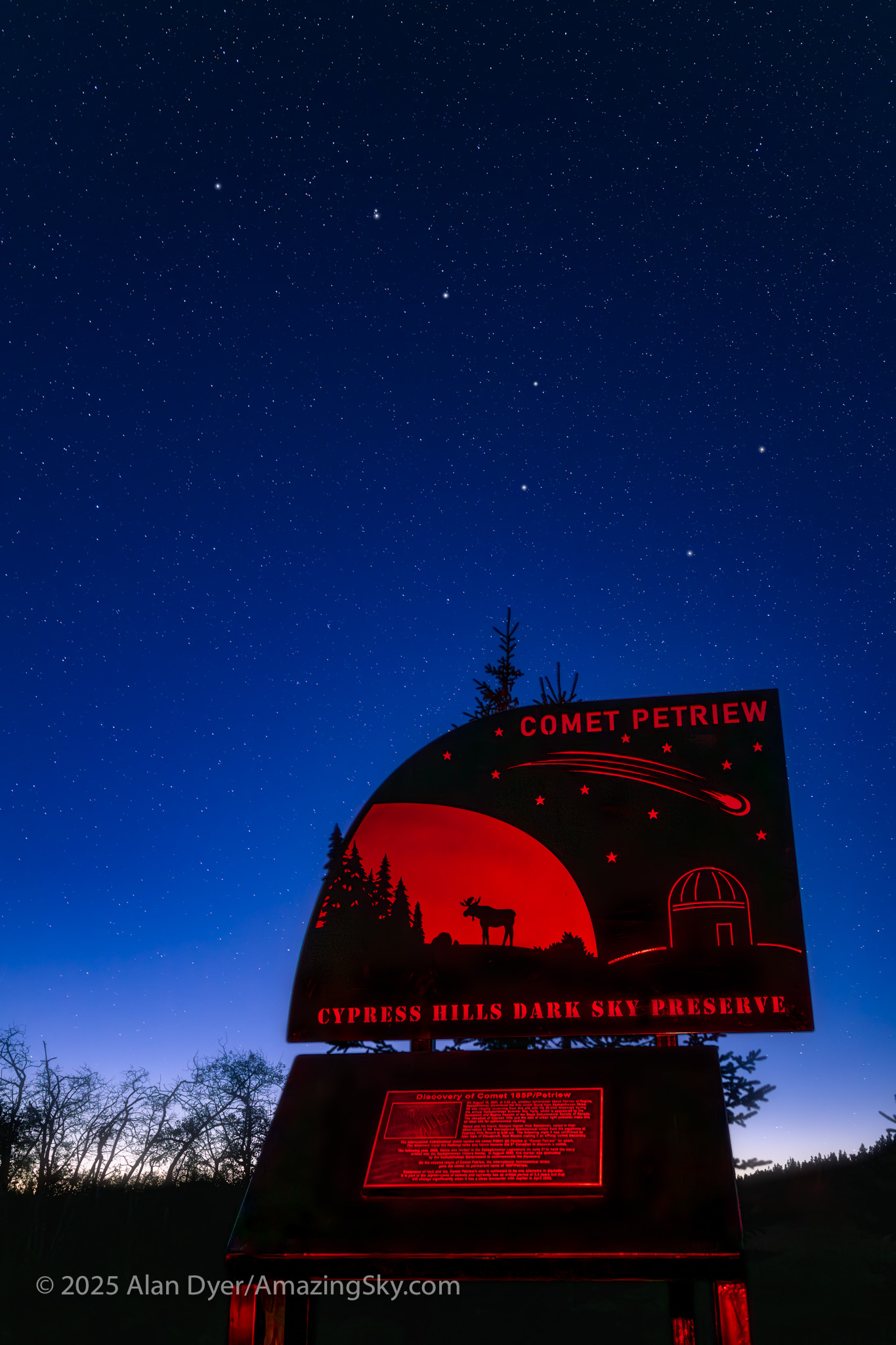
This is the new sign and plaque commemorating the discovery in 2001 of a comet here in the Cypress Hills Interprovincial Park by Vance Petriew.

But I highly recommend attending in 2026. As most people do, you may find yourself enjoying the weekend so much you make it an annual event in your calendar. I shall miss my annual August ritual of the SSSP in 2026 and in 2027 — there’s an eclipse that August, too!

But 2025 was certainly a fine year to enjoy all that the Cypress Hills have to offer under the stars.

— Alan, September 6, 2025 / AmazingSky.com
Scenes from a Southern Star Party


Panorama of a Southern Hemisphere Star Party

Last week, northerners marvelled at the splendours of the southern hemisphere sky from a dark site in Australia.

I’ve attended the OzSky Sky Safari several times and have always come away with memories of fantastic views of deep-sky wonders visible only from the southern hemisphere.

This year was no exception, as skies stayed mostly clear for the seven nights of the annual star party near Coonabarabran, New South Wales.

About 35 people from the U.S., Canada and the U.K. attended, to take in views through large telescopes supplied by the Australian branch of the Texas-based Three Rivers Foundation. The telescopes come with the best accessory of all: knowledgeable Aussies who know the southern sky and are delighted to present its splendours to us visiting sky tourists.

Here are a few of the night scenes from last week.

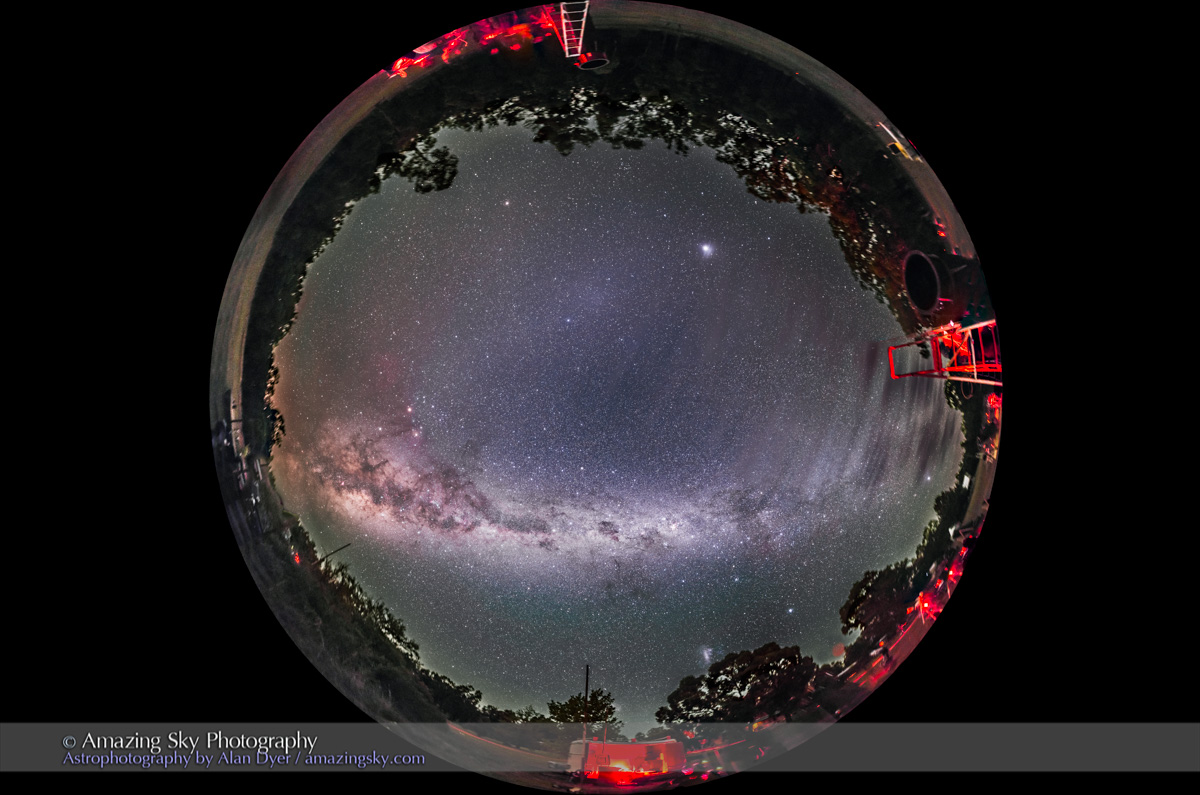
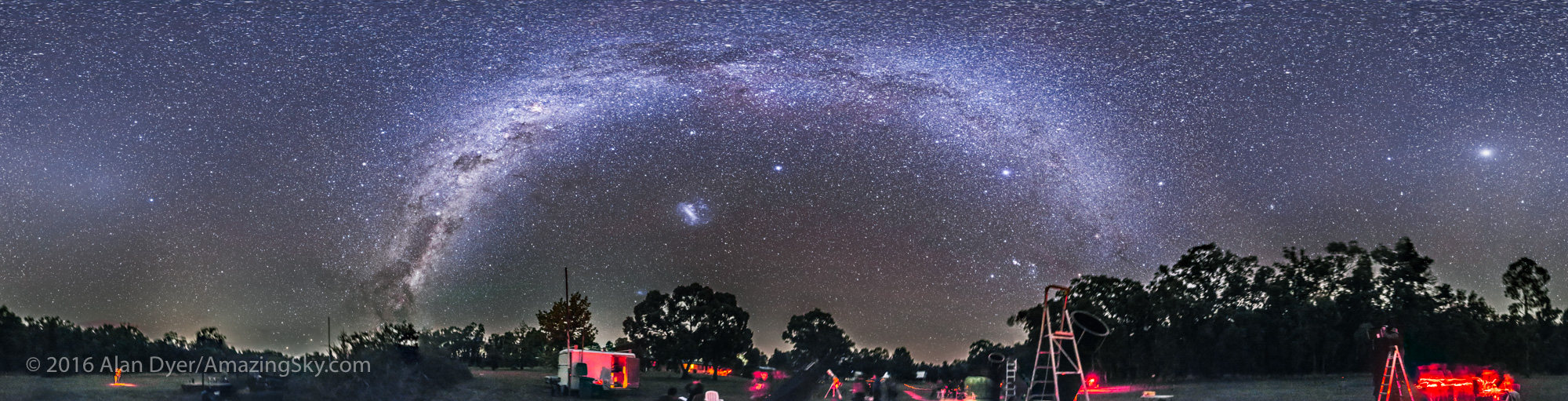
The lead image above shows a 360° panorama of the observing field and sky from early in the evening, as Orion sets in the west to the right, while Scorpius rises in the east to the left. The Large Magellanic Cloud is at centre, while the Southern Cross shines to the upper left in the Milky Way.

Southern Sky Panorama #2 (Spherical)
This is a stitch of 8 panels, each with the 14mm Rokinon lens at f/2.8 and mounted vertical in portrait orientation. Each exposure was 2.5 minutes at ISO 3200 with the Canon 5D MkII, with the camera tracking the sky on the iOptron Sky Tracker. Stitched with PTGui software with spherical projection.

This panorama, presented here looking south in a fish-eye scene, is from later in the night as the galactic core rises in the east. Bright Jupiter and the faint glow of the Gegenschein are visible at top to the north.

Each night observers used the big telescopes to gaze at familiar sights seen better than ever under Australian skies, and new objects never seen before.

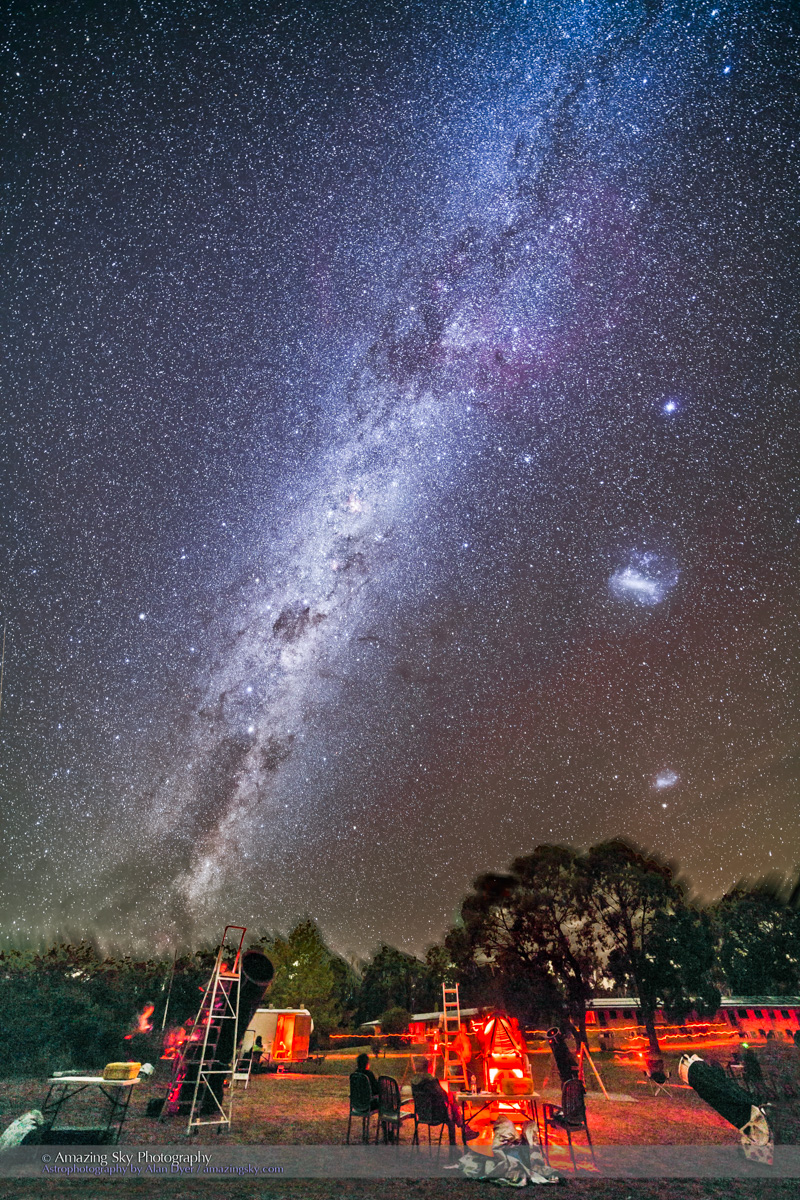
Dark Emu Rising over OzSky Star Party
This is a stack of 4 x 5 minute exposures with the Rokinon 14mm lens at f/2.8 and Canon 5D MkII at ISO 1600, all tracked on the iOptron Sky Tracker, plus one 5-minute exposure untracked of the ground to prevent it from blurring. The trees are blurred at the boundary of the two images, tracked and untracked.

The Dark Emu of aboriginal sky lore rises above some of the 3RF telescopes.

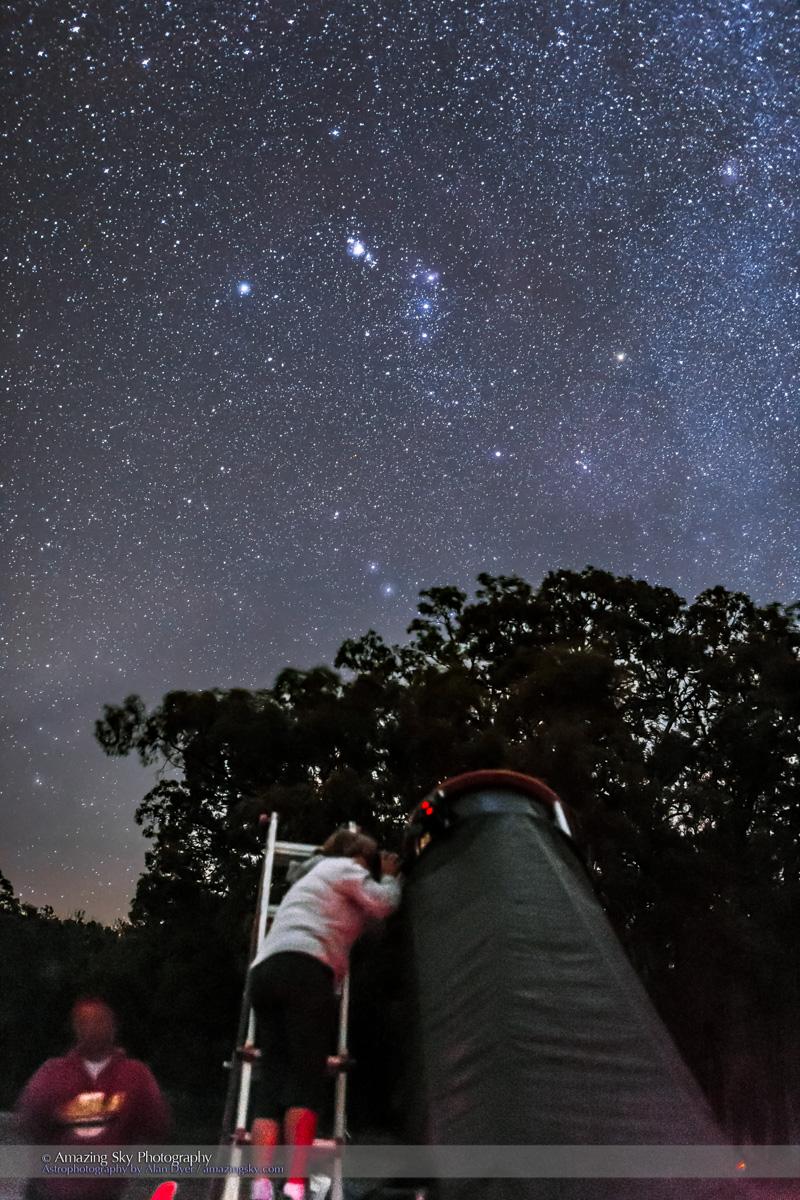
Observer Looking at Orion from Australia
This is a single untracked 13-second exposure with the 35mm lens at f/2 and Canon 6D at ISO 6400.

Carole Benoit from Calgary looks at the Orion Nebula as an upside-down Orion sets into the west.

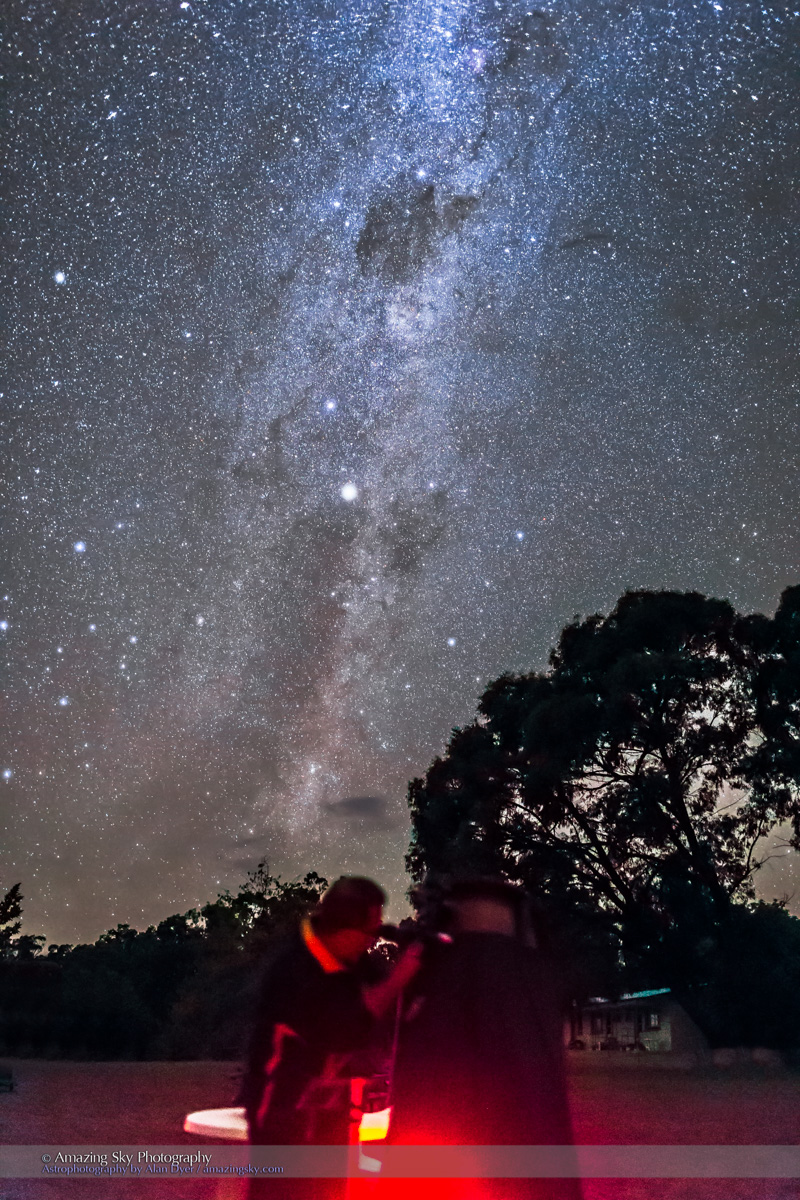
Observer Looking at Southern Milky Way
This is a single untracked 10-second exposure with the 35mm lens at f/2 and Canon 6D at ISO 6400.

John Bambury hunts down an open cluster in the rich southern Milky Way near Carina and Crux.

Observer Looking at the Southern Sky #2
 This is a single 13-second untracked exposure with the 35mm lens at f/2 and Canon 6D at ISO 6400.

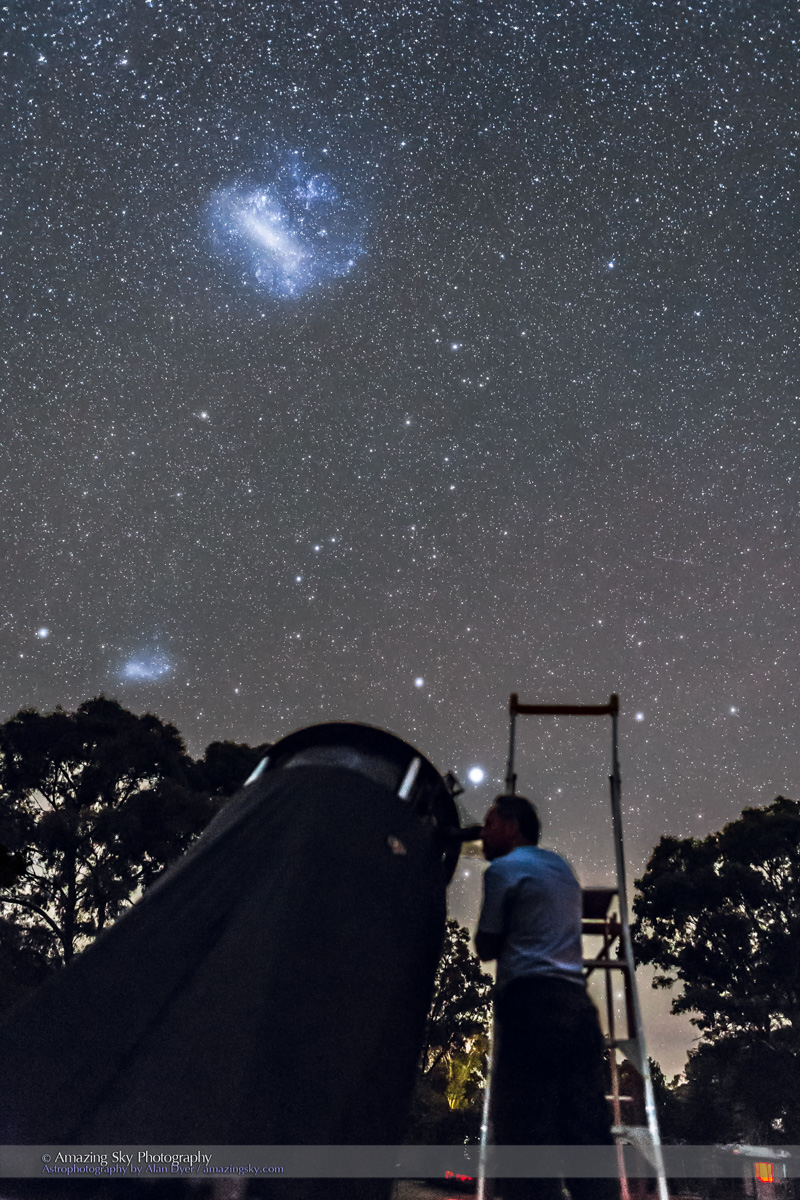
David Batagol peers at a faint galaxy below the Large Magellanic Cloud, a satellite galaxy to our Milky Way.

Check here for details on the OzSky Star Safari.

— Alan, April 11, 2016 / © 2016 Alan Dyer / www.amazingsky.com

Scenes at the Texas Star Party


The galactic centre region of the Milky Way in Sagittarius and Scorpius, over the upper field of the Texas Star Party, near Fort Davis, Texas, May 13, 2015. About 600 people gather here each spring for a star party under very dark skies near the MacDonald Observatory. Sagittarius is left of centre and Scorpius is right of centre with the planet Saturn the bright object at the top edge right of centre. The dark lanes of the Dark Horse and Pipe Nebula areas lead from the Milky Way to the stars of Scorpius, including Antares. The semi-circular Corona Australis is just clearing the hilltop at left of centre. This is a composite of 5 x 3 minute exposures with the camera tracking the sky for more detail in the Milky Way without trailing. Each tracked exposure was at ISO 1600. The ground comes from 3 x 1.5-minute exposures at ISO 3200 taken immediately after the tracked exposures but with the drive turned off on the tracker. All are with the 24mm lens at f/2.8 and filter-modified Canon 5D MkII camera. The ground and sky layers were stacked and layered in Photoshop. The tracker was the Sky-Watcher Star Adventurer. High haze added the natural glows around the stars — no filter was employed here.

The stars at night shine big and bright, deep in the heart of Texas.

Last week several hundred stargazers gathered under the dark skies of West Texas to revel in the wonders of the night sky. I was able to attend the annual Texas Star Party, a legendary event and a mecca for amateur astronomers held at the Prude Ranch near Fort Davis, Texas.

Some nights were plagued by clouds and thunderstorms. but here are some scenes from a clear night, with several hundred avid observers under the stars and Milky Way. Many stargazers used giant Dobsonian reflector telescopes to explore the faintest of deep-sky objects in and beyond the Milky Way.

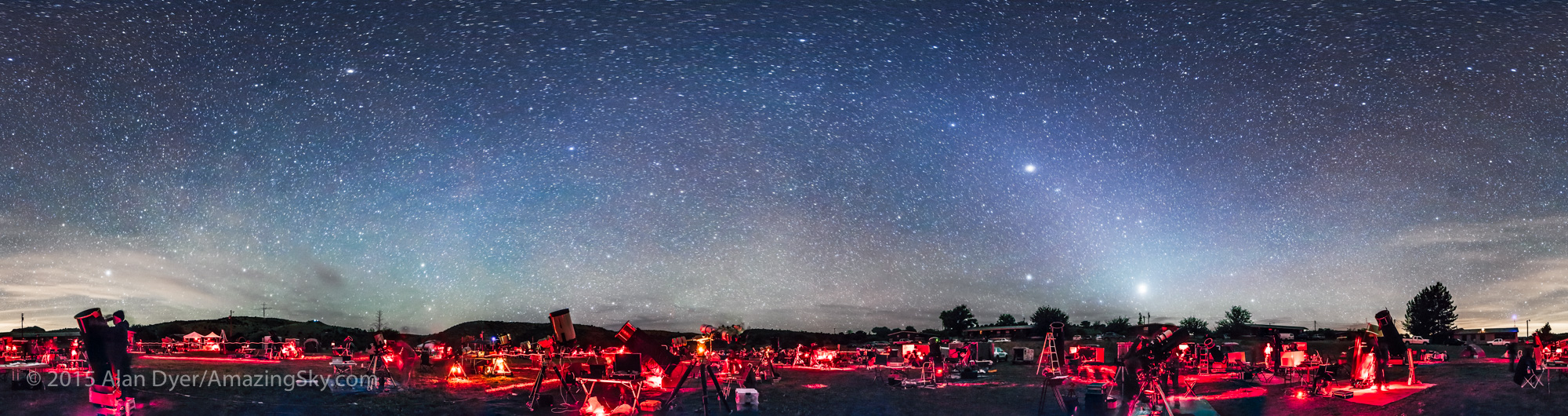
A 360° panorama of the upper field of the Texas Star Party at the Prde Ranch near Fort Davis, TX, May 13, 2015, taken once the sky got astronomically dark. The panorama shows the field of telescopes and observers enjoying a night of deep-sky viewing and imaging. Venus is the bright object at right of centre and Jupiter is above it. The Zodiacal Light stretches up from the horizon and continues left across the sky in the Zodiacal Band to brighten in the east (left of centre) as the Gegeneschein. I shot this with a 14mm lens, oriented vertically, with each segment 60 seconds at f/2.8 and with the Canon 5D MkII at ISO 3200. The panorama is made of 8 segements at 45° spacings. The segments were stitched with PTGui software.
A 360° panorama of the upper field of the Texas Star Party at the Prde Ranch near Fort Davis, TX, May 13, 2015, taken once the sky got astronomically dark. The panorama shows the field of telescopes and observers enjoying a night of deep-sky viewing and imaging. Venus is the bright object at right of centre and Jupiter is above it. The Zodiacal Light stretches up from the horizon and continues left across the sky in the Zodiacal Band to brighten in the east (left of centre) as the Gegeneschein.
I shot this with a 14mm lens, oriented vertically, with each segment 60 seconds at f/2.8 and with the Canon 5D MkII at ISO 3200. The panorama is made of 8 segements at 45° spacings. The segments were stitched with PTGui software.

Observers at the Texas Star Party explore the wonders of the deep sky under the rising Milky Way, in May 2015. Sagittarius and Scorpius are in the background, with the centre of the Galaxy rising in the southeast. This is a single 30-second exposure at f/2 with the 24mm lens and Canon 5D MkII at ISO 4000.

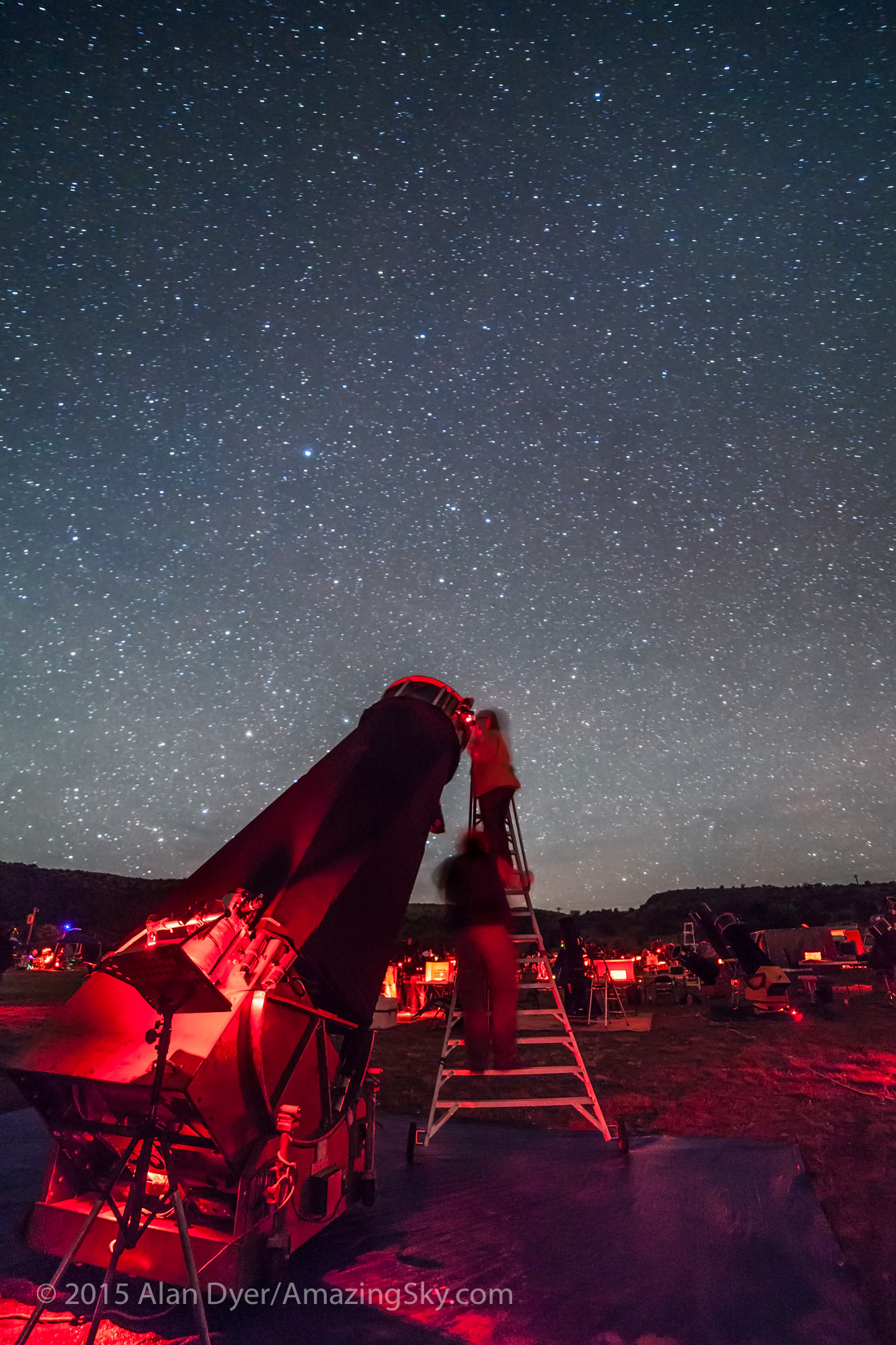
Expert deep-sky observers Larry Mitchell and Barbara Wilson gaze skyward with Larry’s giant 36-inch Dobsonian telescope at the Texas Star Party, May 2015. This is a single 60-second exposure with the 14mm lens at f/2.8 and Canon 5D MkII at ISO 3200.

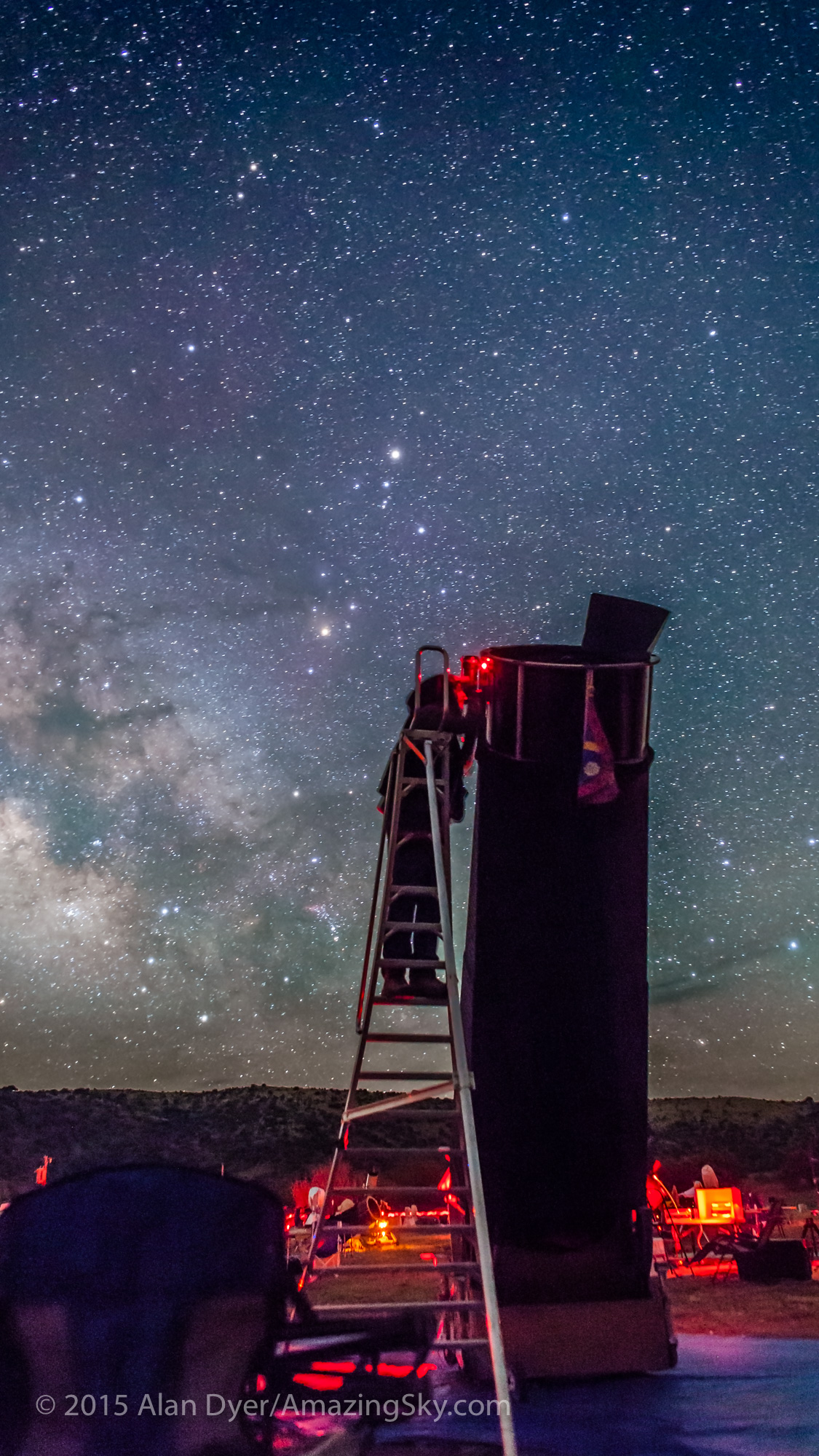
A deep-sky observer at the top of a tall ladder looking through a tall and large Dobsonian telescope, at the Texas Star Party, May 2015. Scorpius is rising in the background; Saturn is in the head of Scorpius as the bright star above centre. Anatares is just below Saturn. This is a single 30-second exposure at f/2.5 with the 24mm lens and Canon 5D MkII at ISO 6400.

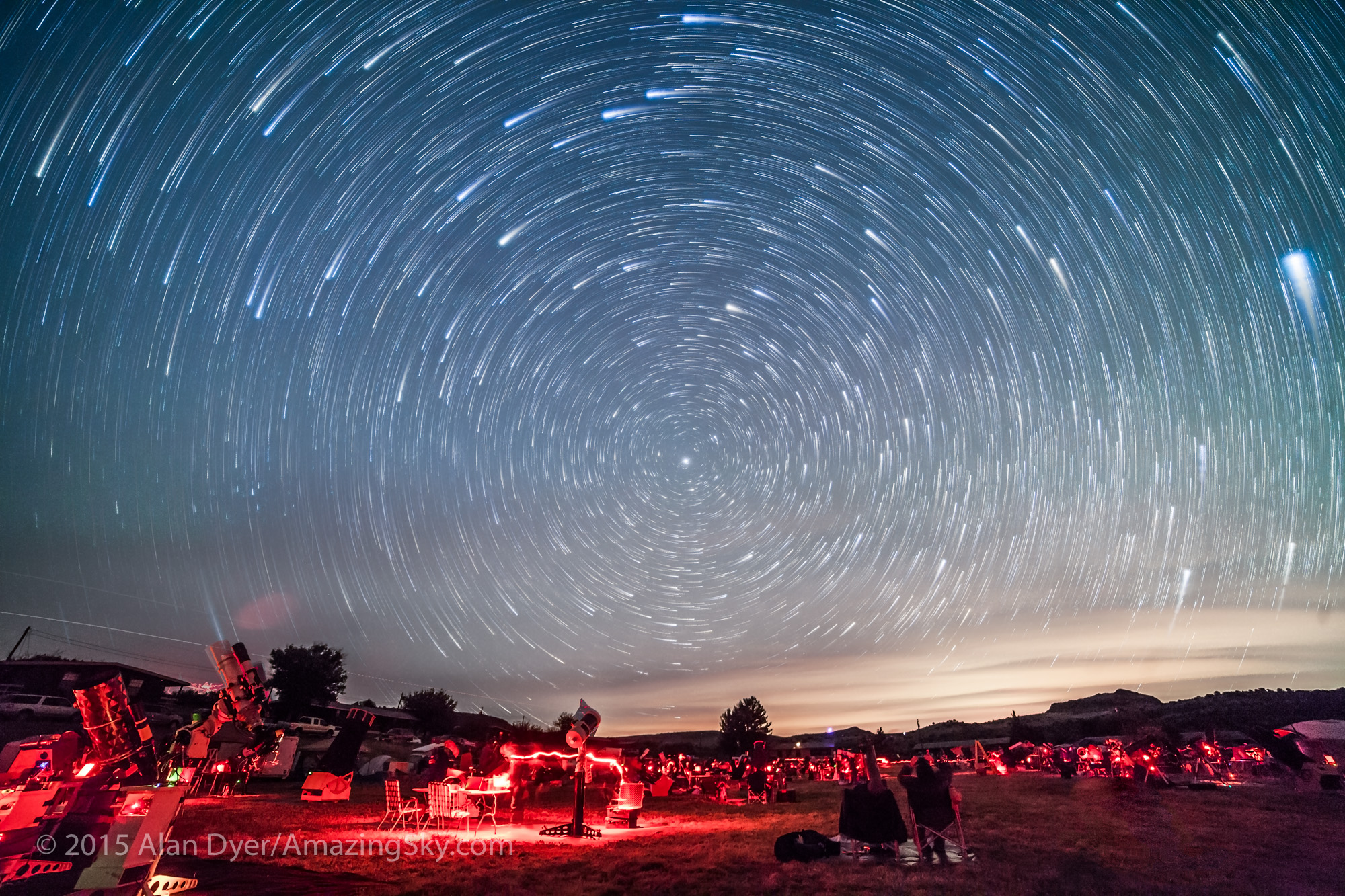
Circumpolar star trails over the upper field of the Texas Star Party, May 13, 2015. The star party attracts hundreds of avid stargazers to the Prude Ranch near Fort Davis, Texas each year to enjoy the dark skies. The three observing fields are filled with telescopes from the basic to sophisticated rigs for astrophotography. I aimed the camera to look north over the field to capture the stars circling around Polaris in circumpolar trails over about 1 hour. Some cloud and haze obscured parts of the sky. Lights from cities to the north add the sky glow at right. The streaks at top are from the stars of the Big Dipper. This is a stack of 55 exposures, each 1 minute long, at f/2.8 with the 14mm lens and Canon 5D MkII at ISO 3200. The foreground comes from a single image in the series, masked and layered in Photoshop. The images were stacked using the Long Trails tapering effect with the Advanced Stacker Actions from Star Circle Academy.
Circumpolar star trails over the upper field of the Texas Star Party, May 13, 2015. I aimed the camera to look north over the field to capture the stars circling around Polaris in circumpolar trails over about 1 hour. Some cloud and haze obscured parts of the sky. Lights from cities to the north add the sky glow at right. The streaks at top are from the stars of the Big Dipper.
This is a stack of 55 exposures, each 1 minute long, at f/2.8 with the 14mm lens and Canon 5D MkII at ISO 3200. The foreground comes from a single image in the series, masked and layered in Photoshop. The images were stacked using the Long Trails tapering effect with the Advanced Stacker Actions from Star Circle Academy.

I extend my thanks to the organizers for the great event, and for the opportunity to speak to the group as one of the featured evening speakers. It was great fun!

– Alan, May 17, 2015 / © 2015 Alan Dyer / www.amazingsky.com

Visiting the Royal Observatory of Spain


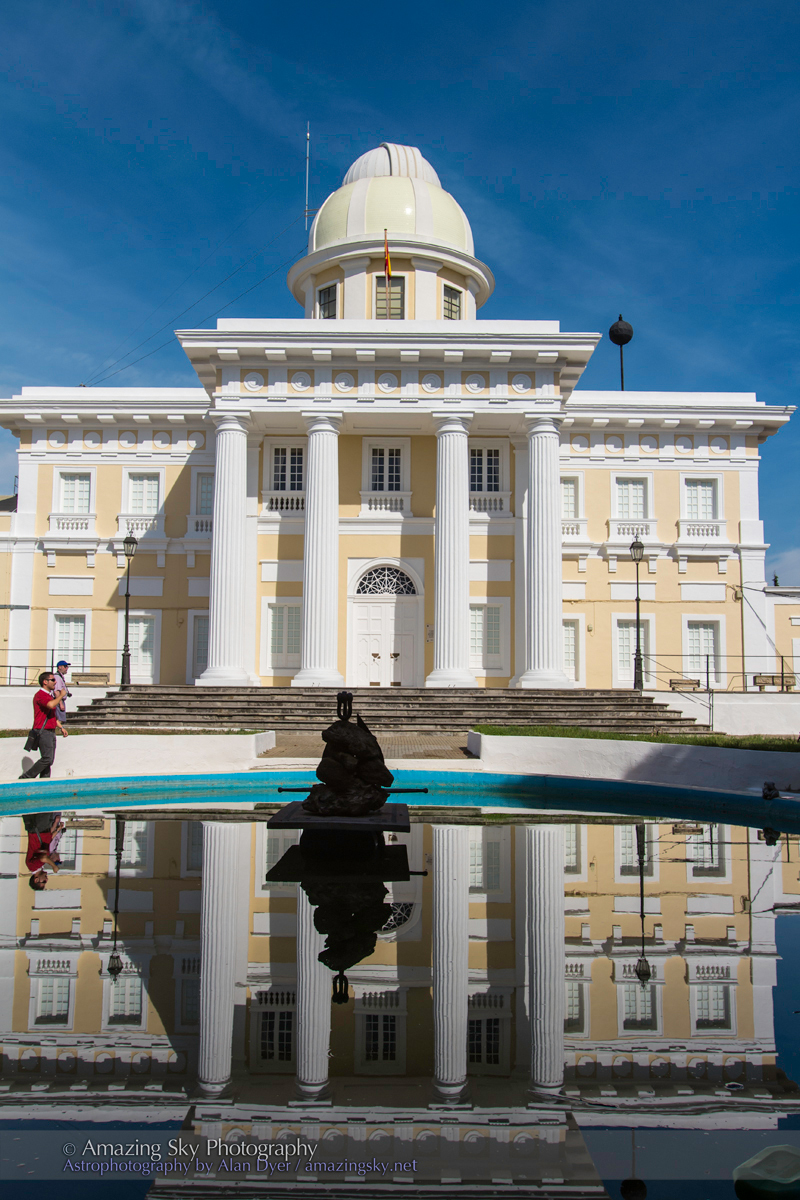
Royal Observatory of Spain, CadizThree days ago we were accorded the rare privilege of touring the Royal Observatory of Spain in Cadiz.

Founded in the late 18th century Spain’s Royal Observatory served (and continues to serve) the same purpose as the Greenwich Observatory in England – providing an accurate source of time for the navy and country.

Unlike Greenwich, the Royal Observatory of Spain is on a restricted access military base and is not open to the public. So it was through special arrangement that our eclipse group was able to visit and receive a guided tour as part of our day in Cadiz.

Above is the main observatory building, which today houses a telescope and laser range finding system for geodesy work. On display were a host of brass telescopes and surveying instruments from the 18th and 19th centuries.

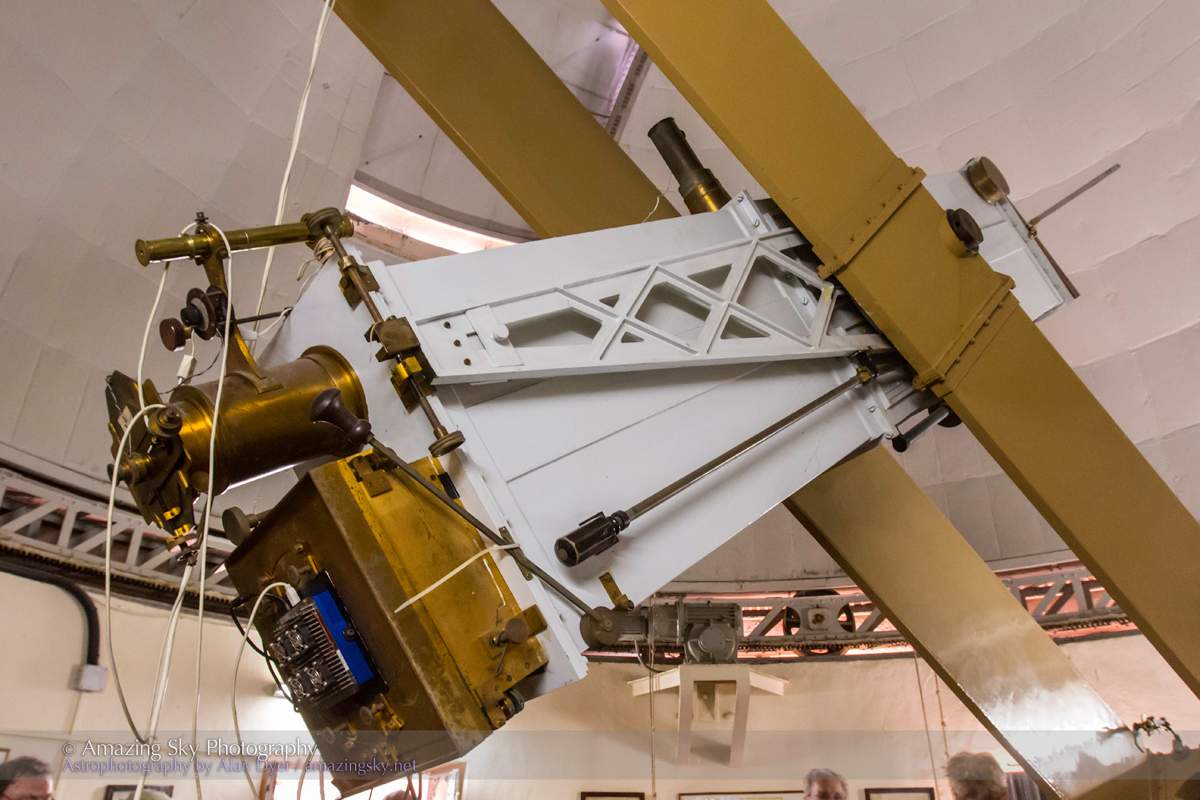
Astrographic Refractor, Royal Observatory of Spain, Cadiz

Above, in another observatory building, we saw a classic 12-inch astrographic refractor, used to take early photos of the night sky on glass plates, as part of the international Cartes du Ciel program in the 19th century.

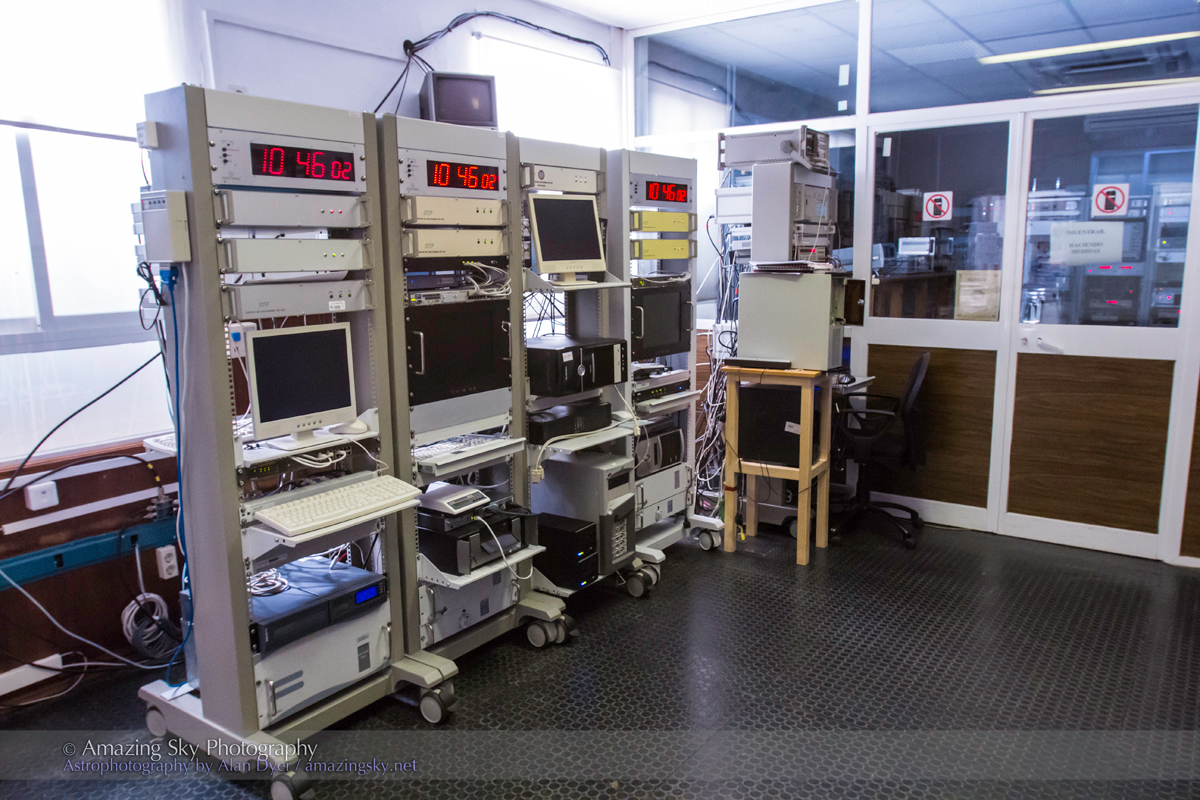
Time-Keeping at Royal Observatory of Spain, Cadiz

This is the readout of the precise time, being maintained by cesium clocks in a climate controlled room next door.

Library Room at Royal Observatory of Spain, Cadiz

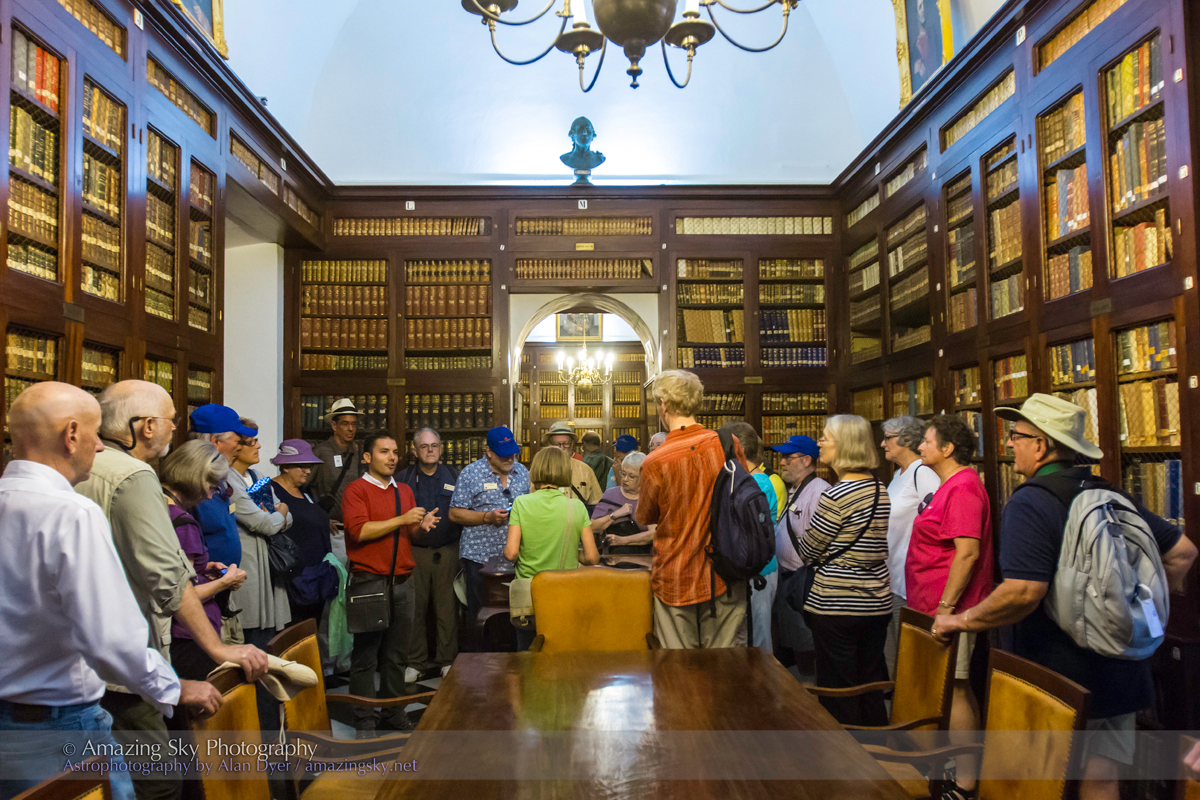
The real treat was a tour through the Observatory’s library, a national treasure. Some 40,000 volumes date from as far back as the invention of the printing press in Gutenberg. The collection includes books on every science and engineering subject, and reports from all the historic science expeditions of the time.

Eclipse Book at Royal Observatory of Spain, Cadiz

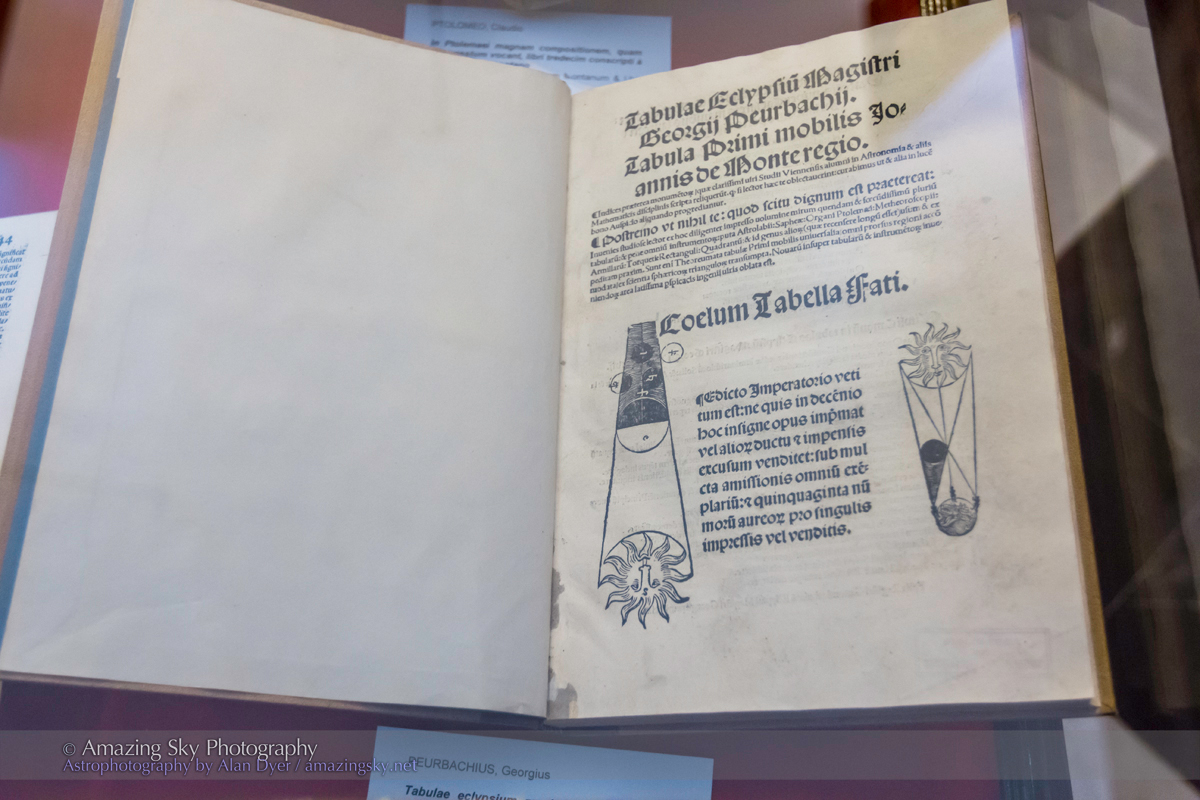
One volume, shown here, is a 1514 book of eclipse tables.

Classic books at Royal Observatory of Spain, Cadiz

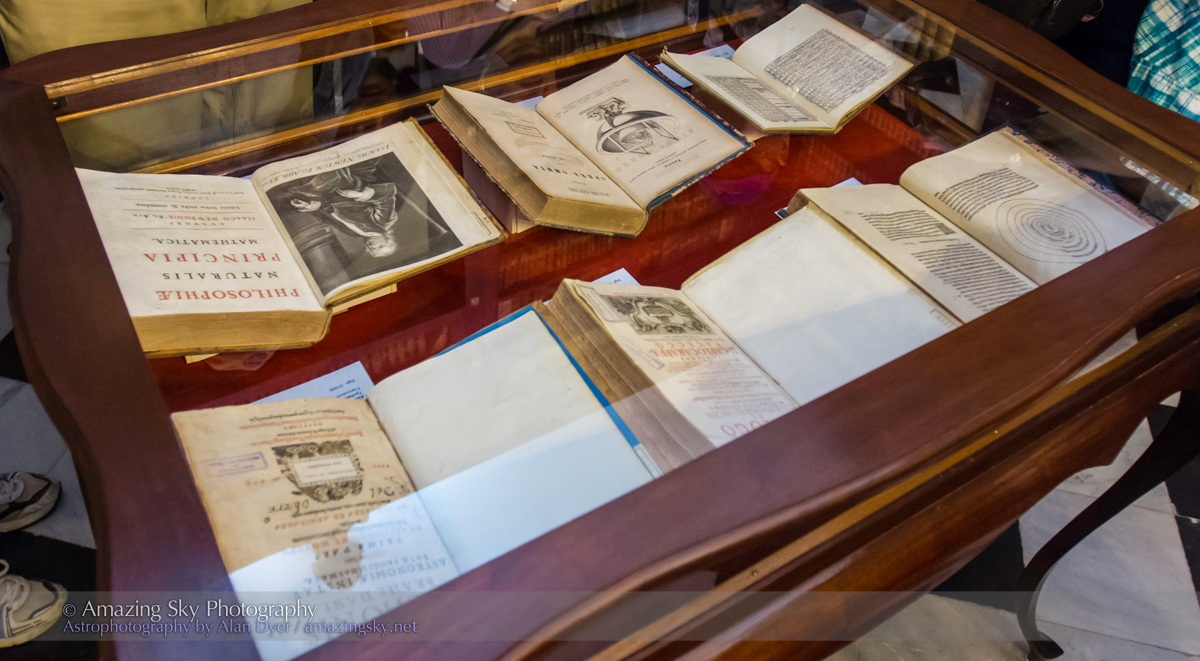
Another case held early editions, often annotated by their owners, of the seminal works by Copernicus, Galileo, Kepler, and Newton. We were very impressed.

Tomorrow our cruise ship docks at the Canary Islands, then we sail southwest with the trade winds to meet the shadow of the Moon on November 3 at latitude 18°06′ N and 39°19′ W.

– Alan, October 24, 2013 / © 2013 Alan Dyer (posted from at sea north of the Canary Islands)

Imaging Down Under in Oz


I like shooting in Australia as I have the good fortune of having family there who kindly allow me to store equipment down under. On each trip over the last decade or so, I’ve brought down various bits of gear, not to mention clothing and other necessities, to be left on site for the next shooting expedition. Now, when I go, I just have to take camera gear, a computer & gadgets, and a couple of days clothing. All else is already there: an Astro-Physics 400 mount, an AP Traveler 105mm apo refractor, a 10-inch compact Dobsonian reflector, and all kinds of accessories, eyepieces, power supplies, adapters, etc. etc. The gear fills several watertight and dust proof storage bins as well as a large golf case brought down originally in 2002.

Each trip usually means taking a new autoguider system as well, since the technology changes so much from trip to trip. In December 2010 I brought two systems, the Santa Barbara Instruments SG-4, shown here, with its e-finder lens, and the Orion Starshoot with a small Borg 50mm guidescope, as a back up just in case the stand-alone SG-4 did not work in the southern hemisphere on a mount it had not been calibrated on and had never “seen” before. I needn’t of worried – the SG-4 worked beautifully — perfectly guided shots with a push of a button. Stunning!

But it is an item I have to take back and forth — like the cameras, it’s all a little too costly to have multiple copies in both the northern and southern hemispheres, at least vs. the size and weight involved in packing and carrying them. With mounts and scopes there is no question — yes, they are costly but there is no way I’m hauling all that gear back and forth for every trip. So at home, I have other mounts and scopes to take the role of the wonderful AP gear that has emigrated to Oz.

– Alan, December 2010 / Images © 2010 Alan Dyer