Chasing the Annular Eclipse


Like all eclipses, seeing the October 14 annular eclipse of the Sun was not a certainty. As good luck and planning would have it, the sky and location could not have been better!

Annular eclipses of the Sun don’t present the spectacle of a total eclipse. Because the Moon is near its farthest point from Earth, its disk is not large enough to completely cover the Sun. At mid-eclipse, as I show below, a ring of sunlight (dubbed a “ring of fire”) remains, still too bright to view without a solar filter. 

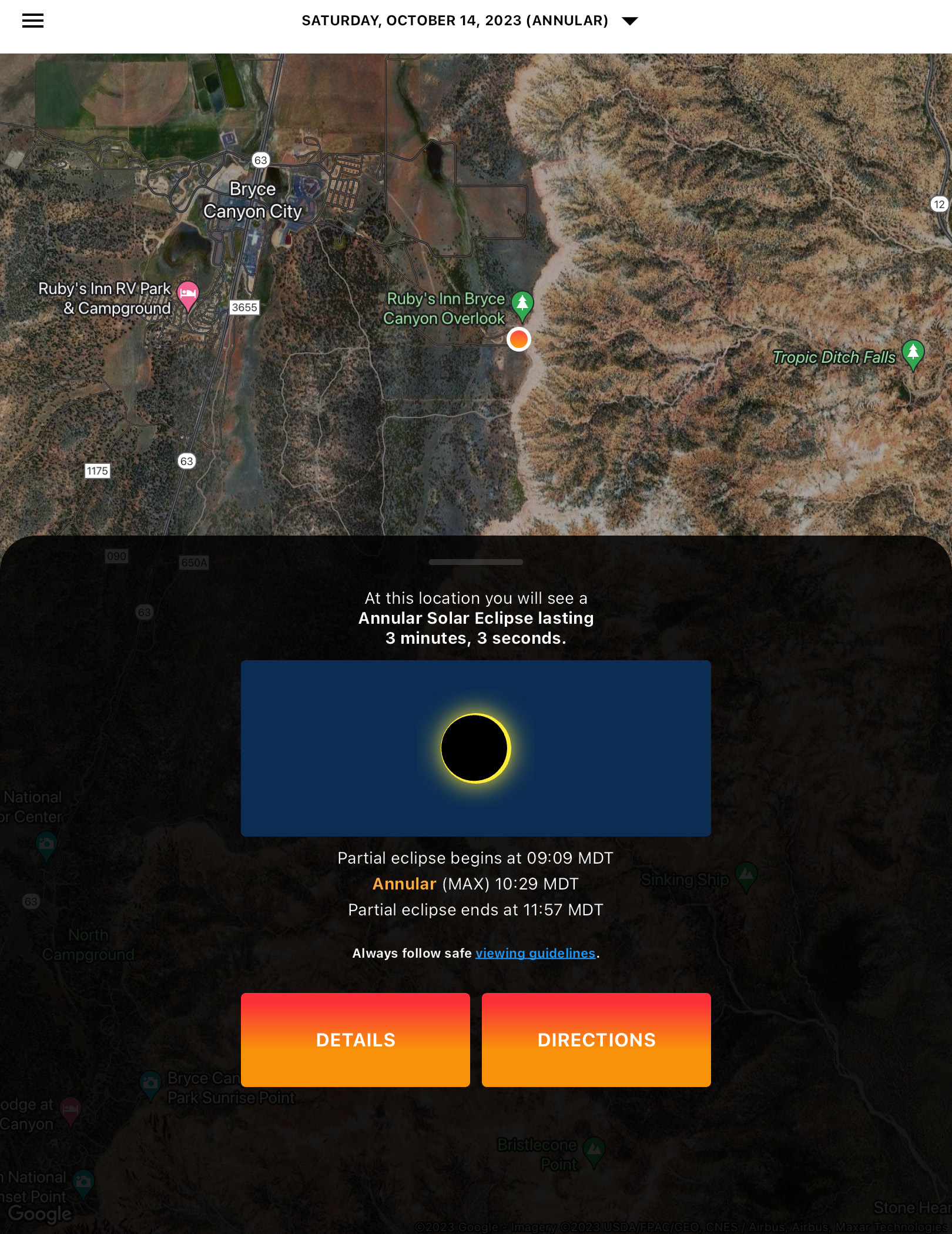
The October 14, 2023 annular solar eclipse, in a single image captured at mid-eclipse, at 10:29 am MDT at the Ruby’s Inn Overlook on the rim of Bryce Canyon, Utah, a site well south of the centreline, with 3m03s of annularity.

While lacking the jaw-dropping beauty of a total, annular eclipses are rare and unique enough that every ardent skywatcher should make a point of seeing one. 

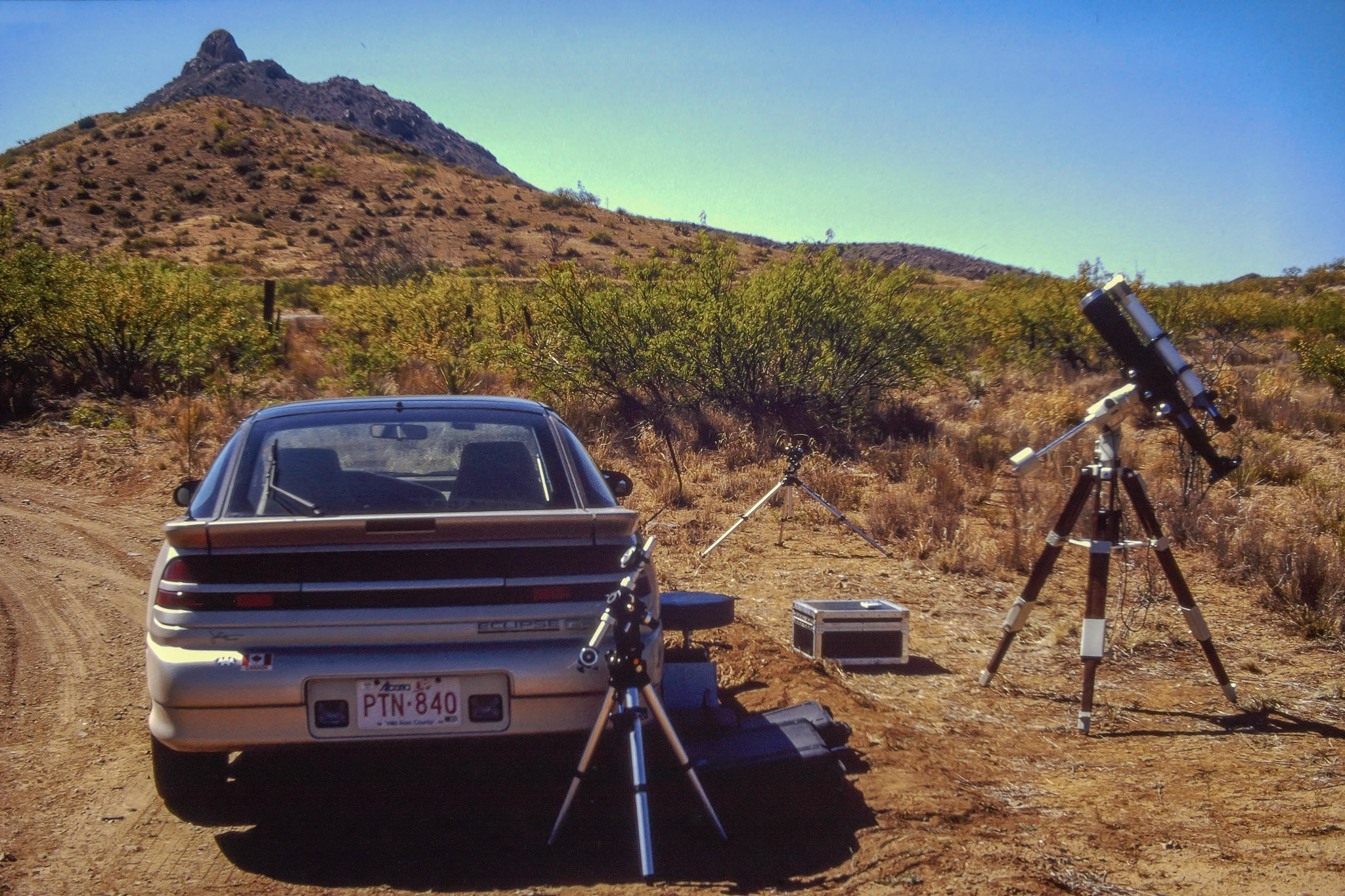
Prior to October 14, I had seen only one, on May 10, 1994, from southeast Arizona, an event I captured on film of course back then. 
A sunset annular on June 10, 2002 that I traveled to Puerto Vallarta, Mexico to see was mostly clouded out. The annular of May 20, 2012 traced a similar path across the U.S. Southwest as the 2023 eclipse. But work commitments at the science centre in Calgary kept me home for that one. A sunrise annular on June 10, 2021 in Northwestern Ontario was essentially out of reach due to COVID travel restrictions. 

With no other annular eclipses within easy reach in North America until 2039 and 2046, this was my next, and perhaps last, opportunity to see one, unless I chose to travel the world. 

I had planned for several months to watch the annular eclipse from southern Utah, ideally from Bryce Canyon National Park, shown above. (Clicking on the images brings them up full screen.) I booked accommodations in January 2023, finding even then that popular hotels in the area were already sold out. 

The final spot for the wide-angle composite shown below. The camera had to be next to that very fence post to frame the scene well.

The attraction was the landscape below the morning Sun, for a planned composite image of the eclipse over the hoodoos of Bryce. However, I had learned weeks earlier that traffic was going to be restricted to just park shuttle buses on eclipse day. Should Plan A not work out then Plan B was Kodachrome Basin, a state park nearby, which a park employee assured me would be open to cars well before sunrise on eclipse day. 
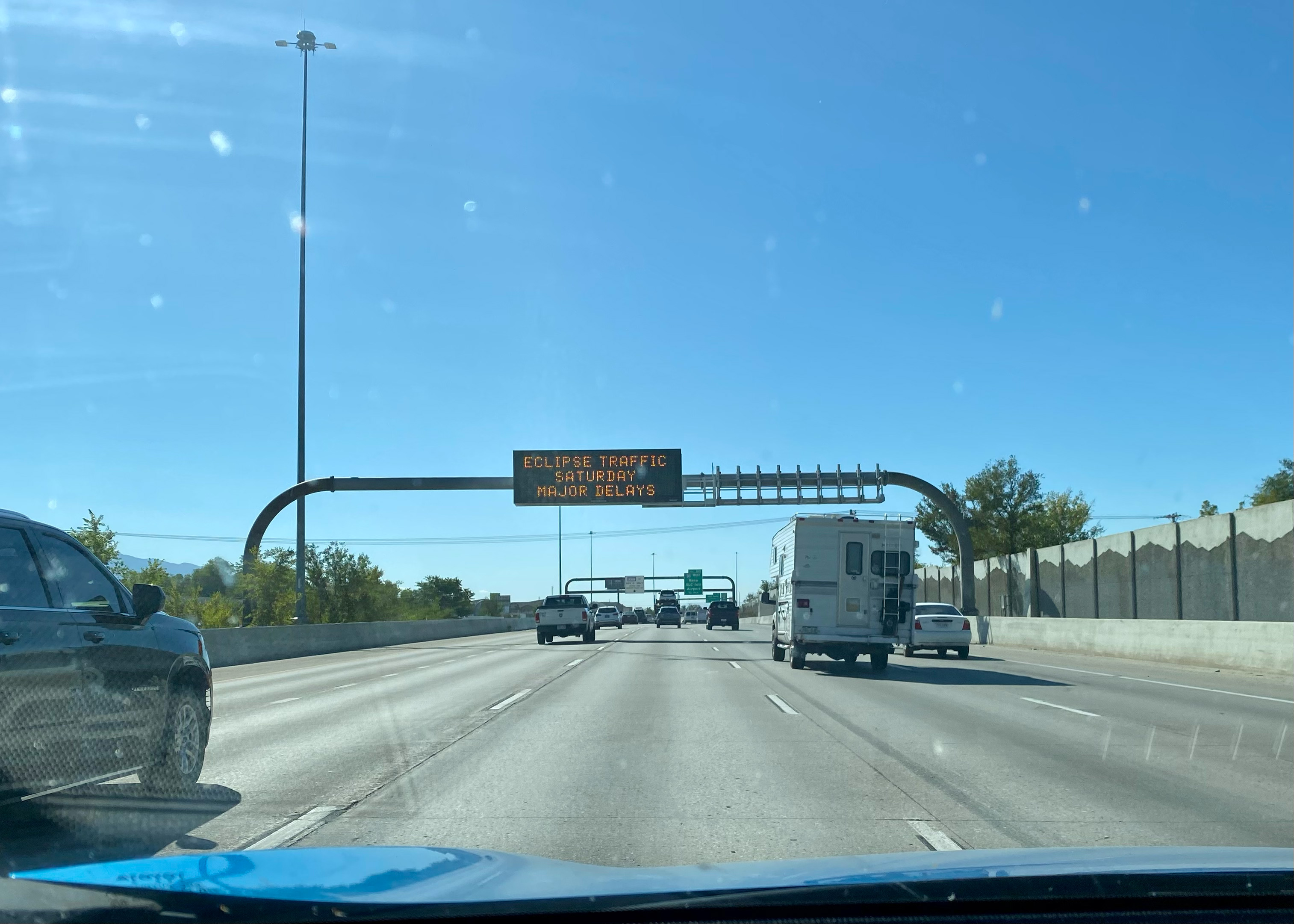
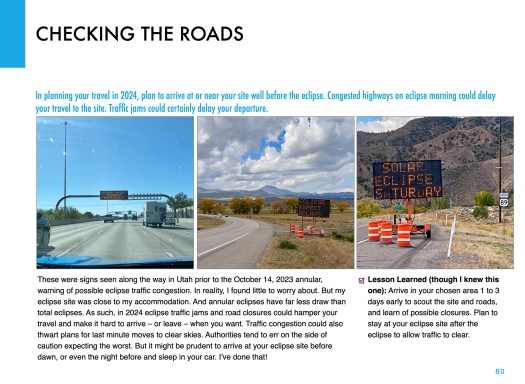
Seen on I-15 past Salt Lake City. Eclipse ahead!

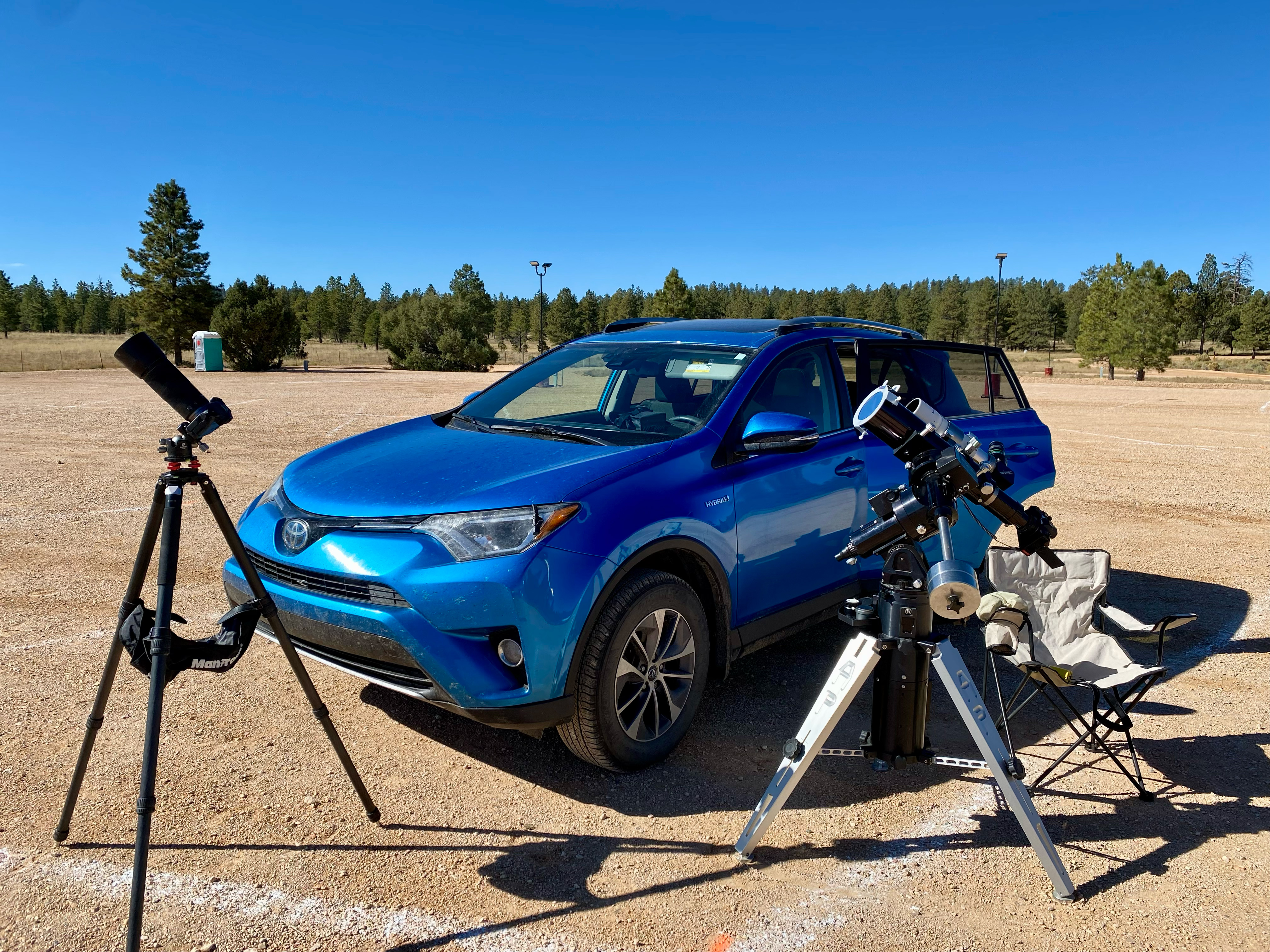
So I made my plans to drive south, taking with me a carload of telescope and camera gear, an array I would never be able to take to an overseas eclipse. The centrepiece was my venerable Astro-Physics Traveler 105mm (4-inch) refractor, a telescope created for the 1991 total eclipse in Mexico. Since I bought mine in 1992 I’ve used it for five central solar eclipses, including now two annulars. It’s in the 1994 and 2023 site images above.

As per the instructions in my eclipse ebook, I practiced with the gear in the summer of 2023, documented here on my previous blog.
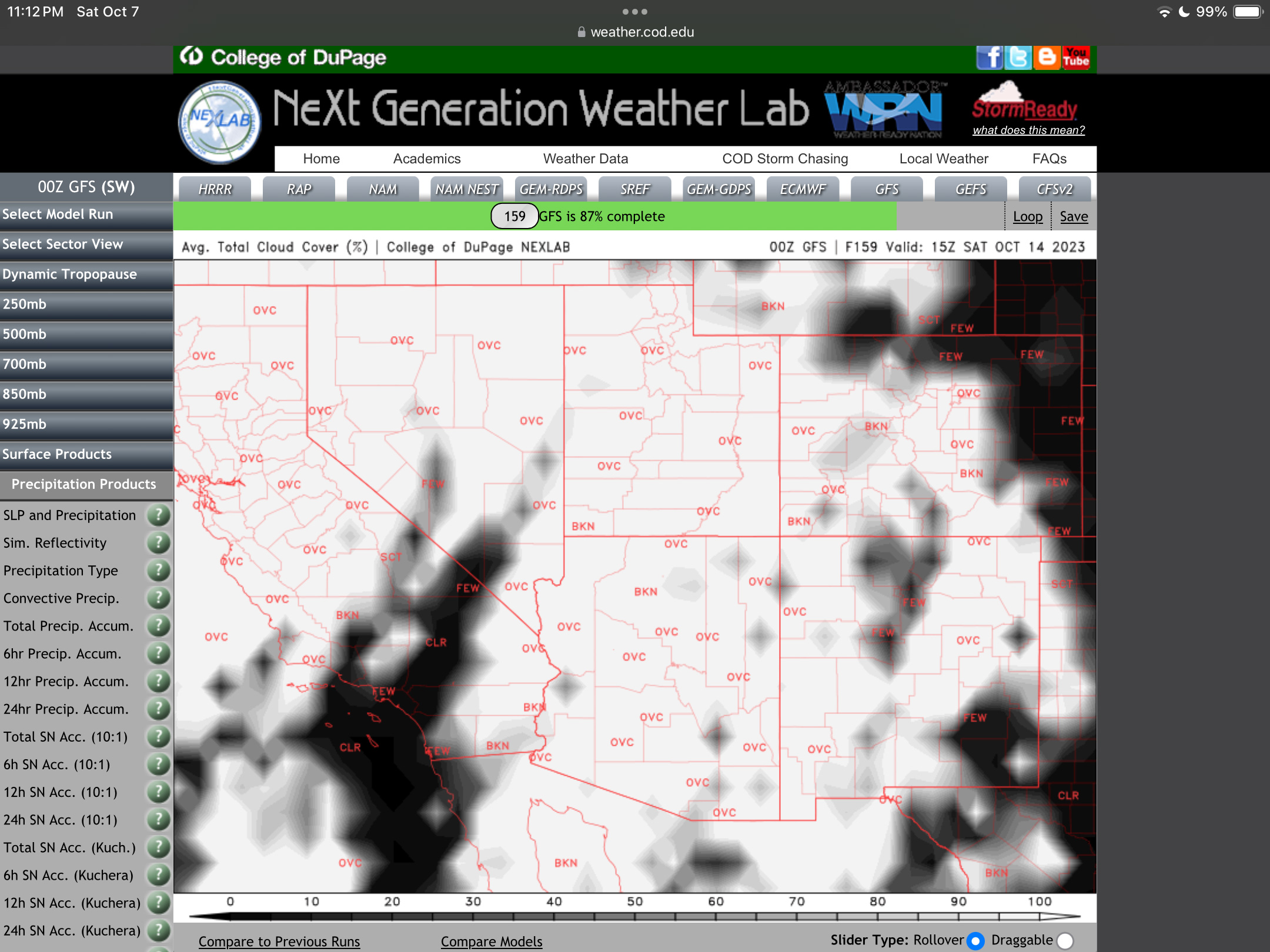
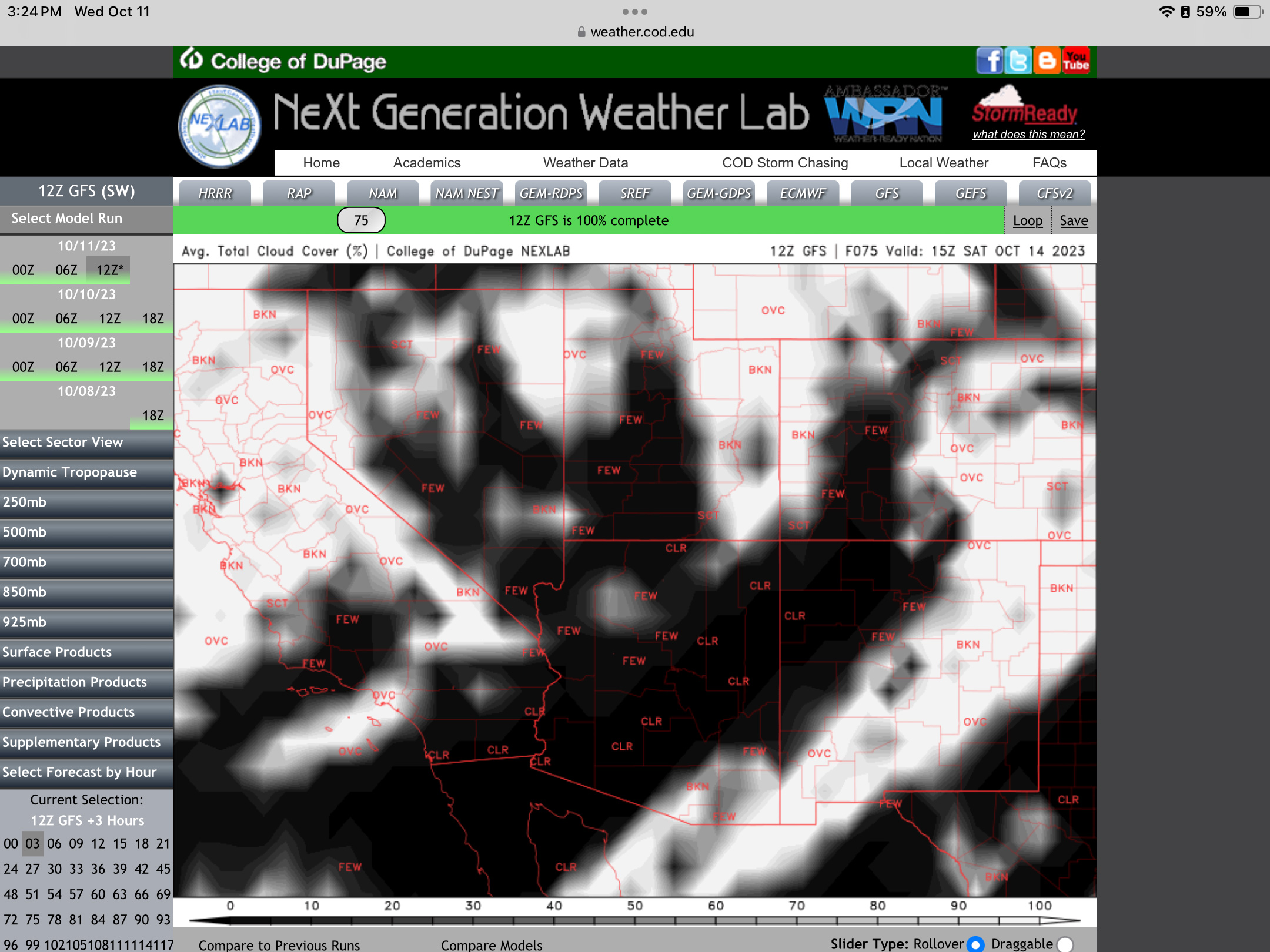
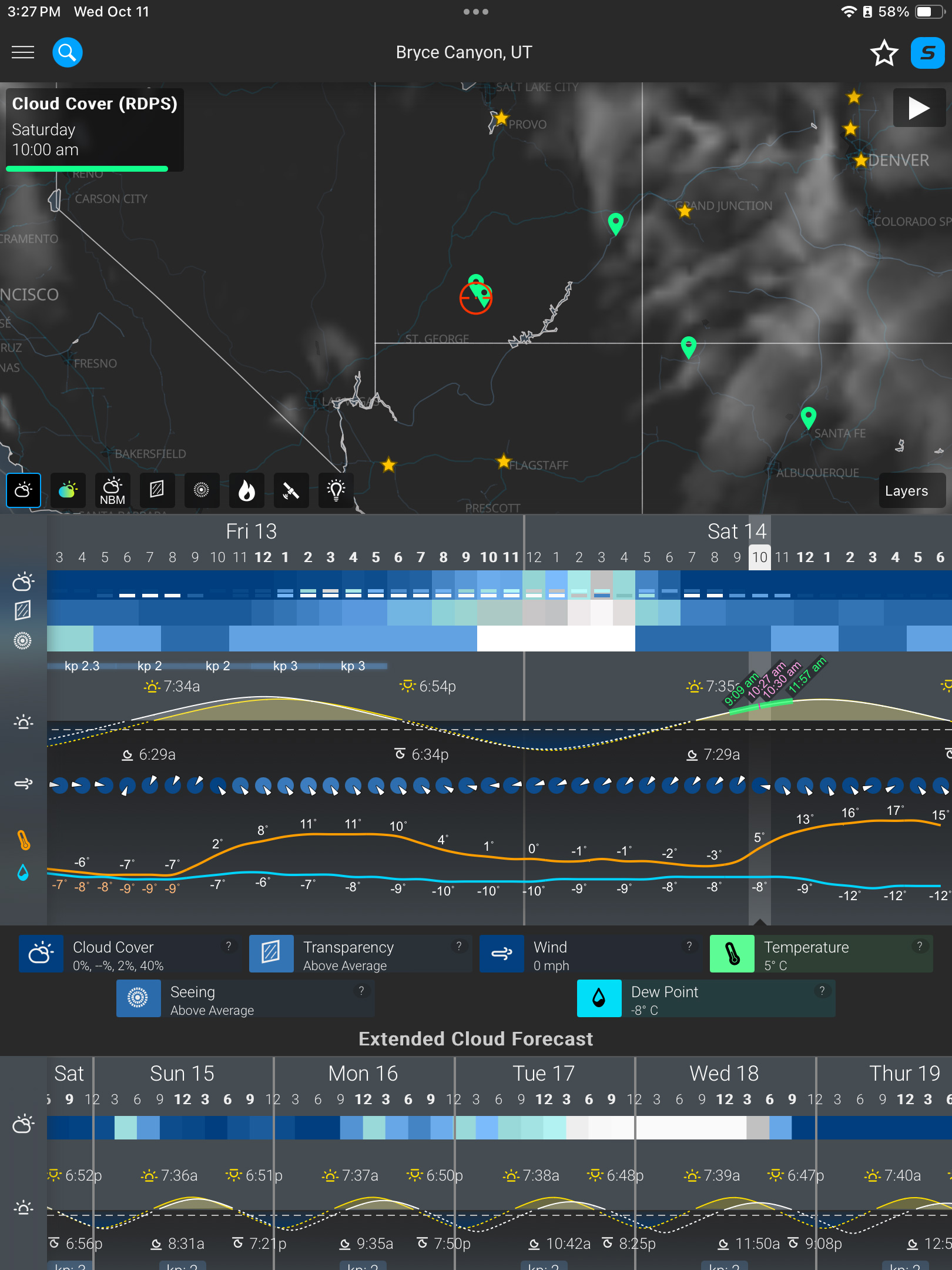
A week before the eclipse (as above at left), the weather prospects for the entire southwest looked poor. It was to be clouds everywhere. I even considered Plan S – Stay Home! And watch the 60% partial eclipse from Alberta where skies were to be clear. 

But undaunted, six days before the eclipse, I headed south on Interstate 15, checking the weather each day, and seeking out Plan C sites in New Mexico or Texas south of the projected mass of clouds. I checked where accommodation could be had at the last minute. 

At my stop in Richfield, Utah, four days before the eclipse, I had a crossroads turning point: either continue south to Bryce down US-89 (above), or head east on I-70, then south into New Mexico or Texas, with enough time to get there if needed. 

But by now the weather prospects were turning around. By three days out, and with the forecasts now much more reliable, it looked like southern Utah would be in the clear. I continued with my original plan to Bryce. But where exactly?
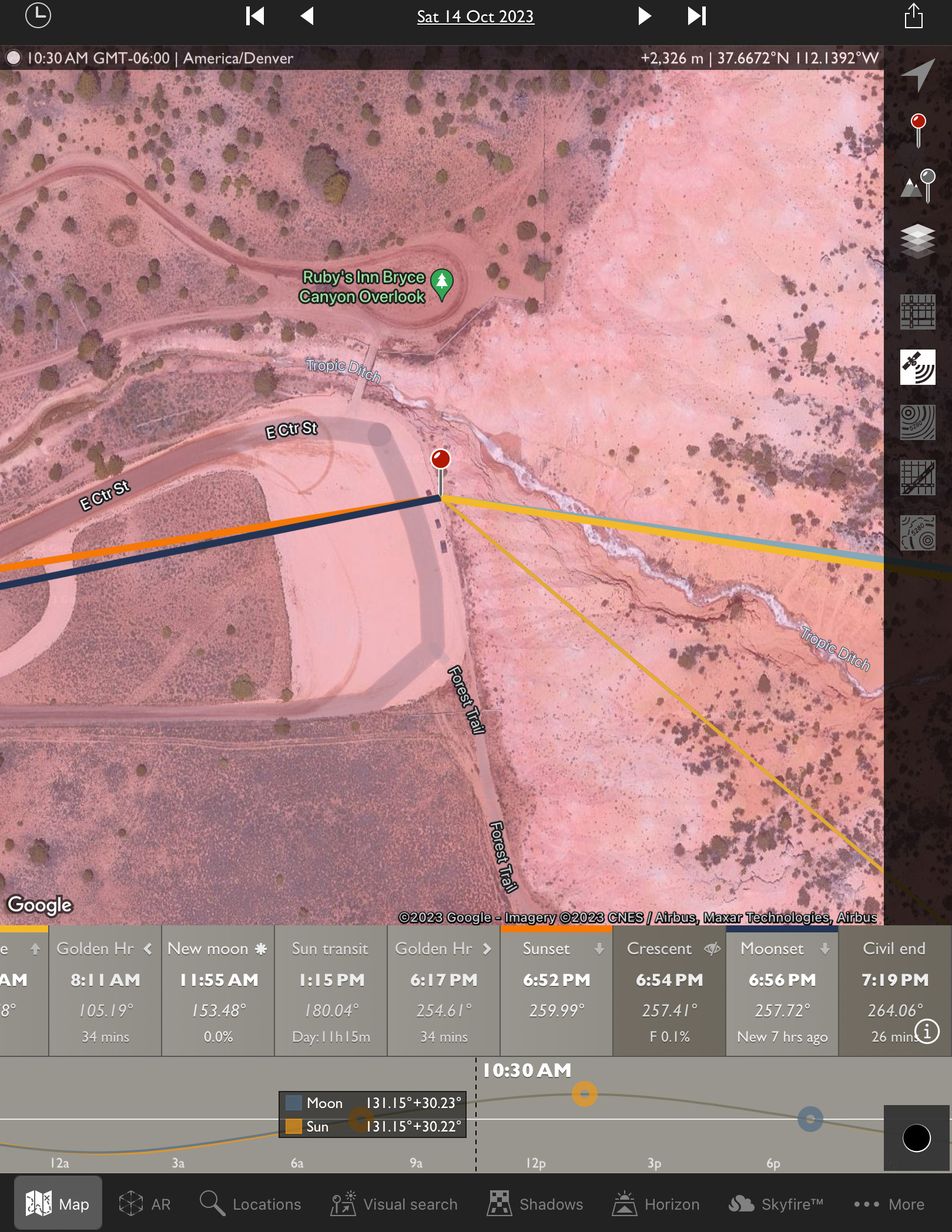
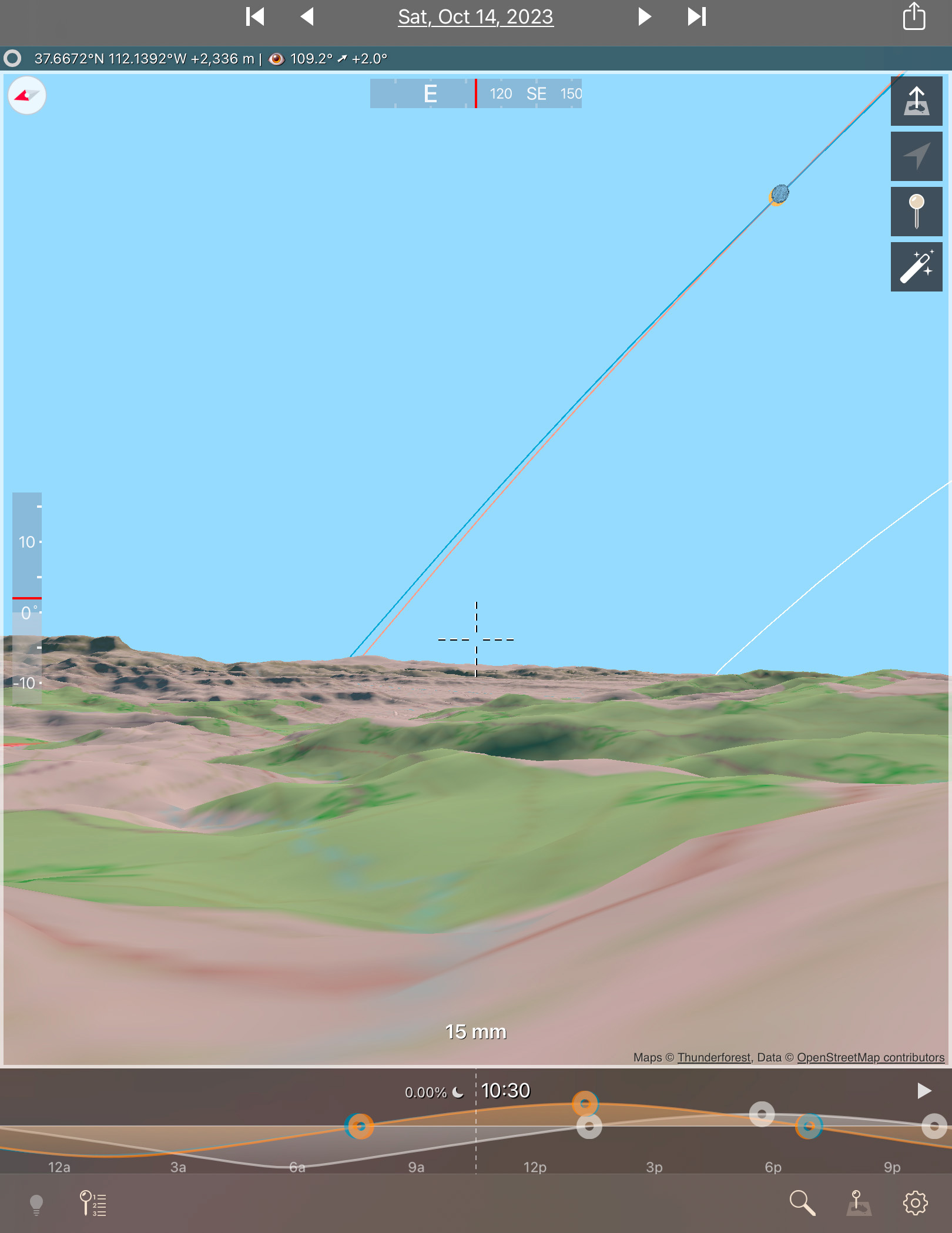
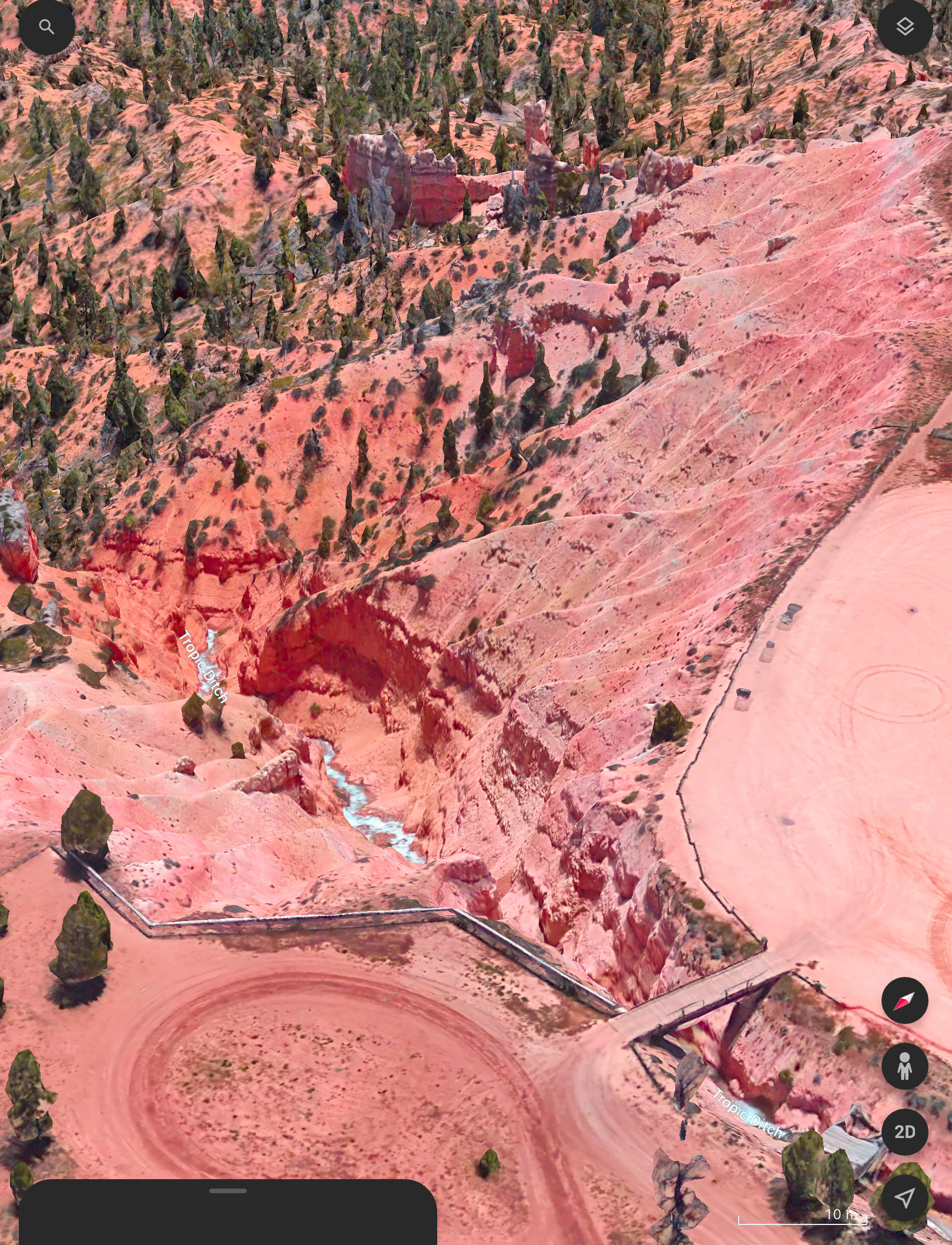
I had looked at possible sites on Google Earth and with the Sun-angle planning apps I use (such as The Photographer’s Ephemeris, or TPE) and found one just outside the Park that I hoped would be accessible to drive into. 

Upon arriving in the area three days early, the first priority was to inspect the site in person. It looked perfect! Almost too good to be true! 
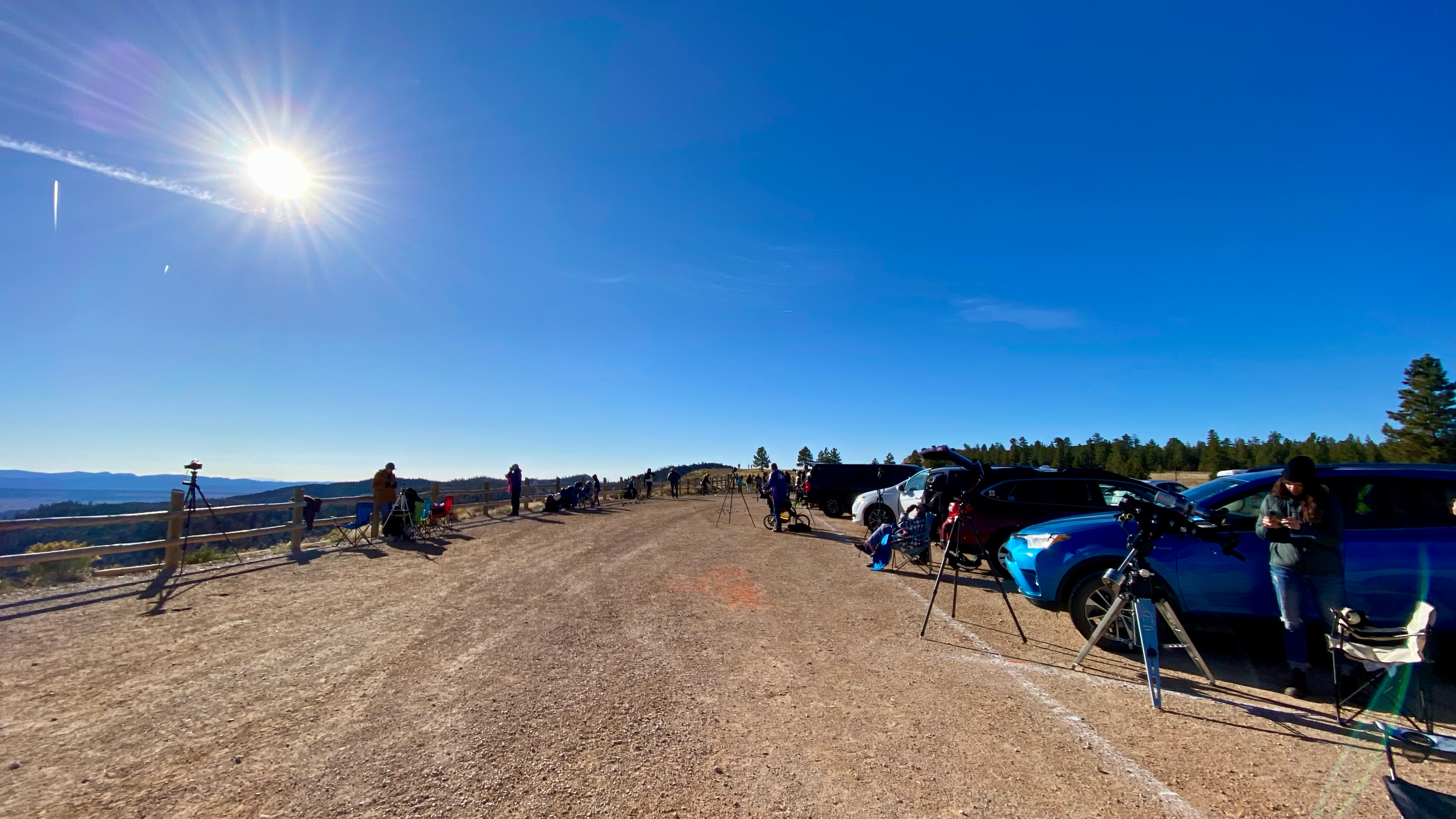
A panorama of the Ruby’s Inn site with the eclipse in progress. My wide-angle camera is at left by that fencepost.

The site, known as the Ruby’s Inn Overlook, provided a great view toward the eclipse with a stunning landscape below, including a river! (Well, it was actually an irrigation channel called the Tropic Ditch.) And I could park right next to my wide-angle landscape camera, to keep an eye on it over the five hours of shooting, while setting up the scope gear next to my car. 

I stayed at the Bryce View Lodge on eclipse eve, a hotel just a few hundred metres from the site. So no long pre-dawn drive on eclipse morn. However, the gated site was not going to be open until 7 a.m. on eclipse day. And admission was $20 per car, a cash donation to the Bryce Canyon City school sports teams. Fine! 

As it turned out, by the time I got on site and setup the priority wide-angle camera for the base-image sunrise shots at 7:30 a.m., the sky was too bright to polar align the telescope mount on Polaris, for accurate tracking of the Sun across the sky. 

It turned out that was the least of my concerns. 

My three eclipse cameras: the wide-angle, the one on the 105mm refractor telescope (with a smaller 60mm scope on top for visual views with a Herschel Solar Wedge), and one with a 100-400mm lens on the tripod.

As I unpacked the carload of scope gear at 8 a.m. I realized I had forgotten a crucial cable to connect the mount to the drive electronics. So the mount was not going to be able to track anyway! 

So much for my plans for a time-lapse through the scope. I had to manually centre the Sun every minute or so. I took lots of photos, but gave up on any effort to take them at a regular cadence. But I had enough images for the singles and composites shown here.

This is a composite of the October 14, 2023 annular solar eclipse with a sequence of six images showing the Moon advancing across a sunspot, the largest one visible on the Sun that day. The images are placed for a photogenic spacing, with time running forward from lower left to upper right, to reflect the Sun’s motion up across the morning sky.

Of course, once I got home the first thing I did was look downstairs in my scope room. Sure enough there was the cable, mixed up with the similar electronics from another mount I have from the same company, as I had been testing both prior to the eclipse. So much for my checklists! They’re only good if they list every critical bit, and if you use them.

So that was one big user error. 
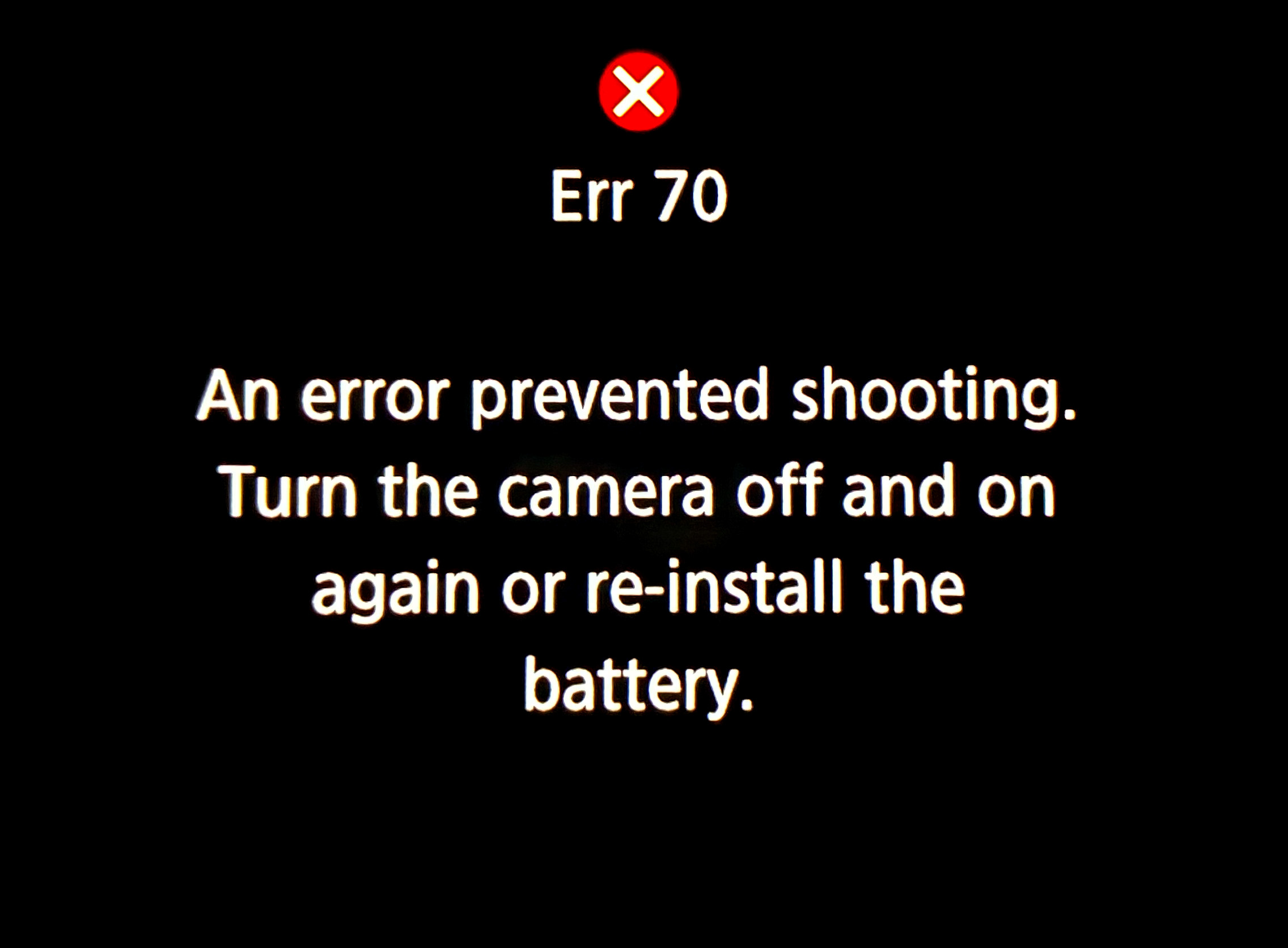
You don’t want to see this at an eclipse!

The other was a camera error, in fact Error70! I had set my main telescope camera to take rapid bursts of images (at up to 20 frames per second) at the crucial second and third contacts when annularity began and ended. With the Moon’s rough limb tangent to the inside edge of the Sun, you see beads of light rapidly form and disappear at the contacts. 

This is a composite of the October 14, 2023 annular solar eclipse at second contact. It illustrates the irregular edge of the Moon breaking up the rim of sunlight as the dark disk of the Moon became tangent to the inner edge of the Sun at second contact at the start of annularity. 15 exposures taken over 20 seconds at second contact are combined with a single exposure taken about 1.5 minutes later at mid-annularity.

The camera worked great at second contact, shooting 344 frames over 20 seconds. A composite of 15 of those frames is above, layered to exaggerate the rough lunar limb and its mountain peaks. A time-lapse from those frames is below.

A time-lapse of second contact from 344 frames over ~20 seconds.

And it appeared to be working at third contact three minutes later. Until I looked down and saw the dreaded error message. In checking the camera later, none of the third contact images had recorded to either memory card. 

It is a known but intermittent bug in Canon firmware that can happen when the camera is not connected to a Canon lens (it was on a telescope it cannot communicate with). I saw the error once in testing. And I had a hard time reproducing it to take the screen shot above once I got home. But if something can go wrong …! 
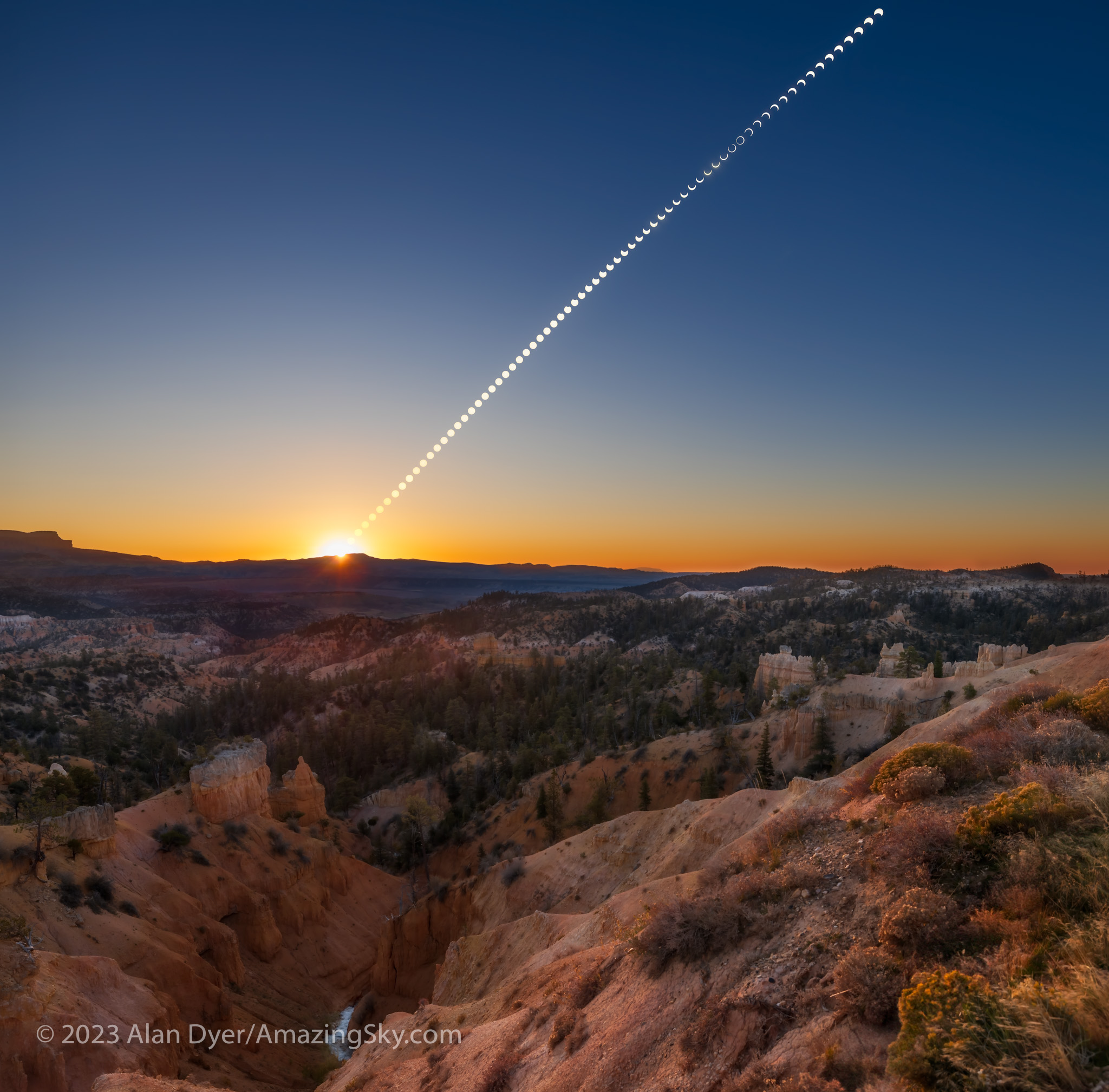
This is a portrait of the October 14, 2023 annular eclipse of the Sun, captured in a sequence of images taken from the rim of Bryce Canyon, Utah, from sunrise until nearly the end of the eclipse before noon local time. This is a composite blend of unfiltered exposures taken at sunrise for the landscape lit by the rising Sun, and for the dawn sky. Onto the base panorama of the ground and sky I layered in 66 filtered images of the Sun, as it rose into the morning sky, and with the Moon moving across its disk over nearly 3 hours, reaching mid-eclipse at about 10:29 local MDT at upper right. It then appears as a ring, or annulus of light for one frame.

Despite the errors both human and machine, I count eclipse day as successful, considering a week earlier prospects had looked so poor. As it was, apart from some thin but inconsequential cloud that drifted through before mid-eclipse, the sky was perfect.

As was the site. I enabled me to get the main shot I was after, the wide-angle composite, above. It’s a winner! And it accurately depicts the size of the Sun and its motion across the sky, albeit set into a twilight sky taken at sunrise.

As it had been 29 years since my last annular, I wasn’t sure what to expect. But the darkening of the sky and eerie level of sunlight, despite a blazing Sun in the day sky, were impressive. The morning just looked strange! It was a taste of the total to come.

Venus at its widest angle west of the Sun was easy to spot in the deep blue sky. I regret not thinking to shoot even a phone camera image of that sight. 
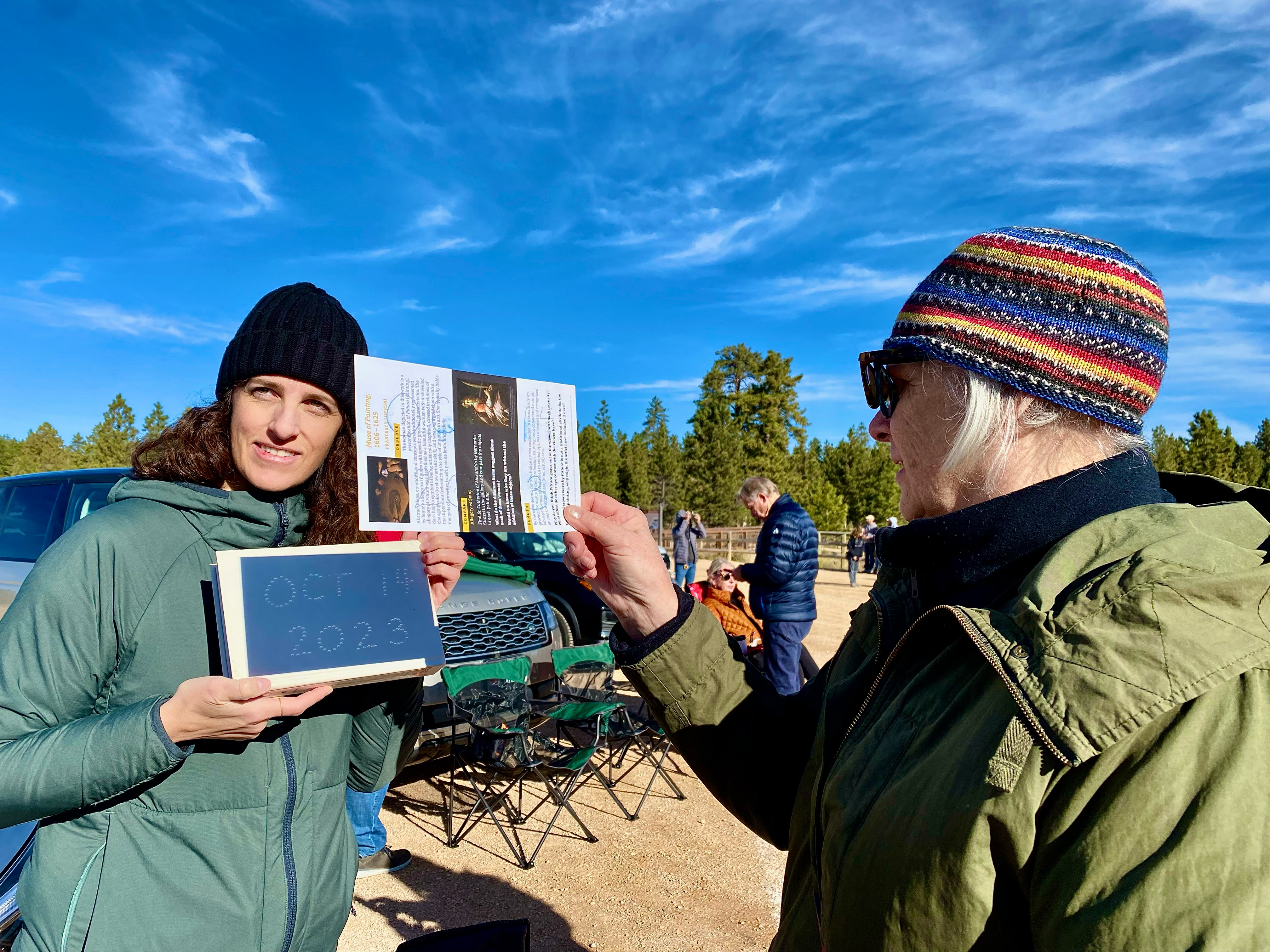
Projecting the solar crescents with a made-on-the-spot pinhole projection sign.

I had pleasant chats with other folks at the site, and enjoyed showing them telescopic views though the smaller visual scope I had piggybacked on the main scope, one that was just for looking through. Plus folks shot phone pix of my camera screen.
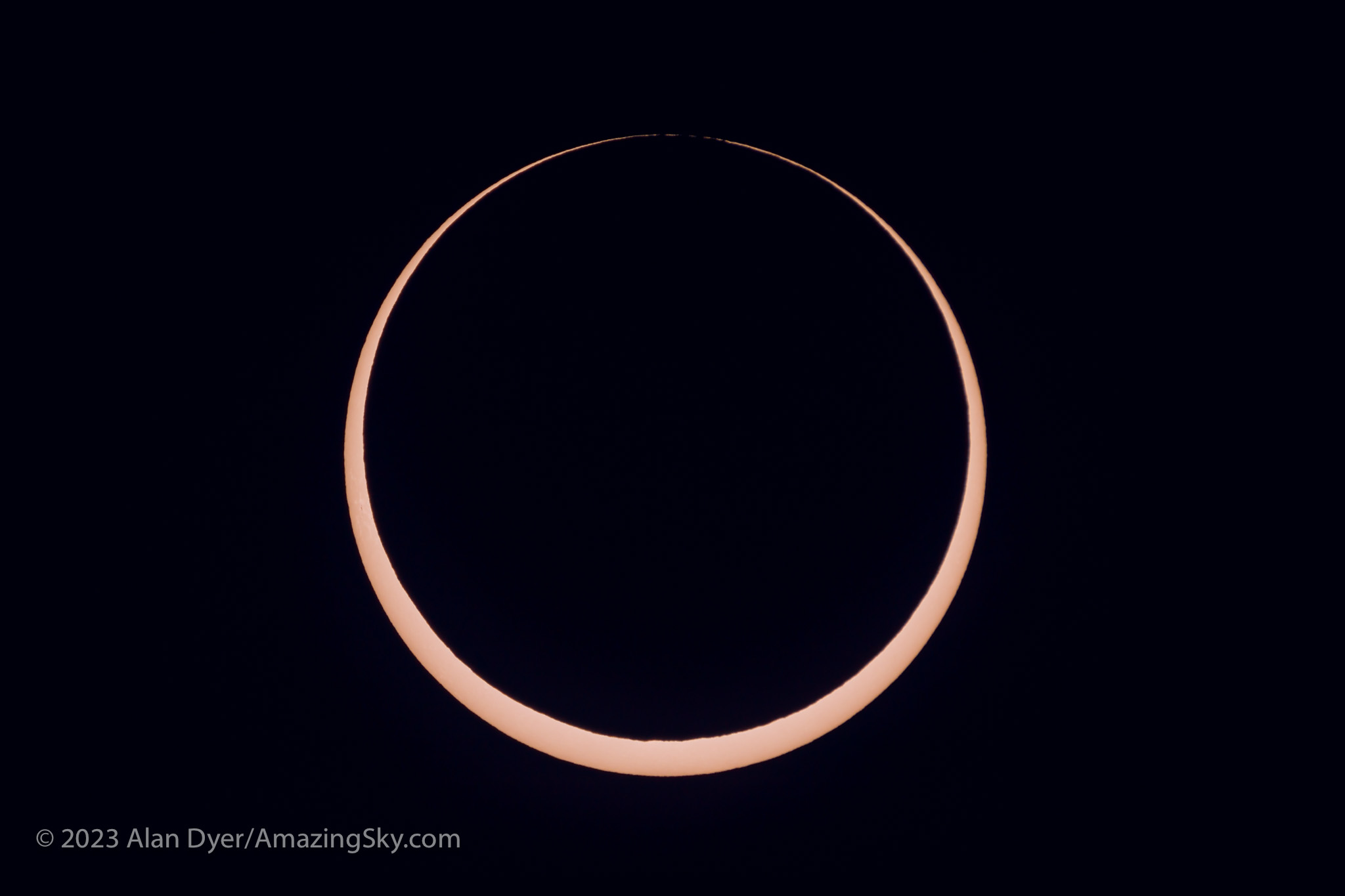
The October 14, 2023 annular solar eclipse, in a single image captured at second contact with the Moon tangent to the inside limb of the Sun, at 10:27 am MDT at the site I used.

But at the critical contacts, I was glued to that visual scope for the amazing sight of the horns of the crescent Sun rapidly wrapping around the Moon at second contact, then unwrapping at third contact. 

The October 14, 2023 annular solar eclipse, in a series of images captured at second contact with the Moon tangent to the inside limb of the Sun, at 10:27 am MDT at the site I used. The 7 frames here were selected from a set of 344 shot in high-speed continuous mode at 20 frames per second.

The breakup of the rim of sunlight into beads of light along the cratered and mountainous edge of the Moon was also impressive. I was not at the optimum site for seeing those beads, as the landscape dictated my choice of location. But those that I saw at each of the internal contacts were a fine bonus to a memorable morning. 
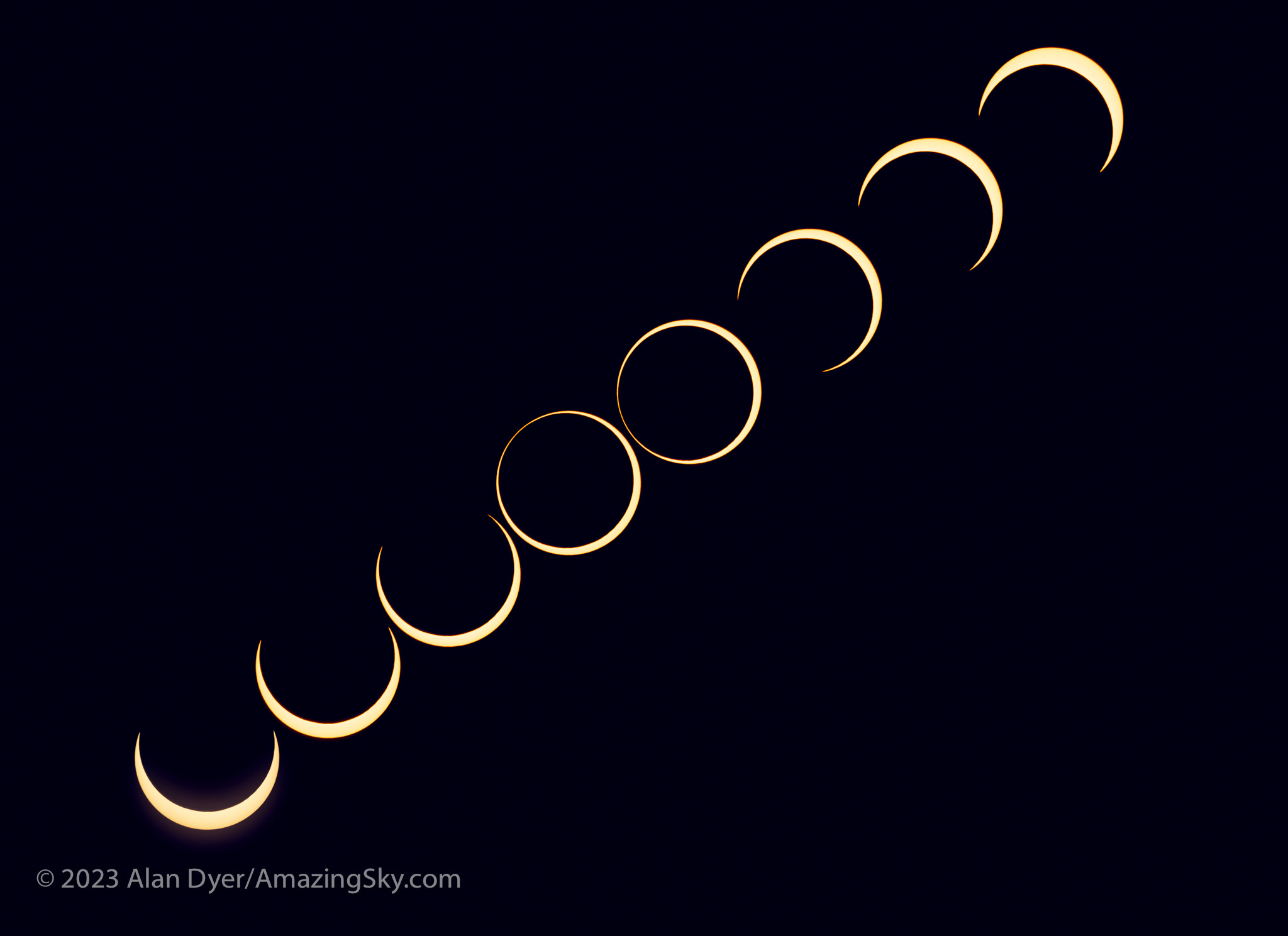
This is a composite that records the sequence around mid-eclipse of the October 14, 2023 annular eclipse of the Sun. This is a blend of 8 exposures each taken 2.25 minutes apart, about the minimum time to keep the disks separate and avoid them overlapping.

A third camera shooting a sequence with an untracked 400mm telephoto lens worked well. I used a subset of its images to create a still-image composite (above) and the full set for a time-lapse (below), with the position and motion of the Sun authentic, produced by the natural east-to-west motion of the sky. But against that you see the Moon’s orbital motion moving its dark disk down across the disk of the Sun. 

A time-lapse from 300 frames taken at 4-second intervals with the sky’s motion carrying the Sun across the frame.

As soon as annularity ended, everyone else started to pack up and leave. For them the show was over. Understandably. On many total eclipse tours I’ve been on we’ve been on the road back to the hotel after totality and the requisite happy group shot.
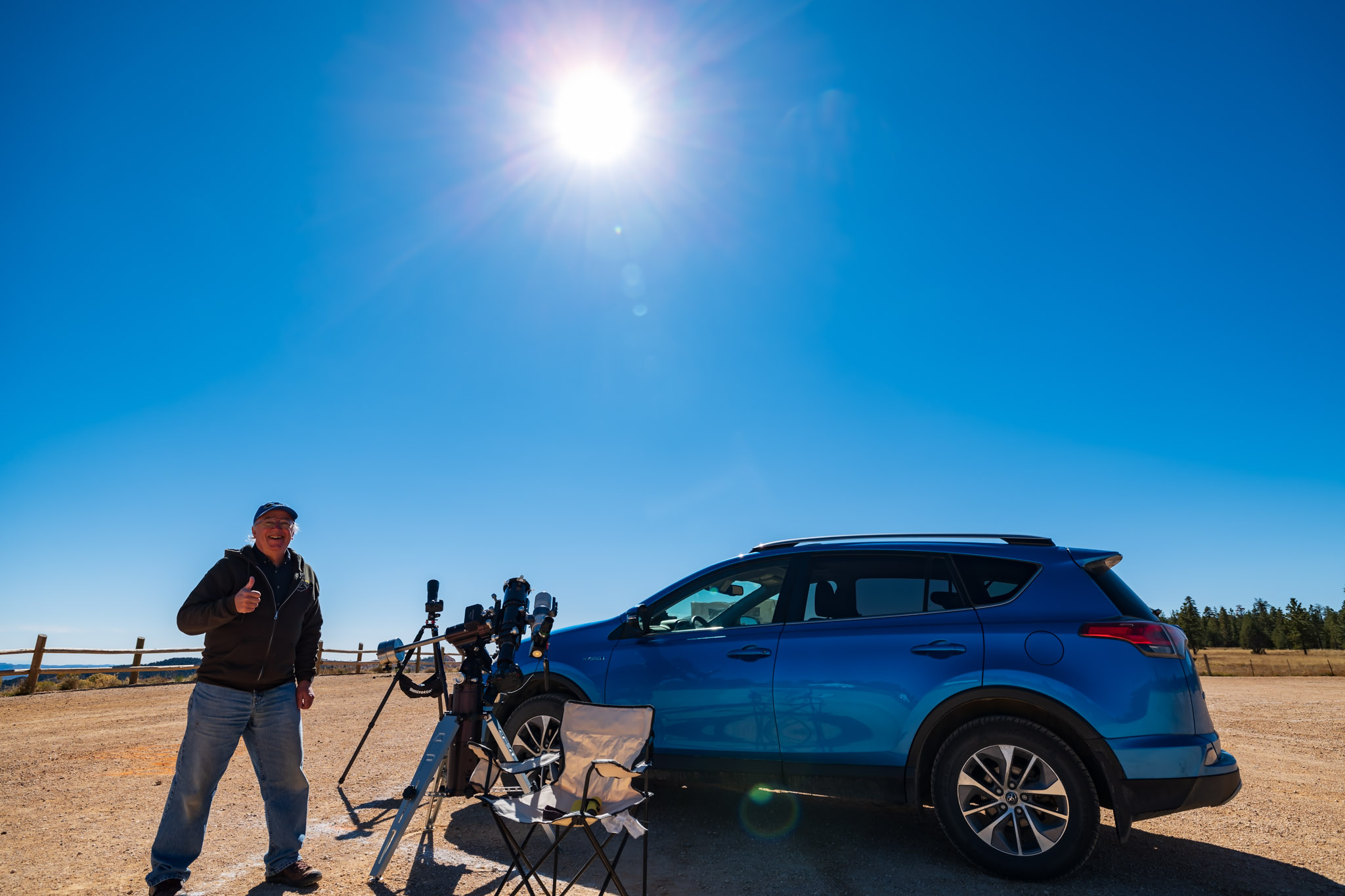
Eclipse success! The trophy shot after everyone else had left.

But at this eclipse my shooting plan dictated that I stick it out. By the end of the eclipse I was the last one standing, alone to enjoy last contact and then lunch, killing time for any road congestion to diminish, as I had to head to another motel for the post-eclipse night, in nearby Panguitch. 

I had a celebratory dinner and Moab-brewed beer that night at Cowboy’s, the best restaurant in Panguitch, sporting my Annular 2023 eclipse hat! 

But the next day I started the drive north again, for the three-day trek back up I-15 to the border, then home. 

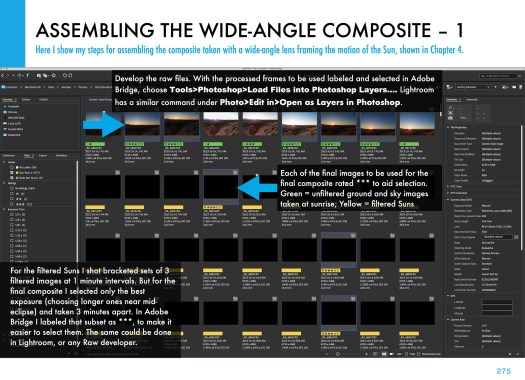
Priority one upon getting home was to finish processing images, and to include them in a revised version of my ebook How to Photograph the Solar Eclipses. It is linked to above and here on the title. Images of some sample pages from the revised edition are in the slide show below.
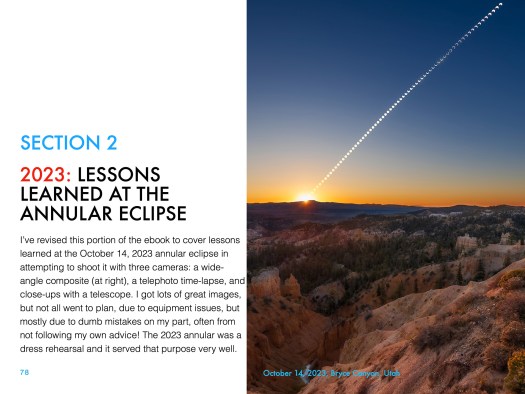
Post-annular, the book’s title remains the same, but I revised the pages in Chapter 4 on planning for the 2023 eclipse with pages on “lessons learned!” And there were several! 

I expanded Chapter 11 on processing to include tutorials on assembling annular eclipse composites, now that I actually have some! 

Such as the composite of first- to last-contact telescopic close-ups below.
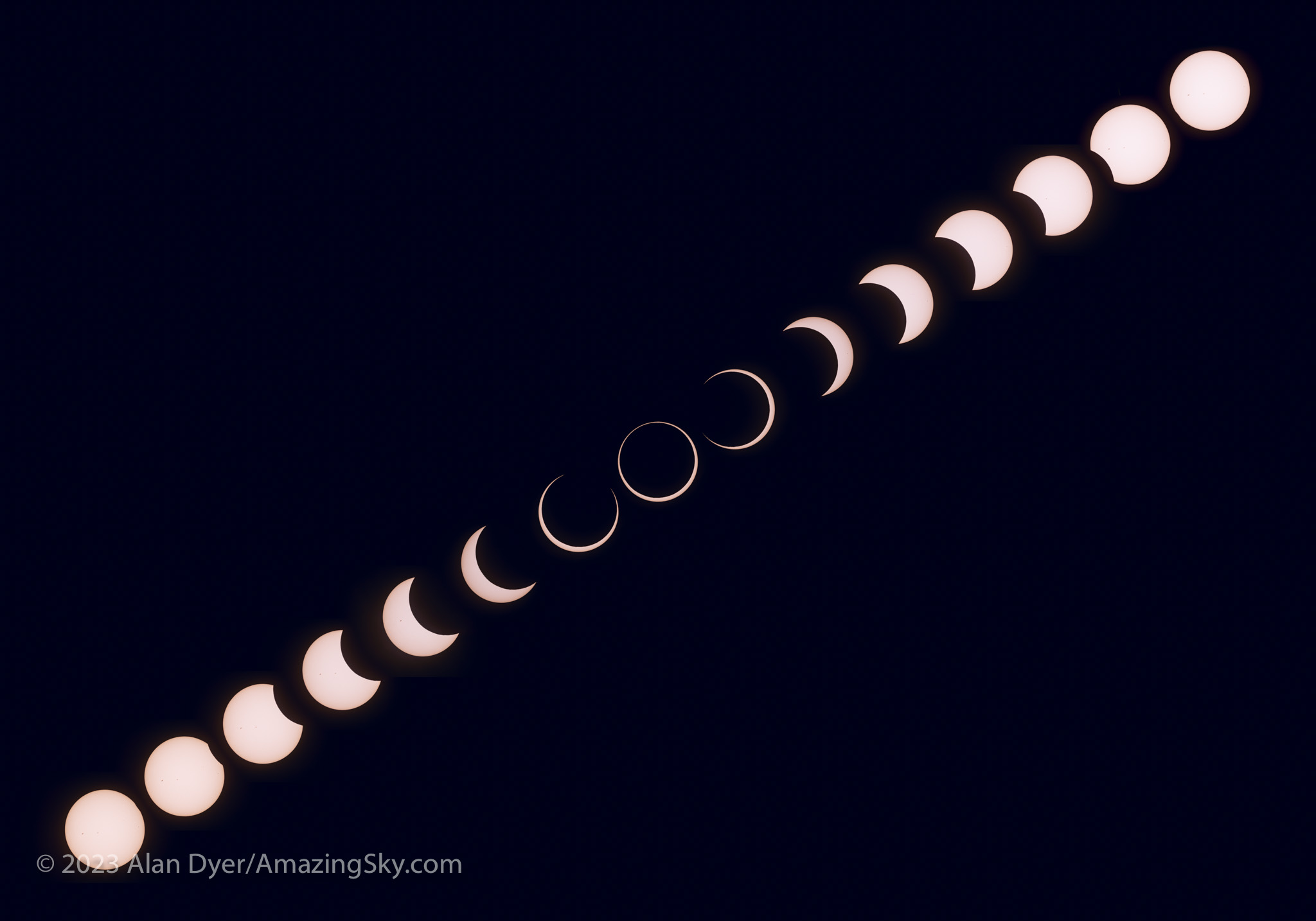
This is a composite of the various stages of the entire October 14, 2023 annular solar eclipse, from start (lower left) to end (upper right), with mid-eclipse at centre. So time runs forward from left to right, with the Suns positioned to reflect the approximate motion of the Sun in the morning sky when this eclipse occured at my site, with it rising higher through the progress of the eclipse. North is up in this image.

The new version of my ebook is 20 pages larger than the pre-annular edition. 

An email has gone out from eJunkie to all buyers of the earlier-edition PDF to alert them to the new version, and with a download link. Apple Books readers should get a notice when they open the book on their Mac or iPad in the Books app that a new version is available. 

I suspect that will be the last revision of my ebook before the big event – the total eclipse of the Sun on April 8, 2024. 

Here’s wishing us all clear skies for that one! That eclipse will indeed require a drive to Texas. This time I’ll remember that damned cable! 

— Alan Dyer, October 31, 2023

amazingsky.com 

Chasing the Earth-Shadowed Moon (Again!)


A selfie of the successful eclipse hunter having bagged his game, on the morning of November 19, 2021.

It’s been over 10 years since I’ve last had the luxury of observing an eclipse of the Moon from the comfort of home. Once again, a chase was needed.

During the post-midnight wee morning hours, the Moon was set to once again pass through the Earth’s shadow, this time presenting us with a deep partial eclipse, with 97% of the Full Moon’s disk immersed in the umbra and deep red.

We had another lunar eclipse in 2021, six lunar cycles earlier on May 26, an eclipse that was barely total and, for me, positioned low in the southwest at dawn. I chased that eclipse north to Rocky Mountain House, Alberta, to find clear skies on eclipse morning.

A composite “time-lapse” blend of the setting Full Moon entering the Earth’s umbral shadow on the morning of May 26, 2021.

Every lunar eclipse I’ve seen from Alberta since December 2010 I’ve had to chase to find clear skies. While the chases were all successful, this time I was hoping to stay home and enjoy the eclipse without a long drive to seek clear skies, and to then employ a telescope to shoot the Moon in close-up. In the days before the eclipse, the forecasts changed daily.

On the day before the eclipse, things looked bad, with high clouds forecast for home.

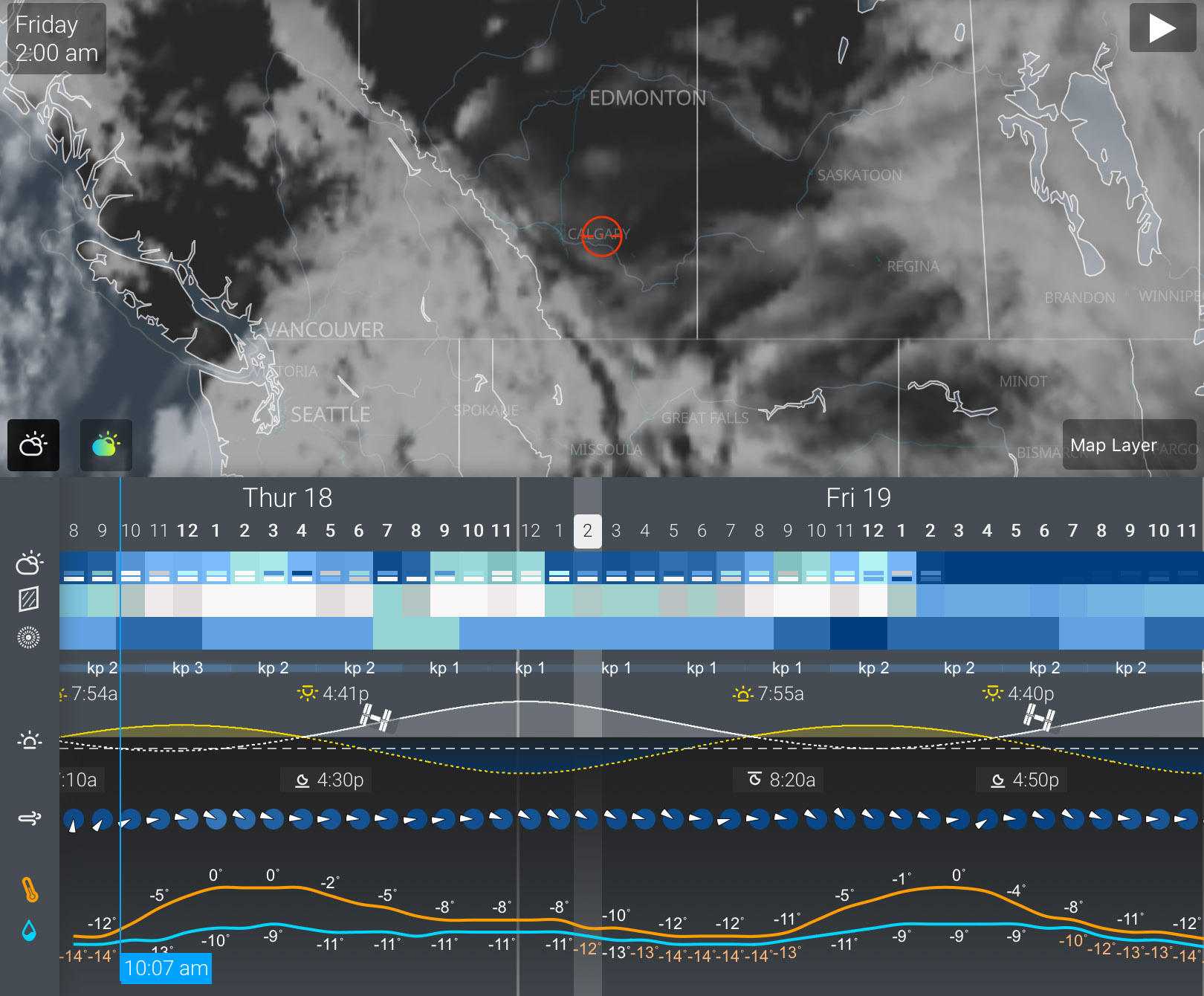
The Environment Canada forecast for eclipse time at 2 am Nov 19, as of the afternoon of Nov. 17.

It looked like a trip to north-central Alberta was warranted, perhaps to Wainwright. But rather than book a motel, I decided to wait to see if the forecast might improve. And sure enough it did.

The Environment Canada forecast for eclipse time at 2 am Nov 19, as of the morning of Nov. 18, eclipse day!

By the morning of eclipse day, prospect for clear skies from home looked better Or perhaps a short drive east would suffice. With luck!

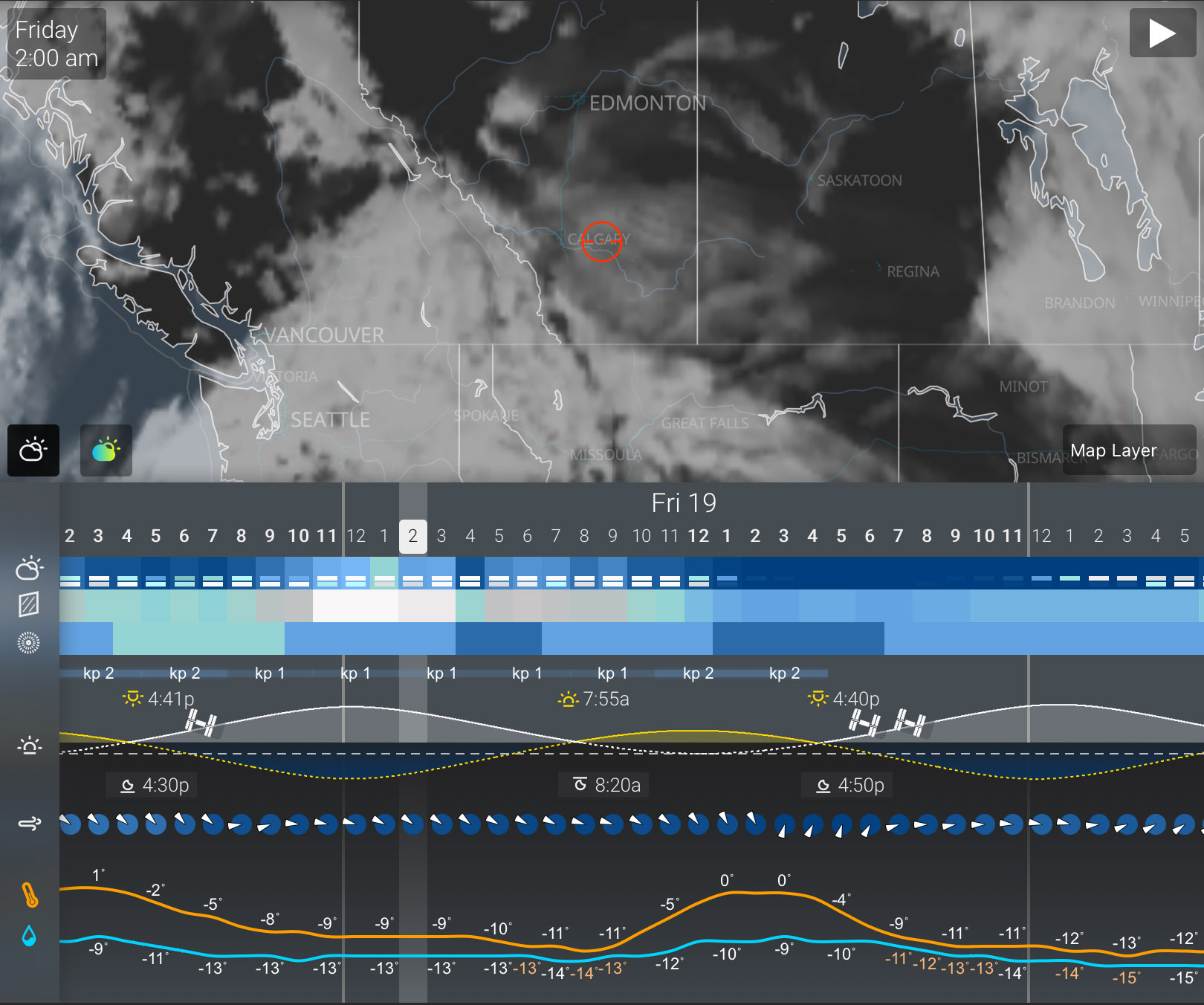
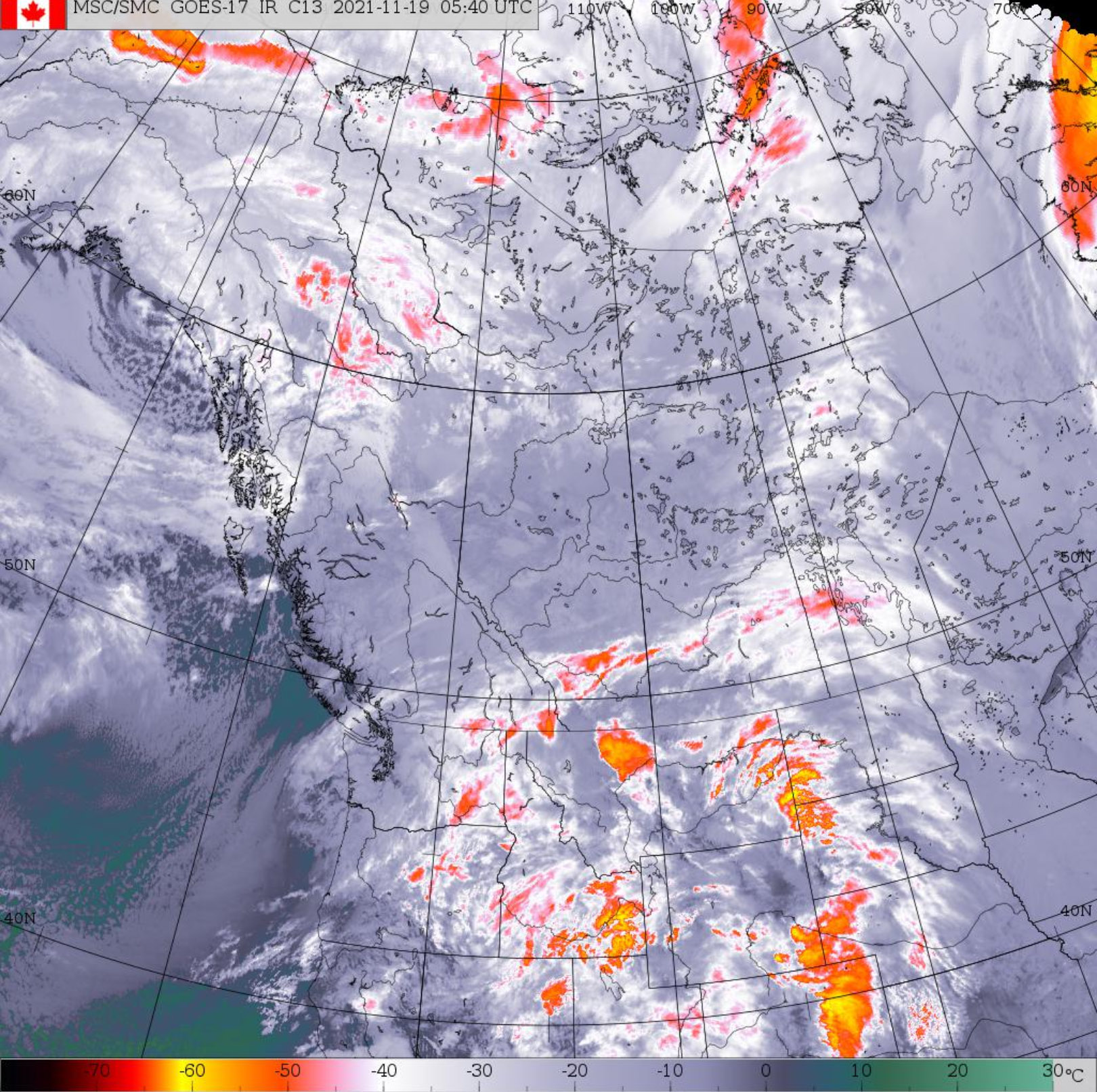
But by the evening of the eclipse, clouds were not cooperating. The actual views from satellites showed lots of cloud over my area (as the view out the door confirmed!), and it didn’t look like the clouds were going away.

Satellite view eclipse evening, with my area in Alberta at centre.

But as the previous forecasts called for, clear skies were to be found to the north. So at 11:30 pm, with the eclipse starting in less than an hour, I packed up the car and headed north to as far as I could get — and hopefully as far as I need to get — to be assured of clear skies.

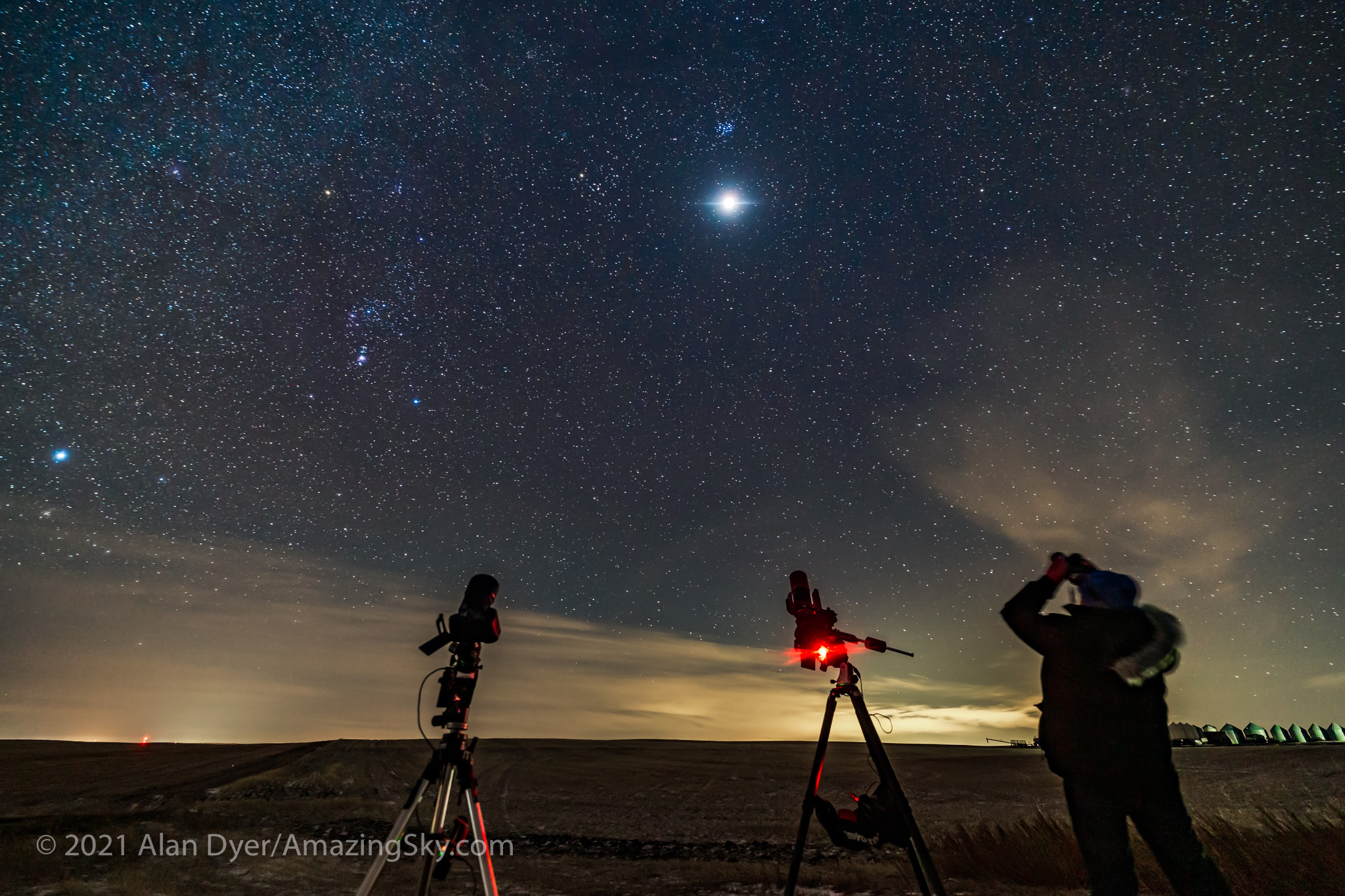
A selfie of the successful eclipse hunter observing the eclipse of the Moon, on the morning of November 19, 2021.

It worked! The eclipse was well underway as I made my way north, stopping to check its progress and the state of the clouds. As expected, about 90 minutes north I drove out from under the clouds you can see to the south in the photo above, where I had come from.

I chose a side road and pull off near Rowley, Alberta. I had enough time to set up three cameras, two on polar-aligned trackers to take longer, wide-field images of the Moon amid the stars, plus the static camera for the selfies.

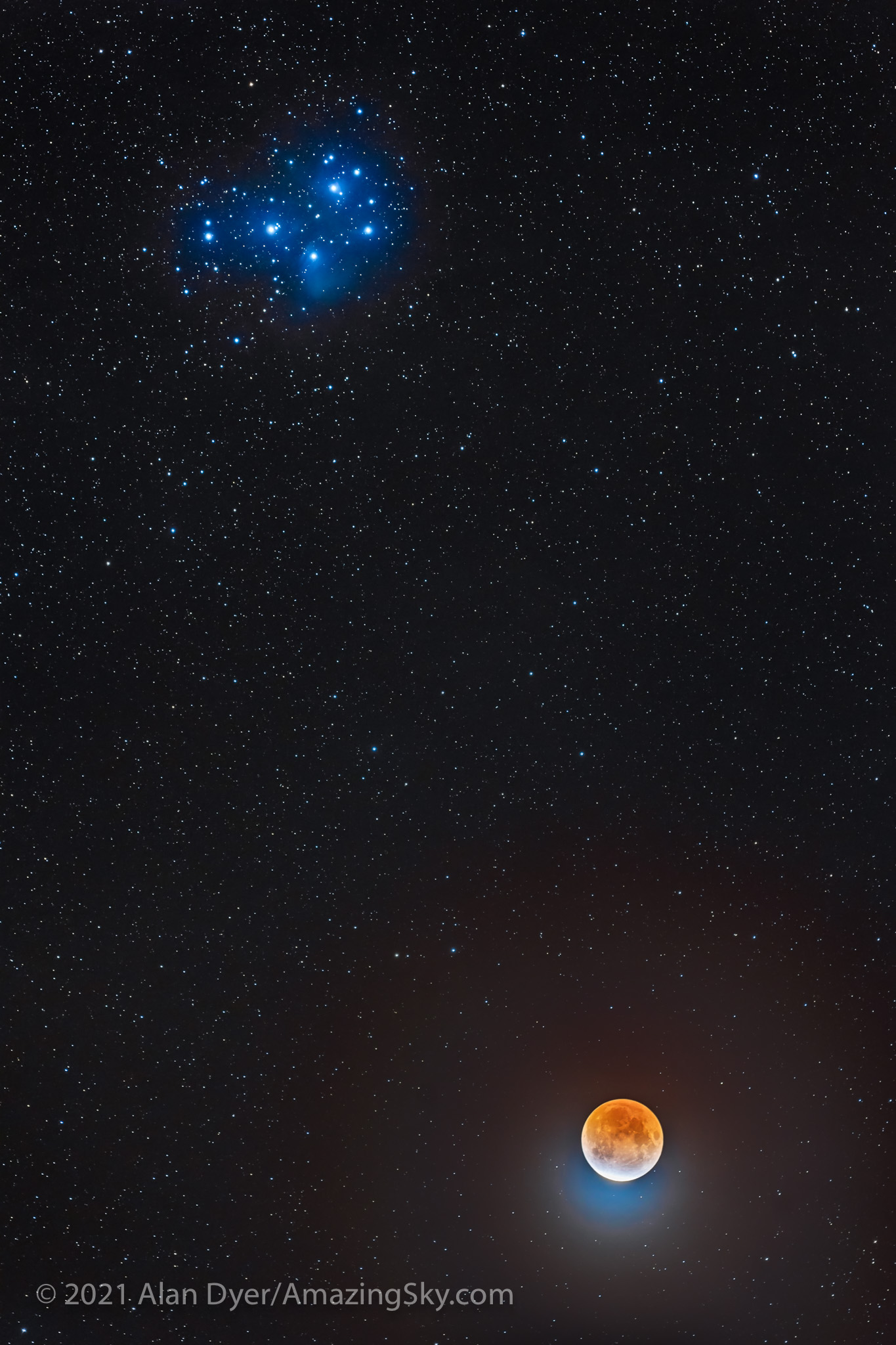
The deep partial eclipse of the Moon of November 19, 2021, with the reddened Moon below the Pleiades star cluster, M45, in Taurus, the hallmark feature of this eclipse which at maximum at 2:03 am MST (about 8 minutes after this sequence was taken at 1:55 am MST) was 97% partial, so not quite total. This is a stack of 2 x 30-second exposures at ISO 3200 for the base sky, blended with 30s, 8s, 2s, and 0.6s exposures at ISO 800, all with the Canon EOS R6 camera on the William Optics RedCat astrograph at f/4.9, and on the Sky-Watcher Star Adventurer tracker at the sidereal rate.

The red Moon below the blue Pleiades was the unique sight at this eclipse. It can only happen if an eclipse occurs in mid-November and that won’t happen for another 19 years, on November 18, 2040, in a total eclipse visible only from the eastern hemisphere.

After some mid-eclipse equipment woes — a tracker deciding to come loose from the tripod, and a lens that refused to focus — I also took some wider shots of the Moon among the stars of Taurus.

This is a stack of 2 x 30-second exposures at ISO 1600 for the base sky, blended with 10s, 4s, 1s, and 0.3s exposures at ISO 800, all with the Canon EOS Ra camera and Canon RF28-70mm lens at f/2.8 and on the Sky-Watcher Star Adventurer Mini tracker.

Despite writing an extensive blog on how to shoot this eclipse, it did prove to be more of a challenge than I had anticipated. The portion of the Moon outside the umbra, even at mid-eclipse, remained very bright, and overexposed and flared in the frames with long enough shutter speeds to record the stars. A full total eclipse is easier to shoot!

This is a stack of 2 x 30-second exposures at ISO 3200 for the base sky, blended with 15s, 4s, 1s, and 0.25s exposures at ISO 400, all with the Canon EOS R6 camera and Canon RF28-70mm lens at 28mm and f/2.8 and on the Sky-Watcher Star Adventurer Mini tracker.

However, I can count this eclipse chase as a success. Of all the total (or near total in this case) lunar eclipses visible from my area of the world since 2001, I’ve seen them all. But almost all required a chase.

Will that be the case next year? We have two total lunar eclipses in 2022: on May 15 (with the Moon rising at eclipse time as seen from here in Alberta), and again six lunar cycles later on the morning of November 8, 2022, which is 12 lunar cycles after this most recent eclipse. We are in the middle of a nice run of 4 lunar eclipses, three total and one near-total.

I suspect I will be chasing both of those!

— Alan, November 20, 2021 (AmazingSky.com)

Chasing the Eclipse of the Cold Moon


Eclipsed Moon and Umbral Shadow

It took a chase but it was worth it to catch the January 20, 2019 total eclipse of the Moon in the winter sky.

While the internet and popular press fawned over the bogus moniker of “Super Blood Wolf” Moon, to me this was the “Cold Moon” eclipse. And I suspect that was true for many other observers and eclipse chasers last Sunday.

Total solar eclipses almost always involve a chase, usually to far flung places around the world to stand in the narrow shadow path. But total lunar eclipses (TLEs) come to you, with more than half the planet able to view the Moon pass through the Earth’s shadow and turn red for several minutes to over an hour.

The glitch is clouds. For several of the last TLEs I have had to chase, to find clear skies in my local area, creating pre-eclipse stress … and post-eclipse relief!

astrospheric map
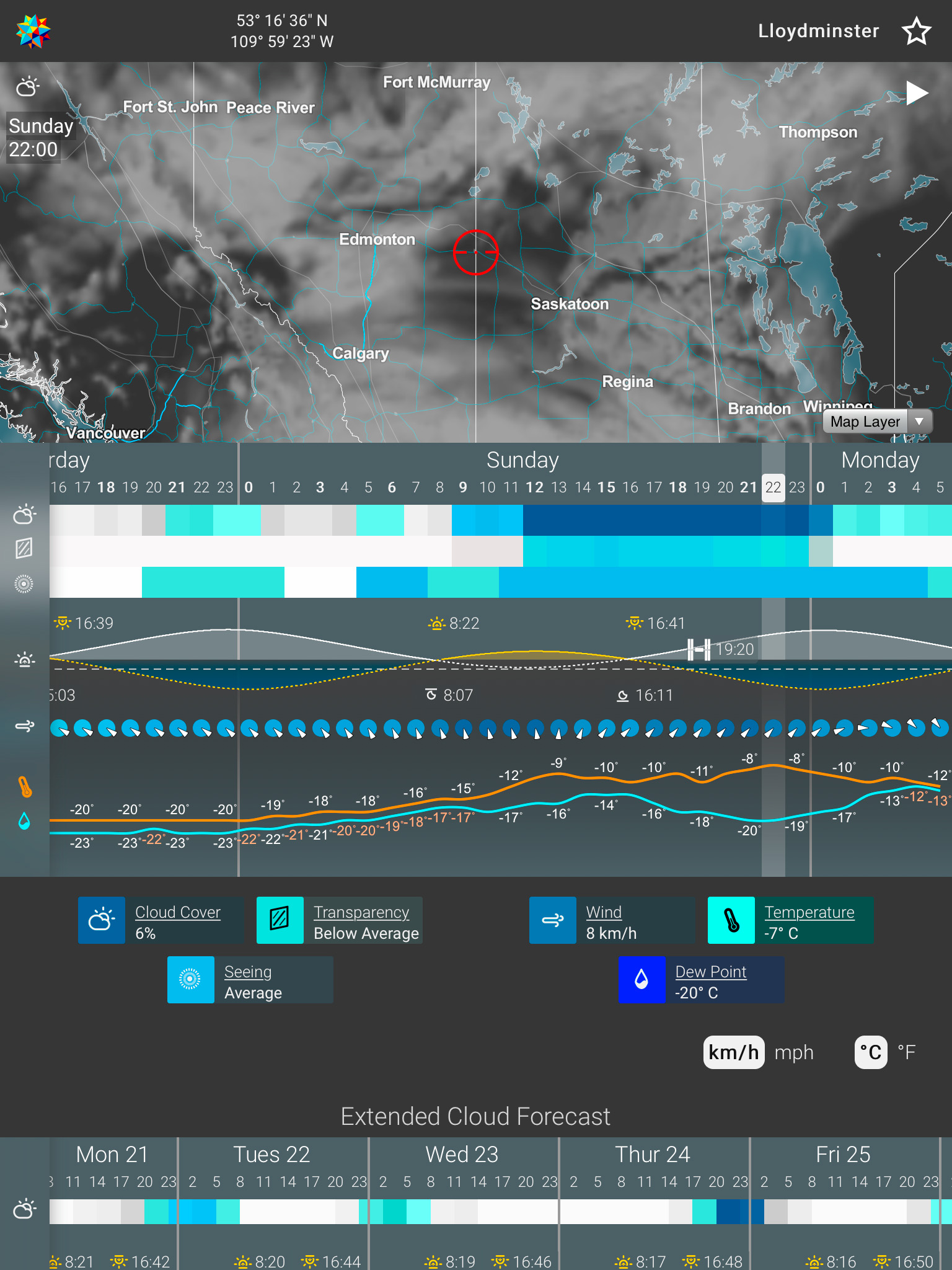
A screen shot from Astrospheric

That was the case for the January 20, 2019 total lunar, as the weather predictions above, based on Environment Canada data, were showing east-central Alberta along the Saskatchewan border as the only clear hole within range and accessible.

The above is a screen shot from the wonderful app Astrospheric, a recommended and great aid to astronomers. In 2014, 2015, and 2018 the Environment Canada predictions led me to clear skies, allowing me to see an eclipse that others in my area missed.

So trusting the predictions, the day before the eclipse I drove the 5 hours and 500 km north and east to Lloydminster, a town where the provincial border runs right down the main street, Highway 17.

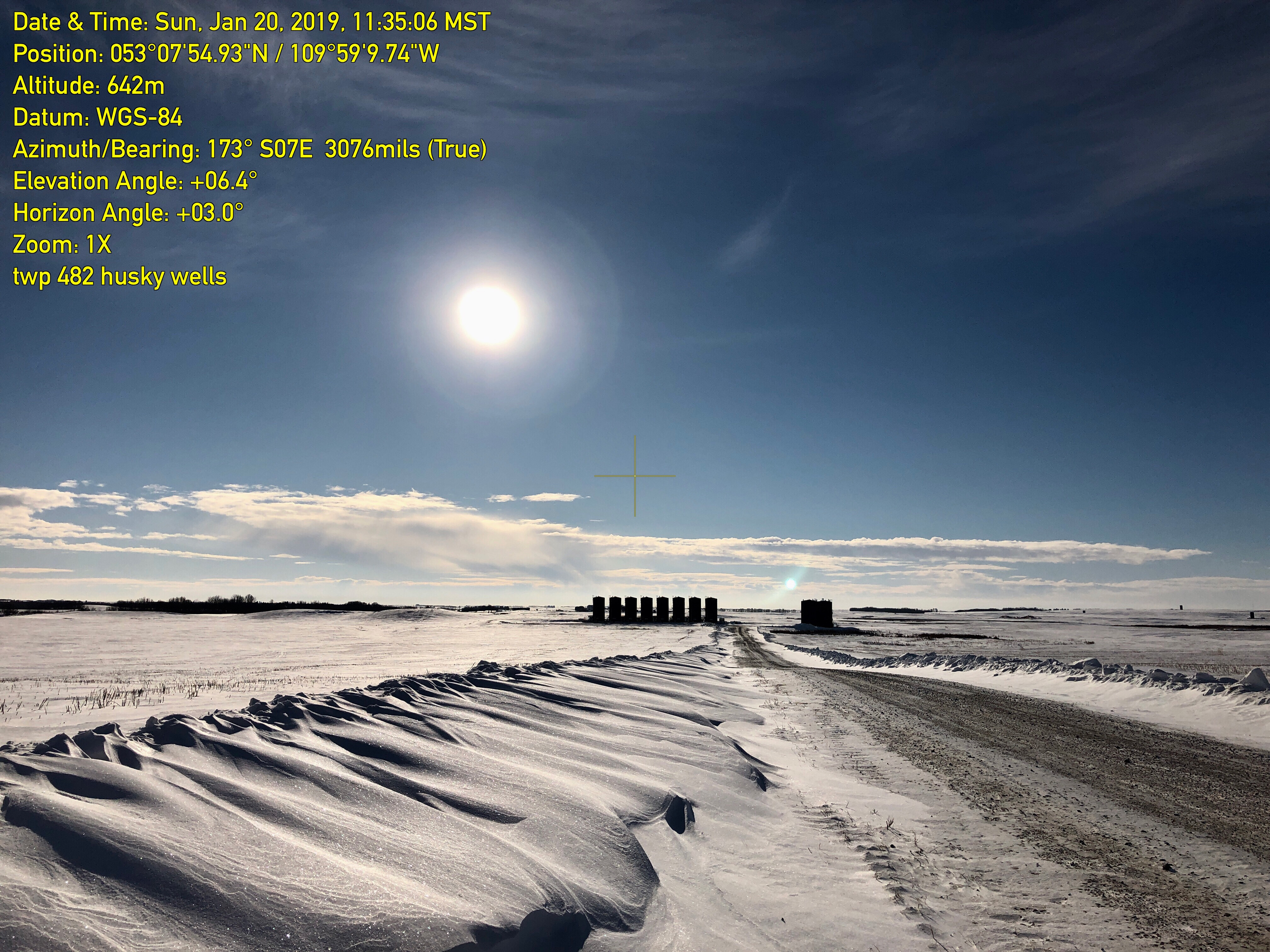
Theodolite_2019.01.20_11.35.06
A screen shot from Theodolite

The morning of the evening eclipse, I drove up and down that highway looking for a suitable site to setup. Scenery was not in abundance! It’s farm land and oil wells. I settled for a site shown above, an access road to a set of wells and tanks where I would likely not be disturbed, that had no lights, and had a clear view of the sky.

The image above is from the iOS app Theodolite, another fine app for planning and scouting sites, as it overlays where the camera was looking.

Scenery was not a priority as I was mostly after a telephoto view of the eclipsed Moon near the Beehive star cluster. Wide views would be a bonus if I could get them, for use in further ebook projects, as is the plan for the image below.

Looking at the Lunar Eclipse with Binoculars
This is a single untracked exposure of 25 seconds at f/2.8 and ISO 1600 with the Nikon D750 and Sigma 20mm Art lens, but with a shorter exposure of 1 second blended in for the Moon itself so it retains its color and appearance to the naked eye. Your eye can see the eclipsed Moon and Milky Way well but the camera cannot in a single exposure. The scene, taken just after the start of totality, just fit into the field of the 20mm lens. A little later in the night it did not. 

The site, which was east of the border in Saskatchewan, served me well, and the skies behaved just as I had hoped, with not a cloud nor haze to interfere with the view. It was a long and cold 5-hour night on the Prairies, with the temperature around -15° C.

It could have been worse, with -25° not uncommon at this time of year. And fortunately, the wind was negligible, with none of the problems with frost that can happen on still nights.

Nevertheless, I kept my photo ambitions in check, as in the cold much can go wrong and running two cameras was enough!

Eclipsed Moon Beside the Beehive
The Moon in mid-total eclipse, on January 20, 2019, with it shining beside the Beehive star cluster, Messier 44, in Cancer. This view tries to emulate the visual scene through binoculars, though the camera picks up more stars and makes the Moon more vivid than it appears to the eye. However, creating a view that looks even close to what the eye can see in this case takes a blend of exposures: a 1-minute exposure at ISO 800 and f/2.8 for the stars, which inevitably overexposes the Moon. So I’ve blended in three shorter exposures for the Moon, taken immediately after the long “star” exposure. These were 8, 4 and 2 seconds at ISO 400 and f/4, and all with the Canon 200mm telephoto on a Fornax Lightrack II tracking mount to follow the stars. 

Above was the main image I was after, capturing the red Moon shining next to the Beehive star cluster, a sight we will not see again for another 18-year-long eclipse “saros,” in January 2037.

But I shot images every 10 minutes, to capture the progression of the Moon through the shadow of the Earth, for assembly into a composite. I’d pick the suitable images later and stack them to produce a view of the Moon and umbral shadow outline set amid the stars.

Eclipsed Moon and Umbral Shadow
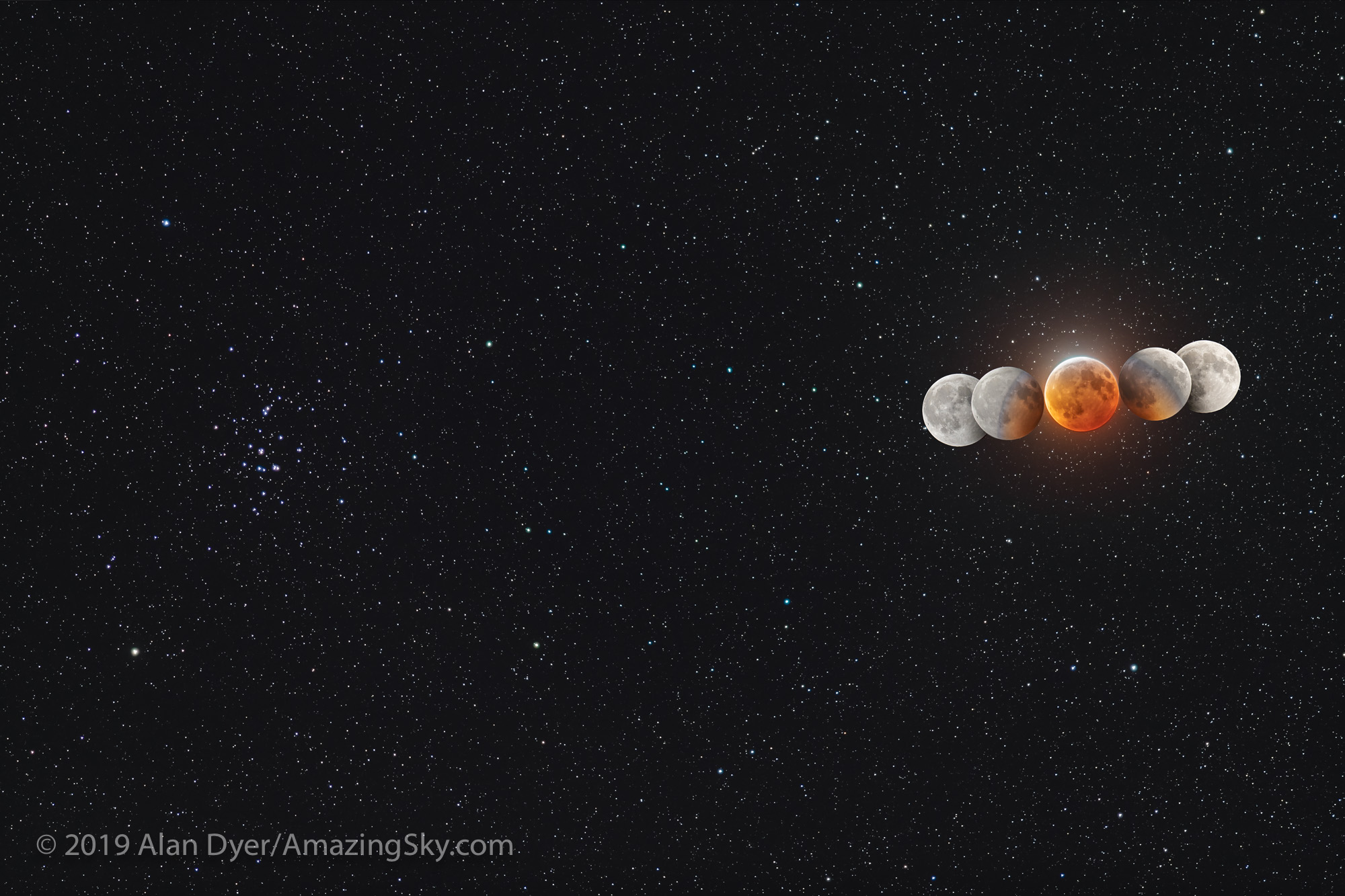
The Moon in total eclipse, on January 20, 2019, in a multiple exposure composite showing the Moon moving from right to left (west to east) through the Earth’s umbral shadow. The middle image is from just after mid-totality at about 10:21 pm MST, while the partial eclipse shadow ingress image set is from 9:15 pm and the partial eclipse shadow egress image set is from 11:15 pm. I added in two images at either end taken at the very start and end of the umbral eclipse to add a more complete sequence of the lunar motion. The central image of totality includes a 1-minute exposure at ISO 800 and f/2.8 for the stars, which inevitably overexposes the Moon. So I’ve blended in three shorter exposures for the Moon, taken immediately after the long “star” exposure. These were 8, 4 and 2 seconds at ISO 400 and f/4, and all with the Canon 200mm telephoto. The two partial eclipse phases are stacks of 7 exposures each, from very short for the bright portion of the lunar disk, to long for the shadowed portion. They are blended with luminosity masks created with ADP Pro v3 panel for Photoshop, but modified with feathering to blend the images smoothly. 

Above is the final result, showing the outline of the circular umbral shadow of the Earth defined by the shadow edge on the partially eclipsed Moons. The umbra is about three times the size of the Moon. And at this eclipse the Moon moved across the northern half of the shadow.

So mission accomplished!

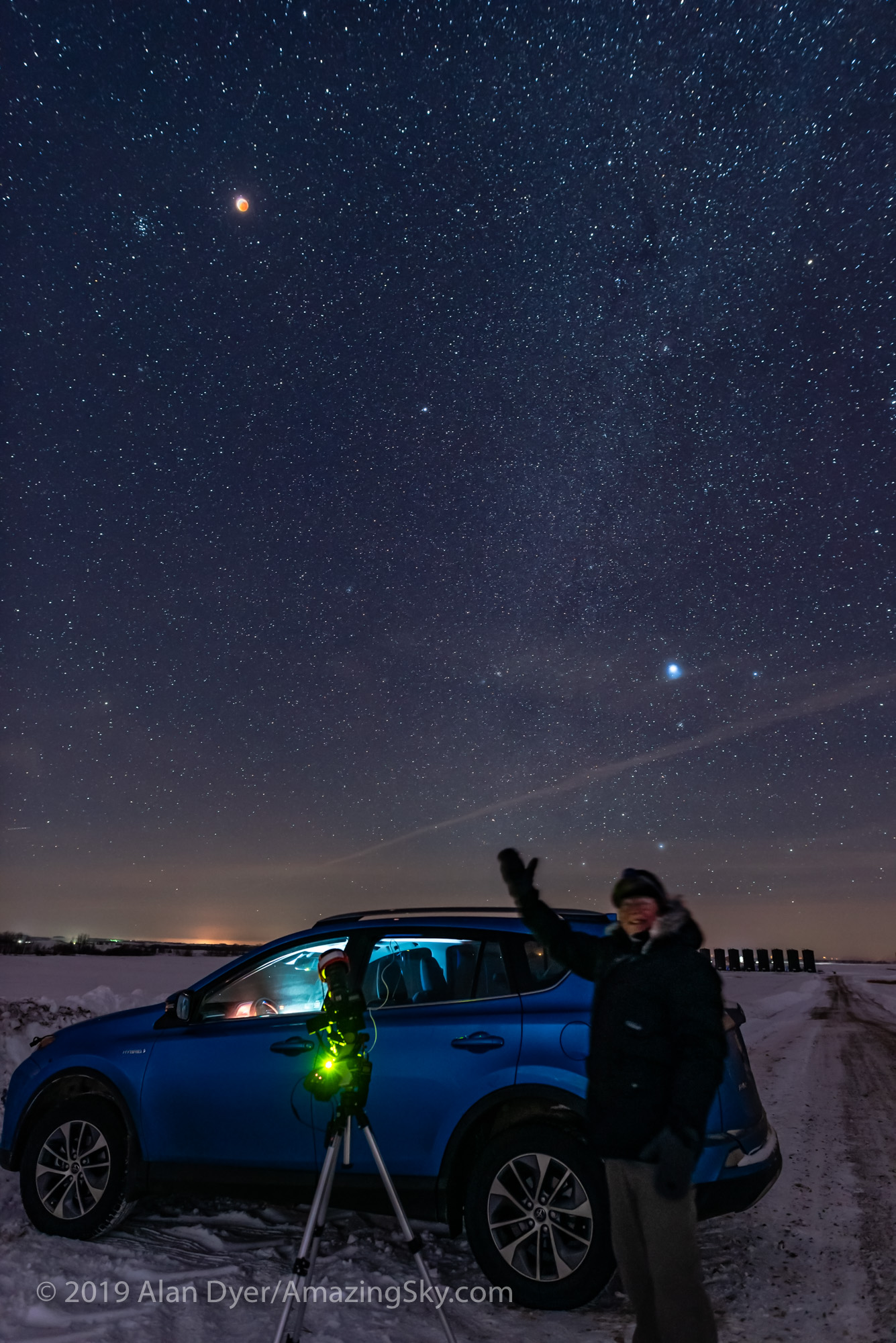
Success Selfie with Lunar Eclipse (Jan 20, 2019)
This is an untracked single exposure of 15 seconds at ISO 3200 and f/2.8 with the Sigma 20mm Art lens and Nikon D750. However, I blended in a shorter 1-second exposure for the red eclipsed Moon itself to prevent its disk from overexposing as it would in any exposure long enough to record the Milky Way. 

I usually try to take a “trophy” shot of the successful eclipse chaser having bagged his game. This is it, from mid-eclipse during totality, with the red Moon shining in the winter sky beside the Beehive.

With this eclipse I can now say I have seen every total lunar eclipse visible from my area of the world since May 2003. I’m not counting those TLEs that were visible from only the eastern hemisphere — I’m not so avid as to chase those. And there were a couple of TLEs in that time that were visible from North America, but not from Alberta. So I’m not counting those.

And a couple of TLEs that were visible from here I did not see from here in Alberta — I saw April 15, 2014 from Australia and April 4, 2015 from Utah.

With that tally I’ve seen all the locally visible TLEs over a full saros cycle, 18 years. The last local TLE I missed was January 20, 2000, exactly 19 years — a Metonic cycle — ago. It must have been cloudy!

may 21, 2021 eclipse

The next total eclipse of the Moon is May 26, 2021, visible from Alberta as the Moon sets at dawn. I’d like to be in Australia for that one (depicted above in a screen shot from StarryNight™), to see the eclipsed Moon beside the galactic centre as both rise in the east, a sight to remember. Being late austral autumn, that will be a “cool Moon.”

Happy eclipse chasing!

— Alan, January 22, 2019 / © 2019 Alan Dyer / AmazingSky.com