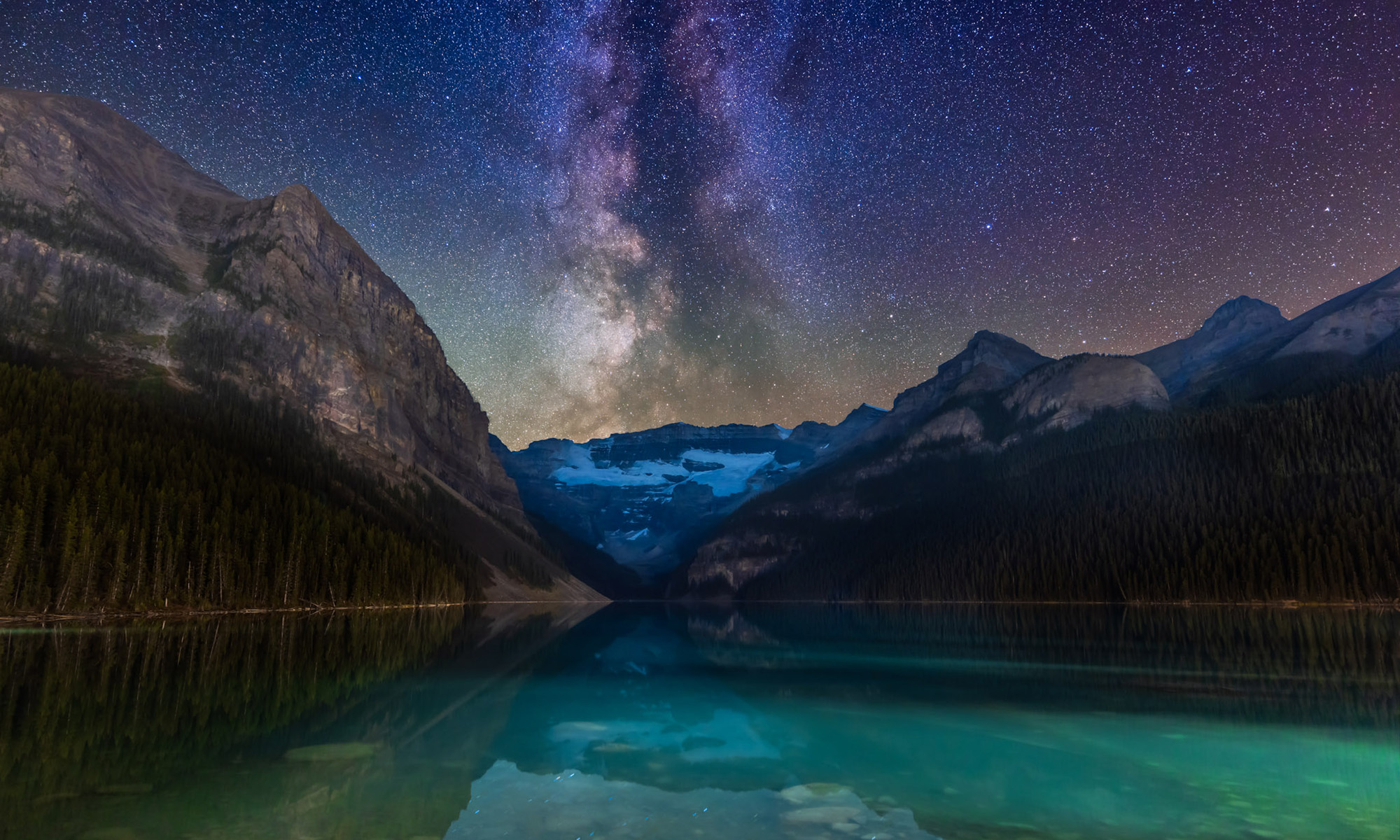
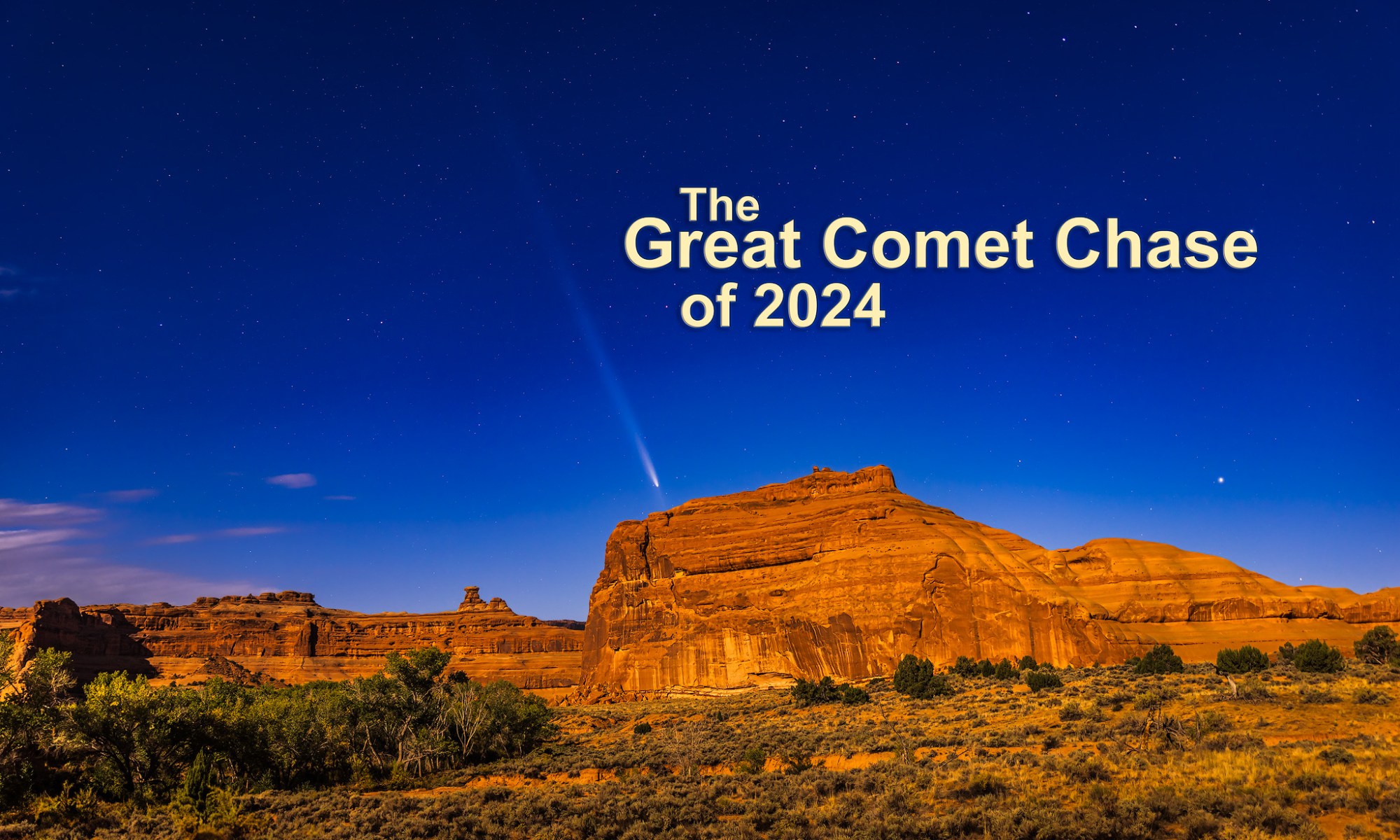
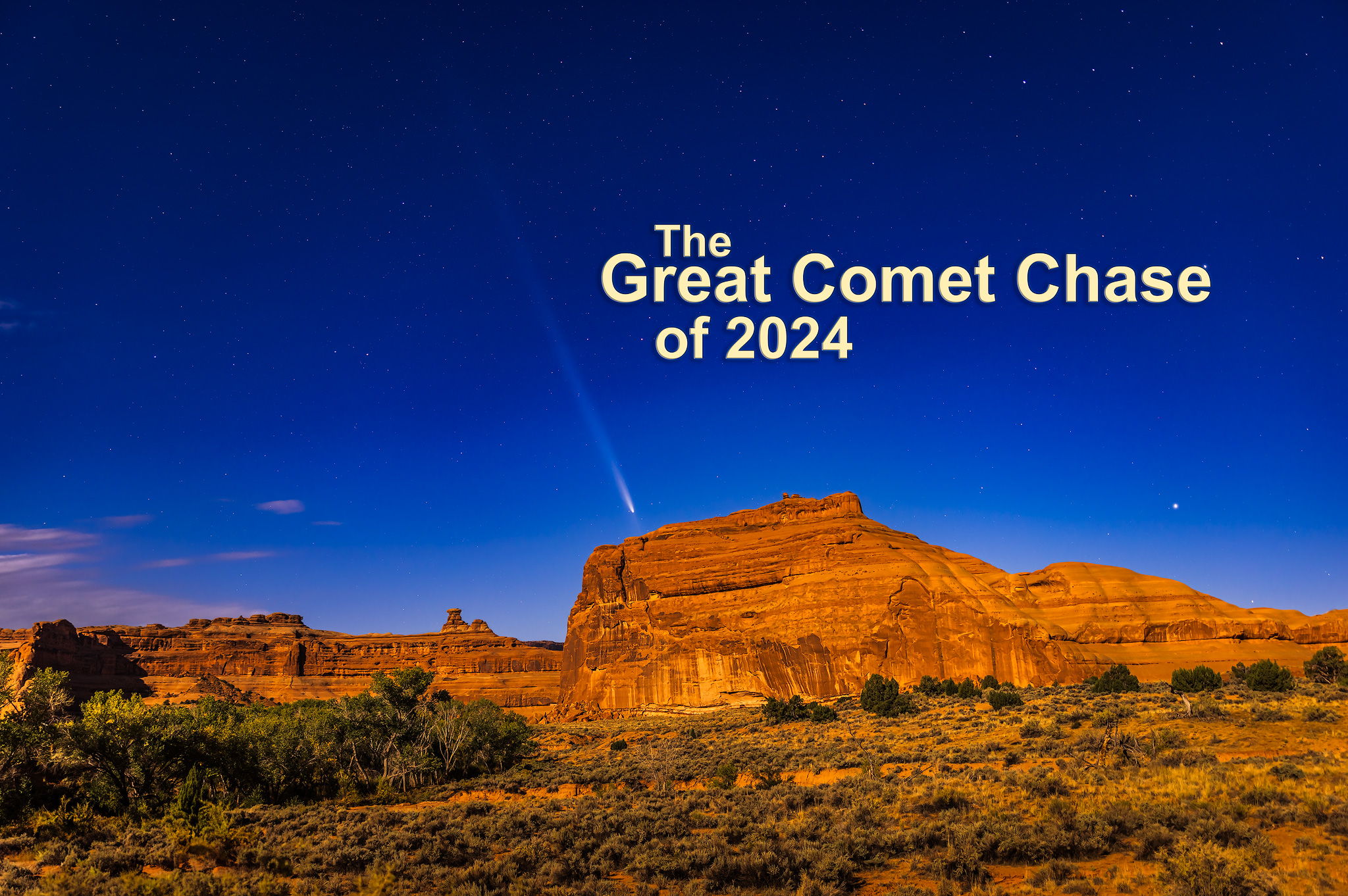
A plan to shoot the promised bright comet of 2024 paid off, with fine views at dawn and at dusk of the best comet since 2020.
Comets are always a gamble. Any new comets discovered, the ones that usually become the brightest, have no track record of performance. Predictions of how bright a new comet might appear are based on what a typical comet should do. But comets can outperform expectations and dazzle us, or they can fizzle and fade away.
In late 2023 it was clear that a then newly-discovered comet, C/2023 A3, named Tsuchinshan-ATLAS after the observatories where it was co-discovered, had the potential to perform in late 2024.

Knowing where it would be in the sky (that trait of a comet can be predicted with accuracy!) I planned a field trip to the U.S. desert Southwest for late September and early October 2024. From farther south the comet would be higher than it would be from home (shown above), and over spectacular landscapes.
I had visions of another Comet NEOWISE from July 2020. As my blog from 2020 shows, we saw that photogenic comet well from our northern latitude in Canada, as it skimmed across the northern horizon. Tsuchinshan-ATLAS would require a chase south.
September 26 & 27 — at Bryce Canyon, Utah
In late September 2024 the comet would be inbound, approaching the Sun and in the morning sky. What better eastern scene than overlooking Bryce Canyon in Utah, where I had been a year before, for the October 14, 2023 annular eclipse of the Sun in the morning sky. (Click the link for my eclipse chase blog.)
I was fortunate to get two clear mornings, both from the Fairyland Canyon viewpoint, just a short walk from the parking lot to carry camera gear and tracking mounts.
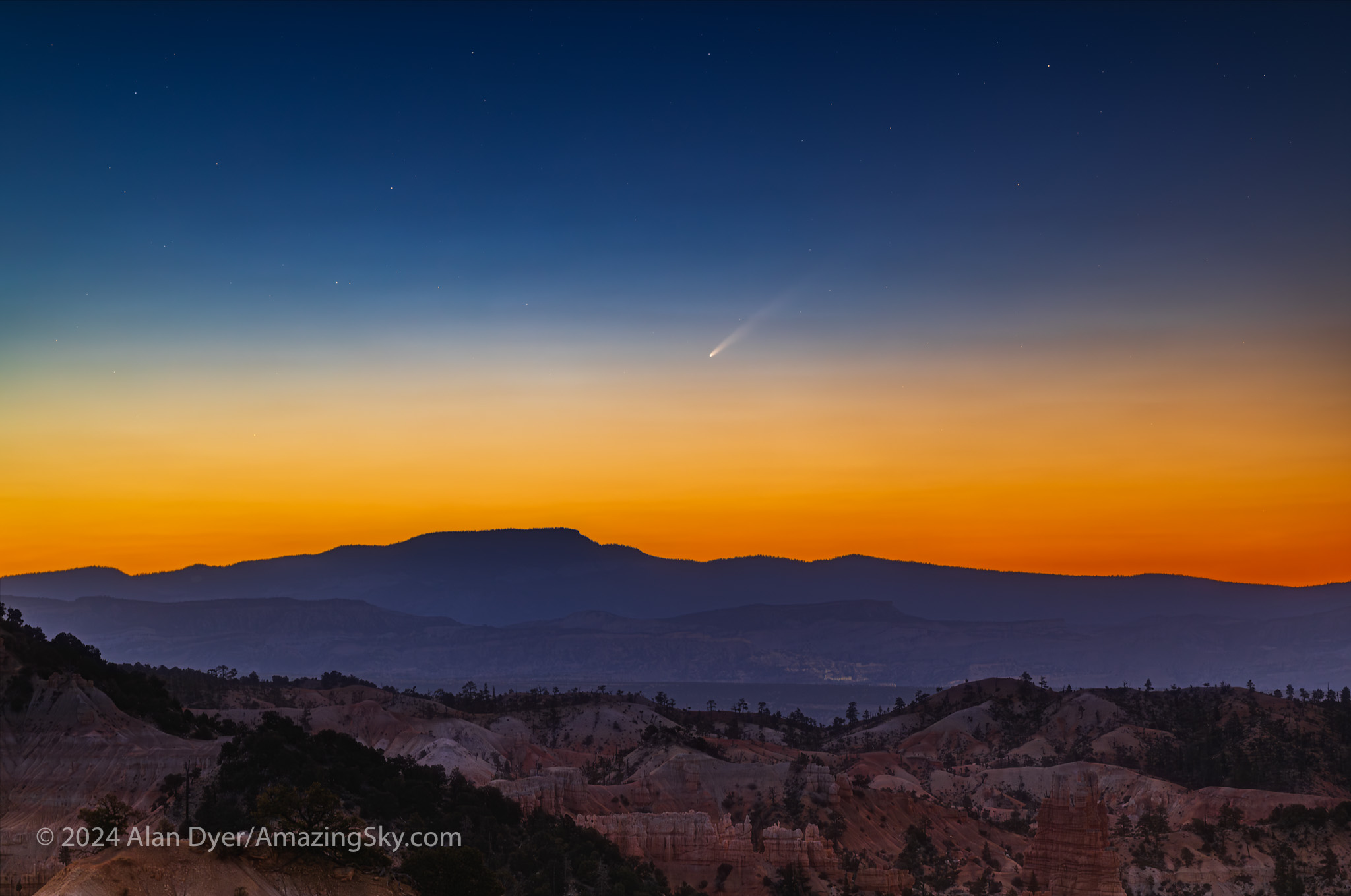
My first look at the comet on September 27 was on the day the comet was at perihelion, closest to the Sun in its orbit, though not in the sky at our viewing angle from Earth.
The comet was just visible to the unaided eye, but was obvious on the camera view screen, even amid the bright twilight. I had to shoot fast as the window between “comet rise” and the sky brightening too much was only a few minutes long.
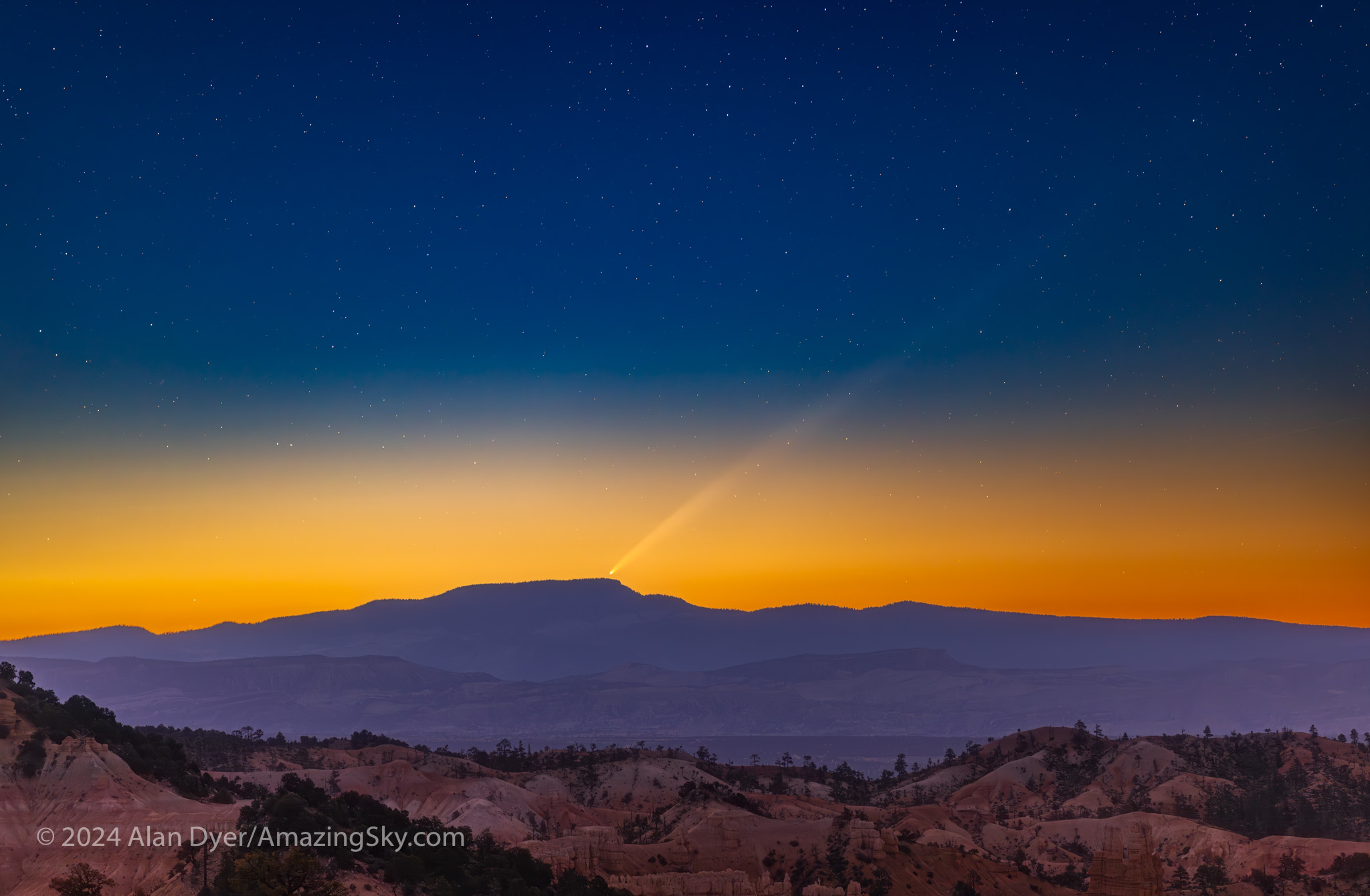
Knowing better what to look for, I caught the comet a little sooner the next morning on September 28, and so the tail appeared longer and more impressive as it rose above the distant mountains. A group of other local photographers arrived just a few minutes too late both mornings, and so struggled to just sight the comet, let alone photograph it.
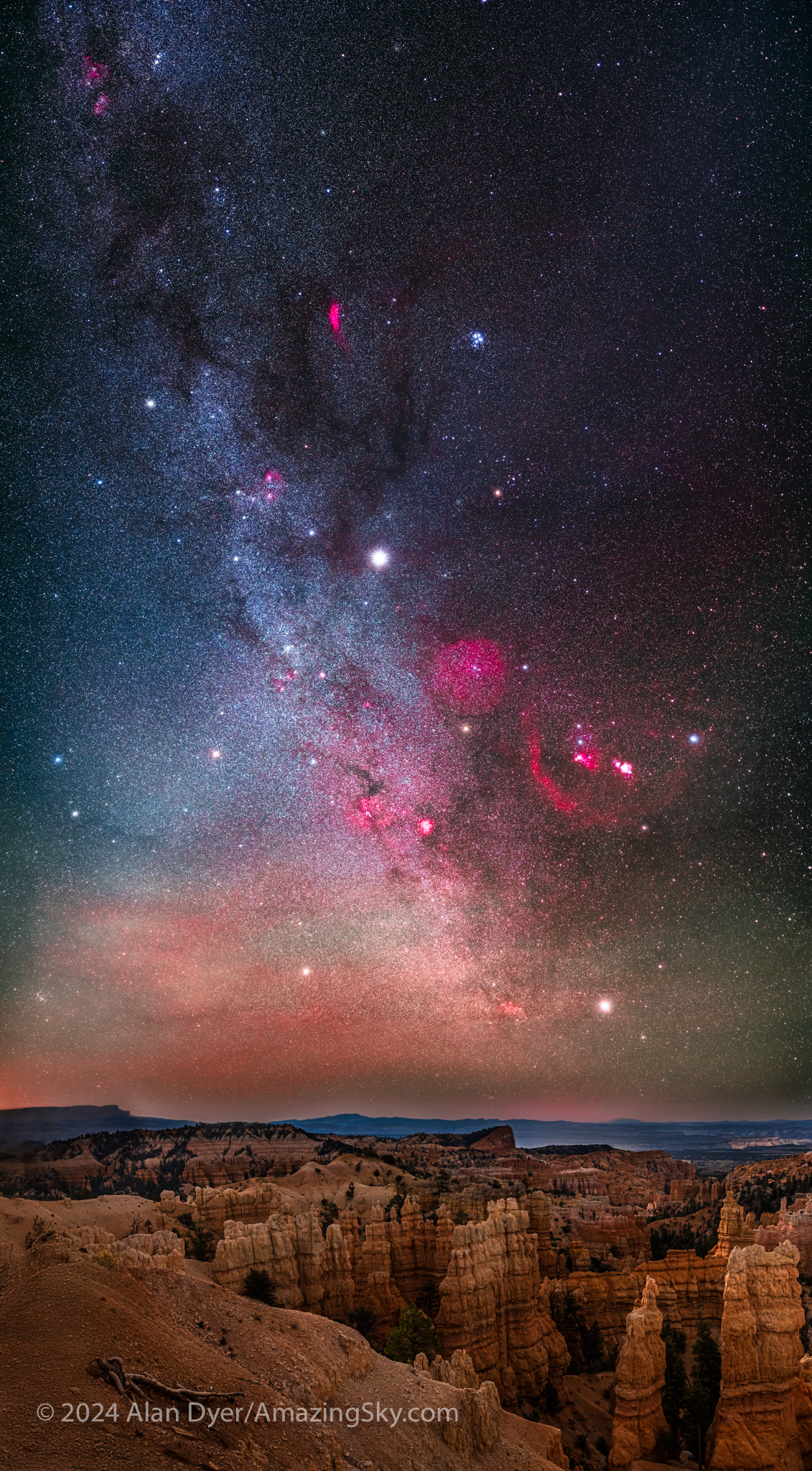
But I had arrived extra early, to shoot a vertical panorama (above) of the winter Milky Way over the canyon formations below. This and the comet images were shot with the aid of a sky tracker to follow the stars, but with the tracker off for separate shots of the ground.
So I had bagged the comet at Bryce! On to the next stop.
September 28 & 29 — at Monument Valley, Utah
There’s no more iconic or famous landscape in the American West than the buttes of Monument Valley, on the Navaho Tribal Lands on the Arizona/Utah border.

A clear first evening provided a fabulous view of the arc of Earth’s shadow across the eastern sky from the viewpoint near the aptly named The View Hotel.
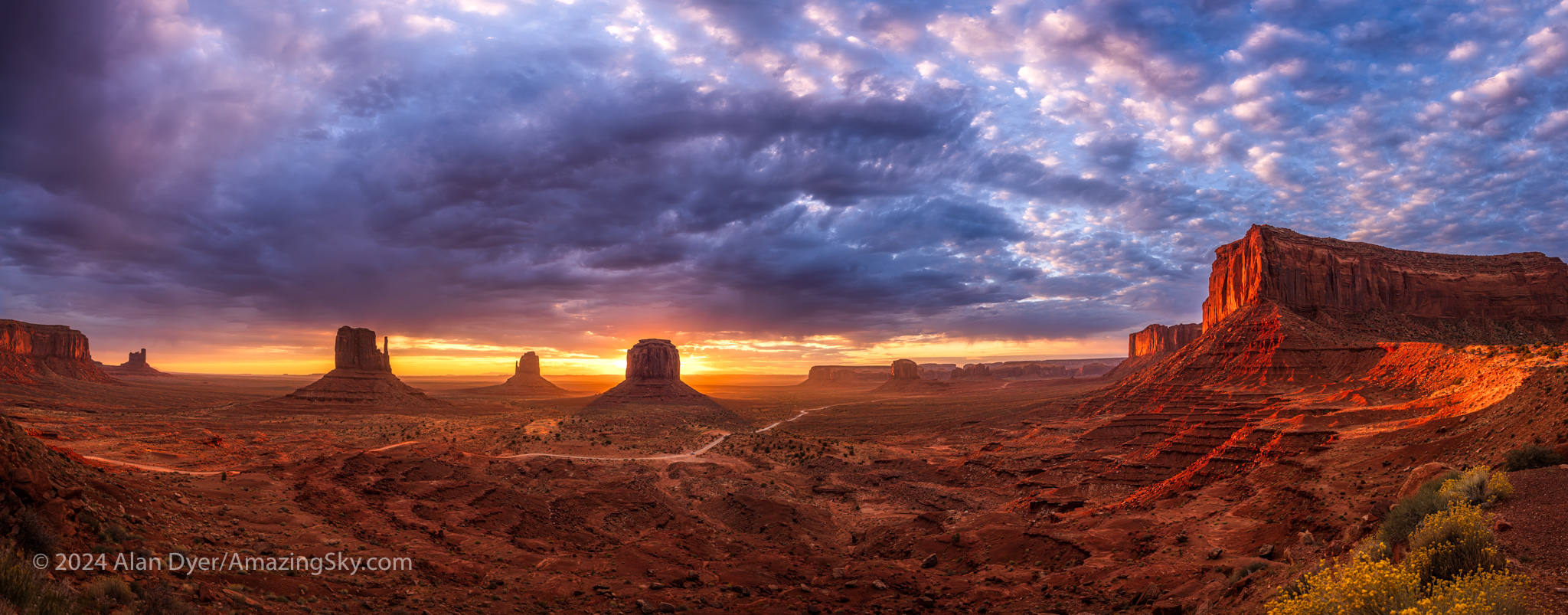
A wonderful sunrise on my second morning there made for a spectacular panorama. But while clouds created fine sunrise lighting, they aren’t conducive to seeing comets!
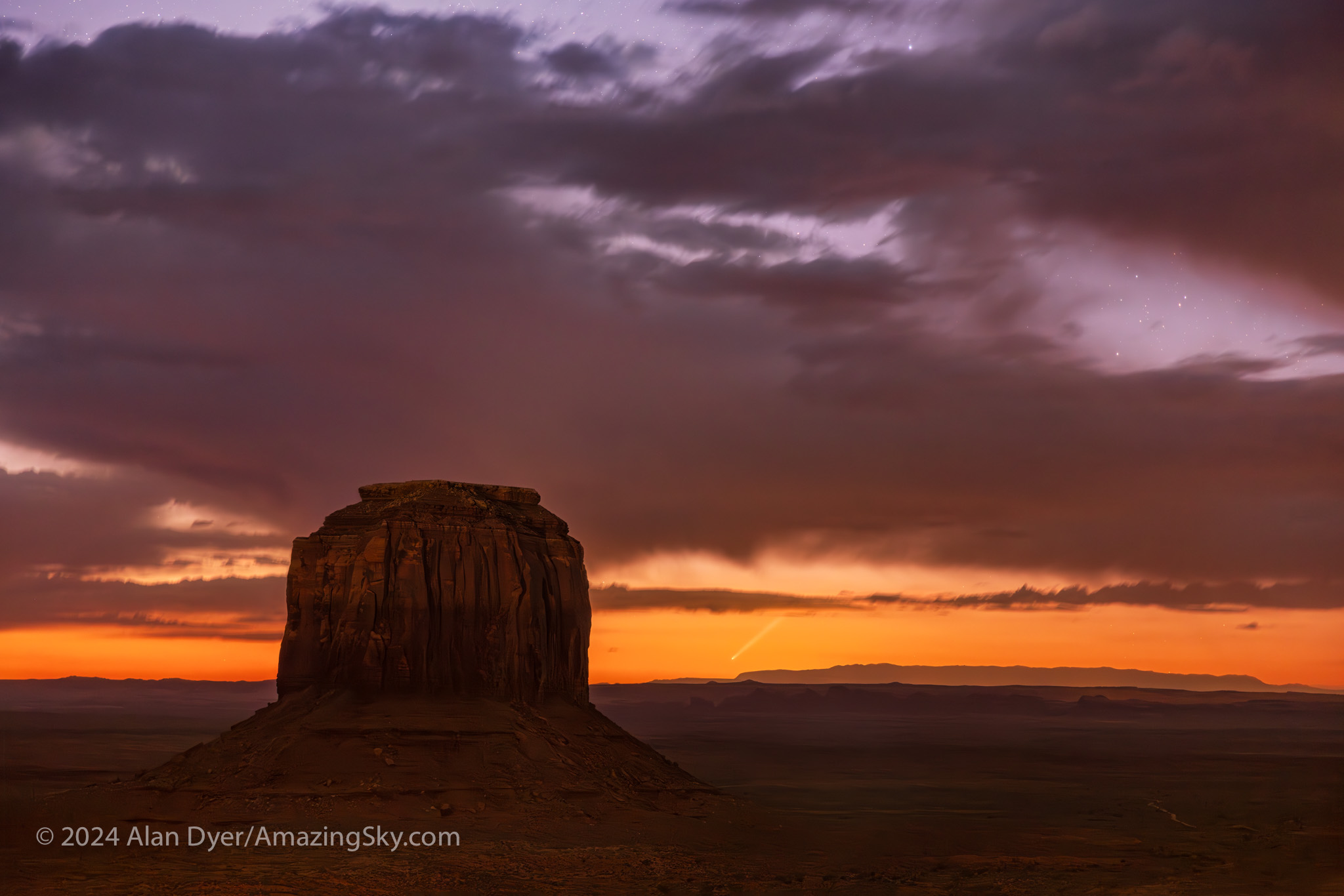
A band of clear sky near the horizon allowed me to catch the comet rising to the right of Merrick Butte, as seen from a spot south of The View from where I had calculated the comet would rise in the right position. From the usual Valley viewpoint farther north the comet would have been behind the butte.
While the planning worked, the result was not quite the spectacle I had envisioned. The comet was nice, but was starting to become lost in the bright sky as it descended toward the Sun.
There were only a couple of mornings left to catch the comet at dawn before it disappeared completely into the daytime sky close to the Sun.
October 1 to 11 — at Quailway Cottage, Arizona
The major block of time in my trip was booked for an astrophoto retreat at a cottage I’d rented twice before but not since late 2017. The Quailway Cottage, popular among birders, is also ideal for stargazing as it is in one of the darkest areas of the Southwest, north of Douglas, Arizona, and just across the Arizona/New Mexico border.

When I arrived the comet was putting in its last show in the dawn sky. In fact, on October 2 I managed to capture a dawn scene with the morning Zodiacal Light created by sunlight reflecting off cometary dust in the inner solar system, and just the tail of the comet rising before the bright comet head appeared.
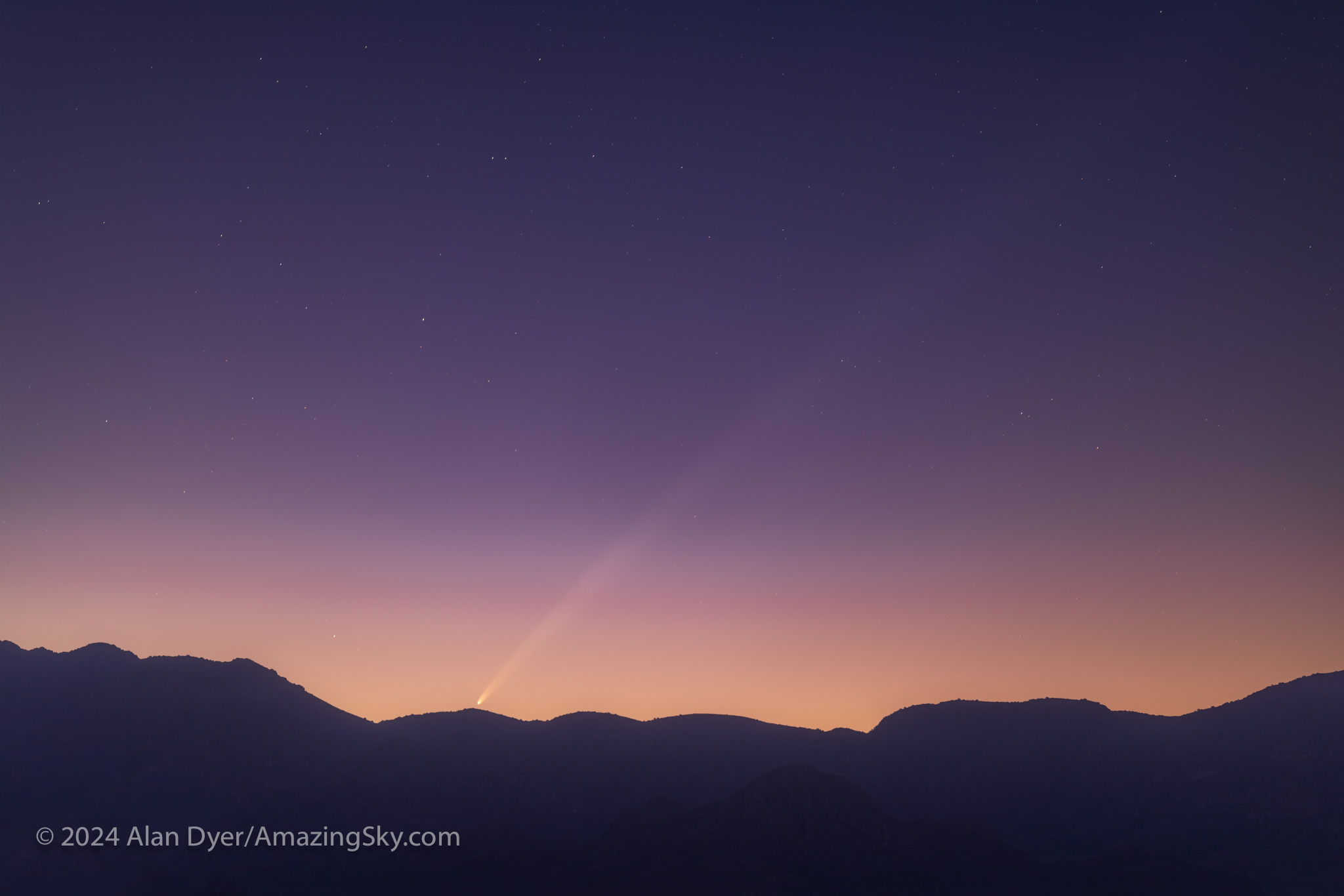
An image taken a little later showed the entire comet, now sporting a more impressive tail. It was blossoming into a fine comet indeed. But we were about to lose sight of it for more than a week.
Arizona Deep-Sky Imaging
While at Quailway I had clear skies every night. And so, as planned, I went to town shooting all kinds of “deep-sky” objects and fields with two astrophoto rigs I had brought with me: a longer-focal length 120mm refractor for small targets, and a short-focal length refractor for wide fields in the Milky Way. I had reviewed both new telescopes in recent months.
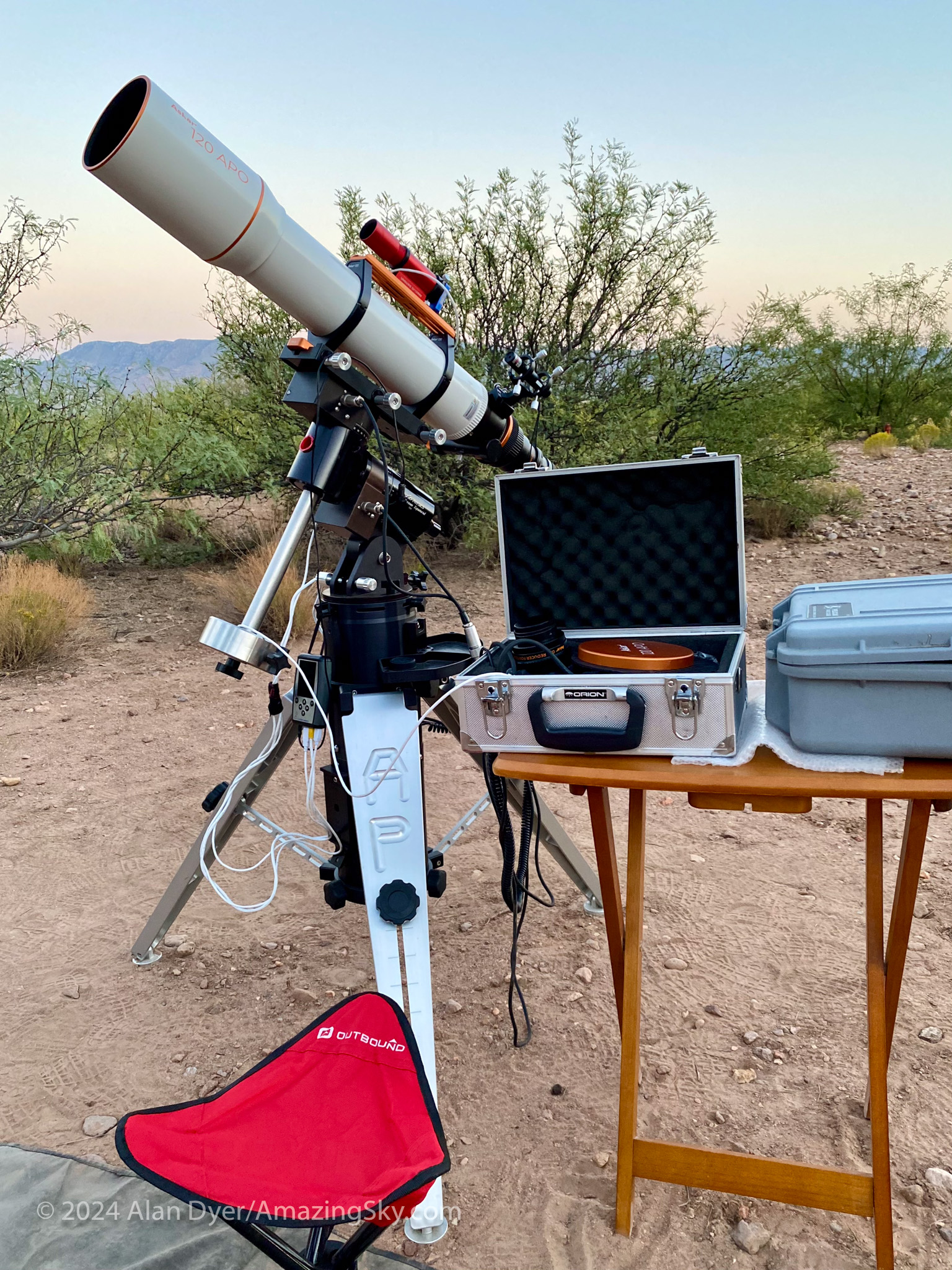
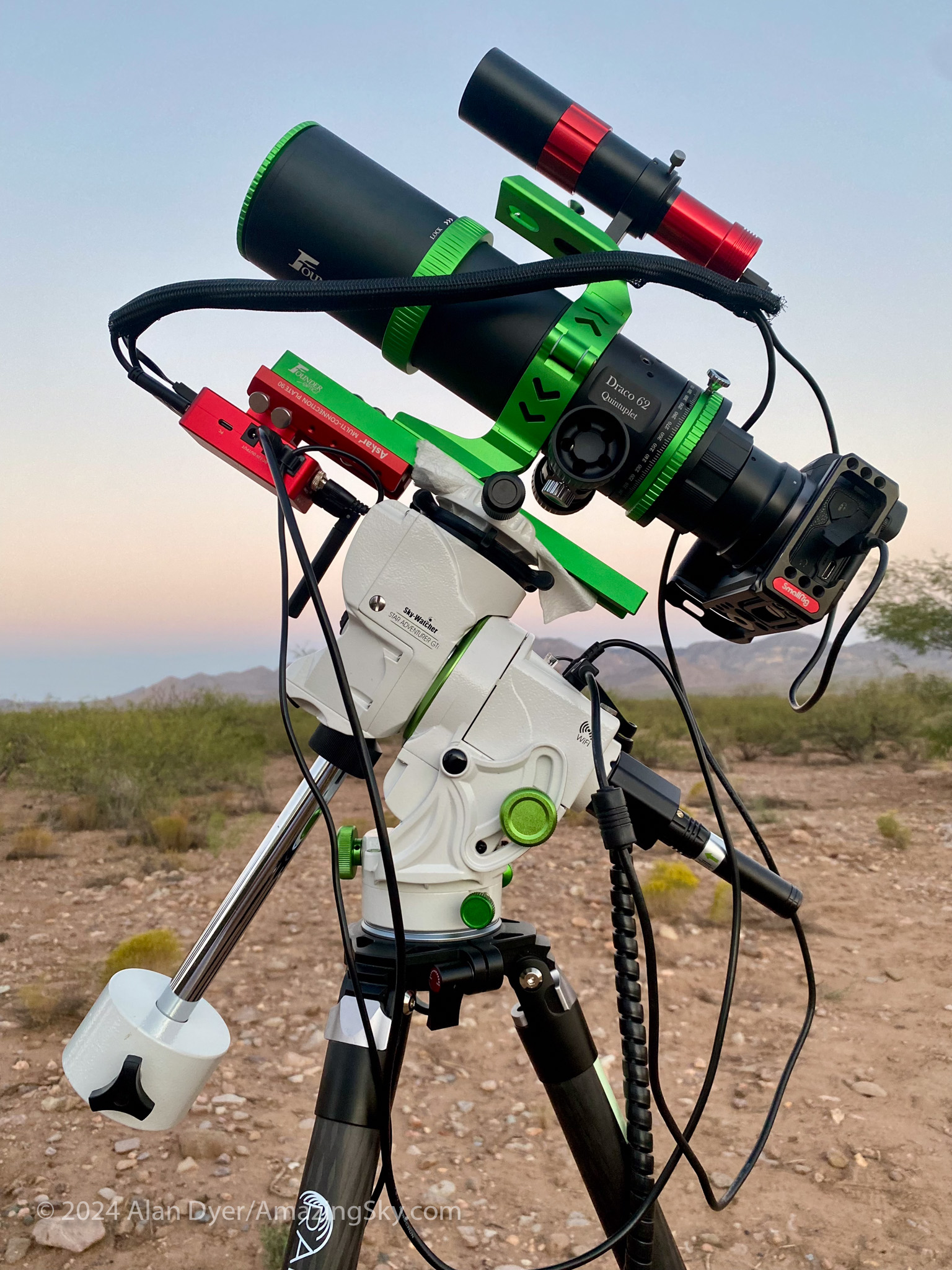
I concentrated on shooting targets low in the south that are impossible to get from home in Canada, and that I’ve missed shooting, or have not shot well, during my visits to Australia. See my blog here about my latest trek Down Under.
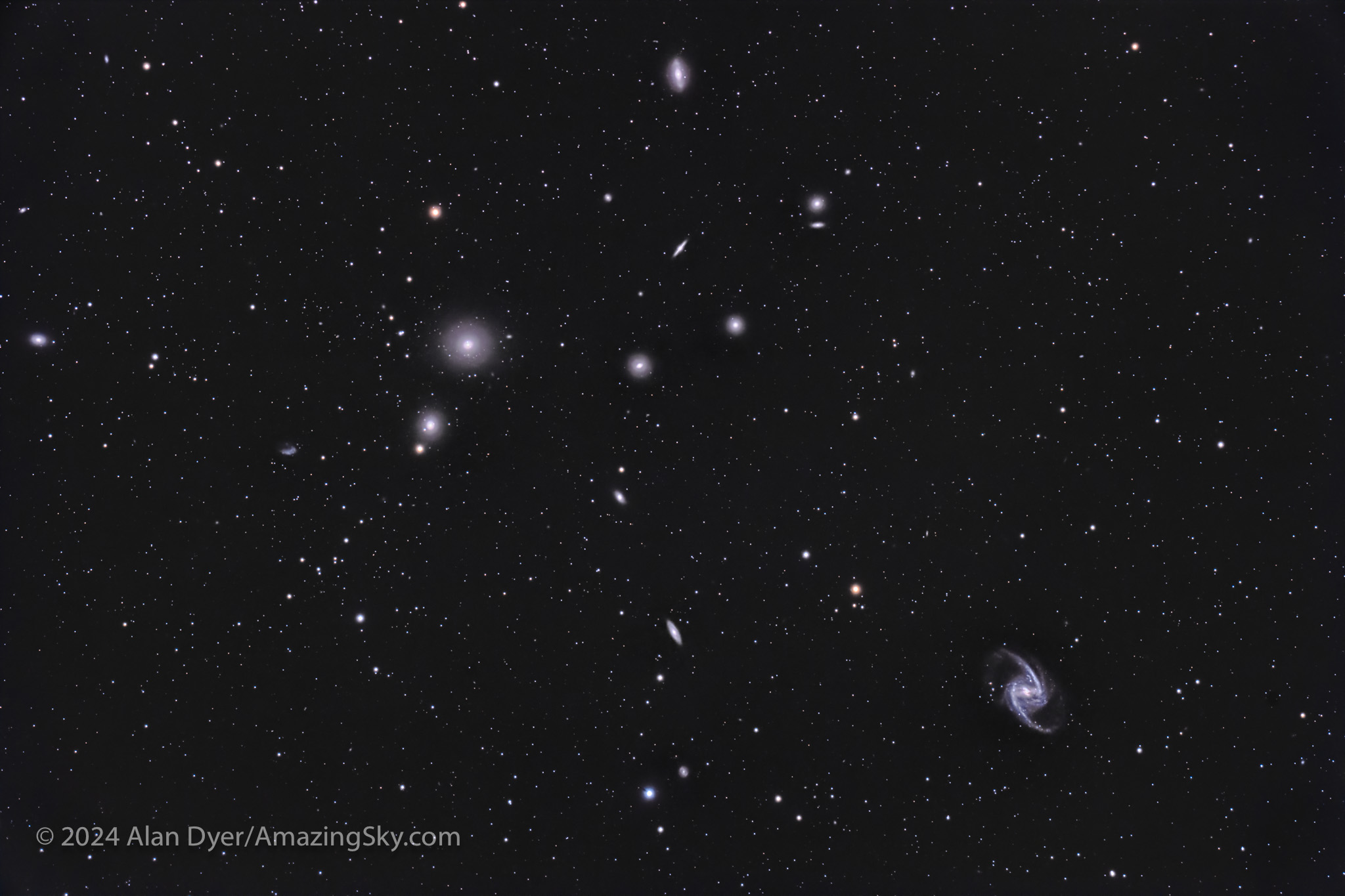
Here’s an example, above, with the larger Askar 120APO: a field of galaxies in the constellation of Fornax that rivals the better-known Markarian’s Chain of galaxies in Coma Berenices in the northern spring sky.
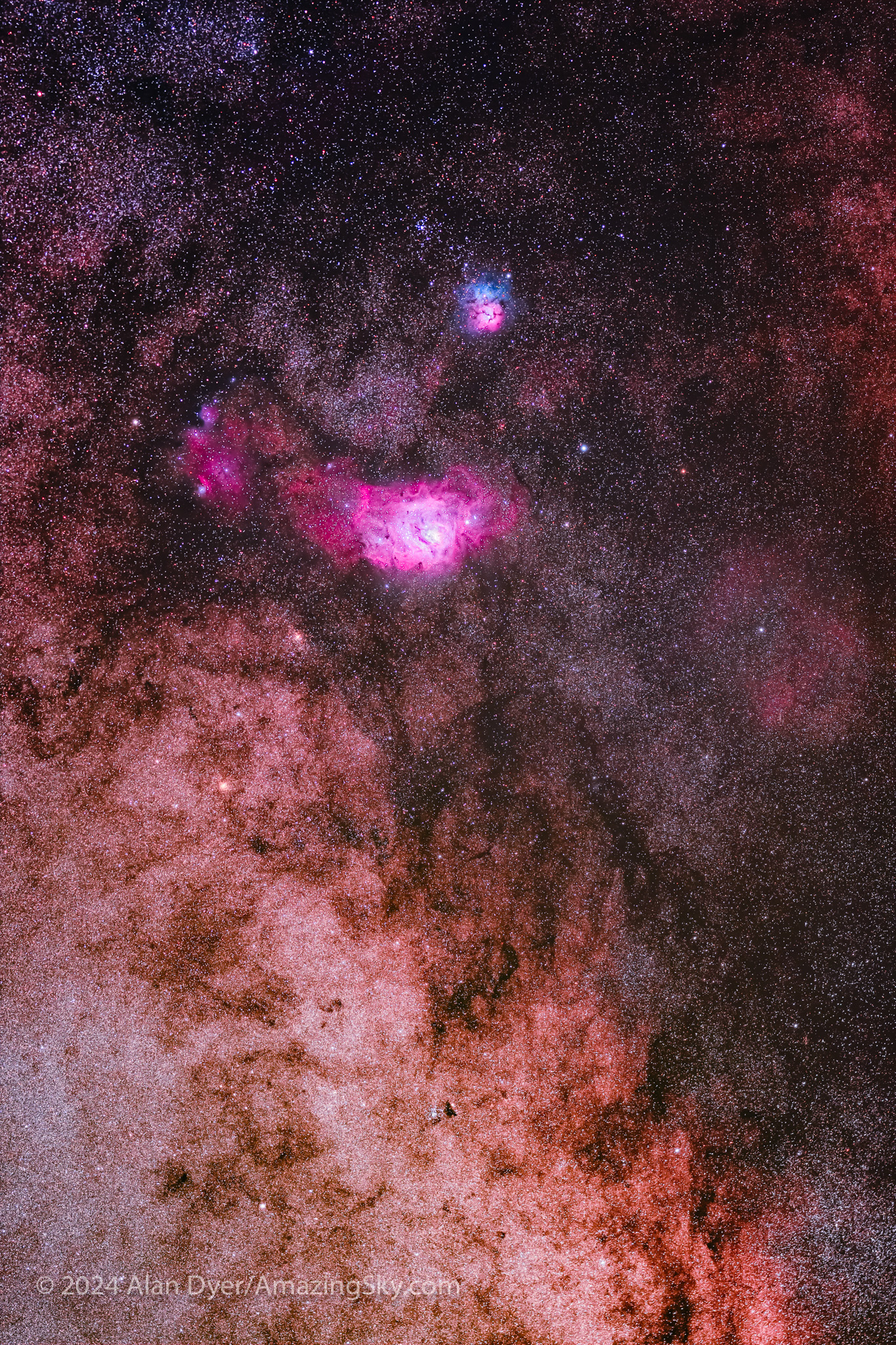
And here’s a field (above) with the small Founder Optics Draco 62mm scope, framing the rich Sagittarius Starcloud punctuated with the small dark Ink Spot Nebula, all below the bright Lagoon and Trifid Nebulas.
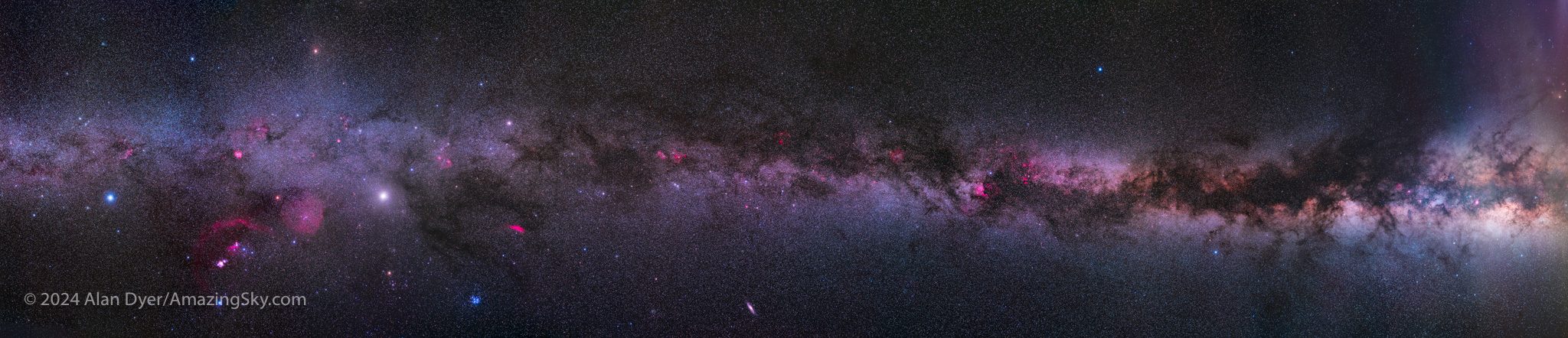
In autumn the Milky Way is up all night. So I used a simple star tracker, the MSM Nomad reviewed here on my blog, and a 28-70mm lens at 35mm to shoot a panorama from dusk to dawn along the Milky Way — from the summer stars of Sagittarius and Cygnus (at right, above), through the autumn constellations overhead in Cassiopeia and Perseus (at centre), and down into the pre-dawn sky with the winter stars in and around Orion (at left).
A Bonus Aurora from Arizona
I was just north of the Mexican border, at a latitude 32° North, more than 20° farther south than at home in Alberta. But what should appear in my sky but … aurora!
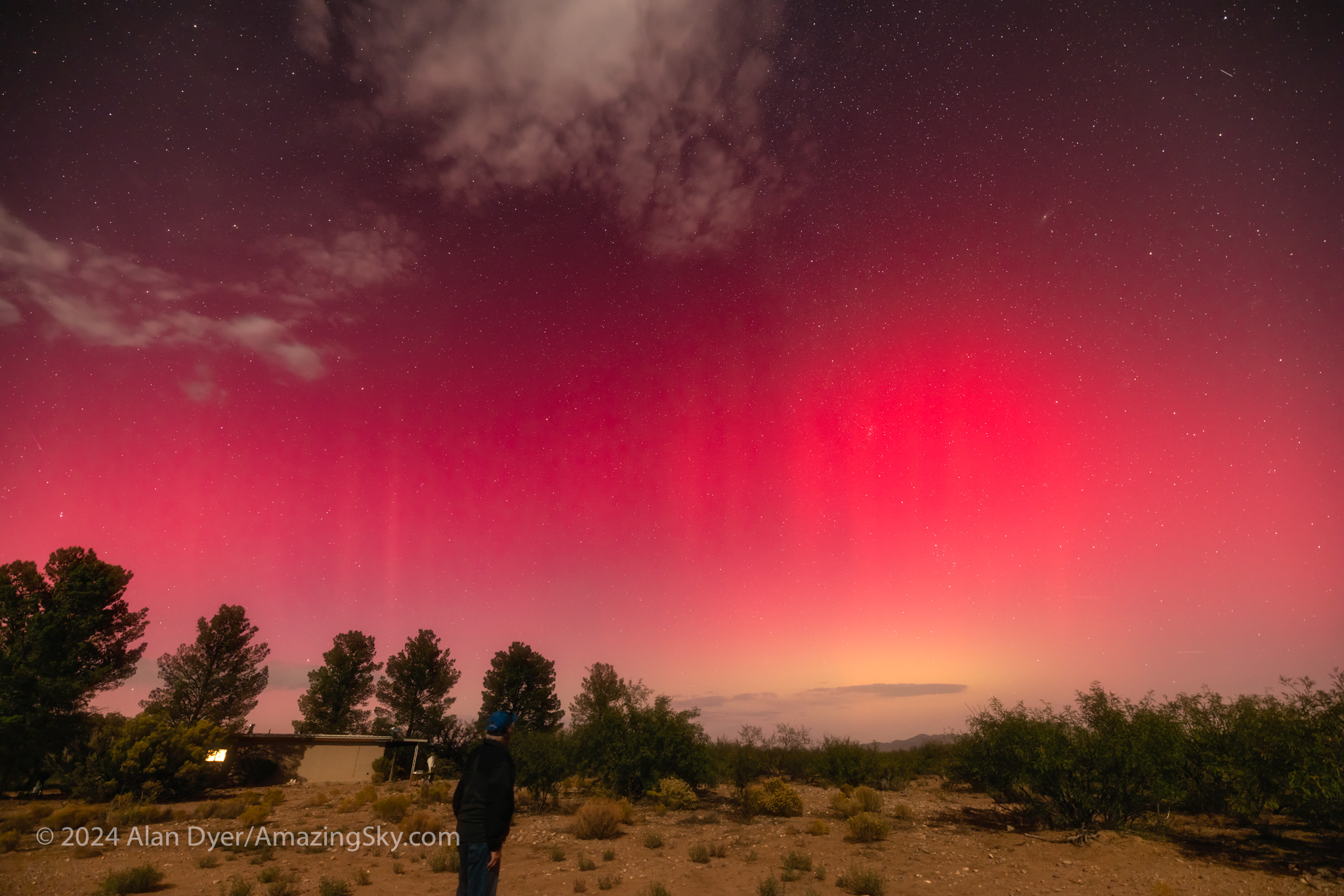
On October 9, and then again more so on October 10, a great solar storm brought Northern Lights down to me. And indeed across all of Canada and the U.S. The result for me was a red glow to the north — the tops of distant auroral curtains I would have seen filling my sky at home.
Above is a time-lapse video of the aurora that night, from a camera aimed due north for four hours. The red curtains come and go through the night.
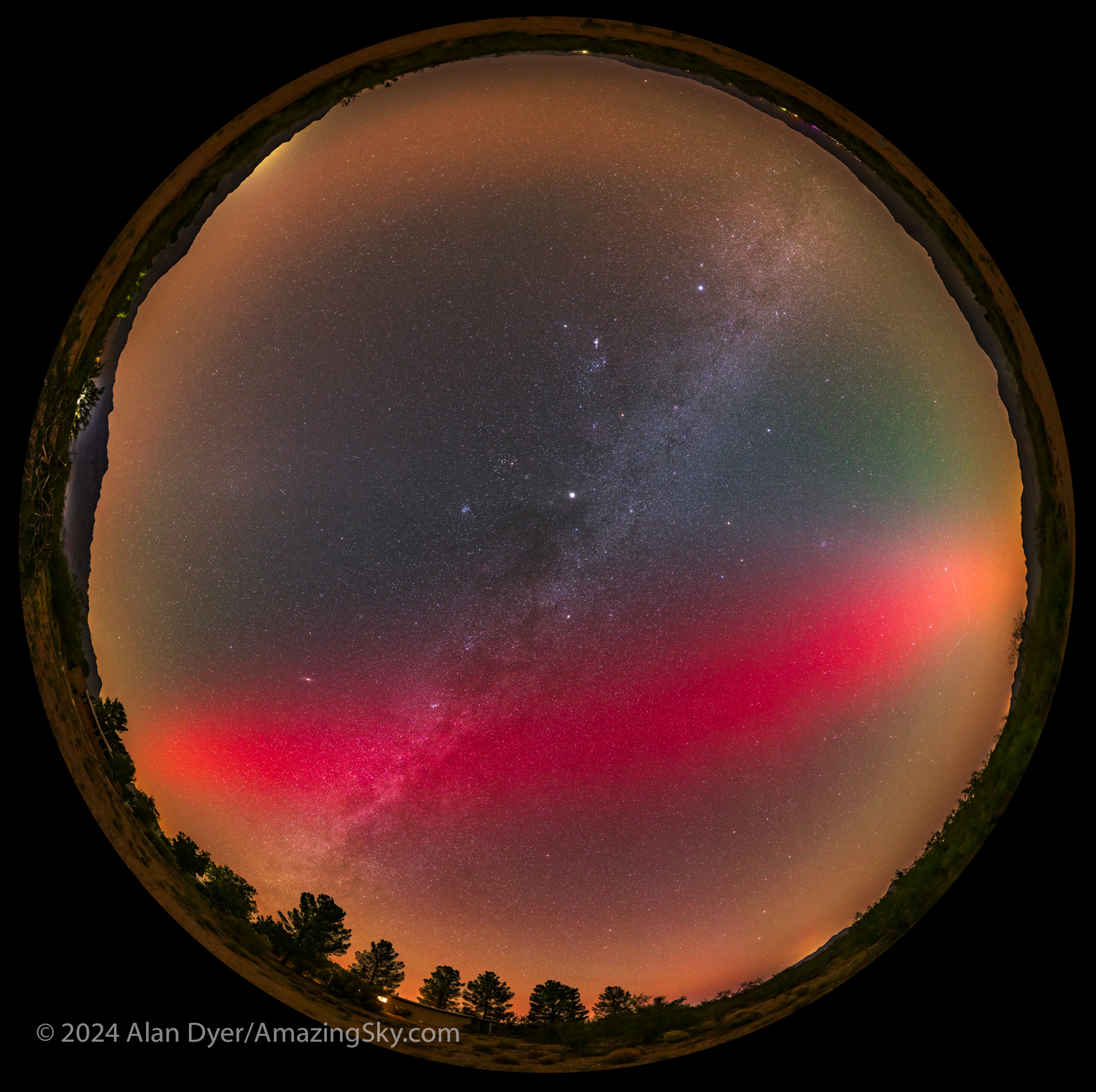
The remarkable feature that night, October 10/11, was not the aurora, but what is called a SAR (Stable Auroral Red) arc that persisted all night. It appeared as a diffuse red band across the sky, created by heat energy leaking into the upper atmosphere during the solar storm. SAR arcs can accompany an aurora but are not auroras themselves.
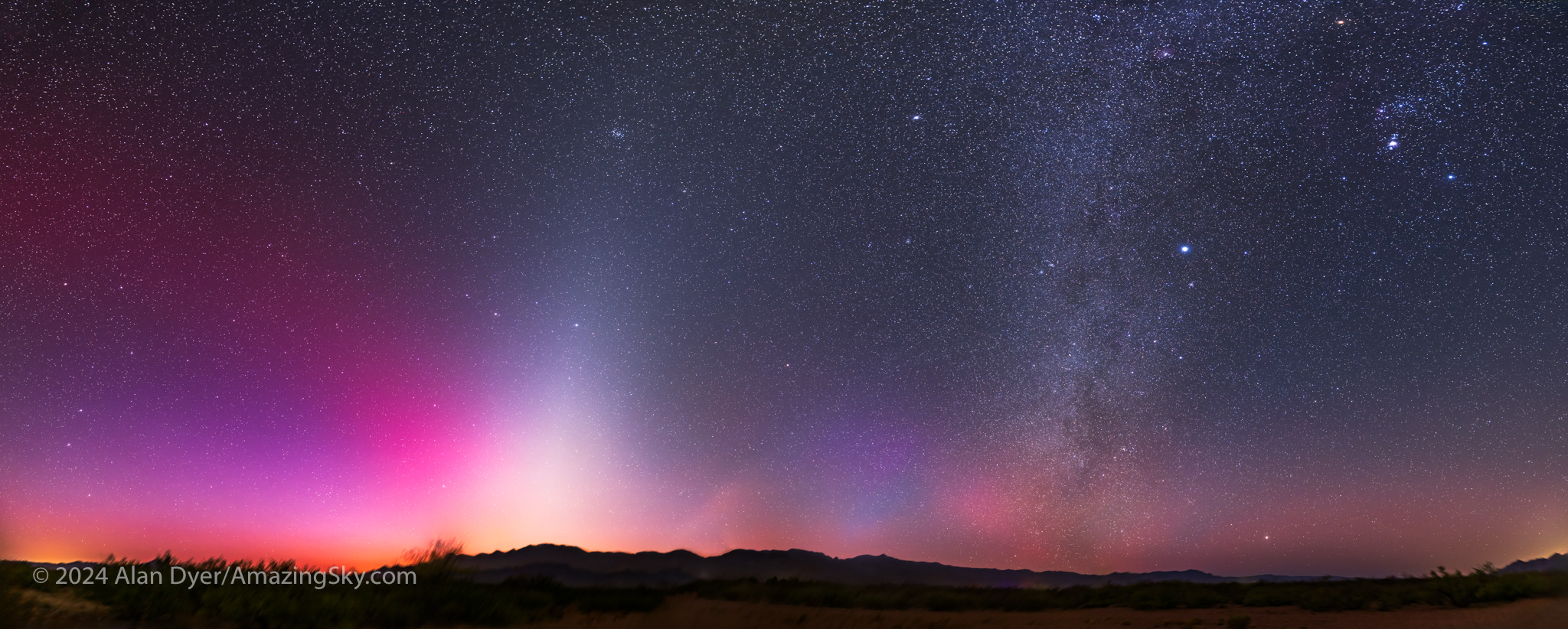
By dawn the next morning, now October 11, the tall Zodiacal Light was prominent alongside the magenta SAR arc to the north (left) and the winter Milky Way to the south (right). There’s even a short pillar of light that might be an aurora fragment, or the tail of the comet!
The Comet Returns
However, toward the end of my 11-night marathon of deep-sky imaging, the bright head of the comet was to be rising into the evening sky for Part 2 of its apparition. Below is a shot from the evening of October 11, my last at Quailway. Yes, there it was, just above the Chiricahua Mountains. But it was a blip, barely visible in binoculars and to the camera. I had hoped for more.

With the Moon now waxing into the evening sky, my plan was to head back north, stopping at scenic spots on the trip home, to catch the comet over moonlit landscapes to the west in the dusk sky.
My first two nights, October 12 and 13, at the VLA Radio Observatory near Socorro, New Mexico, then farther north near Canyon de Chelly, Arizona, were both beset by clouds to the west. From images posted on-line, I knew the comet was improving. But it was eluding me.
October 14 & 15 — at Arches National Park, Utah
The next stop was Arches National Park in Utah, which I last visited in April 2015. The first night’s forecast for October 14 also looked to be cloudy. But October 15 was supposed to be clear. So I extended my stay by an extra night, thinking that might be my only chance.
As it turned out October 14 was fabulous (below). The comet was easily visible to the unaided eye as a classic comet in the west. I pointed it out to folks walking by at the Windows Arches area. And I could hear other people commenting on it. At last a comet! One that anyone could see — though it helped to be at a clear sky site like Arches.
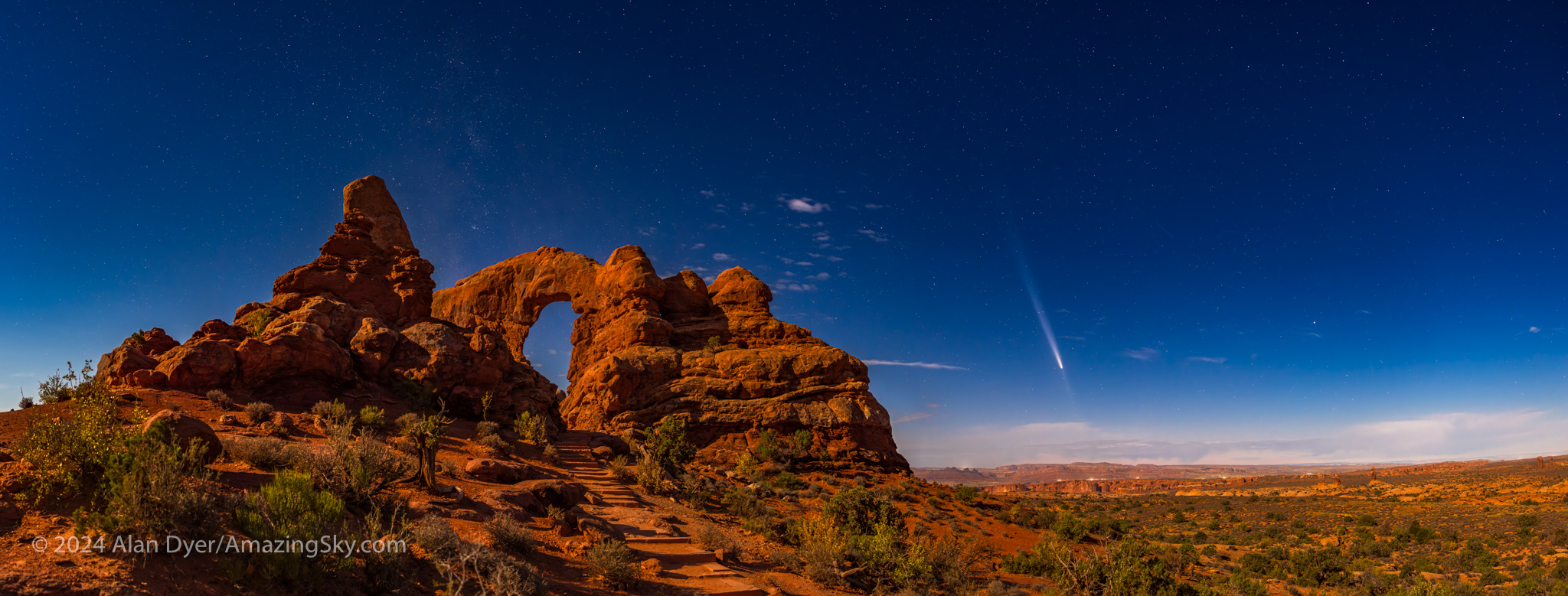
By then the Moon was well advanced in age to a bright gibbous phase, so the sky was by no means dark. It was deep blue in photos.
Still the comet showed up brilliantly; it had blossomed a lot in a couple of nights. Above, I framed it beside moonlit Turret Arch.
Below is a scene from the next night, October 15, my “back-up” night. The comet was certainly performing well after all. Even in the moonlight. In binoculars the tail stretched for the same length as the camera recorded it, some 15°.
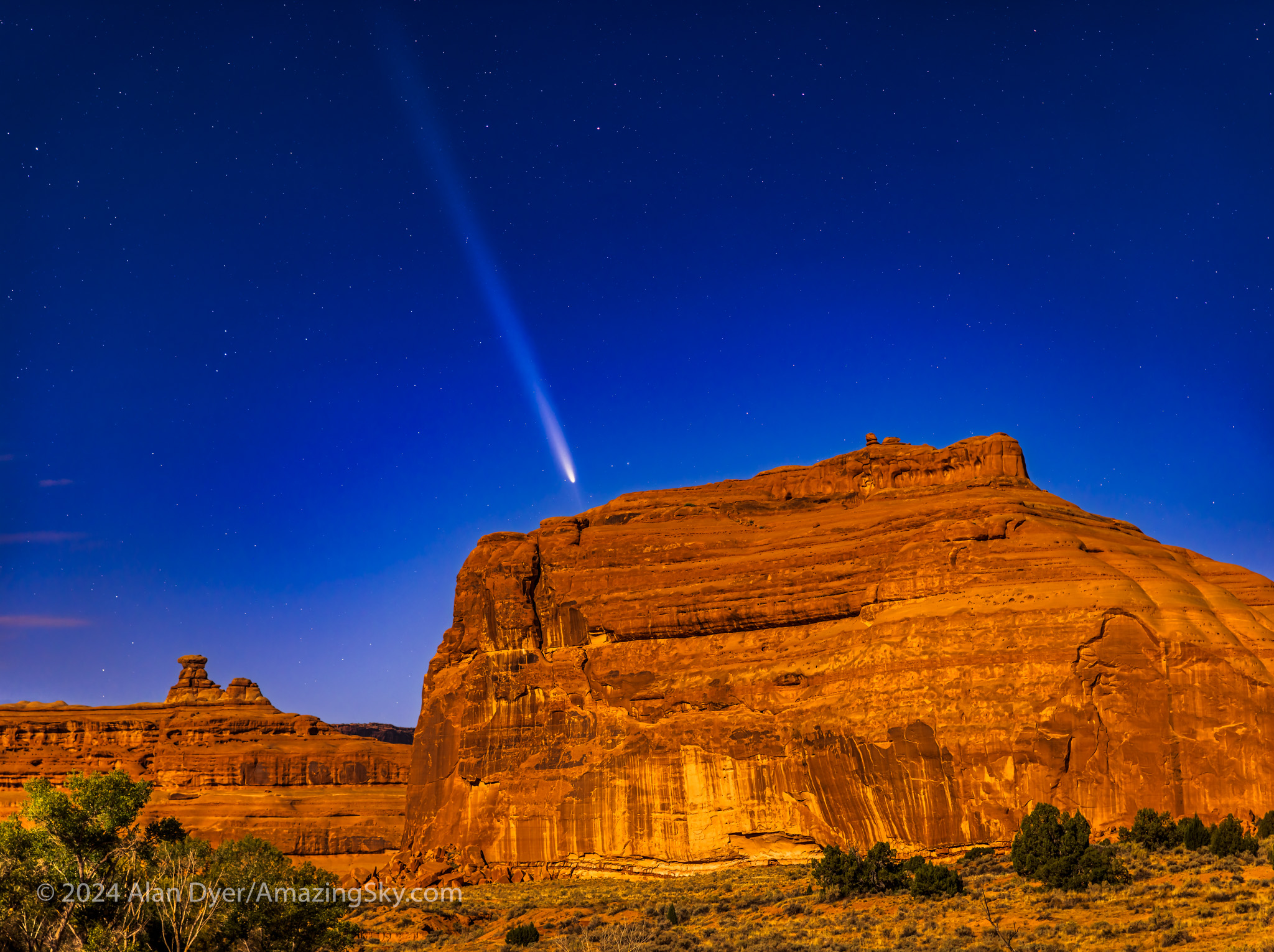
Indeed, that was my last view of the comet for a while, as clouds prevented any more shooting on the rest of my journey north through Idaho and Montana. I even hit a snowstorm in southern Montana.
Late October — Back at Home in Alberta
But the comet was not done yet! Through October, while it receded from us in distance, it climbed higher into our sky, placing it into a dark sky with the Moon now out of the way.
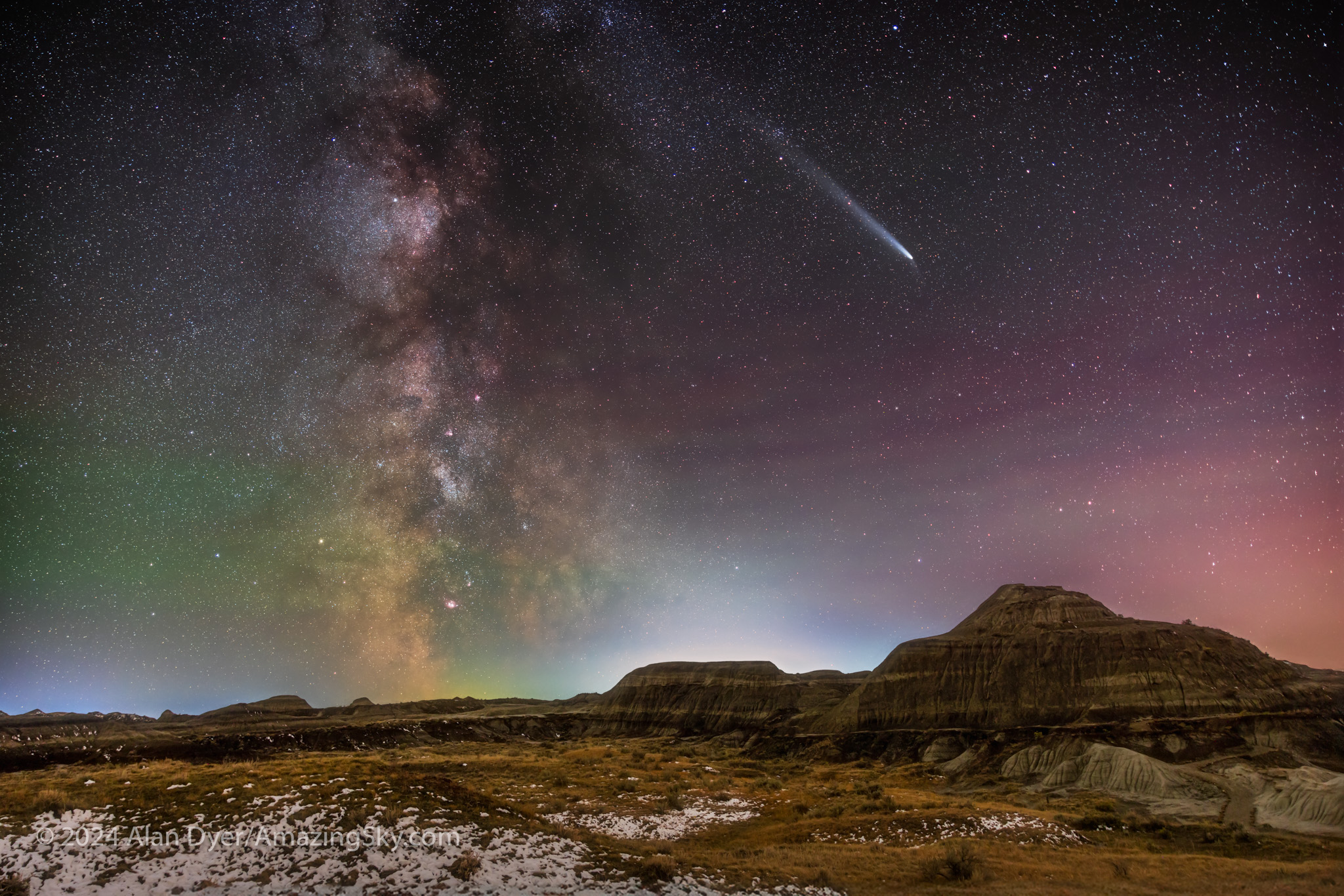
On October 23, a short trip out to Dinosaur Provincial Park east of home allowed me to shoot the comet over the Alberta Badlands landscape, beside the setting summer Milky Way.
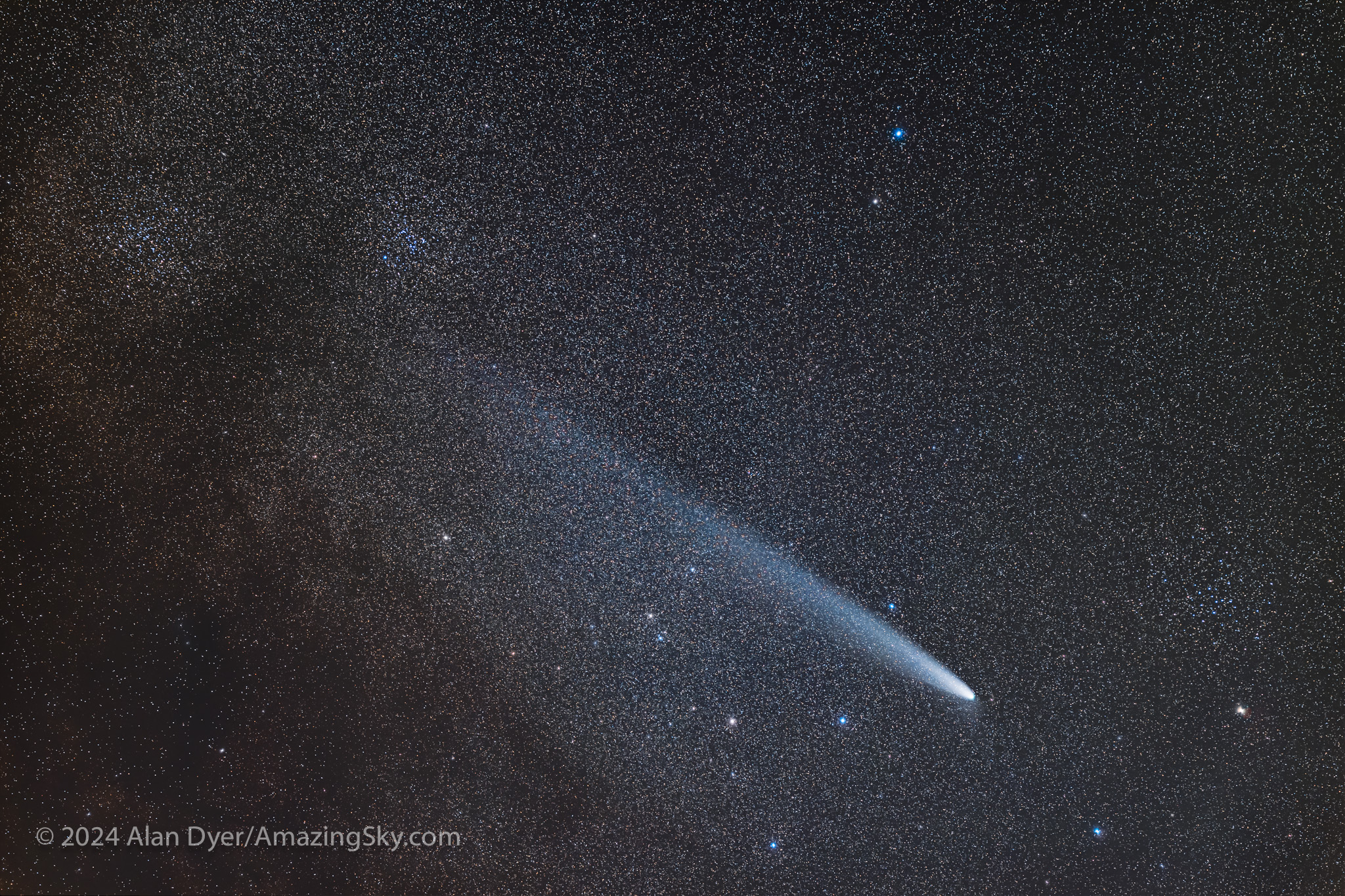
By a week later, on October 30, the comet had diminished in size and brightness, but still looked like a classic comet, here framed in a telephoto close-up as it passed near some bright star clusters. This was from my front yard. The chase was over.
Clouds and a trip to Norway starting November 4 prevented more opportunities to shoot the comet. (My travel schedule also kept me from writing this blog until now!)
It had been a good chase over a month, yielding images I was happy with. The photos from Utah and Arizona I could not have taken at home, even if the skies had been clear during the comet’s prime-time. (They weren’t!) And it was great to finally get back to my favourite haunts in southern Arizona and New Mexico after an absence of seven years.
In all, Comet Tsuchinshan-ATLAS provided a fine finale to what has been a superb year of stargazing events and celestial sights.
— Alan, December 9, 2024 — AmazingSky.com
 The Amazing Sky
Marvellous!
Wonderful images! Thanks.
I shot the comet on many days — both morning (5) and evening (8). Although more difficult to see in the morning twilight I thought the tail was more interesting compared to evenings.
I did all of my shooting in the Flagstaff, Arizona region.
Awesome work Alan, Beautiful photography!
Thanks John!