On the Beach — Stargazing


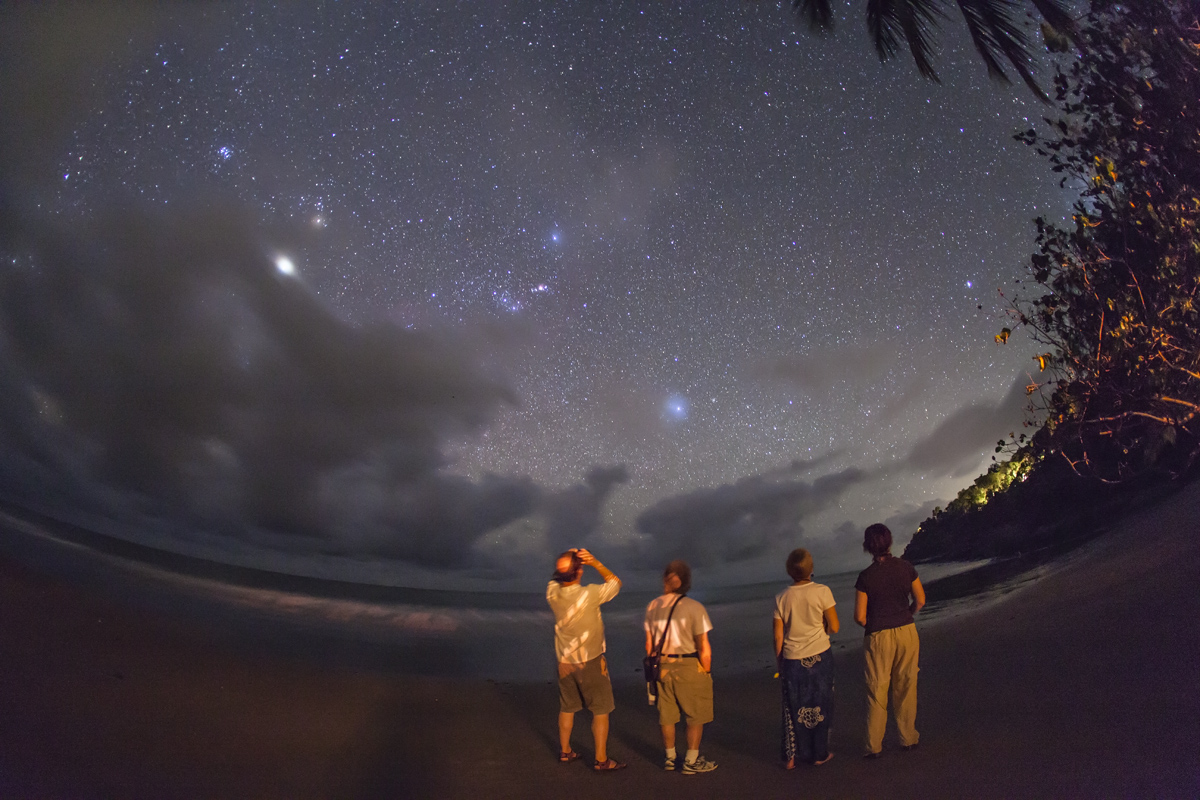
This is stargazing in the tropics — on the beach, in shorts and sandals.

Here’s some of our eclipse chasing group enjoying a view of the southern hemisphere night sky, albeit though clouds. Jupiter is the bright object at left, Orion is rising on his side in the middle, Sirius is just above our stargazers, while Canopus is at far right. The Pleiades is at far left. We’re looking east, from a latitude of 16° south of the equator, where the sky takes on a completely new appearance that baffles and delights even seasoned northern stargazers.

– Alan, November 11, 2012 / © 2012 Alan Dyer


Big Dipper Over the Badlands


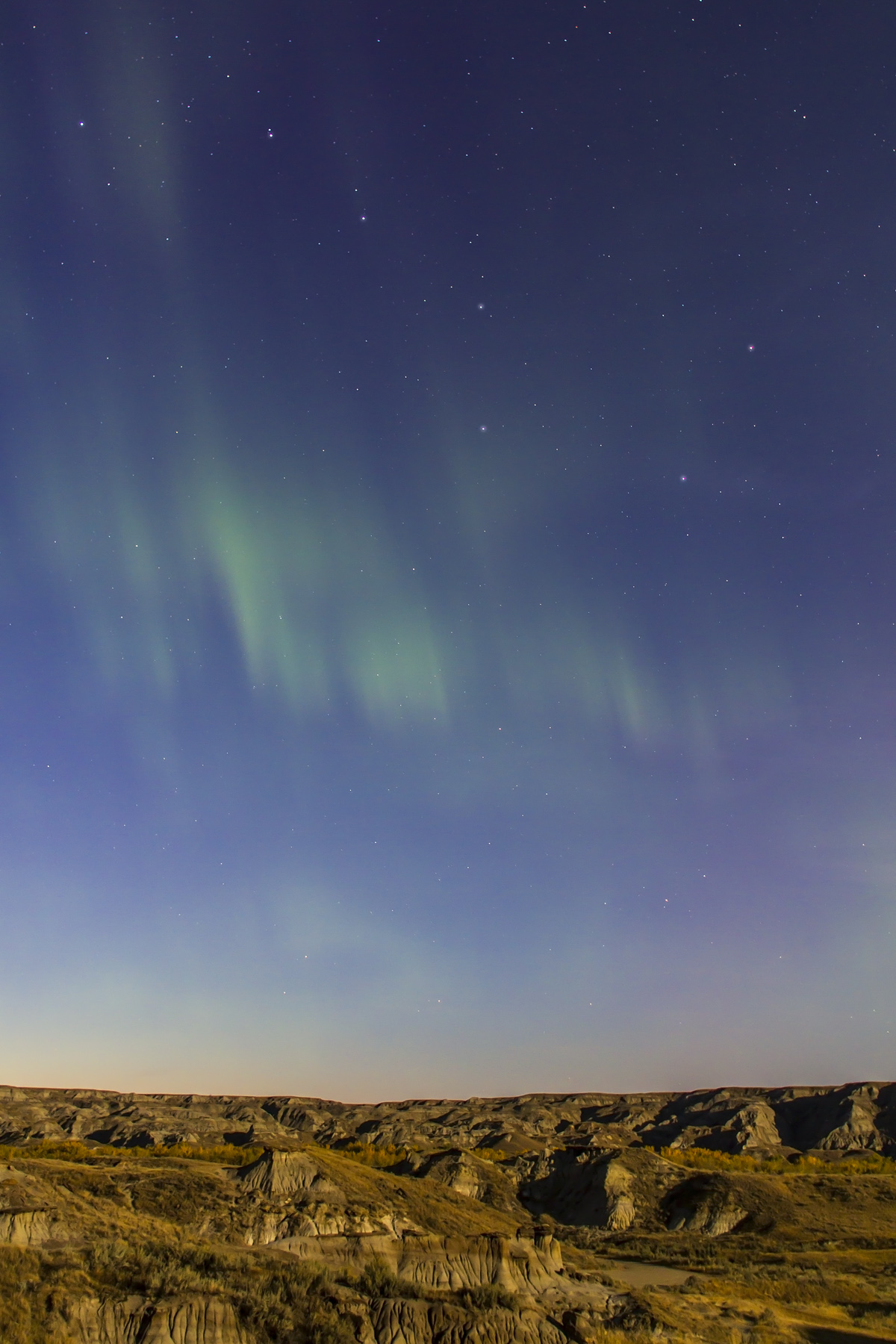
The Big Dipper swings low over the Badlands of Dinosaur Provincial Park, with an aurora added for good measure.

This another shot from my very productive night last Sunday out at Dinosaur Park, 100 km east of me. Here the curtains of aurora that made the news that evening shimmer below the iconic seven stars of the Big Dipper, now low in the northern sky on autumn evenings.

Light from the Full Moon provides the illumination. People wonder how we astrophotographers can take pictures of the stars in the daytime. We don’t. We take them at night, letting the Moon light the scene. Its light is just reflected sunlight, so a long enough exposure (and in this case it was only 8 seconds) records the landscape looking as if it were daytime, complete with blue sky, but with stars – and this night an aurora – in the sky.

– Alan, October 2, 2012 / © 2012 Alan Dyer


Aurora Highway


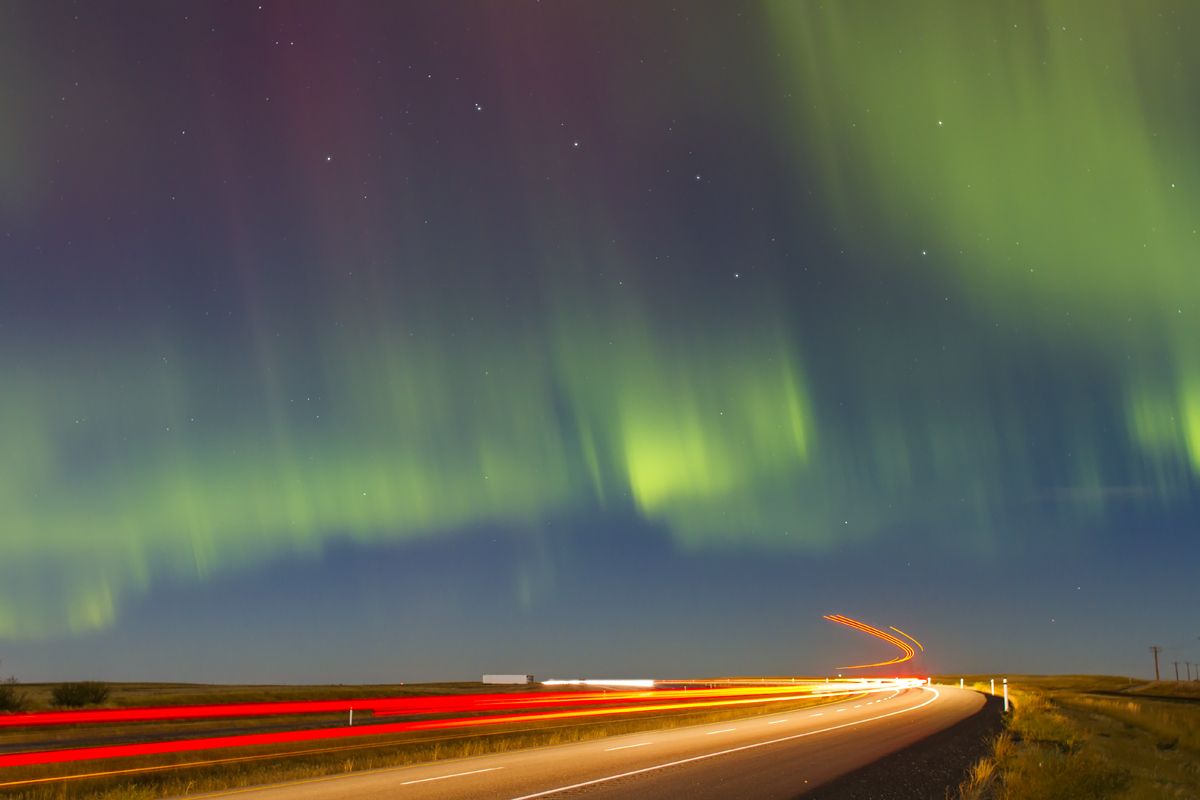
Traffic seems to drive off into the Northern Lights, on a highway to heaven.

On the way home Sunday night the aurora exploded again in a burst of brilliance. I pulled over by the side of the road and grabbed some shots. I’m looking north here, with the Big Dipper also in the frame. For this shot I layered in two exposures for the ground to get a more complete sweep of the taillights. But the sky is from a single frame.

This was the widely-seen aurora of September 30, 2012. This scene of mad motion down the highway contrasts with the quiet solitude of the badlands landscape of the previous post.

– Alan, October 1, 2012 / © 2012 Alan Dyer


September Dawn


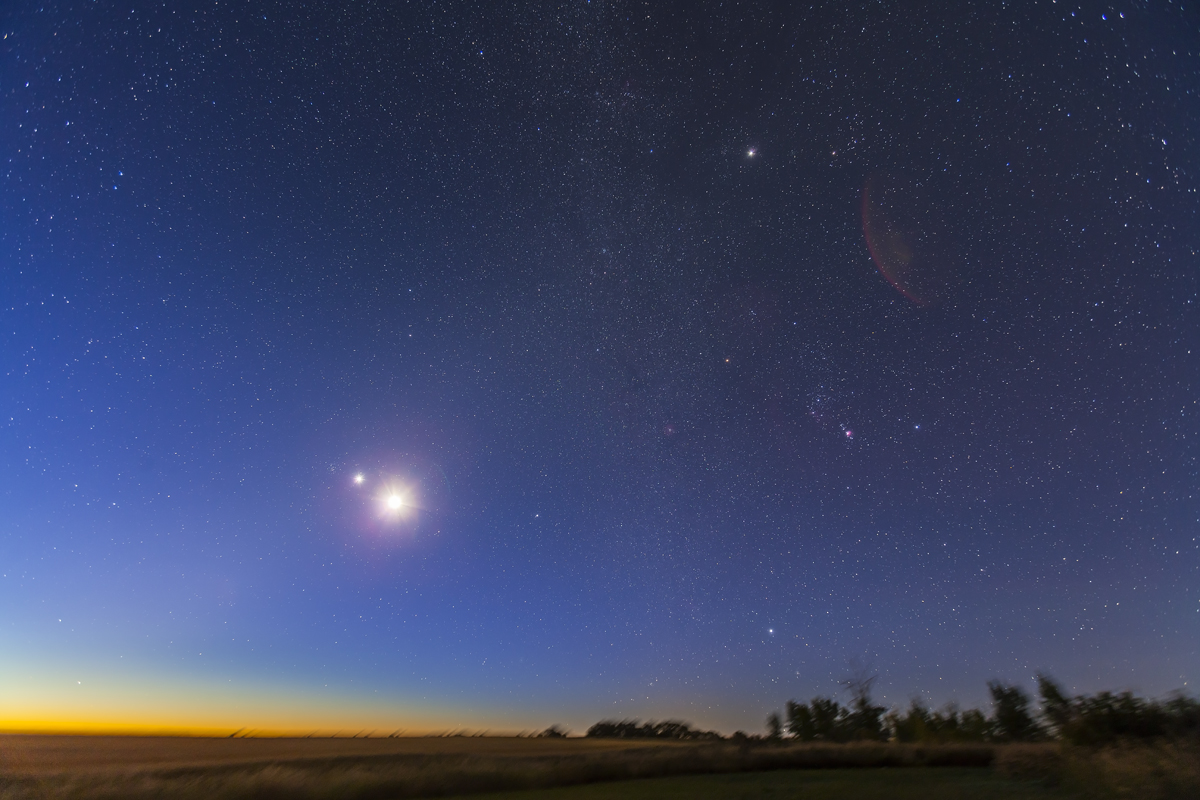
Here was the scene on September 12, with Venus and the Moon in conjunction in the dawn sky.

Orion stands above the trees, and at top is Jupiter amid the stars of Taurus. The star Sirius is just rising below Orion. And both the Moon, here overexposed of necessity, and Venus shine together below the clump of stars called the Beehive star cluster in Cancer. This was quite a celestial panorama in the morning twilight.

This is a stack of two 2-minute exposures taken just as dawn’s light was breaking, so I get the Milky Way and even a touch of Zodiacal Light in the scene, as well as the colours of twilight. Pity I can’t avoid the lens flares!

– Alan, September 12, 2012 / © 2012 Alan Dyer


Meteor and Windmill in the Moonlight


A rare bright meteor pierces the northern sky beside a spinning windmill in the moonlight.

I shot this Thursday night, August 30, as one frame of 300 or so shot for a time lapse sequence. Having a camera taking hundreds of frames at rapid interval, as you do for a time-lapse movie, is the only way to capture the chance and fleeting appearance of a bright meteor like this.

You can see the Big Dipper behind the machine and Polaris, the North Star, directly above the well-placed meteor.

I drove out to the new Wintering Hills Wind Farm now operating northeast of me and found a machine I could get close to. And they are huge! This is a sequence from a dolly shot I took. But the other camera was on a fixed tripod and I’ll stack those images into a long star trail scene, to get the circumpolar stars spinning alongside the windmill. But the machine was turning so fast that even 4 second exposures in bright moonlight blurred the blades more than I would have liked.

— Alan, August 31, 2012 / © 2012 Alan Dyer

Little Schoolhouse Under Prairie Skies


There aren’t many left now. Here on a bare prairie hilltop near where I live stands one of the last of the one-room schoolhouses.

Located near the now-vanished town of Majorville, Alberta is the Liberty School, built in 1909. I tried to look up the history of this particular school but found only references to other similar schools in the area. The stories from teachers who worked in such schools were fascinating. Amy Corbiell, a relative of one of my neighbours, taught at a nearby school in the 1930s. Imagine the scene on the prairies back then:

“Some days when the dust blew I remember it got so dark the pupils couldn’t see to work. I would light our one little coal-oil lamp and read to them until I could safely send them home.”

The lone teacher would live either in the home of one of the students. Or she would be put up in what we would now call a shack – the teacherage – next to the school. She would attend to the students ages 6 to 16, keep the pot-bellied stove going, bring in water from the hand pump outside, perhaps play the piano (if there was one), and organize the big annual Christmas concert. There might be a barn nearby for the kids to shelter their horses. Yes, they really did ride to school each day. It was a hard life by today’s soft standards.

But as Helen Courtney, another teacher from the era, remarked in her reminiscences,

“The 1930s are remembered as the depression years, the years of crop failures, and blizzard-like dust storms. They were also the times when neighbours helped neighbours, people shared what they had, extended kindness and friendship and looked hopefully toward a better future.”

My photo, taken under bright moonlight on August 4, shows the Big Dipper over the little schoolhouse, and a summer thunderstorm rolling across the far horizon.

— Alan, August 15, 2012 / © 2012 Alan Dyer


Planetary Dawn


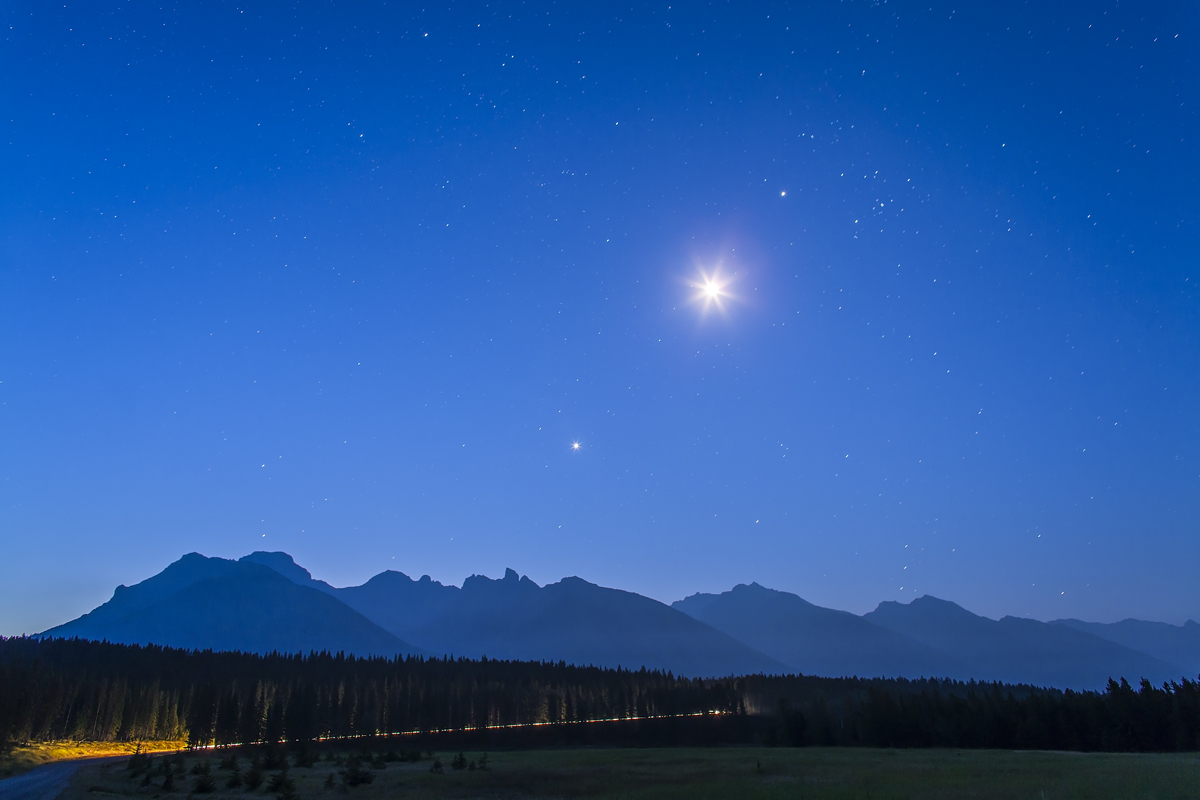
This was the stunning scene in the dawn sky last Sunday — Venus, the Moon and Jupiter lined up above the Rockies.

Orion is just climbing over the line of mountains at right, while the stars of Taurus shine just to the right of Jupiter at top. I shot this at the end of a productive dusk-t0-dawn night of Perseid meteor photography. Being rewarded with a scene like this is always a great way to cap a night of astronomy.

— Alan, August 15, 2012 / © 2012 Alan Dyer


Driving to Andromeda


Are we there yet? It would take a long time to get to the end of this road.

A road in Banff appears as if it is heading toward the autumn constellations rising over the peaks of the Fairholme range in the Canadian Rockies. The stars of Andromeda (centre), Pegasus (right), Perseus (left), and Cassiopeia (above left) make up the panorama of mythological heroes populating the northern autumn sky. In the sky above the road the small smudge of the Andromeda Galaxy is visible, shining from 2.5 million light years away. A faint aurora at left adds to the moonlit scene.

I shot this Sunday, July 29, moments after taking the image in the previous blog, which was looking the other way, north toward Cascade Mountain, from the meadows north of Banff. This was a very photogenic spot.

— Alan, August 4, 2012 / © 2012 Alan Dyer


Stars over Cascade Mountain, Banff


Last Sunday night I was in Banff for a concert at the Banff Centre but ended the night with a round of nightscape shooting near the town.

I shot this from the Lake Minnewanka scenic loop road just north of the townsite. It captures the Big Dipper and Arcturus swinging down over Cascade Mountain, the iconic peak that stands as the background for so many photos of Banff. Moonlight provided ideal side-lighting.

I hope to head back to this area for next weekend’s Perseid meteor shower. The weather prospects look good!

— Alan, August 3, 2012 / © 2012 Alan Dyer


The Big Dipper Over Pyramid Mountain


Pyramid Mountain is Jasper’s iconic peak dominating the skyline of the mountain town in Alberta. The mountain and its foreground lakes are ideally placed for nightscapes of the northern sky.

I took this shot Saturday night, July 28, from the shore of Patricia Lake, one of several that dot the benchlands south of Pyramid Mountain. Small lakes like Patricia have the benefit of often being calm and reflective. Here the stars of the Big Dipper and Ursa Major swing over top of Pyramid Mountain, in the blue moonlit sky. A few well-placed clouds add a welcome perspective. This is one frame of 150 or so in a time-lapse sequence, and that will eventually become a star trail composite as well. But this single frame stands well all on its own.

The last time I was here shooting this same scene I was using Ektachrome and Fujichrome film (each had its unique characteristics, though just what I can’t recall!). That was more than a decade ago. This digital shot with the Canon 7D looks far better than what I got back then.

— Alan, July 30, 2012 / © 2012 Alan Dyer


Orion the Hunter, A Full-Length Portrait


Orion is quickly disappearing from the dark night sky now, as spring begins and the winter constellations depart the sky. This is a shot from February, one I only just now processed.

The Belt of Orion really stands out as do the nebulas that wind all through and around Orion. This is a rich region of the sky for star formation.

I took this portrait of Orion using the 50mm Sigma lens, taking four 5-minute exposures and stacking them. In this case each exposure had varying amounts of haze in the sky as light clouds moved in. So the fuzzy glows around stars are from natural causes here, and are not produced by filters (as in the blog from last year called Fuzzy Constellations) or by post-processing. The glows bring out the star colours, particularly orangish Betelgeuse at upper left and blue Rigel at lower right.

This is the first image I’ve processed using the new Beta version of Photoshop CS6 and Adobe Camera Raw 7 software, just released this past week. Very nice indeed! You can download it for free from Adobe Labs. I like the new interface and functions. I’m not sure the final image quality is any better but some of the new features will be very nice for astrophotography and day to day use. Increased speed is promised but I haven’t seen much evidence for that. But this is a Beta version.

— Alan, March 24, 2012 / © 2012 Alan Dyer

The Wow Sky of Winter


The winter sky contains a lot of bright stars but none so bright as Venus and Jupiter now in the west.

This wide-angle shot takes in the evening sky from the duo of planets in the west (right) to Sirius shining brightly in the south (left), with Orion in between. Above and to the right of Orion sit the two big naked eye star clusters of winter: the scattered Hyades and the compact Pleiades.

This was the picture-perfect scene last Tuesday night when I shot other frames of just the planets over the house in the foothills of the Rockies near Bragg Creek, Alberta. This is the wider scene, bathed in the deep blue of twilight.

— Alan, March 16, 2012 / © 2012 Alan Dyer


The Marvellous Mid-March Sky


We have a marvellous sky above us these nights, with an array of brilliant beacons in the evening sky.

This wide-angle scene captures the western and southern sky. To the west at right shine Venus and Jupiter. To the south at centre stands Orion. His famous Belt points up to Taurus and the Pleiades star cluster. His Belt points down to the brightest star in the night sky, Sirius, the Dog Star in Canis Major. Above, at top left, is the other Dog Star, Procyon, in Canis Major.

The last vestige of twilight tints the sky deep blue. But some of the red nebulas in and around Orion are beginning to show up as the sky darkens on a late winter night.

I shot this Saturday night, March 10, on the last evening of Standard Time. Now, I and all astronomers have to wait up another hour to see and shoot the wonders of the night sky. Astronomers hate Daylight Saving Time.

— Alan, March 11, 2012 / © 2012 Alan Dyer

Chariot of the Sky


Auriga the Charioteer rides high across the northern winter sky these nights. This is a wide-field image I took last week of the constellation that now shines overhead from northern latitudes.

My image takes in all of Auriga, the pentagon-shaped charioteer of Roman mythology, as well as the feet of Gemini the twins, spanning a wide area of the winter Milky Way. Sprinkled along this bit of Milky Way you can see a few clusters of stars. They include four of the best open star clusters in the catalogue of Charles Messier: M35 in Gemini at bottom, and M36, M37 and M38 in Auriga at centre, all wonderful targets for a small telescope. Some of these targets lie in the next spiral arm out from the one we live in.

The star colours show up nicely here, with the brightest star at top appearing a little off white. That’s Capella, 42 light years away and classified as a type G “yellow” star not unlike our own Sun in temperature but much larger – a giant star. Indeed, it is really two yellow-giant stars in close orbit around each other. It’s interesting that Capella doesn’t really show up as yellow. Just like our Sun does to our eyes, Capella appears white because it still emits such a broad range of colours that even though its peak energy does fall in the yellow part of the spectrum, all the other colours remain strong enough that the star looks white to our eyes. Remember, our eyes evolved under the light of a type G star to see all the colours of the spectrum from red to blue.

Only the cool red giant stars take on a yellow or orange hue to our eyes, and to the camera. You can see a few in this image, as well as hot blue stars. The pinky red bits are nebulas in the Milky Way – clouds of hydrogen gas emitting deep red light.

When we look in this direction in the Milky Way we are looking out toward the edge of our Galaxy, exactly opposite the galactic centre.

– Alan, February 21, 2012 / © 2012 Alan Dyer

Orion Over Our Fence of Mountains


For us in the northern hemisphere, Orion is the very symbol of a winter night, as he stands over snowy landscapes. I took this photo from Lake Louise, in the Rocky Mountains on a chill February night.

Robert Frost, the American poet, describes the inspiring scene of Orion climbing into a winter sky:

“You know Orion always comes up sideways.

Throwing a leg up over our fence of mountains,

And rising on his hands, he looks in on me

Busy outdoors by lantern-light with something

I should have done by daylight, and indeed,

After the ground is frozen, I should have done

Before it froze, and a gust flings a handful

Of waste leaves at my smoky lantern chimney

To make fun of my way of doing things,

Or else fun of Orion’s having caught me.”

_____________________________________

— Alan, February 15, 2012 / © 2012 Alan Dyer

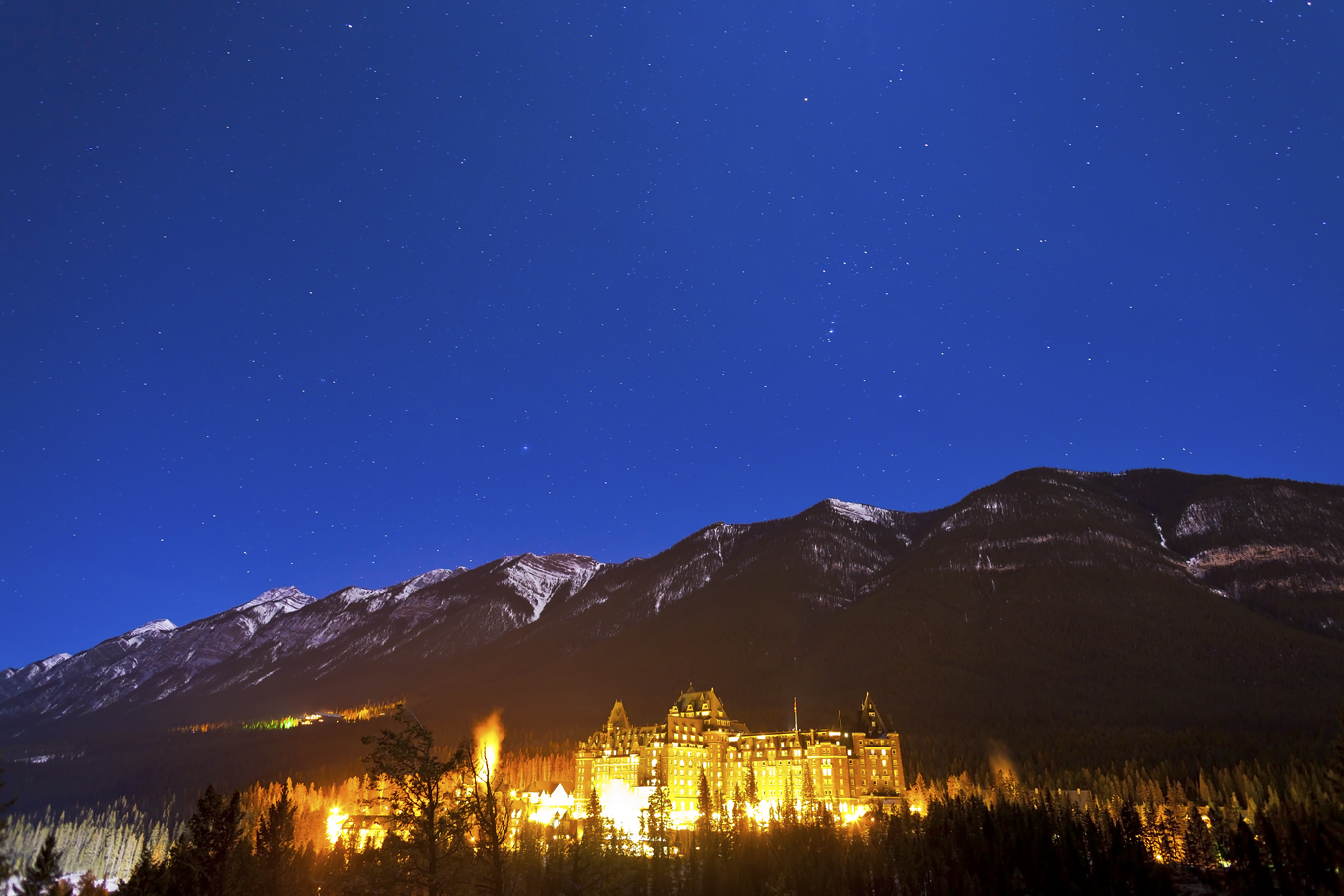
Orion over the Grand Hotel


Orion sets over Sulphur Mountain and the Banff Springs Hotel in this nightscape from last weekend, February 3.

This is where Banff National Park – indeed the Canadian National Parks system – started, with the founding of a protected enclave around the hot springs and then the hotel, operated at first by the Canadian Pacific Railway, to serve visiting tourists seeking cure-all remedies from the sulphur springs.

Orion and Sirius shine above the Banff landmark, lit, unfortunately, far too brightly by sodium vapour lights. One day the ethic espoused by commercial interests of conserving the environment will extend to the night sky. When we set up telescopes at the Hotel a couple of years ago in honour of Earth Hour, we had to physically cover some lights — they could not be turned off!

So while this shot shows some of the beauty of the night sky from a site like Banff, it also shows what anyone under the veil of all those lights misses. Half the environment of the mountains.

— Alan, February 10, 2012 / © 2012 Alan Dyer

Trails of Orion Over Fairview


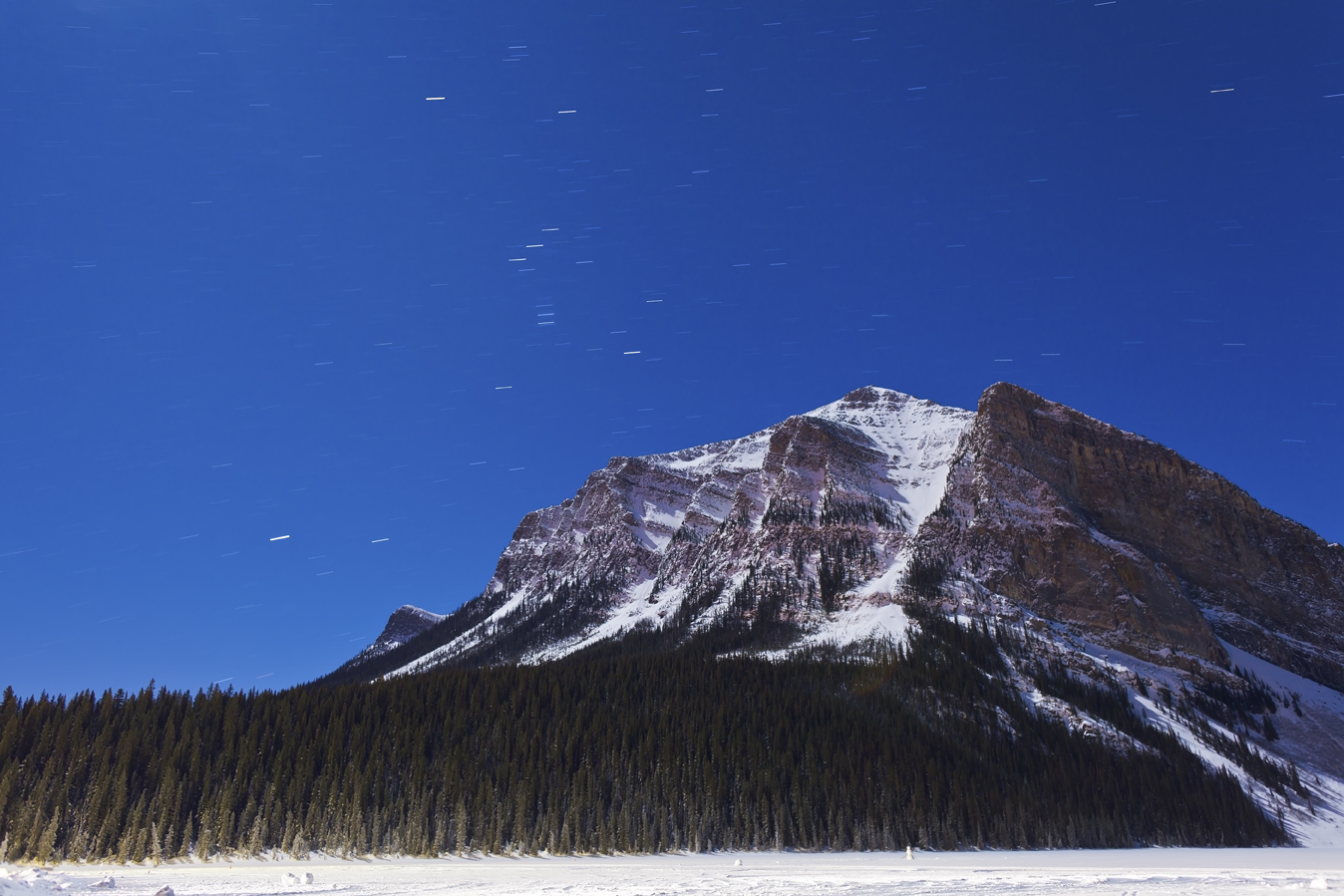
I love the lighting in this shot from Saturday night. I took this by standing out on Lake Louise, from a spot you couldn’t be in summer without getting wet!

Moonlight grazes the east and north slopes of Mount Fairview, while spill from a skating rink flood lamp lights the trees. The sky is deep blue from moonlight making this look like a day scene.

But this is actually a 4-minute exposure, purposely long to allow the stars of Orion and the bright star Sirius at left to trail across the heavens over Fairview.

Unlike most nightscape shots, of necessity taken at high ISO speeds to grab lots of light in a short exposure, I took this shot at ISO 100. Even with the blog’s low resolution images, I think you can see the difference here – this slow-speed shot looks richer and smoother, lacking the fine noise that is inevitable in high ISO shots. It’s just like using slow speed film – in the old days I’d always carry two types of film for trips like this: slow Velvia 50 for long star trail shots, and fast Fuji or Ektachrome 400 for the untrailed nightscapes. I always loved the Velvia shots – they were indeed like smooth velvet.

Now with digital cameras you can switch settings as you like. And see the results instantly. How did we ever manage to get any results with film?

— Alan, February 6, 2012 / © 2012 Alan Dyer

Lake Louise by Moonlight – in Winter


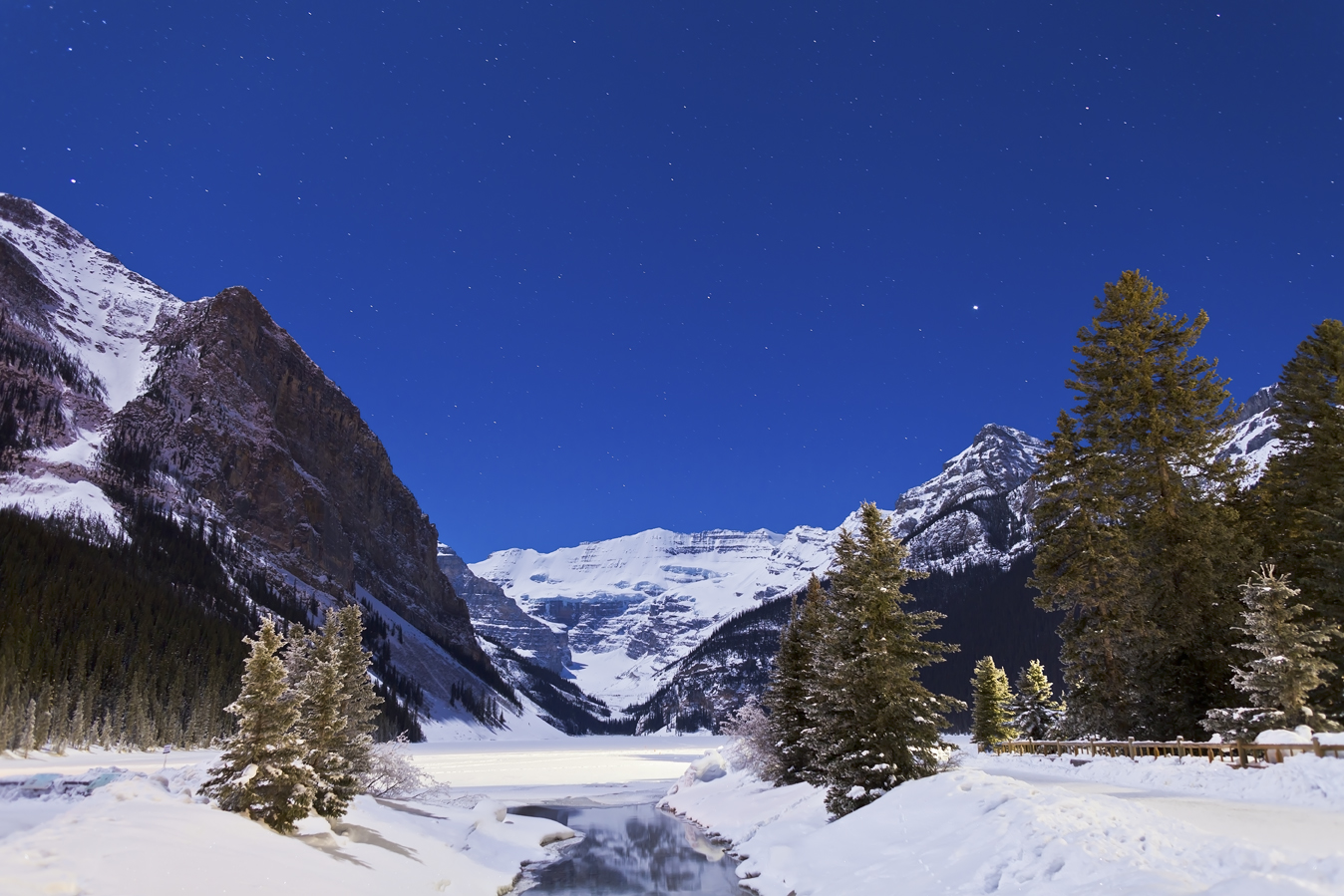
Moments before taking the photo featured in the previous blog I captured this scene, from the footbridge over Louise Creek flowing out of Lake Louise.

This is one of the world’s great photo spots, but here the scene is lit by moonlight and by the Chateau’s and skating rink lights. Jupiter is the bright object above Mt. St. Piran at right.

This was a magical night. Just step away from the artificial lights, let your eyes adjust and a stunning nightscape appeared. Compare this scene to the one I shot from a few steps away but in August and featured in my blog Lake Louise by Moonlight. The blue glacial waters of the summer scene are here replaced by snow and ice.

— Alan, February 5, 2012 / © 2012 Alan Dyer

Orion Over the Cozy Cabin


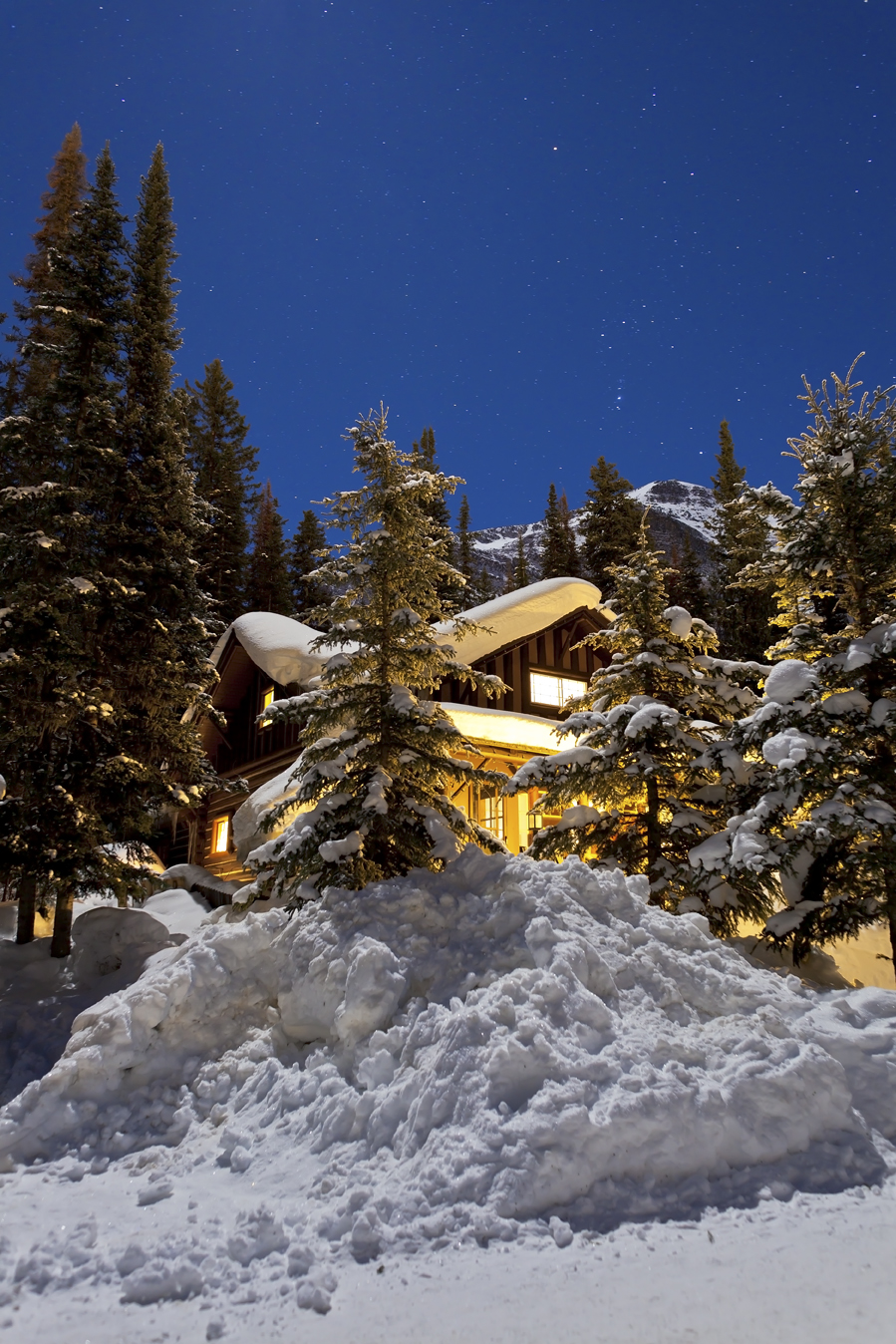
Here’s a picture postcard winter scene, one that thousands of people walk by each day — by day.

This is the Swiss guide cabin at Lake Louise, but seen at night. Light from the Moon just off the frame at top illuminates the scene, while Orion stands in the sky over the cabin and Mount Fairview.

I took this shot Saturday night, February 4, 2012, as one of many shots that night at Lake Louise, under crystal clear skies. It was a winter wonderland and a night photographer’s paradise.

Nightscape shots like this are surprisingly easy to take — typically being 20 to 40 seconds at f/2 to f/4 and ISO 400 to 800 with a good DSLR. The exact settings depend on how bright the Moon is. I used the Canon 5D MkII and 24mm Canon lens, a fine combination for night shooting.

— Alan, February 5, 2012 / © @2012  Alan Dyer


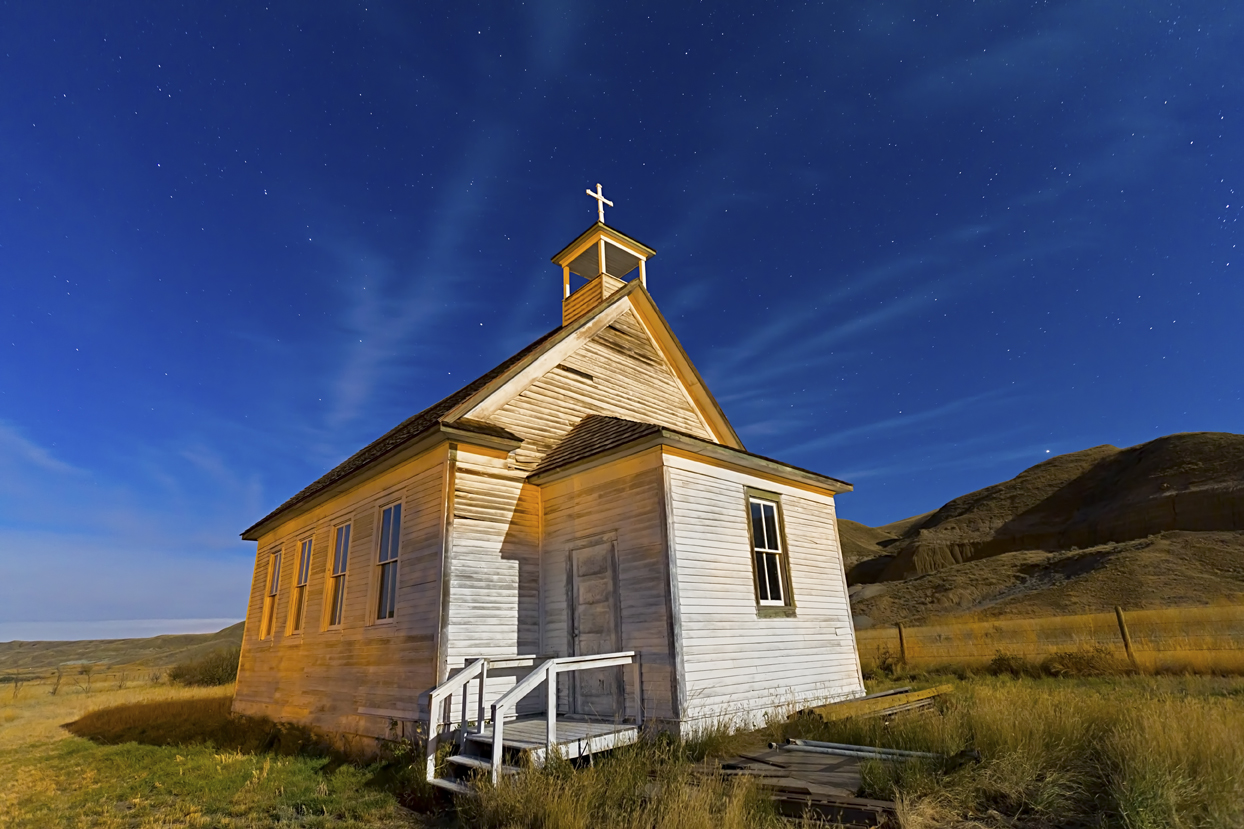
Little Church on the Prairie


In honour of Canadian Thanksgiving, here’s a shot from last night of a classic little church on the Canadian Prairie.

This is the long abandoned Catholic church at the hamlet of Dorothy, Alberta. The church was built in 1944, but as the coal mines in the Drumheller valley shut down (blame the invention of Diesel trains and the discovery of natural gas in Alberta) the once bustling town of Dorothy decayed into a ghost town. A few people still live there, but its main attractions are its relics of the pioneer age — this church, and the United church next to it (behind the camera), a picturesque grain elevator, and an old store. The companion United church has been restored, but this little church on the prairie, abandoned since 1967, awaits restoration.

The scene is lit by the gibbous Moon, and by a couple of sodium vapour streetlights, ubiquitous even in a ghost town.

In the sky are the stars of the Big Dipper and Polaris above the church.

This is one frame of 300 I shot over three hours as part of a motion-controlled time-lapse movie.

Happy Thanksgiving!

— Alan, October 10, 2011 / Image © 2011 Alan Dyer


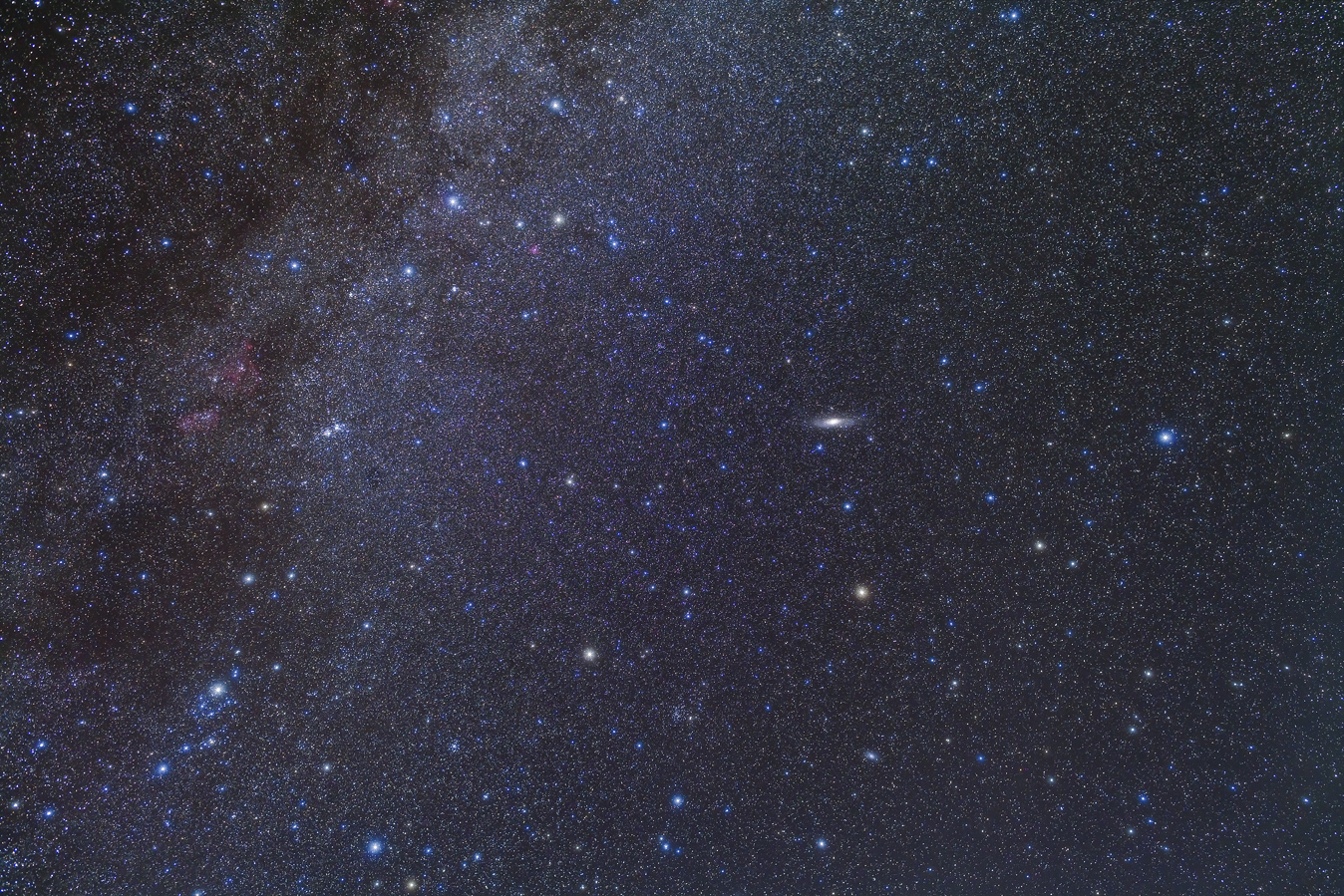
Legends of the Fall


These stars are as much a part of autumn in the northern hemisphere as are the changing colours of leaves and the flying south of geese.

These are the stars of legend, outlining the mythical constellations of Queen Cassiopeia (at top left), her daughter Andromeda (arcing across the bottom half of the image), and the hero Perseus (the stars at lower left) who rescued Andromeda from the ravages of Cetus the sea monster.

These stars are now high in the east in the evening sky, heralding the start of autumn and the return of frosty nights.

There are lots to see with binoculars or a telescope in these constellations. Look around this image and you can pick out several clumps, or clusters, of stars in Perseus and Andromeda. But the most obvious object is the oval-shaped Andromeda Galaxy, visible to the unaided eye from dark rural skies. This is the nearest sizeable galaxy to our Milky Way, and yet its light still takes 2.5 million years to reach us.

I took this shot earlier this week during a run of clear and warm autumn nights, perhaps the last before the chill nights of fall come on. It’s a wide-angle shot with a 35mm lens and Canon 5D MkII camera, tracked for a stack of four 6-minute exposures plus a fifth taken with a soft-focus filter.

— Alan, October 1, 2011 / Image © 2011 Alan Dyer


The Stellar Triangle of Summer


When the Summer Triangle sinks into the west, we know summer has come to an end. While the stars of the Summer Triangle are now high overhead from northern latitudes as the sky gets dark, by late evening the Summer Triangle is setting into the west.

These three bright stars are an example of stellar variety:

– At bottom is Altair in Aquila the eagle. It’s a white main-sequence star 17 light years away, fairly nearby by stellar standards. Leslie Nielson and his crew went to Altair in the 1950s movie Forbidden Planet.

– At top right is Vega, in Lyra the harp, a hotter and more luminous blue-white star than Altair, making it appear brighter than Altair, despite Vega being farther away, at 25 light years distant. Jodi Foster went to Vega in the movie Contact.

– But the third member of the Triangle, Deneb, at top left, is an extreme star. It appears a little fainter than Vega, but looks can be deceiving. Deneb is actually a luminous supergiant star, putting out 54,000 times the energy of our Sun. Deneb is about 1,400 light years away and yet, due to its fierce output of light, appears almost as bright as Vega. Light from Deneb left that star in the 6th century. I don’t know of any movie heroes who went to Deneb. The name means “tail of the Swan,” hardly a romantic destination for space-faring adventurers.

Look toward the Summer Triangle and you are looking down the spiral arm of the Milky Way that we live in. The stars of that arm appear as a packed stellar cloud running through Cygnus the swan, the constellation that contains Deneb.

I took this shot Saturday night, from home, on what turned out to be a very clear night, once some clouds got out of the way in the early evening. This is a 4-image stack of 8-minute exposures, at f/4 with the 35mm Canon lens, a favourite of mine, on the Canon 5D MkII at ISO 800. I added in exposures taken through a soft-focus filter to give the added glows around the stars to help make the bright stars and their colours more visible.

— Alan, September 25, 2011 / Image © 2011 Alan Dyer

Big Dipper over Peyto Lake


After taking the twilight shots at Waterfowl Lakes on Sunday night (click back to the previous blog), I continued up the Icefields Parkway, ascending to Bow Summit and the viewpoint that overlooks one of the most famous scenes in the Canadian Rockies, Peyto Lake.

Named for legendary mountain man and guide Bill Peyto, the lake was a favourite place for him, to give him solitude away from the madding crowds of Banff.

As with so many of these places, by day this very spot swarms with tourists by the bus load. Peyto would have cringed. But at nightfall, I am the only one there, enjoying the stars coming out in the solitude of the darkening sky.

Here, we look north, to the Big Dipper and Arcturus over the lake in the valley below.

This is a single exposure of 30 seconds at ISO 800 with the Canon 7D and 10-22mm lens.

— Alan, September 5, 2011 / Image © 2011 Alan Dyer

Centaurus, Creator of Constellations


In George Lucas mythology, Luke Skywalker went to Yoda to learn the wisdom and ways of heroes. In Greek mythology, heroes the likes of  Achilles, Jason and Hercules sought out Chiron, the wise and kindly Centaur, who taught them science, astronomy, medicine, music, arts, hunting and archery.

Centaurs, the romping half man/half horse creatures, were a riotous and drunken lot, but not immortal Chiron. He was the offspring of Kronos and the ocean nymph Philyra and served as tutors to many legendary heroes. One reference in my library suggests Chiron actually invented the constellations, to make it easier for mankind to keep track of the stars and the season. To reward his work, Zeus placed Chiron in the stars, becoming by some accounts, this southern sky constellation, Centaurus.

However, most writings suggest Chiron is actually the Zodiac constellation of Sagittarius, while the constellation we call Centaurus is one of the wilder bunch, depicted in the sky as carrying the slain Lupus the wolf, drawn here in the fainter blue stars at top centre.

The bright stars at right are the main stars of Centaurus, including Alpha and Beta Centauri at lower right. Beta Centauri is the blue star, a giant some 390 light years away. But just to the left of Beta is yellow-white Alpha Centauri, a Sun-like star (or actually a pair of them orbiting each other) just 4.3 light years away.

Alpha and Beta Centauri sit at the start of a long dark rift in the Milky Way that splits into fingers of nebulosity reaching into Norma, Ara and Scorpius, here at the left edge of the frame.

I took this shot of Centaurus and Lupus in Chile last month, using a 50mm lens and a Canon 5D MkII. It’s a stack of four 6-minute exposures at f/4 and ISO 800, layered in with two exposures shot through a Kenko Softon-A filter to produce the photogenic star glows.

— Alan, June 26, 2011 / Image © 2011 Alan Dyer


Under the Southern Cross


I’m back home in Canada now, after 24 hours of travel from Chile. Despite having to check my carry-on bag filled with cameras and the Mac laptop for the Calama to Santiago domestic flight, all the gear arrived home intact. Now to process the 40+ gigs of images I shot. And properly reprocess some of the images worked on at the dining room table at the lodge, under the bright Chilean sun.

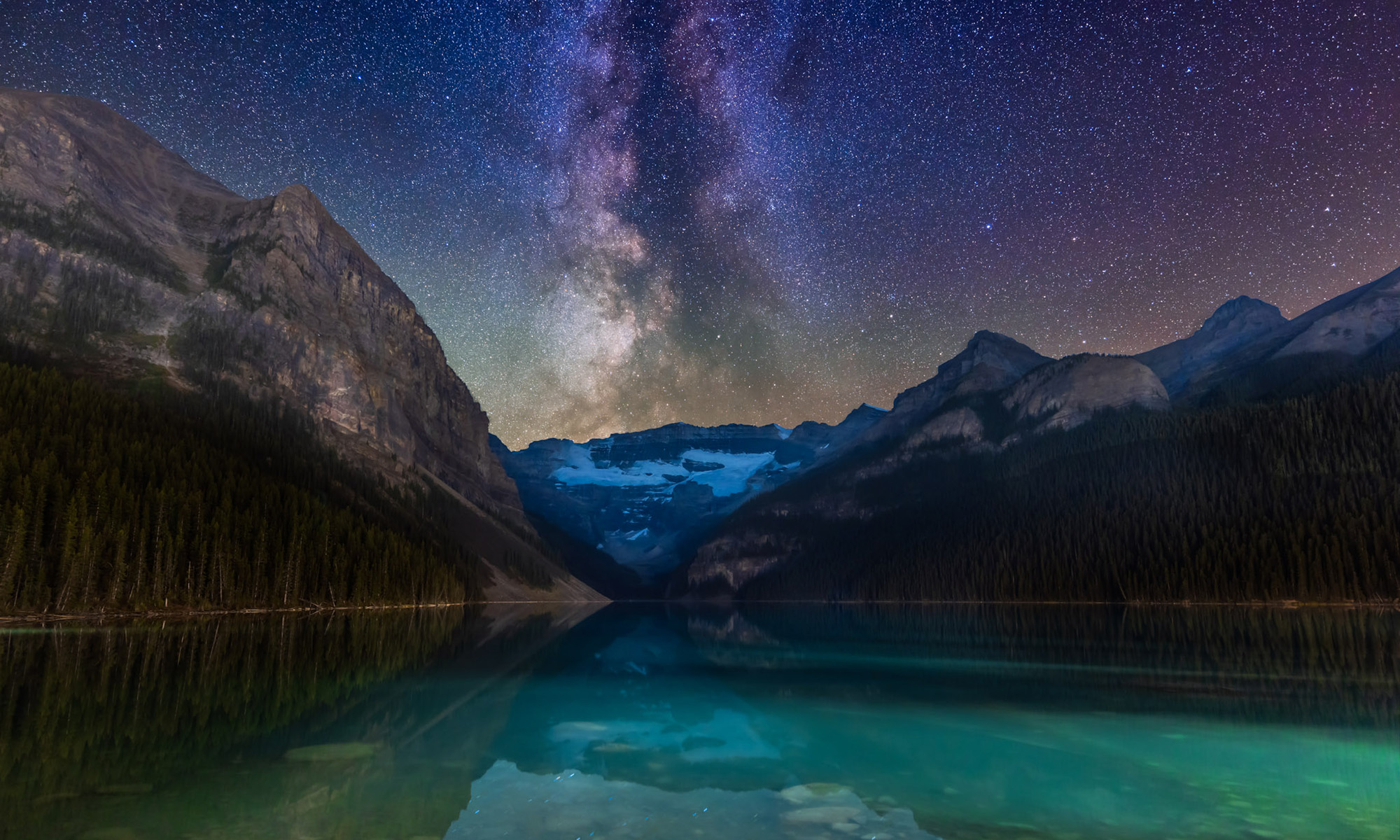
Here’s a shot taken the last night of shooting, of the icon of the southern sky, the Southern Cross, more formally called the constellation of Crux. Next to it, at left, are the dark clouds of the Coal Sack. To the eye, these clouds looks like a uniform dark spot in the sky. But photos, and even binoculars, reveal it as a complex mess of shapes and densities.

What stands out are the colours of the Cross stars. Most are hot blue Type B stars – energetic blue giants. But Gacrux at top is very red – it’s a cool red giant star.

Scattered amid the Cross are Coal Sack are several clumps of stars – open star clusters, such as the Jewel Box Cluster to the left and just below Becrux, the left star of the Cross. On our final night at the Atacama Lodge, we helped out at the lodge in a public stargazing session to a group of tourists from all over the world. I ran a telescope aimed at the Jewel Box and heard lots of ooohs and aaahs at the sight of its multicoloured stars.

This shot is a Mean-combine stack of five 3-minute exposures at f/2.8 with the wonderful Canon L-series 135mm telephoto, and the Canon 5D MkII camera, filter-modified, at ISO 800. The camera was on a Kenko SkyMemo tracking platform, which followed the stars during the 15 minutes worth of exposures.

– Alan, May 9, 2011 / Image © 2011 Alan Dyer
The Starfields of Sagittarius and Scorpius


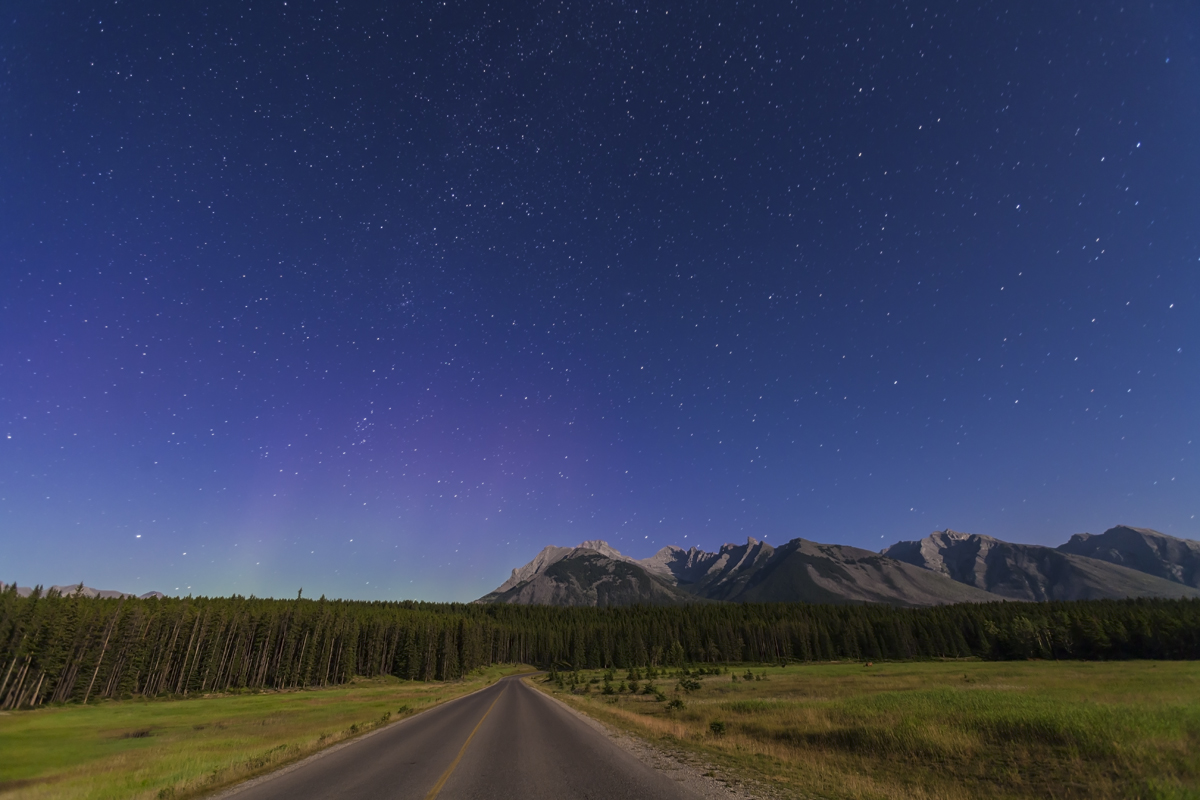
I can’t get enough of this region of sky. I can and do shoot this with every lens I have and with all kinds of framing (horizontally, vertically, or at a rakish angle, like here) and it always looks great.

These are the rich and stunning starfields toward the centre of the Milky Way in Sagittarius (bottom) and Scorpius (at top). Look for the pinkish nebulas dotted along the Milky Way, the bright starclouds, and the dark lanes of interstellar dust. It’s all part of the galactic recycling program that our Milky Way participates in, as stars explode, cast off dust and gas, which then clump into glowing nebulas and form new generations of stars.

I took this shot about 5 a.m. a couple of mornings ago, with this area directly overhead. It’s a stack of six 3-minute exposures with the 35mm lens and Canon 5D MkII camera. I took some shots through a soft focus filter to add the star glows.

– Alan, May 7, 2011 / Image © 2011 Alan Dyer
Toward the Centre of the Galaxy


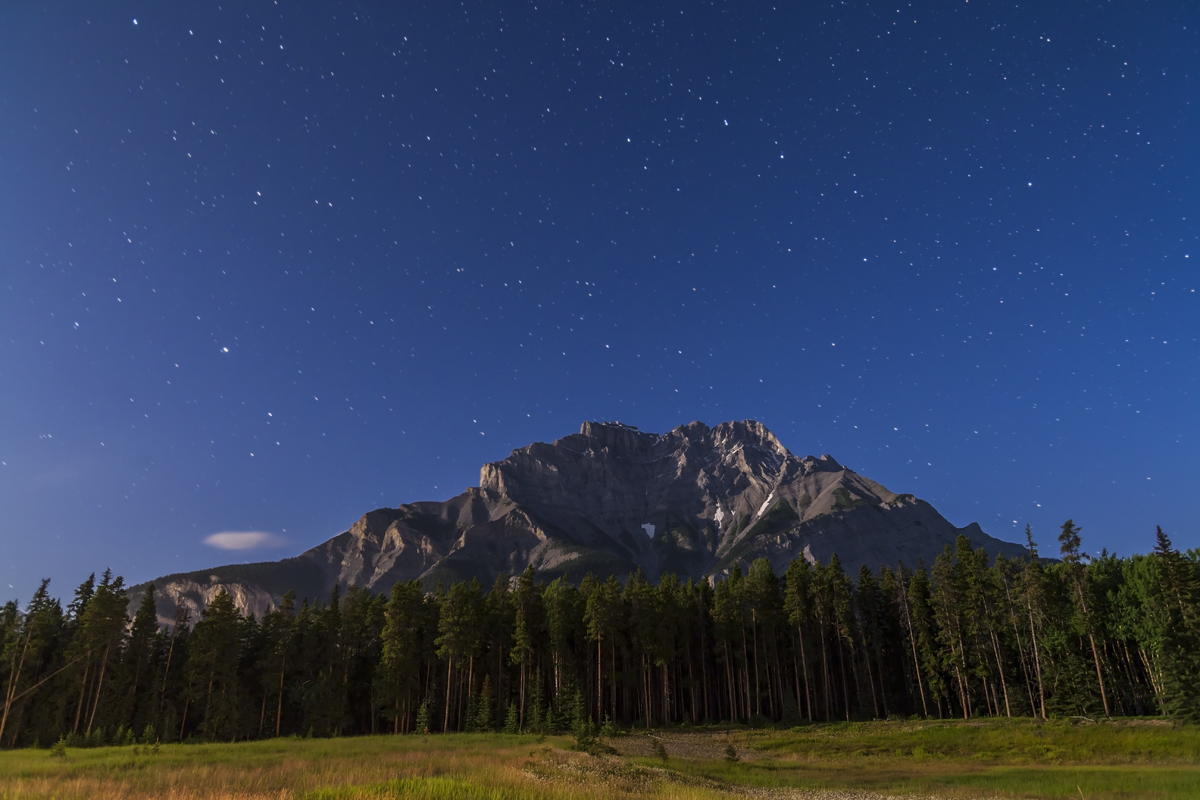
This is without a doubt the most spectacular area of sky. Here we’re looking toward the centre of our Galaxy, toward the starfields of Scorpius (at right) and Sagittarius (bottom centre). The field is a riot of stars, dark lanes of dust, and patches of glowing red nebulas.

It is wonderful experience – wonder-filled! – just to lie back and scan these constellations with binoculars or a wide-field telescope. One outstanding feature are the parallel bands of dark dust that seem to form the shape of a dark prancing horse in the Milky Way.

The brightest area of the Milky Way here is the Sagittarius Starcloud, and marks the direction of the centre of our Galaxy. From here in Chile where I took this shot, this region of sky passes directly overhead, making it more prominent than at northern latitudes where the galactic core is often lost in horizon haze.

This image is a stack of four 6-minute exposures at f/4 with the 35mm lens and Canon 5D MkII camera. For one of the exposures I shot through a special soft-focus filter to add the fuzzy star glows that make it easier to see the outline of the constellations. The filter also emphasizes the colours of the stars.

The image is a segment of a 12-section panorama I shot all along the Milky Way from dusk to dawn.

– Alan, May 3, 2011 / Image © 2011 Alan Dyer
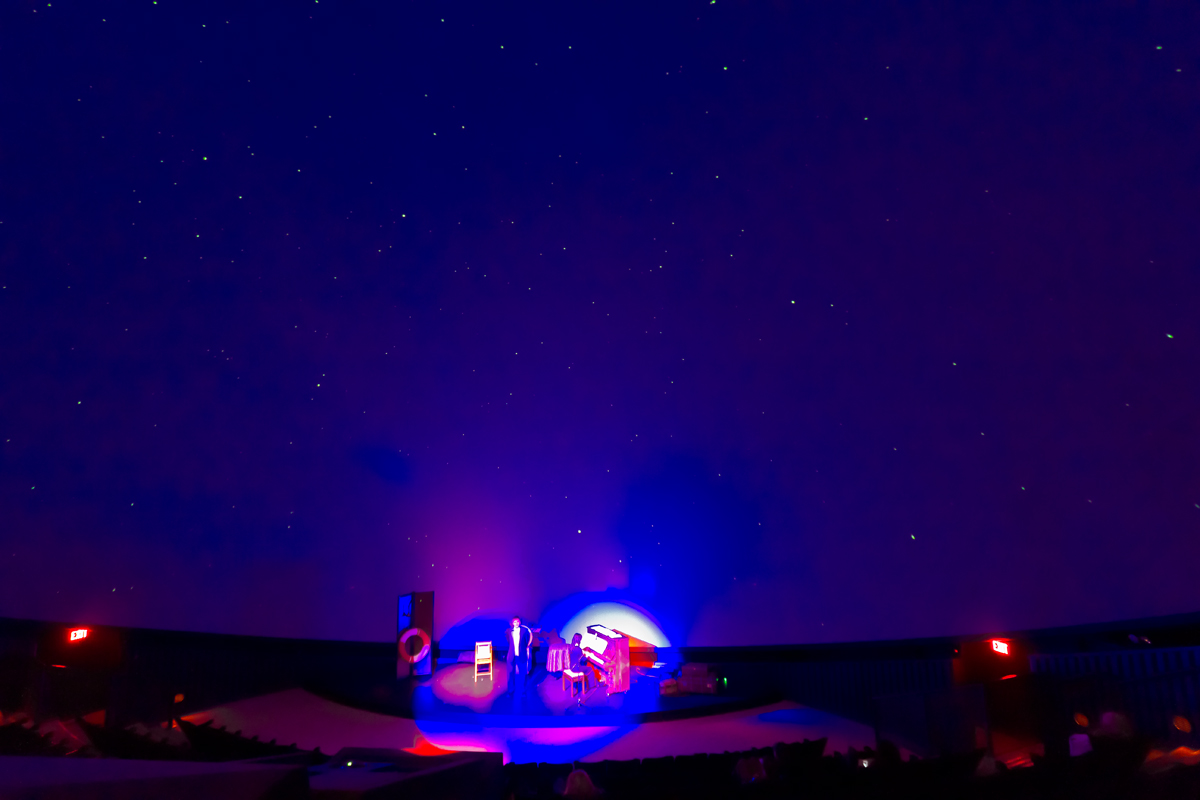
A Magical Moment in the Planetarium


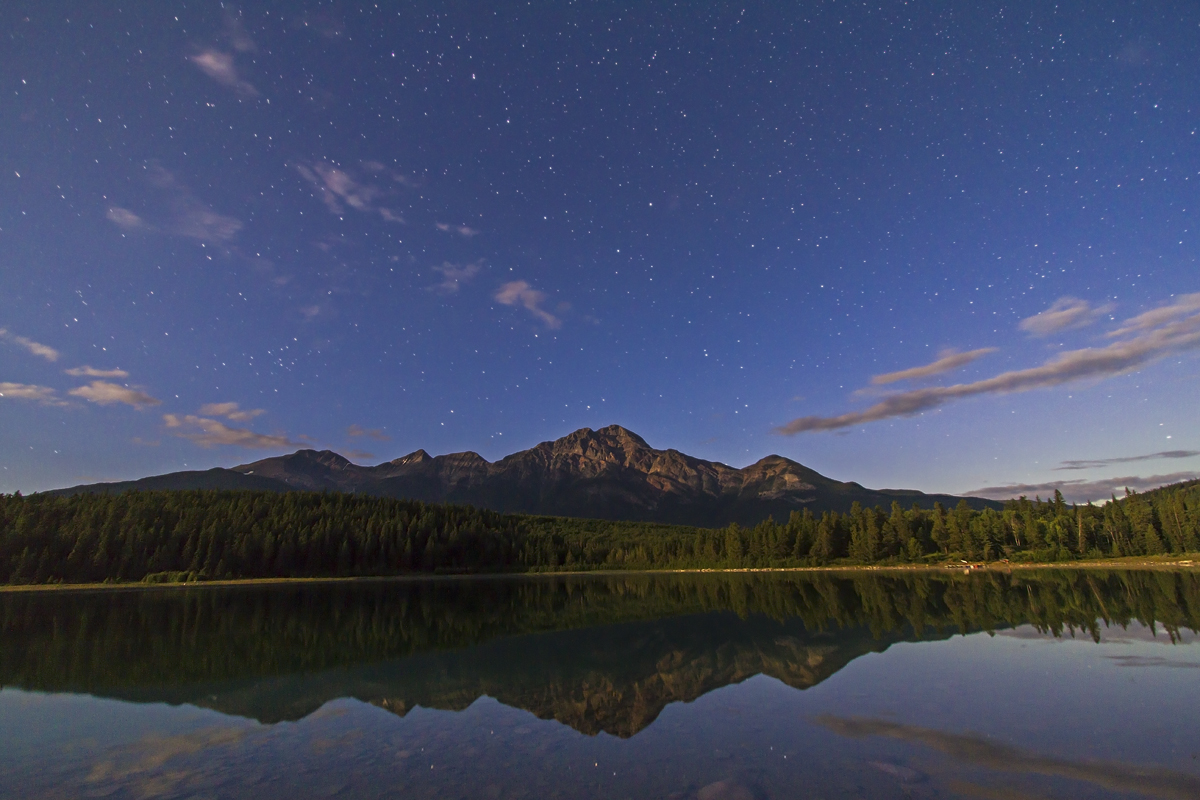
This isn’t really an astrophoto as such, but it certainly captures a special moment under the stars, in this case the artificial sky of the Discovery Dome planetarium theatre where I work. At the TELUS World of Science we currently have a wonderful exhibit featuring artifacts recovered from the wreck of the Titanic. To complement the exhibition, I’ve been organizing a series of evening special events, such as lectures and concerts. Here, performers from the Cantos Music Foundation in Calgary are performing some of the music the Titanic Band played on the ship’s fateful maiden voyage 99 years ago.

The special point of the concert for me came when Kasia, on a vintage Steinway piano, and Bob, on tin whistle, played the hymn “Nearer My God to Thee,” reputedly the last song the band played before the ship went down. All aboard Titanic that night described the sky as a clear and star-filled (a thin waning Moon did not rise till just before dawn). As one passenger described it —

There was no Moon, and I have never seen the stars shine brighter. They appeared to stand out of the sky, sparkling like diamonds. It was the kind of night that made one feel glad to be alive.” — Jack Thayer, First Class Passenger.

We set up the Digistar II to project the sky as it appeared on the night of  April 14/15, 1912, and let it roll through the night from sunset to stop the stars as they were at about 2:30 am local time, when the ship disappeared, leaving only the lifeboats with about 700 survivors on the Atlantic under the cold night sky.

It was a powerful moment, one of the best of my long career as a planetarium producer.

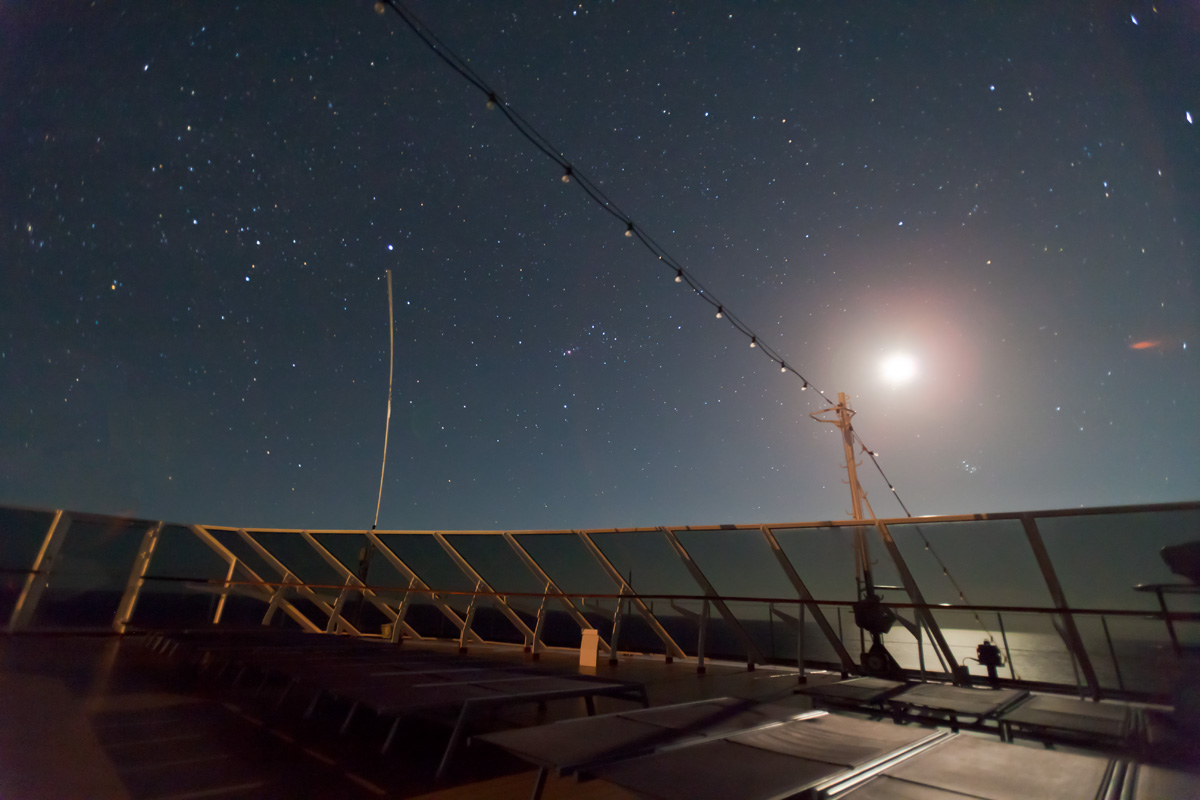
Sailin’ Toward the Moon


For the past week I was on a cruise ship in the Caribbean, on a “cruise and learn” voyage, serving as one of the guest speakers to a group of astronomy enthusiasts who wanted an immersive vacation learning about the latest in astronomy research and, in my presentations, about the hobby side: choosing a telescope and doing astrophotography. The cruise was organized by Insight Cruises and by Sky and Telescope magazine.

The trip went great, with fabulous weather all along, and a welcome break to an awful winter in the north. However, a cruise ship is not the best place to actually do astrophotography!

This is a shot taken on Friday, March 11, from the upper deck and bow of the ship, the Holland America Line’s “Nieuw Amsterdam,” as we sailed on a northwest course back to Fort Lauderdale from our most southerly port of call in St. Maartens in the eastern Caribbean. The Moon is overexposed at right, and is directly ahead of us, making it look like we were sailing toward the Moon. At left is Orion and Canis Major, tipped over on their sides compared to our northerly view. This was from a latitude of about 20° North.

To keep the stars looking like stars (and not seagulls) and freeze the rolling of the ship, I had to bump the camera up to ISO 6400 and use a 5 second exposure at f/2.8 (wide open) with the 16-35mm lens. Not the best combination of settings, but it’s what it took to capture the “seascape” night scene.

— Alan, March 13, 2011 / Image © 2011 Alan Dyer
Awesome Auriga


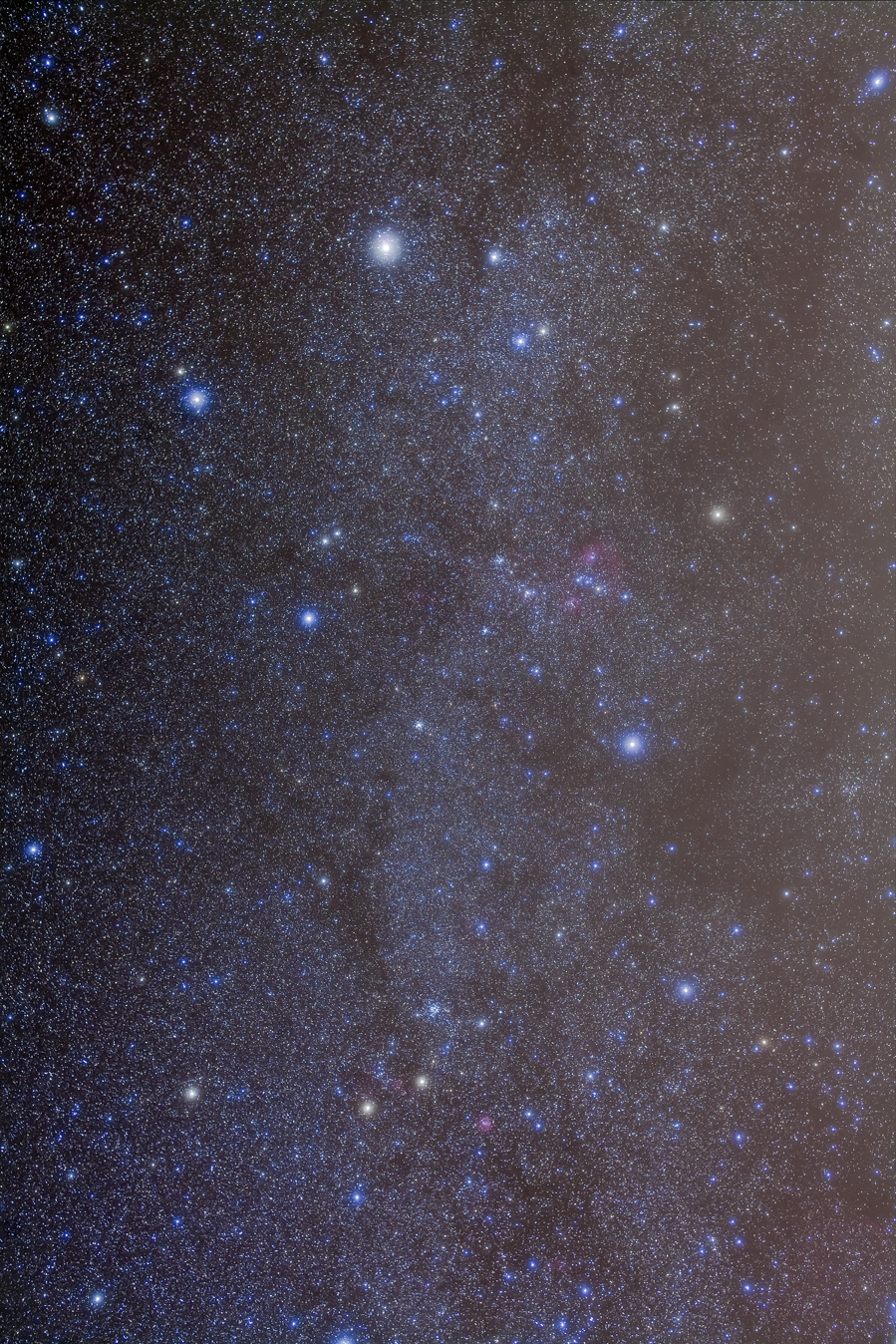
My previous post was a profile of Perseus. Right next door in the current evening sky is Auriga the Charioteer, embedded right in the middle of the Milky Way. This is a 50mm “normal” lens shot of all of Auriga showing its distinctive pentagon shape with the bright yellow star, Capella, at top. It’s the bright star shining high overhead on winter nights, at least if you live in the northern hemisphere at latitudes like the US and Canada. What is not obvious (because it can’t be resolved through a telescope) is that Capella is a close double star, made of twin suns orbiting each other at about the same distance apart as are the Sun and Venus. A planet orbiting the pair would definitely see a Tatooine-style double-Sun sunset. Not to say Luke Skywalker was from the Capella system — remember Luke’s tale took place in a Galaxy far, far away! Capella is just 42 light years from Earth.

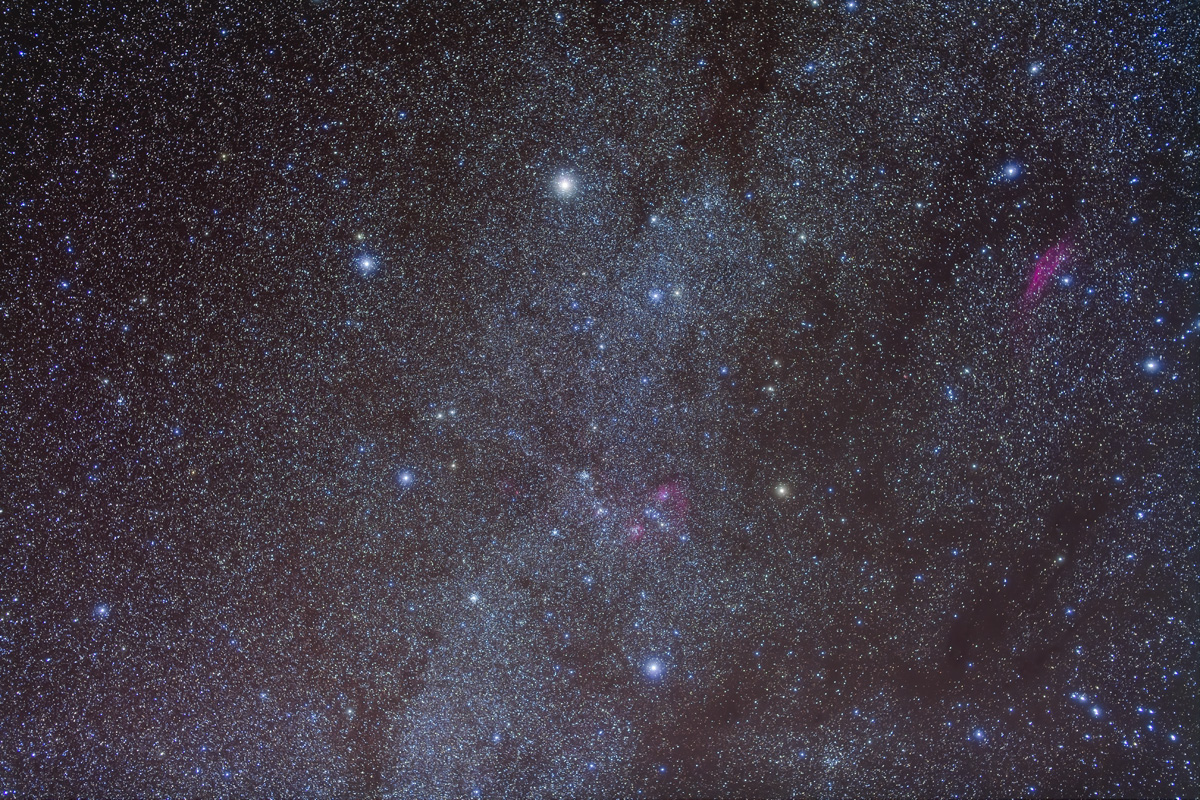
What shows up here just below centre is some of the wisps of red nebulosity in the middle of Auriga (tough to see visually but easy for the camera to see), as well as the trio of star clusters first catalogued by Charles Messier in the 18th century and that are great objects for any telescope. Notice how the Milky Way brightens through Auriga, partly by way of contrast to the lanes of dark nebulosity to the right that weave through Taurus and Perseus. The streak of nebulosity at right is the California Nebula in Perseus. Flip back to the previous blog to see more of Perseus, in a shot taken the same night.

I took this shot on January 23, 2011 (just about the last decent night we’ve had!) with the Canon 5D MkII set at ISO 800 and the 50mm Sigma lens set at f/2.8. It’s stack of  five 4-minute exposures, plus three 4-minute exposures with the Kenko soft filter to add the star glows. The blog “Fuzzy Constellations” a few posts back gives some more details about my technique.

– Alan, February 2011 / Image © 2011 Alan Dyer

Pursuing Perseus


One of the tenets of my astrophotography “philosophy,” if there can be such a thing (my university degree is in Philosophy after all), is to not spend an enormous amount of time and money chasing after the same images others do, knowing they will likely get far better results than I might achieve, given my location and choice number of clear skies. I don’t live in Arizona, New Mexico or Chile.

Yes, there are certain showpiece objects one is obliged to shoot, to add to the portfolio. But rather than go after many of the usual galaxies and nebulas, I often prefer to shoot wider-field targets that others often bypass.

Simple shots of constellations are often more in demand by publishers than closeups of deep-sky objects, and yet are usually in short supply, as many astrophotographers dismiss them as being “just for beginners.” But good constellation shots still take the right gear, techniques and skies to stand out. Only now am I getting the results I’ve long sought.

With new techniques now in hand, one of my goals is to accumulate a complete portfolio of constellation portraits, though not all of these star patterns stand out as being photogenic. But this one does.

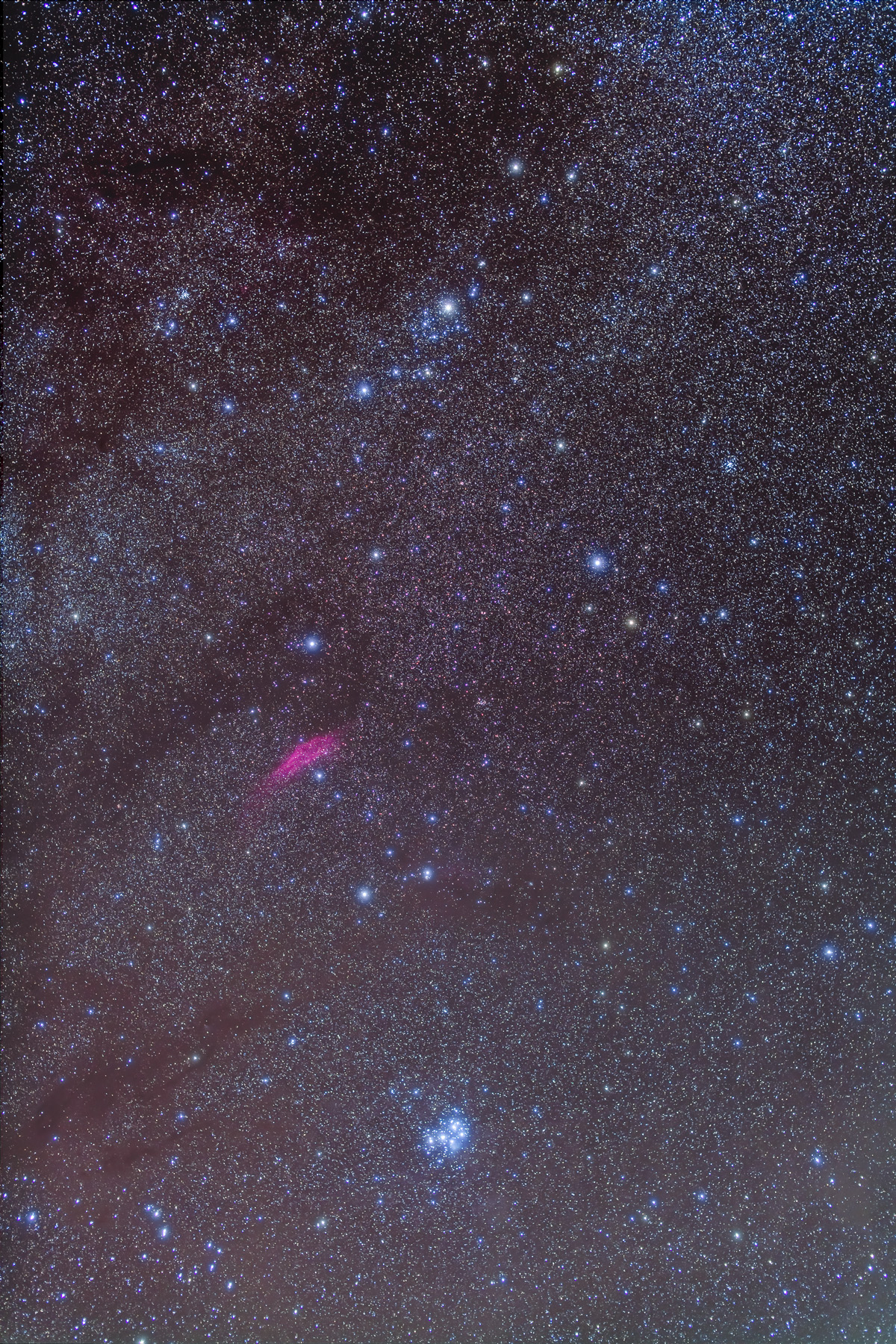
This shot is a recent favourite of mine, of the constellation of Perseus, a rich area of sky. Modern digital cameras show it as the old film cameras never could, laced with reddish dark nebulas of different densities. The Milky Way through this region takes on such a variety of subtle hues achieving correct colour balance is tough.

At top is the loose collection of hot blue stars known as the Perseus Association. At bottom is the most famous tightly bound cluster of stars, the Pleiades. Between is the finger of glowing hydrogen gas called the California Nebula. This photo is an example of how “simple constellation” shots can take on a beauty of their own.

– Alan, February 2011 / Image © 2011 Alan Dyer
The Wonderful Winter Sky


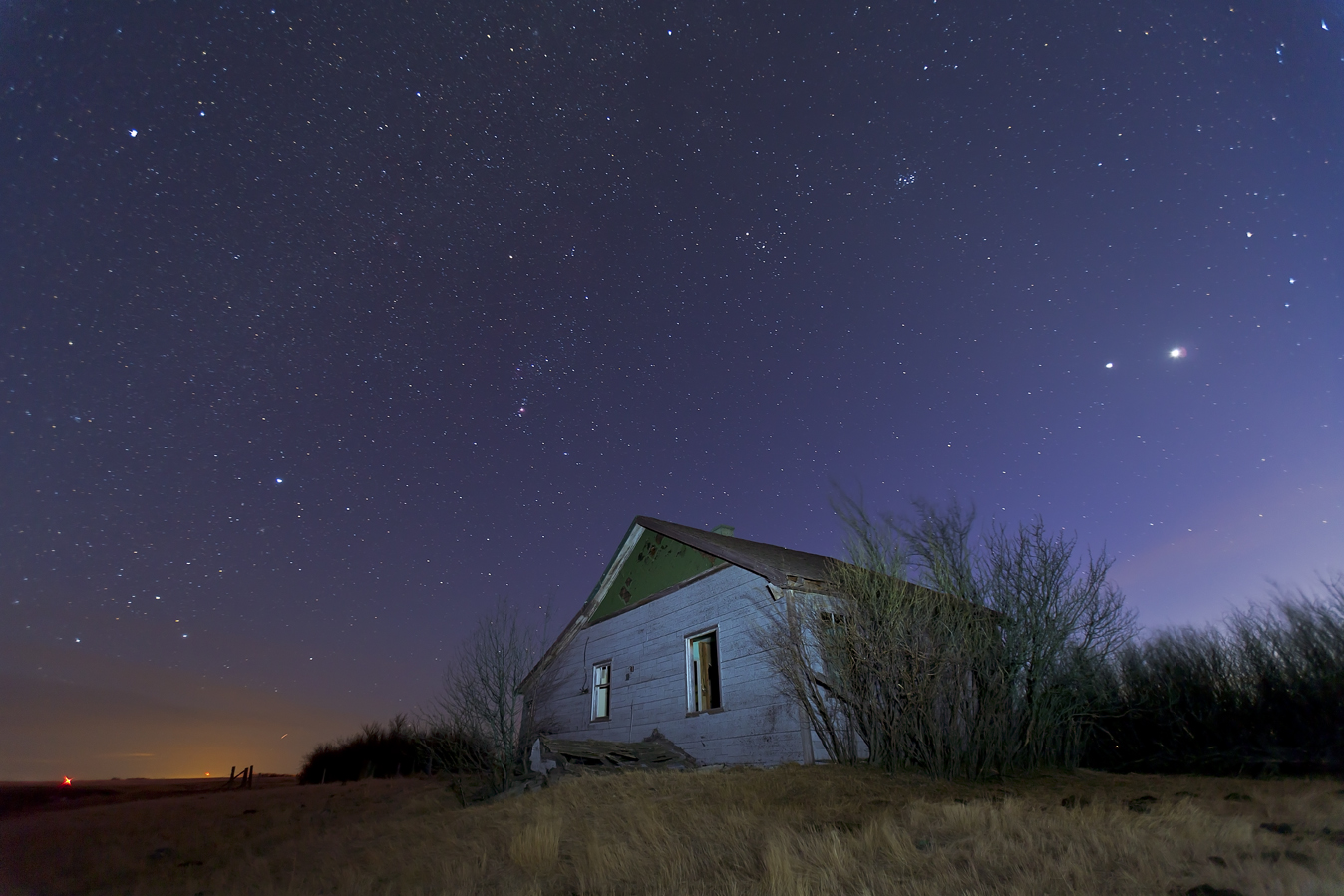
While I took this image a year ago in early 2010, I thought I’d post this up now, with the new blog now underway. This is a mosaic of what surely ranks as one of the most amazing areas of sky — the vast panorama of the night sky visible in the northern hemisphere each winter. Here we see more bright stars than at any other season of the year, in the constellations (in clockwise order) of Orion, Canis Minor, Gemini, Auriga, and Taurus. Canis Major and its luminary, Sirius, are just off the bottom of the frame.

This is a 4-panel mosaic, each panel consisting of four 4-minute exposures plus two 4-minute exposures with a soft diffuser filter to add the star glows. Each was taken at ISO 800 with the Canon 5D MkII and a 35mm lens at f/4. Slight haze, changing sky fog, and changing elevation of the fields make it tough to get consistent colours across the sky during the couple of hours of exposure time needed to grab the images for such a mosaic, especially from my home latitude. But this attempt worked pretty well and records the wealth of bright red and dark nebulosity throughout this area of sky, a region of the Milky Way in our spiral arm but a little farther out from the centre of the Galaxy than where we live.

– Alan, January 2011 / Image © 2010 Alan Dyer

The Dark Clouds of Taurus


An area of sky often neglected but ideal for digital imaging is the region of Milky Way in Taurus and Auriga. Threaded through this area of sky are large lanes of dark interstellar dust, forming cold molecular clouds out of which stars form. This complex is close, only 400 light years away, in our spiral arm of the Galaxy, and so is spread out over a wide area of sky. Only piggybacked cameras with normal and wide-angle lenses capture it. But today’s digital cameras are able to record these kinds of dark nebulae as more than just dark holes in the sky — they have colour, usually shades of reddish-brown.

This is a shot from January 2011 from my home backyard, and takes in all of Taurus, most of Auriga and southern Perseus, with the Pleiades at right and the Hyades below.

— Alan, January 2011 / Image © 2011 Alan Dyer
Hazy Hyades


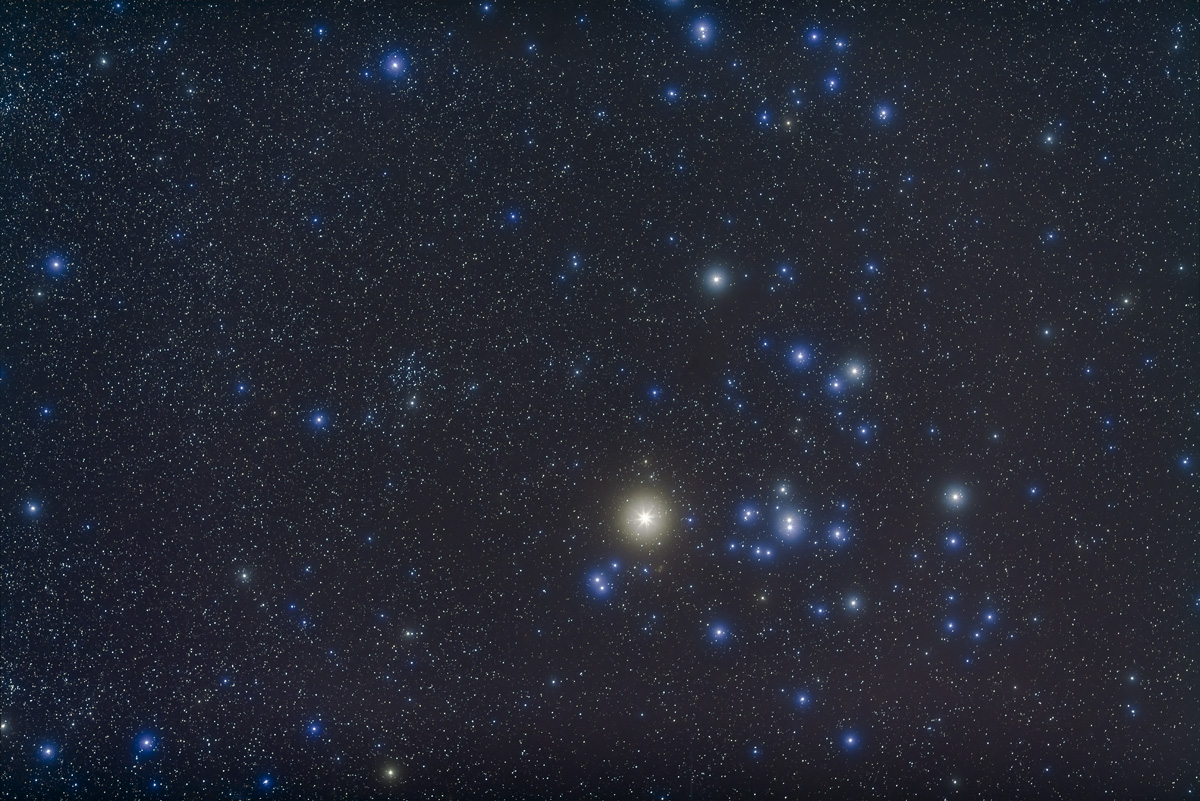
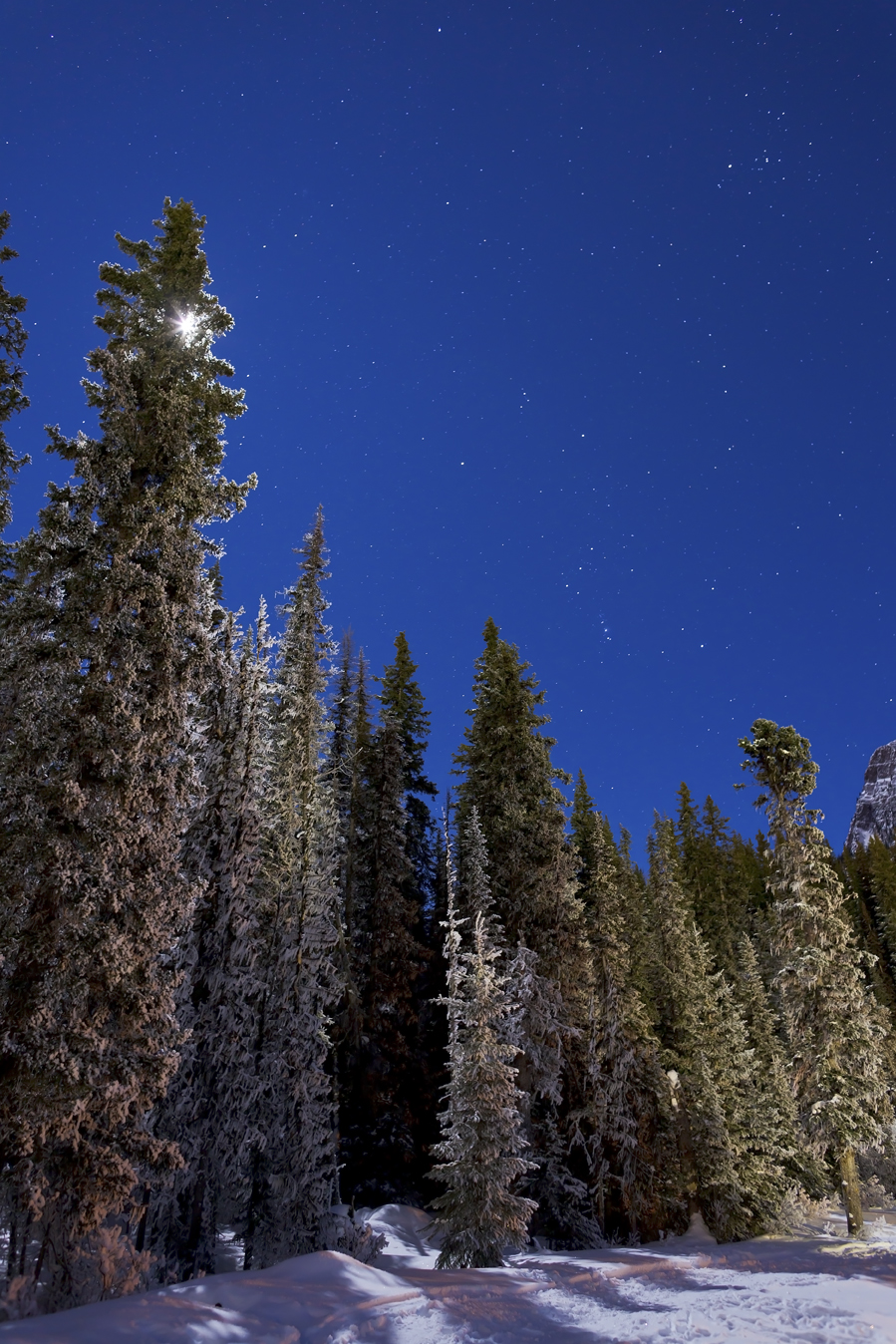
Here’s a photogenic rendering of a classic northern winter sky object, the Hyades star cluster in Taurus. The Kenko Softon filter added the star glows and punched out the subtle colour variations in the stars. Note how the Hyades stars come in shades of blue and white. The yellow star is Aldebaran, the eye of Taurus the Bull and an interloper here — Aldebaran is actually halfway between us and the Hyades, which lie about 150 light years away, and are true cluster of stars moving together through space. Note the much more distant and smaller star cluster, NGC 1647, at left.

— Alan, January 2011 / Image © 2011 Alan Dyer
Fuzzy Constellations


I’ve tried for years to create the effect of fuzzy haloes around stars to pop out the brighter stars and make the constellation pattern more obvious. It’s the “Akira Fuji” effect, named for the ace Japanese astrophotographer who has long perfected the technique with beautiful and widely-published results. I’ve tried various soft focus and diffusion filters, scratched UV filters, vaseline-smeared filters, breathing on filters, etc., etc. None have worked well. Till now.

The Kenko “Softon” filter offered by Hutech Scientific works fabulously well! It’s a tough filter to find in local camera stores here — but Hutech sells it. And it really changes the way I do constellation shooting, making any previous shots obsolete. I take several shots without the filter then one or more of the same exposure with the filter in place. I stack the two types of exposures  in Photoshop, with the fuzz-filter layer blended with a Lighten mode to a varying opacity to “dial in” the level of fuzziness that looks good. Too much and it looks overdone and fake.

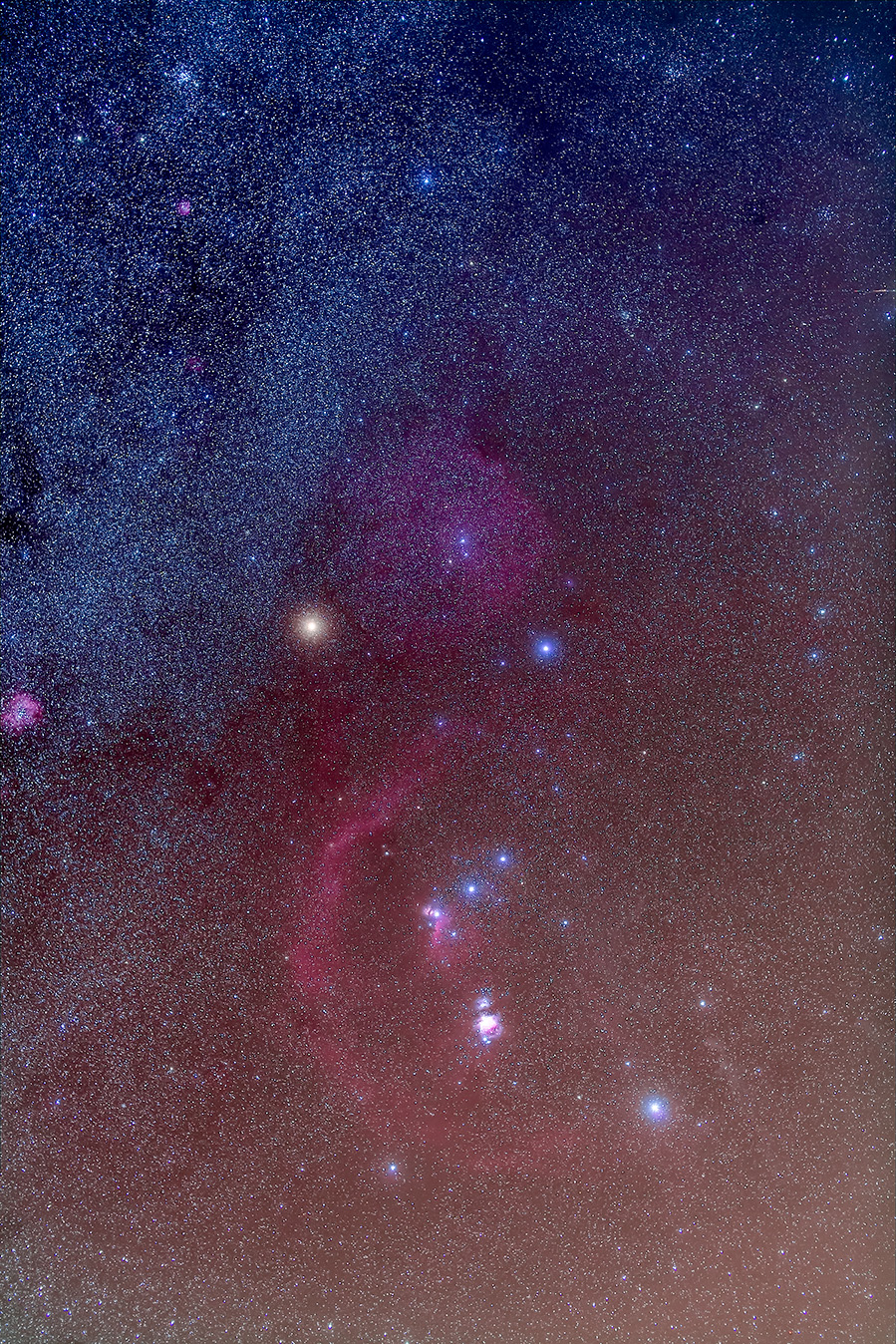
The technique also pops out the star colours, like here on red Betelgeuse amid the blue-white stars of  Orion. This was from January 2011 from my backyard and is a stack of four 5-minute exposures w/o filter and one with. All with the Canon 5D MkII and 50mm Sigma lens, a terrific combination for constellation portraits.

— Alan, January 2011 / Image © 2011 Alan Dyer
Canis Major Hopping


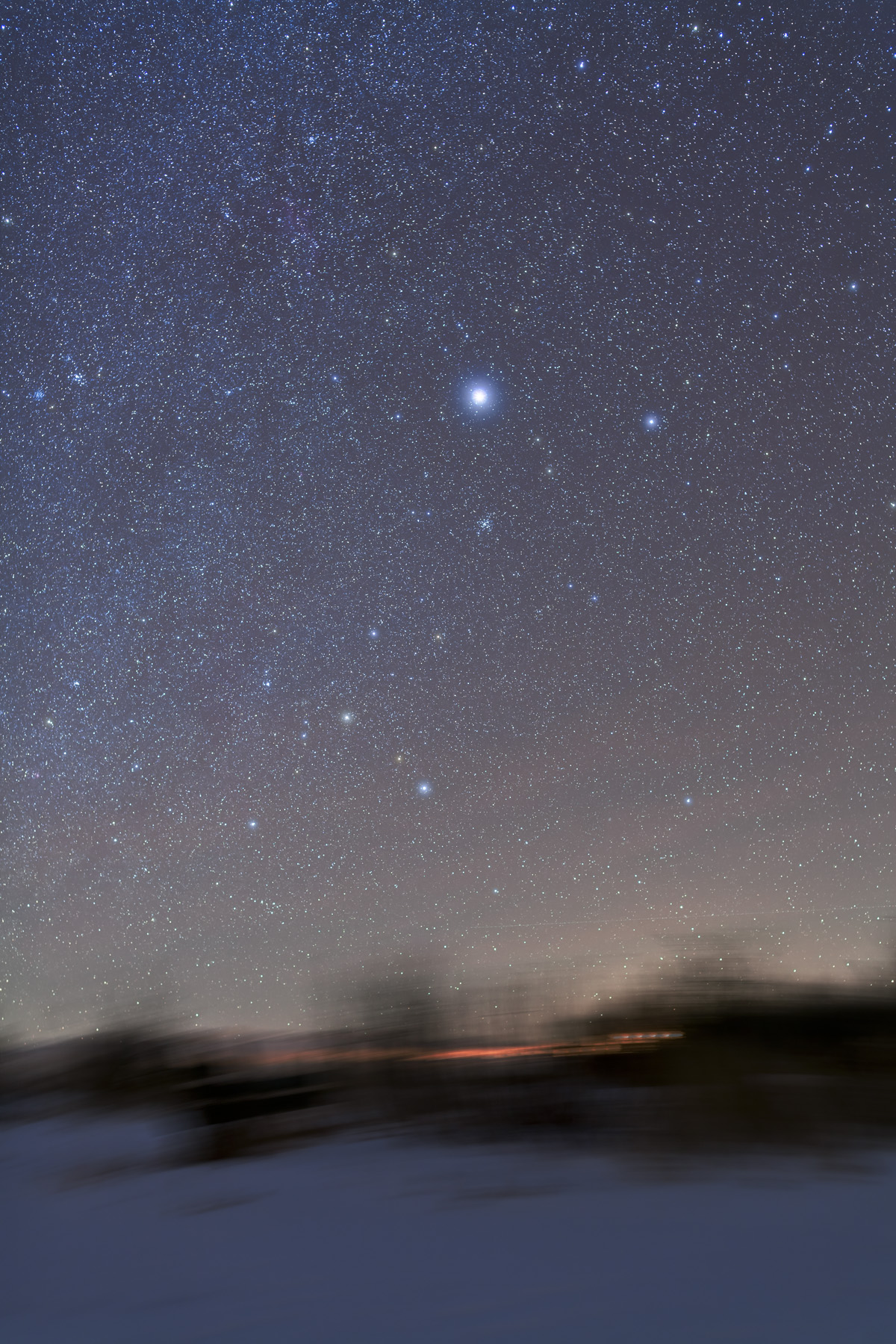
On one of the few clear nights so far this winter I was able to make Canis Major obey for a while and pose for a shot of the canine constellation hopping along my horizon in the south. From my latitude of 51° N he never appears high in the sky, though the placement on the horizon does make for a photogenic winter scene. Here, you can see the Messier star cluster M41 just below Sirius, the Dog Star, the brightest star in the night sky and the bright jewel in the collar of Canis Major (according to some depictions of the constellation). This is a stack of five 4-minute exposures  with the Canon 5D MkII at ISO 800 and a 50mm Sigma lens at f/2.8, plus a single 4-minute exposure with the Kenko soft filter to add the enhanced hazy star glows.

– Alan, January 2011 / Image © 2011 Alan Dyer