On November 11, 2025 the sky erupted with a swath of red Northern Lights seen over much of North America.
It is rare when those living at southerly latitudes can see Northern Lights. Instead of having to travel north to Arctic sites, the aurora comes south to them. That’s what happened on November 11, 2025 when one of the largest solar storms in recent years brought the aurora down over much of the North America.
This was the latest in a set of wonderful aurora shows we’ve enjoyed in the last two years, as the Sun reached the peak of its 11-year cycle of activity.
As I show below, the apps and indicators were registering extreme conditions, with the “Kp Index” peaking at 8 out of a maximum of 9, and the auroral “Ovation” oval lighting up red, indicating a major geomagnetic storm was underway. In the lingo of the local Alberta Aurora Chasers Facebook group, it was most definitely a “pants on” night!
Kp 8! Red Alert!
The source of the storm was two major flares on the Sun in quick succession. In only a day the high-speed “coronal mass ejections” they had unleashed reached Earth and lit up the sky.
As a result the ring of aurora borealis which usually circles the Arctic moved down over southern Canada and the northern United States. I was under that ring of lights!
This is a blend of two exposures, for sky and ground, both 8 seconds at f/2.8 with the TTArtisan 11mm full-frame fish-eye lens on the Canon R5 at ISO 1600.
As it got dark this night, large swaths of red were easily visible to the eye, especially to the northwest as above, and below.
A single 5-second exposure at f/2.8 with the TTArtisan 11mm lens on the Canon R5 at ISO 1600.
Early on a large curtain of red extended across the sky, from northwest to southeast. It is rare to see bright reds with the eye, and unusual to see the reds so extensive and sky-spanning.
This 360º panorama is a stitch of 6 segments, 60º apart, each 5-second exposures at f/2.8 with the TTArtisan 11mm full-frame fish-eye lens on the Canon R5 at ISO 1600, and in landscape orientation.
The reds are mostly from oxygen atoms, but can also come from nitrogen molecules, which require the input of a lot of energy to get excited and glow! They certainly were this night.
The reds mixed with the more common green light from oxygen to produce shades of yellow and orange, and with blues from nitrogen to produce vivid pinks and magentas. While the eye could see some of these subtle colours, a camera (with its longer exposure and wider aperture lens compared to the human eye) was best for picking up the full range of what this show had on display.
This 360º panorama is a stitch of 10 segments, 36º apart, each 4-second exposure at f/2.8 with the Laowa 10mm rectilinear wide-angle lens on the Nikon Z8 at ISO 1600, and in portrait orientation.
The panorama above taken about 2 hours after the previous all-sky scene, shows a quieter aurora but still with curtains covering the sky and converging to the “magnetic zenith,” a little south of the point straight overhead.
Such an all-sky show of aurora is among the sky’s finest spectacles.
A real-time video with the Nikon Z6III at ISO 25600 and Viltrox 16mm lens at f/1/8.
In the video above taken early in the evening I pan around the horizon over the full 360º to take in the scene much as the eye did see it. Video uses shorter exposures more like the eye does. I narrate the video at the camera.
All single 4-second exposures at f/2.8 with the Laowa 10mm rectilinear wide-angle lens on the Nikon Z8 at ISO 1600.
When the aurora covers the sky it’s hard to take it all in and capture it on camera. The 10mm ultra-wide lens I used for the images above sweep up well past the zenith to show the converging curtains, forming shapes that kept changing by the minute.
In the video below I used the same lens with the camera turned to portrait orientation to create a “vertical video,” again narrated at the camera. It shows how the aurora was changing, but slowly this night. It did not have the rapid dynamics I’ve seen with other bright displays, despite the obvious high energies involved here to excite the reds.
Real-time video with the Laowa 10mm lens at f/2.8 and Nikon Z8 at ISO 25,600 & 1/4 second shutter.
Again, this real-time video captures the scene much as the unaided eye saw it. I’ve not processed either of these real-time videos, other than what the camera itself did.
This is a panorama of 12 segments, each 1 second at f/1.8 with the Viltrox 16mm lens on the Nikon Z6III at ISO 1600. Stitched in Adobe Camera Raw.This is a stitch of 6 segments, 60º apart, each 4-second exposure at f/2.8 with the TTArtisan 11mm full-frame fish-eye lens on the Canon R5 at ISO 1600, in landscape orientation. Stitched in PTGui.
On a night like this, I try to shoot not only single still images and videos, but also multi-image panoramas, such as the circular images earlier and these two rectangular “panos” above. Both cover a full 360º in width but don’t go up to the zenith.
Again, they record the range of colours that were on show on this Kp8 night, which were more visible and extensive than usual for an all-sky display.
I also shot two time-lapse sequences. These form the main visuals for this edited music video I produced around the time-lapses.
The link takes you to my Vimeo channel to watch the video. Do enlarge it to full screen!
A single 2.5-second exposure at f/1.8 with the Viltrox 16mm lens on the Nikon Z6III at ISO 1600.
I also always try to take some selfies at every great aurora show, with me often lit just by aurora light! They’re fun to use for talks and “bio pix.”
This is a single 4-second exposure at f/2.8 with the Laowa 10mm lens on the Nikon Z8 at ISO 1600.
As a final bonus this night, one of the fish-eye lens time-lapse frames happened to capture a bright meteor. You see it briefly in a flash in the music video above, but below is the single frame.
A single 4-second exposure at f/2 with the TTArtisan 7.5mm circular fish-eye lens on the Nikon Z8 at ISO 1600. Taken as part of a 780-frame time-lapse.
Because it is streaking away from the constellation of Taurus, this is likely a member of the annual Taurid meteor shower which was in its final nights of the long period it is active in late October and early November. In fact, there are two Taurid showers, Northern and Southern, active at once and coming from similar spots in Taurus. They are known to produce bright fireballs and this was certainly one!
While the Sun is now in the downward slope of its cycle, coming off “solar max” last year, we may still see more major storms and aurora shows like this. Historically, the biggest solar flares and aurora displays often occur in the 2 or 3 years after solar maximum.
So stay tuned! The sky may still light up red with Northern Lights!
If you saw the total eclipse in 2024 (or you missed it!) you have three chances in the next three years to see another. But you will have to travel.
Typically, total eclipses of the Sun occur about 18 to 24 months apart. Unusually, in the next three years, we have a trio of total eclipses each only a year apart. Or to be precise, a lunar year — 12 lunar phase cycles — apart.
The map above (courtesy EclipseAtlas.com) plots the paths of all central solar eclipses (annulars, totals and hybrids) from 2021 to 2030. Included are the paths of the 2023 annular and 2024 total in North America you might have seen.
But the next total eclipse in populated North America is not until August 2044, then again in August 2045. To see a total eclipse in the next few years, those of us in the Americas will have to travel.
However, those in Europe can drive to the next eclipse, to their first total eclipse at home since August 1999.
A year from now as I write this, the Moon’s umbral shadow will intercept the Earth for the first time since April 8, 2024. The path of this next total eclipse is unusual in that it starts in northern Russia, travels north over the North Pole, then sweeps down from the north to cross eastern Greenland, nipping the west coast of Iceland, then crossing Spain, to end at sunset over the Balearic Islands of Spain.
Weather prospects are surprisingly good for the several cruise ships planning to be in a Greenland fjord. Iceland is iffy, but had the eclipse been this year (on August 12, 2025) many people would have seen it. Spain was the opposite — statistically it has the best weather prospects along the 2026 path, but on August 12, 2025 most of the country was beset by storms.
From northern Spain, where I intend to be and as I show above, the Sun will be low in the west in the early evening sky, for a relatively short 1m40s of totality. A low eclipse can be spectacular, but riskier as there’s a greater chance of clouds hiding a low Sun.
This and the other images of the Sun’s position at each eclipse are pages from my eclipse ebook, described below.
Twelve new Moons later, the lunar shadow again crosses the Earth, this time passing over North Africa where skies are almost always clear in summer. But the days are hot! The shadow crosses the Strait of Gibraltar and passes over Morocco, Algeria, Tunisia, Libya, Egypt, and Saudi Arabia. In addition to the good weather, the attraction is that this is the longest total eclipse for the rest of the 21st century.
The spectacular temples of Luxor, Egypt are at the point of maximum eclipse, with an unusual 6m23s of totality with the Sun high overhead. Even at Gibraltar, totality is 4m35s, seven seconds longer than the maximum in Mexico in 2024.
From Tunisia, as I show above, the Sun is 55º high over the Mediterranean, and totality is a generous 5m44s.
Another 12 lunar months later, the Moon shadow sweeps across the southern hemisphere, for another generously long eclipse. Remote Western Australia enjoys 5m10s of totality on a winter’s day.
But millions lie in the path in New South Wales, where Sydneysiders can watch a total eclipse over Sydney Harbour lasting 3m48s. The sky scene is below, with a late afternoon winter Sun heading down in the west. From Farm Cove, the eclipsed Sun will be over the Opera House and Harbour Bridge, for a never-to-be-repeated photo op.
The South Island of New Zealand sees a sunset eclipse (the shadow passes over Milford Sound) that lasts 2m55s, longer than the 2017 eclipse in the United States.
Coincidentally, Australia also hosts the next total eclipse to follow, after a gap of 28 months, on November 25, 2030. And the lunar shadow crosses Australia on July 13, 2037 and December 26, 2038 — a Boxing Day eclipse down under. So Australia is the place to be for the next decade or so.
But between 2026 and 2028, Spain is host to three eclipses, as the 2027 total crosses Spanish territory, and the January 26, 2028 annular eclipse ends at sunset in western Spain. At this eclipse the Moon is not large enough to completely hide the Sun, so at mid-eclipse we see a bright ring of light, similar to the annular eclipse here in North America on October 14, 2023.
My Plans
Where will I be? For 2026 I have signed onto a trip to Spain with the well-travelled photo tour company CaptureTheAtlas.com.
They are planning a very photo-centric tour to Spain for viewing the eclipse from a winery near Burgos. I’ll be one of the instructors, among a stellar line-up of eclipse veterans and astrophoto experts. I invite you to check out the details of the tour here at its webpage. We’d love to have you join us!
For 2027 I am planning to be in Tunisia, on the Mediterranean coast, with a tour group from Astro-Trails.com.
The path of totality passes just a few kilometres from Coonabarabran, the “Astronomy Capital of Australia,” as the Siding Spring Observatory is just down the Timor Road in the path. In July the Milky Way is at its best, with the centre of the Galaxy high overhead at nightfall. That’s a sight equal to an eclipse for bucket-list spectacle.
My EBook
The cover of my new 400-page ebook
For 2017’s eclipse I prepared an ebook on how to photograph it. It proved popular, and so for the 2023 and 2024 eclipses I revised it to cover both the annular and total eclipses.
Its popularity prompted me to revise it again, this time to cover the coming trio of eclipses, plus I included pages on the January 2028 annular, as many who visit Spain for the totals may plan to return for the sunset annular (low annulars are also the most spectacular!).
My new ebook is 40 pages larger than the previous edition, with most of the added content in the 100-page chapter on processing eclipse images, from wide-angles, to time-lapses, and to blended exposures of totality close-ups. I include lots of information on choosing the right gear — filters, camera, lenses, telescopes, and tracking mounts.
The slide show above presents images of sample pages. Do page through the gallery for a look at the content.
But for all the details and links to buy the book (from Apple Books or as a PDF for all platforms) see its webpage at my website.
It will be a busy three years for eclipse chasers, as rarely do we get three-in-a-row like this. The diversity of locations and eclipse circumstances make this an exciting trio to chase. But you can just go back to Spain to see most of them!
2024 brought us a total eclipse of the Sun, superb auroras, and a naked-eye comet, three top highlights of a wonderful year of celestial attractions. Maybe the best!
In our book The Backyard Astronomer’s Guide (which we revised this year), Terence Dickinson and I created an Aah! Factor scale with various celestial sights ranked from:
• 1, evoking just a smile, to …
• 10, a life-changing event!
Our book’s Aah! Factor Scale in Chapter 1
Coming in at an 8 is a naked-eye comet. Deserving a 9 is an all-sky display of an aurora. The only sight to rate a top 10 is a total eclipse of the Sun.
2024 brought all three, and more!
Here’s my look back at what I think was one of the greatest years of stargazing.
NOTE: The images might take a while to all load. All can be enlarged to full screen. Just click or tap on them.
January
A Winter Moonrise to Begin the Year
The rising of the winter “Wolf” Moon, the Full Moon of January, over the frozen Crawling Lake Reservoir, in southern Alberta.
Now, this was not any form of rare event. But seeing and shooting any sky sight in the middle of a Canadian winter is an accomplishment. This is the rising of the Full Moon of January, popularly called the Wolf Moon, over a frozen lake near home in Alberta, Canada 🇨🇦.
It serves to bookend the collection with a Full Moon I captured eleven months later in December.
February
Auroras from Churchill, Manitoba
Had this been my only chance to see the Northern Lights fill the sky this year, I would have been happy. As we often see in Churchill, the aurora covered the sky on several nights, a common sight when you are underneath the main band of aurora borealis that arcs across the northern part of the globe.
This is a vertical panorama of the sky-filling aurora of February 10, 2024, as seen from the Churchill Northern Studies Centre, in Churchill, Manitoba.
I attended to two aurora tour groups at the Churchill Northern Studies Centre who both got good displays to check “seeing the Northern Lights” off their bucket list. Join me in 2025!
March
Under the Austral Sky
Ranking a respectable 7 on our Aah! Factor scale is the naked-eye sight of the galactic centre overhead, with the Milky Way arcing across the sky. That’s possible from a latitude of about 30° South. That’s where I went in March, back to Australia 🇦🇺 for the first time since 2017.
This is a framing of the most spectacular area of the southern Milky Way, from Centaurus at left, to Carina at right, with Crux, the Southern Cross, at centre.
I wrote about it in my previous blog, where I present a tour along the southern Milky Way, and wide-angle views of the Milky Way (the images here are framings of choice regions).
This frames the southern Milky Way from Canis Major and its bright star Sirius at top, to Carina and its bright star Canopus at bottom, the two brightest stars in the night sky. The large red complex is the Gum Nebula.
It is a magical latitude that all northern astronomers should make a pilgrimage to, if only to just lie back and enjoy the view of our place in the outskirts of the Galaxy. I was glad to be back Down Under, to check this top sky sight off my bucket list for 2024.
April
A Total Eclipse of the Sun
No sooner had I returned home from Oz, when it was time to load up the car with telescope gear and drive to the path of the April 8 total solar eclipse, the first “TSE” in North America since 2017, which was the last total eclipse I had seen, in a trip to Idaho.
This is a composite of telescopic close-ups of the April 8, 2024 total eclipse, with a multi-exposure blend for the corona at centre, flanked by the diamond rings.
But where? I started south to Texas, my Plan A. Poor weather forecasts there prompted a hasty return to Canada, to drive east across the country to … I ended up in Québec. My blog about my cross-continental chase is here. My final edited music video is linked to below.
It was gratifying to see a total eclipse from “home” in Canada, only the third time I’ve been able to do that (previously in 1979 – Manitoba, and 2008 – Nunavut). If the rest of the year had been cloudy except for this day I wouldn’t have complained. Much.
This definitely earned a 10 on the Aah! Factor scale. Total eclipses are overwhelming and addictive. I’ve made my bookings for 2026 in Spain 🇪🇸 and 2027 in Tunisia 🇹🇳.
May
The Sky’s On Fire
It had been several years since I had seen an aurora from my backyard with colours as vivid and obvious as they were this night. But on May 10, the sky erupted with a fabulous display of aurora that much of the world saw, as aurora borealis in the north and aurora australis in the south.
This is a 300º panorama of the May 10, 2024 Northern Lights display, when the Kp Index reached 8 (out of 9), bringing aurora to the southern U.S.
This was the first of several all-sky shows this year. I blogged about the year’s great auroras here, where there are links to the movies I produced that capture the Northern Lights as only movies can, recording changes so rapid it can be hard to take it all in. Check off a 9 here!
So not even half way through the year, I had seen three of the top sky sights: the Milky Way core overhead (7), an all-sky aurora (9), and a total eclipse of the Sun (10).
But there was more to come! Including an Aah! Factor 8.
June
World Heritage Nightscape Treks
This is a panorama of the arch of the Milky Way rising over the Badlands of Dinosaur Provincial Park, Alberta, with a sky tinted with twilight and airglow.
The sky took a break from presenting spectacles, allowing me to head off on short local trips, to favourite nightscape sites in southern Alberta, which we have in abundance. The Badlands of Dinosaur Provincial Park are just an hour away, the site for the scene above.
A panorama at sunset at Writing-on-Stone Provincial Park (Áísínai’pi) in Alberta, with the Milk River below and the Sweetgrass Hills in the distance in Montana. Note the people at far right.
The rock formations of Writing-on-Stone Provincial Park are a bit farther, requiring a couple of days commitment to shoot. Clouds hid the main attraction, the Milky Way, this night, but did provide a fine sunset.
The Milky Way rises over Mt. Blakiston, in Waterton Lakes National Park, Alberta. This was June 10, 2024, so snow remains at high altitudes.
A little further west down the highway is Waterton Lakes National Park, another great spot I try to visit at least once each year.
All locations I hit this month are U.N. World Heritage Sites, thus the theme of my blog from June. People travel from all over the world to come here, to sites I can visit in a few hours drive.
July
Mountains by Starlight
In summer we now often contend with smoke from forest fires blanketing the sky, hiding not just the stars by night, but even the Sun by day.
The Andromeda Galaxy at centre is rising above Takakkaw Falls, in Yoho National Park. Above is the W of stars marking Cassiopeia.
But before the smoke rolled in this past summer I was able to visit a spot, Yoho National Park in British Columbia, that had been on my shot list for several years. The timing with clear nights at the right season and Moon phase has to work out. In July it did, for a shoot by starlight at Takakkaw Falls, among the tallest in Canada.
This is the Milky Way core and a bonus meteor over the peaks and valleys at Saskatchewan River Crossing, in Banff National Park, Alberta.
The following nights I was in Banff National Park, at familiar spots on the tourist trail, but uncrowded and quiet at night. It was a pleasure to enjoy the world-class Rocky Mountain scenery under the stars on perfect nights.
August
The All-Sky Auroras Return
In August I headed east to Saskatchewan and the annual Summer Star Party staged by the astronomy clubs in Regina and Saskatoon. It is always a pleasure to attend the SSSP in the beautiful Cypress Hills. The sky remained clear post-party for a trip farther east to the little town of Val Marie, where I stayed at a former convent, and had a night to remember out in Grasslands National Park, one of Canada’s first, and finest, dark sky preserves.
The Northern Lights in a superb all-sky Kp6 to 7 display on August 11-12, 2024, in Grasslands National Park, Saskatchewan.
The plan was to shoot the August 11 Perseid meteor shower, but the aurora let loose again for a stunning show over 70 Mile Butte. My earlier blog has more images and movies from this wonderful month of summertime Northern Lights.
We are fortunate in western Canada 🇨🇦 to be able to see auroras year-round, even in summer. Farther north at the usual Northern Lights destinations, the sky is too bright at night in summer.
September
Back to Deep Sky Wonders …
This is a framing of the rich starfield in Sagittarius and Serpens containing a mix of bright star clouds, glowing nebulas, and dark dust in the Milky Way.
September is the month for another astronomical party in the Cypress Hills, but on the Alberta side. At the wonderful Southern Alberta Star Party under its very dark skies, I was able to shoot some favourite deep-sky fields along the Milky Way with new gear I was testing at the time.
This frames the complex region of emission nebulas in central Cygnus near the star Gamma Cygni, at lower left. The Crescent Nebula is at centre.
And from home, September brought skies dark and clear enough (at least when there was no aurora!) for more captures of colourful nebulas (above and below) along the summer Milky Way.
This frames all the photogenic components of the bright Veil Nebula in Cygnus, a several-thousand-year-old supernova remnant.
We invest a lot of money into the kind of specialized gear needed to shoot these targets (and I’m not nearly as “committed” as some are, believe me!), only to find the nights when it all comes together can be few and far between.
… Plus, A Very Minor Eclipse of the Moon
I had to include this, if only for stark contrast with the spectacular solar eclipse six months earlier.
We had an example of the most minor of lunar eclipses on March 24, 2024, with a so-called “penumbral” eclipse of the Moon, an eclipse so slight it’s hard to tell anything unusual is happening. (So I’ve not even included an image here, though I was able to shoot it.)
Me at another successful eclipse chase … to my backyard to capture the partial lunar eclipse on September 17, 2024. The Moon is rising in the southeast.
On September 17, we had our second eclipse of the Moon in 2024. This time the Earth’s umbral shadow managed to take a tiny bite out of the Full Moon. Nothing spectacular to be sure. But at least this eclipse expedition was to no farther away than my rural backyard. A clear eclipse of any kind, even a partial eclipse, especially one seen from home, is reason to celebrate. I did!
Of course, a total eclipse of the Moon, when the Full Moon is completely engulfed in Earth’s umbra and turns red, is what we really want to see. They rate a 7 on our Aah! Factor scale. We haven’t had a “TLE” since November 8, 2022, blogged about here.
We knew early in 2024 that the then newly-discovered Comet Tsuchinshan-ATLAS had the potential to perform this month. I planned a trip south to favourite spots in Utah and Arizona to take advantage of what we hoped would be a fine autumn comet.
This is Comet Tsuchinshan-ATLAS (C/2023 A3) at its finest in the evening sky, on October 14, two days after its closest approach to Earth, and with it sporting a 10º- to 15º-long dust tail, and a short narrow anti-tail pointed toward the horizon. The location was Turret Arch in the Windows area of Arches National Park, Utah.
It blossomed nicely, especially as it entered into the evening sky in mid-October, as above. Despite the bright moonlight, it was easy to see with the unaided eye, a celestial rarity we get only once a decade, on average, if we are lucky. My blog of my comet chase is here.
This is a panorama of Comet Tsuchinshan-ATLAS over Arches National Park, Utah, on a moonlit night, October 15, 2024, with the comet easy to see with the unaided eye.
A naked-eye comet ranks an 8 on our Aah! Factor scale. So now 2024 had delivered all four of our Top 4 sky sights.
This 360° panorama captures a rare SAR (Stable Auroral Red) arc across the Arizona sky in the pre-dawn hours of October 11, 2024. The SAR arc was generated in the high atmosphere as part of the global geomagnetic storm of October 10/11, 2024, with a Kp8 rating that night.
But … just as a bonus, there was another fabulous aurora on October 10, seen in my case from the unique perspective of southern Arizona, with an appearance of a bright “SAR” arc more prominent than I had ever seen before. So that view was a rarity, too, so unusual it doesn’t even make our Aah! list, as SARs are typically not visible to the eye.
November
Back to Norway for Northern Lights
2024 was notable for travel getting “back to normal,” at least for me, with two long-distance drives, and now my second overseas trip. This one took me north to Norway 🇳🇴, which I had been visiting twice a year as an enrichment lecturer during pre-pandemic years.
A green and red aurora appears over the coast of Norway, with Jupiter bright at right. This was from the Hurtigruten ship m/s Nordkapp on November 10, 2024, on a coastal cruise with a Road Scholar tour group.
The auroras were excellent, though nothing like the great shows of May and October. But the location sailing along the scenic coast and fjords makes up for any shortfall in the Lights. It was good to be back. I plan to return in 2025 for two cruises in October. Join me there, too!
December
A Winter Moonrise to End the Year
As I write this, December has been nothing but cloud. Almost. A clear hour on Full Moon night allowed a capture of the “Cold Moon,” with the Moon near Jupiter, then at its brightest for the year. So that’s the other lunar bookend to the year, shot from the snowy backyard.
This is the Full Moon of December 14, 2024, near the planet Jupiter at lower right. Both were rising into the eastern sky in the early evening.
However, I did say after the clear total eclipse in April that if the rest of 2024 had been cloudy I wouldn’t complain. So I’m not.
And there’s no reason to, as 2024 did deliver the best year of stargazing I can remember. 2017 had a total solar eclipse. 2020 had a great comet. But we have to go back to 2003 for aurora shows as widespread and as a brilliant as we’ve seen this year. 2024 had them all. And more!
The Sun peaked at “solar maximum” and gave us wonderful sky shows in 2024.
Officially, the Sun reached the peak of its roughly 11-year cycle of activity — “solar max” — in late 2024. That’s according to NASA and NOAA.
During 2024 several major solar storms erupted as a result of the Sun’s increased activity. They blew massive clouds of energetic particles — electrons and protons — away from the Sun. Some of those storm clouds swept past Earth, sparking bright auroras widely seen in both the Northern and Southern Hemispheres.
The rise and fall of solar activity. The peak at right is as of November 2024 in mid-Cycle 25. Courtesy SolarCycleScience.com.
I was fortunate enough, as many were, to witness several of 2024’s great auroras, from home in Alberta, and from as far south as Arizona.
Trips north to Churchill, Manitoba, and to northern Norway also presented some fine aurora nights. But that’s normal at any time in the solar cycle from those sub-Arctic and Arctic locations.
It’s when the aurora comes to you that you get a truly memorable show. And 2024 had its share of them.
NOTE: My blog has a lot of images and links to movies that may take a while to load. Images can be clicked on to bring them up full screen. The blog also contains many links to other sites to learn more!
Starting the Year — February in Churchill
This was the month I made my annual trek to Churchill, Manitoba, to instruct aurora tour groups at the Churchill Northern Studies Centre. Why not join us in 2025?
An aurora selfie at the Churchill Northern Studies Centre, on February 10, with a modest Kp4-level storm underway. This is 20-seconds with the TTArtisan 11mm fisheye lens at f/2.8 on the Canon R6 at ISO 1600.
Yes, the air is cold (usually about -25° C) but the skies are often clear and aurora filled, as Churchill sits under the normal location of the auroral oval, the main zone of auroras. In fact, it is as far south in the world as the auroral oval normally resides, at a latitude of only 58º North, well south of the Arctic. If it’s clear, there’s almost always some level of Northern Lights.
This year, 2024, was no exception. Even on nights with low readings on the usual auroral indicators we got sky-filling displays that are rare down south.
This is a southerly arc of green and red Northern Lights on February 9. This is a panorama of 5 segments, each 20 seconds with the Laowa 15mm lens at f/2 on the Canon R6 at ISO 1600.
What I find in Churchill is that even with numerically weak and visually dim shows, as above, the camera often sees very red and photogenic auroras. The eye sees the colours only when the aurora brightens, which it often does (as I record below), sparking rippling green curtains (from glowing oxygen) fringed with pink (from glowing nitrogen).
I didn’t shoot time-lapses or movies this year in Churchill. Instead, the example movie above, shot using just real-time (not time-lapse) videos, is from February 2019. It is from my AmazingSky YouTube channel.
The video presents the aurora much as the eye saw it, and as it appears when it dances.
This is a 360º panorama of the all-sky aurora of February 10, from the Churchill Northern Studies Centre. This is a panorama of 9 segments, each 15 seconds with the TTArtisan 11mm lens at f/2.8 on the Canon R6 at ISO 1600.
However, I tend now to shoot mostly panoramas, as above, from this year’s visit. They can take in the full show across the sky, in high-resolution images suitable for framing!
May 10 — The Great May Display
The aurora apps were beeping this day, warning a great display was in the offing. The composite satellite image below from NOAA shows the actual extent of the aurora around the Northern Hemisphere during the great display of May 10/11 .
Note how the auroral oval is indeed an oval and how the centre is not the geographic North Pole. It is the North Geomagnetic Pole, in the High Arctic of Canada. 🇨🇦 So the oval dips down farther south over North America than it does over Europe.
Image courtesy of the U.S. National Oceanic and Atmospheric Administration.
The May 10 solar storm rated a top “G5” on the G1 to G5 storm scale, while the “Kp”geomagnetic disturbance index reached Kp8 on the Kp0 (nothing) to Kp9 (OMG!) scale.
I gave a talk at a local community art gallery that evening, and alerted the audience to the likelihood of fine aurora later that night. Sure enough, I got home in time to see the sky already lighting up with aurora in the twilight and behind the clouds.
This was the multi-coloured curtain to the south during the great display of May 10. This is a 10-second exposure with the Laowa 15mm lens at f/2.8 on the Canon Ra at ISO 1600.
The clouds cleared off enough to reveal one of the most colourful shows I’d seen in many years. This time there was no question about seeing reds and vivid pinks with the unaided eye. This was the type of show everyone hopes for. But it takes a Kp6 show and higher to spark it.
This was the view as the aurora suddenly brightened and converged at the zenith for a superb corona effect. This lasted no more than a minute before it dimmed and subsided again. This is a 9-second exposure with the Laowa 7.5mm circular fisheye lens at f/2 on the Canon R5 at ISO 800.
And a music video of the May 10 display incorporating time-lapse and real-time video footage is on my YouTube channel, with the clickable link below. Do enlarge to full screen.
One of the most remarkable aspects of this show was the blue auroras later in the night (shown below), created by sunlight illuminating the upper curtains and reacting with atmospheric nitrogen. The usual auroral greens and reds are from oxygen. Pinks are also from nitrogen. Blues are less common, but were in abundance this night.
This is a 360° panorama of the May 10/11 aurora exhibiting vertical blue and magenta rays across the western (left), northern (bottom), and eastern (right) sky, and an odd bright patch to the south at top. This was toward the end of the main activity this night, at about 2:30 am. This is made of 20 segments, each 13-second exposures, with the Laowa 15mm lens at f/2 on the Canon Ra at ISO 800.
Auroras around summer solstice, June 21, can be more colourful and often blue, as the Sun lights the upper atmosphere all night. I saw blue auroras again later in the summer.
July — NLCs and Classic Auroral Arcs
June and July are normally when we in western Canada get good displays of another northern mid-latitude phenomenon, noctilucent clouds (NLCs).
This shows sunlit noctilucent clouds in the northwest in the summer twilight, and as the waxing crescent Moon sets at left. This was July 9 at 11:45 pm MDT, in a panorama of 5 segments, each a 30-second exposure with the Canon RF24-105mm lens at f/4 and 58mm on the Canon R5 at ISO 400.
These are ice clouds at 80 km altitude (almost in space) that are lit by sunlight all night long. I saw only a couple of displays of NLCs this year, and it wasn’t for lack of trying and clear nights, even amid forest fire smoke. The panorama above is from home on July 9, over a yellow canola field. NLC season always coincides with peak canola colour time!
Might NLCs be suppressed by high solar activity? There’s some data that suggests they are. However, we weren’t getting many auroras either in early summer.
A 180° panorama of the surprise aurora of July 25, as there was little indication in the days before that an aurora was possible this night. This is a panorama of 6 segments, with the Viltrox 16mm lens at f/2 on the Nikon Z6III at ISO 800, each 8-second exposures.
But at the end of July the Northern Lights returned for some classic shows of arcs across my northern sky, first on July 25 (above), with a prominent sunlit blue/purple ray at left by the Big Dipper. The Kp Index reached Kp5 this night, which is enough to produce a good display from my location in southern Alberta. The Moon is rising at right.
A 180° panorama of the Kp5-level aurora on July 29, with a green arc, and magenta and red rays. This is a panorama of 8 segments, each 30-second exposures with the Viltrox 16mm at f/2 on the Nikon Z6III at ISO 800.
Then again, four nights later on July 29, an auroral arc appeared across the north, this one with reds mixing with greens to create a yellow band in the east, as well as blue and magenta tops to the green arc that follows the curve of the auroral oval.
August 1 — STEVE Appears
While June and July were quiet months, August made up for them.
Of all the auroras this year, only this one, on August 1, produced a showing of STEVE, at least as best I saw in 2024. He can be elusive and easily missed!
This is a capture of a faint appearance of a STEVE-like arc during the Kp5 aurora of July31/Aug 1. This was at 12:10 a.m. MDT, so on Aug 1. The camera recorded the pinkish rays at right which are likely STEVE arcs below a more diffuse and fainter red band which may be a SAR, a Stable Auroral Red arc.
STEVE is the odd arc, often white or mauve, that appears southward of the main aurora (from here in the Northern Hemisphere), typically after a show has peaked, then subsided and retreated back north, as it did above.
STEVE stands for Strong Thermal Emission Velocity Enhancement, as it is caused by horizontally flowing hot gas, and so is not, by definition, a true aurora created by energetic particles raining vertically down magnetic field lines.
For a classic showing of STEVE see my video, above, from August 2022. High-resolution 4K video I shot this night formed the basis for a scientific research paper, as it revealed structures in STEVE no one had seen before.
This is a capture of a brief appearance of a STEVE arc in the west during the Kp5 aurora of July31/Aug 1. This was at 1:10 a.m. MDT, so on Aug 1. The mauve STEVE arc was visible for about 15 minutes before it gradually faded. The green picket fence fingers, which were visible to the eye but colourless, appeared only a minute or so before this image and were gone no more than 2 mnutes later.
STEVEs are often accompanied by green “picket fence fingers” hanging down from the mauve arc. These fingers are more akin to normal auroras, but are created by particles from the STEVE band raining down local magnetic field lines. They do not come from far out in space as they do in a normal aurora!
August 4 — A Coronal Outburst
On the night of August 3/4 I was able to join a photo tour run by local photographer Neil Zeller, to shoot Milky Way nightscapes. Escaping clouds, we ended up at a scenic spot south of Medicine Hat, Alberta, called Red Rock Coulee.
A 180° panorama of a Kp5-level aurora on a partly cloudy night, August 3/4. This was looking to the northeast at 3:00 am from a side road off the Trans-Canada Highway in southern Alberta just east of Brooks.
On the way home, the aurora began to let loose behind the clouds. We stopped once off the highway as the aurora brightened in an arc across the northeast, above.
A bright auroral curtain sweeps from the zenith down the western sky, as the sky brightens with the blue of a dawn twilight. This was the morning of August 4, with a Kp5 to 6 level aurora underway. The location was just off Highway 1 between Brooks and Bassano, Alberta. This is a single 13-second exposure with the Viltrox 16mm lens at f/2 on the Nikon Z6III at ISO 400.
We stopped again later, now at 4 am, and marvelled as the curtains converged at the zenith in the finest manifestation an aurora can produce, a swirling zenith “corona.”
A music video from August 4, using just a single real-time video, not a time-lapse, is above. It shows almost the full but brief appearance of the corona, just as the eye saw it looking straight up!
My plan was to shoot the annual Perseid meteor shower that was to peak on Sunday, August 11, from the same spot I shot it in 2016.
A 270° panorama of the aurora in the evening twilight on August 11, from the 70 Mile Butte trailhead in Grasslands National Park, West Block near Val Marie, Saskatchewan. This is a panorama of 11 segments, each 15 seconds with the Laowa 15mm lens at f/2.8 on the Canon R5 at ISO 800.
The aurora had other plans. Again, as it did on May 10, the sky was lighting up with colours as it darkened in the evening twilight, above.
This is a 360° all-sky panorama of the Kp6 to 7-level aurora on August 11, from Grasslands National Park. This is a panorama of 12 segments, each 4 seconds with the Laowa 15mm lens at f/2 on the Canon R5 at ISO 4000.
The aurora expanded to fill the sky, and with odd fragmented bits, shown above. My trio of cameras set up for the meteor shower got repurposed into taking aurora time-lapses, stills, and panoramas. And selfies! — the title slide for this blog was from this memorable night at Grasslands.
The aurora was bright enough during this substorm outburst at 12:15 am that the red and green colours could be seen with the eye, though they were subtle. This is a 2-second exposure with the Laowa 15mm lens at f/2 on the Canon R5 at ISO 3200.
A notable moment was at midnight when, even to the eye, the sky to the east suddenly turned red, and a wave of crimson aurora quickly swept in. The reds from oxygen mix with the more usual auroral greens, also from oxygen, to create areas of yellow in the sky.
This was also peak night for the 2024 Perseid meteor shower. One bright Perseid meteor shoots down the Milky Way in Cygnus at top, amid the converging rays of the aurora at the magnetic zenith. This is with the Laowa 10mm lens at f/2.8 on the Nikon Z6III at ISO 6400 for 2 seconds.
A few still frames in the time-lapses did manage to catch a Perseid meteor or two, as above, embedded in the vivid curtains of light. But the meteors were upstaged by the Northern Lights this night.
A music video of this show is above, also on my YouTube channel (it’s been a busy year!). Using only time-lapses, it captures the sudden arrival of the red sub-storm, sped up to be sure, but it seemed that quick!
August 30 — From Onset to Recovery
This night I was hoping to shoot deep-sky objects with telescopes I was testing at home. Again, the aurora had other ideas.
This view is looking north, but the fisheye lens is taking in much of the sky. The August 30 show was somewhat unexpected, though there were last-hour warnings a sky-covering display might be possible. This is a single 4-second exposure with the TTArtisan 7.5mm fisheye lens at f/2 on the Nikon Z6III at ISO 3200.
As the movie shows, a band of Lights across the north early in the evening promised to develop. So I set up a time-lapse camera and fisheye lens to capture, for once, a complete development of an aurora, from a diffuse band, to the onset of an active sub-storm outburst which occurred, as they often do, at midnight when we are looking down Earth’s magnetic tail at the source of the aurora particles.
As the video shows, the storm then subsides and the aurora changes character. During the post-sub-storm “recovery phase,” usually when we are under the dawn sector of the auroral oval, an aurora can switch to a pulsating effect with patches of aurora flashing off and on and flaming up to the zenith. This form of aurora is caused by electrons trapped in the Van Allen radiation belts that are bouncing back and forth from pole to pole.
The music video of this show, above, uses a mix of time-lapses and real-time videos shot with the 360º 7.5mm fisheye lens. It’s a great aurora lens for capturing it all!
September 16 — A Colourful All-Sky Show
Auroras are often most frequent, active, and bright around the spring and autumn equinoxes, when the magnetic field lines of Earth and interplanetary space better connect. It’s called the Russell-McPherron Effect.
This is a 360° panorama from left (southeast) to right (northeast) and extending from the horizon to the zenith, taking in the entire sky during an outburst of a particularly colourful aurora on September 16. This is a panorama of 12 segments, each 4 seconds with the Laowa 15mm lens at f/2 on the Canon R5 at ISO 400.
September 16 (6 days before the autumnal equinox) saw another all-sky show that, for us in western Canada, rivalled May 10. As with the spring show, this aurora was notable for its great range of colours, with nitrogen pinks and magentas mixed in with shades of oxygen yellow-greens and reds.
A darker blue-green band to the south (at left above) during the peak could be aurora from incoming protons exciting hydrogen, not from the usual electrons that excite all other auroras and light up oxygen and nitrogen atoms and molecules.
Yes, there are proton auroras. Another research paper using my images from an October 2021 aurora explored the relationship between proton auroras and SAR arcs (explained below).
This is an all-sky 360° panorama from the horizon at the edges, to the zenith at centre, taking in the entire sky during an outburst of a particularly colourful aurora on September 16. This is a panorama of 12 segments, each 4 seconds with the Laowa 15mm lens at f/2 on the Canon R5 at only ISO 400.
The September 16 show started with a diffuse band which quickly exploded as a sub-storm onslaught of energetic particles arrived to light up the aurora with greater brilliance, colours, and rapid motion. The onset of a substorm can happen in literally just a minute.
Even the nearly Full Moon failed to diminish this show, seen from home under perfect skies. Luckily, the smoky season had abated.
A music video of this night’s show is also above on YouTube. Do click through to watch this and the other videos in full screen mode.
October 10 — Red Aurora from Arizona
Six months to the day after the great May 10 show, the sky erupted again with auroras seen all over the world, even from more southerly latitudes that don’t normally see Northern Lights.
A rare red aurora seen from latitude +32º N from southeast Arizona during the major Kp8-level storm of October 10. This is looking north from the Quailway Cottage near Portal, Arizona and Rodeo, New Mexico. This is a single 15-second exposure with the Canon RF15-35mm lens at 15mm and f/2.8 on the Canon R5 at ISO 1600.
I know because I was at one of those latitudes, in southern Arizona at 32° N. The aurora created the kind of show seen from areas that don’t normally get auroras — a red sky on the horizon. It is these ominous red skies that provoked Medieval fears of divine wrath and myths of armies clashing in the distant North.
Red auroras can also occur in the Southern Hemisphere (as can every other form of aurora) when the aurora australis brightens and extends farther north than normal, lighting up the southern sky red at locations that rarely see the Southern Lights.
In both cases we are seeing just the red tops of distant curtains that mostly lie hidden over the horizon, the red coming from oxygen reactions that can happen only at the rarefied altitudes of 300 to 500 km. Oxygen greens come from 100 to 300 km up.
From Arizona, I saw what many in the U.S. saw this night — a prominent glow, obviously red even to the eye, across the northern horizon. I was missing a far better show at home!
This is a 360° panorama covering the entire sky and extending up to the zenith at centre, capturing a rare SAR (Stable Auroral Red) arc across the Arizona sky in the pre-dawn hours of October 11. This is a panorama of 12 segments, each 30 seconds at f/2.8 with the Canon RF15-35mm lens on the Canon R5 at ISO 3200.
But unique to my more southerly site was this phenomenon, also widely seen across the U.S. and southern Canada.
Accompanying the “normal” aurora to the north was a diffuse red (to the camera) arc across the sky that lasted most of the night. This was a Stable Auroral Red (SAR) arc, created by thermal energy flowing horizontally in the high atmosphere some 400 km up.
SARs have been seen evolving into STEVEs, as the mechanisms seem related. Indeed, one of my images from August 1, shown above, seems to show a SAR/STEVE hybrid.
I set up a wide-angle lens and time-lapse hoping to catch such an evolution first-hand, which would have been of great interest to researchers. Alas, the SAR did not cooperate, stubbornly remaining a SAR all night.
This was the pre-dawn scene from southeastern Arizona on the morning of October 11 that frames a suite of skyglows. This is a panorama of 3 segments, each a stack of 5 x 1-minute tracked exposures with the Canon RF15-35mm lens at 15mm and f/2.8 on the Canon R5 at ISO 1600.
By dawn, with blue sunlight at work, the SAR looked magenta in the twilight, accompanied by two other sky glows:
The pyramid-shaped Zodiacal Light created by sunlight reflecting off cometary and meteoric dust in the inner solar system,
And the winter Milky Way, created by the combined light of distant stars in our section of our Galaxy.
So in one image we have atmospheric, interplanetary, and interstellar sky glows! This was truly an amazing sky, the likes of which I might never see again.
Ending the Year — November in Norway
In early November I headed to Norway to instruct my first aurora group there since 2019. The location was on board a ship, the m/s Nordkapp, a ferry in the Hurtigruten fleet that does 12-day runs along the coast, from Bergen in the south, to Kirkenes in the far north, and back again.
Passengers on board the m/s Nordkapp are watching the Northern Light show on November 9, from the coast of Norway. This is 0.4 seconds at f/1.8 with the Nikkor 20mm lens on the Nikon Z6III at ISO 3200.
We got three nights in a row of active auroras on the northbound voyage. A Kp4 to 5 storm brought the Lights farther south and overhead for us early in the voyage, something we don’t normally see in Norway until we get underneath the auroral oval, which at that longitude in the world lies above the Arctic Circle, north of 66° latitude.
A colourful aurora appears in the darkening evening twilight sky at sea along the coast of Norway on November 9. This is a single 2-second exposure with the 20mm Nikkor lens at f/1.8 on the Nikon Z6III at ISO 1600.
But on November 9, with a storm underway, the show started early, rudely interrupting our group’s cocktail hour as we all rushed up on deck. As it can do, the aurora glowing in a twilight sky took on added tints.
This is a panorama of auroral arcs across the southern sky, with prominent red content contrasting with the oxygen yellow-green bands. Taken on November 10/11 (just after midnight). This is a panorama of 7 segments, each 1.3-second exposures with the Nikkor 20mm lens at f/1.8 on the Nikon Z6III at ISO 3200.
The next night, November 10, as we sailed through the mountainous Lofoten Islands, we were treated to an aurora with lots of red content, above. No two auroras are alike!
An arc of Northern Lights points the way into the narrow Trollfjord in the Lofoten Islands of Norway, as our ship, the m/s Nordkapp enters the fjord at night by searchlight. This is a 0.5-second exposure at f/1.8 with the Nikkor 20mm lens on the Nikon Z6III at ISO 1600.
A curtain of aurora also nicely pointed the way into the short but scenic Trollfjord, a fjord the ship captains like to navigate into for a memorable side trip as we slide through the narrow canyon with seemingly inches to spare.
A music video of real-time aurora sequences shot from on deck during my November 2024 Norway cruise is above on YouTube. Note the phones held high, the way most people now shoot the aurora, and usually with very good success!
What’s Coming for 2025?
We have more to look forward to in 2025.
First, it is likely that the Sun has not peaked, but may undergo a second peak of maximum activity in 2025 or 2026. A double peak is common at many solar maxes. Just look at the graph at the opening of the blog, and the previous peaks of Cycles 23 and 24.
Plus, the most energetic solar flares and storms often occur after the peak on the downward trend of activity. So we could well see more worldwide aurora displays like we had on May 10 and October 10 in the coming two to three years. The show is far from over!
Watch websites like SpaceWeather.com for aurora alerts and news of solar events coming our way.
A plan to shoot the promised bright comet of 2024 paid off, with fine views at dawn and at dusk of the best comet since 2020.
Comets are always a gamble. Any new comets discovered, the ones that usually become the brightest, have no track record of performance. Predictions of how bright a new comet might appear are based on what a typical comet should do. But comets can outperform expectations and dazzle us, or they can fizzle and fade away.
In late 2023 it was clear that a then newly-discovered comet, C/2023 A3, named Tsuchinshan-ATLAS after the observatories where it was co-discovered, had the potential to perform in late 2024.
The low angle and position of the comet from home in Canada in the late September dawn sky, simulated in StarryNight software.
Knowing where it would be in the sky (that trait of a comet can be predicted with accuracy!) I planned a field trip to the U.S. desert Southwest for late September and early October 2024. From farther south the comet would be higher than it would be from home (shown above), and over spectacular landscapes.
I had visions of another Comet NEOWISE from July 2020. As my blog from 2020 shows, we saw that photogenic comet well from our northern latitude in Canada, as it skimmed across the northern horizon. Tsuchinshan-ATLAS would require a chase south.
September 26 & 27 — at Bryce Canyon, Utah
In late September 2024 the comet would be inbound, approaching the Sun and in the morning sky. What better eastern scene than overlooking Bryce Canyon in Utah, where I had been a year before, for the October 14, 2023 annular eclipse of the Sun in the morning sky. (Click the link for my eclipse chase blog.)
I was fortunate to get two clear mornings, both from the Fairyland Canyon viewpoint, just a short walk from the parking lot to carry camera gear and tracking mounts.
Comet C/2023 A3, Tsuchinshan-ATLAS, at dawn over Bryce Canyon, on the morning of September 27, 2024.
My first look at the comet on September 27 was on the day the comet was at perihelion, closest to the Sun in its orbit, though not in the sky at our viewing angle from Earth.
The comet was just visible to the unaided eye, but was obvious on the camera view screen, even amid the bright twilight. I had to shoot fast as the window between “comet rise” and the sky brightening too much was only a few minutes long.
Comet C/2023 A3, Tsuchinshan-ATLAS, rising in the twilight over Bryce Canyon, on September 28, 2024.
Knowing better what to look for, I caught the comet a little sooner the next morning on September 28, and so the tail appeared longer and more impressive as it rose above the distant mountains. A group of other local photographers arrived just a few minutes too late both mornings, and so struggled to just sight the comet, let alone photograph it.
This vertical panorama takes in the nebula-rich northern winter Milky Way over the formations of Bryce Canyon National Park, from the Fairyland Canyon viewpoint.
But I had arrived extra early, to shoot a vertical panorama (above) of the winter Milky Way over the canyon formations below. This and the comet images were shot with the aid of a sky tracker to follow the stars, but with the tracker off for separate shots of the ground.
So I had bagged the comet at Bryce! On to the next stop.
September 28 & 29 — at Monument Valley, Utah
There’s no more iconic or famous landscape in the American West than the buttes of Monument Valley, on the Navaho Tribal Lands on the Arizona/Utah border.
This panorama from the Navaho Tribal Park at Monument Valley shows the evening twilight sky looking east opposite the sunset to the rising dark blue arc of Earth’s shadow cast on the atmosphere. The shadow is rimmed with a pink “Belt of Venus” tint from sunlight still hitting the upper atmosphere.
A clear first evening provided a fabulous view of the arc of Earth’s shadow across the eastern sky from the viewpoint near the aptly named The View Hotel.
This is a panorama of the sunrise scene at the Navaho Tribal Park, Monument Valley, Arizona, taken just after sunrise with the low Sun lighting the iconic buttes and mesas of the Valley. The West and East Mittens are at left; the Sun was behind Merrick Butte at centre, and lighting Mitchell Mesa at right.
A wonderful sunrise on my second morning there made for a spectacular panorama. But while clouds created fine sunrise lighting, they aren’t conducive to seeing comets!
Comet C/2023 A3, Tsuchinshan-ATLAS (at centre), is rising in the dawn twilight over Monument Valley, Arizona on the morning of September 30, 2024. The comet is rising just south (right) of Merrick Butte.
A band of clear sky near the horizon allowed me to catch the comet rising to the right of Merrick Butte, as seen from a spot south of The View from where I had calculated the comet would rise in the right position. From the usual Valley viewpoint farther north the comet would have been behind the butte.
While the planning worked, the result was not quite the spectacle I had envisioned. The comet was nice, but was starting to become lost in the bright sky as it descended toward the Sun.
There were only a couple of mornings left to catch the comet at dawn before it disappeared completely into the daytime sky close to the Sun.
October 1 to 11 — at Quailway Cottage, Arizona
The major block of time in my trip was booked for an astrophoto retreat at a cottage I’d rented twice before but not since late 2017. The Quailway Cottage, popular among birders, is also ideal for stargazing as it is in one of the darkest areas of the Southwest, north of Douglas, Arizona, and just across the Arizona/New Mexico border.
This captures both the glow of Zodiacal Light in the eastern dawn sky (the band of light extending up across the frame) and the dust tail of Comet Tsuchinshan-ATLAS rising from behind the Pelloncillo mountains, at dawn on October 2, 2024.
When I arrived the comet was putting in its last show in the dawn sky. In fact, on October 2 I managed to capture a dawn scene with the morning Zodiacal Light created by sunlight reflecting off cometary dust in the inner solar system, and just the tail of the comet rising before the bright comet head appeared.
Comet C/2023 A3, Tsuchinshan-ATLAS, is rising in the dawn twilight over the Pelloncillo Mountains in New Mexico, on October 2, 2024.
An image taken a little later showed the entire comet, now sporting a more impressive tail. It was blossoming into a fine comet indeed. But we were about to lose sight of it for more than a week.
Arizona Deep-Sky Imaging
While at Quailway I had clear skies every night. And so, as planned, I went to town shooting all kinds of “deep-sky” objects and fields with two astrophoto rigs I had brought with me: a longer-focal length 120mm refractor for small targets, and a short-focal length refractor for wide fields in the Milky Way. I had reviewed both new telescopes in recent months.
The Askar APO120 on a veteran Astro-Physics AP400 mount. The Founder Optics Draco 62 on the small Star Adventurer GTi mount.
I concentrated on shooting targets low in the south that are impossible to get from home in Canada, and that I’ve missed shooting, or have not shot well, during my visits to Australia. See my blog here about my latest trek Down Under.
The two brightest Fornax cluster members are the elliptical galaxy NGC 1399 at upper left, paired with smaller NGC 1404, and the galaxy NGC 1365 at lower right, considered one of the best barred spirals in the sky.
Here’s an example, above, with the larger Askar 120APO: a field of galaxies in the constellation of Fornax that rivals the better-known Markarian’s Chain of galaxies in Coma Berenices in the northern spring sky.
This frames the spectacular region of the Milky Way near the direction of the galactic centre in Sagittarius.
And here’s a field (above) with the small Founder Optics Draco 62mm scope, framing the rich Sagittarius Starcloud punctuated with the small dark Ink Spot Nebula, all below the bright Lagoon and Trifid Nebulas.
This panorama extends for about 240º along the northern half of the Milky Way, from Orion at left, to Sagittarius at right, and centered on the Galactic Equator.
In autumn the Milky Way is up all night. So I used a simple star tracker, the MSM Nomad reviewed here on my blog, and a 28-70mm lens at 35mm to shoot a panorama from dusk to dawn along the Milky Way — from the summer stars of Sagittarius and Cygnus (at right, above), through the autumn constellations overhead in Cassiopeia and Perseus (at centre), and down into the pre-dawn sky with the winter stars in and around Orion (at left).
A Bonus Aurora from Arizona
I was just north of the Mexican border, at a latitude 32° North, more than 20° farther south than at home in Alberta. But what should appear in my sky but … aurora!
A selfie of me observing the great red aurora of October 10, 2024, from southern Arizona.
On October 9, and then again more so on October 10, a great solar storm brought Northern Lights down to me. And indeed across all of Canada and the U.S. The result for me was a red glow to the north — the tops of distant auroral curtains I would have seen filling my sky at home.
A time-lapse of an Arizona aurora, using a 15mm wide-angle lens shooting nearly 400 forty-second exposures. View it in-line here. Enlarge to a full screen view. There is no sound.
Above is a time-lapse video of the aurora that night, from a camera aimed due north for four hours. The red curtains come and go through the night.
This is a 360° panorama covering the entire sky and extending up to the zenith at centre, capturing a rare SAR arc across the Arizona sky in the pre-dawn hours of October 11, 2024.
The remarkable feature that night, October 10/11, was not the aurora, but what is called a SAR (Stable Auroral Red) arc that persisted all night. It appeared as a diffuse red band across the sky, created by heat energy leaking into the upper atmosphere during the solar storm. SAR arcs can accompany an aurora but are not auroras themselves.
This panorama takes in a rare confluence of skyglows in a colourful dawn sky.
By dawn the next morning, now October 11, the tall Zodiacal Light was prominent alongside the magenta SAR arc to the north (left) and the winter Milky Way to the south (right). There’s even a short pillar of light that might be an aurora fragment, or the tail of the comet!
The Comet Returns
However, toward the end of my 11-night marathon of deep-sky imaging, the bright head of the comet was to be rising into the evening sky for Part 2 of its apparition. Below is a shot from the evening of October 11, my last at Quailway. Yes, there it was, just above the Chiricahua Mountains. But it was a blip, barely visible in binoculars and to the camera. I had hoped for more.
This is Comet Tsuchinshan-ATLAS (C/2023 A3) at far right, barely visible emerging into the evening sky and low in the twilight, on October 11, 2024. This view includes Venus at left. Venus was obvious; the comet was not!
With the Moon now waxing into the evening sky, my plan was to head back north, stopping at scenic spots on the trip home, to catch the comet over moonlit landscapes to the west in the dusk sky.
My first two nights, October 12 and 13, at the VLA Radio Observatory near Socorro, New Mexico, then farther north near Canyon de Chelly, Arizona, were both beset by clouds to the west. From images posted on-line, I knew the comet was improving. But it was eluding me.
October 14 & 15 — at Arches National Park, Utah
The next stop was Arches National Park in Utah, which I last visited in April 2015. The first night’s forecast for October 14 also looked to be cloudy. But October 15 was supposed to be clear. So I extended my stay by an extra night, thinking that might be my only chance.
As it turned out October 14 was fabulous (below). The comet was easily visible to the unaided eye as a classic comet in the west. I pointed it out to folks walking by at the Windows Arches area. And I could hear other people commenting on it. At last a comet! One that anyone could see — though it helped to be at a clear sky site like Arches.
Comet Tsuchinshan-ATLAS at its finest in the evening sky, two days after its closest approach to Earth, and with it sporting a 10º- to 15º-long dust tail, and a narrow anti-tail pointed toward the horizon.
By then the Moon was well advanced in age to a bright gibbous phase, so the sky was by no means dark. It was deep blue in photos.
Still the comet showed up brilliantly; it had blossomed a lot in a couple of nights. Above, I framed it beside moonlit Turret Arch.
Below is a scene from the next night, October 15, my “back-up” night. The comet was certainly performing well after all. Even in the moonlight. In binoculars the tail stretched for the same length as the camera recorded it, some 15°.
This is a telephoto close-up Comet Tsuchinshan-ATLAS over the red rocks of Arches National Park, Utah, on a superb moonlit night, October 15, 2024.
Indeed, that was my last view of the comet for a while, as clouds prevented any more shooting on the rest of my journey north through Idaho and Montana. I even hit a snowstorm in southern Montana.
Late October — Back at Home in Alberta
But the comet was not done yet! Through October, while it receded from us in distance, it climbed higher into our sky, placing it into a dark sky with the Moon now out of the way.
This is Comet Tsuchinshan-ATLAS in a wide-angle nightscape scene over the Badlands of Dinosaur Provincial Park, Alberta, on October 23, 2024.
On October 23, a short trip out to Dinosaur Provincial Park east of home allowed me to shoot the comet over the Alberta Badlands landscape, beside the setting summer Milky Way.
This is a telephoto lens framing of Comet Tsuchinshan-ATLAS in Ophiuchus on the night of October 30, 2024 near several large star clusters. The field of view is 15º by 10º so the tail extends for about 6º to 8º.
By a week later, on October 30, the comet had diminished in size and brightness, but still looked like a classic comet, here framed in a telephoto close-up as it passed near some bright star clusters. This was from my front yard. The chase was over.
Clouds and a trip to Norway starting November 4 prevented more opportunities to shoot the comet. (My travel schedule also kept me from writing this blog until now!)
It had been a good chase over a month, yielding images I was happy with. The photos from Utah and Arizona I could not have taken at home, even if the skies had been clear during the comet’s prime-time. (They weren’t!) And it was great to finally get back to my favourite haunts in southern Arizona and New Mexico after an absence of seven years.
In all, Comet Tsuchinshan-ATLAS provided a fine finale to what has been a superb year of stargazing events and celestial sights.
The PDF can be printed at home. It is designed to be printed landscape mode at 13×10-inches, but will work printed 11×8.5-inches. Office supply shops might be able to print it with mounting holes and a spiral binding.
My 12-month Calendar is illustrated with a selection of 14 of my favourite astro-images from 2024, taken from Alberta, Australia, Utah, Norway, and Quebec.
Each month includes listings of the best sky events for the month, with an emphasis on naked-eye sights, and photogenic events. I’ve selected the Calendar events to be suitable for stargazers in North America.
I present a two-minute video set to music of the April 8, 2024 total solar eclipse.
In my previous blog Chasing the Cross Continental Eclipse I told the tale of my chase to see the total eclipse of the Sun. I ended up under mostly clear skies in the Eastern Townships of Québec, Canada, not Texas, my original destination.
Here I present the result of shooting with four cameras that afternoon, taking still images, time-lapses, and a 4K movie.
Be sure to watch in 4K!
The site worked out very well, as the lower Sun in eastern Canada lent itself to views framing the eclipse over a landscape below, in this case a very wavy lake. But I was lucky to have open water as other lakes in the area were still frozen.
My post-eclipse selfie at the Lac Brome site in Quebec for the April 8, 2024 total eclipse of the Sun.
As it was, a snow storm a few days earlier left lots of snow in the area to be included in my post-eclipse selfie.
This was only the third total solar eclipse I’ve seen from Canada, after February 26, 1979 from Manitoba, and August 1, 2008 from the air out of Cambridge Bay, Nunavut in the Canadian Arctic. The next total eclipse from Canada passes over my home in Alberta. But it is not until August 22, 2044!
I had always planned to drive to the April 8, 2024 total eclipse of the Sun. But to where? I ended up on the other side of the continent than originally planned.
It is not often the path of the Moon’s shadow crosses your home country, let alone continent. Only once before in recent years, on August 21, 2017, did the narrow shadow path pass near enough to my home in Alberta to allow me to drive to a total eclipse. They almost always require flying.
Packed and ready to hit the highway for a long eclipse trip.
Yes, while I could drive to the April 8, 2024 eclipse, it was going to demand a much longer drive than in 2017. But driving allowed me to take a carload of telescope and camera gear. So that was the plan.
My destination was San Antonio, Texas. That’s where I had made a hotel booking more than a year earlier. The weather prospects in Texas were forecast to be best (at least according to the long-term averages) of any locations along the path in the U.S. or Canada. (I did not want to drive into Mexico.)
Where I was going! Where I ended up going!
On March 30, with some trepidation, I set out down I-15 heading south. I got as far as Great Falls, Montana, my stop for night one. But it was to be a move in the wrong direction.
The forecast for Eclipse Day as of March 30. Blue is bad; white is good!
The various long-range weather models were all agreeing, even 10 days in advance, that Texas (covered in blue above) was looking poor for eclipse day. But eastern Canada looked good! That was the exact opposite of what had been expected.
So on Easter Sunday, I turned around and headed north, crossing back into Canada at a lonely border post in southwest Saskatchewan.
I proceeded east along the TransCanada, Highway 1. I decided against a route across the northern U.S. and around the southern end of Lake Michigan, to avoid severe weather forecast for the middle of the U.S.
One of my daily Facebook travelogue posts with a beer of the day.
Along the way I posted my beer-du-jour travel reports, as above from Day 8, that day from within the shadow path at last!
Our 1979 eclipse group in 1979.The 1979 eclipse site in 2024.The February 26, 1979 eclipse.
I also stopped at the only total eclipse site, of the 16 I had seen previously, I have ever been able to re-visit. On February 26, 1979 I and a small band of friends from Edmonton viewed the mid-winter eclipse (the last one visible from southern Canada) from a median road (Firdale Road as it is now called) on the TransCanada Highway near Carberry, Manitoba. I found the spot again, where I saw (and shot with my Questar telescope) my first total eclipse of the Sun.
However, a day after entering Ontario, the bad weather caught up with me, forcing an extra night north of Lake Superior while the only highway across the region, Highway 17, was cleared of snow and re-opened at Wawa, the usual cross-Canada choke point.
My new destination (after abandoning the site in the Texas Hill Country) was to be southern Ontario.
The weather prediction as of April 5.Southern Québec looking good!
However, as eclipse day approached and the weather predictions became more precise, it was apparent that Ontario would also be under some cloud. Southern Québec was looking better. So the Eastern Townships became my new Plan A site! I was running out of time!
Using the TPE app to check the Sun’s location once on site, the day before the eclipse.
I arrived on site in Québec with only a day to spare to check out the location I had found by exploring Google maps.
With the Sun lower in the mid-afternoon sky in Québec compared to the high-noon Sun in Texas, I decided to shoot a wide-angle scene of the eclipse over a lake, preferably with open water, not ice! That required a site with public parking on an eastern lakeshore.
The Photographer’s Ephemeris (TPE) app to check Sun angles.Zooming in with TPE app for my chosen Lac Brome site. .
The site I found, then checked out on April 7, was on Lac Brome. It proved ideal — except for the thin cloud that was now predicted to drift through during the eclipse.
Sure enough, that’s just what happened. The cloud detracted from the eclipse only in preventing long-exposure images recording the outermost streamers in the Sun’s atmosphere.
A wide-field view of the eclipse of the Sun, taking in the bright planets Jupiter (at top) and Venus (below) that were easily visible to the unaided eye during totality.
I could have sought out clearer skies by going even farther east, but I was in a crunch for time and hotel rooms! As it was I was able to get rooms everywhere I wanted and at normal “non-eclipse” rates!
A panorama of the lakeside parking area at Lac Brome prior to the eclipse. My RAV4 and camera array, pre-eclipse.I shot with 4 cameras at the car and one set up lakeside.
The Lac Brome site filled with cars during the day, with people from Québec and Ontario, but also from Alberta, and from Pennsylvania, Massachusetts and Maine – at least those were the homes of the folks I enjoyed meeting on eclipse day.
Everyone had a great time and had a superb eclipse experience.
The total eclipse of the Sun over the waters of Lac Brome, in the Eastern Townships of Quebec, Canada. The twilight colours come from sunlight from outside the shadow path.
The lunar shadow arrived from the southwest, from the direction of the Sun, appearing as a dark cloud racing toward us. At the end of the eclipse the sky brightened first in that same direction, as the trailing edge of the shadow shot up across the sky. The clouds helped make the shadow edge more visible.
A time-lapse of the arrival and departure of the lunar shadow, made of 1200 frames each 1 second apart.
I shot with five cameras, just as I had done in 2017, possible only because I drove.
The main rig was my faithful Astro-Physics Traveler, a 105mm refractor telescope the company owner designed for his personal use at the 1991 eclipse in Mexico.
My main eclipse rig, with a 60mm visual scope on the 105mm photo scope, on an equatorial tracking mount.
My Traveler, bought in 1992, has lived up to its name, having now been to six central solar eclipses: the annular eclipses of 1994 (Arizona) and 2023 (Utah), and the total eclipses of 1998 (Curaçao), 2012 (Queensland, Australia), 2017 (Idaho), and now 2024 in Québec, Canada. I paired it with the wonderful matching AP400 mount, which I had only just brought back with me the month before from Australia, where it had spent the last two decades.
All the gear worked great. Unlike six months earlier for the October 14, 2023 annular eclipse in Utah, this time I remembered all the cables needed to have the telescope mount track the Sun.
I did mess up on a couple of settings (such as not framing the 4K movie camera as I should have – in pre-eclipse excitement I just forgot to check my chart). But none of the errors were serious.
The eclipse in a blend of two exposures to display all the fiery pink prominences that were visible during totality around the lunar disk in one image, set against the bright inner corona of the Sun with the dark disk of the Moon in silhouette in front of the Sun.
Once started all my cameras, except for the one on the Traveler, ran unattended.
At this eclipse I was determined to get a good look at it through the small visual scope I had piggybacked onto the Traveler photo scope. While I had used a similar rig in 2017, I only thought to look through the visual scope 20 seconds before totality ended.
Not this year.
A telescopic close-up of the eclipsed Sun. Onto the central blend of images for totality I layered in single images of each of the diamond rings before and after totality. They are when the last or first burst of sunlight shines through lunar valleys. The first diamond ring is at top left, the last at bottom right, so time runs from left to right.
I got a great look at the eclipsed Sun, its corona structures, flaming pink prominences, and breakout of the red chromosphere layer just as totality ended. (You can’t easily see the chromosphere at the start of totality as it can be risky looking too soon through optics when the Sun’s blindingly bright photosphere is still in view.)
This is a composite showing the sequence of events surrounding totality, from just before totality (at upper left) to just after totality (at lower right), with totality in the middle. The contact images were taken 0.6 seconds apart.
And yet, as at all eclipses, I found the naked eye view the most compelling. The “black hole” Sun looked huge and unearthly. While I had binoculars handy, the same 12×36 image-stabilized binoculars I bring to most eclipses, I completely forgot to look though them, just as I forget at most eclipses!
This is a composite showing the complete sequence of the April 8, 2024 eclipse of the Sun, from first contact (at upper left) to last contact (at lower right), with totality at mid-eclipse in the middle.
I shot all the images with the Astro-Physics Traveler 105mm refractor at 630mm focal length and f/6, with the Canon R5 at ISO 100. The partial phases are 1/800 or 1/400 second exposures through a Kendrick/Baader solar filter.
Wanting to record the full sequence, I shot the partial phases until the bitter end. But post-eclipse, people came over and had a look through my scope (I think mine was the only telescope on site). We had a great time exchanging impressions. The hand-held phone camera photos people showed me looked fabulous!
I looked for fleeting shadow bands just before and after totality (I laid out a white sheet on the ground for the purpose) but saw none, a negative observation confirmed by a fellow eclipse chaser at the site.
Time-lapse movies of the second and third contact (start and end of totality) diamond rings, shot through the telescope with the Canon R5 in continuous burst mode for hundreds of frames each.
I did two live interviews for CBC Radio, for the Edmonton and Calgary stations, but not until after the eclipse ended. By the time I did those and finished packing away my carload of gear, it was 6:30 p.m., three hours after totality.
I was the last to leave the site, with fishermen now arriving for an evening’s catch.
I was in that shadow as the Space Station flew over. Astronauts saw the elliptical shadow moving over eastern Canada.
The passage of the lunar shadow across the continent, showing where the clouds were. I was under the wispy clouds at upper right in Québec.
I faced no traffic jams heading back to the hotel at Ste. Helen-de-Bagot. I processed and posted one eclipse image that night. And I revised the price (down to $2.99 U.S.) and description of my How to Photograph the Solar Eclipses ebook, as now only the big processing chapter is of any value, post-eclipse. It continues to sell.
This is the waxing crescent Moon on April 10, 2024, two days after it eclipsed the Sun, and with it above the bright planet Jupiter, with it also near Uranus. Below the solar system worlds is the faint Comet 12P/Pons-Brooks, visible here as a fuzzy star with a stubby tail..
On the long drive back to Alberta, with the pressure of having to make time now gone, I spent pleasant evenings stopping to see friends and family on the road home. So I didn’t start work on the complex blends and composite images I show here until I got home a week after the eclipse.
The happy eclipse chaser having bagged his game!
The 17-day-long drive was nearly 9,000 km over 100 hours behind the wheel. Was it worth it? Of course!
Would I do it again? It’s a moot question as none of the upcoming eclipses allows for a cross-continent drive. Except perhaps in July 2028 in Australia. But I suspect just heading inland a day or two over the Great Dividing Range will be enough to get away from winter coastal cloud in New South Wales. (Sydney is in the path, but so is a cottage I rented last month near Coonabarabran for my superb March stay under the southern skies!)
The next total eclipse of the Sun visible from anywhere in Canada will be August 22, 2044. I won’t have to drive anywhere, as it passes right over my house! But I will have to live that long to enjoy a eclipse from my own backyard.
I suspect this was my last chance to see – and drive to – a total eclipse in Canada.
As eclipse day approaches here are some tips and video tutorials from me about how best to capture the total eclipse of April 8, 2024.
There are many ways to capture great images and movies of a total eclipse of the Sun. I outline them all in great detail in my 380-page ebook How to Capture the Solar Eclipses, linked to at right.
Originally published in June 2023, I revised the ebook following the October 14, 2023 annular eclipse of the Sun to include “lessons learned at the eclipse,” and some processing tutorials on assembling annular eclipse composites. I’ve also added new content on using software to control cameras and updated information about solar filters.
Brief Tips and Techniques
The August 21, 2017 total solar eclipse over the Grand Tetons as seen from the Teton Valley in Idaho, near Driggs. With the Canon 6D and 14mm SP Rokinon lens at f/2.5 for 1/10 second at ISO 100.
My breakdown of recommend methods, in order from simplest to most complex, and with increasing demands on your time, is generally this:
Use a Phone Camera for a Movie. While they can be used for a quick handheld grab shot during totality, a better method is to place a phone on a tripod using a clamp of some kind. Then a few minutes before totality aim and frame the scene, with no filter over the camera lens. Start it in movie mode to record video of the eclipse and sky changes, and the excited sounds of your group! Just remember to stop the video shortly after the end of totality and aim the phone away from the Sun. Never leave any unfiltered camera aimed at the Sun for a long time.
Shoot a Wide-Angle Time-Lapse. Using a DSLR or mirrorless camera and a wide-angle lens (it might need to be as wide as a 14mm at sites in Mexico and the southern U.S.) aim and frame the camera to include the Sun and landscape below. Focus the lens! And leave it on manual focus. But put the camera into Auto-Exposure Aperture Priority (Av) with wide-area metering and with it set to underexpose by -1 EV Exposure Compensation. With the camera at ISO 100 or 200, use either its internal intervalometer (if it has one) or an external intervalometer to take frames once per second. Start the sequence with no filter on the lens a few minutes before totality. Let it run on its own until a few minutes after totality. The result is hundreds of frames you can turn into a time-lapse movie of the lunar shadow approaching and receding, and of the changes in sky colours. Or you can extract single frames at key points to process individually, as I did for the image above from August 2017. The advantage, as with the phone camera movie method, is that the camera, once going, requires no further attention. You can enjoy the eclipse!
Shoot a Telephoto Video. Use a 300mm to 500mm lens on a DSLR or mirrorless camera to shoot a real-time close-up video of the eclipse. Start the video a minute or two before totality with the Sun positioned to the left of frame centre and with a solar filter over the lens. Use a slow ISO, the lens wide open (typically f/4 to f/5.6) and the camera on Auto-Exposure Aperture Priority (Av). Just be careful to focus precisely on the filtered Sun before starting the video. Poor focus is what spoils most eclipse images, not poor exposure. Just before totality (about 30 seconds prior to Second Contact) remove the filter. The auto-exposure will compensate and provide a proper exposure for the rest of totality. Just let the camera run and the Sun drift across the frame from left to right. Just remember to replace the filter, or cap the lens, and stop the video shortly (~30 seconds) after totality and Third Contact. The video will capture the diamond rings and a well-exposed corona. Vary the exposure compensation during totality if you wish, but that involves more work at the camera. Otherwise, you can just let the camera run. But, as I illustrate in my ebook, it’s important to plan and place the Sun correctly to begin with (using a planetarium app to plan the sequence), so it does not drift off the frame or close to the edge.
Shoot Telephoto Close-Up Stills. Use the same type of gear to shoot still images. While you could shoot stills on Auto-Exposure, it’s better to shoot still images over a range of exposures, from very short (~1/1000 second) for the diamond rings and prominences, to long (~1 second) for the outer corona. No one exposure can capture all that the eye can see during totality. This takes more work at the camera, and with the camera on a static tripod you might have to re-centre the Sun during totality, another thing to fuss with and where things can go wrong. Using the camera’s Auto-Bracketing mode can help automate the shooting, allowing the camera to automatically shoot a set of 7 to 9 exposures at say, one-stop increments in quick succession with just one press of the shutter button (by using the self-timer set to 2 seconds).
Shoot with a Telescope on a Tracking Mount. Telescopes (I like 60mm- to 100mm-aperture apochromatic refractors) allow longer focal lengths, though I would advise against shooting with any optics longer than 600mm to 800mm, so the image frames the corona well. Use similar settings as above, but with the telescope (or a telephoto lens) on a tracking mount to turn from east to west at the same rate as the sky moves. That will ensure the Sun stays centred on its own, provided you have at least roughly polar aligned the mount. (Set it to your site’s latitude and aim the polar axis as due north as you can determine from compass apps.)
Those are brief summaries of the methods I recommend, as they are ones I’ve used with success in the past and plan to use on April 8. My ebook contains much more information, and answers to most of the “But what about using ….?” questions. And I provide lots of information on what can go wrong! Some learned the hard way over 16 previous total solar eclipses.
Video Tutorials
For a video tutorial, check out the webinar I conducted as part of the Kalamazoo Astronomical Society’s excellent Eclipse Series here on YouTube. It is about a 1-hour presentation, plus with lots of Q&A at the end.
KAS Eclipse Series — Part 1: Shooting
Of course, once you have all your images, you need to process them. My ebook’s biggest chapter (at 80 pages) is the one on processing still images and time-lapses.
So, a month after I presented the above webinar on Shooting, I was back on-line again for a follow-up webinar on Processing. You can view that KAS Eclipse Series tutorial here on YouTube.
KAS Eclipse Series — Part 2: Processing
I cover processing single wide-angle images, a wide-angle time-lapse series, single-image close-ups, and blending multiple exposure composites.
A month later, I presented a further webinar to the Astronomical League as part of their AL Live series, again on shooting the eclipse, but now with an emphasis on techniques amateur astronomers and astrophotographers with typical telescope gear might use.
You can view the AL Live webinar here. My presentation begins at the 44-minute mark.
AL Live Webinar — Scrub ahead to 44 minutes
I emphasized that the kinds of gear astrophotographers use these days with great success on deep-sky objects might not work well for the eclipse. The specialized cameras, and software used to control them, are just not designed for the demands of a total eclipse, where exposures have to range over a wide array of settings and change very quickly. Images have to be taken and recorded in rapid succession.
I suspect a lot of ambitious and overly-confident astrophotographers will come away from the 2024 eclipse disappointed — and what’s worse, without having seen the eclipse because they were too wrapped up looking at laptop screens trying to get their high-tech gear working.
The Checklist page from my eBook
Practice, Practice, Practice
In these webinars and in my ebook, my common theme is the importance of practicing.
Don’t assume something will work. Practice with the gear you intend to use, on the Sun now (with proper filters) and on the Moon. The crescent Moon, with dim Earthshine lighting the lunar night side, is a great practice target because of its wide range of brightness. And it moves like the Sun will, to check maximum exposure times vs. image blurring from motion.
Practice with your tripod or mount aimed to the altitude and location in the sky where the Sun will be from the site you have chosen. Set a tracking mount to the latitude you will be at to be sure it will aim at and track the Sun without issues. Some telescope mounts stop tracking when they reach due south, exactly where the Sun will be at totality from southern sites. That’s a nasty surprise you do not want to encounter on eclipse day.
All this and much more is covered in my ebook, available for Apple Books and as a PDF for all platforms here from my website at https://www.amazingsky.com/EclipseBook
May 10, 1994 Annular Eclipse taken from a site east of Douglas, Arizona showing “reverse” Bailey’s Beads —lunar mountains just touching Sun’s limb 4-inch f/6 apo refractor at f/15 with Barlow lens Ektachrome 100 slide film.
Here’s my preview of some of the best celestial events for 2023. Mine is certainly not an exhaustive list. I’ve picked just one event per month, and I’ve focused on events best for unaided eyes or binoculars, and visible from North America. (So the solar eclipse of April 20 visible from Australia and the South Pacific, and the two minor lunar eclipses this year don’t make the cut!)
Click or tap on any of the illustrations to bring up a full-screen view with more detail and readable labels!
JANUARY
As 2023 opens, Venus is beginning its climb into the evening sky, while Saturn is sinking into the sunset. The two planets pass each other on Sunday, January 22, when they appear just one-third of a degree apart in the twilight. Use binoculars to pick out dimmer Saturn. And look for the thin day-old crescent Moon just over a binocular field below the planet pair.
FEBRUARY
A month later, on Wednesday, February 22, Venus has now ascended higher, preparing to meet up with descending Jupiter. But before they meet, the crescent Moon, with its dark side lit by faint Earthshine, joins the planets in a particularly close conjunction with Jupiter. They will appear about 1° (two Moon diameters) apart, with Venus about a binocular field below.
MARCH
Here’s a date to circle on your calendar. On Wednesday, March 1 the sky’s two brightest planets, Venus and Jupiter, pass within half a degree of each other, in arguably the year’s best conjunction. They’ll be close enough to frame nicely at medium power in a telescope, though the featureless gibbous disk of Venus will appear small, about the third the size of Jupiter’s banded globe. But Venus is by far the brighter of the two worlds.
APRIL
If you want to check Mercury off your sighting list this year, this is a good week to do it. On April 11 Mercury reaches its greatest angle away from the Sun in the evening sky, and for northern hemisphere viewers, is angled at its highest in the western sky. Even so, look just a binocular field above the horizon. While you’re at it, look higher for the fine sight of Venus near the Pleiades star cluster.
MAY
Wednesday, May 17 brings a chance to see the crescent Moon pass in front of Jupiter. But it will be a tricky event to catch. While most of North America and parts of Northern Europe can see the occultation, it occurs in the daytime sky with the Moon only 25° west of the Sun. However, locations along the West Coast of North America can see either the start or end of the occultation in a bright pre-dawn sky. Vancouver, Canada sees Jupiter disappear before sunrise, while Los Angeles – the view shown above – sees Jupiter reappear just before sunrise. Other locations will see a close conjunction of the Moon and Jupiter low in the dawn sky.
JUNE
As June opens we have Venus still shining brightly in the evening below much dimmer Mars, now far from the Earth and tiny in a telescope. But it’ll be worth a look this night even in binoculars as the red planet passes in front of the Beehive star cluster, also known as Messier 44. If you miss June 2, Mars will be close to the Beehive the night before and after.
JULY
Venus has been bright all spring, but on July 7 it officially peaks at its maximum brilliance, reaching a blazing magnitude of -4.7. It reached its greatest angle from the Sun a month earlier on June 4 and is now dropping closer to the Sun each evening. But you still can’t miss it. What you might miss is dim Mars above, now close to the star Regulus in Leo. Mars passes 3/4 of a degree above Regulus on July 9 and 10. You’ll need binoculars to pick out the pairing.
AUGUST
Everyone looks forward to the annual summer stargazing highlight – watching the Perseid meteor shower. This is a good year, with the peak hour of the shower falling in the middle of the night of August 12/13 for North America. That’s a Saturday night! But most importantly, the waning Moon doesn’t rise until the wee hours, as shown here, so its light won’t wash out the meteors. Plan to be at a dark site for an all-night meteor watch.
SEPTEMBER
By September Venus has made the transition into the morning sky and shines at its greatest dawn-sky brilliance on September 19. It will then be joined by Mercury, with the inner planet reaching its greatest angle away from the Sun on September 22 shown here. This is the best morning appearance of Mercury for Northern Hemisphere observers. The view this morning bookends the view five months earlier on April 11. If you are away from urban light pollution, also look for the faint glow of Zodiacal Light in the pre-dawn sky before Mercury rises.
OCTOBER
October is solar eclipse month! On Saturday, October 14 the shadow of the Moon passes across all of North America and most of South America. Everyone on those two continents sees a partial eclipse of the Sun. But those along a narrow path sweeping across the western U.S. and down into Mexico, Central America and across northern South America can see a rare “ring of fire” eclipse as the Moon’s dark disk eclipses the Sun, but isn’t quite large enough to totally cover it. This is an “annular” eclipse. The view above is from Albuquerque, New Mexico, one of the largest U.S. cities in the path of annularity, second only to San Antonio, Texas.
This is the path of annularity across the western U.S. To see the Moon pass centrally across the Sun (the “ring of fire”) you have to be somewhere in that grey path. Outside the path you will see only a partial eclipse of the Sun. For detailed and zoomable eclipse path maps like the one above, please visit EclipseWise.com.
NOVEMBER
Close conjunctions between the crescent Moon and Venus are always notable. Get up early on Thursday, November 9 to see the 26-day-old Moon shining only a degree below Venus. Venus reached its greatest angle away from the Sun on October 23. It is now descending back toward the Sun, but remains high in the morning sky in early November.
DECEMBER
Though it usually puts on a better show than the summer Perseids, the Geminid meteor shower is not as popular because it’s cold! But this is also a good year for the Geminids as it peaks only two days after New Moon. The best night might be Thursday, December 14, but a good number of meteors should be zipping across the sky the night before on December 13, shown here. Start watching at nightfall and go as long as you can in the chill of a December night.
To download my free Amazing Sky 2023 Calendar in PDF format, go to my website at https://www.amazingsky.com/Books The PDF file can be printed out at home or taken to an office supply shop to be printed and bound.
Good luck in your stargazing and clear skies for 2023!
Two total eclipses of the Moon, an all-planet array across the sky, and a fine close approach of Mars highlight the astronomical year of 2022.
In this blog, I provide my selection of the best sky sights of 2022. I focus on events you can actually see, and from North America. I also emphasize photogenic events, such as gatherings of the Moon and planets at dawn or dusk, and the low Full Moons of summer.
The sky charts are for my longitude in Alberta and my home latitude of 51° N, farther north than many readers will likely live. From more southerly latitudes in North America, the low planet gatherings at dawn or dusk will be more obvious, with the objects higher and in a darker sky than my charts depict.
Feel free to share the link to my blog, or to print it out for reference through the year.
Highlights: Lunar Eclipses, Planet Array and Mars
As in 2021, this year we have two lunar eclipses, both total this year, six months apart in May and in November. On the night of May 15/16 eastern North America gets the best view of a deep total eclipse that lasts 85 minutes. Six lunar cycles later, western North America gets the best view of another 85-minute-long total lunar eclipse.
The year begins with four planets in the evening sky, but not for long. They all soon move into the morning sky for the rest of the first half of 2022. In fact, in late June we have the rare chance to see all five naked eye planets lined up in order (!) across the morning sky.
The “star” planet of 2022 is Mars, as it reaches one of its biennial close approaches to Earth, and a decent one at that, with its disk relatively large and the planet high in the winter sky, making for excellent telescope views. The night Mars is directly opposite the Earth and at its brightest coincides with a Full Moon, which just happens to also pass in front of Mars that night! That’s a remarkable and rare event to round out a year of stargazing.
The RASC has also partnered with Firefly Books to publish a more popular-level guide to the coming year’s sky for North America, as the 2022 Night Sky Almanac, authored by Canadian science writer Nicole Mortillaro. It provides excellent monthly star charts to help you learn the sky.
January
The year begins with a chance to see four planets together at dusk. But catch them quick!
January 4 — Mercury, Venus (just!), Jupiter and Saturn, plus the Moon
Venus is sinking out of sight fast, as it approaches its January 8 conjunction with the Sun, putting it out of sight. But Mercury is climbing higher, approaching its January 7 greatest angle away from the Sun.
This night the waxing crescent Moon appears below Saturn. It was below Mercury on January 3, and will be below Jupiter on January 5. On January 13, Mercury shines 3.5 degrees (°) below Saturn, just before both disappear close to the Sun.
This is a comparison pair of the Full Moon at apogee (farthest from Earth for the year) at left, and at perigee (closest to Earth) at right, with the perigean Moon being a so-called “Supermoon”.
January 17 — The 2022 Mini-Moon
The Full Moon this night is the most distant, and therefore the smallest, of 2022. Shoot it and the Full Moon of July with identical gear to collect a contrasting pair of Mini and Super Moons, as above.
January 29 — Waning Moon and Morning Planets
By the end of January, Mercury and Venus have both moved into the morning sky, where they join Mars. The waning crescent Moon appears below magnitude 1.5 Mars this morning, as the famed red planet begins its fine appearance for 2022.
February
The main planet action migrates to the morning sky, while Zodiacal Light season begins in the evening.
February 16 — Mercury As a Morning Star
Though not a favourable elongation for northern latitudes, on February 16 Mercury reaches its highest angle away from the Sun low in the eastern dawn, below Venus and Mars, with Venus having just reached its greatest brilliancy (at a blazing magnitude -4.9!) on February 12, shining above much dimmer Mars. (Magnitude 0 to 1 is a bright star; magnitude 6 is the faintest naked-eye star; any magnitude of -1 to -5 is very bright.)
While at magnitude 0, elusive Mercury shines a magnitude and a half brighter than Mars, Mercury’s lower altitude will make it tougher to see. Use binoculars to pick it out. But Venus remains a brilliant and easy “morning star” for the next few months.
A 360° panorama of the spring sky over the Badlands of Dinosaur Provincial Park, Alberta, on March 29, 2019. At bottom is the tapering pyramid-shaped glow of the Zodiacal Light
February 18 — Zodiacal Light Season Begins in the Evening
From sites away from light pollution look for a faint glow of light rising out of the southwest sky on any clear evening for the next two weeks with no Moon. This glow is caused by sunlight reflecting off cometary dust particles in the inner solar system. The next moonless window for the evening Zodiacal Light is March 20 to early April. Spring is the best season for seeing and shooting the Light in the evening sky.
February 27 — Moon Joins the Morning Planet Party
The waning crescent Moon appears very low below Mars and Venus, with Mercury still in view, and Saturn just beginning to emerge from behind the Sun.
March
Equinox brings a favourable season for great auroras, while the morning planets begin to cluster in the east.
A panorama of the auroral arc seen from home in southern Alberta (latitude 51° N) on April 14/15, 2021.
March 1 on — Prime Aurora Season Begins
While great auroras can occur in any month, statistically the best displays often occur around the two equinoxes in spring and autumn. No one can predict more than 12 to 48 hours ahead (and still with a great deal of uncertainty) when a display will be visible from mid-latitudes. But watch sites such as SpaceWeather.com for heads-up notices.
A capture of a line of geosats (geostationary communication satellites) as they flare in brightness during one of their semi-annual “flare” seasons near the equinoxes.
March 1 on — Flaring Geosat Season Begins
In the weeks prior to the spring equinox, and in the few weeks after the autumn equinox, the string of communication satellites in geostationary orbit catch the sunlight and flare to naked-eye brilliance. Long-exposure tracked photos of the area below Leo (in spring, as here) will catch them as streaks, as the camera follows the stars causing the stationary satellites to trail.
March 12 — Venus and Mars in Conjunction
Venus and Mars reach their closest separation 4° apart low in the southeastern dawn sky.
March 20 — Equinox at 11:33 a.m. EDT
Spring officially begins for the northern hemisphere, autumn for the southern, as the Sun crosses the celestial equator heading north. Today, the Sun rises due east and sets due west, great for urban photo ops.
March 27 — Moon and a Planetary Triangle
The waning crescent Moon appears to the west of Venus and Mars, with Venus about 2° above Saturn. The view will be better the next morning, March 28, with the thin Moon directly below the close pairing of Venus and Saturn. But the Moon will be even lower in the sky, making it more difficult to sight.
April
Mercury puts on its best evening show of 2022, near the Pleiades, and with a possible comet nearby. The month ends with a very close conjunction of Venus and Jupiter at dawn.
This is a 160°-wide panorama of the Milky Way arching over the Badlands formations at Dinosaur Provincial Park, Alberta, taken on a moonlit night in May.
April 1 — Milky Way Arch Season Opens
With the Moon out of view, the next two weeks bring good nights to shoot panoramas of the bright summer Milky Way as an arch across the sky, with the galactic core in view to the south. Catching the arch takes a very late-night shoot in early April. But the Milky Way moves into prime position two hours earlier each month.
April 5 — Mars and Saturn 1/2° apart
The two planets appear almost the same brightness as a close “double star” in the dawn, not far from brighter Venus. Mars and Saturn will also be close the morning before, on April 4.
April 27 — Moon Joins Venus and Jupiter
Jupiter is now emerging from behind the Sun to meet up with Venus, for a grouping of the sky’s two brightest planets. On this morning the waning Moon appears 4.5° below the pair.
April 29 — Mercury Appears Beside the Pleiades
Just as Mercury reaches its greatest angle away from the Sun for its best evening appearance of 2022, it also appears just 1° away from the famous Pleiades star cluster low in the west.
April 30 — Venus and Jupiter in Close Conjunction
This is an early morning sight well worth getting up for! Venus passes only 1/3° below Jupiter this morning, but low in the eastern dawn sky. They will be almost as close on May 1.
April 30 — A Bonus Comet?
Comet PanSTARRS (C/2021 O3) might become bright enough to be a binocular object, and a photogenic target, right next to the Pleiades and Mercury pairing. Maybe! Some predictions suggest this comet could fizzle and break up earlier in April. Even if the comet survives and performs, you’ll need a very clear sky to the northwest to catch this rare sight.
May
On May 15-16 a totally eclipsed Moon shines red in the south at midnight for eastern North America, and in the southeast after sunset from the west.
May 15-16 — Total Eclipse of the Moon
The first of two total lunar eclipses in 2022 can be seen in its entirety from eastern North America, with totality beginning at 11:30 p.m. EDT on May 15 and lasting 85 minutes until 12:55 a.m. EDT. At mid-eclipse just after midnight from eastern North America the Moon will appear nearly due south, with the summer Milky Way to the east, shining brightly as the sky darkens during totality. Travel to a dark site to see and shoot the Moon and Milky Way.
Those in western North America see the totally eclipsed Moon rising into the southeast with some portion of the eclipse in progress, as depicted above. Once the sky darkens, the reddened Moon should become visible. Over a suitable landscape this should be a photogenic scene, though with the core of the Milky Way not yet risen. But a Milky Way arch panorama with a red Moon at one end will be possible. Choose your scenic site well!
Courtesy Fred Espenak/EclipseWise.com
See Fred Espenak’s EclipseWise.com page for details on timing and viewing regions. The dark region on this map does not see any of this eclipse.
May 18 — Red Planet Meets Blue Planet
Mars passes just 1/2° south of Neptune this morning, though both planets are very low in the east. They will appear close enough to frame in a telescope (the red circle is 1° wide).
May 24 — Moon with Mars and Jupiter
As it does every month in early 2022, the waning crescent Moon joins the morning planets, on this day grouping with Mars and Jupiter before dawn.
May 27 — Moon with Venus, plus Mars and Jupiter Close
Later that week the thinner waning Moon passes 4° below bright Venus, still shining at magnitude -4. But higher up Mars and Jupiter are reaching a close conjunction, passing about 1/2° apart on May 28 and May 29. Mars is still a dim magnitude +0.7; Jupiter is at -2.2.
June
Noctilucent cloud season begins for northerners, as does prime Milky Way core season for southerners. But the unusual sight is the line of all five naked eye planets, and in order!
The northern summer Milky Way over Middle Waterton Lake at Driftwood Beach in Waterton Lakes National Park, Alberta on a July night.
June 1 on — Milky Way Core Season at its Prime
In early June with no Moon to interfere, and monthly for the next four months, the Milky Way core is ideally placed to the south through the night for nightscapes. However, for those at more northern latitudes the sky in June doesn’t get dark enough to make deep Milky Way shots feasible.
The brightest section of the massive “grand display” of noctilucent clouds at dusk on June 16, 2021.
June 1 on — Noctilucent Cloud Season Begins
Instead, northerners are rewarded by the occasional sight of noctilucent clouds to the north through June and well into July (even into August for sub-arctic latitudes). The Sun illuminates these high-altitude electric-blue clouds during the weeks around the summer solstice. However, there is no predicting on what night a good display will appear.
June 14 — First of the Summer Supermoons
The Moon is full on the night of June 14-15, when it also reaches one of its closest perigees (closest approach to Earth) of 2022. In modern parlance, that makes it a “supermoon.” It will look impressive shining low in the south all night, with the low-altitude “Moon illusion” making it appear even larger. It is a good night for nightscapes with the Moon, though exposures are a challenge — try blending short exposures for the lunar disk with long exposures for the sky and ground.
June 21 — Solstice at 5:14 a.m. EDT
Summer officially begins for the northern hemisphere, winter for the southern, as the Sun reaches its most northerly position above the celestial equator. The Sun rises farthest to the northeast and sets farthest to the northwest, and the length of daylight is at its maximum.
June 24 — All Planets in a Row
As fast-moving Mercury rises into view at dawn in mid-June, it completes the set to provide the rare chance to see all five naked eye planets — Mercury, Venus, Mars, Jupiter and Saturn — in a row along the ecliptic, the path of the planets. Even more fun, they are in the correct order out from the Sun! The scene shown here depicts the morning of June 24, when the Moon sits between Venus and Mars, just where it should be in order of distance from the Sun as well.
A panorama of several stitched images will be best for capturing the scene which spans 120°. Uranus and Neptune are there, too, though not in order and faint enough (below naked eye brightness) they will be tough to capture in a wide-angle scene. Long exposures with a tracker might do the job! But by the time Mercury rises high enough, the sky might be getting too bright to nab the faintest planets.
June 26 — Inner World Gathering
The select club of just inner worlds gathers for a meeting this morning, with the waning crescent Moon 2.5° above Venus. The rising stars of Taurus serve as a fine backdrop in the dawn twilight.
July
Once the pesky full supermoon gets out of the way, the heart of Milky Way season will be infull swing.
July 13 — Second of the Summer Supermoons
It will be a battle of summer supermoons in 2022! But July’s Moon wins on a technicality, as it is ever so slightly closer (by about 200 km) than the June Moon. It also appears slightly farther south, so lower in the sky than a month before. This is a good night for lunar (looney?) photo ops, though don’t expect to see the Milky Way as shown here — moonlight will wash it out.
July 26 — Dawn Moon and Morning Star
Another photo op comes on July 26 when the waning crescent Moon passes 3° above Venus, still bright at magnitude -3.8. The last week of July and the first week of August are prime weeks for shooting the Milky Way core to the south over scenic nightscapes, assuming we get clear skies free of forest fire smoke.
August
The popular Perseid meteors are mooned out, but late in the month under dark skies, the Milky Way reigns supreme.
August 1 — Red Planet Meets Green Planet
As it did in May, Mars meets up with an outer planet, passing close enough to Uranus this night for both to appear in a low-power telescope field (the red circle is 2° wide).
August 12-13 — Perseid Meteor Shower Peaks
The annual and popular Perseid meteor shower peaks tonight, but with a nearly Full Moon in Aquarius (as shown above) lighting the sky all night. Under a transparent sky, you’ll still see some bright meteors radiating from Perseus in the northeast. But you’ll need to be patient, as bright meteors are infrequent. But why not enjoy a moonlit summer night under the stars anyway?
August 14-15 — Saturn at Opposition
Saturn is at its closest and brightest for 2022 tonight, rising at sunset and shining due south in eastern Capricornus in the middle of the night. Through a telescope the rings appear tipped at an angle of 13°, about half the maximum possible at Saturnian solstices. The northern face of the rings is tipped toward us.
August 16 on — Prime Milky Way Season
After it spoils the Perseids, the waning gibbous Moon takes a long time to get out of the way. As it does so, mid-August brings some good nights to shoot the Milky Way to the south as the rising waning Moon to the east illuminates the landscape with warm “bronze hour” lighting. By the last week of August, nights are finally moonless enough for an all-night dark-sky shoot.
August 25 — Thin Moon Above Venus
Those enjoying an all-nighter under the stars on August 24 will be rewarded with the sight of the thin waning Moon and Venus rising together at dawn on August 25. They will be 5° apart in the morning twilight, against the backdrop of the winter stars rising.
September
It’s Harvest Moon time, with this annual special Full Moon coming early before the equinox this year.
The G2 auroral storm of October 11/12, 2021 with the curtains exhibiting a horizontal “dunes” structure.
September 1 on — Prime Aurora Season Begins
As in spring, some of the best weeks for sighting auroras traditionally occur around the autumn equinox. Solar activity is on the rise in 2022, heading toward an expected solar maximum in late 2024 or 2025. So we can expect some good shows this year, including some that should extend south into the northern half of the lower 48 in the U.S.
The full Harvest Moon rising over the Badlands of Dinosaur Provincial Park on September 20, 2021.
September 10 — Full “Harvest” Moon
Occurring 12 days before the equinox, this is the closest Full Moon to the equinox, making it the official Harvest Moon of 2022. With it occurring early this year, the Harvest Moon will rise well south of due east at sunset and set well south of due west at sunrise on September 11.
Planning apps such as PhotoPills or The Photographer’s Ephemeris can help you plan where to be to place the rising or setting Moon over a scenic foreground.
Sunset at the September equinox, in this case on September 22, 2021.
September 22 — Equinox at 9:04 p.m. EDT
Autumn officially begins for the northern hemisphere, spring for the southern, as the Sun crosses the celestial equator heading south. As in March, the Sun rises due east and sets due west for photo ops on east-west aligned roads, as above.
The Zodiacal Light in the dawn sky, September 14, 2021, from home in Alberta.
September 23 — Zodiacal Light Season Begins in the Morning
With no Moon for the next two weeks, from sites away from light pollution look to the pre-dawn sky for a faint glow of light rising out of the east before twilight brightens the morning sky. The end of October brings another moonless morning window of opportunity for the Zodiacal Light.
September 26-27 — Jupiter at opposition
Jupiter, now in southern Pisces, reaches its closest and brightest for 2022 tonight, also rising at sunset and shining due south in the middle of the night. Jupiter has now moved far enough along the ecliptic to place it high in the sky for northern observers, providing us with sharper telescope views than we’ve had for many years.
October
Mercury rises into the dawn, while the Moon occults the planet Uranus.
October 8 — Mercury at Its Morning Best
This is the best time to sight Mercury in the morning, as it reaches its greatest angle away from the Sun today, while the steep angle of the ecliptic on autumn mornings swings the inner planet up as high and clear from horizon haze it can get for the year.
October 11 — Moon Hides Uranus
While many observers might not have seen Uranus, here’s a chance to see it, then not see it! The waning gibbous Moon passes in front of magnitude 5.7 Uranus this night, occulting the planet for about an hour around midnight. Exact times will vary with location. Seeing the planet reappear from behind the dark limb of the Moon, as shown here, will be the easiest sighting, but a telescope will be essential.
October 21 — Orionid Meteor Shower Peaks
With both the Perseids and Geminids mooned out this year, the weaker but reliable Orionids remain as perhaps the best meteor shower of 2022. The meteors (expect only about 10 per hour) all appear to radiate from northern Orion, which doesn’t rise until just before midnight. Mars shines bright above the radiant point.
October 25 — Partial Solar Eclipse for Europe
While my list is aimed at North American stargazers, I should mention the partial eclipse of the Sun (there are no total solar eclipses this year) that observers across parts of Asia, Africa, Europe and the U.K. (as shown above) can see.
Courtesy Fred Espenak/EclipseWise.com
At maximum eclipse from Siberia about 86% of the Sun’s disk will be covered. No part of the eclipse is visible from North America. For details, see the page at EclipseWise.com.
October 30 — Mars Begins Retrograde Motion
Mars stops its eastward motion this night and begins to retrograde westward for the next two months centred on the date of opposition, December 7. It then stops retrograding and resumes its prograde motion on January 12, 2023. Naked-eye Mars watchers can follow the changing position of Mars easily, using the stars of Taurus, including yellowish Aldebaran below, as a guide.
November
The second total lunar eclipse of 2022 brings a red Moon to the skies over western North America.
November 8 — Total Eclipse of the Moon
In a mirror-image of the May eclipse, this eclipse also lasts 85 minutes, but can be seen best from western North America. From the east, the Moon sets at dawn with some portion of the eclipse in progress.
But from the west the Moon is fully eclipsed during the wee hours of November 8, with the Moon sitting west of the winter Milky Way, making for good wide-angle photos.
The Moon sits just a degree west of Uranus during totality. From Asia the eclipsed Moon actually passes in front of the planet for a rare eclipse and occultation combination. We have to be content with seeing the green planet east of the reddened Moon. A telescope with 600mm focal length should nicely frame the pairing.
The total phase of the eclipse begins at 5:16 a.m. EST (3:16 a.m. MST) and ends at 6:41 a.m. EST (4:41 a.m. MST).
Courtesy Fred Espenak/EclipseWise.com
For details see Fred Espenak’s EclipseWise site. As above, the dark region on this map does not see any of this lunar eclipse.
November 17 — Leonid Meteor Shower Peaks
As with the Orionids, this is normally a weak shower, but this year we have to be content with watching the weak showers. The waxing crescent Moon shining below Leo (as shown above) shouldn’t hinder observations of the Leonids too much. But with Leo not rising until late, this is another shower that requires a long, late night to observe.
December
Mars reaches its closest point to Earth since October 2020, with the Moon occulting Mars on peak night.
December 1 — Mars at Its Closest
Mars is closest to Earth this night, at 81 million kilometres away. This is not as close as it was in October 2020 when it was 62 million km away. Its disk then appeared large, at 22.5 arc seconds across. Maximum size on this night is 17.2 arc seconds, still good enough for fine telescope views.
Take the opportunity on every clear night to view Mars, as this is as good as we will see the planet until the early 2030s. As it happens, the most interesting side of Mars, featuring the prominent dark Syrtis Major region and bright Hellas basin (shown above in a simulated telescope view), faces us in North America on closest approach night.
Wide-angle views and photos will also be impressive, with reddish Mars shining brightly at magnitude -1.8 in Taurus with its photogenic star clusters, and near the winter Milky Way.
December 7/8 — Mars at Opposition
This is the night Mars is officially at opposition, meaning it lies directly opposite the Sun and shines at its brightest. As it rises at sunset and into the early evening (as above), it is accompanied by the Full Moon, also at opposition this night, as all Full Moons are.
By midnight (above), the Moon and Mars lie due south high in the sky. If you can keep warm and keep an eye on Mars over this long night of opposition, you’ll see surface features on Mars change as the planet rotates, bring new areas into view, with the fork-shaped Sinus Meridiani region rotating into view as triangular Syrtis Major rotates out of sight.
December 7 — Moon Occults Mars
This is very rare! On opposition night, not only does the Full Moon appear close to Mars, it actually passes in front of it during the early evening for North America. The occultation lasts about an hour, and exact times will vary with location. Binoculars will show the event, as will even the naked eye. But the best view will be through a telescope (as above), where you will be able to see the edge of the Moon cover Mars over about half a minute. Ditto on the reappearance. This is an event worth traveling to seek out clear skies if needed.
December 13-14 — Geminid Meteor Shower Peaks
The most prolific meteor shower of the year peaks with a waning gibbous Moon rising about 10 p.m. local time (as above), lighting the sky for the rest of the night. But the early evening is dark, and with Gemini just rising we might see some long Earth-grazing fireballs from the Geminids. So certainly worth a watch on a cold December night.
December 21 — Solstice at 4:48 p.m. EST
Winter officially begins for the northern hemisphere, summer for the southern, as the Sun reaches its most southerly position below the celestial equator. The Sun rises farthest to the southeast and sets farthest to the southwest, and the length of daylight is at its minimum.
December 24 — Inner Planets at Dusk
On Christmas Eve the waxing crescent Moon joins Mercury and Venus low in the southwest evening twilight. Mercury is three days past its greatest elongation, so is easier to see than usual, though it will be three and a half magnitudes fainter than magnitude -3.9 Venus.
December 28 — Mercury and Venus in Conjunction
This evening, descending Mercury passes 1.5° above Venus, now ascending into the evening twilight sky. Venus is just beginning what will be a spectacular evening appearance for early 2023, featuring close conjunctions with Saturn (on January 22, 2023) and Jupiter (on March 1, 2023).
Two major eclipses of the Moon and a partial eclipse of the Sun over eastern North America highlight the astronomical year of 2021.
I provide my selection of three dozen of the best sky sights for 2021. I focus on events you can actually see, and from North America. I also emphasize events with the potential for good “photo ops.”
What I Don’t Include
Thus, I’m excluding minor meteor showers and ones that peak at Full Moon, and events that happen with the objects too close to the Sun.
I also don’t include events seen only from the eastern hemisphere, such as the April 17 occultation of Mars by the Moon — it isn’t even a close conjunction for us in North America. The August 15 rare triple transit of three Galilean moons at once on the disk of Jupiter occurs during daylight hours for western North America, rendering it very challenging to see. An outburst on August 31 of the normally quiet Aurigid meteor shower is predicted to happen over Asia, not North America.
I also don’t list the growing profusion of special or “supermoons” that get click-bait PR every year, choosing instead to limit my list to just the Harvest Moon of September as a notably photogenic Moon.
Good Year for Lunar Eclipses
But two Full Moons — in May and in November — do undergo eclipses that will be wonderful sights for the eye and camera. As a bonus, the Full Moon of May is the closest Full Moon of 2021, making it, yes, a “supermoon.”
The New Moon eclipses the Sun on June 10, bringing an annular eclipse to remote regions of northern Canada and the Arctic (including the North Pole!). Eastern North America and all of Europe can witness a partial solar eclipse this day.
Recommended Guides
For an authoritative annual guide to the sky and detailed reference work, see the Observer’s Handbook published each year in Canadian and U.S. editions by The Royal Astronomical Society of Canada. I used it to compile this list.
The RASC has also partnered with Firefly Books to publish a more popular-level guide to the coming year’s sky for North America, in the 2021 Night Sky Almanac, authored by Canadian science writer Nicole Mortillaro. It provides excellent monthly star charts.
However, feel free to print out my blog or save it as a PDF for your personal reference. To share my listing with others, please send them the link to this blog page. Thanks!
January
The year begins with a chance to see three planets together at dusk.
January 10 — Mercury, Jupiter and Saturn within 2 degrees (°)
Even three weeks after their much publicized Great Conjunction, Jupiter and Saturn are still close and visible low in the evening twilight. On January 10 Mercury joins them to form a neat triangle of worlds, but very low in the southwest. Clear skies and binoculars are a must!
NOTE: The red circle on this and most charts represents the 6.5° field of view of a typical 10×50 binocular. So you can see here how binoculars will frame the trio perfectly. All charts are courtesy the desktop app Starry Night™ bySimulation Curriculum.
January 14 — Thin waxing crescent Moon above line of Mercury, Jupiter and Saturn
Saturn disappears behind the Sun on January 23, followed by Jupiter on January 28, so early January is our last chance to see the evening trio of planets, tonight with the crescent Moon.
January 20 — Mars and Uranus 1.6° apart
Uranus will be easy to spot in binoculars as a magnitude 5.8 green star below red Mars, so this is your chance to find the seventh planet. The quarter Moon shines below the planet pair.
January 23 — Mercury at a favourable evening elongation
This and its appearance in May are the best opportunities for northern hemisphere observers to catch the innermost planet in the evening sky in 2021. Look for a bright magnitude -0.8 “star” in the dusk twilight.
February
This is a quiet month with Mars the main evening planet, but now quite small in the telescope.
February 18 — Waxing Moon 4° below Mars
The pairing appears near the Pleiades and Hyades star clusters high in the evening sky.
March
Mars shines high in evening sky in Taurus, while the three planets that were in the evening sky in January begin to emerge into the dawn sky.
A 200+ degree panorama of the arch of the winter Milky Way, from south (left) to northwest (ar right) with the Zodiacal Light to the west at centre. This was from Dinosaur Provincial Park in southern Alberta on February 28, 2017.
March 1 — Zodiacal light “season” begins in the evening
From sites away from light pollution look for a faint glow of light rising out of the southwest sky on any clear evening for the next two weeks with no Moon.
March 3 — Mars 2.5° below the Pleiades
This will be a nice sight in binoculars tonight and tomorrow high in the evening sky, and a good target for tracked telephoto lens shots.
March 4 — Mercury and Jupiter just 1/2° apart
Close to be sure! But this pairing will be so low in the dawn sky it will be difficult to spot. They will appear equally close on March 5 should clouds intervene on March 4.
March 9 — Line of Mercury, Jupiter, Saturn and waning crescent Moon
Three planets and the waxing crescent Moon form a line across the dawn sky but again, very low in the southeast. The even thinner Moon will be below Jupiter on March 10. Observers at low latitudes (south of 35° N) will have the best view on these mornings.
March 20 — Equinox at 5:37 a.m. EDT
Spring officially begins for the northern hemisphere, autumn for the southern, as the Sun crosses the celestial equator heading north. Today, the Sun rises due east and sets due west for photo ops.
March 30 — Zodiacal light season again!
With the Moon out of the way, the faint zodiacal light can again be seen and photographed in the west over the next two weeks, but only from a site without significant light pollution on the western horizon.
April
The inner planets appear in the evening sky, while Mars meets M35.
The arch of the Milky Way over the Red Deer River valley and badlands at Dry Island Buffalo Jump Provincial Park, Alberta, on May 19/20, 2018 just after moonset of the waxing crescent Moon.
April 6 — Milky Way arch season begins
With the waning Moon just getting out of view, this morning and for the next two weeks are good nights to shoot panoramas of the bright summer Milky Way as an arch across the sky, with the galactic core in view to the south. The moonless first two weeks of May, June and July will also work this year, but by August the Milky Way is reaching high overhead and so is difficult to capture in a horizontal landscape panorama.
April 24 — Mercury and Venus 1° apart
The two inner planets will be very low in the western evening sky tonight and tomorrow, but with clear skies this is a chance to catch both at once. Use a telephoto lens for the best image.
April 26 — Mars passes 1/2° north of M35 star cluster
This will be a fine scene for binoculars or a photo op for a tracked telephoto lens or telescope in a long enough exposure to reveal the rich star cluster Messier 35 in Gemini.
May
On May 26 a totally eclipsed Moon shines red in the west before sunrise for western North America.
May 12 — Venus and Moon 1.5° apart
Look low in the western evening sky this night for the pairing of the thin crescent Moon and Venus, and the next night, May 13, for the crescent Moon higher and 4° away from Mercury. These are good nights to capture both inner planets using a short telephoto lens.
May 16 — Mercury at a favourable evening elongation
With Mercury angled up high in the northwest this is the best week of the year to catch it in the evening sky from northern latitudes.
The total lunar eclipse of April 4, 2015 taken from near Tear Drop Arch, in western Monument Valley, Utah. This is a single 5-second exposure at f/2.8 and ISO 400 with the Canon 24mm lens and Canon 6D, untracked. The sky is brightening with blue from dawn twilight.
May 26 — Total Eclipse of the Moon
The first total lunar eclipse since January 20, 2019, this “TLE” can be seen as a total eclipse only from western North America, Hawaii, and from Australia and New Zealand. Totality lasts a brief 15 minutes, with the Moon in Scorpius not far from red Antares. The red Moon in a twilight sky will be beautiful, as it was for the April 4, 2015 eclipse at dawn over Monument Valley, Utah shown above.
Those in western North America will see the totally eclipsed Moon setting into the southwest in the dawn hour before sunrise, as depicted here. Over a suitable landscape this will be a photogenic scene, as even at mid-eclipse the Moon will be bright red because it passes so far from the centre of Earth’s umbral shadow.
Unfortunately, those in eastern North America will have to be content with a view of a partially eclipsed Moon setting in the morning twilight.
A bonus is that this is also the closest and largest Full Moon of 2021, with a close perigee of 357,311 kilometres occurring just 9 hours earlier. So the Full Moon that rises on the evening of May 25 will be the year’s “supermoon.”
See Fred Espenak’s EclipseWise.com page for details on timing and viewing regions. The dark region on this map does not see any of this eclipse.
May 26 — Comet 7/P Pons-Winnecke at perihelion
The brightest comet predicted to be visible in 2021 (as of this writing) is the short-period Comet Pons-Winnecke (aka Comet 7/P). It reaches its closest point to the Sun — perihelion — the night of the lunar eclipse and is well placed in Aquarius high in the southeastern dawn sky above Jupiter and Saturn.
But … it is expected to be only 8th magnitude, making it a binocular object at best, looking like a fuzzball, not the spectacular object depicted here in this exaggerated view of its brightness and tail length.
May 28 — Mercury and Venus less than 1/2° apart
Look low in the northwest evening sky for a very close conjunction of the two inner worlds. A telescope will frame them well, with Mercury a tiny crescent and Venus an almost fully illuminated disk.
June
While eastern North America misses the total lunar eclipse, two weeks later observers in the east do get to see a partial solar eclipse.
May 10, 1994 Annular Eclipse taken from a site east of Douglas Arizona Showing “reverse” Bailey’s Beads — lunar mountains just touching Sun’s limb 4-inch f/6 apo refractor at f/15 with Barlow lens, and with Ektachrome 100 slide film !
June 10 — Annular eclipse of the Sun
Should you manage to get yourself to the path of the Moon’s anti-umbral shadow you will see the dark disk of the Moon contained within the bright disk of the Sun but not large enough to cover the Sun completely. You see a ring of light, as above from a 1994 annular eclipse.
The Moon is near apogee, so its disk is about as small as it gets, in contrast to the perigee Moon two weeks earlier. During the maximum of 3 minutes 51 seconds of annularity the sky will get unusually dark, but none of the dramatic effects of a total eclipse will appear. The annulus of sunlight that remains is still so bright special solar filters must be used at all times, covering the eyes and lenses.
The region with the best accessibility to the path is northwestern Ontario north and east of Thunder Bay. However, the annular phase of the eclipse there occurs at or just after sunrise, so clouds are likely to obscure the view, as are trees!
The eastern seaboard of the U.S. and much of eastern Canada can see a partial eclipse of the Sun, as can most of Europe. For details of times and amount of eclipse see Fred Espenak’s EclipseWise website.
Summer officially begins for the northern hemisphere, winter for the southern, as the Sun reaches its most northerly position above the celestial equator. The Sun rises farthest to the northeast and sets farthest to the northwest, and the length of daylight is at its maximum.
June 22 — Mars passes through the Beehive star cluster
Mars, now at a modest magnitude +1.8, appears amid the Beehive star cluster, aka M44, tonight and tomorrow evening, but low in the northwest in the twilight sky. Use binoculars or a telescope for the best view.
July
Venus and Mars put on a show low in the western twilight.
July 2 — Venus passes through the Beehive star cluster
Venus (at a brilliant magnitude -3.9) follows Mars through the Beehive cluster this evening, but with the pairing even lower in the sky, making it tough to pick out the star cluster.
July 4 — Mercury at a good morning elongation
Though not at its best for a morning appearance from northern latitudes, Mercury should still be easy to spot and photograph in the pre-dawn sky in Taurus, outshining bright Aldebaran.
July 11 — Grouping of Venus, Mars and waxing crescent Moon
Look low in the evening sky for the line of the thin crescent Moon, bright Venus and dim Mars all in the same binocular field. Venus passes 1/2° above Mars on the next two nights, July 12 and 13.
July 21 — Grouping of Venus, Mars and Regulus
The two planets appear with bright Regulus in Leo, all within a binocular field, but again, low in the northwest twilight. The colour contrast of red Mars with white Venus and blue-white Regulus should be apparent in binoculars.
August
The popular Perseid meteors peak, and we can see (maybe!) the extremely close conjunction of Mercury and Mars.
The core of the Milky Way in Sagittarius low in the south over the Frenchman River valley at Grasslands National Park, Saskatchewan.
August 1 — Milky Way core season opens
For southerly latitudes, the first two weeks of May and June are also good, but from the northern U.S. and much of Canada, the nights don’t get dark enough to see and shoot the bright galactic centre until August. The rich star clouds of Sagittarius now shine due south as it gets dark each night over the next two weeks.
August 2 — Saturn at opposition
Saturn is at its closest and brightest for 2021 tonight, rising at sunset and shining due south in Capricornus in the middle of the night.
A composite of the Perseid meteors over Dinosaur Provincial Park on the night of August 12/13, 2017.
August 12 — Perseid meteor shower peaks
The annual Perseid meteor shower peaks tonight with a waxing crescent Moon that sets early, to leave most of the night dark and ideal for watching meteors. Look for the crescent Moon 5° above Venus on August 10.
August 18 — Mars and Mercury only 0.06° apart!
Now this is a very close conjunction, with Mercury passing only 4 arc minutes from Mars (compared to the 6 arc minute separation of the Great Conjunction of Jupiter and Saturn on December 21, 2020). But the planets will be very low in the west at dusk and tough to sight. This will be a conjunction for skilled observers blessed with clear skies and a low horizon.
August 20 — Jupiter at opposition
Jupiter, now in Aquarius, reaches its closest and brightest for 2021 tonight, also rising at sunset and shining due south in the middle of the night. On the night of August 21/22, the Full Moon, also at opposition — as all Full Moons are — appears 4° below Jupiter, as shown above.
September
It’s Harvest Moon time, with this annual special Full Moon occurring close to the equinox this year for an ideal geometry, making the Moon rise due east.
Zodiacal Light at dawn on September 24, 2009. Taken from home in Alberta, with a Canon 5D MkII and 15mm lens at f/4 and ISO 800 for 6 minutes, tracking the sky so the ground is blurred.
September 5 — Zodiacal light “season” begins in the morning
With no Moon for the next two weeks, from sites away from light pollution look to the pre-dawn sky for a faint glow of light rising out of the east before twilight brightens the morning sky.
September 20 — Full “Harvest” Moon
Occurring two days before the equinox, this Full Moon will rise nearly due east (a little to the south of east) at sunset and set nearly due west at sunrise at dawn on September 21, for some fine photo ops.
September 22 — Equinox at 3:21 p.m. EDT
Autumn officially begins for the northern hemisphere, spring for the southern, as the Sun crosses the celestial equator heading south. Today, the Sun rises due east and sets due west for photo ops.
October
Mercury adorns the dawn while Venus shines bright but low at dusk.
October 4 — Zodiacal light “season” begins in the morning
With the Moon out of the way for the next two weeks, the zodiacal light will again be visible in the east in the pre-dawn hours.
October 9 — The Moon 2.5° from Venus
The crescent Moon passes close to Venus this evening, with the pair not far from the star Antares. The low altitude of the worlds lends itself to some fine photo ops. Look for a similar close conjunction on the evening of November 7.
October 25 — Mercury at its most favourable morning elongation
The high angle of the ecliptic — the path of the planets — on autumn dawns swings Mercury up as high as it can get in the morning sky, making this week the best for sighting Mercury as a “morning star” in 2021 from northern latitudes.
October 29 — Venus at its greatest angle away from the Sun
While now farthest from the Sun in our sky, its low altitude at this time of year makes this an unfavourable evening appearance of Venus.
November
The second lunar eclipse brings a mostly red Moon to the skies over North America.
November 3 — Moon and Mercury 2° apart, then a daylight occultation
Before dawn, with Mercury still well-placed in the morning sky, the waning crescent Moon shines 2° above the planet, with Mars below and the star Spica nearby. Later in the day, about noon to early afternoon (the time varies with your location), the Moon will occult (pass in front of) Mercury. This will be a challenging observation even with a telescope, with the pale and thin Moon only 14° east of the Sun. A very clear sky will be essential!
Total lunar eclipse November 8, 2003. Taken through Astro-Physics 5″ Apo refractor at f/6 with MaxView 40mm eyepiece projection into a Sony DSC-V1 5 megapixel digital camera, mounted afocally.
November 19 — 97% Partial Eclipse of the Moon
Though not a total eclipse, this is the next best thing: a 97% partial! And unlike the May 26 eclipse, all of North America gets to see this one.
Mid-eclipse, when the Moon is most deeply embedded in Earth’s umbral shadow, occurs at 4:04 a.m. EST (1:04 a.m. PST) on November 19. While not convenient timing, it ensures that all of the continent can see the entire 3.5-hour long eclipse. The partial umbral phase begins at 3:18 a.m EST (12:18 a.m. PST).
At mid-eclipse, the Moon will resemble Mars — a red world with a bright south “polar cap” caused by the small 3% of the southern edge of the Moon outside the umbra. Its position near the Pleiades and Hyades clusters will make for a great wide-field image.
Remember — this occurs on the night of November 18/19! So don’t miss it thinking the eclipse starts on the evening of November 19. You’ll be a day late!
The year ends with a chance to see four planets together at dusk.
Nov. 23, 2003 total solar eclipse over Antarctica on Qantas/Croydon Travel charter flight out of Melbourne, Australia. Sony DSC-V1 camera. 1/3 sec, f/2.8, 7mm lens, max wide-angle.
December 4 — Total Eclipse of the Sun
I include this for completeness, but this total solar eclipse (TSE) could not be more remote, as the path of totality lies over Antarctica. Only the most intrepid will be there, in expedition ships and in aircraft. (I took this image over Antarctica at the November 23, 2003 total eclipse one 18-year Saros cycle before this year’s TSE.) Even the partial phases are visible only from southernmost Australia and Africa.
December 6 — Moon 2.5° below Venus
With Venus just past its official December 3 date of “greatest brilliancy” (at magnitude -4.7), the waxing crescent Moon appears close below it, with Saturn and Jupiter further along the line of the ecliptic in the southwest. The Moon appears below Saturn on December 7 and below Jupiter on December 8.
A single bright meteor from the Geminid meteor shower of December 2017, dropping toward the horizon in Ursa Major.
December 13 — Geminid meteor shower peaks
The most prolific meteor shower of the year peaks with a waxing 10-day-old gibbous Moon lighting the sky, so not great conditions. But with luck it will still be possible to see and capture bright fireballs.
December 21 — Solstice at 10:59 a.m. EST
Winter officially begins for the northern hemisphere, summer for the southern, as the Sun reaches its most southerly position below the celestial equator. The Sun rises farthest to the southeast and sets farthest to the southwest, and the length of daylight is at its minimum.
December 31 — Four planets in view
As the year ends the same three planets that adorned the evening sky in early January are back, with the addition of Venus. So on New Year’s Eve we can see four of the naked eye planets (only Mars is missing) at once in the evening sky.
On December 21 we have a chance to see and shoot a celestial event that no one has seen since the year 1226.
As Jupiter and Saturn each orbit the Sun, Jupiter catches up to slower moving Saturn and passes it every 20 years. For a few days the two giant planets appear close together in our sky. The last time this happened was in 2000, but with the planets too close to the Sun to see.
Back on February 18, 1961 the two planets appeared within 14 arc minutes or 0.23° (degrees) of each other low in the dawn sky.
But on December 21 they will pass each other only 6 arc minutes apart. To find a conjunction that close and visible in a darkened sky you have to go all the way back to March 5, 1226 when Jupiter passed only 3 arc minutes above Saturn at dawn. Thus the media headlines of a “Christmas Star” no one has seen for 800 years!
Photographing the conjunction will be a challenge precisely because the planets will be so close to each other. Here are several methods I can suggest, in order of increasing complexity and demands for specialized gear.
Easy — Shooting Nightscapes with Wide Lenses
This shows the field of view of various lenses on full-frame cameras (red outlines) and a 200mm lens with 1.4x tele-extender on a cropped frame camera (blue outline). The date is December 17 when the waxing crescent Moon also appears near the planet pair for a bonus element in a nightscape image.
Conjunctions of planets in the dusk or dawn twilight are usually easy to capture. Use a wide-angle (24mm) to short telephoto (85mm) lens to frame the scene and exposures of no more than a few seconds at ISO 200 to 400 with the lens at f/2.8 to f/4.
The sky and horizon might be bright enough to allow a camera’s autoexposure and autofocus systems to work.
Indeed, in the evenings leading up to and following the closest approach date of December 21 that’s a good method to use. Capture the planet pair over a scenic landscape or urban skyline to place them in context.
For most locations the planets will appear no higher than about 15° to 20° above the southwestern horizon as it gets dark enough to see and shoot them, at about 5 p.m. local time. A 50mm lens on a full-frame camera (or a 35mm lens on a cropped frame camera) will frame the scene well.
This was Jupiter and Saturn on December 3, 2020 from the Elbow Falls area on the Elbow River in the Kananaskis Country southwest of Calgary. This is a blend of 4 untracked images for the dark ground, stacked to smooth noise, for 30 seconds each, and one untracked image for the bright sky for 15 seconds to preserve colours and highlights, all with the 24mm Sigma lens and Canon EOS Ra at ISO 200.
NIGHTSCAPE TIP — Use planetarium software such as Stellarium (free), SkySafari, or StarryNight (what I used here) to simulate the framing with your lens and camera. Use that software to determine where the planets will be in azimuth, then use a photo planning app such as PhotoPills or The Photographer’s Ephemeris to plan where to be to place the planets over the scene you want at that azimuth (they’ll be at about 220° to 230° — in the southwest — for northern latitude sites).
This was Jupiter and Saturn on December 10, 2020 from Red Deer River valley, north of Drumheller, Alberta. This is a blend of 4 images for the dark ground, stacked to smooth noise, for 20 seconds each at f/5.6, and a single image for the sky for 5 seconds at f/2.8, all with the 35mm Canon lens and Canon EOS Ra at ISO 400. All untracked.
Harder — Shooting With Longer Lenses
The planet pair will sink lower and closer to the horizon, to set about 7:00 to 7:30 p.m. local time each night.
As the sky darkens and the planet altitude decreases you can switch to ever-longer lenses to zoom in on the scene and still frame the planets above a carefully-chosen horizon, assuming you have very clear skies free of haze and cloud.
For example, by 6 p.m. they will be low enough to allow a 135mm telephoto to frame the planets and still have the horizon in the frame. Using a longer lens has the benefit or resolving the two planets better, showing them as two distinct objects, which will become more of a challenge the closer you are to December 21.
On December 21 wide-angle and even short telephoto lenses will likely show the two planets as an unresolved point of light, no brighter than Jupiter on its own.
On closest approach day the planets will be so close that using a wide-angle or even a normal lens might only show them as an unresolved blob of light. You’ll need more focal length to split the planets well into two objects.
However, using longer focal lengths introduces a challenge — the motion of the sky will cause the planets to trail during long exposures, turning them from points into streaks. That trailing will get more noticeable more quickly the longer the lens you use.
A rule-of-thumb says the longest exposure you can employ before trailing becomes apparent is 500 / the focal length of the lens. So for a 200mm lens, maximum exposure is 500 / 200 = 2.5 seconds.
To be conservative, a “300 Rule” might be better, restricting exposures with a 200mm telephoto to 300 / 200 = 1.5 seconds. Now, 1.5 seconds might be long enough for the scene, especially if you use a fast lens wide open at f/2.8 or f/2 and a faster ISO such as 400 or 800.
This shows the motion of Jupiter relative to Saturn from December 17 to 25, with the outer frame representing the field of view of a 200mm lens and 1.4x tele-extender on a cropped frame camera. The smaller frame shows the field of a telescope with an effective focal length of 1,200mm.
TELEPHOTO TIP — Be sure to focus carefully using Live View to manually focus on a magnified image of the planets. And refocus through an evening of shooting. While people fuss about getting the one “correct” exposure, it is poor focus that ruins more astrophotos.
Even More Demanding — Tracking Longer Lenses
This one popular sky tracker, the iOptron SkyGuider Pro, here with a telephoto lens. It and other trackers such as the Sky-Watcher Star Adventurer seen in the opening image, can be used with lenses and telescopes up to about 300mm focal length, if they are balanced well. Even longer lenses might work for the short exposures needed for the planets, but vibration and wind can blur images.
However, longer exposures might be needed later in the evening when the sky is darker, to set the planets into a starry background. After December 17 we will have a waxing Moon in the evening sky to light the sky and foreground, so the sky will not be dark, even from a rural site.
Even so, to ensure untrailed images with long telephotos — and certainly with telescopes — you will need to employ a sky tracker, a device to automatically turn the camera to follow the sky. If you don’t have one, it’s probably too late to get one and learn how to use it! But if you have one, here’s a great opportunity to put it to use.
Polar align it (you’ll have to wait for it to get dark enough to see the North Star) and then use it to take telephoto close-up images of the planets with exposure times that can now be as long as you like, though they likely won’t need to be more than 10 to 20 seconds.
You can now also use a slower ISO speed for less noise.
TRACKER TIP — Use a telephoto to frame just the planets, or include some foreground content such as a hilltop, if it can be made to fit in the frame. Keep in mind that the foreground will now blur from the tracking, which might not be an issue. If it is, take exposures of the foreground with the tracker motor off, to blend in later in processing.
The Most Difficult Method — Using a Telescope
An alt-azimuth mounted GoTo scope like this Celestron SE6 can work for short exposures of the planets, provided it is aligned and is tracking properly. Good focus will be critical.
Capturing the rare sight of the planets as two distinct disks (not just dots of light) accompanied by their moons, all together in the same frame, is possible anytime between now and the end of the year.
But … resolving the disks of the planets takes focal length — a lot of focal length! And that means using a telescope on a mount that can track the stars.
While a sky tracker might work, they are not designed to handle long and heavy lenses and telescopes. You’d need a telescope on a solid mount, though it could be a “GoTo” telescope on an alt-azimuth mount. Such a mount, while normally not suited for long-exposure deep-sky imaging, will be fine for the short exposures needed for the planets.
You will need to attach your camera to the telescope using a camera adapter, so the scope becomes the lens. If you have never done this, to shoot closeups of the Moon for example, and don’t have the right adapters and T-rings, then this isn’t the time to learn how to do it.
A simulation of the view with a 1,200mm focal length telescope on December 21. Even with such a focal length the planet disks still appear small.
TELESCOPE TIP — As an alternative, it might be possible to shoot the planets using a phone camera clamped to the low-power eyepiece of a telescope, but focusing and setting the exposure can be tough. It might not be worth the fuss in the brief time you have in twilight, perhaps on the one clear night you get! Just use your telescope to look and enjoy the view!
But if you have experience shooting the Moon through your telescope with your DSLR or mirrorless camera, then you should be all set, as the gear and techniques to shoot the planets are the same.
This is the setup I might use for a portable rig best for a last-minute chase to clear skies. It’s a Sky-Watcher EQM-35 mount with a 105mm apo refractor (the long-discontinued Astro-Physics Traveler), and here with a 2x Barlow to double the effective focal length to 1,200mm.
However, once again the challenge is just how close the planets are going to get to each other. Even a telescope with a focal length of 1200mm (typical for a small scope) still gives a field of view 1° wide using a cropped frame camera. That’s 60 arc minutes, ten times the 6 arc minute separation of Jupiter and Saturn on December 21!
TELESCOPE TIP — Use a 2x or 3x Barlow lens if needed to increase the effective focal length of the scope. Beware that introducing a Barlow into the light path usually requires racking the focus out and/or adding extension tubes to reach focus. Test your configuration as soon as possible to make sure you can focus it.
TELESCOPE TIP — With such long focal lengths shoot lots of exposures. Some will be sharper than others.
TELESCOPE TIP — But be sure to focus precisely, and refocus over the hour or so you might be shooting, as changing temperatures will shift the focus. You can’t fix bad focus!
Jupiter and Saturn in the same telescope field on December 5, 2020. Some of the moons are visible in this exposure taken in twilight before the planets got too low in the southwest. This is a single exposure with a 130mm Astro-Physics apo refractor at f/6 (so 780mm focal length) for 4 seconds at ISO 200 with the Canon 6D MkII. The disks of the planets are overexposed to bring out the moons.
Short exposures under one second might be needed to keep the planet disks from overexposing. Capturing the moons of Jupiter (it has four bright moons) and Saturn (it has two, Titan and Rhea, that are bright) will require exposures of several seconds. Going even longer will pick up background stars.
Or … with DSLRs and mirrorless cameras, try shooting HD or 4K movies. They will likely demand a high and noisy ISO, but might capture the view more like you saw and remember it.
FINAL TIP — Whatever combination of gear you decide to use, test it! Don’t wait until December 21 to see if it works, nor ask me if I think such-and-such a mount, telescope or technique will work. Test for yourself to find out.
Jupiter and Saturn taken in the deep twilight on December 3, 2020 from the Allen Bill flats area on the Elbow River in the Kananaskis Country southwest of Calgary, Alberta. This is a blend of 4 untracked images for the dark ground, stacked to smooth noise, for 2 minutes each at ISO 400, and two tracked images for the sky (and untrailed stars) for 30 seconds each at ISO 400, all with the 35mm Canon lens at f/2.8 and Canon EOS Ra. The tracker was the Sky-Watcher Star Adventurer 2i.
Don’t Fret or Compete. Enjoy!
The finest images will come from experienced planetary imagers using high-frame-rate video cameras to shoot movies, from which software extracts and stacks the sharpest frames. Again, if you have no experience with doing that (I don’t!), this is not the time to learn!
And even the pros will have a tough time getting sharp images due to the planets’ low altitude, even from the southern hemisphere, where some pro imagers have big telescopes at their disposal, to get images no one else in the world can compete with!
In short, use the gear you have and techniques you know to capture this unique event as best you can. And if stuff fails, just enjoy the view!
Jupiter and Saturn taken December 3, 2020 from the Allen Bill flats area on the Elbow River in the Kananaskis Country southwest of Calgary, Alberta. This is a blend of 4 untracked images for the dark ground, stacked to smooth noise, for 2 minutes each at ISO 400, and two tracked images for the sky for 30 seconds at ISO 1600, all with the 35mm Canon lens at f/2.8 and Canon EOS Ra. The tracker was the Sky-Watcher Star Adventurer 2i.
If you miss closest approach day due to cloud, don’t worry.
Even when shooting with telephoto lenses the photo ops will be better in the week leading up to and following December 21, when the greater separation of the planets will make it easier to capture a dramatic image of the strikingly close pairing of planets over an Earthly scene.
A bright comet is a once-a-decade opportunity to capture some unique nightscapes. Here are my suggested tips and FAQs for getting your souvenir shot.
My guide to capturing Comet NEOWISE assumes you’ve done little, if any, nightscape photography up to now. Even for those who have some experience shooting landscape scenes by night, the comet does pose new challenges — for one, it moves from night to night and requires good planning to get it over a scenic landmark.
So here are my tips and techniques, in answers to the most frequently asked questions I get and that I see on social media posts.
Comet NEOWISE (C/2020 F3) over the eroded hoodoo formations at Dinosaur Provincial Park, Alberta, July 14-15, 2020. A faint aurora is at right. The foreground is lit by starlight only; there was no light painting employed here. This is a stack of 12 exposures for the ground to smooth noise, blended with a single untracked exposure of the sky, all at 20 seconds at f/2.8 and ISO 1600, all with the 35mm Canon lens and Canon 6D MkII camera.
How Long Will the Comet be Visible?
The comet is not going to suddenly whoosh away or disappear. It is in our northern hemisphere sky and fairly well placed for shooting and watching all summer.
But … it is now getting fainter each night so the best time to shoot it is now! Or as soon as clouds allow on your next clear night.
As of this writing on July 18 it is still bright enough to be easily visible to the unaided eye from a dark site. How long this will be the case is unknown.
But after July 23 and its closest approach to Earth the comet will be receding from us and that alone will cause it to dim. Later this summer it will require binoculars to see, but might still be a good photogenic target, but smaller and dimmer than it was in mid-July.
This chart shows the position of Comet NEOWISE at nightly intervals through the rest of the summer. However, the rest of July are the prime nights left for catching the comet at its best. Click or tap on the image to download a full-res copy.
When is the Best Time to Shoot?
The comet has moved far enough west that it is now primarily an evening object. So look as soon as it gets dark each night.
Until later in July it is still far enough north to be “circumpolar” for northern latitudes (above 50° N) and so visible all night and into the dawn.
But eventually the comet will be setting into the northwest even as seen from northern latitudes and only visible in the evening sky. Indeed, by the end of July the comet will have moved far enough south that observers in the southern hemisphere anxious to see the comet will get their first looks.
Comet NEOWISE (C/2020 F3) over the Red Deer River from Orkney Viewpoint north of Drumheller, Alberta, on the morning of July 11, 2020. The sky is brightening with dawn twilight and a small display of noctilucent clouds is on the horizon at right. This is a two-segment vertical panorama with the 35mm Canon lens at f/2.8 and Canon 6D MkII at ISO 200 for 13 seconds each. Stitched with Adobe Camera Raw.
Where Do I Look?
In July look northwest below the Big Dipper. By August the comet is low in the west below the bright star Arcturus. By then it will be moving much less from night to night. The chart above shows the comet at nightly intervals; you can see how its nightly motion slows as it recedes from us and from the Sun.
A selfie observing Comet NEOWISE (C/2020 F3) with binoculars on the dark moonless night of July 14/15, 2020 from Dinosaur Provincial Park, Alberta. A faint aurora colours the sky green and magenta. The faint blue ion tail of the comet is visible in addition to its brighter dust tail. The ground is illuminated by starlight and aurora light only. This is a blend of 6 exposures stacked for the ground (except me) to smooth noise, and one exposure for the sky and me, all 13 seconds at f/2.5 with the 35mm lens and Canon 6D MkII at ISO 6400. Topaz DeNoise AI applied.
What Exposures Do I Use?
There is no single best setting. It depends on …
— How bright the sky is from your location (urban vs a rural site).
— Whether the Moon is up — it will be after July 23 or so when the Moon returns to the western sky as a waxing crescent.
— The phase of the Moon — in late July it will be waxing to Full on August 3 when the sky will be very bright and the comet faint enough it might lost in the bright sky.
However, here are guidelines:
— ISO 400 to 1600
— Aperture f/2 to f/4
— Shutter speed of 4 to 30 seconds
Unless you are shooting in a very bright sky, your automatic exposure settings are likely not going to work.
As with almost all nightscape photography you will need to set your camera on Manual (M) and dial in those settings for ISO, Aperture and Shutter Speed manually. Just how is something you need to consult your camera’s instruction manual for, as some point-and-shoot snapshot cameras are simply not designed to be used manually.
A once-in-a-lifetime scene — A panorama of the dawn sky at 4 am on July 14, 2020 from Waterton Lakes National Park, Alberta, Canada with Comet NEOWISE (C/2020 F3) over the iconic Prince of Wales Hotel. Noctilucent clouds glow below the comet in the dawn twilight. Venus is rising right of centre paired with Aldebaran and the Hyades star cluster, while the Pleiades cluster shine above. The waning quarter Moon shines above the Vimy Peak at far right. The Big Dipper is partly visible above the mountain at far left. Capella and the stars of Auriga are at centre. This is an 8-segment panorama with the 35mm Canon lens at f/2.5 for 15 seconds each at ISO 100 with the Canon 6D MkII and stitched with Adobe Camera Raw.
Exposure Considerations
As a rule you want to …
— Keep the ISO as low as possible for the lowest noise. The higher the ISO the worse the noise. But … do raise the ISO high enough to get a well-exposed image. Better to shoot at ISO 3200 and expose well, than at ISO 800 and end up with a dark, underexposed image.
— Shoot at a wide aperture, such as f/2 or f/2.8. The wider the aperture (smaller the f-number) the shorter the exposure can be and/or lower the ISO can be. But … lens aberrations might spoil the sharpness of the image.
— Keep exposures short enough that the stars won’t trail too much during the exposure due to Earth’s rotation. The “500 Rule” of thumb says exposures should be no longer than 500 / Focal length of your lens.
So for a 50mm lens exposures should be no longer than 500/50 = 10s seconds. You’ll still see some trailing but not enough to spoil the image. And going a bit longer in exposure time can make it possible to use a slower and less noisy ISO speed or simply having a better exposed shot.
The histogram as shown in Adobe Camera Raw. Cameras also display the image’s histogram in the Live View preview and in playback of recorded images. Keep the histogram from slamming to the left.
— Avoid underexposing. If you can, call up the “histogram”— the graph of exposure values — on the resulting image in playback on your camera. The histogram should look fairly well distributed from left to right and not all bunched up at the left.
This is Comet NEOWISE (C/2020 F3) over the badlands and formations of Dinosaur Provincial Park, Alberta, on the night of July 14-15, 202. This is a blend of 6 exposures for the ground stacked to smooth noise, with a single exposure for the sky, with the 35mm Canon lens and Canon 6D MkII. The ground exposures are 1- and 2-minutes at ISO 1600 and f/2.8, while the single untracked sky exposure was 20 seconds at ISO 3200 and f/2.5.
When and where you are will also affect your exposure combination.
If you are at a site with lots of lights such as overlooking a city skyline, exposures will need to be shorter than at a dark site.
And nights with a bright Moon will require shorter exposures than moonless nights.
Take test shots and see what looks good! Inspect the histogram. This isn’t like shooting with film when we had no idea if we got the shot until it was too late!
What Lens Do I Use?
With a 35mm lens. Comet NEOWISE (C/2020 F3) over a ripening canola field near home in southern Alberta, on the night of July 15-16, 2020. This is a blend of a stack of six 2-minute exposures at ISO 3200 and f/5.6 to smooth noise, provide depth of field, and bring out the colours of the canola, blended with a single short 15-second exposure of the sky at f/2.8 and ISO 1600, all with the 35mm lens and Canon 6D MkII camera.
With a 50mm lens. Comet NEOWISE (C/2020 F3) over a ripening canola field near home in southern Alberta, on the night of July 15-16, 2020. This is a blend of a stack of three 2-minute exposures at ISO 1600 and f/5 to smooth noise, provide depth of field, and bring out the colours of the canola, blended with a single short 15-second exposure of the sky at f/2.8 and ISO 3200, all with the 50mm Sigma lens and Canon 6D MkII camera.
Any lens can produce a fine shot. Choose the lens to frame the scene well.
Using a longer lens (105mm to 200mm) does make the comet larger, but … might make it more difficult to also frame it above a landscape. A good choice is likely a 24mm to 85mm lens.
A fast lens is best, to keep exposure times below the 500 Rule threshold and ISO speeds lower. Slow f/5.6 kit zooms can be used but do pose challenges for getting well exposed and untrailed shots.
Shooting with shorter focal lengths can help keep the aperture wider and faster. Long focal lengths aren’t needed, especially for images of the comet over a landscape. Avoid the temptation to use that monster 400mm or 600mm telephoto wildlife lens. Unless it is on a tracker (see below) it will produce a trailed mess. It is best to shoot with no more than a 135mm telephoto, the faster the better, IF you want a close-up.
Planetarium programs that I recommend below offer “field of view” indicators so you can preview how much of the horizon and sky your camera and lens combination will show.
StarryNight™ and other programs offer “Field of View” indicator frames that can show how the scene will frame with (in this example) lenses from 24mm to 135mm.
Can I Use My [insert camera here] Camera?
Yes. Whatever you have, try it.
However, the best cameras for any nightscape photography are DSLRs and Mirrorless cameras, either full-frame or cropped frame. They have the lowest noise and are easiest to set manually.
In my experience in teaching workshops I find that the insidious menus of automatic “point-and-shoot” pocket cameras make it very difficult to find the manual settings. And some have such noisy sensors they do not allow longer exposures and/or higher ISO speeds. But try their Night or Fireworks scene modes.
It doesn’t hurt to try, but if you don’t get the shot, don’t fuss. Just enjoy the view with your eyes and binoculars.
But … if you have an iPhone11 or recent Android phone (I have neither!) their “Night scene” modes are superb and use clever in-camera image stacking and processing routines to yield surprisingly good images. Give them a try — keep the camera steady and shoot.
This is Comet NEOWISE (C/2020 F3) over Deadhorse Lake near Hussar in southern Alberta, taken just after midnight on July 10-11, 2020 during its evening appearance. The comet shines just above low noctilucent clouds. This is a blend of nine exposures for the ground stacked to smooth noise and the water, with a single exposure for the sky, all 4 seconds with the 135mm Canon lens at f/2 and Canon 6D MkII at ISO 1600.
What No One Asks: How Do I Focus?
Everyone fusses about “the best” exposure.
What no one thinks of is how they will focus at night. What ruins images is often not bad exposure (a lot of exposure sins can be fixed in processing) but poor focus (which cannot be fixed later).
On bright scenes it is possible your camera’s Autofocus system will “see” enough in the scene to work and focus the lens. Great.
On dark scenes it will not. You must manually focus. Do that using your camera’s “Live View” function (all DSLRs and Mirrorless cameras have it — but check your user manual as on DSLRs it might need to be activated in the menus if you have never used it).
The Live View screen of a Canon DSLR. Look in your manual for tips on how to boost the Live screen image brightness with the Exposure Simulation option.
Magnify the image 5x, 10x or more with the Zoom box centred on a star to focus the star to a pinpoint.
Aim at a bright star or distant light and magnify the image 5x or 10x (with the + button) to inspect the star or light. Put the lens on MF (not AF) and focus the lens manually to make the star as pinpoint as possible. Do not touch the lens afterwards.
Practice on a cloudy night on distant lights.
All shooting must be done with a camera on a good tripod. As such, turn OFF any image stabilization (IS), whether it be on the lens or in the camera. IS can ruin shots taken on a tripod.
What Few Ask: How Do I Plan a Shoot?
Good photos rarely happen by accident. They require planning. That’s part of the challenge and satisfaction of getting the once-in-a-lifetime shot.
To get the shot of the comet over some striking scene below, you have to figure out:
— First, where the comet will be in the sky,
— Then, where you need to be to look toward that location.
— And of course, you need to be where the sky will be clear!
The free web version of Stellarium shows the comet, as do the paid mobile apps.
Planning Where the Comet Will Be
Popular planning software such as PhotoPills and The Photographer’s Ephemeris can help immensely, but won’t have the comet itself included in their displays, just the position of the Sun, Moon and Milky Way.
For previewing the comet’s position in the sky, I use the planetarium programs Starry Night (desktop) or SkySafari (mobile app). Both include comet positions.
The program Stellarium (stellarium.org) is free for desktop while the mobile Stellarium Plus apps (iOS and Android) have a small fee. There is also a free web-based version at https://stellarium-web.orgBe sure to allow it to access your location.
Set the programs to the night in question to see where the comet will be in relation to the stars and patterns such as the Big Dipper. Note the comet’s altitude in degrees and azimuth (how far along the horizon it will be). For example, an azimuth of 320° puts it in the northwest (270° is due west; 0° or 360° is due north, 315° is directly northwest).
Comet NEOWISE (C/2020 F3) with a small display of noctilucent clouds over Emerald Bay and the iconic Prince of Wales Hotel at Waterton Lakes National Park, Alberta, at dawn on July 14, 2020. This is a blend of a stack of four exposures for the ground and water to smooth noise, blended with a single short exposure for the sky, all 20 seconds at f/2.5 and ISO 400. All with the 35mm Canon lens and Canon 6D MkII camera.
With either you can dial in the time and date and see lines pointing toward where the Sun would be, but below the horizon. Scrub through time to move that line to the same azimuth angle as where the comet will be and then see if the comet is sitting in the right direction.
The screen from The Photographer’s Ephemeris app showing the planning map for the image above, with the faint yellow line indicating the line toward the comet’s azimuth.
Move your location to place the line toward the comet over what you want to include in the scene.
The simulation of the real scene above, of the comet over the Prince of Wales Hotel, using TPE 3D app. The simulation matches the real scene very well!
I like The Photographer’s Ephemeris as it links to the companion app TPE3D that can show the stars over the actual topographic landscape. It won’t show the comet, but if you know where it is in the sky you can see if if will clear mountains, for example.
The Astrospheric app prediction of skies for me for the night I prepared this blog. Not great! But clear skies could be found to to east with a fresh hours drive.
Planning for the Weather
All is for nought if the sky is cloudy.
For planning astro shoots I like the app Astrospheric (https://www.astrospheric.com). It is free for mobile and there is a web-based version. It uses Environment Canada predictions of cloud cover for North America. Use it to plan where to be for clear skies first, then figure out the best scenic site that will be under those clear skies.
Be happy to get a well-composed and exposed single shot.
But … if you wish to try some more advanced techniques for later processing, here are suggestions.
A panorama of the sky just before midnight on July 13, 2020 from Waterton Lakes National Park, Alberta, Canada with Comet NEOWISE (C/2020 F3) over the front range of the Rocky Mountains and an arc of aurora across the north. This is a 6-segment panorama with the 35mm Canon lens at f/2.2 for 25 seconds each at ISO 800 with the Canon 6D MkII and stitched with Adobe Camera Raw.
1. Panoramas
On several nights I’ve found a panorama captures the scene better, including the comet in context with the wide horizon, sweep of the twilight arch or, as we’ve had in western Canada, some Northern Lights.
Take several identical exposures, moving the camera 10 to 15 degrees between images. Editing programs such as Lightroom, Adobe Camera Raw, ON1 Photo RAW and Affinity Photo have panorama stitching routines built in.
My Nightscapes and Time-Lapses ebook shown above provides tutorials for shooting and processing nightscape panoramas.
What a magical scene this was! This is Comet NEOWISE (C/2020 F3) over the sweep of the Red Deer River and Badlands from Orkney Viewpoint north of Drumheller, Alberta, on the morning of July 11, 2020. Light from the waning gibbous Moon provides the illumination, plus twilight. This nicely shows the arch of the twilight colours. This is a 6-segment panorama with the 50mm Sigma lens at f/2.8 and Canon 6D MkII at ISO 400 for 13 seconds each. Stitched with Adobe Camera Raw. Topaz DeNoise AI and Sharpen AI applied.
2. Exposure Blending
If you have a situation where the sky is bright but the ground is dark, or vice versa, and one exposure cannot record both well, then shoot two exposures, each best suited to recording the sky and ground individually.
For example, on moonless nights I’ve been shooting 2- to 5-minute long exposures for the ground and with the lens stopped down to f/5.6 or f/8 for better depth of field to be sure the foreground was in focus.
This is Comet NEOWISE (C/2020 F3) over the Horseshoe Canyon formation near Drumheller, Alberta on the night of July 10-11, 2020, taken about 2 a.m. MDT with the comet just past lower culmination with it circumpolar at this time. Warm light from the rising waning gibbous Moon provides the illumination. This is a blend of six 1- and 2-minute exposures for the ground at ISO 800 and 400 stacked to smooth noise, with a single 30-second exposure at ISO 1600 for the sky, all with the 35mm Canon lens at f/2.8 and Canon 6D MkII.
3. Exposure Stacking
To reduce noise, it is also possible to shoot multiple exposures to stack later in processing to smooth noise. This is most useful in scenes with dark foregrounds where noise is most obvious, and where I will stack 4 to 8 images.
Just how to do this is beyond the scope of this blog. I also give step-by-step tutorials for the process in my Nightscapes and Time-Lapses ebook shown above. It be done in Photoshop, or in specialized programs such as StarryLandscapeStacker (for MacOS) or Sequator (Windows).
But shoot the images now, and learn later how to use them.
A close-up of Comet NEOWISE (C/2020 F3) on the night of July 14/15, 2020 with a 135mm telephoto lens. This is a stack of nine 1-minute exposures with the 135mm Canon lens wide-open at f/2 and Canon EOS Ra camera at ISO 800. The camera was on the iOptron SkyGuider Pro tracker tracking the stars not the comet. Stacked and aligned in Photoshop.
4. Tracking the Sky
If it is close-ups of the comet you want, then you will need to use a 135mm to 300mm telephoto lens (especially later in the summer when the comet is farther away and smaller).
But with such lenses any exposure over a few seconds will result in lots of trailing.
The iOptron SkyGuider Pro and 135mm lens used to take the close-up shot of the comet above.
The solution is a tracking device such as the Sky-Watcher Star Adventurer or iOptron SkyGuider. These need to be set up so their rotation axis aims at the North Celestial Pole near Polaris. The camera can then follow the stars for the required exposures of up to a minute or more needed to record the comet and its tails well.
This is the Sky-Watcher Star Adventurer. All trackers have a polar axis that needs to be aligned to the Celestial Pole, near Polaris.
Just how to use a tracker is again beyond the scope of this blog. But if you have one, it will work very well for comet shots with telephoto lenses. However, trackers are not essential for wide-angle shots, especially once the Moon begins to light the sky.
But later in the summer when the comet is fainter and smaller, a tracked and stacked set of telephoto lens images will likely be the best way to capture the comet.
On the evening of January 20 for North America, the Full Moon passes through the umbral shadow of the Earth, creating a total eclipse of the Moon.
No, this isn’t a “blood,” “super,” nor “wolf” Moon. All those terms are internet fabrications designed to bait clicks.
It is a totallunareclipse — an event that doesn’t need sensational adjectives to hype, because they are always wonderful sights! And yes, the Full Moon does turn red.
As such, on January 20 the evening and midnight event provides many opportunities for great photos of a reddened Moon in the winter sky.
Here’s my survey of tips and techniques for capturing the eclipsed Moon.
First … What is a Lunar Eclipse?
As the animation below shows (courtesy NASA/Goddard Space Flight Center), an eclipse of the Moon occurs when the Full Moon (and they can happen only when the Moon is exactly full) travels through the shadow of the Earth.
The Moon does so at least two times each year, though often not as a total eclipse, one where the entire disk of the Moon enters the central umbral shadow. Many lunar eclipses are of the imperceptible penumbral variety, or are only partial eclipses.
Total eclipses of the Moon can often be years apart. The last two were just last year, on January 31 and July 27, 2018. However, the next is not until May 26, 2021.
At any lunar eclipse we see an obvious darkening of the lunar disk only when the Moon begins to enter the umbra. That’s when the partial eclipse begins, and we see a dark bite appear on the left edge of the Moon.
While it looks as if Earth’s shadow sweeps across the Moon, it is really the Moon moving into, then out of, our planet’s umbra that causes the eclipse. We are seeing the Moon’s revolution in its orbit around Earth.
At this eclipse the partial phases last 67 minutes before and after totality.
This shows the length of the eclipse phases relative to the start of the partial eclipse as the Moon begins to enter the umbra at right. The Moon’s orbital motion takes it through the umbra from right to left (west to east) relative to the background stars. The visible eclipse ends 196 minutes (3 hours and 16 minutes) after it began. Click or tap on the charts to download a high-res version.
Once the Moon is completely immersed in the umbra, totality begins and lasts 62 minutes at this eclipse, a generous length.
The Moon will appear darkest and reddest at mid-eclipse. During totality the lunar disk is illuminated only by red sunlight filtering through Earth’s atmosphere. It is the light of all the sunsets and sunrises going on around our planet.
And yes, it is perfectly safe to look at the eclipsed Moon with whatever optics you wish. Binoculars often provide the best view. Do have a pair handy!
Total eclipse of the Moon, December 20/21, 2010, taken from home with 130mm AP apo refractor at f/6 and Canon 7D at ISO 400 for 4 seconds, single exposure, shortly after totality began.
At this eclipse because the Moon passes across the north half of the umbra, the top edge of the Moon will always remain bright, as it did above in 2010, looking like a polar cap on the reddened Moon.
Near the bright edge of the umbra look for subtle green and blue tints the eye can see and that the camera can capture.
Where is the Eclipse?
As the chart below shows, all of the Americas can see the entire eclipse, with the Moon high in the evening or late-night sky. For the record, the Moon will be overhead at mid-eclipse at local midnight from Cuba!
All of the Americas can see this eclipse. The eclipse gets underway as the Moon sets at dawn over Europe. Diagram courtesy EclipseWise.com
I live in Alberta, Canada, at a latitude of 50 degrees North. And so, the sky charts I provide here are for my area, where the Moon enters the umbral shadow at 8:35 p.m. MST with the Moon high in the east. By the end of totality at 10:44 p.m. MST the Moon shines high in the southeast. This sample chart is for mid-eclipse at my site.
The sky at mid-eclipse from my Alberta site. Created with the planetarium software Starry Night, from Simulation Curriculum.
I offer them as examples of the kinds of planning you can do to ensure great photos. I can’t provide charts good for all the continent because exactly where the Moon will be during totality, and the path it will take across your sky will vary with your location.
In general, the farther east and south you live in North America the higher the Moon will appear. But from all sites in North America the Moon will always appear high and generally to the south.
To plan your local shoot, I suggest using planetarium software such as the free Stellarium or Starry Night (the software I used to prepare the sky charts in this post), and photo planning apps such as The Photographer’s Ephemeris or PhotoPills.
The latter two apps present the sightlines toward the Moon overlaid on a map of your location, to help you plan where to be to shoot the eclipsed Moon above a suitable foreground, if that’s your photographic goal.
When is the Eclipse?
While where the Moon is in your sky depends on your site, the various eclipse events happen at the same time for everyone, with differences in hour due only to the time zone you are in.
While all of North America can see the entirety of the partial and total phases of this eclipse (lasting 3 hours and 16 minutes from start to finish), the farther east you live the later the eclipse occurs, making for a long, late night for viewers on the east coast.
Those in western North America can enjoy all of totality and be in bed at or before midnight.
Here are the times for the start and end of the partial and total phases. Because the penumbral phases produce an almost imperceptible darkening, I don’t list the times below for the start and end of the penumbral eclipse.
PM times are on the evening of January 20.
AM times are after midnight on January 21.
Note that while some sources list this eclipse as occurring on January 21, that is true for Universal Time (Greenwich Time) and for sites in Europe where the eclipse occurs at dawn near moonset.
For North America, if you go out on the evening of January 21 expecting to see the eclipse you’ll be a day late and disappointed!
Picking a Photo Technique
Lunar eclipses lend themselves to a wide range of techniques, from a simple camera on a tripod, to a telescope on a tracking mount following the sky.
If this is your first lunar eclipse I suggest keeping it simple! Select just one technique, to focus your attention on only one camera on a cold and late winter night.
The total eclipse of the Moon of September 27, 2015, through a telescope, at mid-totality with the Moon at its darkest and deepest into the umbral shadow, in a long exposure to bring out the stars surrounding the dark red moon. This is a single exposure taken through a 92mm refractor at f/5.5 for 500mm focal length using the Canon 60Da at ISO 400 for 8 seconds. The telescope was on a SkyWatcher HEQ5 equatorial mount tracking at the lunar rate.
Then during the hour of totality take the time to enjoy the view through binoculars and with the unaided eye. No photo quite captures the glowing quality of an eclipsed Moon. But here’s how to try it.
Option 1: Simple — Camera-on-Tripod
The easiest method is to take single shots using a very wide-angle lens (assuming you also want to include the landscape below) with the camera on a fixed tripod. No fancy sky trackers are needed here.
During totality, with the Moon now dimmed and in a dark sky, use a good DSLR or mirrorless camera in Manual (M) mode (not an automatic exposure mode) for settings of 2 to 20 seconds at f/2.8 to f/4 at ISO 400 to 1600.
That’s a wide range, to be sure, but it will vary a lot depending on how bright the sky is at your site. Shoot at lots of different settings, as blending multiple exposures later in processing is often the best way to reproduce the scene as your eyes saw it.
Shoot at a high ISO if you must to prevent blurring from sky motion. However, lower ISOs, if you can use them by choosing a slower shutter speed or wider lens aperture, will yield less digital noise.
Focus carefully on a bright star, as per the advice below for telephoto lenses. Don’t just set the lens focus to infinity, as that might not produce the sharpest stars.
Total eclipse of the Moon, December 20/21, 2010, with 15mm lens at f/3.2 and Canon 5D MkII at ISO 1600 for a 1-minute tracked exposure. Without a tracker, use shorter exposures (less than 20 seconds) and higher ISOs or wider apertures to avoid trailing,
One scene to go for at this eclipse is similar to the above photo, with the reddened Moon above a winter landscape and shining east of Orion and the winter Milky Way. But that will require shooting from a dark site away from urban lights. But when the Moon is totally eclipsed, the sky will be dark enough for the Milky Way to appear.
Click or tap on any of the charts to download a high-resolution copy.
The high altitude of the Moon at mid-eclipse from North America (with it 40 to 70 degrees above the horizon) will also demand a lens as wide as 10mm to 24mm, depending whether you use portrait or landscape orientation, and if your camera uses a cropped frame or full frame sensor. The latter have the advantage in this category of wide-angle nightscape.
Alternatively, using a longer 14mm to 35mm lens allows you to frame the Moon beside Orion and the winter Milky Way, as above, but without the landscape. Again, this will require a dark rural site.
If you take this type of image with a camera on a fixed tripod, use high ISOs to keep exposures below 10 to 20 seconds to avoid star trailing. You have an hour of totality to shoot lots of exposures to make sure some will work best.
Total eclipse of the Moon, December 20/21, 2010, with Canon 5D MKII and 24mm lens at f2.8 for stack of four 2-minute exposures at ISO 800. Taken during totality using a motorized sky tracker. The eclipsed Moon is the red object above Orion, and the stars appear bloated due to high haze and fog rolling in.
If you have a sky tracker to follow the stars, as I did above, exposures can be much longer — perhaps a minute to pick up the Milky Way really well — and ISOs can be lower to avoid noise.
Option 1 Variation — Urban Eclipses
Unfortunately, point-and-shoot cameras and so-called “bridge” cameras, ones with non-interchangeable lenses, likely won’t have lenses wide enough to capture the whole scene, landscape and all. Plus their sensors will be noisy when used at high ISOs. Those cameras might be best used to capture moderate telephoto closeups at bright urban sites.
With any camera, at urban sites look for scenic opportunities to capture the eclipsed Moon above a skyline or behind a notable landmark. By looking up from below you might be able to frame the Moon beside a church spire, iconic building, or a famous statue using a normal or short telephoto lens, making this a good project for those without ultra-wide lenses.
Lunar eclipse, Feb 20, 2008 with a 135mm telephoto and Canon 20Da camera showing the Moon’s size with such a lens and cropped-frame camera. This is a blend of 8-second and 3-second exposures to bring out stars and retain the Moon. Both at ISO200 and f/2.8. Saturn is at lower left and Regulus at upper right.
Whatever your lens or subject, at urban sites expose as best you can for the foreground, trying to avoid any bright and bare lights in the frame that will flood the image with lens flares in long exposures.
Capturing such a scene during the deep partial phases might produce a brighter Moon that stands out better in an urban sky than will a photo taken at mid-totality when the Moon is darkest.
TIP: Practice, Practice, Practice!
With any camera, especially beginner point-and-shoots, ensure success on eclipse night by practicing shooting the Moon before the eclipse, during the two weeks of the waxing Moon leading up to Full Moon night and the eclipse.
The crescent Moon with Earthshine on the dark side of the Moon is a good stand-in for the eclipsed Moon. Set aside the nights of January 8 to 11 to shoot the crescent Moon. Check for exposure and focus. Can you record the faint Earthshine? It’s similar in brightness to the shadowed side of the eclipsed Full Moon.
The next week, on the nights of January 18 and 19, the waxing gibbous Moon will be closer to its position for eclipse night and almost as bright as the uneclipsed Full Moon, allowing some rehearsals for shooting it near a landmark.
Option 2: Advanced — Multiple Exposures
An advanced method is to compose the scene so the lens frames the entire path of the Moon for the 3 hours and 16 minutes from the start to the end of the partial eclipse.
This set of 3 charts shows the position of the Moon at the start, middle, and end of the eclipse, for planning lens choice and framing of the complete eclipse path. The location is Alberta, Canada.
As shown above, including the landscape will require at least a 20mm lens on a full frame camera, or 12mm lens on a cropped frame camera. However, these charts are for my site in western Canada. From sites to the east and south where the Moon is higher an even wider lens might be needed, making this a tough sequence to take.
With wide lenses, the Moon will appear quite small. The high altitude of the Moon and midnight timing won’t lend itself to this type of multiple image composite as well as it does for eclipses that happen near moonrise or moonset, as per the example below.
This is a multiple-exposure composite of the total lunar eclipse of Sunday, September 27, 2015, as shot from Writing-on-Stone Provincial Park, Alberta, Canada. For this still image composite of the eclipse from beginning to end, I selected just 40 frames taken at 5-minute intervals, out of 530 I shot in total, taken at 15- to 30-second intervals for the full time-lapse sequence included below.
A still-image composite with the lunar disks well separated will need shots only every 5 minutes, as I did above for the September 27, 2015 eclipse.
Exposures for any lunar eclipse are tricky, whether you are shooting close-ups or wide-angles, because the Moon and sky change so much in brightness.
As I did for the image below, for a still-image composite, you can expose just for the bright lunar disk and let the sky go dark.
Exposures for just the Moon will range from very short (about 1/500th second at f/8 and ISO 100) for the partials, to 1/2 to 2 seconds at f/2.8 to f/4 and ISO 400 for the totals, then shorter again (back to 1/500 at ISO 100) for the end shots when the Full Moon has returned to its normal brilliance.
That’ll take constant monitoring and adjusting throughout the shoot, stepping the shutter speed gradually longer thorough the initial partial phase, then shorter again during the post-totality partial phase.
You’d then composite and layer (using a Lighten blend mode) the well-exposed disks (surrounded by mostly black sky) into another background image exposed longer for 10 to 30 seconds at ISO 800 to 1600 for the sky and stars, shot at mid-totality.
To maintain the correct relative locations of the lunar disks and foreground, the camera cannot move.
The total lunar eclipse of April 4, 2015 taken from near Tear Drop Arch, in western Monument Valley, Utah. I shot the totality images during the short 4 minutes of totality. The mid-totality image is a composite of 2 exposures: 30 seconds at f/2.8 and ISO 1600 for the sky and landscape, with the sky brightening blue from dawn twilight, and 1.5 seconds at f/5.6 and ISO 400 for the disk of the Moon itself. Also, layered in are 26 short exposures for the partial phases, most being 1/125th sec at f/8 and ISO 400, with ones closer to totality being longer, of varying durations.
That technique works best if it’s just a still image you are after, such as above. This image is such a composite, of the April 4, 2015 total lunar eclipse from Monument Valley, Utah.
This type of composite takes good planning and proper exposures to pull off, but will be true to the scene, with the lunar disk and its motion shown to the correct scale and position as it was in the sky. It might be a composite, but it will be accurate.
My Rant!
That’s in stark contrast to the flurry of ugly “faked” composites that will appear on the web by the end of the day on January 21, ones with huge telephoto Moons pasted willy-nilly onto a wide-angle sky.
Rather than look artistic, most such attempts look comically cut-and-pasted. They are amateurish. Don’t do it!
Option 3: Advanced — Wide-Angle Time-Lapses
If it’s a time-lapse movie you want (see the video below), take exposures every 10 to 30 seconds, to ensure a final movie with smooth motion.
Unlike shooting for a still-image composite, for a time lapse each frame will have to be exposed well enough to show the Moon, sky, and landscape.
That will require exposures long enough to show the sky and foreground during the partial phases — likely about 1 to 4 seconds at f/2.8 and ISO 400. In this case, the disk of the partially-eclipsed Moon will greatly overexpose, as it does toward the end of the above time-lapse from September 27, 2015..
But the Moon will darken and become better exposed during the late stages of the partial eclipse and during totality when a long exposure — perhaps now 10 to 20 seconds at f/2.8 and ISO 800 to 1600 — will record the bright red Moon amid the stars and winter Milky Way.
Maintaining a steady cadence during the entire sequence requires using an interval long enough throughout to accommodate the expected length of the longest exposure at mid-totality, with similar camera settings to what you’ve used for other Milky Way nightscapes. If you’ve never taken those before, then don’t attempt this complex sequence.
After totality, as the Moon and sky re-brighten, exposures will have to shorten again, andsymmetrically in reverse fashion for the final partial phases.
Such a time-lapse requires consistently and incrementally adjusting the camera over the three or more hours of the eclipse on a cold winter night. The high altitude of the Moon and its small size on the required wide angle lenses will make any final time lapse less impressive than at eclipses that occur when the Moon is rising or setting.
But … the darkening of the sky and “turning on” of the Milky Way during totality will make for an interesting time-lapse effect. The sky and scene will be going from a bright fully moonlit night to effectively a dark moonless night, then back to moonlit. It’s a form of “holy grail” time lapse, requiring advanced processing with LRTimelapse software.
Again, do not move the camera. Choose your lens and frame your camera to include the entire path of the Moon for as long as you plan to shoot.
Even if the final movie looks flawed, individual frames should still produce good still images, or a composite built from a subset of the frames.
Option 4: Simple — Telephoto Close-Ups
The first thought of many photographers is to shoot the eclipse with as long a telephoto lens as possible. That can work, but …
The harsh reality is that the Moon is surprisingly small (only 1/2-degree across) and needs a lot of focal length to do it justice, if you want a lunar close-up.
You’ll need a 300mm to 800mm lens. Unfortunately, the Moon and sky are moving and any exposures over 1/4 to 2 seconds (required during totality) will blur the Moon badly if its disk is large on the frame and all you are using is a fixed tripod.
If you don’t have a tracking mount, one solution is to keep the Moon’s disk small (using no more than a fast f/2 or f/2.8 135mm to 200mm lens) and exposures short by using a high ISO speed of 1600 to 3200. Frame the Moon beside the Beehive star cluster as I show below.
Take a range of exposures. But … be sure to focus!
TIP: Focus! And Focus Again!
Take care to focus precisely on a bright star using Live View. That’s true of any lens but especially telephotos and telescopes.
Focus not just at the start of the night, but also more than once again later at night. Falling temperatures on a winter night will cause long lenses and telescopes to shift focus. What was sharp at the start of the eclipse won’t be by mid totality.
The catch is that if you are shooting for a time-lapse or composite you likely won’t be able to re-point the optics to re-focus on a star in mid-eclipse. In that case, be sure to set up the gear well before you want to start shooing to let it cool to ambient air temperature. Now focus on a star, then frame the scene. Then hope the lens doesn’t shift off focus. You might be able to focus on the bright limb of the Moon but it’s risky.
Fuzzy images, not bad exposures, are the ruin of most attempts to capture a lunar eclipse, especially with a telephoto lens. And the Moon itself, especially during totality, is not a good target to focus on. Use a bright star. The winter sky has lots!
Option 5: Advanced — Tracked Telescopic Close-Ups
If you have a mount that can be polar aligned to track the sky, then many more options are open to you.
You can use a telescope mount or one of the compact and portable trackers, such as the Sky-Watcher Star Adventurer (I show the Mini model above) or iOptron Sky Tracker units. While these latter units work great, you are best to keep the payload weight down and your lens size well under 300mm.
That’s just fine for this eclipse, as you really don’t need a frame-filling Moon. The reason is that the Moon will appear about 6 degrees west of the bright star cluster called the Beehive, or Messier 44, in Cancer.
As shown above, a 135mm to 200mm lens will frame this unique pairing well. For me, that will be the signature photo of this eclipse. The pairing can happen only at lunar eclipses that occur in late January, and there won’t be any more of those until 2037!
That’s the characteristic that makes this eclipse rare and unique, not that it’s a “super-duper, bloody, wolf Moon!” But it doesn’t make for a catchy headline.
A High Dynamic Range composite of 7 exposures of the Dec 20/21, 2010 total lunar eclipse, from 1/2 second to 30 seconds, to show the more normally exposed eclipsed Moon with the star cluster M35, at left, in Gemini, to show the scene as it appeared in binoculars. Each tracked photo taken with a 77mm Borg apo refractor at f/4.2 (300mm focal length) and Canon 5D MkII at ISO 1600.
Exposures to show the star cluster properly might have to be long enough (30 to 120 seconds) that the Moon overexposes, even at mid-totality. If so, take different exposures for the Moon and stars, then composite them later, as I did above for the December 20, 2010 eclipse near the Messier 35 star cluster in Gemini.
If really you want to shoot with even more focal length for framing just the Moon, a monster telephoto lens will work, but a small telescope such as an 80mm aperture f/6 to f/7 refractor will provide enough focal length and image size at much lower cost and lighter weight, and be easier to attach to a telescope mount.
But even with a 500mm to 800mm focal length telescope the Moon fills only a small portion of the frame, though cropped frame cameras have the advantage here. Use one if it’s a big Moon you’re after!
No matter the camera, the lens or telescope should be mounted on a solid equatorial telescope mount that you must polar align earlier in the night to track the sky.
Alternatively, a motorized Go To telescope on an alt-azimuth mount will work, but only for single shots. The rotation of the field with alt-az mounts will make a mess of any attempts to shoot multiple-exposure composites or time-lapses, described below.
Whatever the mount, for the sharpest lunar disks during totality, use the Lunar tracking rate for the motor.
This series shows the need to constantly shift exposure by lengthening the shutter speed as the eclipse progresses. Do the same to shorten the exposure after totality. The exposures shown here are typical.
Assuming an f-ratio of f/6 to f/8, exposures will vary from as short as 1/250th second at ISO 100 to 200 for the barely eclipsed Moon, to 4 to 20 seconds at ISO 400 to 1600 for the Moon at mid-totality.
It’s difficult to provide a precise exposure recommendation for totality because the brightness of the Moon within the umbra can vary by several stops from eclipse to eclipse, depending on how much red sunlight manages to make it through Earth’s atmospheric filter to light the Moon.
TIP: Shoot for HDR
Total eclipse of the Moon, December 20/21, 2010, with 5-inch refractor at f/6 (780mm focal length) and Canon 7D (cropped frame camera) at ISO 400. This is an HDR blend of 9 images from 1/125 second to 2 seconds, composited in Photoshop. Note the blue tint along the shadow edge.
As I did above, during the deep partial phases an option is to shoot both long, multi-second exposures for the red umbra and short, split-second exposures for the bright part of the Moon not yet in the umbra.
Take 5 to 7 shots in rapid succession, covering the range needed, perhaps at 1-stop increments. Merge those later with High Dynamic Range (HDR) techniques and software, or with luminosity masks.
Even if you’re not sure how to do HDR processing now, shoot all the required exposures anyway so you’ll have them when your processing skills improve.
Option 6: Advanced — Close-Up Composites and Time-Lapses
With a tracking telescope on an equatorial mount you could fire shots every 10 to 30 seconds, and then assemble them into a time-lapse movie, as below.
But as with wide-angle time-lapses, that will demand constant attention to gradually and smoothly shift exposures, ideally by 1/3rd-stop increments every few shots during the partial and total phases. Make lots of small adjustments, rather than fewer large ones.
If you track at the lunar rate, as I did above, the Moon should stay more or less centred while it drifts though the stars, assuming your mount is accurately polar aligned, an absolutely essential prerequisite here.
Composite image digitally created in Photoshop of images taken during October 27, 2004 total lunar eclipse, from Alberta Canada. Images taken through 5-inch apo refractor at f/6 with Canon Digital Rebel 300D camera at ISO 200.
Conversely, track at the sidereal rate and the stars will stay more or less fixed while the Moon drifts through the frame from right to left (west to east) as I show above in a composite of the October 27, 2004 eclipse.
But such a sequence takes even more careful planning to position the Moon correctly at the start of the sequence so it remains “in frame” for the duration of the eclipse, and ends up where you want at the end.
In the chart below, north toward Polaris is at the top of the frame. Position the Moon at the start of the eclipse so it ends up just above the centre of the frame at mid-eclipse. Tricky!
Repeated from earlier, this chart shows the path of the Moon through the north half of the umbra, a path that will be the same for any site, as will be the timing. North is up here.
As I show above, for this type of “Moon-thru-shadow” sequence a focal length of about 400mm is ideal on a full frame camera, or 300mm on a cropped frame camera.
From such a time-lapse set you could also use several frames selected from key stages of the eclipse, as I did in 2004, to make up a multiple-image composite showing the Moon moving through the Earth’s shadow.
Again, planetarium software such as Starry Night I used above, which can be set to display the field of view of the camera and lens of your choice, is essential to plan the shoot. Don’t attempt it without the right software to plan the framing.
I would consider the telescopic time-lapse method the most challenging of techniques. Considering the hour of the night and the likely cold temperatures, your best plan might be to keep it simple.
It’s what I plan to do.
I’ll be happy to get a tracked telephoto close-up of the Moon and Beehive cluster as my prime goal, with a wide-angle scene of the eclipsed Moon beside Orion and the Milky Way as a bonus. A few telescope close-ups will be even more of a bonus.
The Astrospheric website, with astronomy-oriented weather predictions. It’s also available as a great mobile app.
However, just finding clear skies might be the biggest challenge!
Try the Astrospheric app for astronomy-oriented weather predictions. The Environment Canada data it uses has led me to clear skies for several recent eclipses that other observers in my area missed.
It’ll be worth the effort to chase!
The next total eclipse of the Moon anywhere on Earth doesn’t occur until May 26, 2021 in an event visible at dawn from Western North America. The next total lunar eclipse visible from all of North America comes a lunar year later, on May 15, 2022.
Total Lunar Eclipse from Alan Dyer on Vimeo.
I leave you with a music video of the lunar eclipse of September 27, 2015 that incorporates still and time-lapse sequences shot using all of the above methods.
A well-known comet is making its closest approach to Earth in many years and promises a good show.
Comet Wirtanen is now climbing up the late autumn and winter sky for northern hemisphere viewers, and is already a fine binocular comet. By mid-December it might be bright enough to be visible to the naked eye, but only from a dark rural site.
Discovered in 1948 by Carl Wirtanen at the Lick Observatory, his namesake comet orbits the Sun every 5.4 years. So unlike other recent bright comets that have visited us for the first time, Comet Wirtanen (aka 46P) is well known. It is one of many “Jupiter-family” comets whose orbits have been shaped by the gravity of Jupiter and orbit the Sun about every 6 years.
So since it was discovered, Comet 46P (the 46th comet in the catalog of periodic comets) has been well observed. It isn’t better known because at most returns it never gets bright, and that’s because it never gets closer to the Sun than a little more than the distance from the Earth to the Sun. (Its perihelion distance is 1.06 AU, with 1 AU, or Astronomical Unit, being the average distance from Earth to the Sun.)
However, despite this, we’re expecting – indeed already enjoying – a good show at this return.
Due to the quirk of orbital clockwork, on this return the comet reaches its closest point to the Sun just before it is also closest to Earth.
That puts the comet “just” 11,680,000 kilometres from us at its closest approach to Earth on December 16, four days after perihelion, the point when the comet is closest to the Sun.
The relative position of the Sun, Earth and Comet Wirtanen on December 16, 2018.
Comet Wirtanen will be relatively bright simply by virtue of its proximity.
But it is also an active comet, emitting a lot of gas and dust into a large “coma,” and that’s what we see, not the 1-kilometre-wide icy nucleus itself which is too small and shrouded by the coma. (As a footnote, Comet Wirtanen was to have been the comet that the European Rosetta probe was to visit, but launch delays forced ESA to switch cometary targets.)
Comet Wirtanen is glowing at magnitude 5 to 6, technically making it visible to the naked eye. However, because it is large and diffuse, in practice you need binoculars to see it – now.
But as it approaches Earth and the Sun, Wirtanen will brighten, perhaps to magnitude 3 (the brightest stars are magnitude 0 to 1), making it easier to see with the unaided eye from a dark site.
The one catch is that as it heads toward its brightest in mid-December the waxing Moon also begins to enter the sky and wash out the comet with moonlight.
The first two weeks of December will be prime time for Wirtanen
The path of Comet Wirtanen across the sky in December 2018. The yellow dots mark the position of the comet at nightly intervals for late evening (10 p.m.) for North America. While comet will be in the sky most of the night, it will be highest in late evening about 10 p.m. local time when the sky will look as depicted, with the comet high in the south to southeast. Click or tap to download a full-sized version.
The first two weeks of December will be prime time for Wirtanen, with a particularly good opportunity coming on the evenings of December 15 and 16 when it shines below the Pleiades star cluster. The gibbous Moon will set about 1 to 2 a.m. with the comet still high enough for a dark sky view and photos.
Those will be great nights to shoot the comet and the cluster with a telephoto lens, provided the camera is on a tracker for untrailed exposures of 1 to 4 minutes. A 135mm to 300mm lens will frame the pair well.
Comet Wirtanen as a green glow at upper right here in Eridanus. and well to the west of Orion, rising here at left, on the evening of December 6, 2018. I shot this with a wide-angle 35mm lens in a blend of tracked and untracked 1-minute exposures.
After that, through late December, the bright Moon will interfere with the view. For example, a close approach of the comet near the star Capella on December 23 happens with the nearly Full Moon not far away.
Comet Wirtanen in a close-up through a telescope on December 6, 2018 in a stack of short and long exposures.
I took the above close-up photo of Comet Wirtanen on December 6. It is a long-exposure telescopic view, but the comet is easy to see with binoculars. It appears visually and photographically as a diffuse fuzzball, with the camera recording a vivid cyan colour from glowing cyanogen and diatomic carbon molecules. You won’t see that colour with your eyes, even in a telescope.
The path of Comet Wirtanen Dec 8 to 16 superimposed on an actual sky image with the comet taken December 8. The circle indicates the field of view of typical binoculars. On Dec 15 and 16 the comet will be in the same binocular field as the Pleiades star cluster. The positions are for about 10 pm Mountain Standard Time for each of those dates.
Even at the comet’s best in mid-December any tail might be hard to see and even photograph (it appears faintly above) as it will be both faint and pointed directly away from us because, as comet tails do, it will also be pointed away from the Sun.
Look for a large glow which will be grey to the eye but green to the camera.
While you can just take pictures for yourself, astronomers are asking amateur astrophotographers to participate in a worldwide observing campaign to monitor Comet Wirtanen. More details are available here at wirtanen.astro.umd.edu and at http://aop.astro.umd.edu/
Mars and Jupiter are meeting up in the morning sky. Soon they’ll be joined by the Moon.
Here’s a heads up for one of the best planet conjunctions of the year. Mars and Jupiter are now close together in the dawn sky to the south, and getting closer!
Above is the actual view on the morning of January 4, with Jupiter the brightest of a trio of objects. Mars is reddish and in the middle. The object at right is the star Alpha Librae, also known as Zubenelgenubi in Libra.
Looking south-southeast on January 6
As shown in the simulation above, on the morning of January 6 Mars and Jupiter will be only 1/3rd of a degree apart (20 arc minutes), so close that dimmer Mars might not be obvious to the naked eye next to bright Jupiter. But use binoculars to show the planet pair.
The next morning, on January 7, they will appear almost as close, as Jupiter climbs higher past Mars.
Looking south-southeast on January 11
As shown here, on the morning of January 11 the waning crescent Moon will sit only 4 degrees from the planet pair, with all three worlds gathered close enough for binoculars to frame the scene.
With sunrise coming late on winter mornings, it doesn’t take an early rise to take in the dawn scene. Make a note to take a look about 6:30 to 7:00 a.m. over the next week.
POSTSCRIPT added January 6:
Here’s the real scene from the morning of January 6, with Mars and Jupiter just 16 arc minutes apart, very close but still easy to distinguish with the naked eye. Jupiter did not overwhelm Mars.
Meteors were raining down the sky on the peak night of the Geminid meteor shower.
Back in August, when I wrote my column for the November-December issue of our Canadian magazine SkyNews, I noticed how good the circumstances were this year for the annual Geminid meteor shower. Normally one of the best showers of the year, if not the best, the Geminids were really going to perform in 2017.
The Moon was near new so its light would not interfere. For western North America, the peak of the shower was also timed for midnight on the night of December 13/14, just when the radiant of the shower was high in the sky.
The Geminids rain down the sky from the radiant in Gemini high overhead on peak night.
So in August when I saw the favourable combination of circumstances, I decided a meteor chase was in order. While the shower would be visible from home, Geminid peak night in December is often bitterly cold or cloudy at home in Alberta.
So I planned a trek to Arizona, for the shower and the winter sky.
While skies at home proved decent after all, it was still a chase worth making, with the shower visible under the perfectly clear and dry skies of southeast Arizona.
My chosen site was the Quailway Cottagenear the Arizona Sky Village, the chosen dark sky site for many amateur astronomers, and at the foot of the Chiricahua Mountains. Skies are dark!
The Zodiacal Light (left) and Milky Way over the Chiricahuas.
The Zodiacal Light was brilliant in the southwest sky for several hours after sunset. A tough sighting at this time of year from most sites, this glow was obvious in the Arizona sky. It is sunlight reflecting off cometary dust particles in the inner solar system.
Geminids streaking from Gemini as the winter sky rises.
On the peak night, the visual impression was of meteors appearing at a rate of at least one a minute, if not more frequently.
A tracked composite looking up toward Orion and Gemini.
The images here are all composites of dozens of exposures taken over 2 to 5 hours, stacking many meteors on one frame. So they do provide an exaggerated record of the shower. Meteors weren’t filling the sky! But you certainly did not have to wait long for one to appear, making this one of the best meteor showers in many years.
Geminids falling over the Chiricahuas as Orion sets at the end of the peak night.
Most of the Geminids were of average brightness. I didn’t see, nor did the camera catch many very bright “bolides,” the really brilliant meteors that light up the ground.
A bright Geminid pierces Ursa Major.
Nevertheless, this was a night to remember, and a fine way to end what has been a superlative year of stargazing, with a total solar eclipse, great auroras, and for me, a wonderful stay under southern skies on an April trip to Australia.
All the best of the season to you and your family and friends. Clear skies!
Here’s to 2018, which begins with a total eclipse of the Moon on January 31.
October has brought clear skies and some fine celestial sights. Here’s a potpourri of what was up from home.
We’ve enjoyed some lovely early autumn weather here in southern Alberta, providing great opportunities to see and shoot a series of astronomical events.
Conjunctions
Venus and Mars in close conjunction in the dawn sky on October 5, 2017. Venus is the brightest object; Mars is below it; while the star above Venus is 4th magnitude Sigma Leonis. The foreground is illuminated by light from the setting Full Moon in the west. This is a single 1-second exposure with the 135mm lens at f/2 and Canon 60Da at ISO 800.
On October 5, Venus and Mars appeared a fraction of a degree apart in the dawn twilight. Venus is the brightest object, just above dimmer but red Mars. This was one of the closest planet conjunctions of 2017. Mars will appear much brighter in July and August 2018 when it makes its closest approach to Earth since 2003.
Satellites: The Space Station
An overhead pass of the ISS on October 5, 2017, with the Full Moon rising in the east at left. The ISS is moving from west (at right) to east (at left), passing nearly overhead at the zenith at centre. North is at the top, south at bottom in this fish-eye lens image with an 8mm Sigma fish-eye lens on the Canon 6D MkII camera. This is a stack of 56 exposures, each 4 seconds long at an interval of 1 second.
The Space Station made a series of ideal evening passes in early October, flying right overhead from my site at latitude 51° N. I captured it in a series of stacked still images, so it appears as a dashed line across the sky. In reality it looks like a very bright star, outshining any other natural star. Here, it appears to fly toward the rising Moon.
Satellites: Iridiums
A pair of nearly simultaneous and parallel Iridium satellite flares, on October 9, 2017, as they descended into the north. The left or westerly flare was much brighter and with a sharp rise and fall in brightness. While it was predicted to be mag. -4.4 I think it got much brighter, perhaps mag -7, but very briefly. These are Iridium 90 (left) and Iridium 50 (right). This is a stack of 40+ exposures each, 2 seconds at 1-second intervals, with the Sigma 24mm lens at f/1.4 and Nikon D750 at ISO 6400.
Often appearing brighter than even the ISS, Iridium satellite flares can blaze brighter than even Venus at its best. One did so here, above, in another time-lapse of a pair of Iridium satellites that traveled in parallel and flared at almost the same time. But the orientation of the reflective antennas that create these flares must have been better on the left Iridium as it really shot up in brilliance for a few seconds.
Auroras
A circumpolar star trail composite with Northern Lights, on October 13, 2017, shot from home in southern Alberta. The Big Dipper is at bottom centre; Polaris is at top centre at the axis of the rotation. The bottom edge of the curtains are rimmed with a pink fringe from nitrogen. This is a stack of 200 frames taken mostly when the aurora was a quiescent arc across the north before the substorm hit. An additional single exposure is layered in taken about 1 minute after the main star trail set to add the final end point stars after a gap in the trails. Stacking was with the Advanced Stacker Plus actions using the Ultrastreaks mode to add the direction of motion from the tapering trails. Each frame is 3 seconds at f/2 and ISO 6400 wth the Sigma 14mm lens and Nikon D750.
Little in the sky beats a fine aurora display and we’ve had several of late, despite the Sun being spotless and nearing a low ebb in its activity. The above shot is a composite stack of 200 images, showing the stars circling the celestial pole above the main auroral arc, and taken on Friday the 13th.
A decent aurora across the north from home in southern Alberta, on Friday the 13th, October, 2017, though these frames were taken after midnight MDT. 3 seconds at f/2 and ISO 6400 wth the Sigma 14mm lens and Nikon D750.
This frame, from some 1300 I shot this night, October 13, captures the main auroral arc and a diffuse patch of green above that pulsed on and off.
You can see the time-lapse here in my short music video on Vimeo.
Friday the 13th Aurora from Alan Dyer on Vimeo.
It’s in 4K if your monitor and computer are capable. It nicely shows the development of the aurora this night, from a quiescent arc, through a brief sub-storm outburst, then into pulsing and flickering patches. Enjoy!
What all these scenes have in common is that they were all shot from home, in my backyard. It is wonderful to live in a rural area and to be able to step outside and see these sites easily by just looking up!
It was one of those mornings when the sky was full of wonder.
After days and nights of smoke from unfortunate fires burning not far away, including in my favourite national park of Waterton Lakes, the sky cleared enough this morning, September 12, to reveal some fine sights.
At 6 a.m. the waning gibbous Moon passed in front of the star Aldebaran in Taurus. It is performing many such occultations of Aldebaran this year, but most aren’t well seen from any one location. This one was ideal, right from my backyard.
The lead image is a “high dynamic range” stack of several exposures showing the waning Moon and star set in some high haze adding the sky colours.
The star winked out behind the Moon’s bright limb as the Moon advanced from right to left (west to east) against the background sky.
Aldebaran nearing the limb of the Moon.This shows a composite sequence, with images of the star taken every four minutes blended with a single image of the Moon. While it looks like the star is moving, it is really the Moon that is edging closer to Aldebaran.
The star reappeared from behind the dark limb of the Moon, but five minutes after sunrise, with the Moon in a bright blue sky. Still, the star stood out nicely in binoculars and in the telescope for this view.
Aldebaran off the dark limb of the Moon.Aldebaran is the point of light at right, just off the invisible edge of the Moon.
I shot stills and video, and compiled them into this short video.
Enlarge it to full screen to view it properly.
Meanwhile, over to the east the twilight sky was awash in planets.
The line of dawn planets, with labels.All the three inner terrestrial worlds were there: Venus, at top, Mercury below Regulus, and Mars lowest of the trio. Of course, a fourth terrestrial world is in the photo, too – Earth!
Mercury was at its greatest western elongation this morning, placing it as far from the Sun and as high in the sky as it gets, with this autumn appearance the best of 2017 for a morning showing for Mercury. Even so, you can see how Mercury is always low and easy to miss. However, this morning it was obvious to the naked eye.
Mars and Mercury will be in close conjunction at dawn on the morning of September 16.
It was a fine morning to be up early and enjoy the solar system show.
The crescent Moon rises into the western evening sky as 2016 ends, while Venus shines bright, and Orion rises into the east.
Getting clear skies is a rare treat of late, but these are images from two such nights this week. On December 30, the thin waxing Moon appeared in the colourful twilight of a winter night. Despite the clouds and the Moon’s low altitude, the dark side of the Moon is plainly visible illuminated by Earthshine.
Venus is now brilliant as an evening star in the southwest. Here is it over the old wood grain elevators at Mossleigh, Alberta, some of the few of these landmarks left standing on the prairies.
Fainter Mars shines above Venus and over the month of January, Venus will climb up to meet Mars by month’s end for a fine conjunction with the crescent Moon as well. Watch through January as Venus and Mars converge.
As the planets set into the southwest, Orion the Hunter rises into the east. Here it is over the Mossleigh elevators, illuminated by local lights.
A new comet is coming into our morning sky, for our binocular viewing pleasure.
Comet Catalina, aka C/2013 US10, has emerged from behind the Sun and is beginning to rise into our northern hemisphere dawn sky. The new comet promises to be visible in binoculars, but likely won’t be obvious to the unaided eyes.
On the morning of December 7 the comet sits within a binocular field of the waning crescent Moon which itself sits just above brilliant Venus. That in itself will be a remarkable view, best appreciated in binoculars, and a fine photogenic sight for the camera.
The close conjunction of the crescent Moon with Venus alone will be enough of an attraction on December 7, but the comet should add to the scene.
December 7 Venus Occultation
Even more, later in the day the Moon actually passes in front of, or “occults,” Venus in the daytime sky for most of North America.
That occultation happens in the morning for western North America and in the early afternoon for eastern North America. However, you’ll need a telescope to see it well, and very clear blue skies.
Use planetarium software (the free Stellarium program, for example, shown above, if you do not own astronomy software) to simulate the sky and provide the occultation times for your location. Zoom into the Moon and run time back and forth on December 7 to see when Venus goes behind the Moon and reappears. The screen shot above is for Calgary.
Back to the Comet
Comet Catalina was discovered in October 2013 at the Catalina Observatory in Arizona. The comet spent the last few months in the southern hemisphere sky, but is now coming north and into our sky, but at dawn.
It rises higher and higher each morning through December and into the new year. It may remain at fifth magnitude, bright enough to be easily visible in binoculars from a dark site, but likely not naked eye.
The chart above plots the comet at daily intervals, from December 4 to January 1. The comet is shown for December 15. Note that on the morning of January 1 it sits within a telescope field of the bright star Arcturus.
The distance from Earth to the comet decreases through December and early January, keeping the comet at a constant brightness even as it recedes from the Sun. We are closest to Catalina on January 17, at a far distance of 108 million km. But in late January the comet fades rapidly to become a telescope target.
To see Comet Catalina this month, get up 1 to 2 hours before sunrise and look southeast to east. But you will need dark skies to see it well. This will not be a good urban comet.
Nevertheless, as far as we know, this will be the best comet of 2016.
Four planets appear in the dawn sky outlining the morning ecliptic.
This morning, October 20, I was able to capture four planets in the morning sky, arrayed along the ecliptic.
From bottom to top they are: Mercury (just past its point of greatest elongation from the Sun), dim Mars, bright Jupiter, and very bright Venus (just 6 days away from its point of greatest elongation from the Sun). Above Venus is Regulus, in Leo.
I’ve added in the labels and the line of the ecliptic, rising steeply out of the east in the autumn dawn sky.
Of course, there is a fifth unlabelled planet in the scene, quite close in the foreground.
The image below is an unlabeled version.
Mercury will be disappearing from view very quickly now as it drops back down toward the Sun.
But over the next week the three higher planets will converge into a tight triangle just 4.5 degrees apart. We won’t see these three planets this close together in a darkened sky until November 2111.
TECHNICAL:
I shot the scene from home in southern Alberta. The image is a composite stack, with manually created masks (not an HDR stack), of 5 exposures, from 15 seconds to 1 second, to contain the range of brightness from the bright horizon to the dimmer star-filled sky higher up. All are with the 35mm lens and Canon 6D at ISO 800.
You might have already seen Venus shining brightly in the morning sky. And perhaps you’ve seen a slightly less bright object below it. That’s Jupiter.
But there’s a third, even dimmer planet accompanying Venus and Jupiter — reddish Mars. On the morning of Saturday, October 17 (chart above ⬆️) Mars and Jupiter pass just 1/2 degree apart, for a mismatched double “star” at dawn.
The planets put on an even better show in the following 10 days as all three converge to form a tight triangle of worlds in the morning sky.
On October 23 ⬆️, Venus, Mars and Jupiter appear in a close grouping just 4.5 degrees apart, close enough to each other to be easily contained in the field of typical binoculars, the circle shown in these charts.
Two mornings later, on October 25 ⬆️, Venus and Jupiter are at their closest apparent separation, just 1 degree apart, for a brilliant double “star” in the morning twilight. If you miss this morning, on the next morning, October 24, the two planets appear about the same distance apart as well.
By October 28 ⬆️, the three planets have switched positions, as Venus drops lower but Jupiter climbs higher. But they again appear in a triangle, 4.5 degrees wide.
The motion you’re seeing from day to day is due to a combination of the planets’ own orbital motions around the Sun, as well as our planet’s motion.
Keep in mind, the planets aren’t really close together in space. They lie tens, if not hundreds, of millions of kilometres apart. They appear close to each other in our sky because they lie along the same line of sight.
Do try to get up early enough — between 6 a.m. and 6:30 a.m. should do it — to look east to see the changing configuration of planets as they dance at dawn. Binoculars will provide the best view.
This is a rare sight! We won’t see these three planets this close to each other in a darkened sky until November 20, 2111!
Look east this week to see a wonderful conjunction of the waning Moon with three planets in the morning sky.
A great dance of the planets is about to begin in the dawn sky.
Venus, Mars and Jupiter are now all prominent in the eastern sky before sunrise, with Venus by far the brightest. Below it shines slightly dimmer Jupiter. But between those two brightest of planets shines dim red Mars.
The three planets are converging for a mutual close meeting in the third week of October, when from October 23 to 28 the trio of planets will appear within a binocular field of each other.
But this week, with the three planets still spread out along a line, the Moon joins the scene to start the planet dance. It shines near Venus on the morning of October 8 (as shown here). and then near Mars and Jupiter on October 9.
Look east between 5:30 and 6:30 a.m. local time. All the planets are easy to see with unaided eye even in the city, but binoculars will frame the Moon-Venus pairing on October 8 and the Moon-Mars-Jupiter trio on October 9.
On Sunday, September 27 the Moon undergoes a total eclipse, the last we’ll see until January 2018.
This is a sky event you don’t want to miss. Whether you photograph it or just enjoy the view, it will be a night to remember, as the Full Moon turns deep red during a total eclipse.
Note — For this article I’m giving times and sky directions for North America. For Europe the eclipse occurs early in the morning of September 28, as the Moon sets into the west. But for here in North America the timing could not be better. Totality occurs in the evening of Sunday, September 27 as the Moon rises into the east.
Courtesy Wikimedia Commons
ECLIPSE BASICS
A total lunar eclipse occurs when the Moon — and it can only be Full — passes through the shadow cast into space by Earth. The Sun, Earth and Moon are in near-perfect alignment.
All total eclipses of the Moon consist of 3 main parts:
• The initial partial eclipse occurs as the Moon slowly enters the dark central portion of our planet’s shadow, the umbra. This lasts about an hour.
• Totality begins as the entire disk of the Moon is within the umbra. For this eclipse, totality lasts a generous 72 minutes.
• Totality ends as the Moon emerges from the umbra to begin the final partial eclipse lasting another hour.
Courtesy Fred Espenak/EclipseWise.com – All times are Eastern Daylight. Subtract 1 hour for Central Daylight, 2 hours for Mountain Daylight, 3 hours for Pacific Daylight Time. Times apply for anywhere in that time zone.
WHERE TO SEE IT
All of North America, indeed most of the western hemisphere, can see this eclipse. In North America, the farther east you live on the continent the later in your evening the eclipse occurs and the higher the Moon appears in the southeast.
For example, in the Eastern time zone, totality begins at 10:11 p.m. EDT and ends at 11:23 p.m. EDT, with mid-totality is at 10:47 p.m. EDT with the Moon about 35 degrees up, placing it high in the southeast sky for southern Ontario, for example.
For me in the Mountain time zone, the total eclipse begins at 8:11 p.m. MDT and ends at 9:23 p.m. MDT, with mid-totality is at 8:47 p.m. MDT, with the Moon just 13 degrees up in the east from here in southern Alberta. From my time zone, and from most location in the Rocky Mountain regions, the Moon rises with the initial partial phases in progress.
This is the total eclipse of the Moon, December 10, 2011, taken from the grounds of the Rothney Astrophysical Observatory, near Priddis Alberta, and looking west to the Rockies. This is a 2 second exposure at ISO 800 with the Canon 5DMkII and Canon 200mm lens at f/4.
For locations on the west coast viewers miss most of the partial eclipse phase before totality. Instead, the Moon rises as totality begins, making for a more challenging observation. Viewers on the coast will need clear skies and a low horizon to the east, but the reward could be a beautiful sight and images of a red Moon rising.
Total eclipse of the Moon, December 20/21, 2010, taken from home with 130mm AP apo refractor at f/6 and Canon 7D at ISO 400. An HDR composite of 9 images from 1/125 second to 2 seconds, composited in Photoshop CS5. Taken at about 12:21 am MST on Dec 21, about 20 minutes before totality began, during the partial phase.
“SUPERMOON” ECLIPSE
This eclipse of the Moon is the last in a series of four total lunar eclipses that occurred at six-month intervals over the last two years. We won’t enjoy another such “tetrad” of total lunar eclipses until 2032-33.
But this eclipse is unique in that it also coincides with the annual Harvest Moon, the Full Moon closest to the autumnal equinox. Harvest Moons are known for their orange tint as they rise into what is sometimes a dusty autumn evening.
But what is making internet headlines is that this Full Moon is also the year’s “supermoon,” the Full Moon of 2015 that comes closest to Earth. In recent years these “perigee” Full Moons have been dubbed “supermoons.”
Call it what you will, it does make this Full Moon a little larger than usual, though the difference is virtually impossible to detect by eye. And it makes little difference to the circumstances or appearance of the eclipse itself.
Partial eclipse of the Moon at moonset, morning of June 26, 2010, at about 5:00 am. Shot with 200mm telephoto and 1.4x teleconvertor, for 1/15th sec at f/5 and ISO 100, using Canon 7D. From western North America the Moon will rise in partial eclipse like this on September 27.
HOW TO SEE IT
Just look up! You can enjoy the eclipse with the unaided eye, and even from within city limits.
Unlike eclipses of the Sun, the eclipsed Moon is perfectly safe to look at with whatever you wish to use to enhance the view. The best views are with binoculars or a telescope at low power.
Look for subtle variations in the red colouring across the disk of the Moon, and even tints of green or blue along the dark edge of the Earth’s advancing or retreating shadow during the partial phases.
If you can, travel to a dark site to enjoy the view of the stars and Milky Way brightening into view as the Full Moon reddens and the night turns dark.
HOW TO SHOOT IT
The total eclipse of the Moon, April 15, 2014 local time just after sunset from Australia. This is an 8-second exposure at f/2.8 with the 50mm lens on the Canon 60Da at ISO 800.
1. On A Tripod
The easiest method is to use a camera on a tripod, with a remote release to fire the shutter and prevent vibration from blurring the image. What lens you use will depend on how you wish to frame the scene and how high the Moon is in your sky.
Lens Choice
From eastern North America you’ll need a wide-angle lens (14mm to 24mm) to frame the eclipsed Moon and the ground below. The Moon will appear as a small red dot.
While you can shoot the Moon with longer focal lengths it takes quite a long lens (>300mm) to really make it worthwhile shooting just the Moon itself isolated in empty sky. Better to include a landscape to put the Moon in context, even if the Moon is small.
From western North America the lower altitude of the Moon allows it to be framed above a scenic landscape with a longer 35mm to 50mm lens, yielding a larger lunar disk.
From the west coast you could use a telephoto lens (135mm to 200mm) to frame the horizon and the eclipsed Moon as it rises for a dramatic photo.
Focusing
Use Live View (and zoom in at 10x magnification) to manually focus on the horizon, distant lights, or bright stars. The Moon itself my be tough to focus on.
Exposure Times
Exposures will depend on how bright your sky is. Use ISO 400 to 800 and try metering the scene as a starting point if your sky is still lit by twilight. Use wide lens apertures (f/4 to f/2) if you can, to keep exposures times as a short as possible.
The apparent motion of the Moon as the sky turns from east to west will blur the image of the Moon in exposures lasting more than a few seconds, especially ones taken with telephoto lenses.
The maximum exposure you can use before trailing sets in is roughly 500 / lens focal length.
Total eclipse of the Moon, December 20/21, 2010, taken with Canon 5D MKII and 24mm lens at f2.8 for stack of 4 x 2 minutes at ISO 800. Taken during totality using a camera tracker.
2. On a Tracker or Equatorial Mount
If you can track the sky using a motorized tracker or telescope mount, you can take exposures up to a minute or more, to record the red Moon amid a starry sky.
For this type of shot, you’ll need to be at a dark site away from urban light pollution. But during totality the sky will be dark enough that the Milky Way will appear overhead. Use a wide-angle lens to capture the red Moon to the east of the summer Milky Way.
The total eclipse of the Moon, October 8, 2014, the Hunter’s Moon, as seen and shot from Writing-on-Stone Provincial Park, Alberta. I shot this just after mid-totality in a single 15-second exposure at ISO 400 with the Canon 60Da, and with the 80mm apo refractor at f/6. It was mounted on the Sky-Watcher HEQ5 mount tracking at the lunar rate.
3. Through a Telescope
The most dramatic closeups of the eclipsed red Moon require attaching your camera body (with its lens removed) to a telescope. The telescope becomes the lens, providing a focal length of 600mm or more, far longer than any telephoto lens most of us own.
You’ll need the appropriate “prime focus” camera adapter and, to be blunt, if you don’t have one now, and have never shot the Moon though your telescope then plan on shooting with another method.
But even if you have experience shooting the Moon through your telescope, capturing sharp images of the dim red Moon demand special attention.
The telescope must be on a motorized mount tracking the sky, preferably at the “lunar,” not sidereal, drive rate. Focus on the Moon during the partial phases when it is easier to focus on the bright edge of the Moon.
Exposures during totality typically need to be 5 to 30 seconds at ISO 800 to 3200, depending on the focal ratio of your telescope. Take lots of exposures at various shutter speeds. You have over an hour to get it right!
The total lunar eclipse of April 4, 2015 taken from near Tear Drop Arch, in western Monument Valley, Utah. The mid-totality image is a composite of 2 exposures: 30 seconds at f/2.8 and ISO 1600 for the sky and landscape, with the sky brightening blue from dawn twilight, and 1.5 seconds at f/5.6 and ISO 400 for the disk of the Moon itself. Also, layered in are 26 short exposures for the partial phases, most being 1/125th sec at f/8 and ISO 400, with ones closer to totality being longer, of varying durations. All are with the 24mm lens and Canon 6D on a static tripod.
4. Time-Lapses
I’d suggest attempting time-lapses only if you have lots of experience with lunar eclipses.
Exposures can vary tremendously over the partial phases and then into totality. Any time-lapse taken through a telescope, or even with a wide-angle lens, will require a lot of manual attention to ensure each frame is well-exposed as the sky and Moon darken.
However, even if you do not get a complete set of frames suitable for a smooth, continuous time-lapse, selected frames taken every 5 to 10 minutes may work well in creating a multiple-exposure composite (as above), by layering exposures later in Photoshop.
Whatever method – or methods — you use, don’t get so wrapped up in fussing with cameras you forget to simply enjoy the eclipse for the beautiful sight it is.
This is the last total eclipse of the Moon anyone on Earth will see until January 31, 2018. So enjoy the view of the deep red Moon in the autumn sky.
Look east at dawn on September 10 to see the first in a series of planet dances in the dawn sky.
Earlier this year in spring we had Venus and Jupiter blazing in the evening western sky. Now, after a time of retreat behind the Sun, they are emerging to repeat their show together but in the dawn sky.
However, Venus and Jupiter won’t be close together until the end of October. Until then, Venus and Jupiter slowly converge in the dawn sky, but now accompanied by dimmer but redder Mars.
On the morning of September 10, look east before sunrise to see the waning crescent Moon shining between Venus and Mars. Binoculars will frame the Moon and Venus, or the Moon and Mars, but not all three at once.
If your horizon and sky are very clear you might spy Jupiter as well shining down below the trio in the bright morning twilight.
The real dawn dance begins in mid to late October, when first Mars, then Venus passes Jupiter, and all three worlds cluster in a tight triangle in the morning twilight.
It’s Perseid meteor shower time. Here are tips for seeing and shooting the meteors.
What are the Perseids?
They are an annual meteor shower, perhaps the most widely observed of the year, that peak every year about August 12. They are caused by Earth passing through a dust stream left by Comet Swift-Tuttle, last seen near Earth in 1992.
Each “shooting star” is really a bit of comet dust burning up in our atmosphere as it ploughs into us at 200,000 kilometres an hour. They don’t stand a chance of surviving – and none do.
All Perseid particles burn up. None reach Earth.
Perseid meteor caught night of August 12-13 2009 from Cypress Hills Prov Park in Saskatchewan at the annual Saskatchewan Summer Star Party. One frame of 250 shot as part of a time-lapse movie. Taken with Canon 5D MkII and 24mm lens at f/2.5 for 30s at ISO1600.
When are the Perseids?
The peak night of the Perseids this year is the night of Wednesday, August 12 into the early morning hours of August 13, with the peak hour occurring about midnight Mountain Daylight Time or 2 a.m. on the 13th for Eastern Daylight Time.
For North America, this is ideal timing for a good show this year. However, a good number of meteors will be visible the night before and night after peak night.
Even better, the Moon is near New and so won’t interfere with the viewing by lighting up the sky.
In all, except for the mid-week timing, conditions this year in 2015 couldn’t be better!
Perseid meteor caught night of August 12-13 2009 from Cypress Hills Prov Park in Saskatchewan at the annual Saskatchewan Summer Star Party. One frame of 260 shot as part of a time-lapse movie. Taken with Canon 20Da and 15mm lens at f/2.8 for 45s at ISO1600.
What do they look like?
Any meteor looks like a brief streak of light shooting across the sky. The brightest will outshine the brightest stars and are sure to evoke a “wow!” reaction.
However, the spectacular Perseids are the least frequent. From a dark site, expect to see about 40 to 80 meteors in an hour of patient and observant watching, but of those, only a handful – perhaps only 1 or 2 – will be “wow!” meteors.
A pair of Perseid meteors shoot at left in the late night sky at the Upper Bankhead parking lot in Banff National Park. The waning crescent Moon is just rising above the trees. Taken the night of Saturday, August 11 into the wee hours of Sunday, August 12, 2012 with the Canon 7D and 10-22mm Canon lens. This is a stack of two exposures, one for each meteor, each for 60 seconds at ISO 1250 and f/4.
Where do I look?
All the meteors will appear to radiate from a point in the constellation of Perseus in the northeastern sky in the early hours of the night, climbing to high overhead by dawn.
So you can face that direction if you wish, but Perseids can appear anywhere in the sky, with the longest meteor trails often opposite the radiant point, over in the southwest.
Shows unusual Perseid meteor varying in brightness? Or is this a satellite that mimics Perseid for position (it comes right out of the radiant point). Taken at Saskatchewan Star Party, August 14, 2010, using Canon 5D MkII and 15mm lens.
How do I look?
Simple – just lie back on a comfy lawn chair or patch of grass and look up!
But … you need to be at a dark location away from city lights to see the most meteors. You’ll see very little in a city or light-polluted suburbs.
Head to a site as far from city lights as you can, to wherever you’ll be safe and comfortable.
How do I take pictures?
To stand any chance of capturing these brief meteors you’ll need a good low-noise camera (a DSLR or Compact System Camera) with a fast (f/2.8 or faster) wide-angle lens (10mm to 24mm).
Sorry, keep your point-and-shoot camera and phone camera tucked away in your pocket – they won’t work.
Set up you camera on a tripod, open the lens to f/2.8 (wide open perhaps) and the ISO to 800 to 3200) and take a test exposure of 20 to 40 seconds. You want a well-exposed image but not over-exposed so the sky is washed out.
Set your exposure time accordingly – most cameras allow a maximum exposure of 30 seconds. Exposures longer than 30 seconds require a separate intervalometer to set the exposure, with the camera set on Bulb (B).
Take lots of pictures!
To up your chances of catching a meteor, you need to set the camera to shoot lots of frames in rapid succession.
Use an intervalometer to take shots one after the other with as little time between as possible – because that’s when a meteor will appear!
Barring an intervalometer, if you have standard switch remote control, set the camera on High Speed Continuous, and the shutter speed to 30 seconds, then lock the remote’s switch to ON to keep the camera firing. As soon as one exposure ends it’ll fire another.
Twin Perseids in this photo? Or are these satellites? Taken at SSSP, August 14, 2010, using Canon 5D MkII and 15mm lens.
What else do I need to know?
• Focus the lens carefully so the stars are sharp – the Live Focus mode helps for this. Focus on a bright star or distant light.
• Aim the camera to take in a wide swath of the sky but include a well-composed foreground for the most attractive shot.
• Aim northeast to capture meteors streaking away from the radiant. But you can aim the camera to any direction that lends itself to a good composition and still capture a meteor.
• To increase your chances, shoot with two or more cameras aimed to different areas of the sky. Meteors always appear where your camera isn’t aimed!
• Be patient! Despite shooting hundreds of frames only a handful will record a meteor, as only the brightest will show up.
Can I track the sky?
If you have a motorized equatorial mount or a dedicated sky tracking device (the iOptron Sky Tracker and Sky-Watcher Star Adventurer, each about $400, are popular), you can follow the stars while taking lots of shots. This avoids the stars trailing and allows you to use longer exposures.
The video above shows a Star Adventurer tracking the sky as it turns about its polar axis which is aimed up to a point near Polaris. Click the Enlarge and HD buttons to view the video properly.
Polar align the tracker, but then perhaps aim the camera to frame the summer Milky Way overhead. Take lots of 1- to 3-minute exposures, again at f/2.8 and ISO 800 to 1600. Some exposures will pick up meteors – with luck!
Tracking then stacking
Later, in processing, because the sky has remained fixed on the frame, it’s then possible to stack the images (using a “Lighten” blend mode on each image layer) so that the final composite frame contains more meteors, for an image with lots of meteors captured over an hour or more of shooting.
While it is possible to stack shots taken on a static tripod to produce such a meteor composite, doing so requires a lot of manual cutting, pasting and aligning of meteor images by hand. The result is a bit of a fake, though I’ve done it myself – the image at top is an example, though with only a trio of meteors.
During the week of July 13 to 17 we are witness to a momentous event in space exploration. Here’s how to follow along!
During the last week, and next, I’m out of photography for awhile and back into planetarium programming and production mode, my old day-job for decades. What has brought me back to the programming console is the once-in-history exploration of a new world – Pluto by the New Horizons probe.
I’m presenting a live public talk at the TELUS Spark science centre in Calgary on July 16 to present the new images. In the talk I use the amazing Evans and Sutherland Digistar digital planetarium system to fly people along with New Horizons as it makes its historic encounter.
Here, I present images of some of the full-dome immersive scenes I’ve programmed for the lecture. The top image is from the animation that places the audience alongside New Horizons as it flies from Earth and then through the Pluto system.
This image is the template scene into which I’ll drop what we hope will be even better images next week.
Here we fly out of the solar system to see the orbit of Pluto and its dwarf planet companions, as well as other objects of the Kuiper Belt, in perspective.
In this scene we land on Pluto to see the sky as it will appear next week during the encounter, complete with moons in the Plutonian sky.
To put the mission into historic perspective I also take people inside the observatory where Clyde Tombaugh discovered Pluto in 1930.
And we’ll also visit dwarf planet Ceres, and fly to the Rosetta comet (above) to watch Philae land, and bounce!
For those in the Calgary area able to attend, you can find more details about my July 16 talk at the TELUS Spark website. The talk is in the Digital Dome at 4 pm and is free.
But to follow along with the mission from anywhere on Earth I recommend bookmarking these sites:
Look west on June 30 after sunset to see a brilliant “double star” in the dusk.
They’ve been building to this conjunction all month. On Tuesday, June 30 Venus and Jupiter appear at their closest in a stunning pairing in the evening twilight.
That night the two worlds – the two brightest planets in the sky – appear just 20 arc minutes apart.
That’s 1/3rd of a degree and is less than a Moon diameter. That’s so close you’ll be able to fit both planets into a high-magnification telescope field. However, it’s not so close that you won’t still be able to resolve the two worlds with your unaided eyes as separate objects shining in the twilight. In the chart above the circle is a binocular field.
Their proximity is merely an illusion. Venus and Jupiter lie along the same line of sight to us, but in fact are 825 million kilometres apart in space.
If Tuesday looks to be cloudy, good consolation nights are June 29 and July1 – Canada Day! – when Venus and Jupiter will be separated by 40 arc minutes – double their separation on June 30, but still very impressive.
The last time we saw Venus and Jupiter close together in the evening sky was in mid-March 2012, when I shot the photo above. But at that time they passed a wide 3 degrees apart. This week they are just a fraction of a degree apart.
They’ll meet again later this year, but in the morning sky, on October 25, when Venus and Jupiter pass one degree from each other.
This weekend watch for the waxing crescent Moon passing the “evening stars” of Venus and Jupiter.
On Friday, June 19 look west to see the crescent Moon a binocular field below bright Venus in the evening twilight.
The next night, Saturday, June 20, the Moon appears a little higher and below Jupiter.
On Sunday, June 21, the day of the summer solstice, look for the crescent Moon to the left of the star Regulus in Leo.
Venus and Jupiter are getting closer to each other each night, as they edge toward a very close conjunction on June 30 when they will appear just over a Moon diameter apart in the evening sky.
However, this weekend may bring better photogenic opportunities, with the picturesque crescent Moon near the two brightest planets in the sky.
Three planets now shine in the evening sky, including Saturn now at its best for 2015.
Look west in the early evening to sight brilliant Venus in the twilight, and slightly dimmer Jupiter above it. On the evening of Thursday, May 21, look for the waxing crescent Moon below Venus in a wide pairing of the night sky’s two brightest objects.
The Moon appears between Venus and Jupiter on Friday, May 22, and near Jupiter two nights later on Saturday, May 23.
Meanwhile over on the other side of the sky, Saturn is rising at sunset.
As the illustration shows, look southeast after sunset to see Saturn rising along with the stars of Scorpius. Saturn now outshines all the stars of Scorpius, including the red giant star Antares, shining below Saturn.
Saturn is at opposition this weekend, meaning Sun, Earth and Saturn are now lined up with Earth directly between the Sun and Saturn. That puts Saturn as close to us as it gets for 2015, and as bright as it gets.
Being opposite the Sun, Saturn is now rising in the southeast as the Sun sets in the northwest.
A nightscape of antique farm combines illuminated by starlight, with the Milky Way behind. The galactic centre area of Sagittarius and Scorpius lie to the south, with Saturn the brightest object at right. I shot this at the Visitor Centre at the Old Man on His Back Conservation Area in southwest Saskatchewan. The sky is a single 30-second exposure at f/2.8 with the 24mm lens and Canon 5D MkII at ISO 6400. The ground comes from a stack of 8 exposures to smooth noise, all part of a time-lapse/star trail sequence.
Here’s a shot of Saturn, Scorpius, and the Milky Way from early this morning, May 20, taken about 2:30 a.m. when Saturn and Scorpius lay due south. From the latitude of southern Saskatchewan where I am this week, Saturn and Scorpius graze the southern horizon, even in the middle of the night.
The next two weeks are the best in 2015 for sighting Mercury in the evening sky.
Mercury is coming into view in our evening sky, climbing as high as it can get for us in the Northern Hemisphere. This is our best chance for us to sight Mercury as an evening star in 2015.
Spring is always the best time to catch elusive Mercury. The angle of the ecliptic – the path of the planets – swings up highest above the horizon in spring, putting Mercury as high into the evening twilight as it can get. This makes it easier to sight Mercury than at other times of the year when, particularly for observers at northern latitudes, Mercury can be lost in the twilight glow and horizon haze.
When it is at its highest Mercury is surprisingly bright, appearing as a bright star easily visible to the naked eye. However, locating it at first in the twilight usually requires a scan with binoculars.
Mercury will be at its highest on May 6 when it reaches “greatest elongation.” However, it will be almost as good for a week on either side of that date.
So set aside a clear evening during the first two weeks of May to search for the inner planet. (The green line is Mercury’s path relative to the horizon with the green dots marking its position at daily intervals.)
Mercury will be shining above fainter Mars, and well below brilliant Venus, now dominating our evening spring sky. Look north of due west during the hour after sunset.
Mercury and Venus on January 10, 2015 from New Mexico.
This view captures Mercury at its last good evening appearance, back in early January when it appeared close to Venus, then emerging into the evening sky. You can compare their relative brightness.
By coincidence, the emergence of Mercury into our evening sky comes just as it loses its lone visitor from Earth. Since 2011, NASA’s Messenger probe has been orbiting and mapping Mercury.
On April 29, with the probe exhausted of its maneuvering fuel, Messenger is scheduled to end its mission by crashing onto the planet, adding a new crater to Mercury’s barren and volcanic surface.
A global false-color map of the mineral composition of Mercury from Messenger data.
On the evening of April 21 the waxing Moon shines near Venus, while Mercury appears near Mars.
Say goodbye to the winter sky, as Orion and Taurus sink into the western twilight. Joining them is an array of planets, and the Moon.
Look west on April 21 and you’ll see the waxing crescent Moon near brilliant Venus, with both above the Hyades star cluster and the bright star Aldebaran in Taurus.
The thinner Moon will appear below Venus the night before, on April 21, while on April 22, the waxing Moon, then a wider crescent, will sit well above Venus.
If you have an unobstructed view to the west also look for the pairing of Mercury and Mars low in the twilight. You might need to use binoculars to pick them out.
Mercury is just beginning its best evening appearance of the year for the northern hemisphere. So if you miss it April 21, you have another couple of weeks to find it in the evening sky.
On the nights around April 21, also look for Earthshine lighting the dark side of the Moon. You can see the night side of the Moon because it is being illuminated by sunlight reflecting off the Earth, shining brightly in the lunar sky.
The above image is a view of Earthshine from a month ago, on March 24, when the Moon appeared in the Hyades star cluster.
Enjoy the spring sky adorned by Venus as a bright “evening star,” and joined by the Moon on April 21.
Look west and south this weekend to see the two brightest planets each pairing with a bright cluster of stars.
This weekend, Venus and Jupiter each pair with a prominent open star cluster.
In the west, look for brilliant Venus, an evening “star” this spring, shining near the Pleiades, or Seven Sisters star cluster. Some know it as Messier 45.
Both Venus and the Pleiades are in Taurus the bull, whose main stars lie to the left of the Venus-Pleiades pairing. Farther to the left still, look for the distinctive stars of Orion the hunter, whose trio of Belt stars give him away.
As this close up shows, binoculars will nicely frame Venus and the Pleiades at once.
Venus continues to climb higher this spring while the Pleiades and the other stars of the winter sky, including Orion and Taurus, sink lower and lower. The next few nights are the best for catching Venus as it passes the Pleiades.
High in the south as it gets dark shines the other bright planet in our sky – Jupiter.
It, too pairs with a star cluster. Jupiter now shines a binocular field to the east (left) of the Beehive Cluster, also known as Messier 44. Jupiter and M44 lie in Cancer the crab, a faint constellation nestled between Leo to the east and Gemini to the west.
Jupiter has been retrograding closer to the Beehive all winter and early spring. But this weekend Jupiter sits as close to the cluster as it is going to get. For the rest of spring and summer Jupiter will move east away from the Beehive.
Look west and south as it gets dark this weekend, for the pair of planet-cluster pairings!
On the morning of April 4 (for North America) the Moon turns bright red in the third of four lunar eclipses in a row.
We’ve been enjoying a spate of total lunar eclipses over the last year. We had one a year ago on April 15 and again on October 8, 2014. This weekend, we can enjoy the third lunar eclipse in a year.
This Saturday, the Moon undergoes a total eclipse lasting just 4 minutes, making this the shortest total lunar eclipse since the year 1529. Typically, lunar eclipses last 30 to 60 minutes for the total phase, when the Full Moon is completely within Earth’s shadow.
But this eclipse is barely total, with the Moon grazing across the northern edge of the umbral shadow, as this diagram courtesy of SkyNews magazine illustrates. (Click on the image to enlarge it.)
• The partial eclipse begins at 4:15 a.m. Mountain Daylight Time on the morning of Saturday, April 4 for North America.
• Totality (when the Moon is reddest and darkest) is from 5:58 to 6:02 a.m. MDT.
• The partial eclipse ends at 7:44 a.m. MDT.
Add one hour for Central time, and subtract one hour for Pacific time.
This lunar eclipse is best from western North America where totality can be seen. From eastern North America, in the grey zones here, the Moon sets while in the initial partial phase and before totality begins. Those in Australia and New Zealand can also see the eclipse, but late on the night of April 4 into April 5. Europe and Africa miss out.
Even from western North America, the Moon will be eclipsed while it is setting into the west, and the sky is brightening with dawn twilight, presenting a view such as in the above photo, which I took in December 2011.
This eclipse occurs over the Easter and Passover weekend – and actually on Easter for some time zones. The last time we had a total lunar eclipse on Easter Sunday was March 23, 1913. The next to occur on Easter won’t be until April 14, 2340.
If you miss this eclipse, you have one more chance this year. On Sunday, September 27, conveniently timed for the evening in North America, we have the last in a “tetrad” series of four total lunar eclipses. After that, we wait until January 31, 2018.
This weekend and early next week look for the Moon passing planets and star clusters in the evening sky.
The waxing Moon returns to the evening sky on Saturday night, March 21, a day and half after it eclipsed the Sun over the North Atlantic and Europe.
On Saturday, March 21 look for the thin crescent Moon very low in the west sitting just a degree (two Moon diameters) left of reddish and dim Mars.
The next night, Sunday, March 22, the Moon, now a wider crescent, shines three degrees (half a binocular field) left of brilliant Venus, for a beautiful close conjunction of the night sky’s two brightest objects. The photo ops abound!
This is one of the best Moon-Venus meet-ups of the current “evening star” apparition of Venus this winter and spring. Next month, for example, the Moon will sit six degrees away from Venus on April 21.
On Monday, March 23, the crescent Moon sits between Venus and its next destination, the bright star Aldebaran.
On Tuesday, March 24, the Moon, still a crescent, shines amid the stars of the Hyades star cluster near Aldebaran in Taurus, for a wonderful binocular scene. The more famous Pleiades star cluster is near by.
On all nights, you’ll see the night side of the Moon dimly illuminated by Earthshine, sunlight reflecting off the Earth and lighting up the dark side of the Moon.
Here’s a close-up of the March 24 scene, with the Moon in the V-shaped face of Taurus the bull that is marked by the widely scattered Hyades star cluster.
Please note: This diagram and the main chart above, are for western North America. From eastern North America, the Moon will be 2 to 4 Moon diameters lower in the sky for each of the dates indicated.
The Full Moon of March 5 will be the smallest and most distant Full Moon of 2015.
In recent years there’s been a huge ado about “supermoons,” the largest and closest Full Moons of the year. This year the biggest Full Moon occurs on September 27.
Photographers wishing to capture a comparison of the biggest Full Moon with the smallest will need to shoot the Moon this week, on March 5. That’s the date for 2015’s most distant and smallest Full Moon – the “mini-moon” of March.
On March 5 the Moon reaches its “apogee” – the most distant point in its monthly elliptical orbit around Earth about 10 hours before it reaches the moment of full phase at mid-day on March 5 for North America. On March 5 the Moon’s maximum distance will be 406,384 kilometres from Earth (measured from the centre of Earth to the centre of the Moon).
By nightfall on March 5 the Moon will be a little closer than that but not by much. Seven Full Moons later, on September 27, the Moon will reach its monthly “perigee” point closest to Earth less than an hour before full phase, at a distance of 356,877 kilometres.
That will be the much-publicized “supermoon” of 2015. Shoot both Full Moons with the same optical system (preferably a telescope with a focal length of at least 600mm to make the Moon large enough on the camera frame) and you’ll have a pair of real images comparing the minimum and maximum apparent sizes of the Moon, much like the simulations above.
You’ll certainly be out shooting the September 27 Full Moon, as that night it also undergoes a total eclipse. The Full Moon will turn deep red in the early evening for North America. But wait until the umbral phase is over, and you’ll have a normal looking Full Moon to create the comparison pair.
There’s also a total lunar eclipse next month, on the morning of April 4, six Full Moons before the September “supermoon” eclipse.
However, that’s not the smallest Full Moon of 2015. On April 4 the Full Moon comes three days after the Moon’s monthly apogee point, putting it a little closer than this week’s Full “mini-Moon” of March. The difference between the two extreme Moons is only about 12 percent, between a lunar disk 30 arc minutes across (1/2 degree) at apogee and one 34 arc minutes across at perigee.
The difference is impossible to detect to the eye, not without two Moons side-by-side in the sky, something we’ll never see. But by taking photos of the March and September moons with the same optics you can create a matched two-moon comparison.
This Friday, February 20, look west to see one of the best planet conjunctions of 2015.
On the evening of February 20, the waxing crescent Moon joins Venus and Mars in the western sky to create a tight gathering of worlds in the twilight.
The trio of worlds will be just one degree apart, close enough to fit within the low-power field of a telescope.
However, the conjunction will be easy to sight with the unaided eye, with the possible exception of Mars itself. It is now dim enough, and so close to brilliant Venus and the Moon, that picking it out might be tough without optical aid.
But any binoculars will nicely show this wonderful trio, as here:
This closeup image shows the field through binoculars, which typically frame about six to seven degrees of sky. The Moon, Venus and Mars will be a mere one degree apart.
The next night, February 21, the crescent Moon will sit above the Venus-Mars pair. But the two planets will be even closer together, just 1/2 degree apart. They will be a little farther apart on February 22.
Venus and Mars pass in conjunction this weekend as Mars sinks lower into the sky, to disappear behind the Sun by spring, while Venus climbs higher, to dominate the spring sky this year.
This will be a photogenic conjunction, so get your camera out. Use a normal to moderate telephoto lens (50mm to 135mm) to frame the celestial gathering above a scenic horizon.
As the Moon departs the evening sky, we are left with a dark sky for viewing Comet Lovejoy, converging planets, and the elusive Zodiacal Light.
The western sky contains wonders this month.
Look into the evening twilight and you’ll see brilliant Venus appearing a little higher each night. As it climbs up, fainter Mars above is descending closer to the horizon. The two planets are converging toward a spectacular close conjunction with each other, and with the waxing crescent Moon, on February 20.
Meanwhile, Comet Lovejoy (C/2014 Q2) continues to perform well. It is now in the northwestern sky in the early evening, as it travels up through Andromeda into Cassiopeia.
While technically visible to the unaided eye, you really need binoculars or any telescope to see Comet Lovejoy well. Through optical aid it does show a faint tail. But it takes a long exposure photo to show it well.
Here’s where to find Comet Lovejoy over the next couple of weeks, during the current dark-of-the-Moon period.
Look for a fuzzy star in Andromeda. It’s not passing very near any notable deep-sky objects, but its position will still make for a nice wide-angle photo with the comet embedded in this photogenic region of the northern autumn sky.
The other sight to look for each evening for the next two weeks is the Zodiacal Light. My photo shows it from last month, when Comet Lovejoy was crossing the ecliptic.
Look for a pyramid of light stretching up from the sunset point to high in the west. It follows the ecliptic, the green line in the top star chart. It takes a dark sky to see it, and it helps to be at a southerly latitude. But I’ve seen and shot the Zodiacal Light nicely in February from home in Alberta at 51° latitude.
The Zodiacal Light is caused by sunlight reflecting off cometary dust in the inner solar system. To see it, wait for most of the evening twilight to fade away. The glow that’s left brightening the western sky is the Zodiacal Light.
There’s lots to see just in the western evening sky during the next two weeks. Clear skies!
This Tuesday, Feb. 3, watch the Full “Snow” Moon rise accompanied by the giant planet Jupiter.
Tuesday is Full Moon, the February “Snow Moon” according to some interpretations. Indeed, from most places in North America the Moon will rise over a snow-covered landscape to light the winter night.
This Full Moon is also special because it will pair with bright Jupiter. Both worlds are now at or near “opposition.”
Any Full Moon is always opposite the Sun – that’s why it is fully illuminated by the Sun.
But Jupiter is also near its annual opposition point in its orbit. The official date of opposition is Friday, Feb. 6. On that date Earth passes directly between the Sun and Jupiter – our three worlds lie in a line across the solar system. We are then closest to Jupiter and Jupiter appears opposite the Sun.
Being opposite the Sun, Jupiter rises as the Sun sets. And so will the Full Moon on Tuesday, accompanied by the giant planet now at its brightest for the year.
Look east at sunset. It will be a photogenic sight for the prepared photographer.
But you can also enjoy it with just the unaided eyes or binoculars, as the two worlds will appear about a binocular field apart, 5 degrees.
The double circles on the chart mark the position of the Earth’s shadow, which is always opposite the Sun. You can’t see our shadow out in space – not unless the Full Moon passes through it, which it will on April 4, for a total eclipse of the Moon. More about that in two months.
For now, enjoy the Snow Moon with the Giant Planet.
Jupiter put on quite a show last night, with transits galore on its cloud tops.
Not since Comet Shoemaker-Levy 9 hit Jupiter in 1994 have I witnessed such amazing and dramatic sights on Jupiter.
Last night, January 23, was the night of the triple shadow transits on Jupiter, with Io, Europa and Callisto all casting their shadows onto the Jovian cloud tops at one, but just for 24 minutes.
In addition, the disk of Callisto and Io were also superimposed on the disk, though only Callisto’s disk was obvious. With it, for a time I could see Jupiter dotted with 4 dark spots.
I make no claims that the video shows amazing detail. I shot it with the biggest telescope I have at my disposal here in New Mexico, a short-focus 92mm refractor. Such an event really needed a large reflector with lots of focal length to do it justice and magnify Jupiter enough to see the details well.
However, I shot the video clips to serve as my personal souvenir of the event. I hope the video and my commentary convey some of the excitement of the night, in seeing an event we will not see repeated until 2032.
On Monday, January 26 North American stargazers have a ringside seat for the near miss of a monster asteroid.
On Monday night an asteroid known as 2004 BL86 will pass just 1.2 million kilometres from Earth, a close approach that brings it to within three times the distance to the Moon. Many small asteroids have made the news of late that have approached much closer than this.
The difference with 2004 BL86 is that this hurtling interplanetary rock is 1/2 kilometre across. That’s big for a near-Earth asteroid. If one this size were to hit Earth it would create a city- or region-devastating catastrophe of epic proportions.
No bigger asteroid is known to be coming this close to us until the year 2027 when 1999 AN10 comes as close as the Moon.
On Monday night 2004 BL86 will be moving so fast (about 2 degrees an hour) that, through a telescope, you should be able to see it move in real time, appearing as a dim star gliding against the background stars.
The best time to watch will be between 10 and 11 p.m. Mountain Time (or midnight to 1 a.m. Eastern) when the asteroid will be buzzing past the Beehive star cluster, aka Messier 44. It will be high in the east and any star chart, planetarium software or GoTo telescope will show you where to find the Beehive cluster in Cancer. From a dark site, the Beehive appears as a fuzzy glow in Cancer between Gemini and Leo.
Locate the Beehive in a low-power, wide-field eyepiece. The asteroid will be moving up (north) past the cluster on the east side of the cluster. The diagram provides a normal view matching the naked-eye orientation of the sky, with north up and east to the left.
In a Newtonian telescope the field will appear upside down – the asteroid will appear to the right of the cluster moving down. In a refractor or Cassegrain telescope with a star diagonal the field will appear mirror-reversed, with the asteroid again on the right side of the cluster, but moving up.
The asteroid will appear at ninth magnitude, the brightness of some of the moderate brightness stars plotted. Using any telescope 80mm or larger in aperture, picking out a ninth mag star should be easy, even in city skies and with the waxing Moon up, as long as you have clear skies. Just be sure to use your lowest power.
Something very special is going to happen on Jupiter this Friday night.
If you have a telescope be sure to train it on Jupiter Friday evening or into Saturday morning for a rare sight. For 24 minutes we will see three of Jupiter’s moons casting their shadows onto Jupiter’s cloud tops at once.
We will not see this sight again until March 20, 2032.
The shadows of the Jovian moons Io, Europa and Callisto will be on the disk of Jupiter from:
• 1:28 a.m. until 1:52 a.m. EST, after midnight on January 27 for those in eastern North America.
For those in western North America the times are:
• 11:28 p.m. until 11:52 p.m. MST, or 10:28 p.m. to 10:52 p.m. PST, before midnight on January 26.
Callisto’s shadow enters the disk earlier in the evening for North America, at 10:11 p.m. EST. A double shadow transit begins when the small but intense shadow of Io enters the disk at 11:35 p.m. EST. Double shadow transits are fairly common.
The rare sight begins just under two hours later, at 1:28 a.m. EST or 11:28 p.m. MST when Europa’s shadow also enters the disk.
It is short-lived, however. The fast-moving shadow of Io leaves the disk 24 minutes later, at 1:52 a.m. EST, or 11:52 p.m. MST, leaving only the shadows of Callisto and Europa on the disk. (The graphic illustrates the triple transit halfway through the 24-minute-long window.)
You’ll need a telescope to witness this rare dance of shadows. An 80mm refractor or 100mm reflector should suffice. Use high power. The shadows will appear as dark spots of varying size and intensity. Io’s will be darkest, Callisto’s will be largest but less intense. Europa’s shadow will look the smallest.
The disks of Io and Callisto will also be on the disk but will appear as bright dots, making them harder to pick out against the bright cloud bands.
Jupiter is the brightest object in the eastern sky in the late evening. You can’t miss it!
On Wednesday, January 21 look low in the southwest for a conjunction of the Moon and inner planets.
Mercury is ending its brief evening appearance and proximity to Venus. But this week you can still spot it a binocular field or so below Venus as it descends back toward the Sun.
On Wednesday, January 21, look low in the southwest to sight the thin waxing crescent Moon sitting near Venus and Mercury, forming a wide triangle of inner rocky worlds.
The other rocky planet in the inner solar system, Mars, shines higher up in the evening twilight as a moderate brightness reddish star. The next night, January 22, the waxing Moon will sit beside Mars in a wide conjunction.
Catch the Moon-Mercury-Venus trio early, as they will set an hour or so after local sunset.
The coming week is the best time to sight Comet Lovejoy as it sails through Taurus.
Here’s a finder chart for locating Comet Lovejoy (C/2014 Q2) over the next week as it climbs higher in our southern sky. It is well-placed high in the south as it gets dark each evening.
Unfortunately, it doesn’t pass near any really bright stars to serve as a convenient jumping off point for finding the comet. Look west (right) of the stars of Taurus the bull and the bright star Aldebaran by 2 to 3 binocular fields. In a dark sky, look for a fuzzy star in your binoculars. Once you find it with optics, if your sky is dark enough, you should be able to see it naked eye, but only just. In the city, forget it!
On the nights of January 17 to 19 Comet Lovejoy will be just over a binocular field to the right (west) of the distinctive Pleiades star cluster, marked here as M45, for Messier 45.
Here’s the comet as it appeared on Saturday night, January 10, with it west of the V-shaped Hyades star cluster marking the head of Taurus and well below the Pleiades at top.
This is a closer view, with a telephoto lens, of the comet from Sunday night, January 11, showing how its faint blue ion tail stretches back several degrees. However, only the long exposures used here pick up the full extent of the tail. Visually, even through binoculars, just a hint of a tail is visible extending to the left away from the large fuzzy coma, or head of the comet.
This is a closer view of the coma and ion tail, shot through a telescope on Sunday night, January 11. It shows some of the fine structure in the ion tail that is changing hourly and nightly, shaped in part by gusts of solar wind.
The comet is now at at its brightest, while the evening sky is now dark and moonless. So head to a dark sky site, keep warm, and look up to enjoy our winter comet, coming to us from Australia where it was discovered by Terry Lovejoy.
The two inner planets, Mercury and Venus, meet up in the dusk sky this weekend.
While I usually devote my blog to showcasing my photos of celestial events and wonders, a New Year’s resolution for me was to expand my blog to include alerts to what’s coming up in the sky. Here’s the first entry for 2015.
This weekend and for the following week (January 9 to 18) look southwest to see brilliant Venus accompanied in a close conjunction by elusive Mercury.
Look low in the southwest between 5 and 6 pm local time.
Venus is brilliant and hard to miss. Yes, that’s Venus not an aircraft!
But Mercury is fainter and is best seen at first in binoculars, as a dimmer star near Venus. Once you sight it, it’ll be easy to see naked eye, as long as your evening sky is clear.
Mercury passes less than a degree from Venus this weekend (the circle shows a typical 7° binocular field).
Here are the two planets as they appeared last Sunday night, when they were farther apart.
After Sunday, Mercury continues to climb higher, separating from Venus, as it moves along the green orbital path shown here. Mercury reaches its highest angle away from the Sun on Wednesday, January 14 – what we call “greatest elongation.”
It then drops back toward the Sun and horizon. We won’t be able to see Mercury well again in the west until early May,
Happy planet hunting!
P.S. Visit my webpage to download a PDF of a free 2015 Sky Calendar.
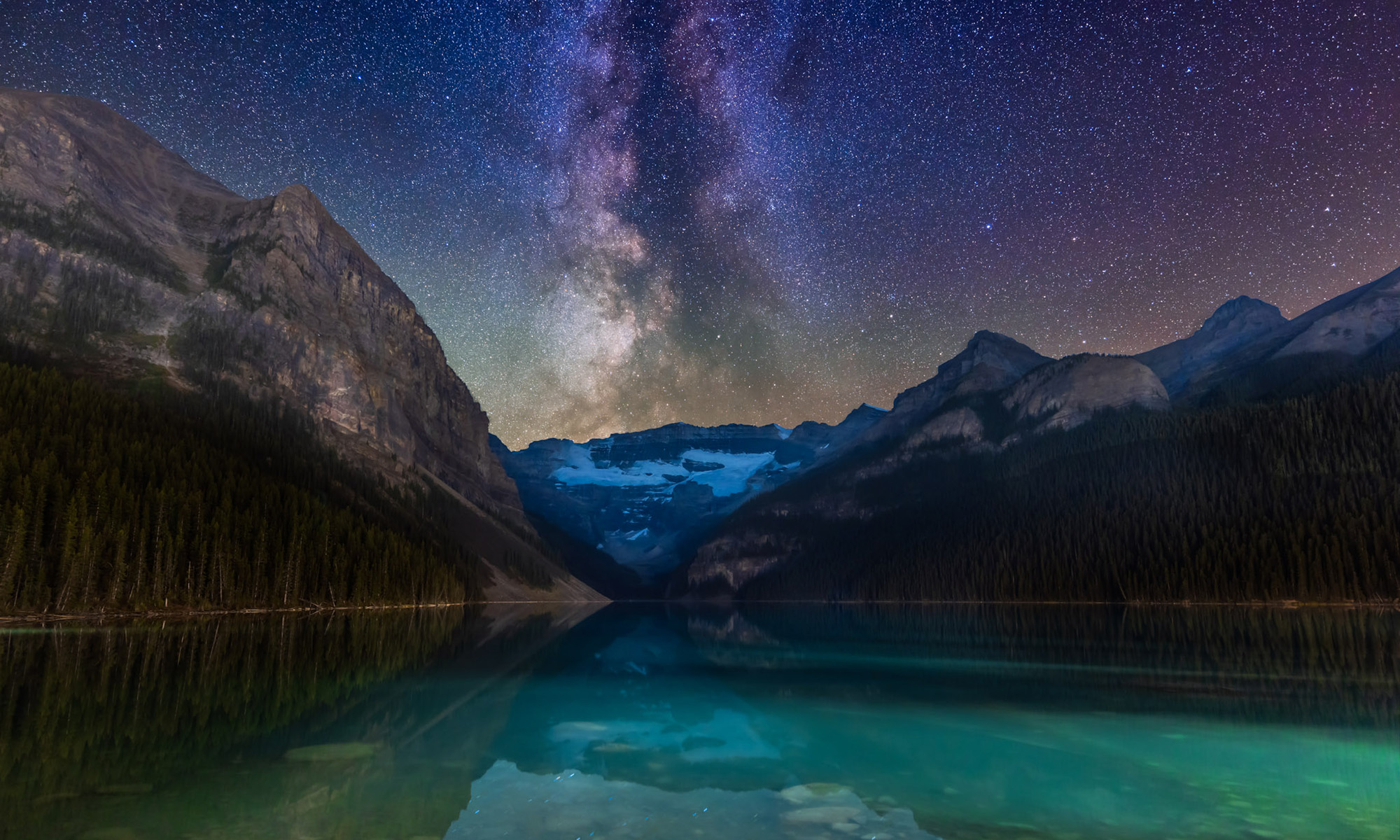
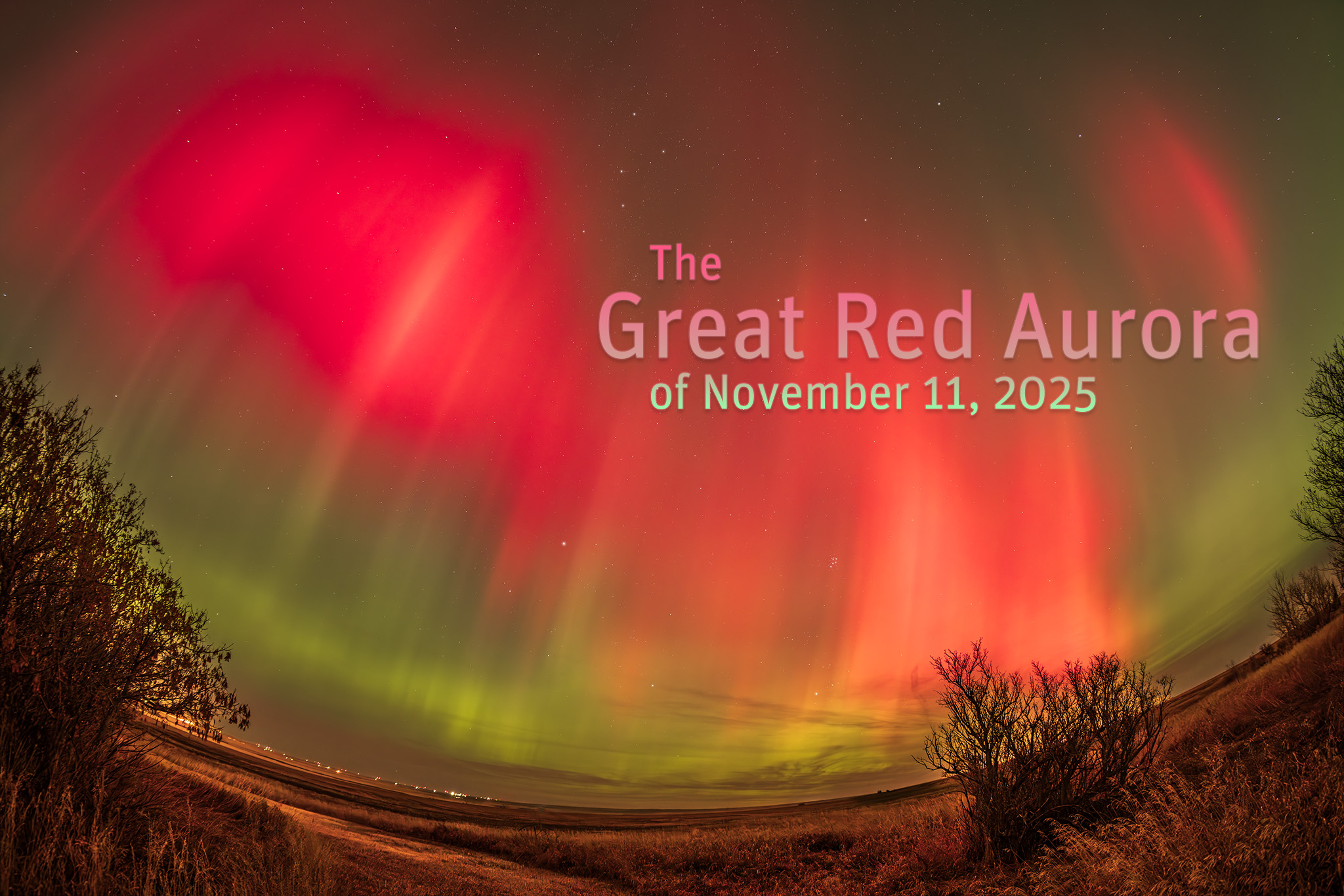
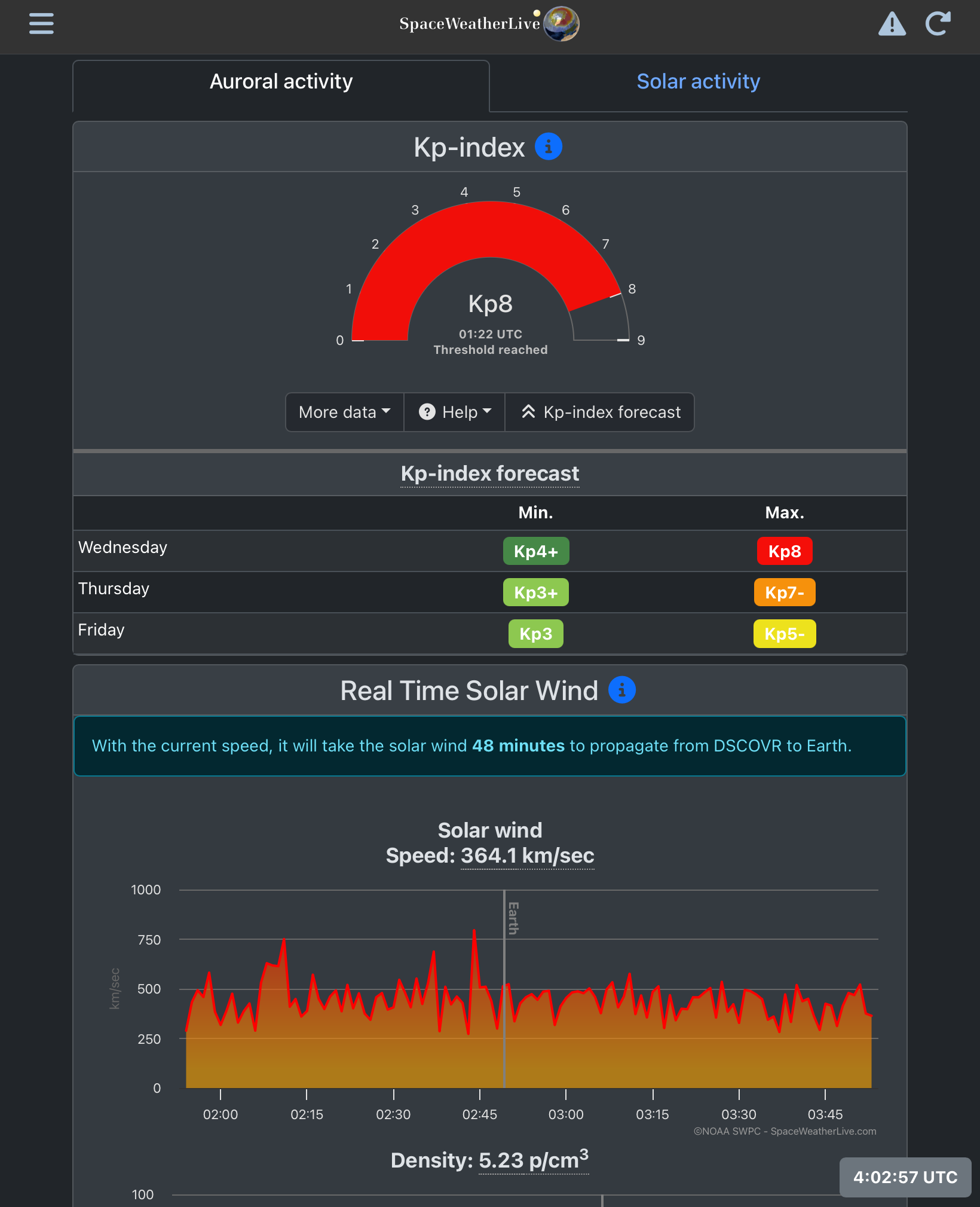
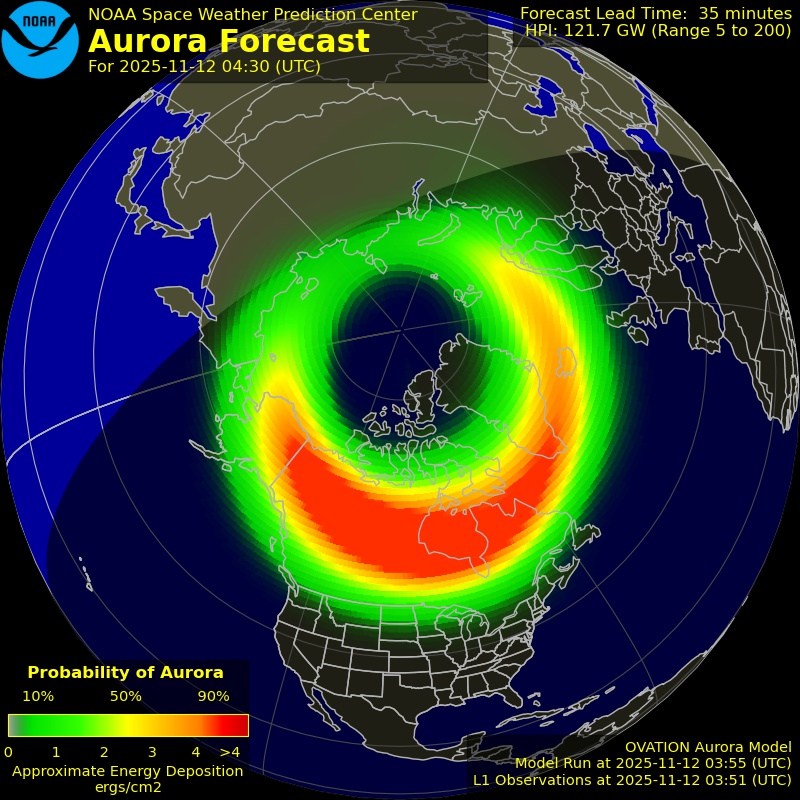
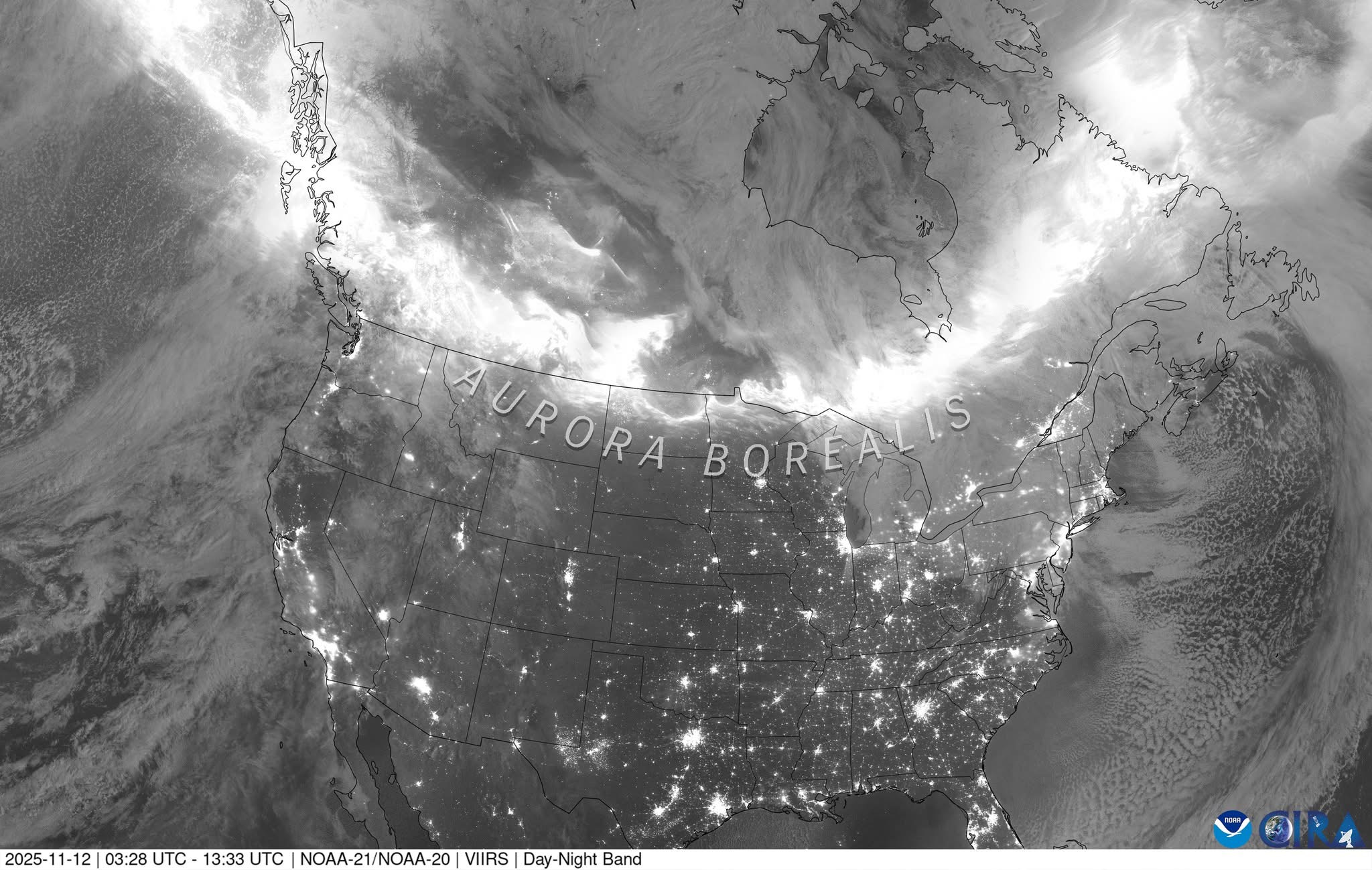
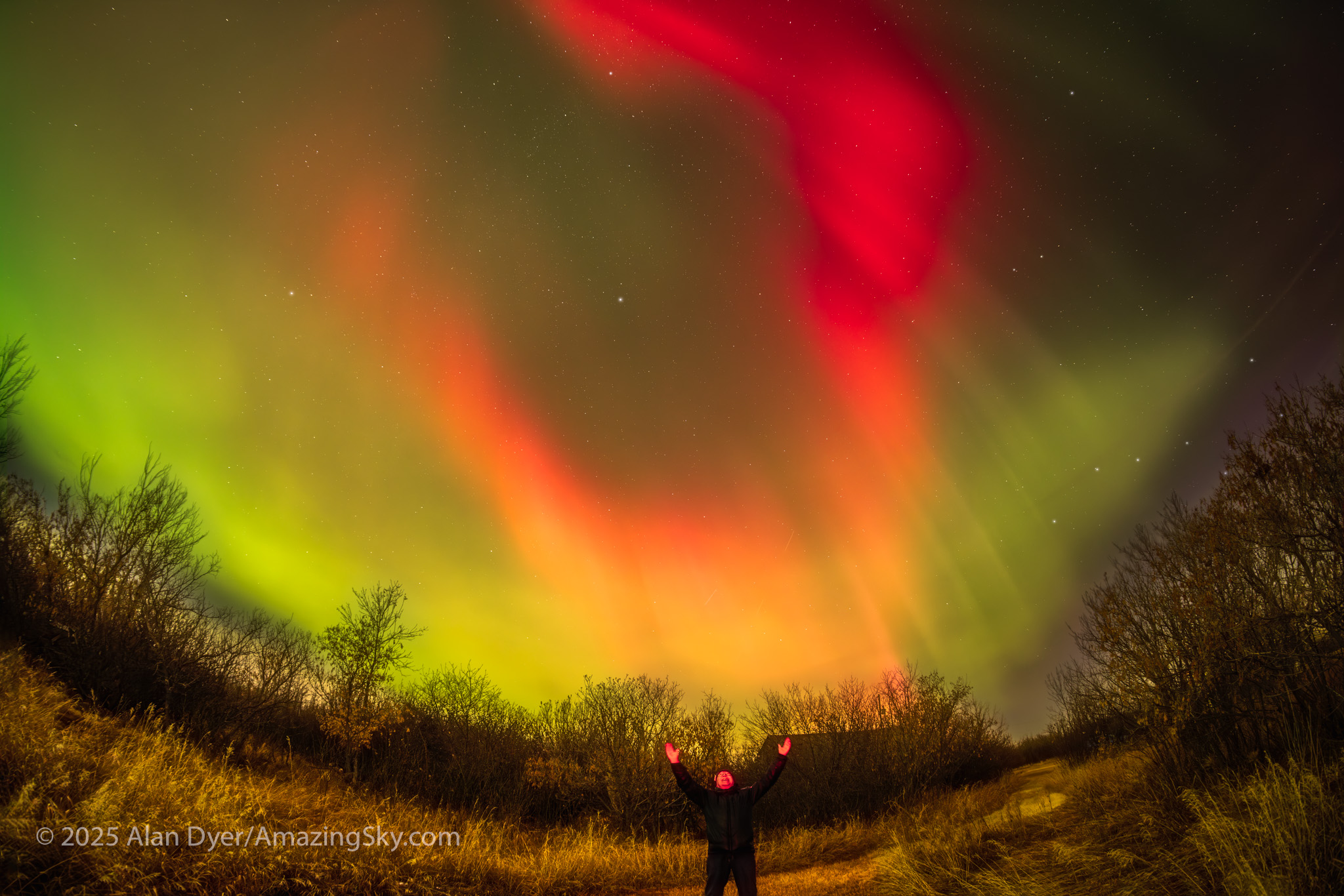
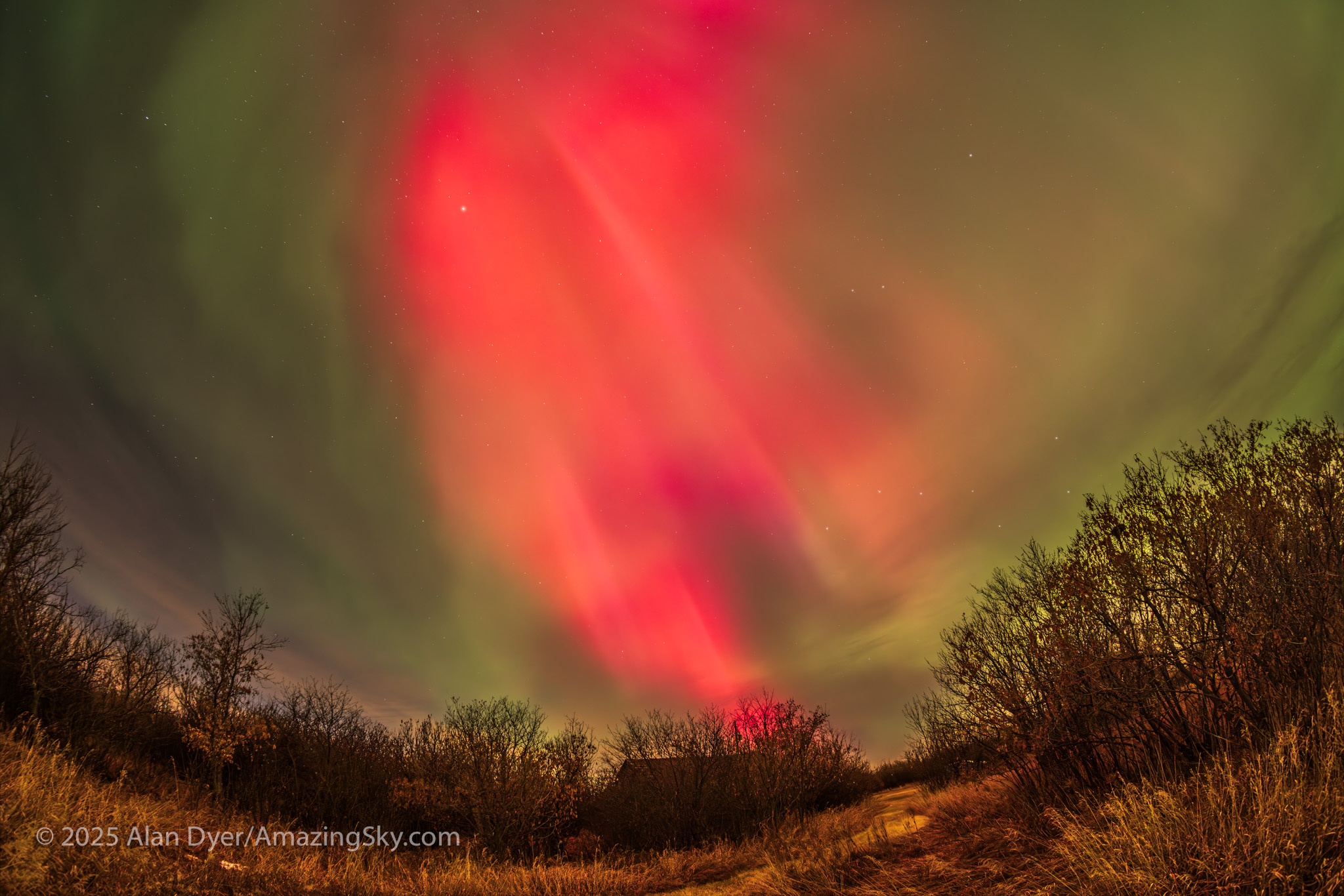
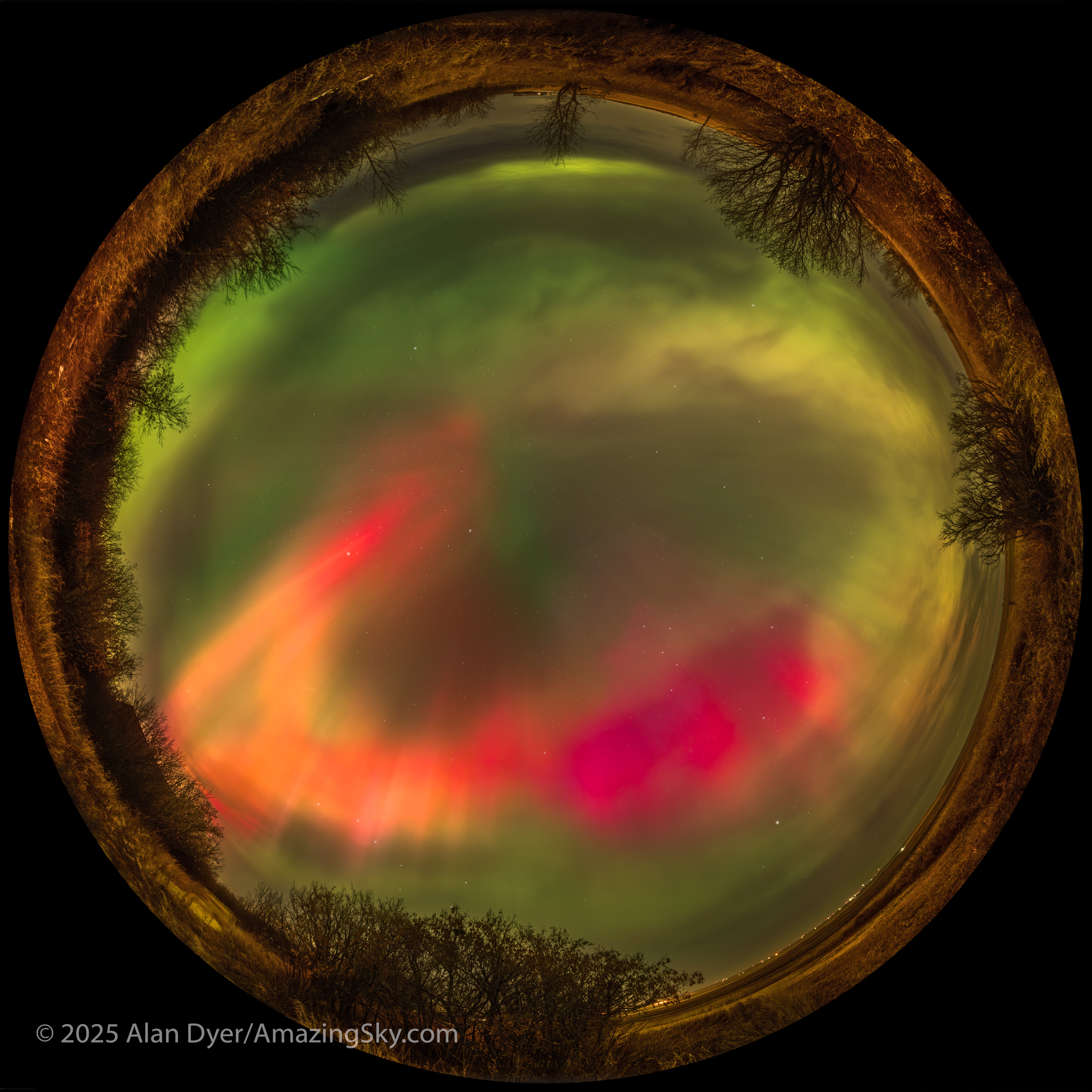
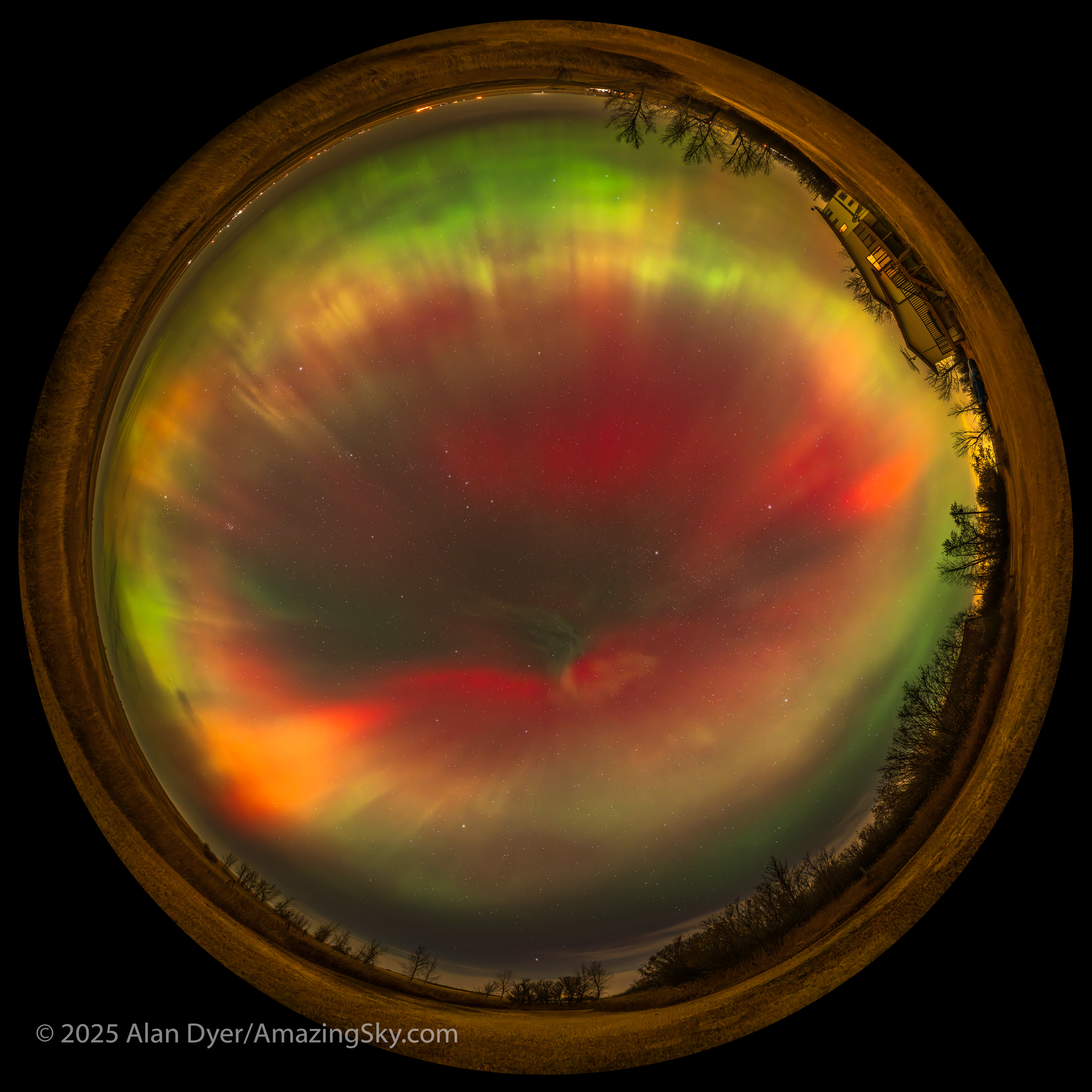
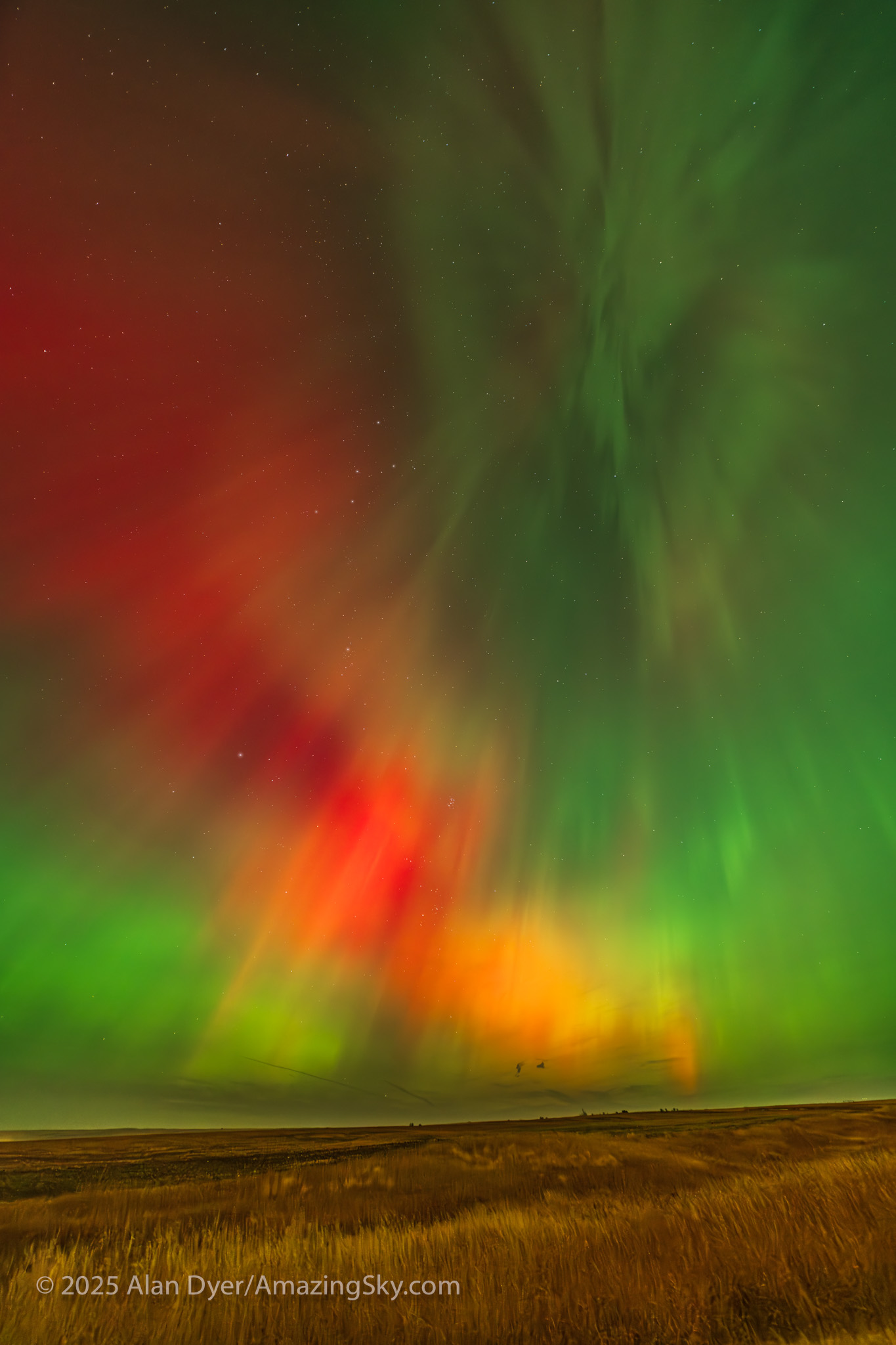
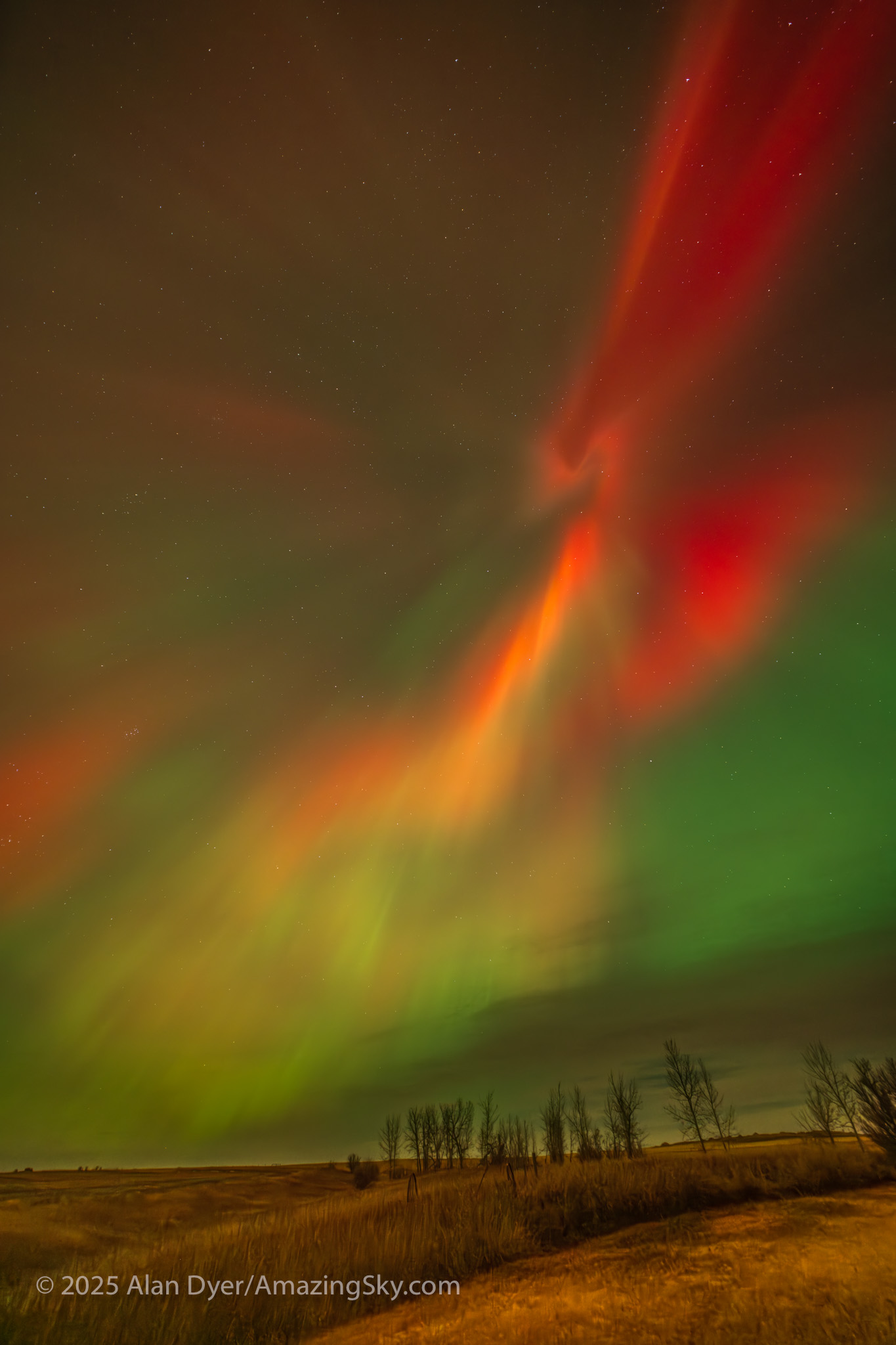
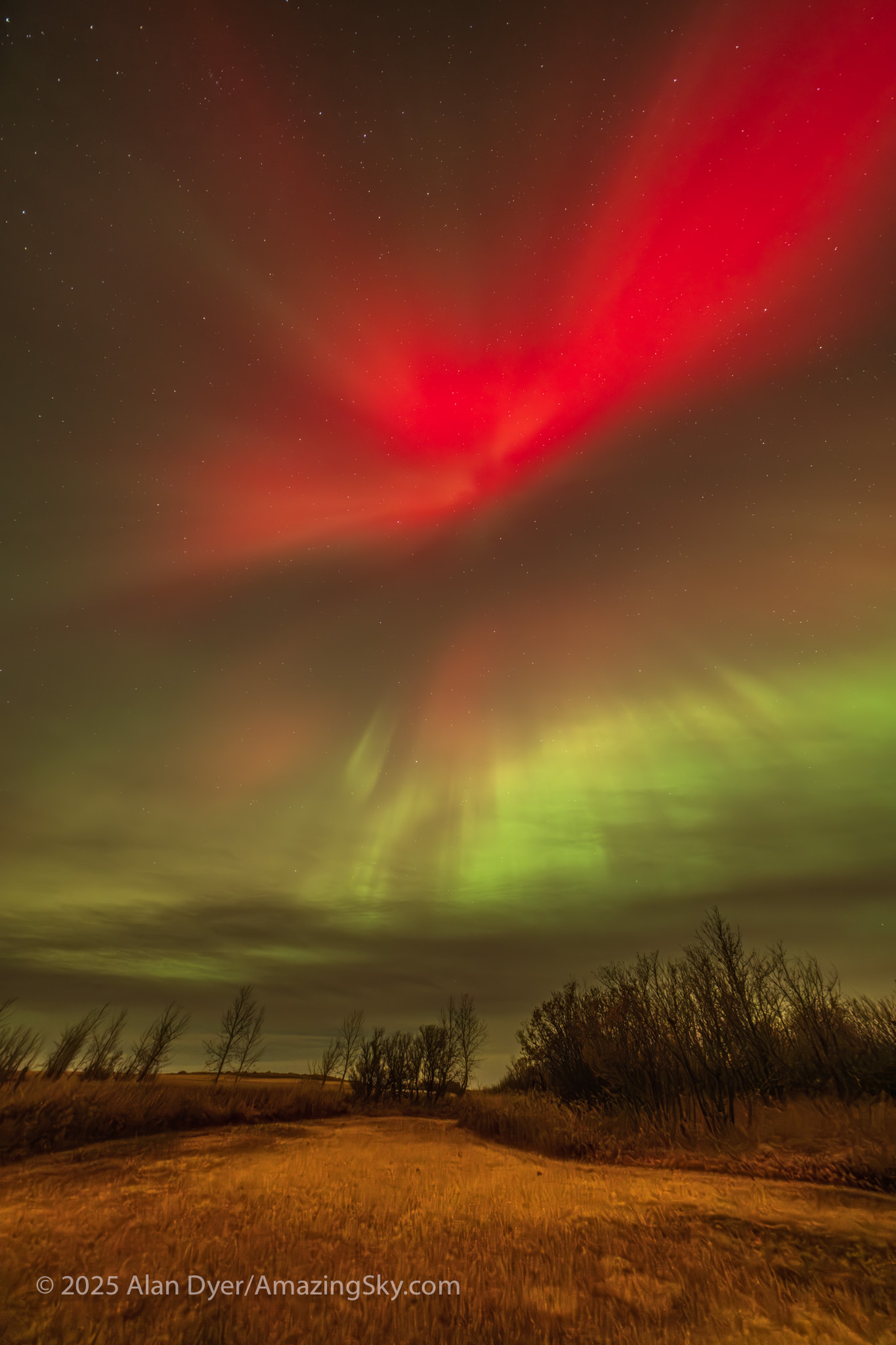
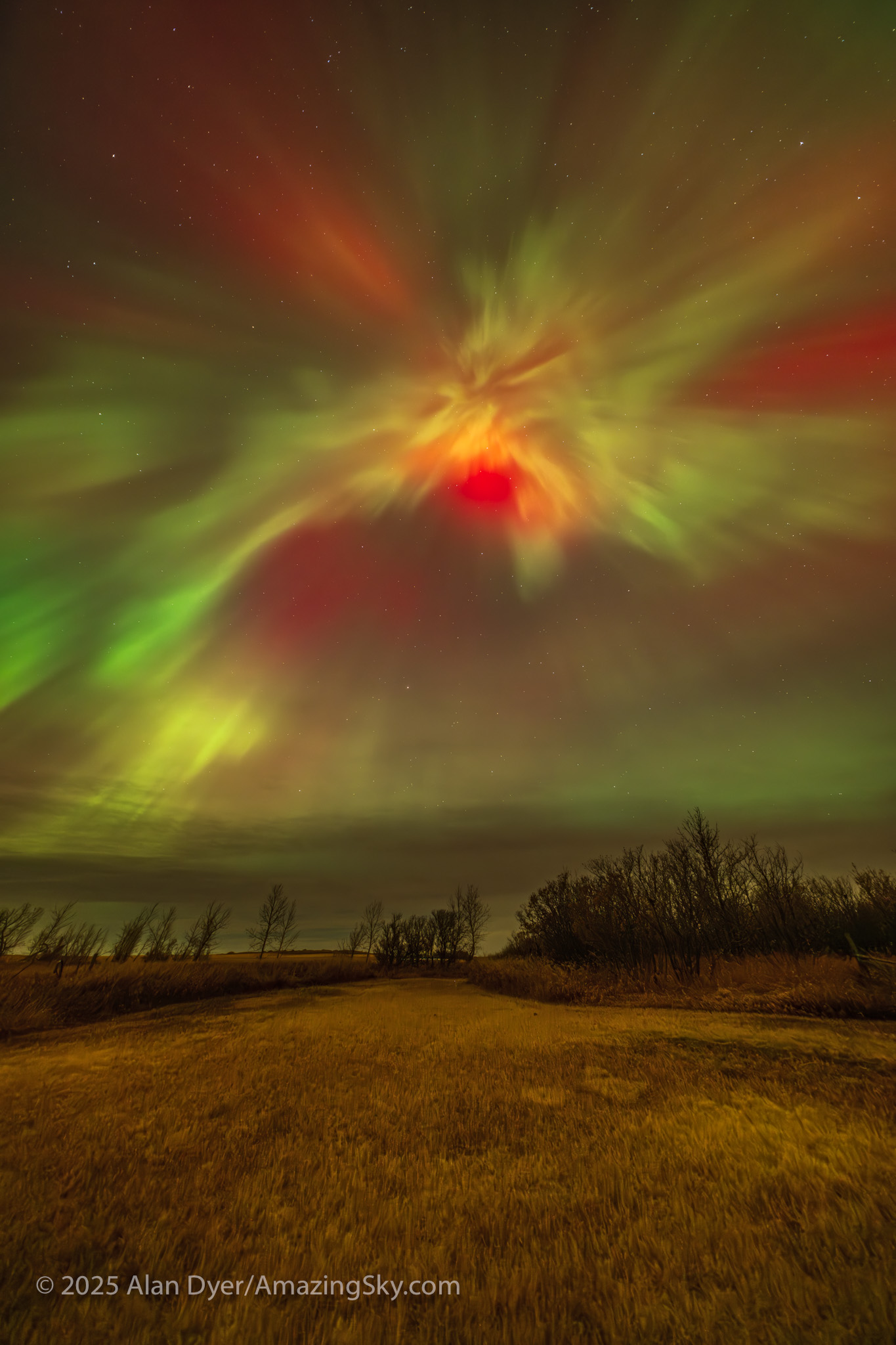
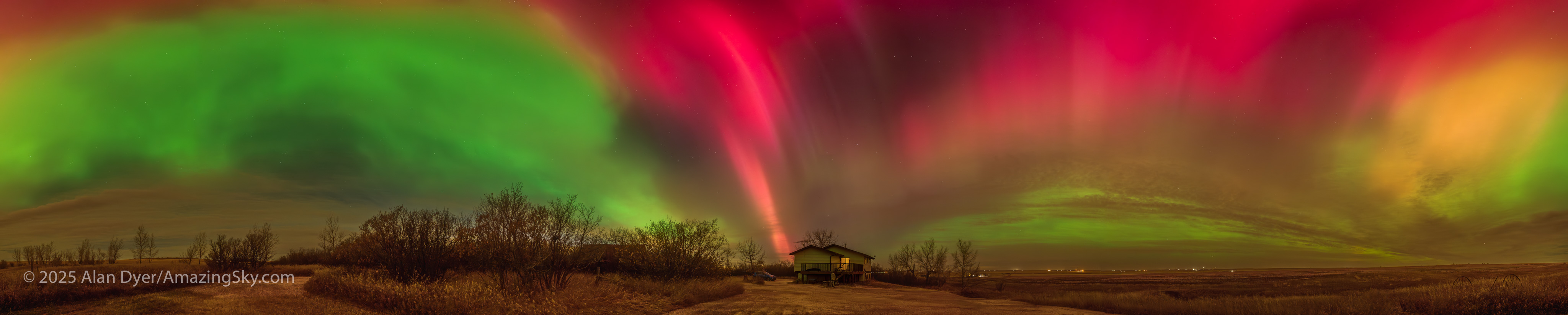
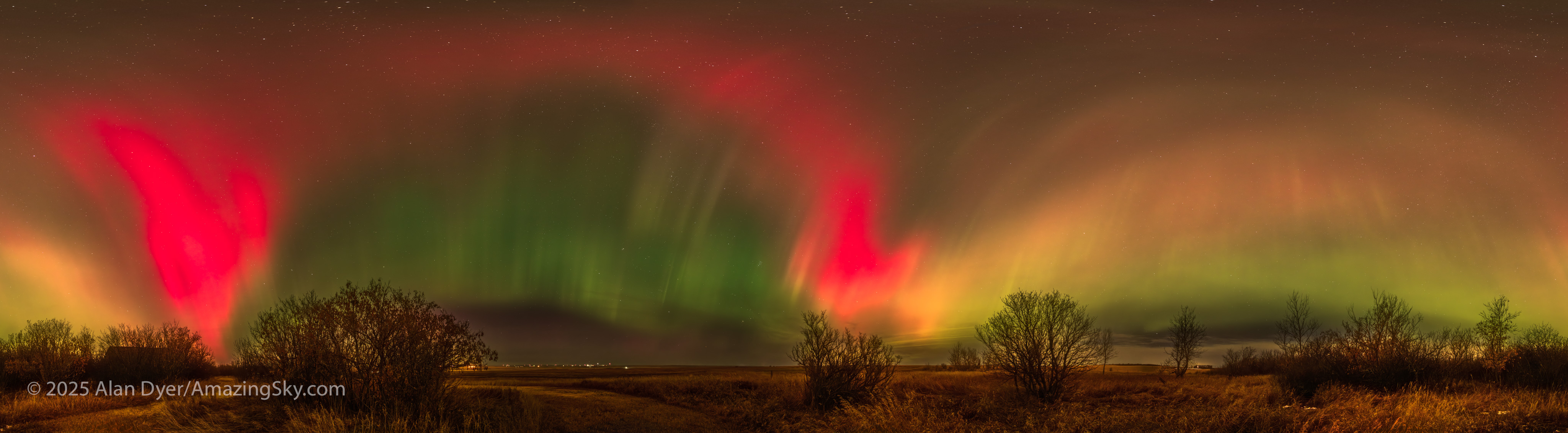
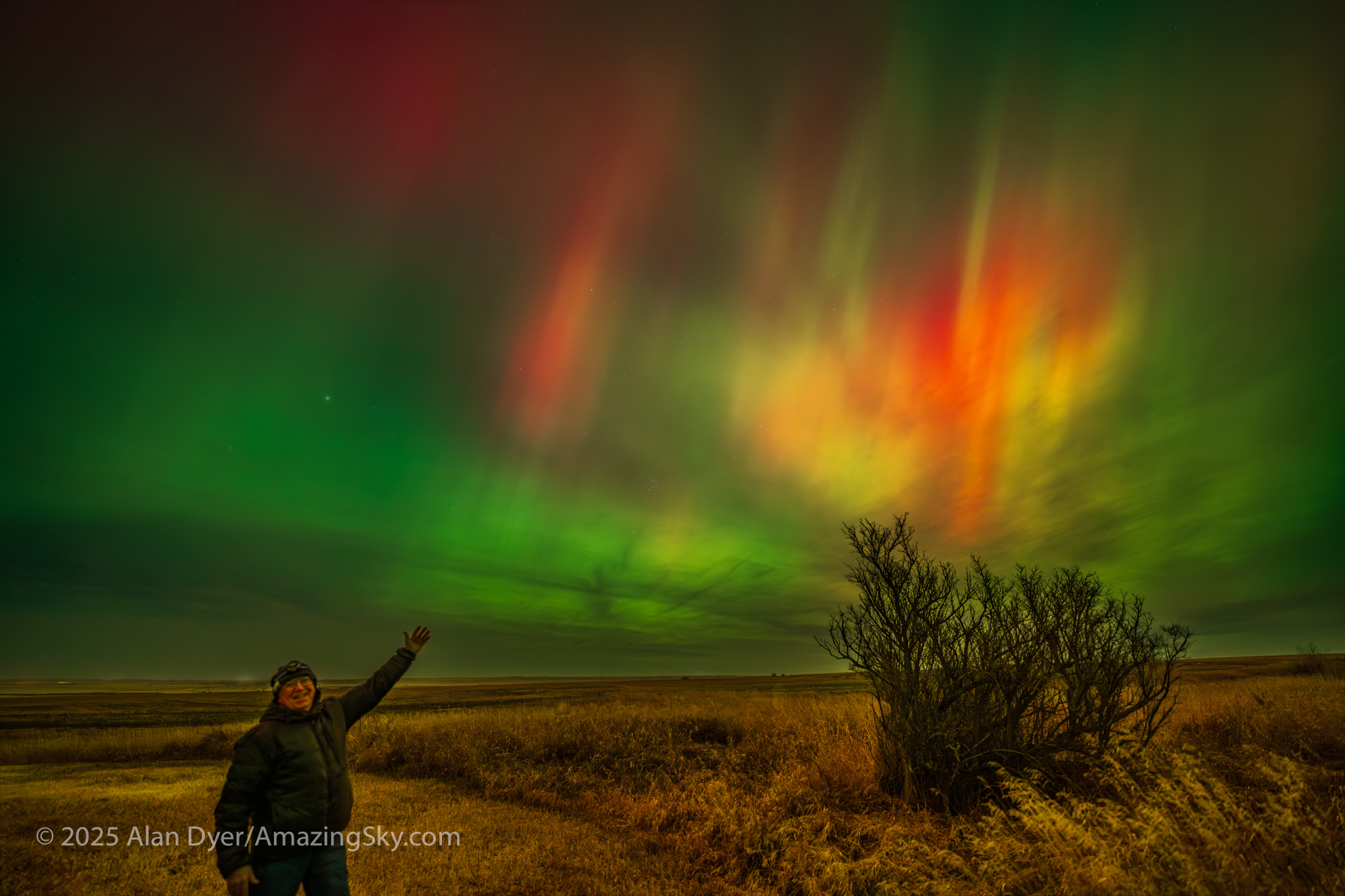
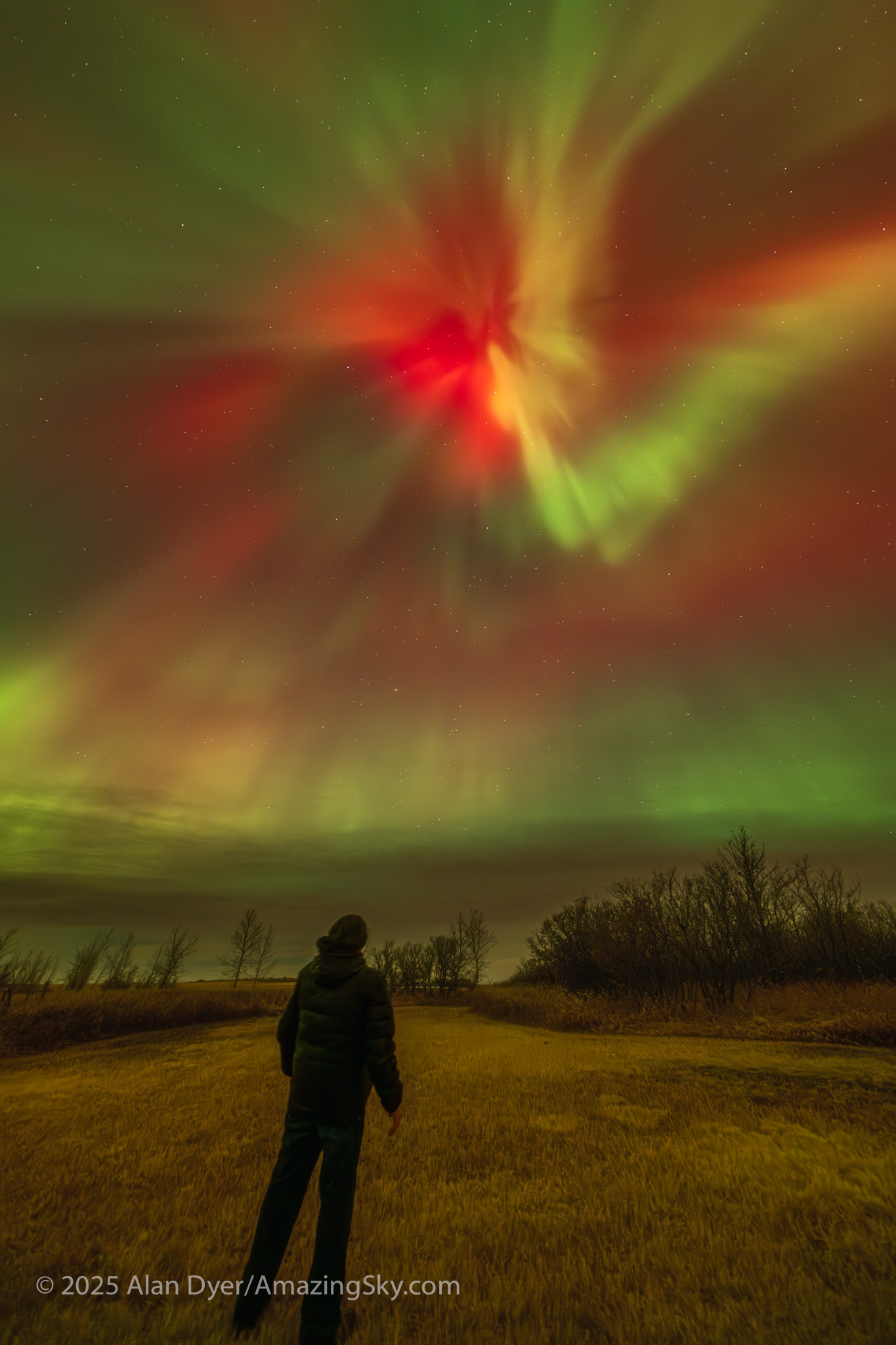
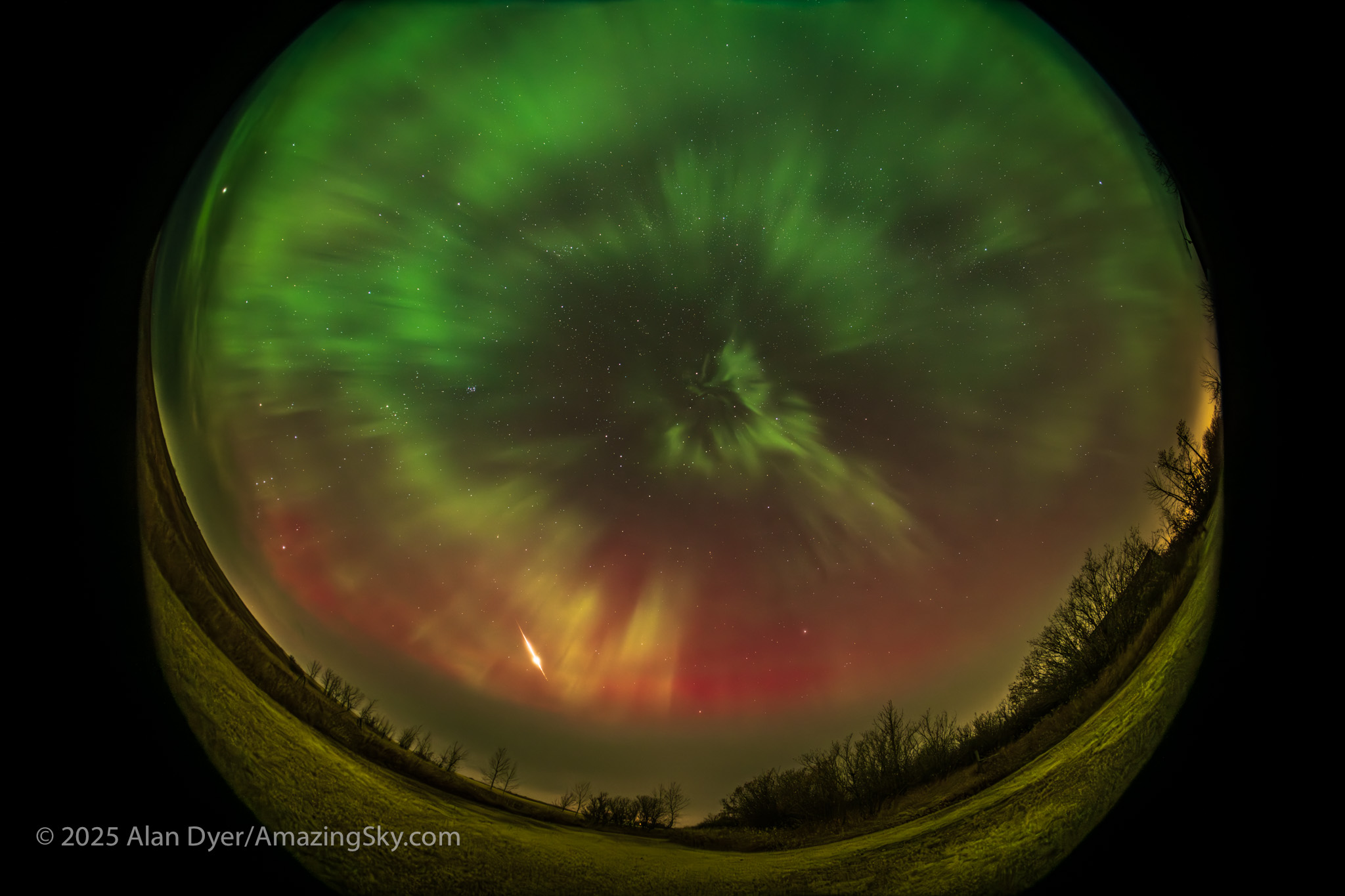
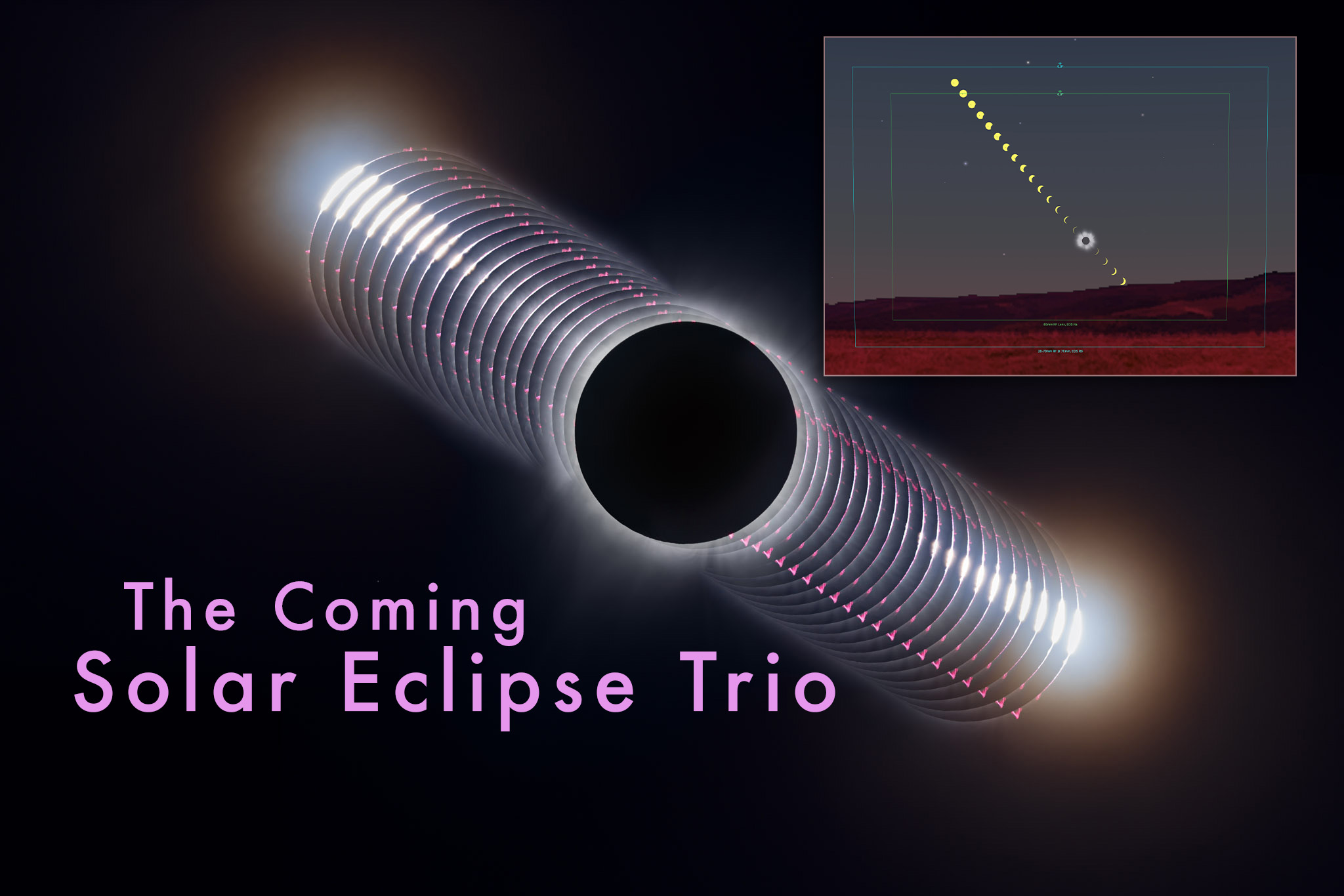
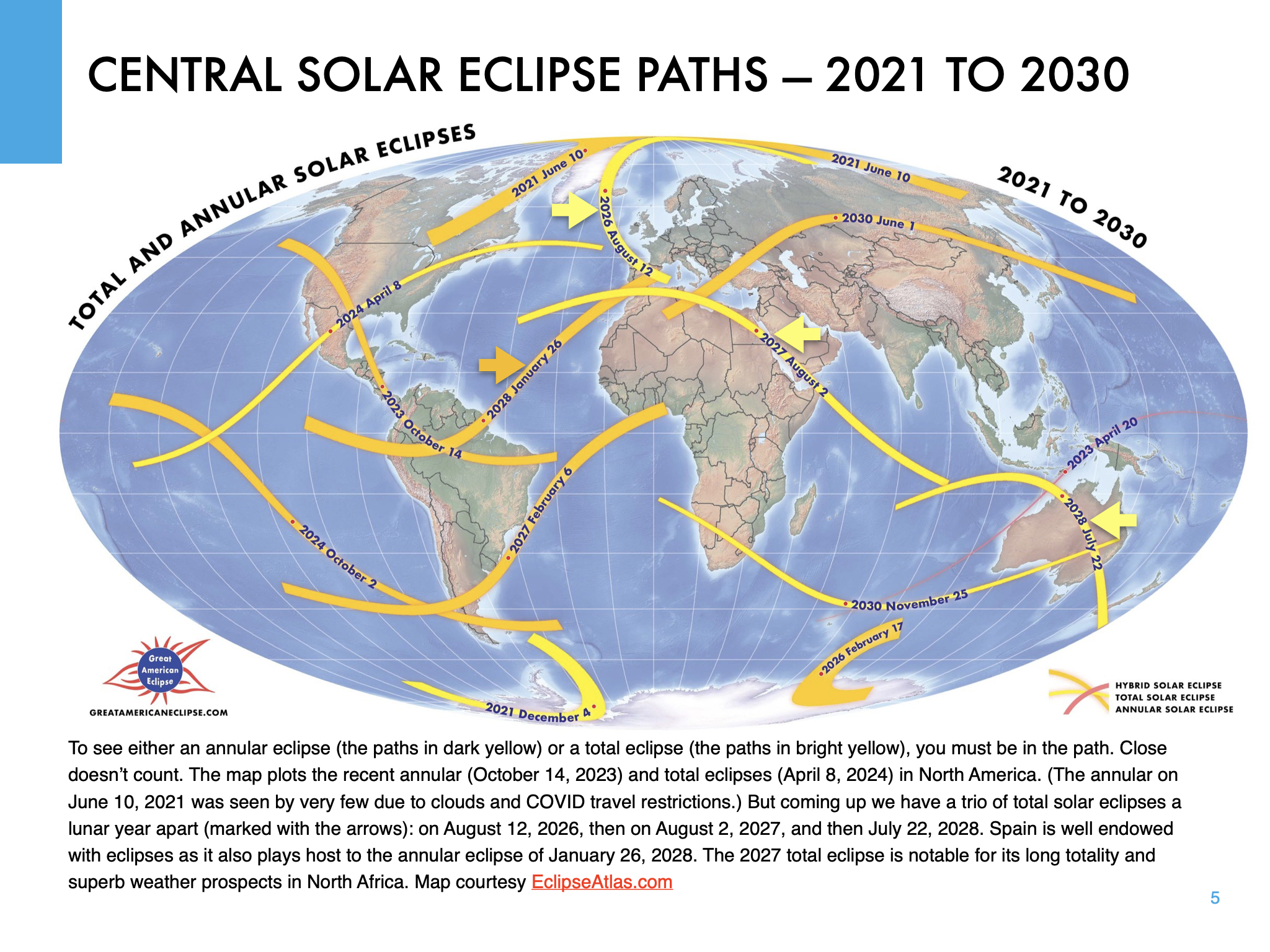
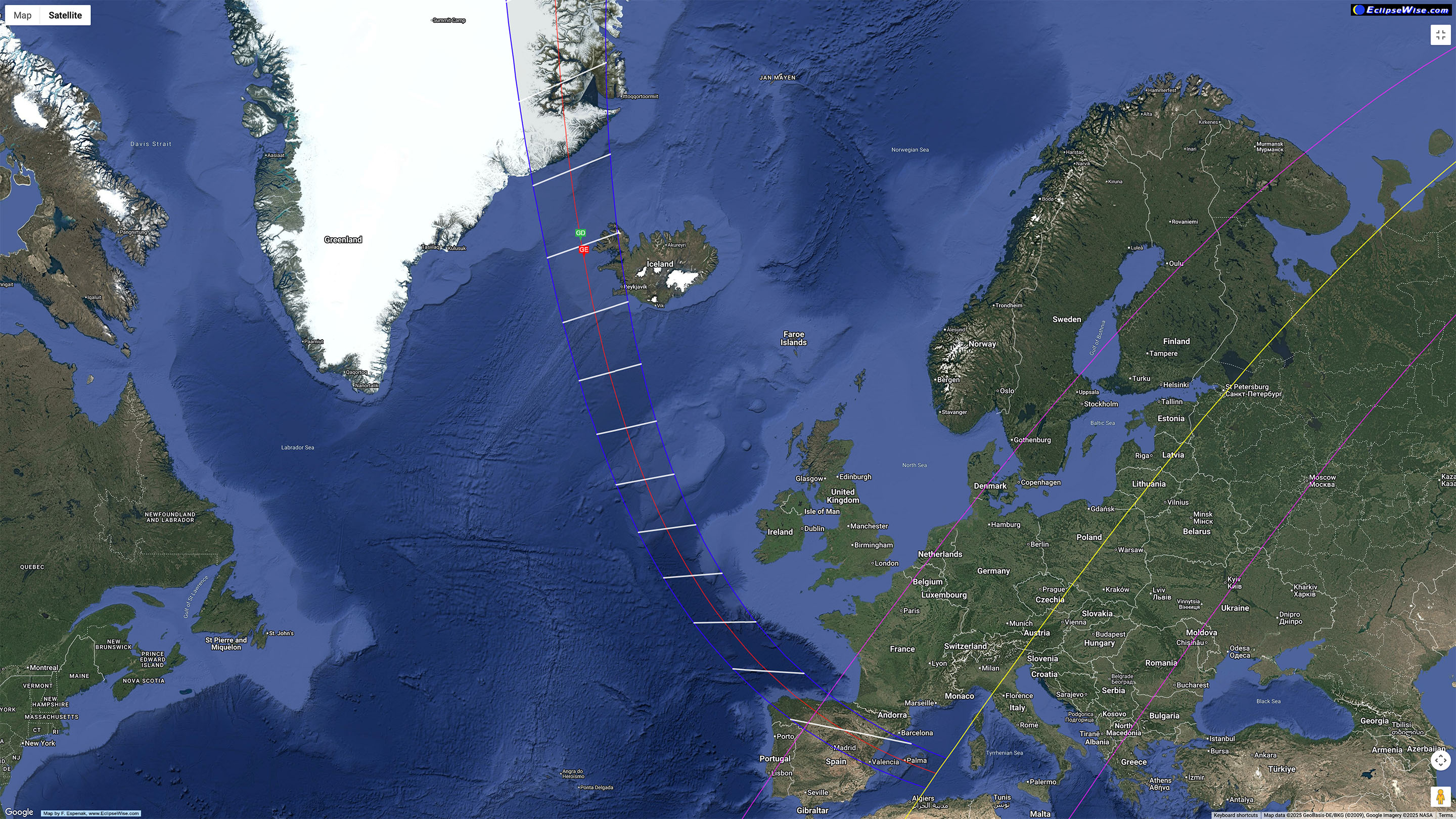
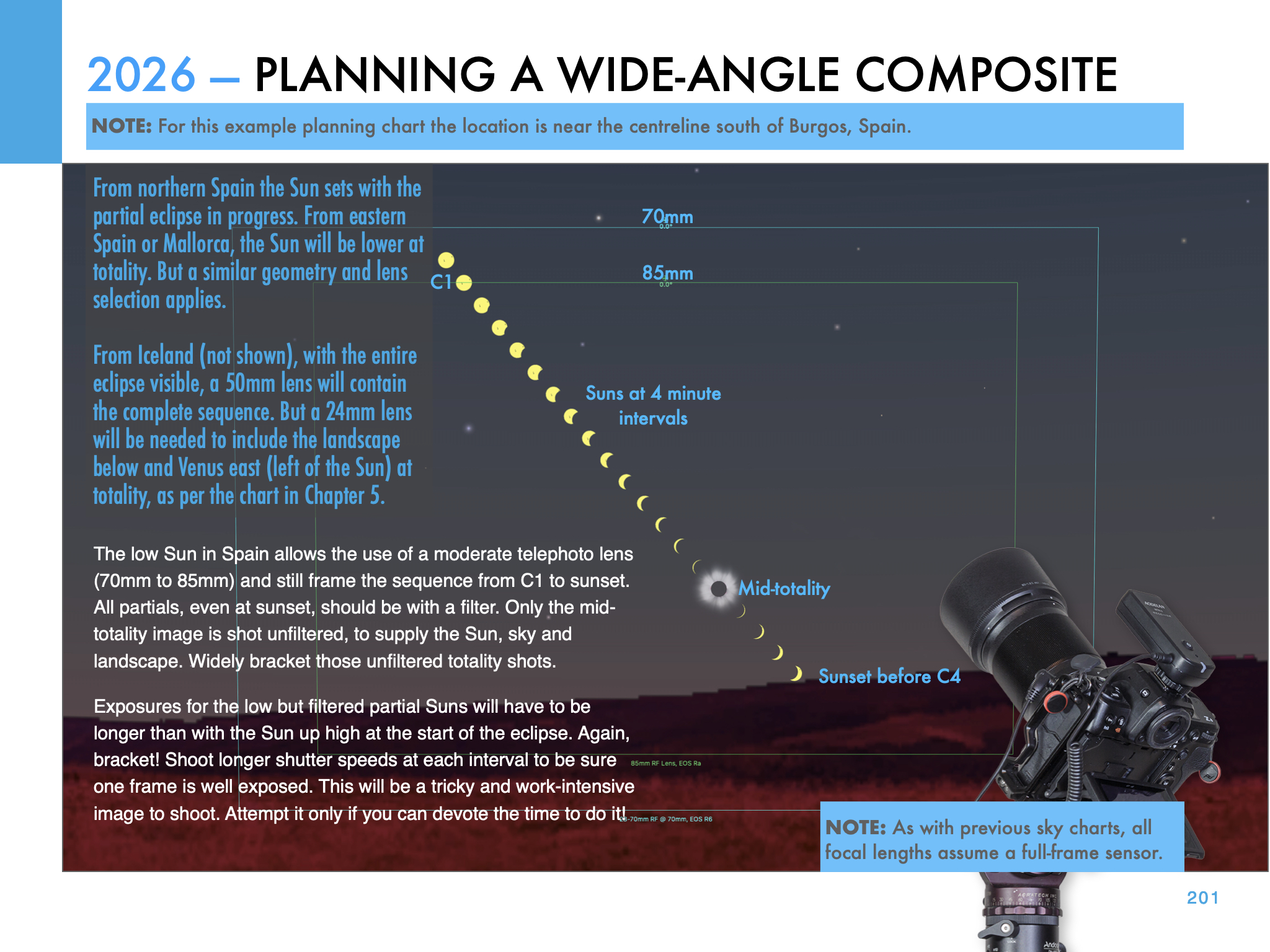
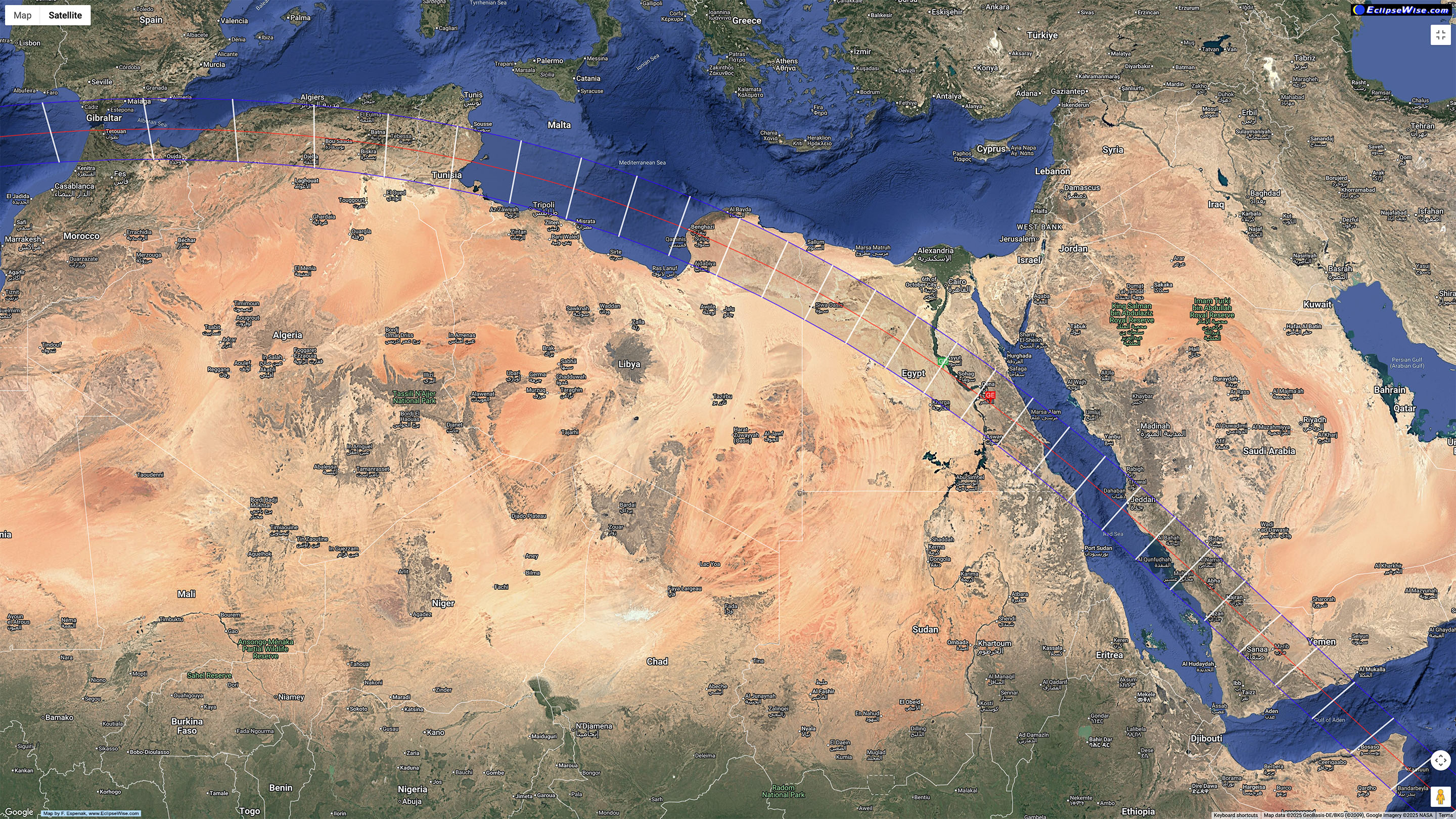
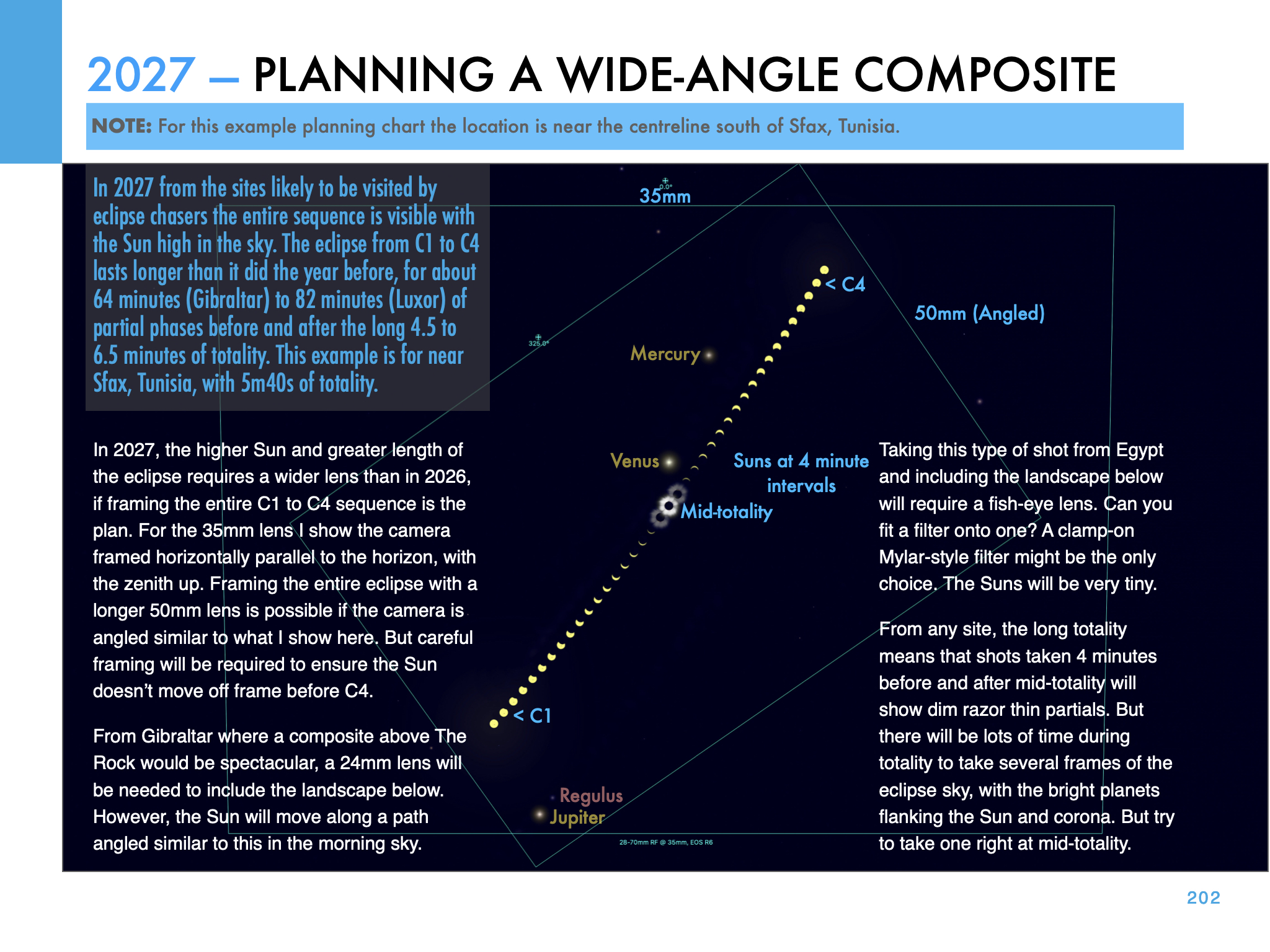
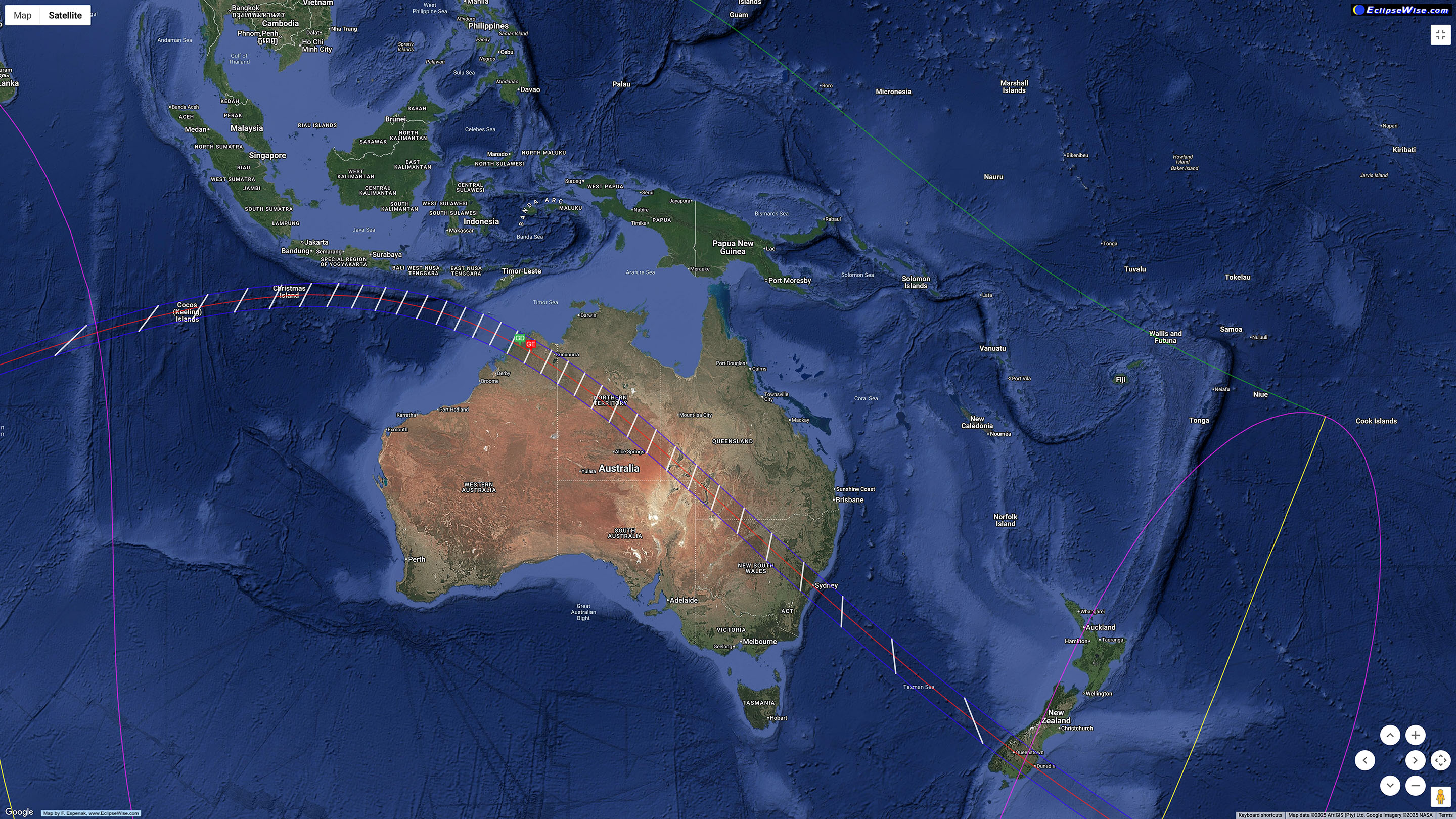
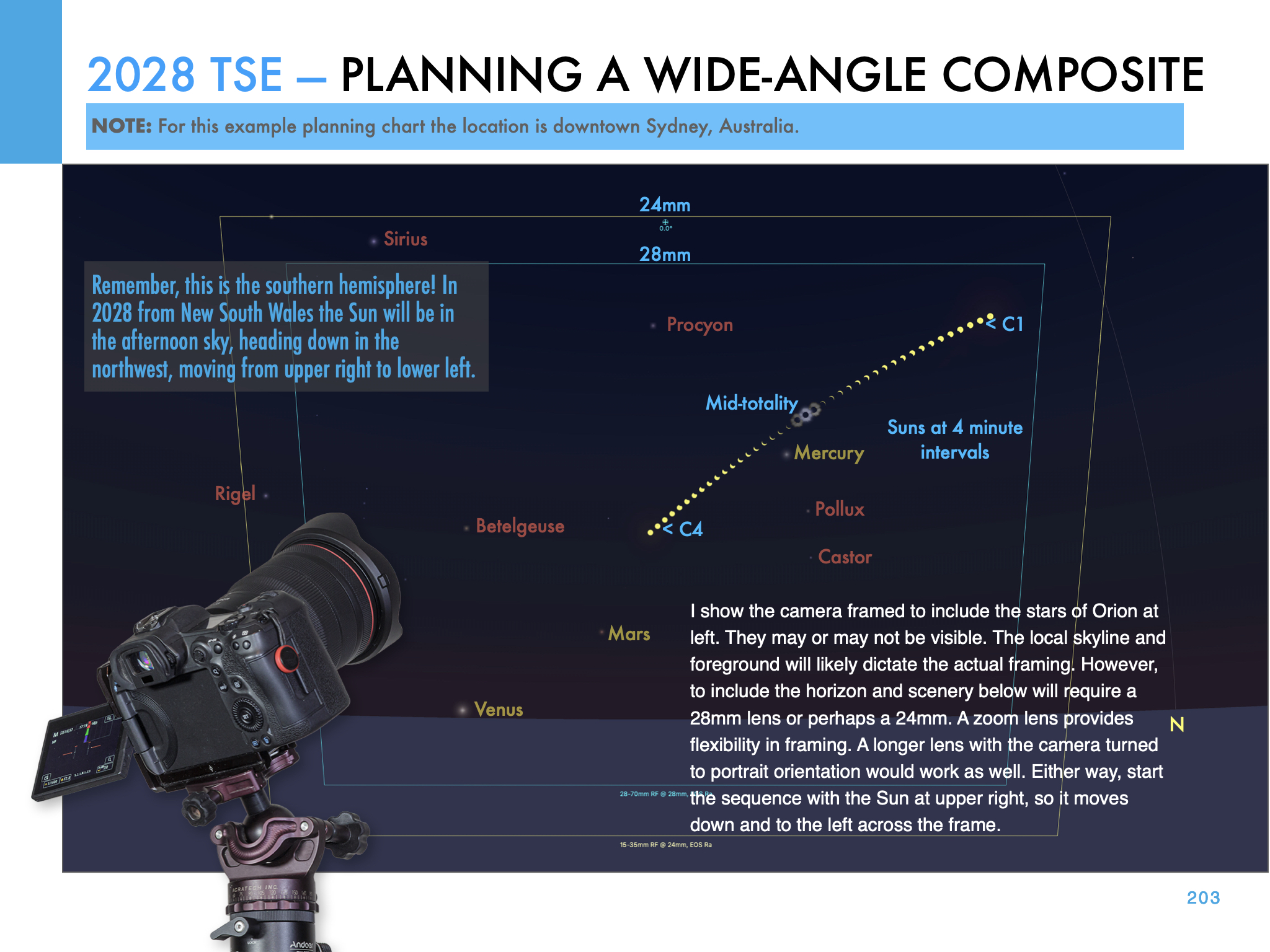
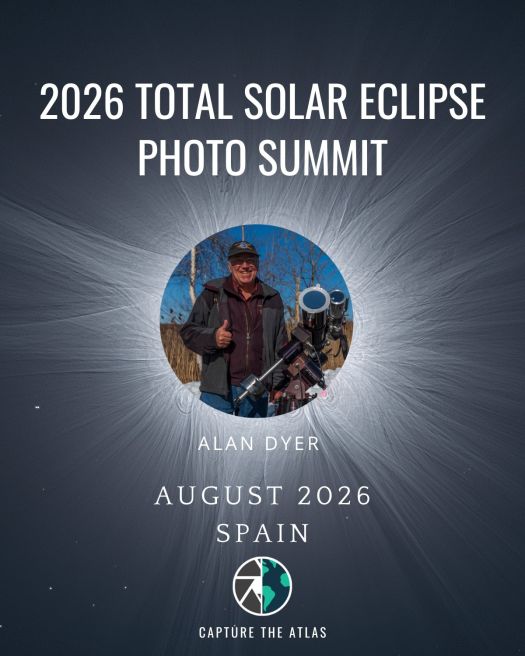
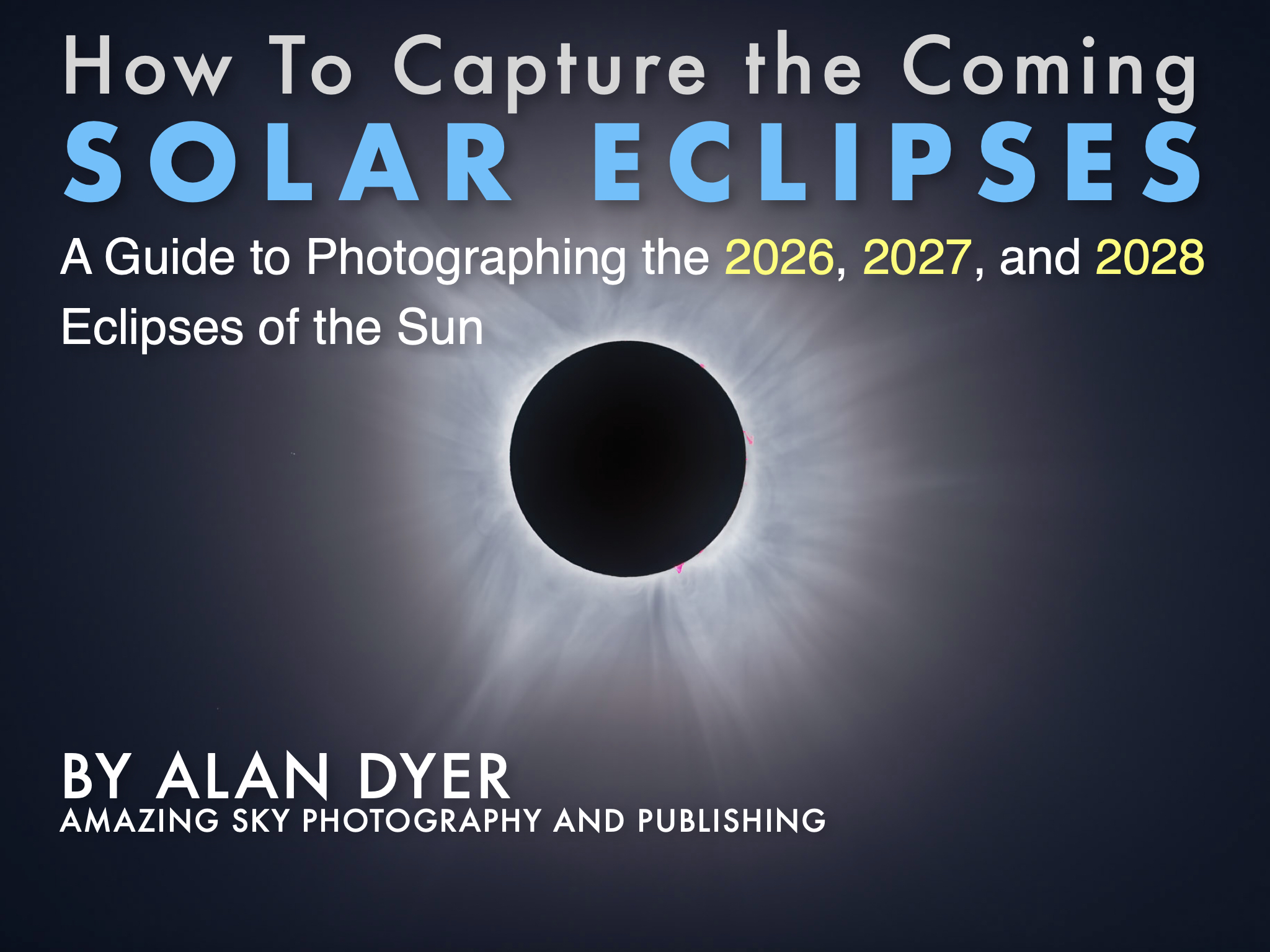
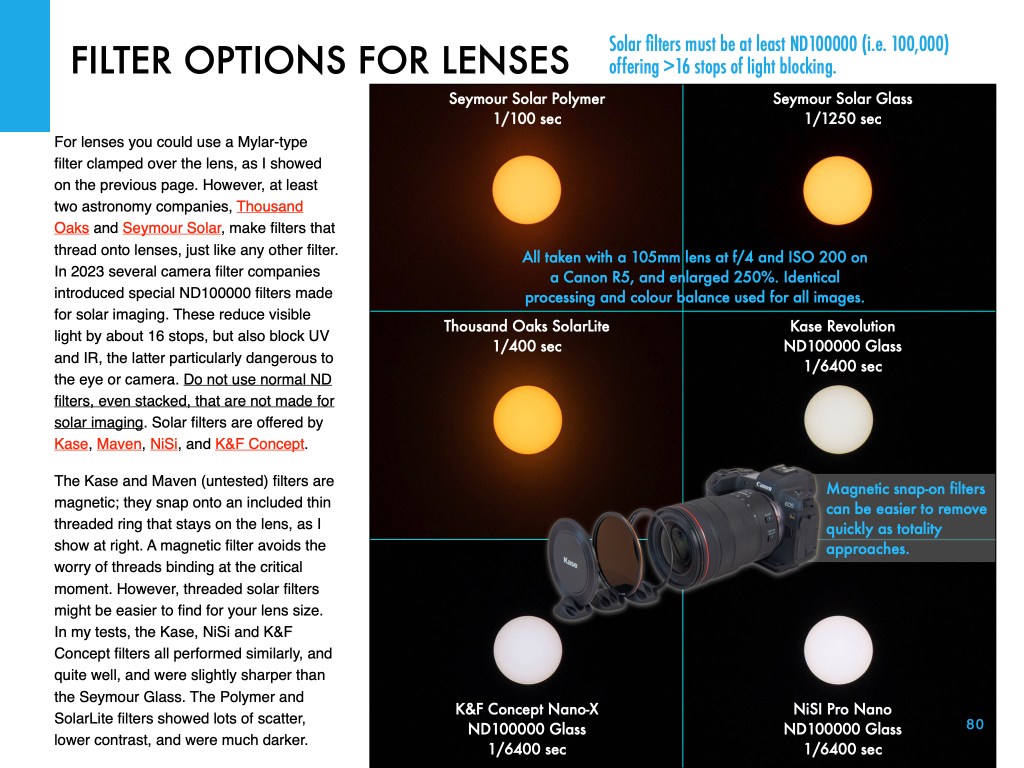
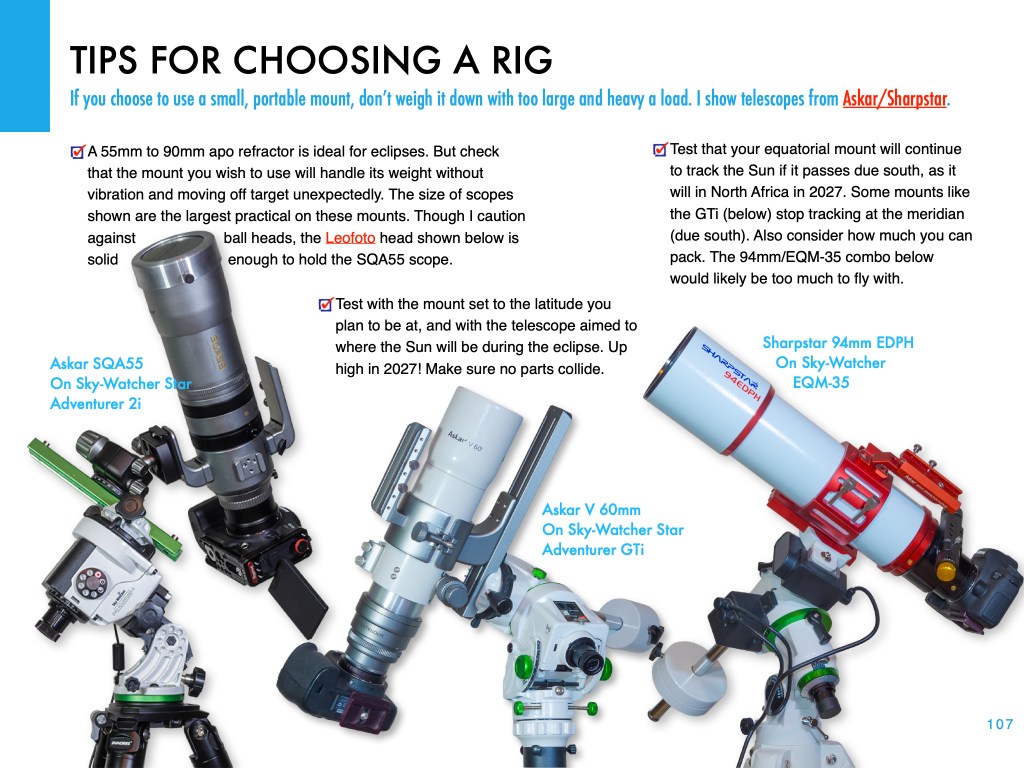
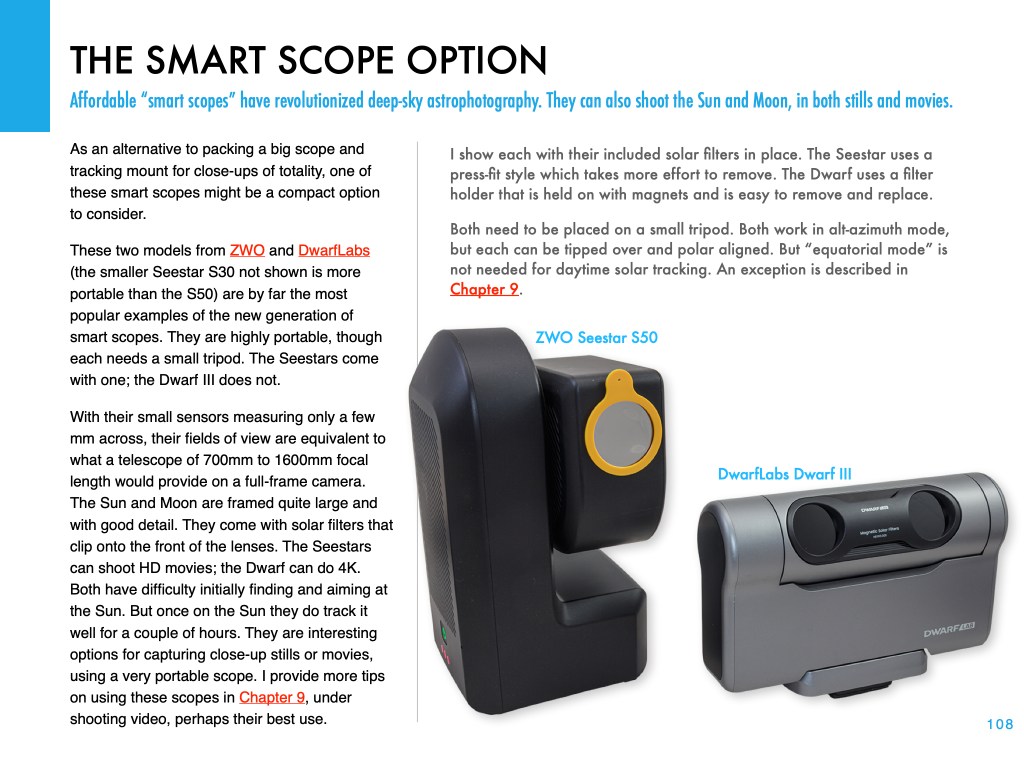
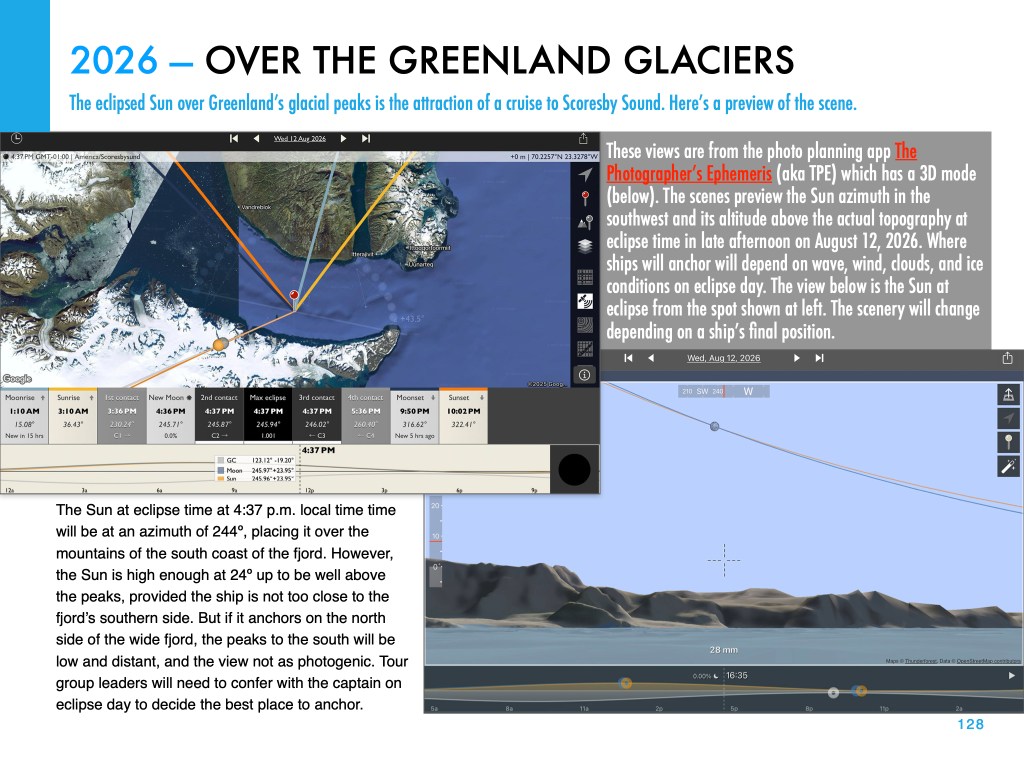
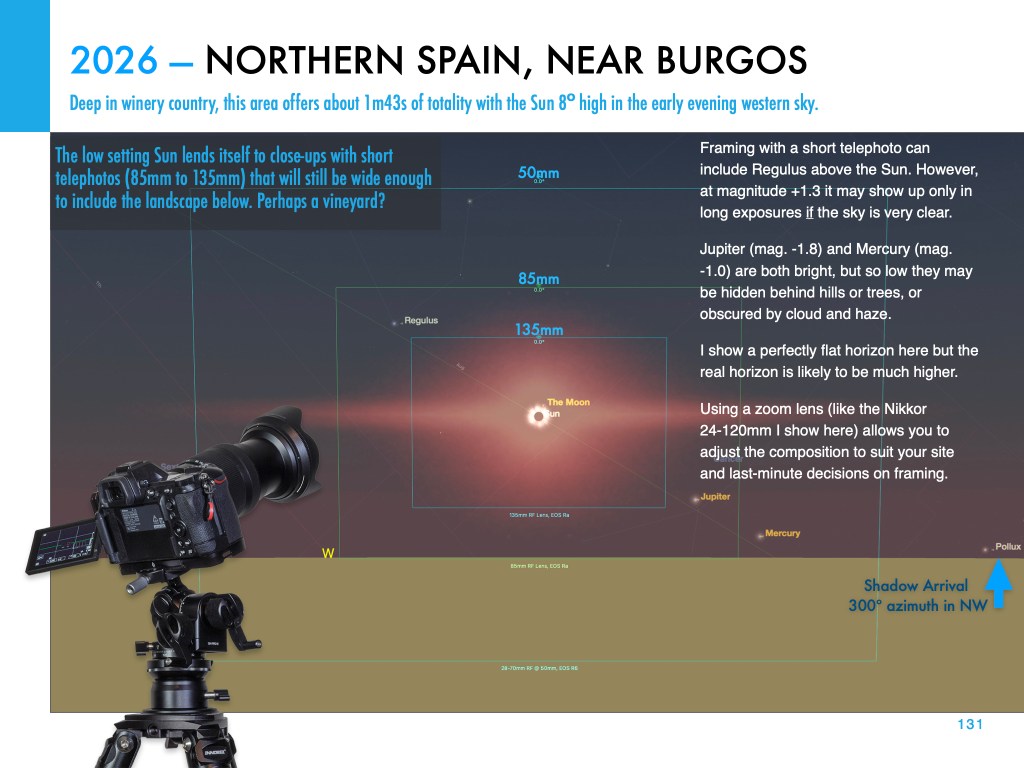
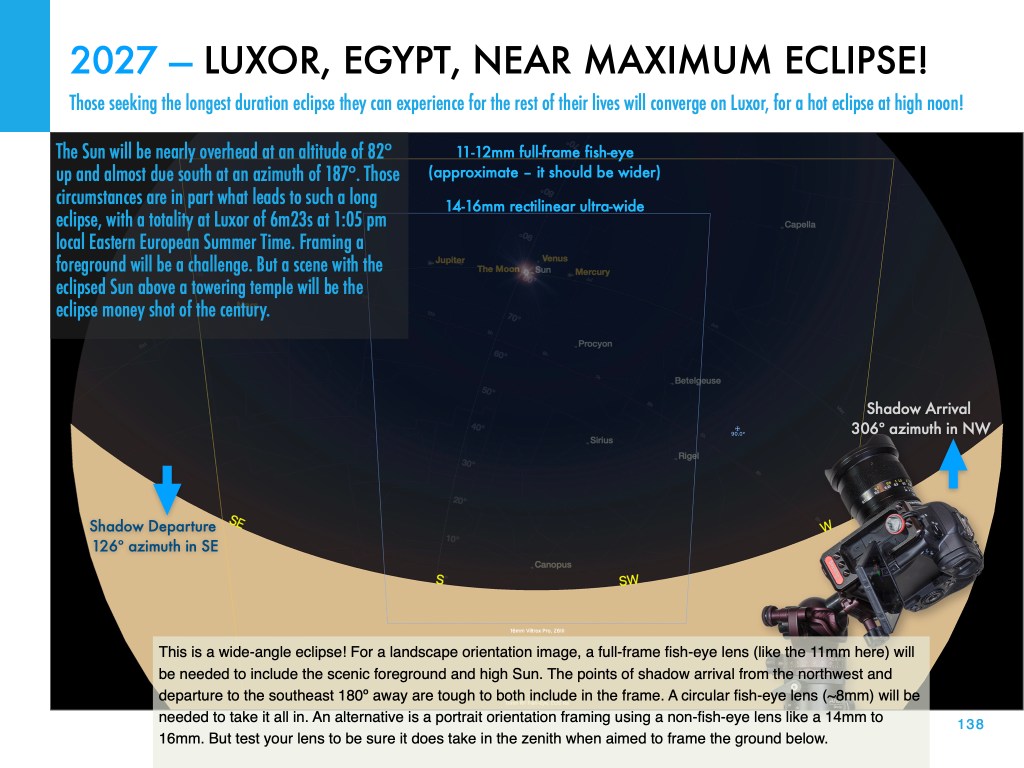
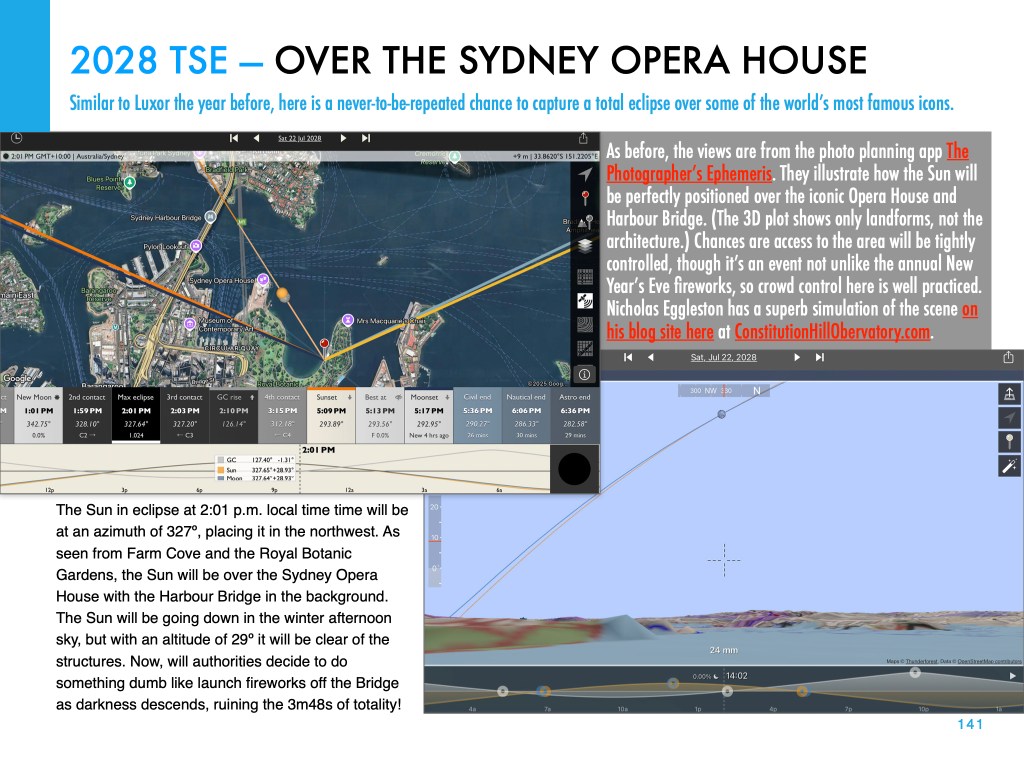
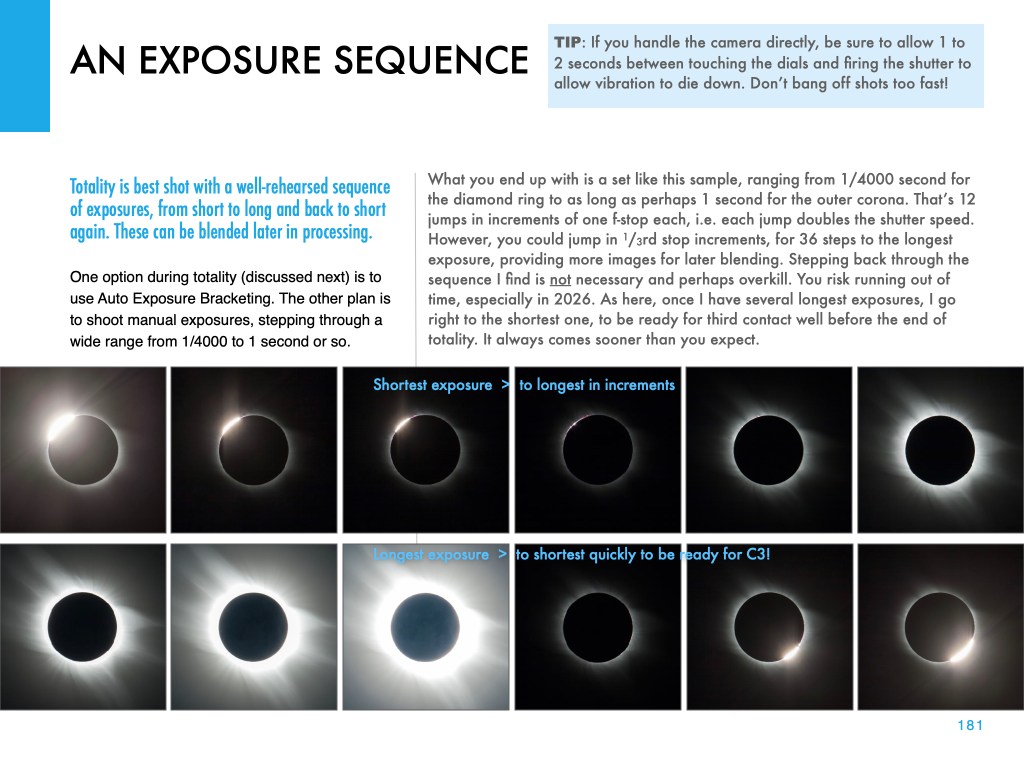
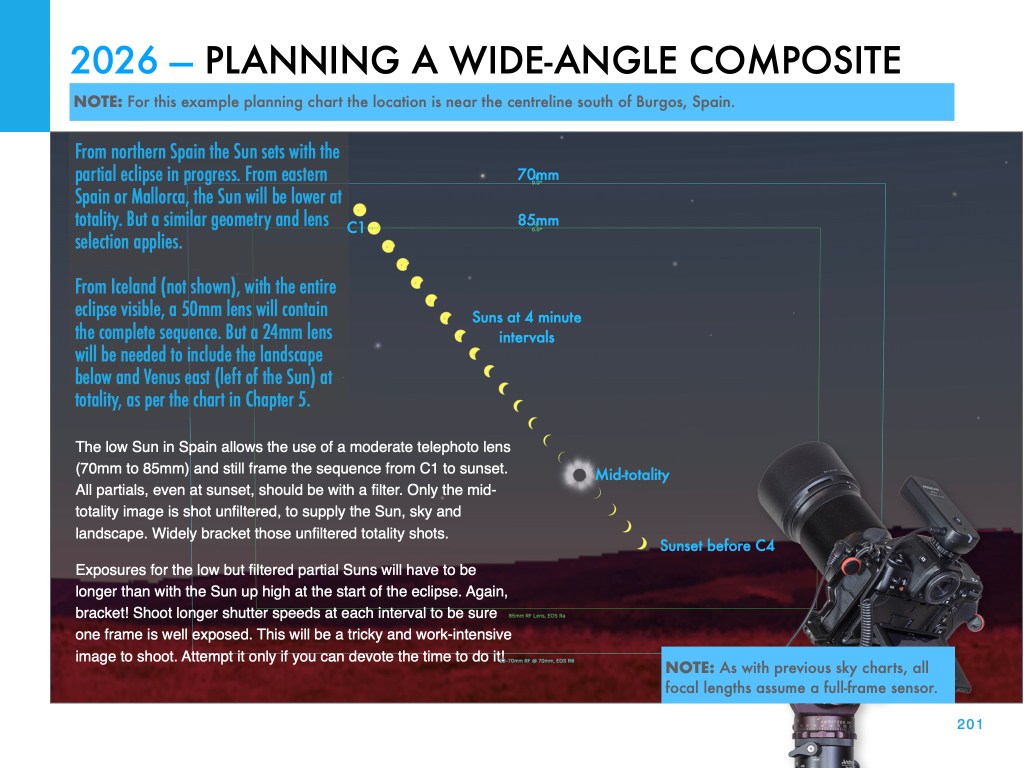
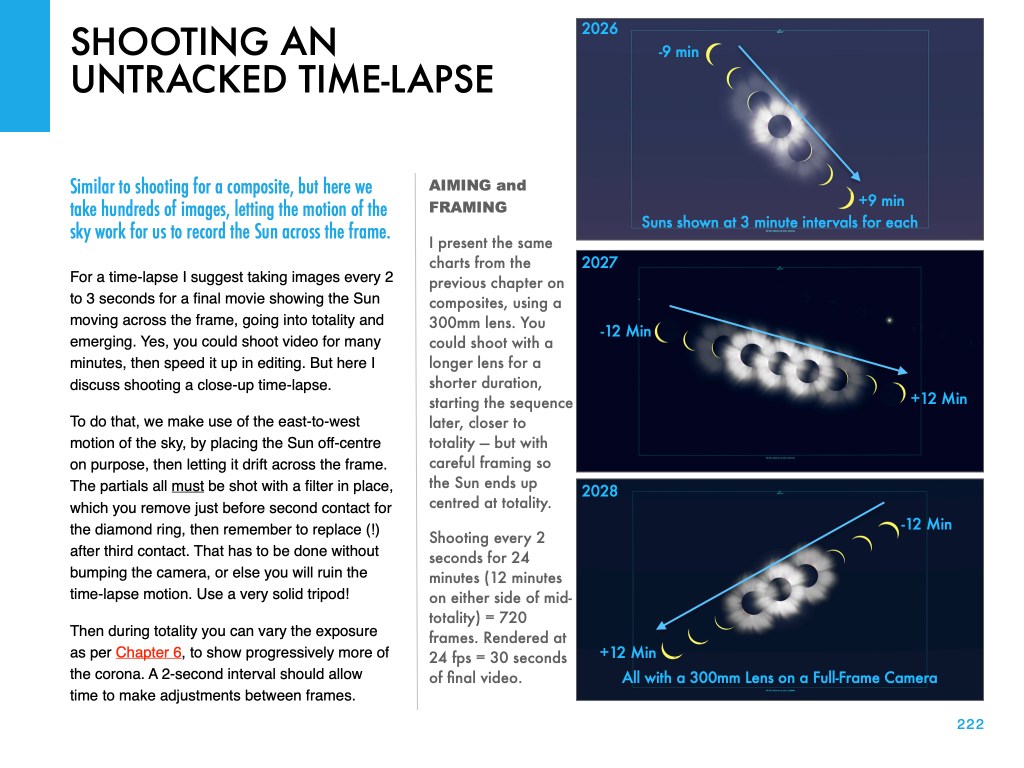
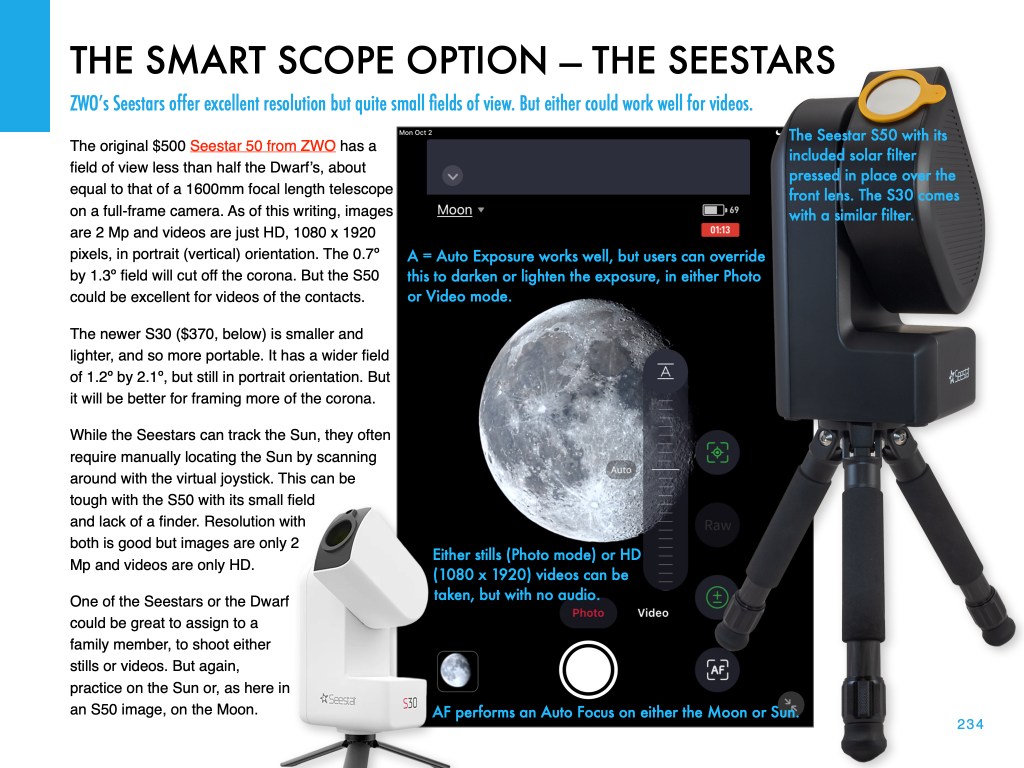

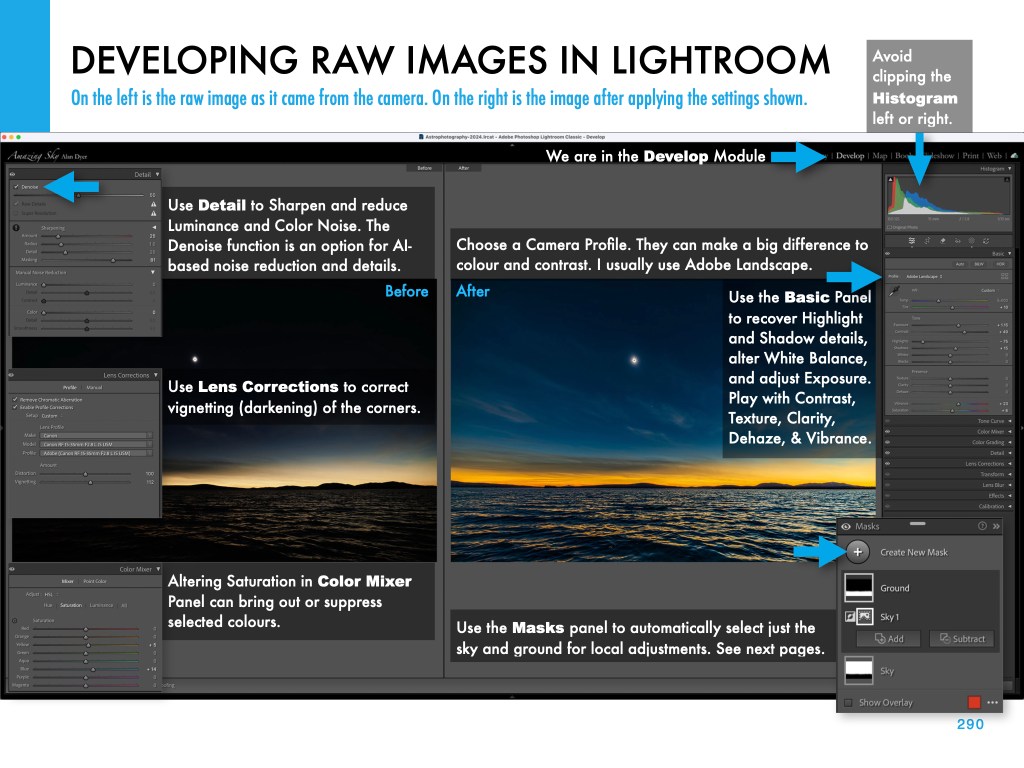
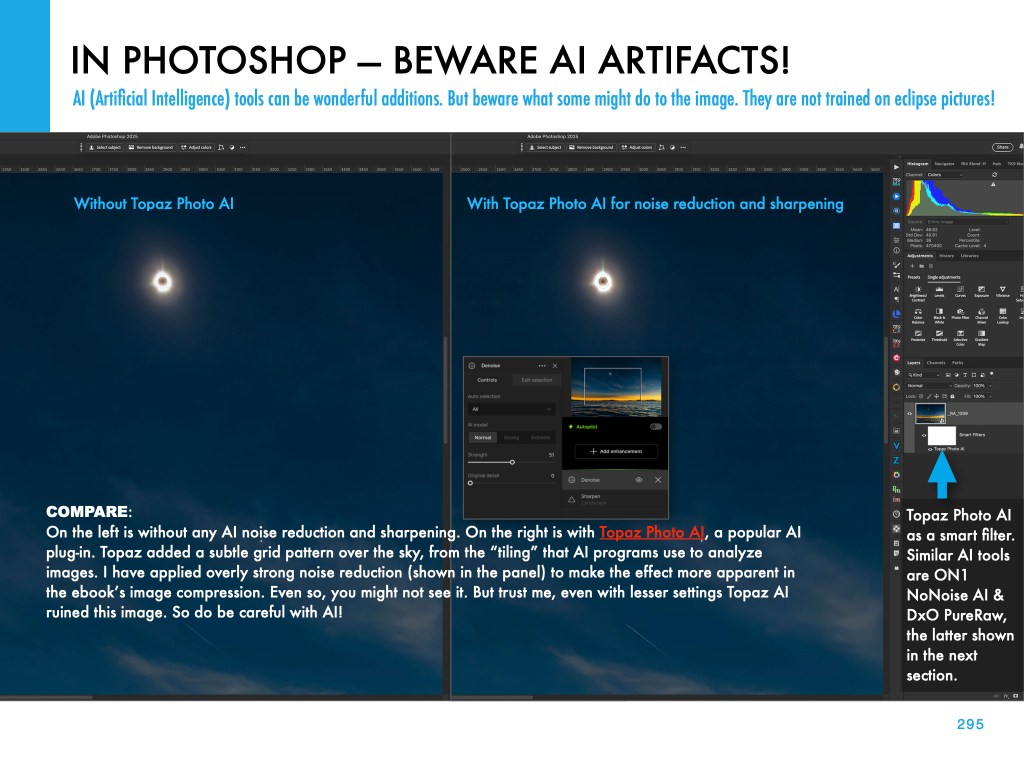
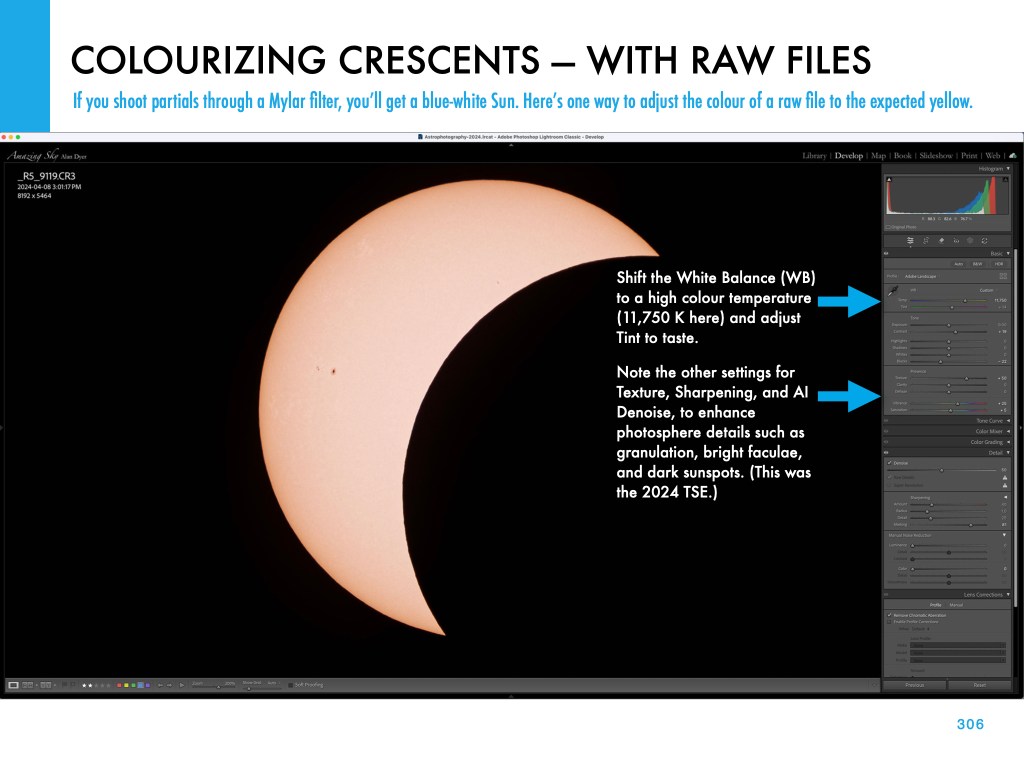
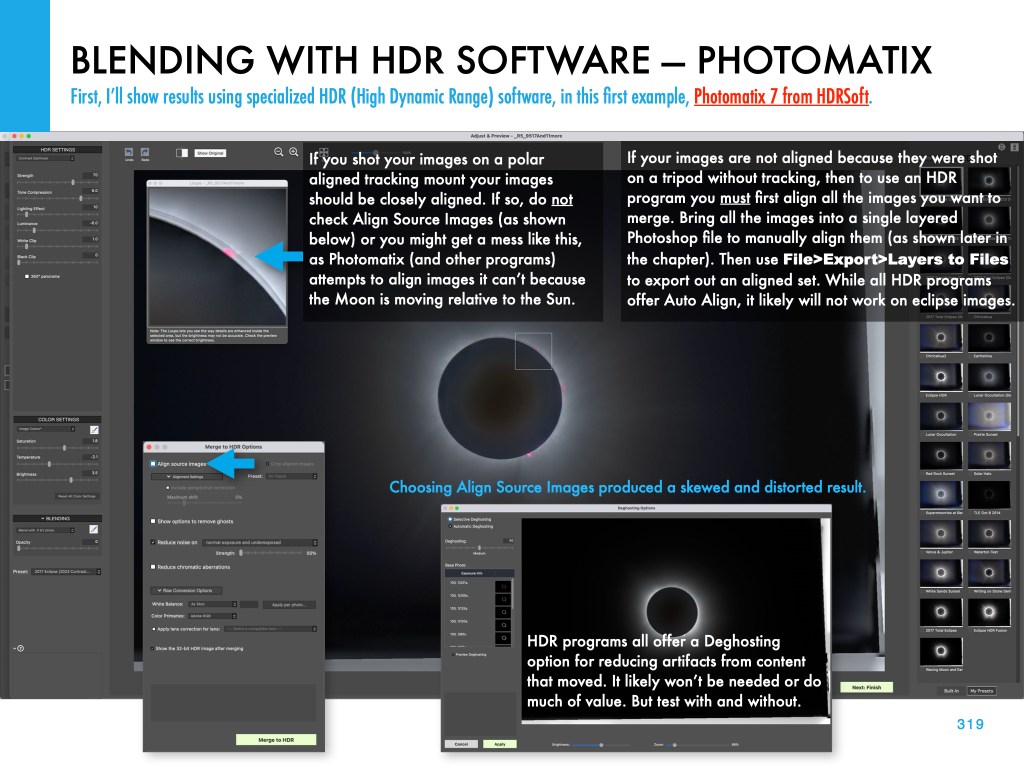
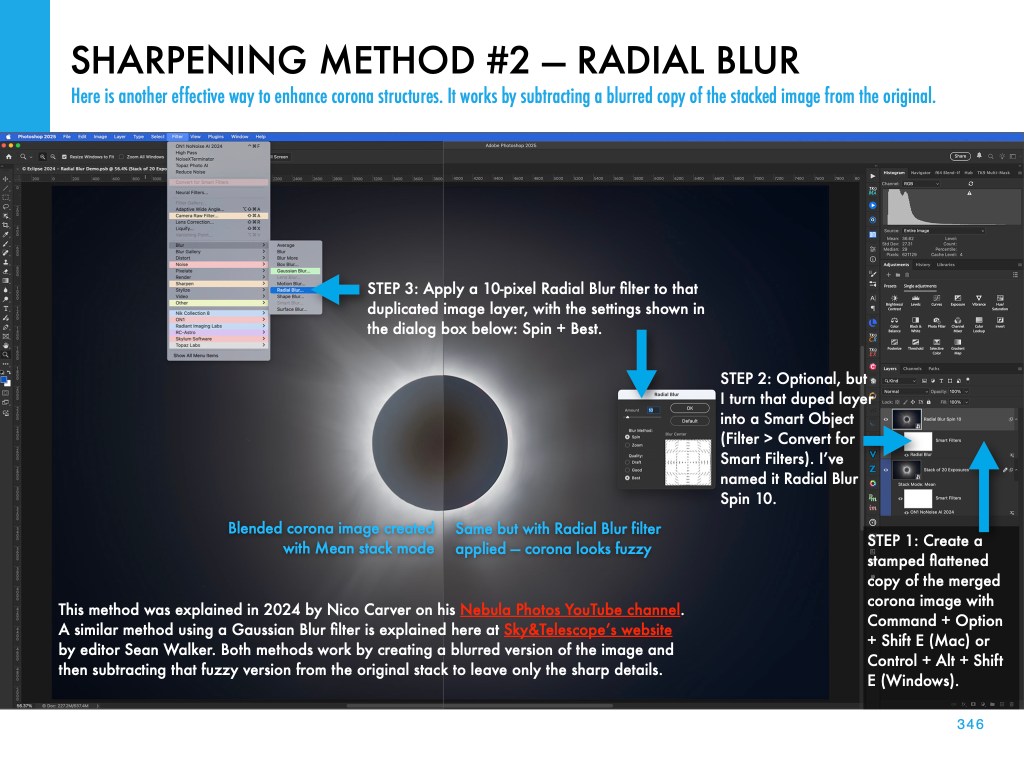
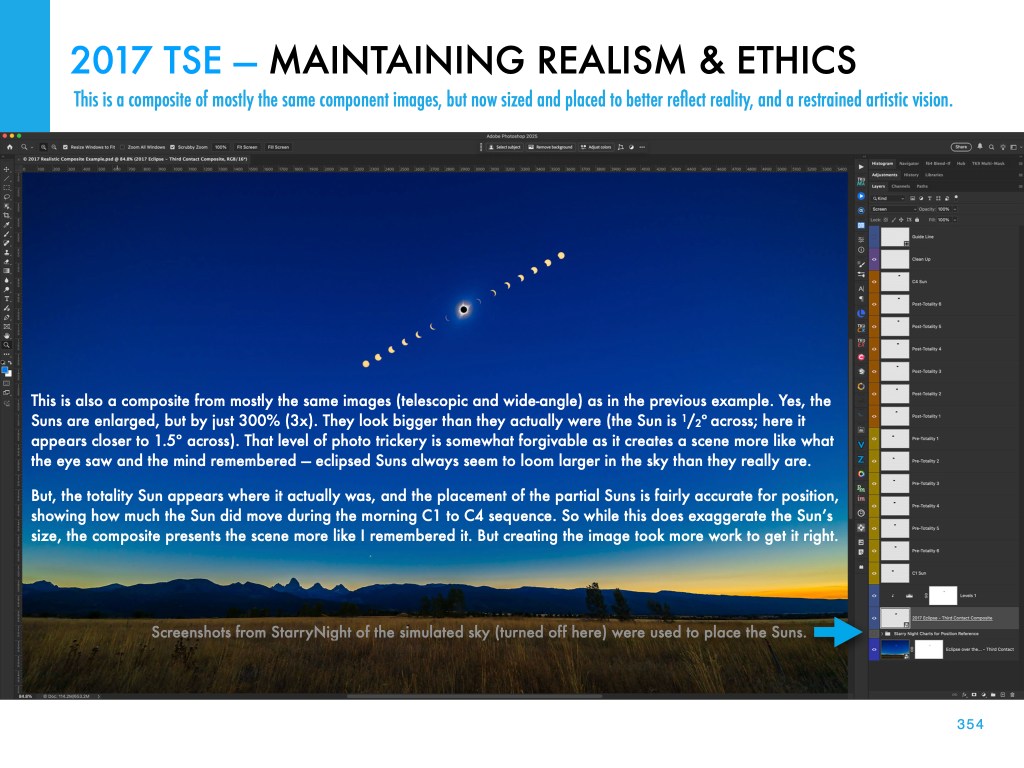
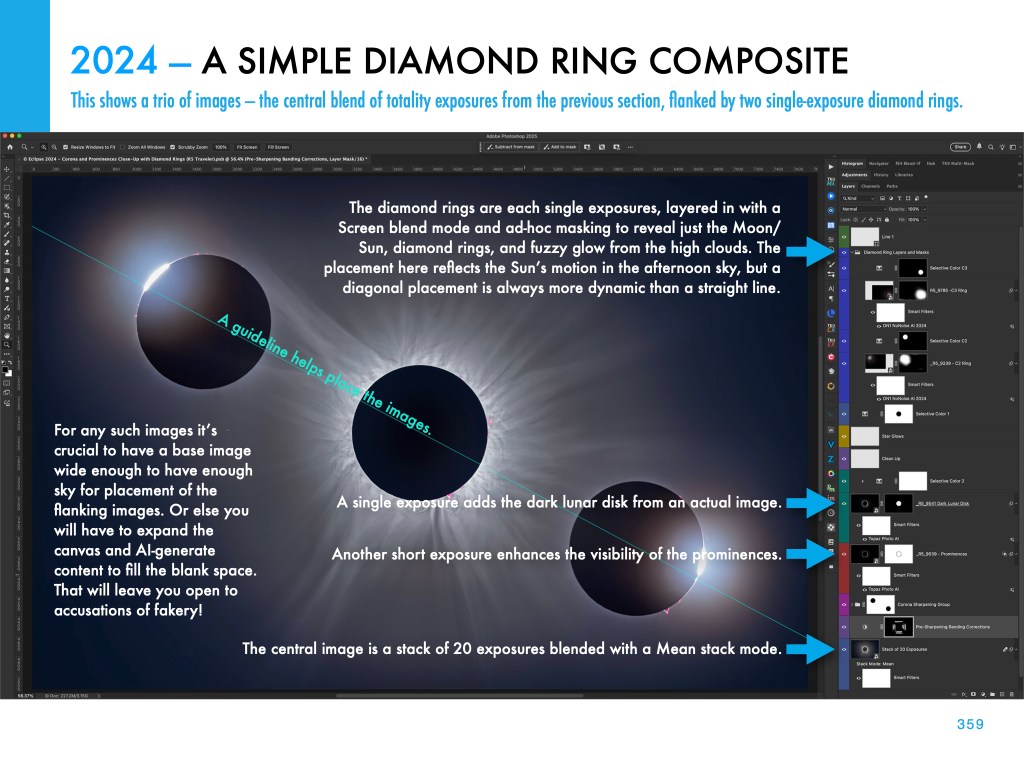

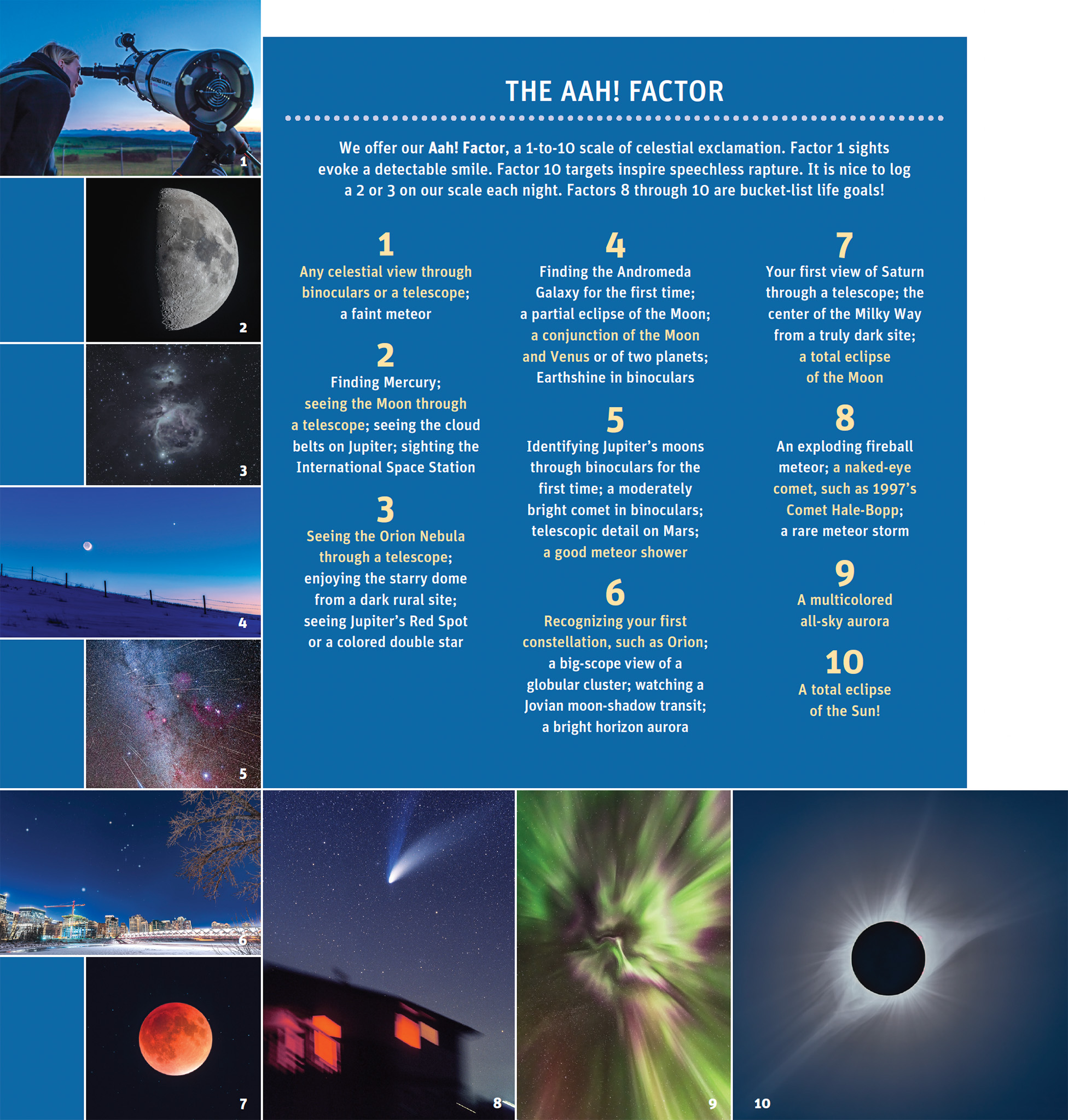
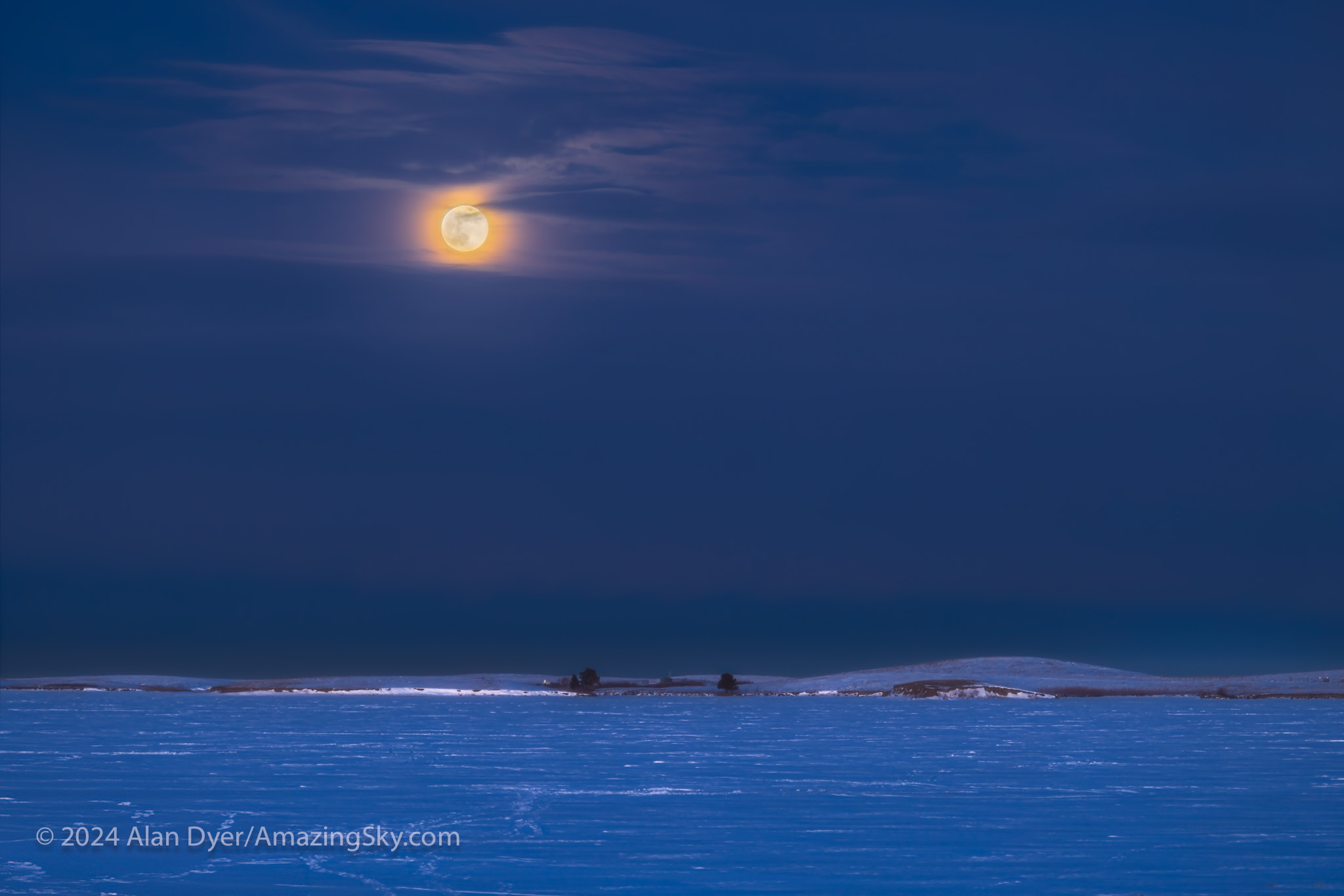
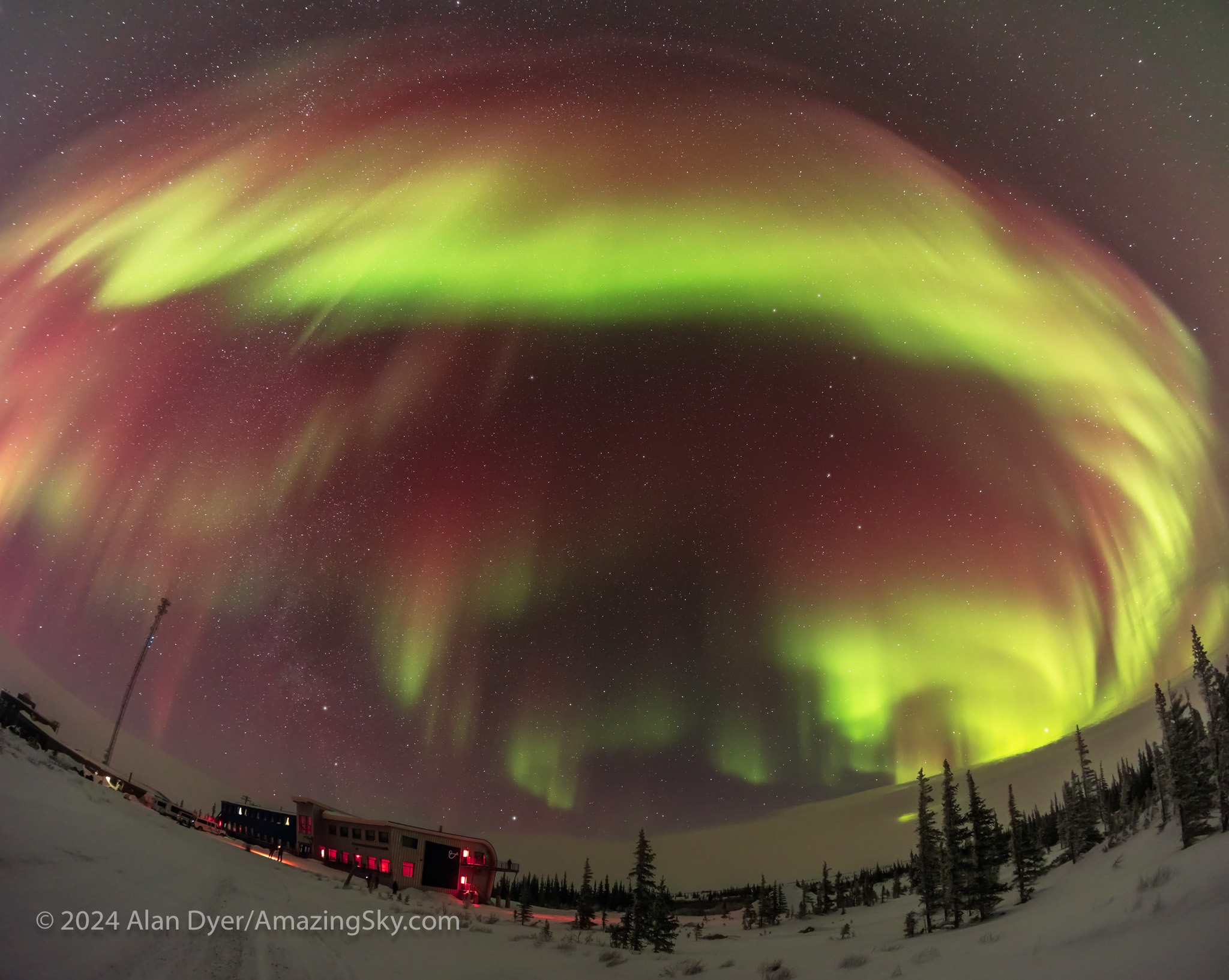
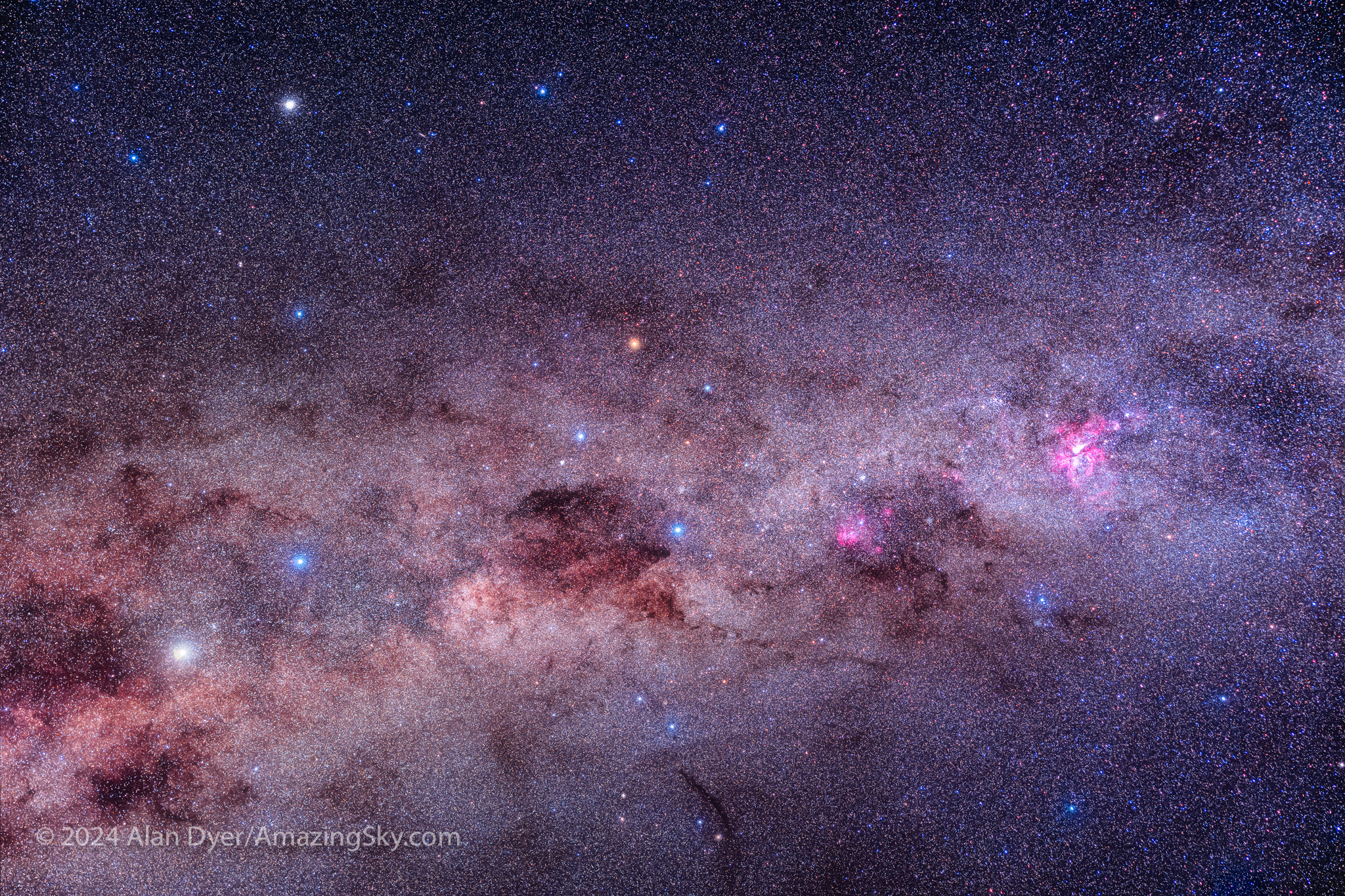
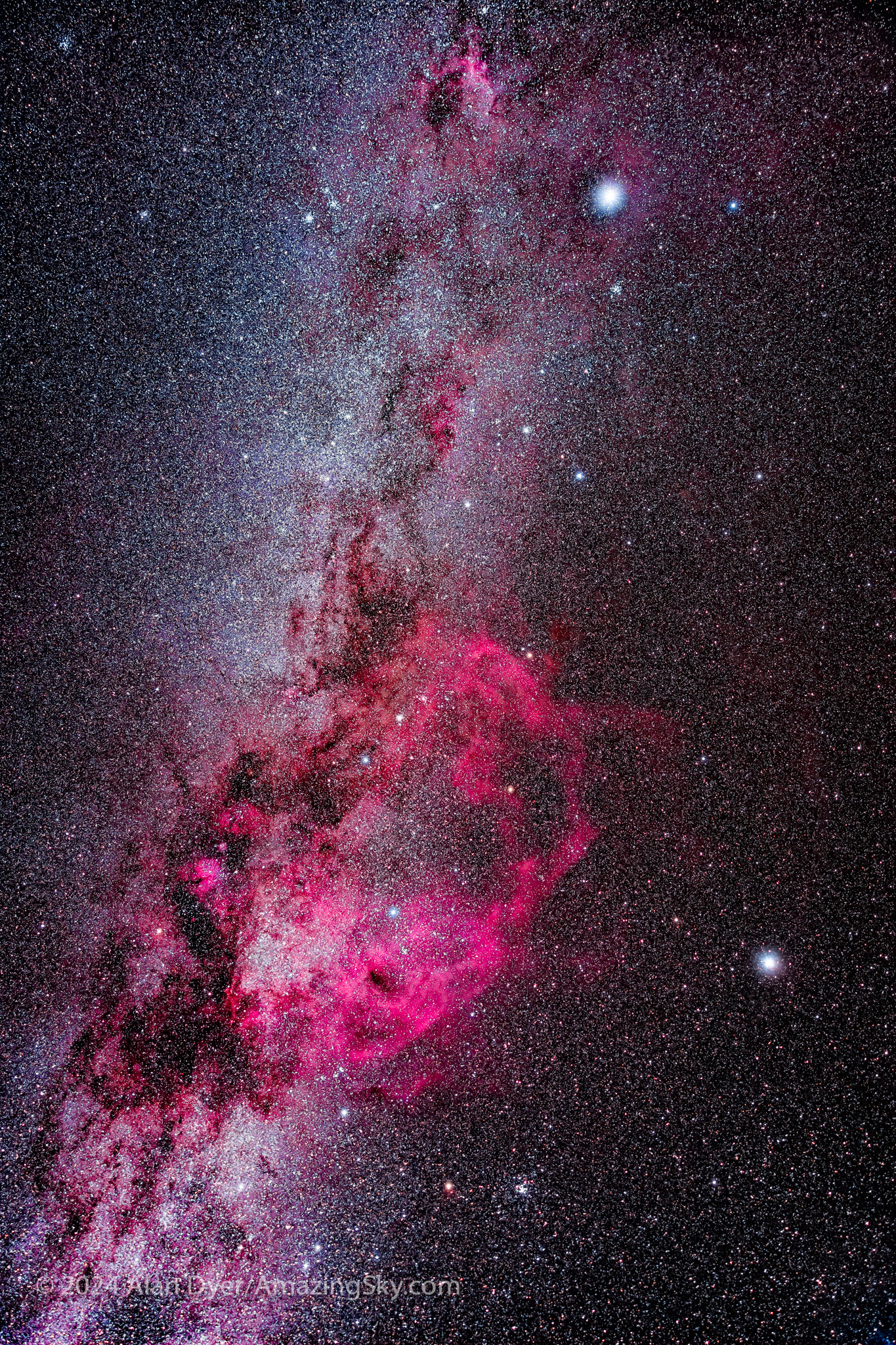
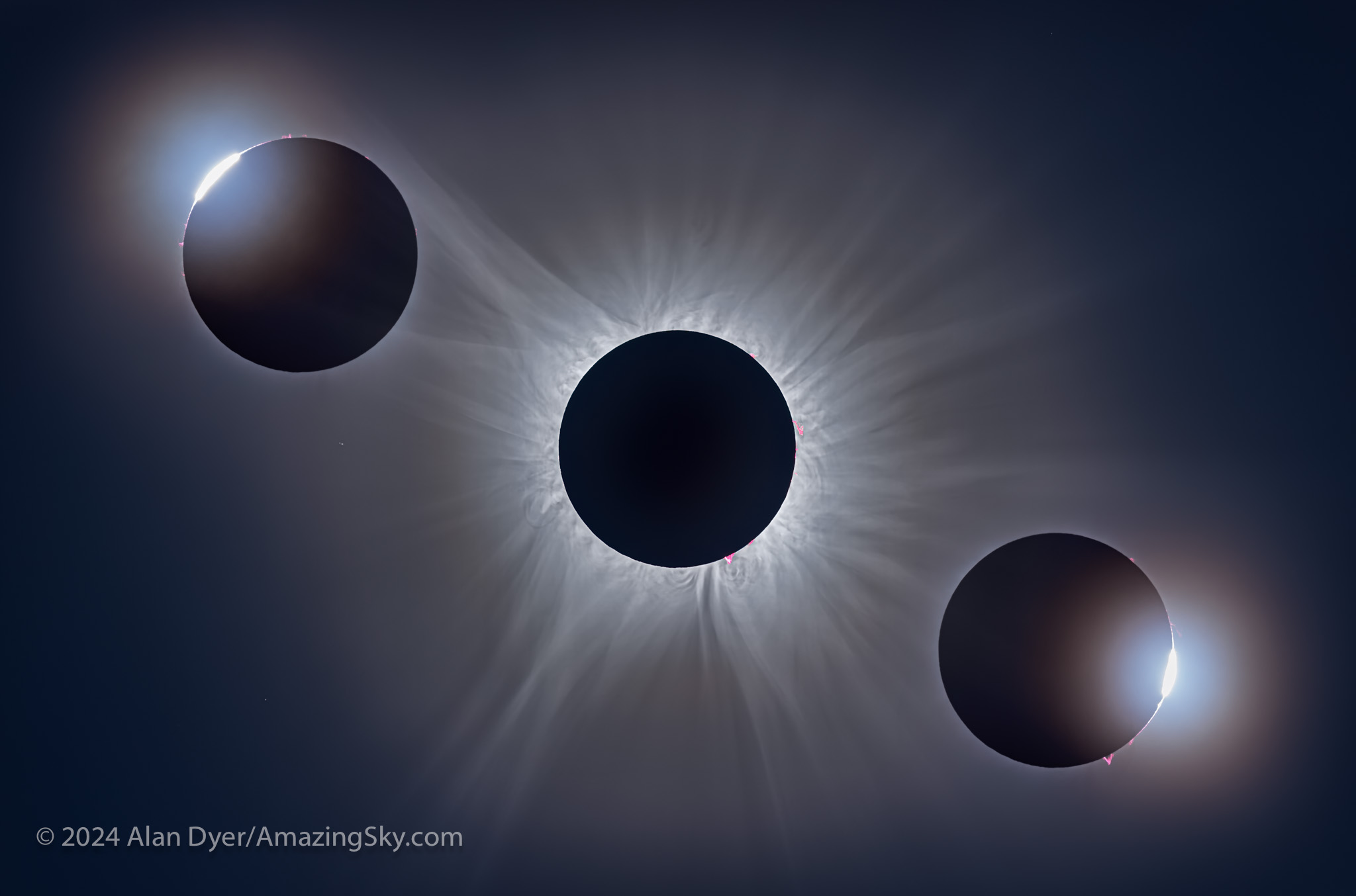
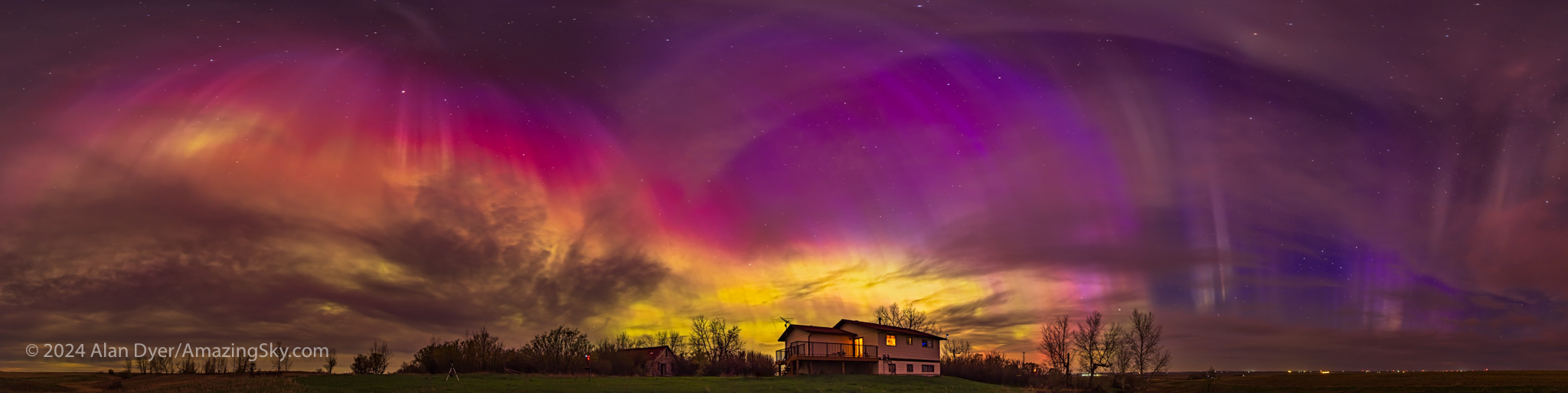
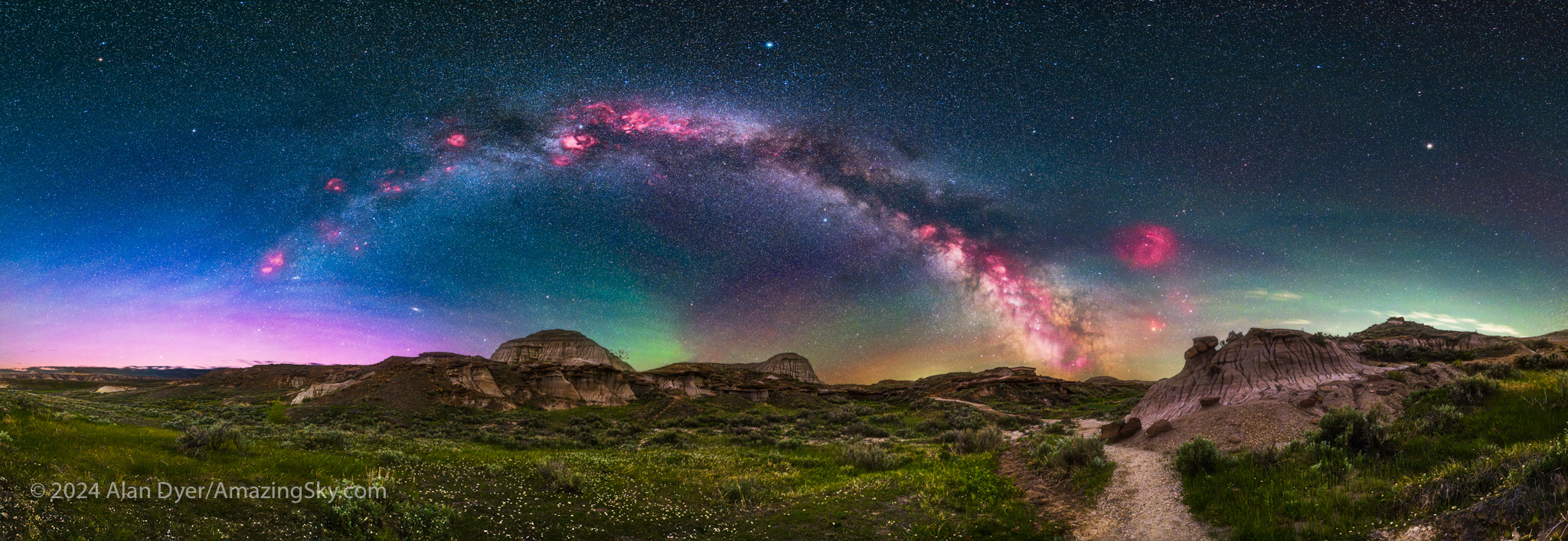
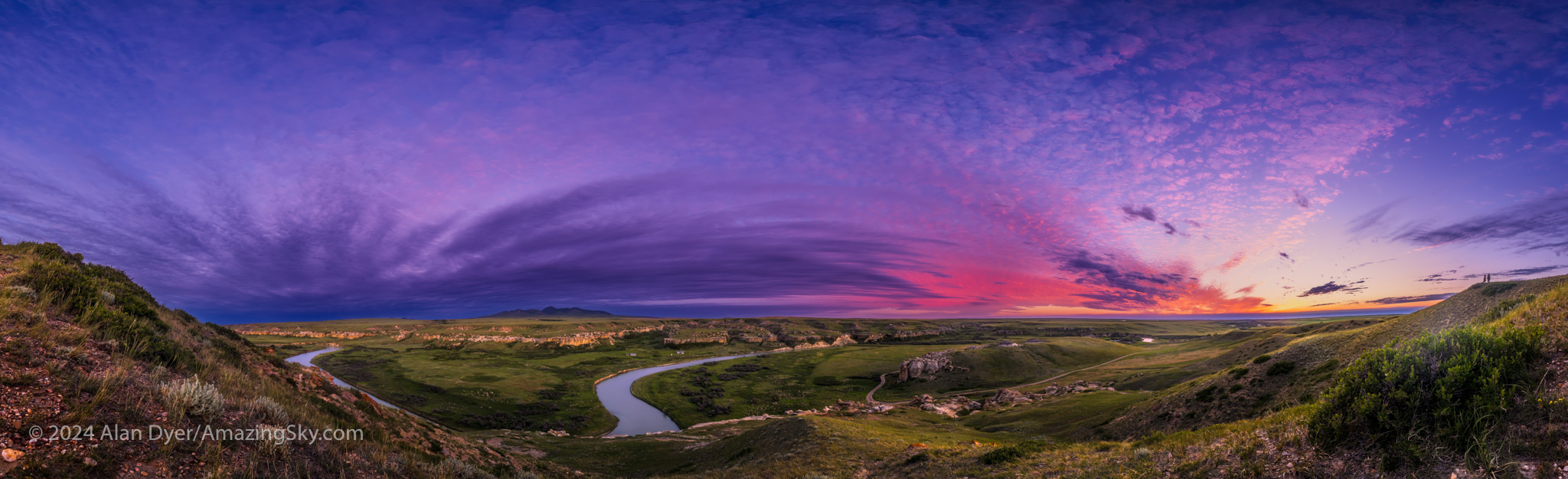
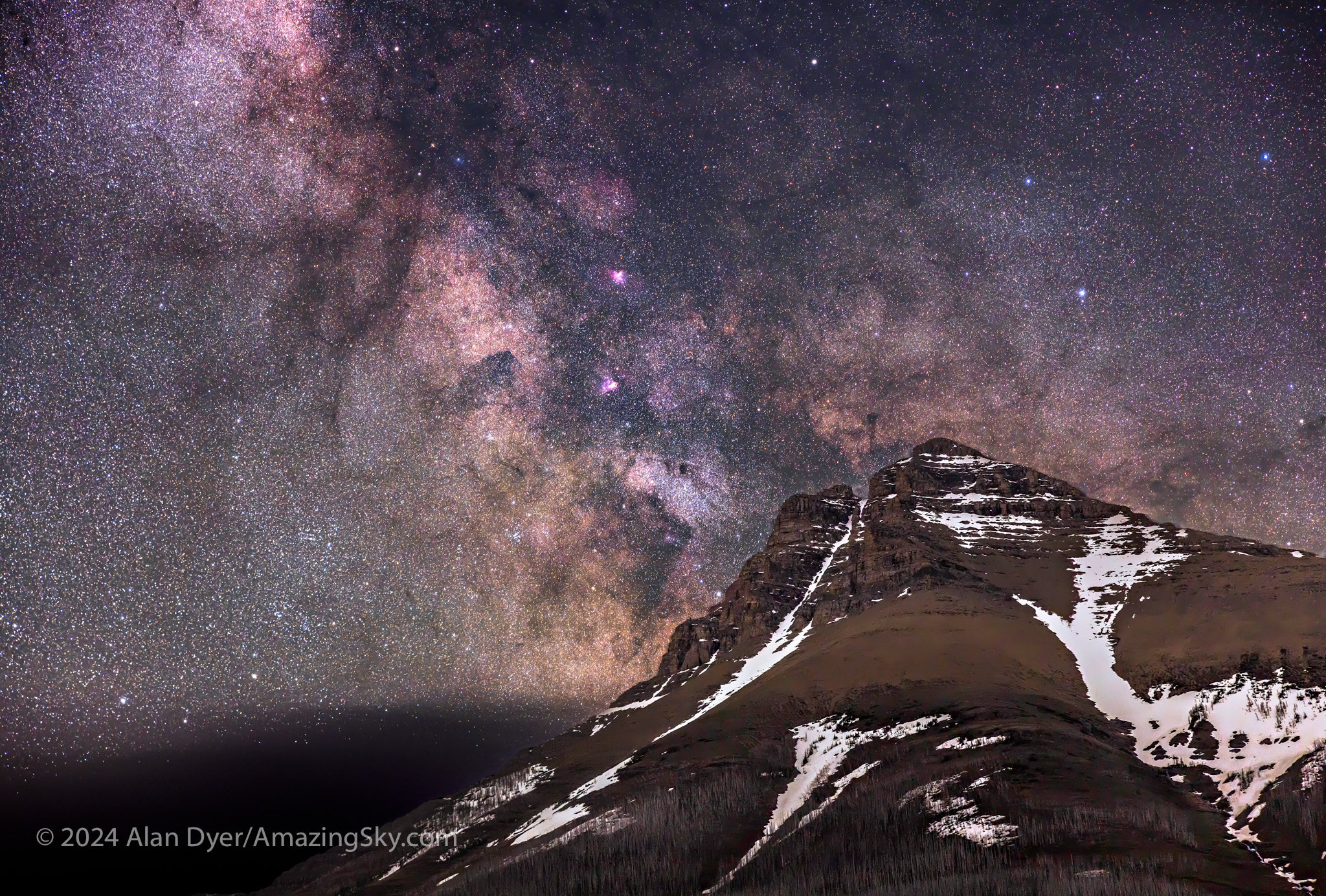
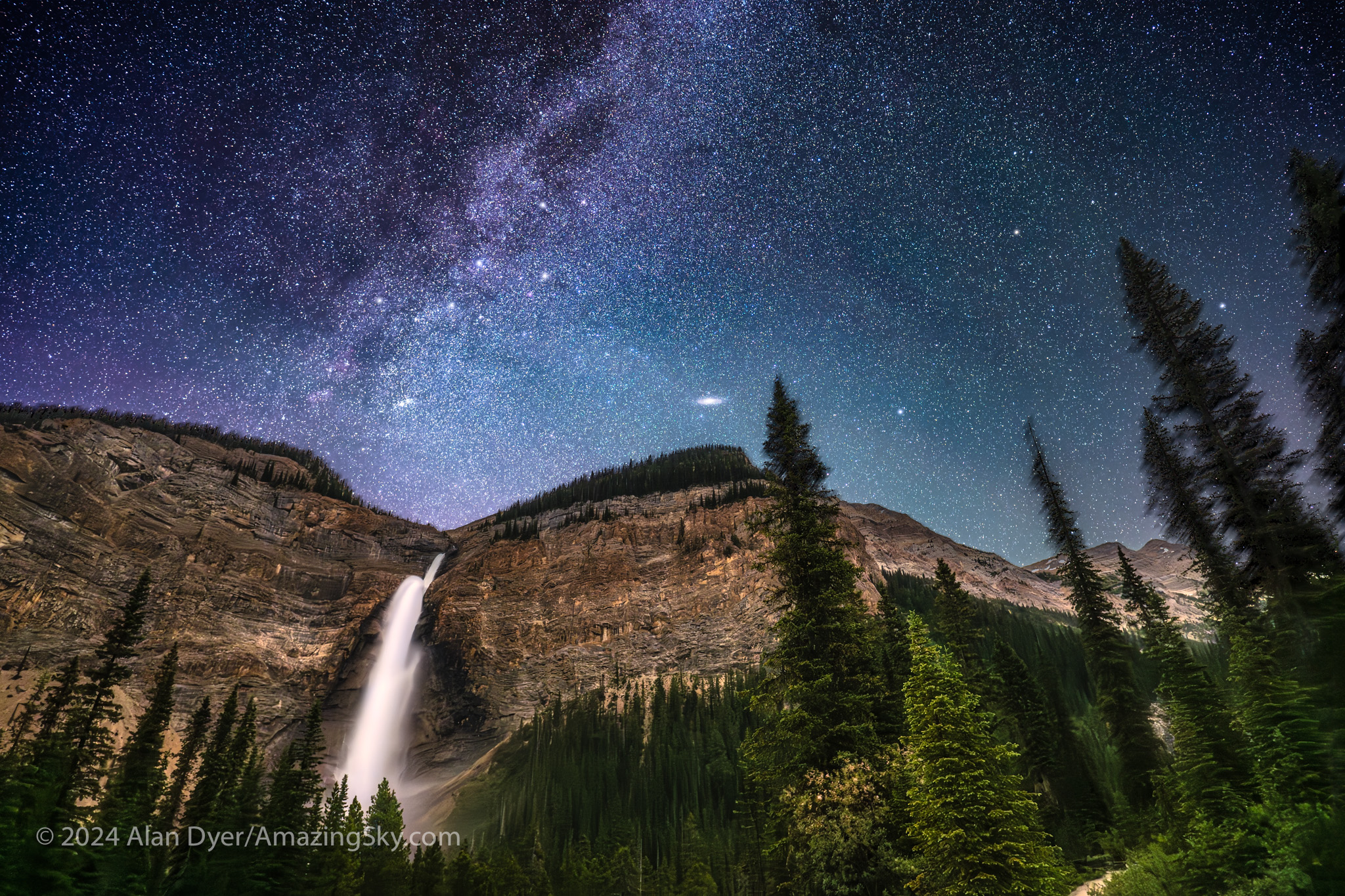
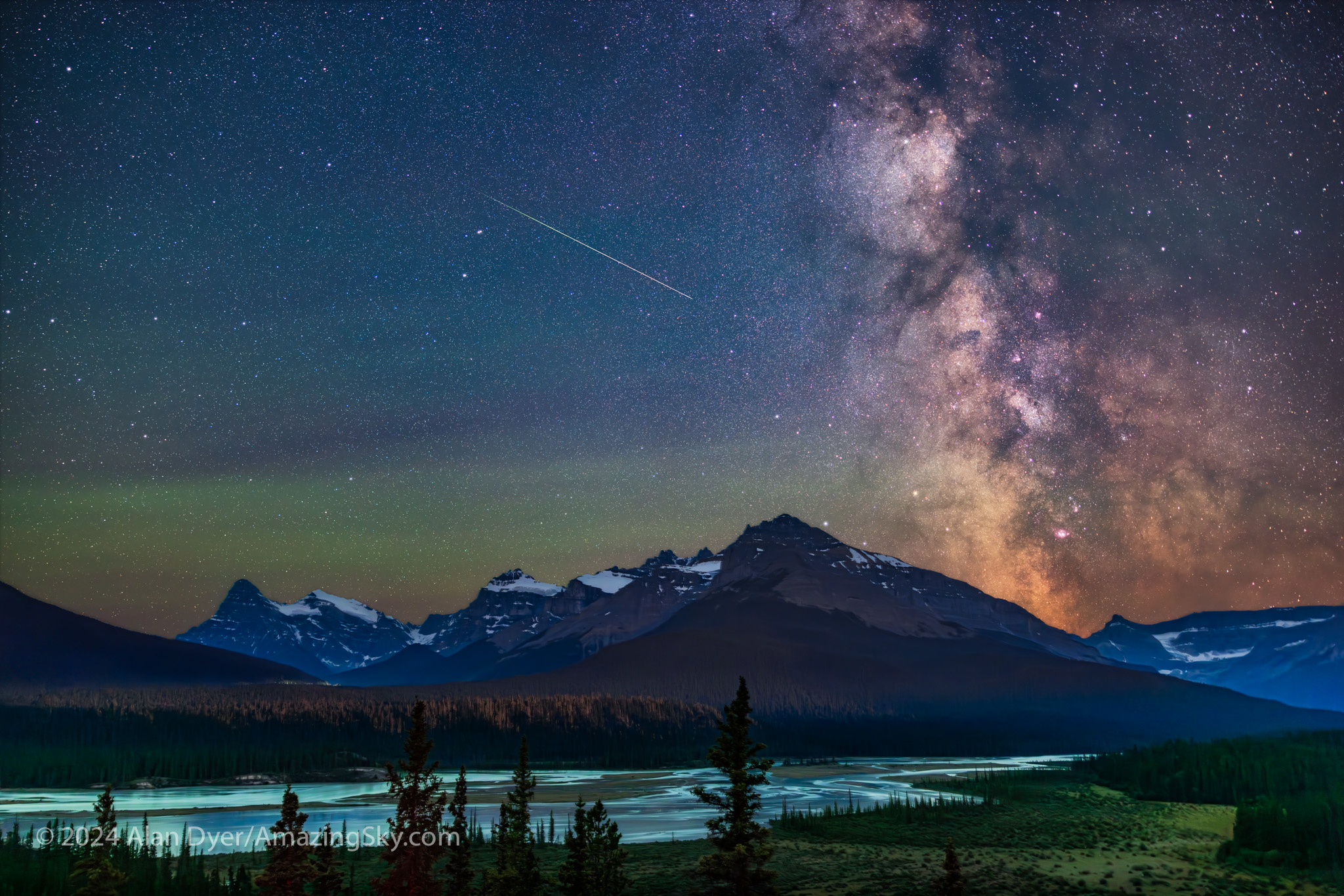
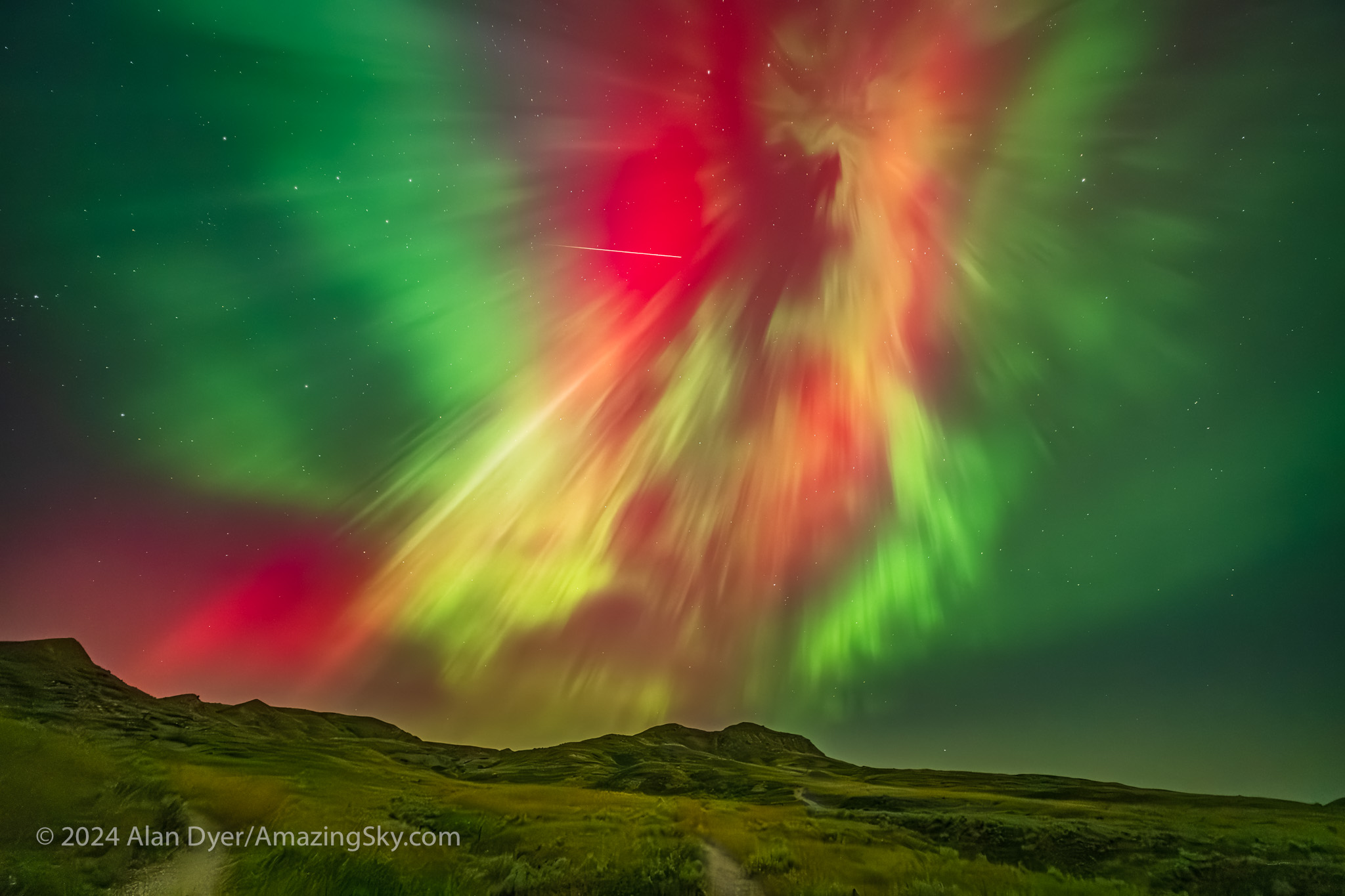
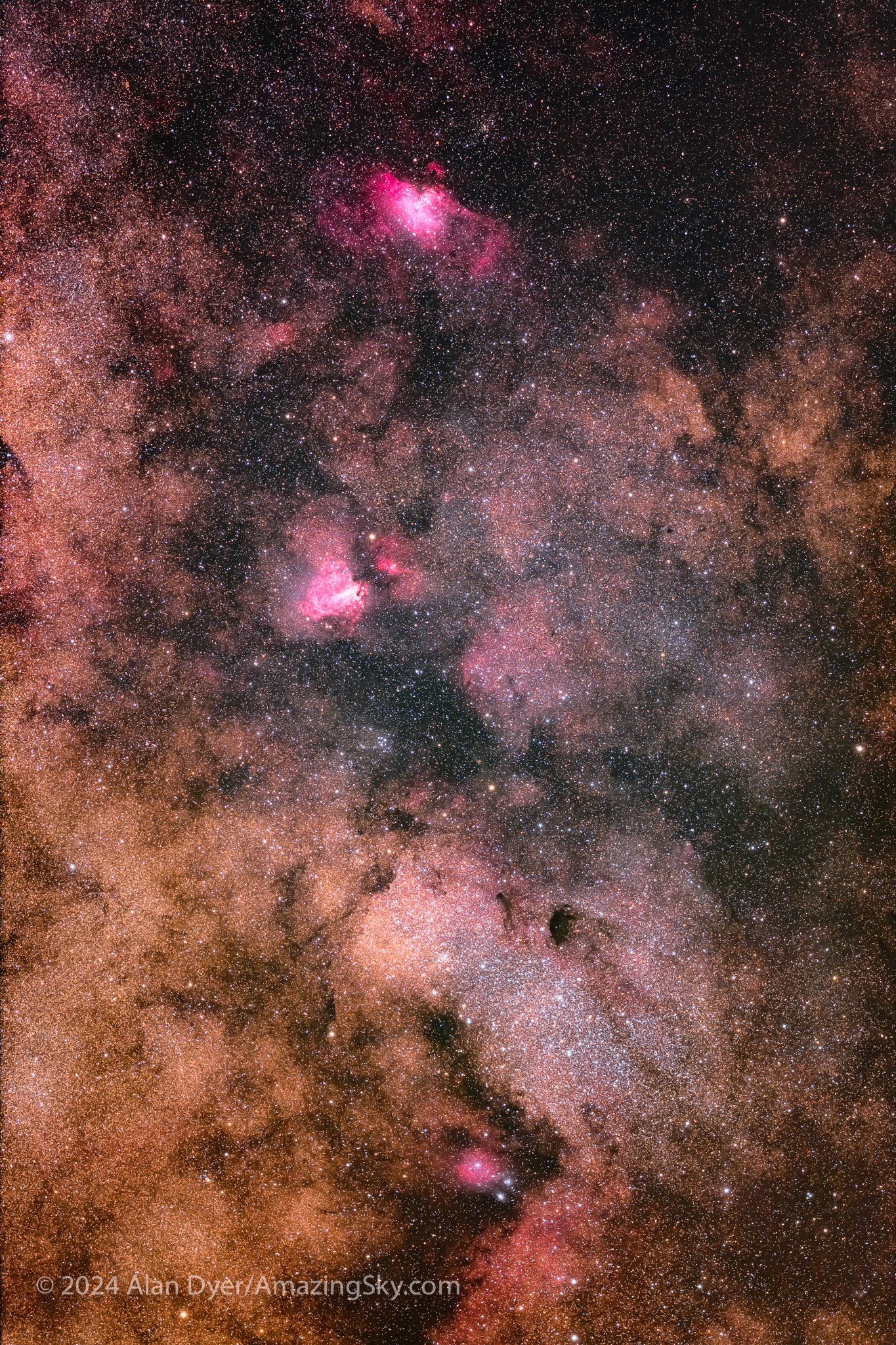
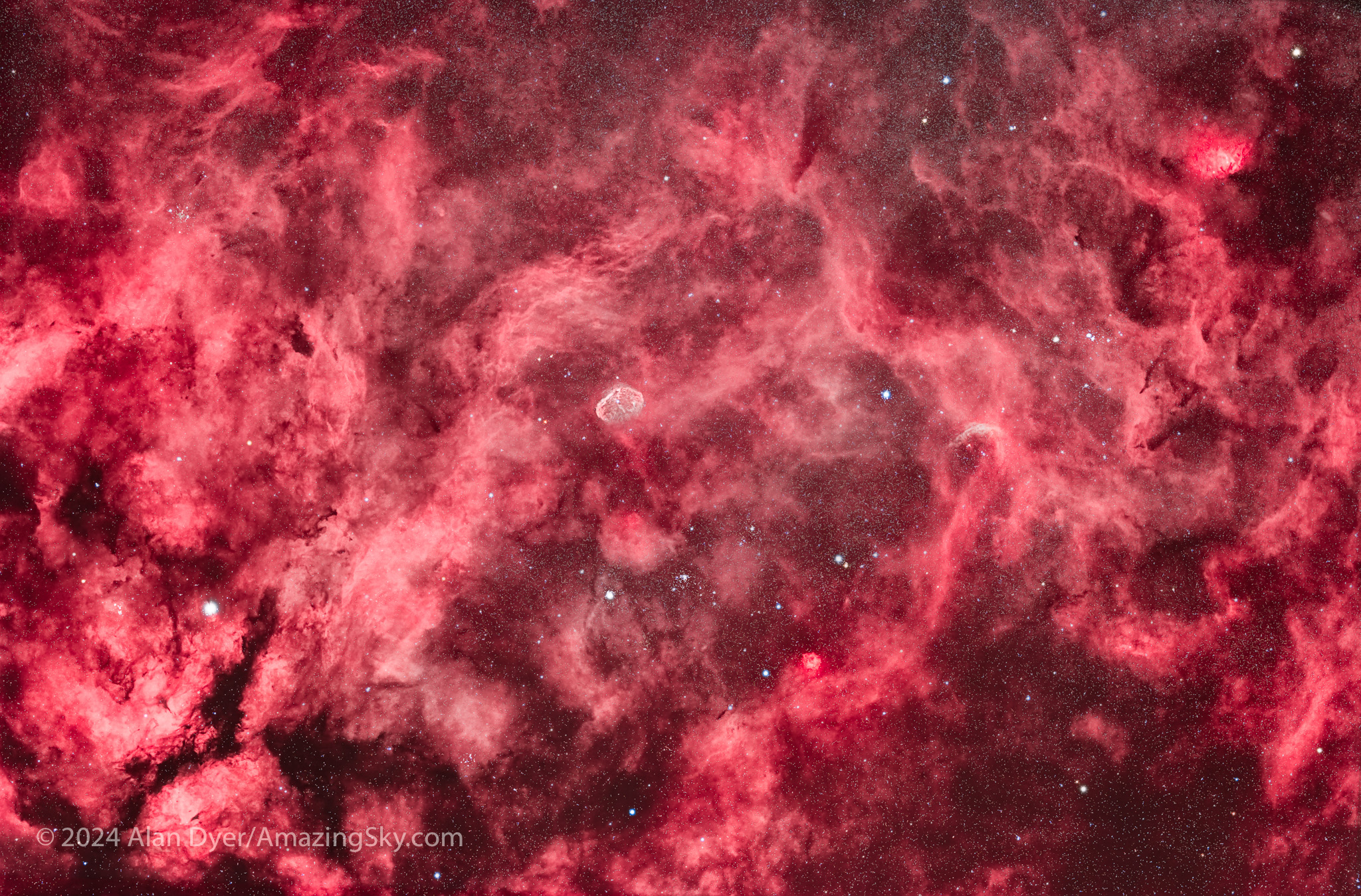
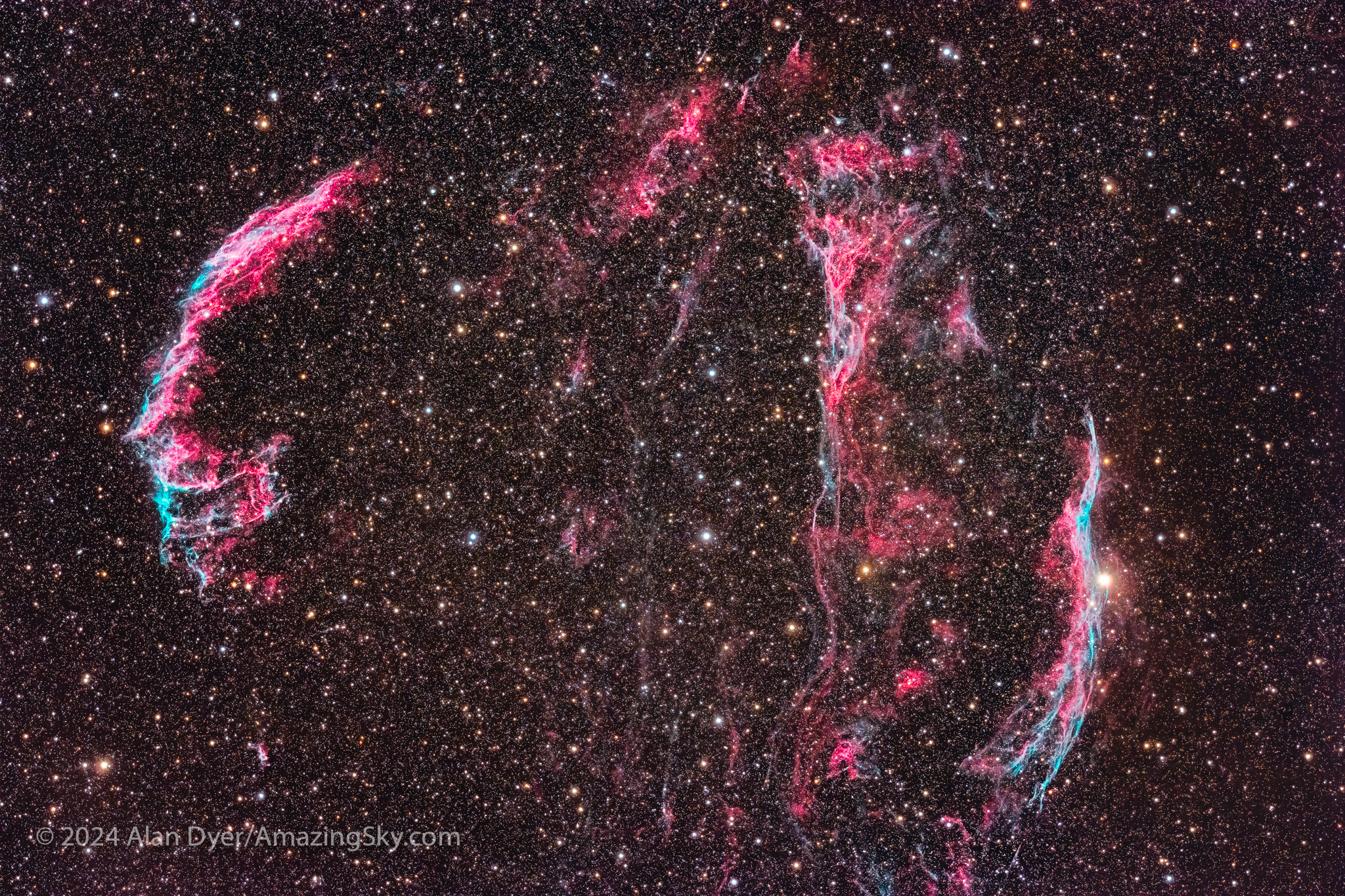
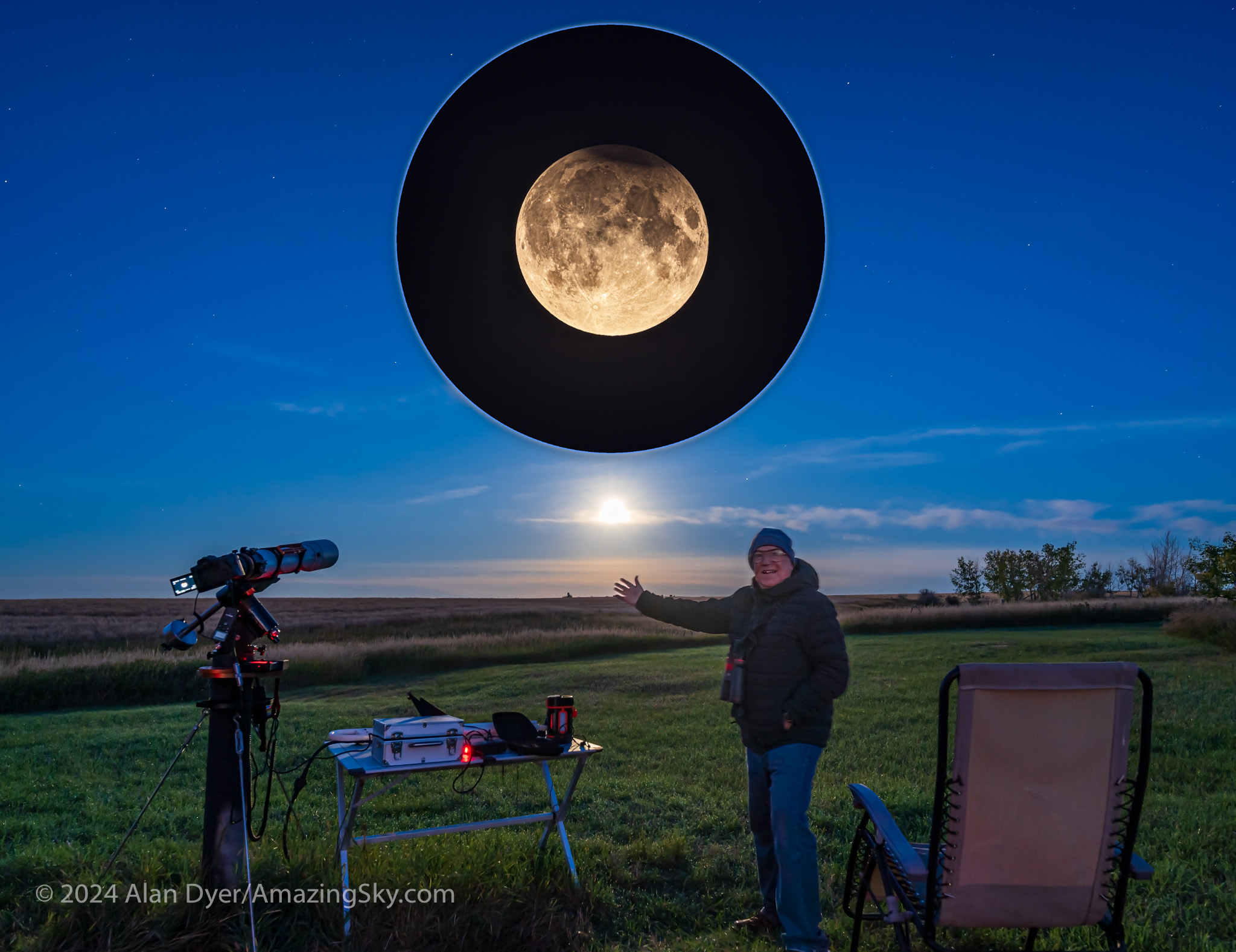
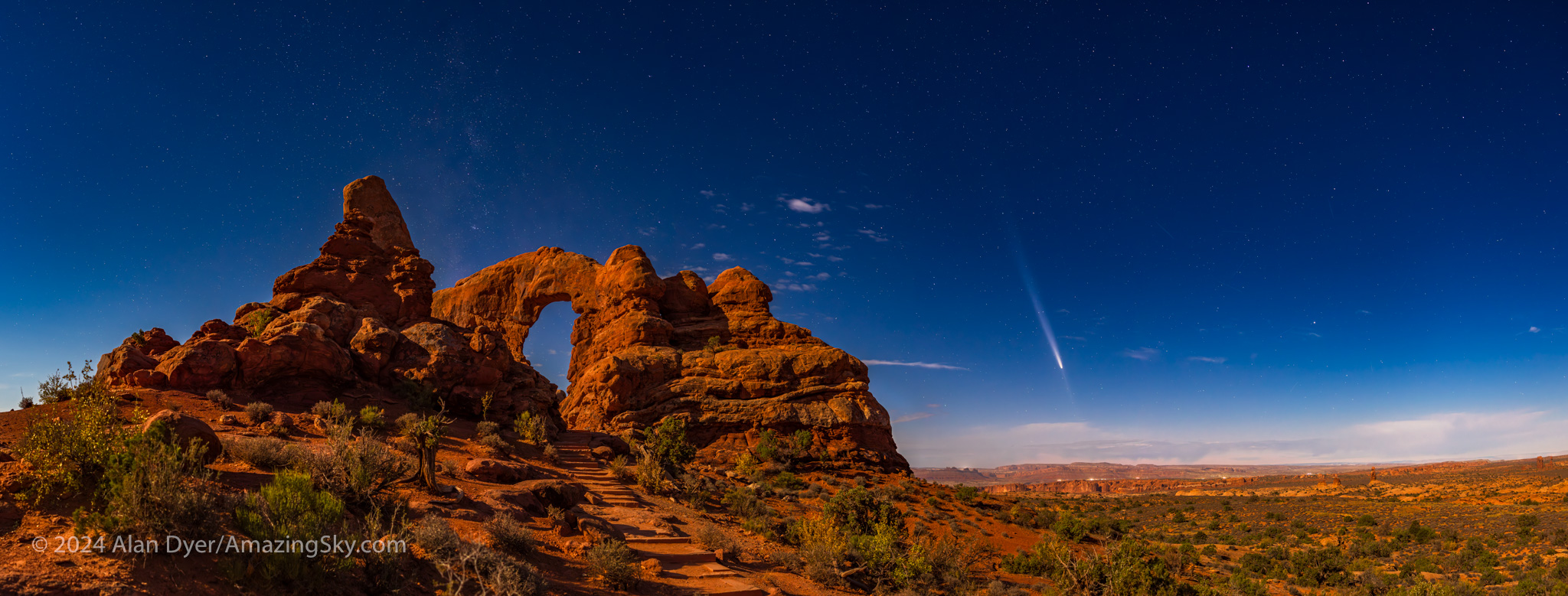
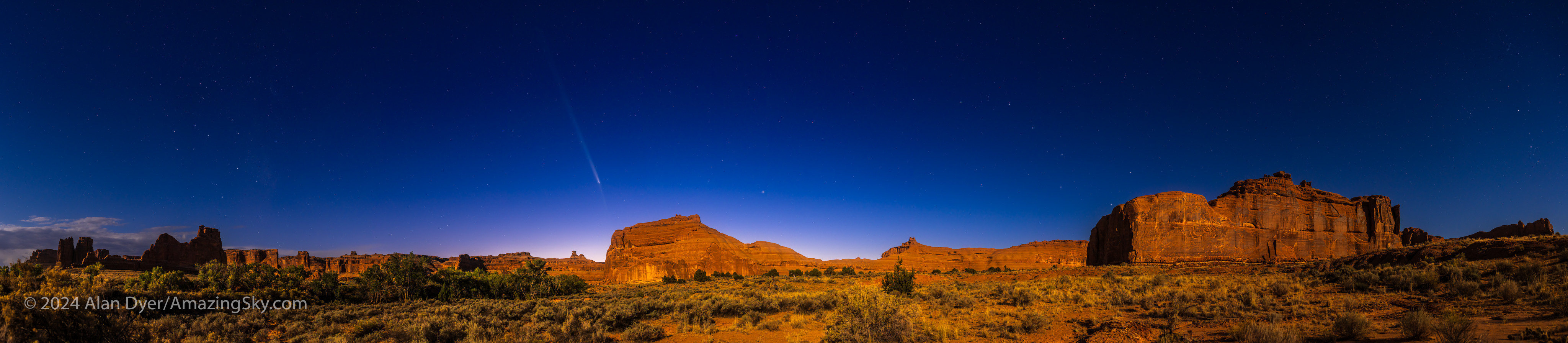
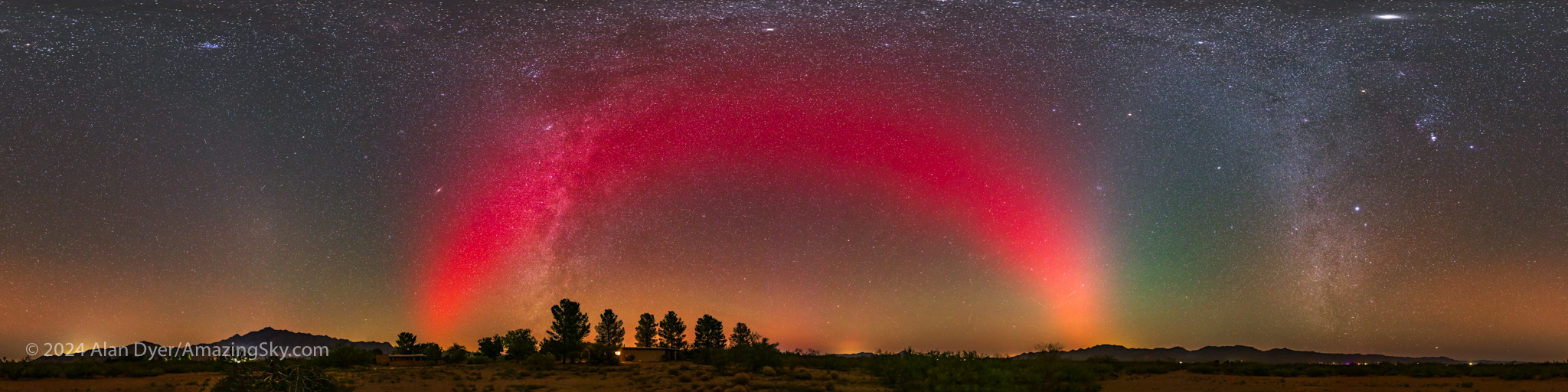
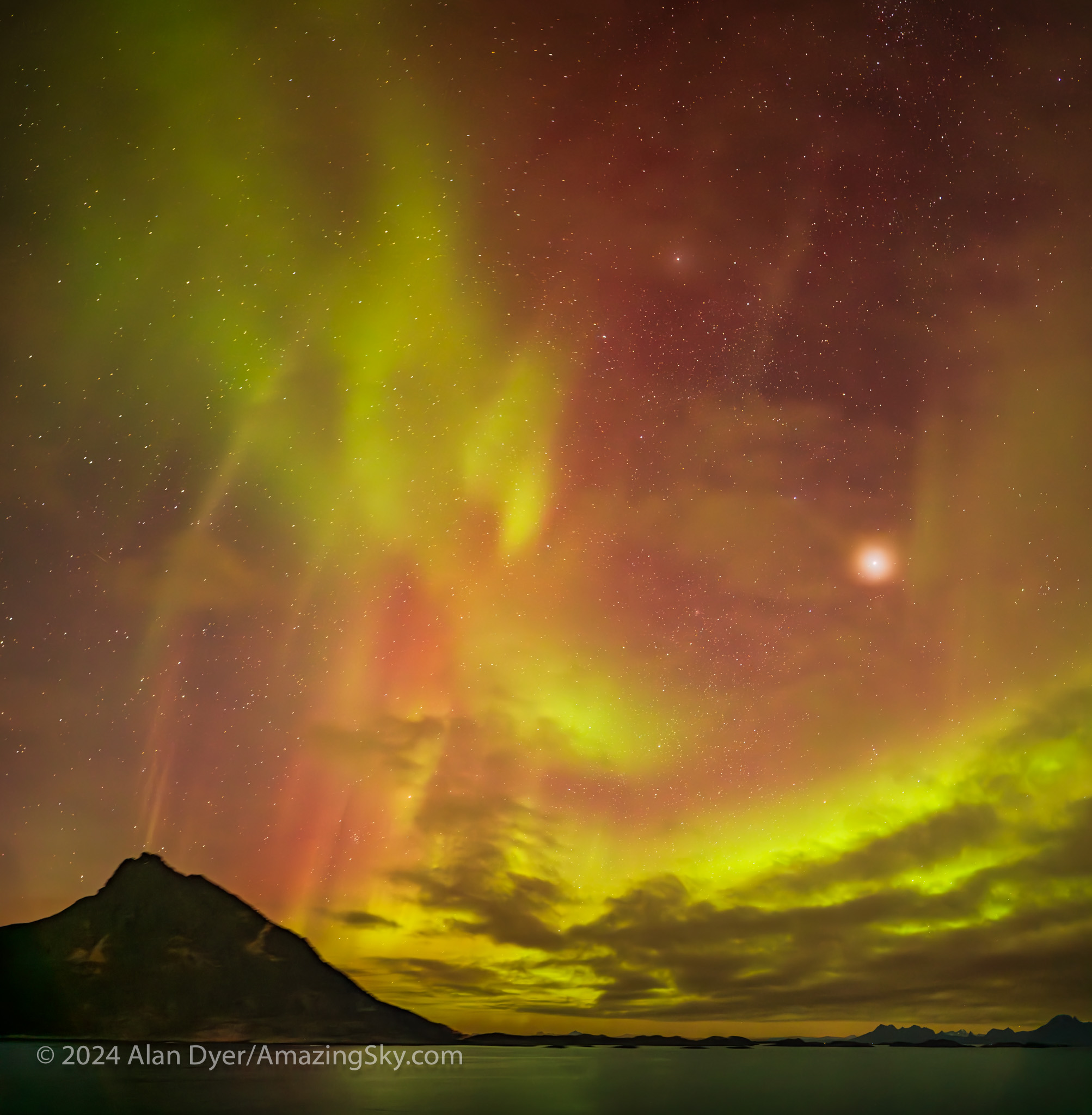
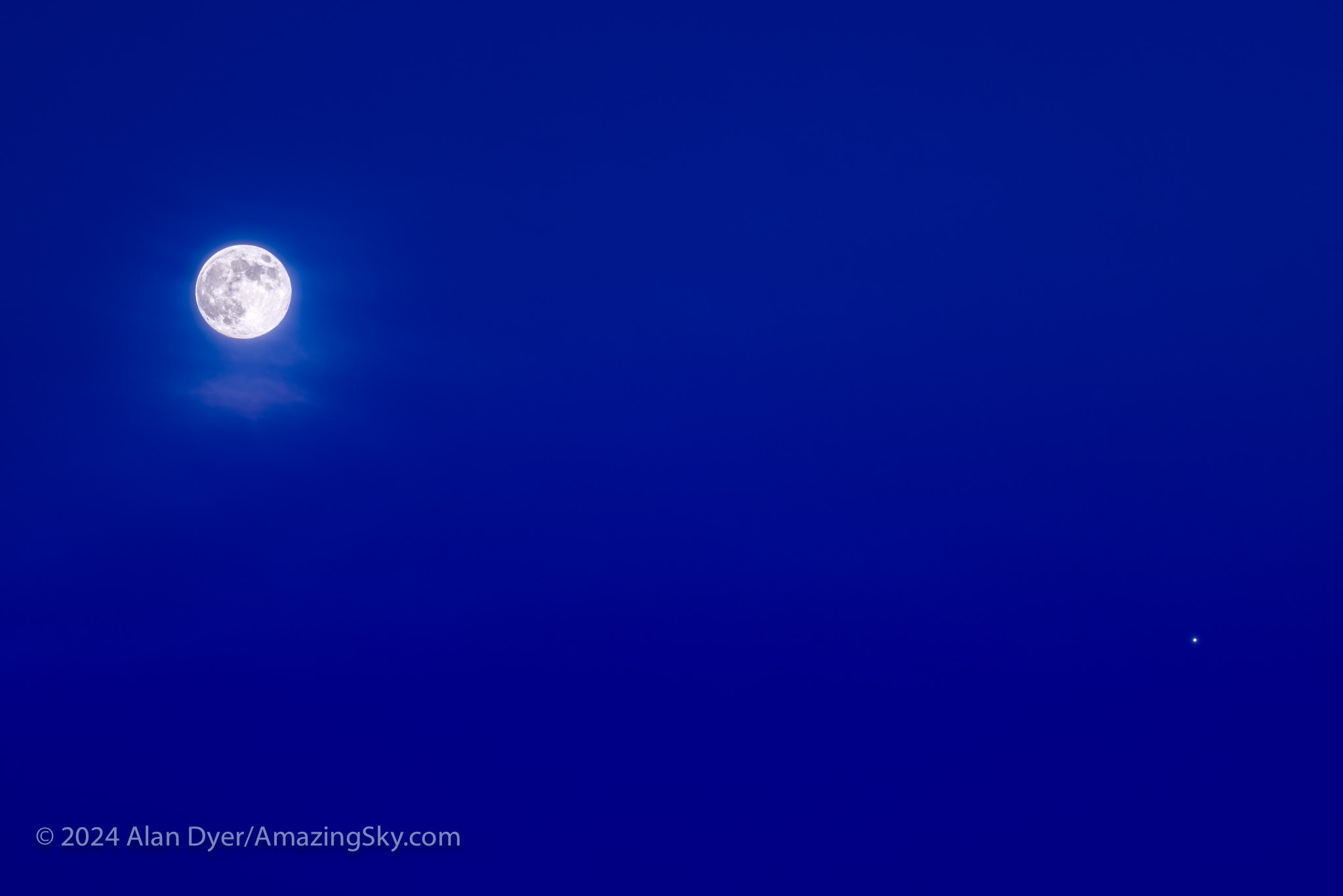

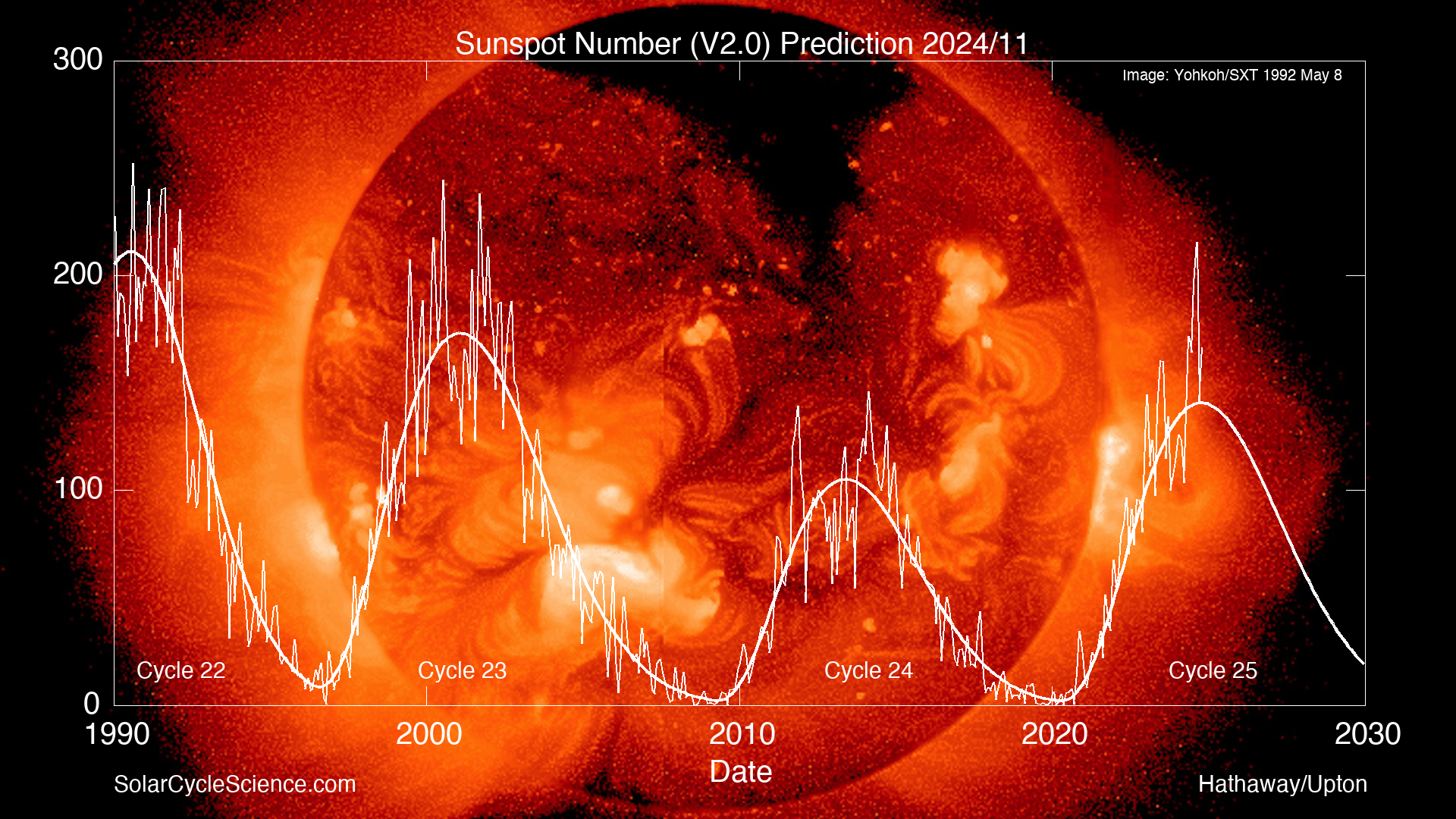
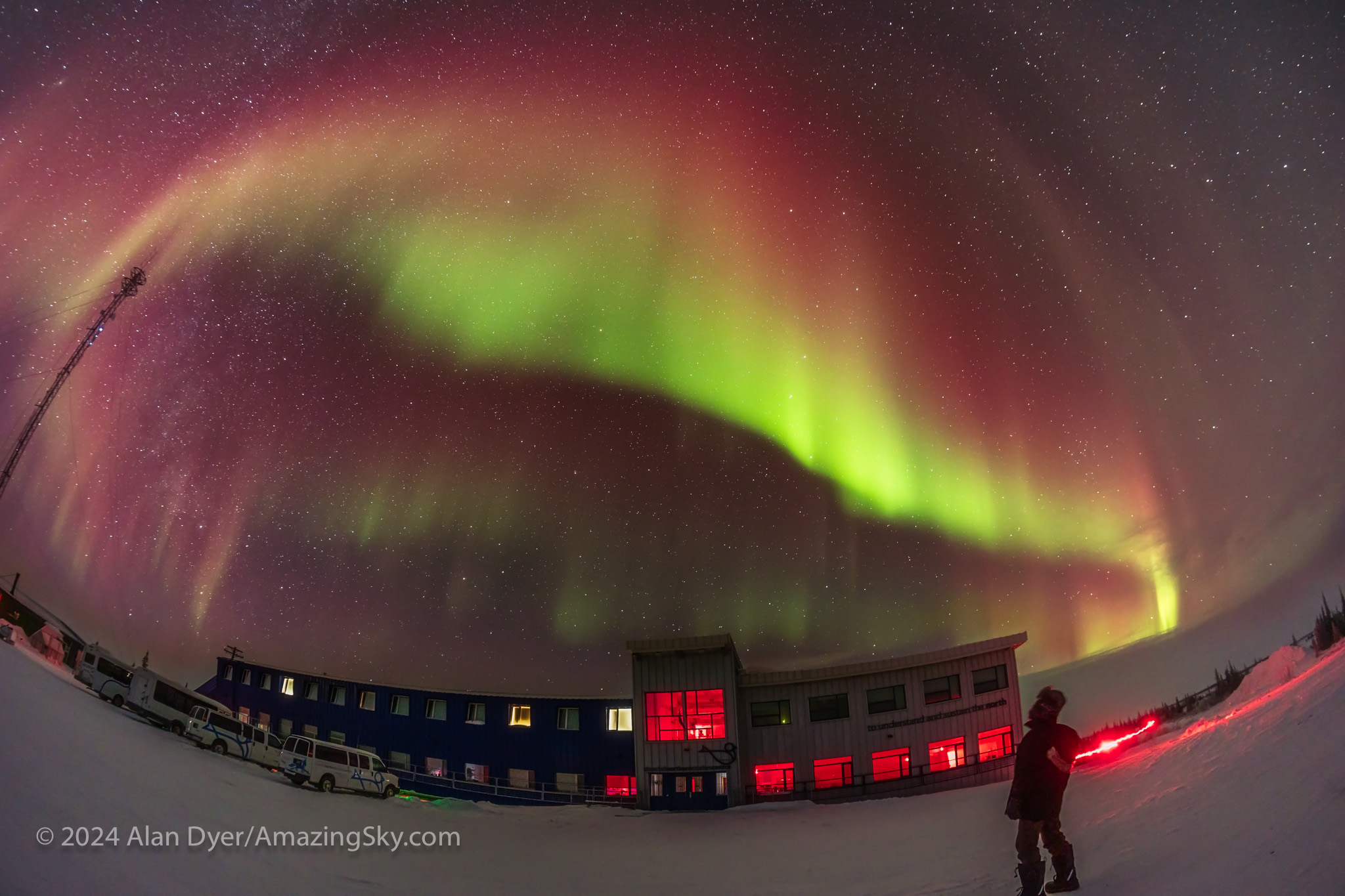
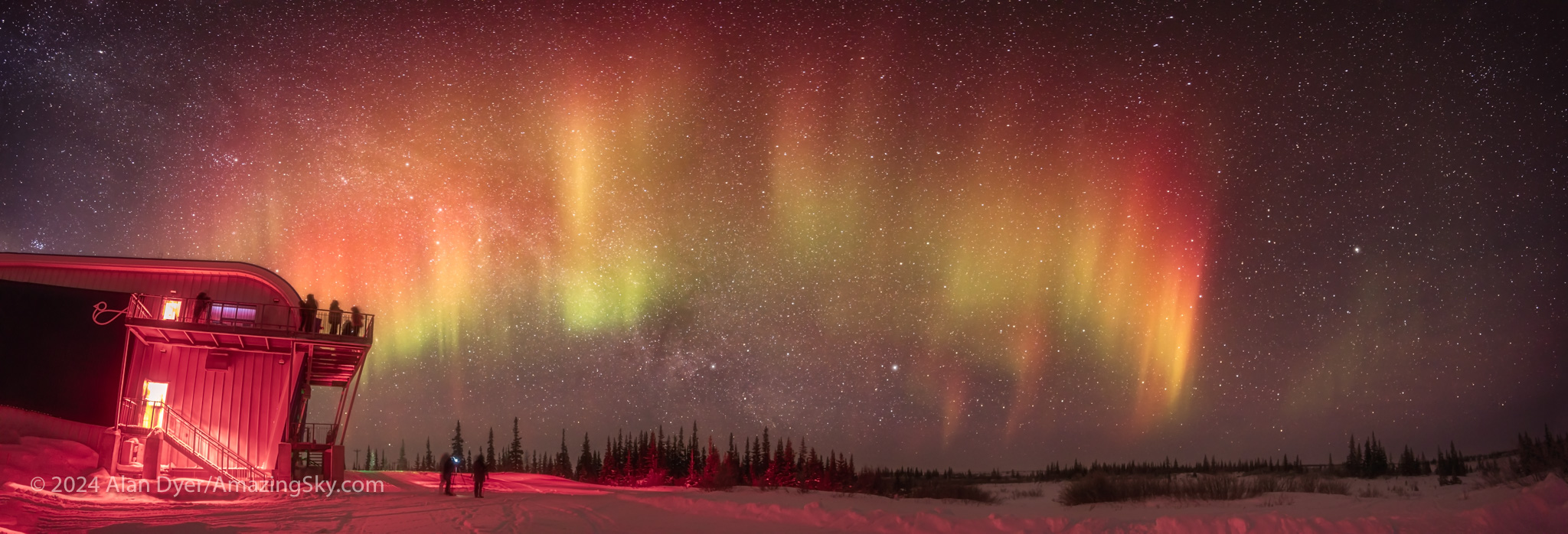
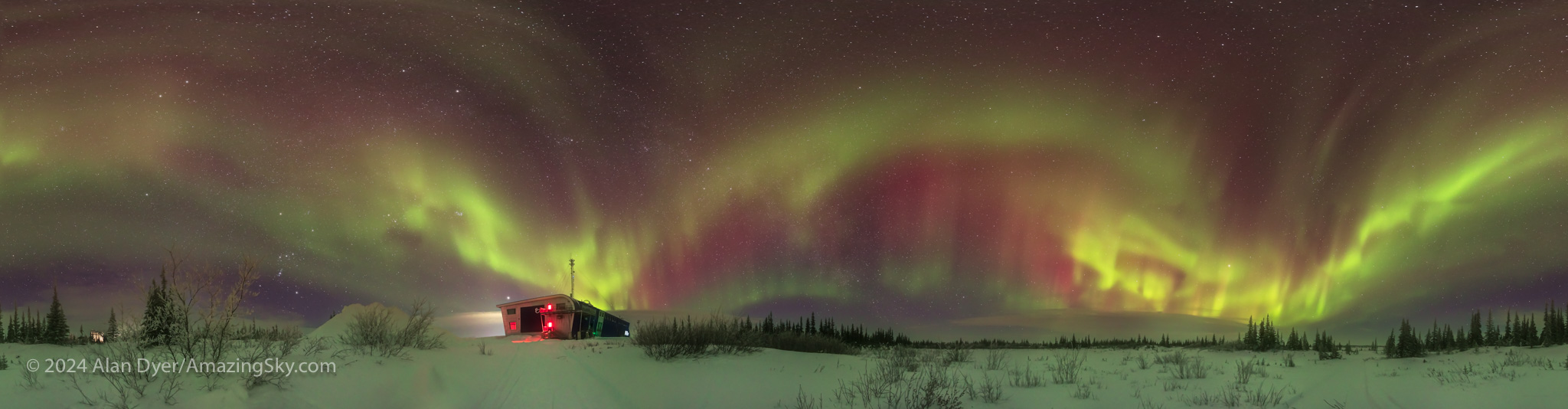
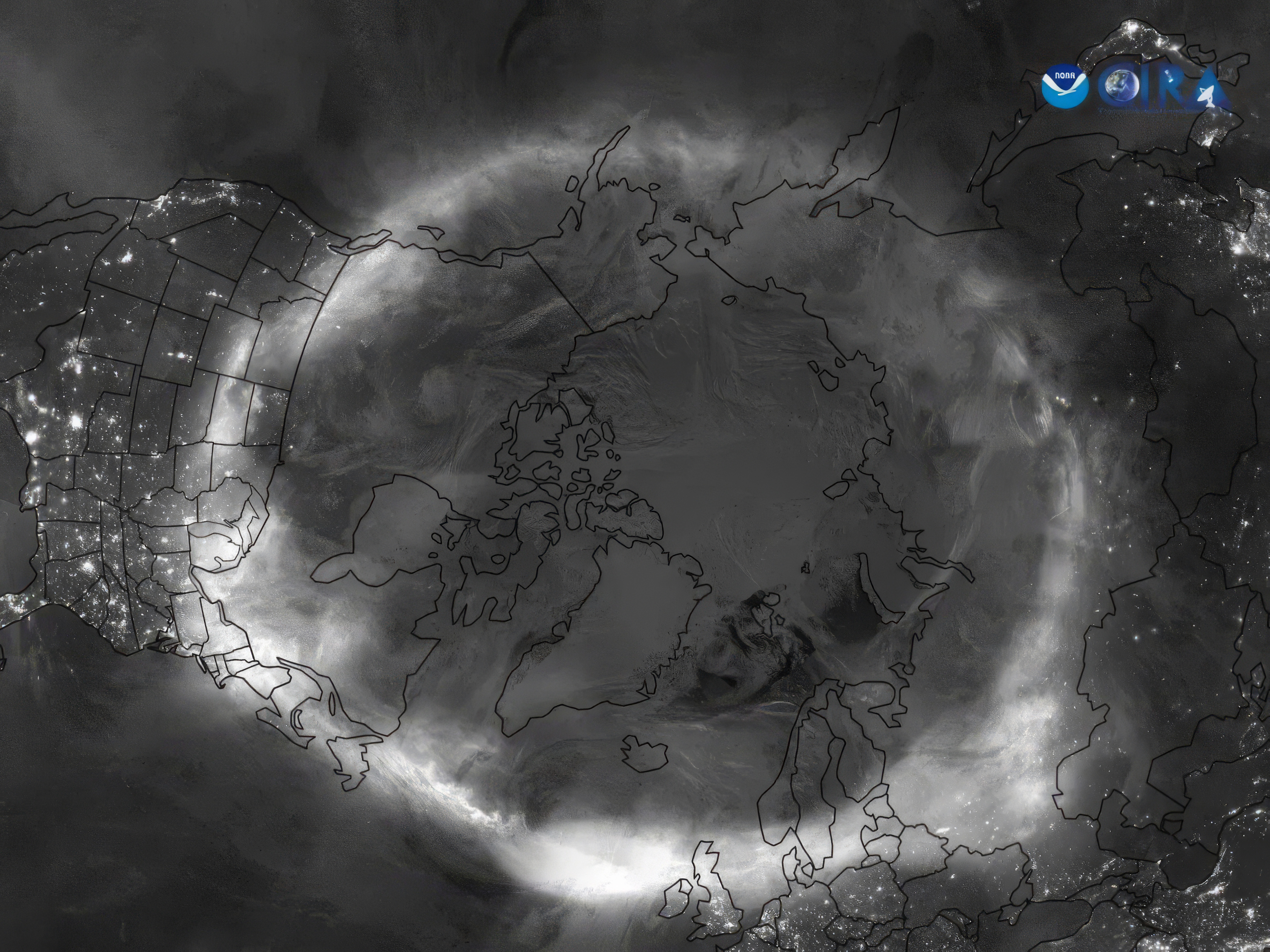
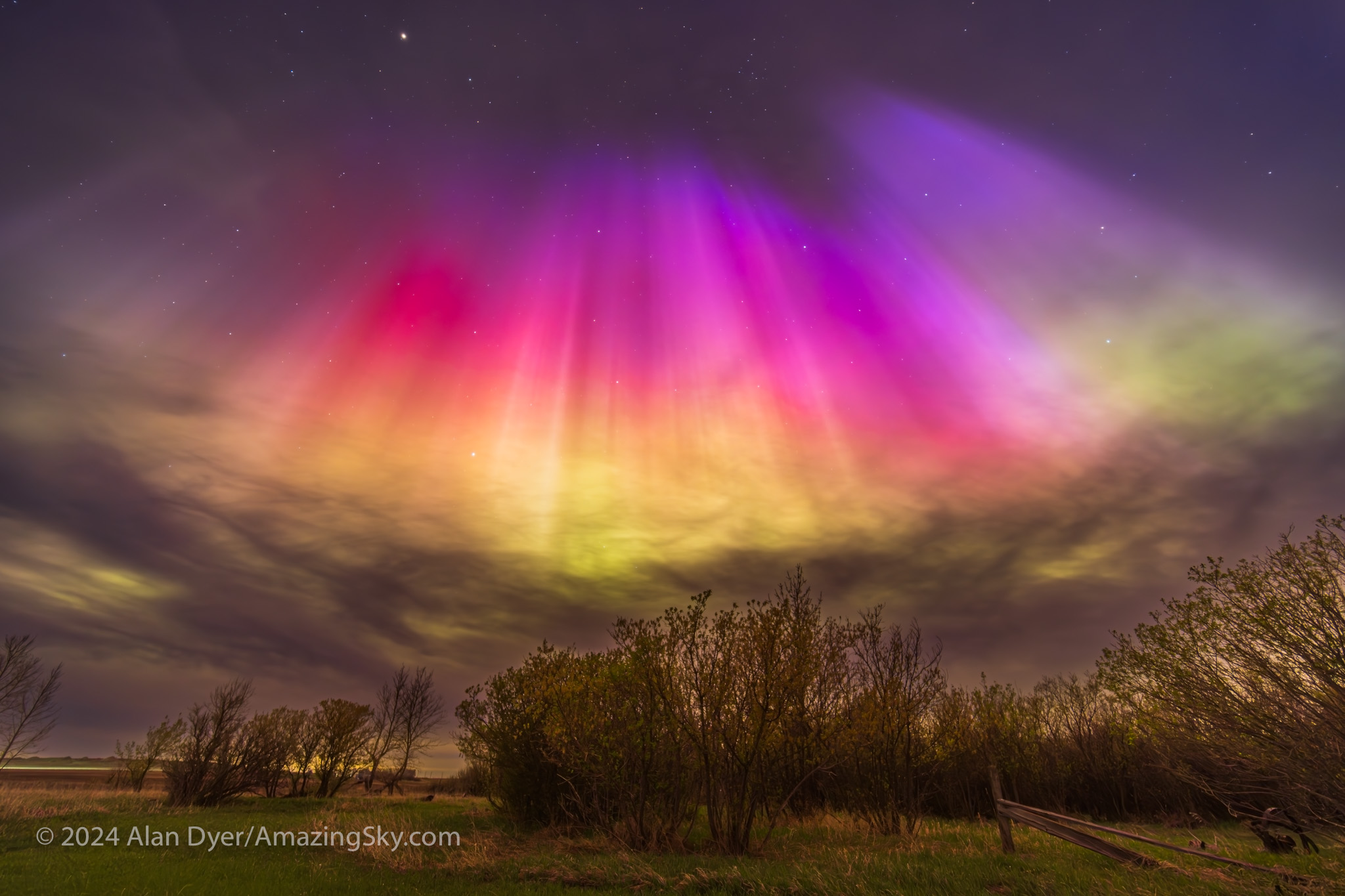
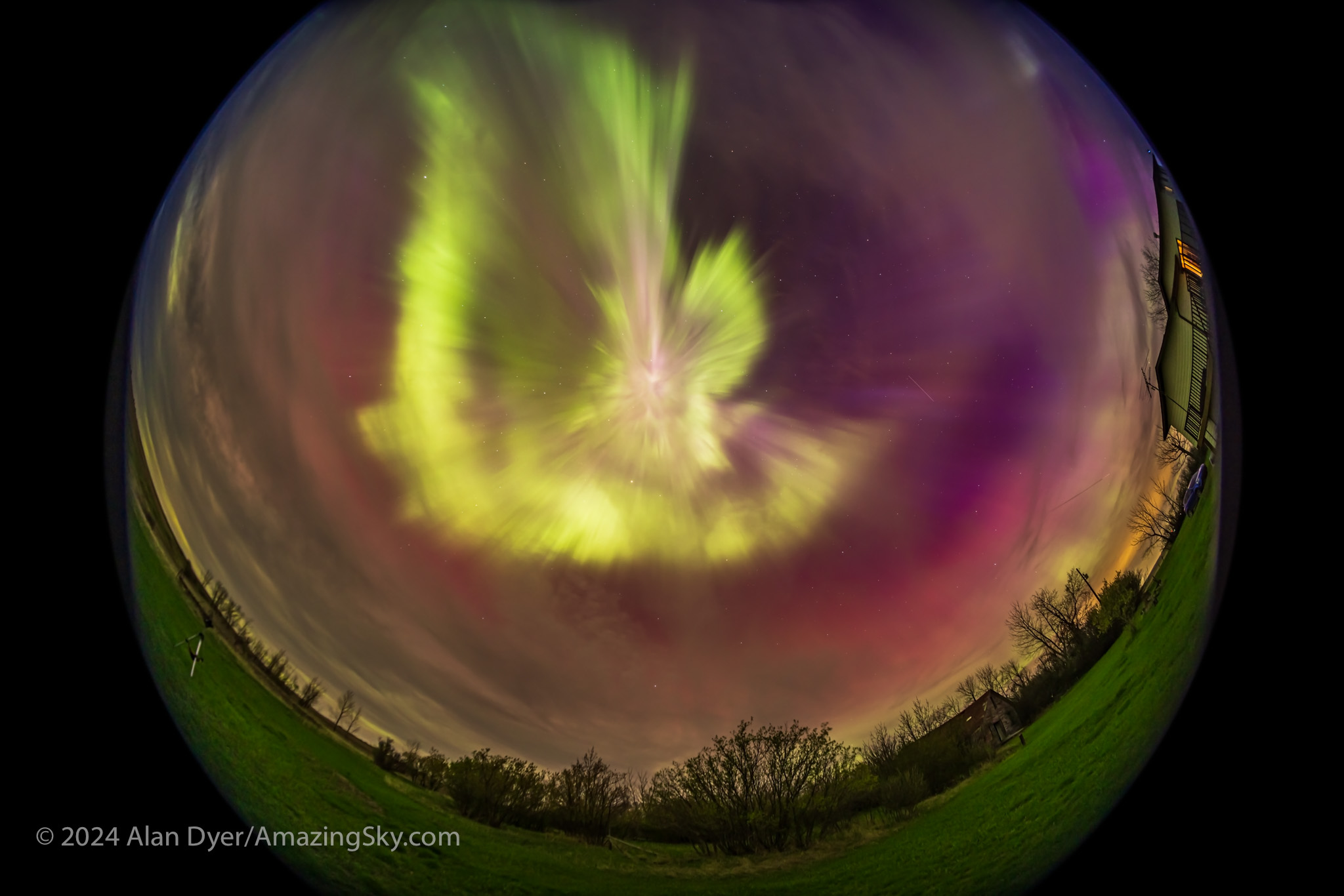
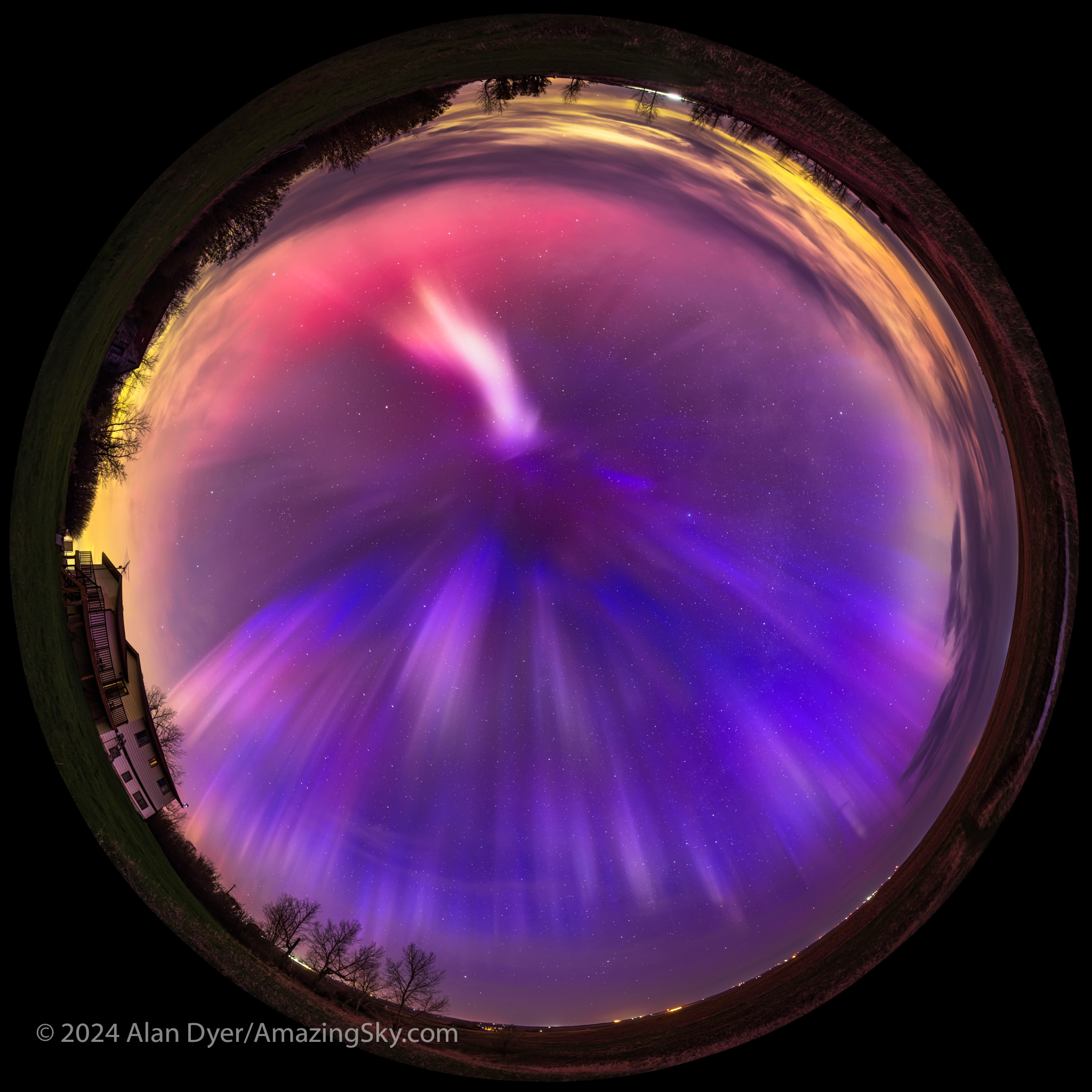
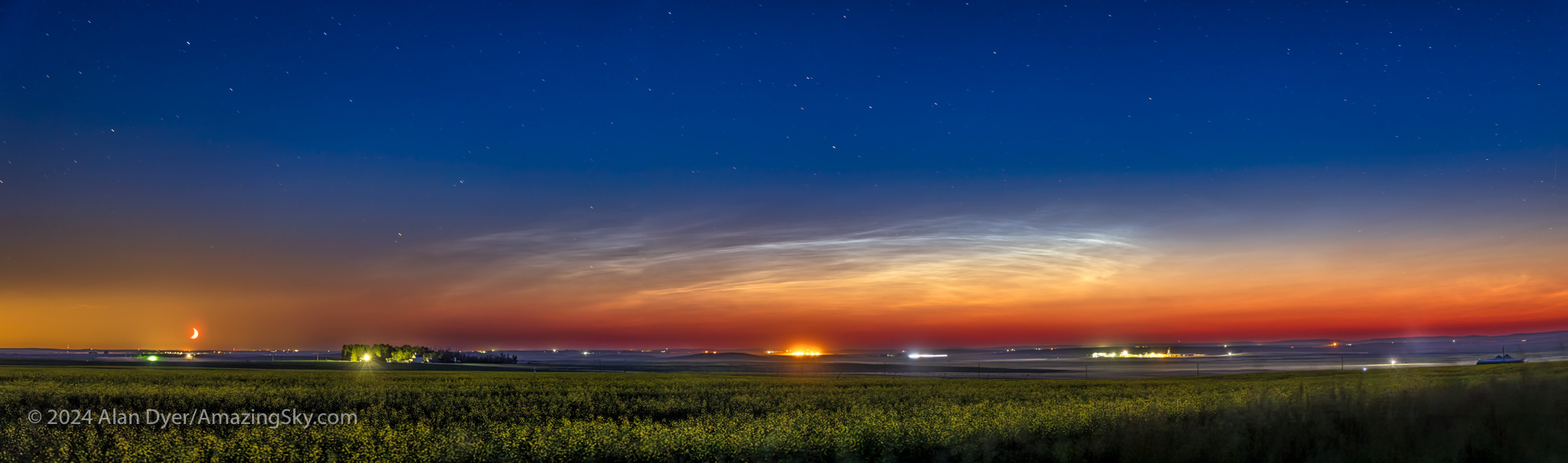
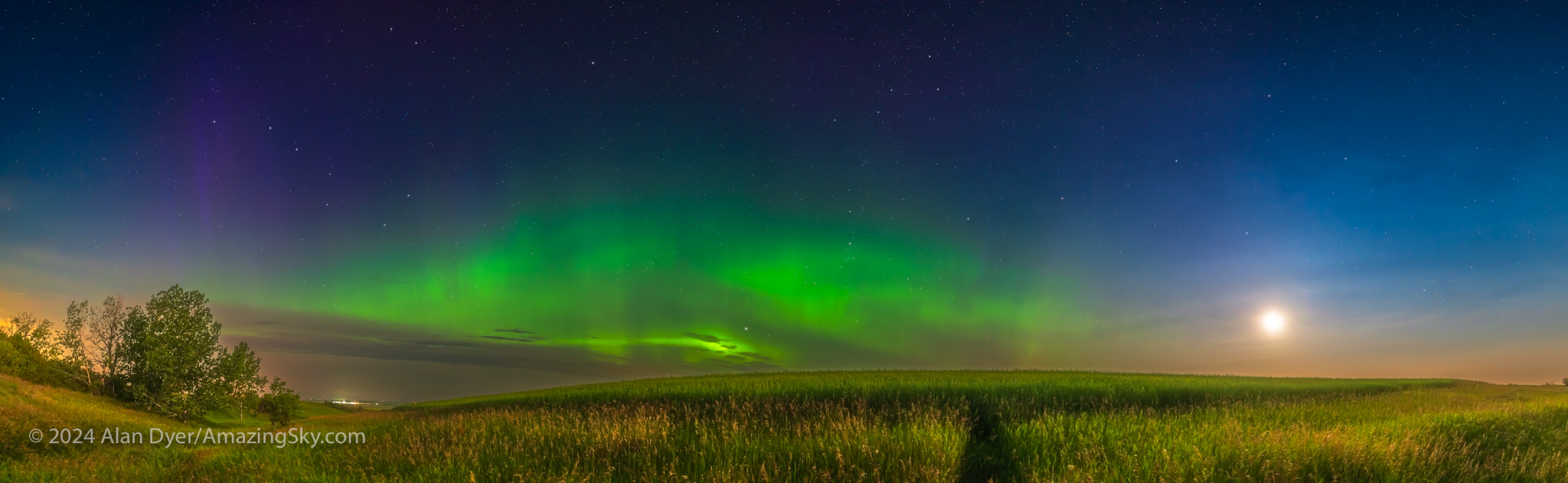
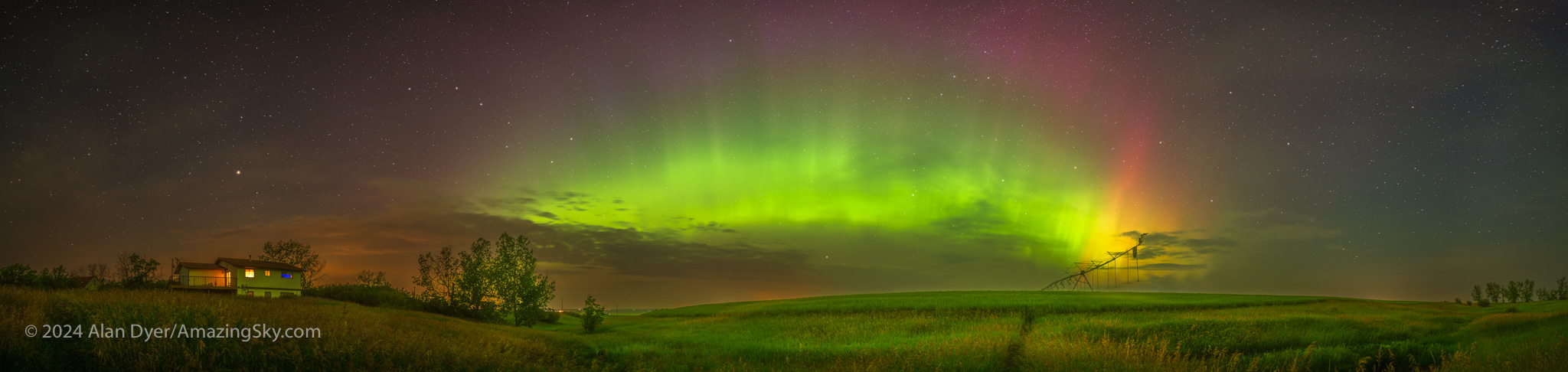
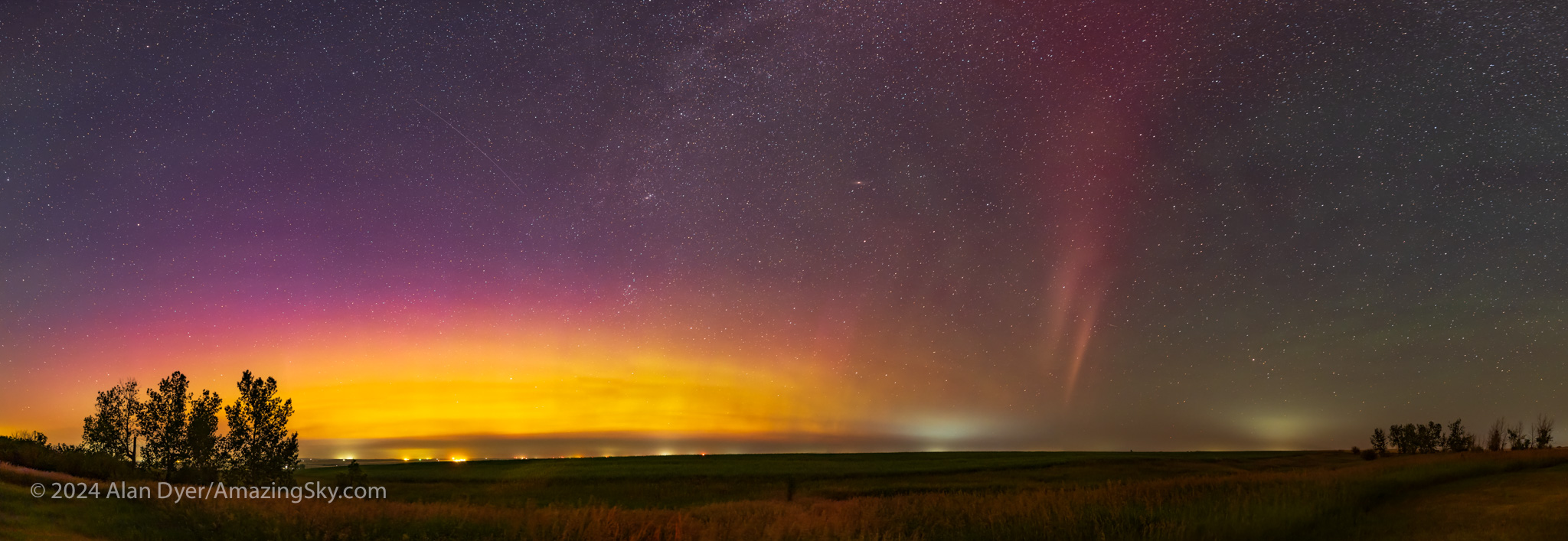
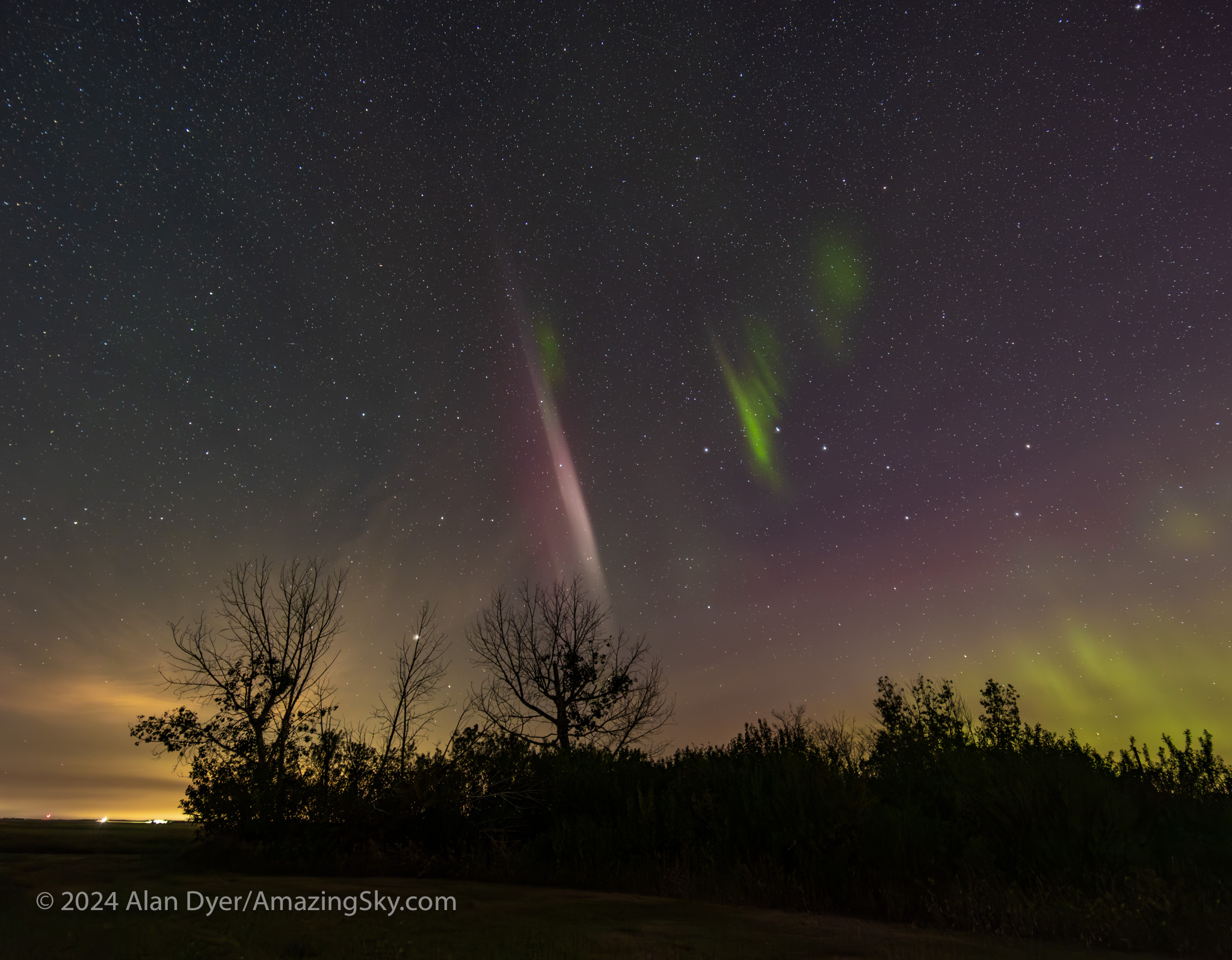
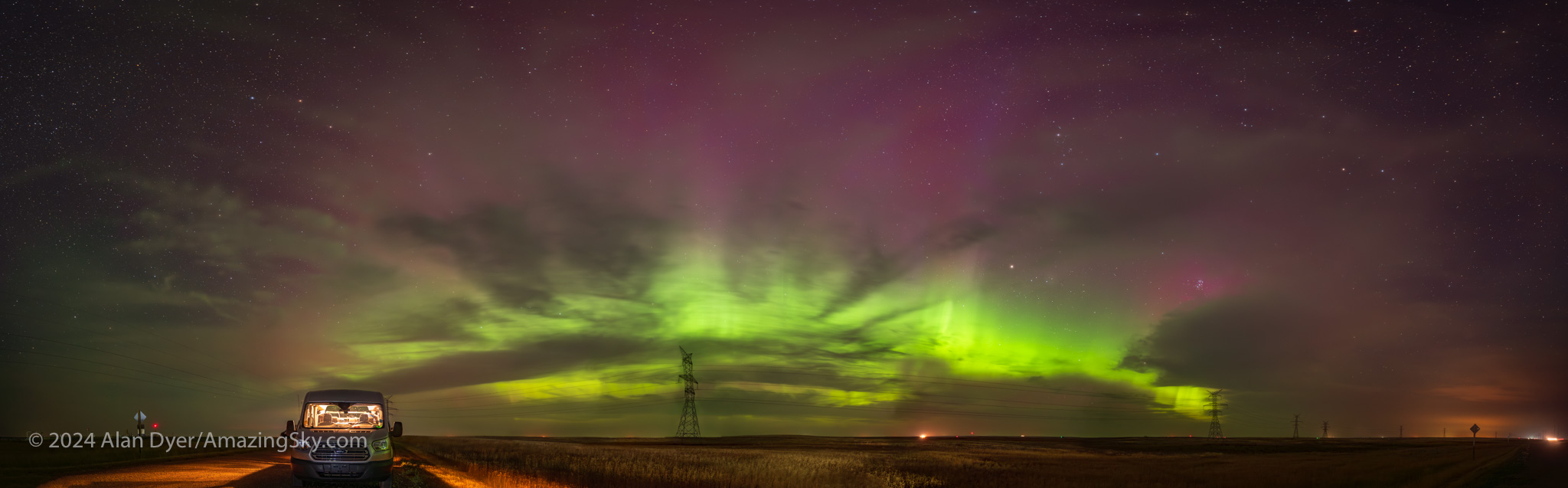
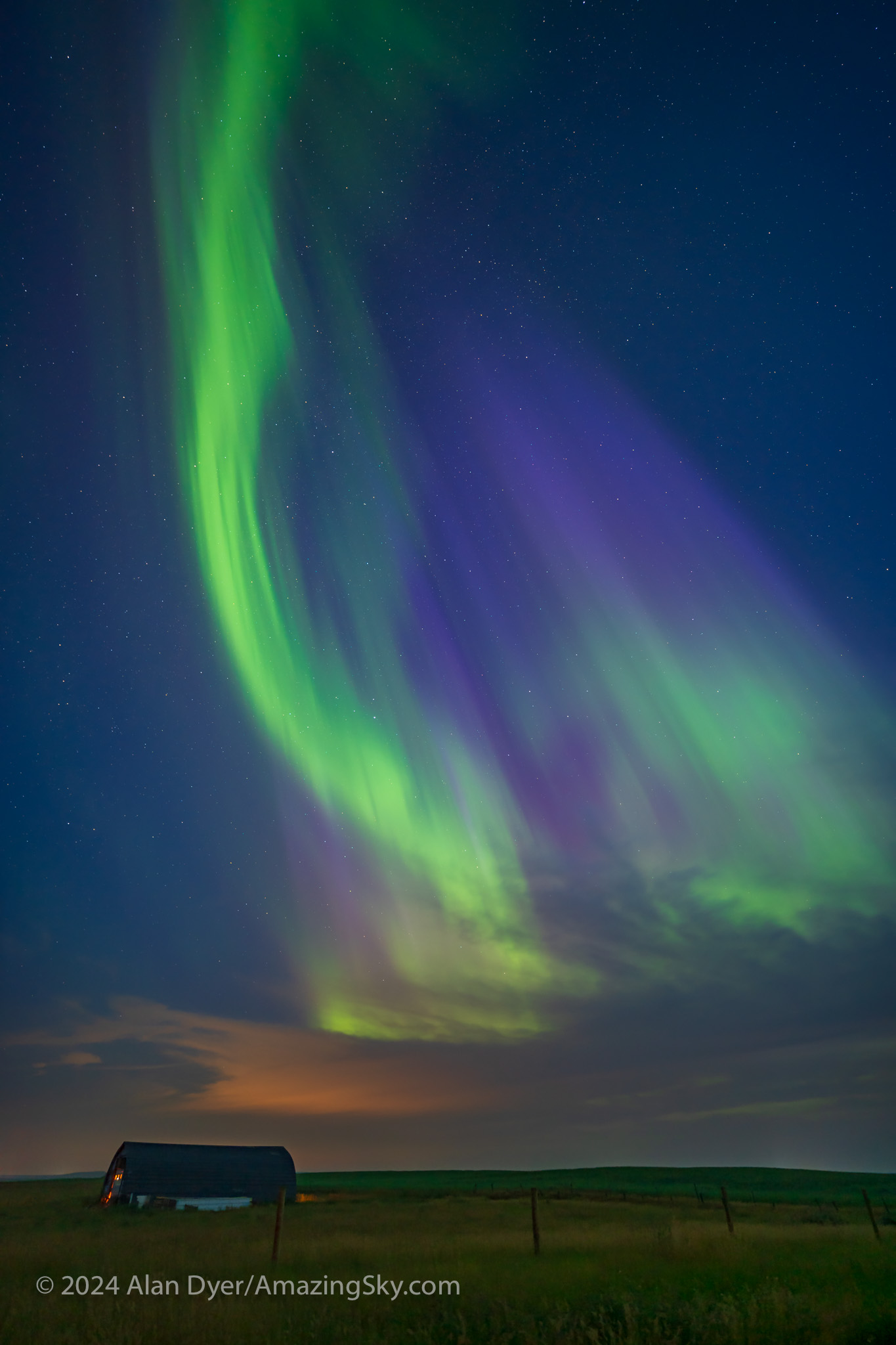
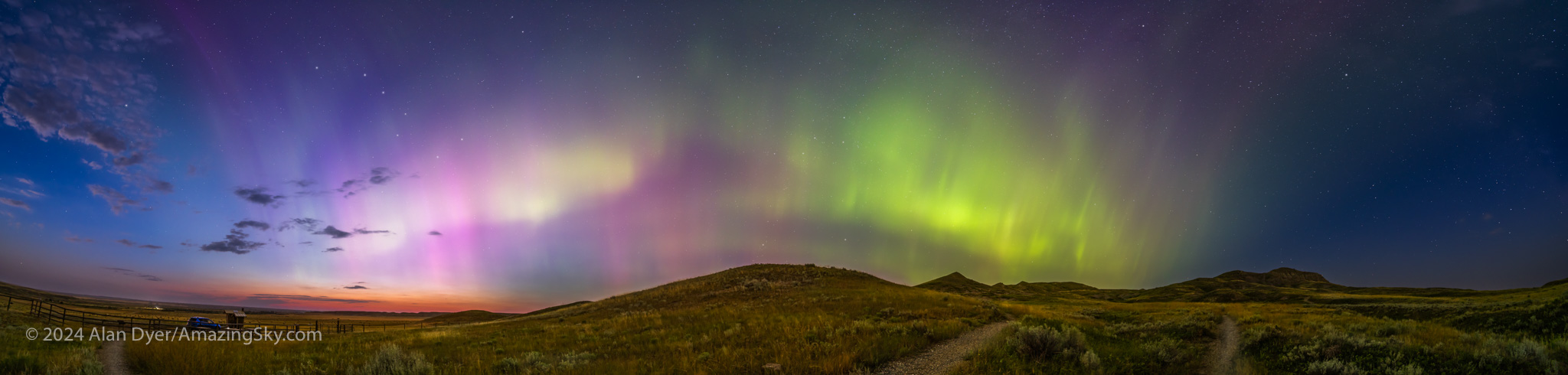
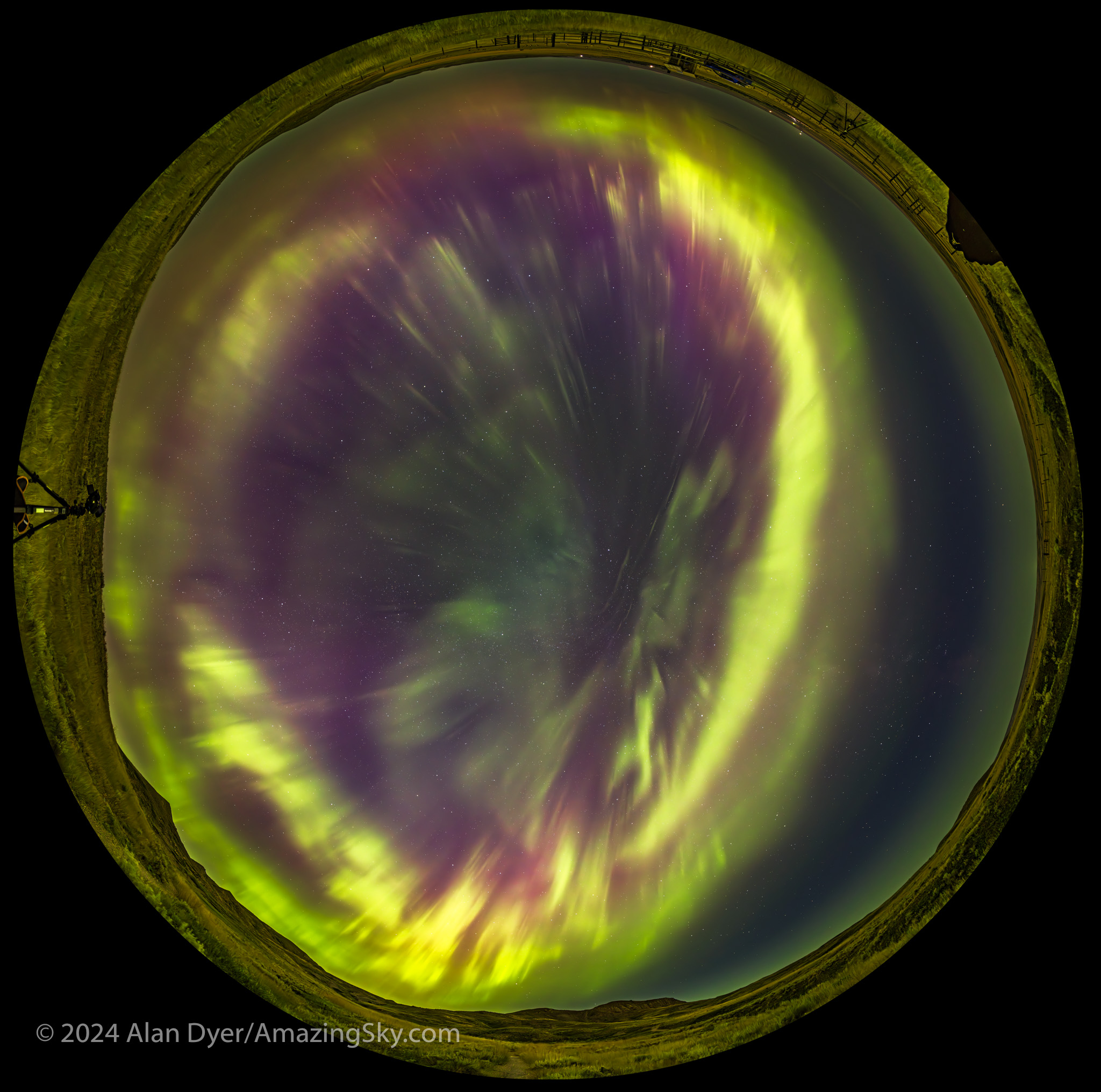
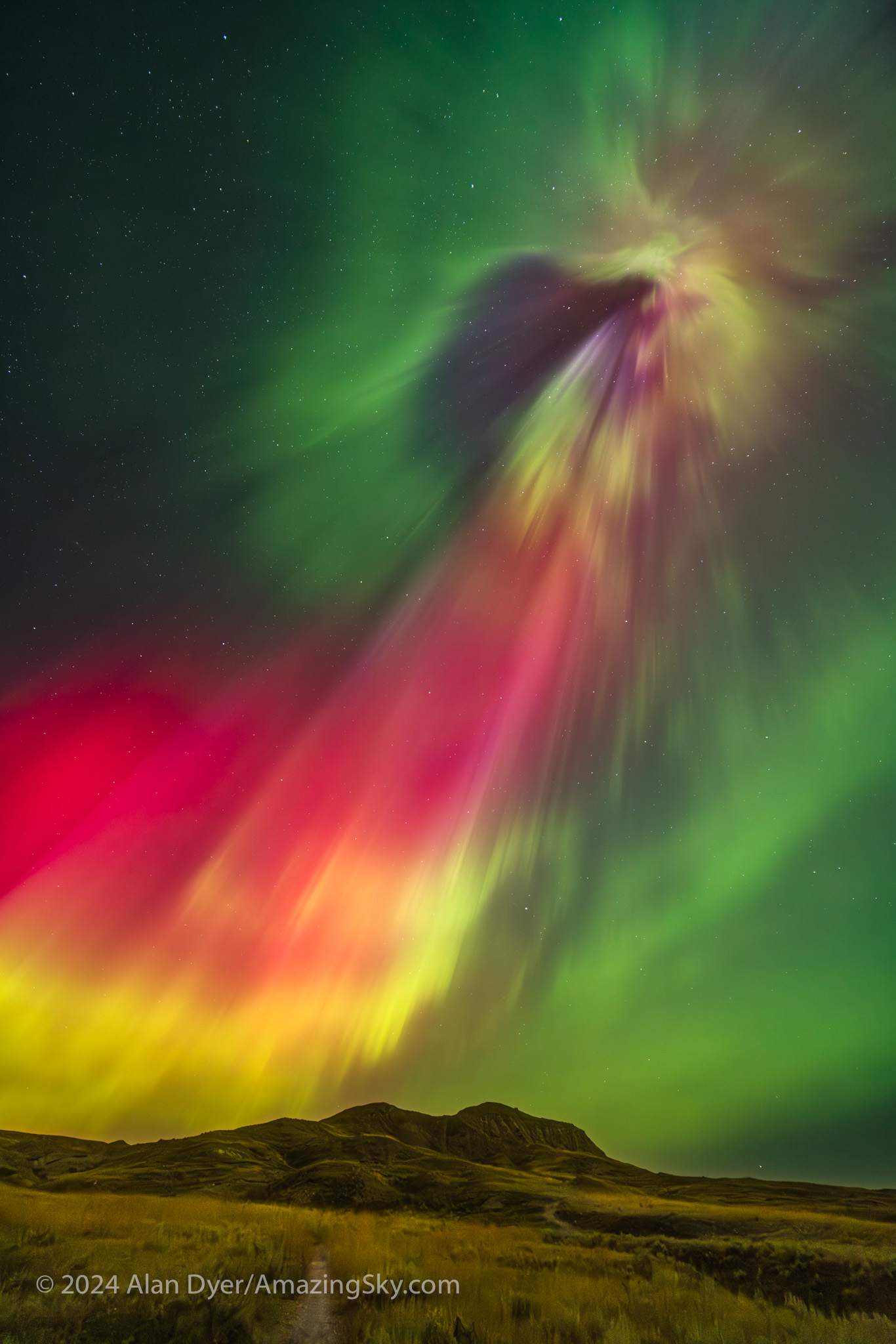
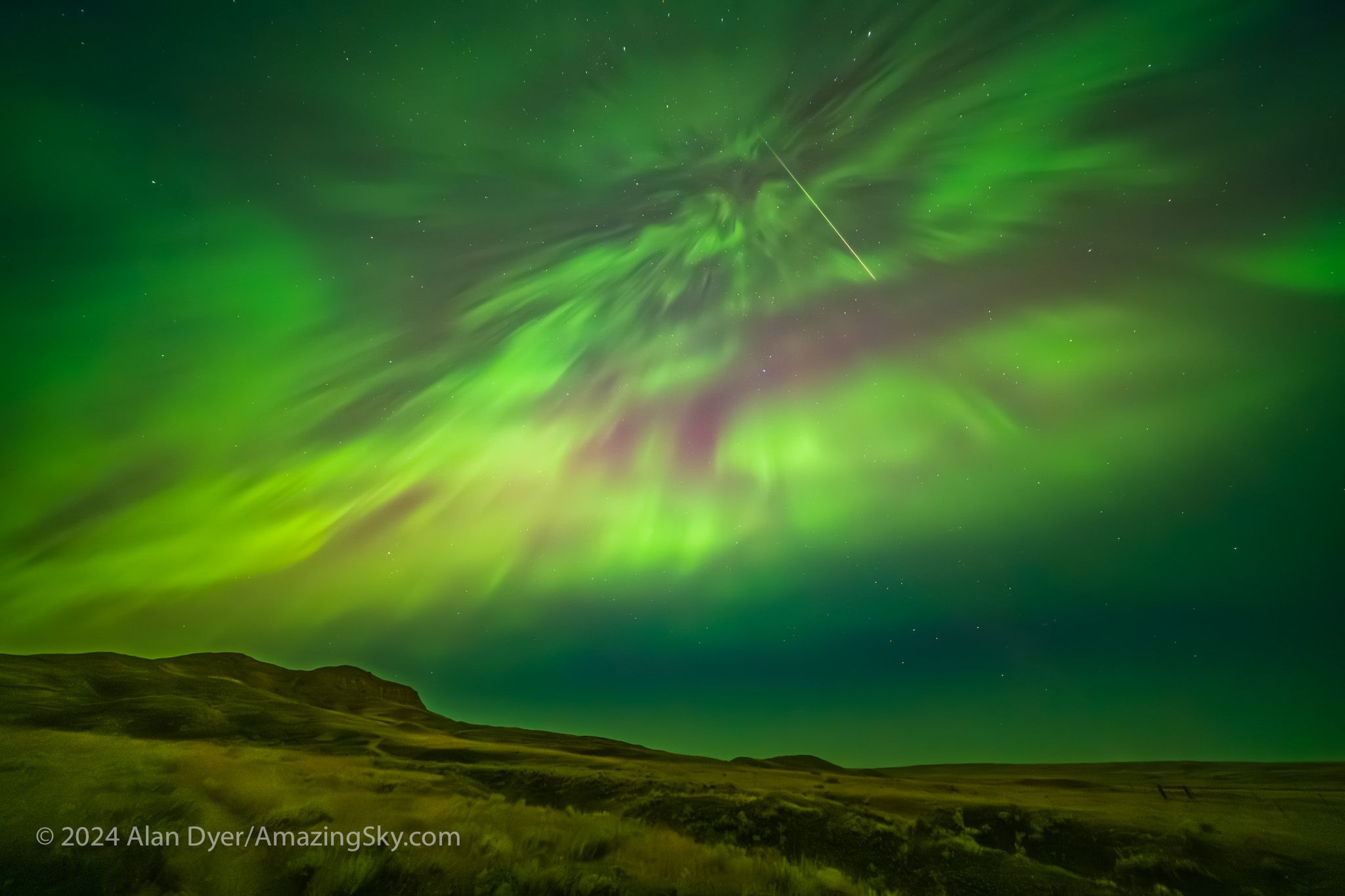
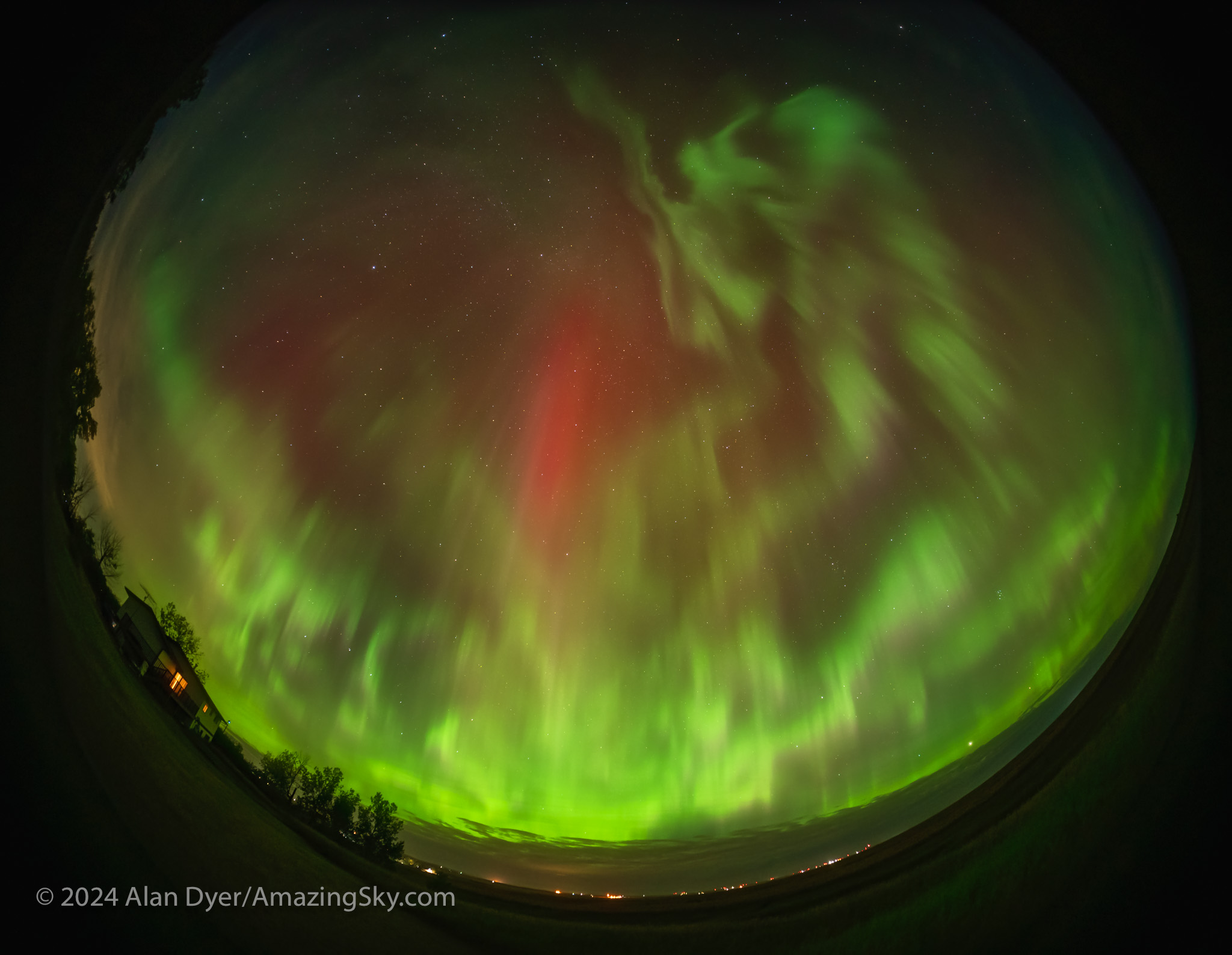
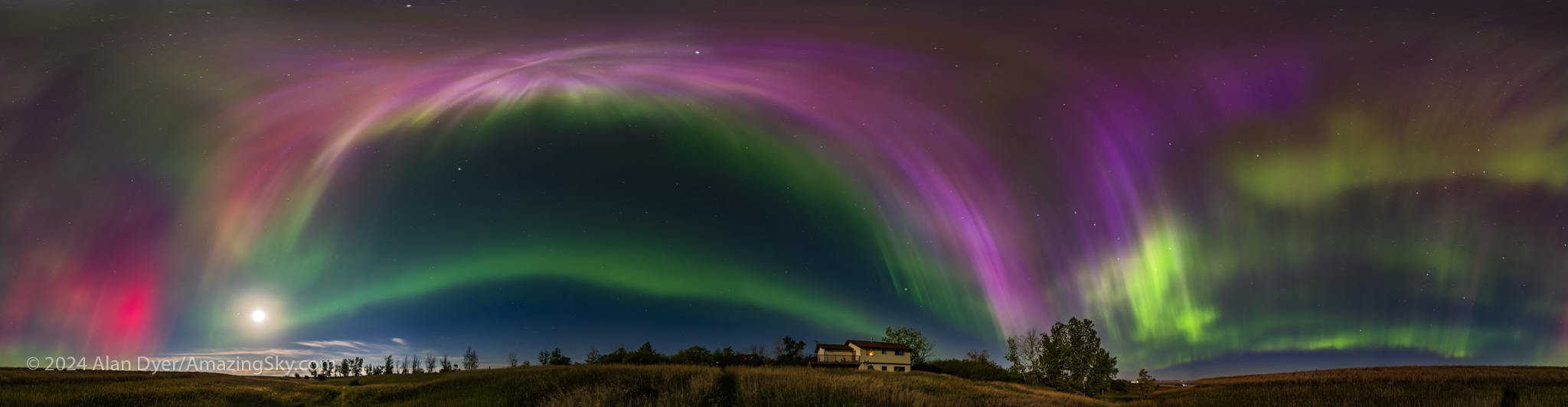
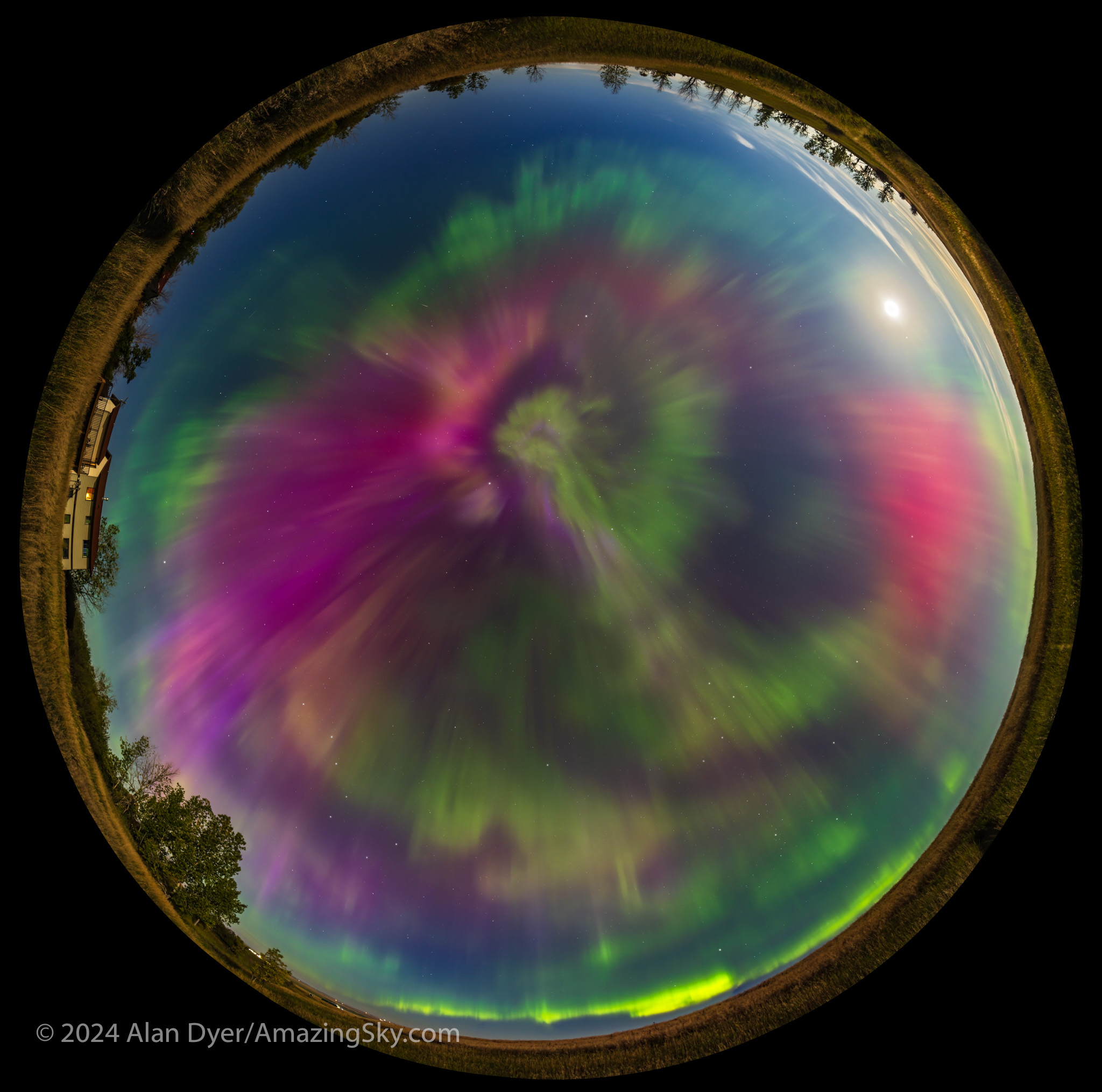
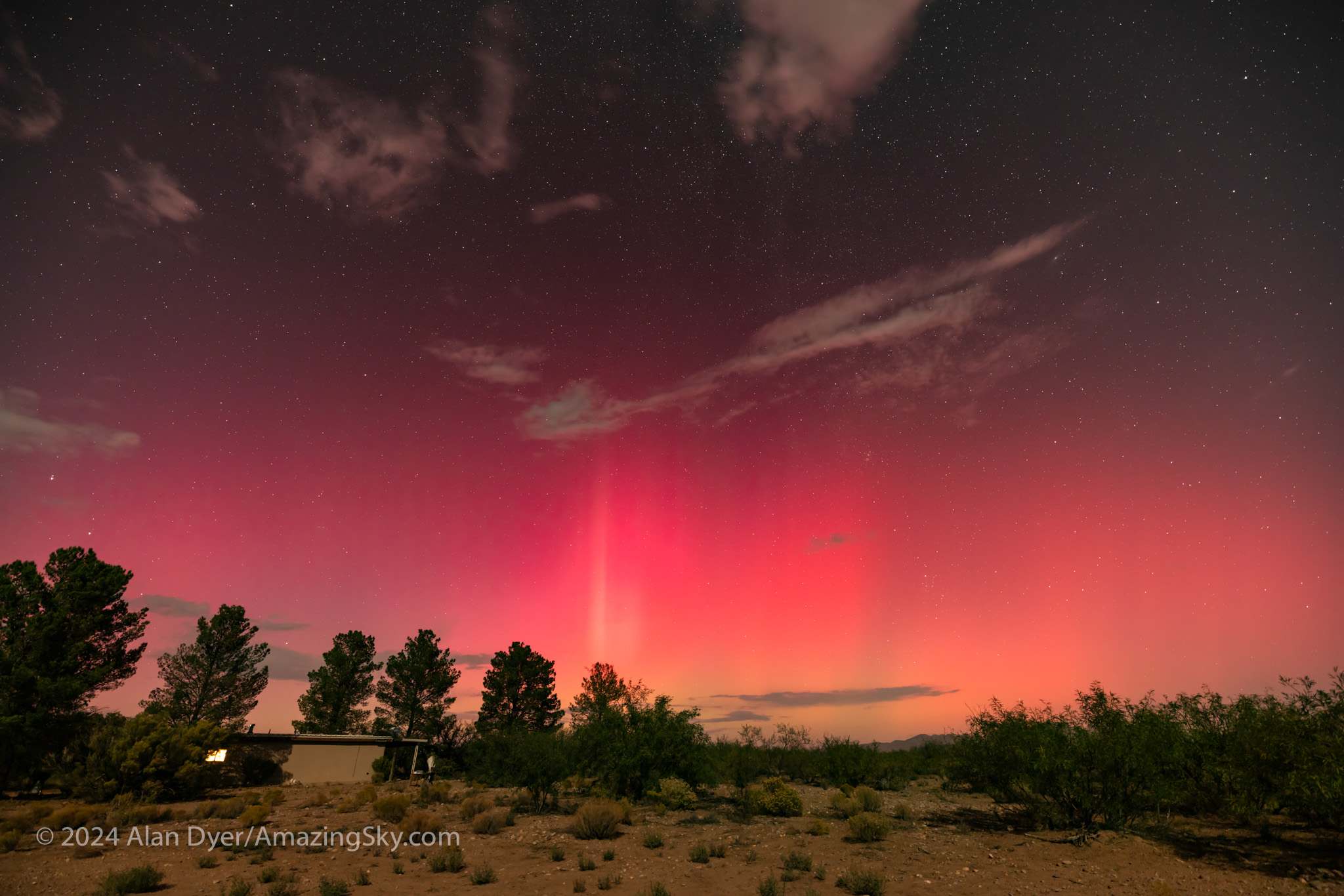
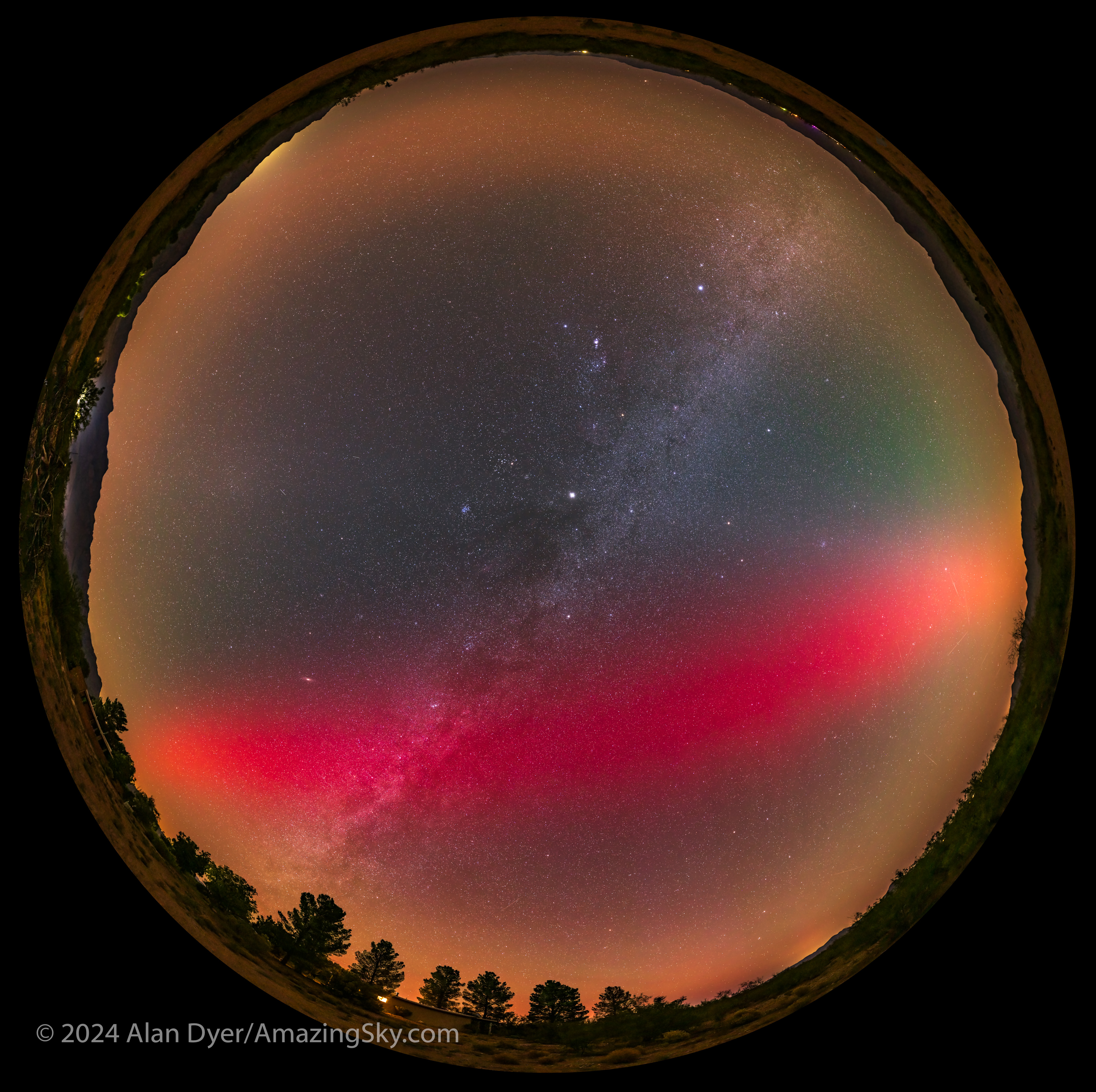
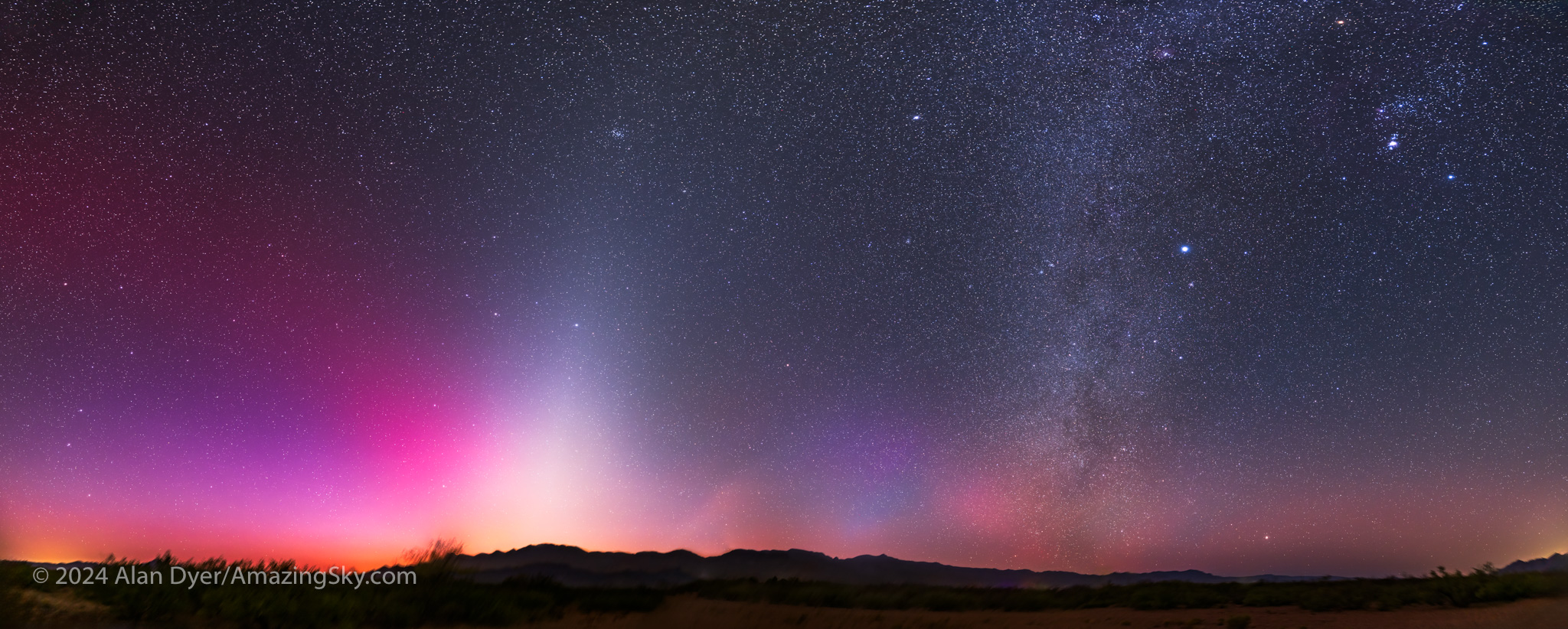
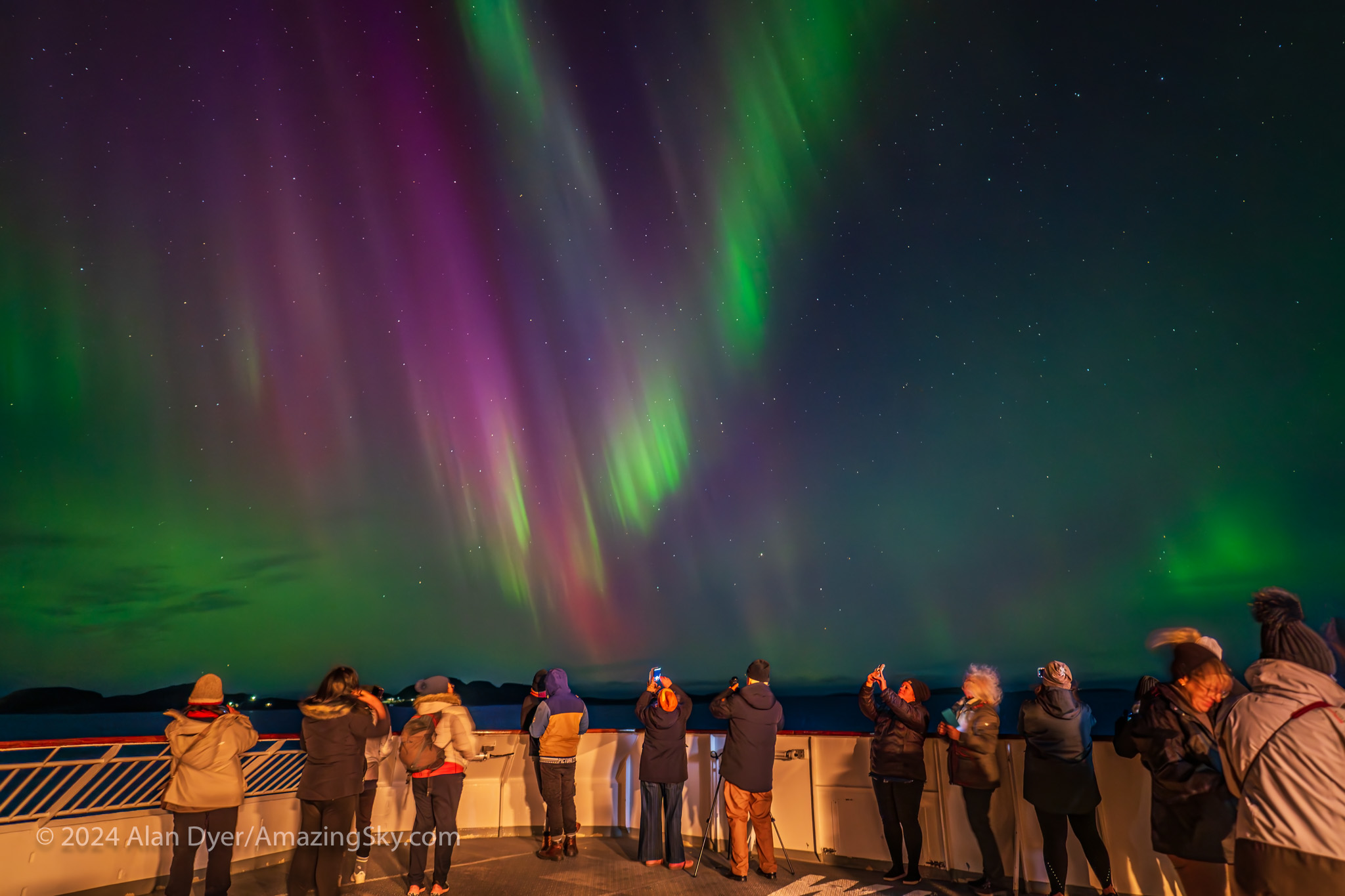
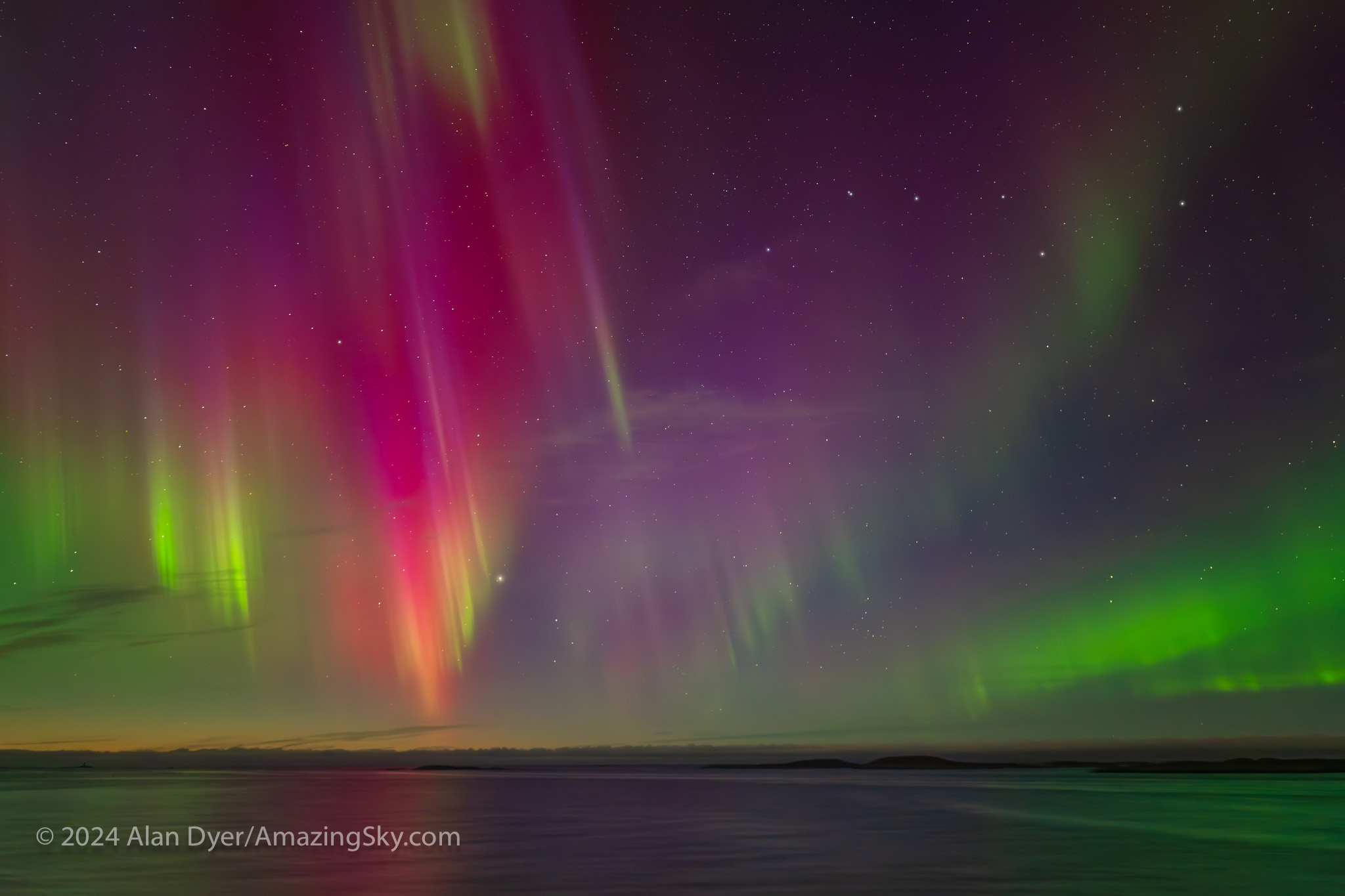
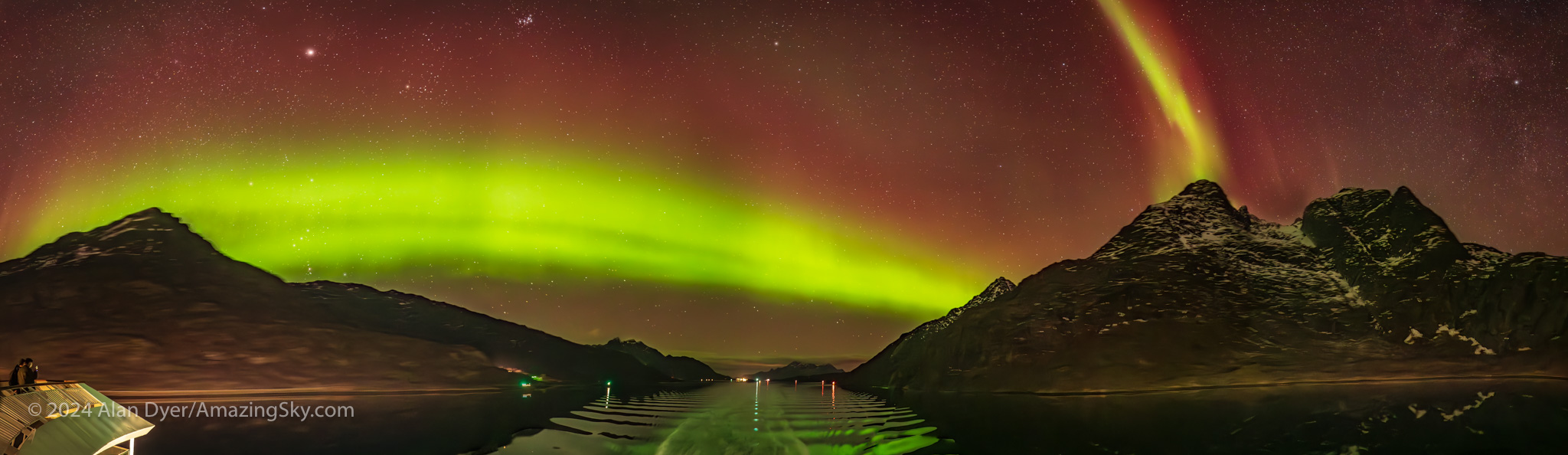
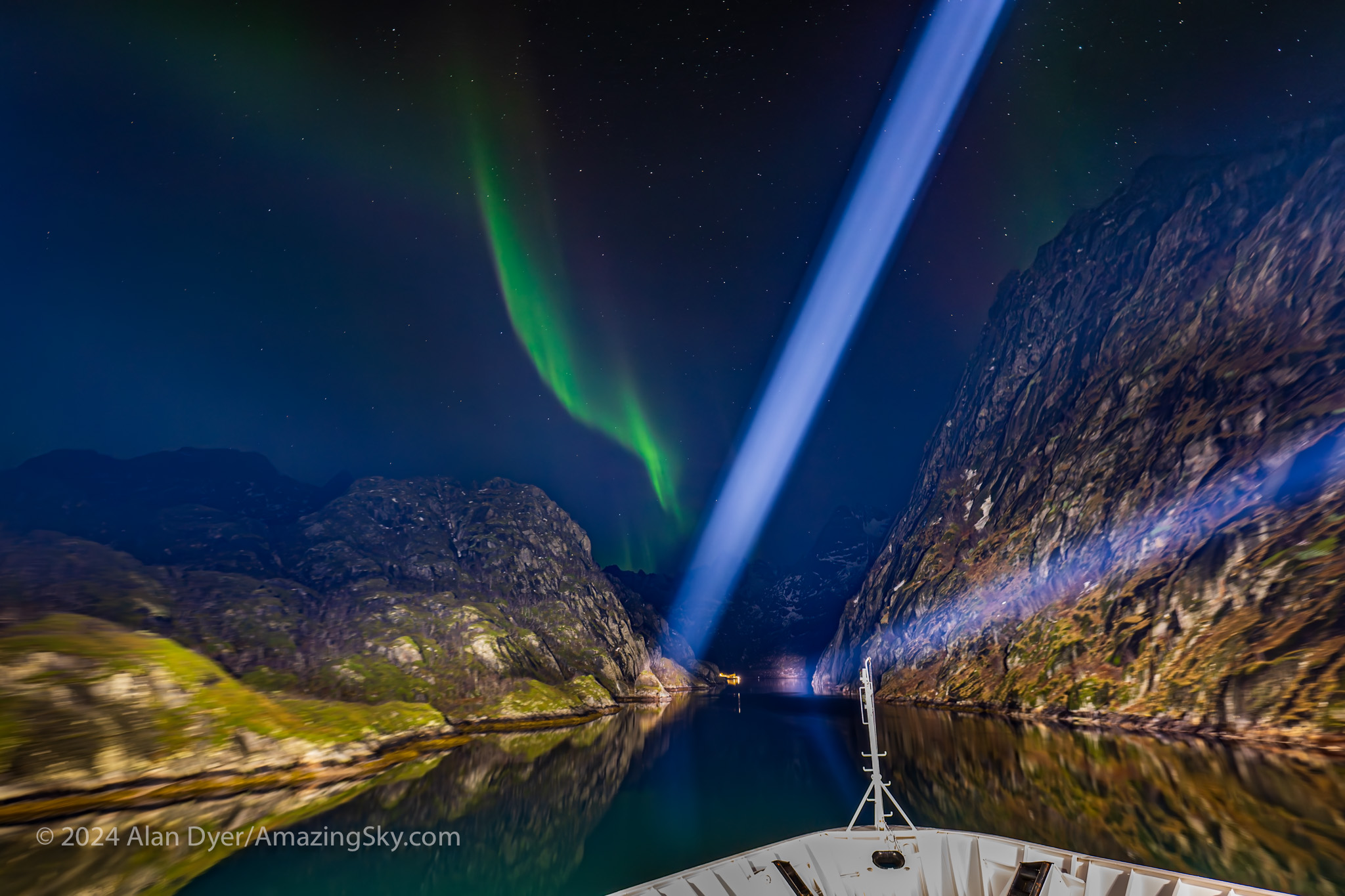
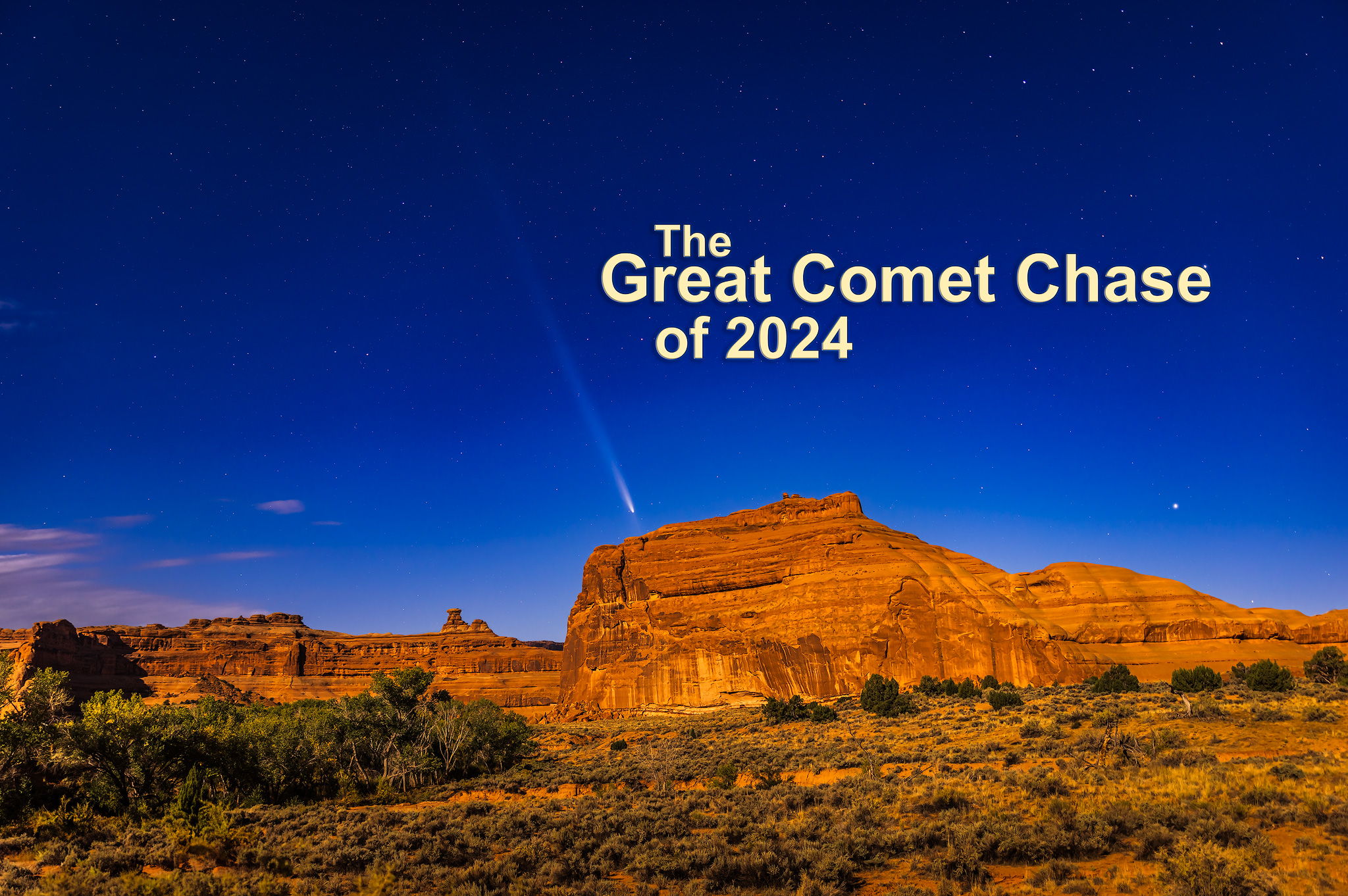

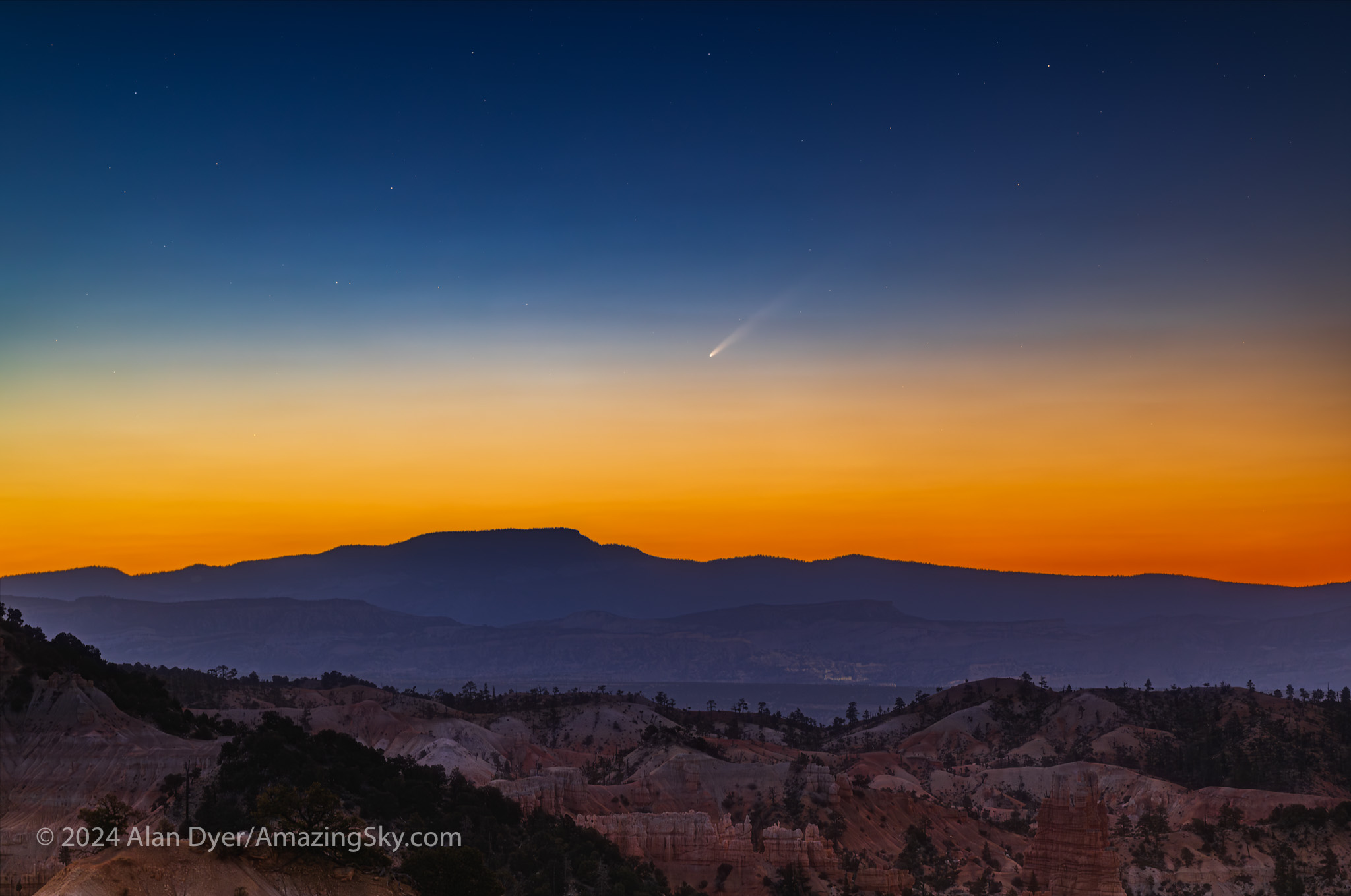
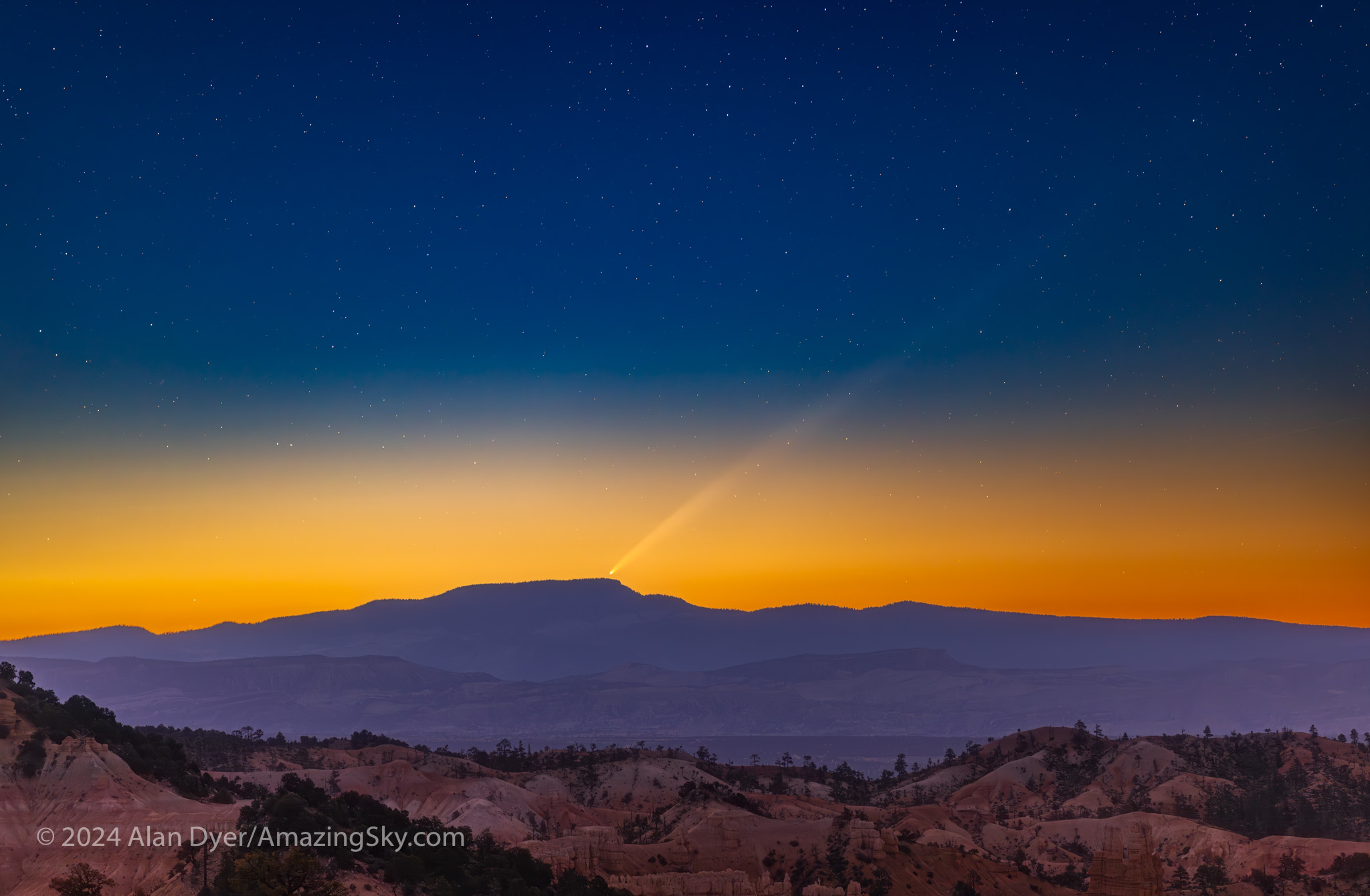
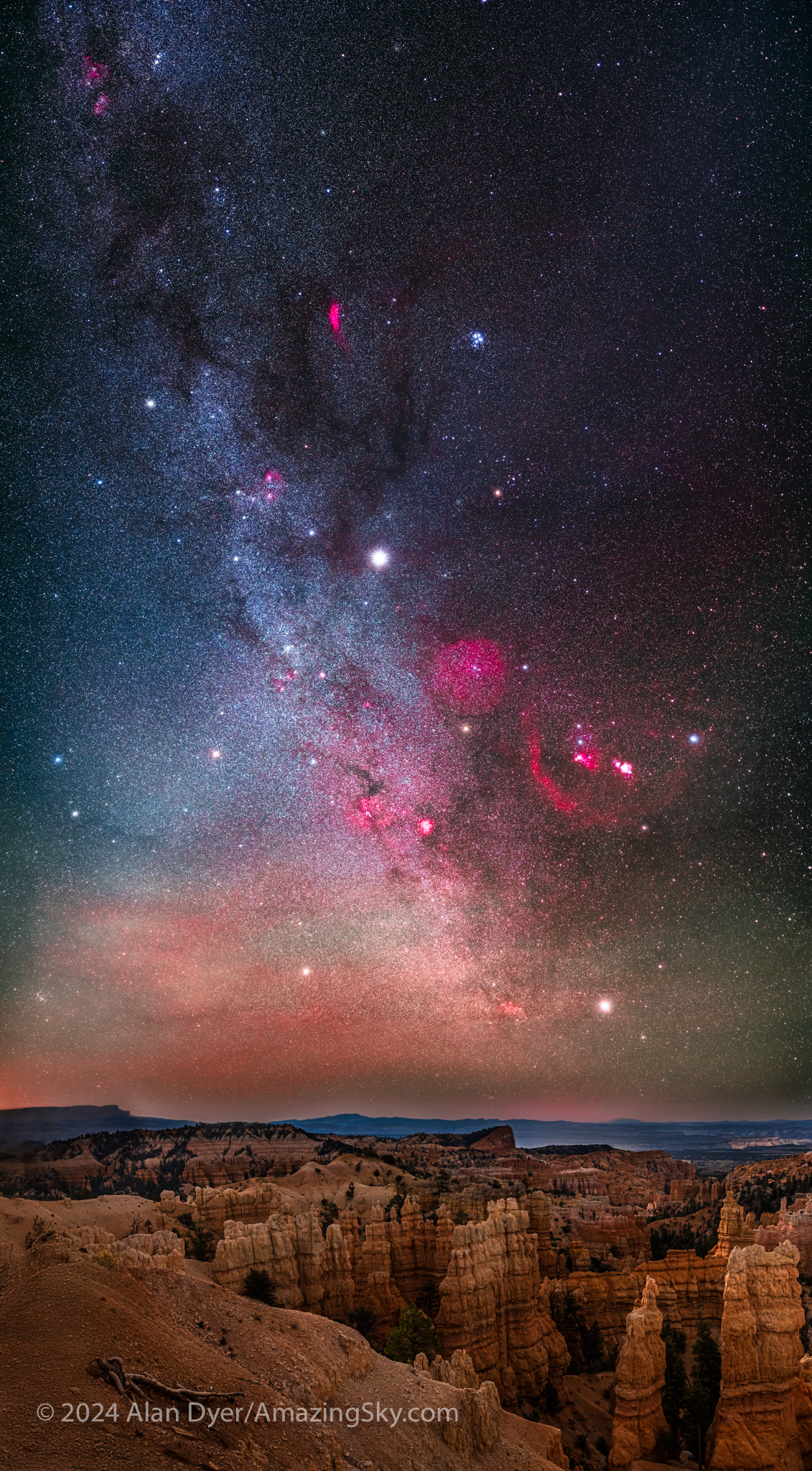

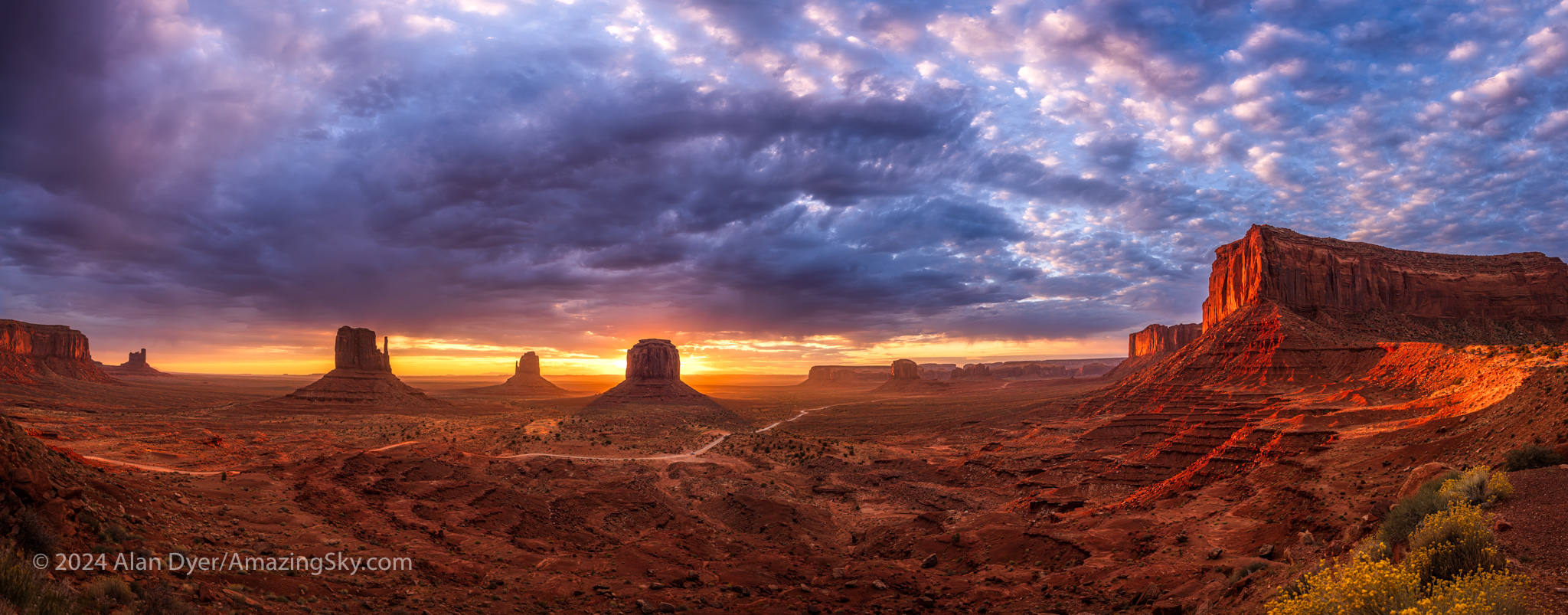
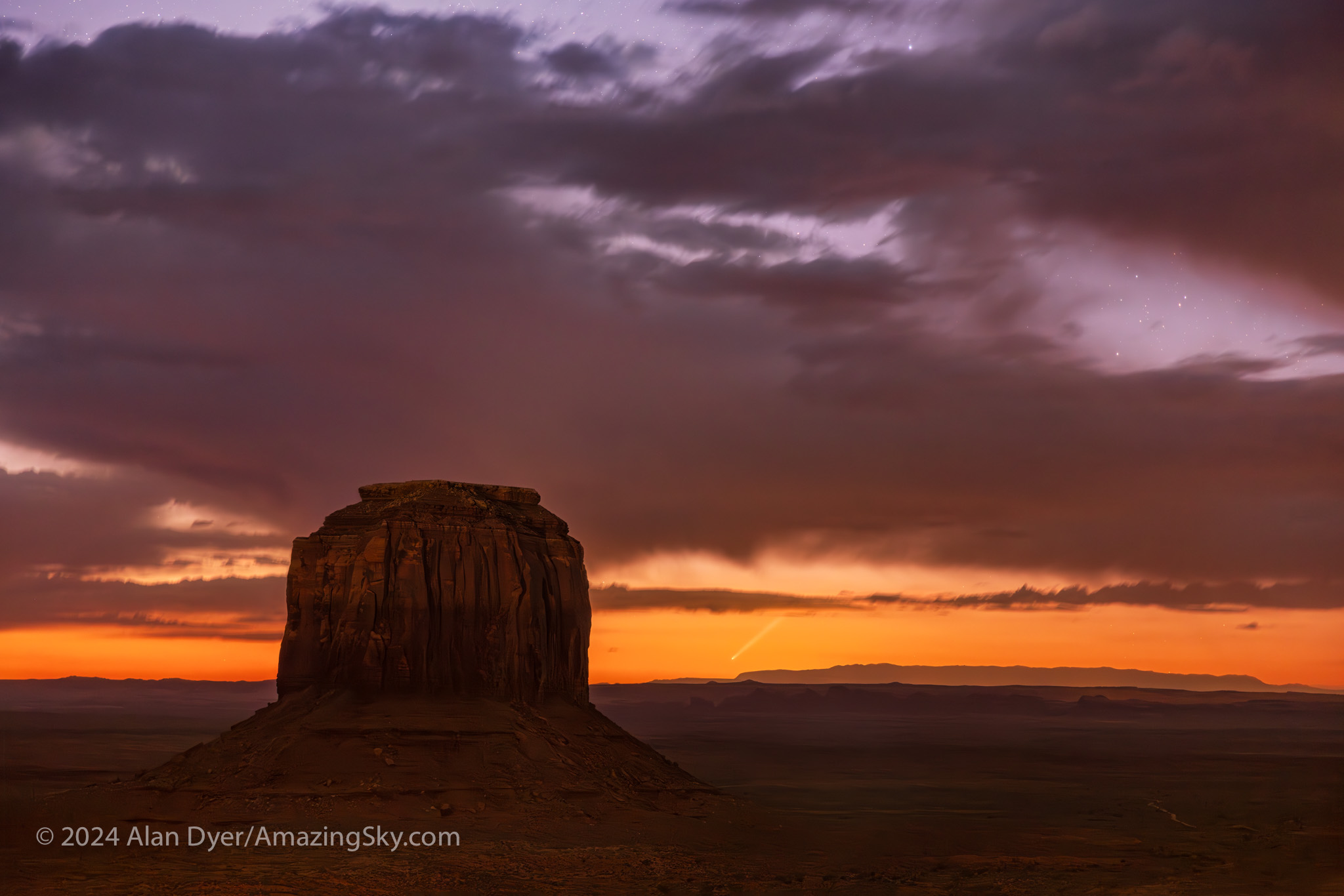

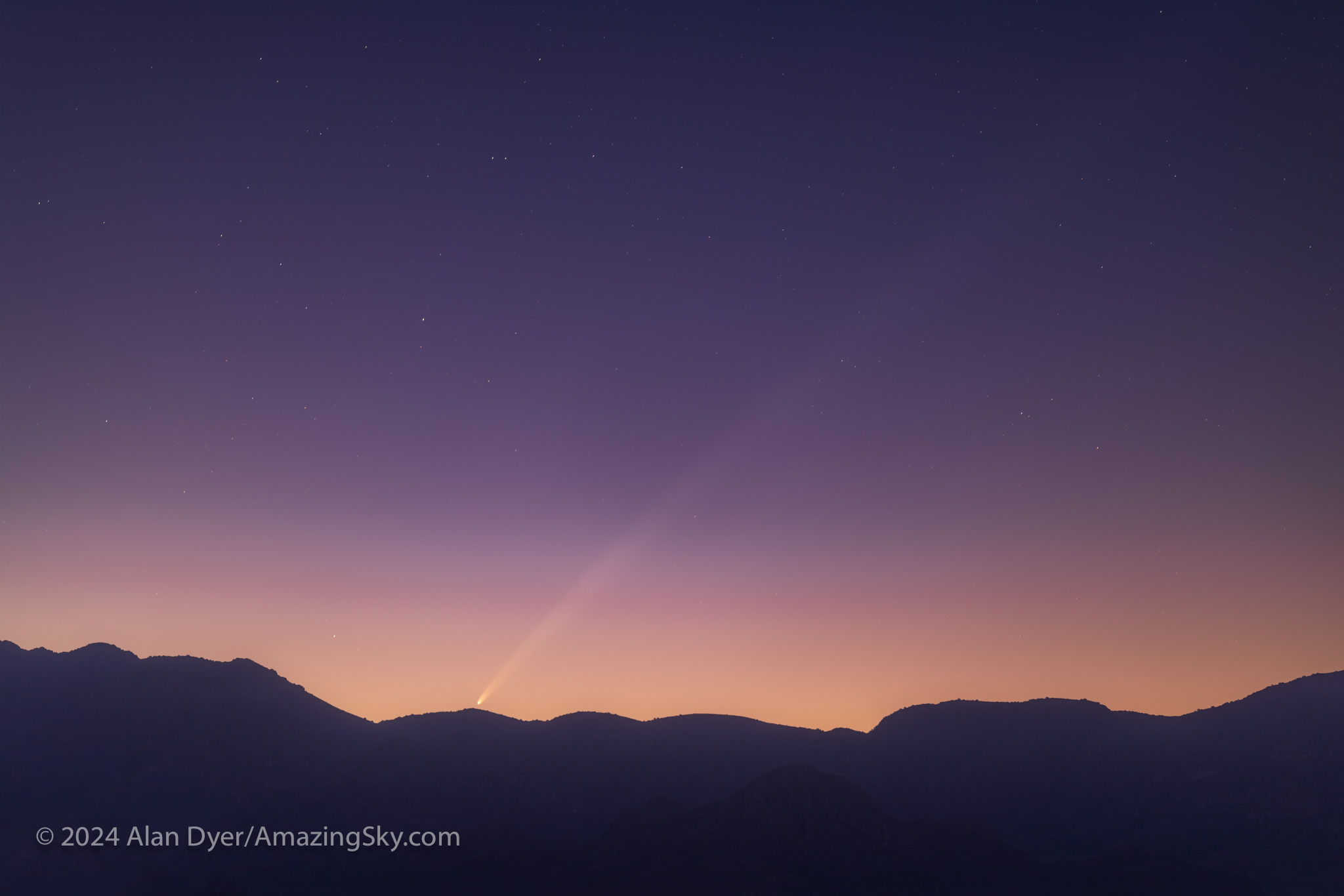
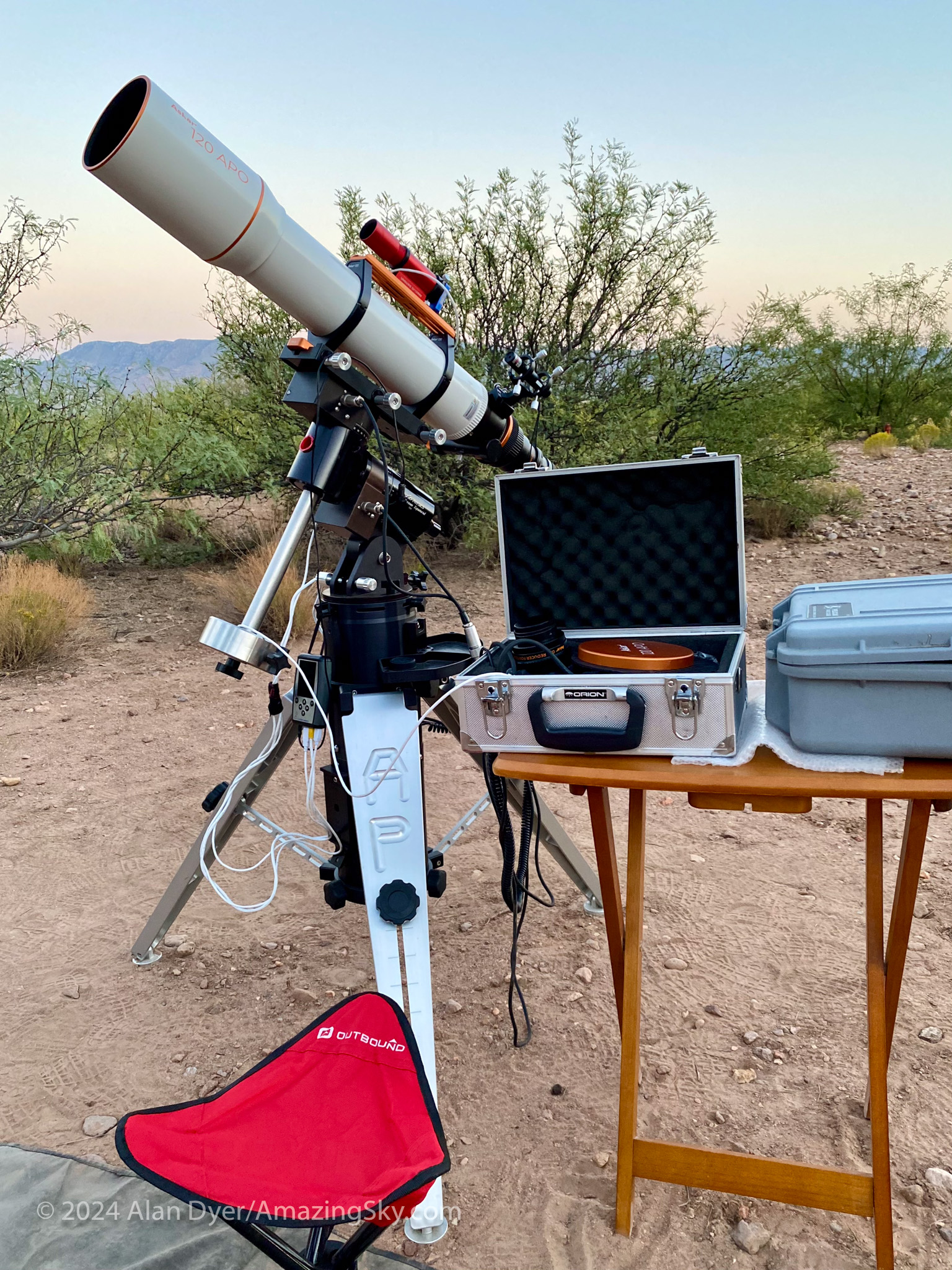
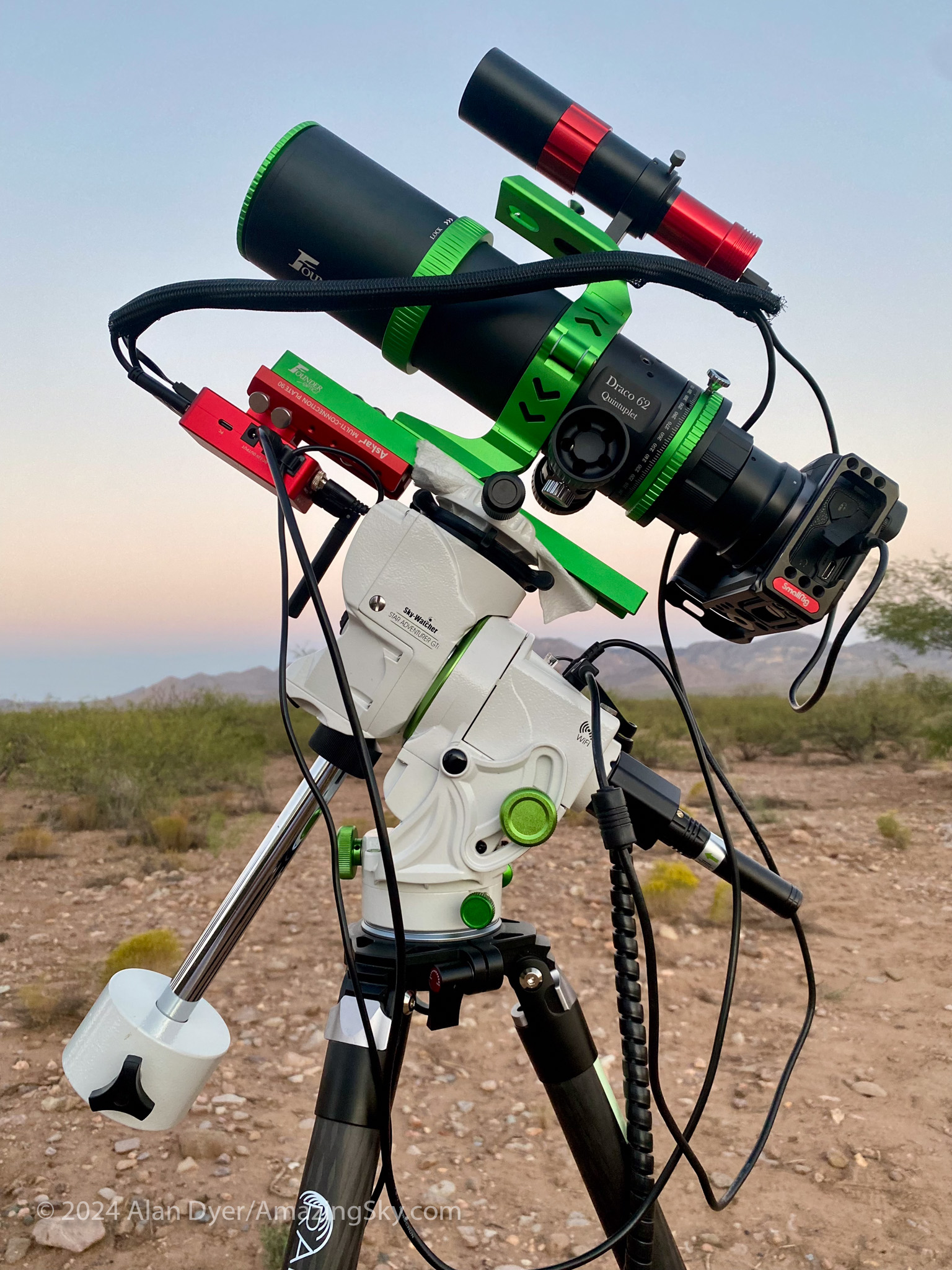
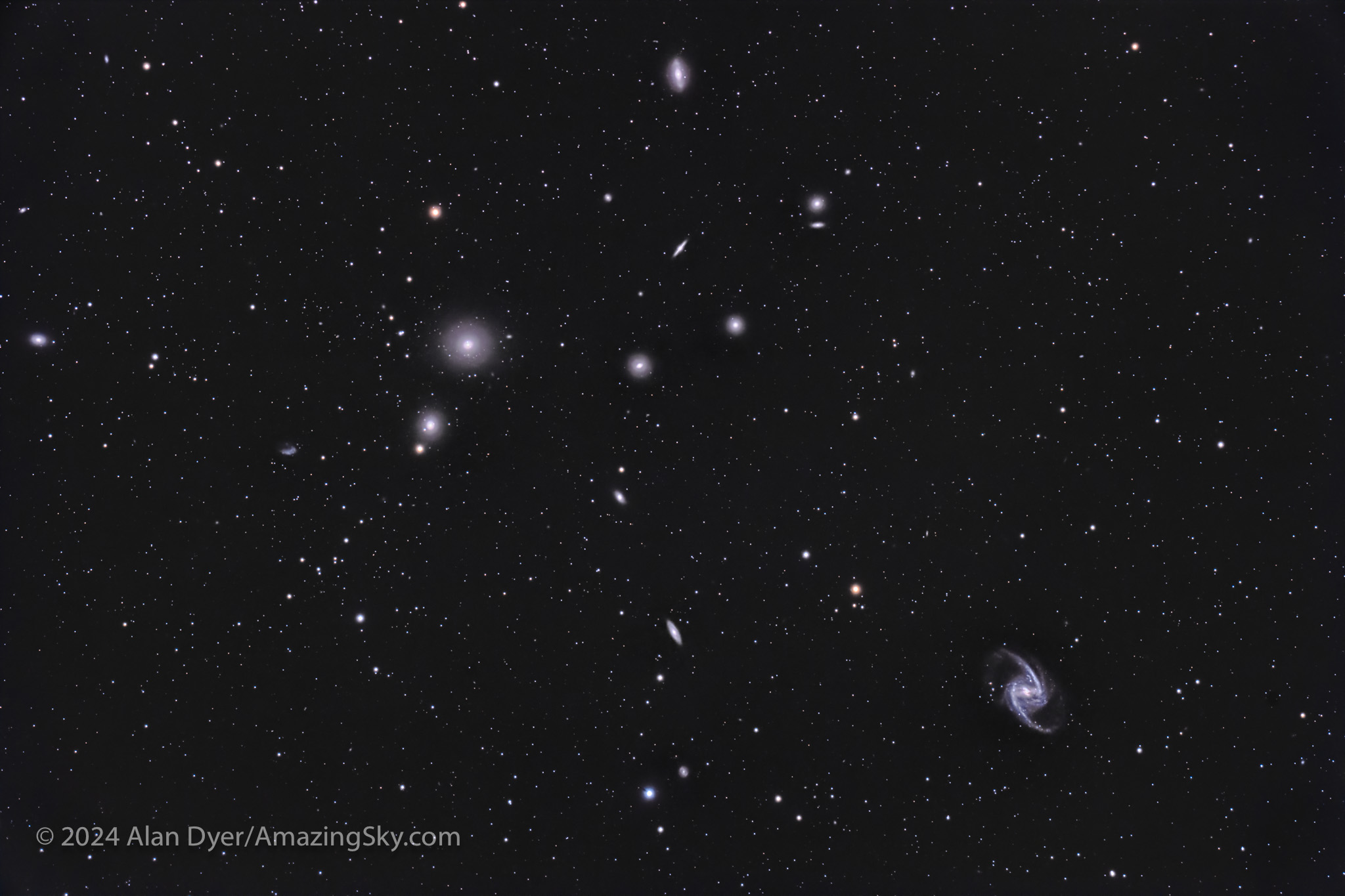
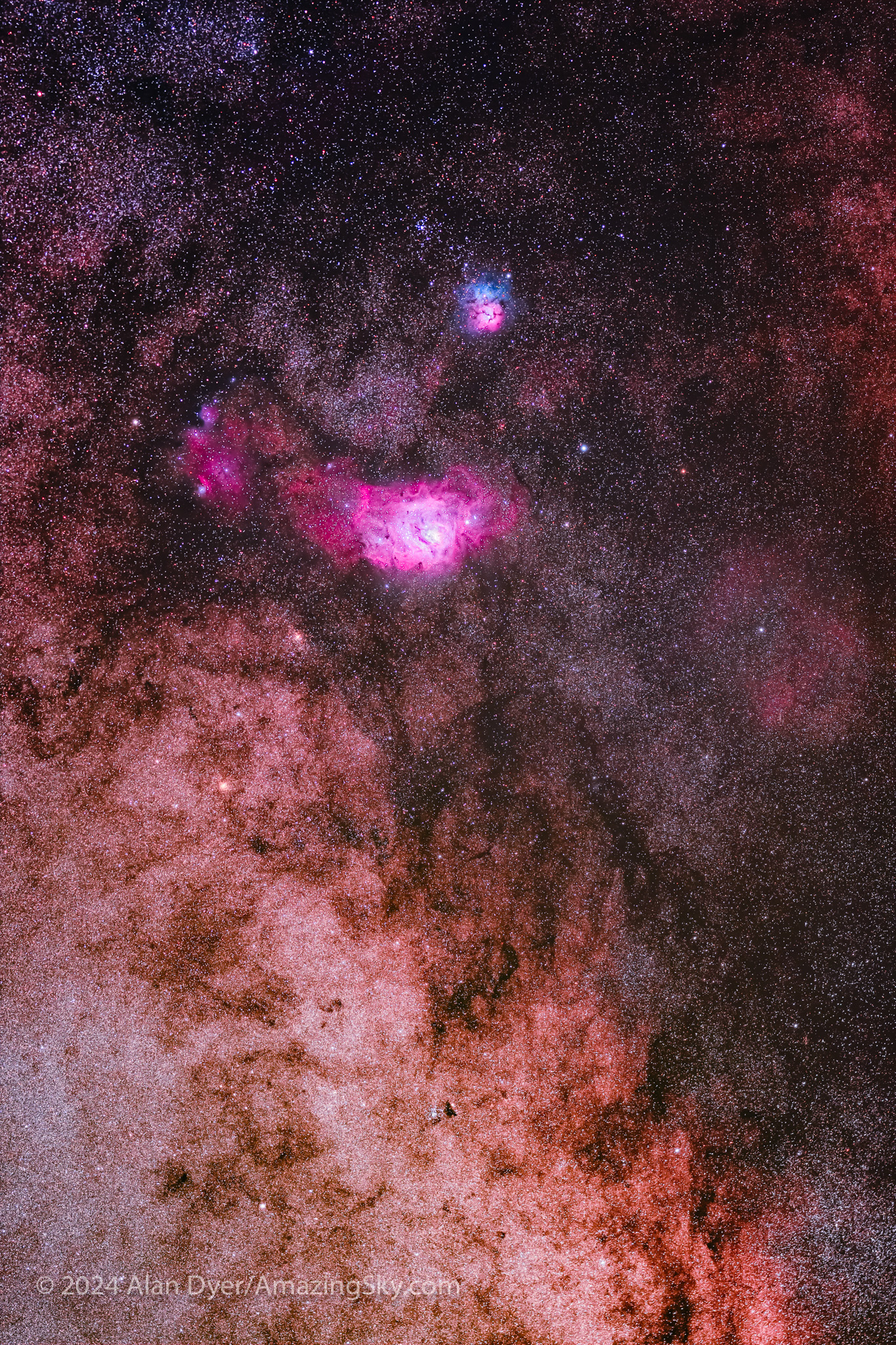
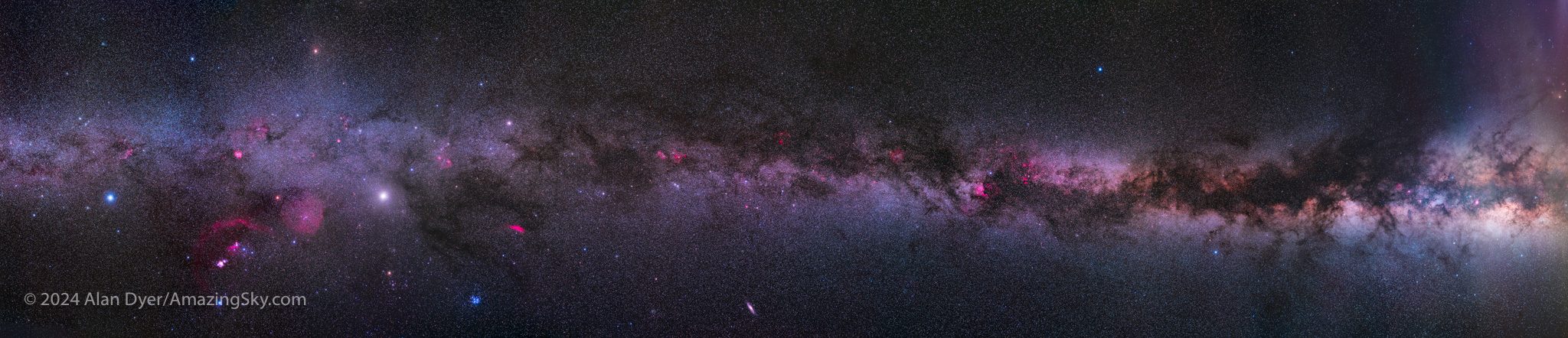
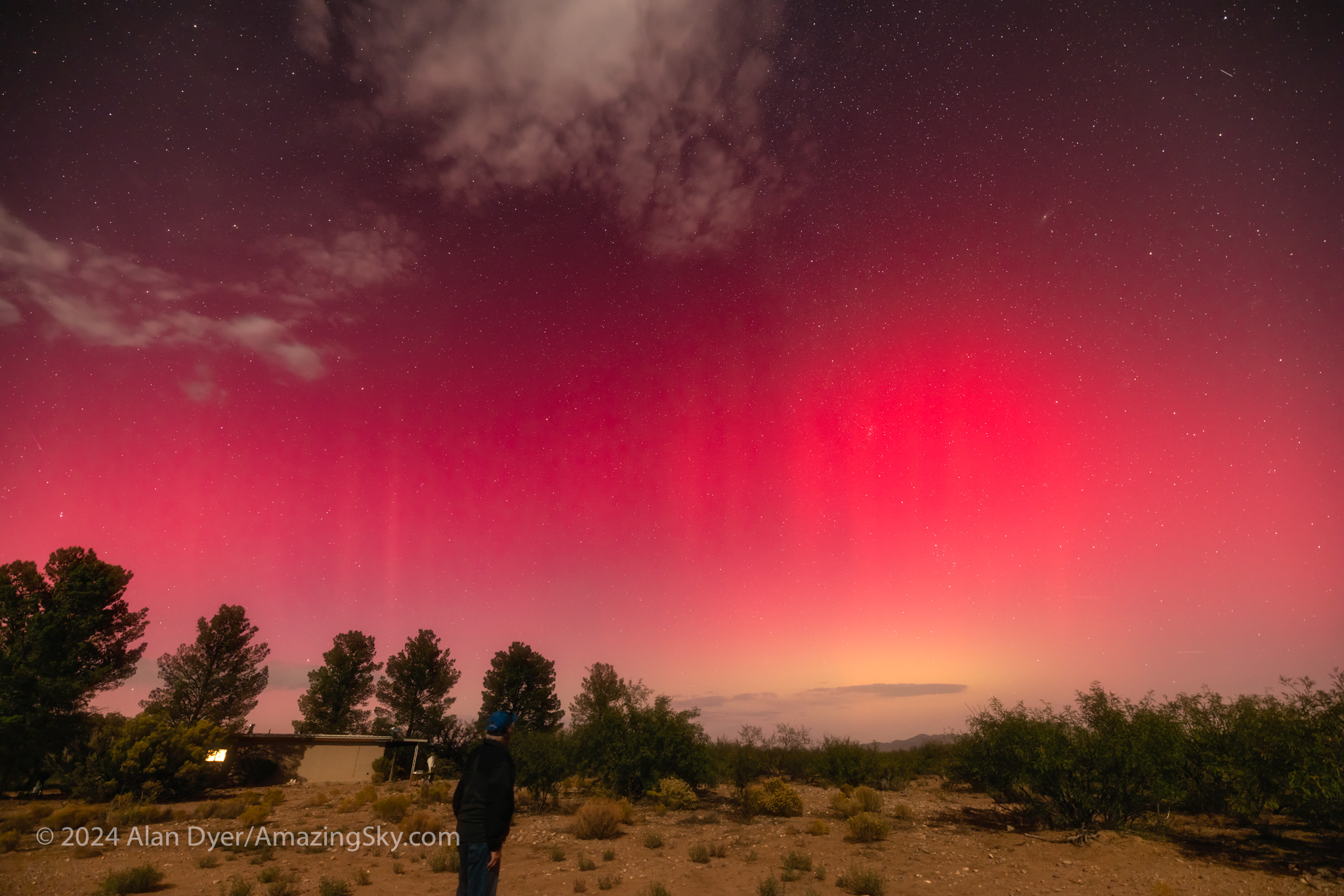
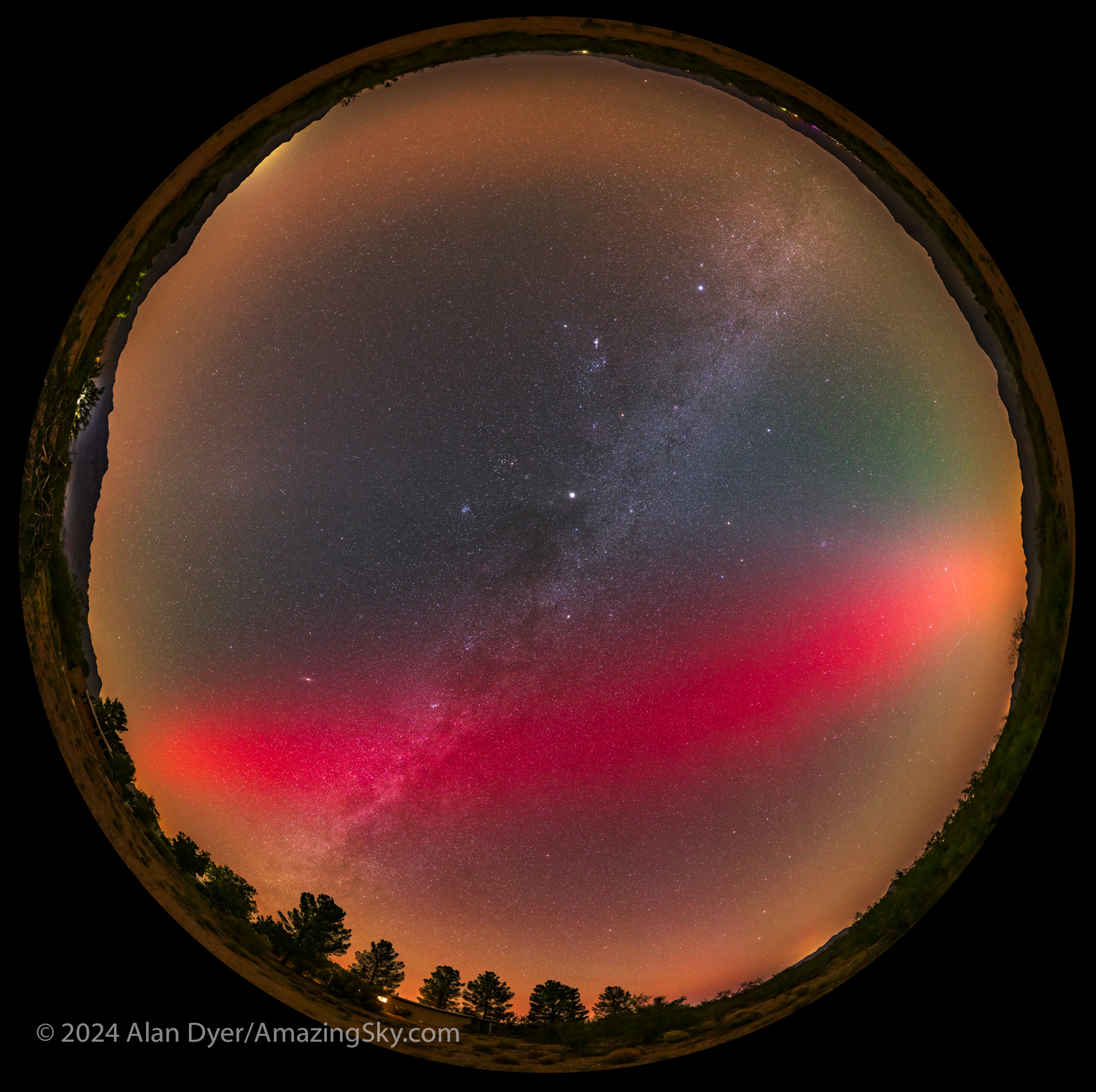
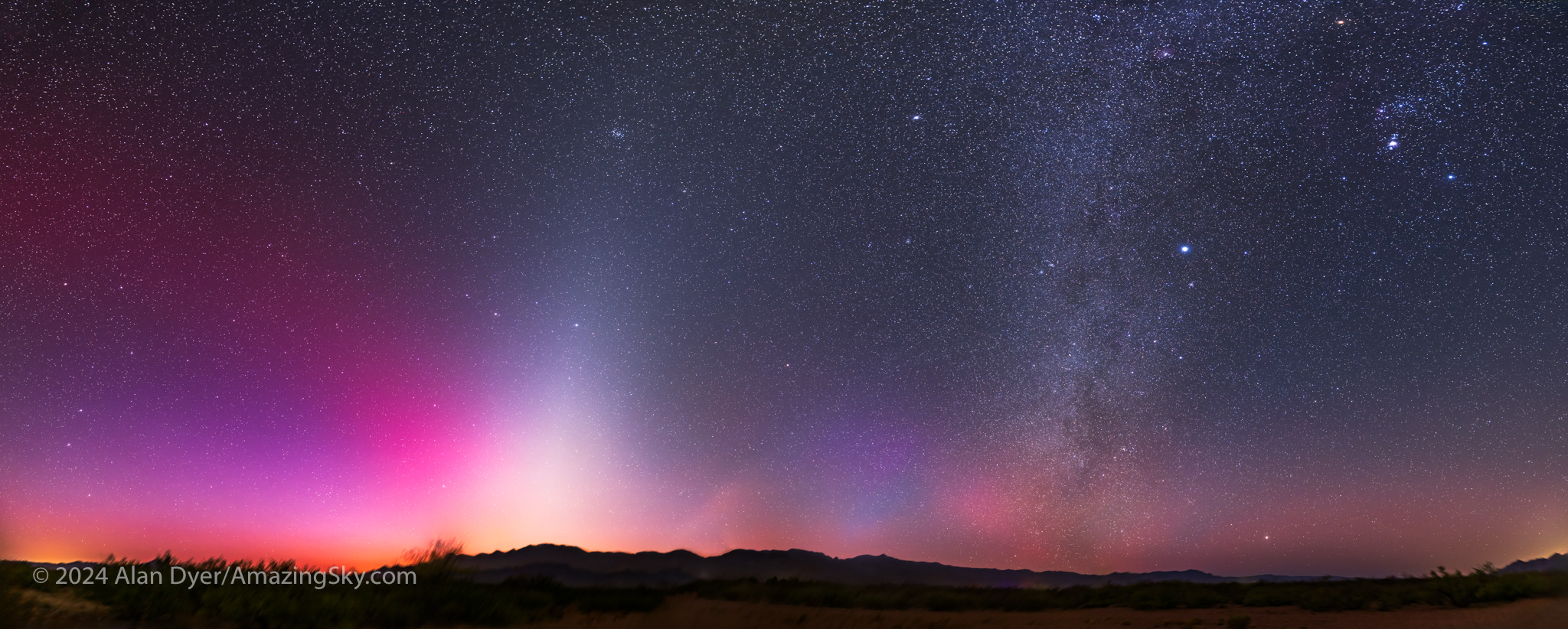

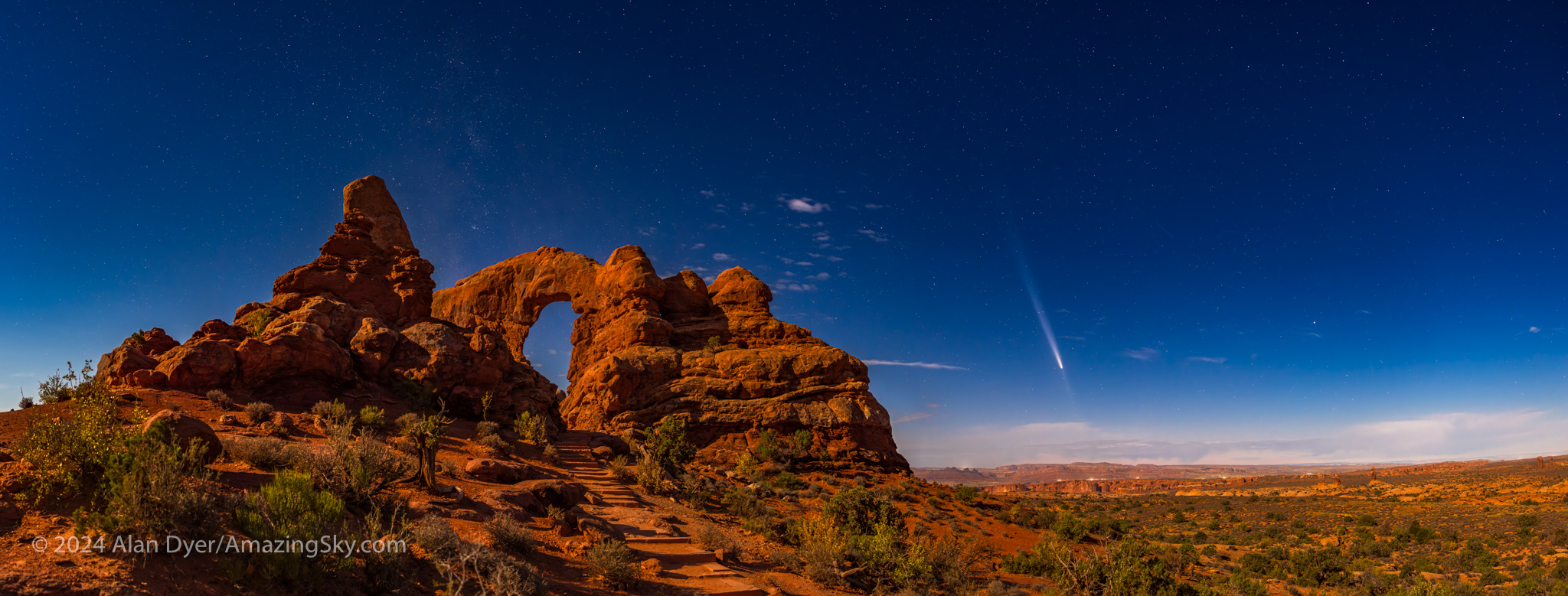
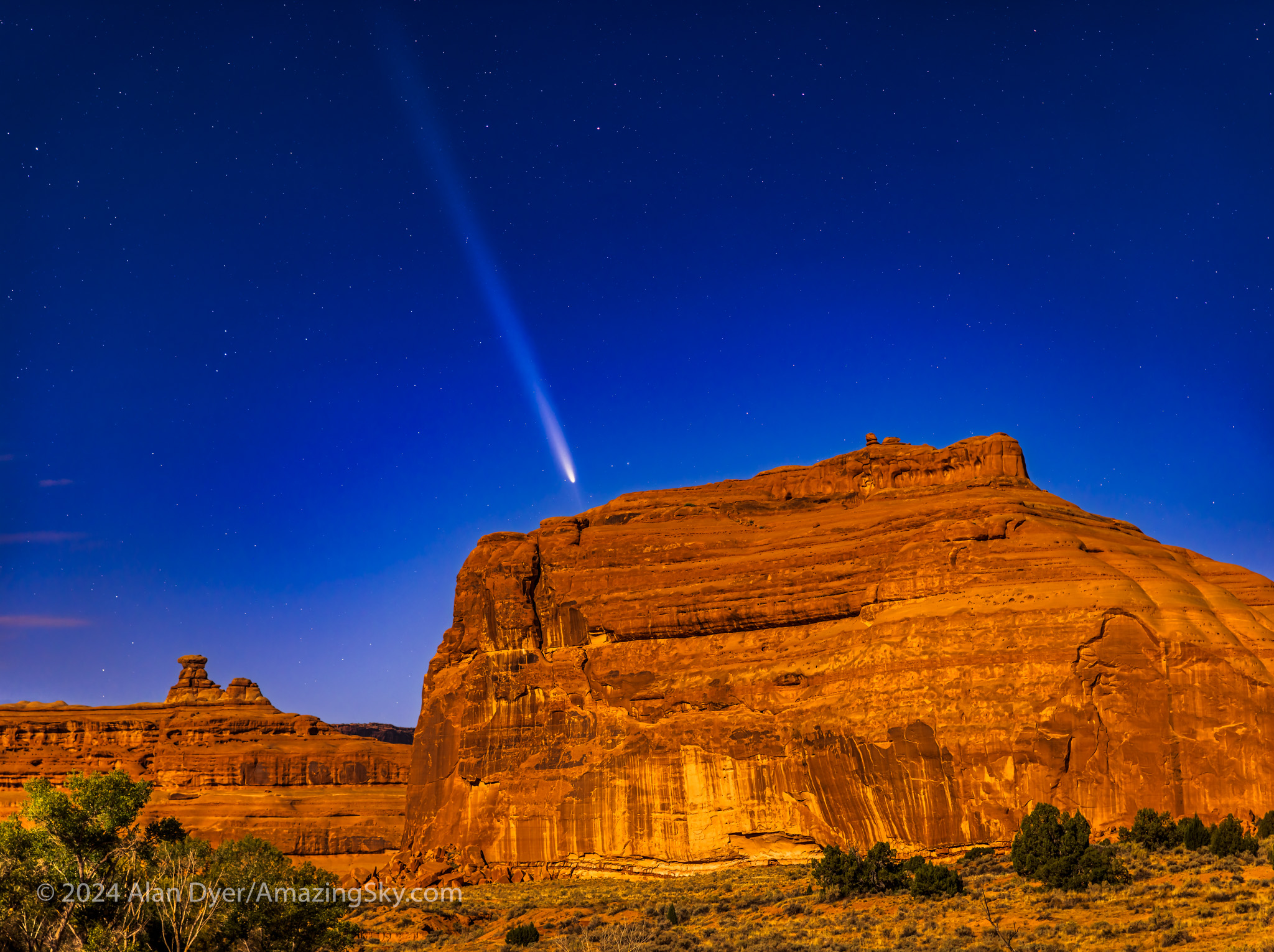
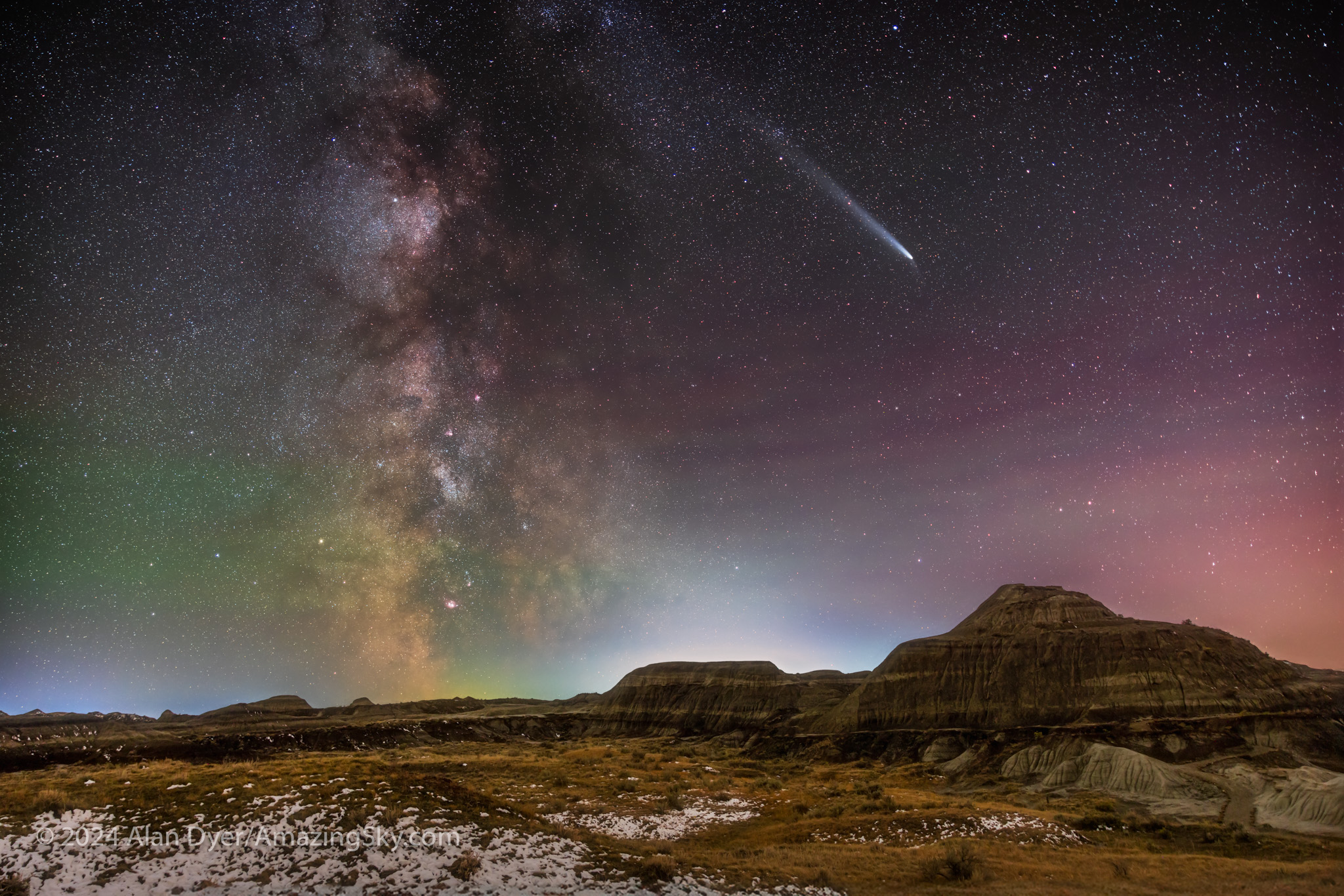
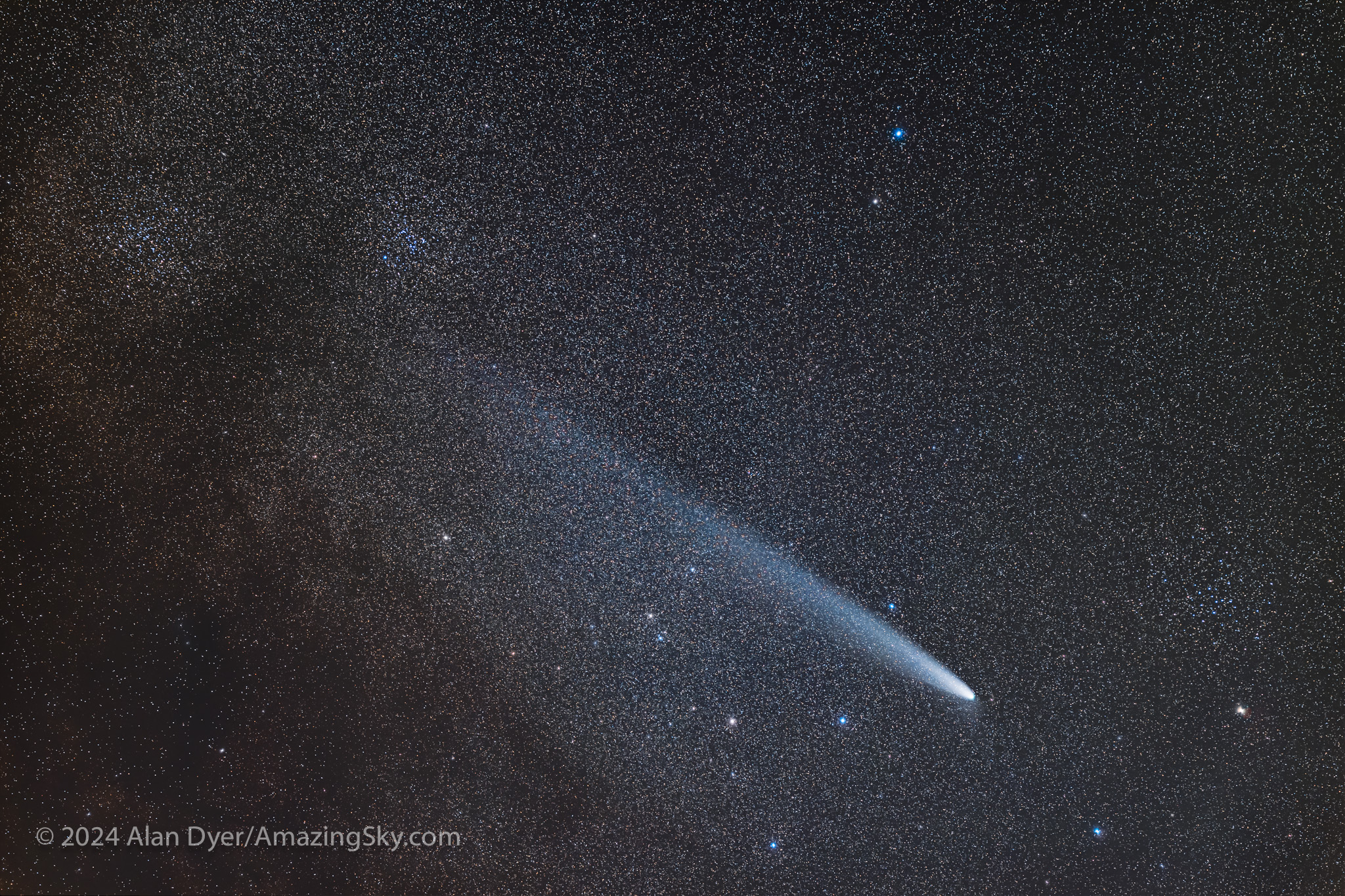
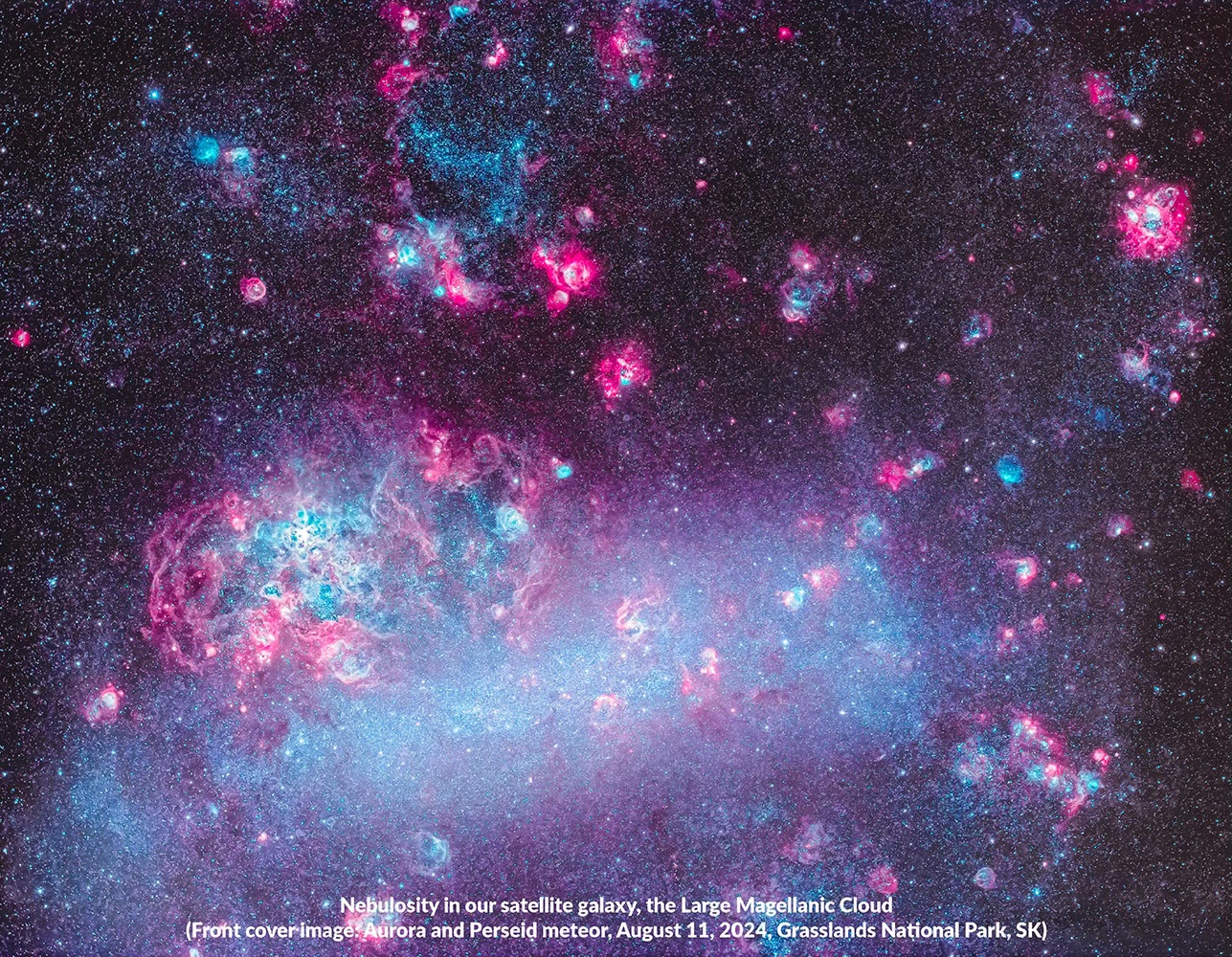
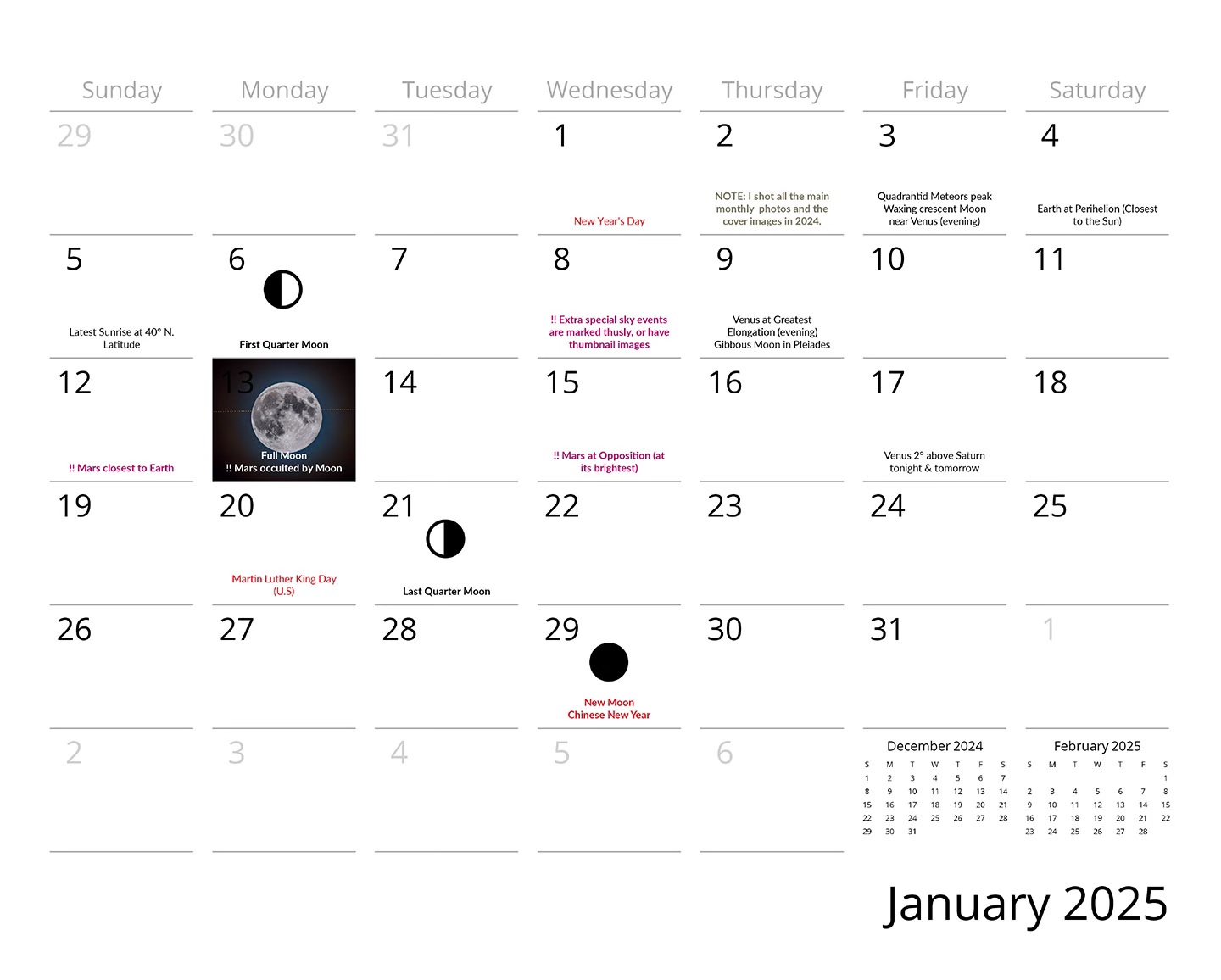

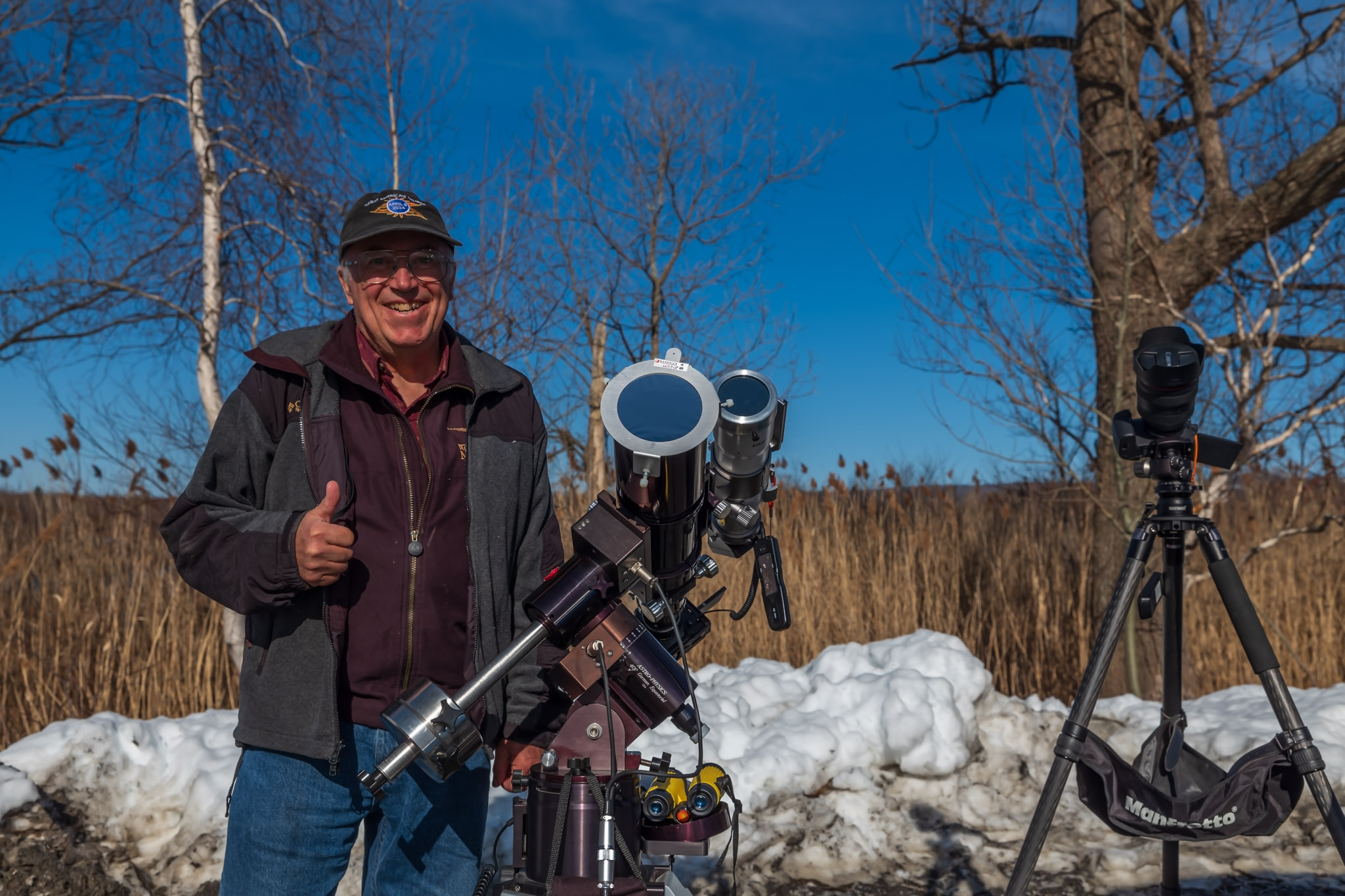
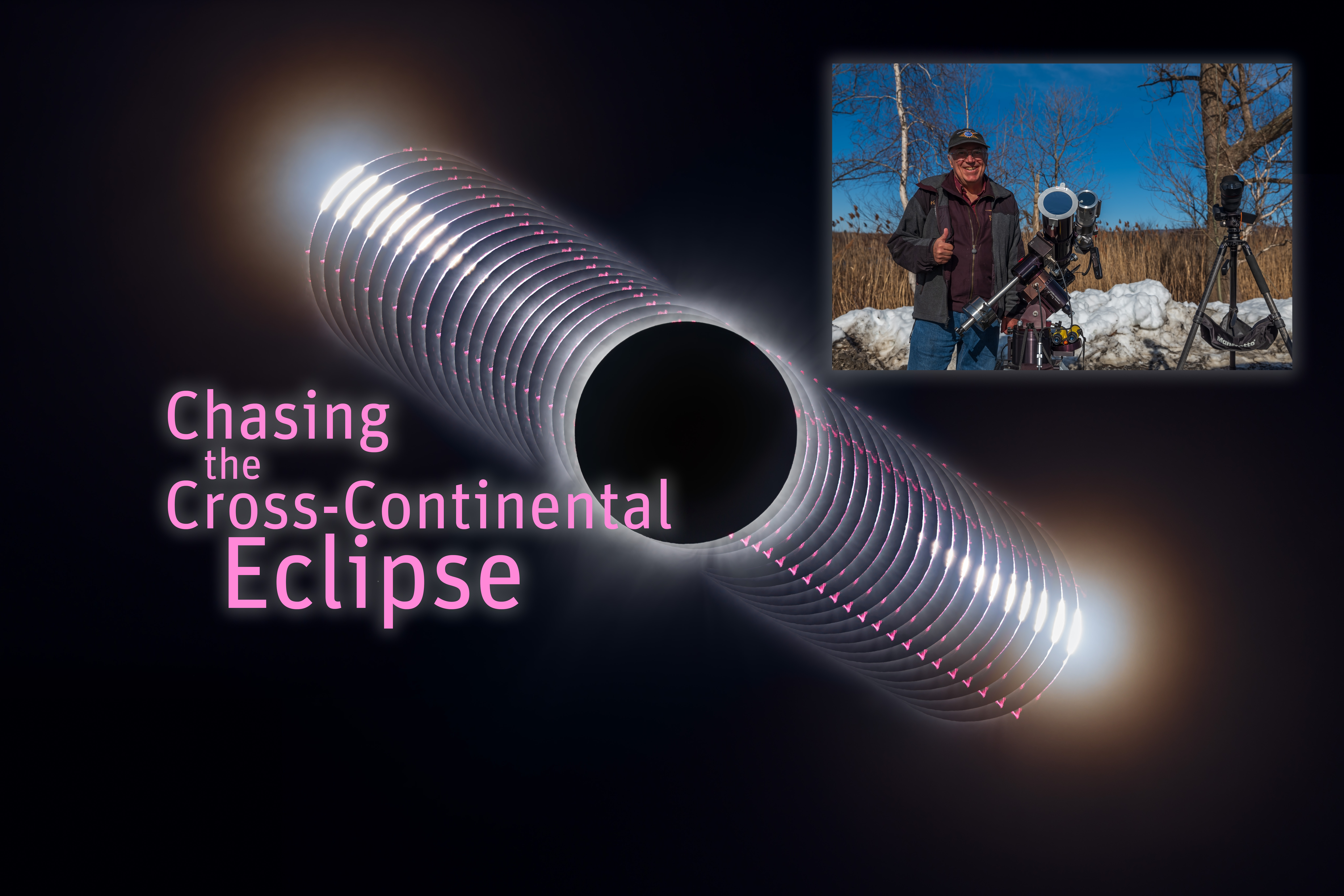

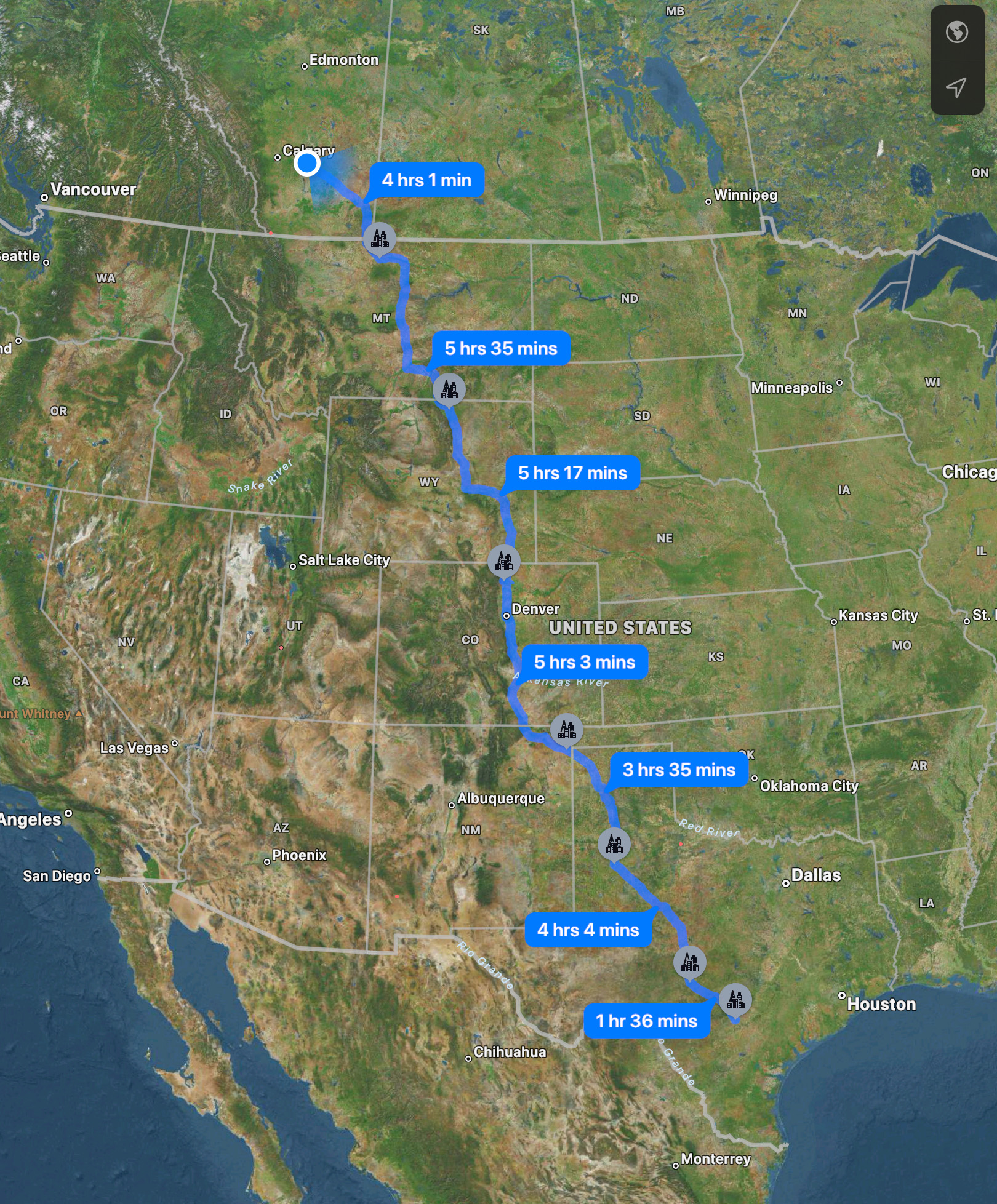
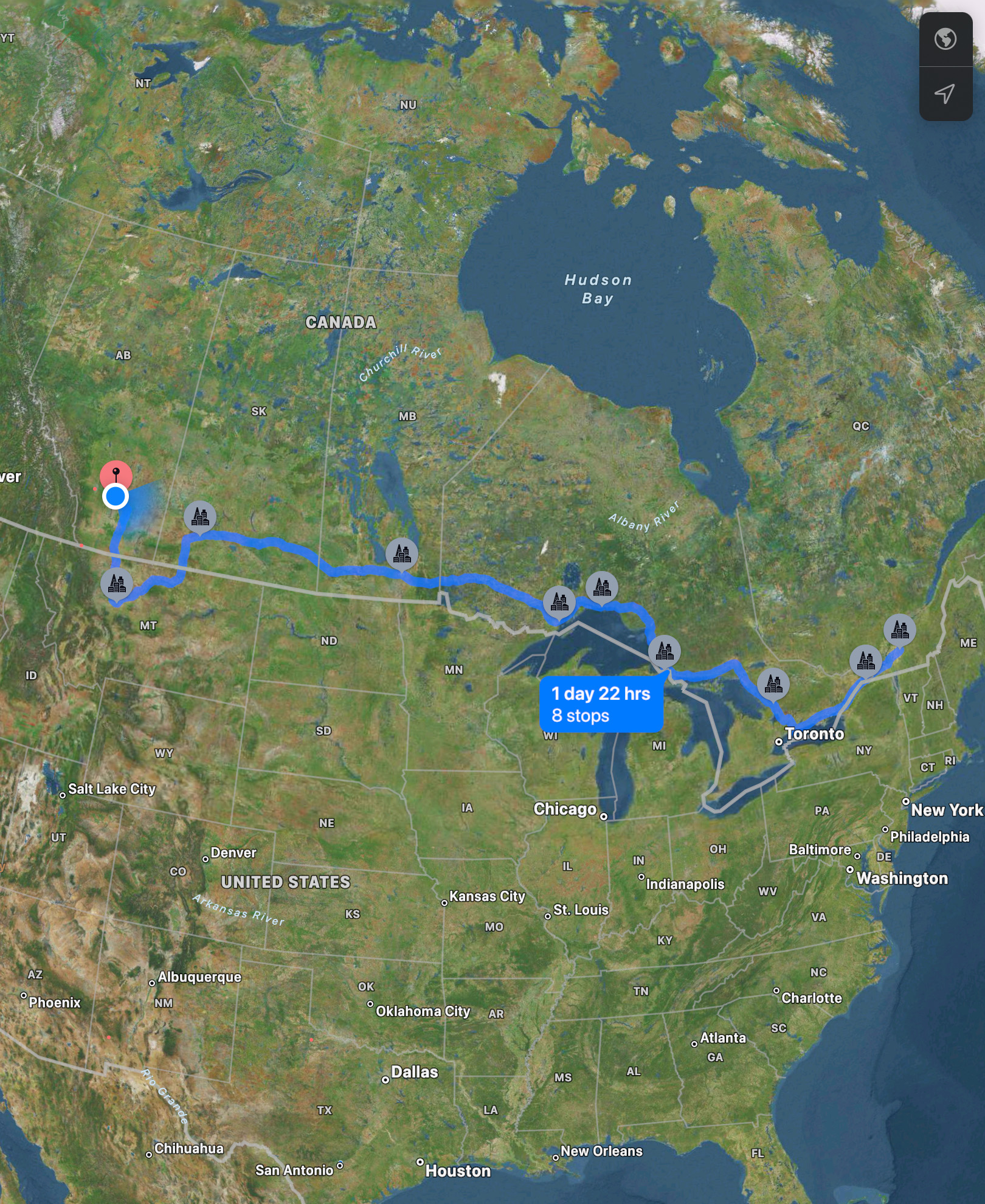
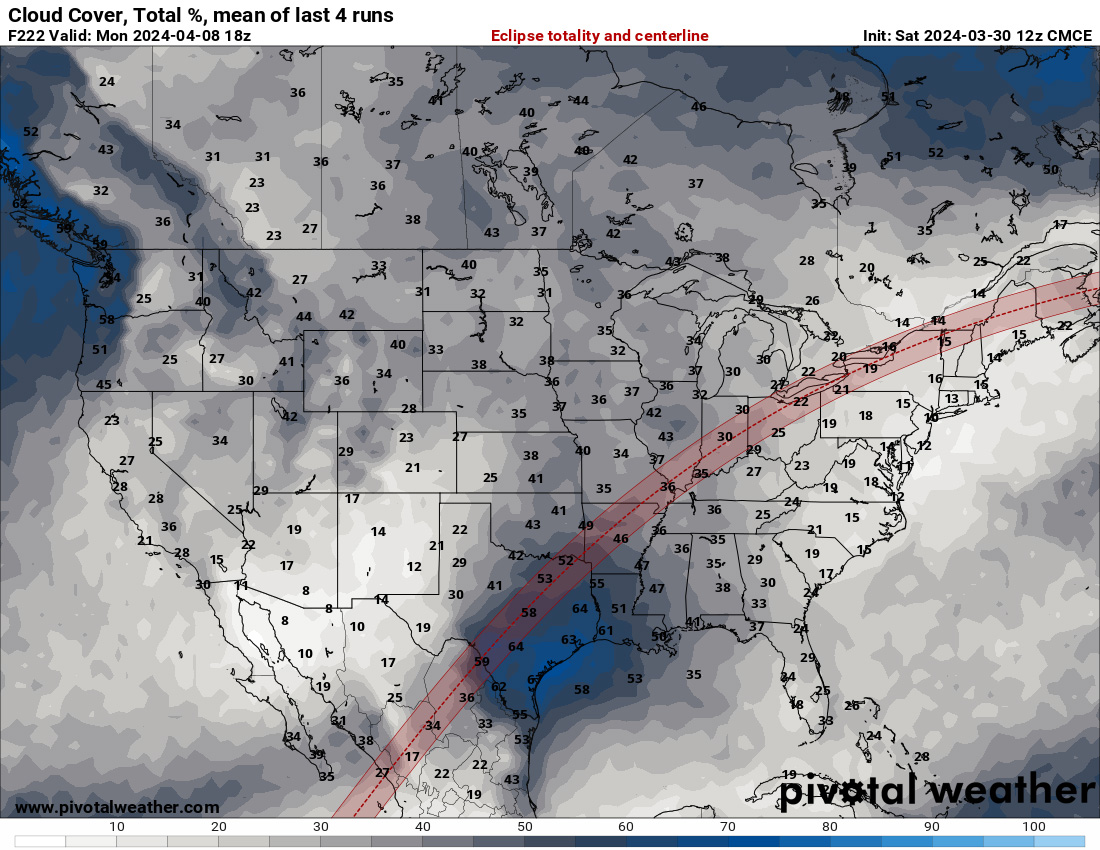

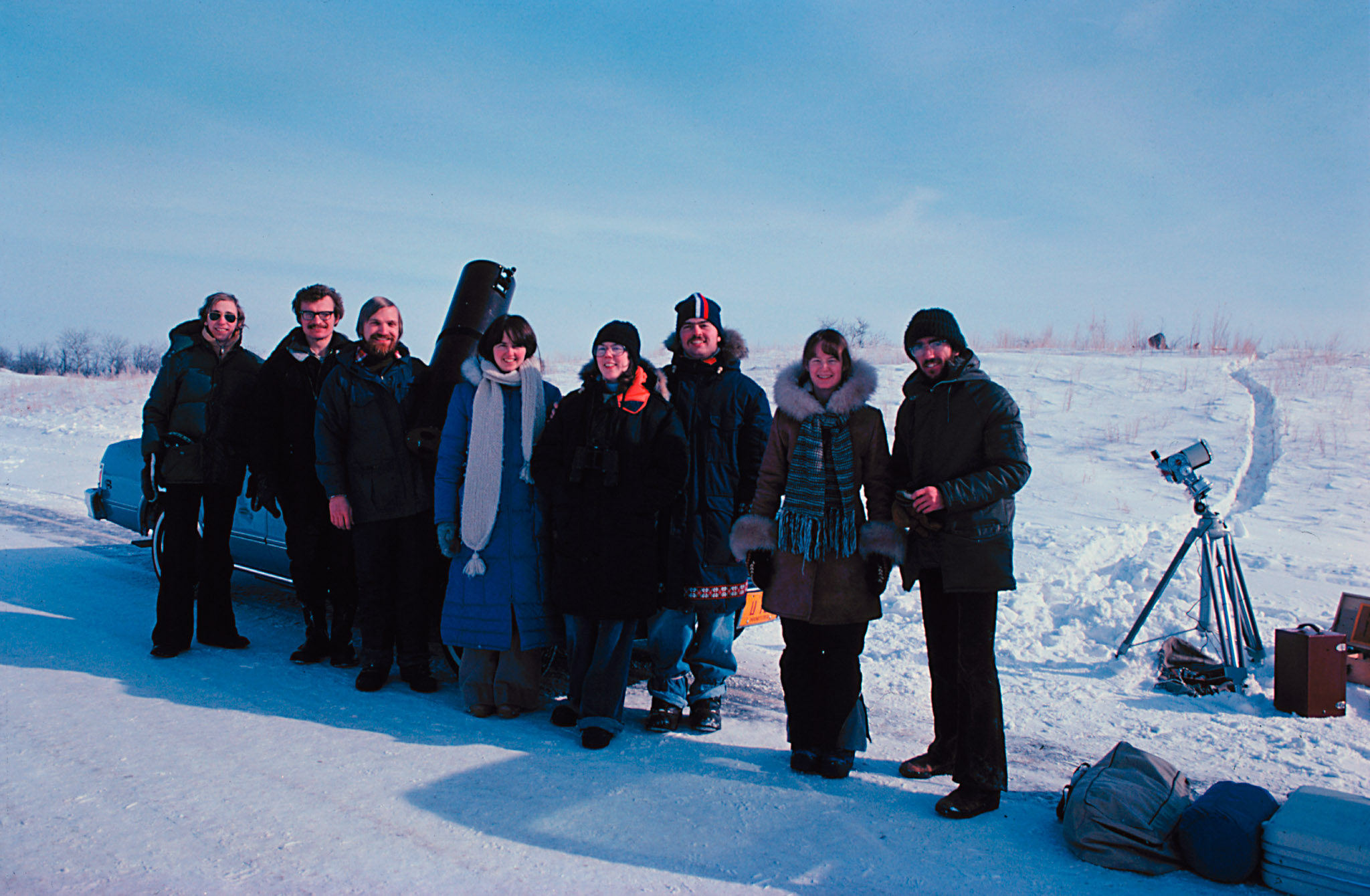

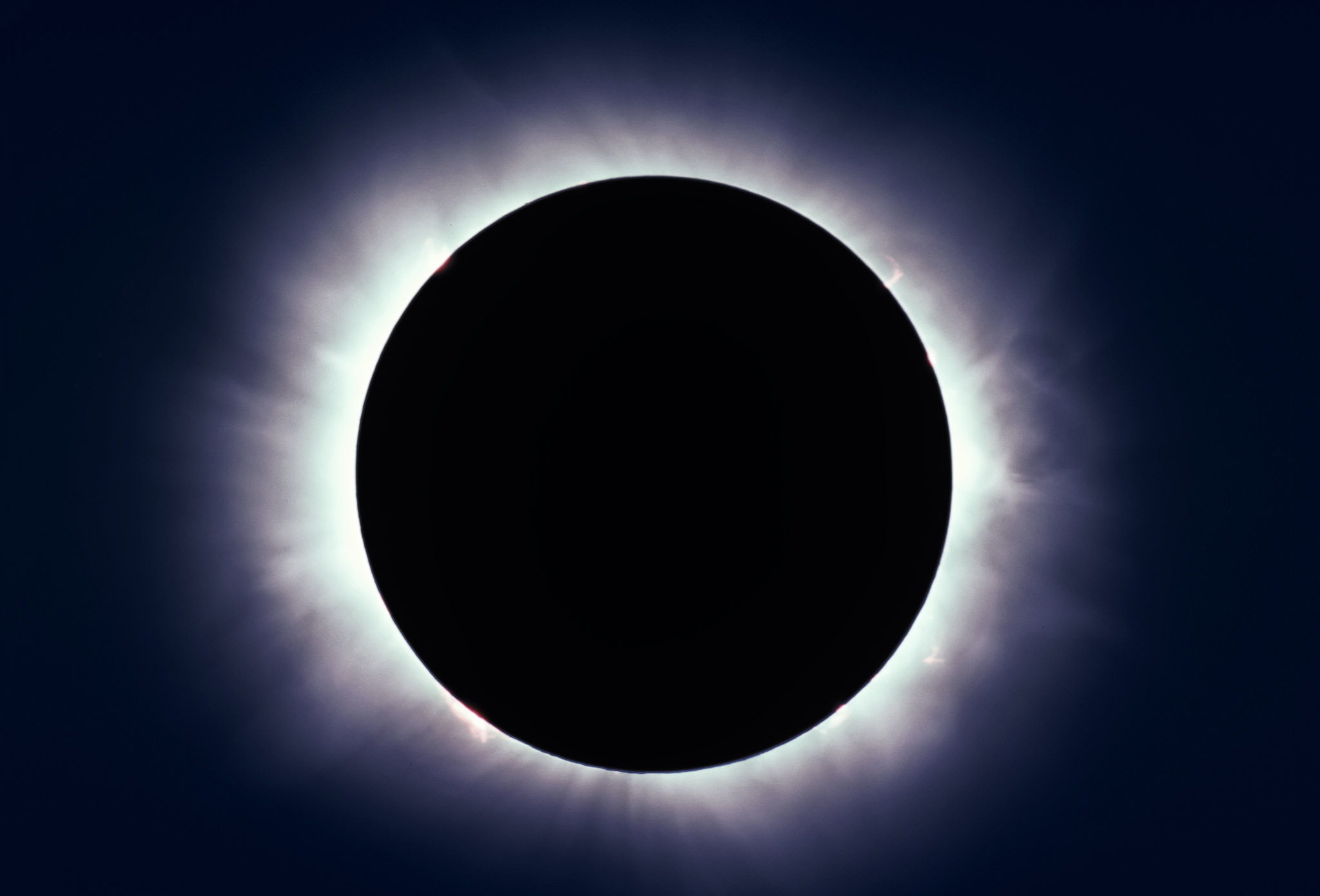
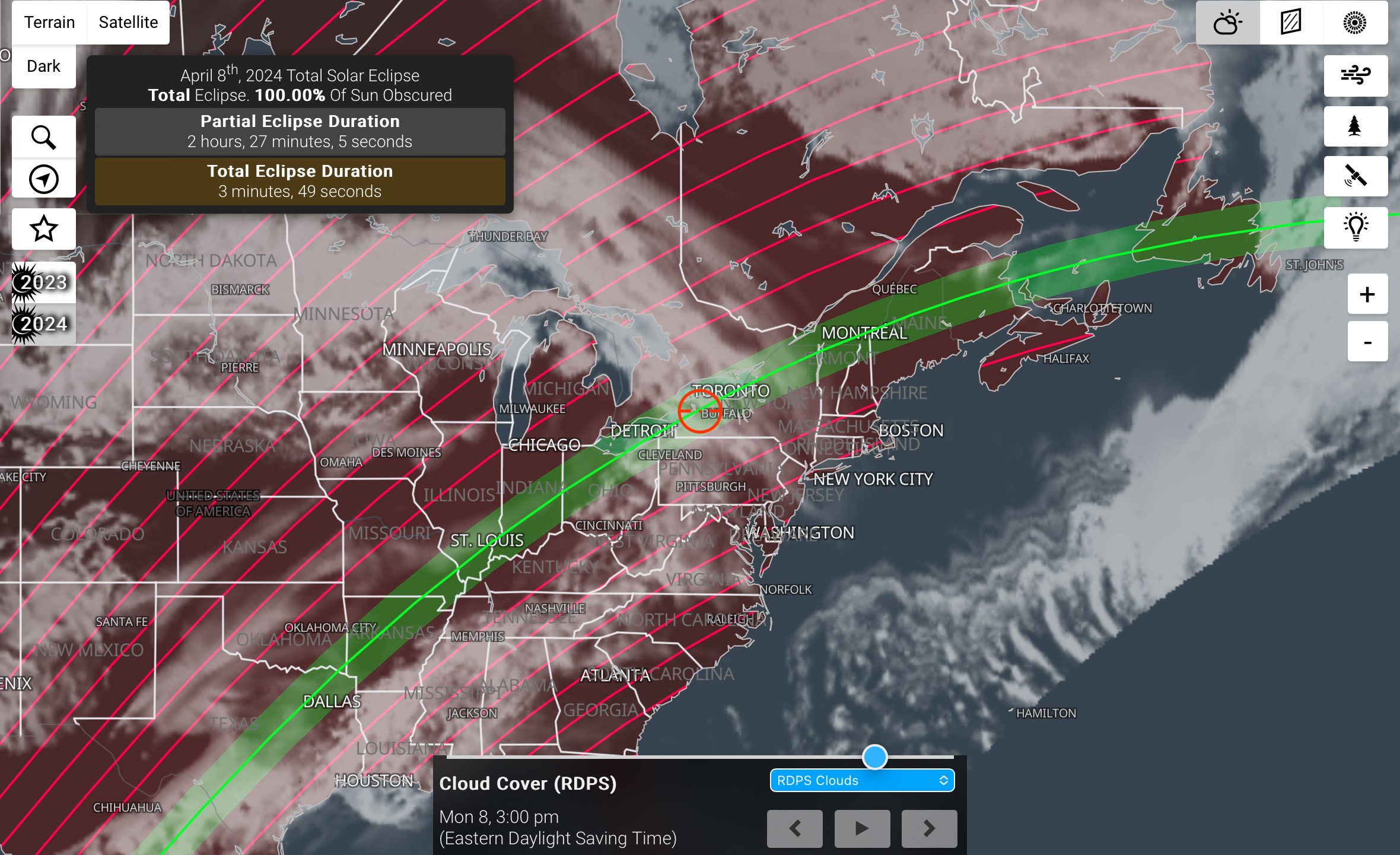
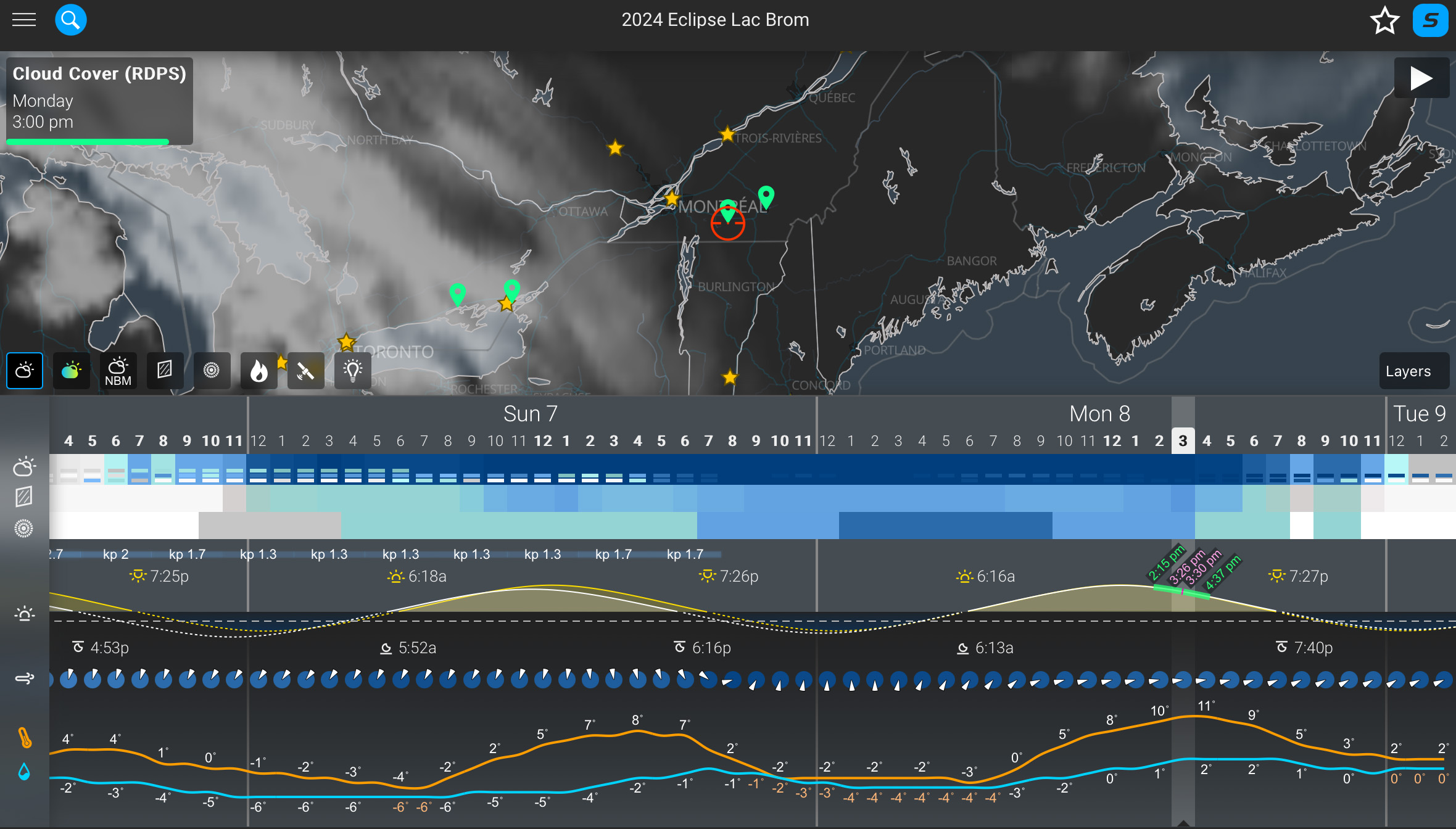
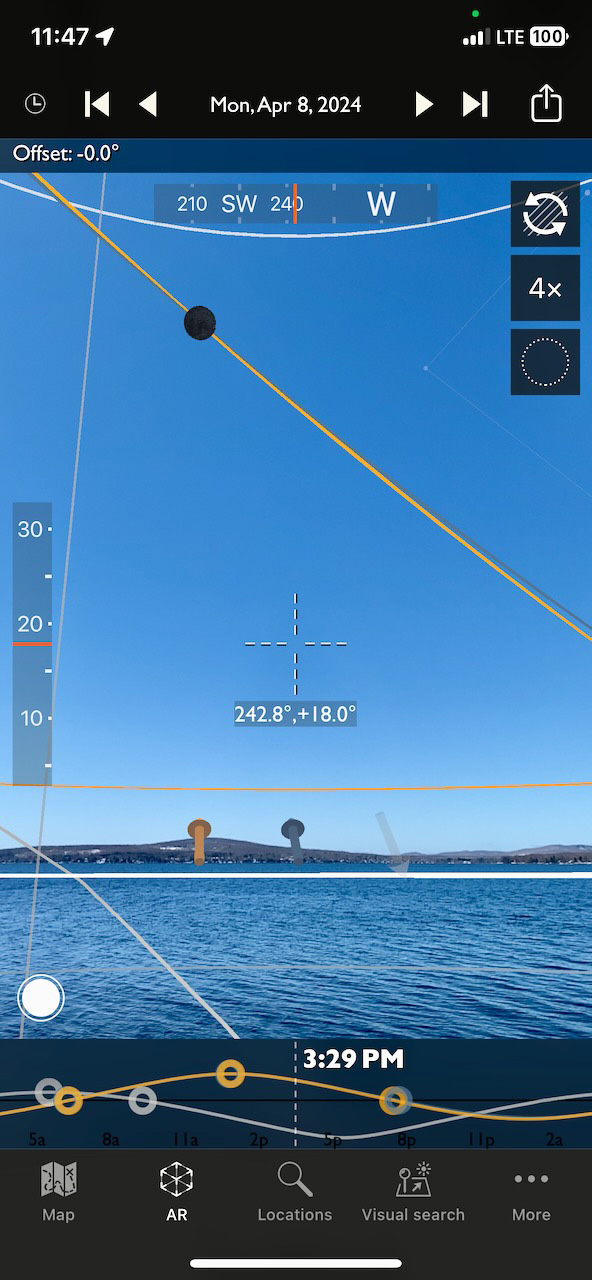
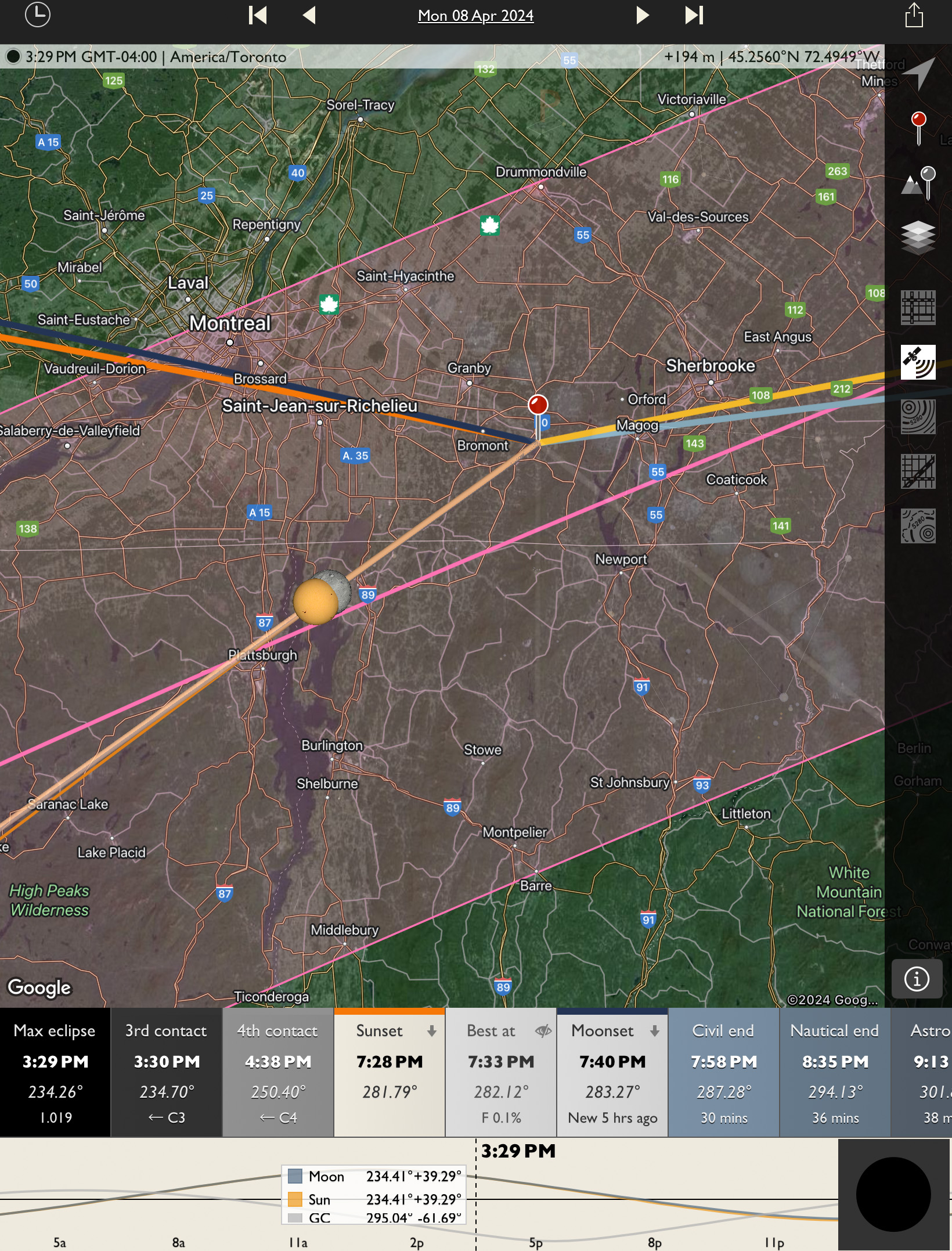
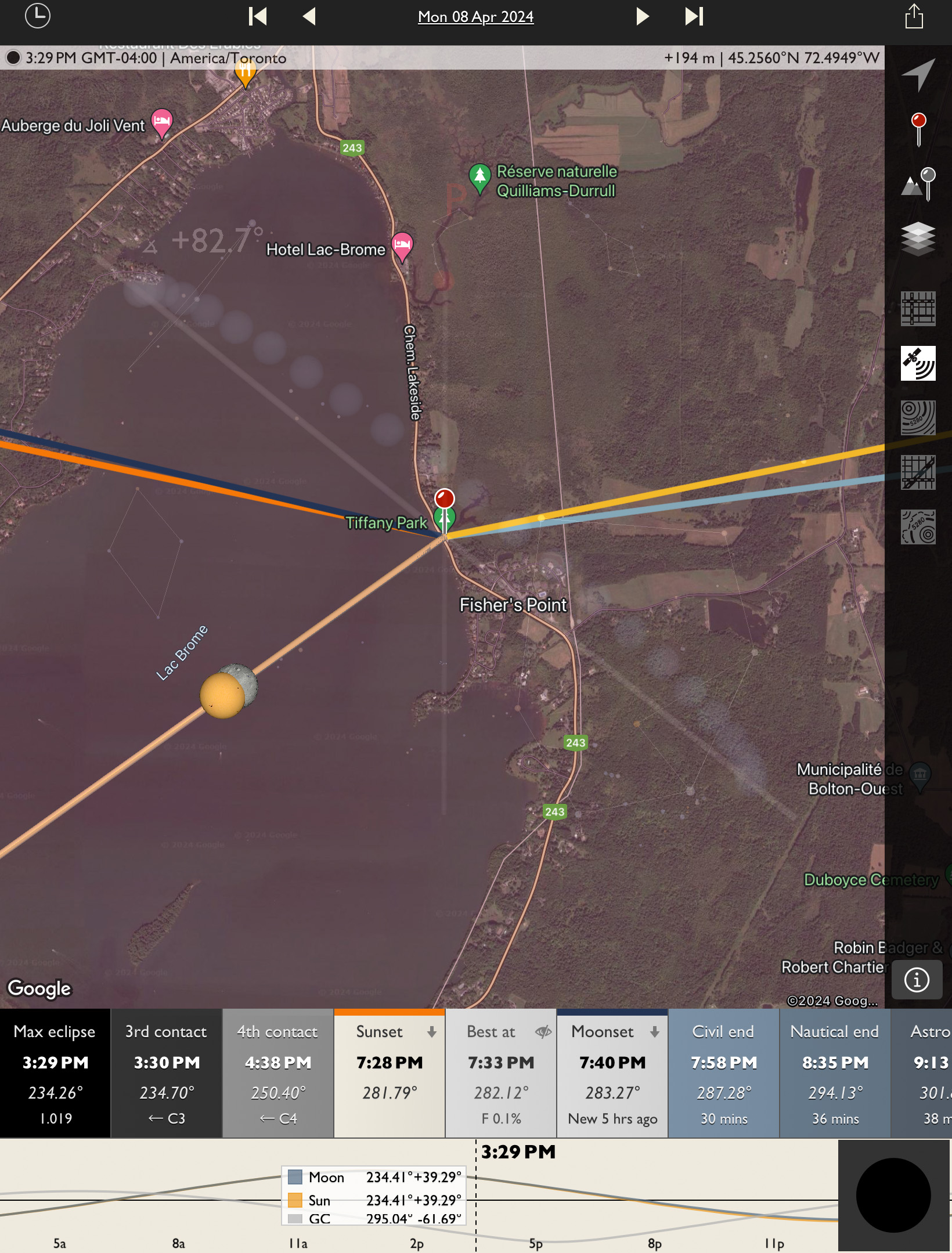
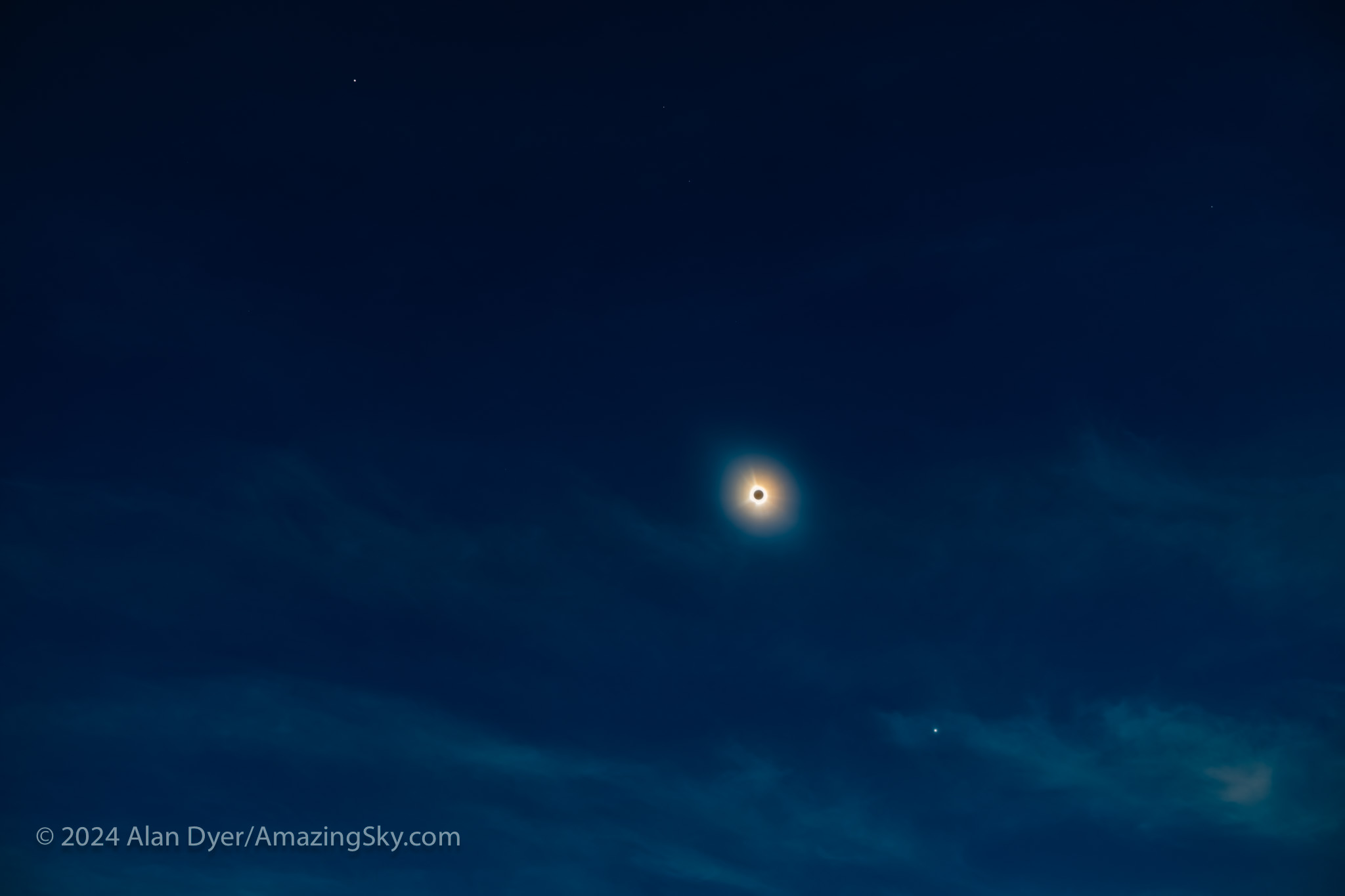


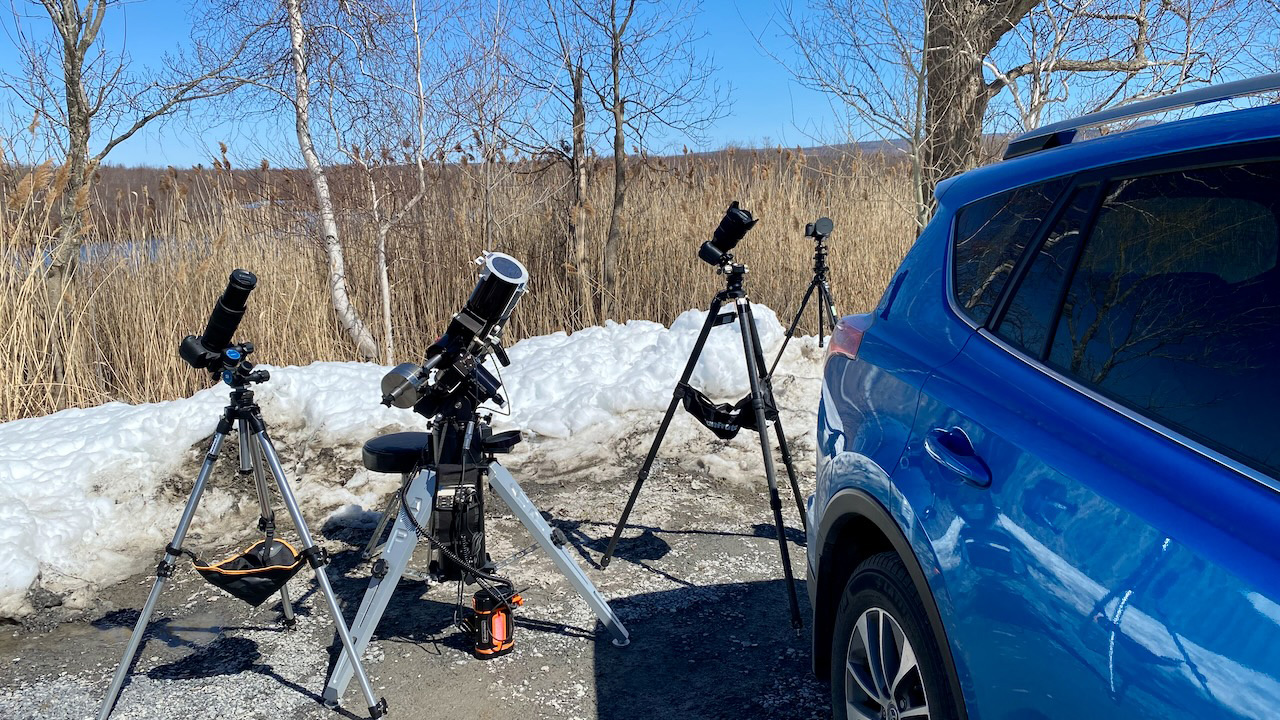
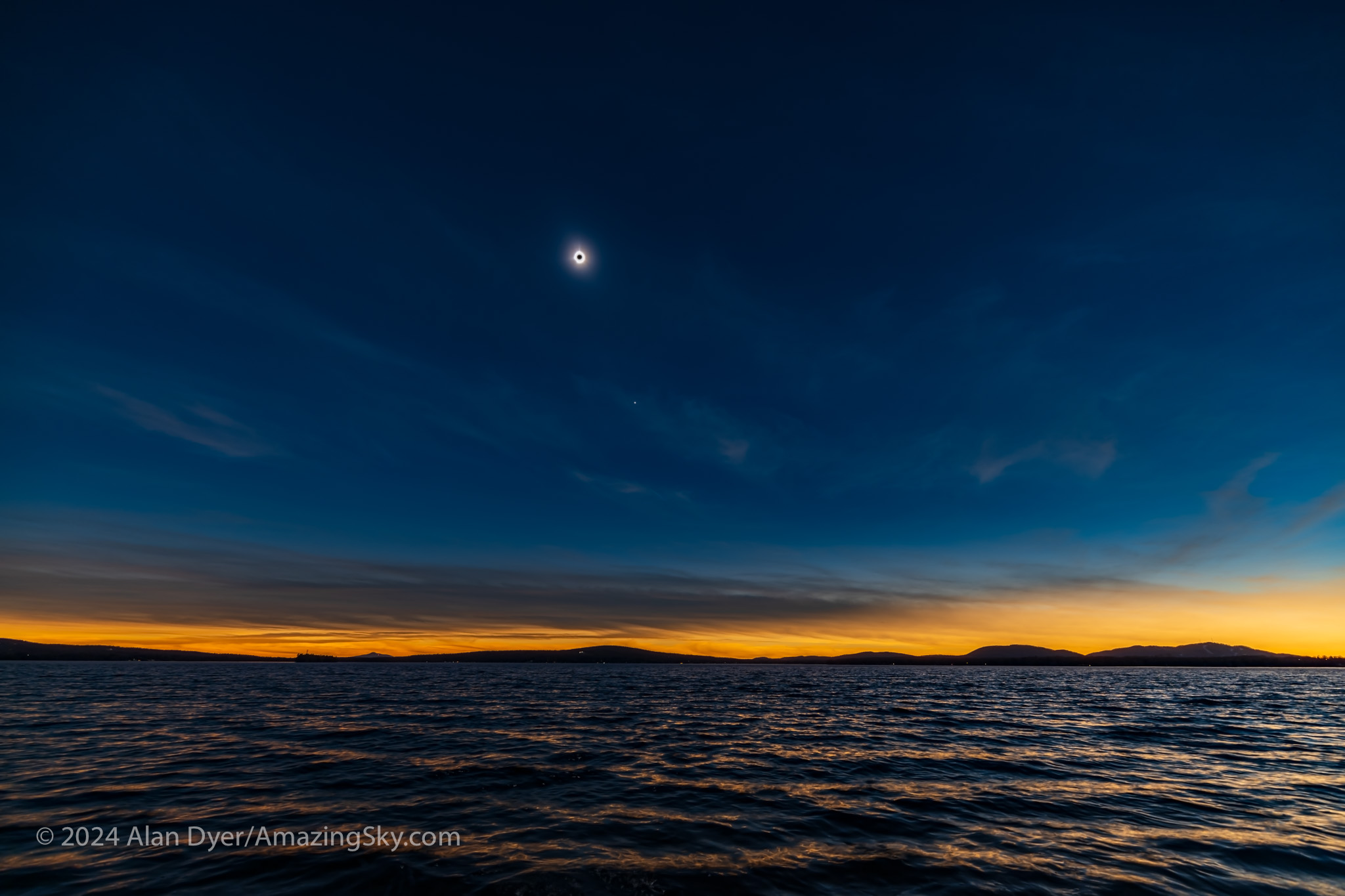

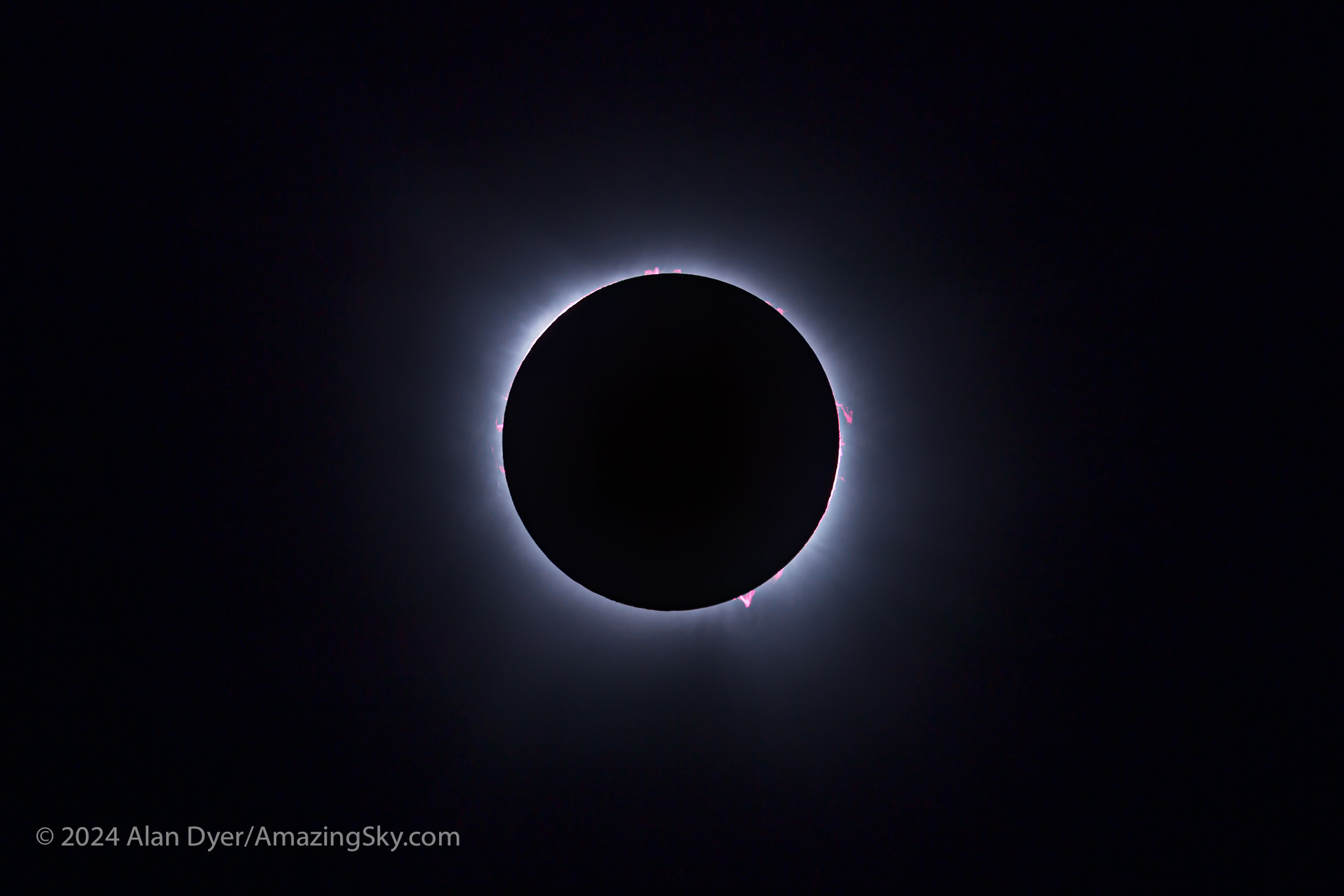
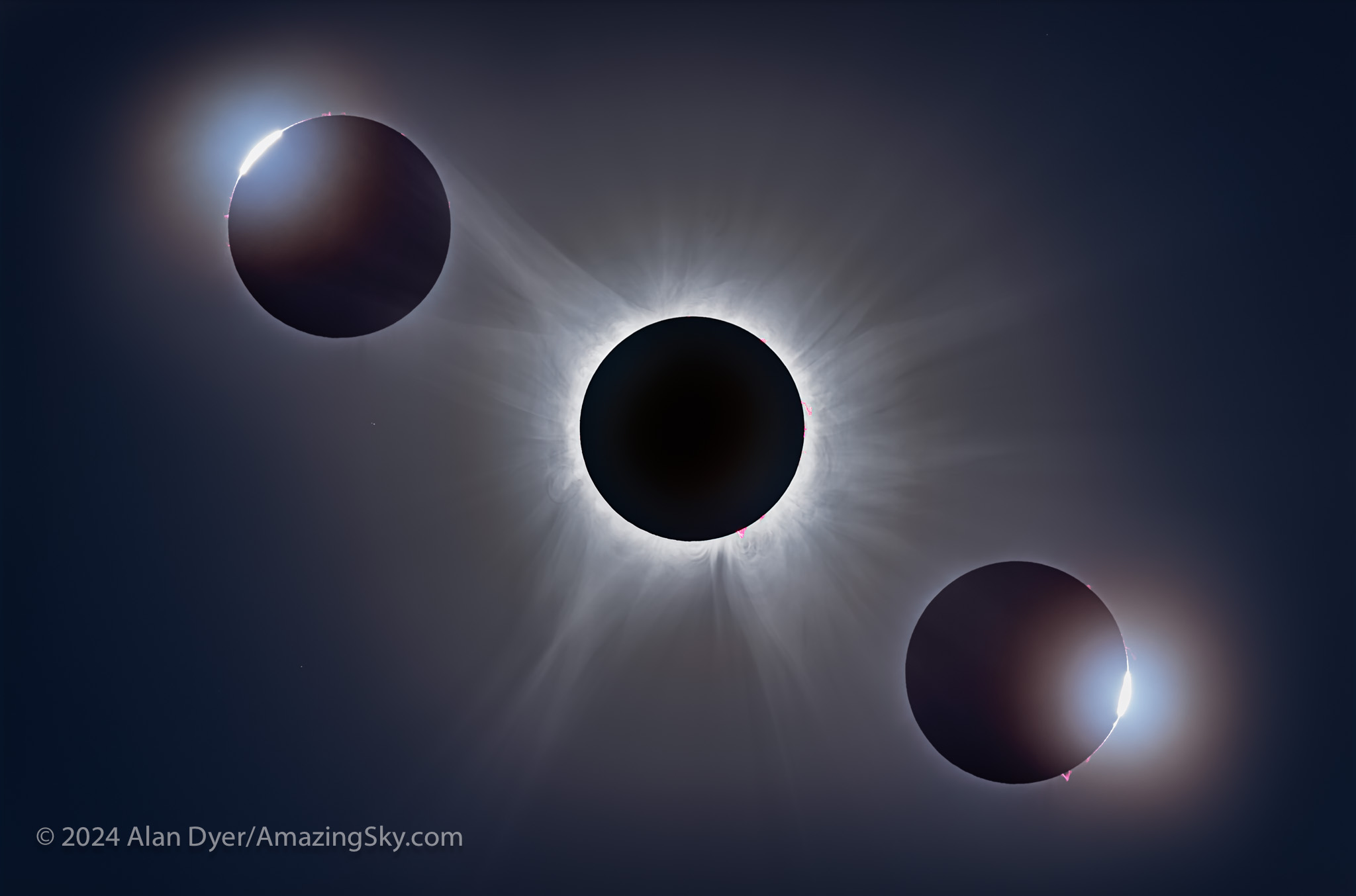
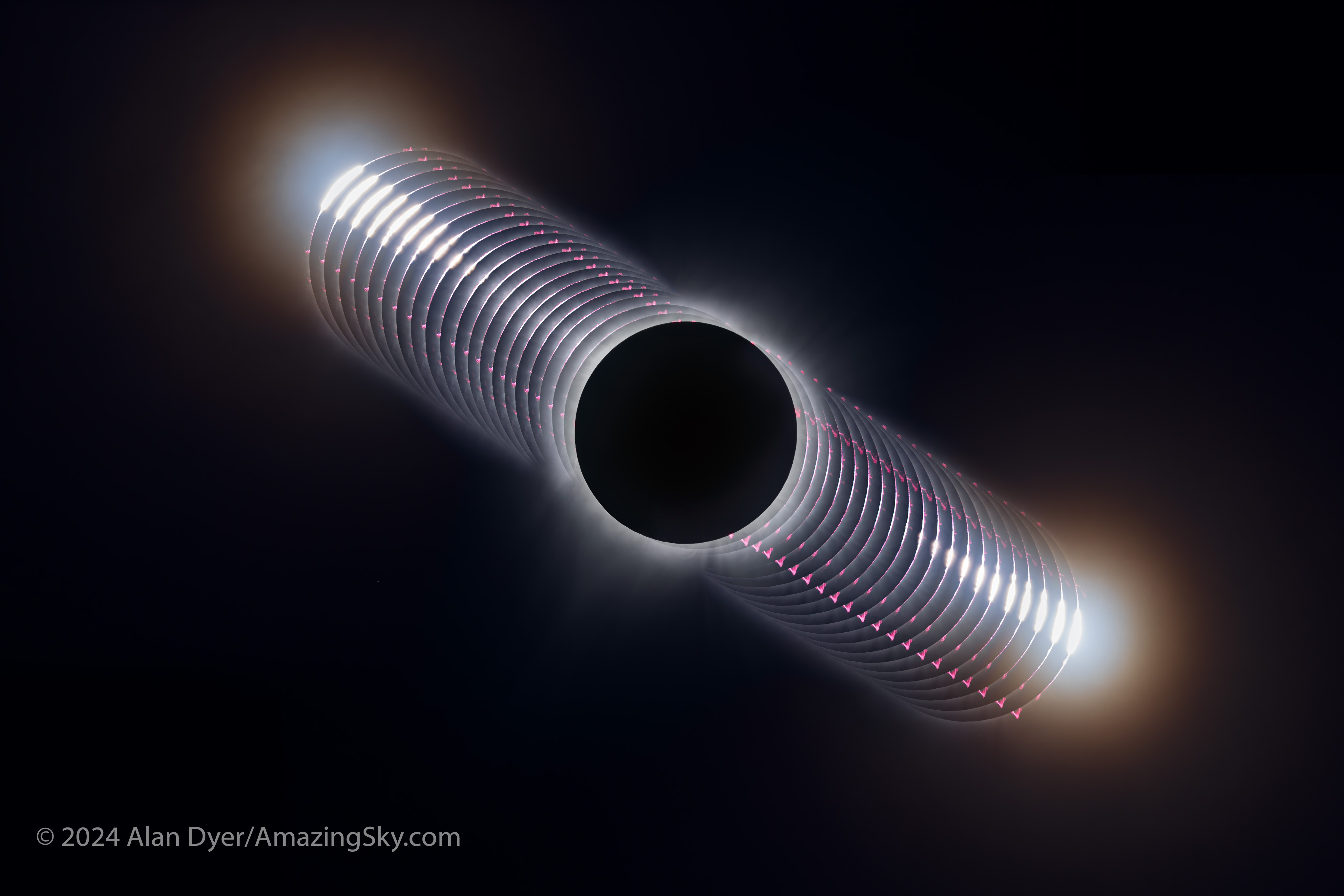
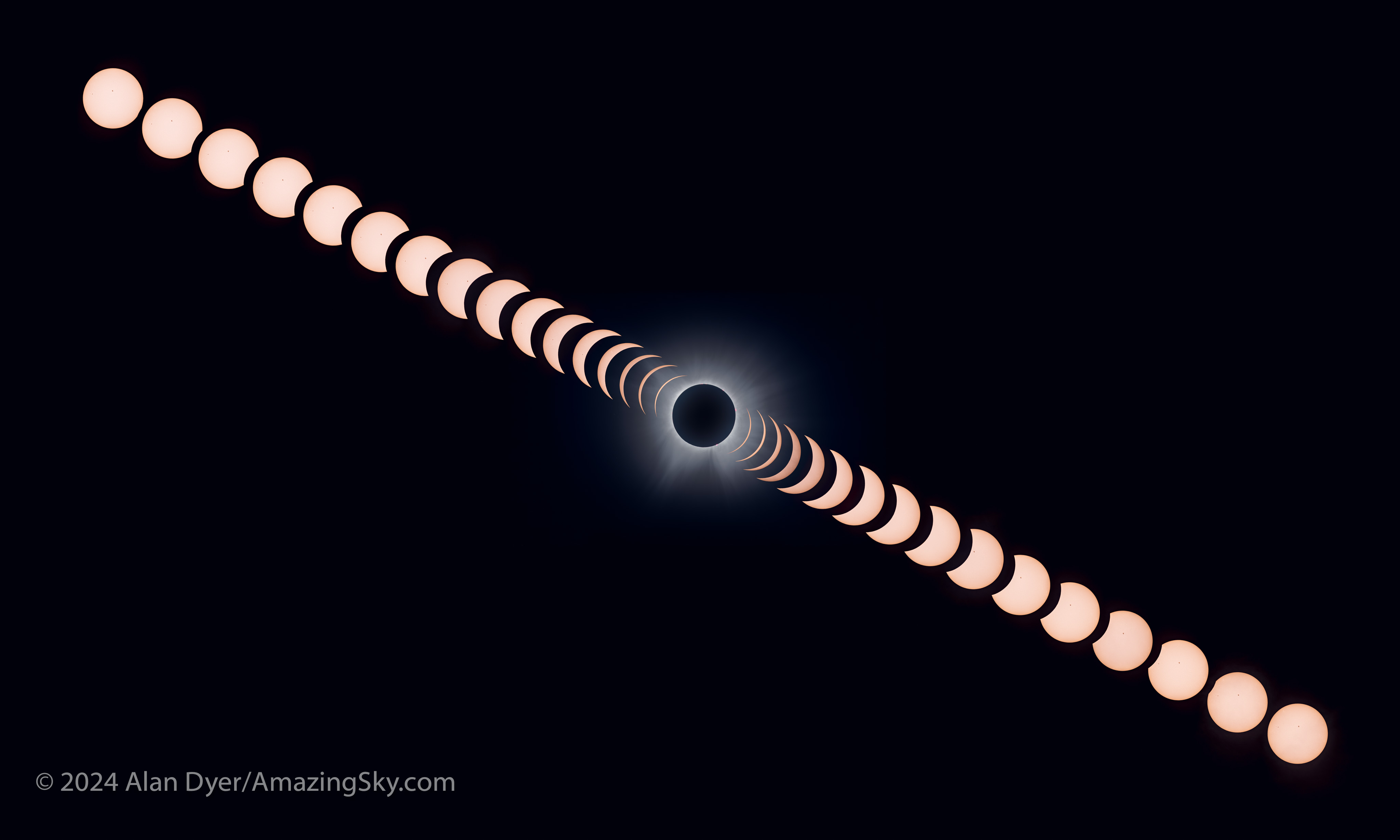

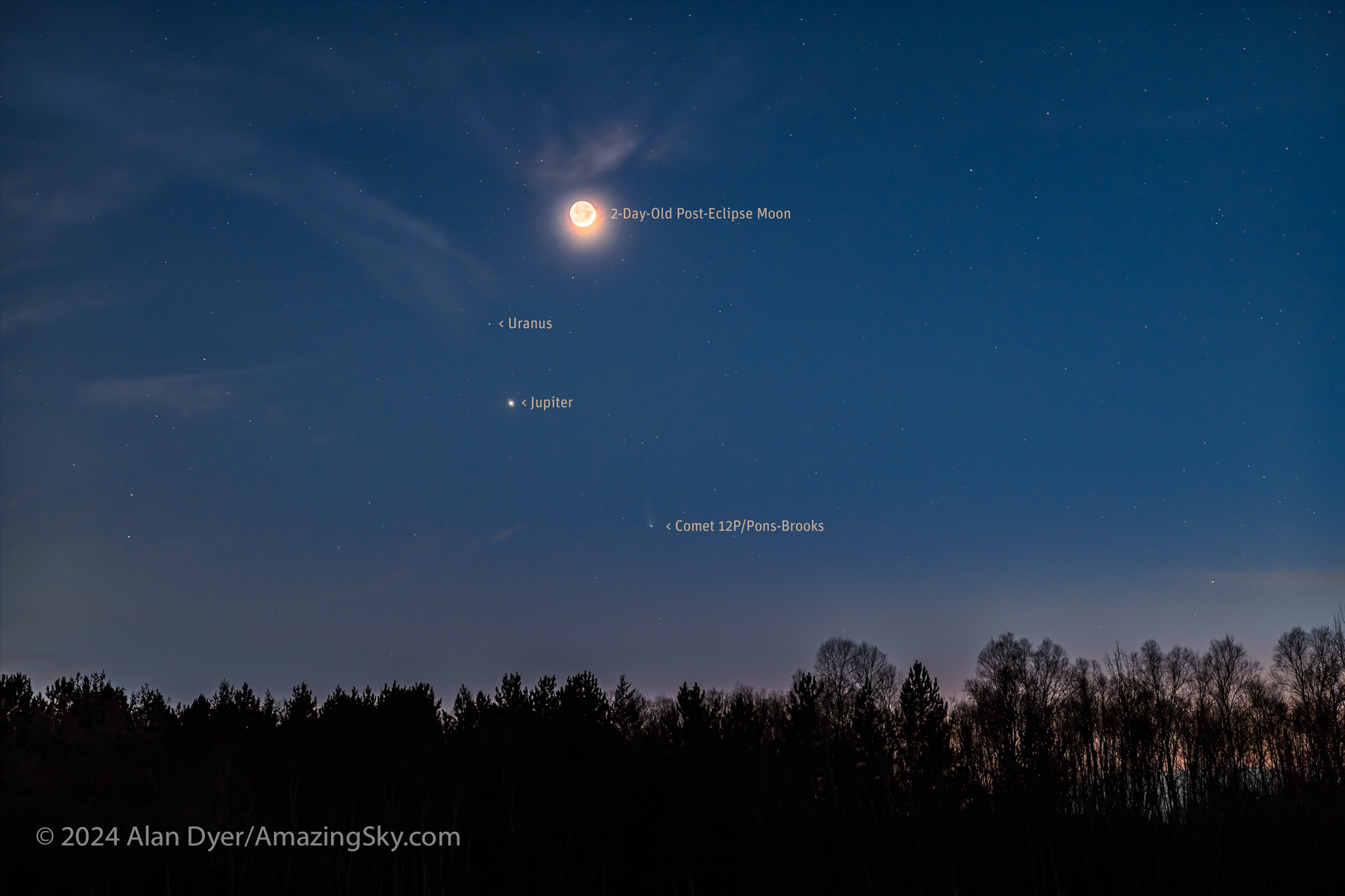


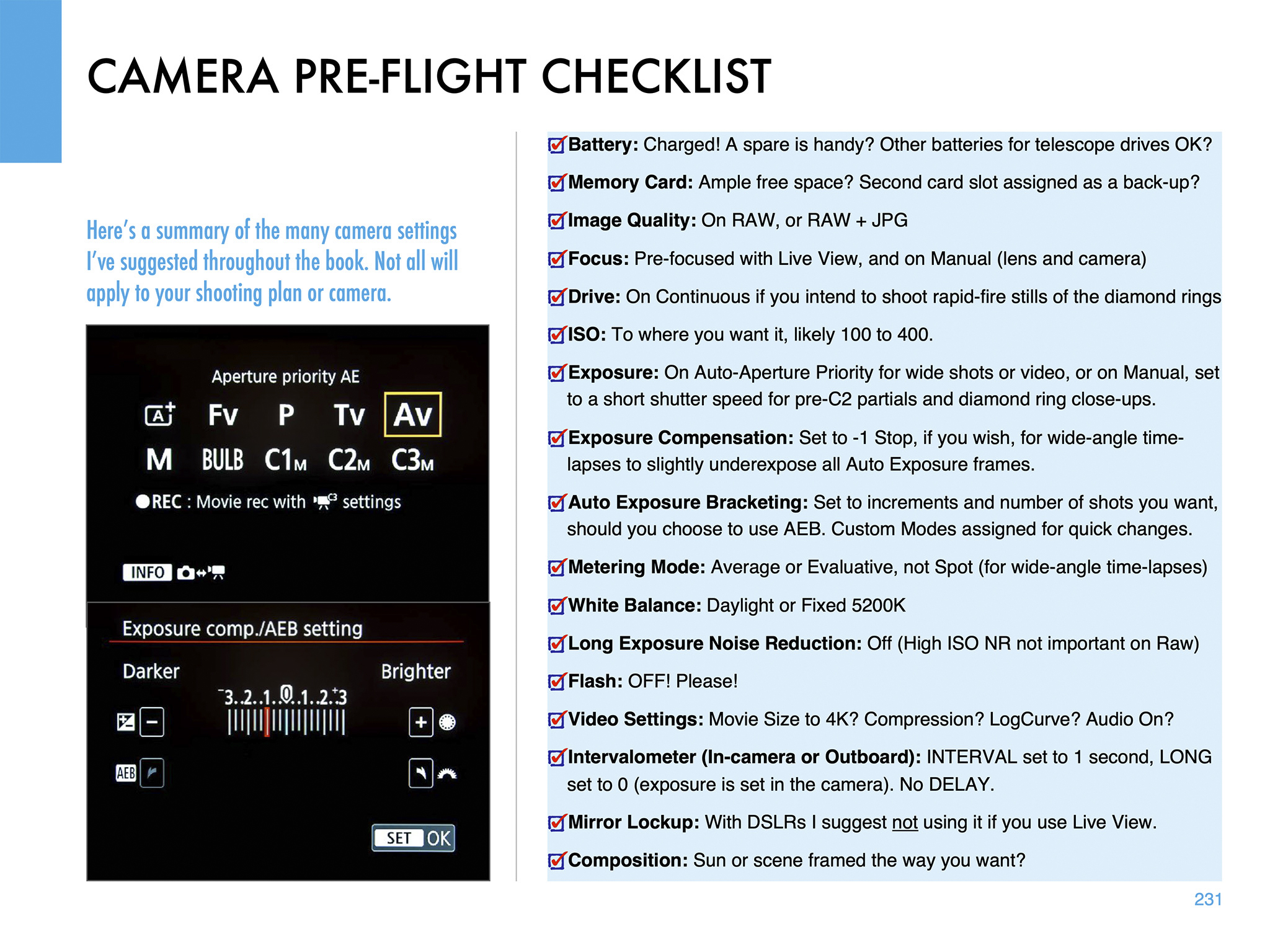


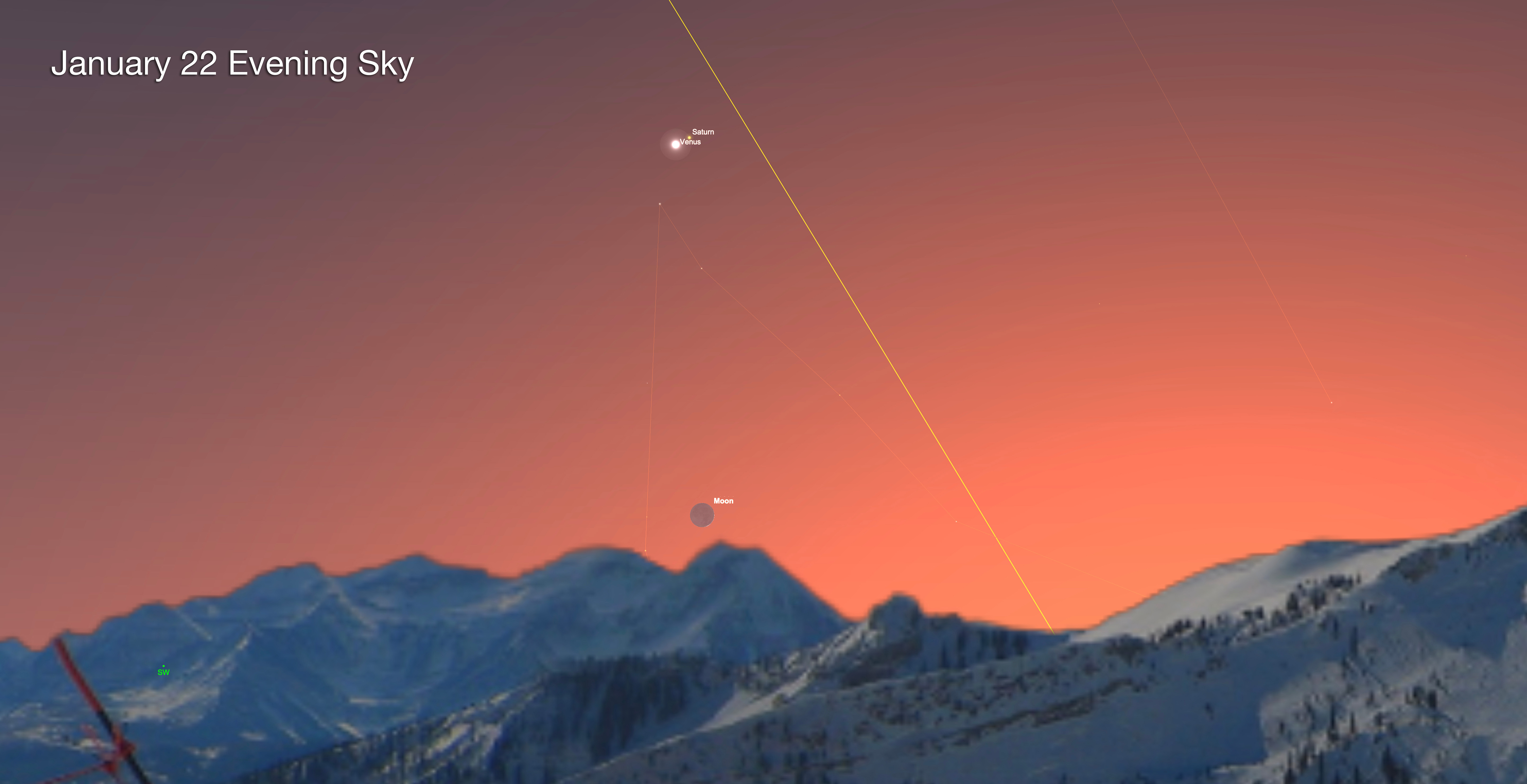


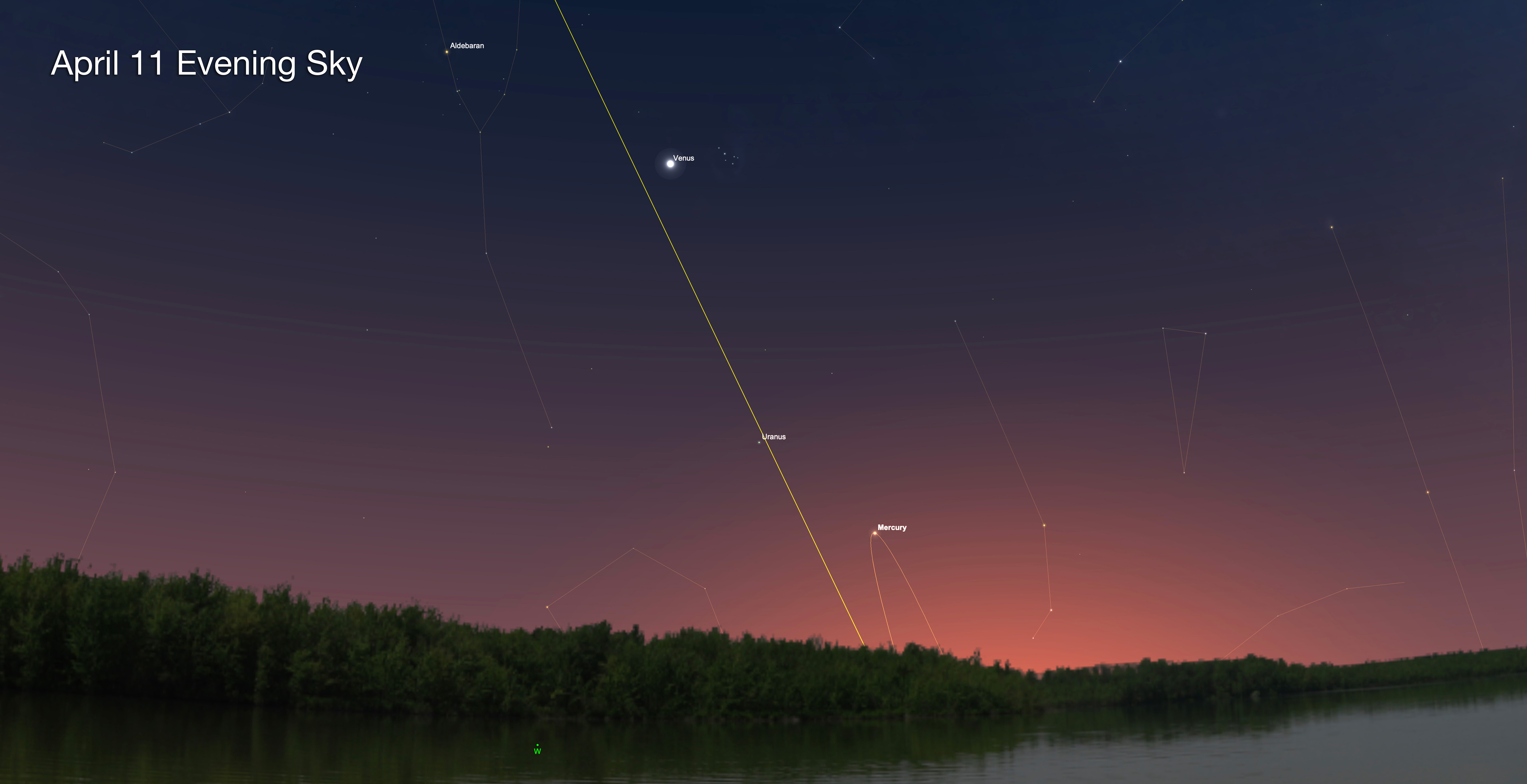
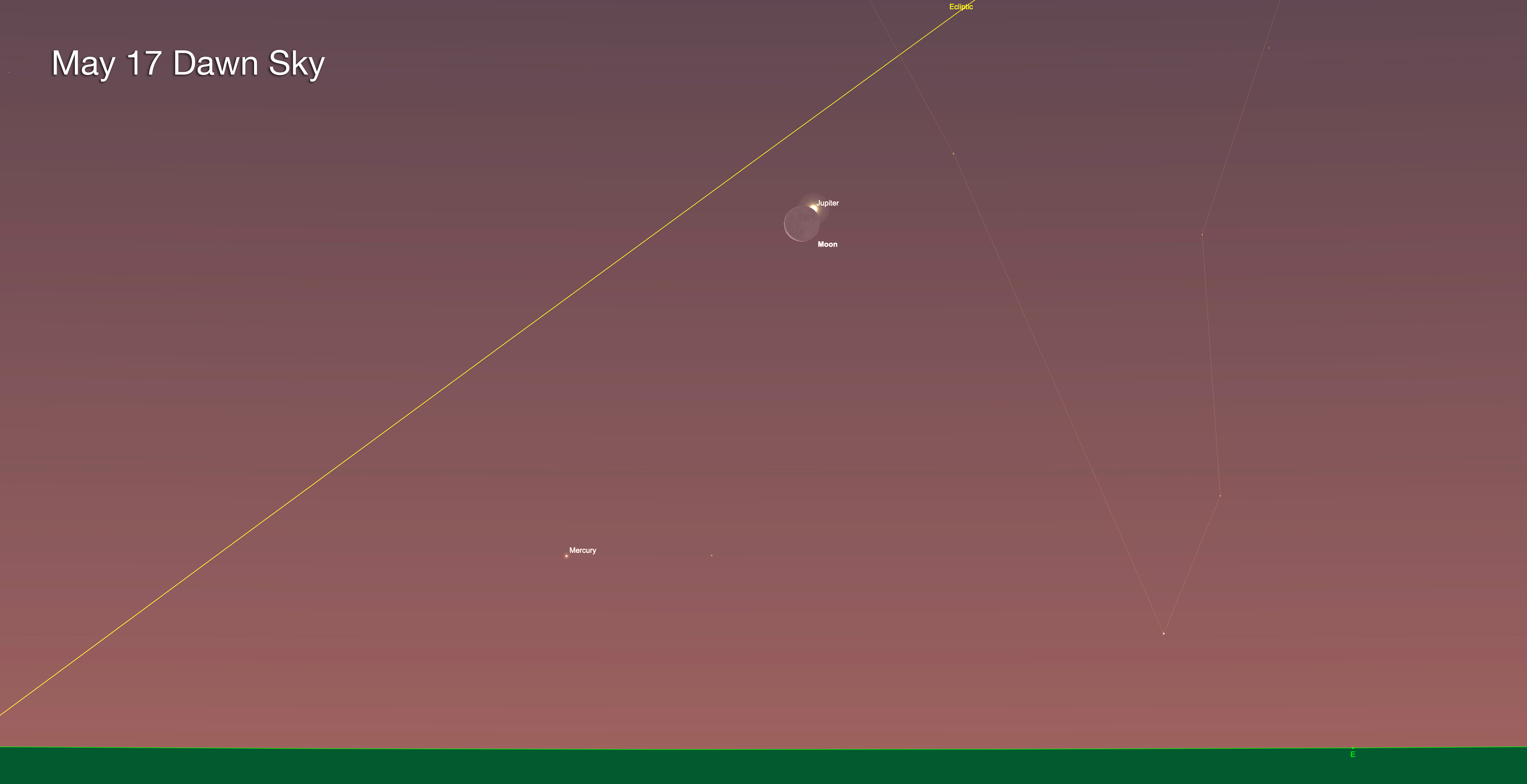
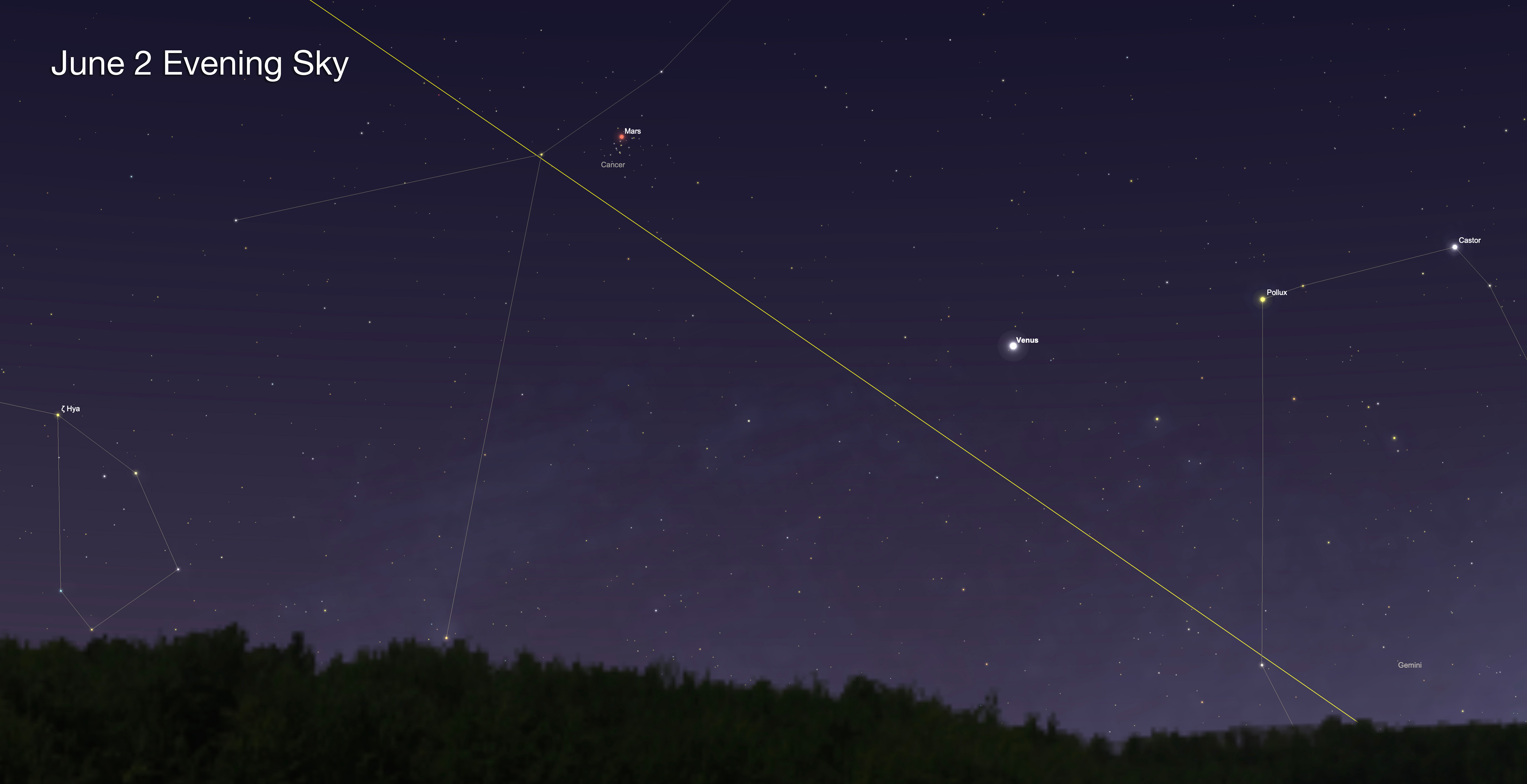

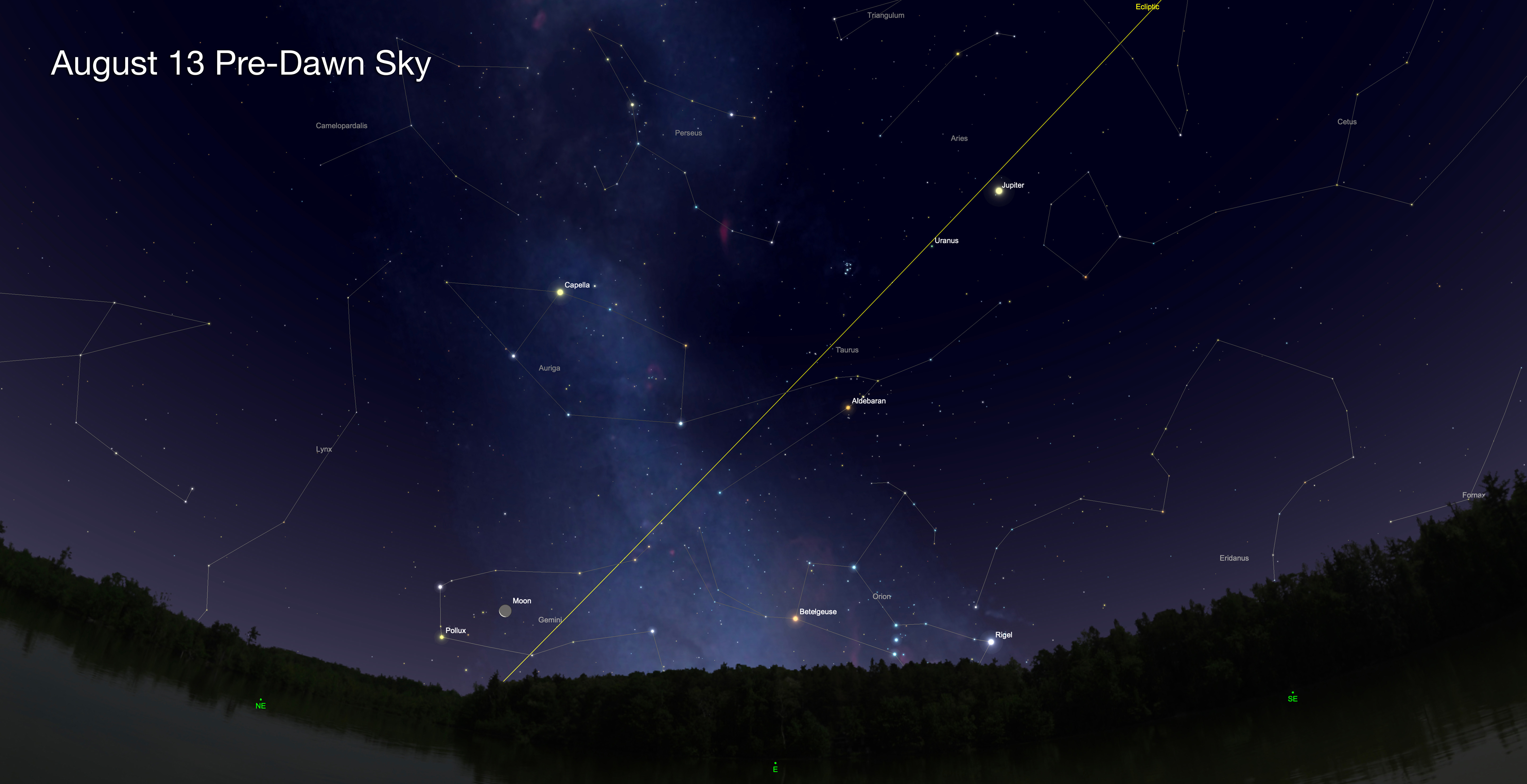
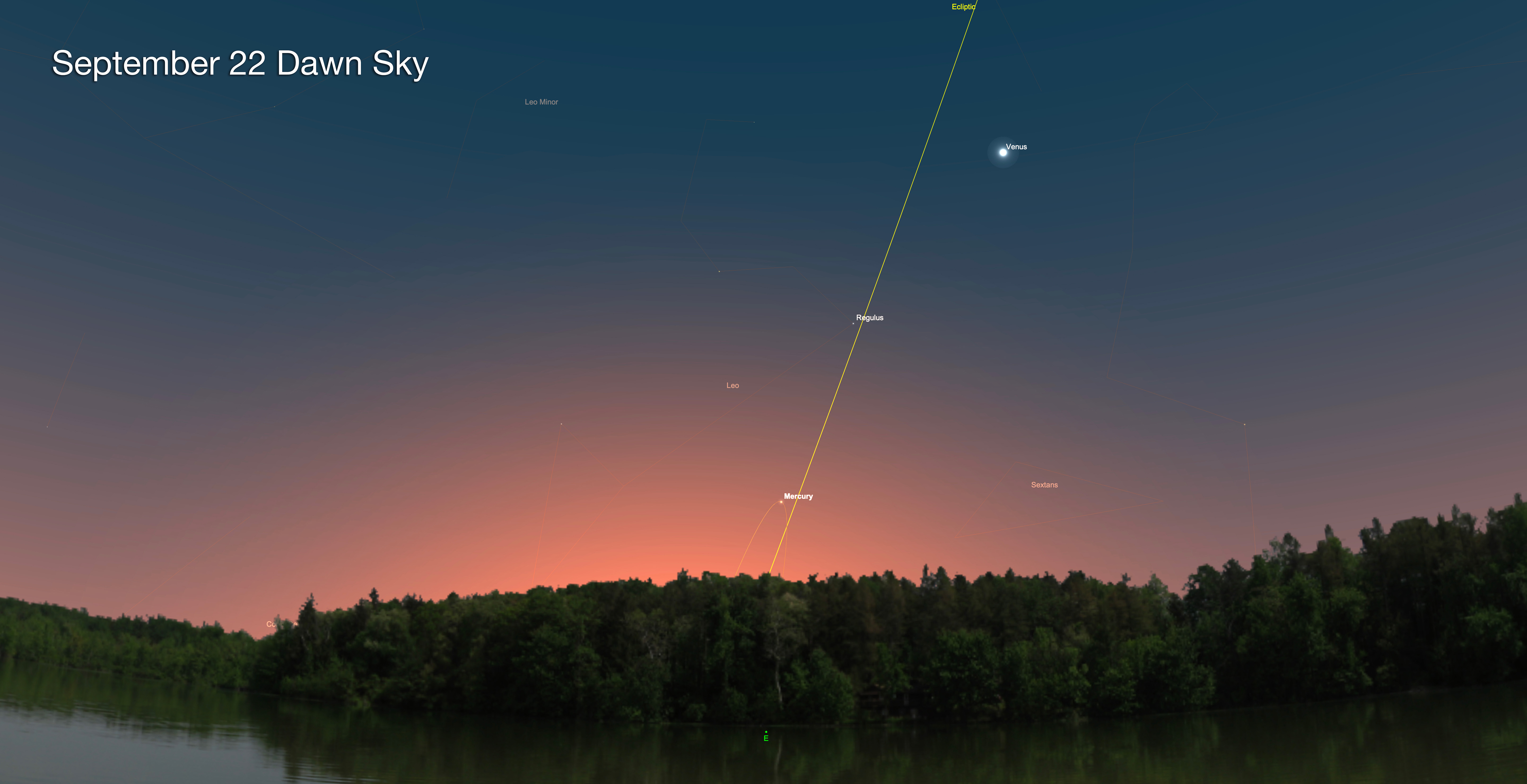
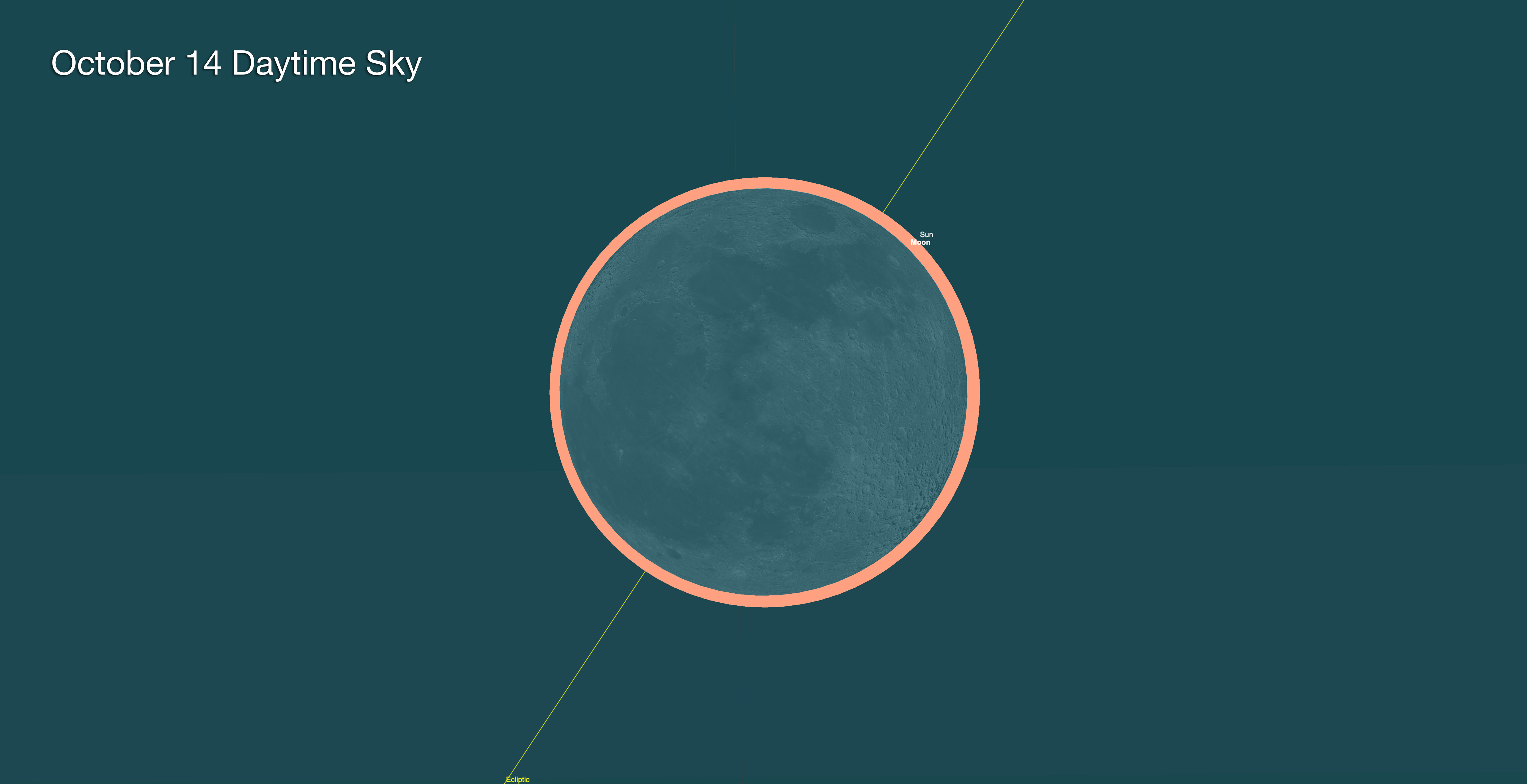
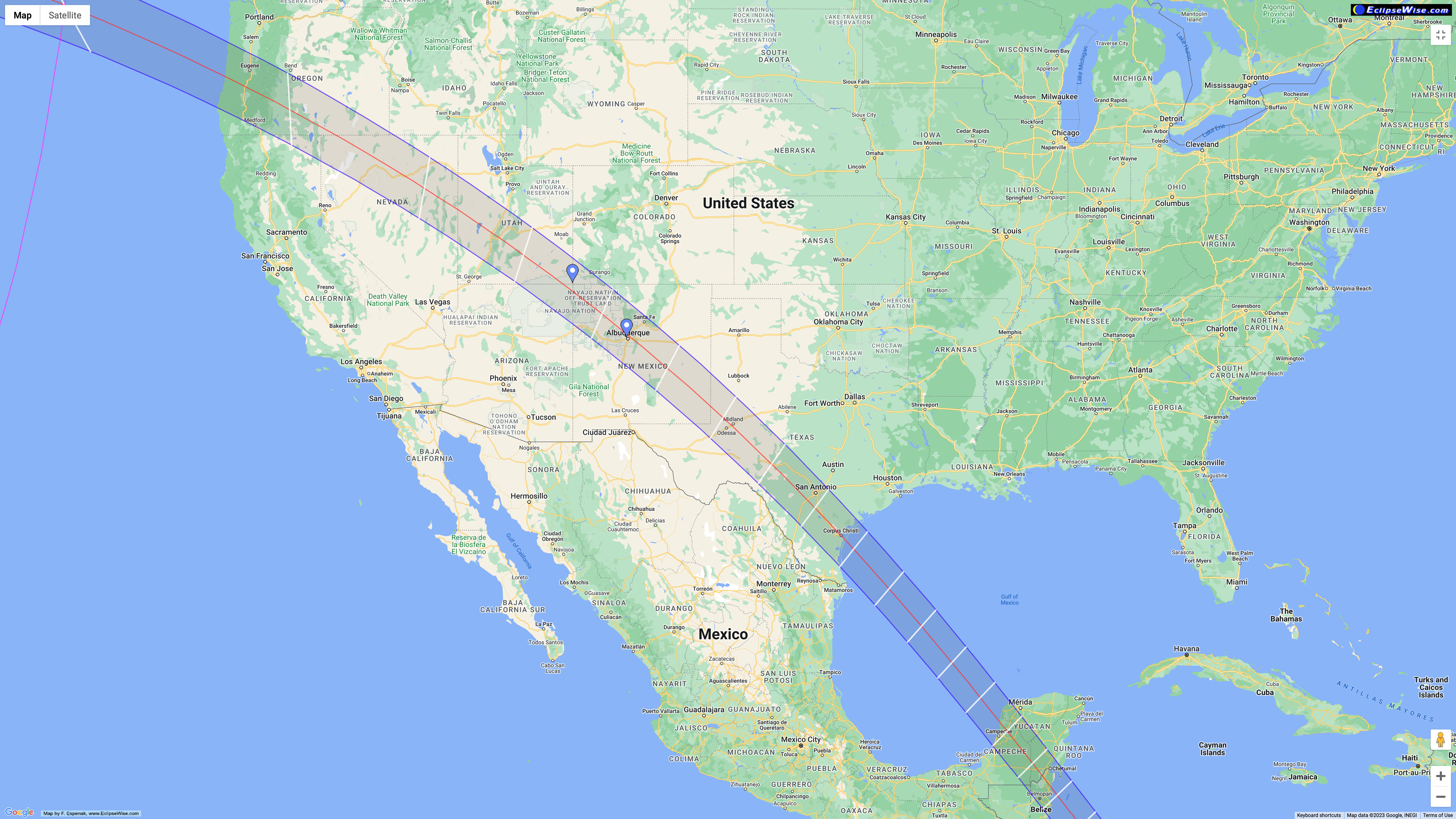

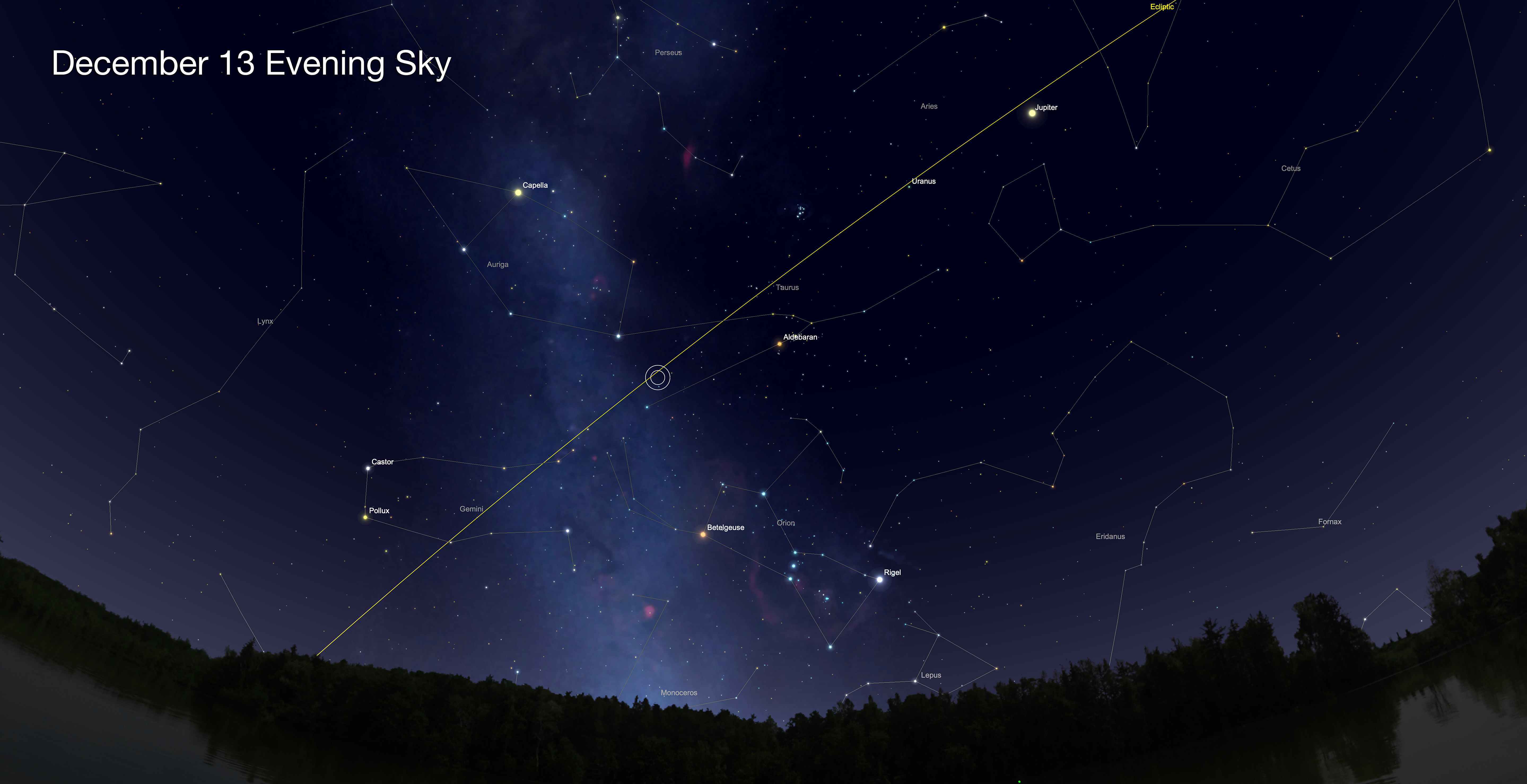





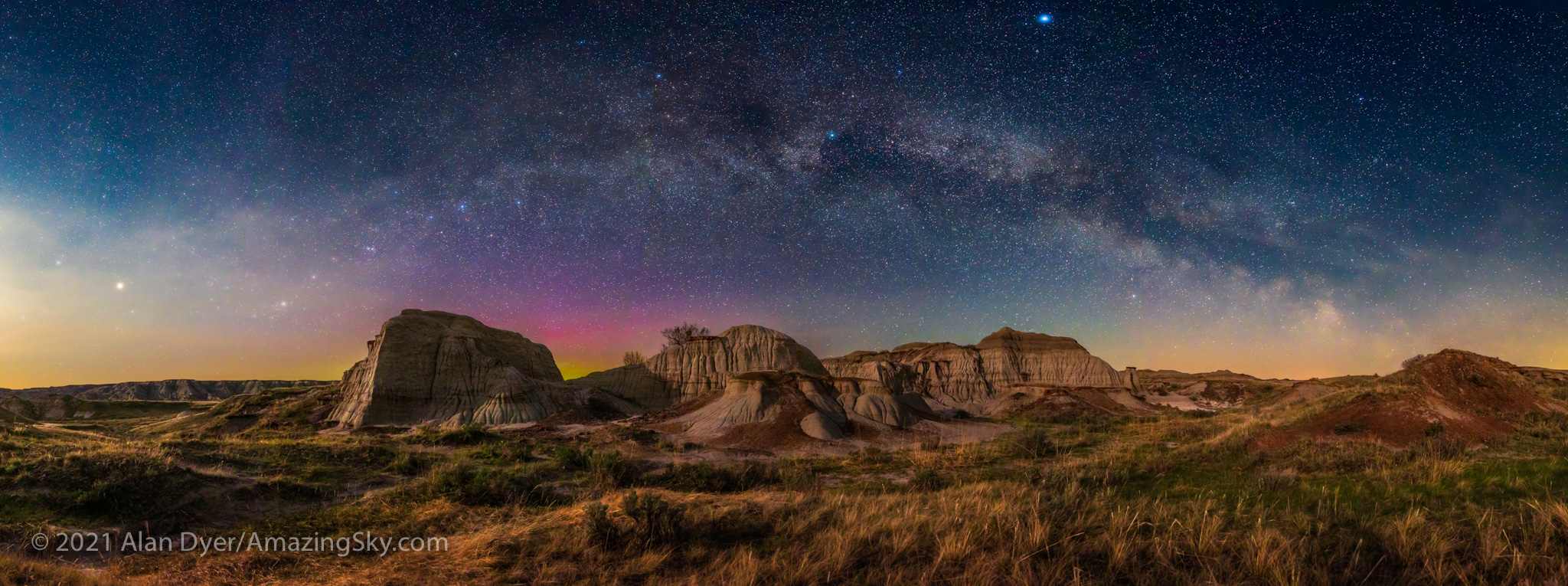
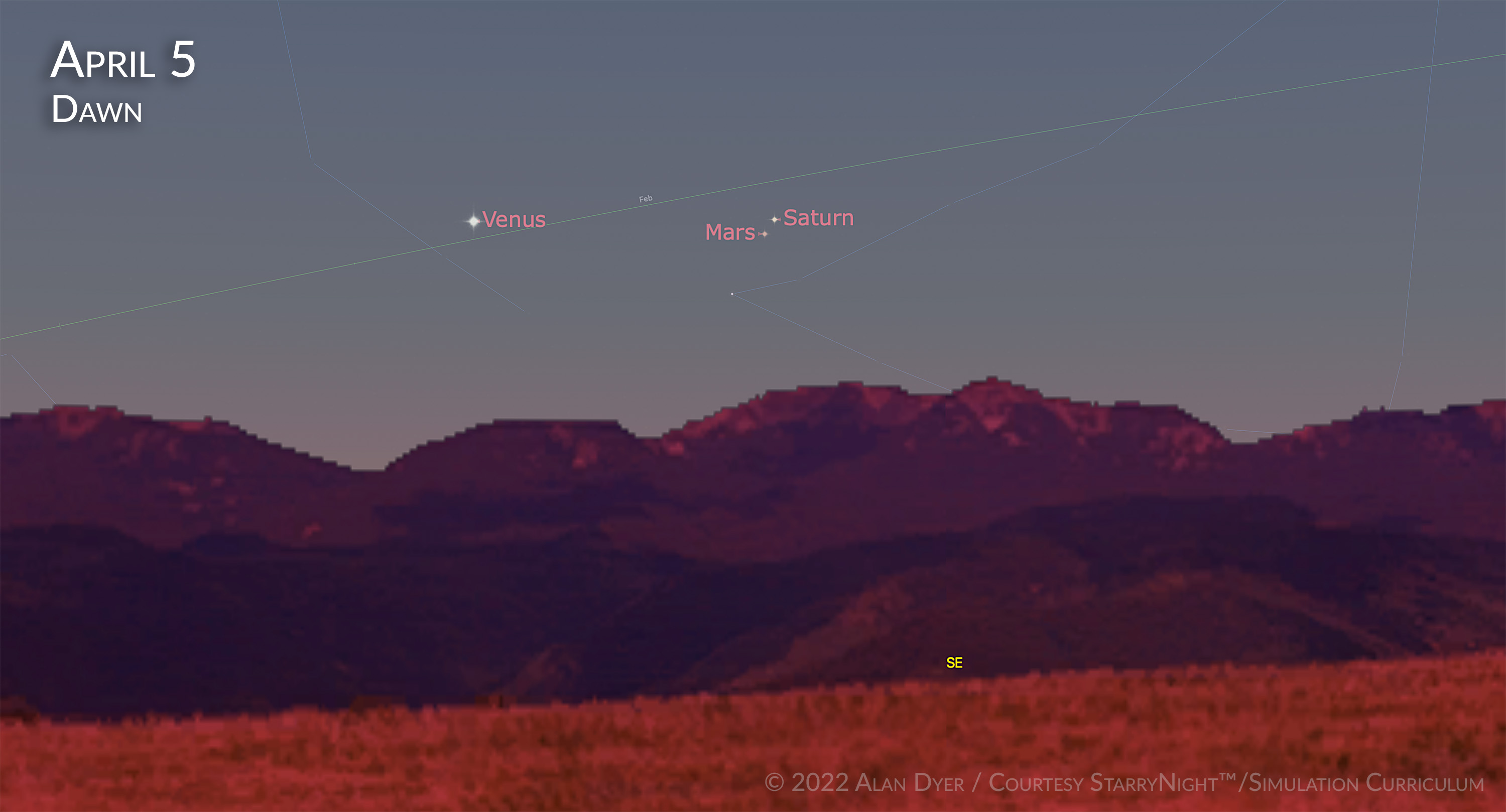
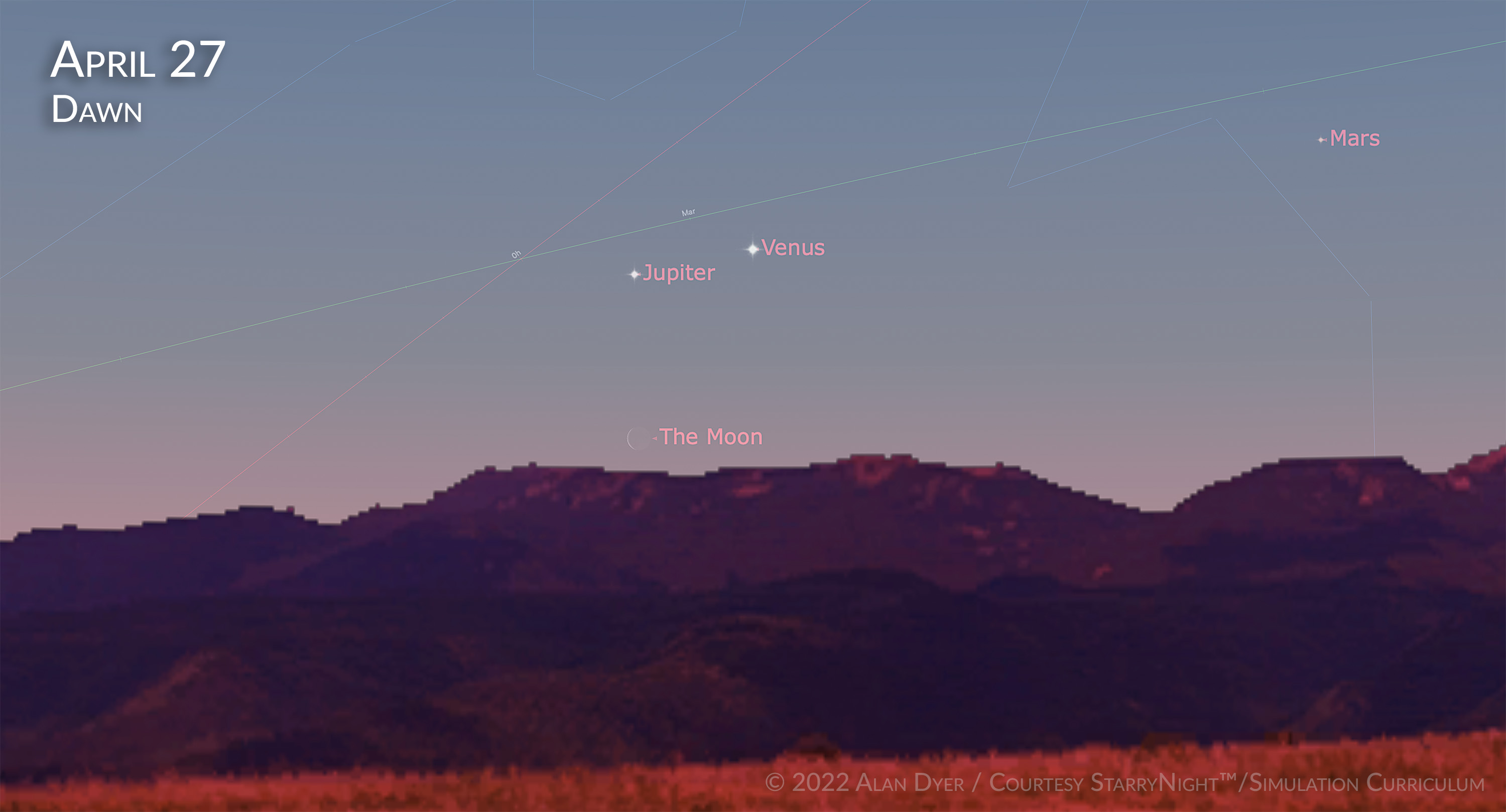


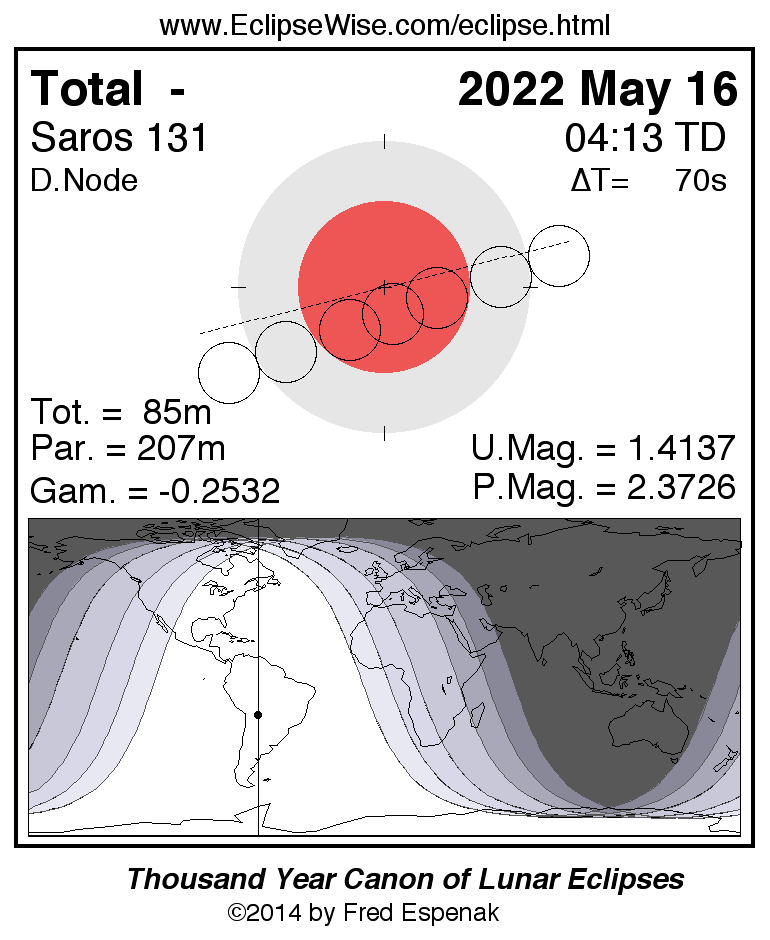
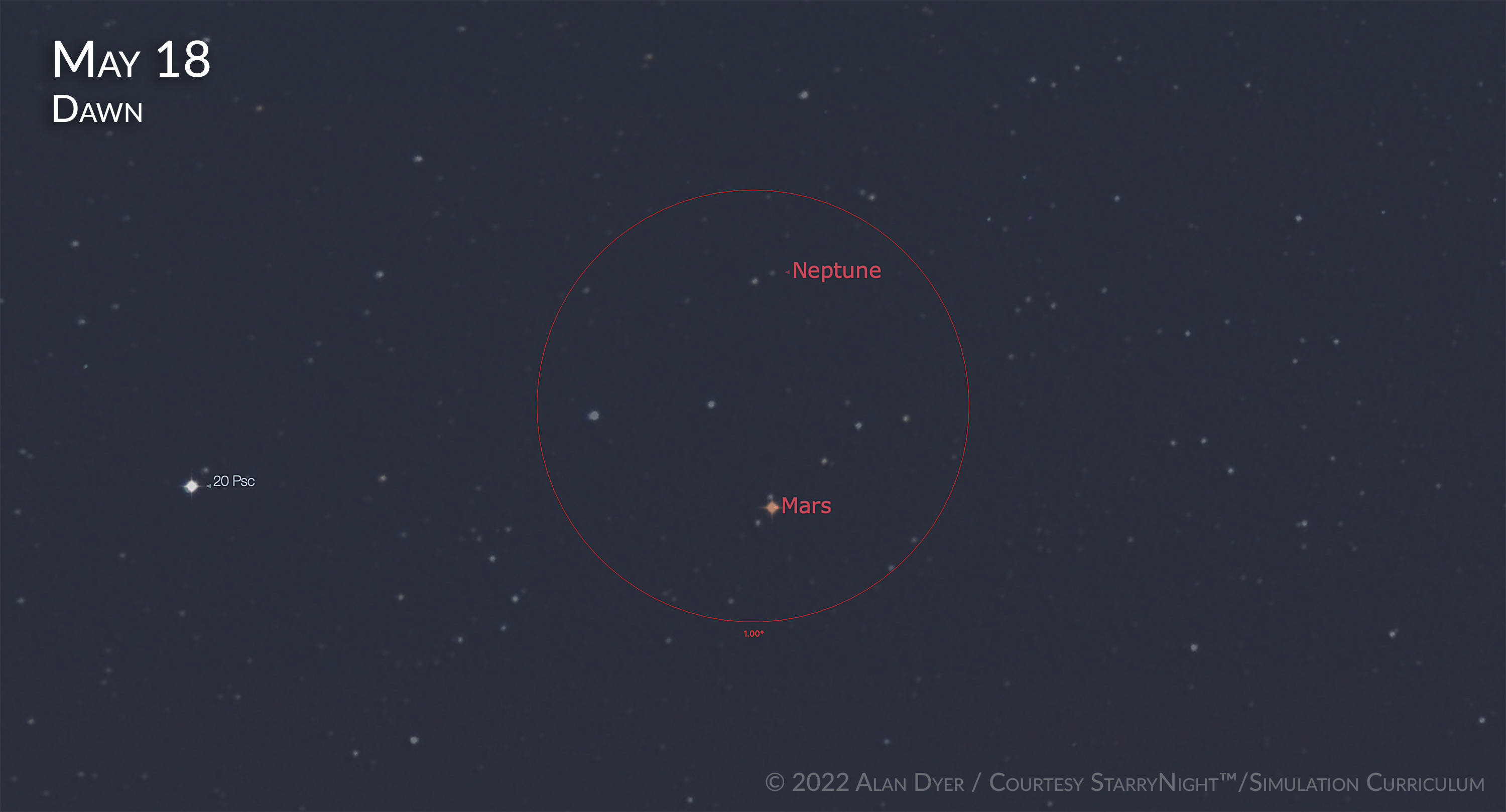


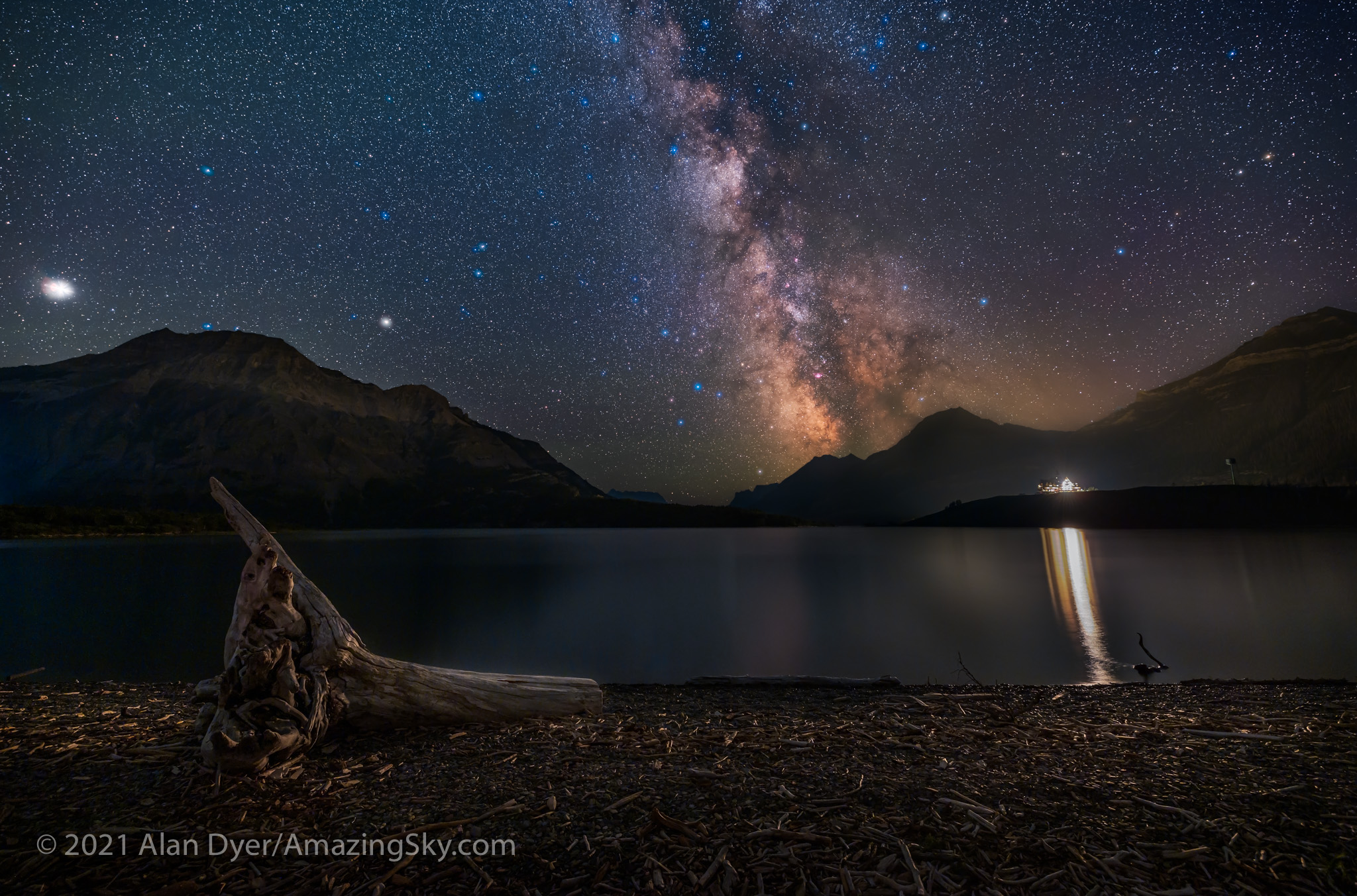
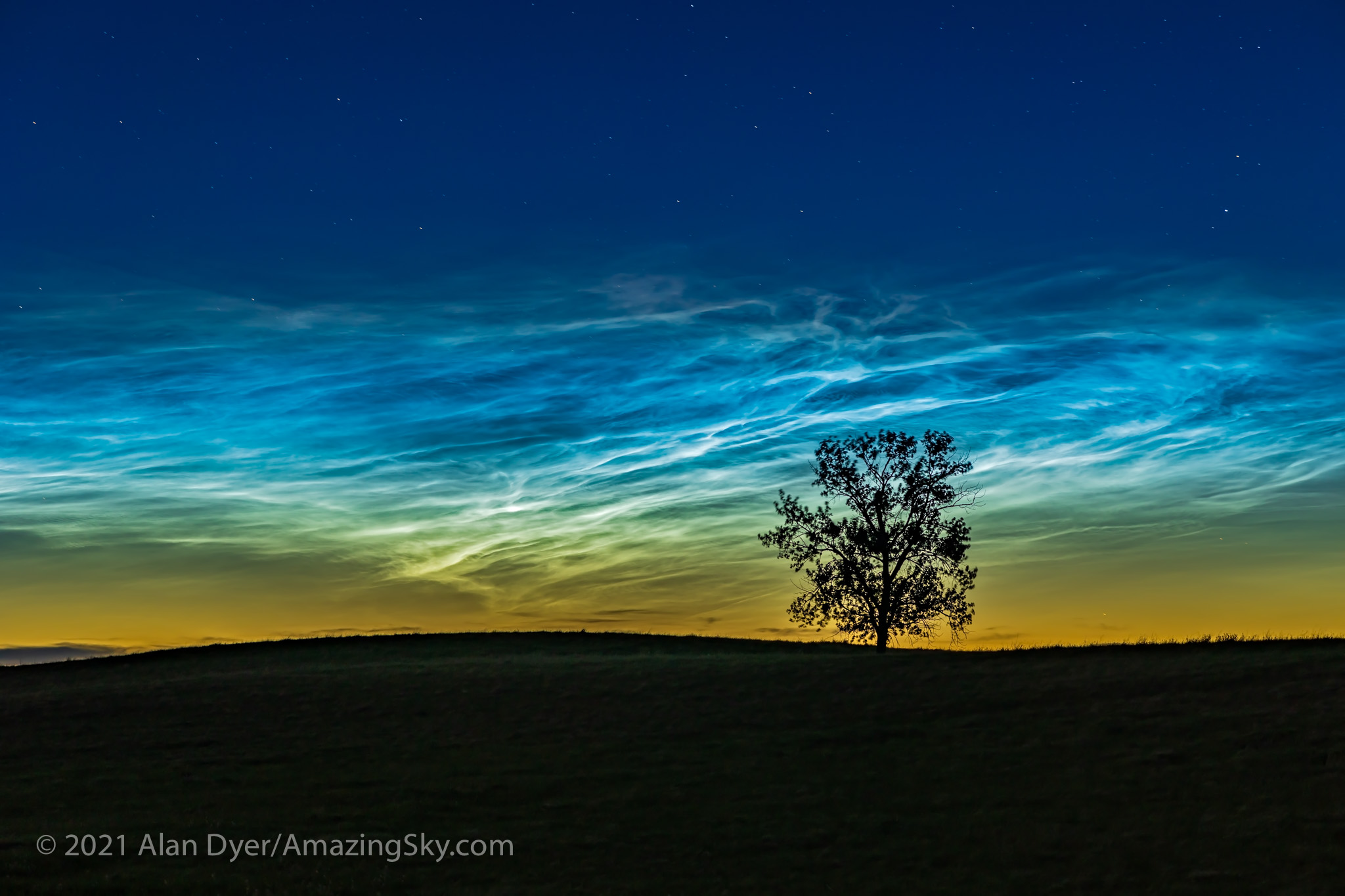


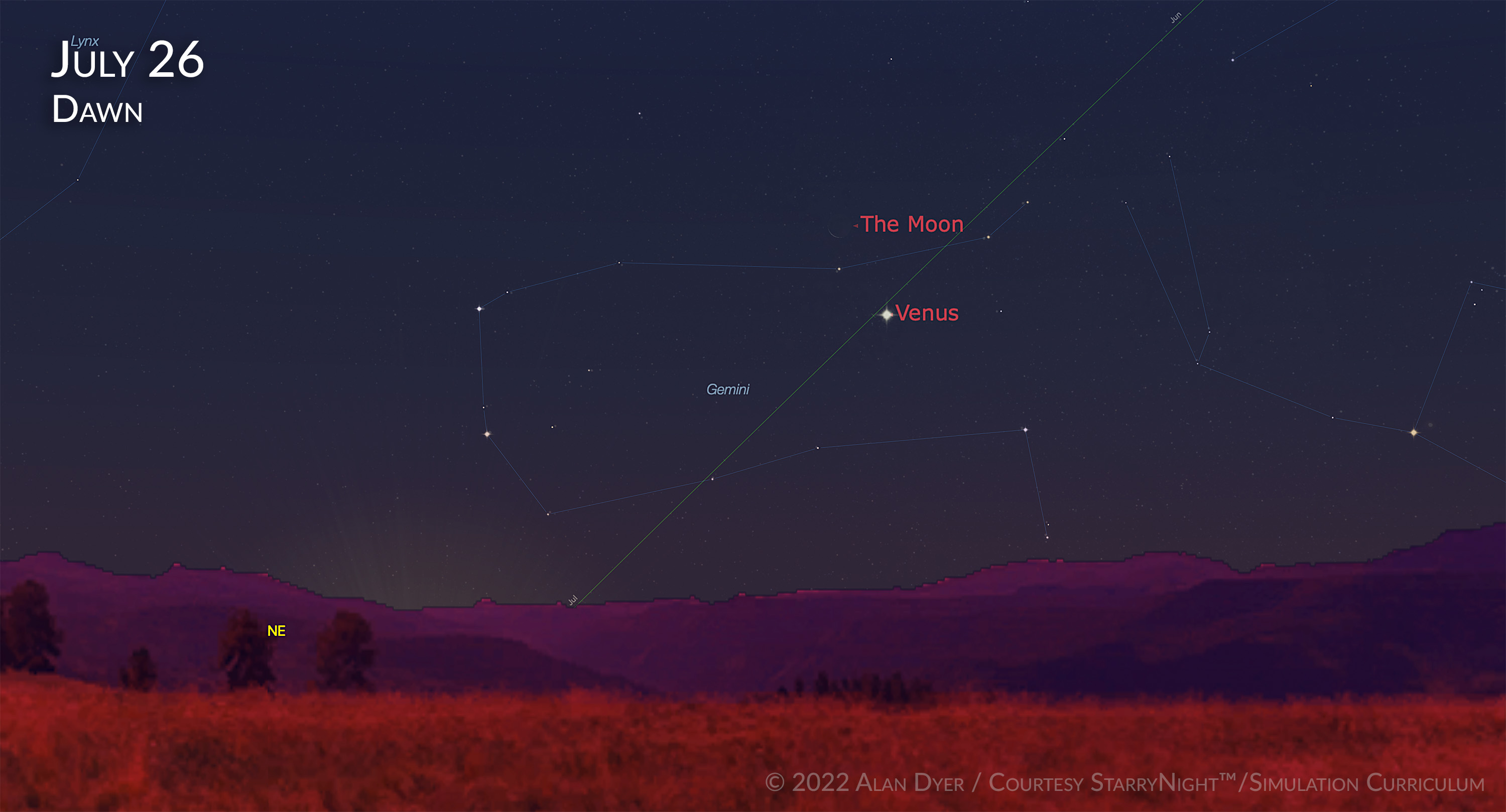


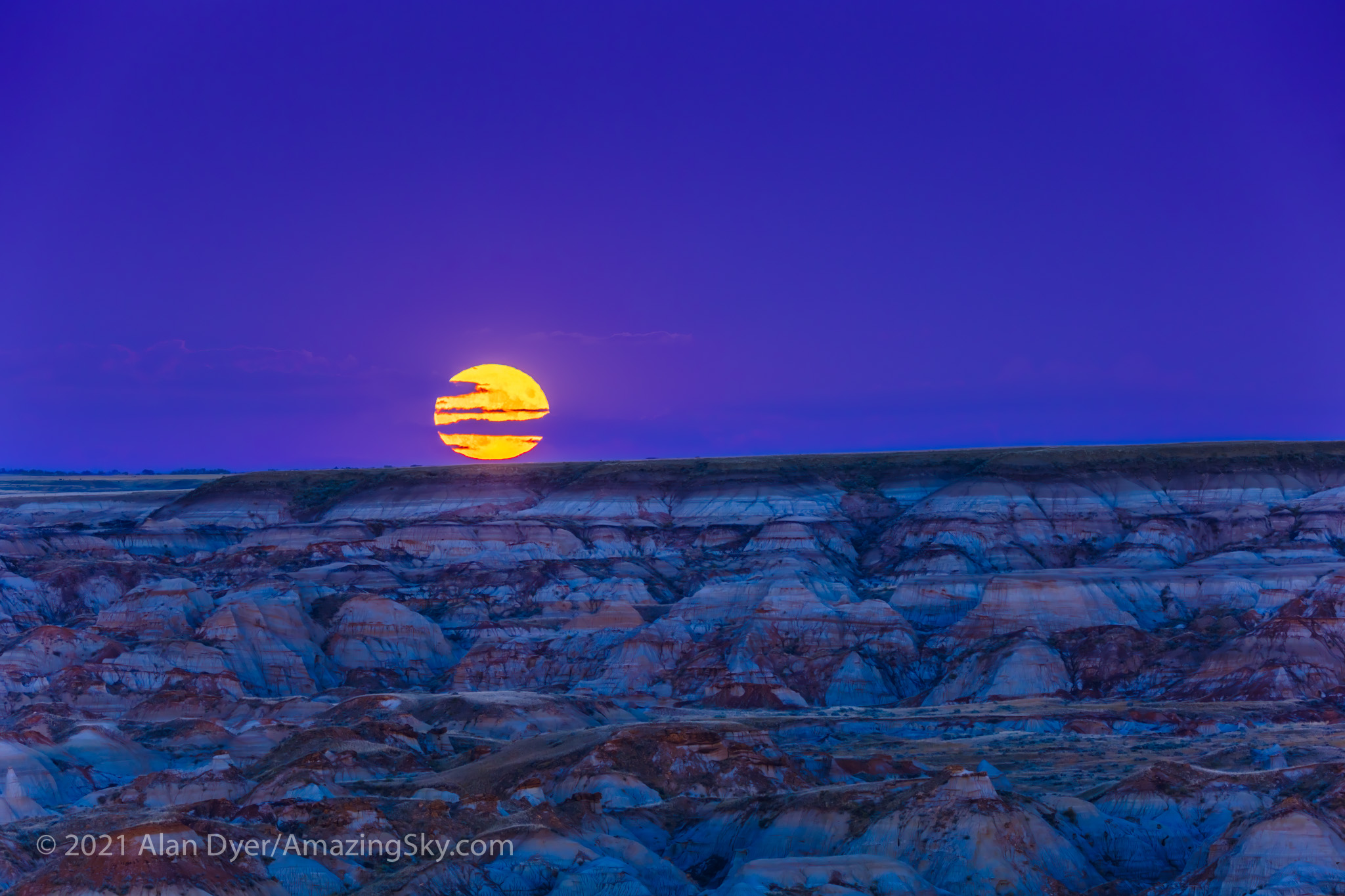
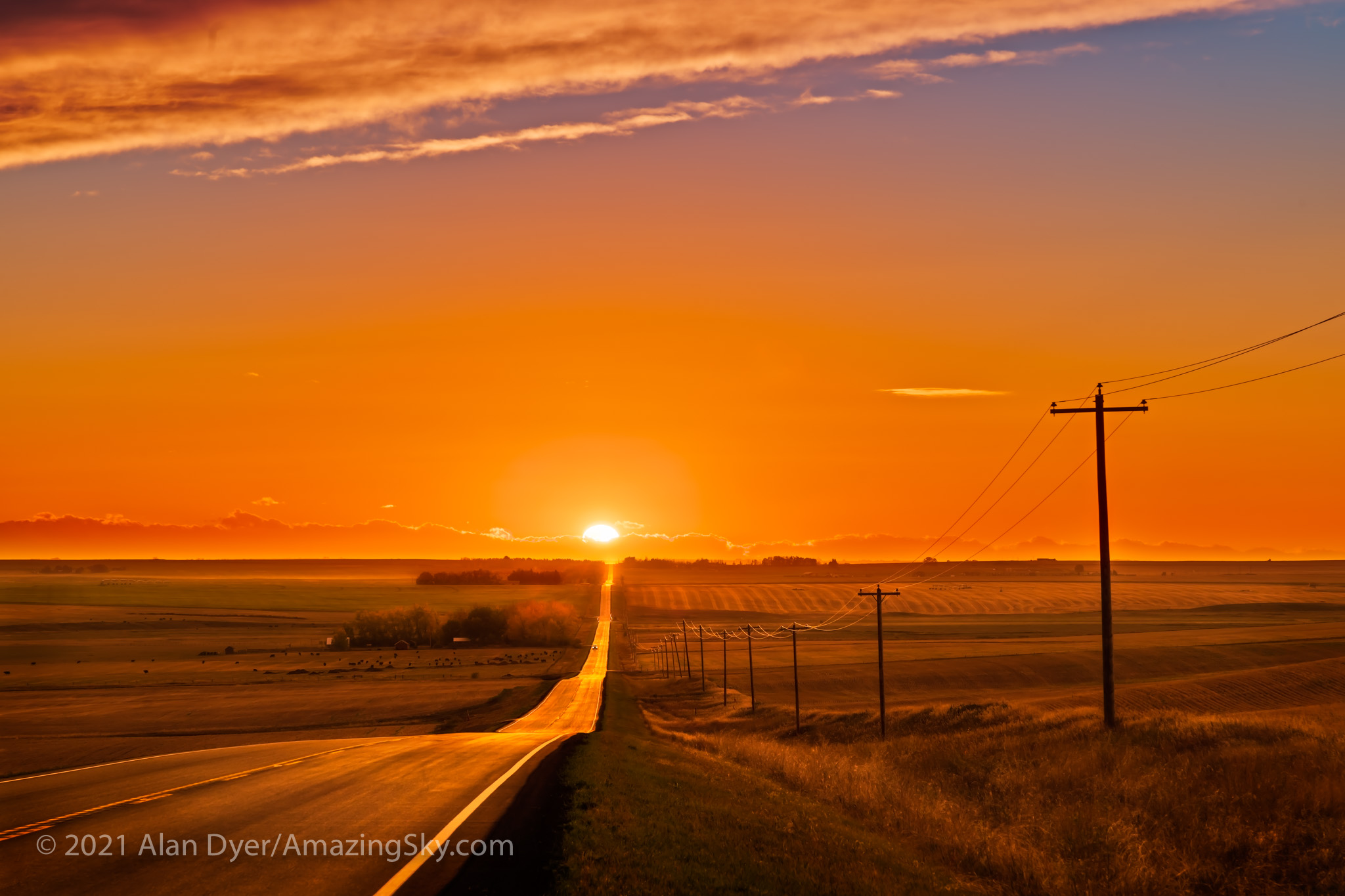
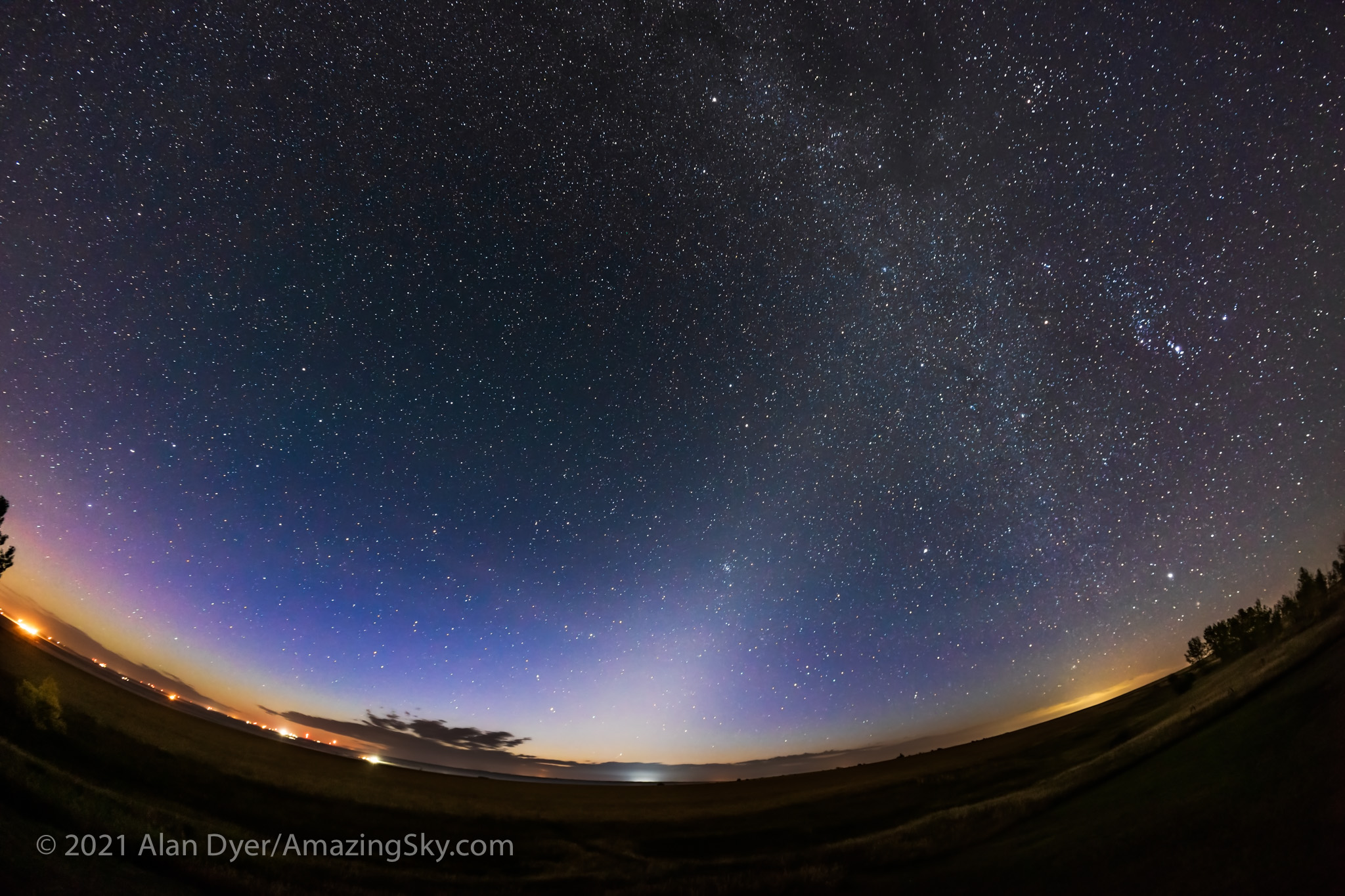
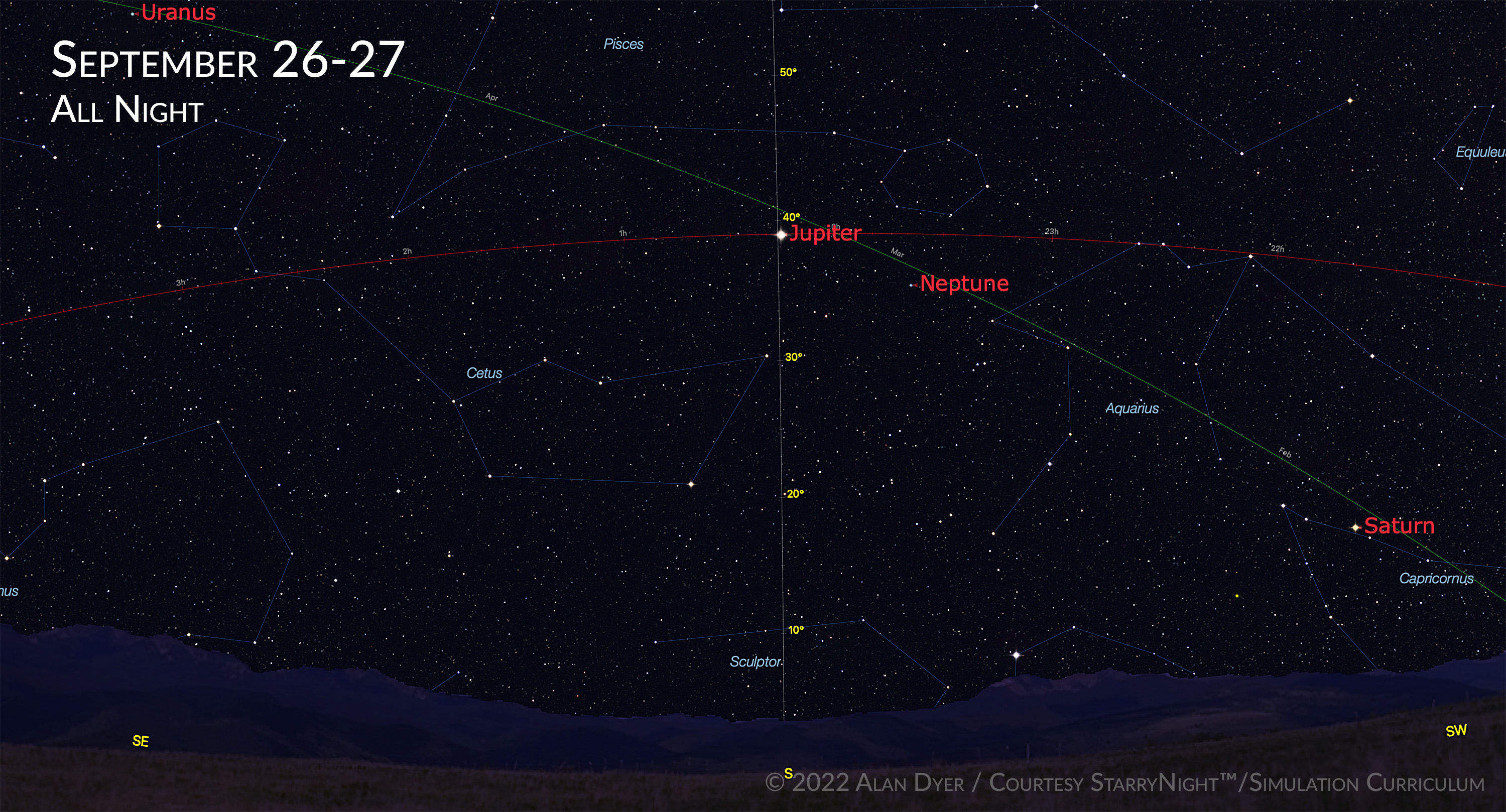
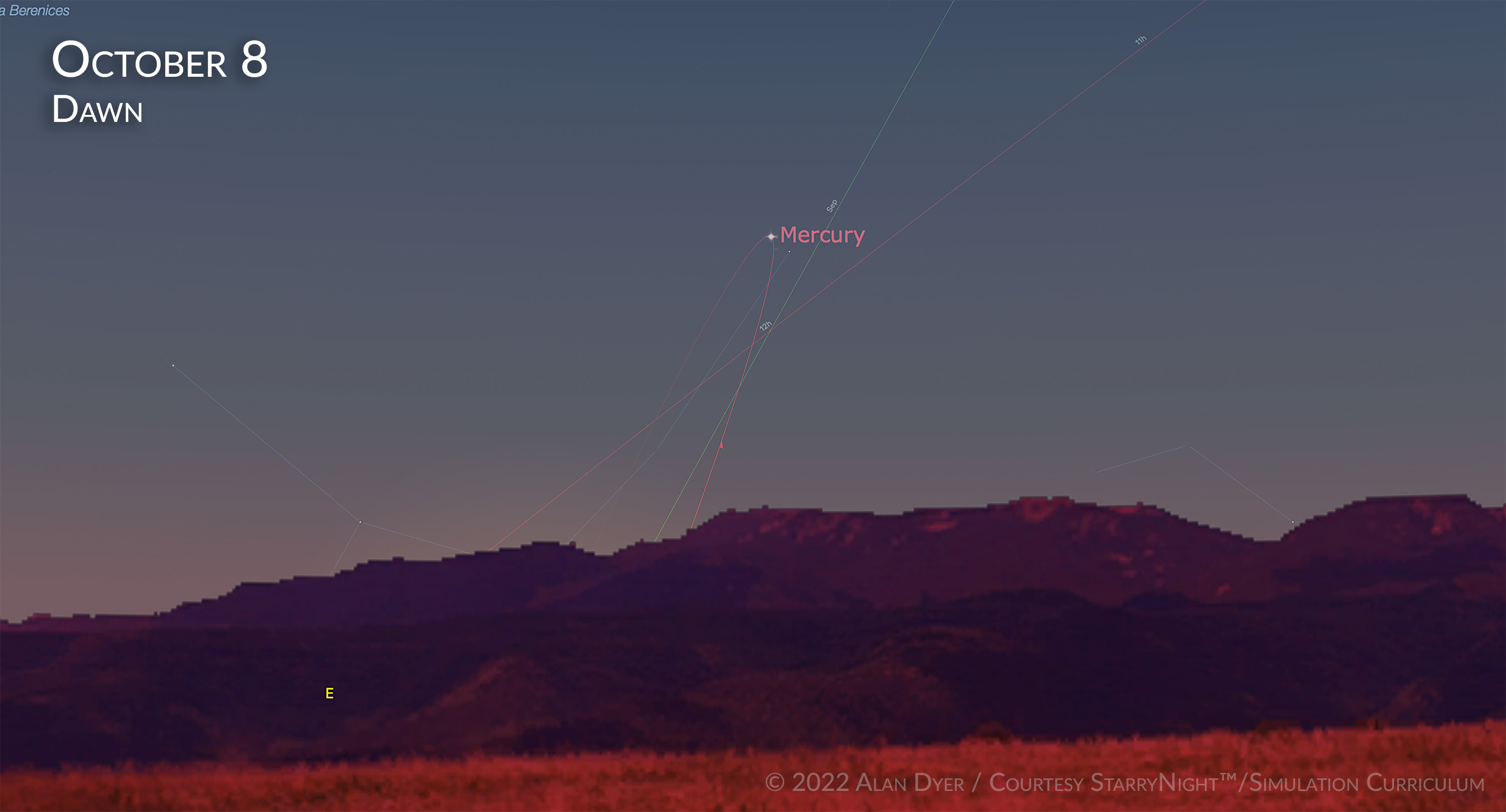

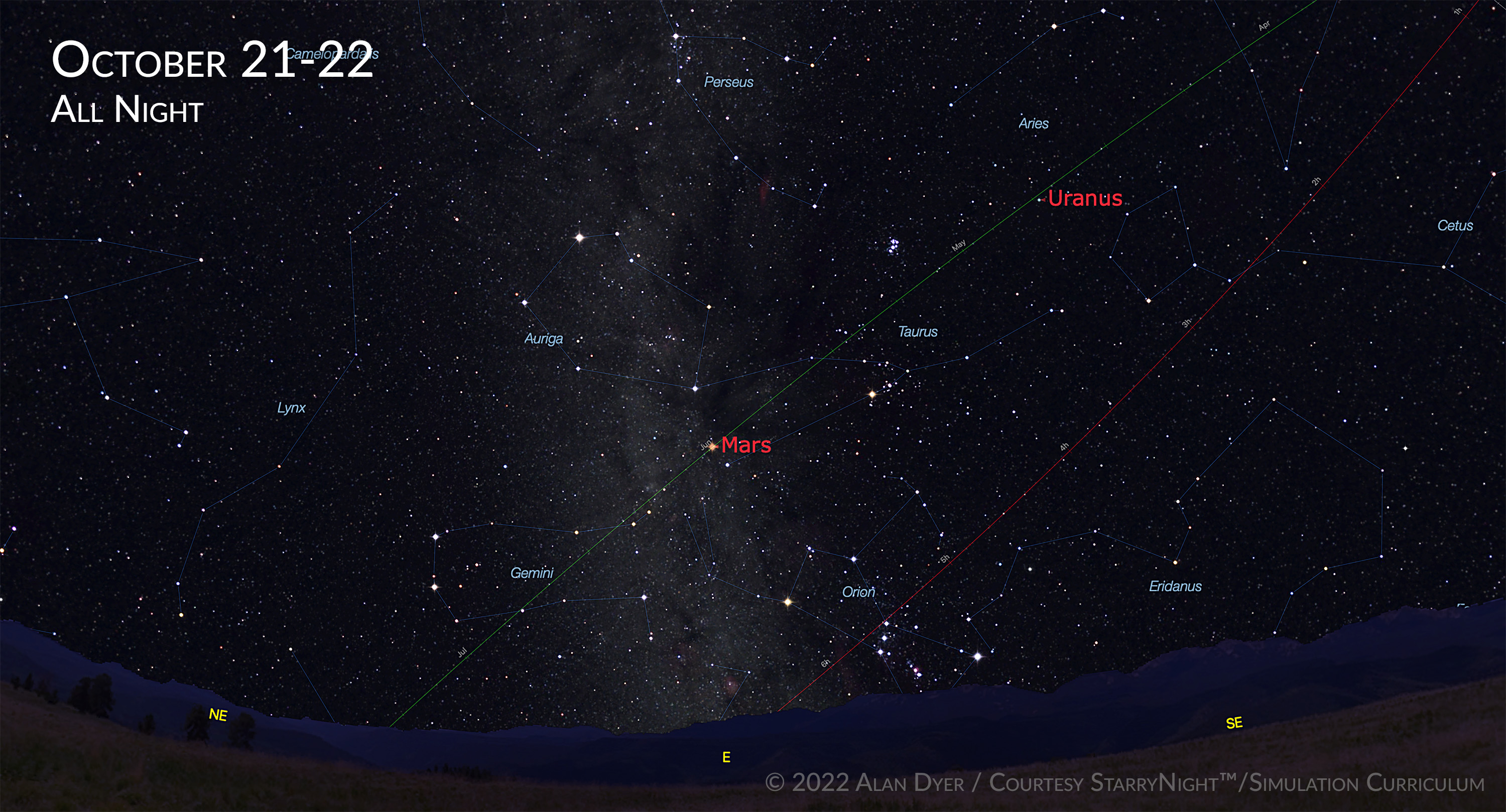

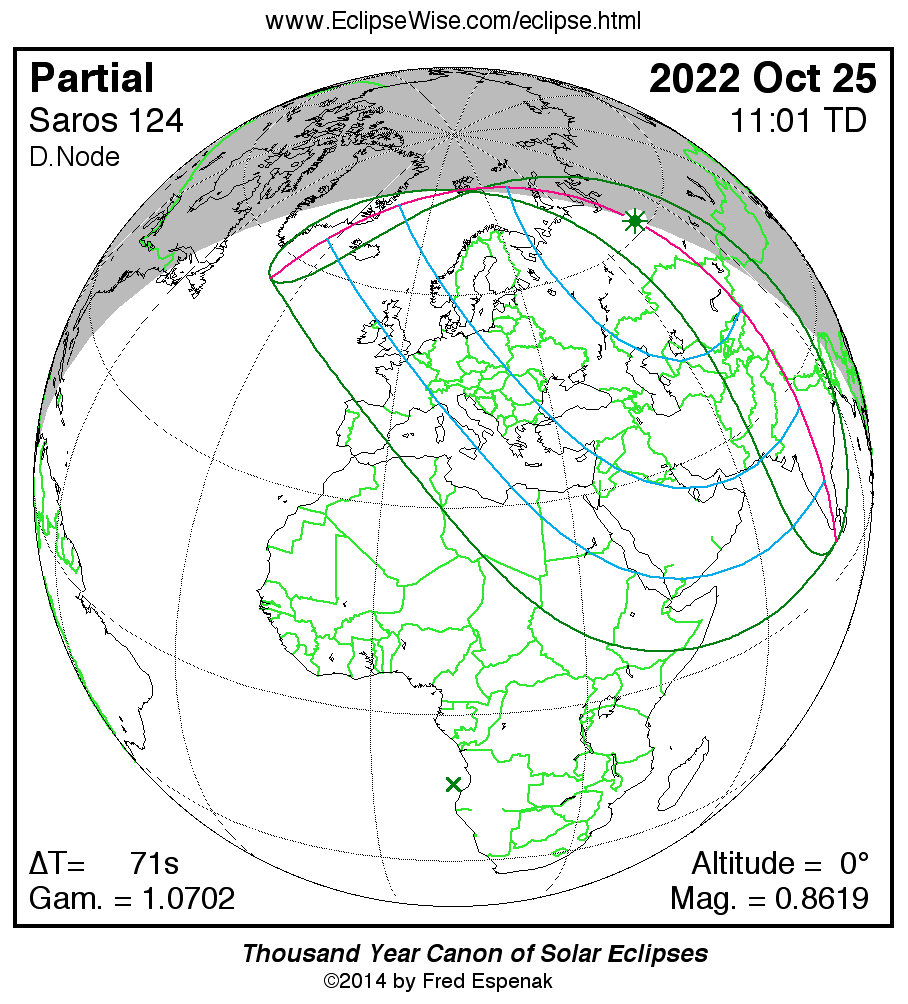

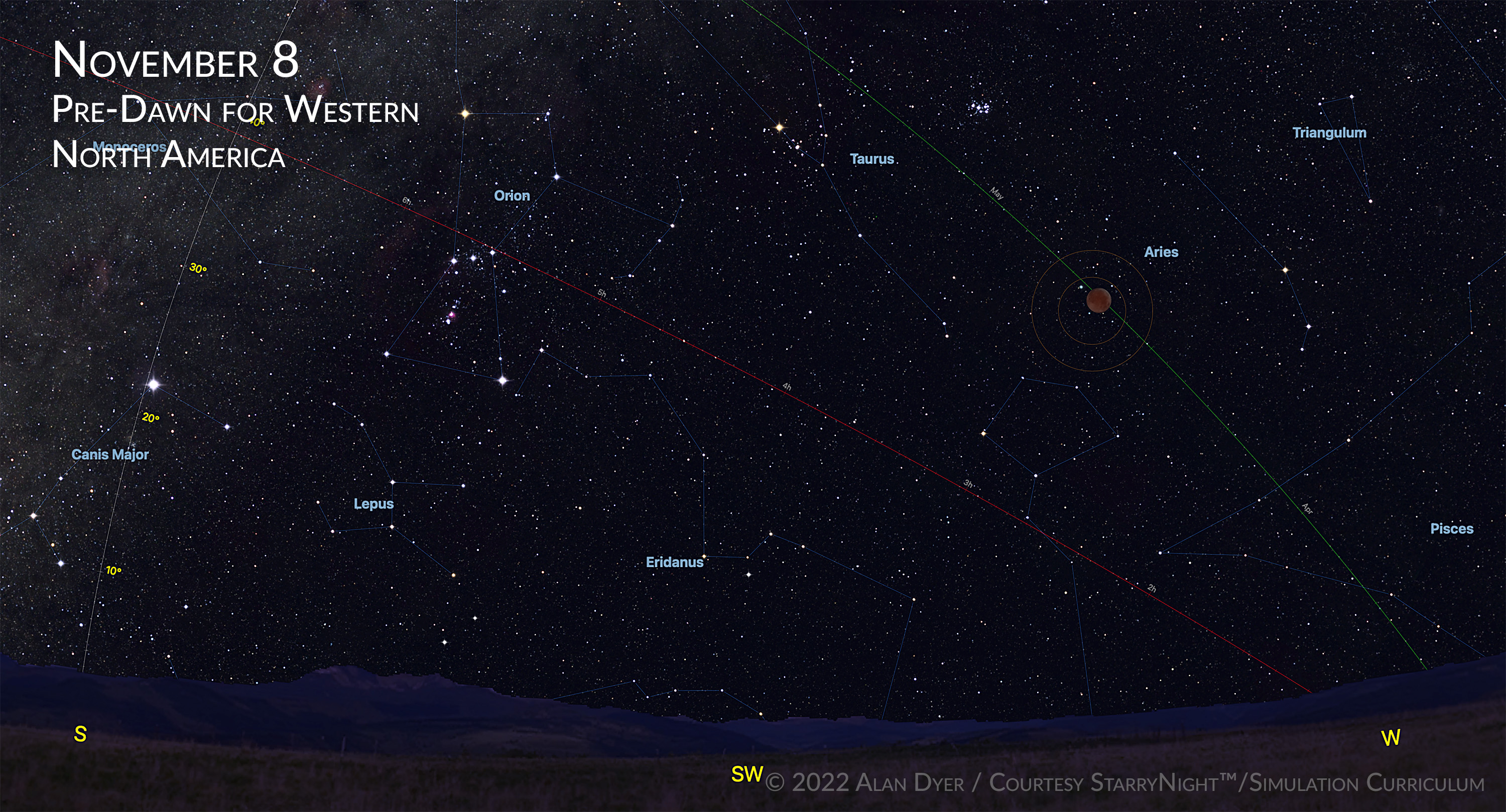
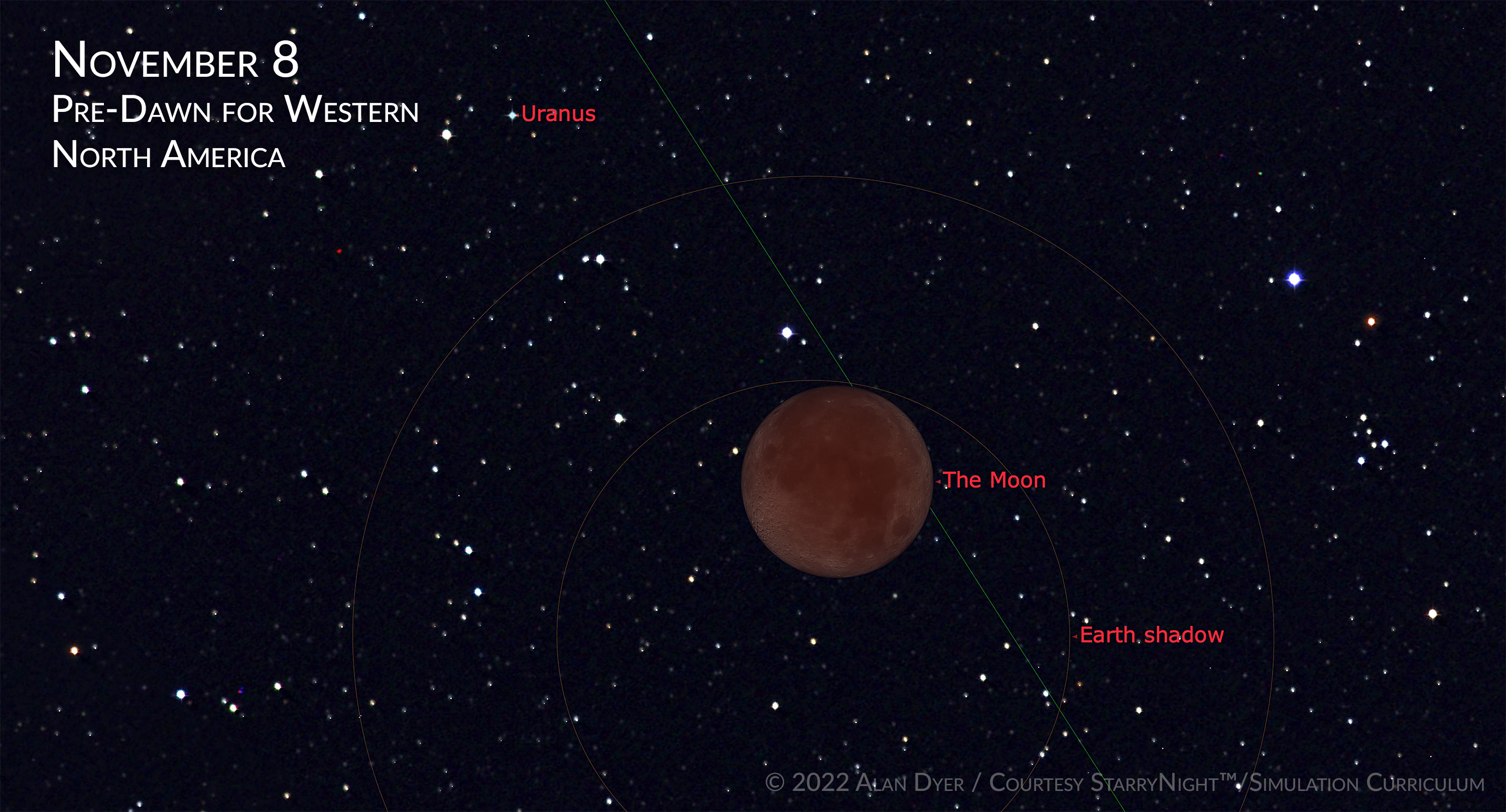





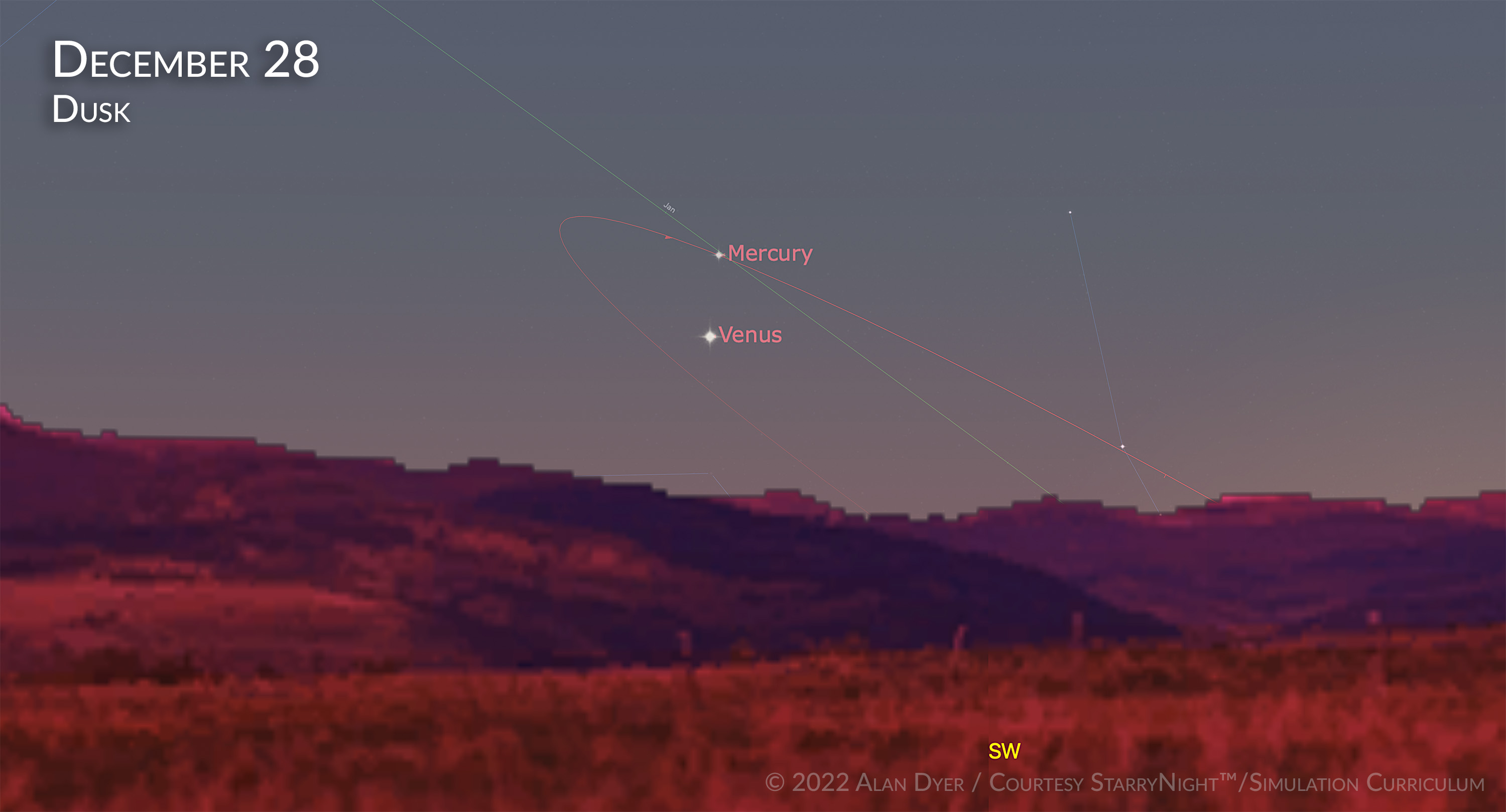
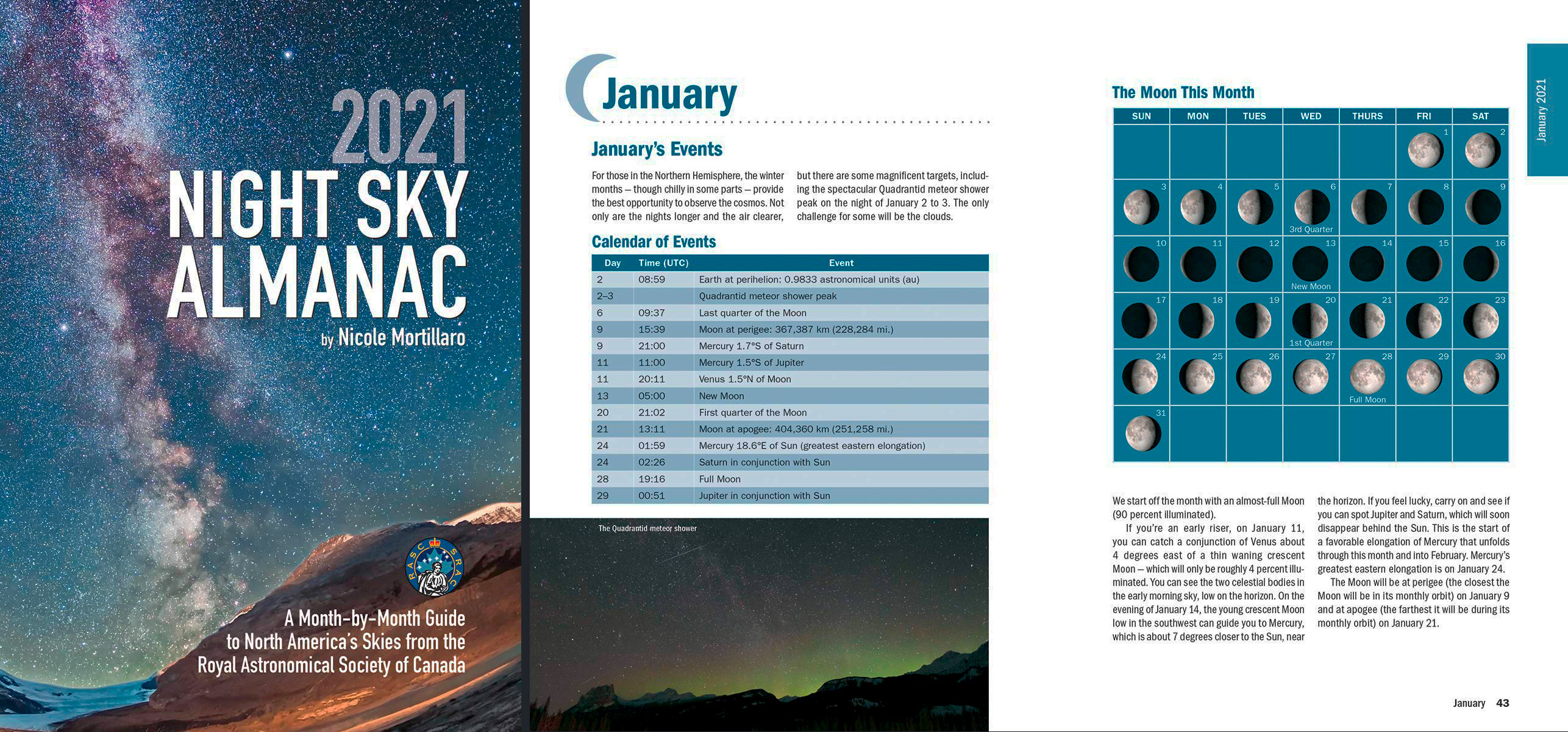
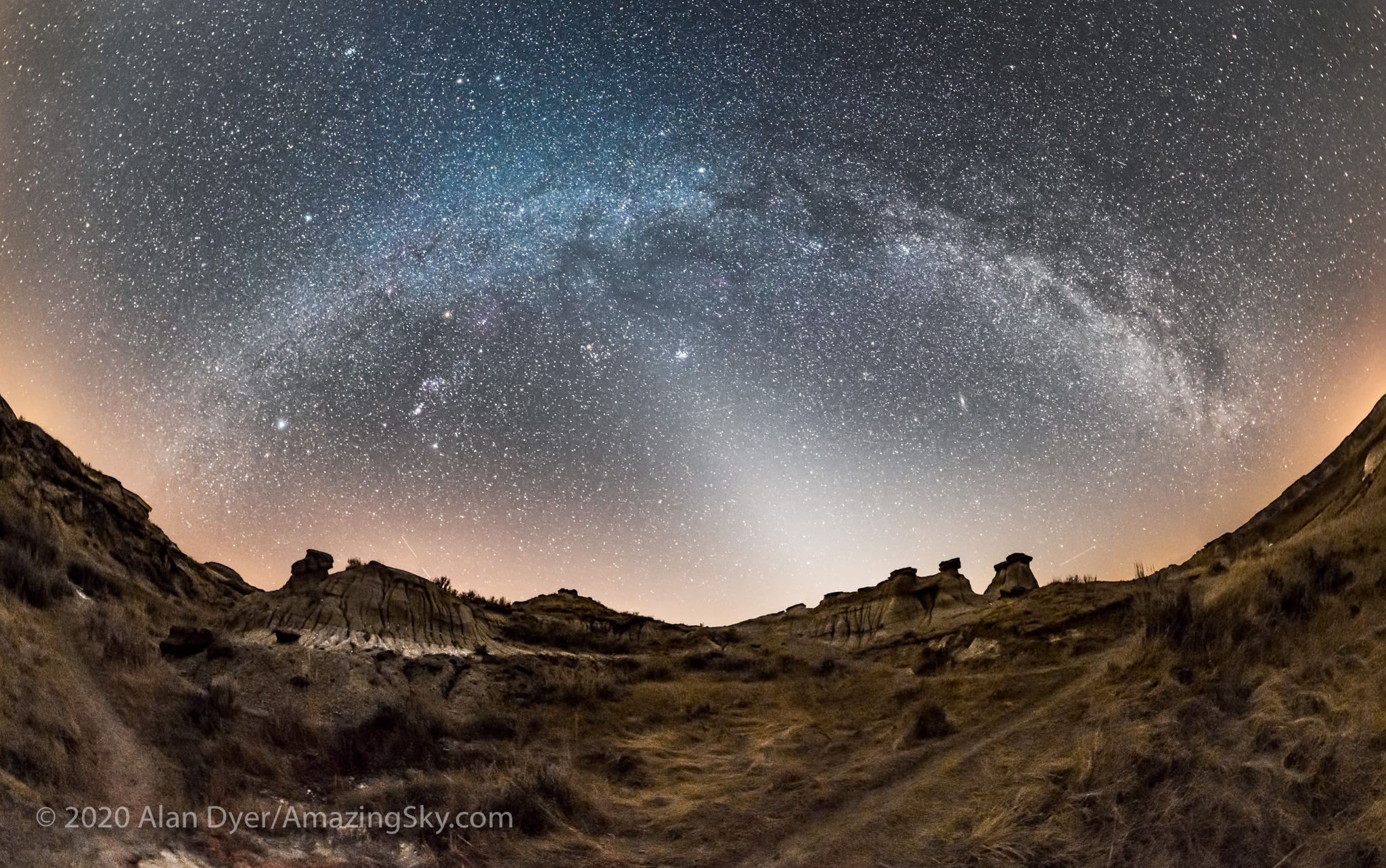
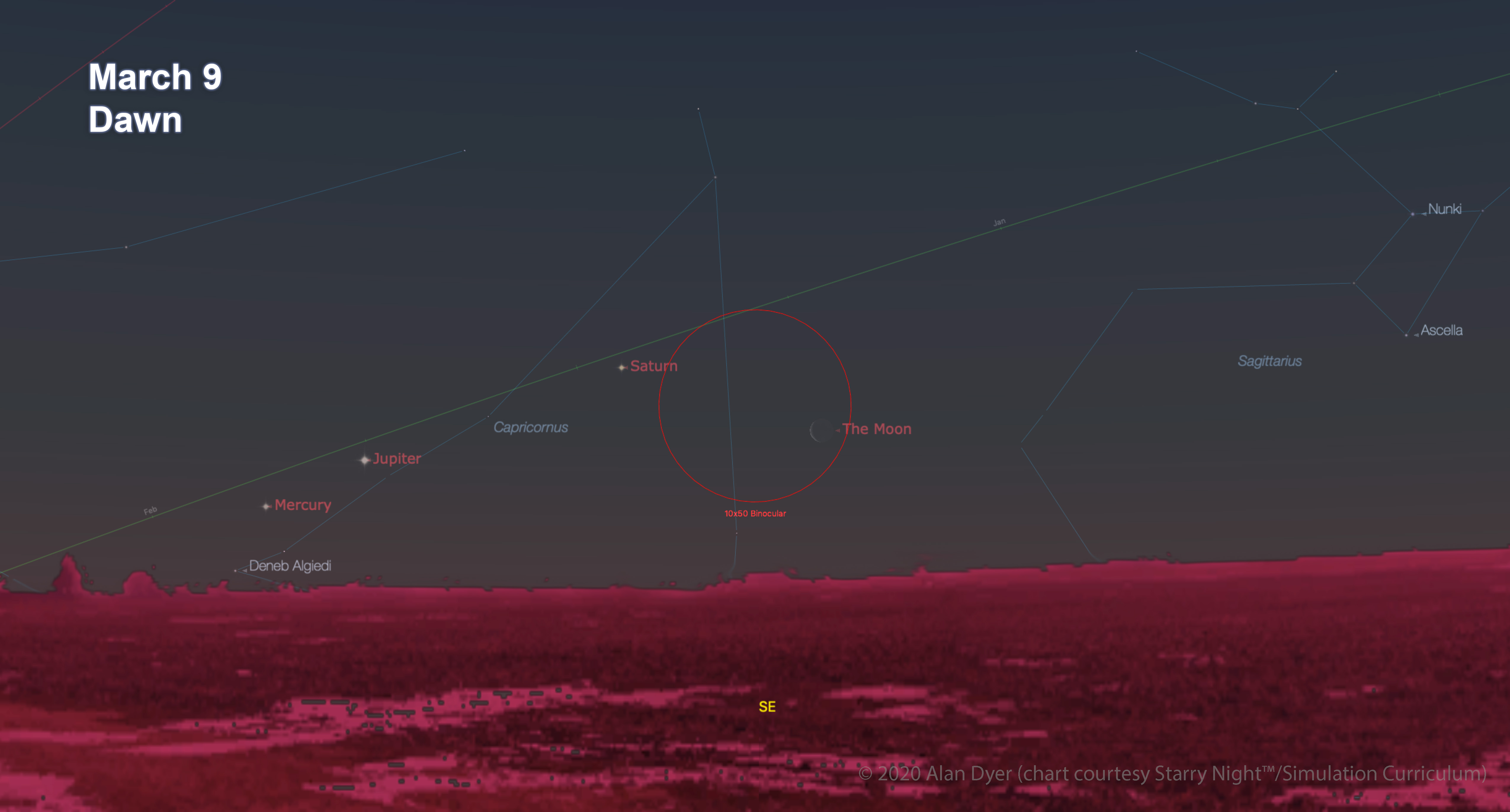
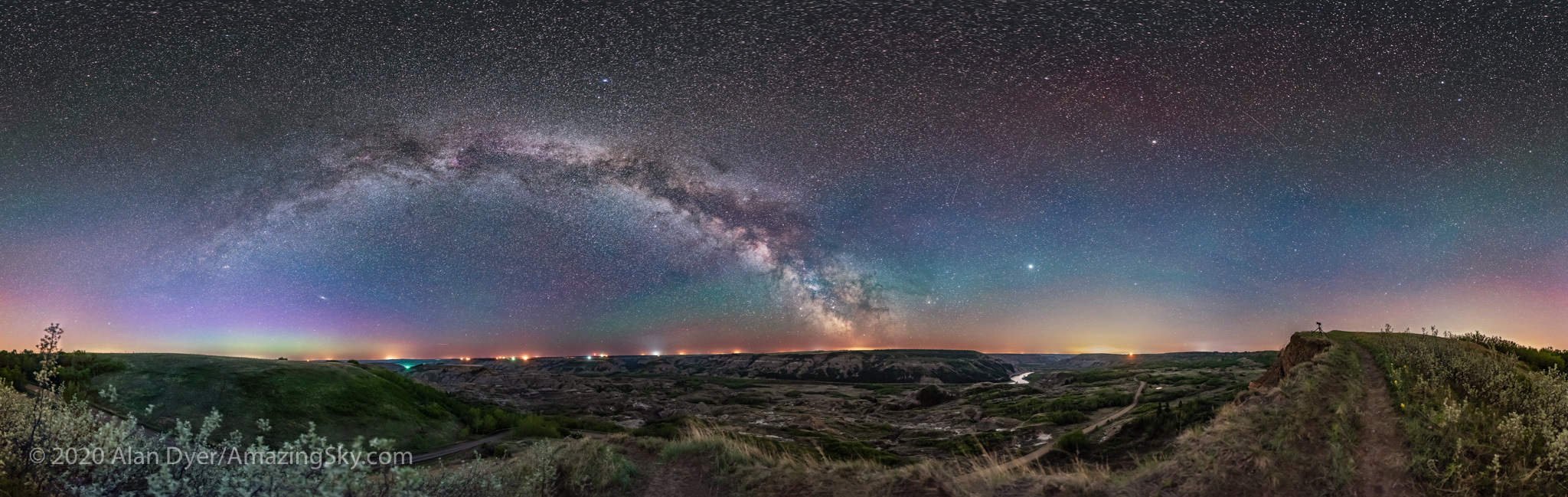
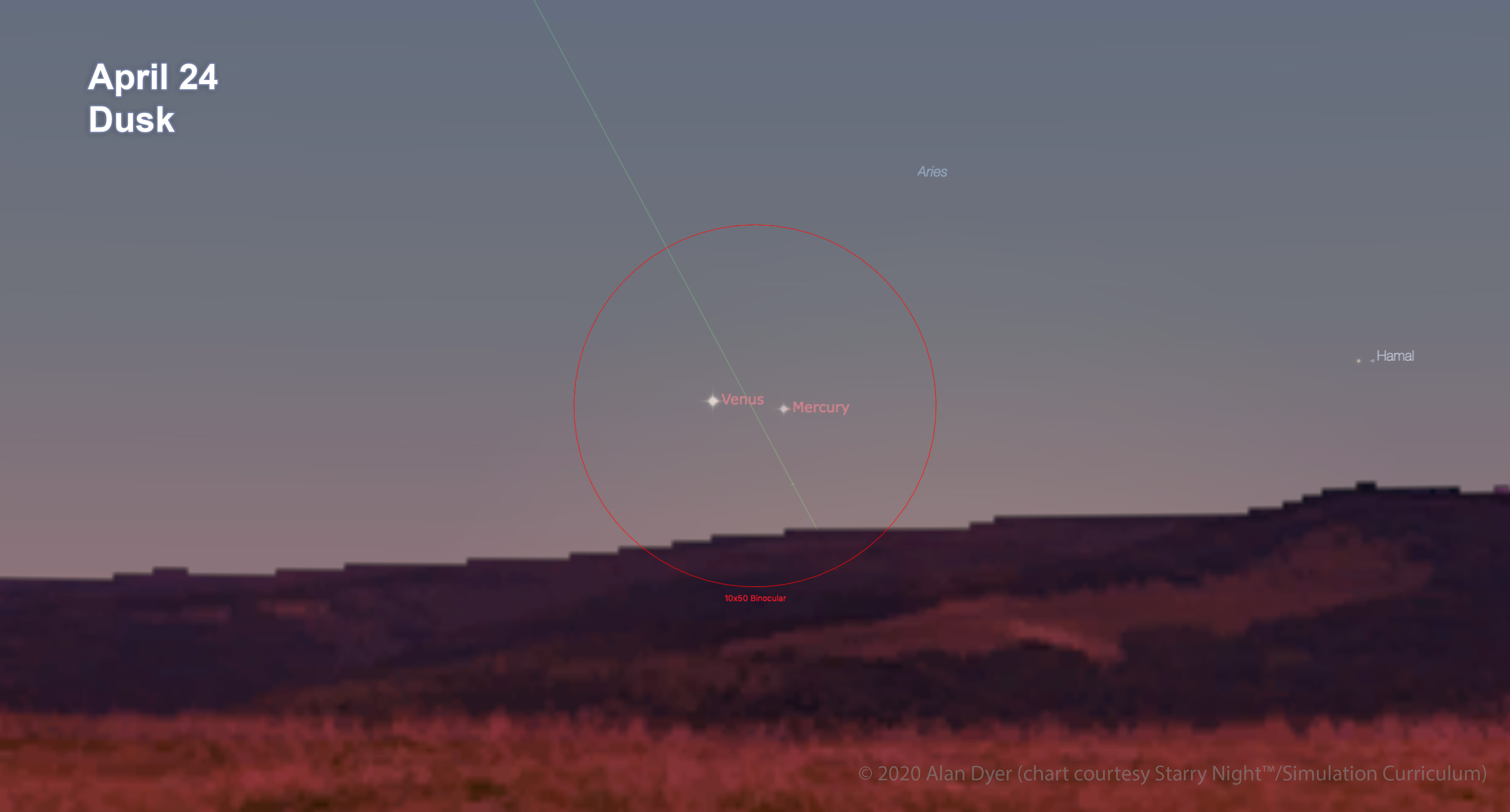
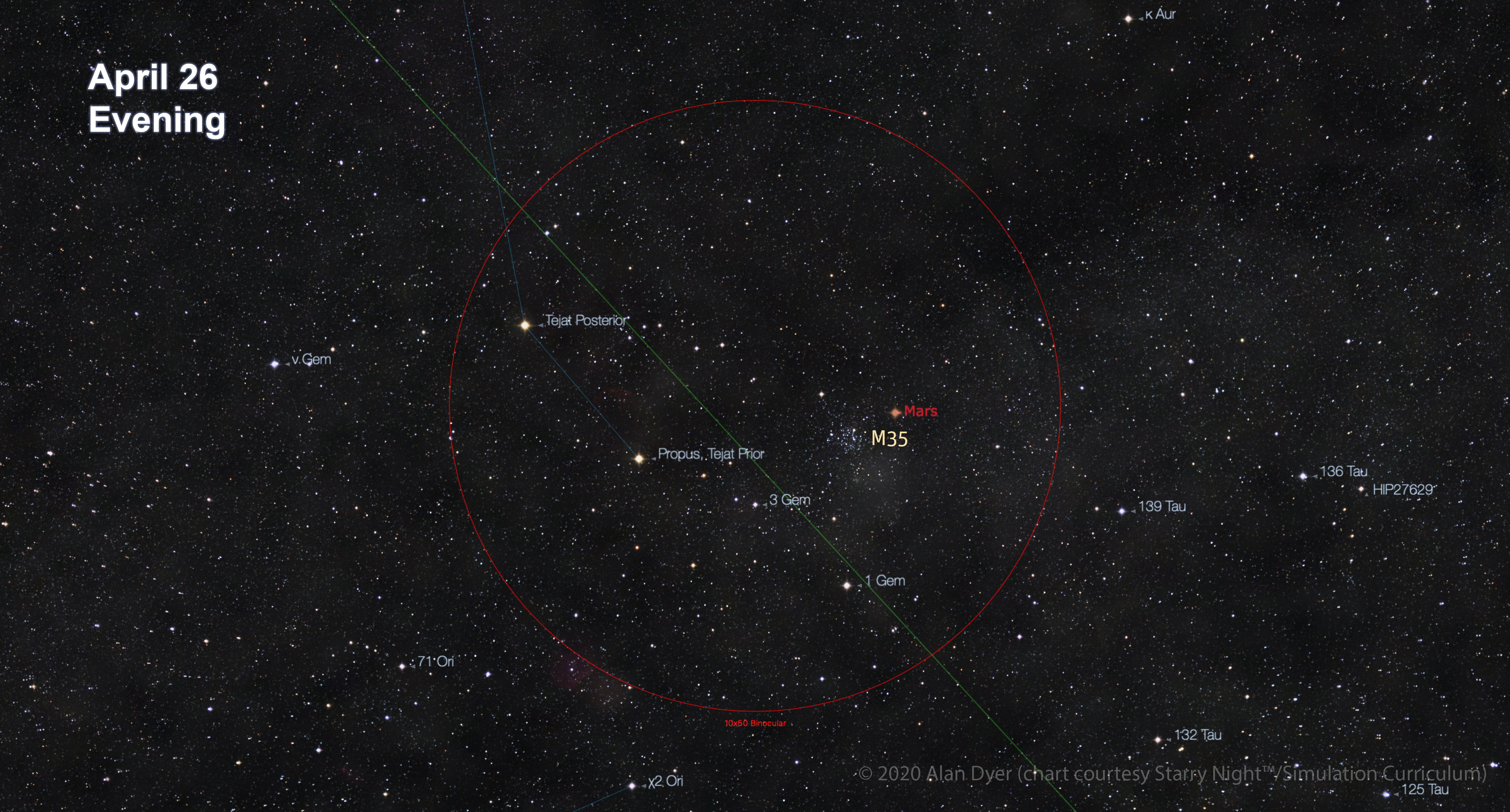
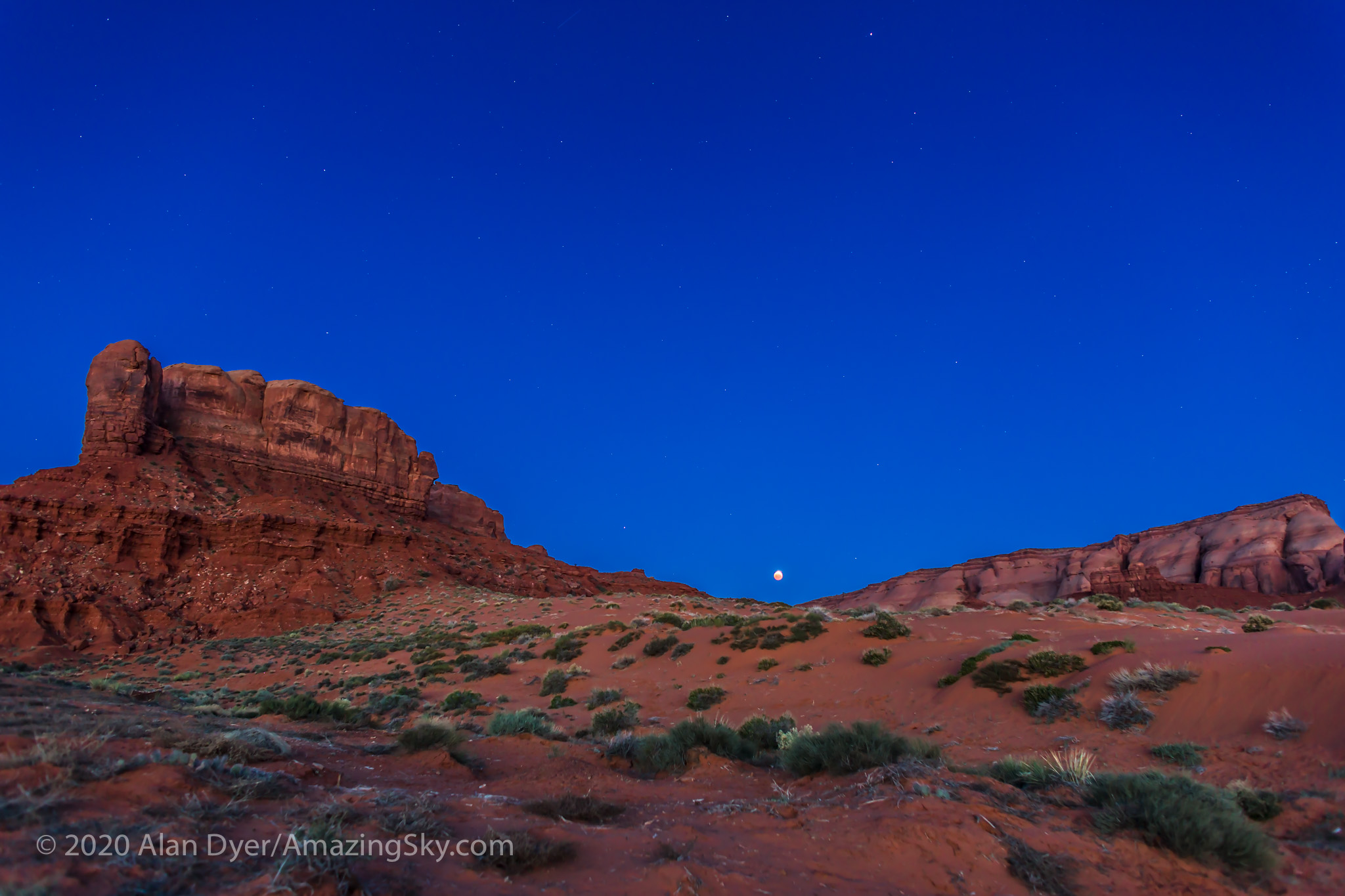
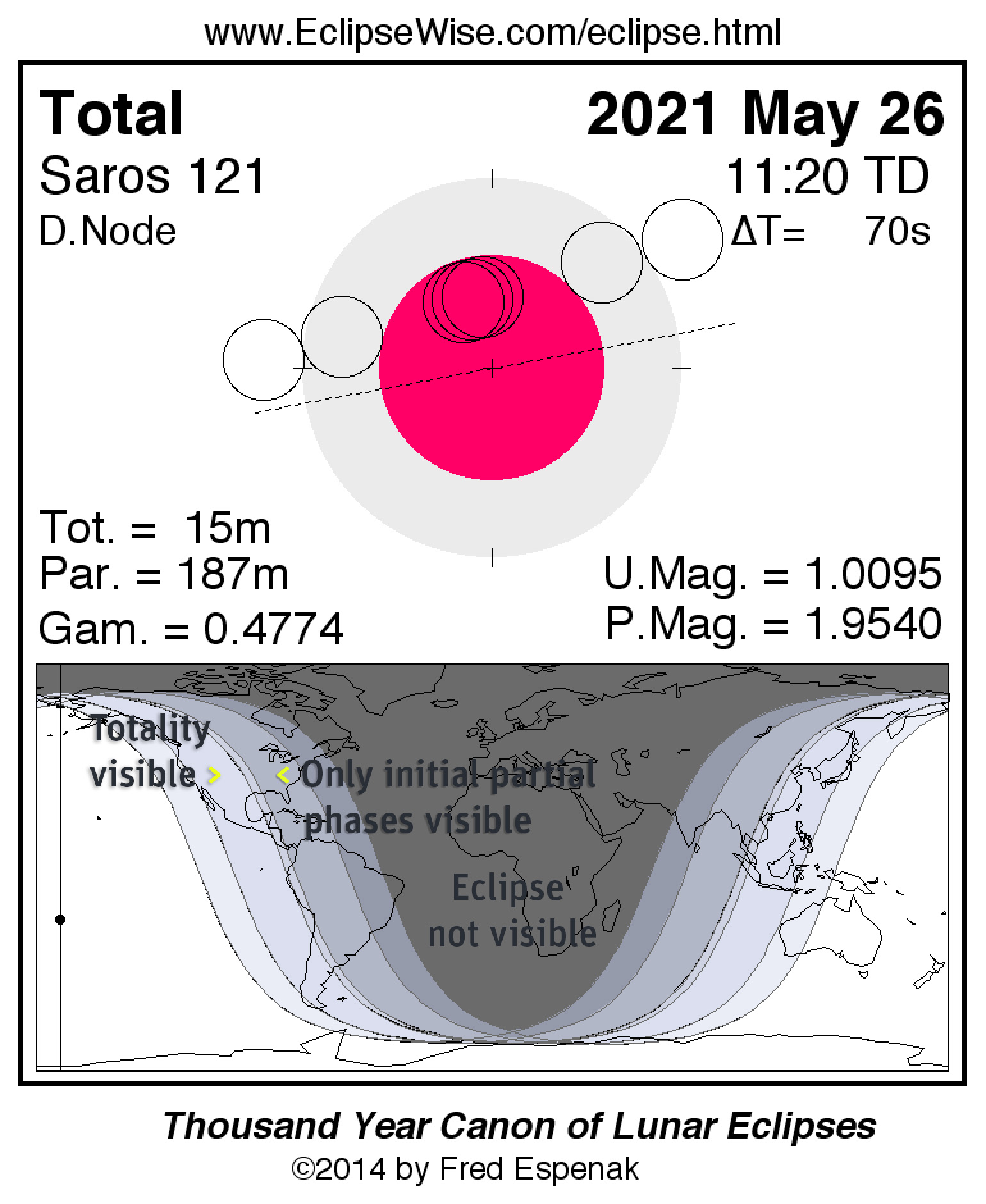
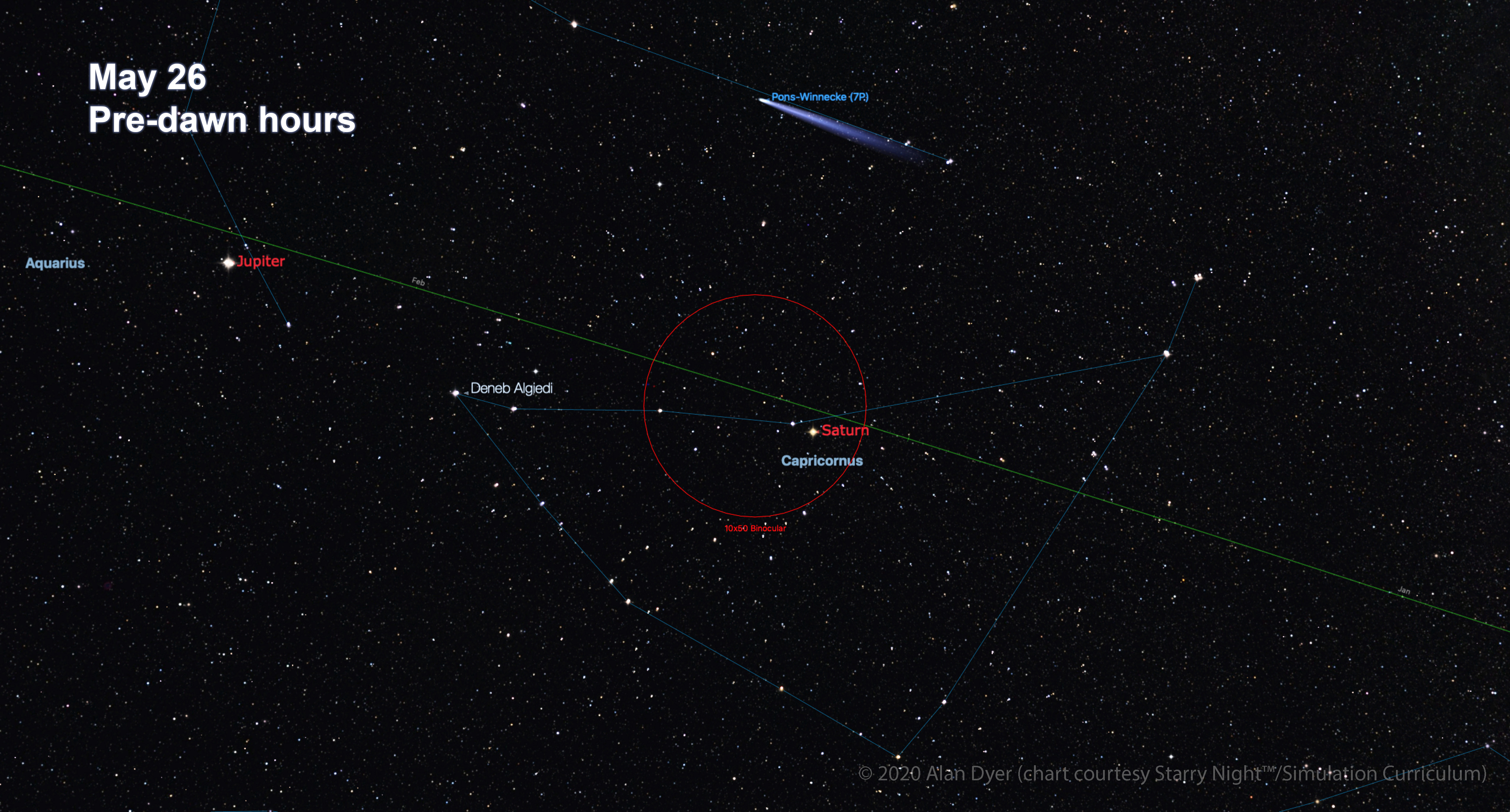
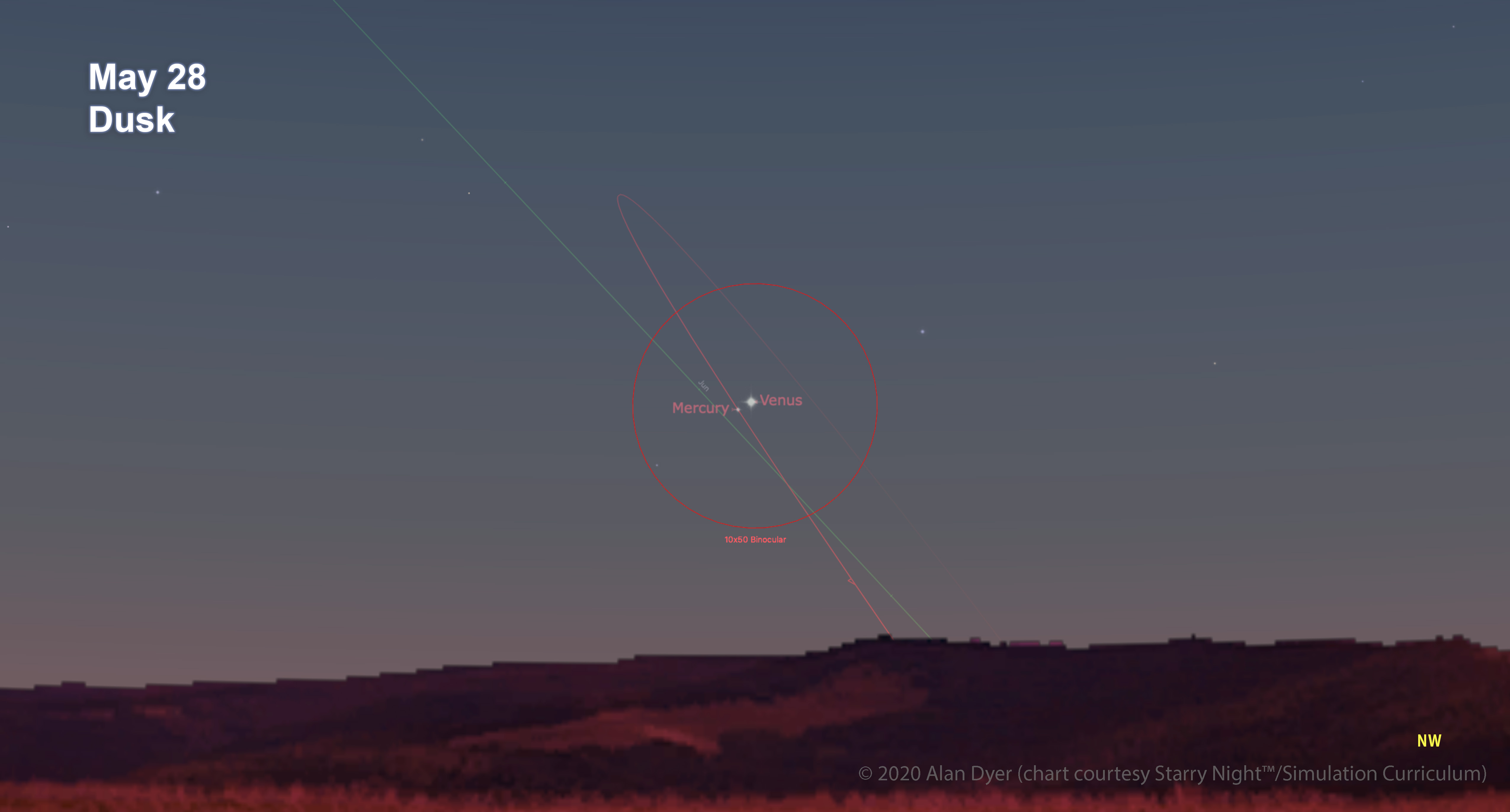
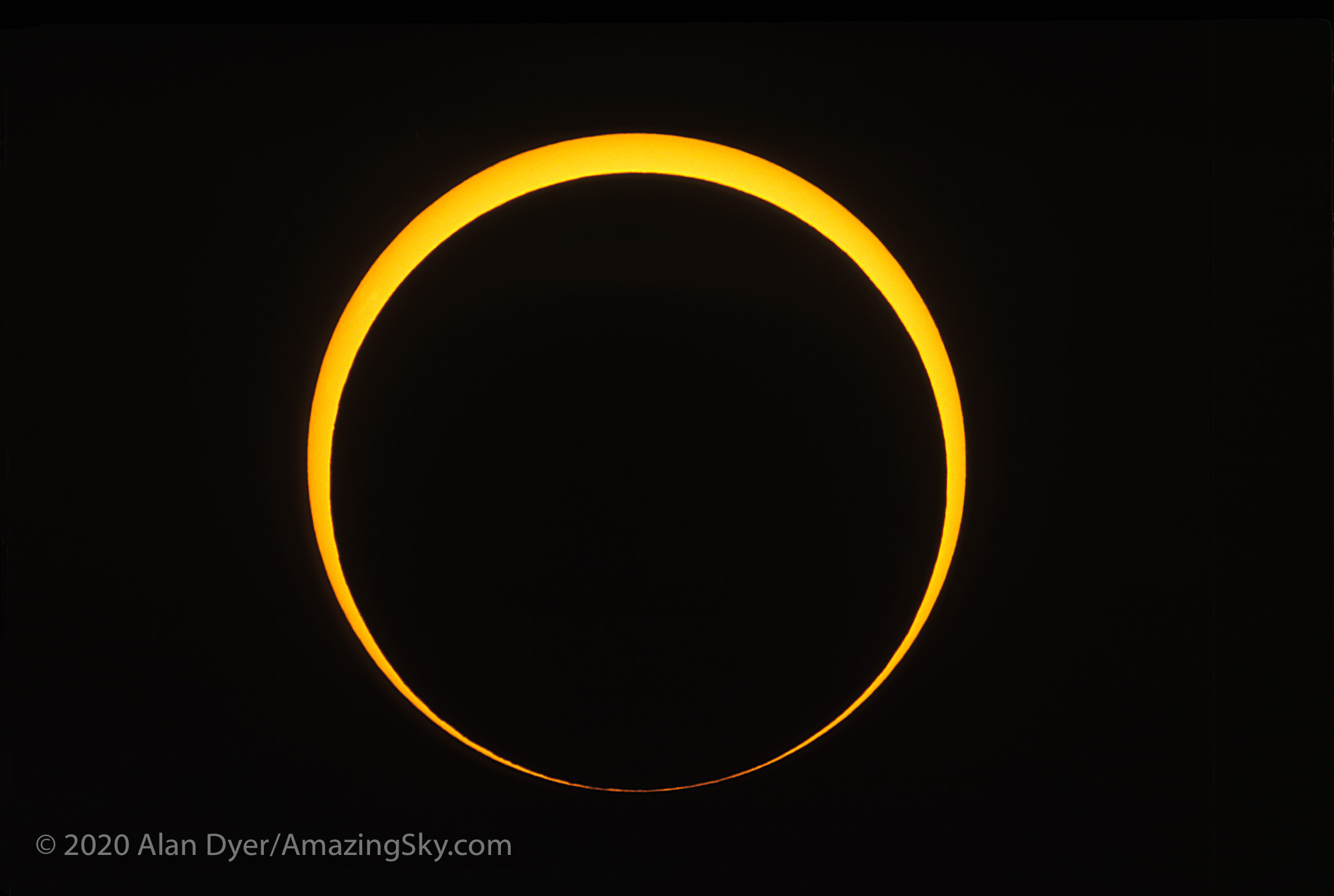
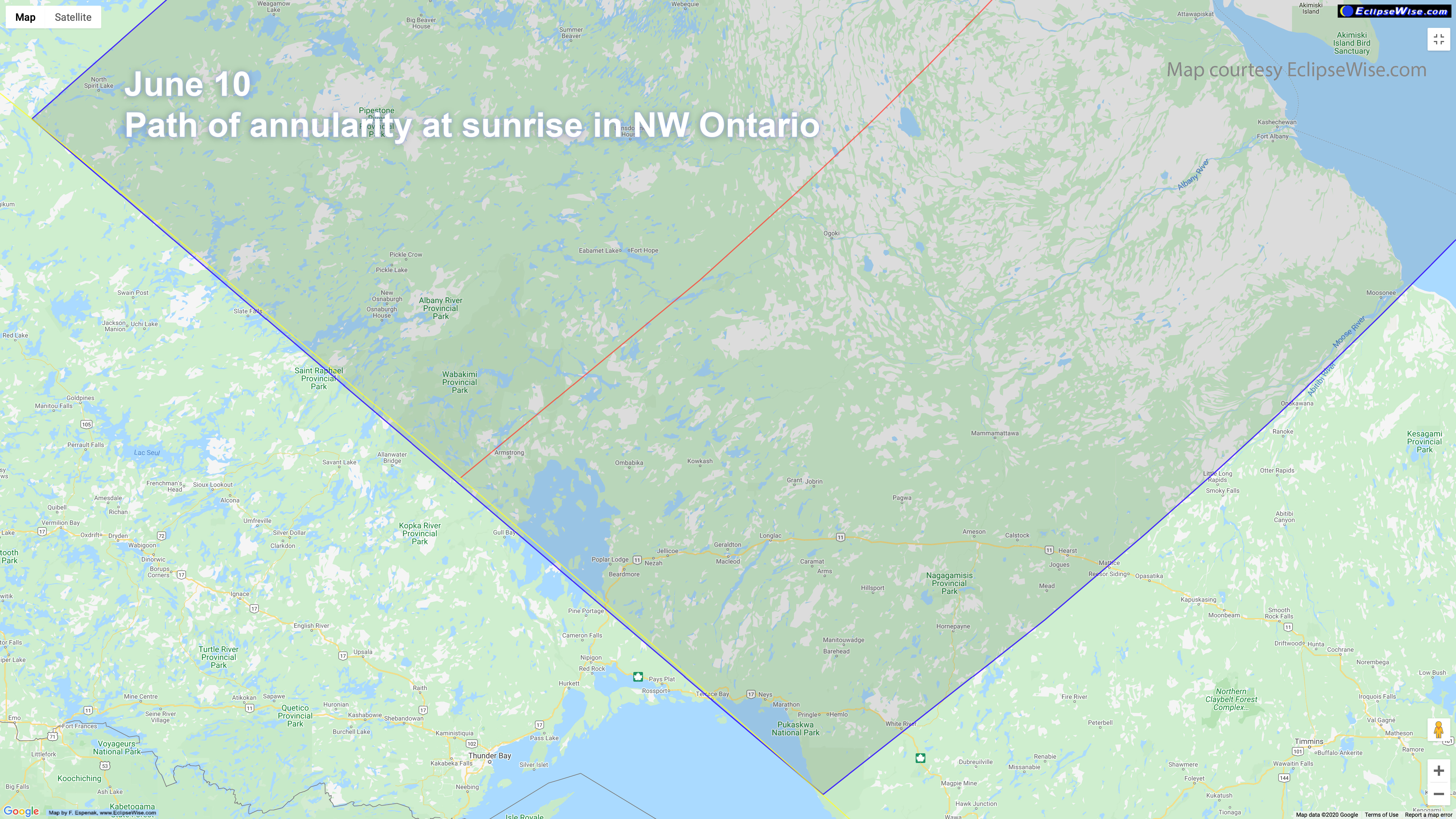
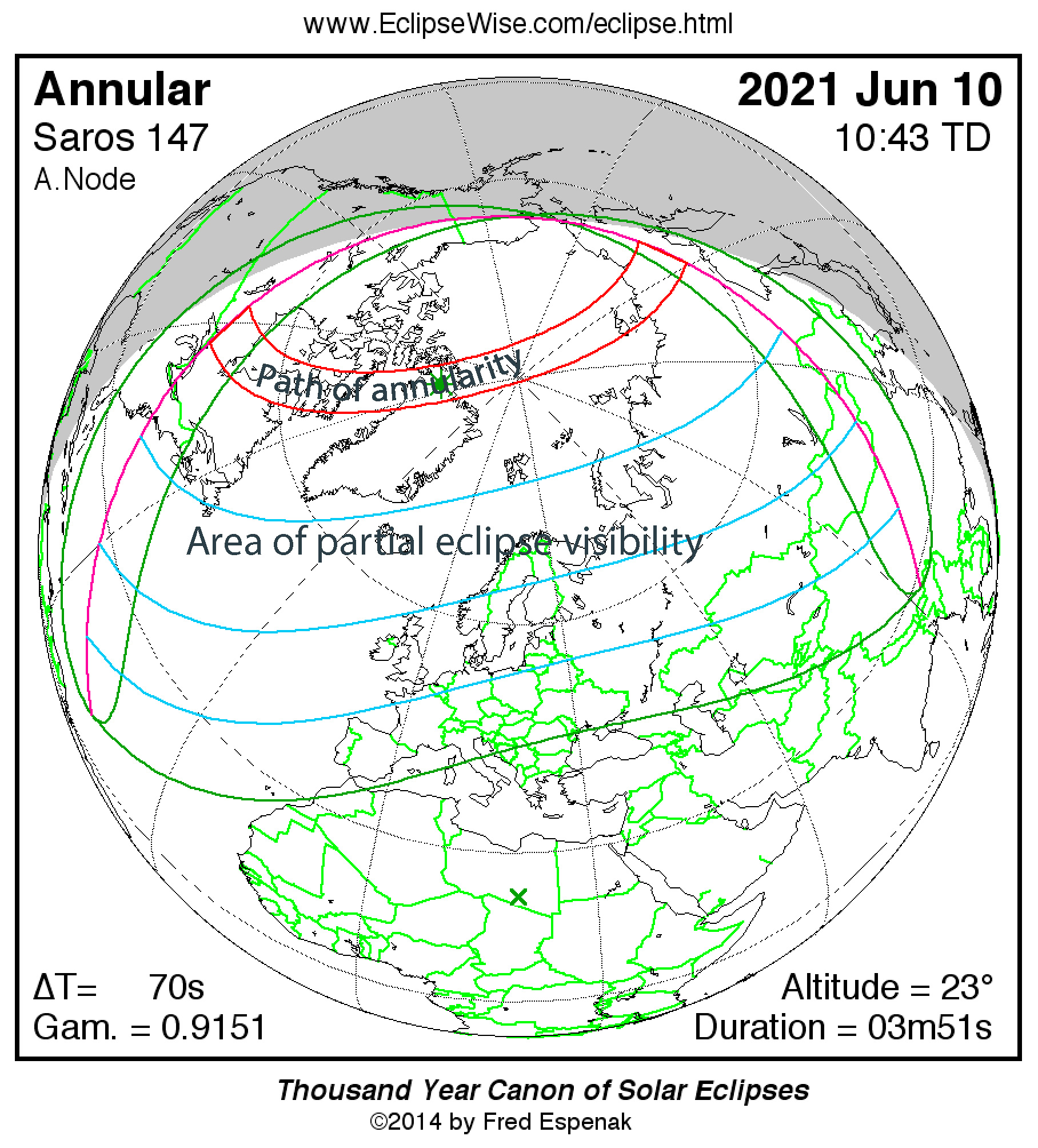

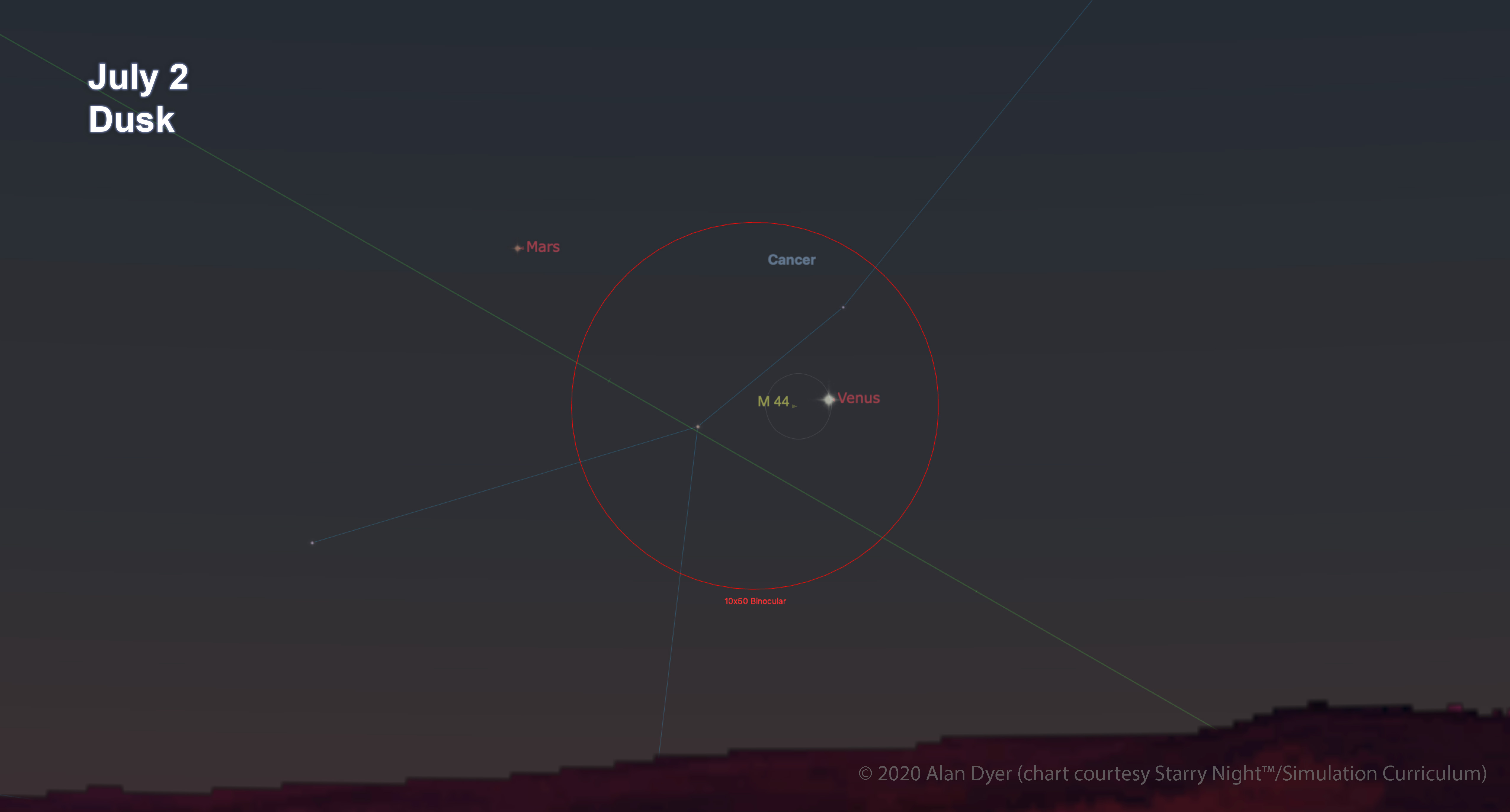

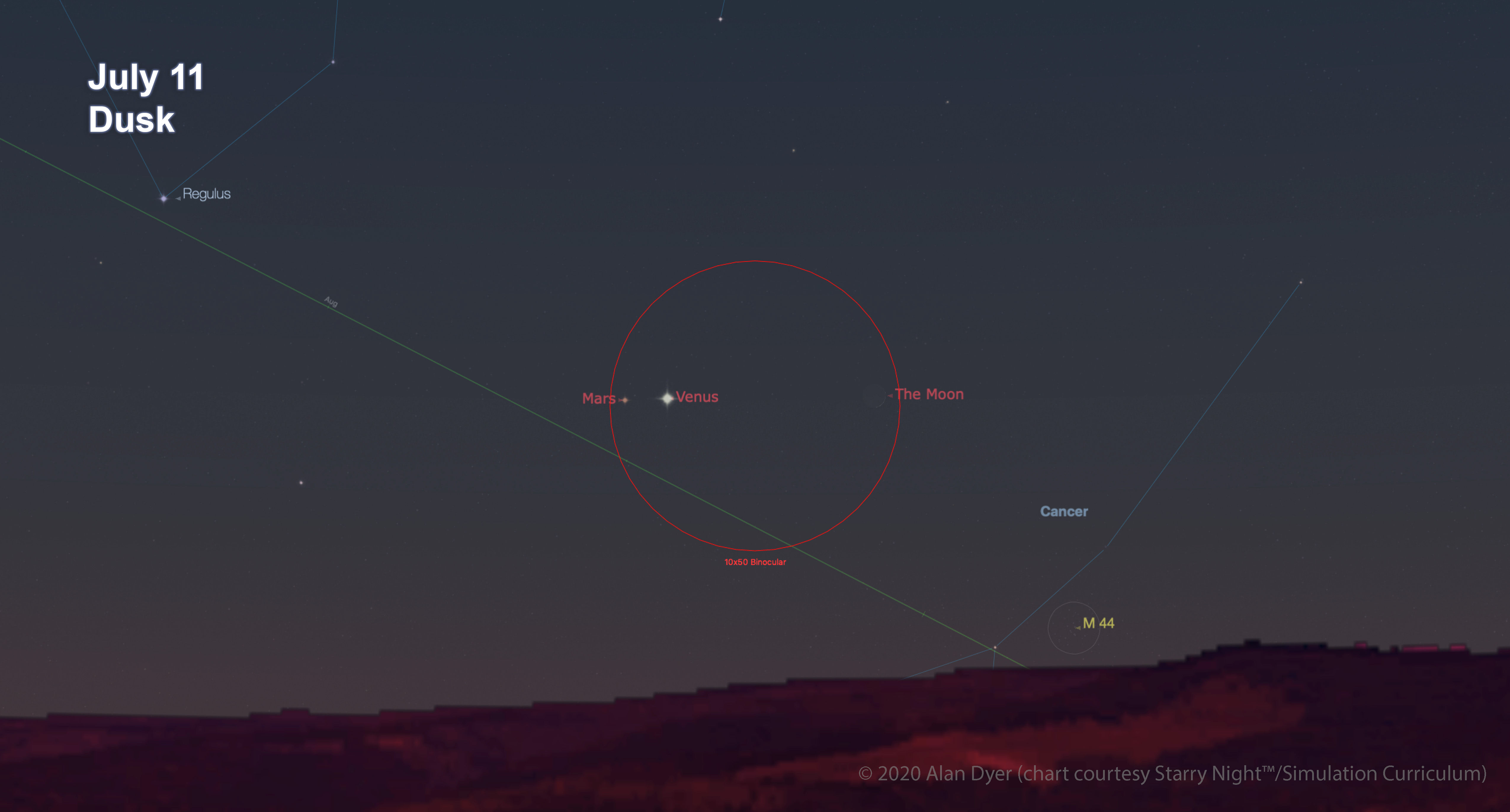
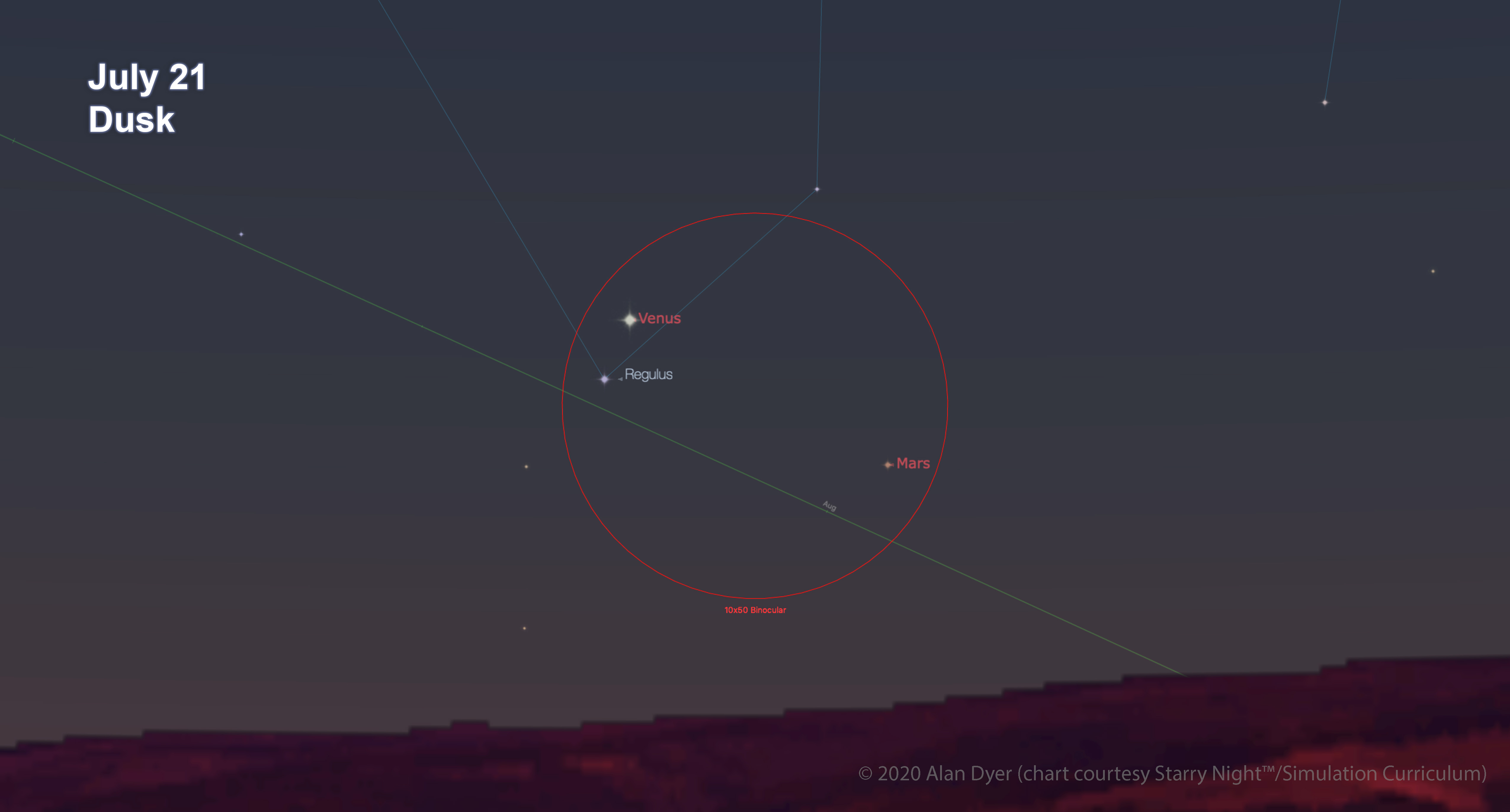
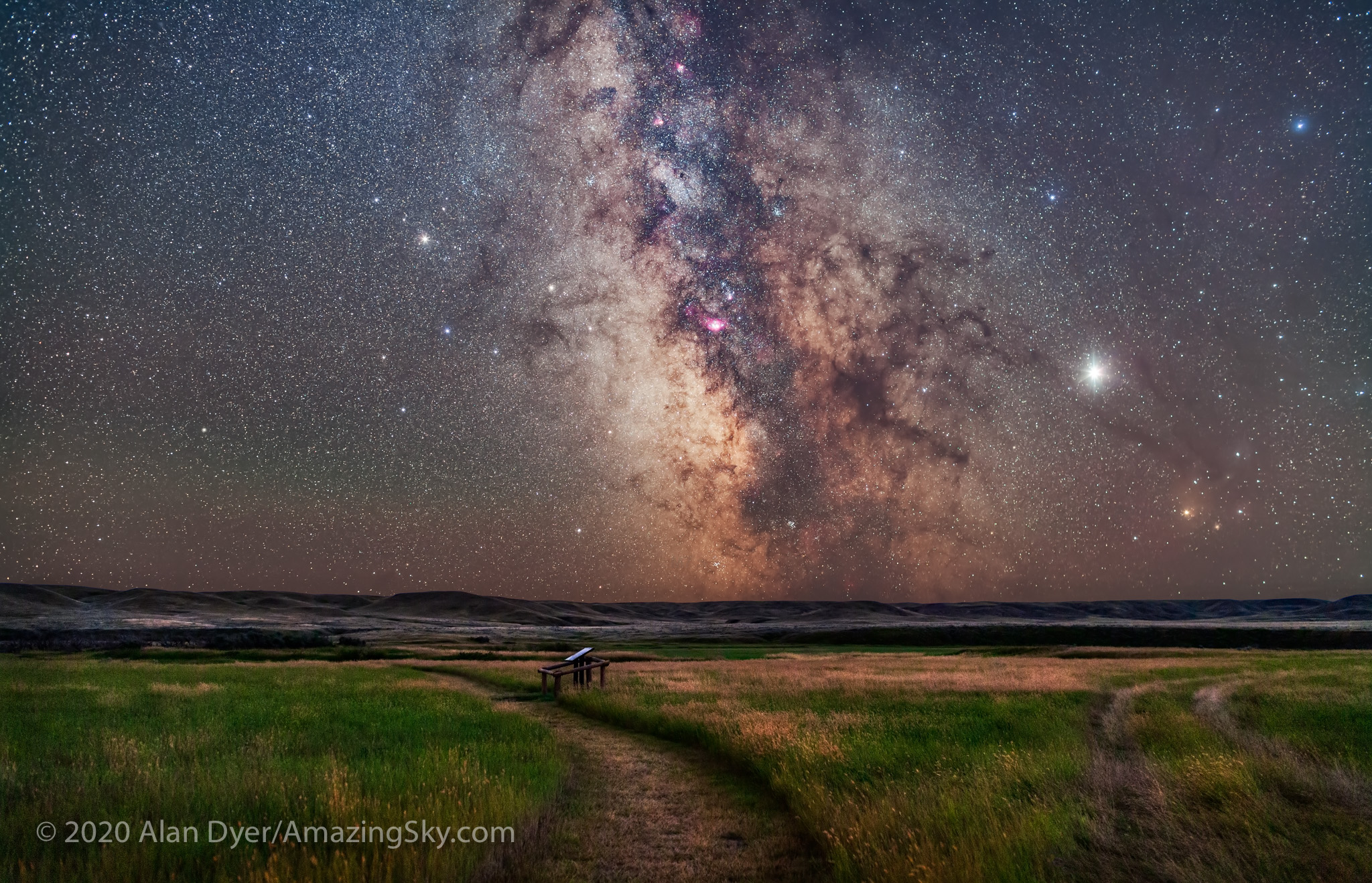
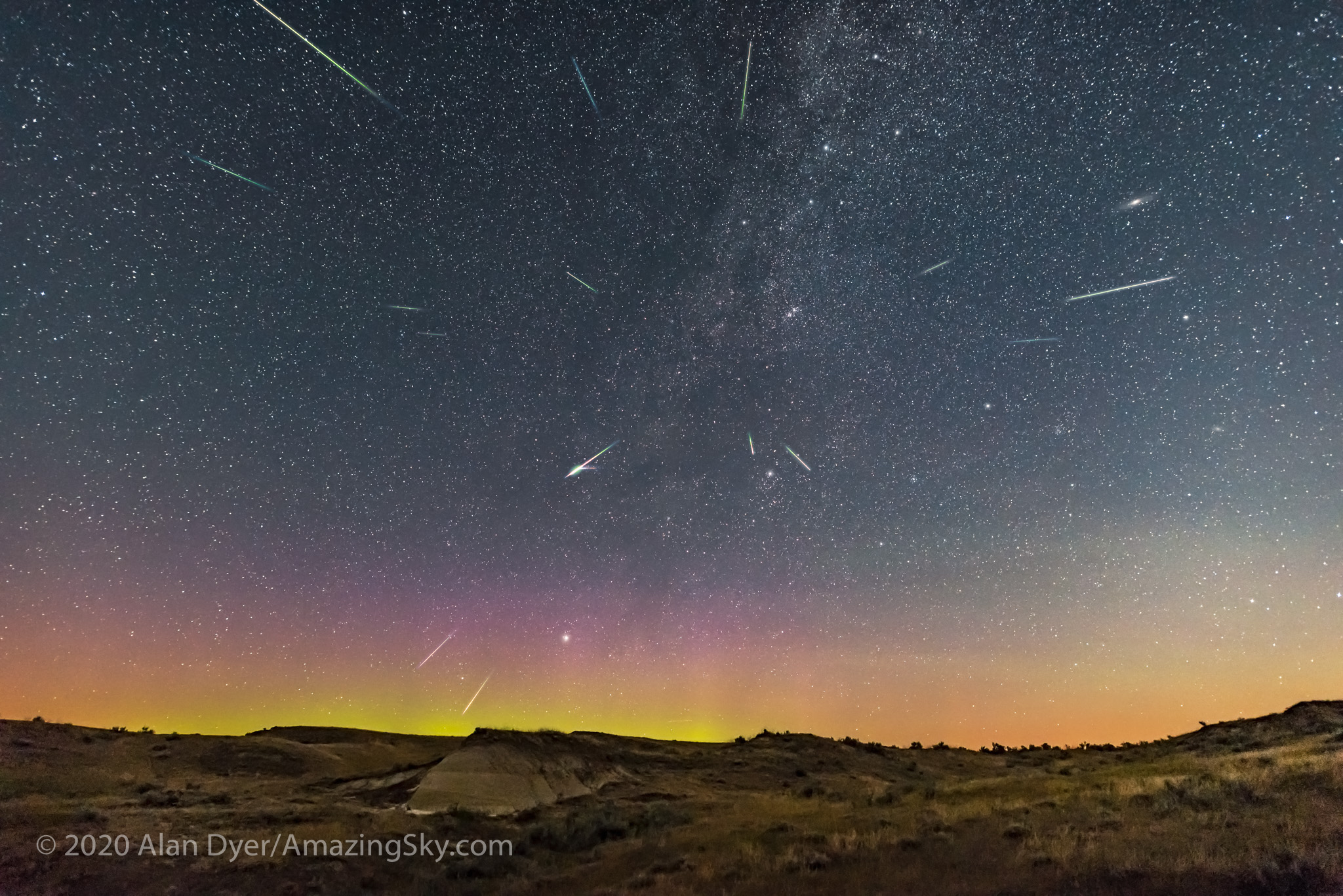
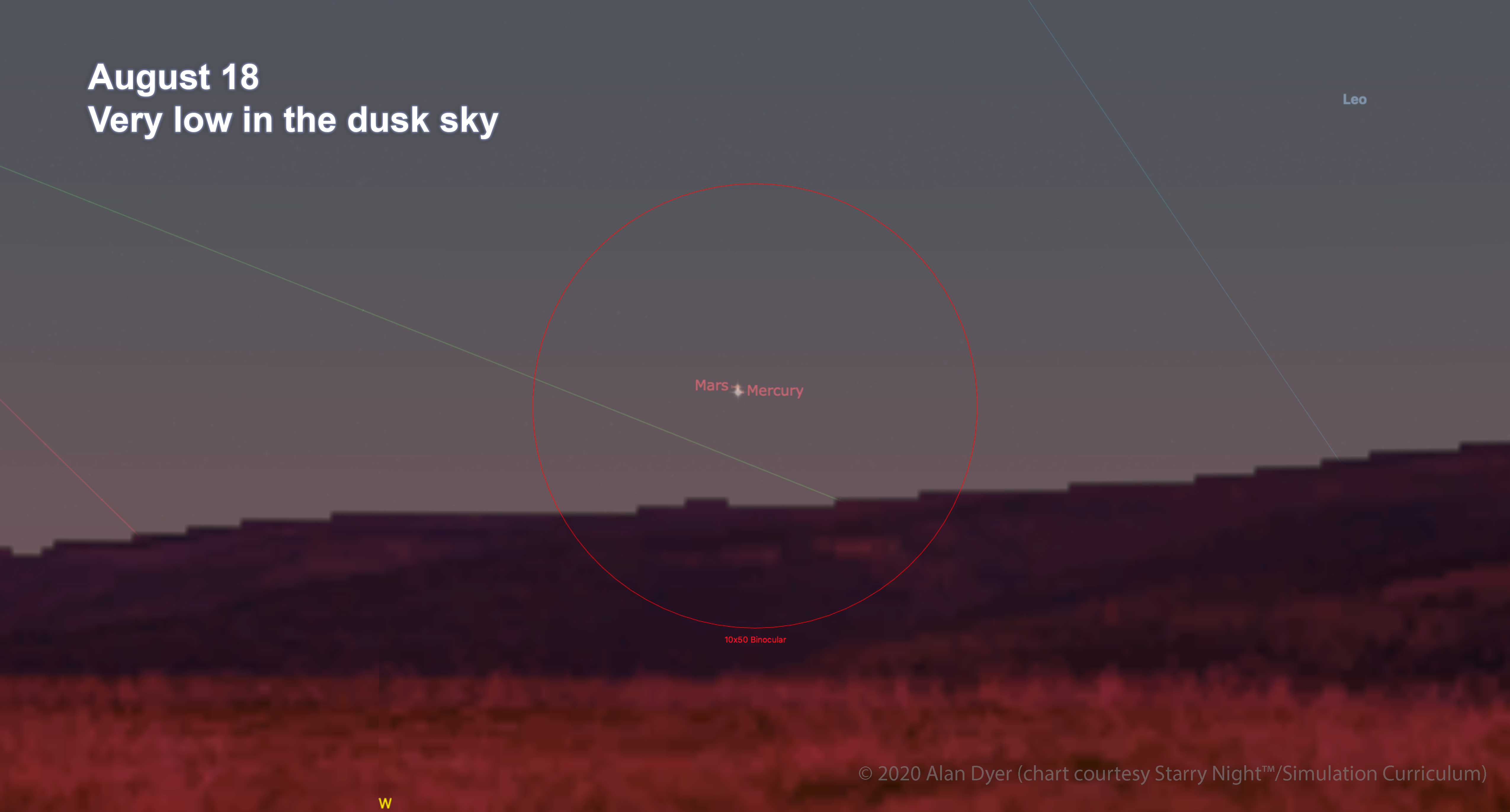
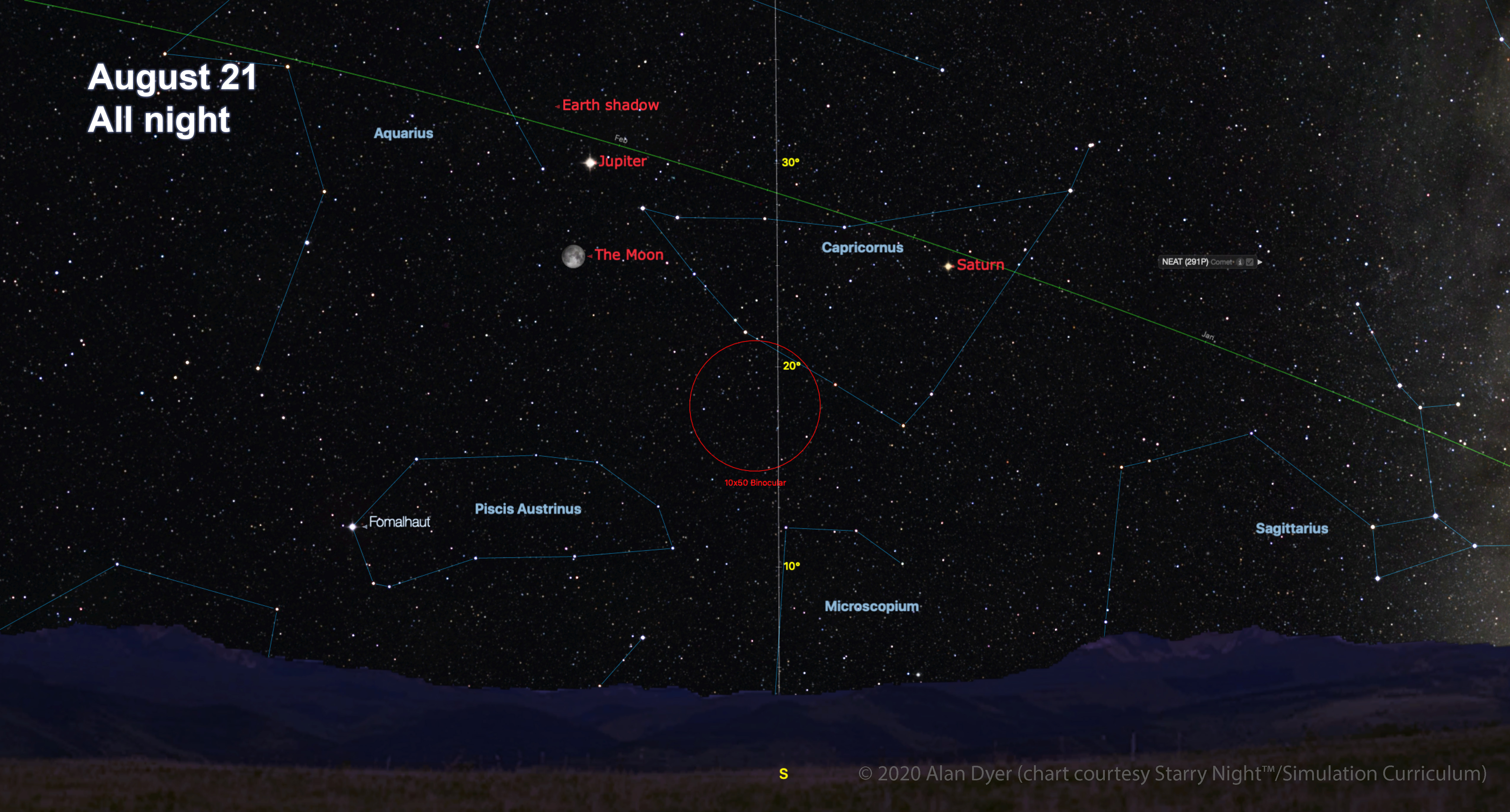
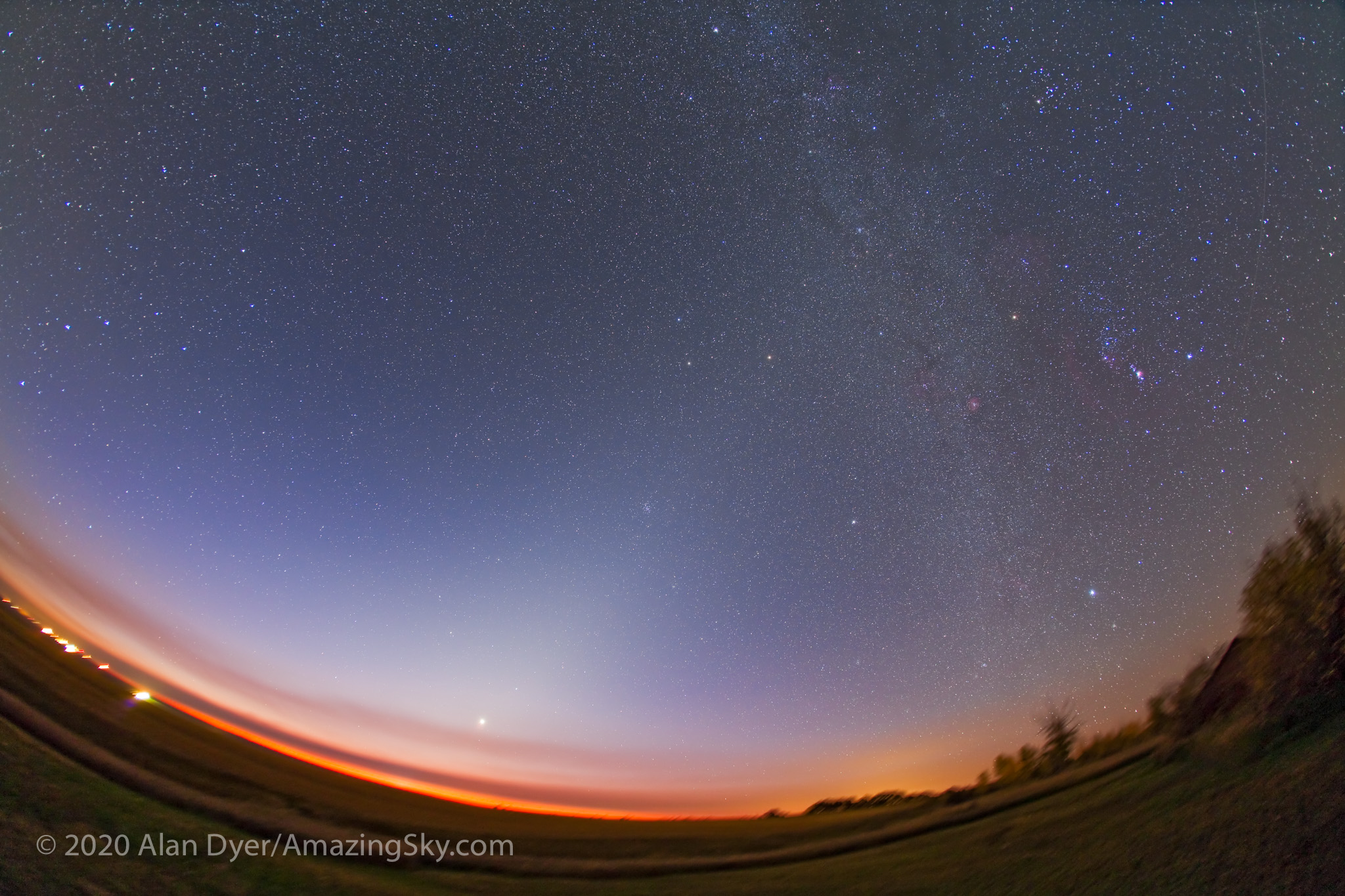
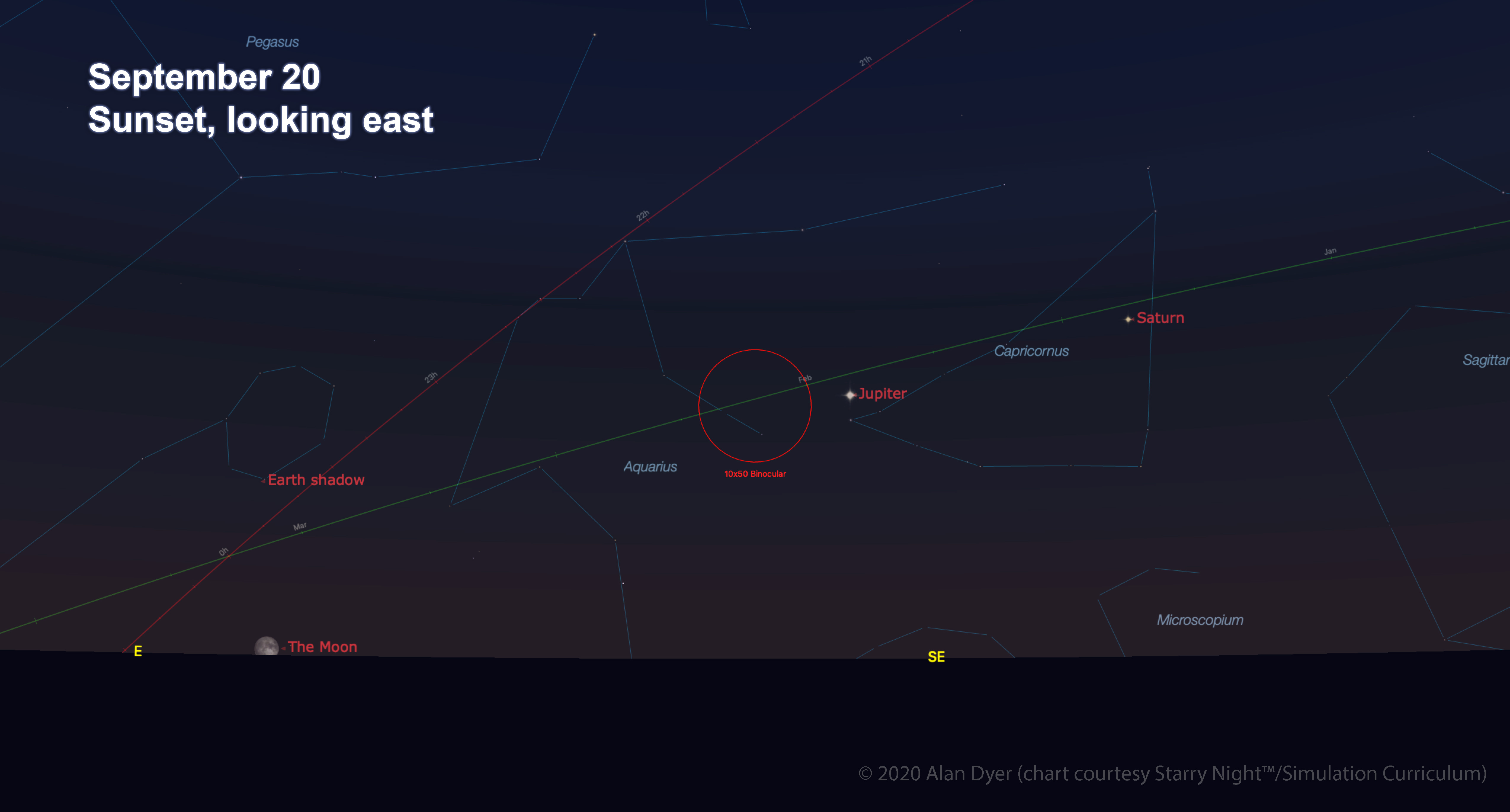
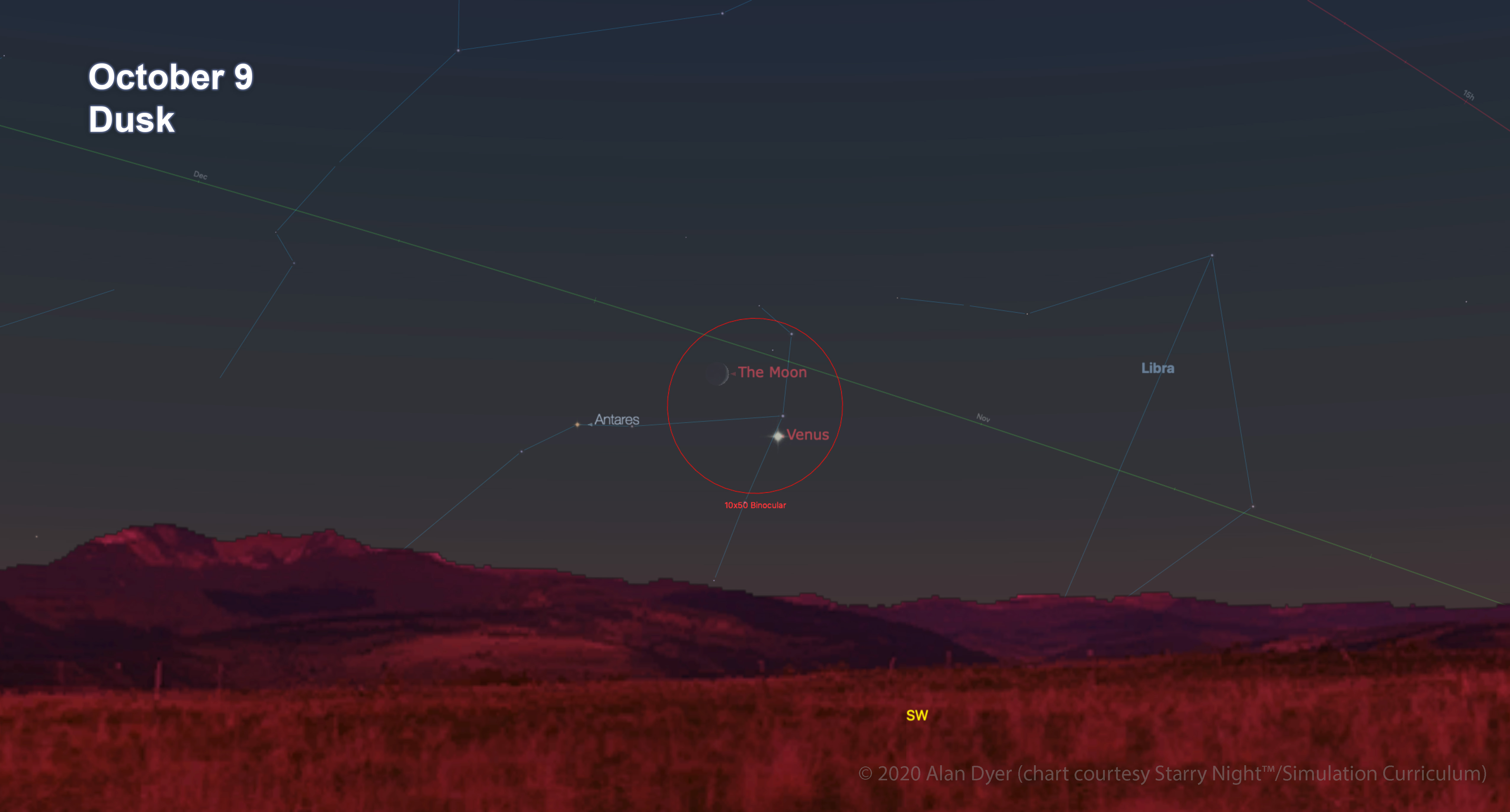
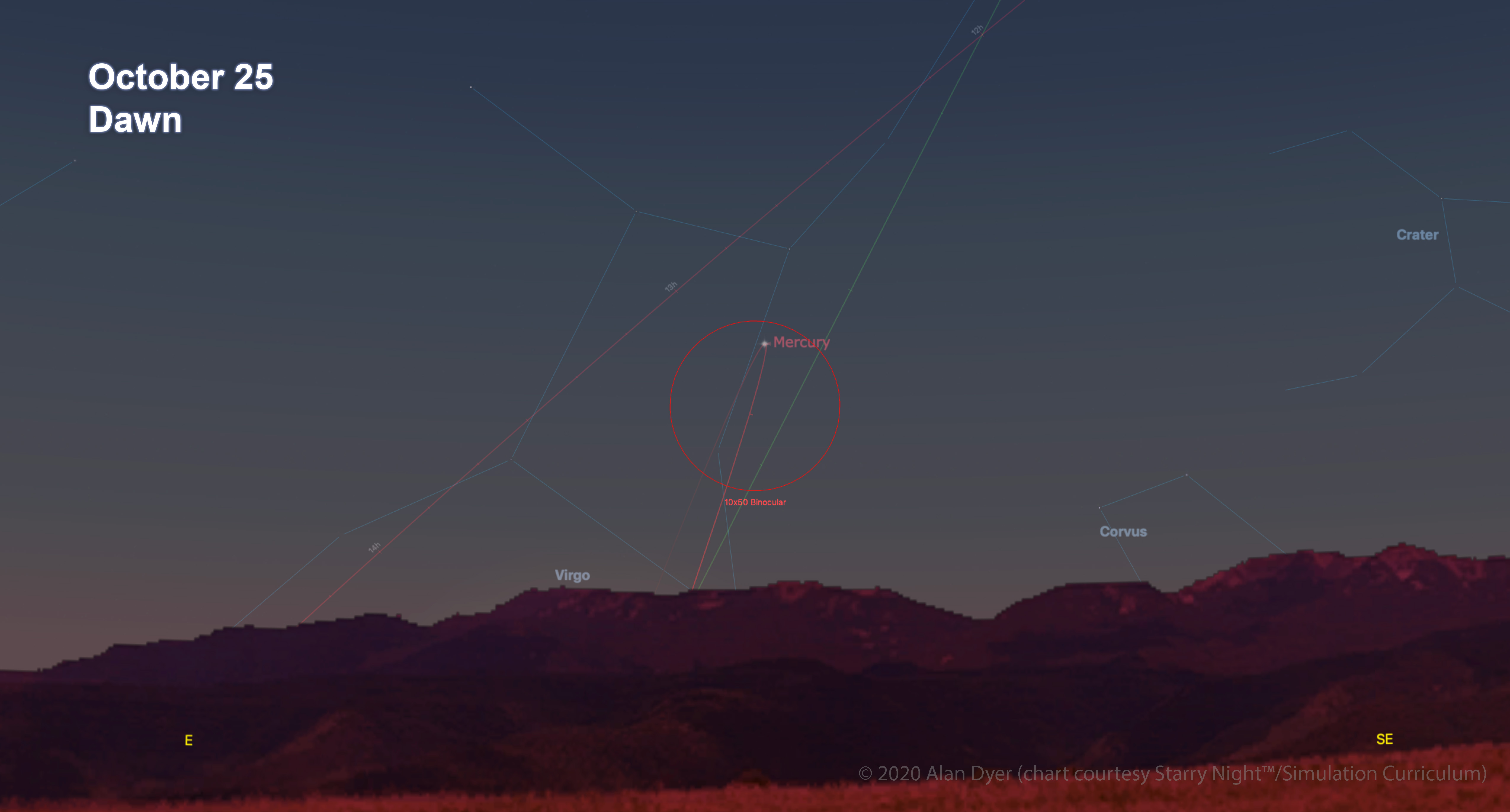
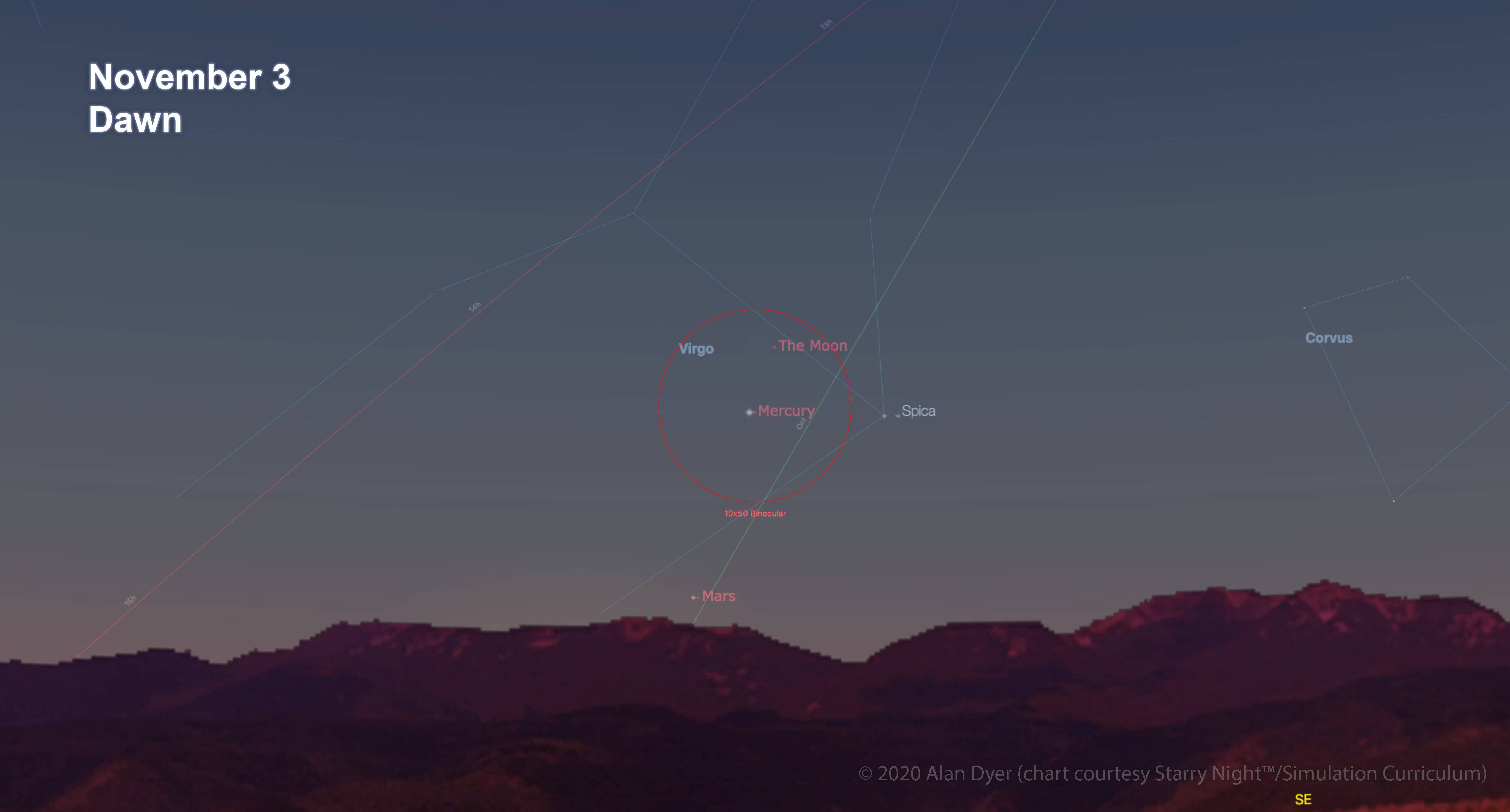
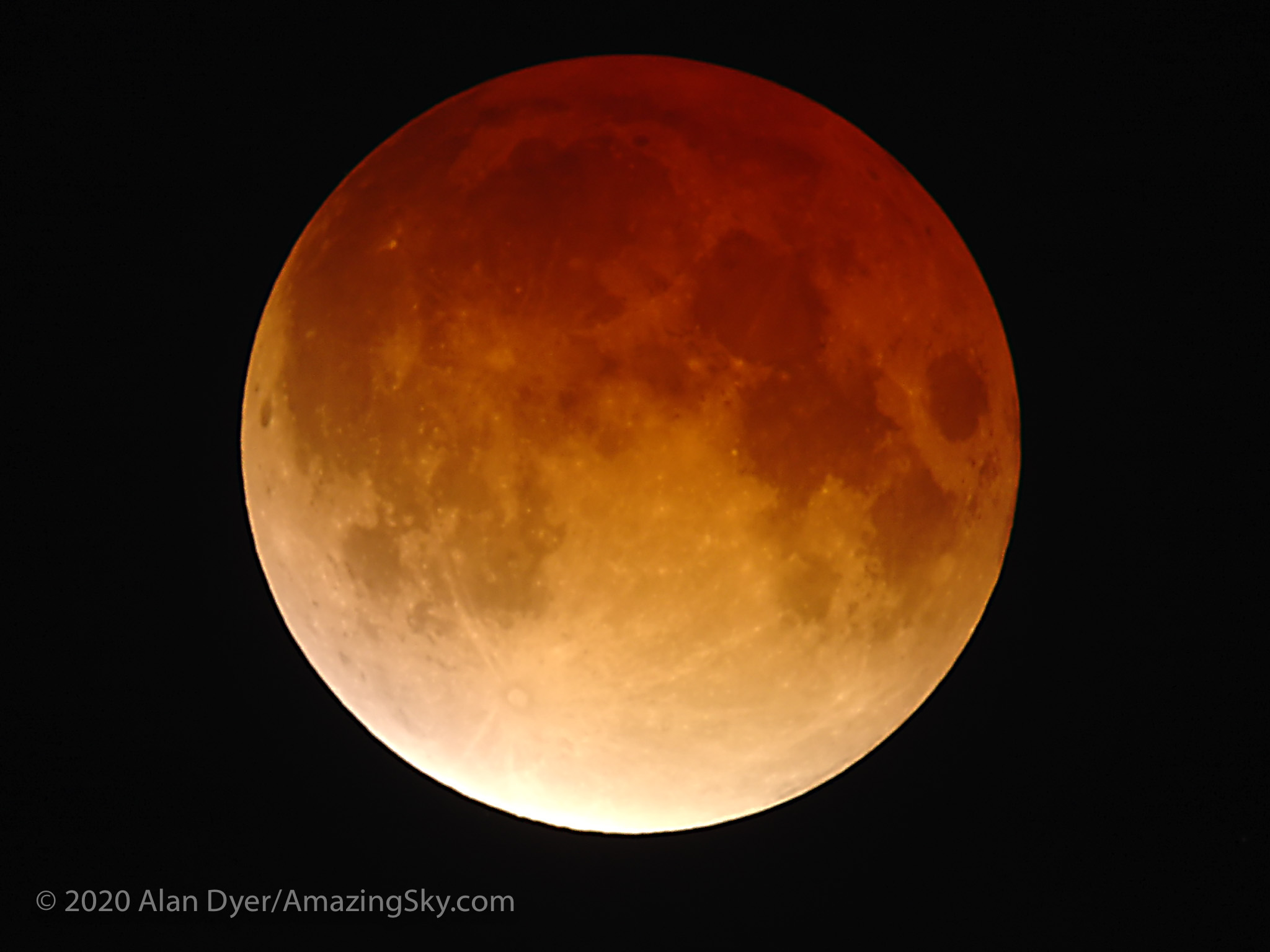
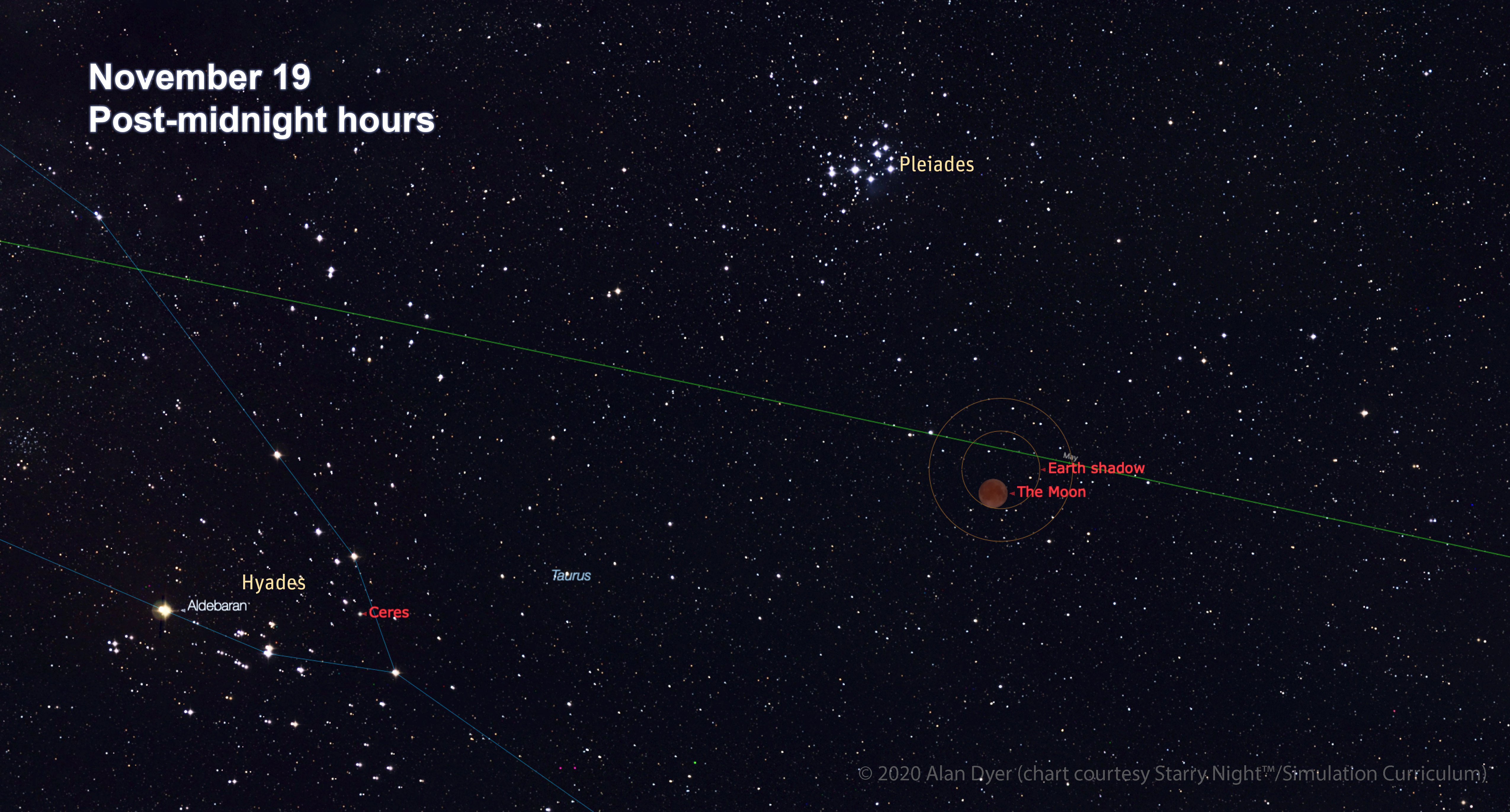
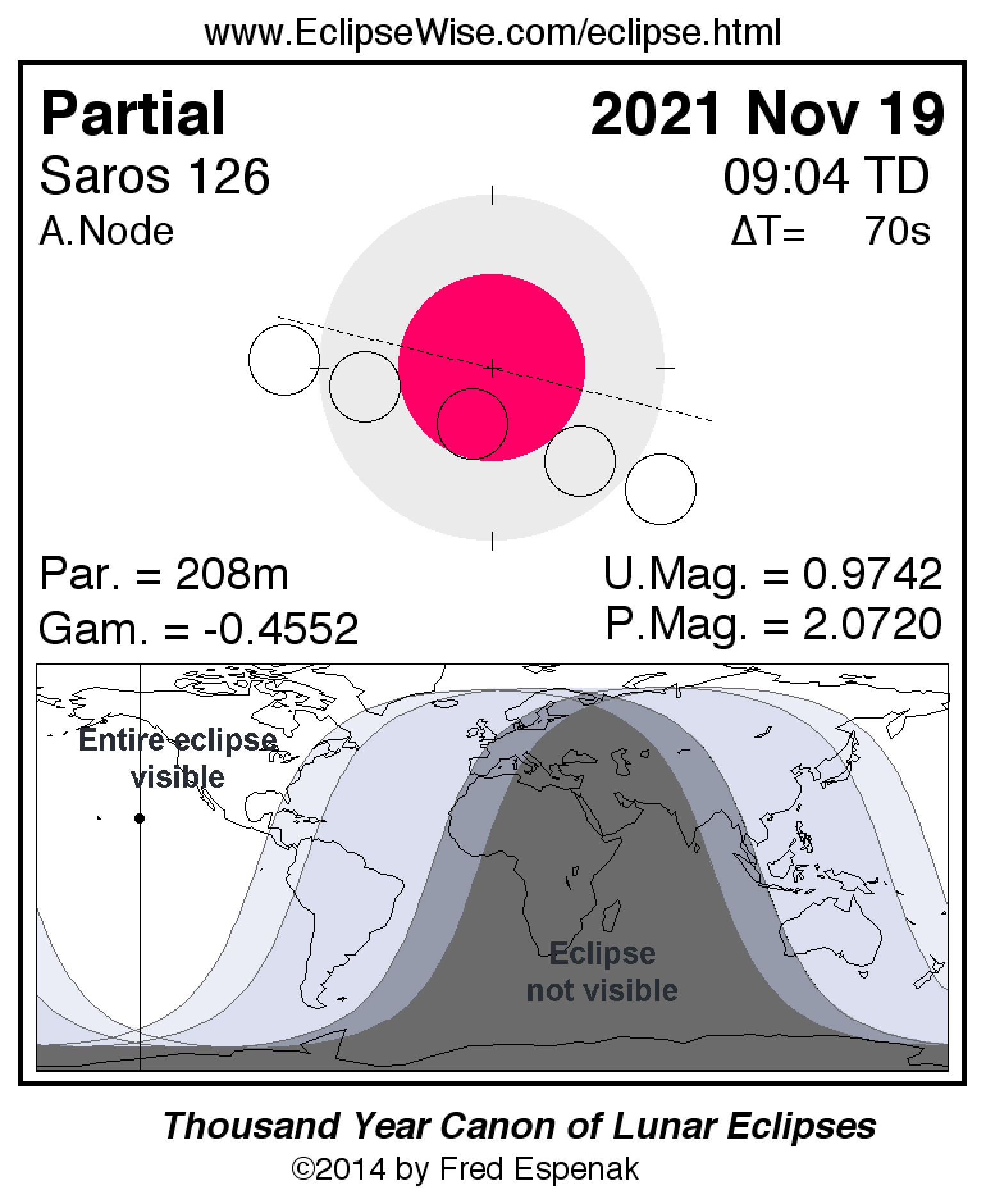
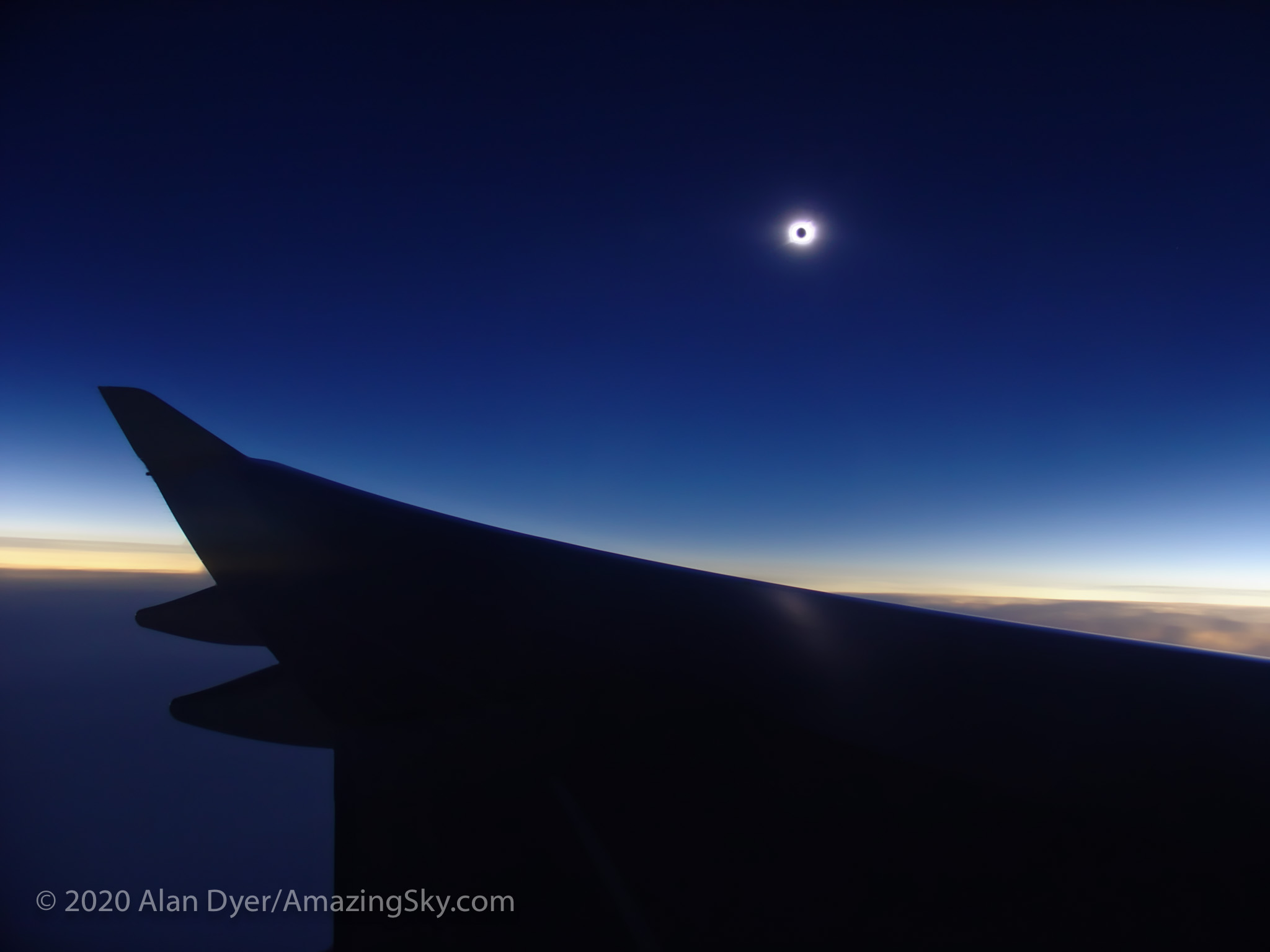
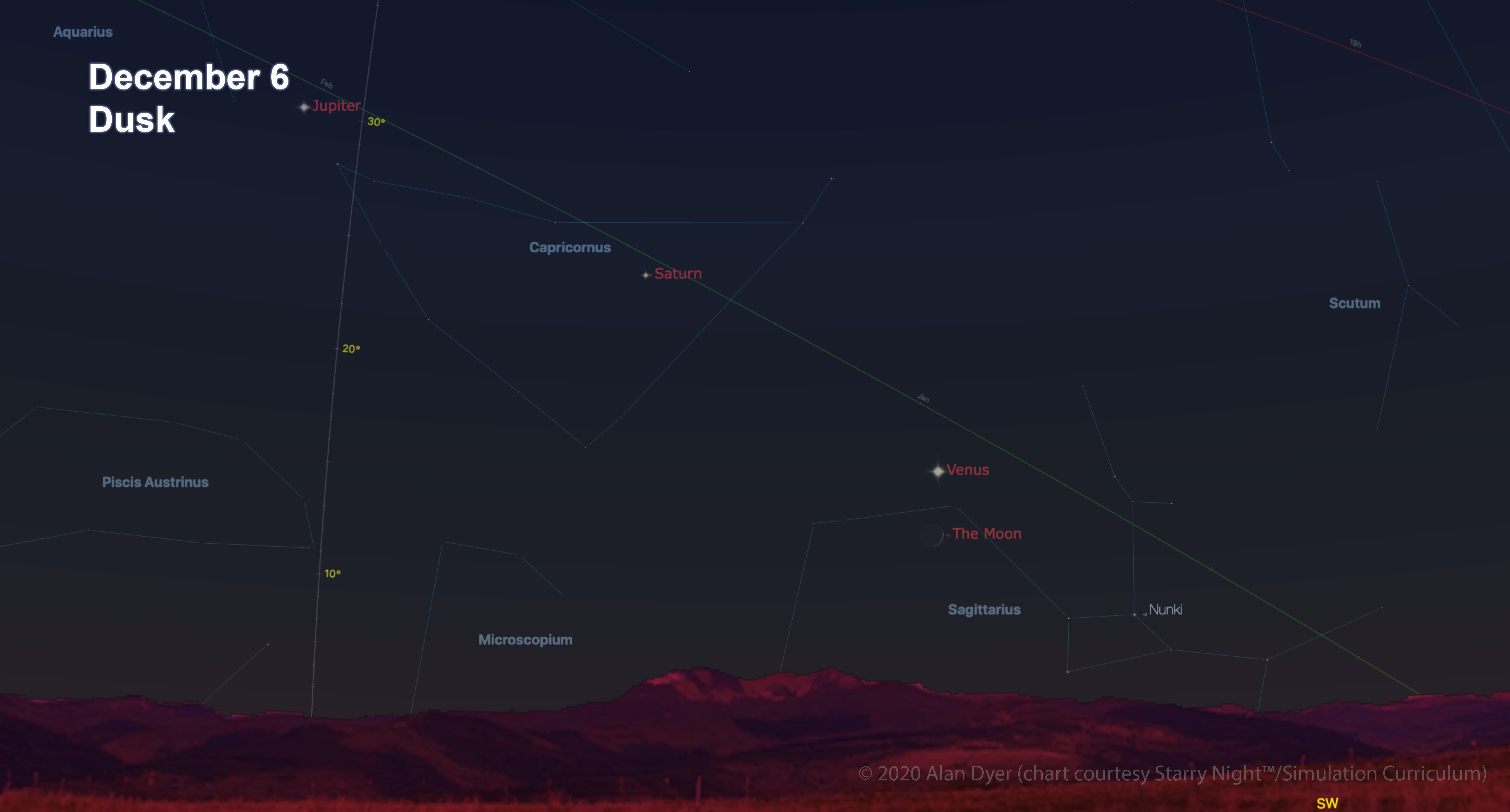
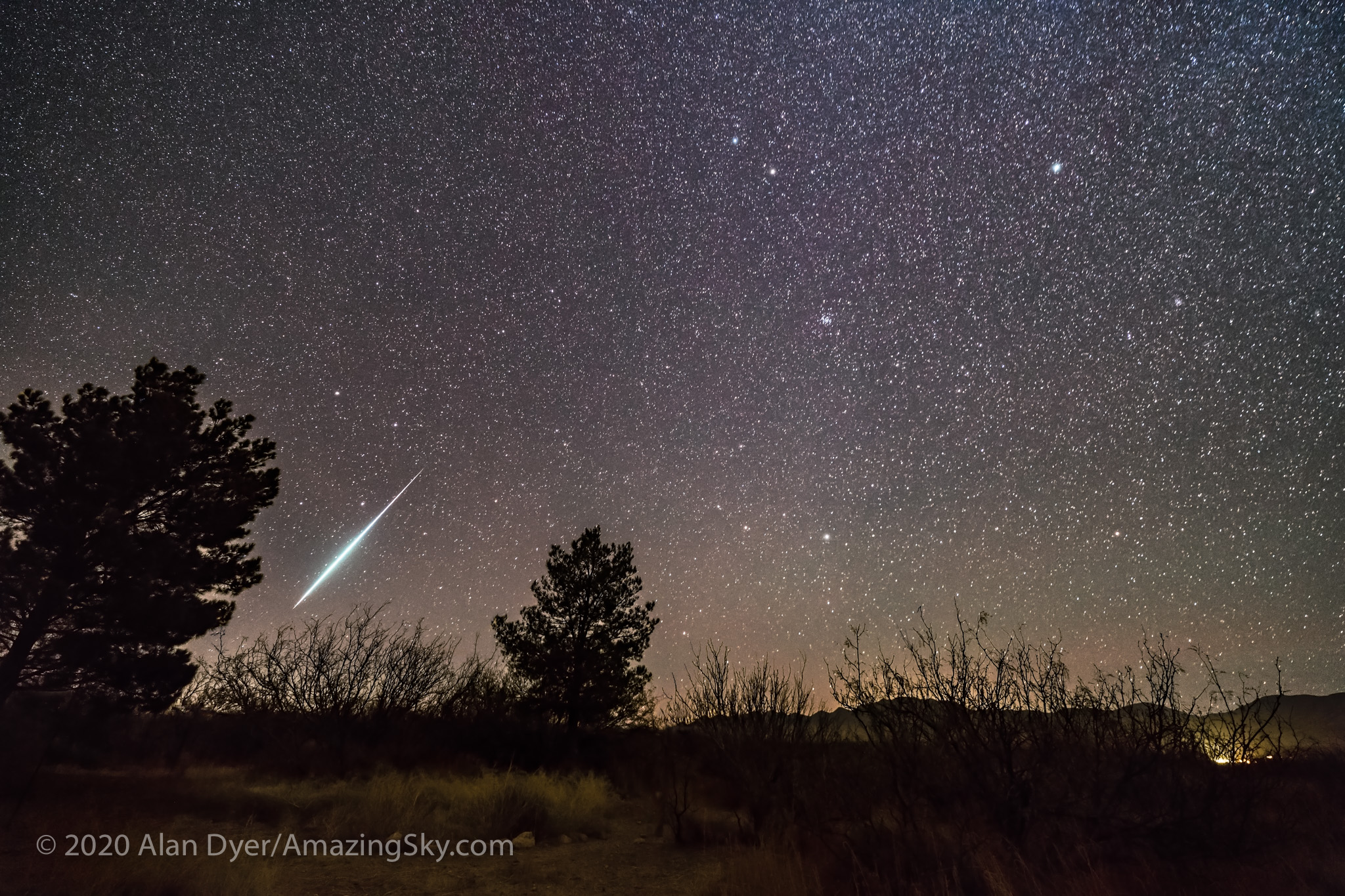
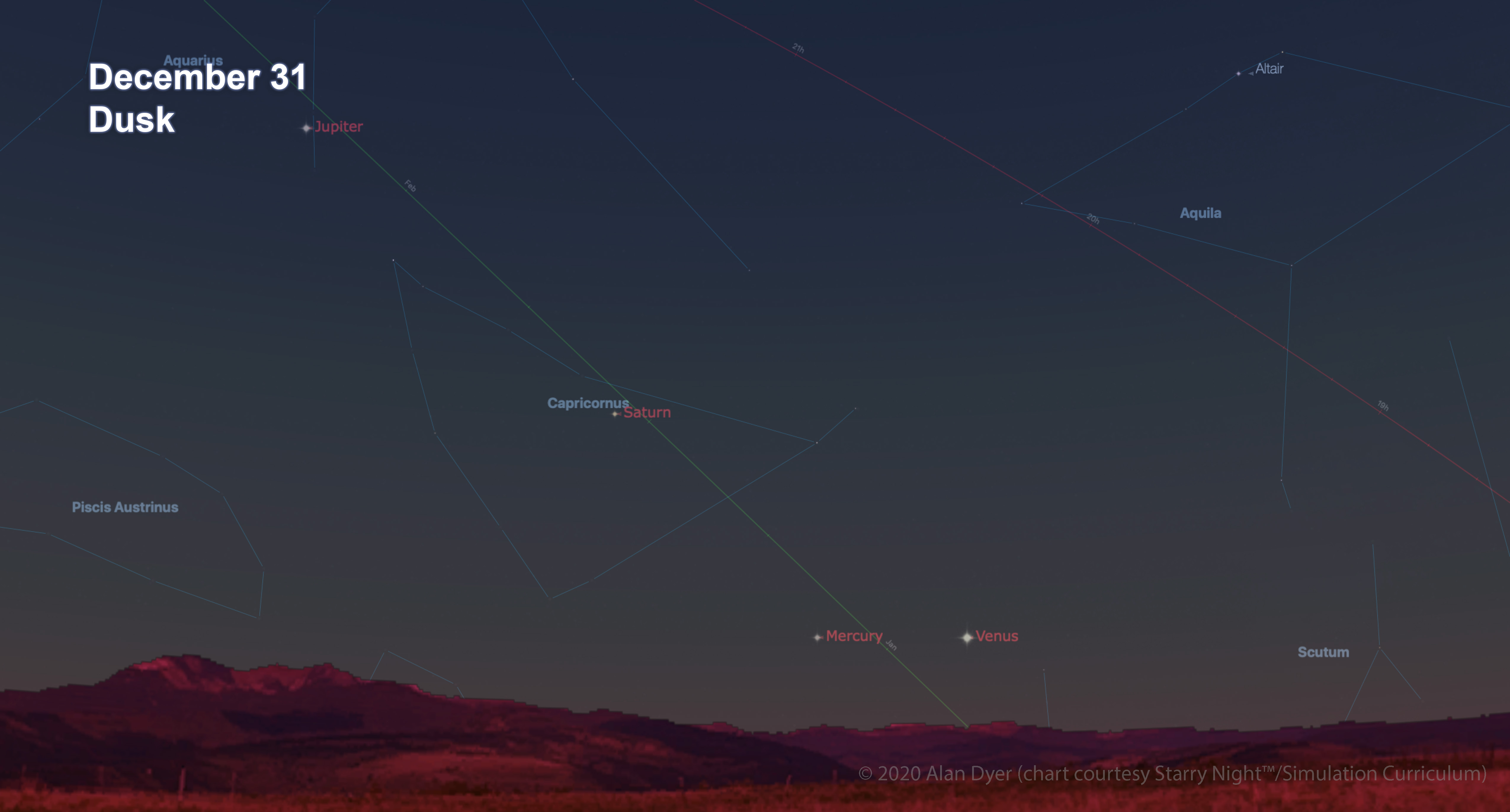


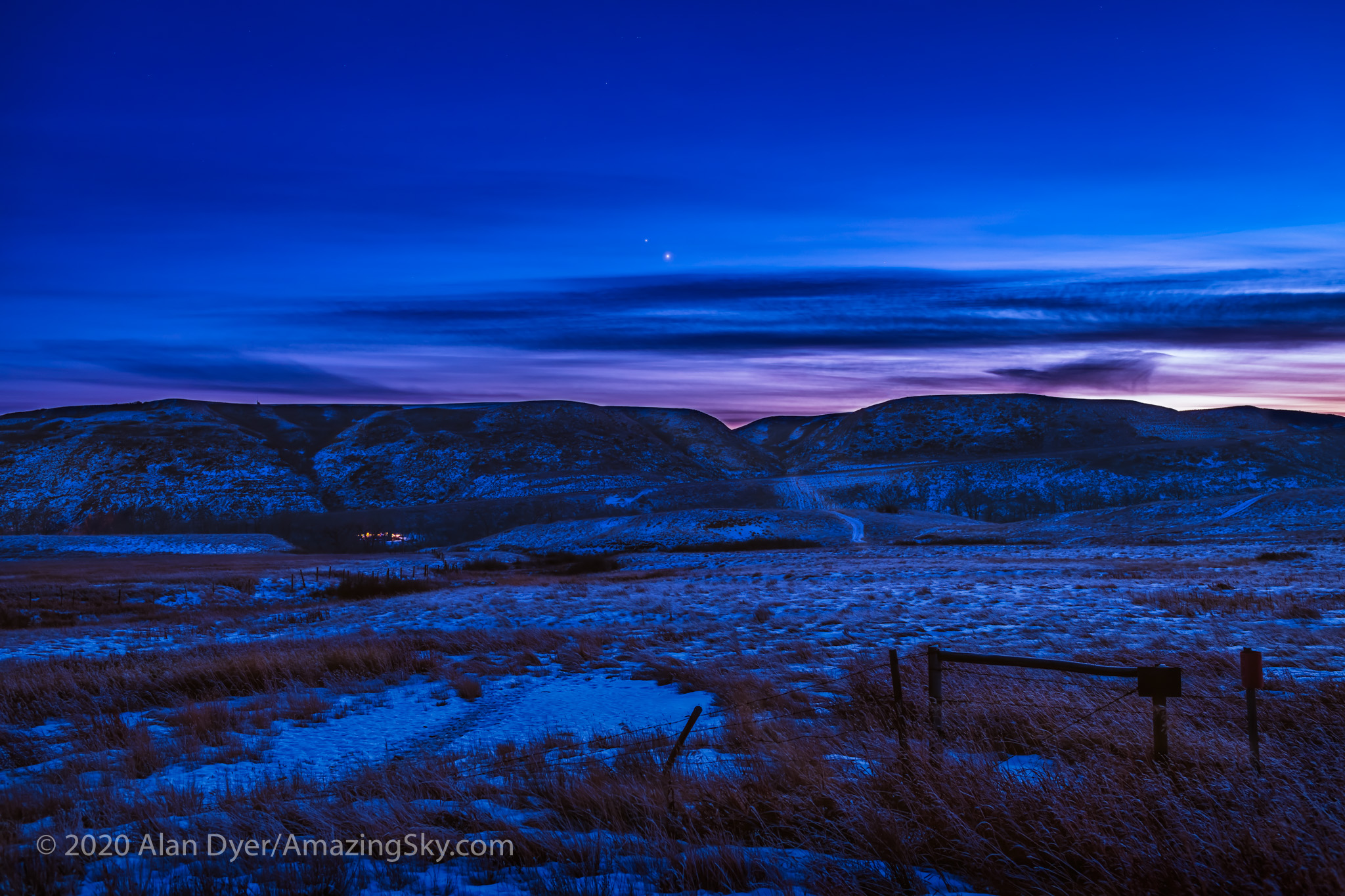
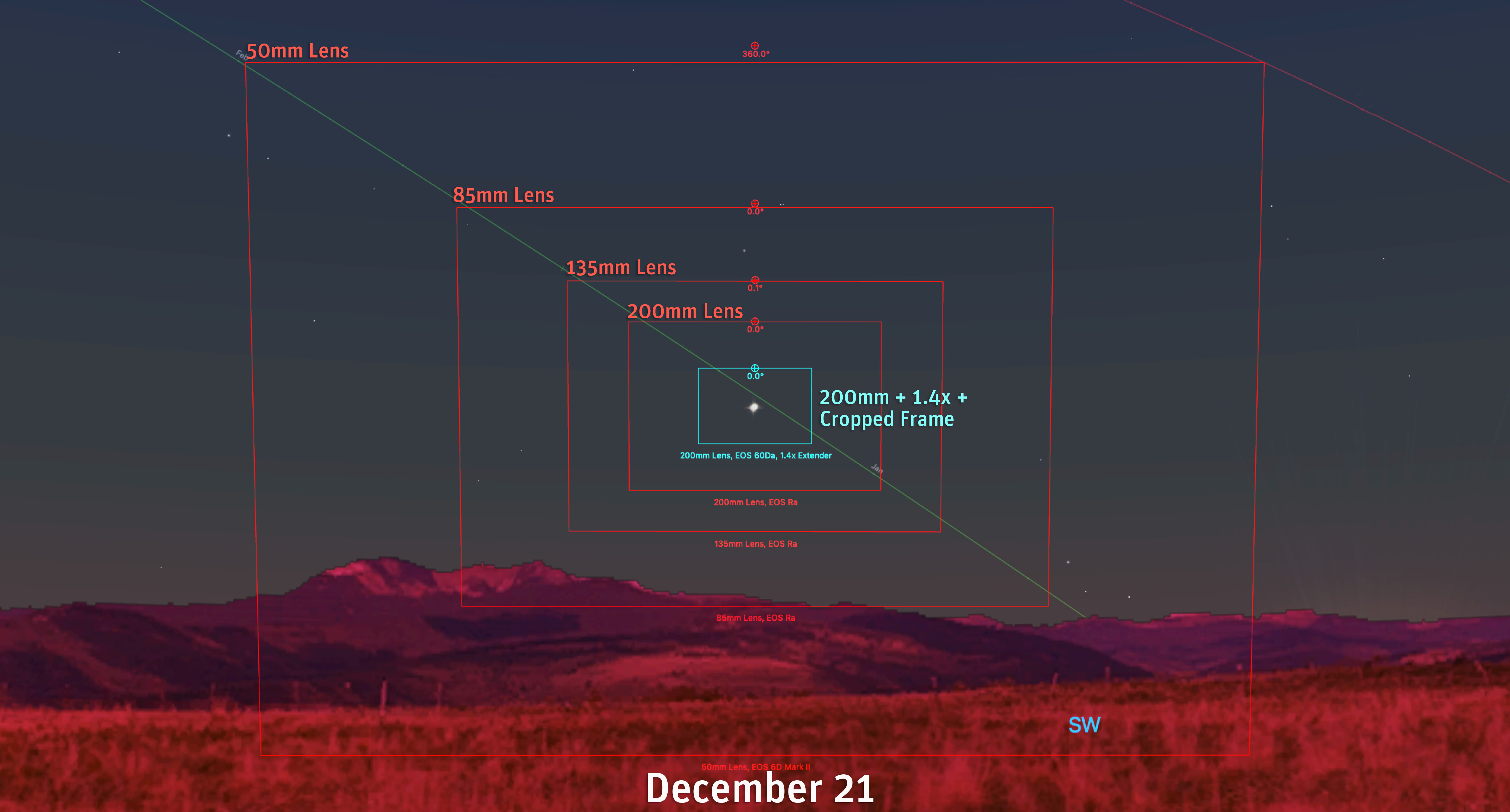
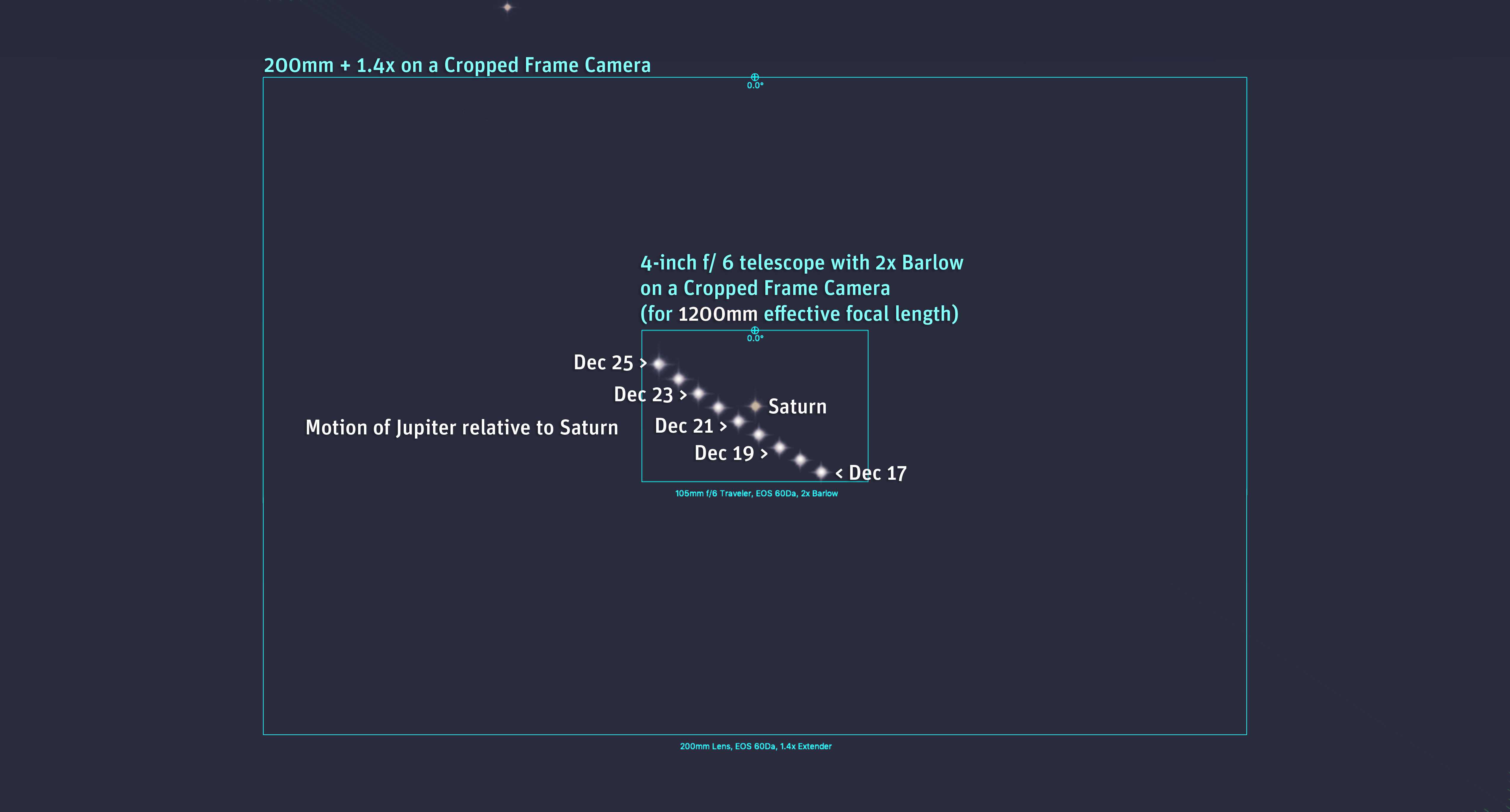


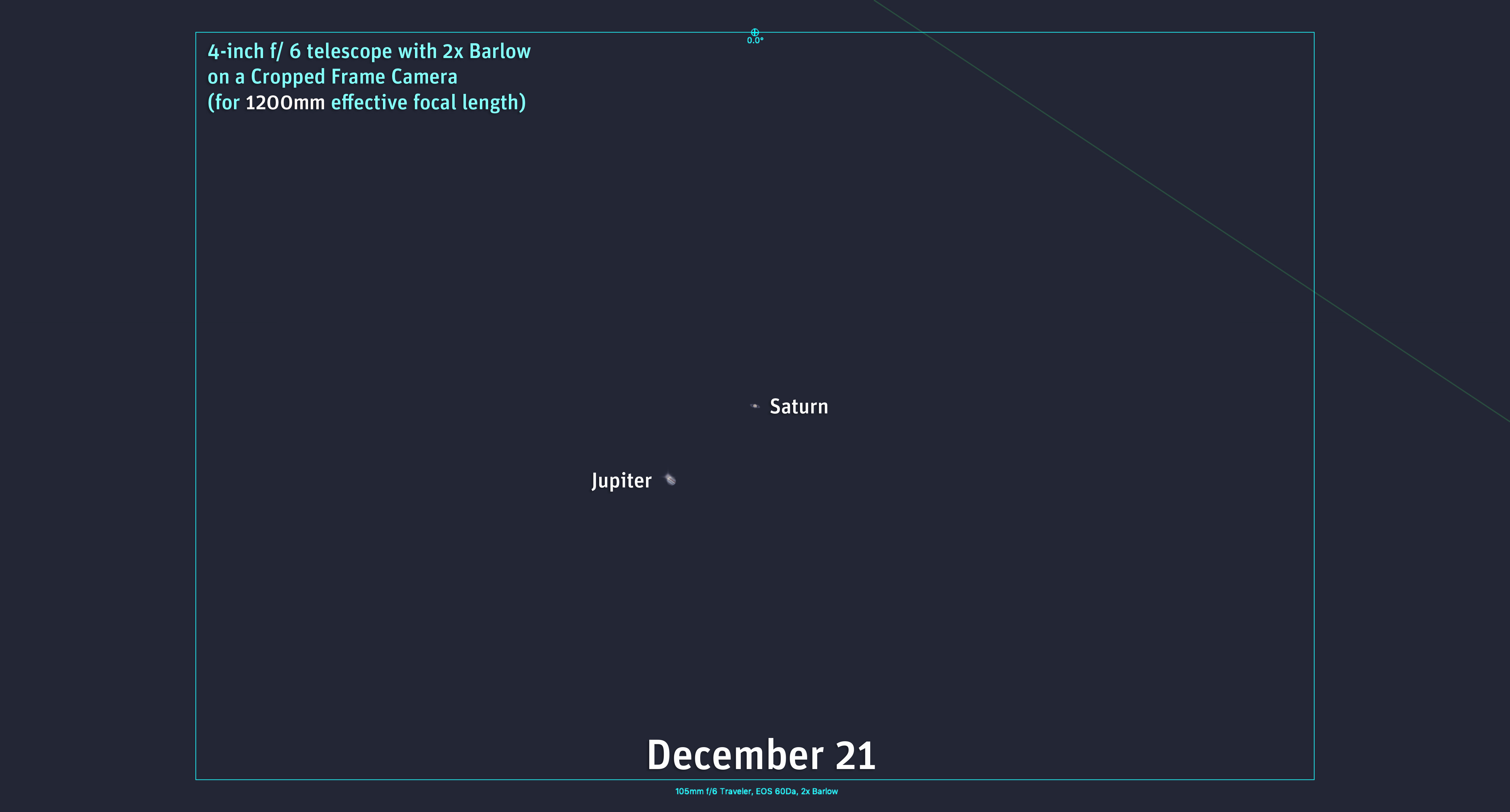

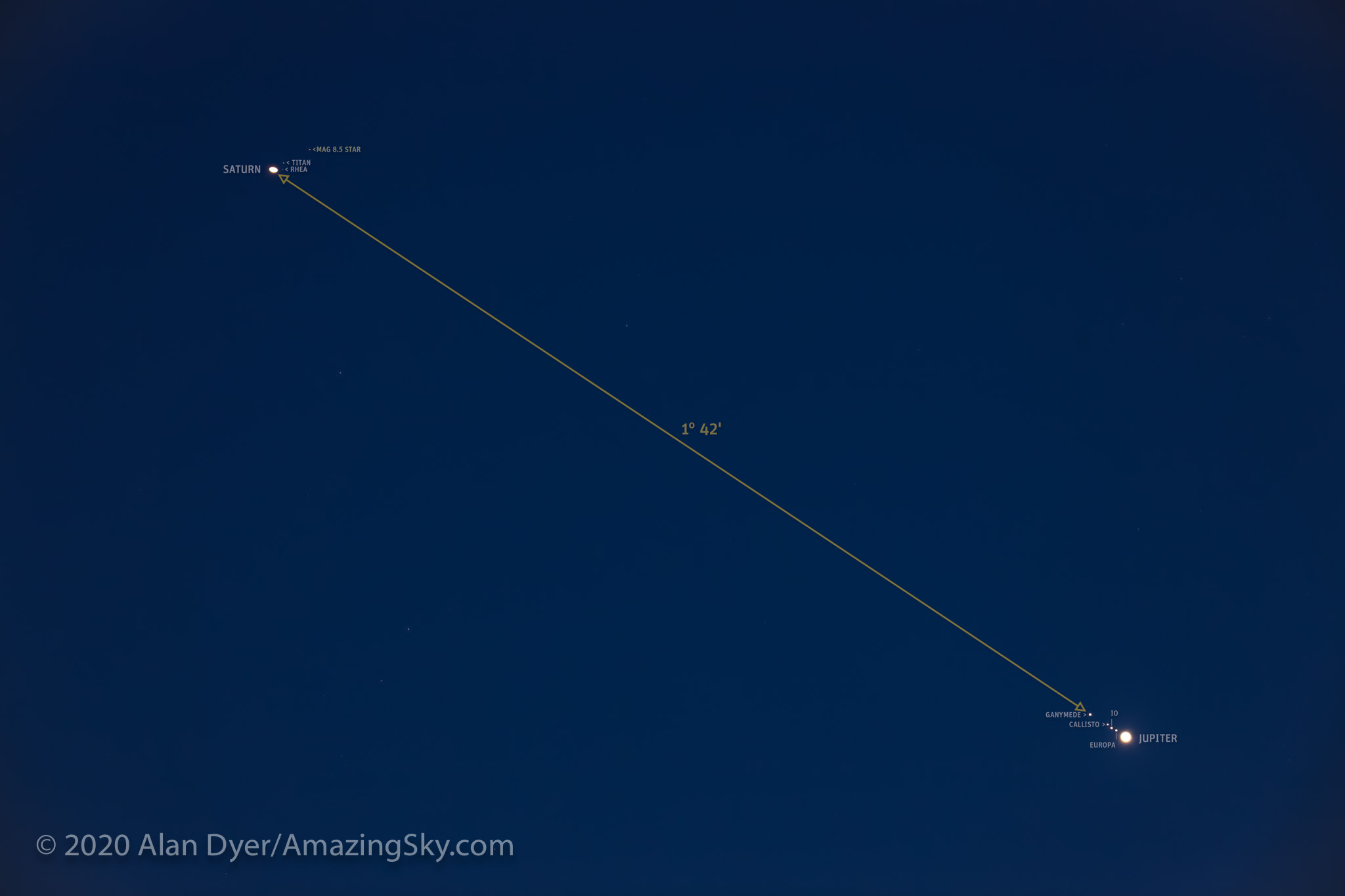
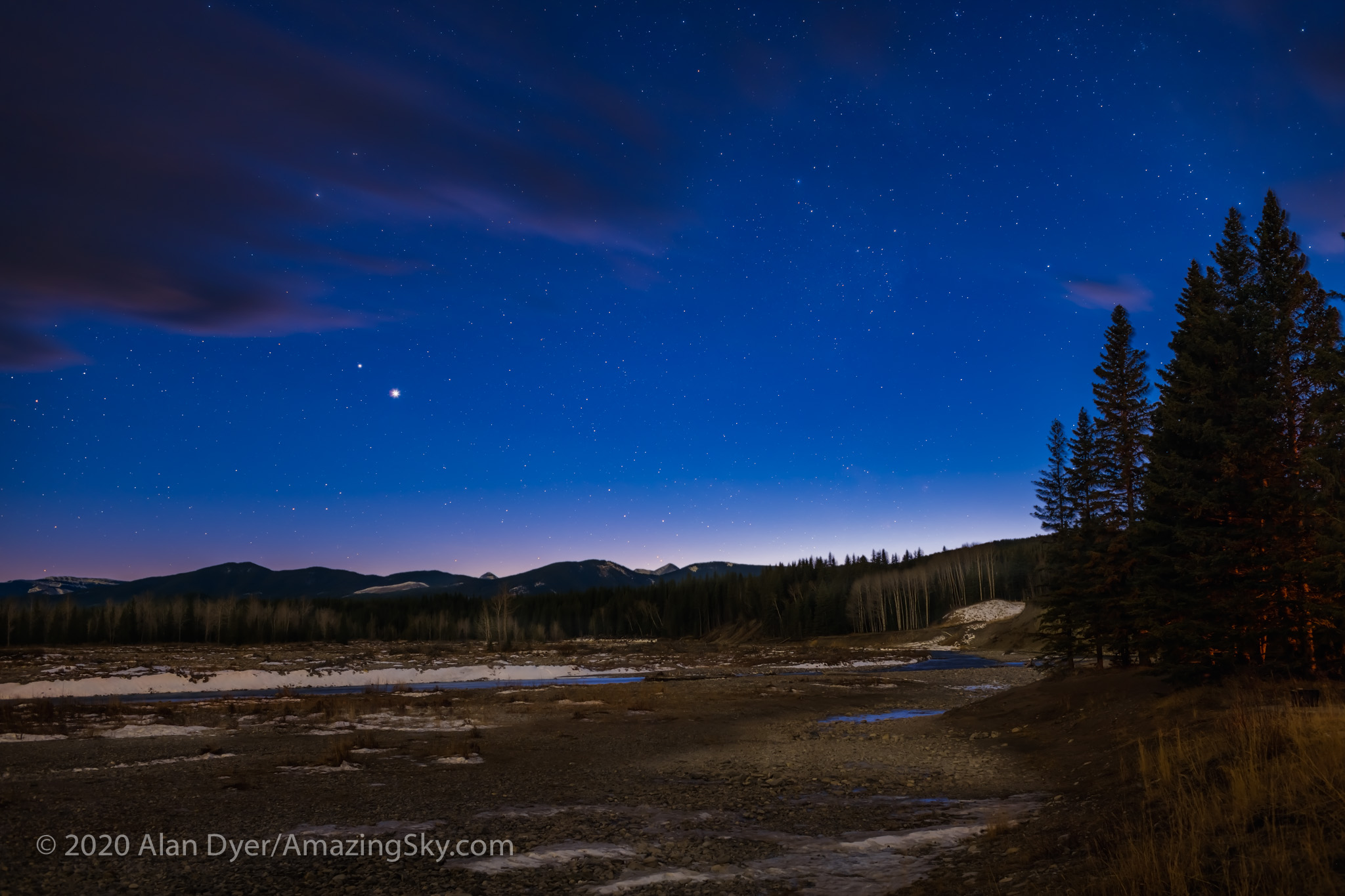

 A bright comet is a once-a-decade opportunity to capture some unique nightscapes. Here are my suggested tips and FAQs for getting your souvenir shot.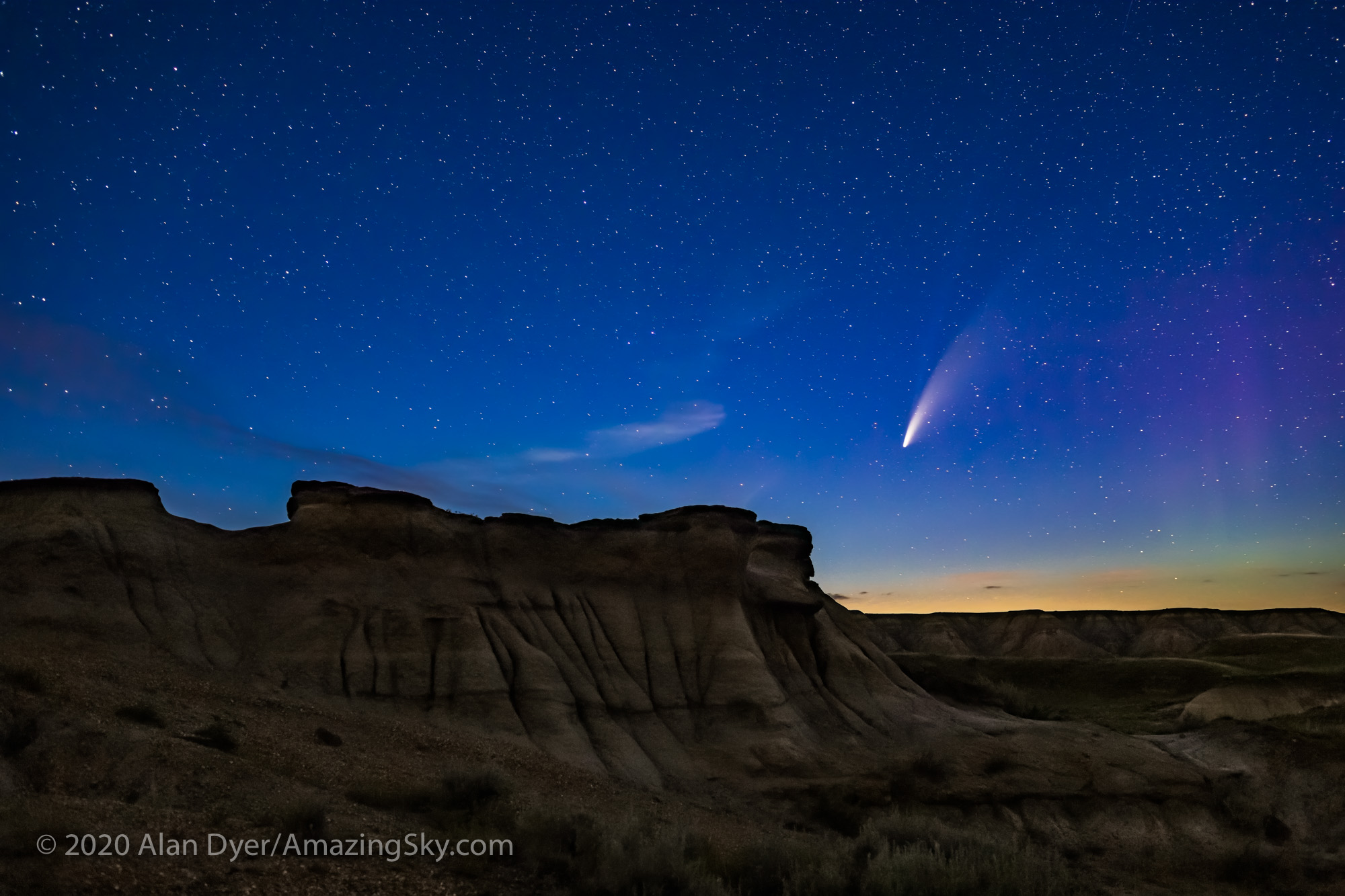
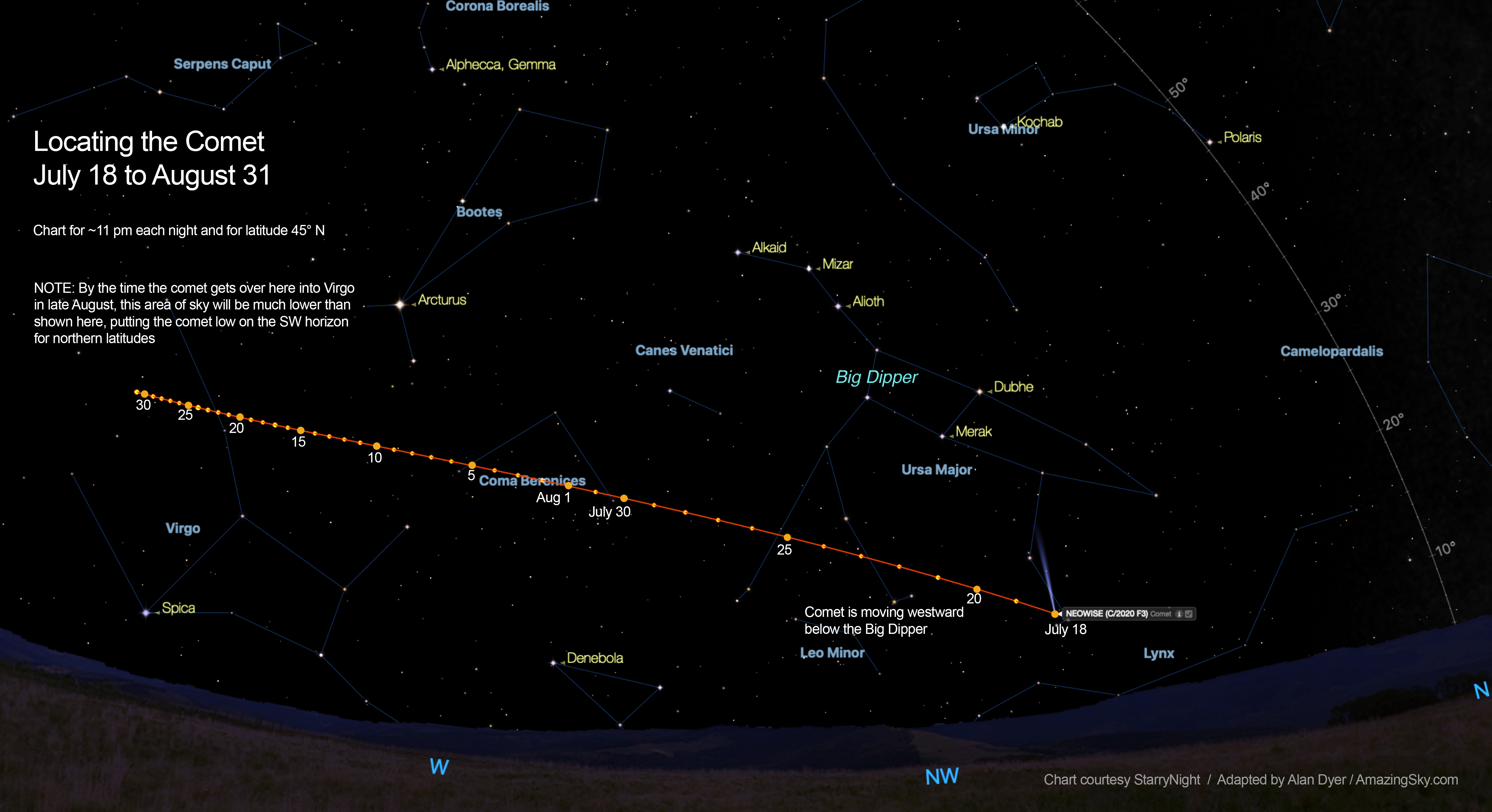
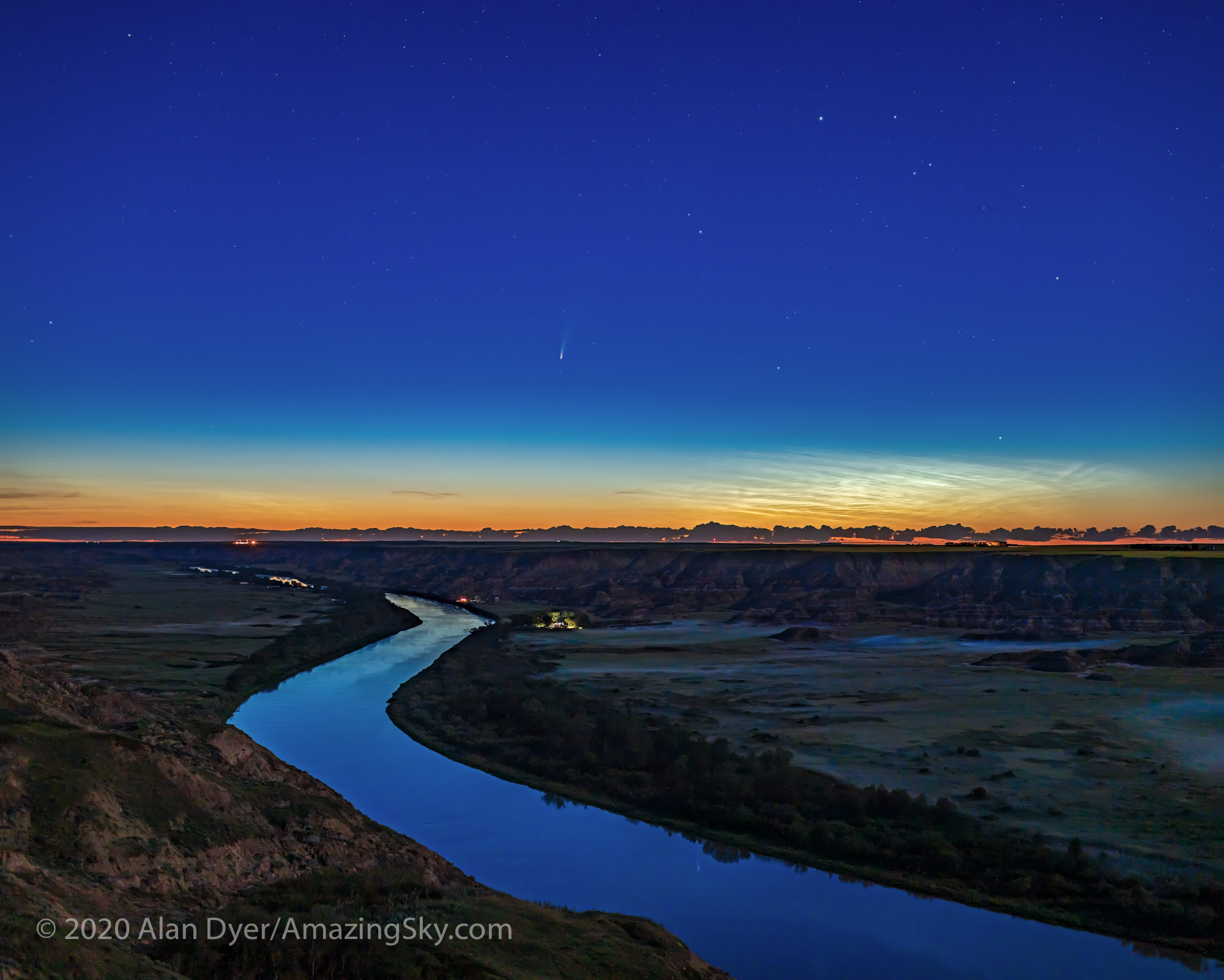
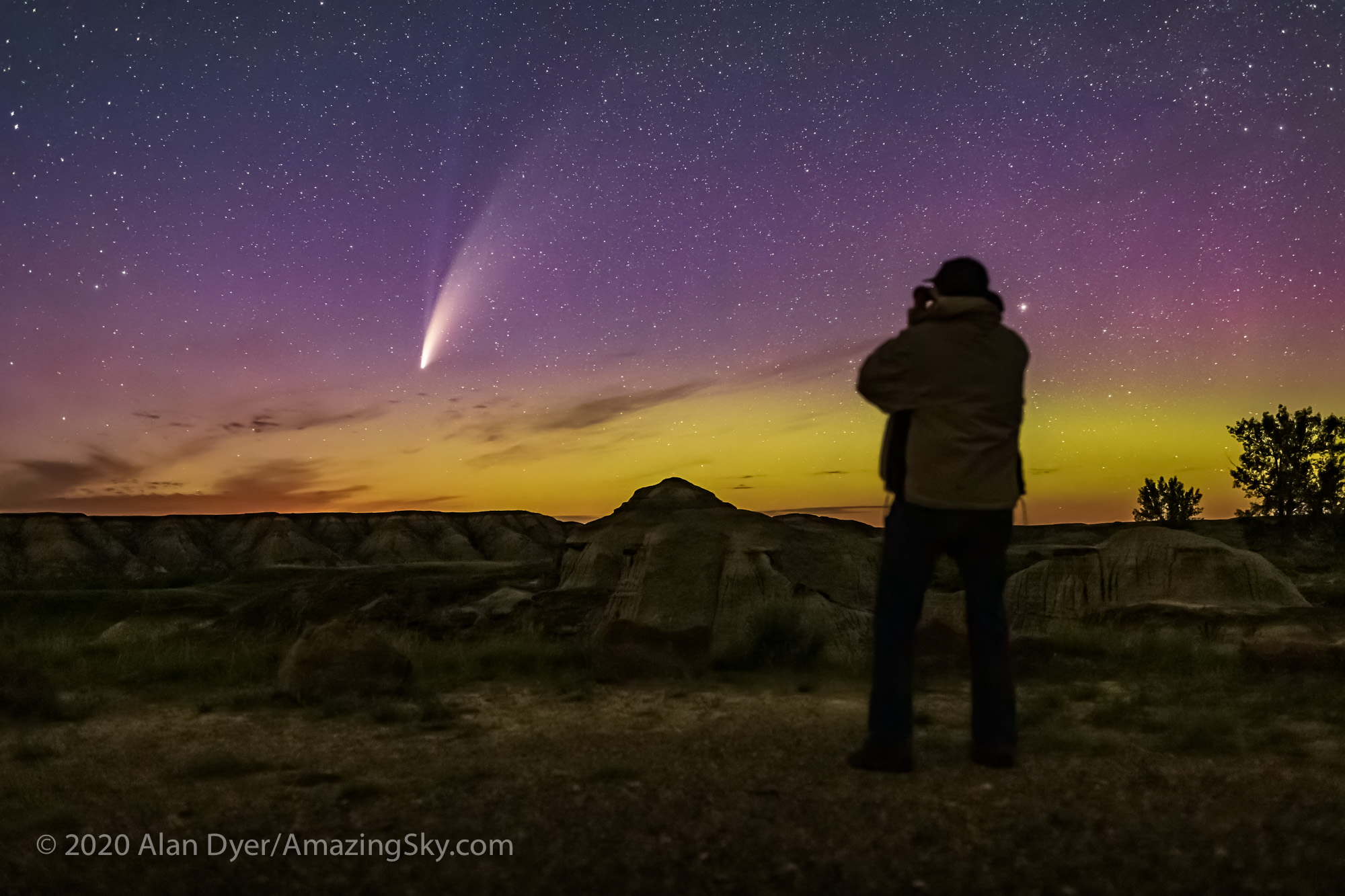
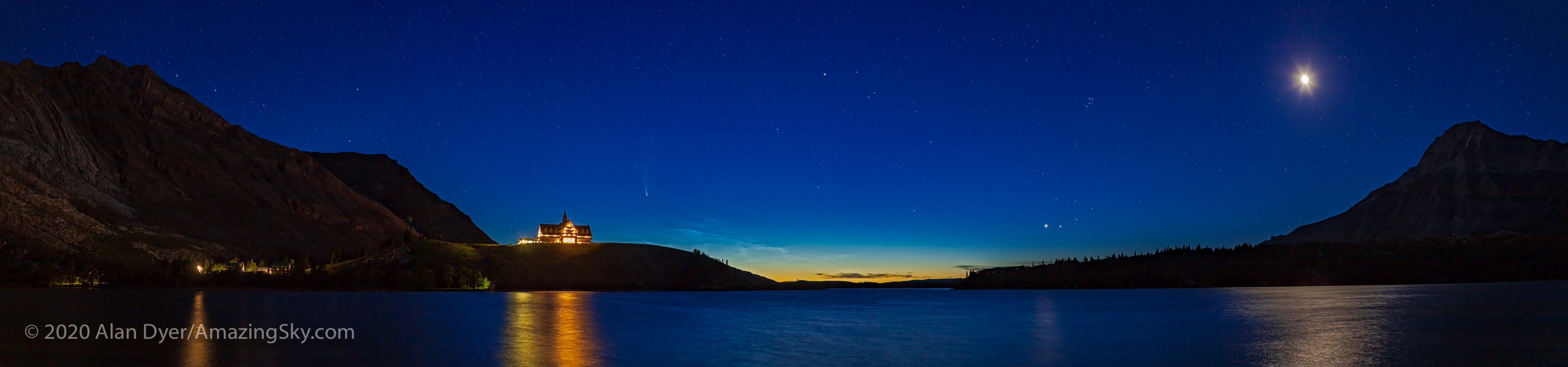
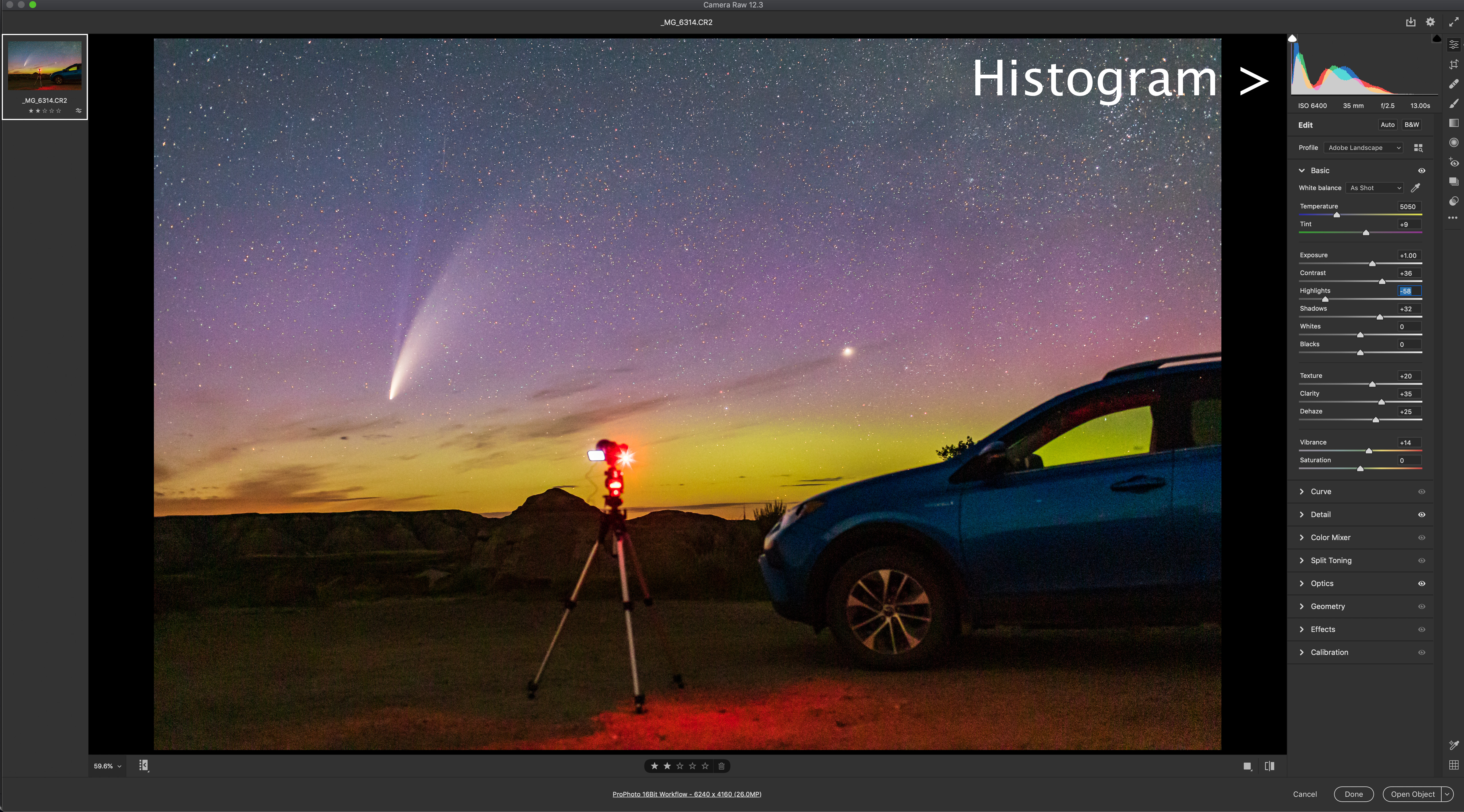
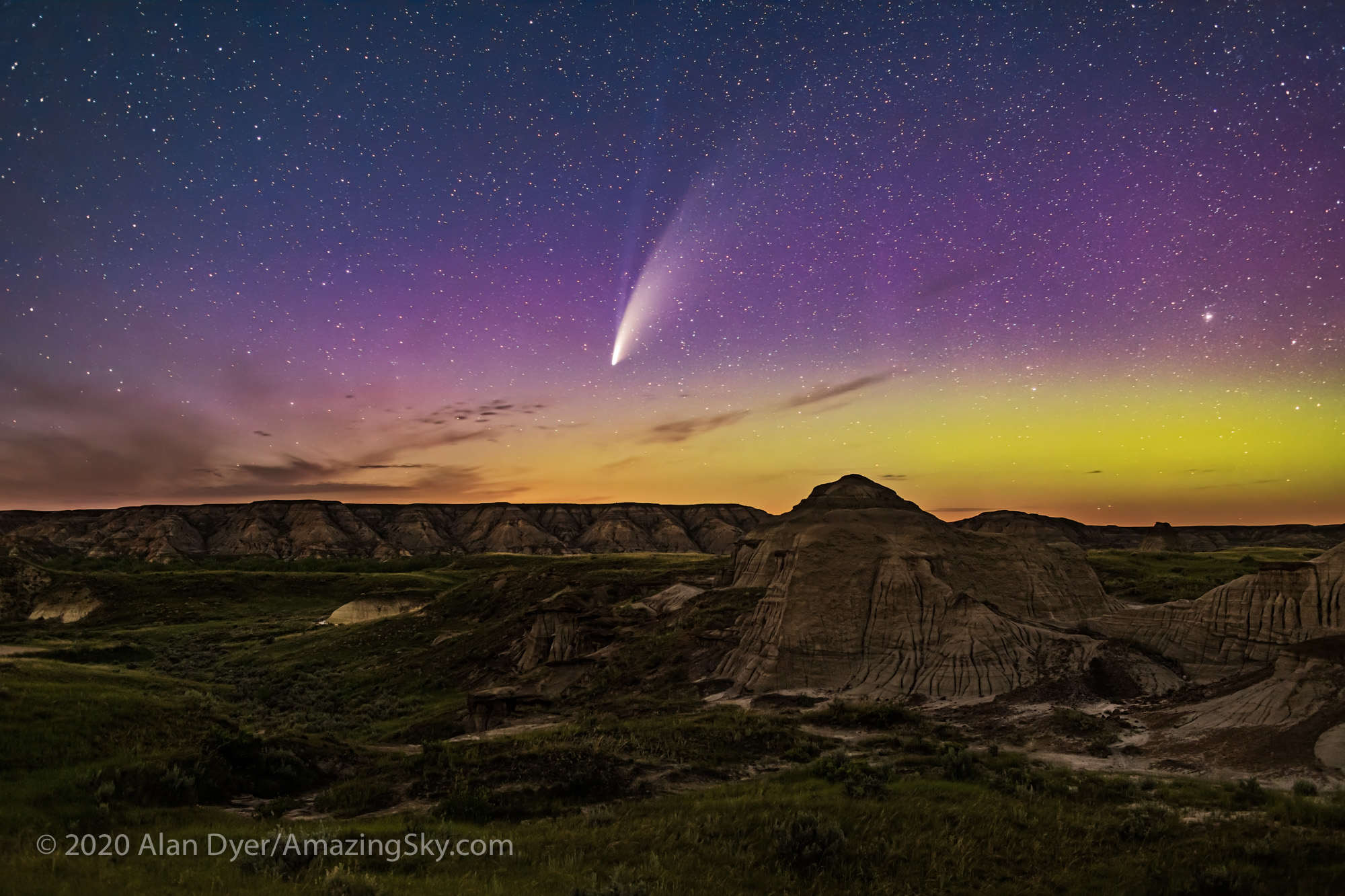
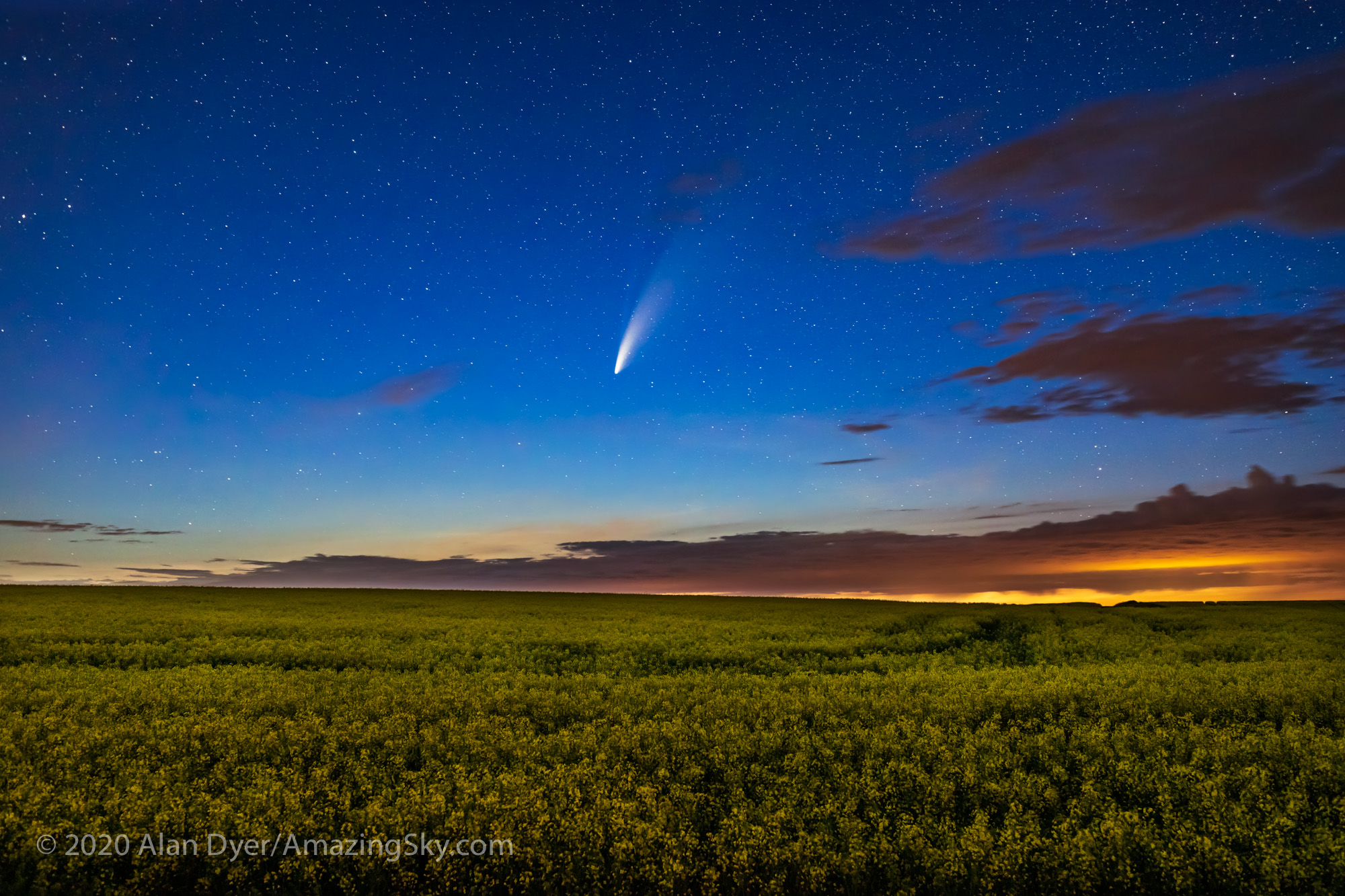
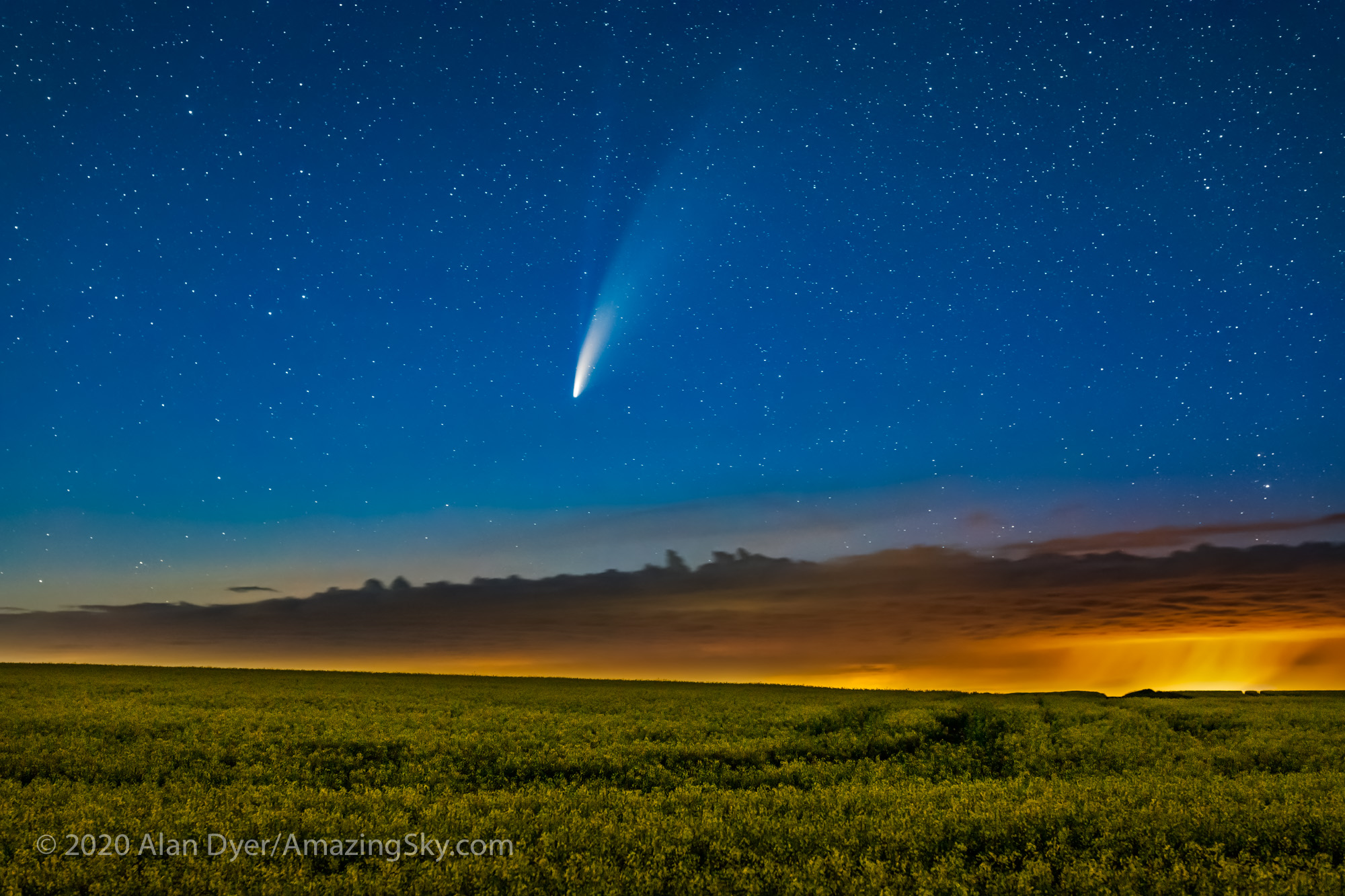
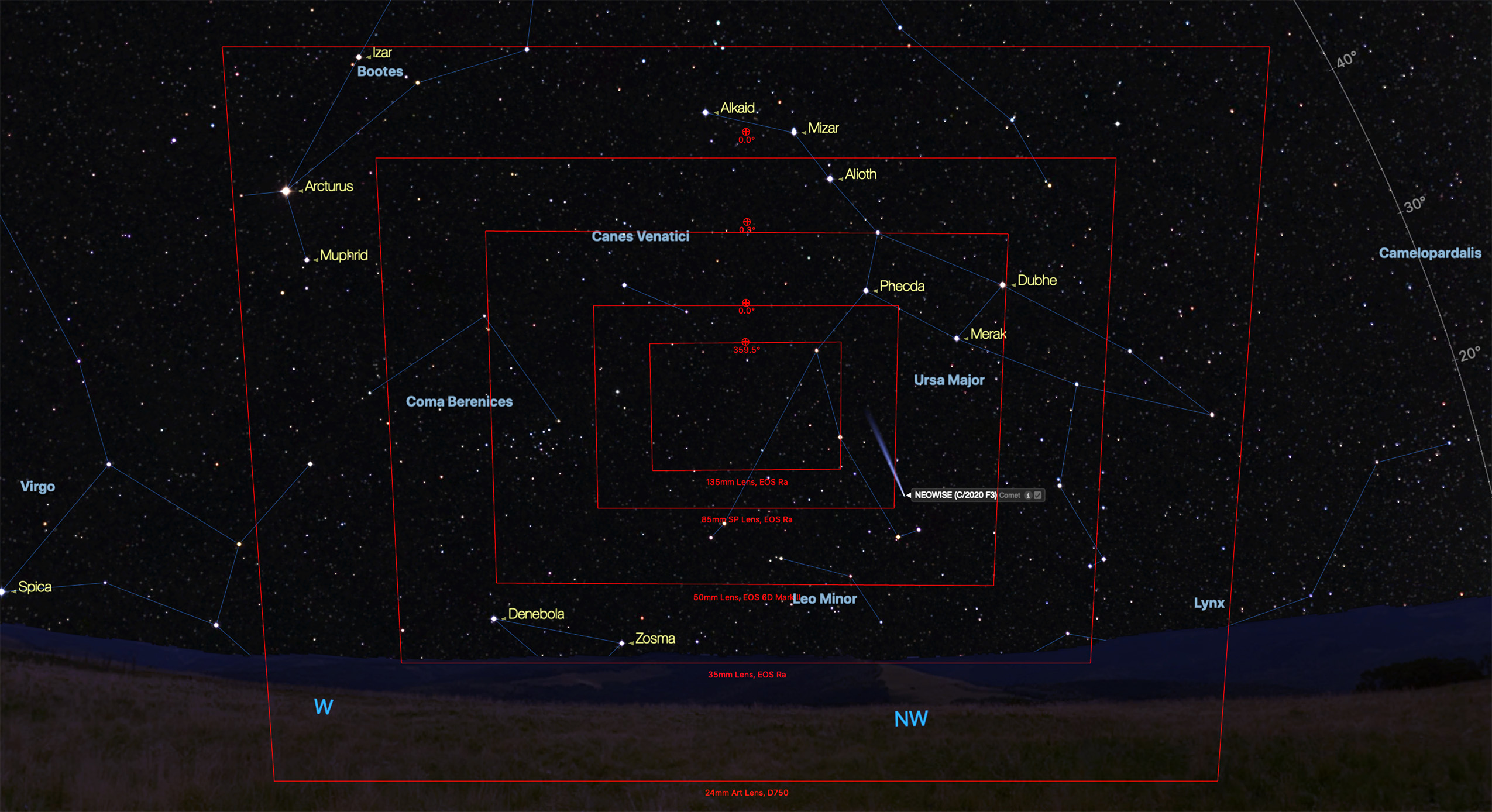
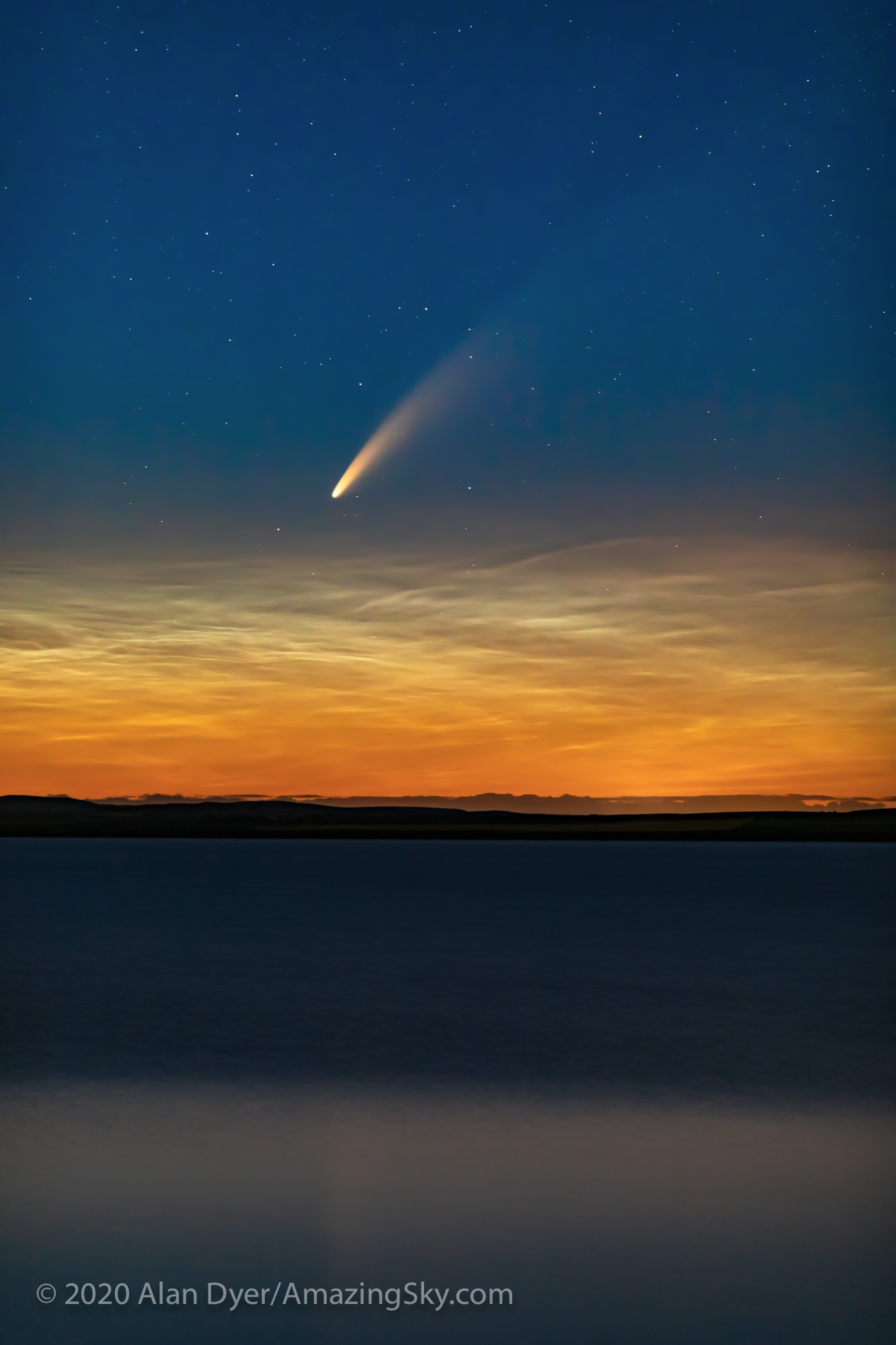
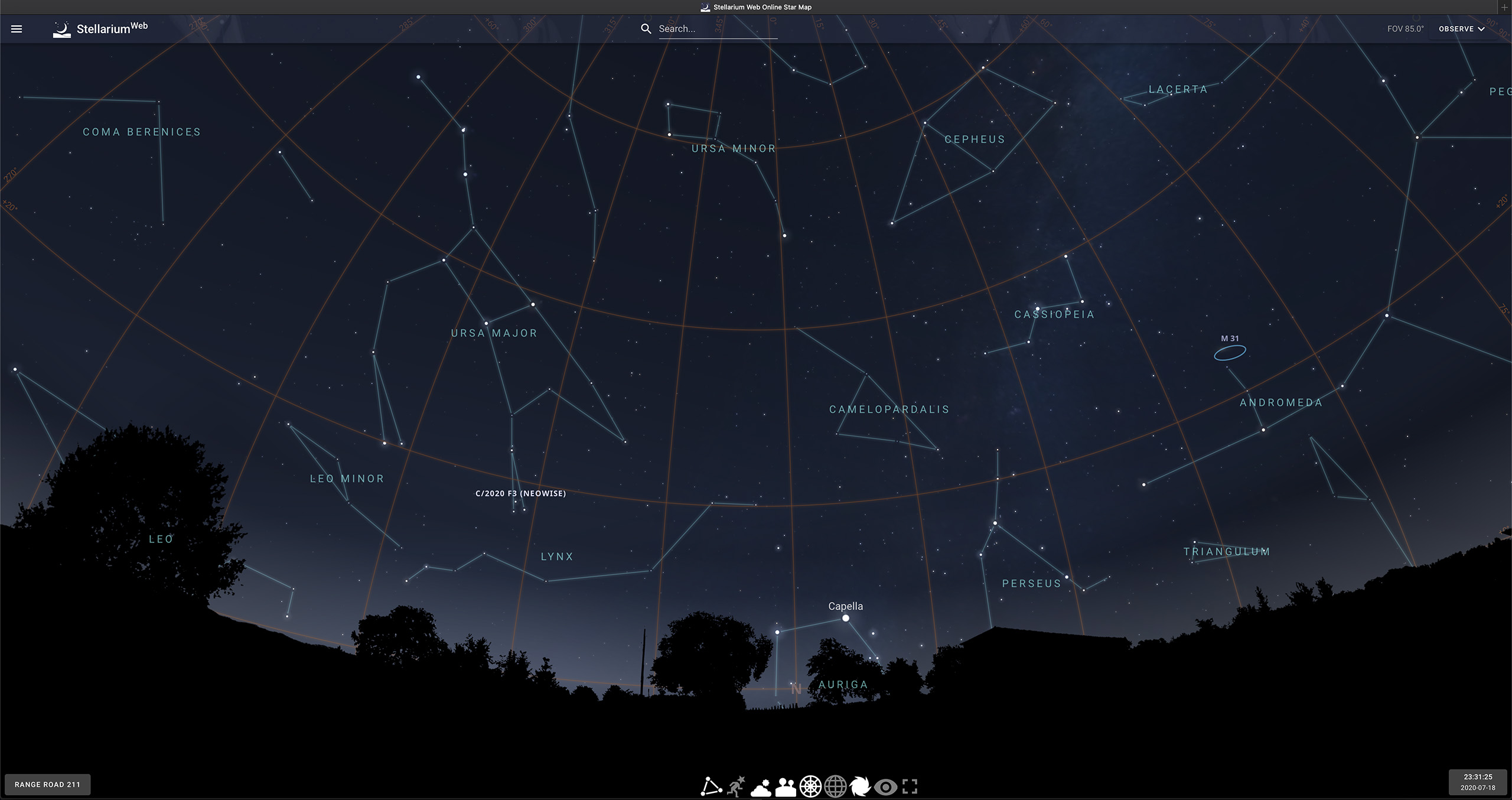
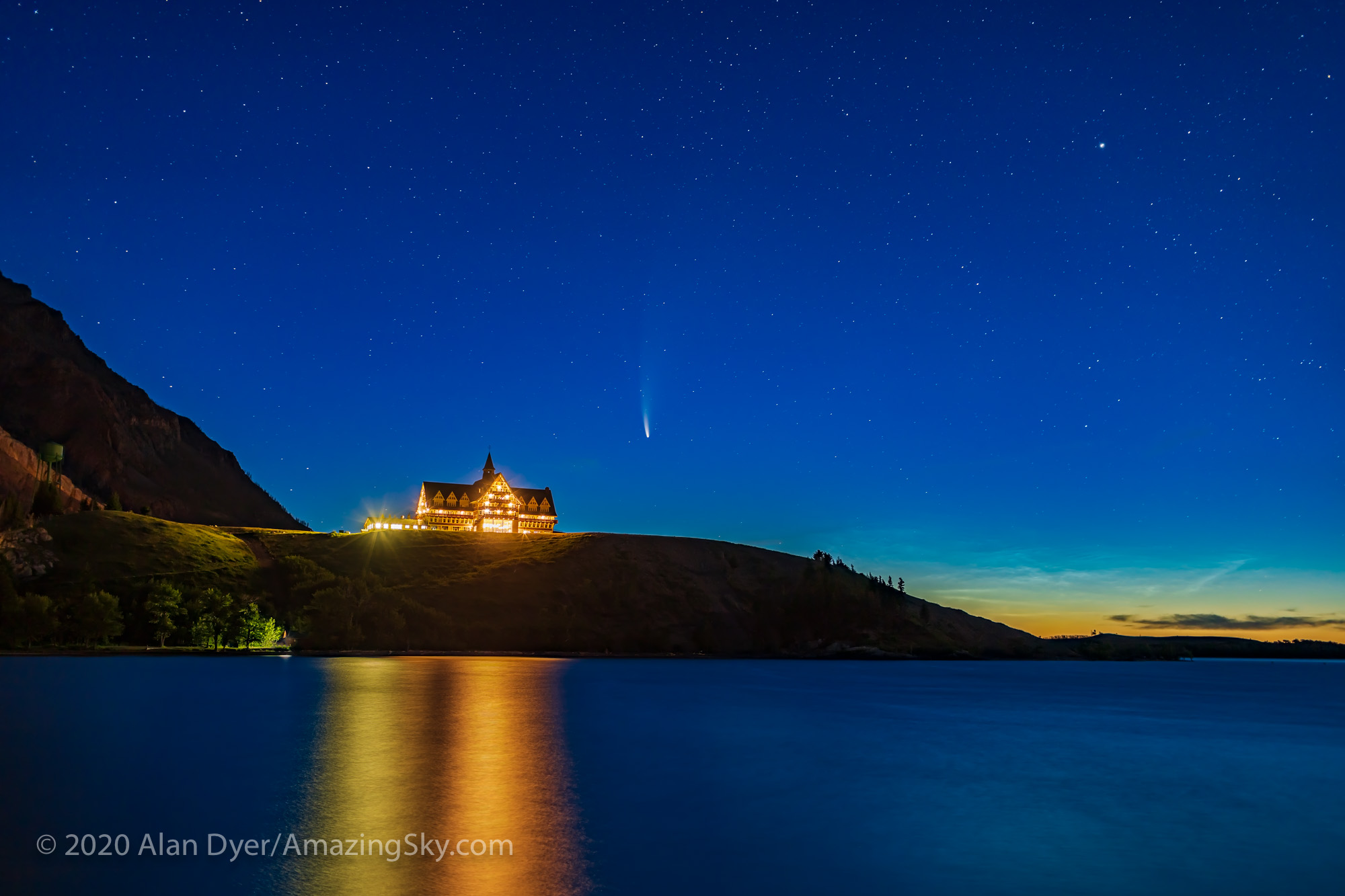
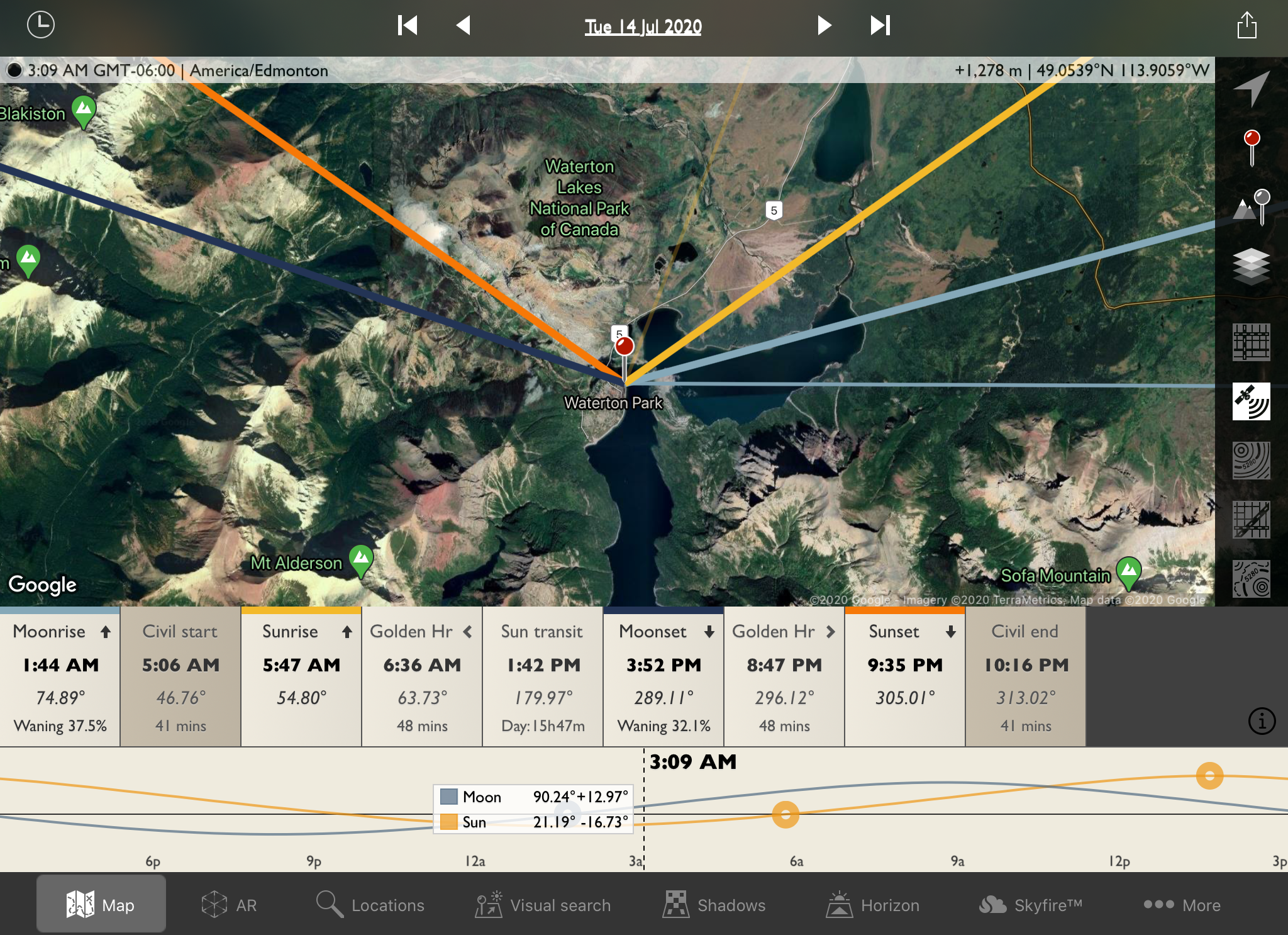
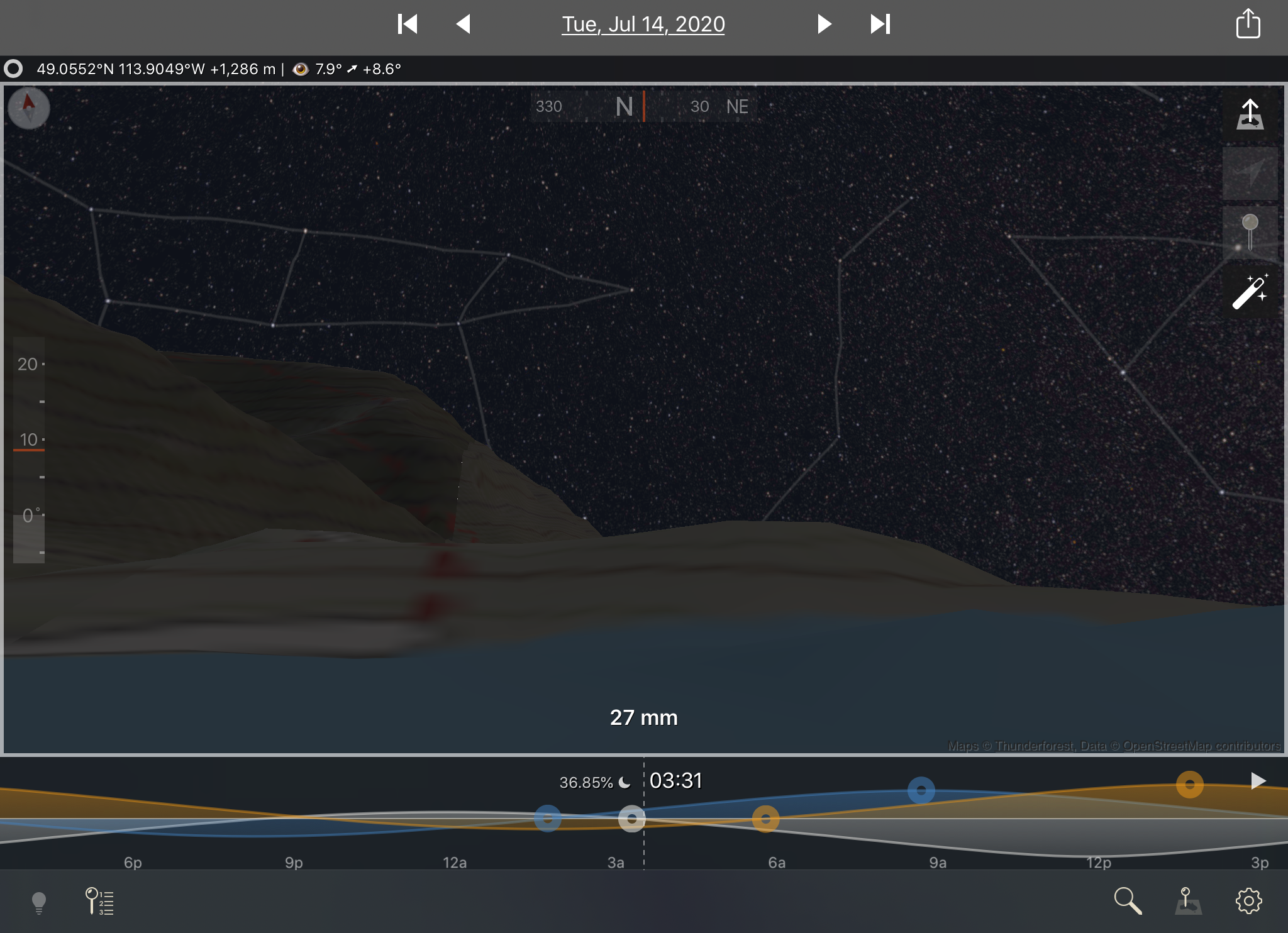
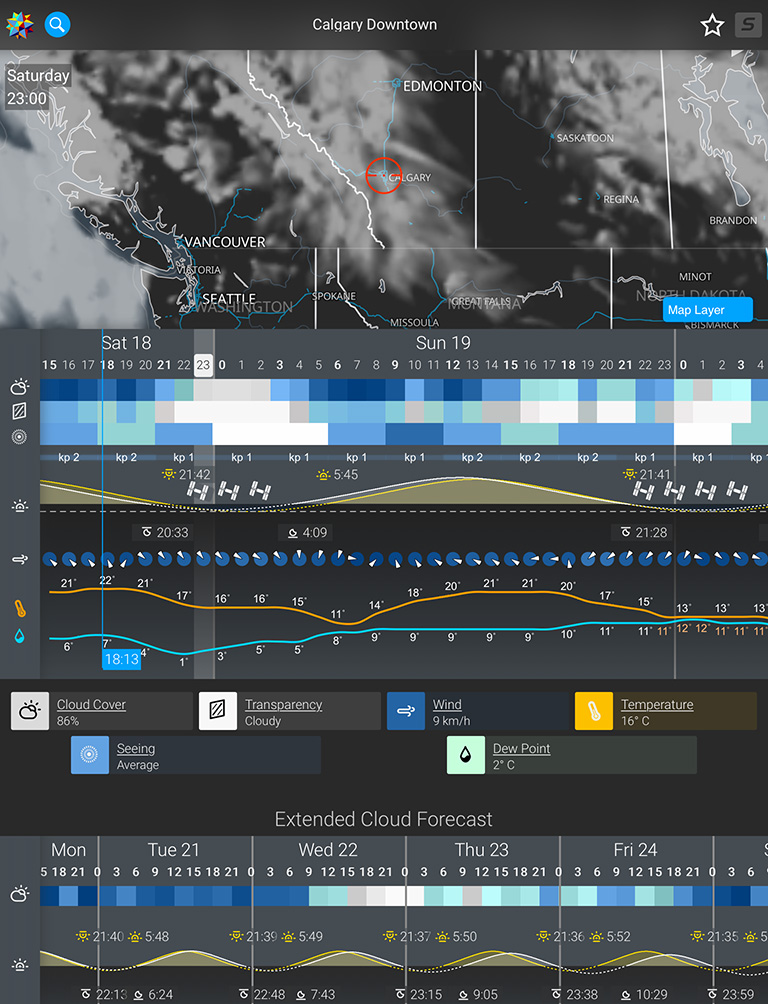
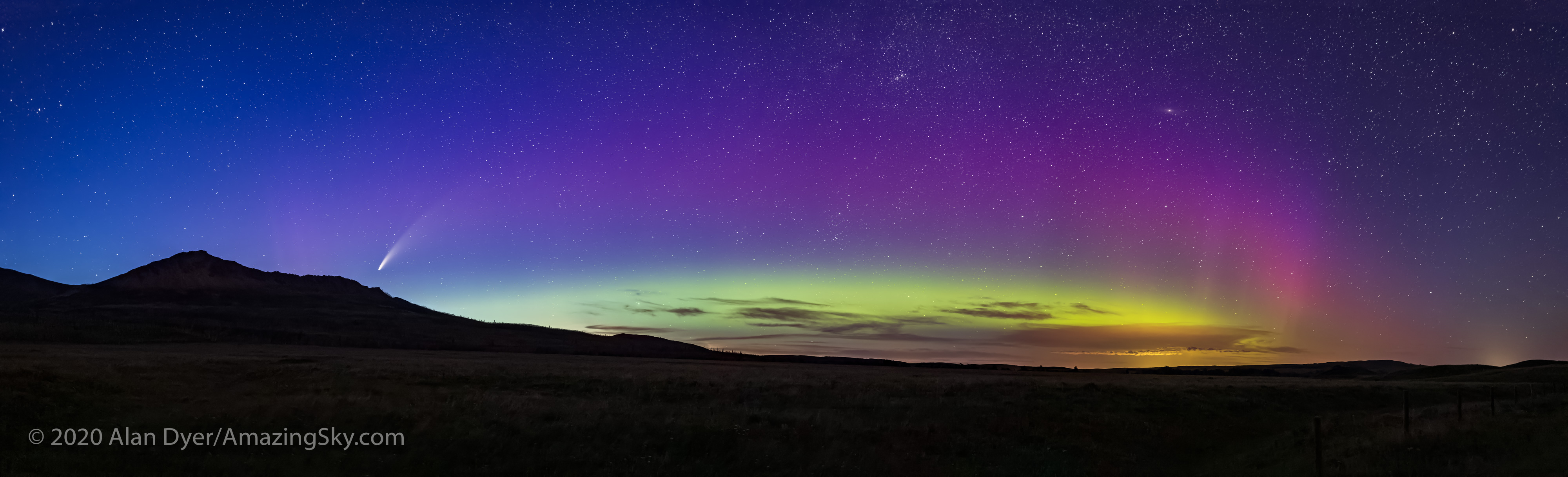
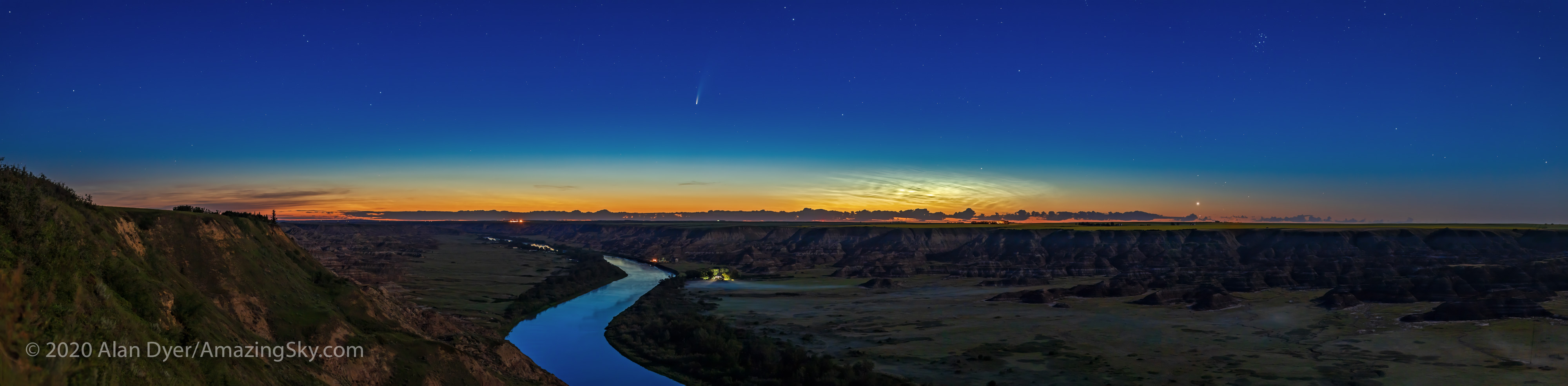
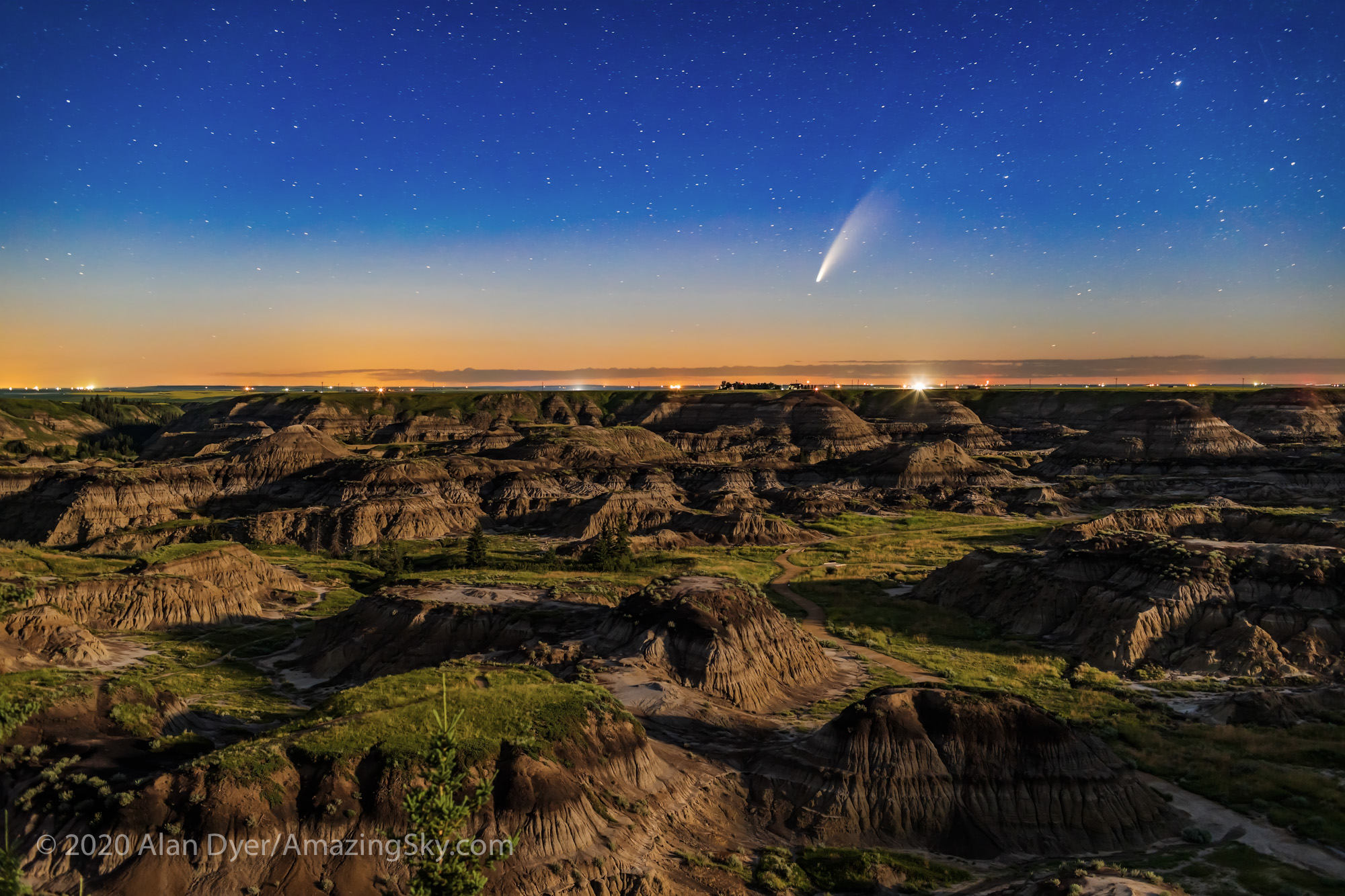
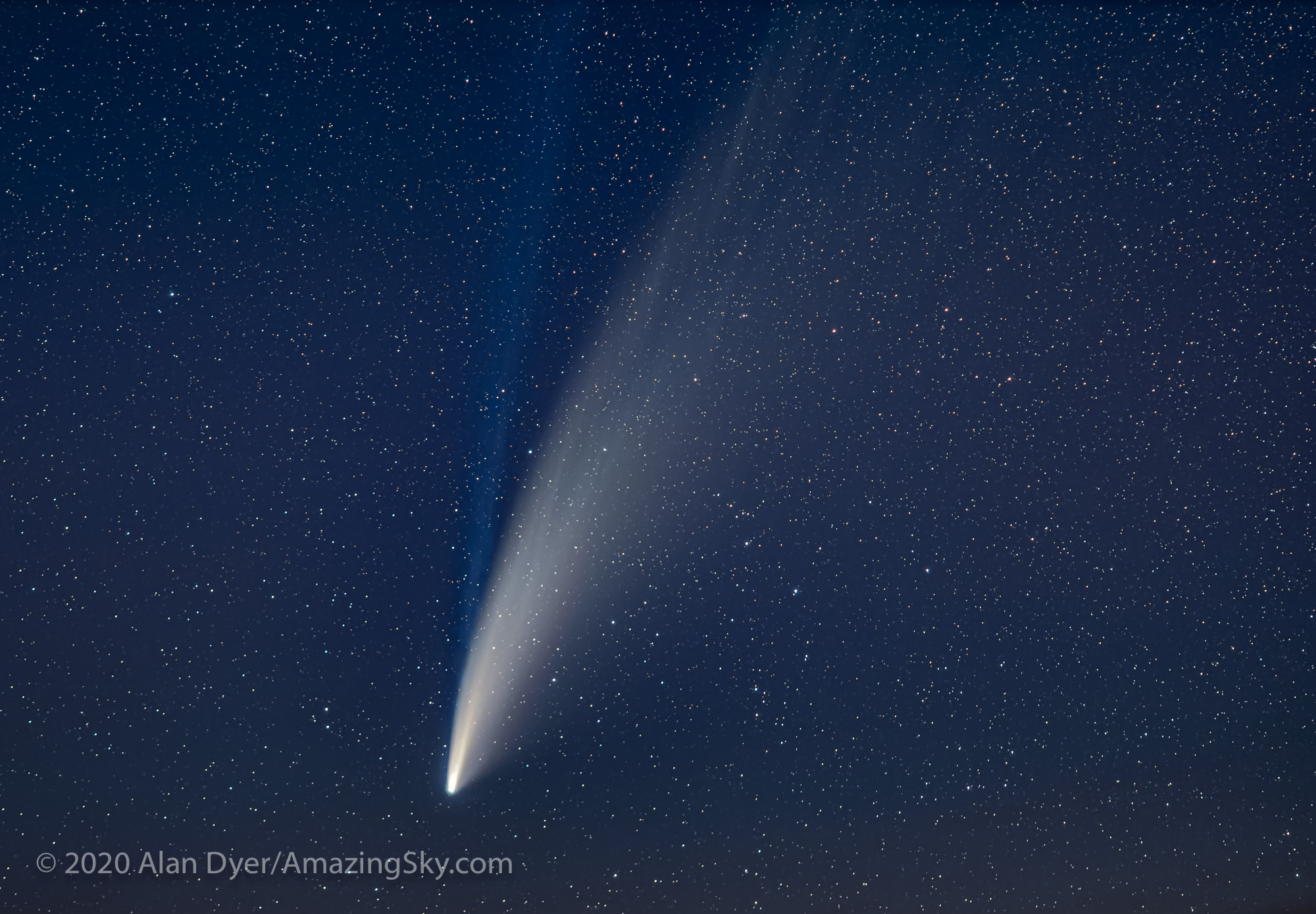
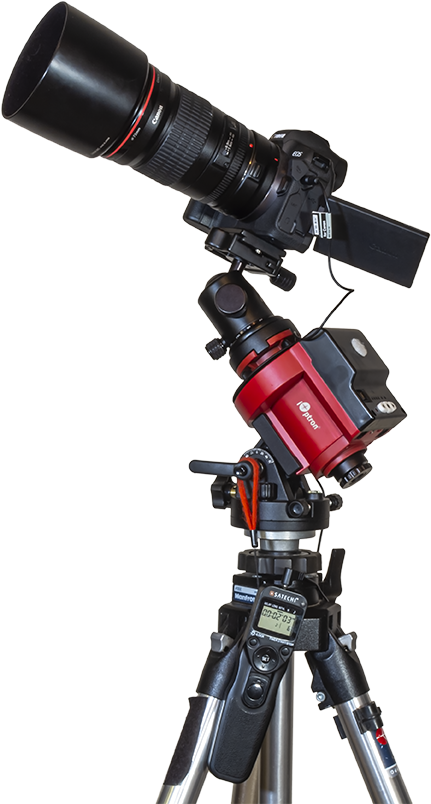
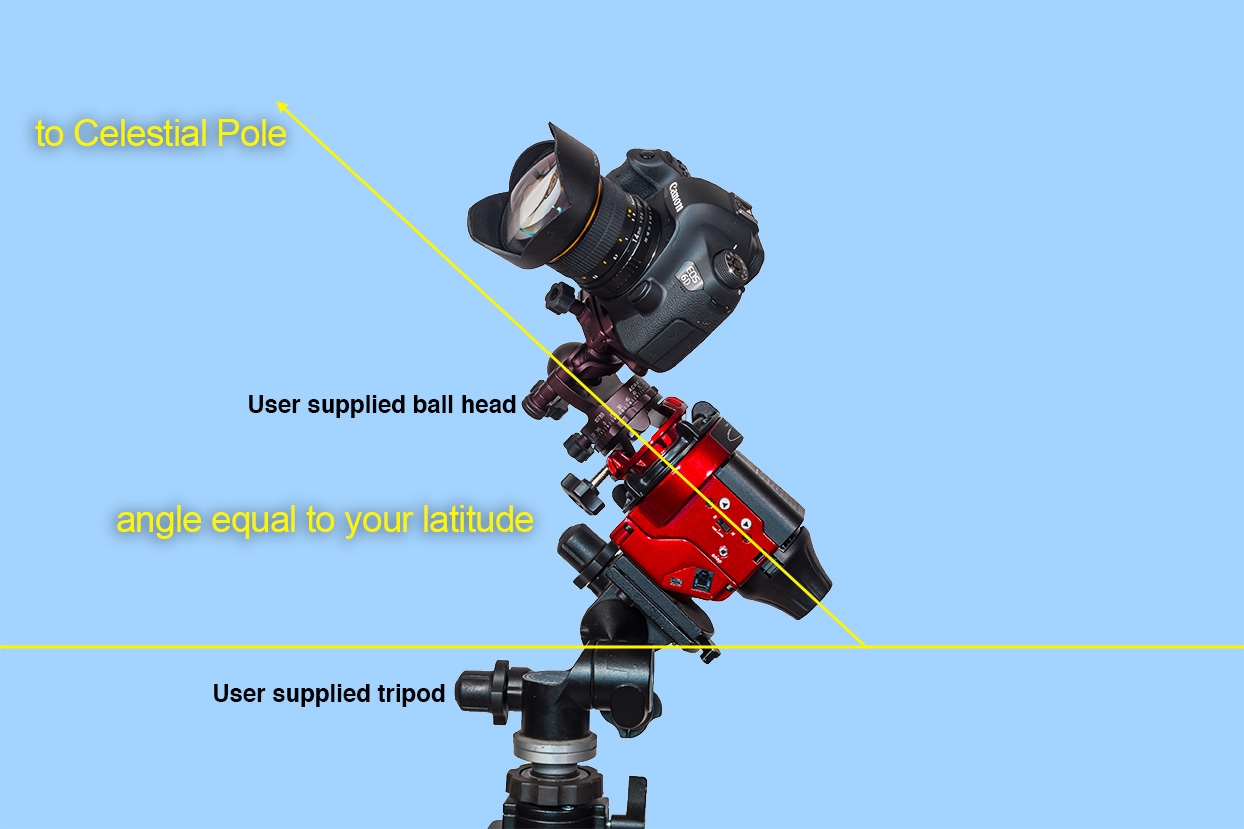
 On the evening of January 20 for North America, the Full Moon passes through the umbral shadow of the Earth, creating a total eclipse of the Moon.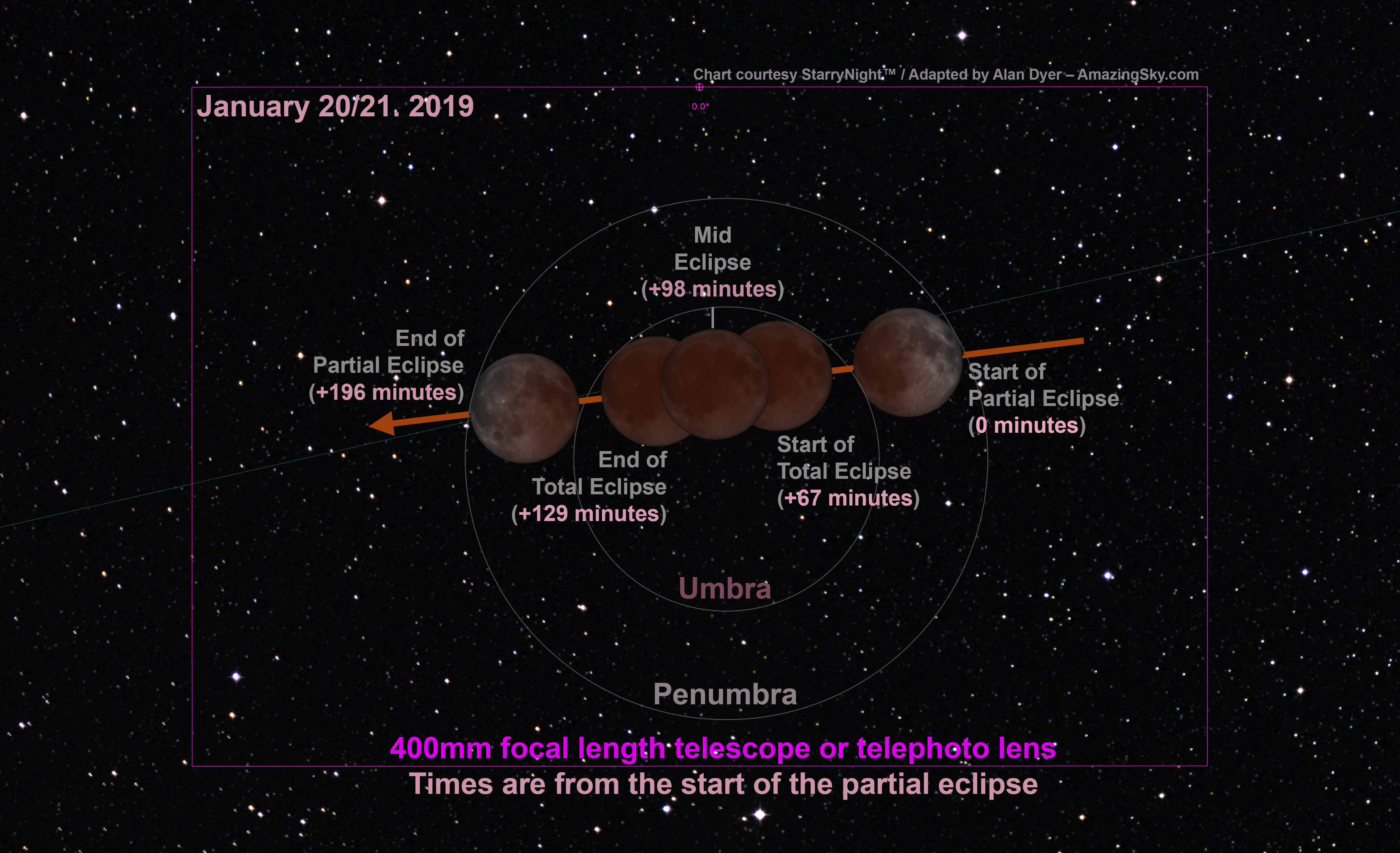
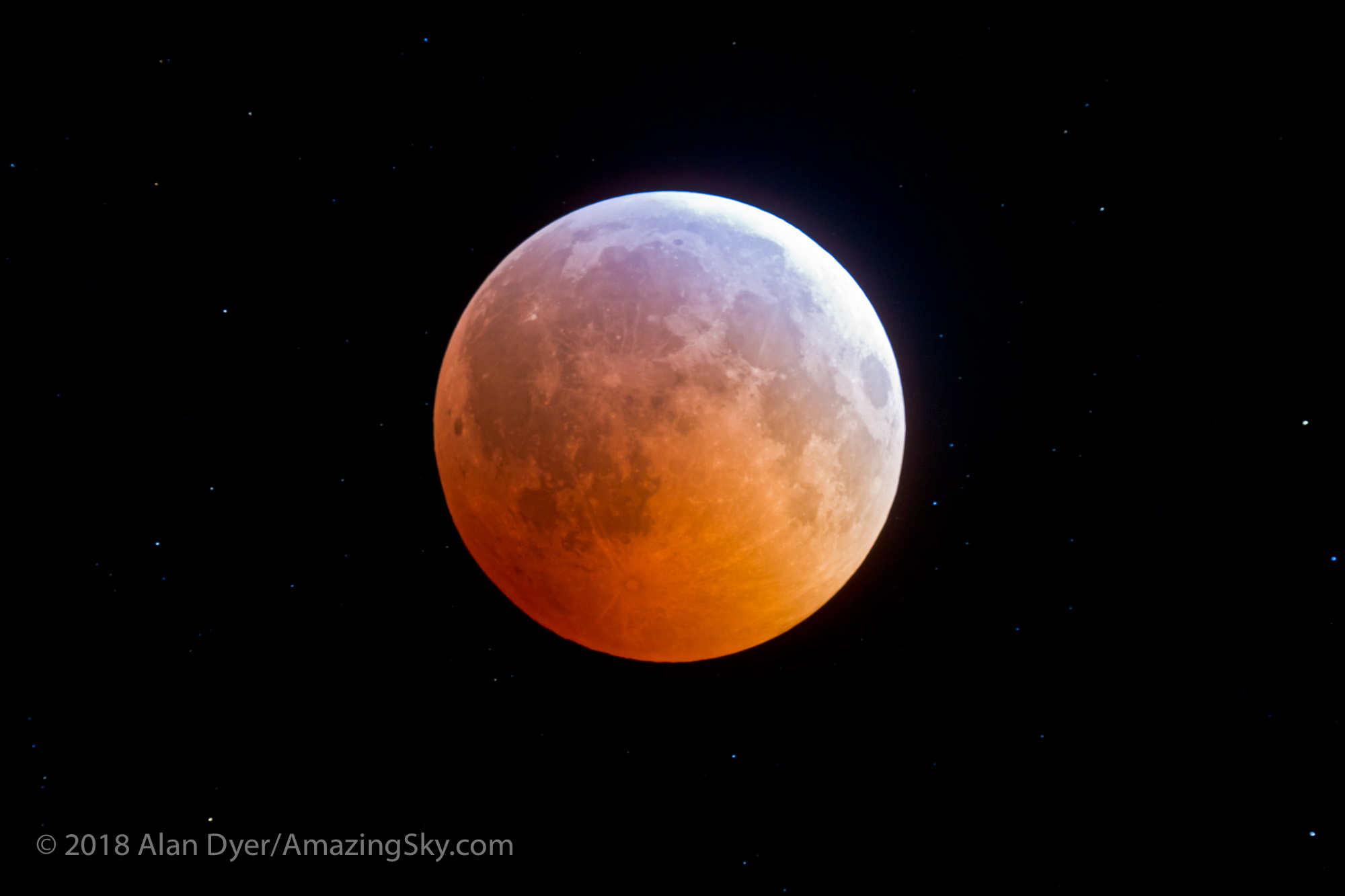
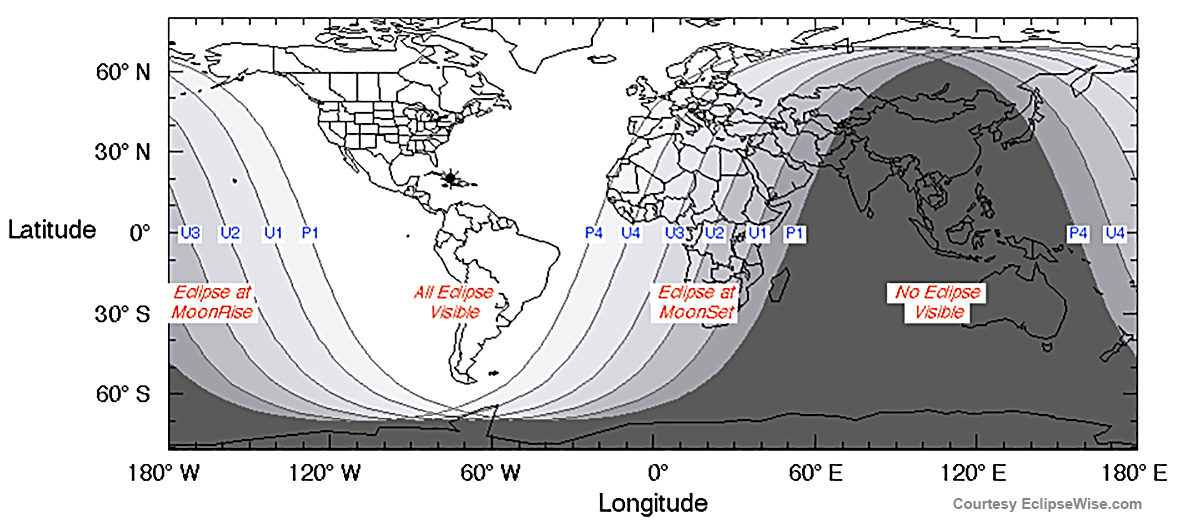


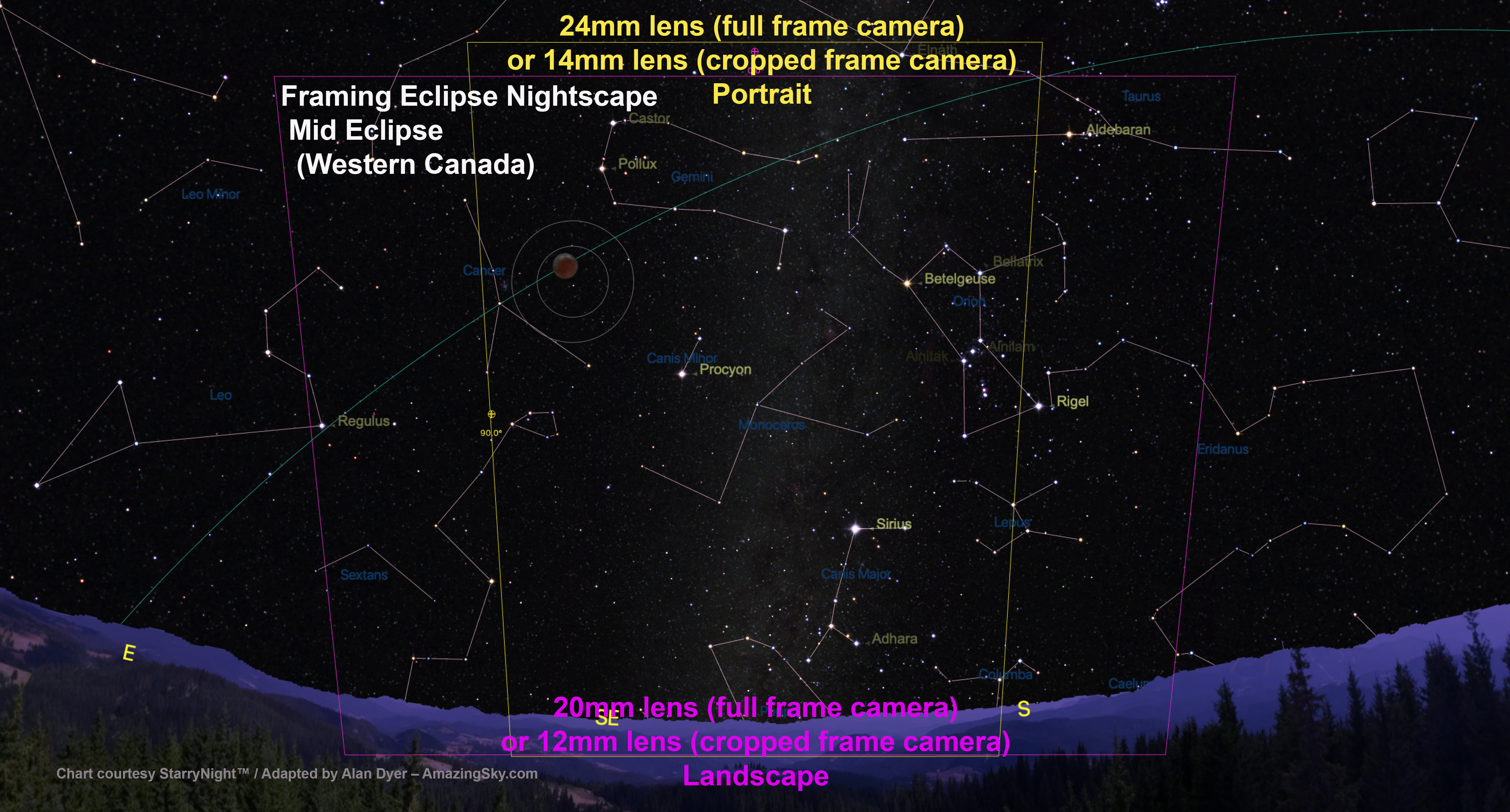
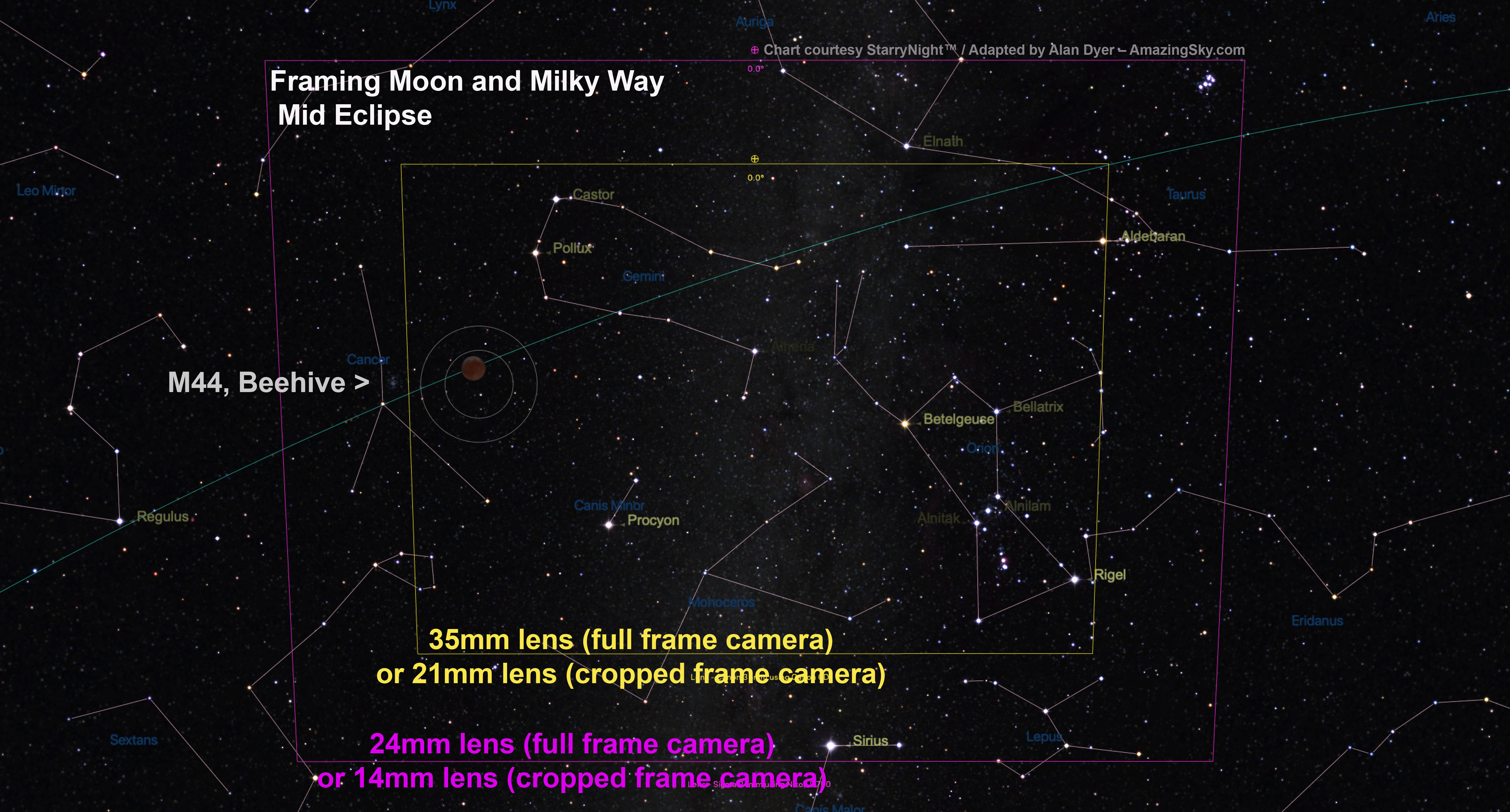
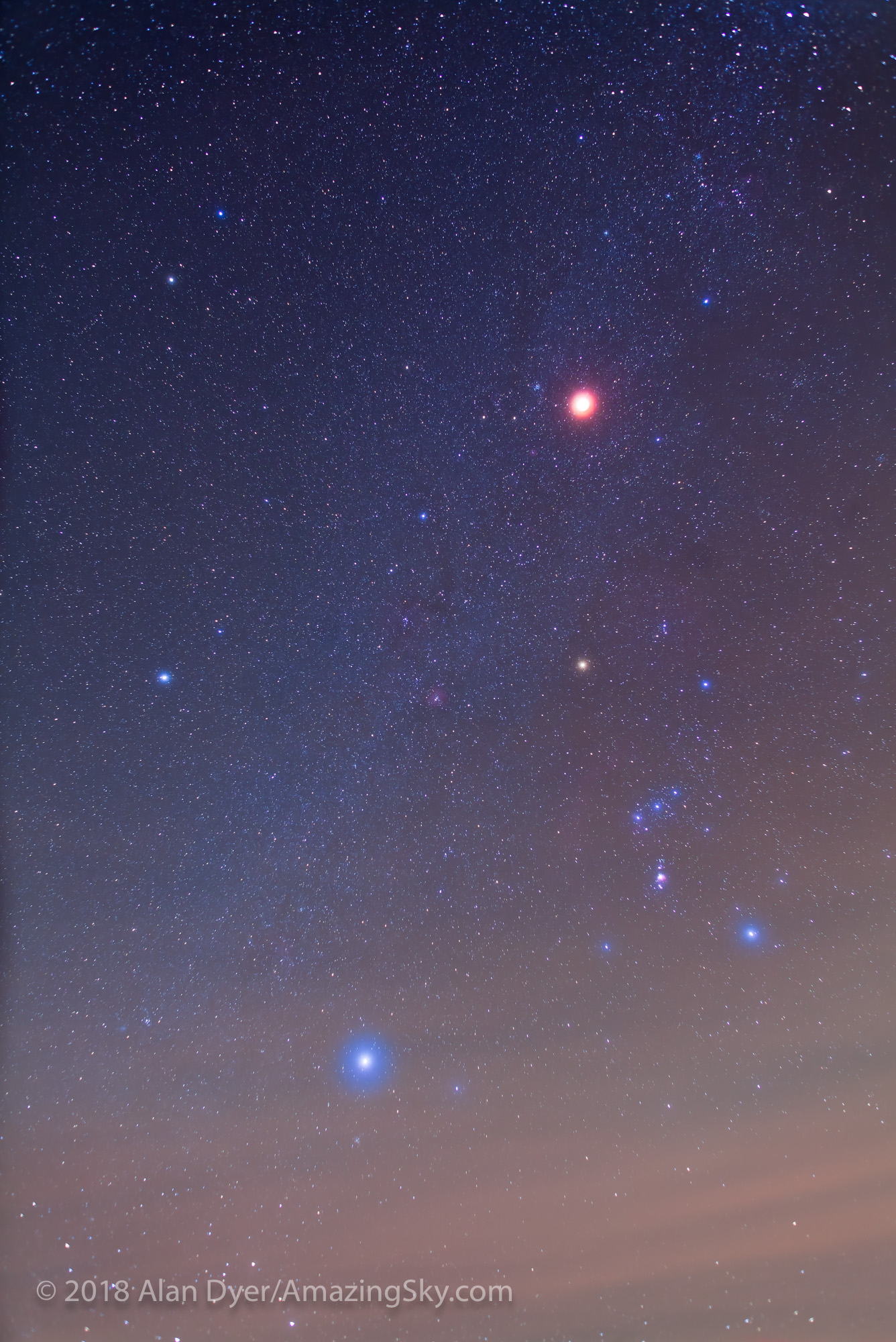
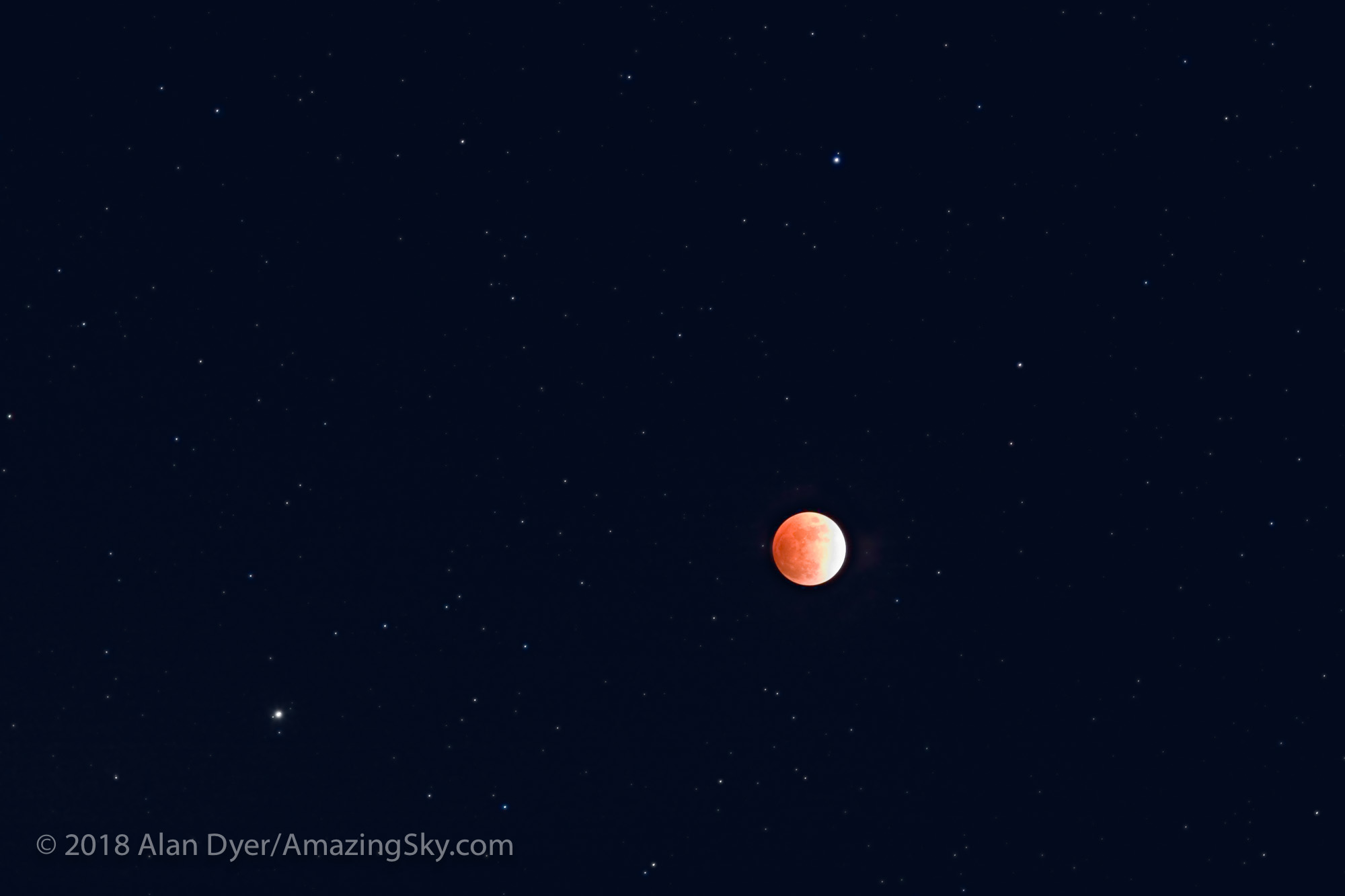
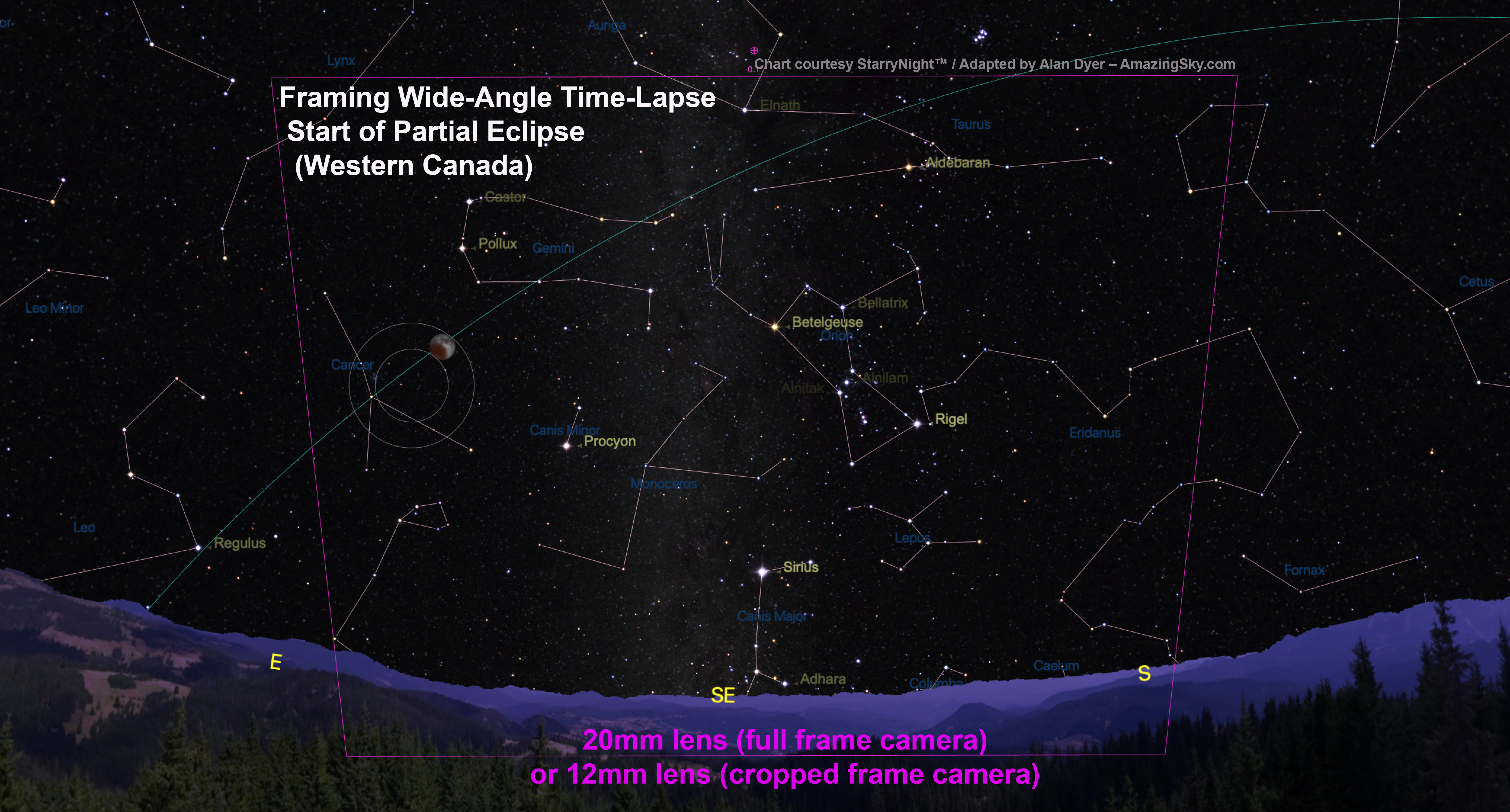
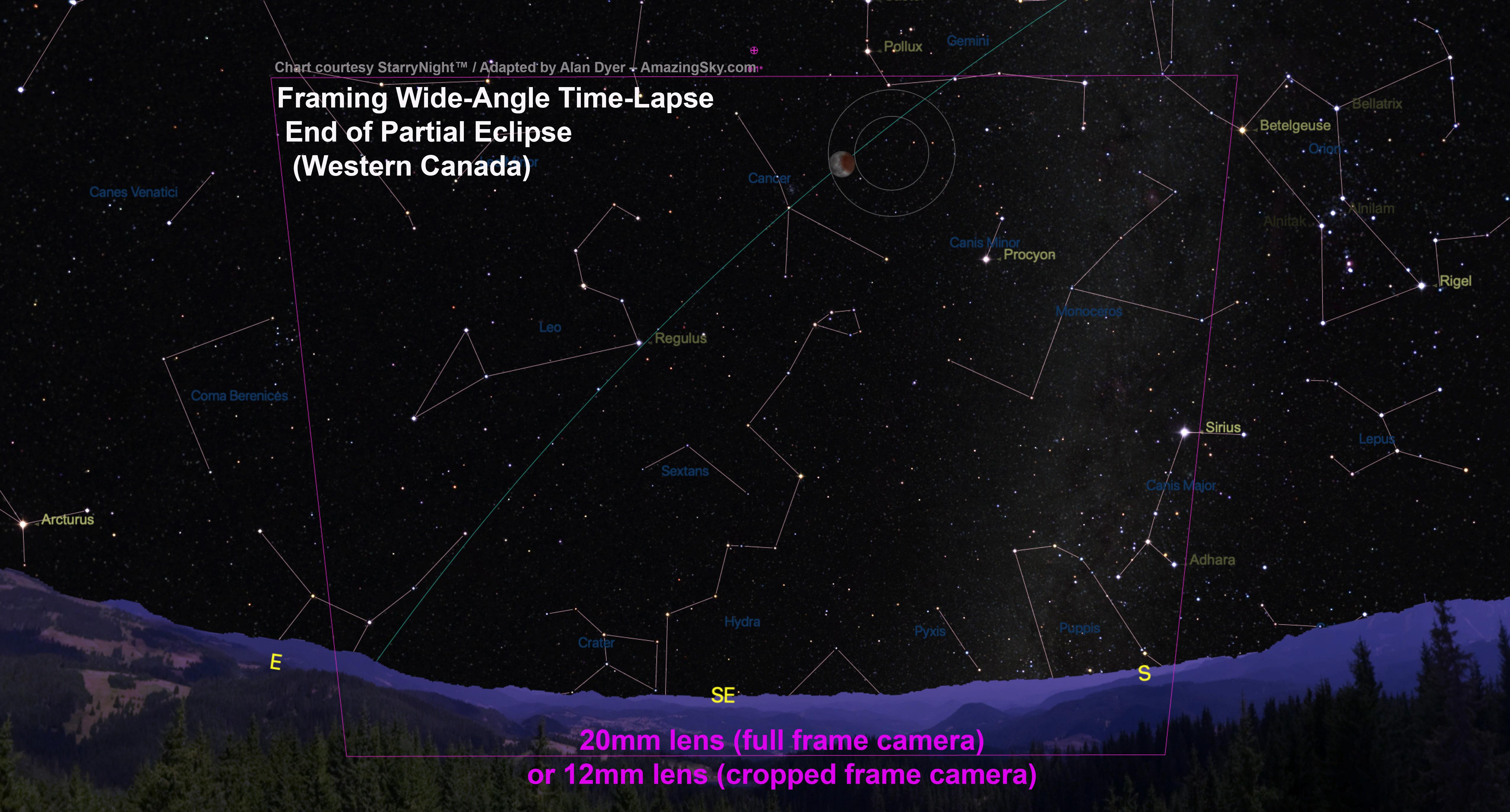


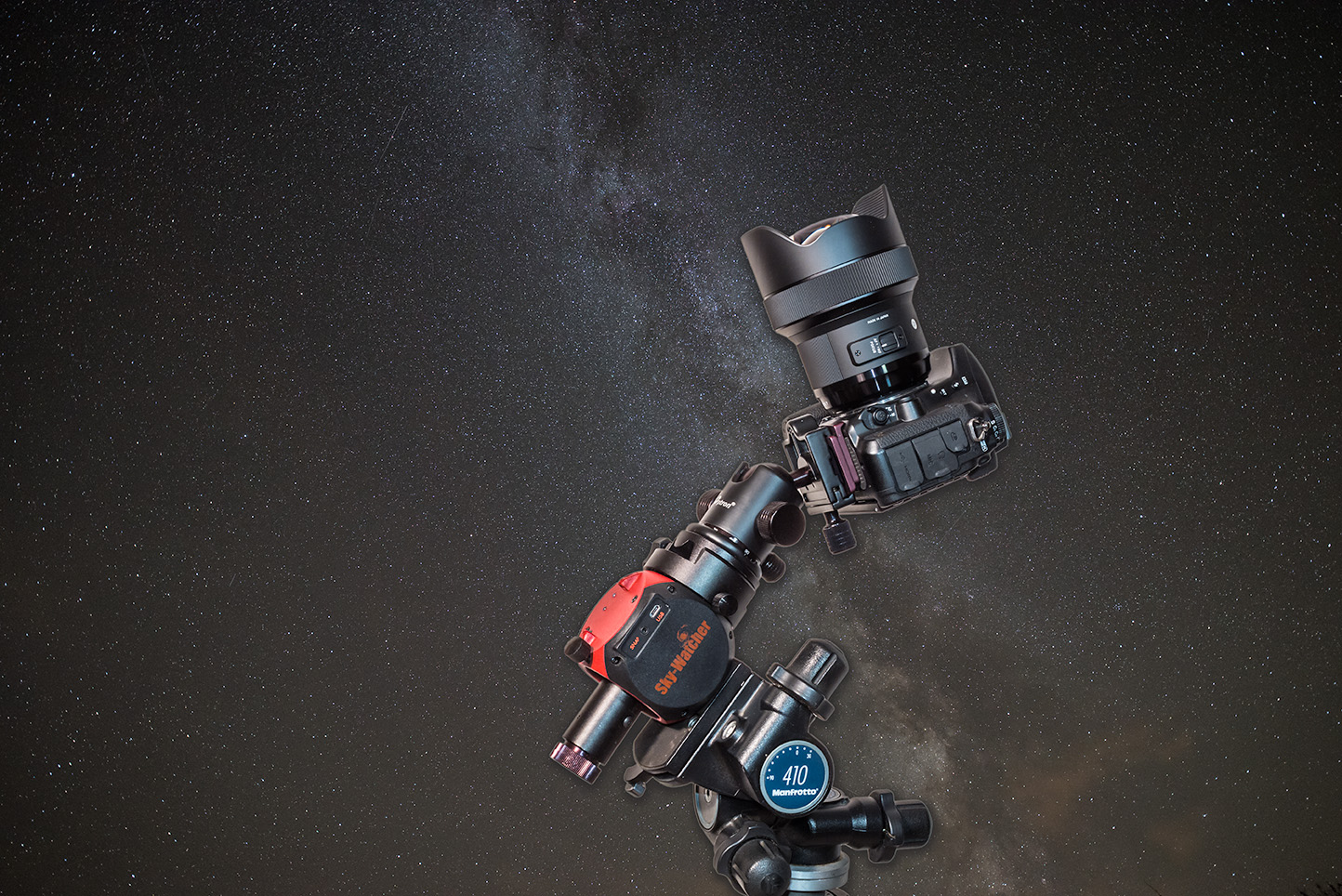

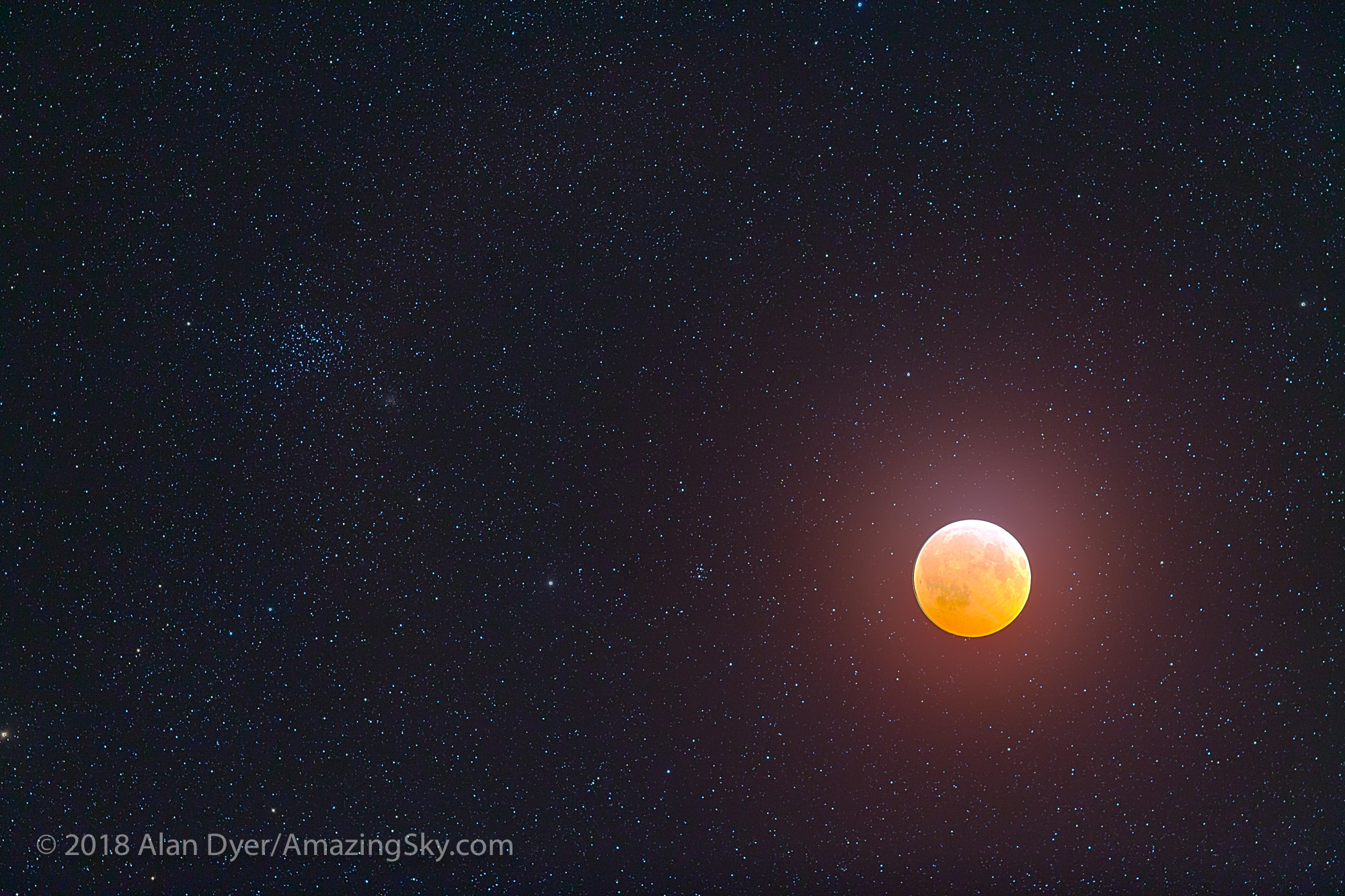
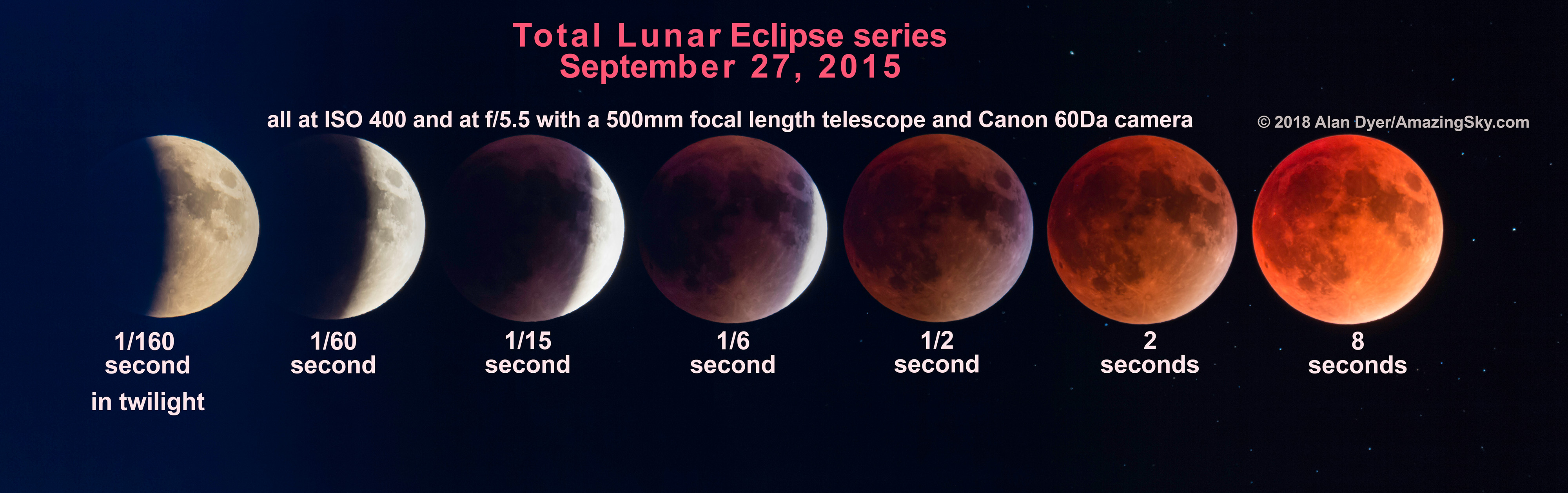

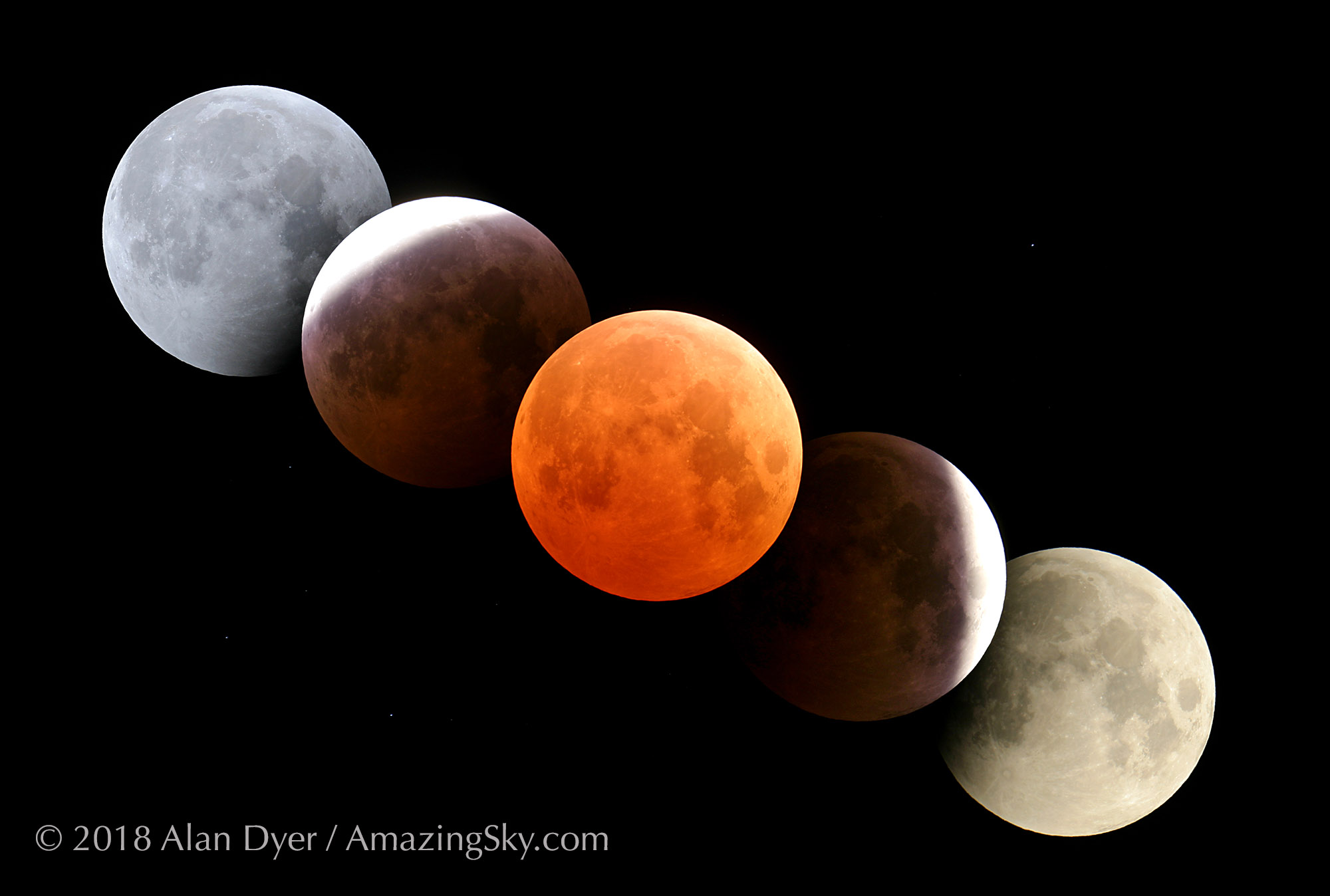

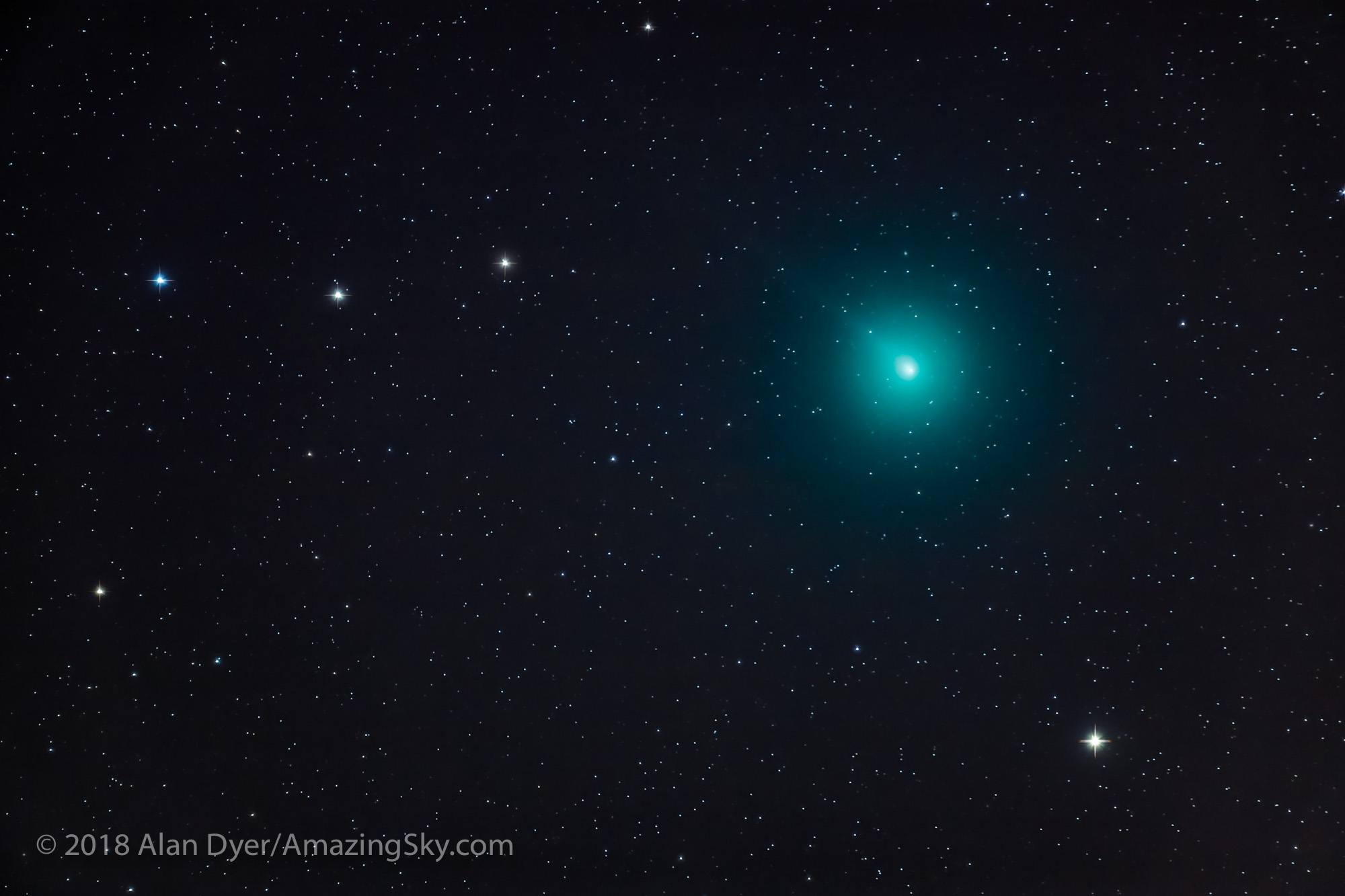

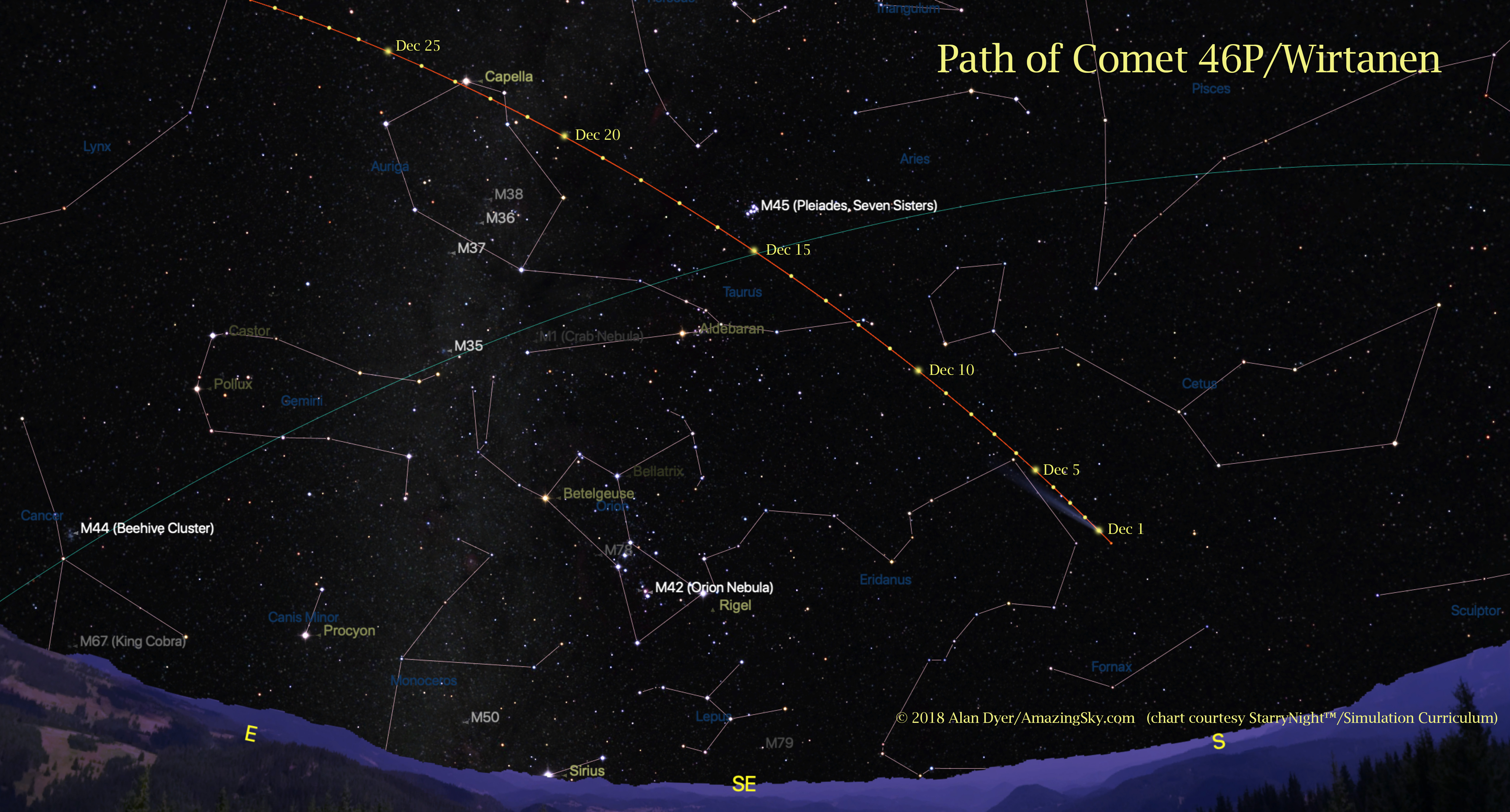
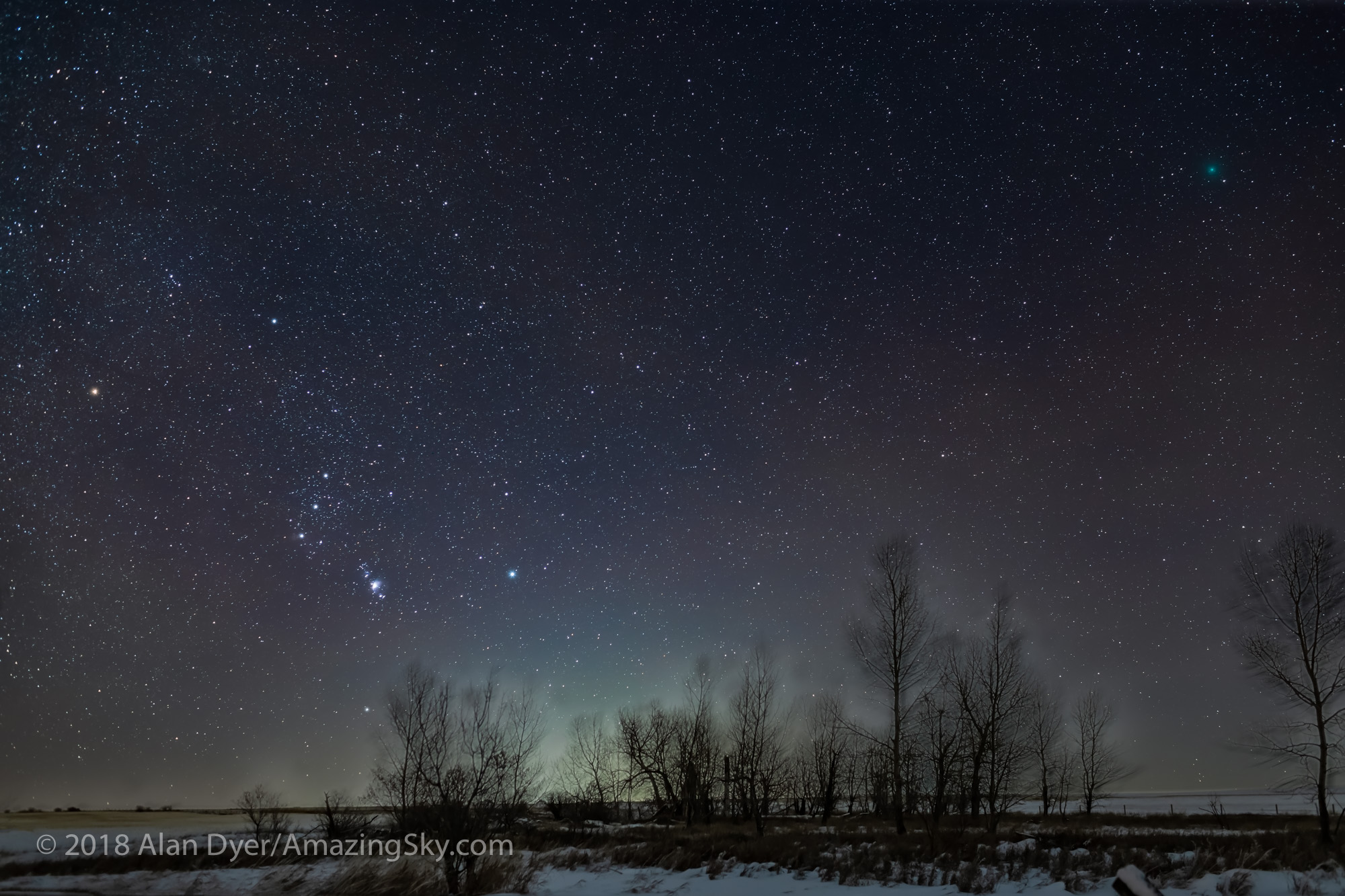



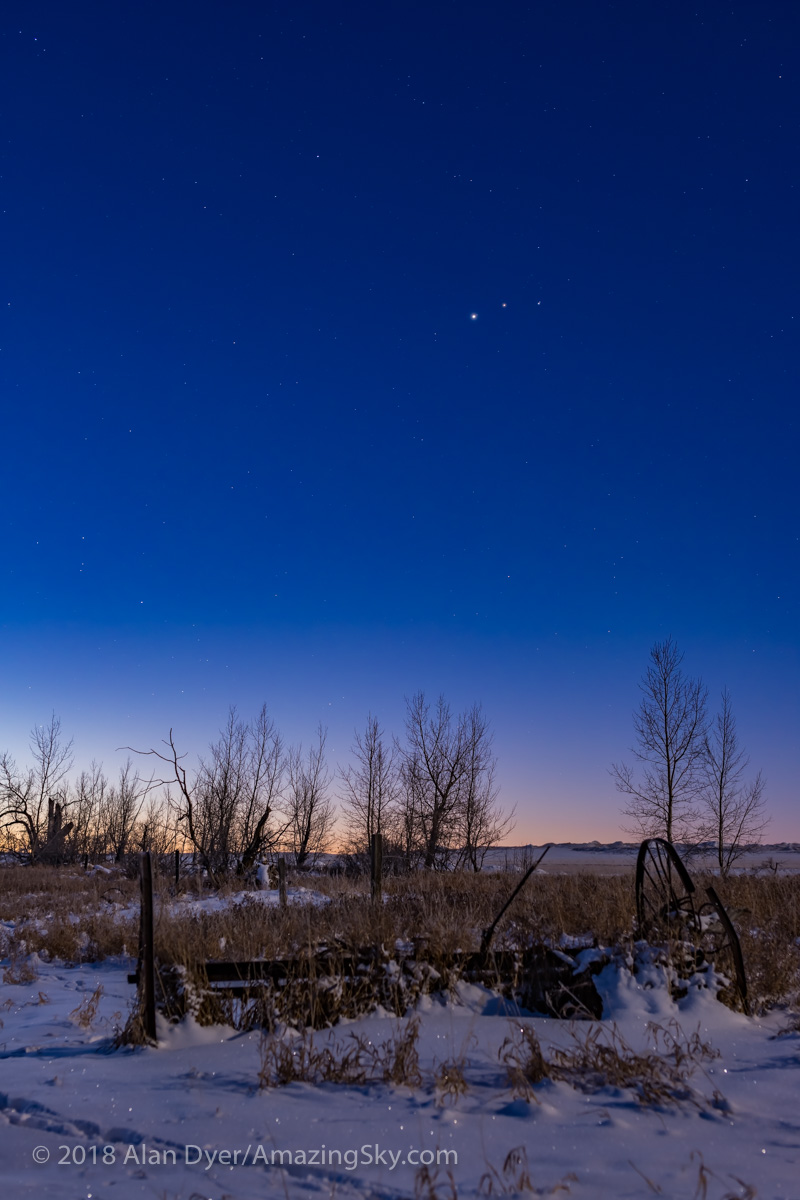
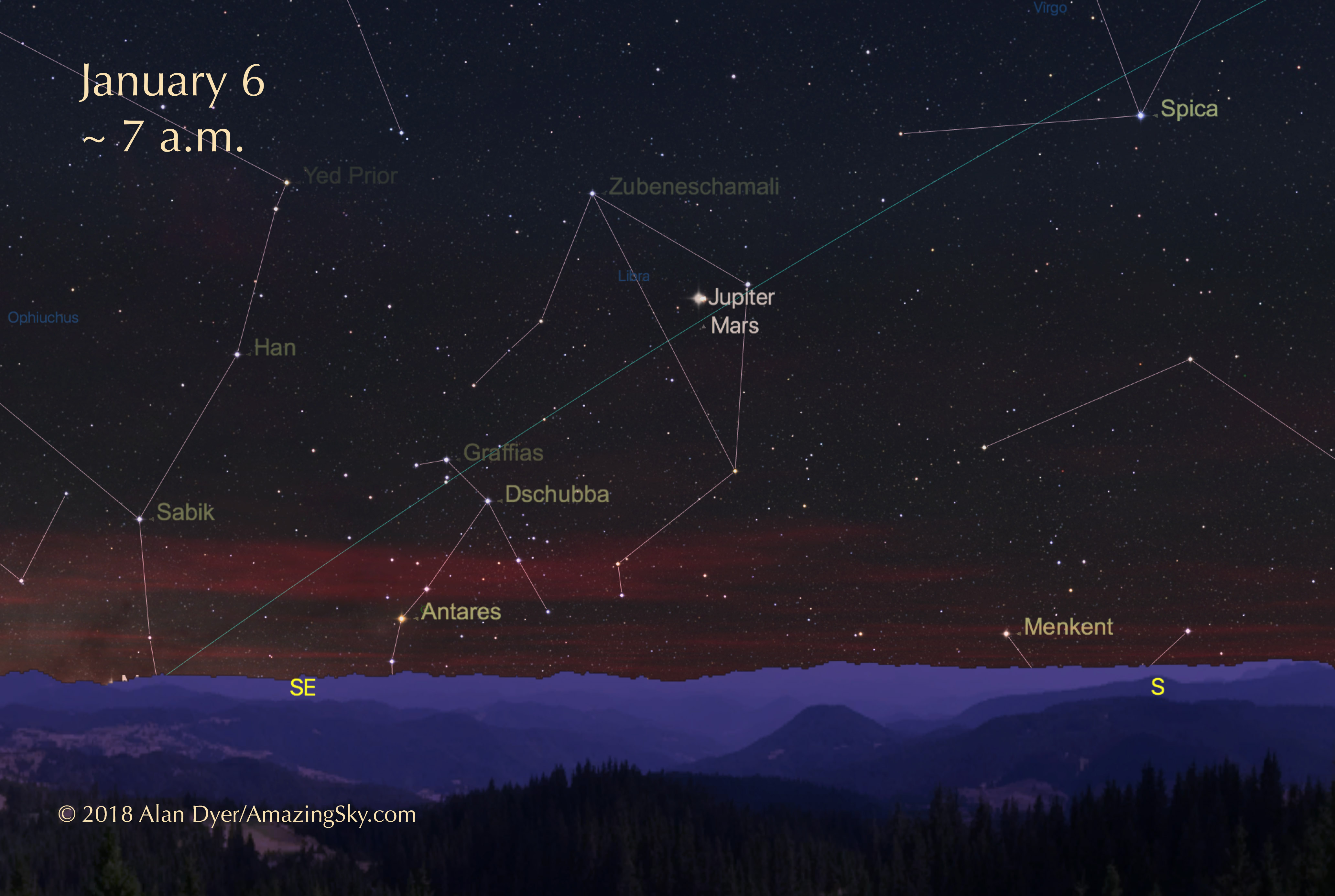
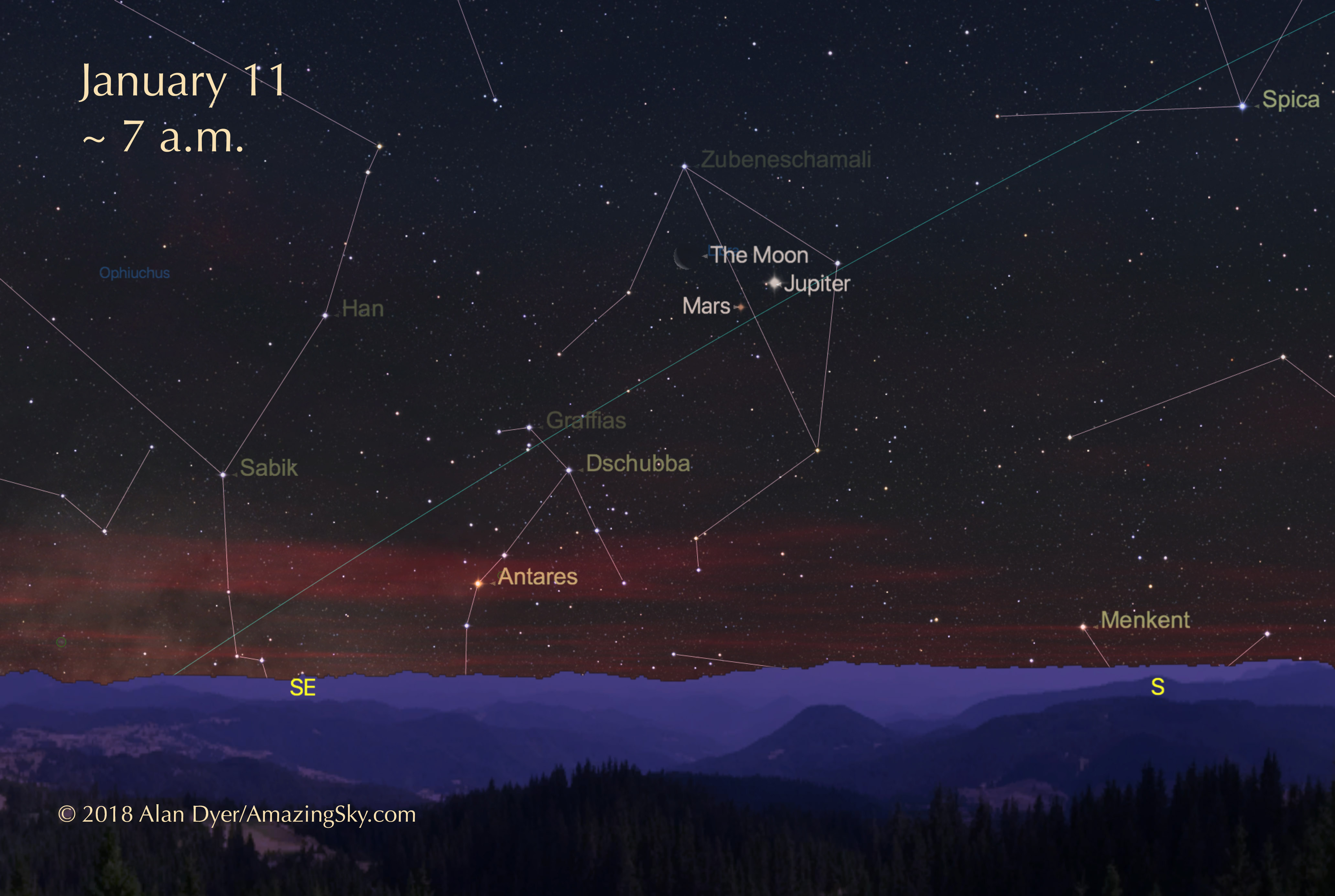
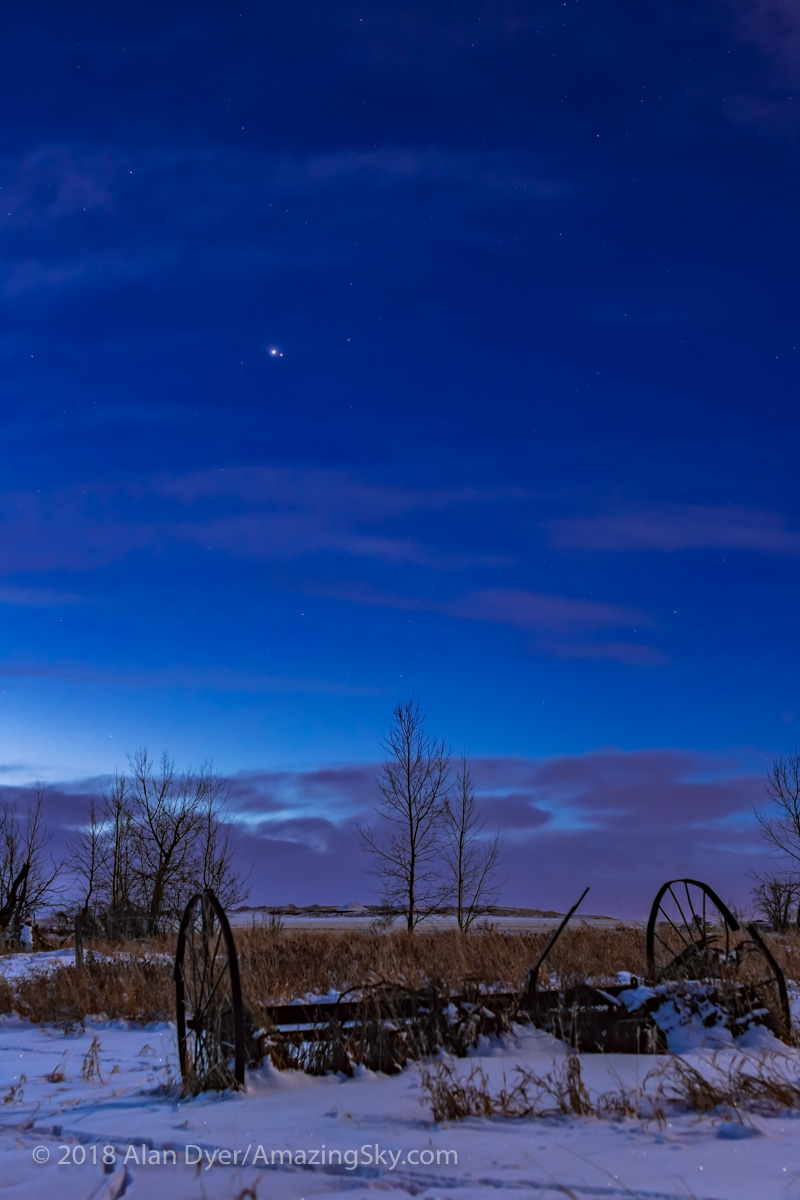

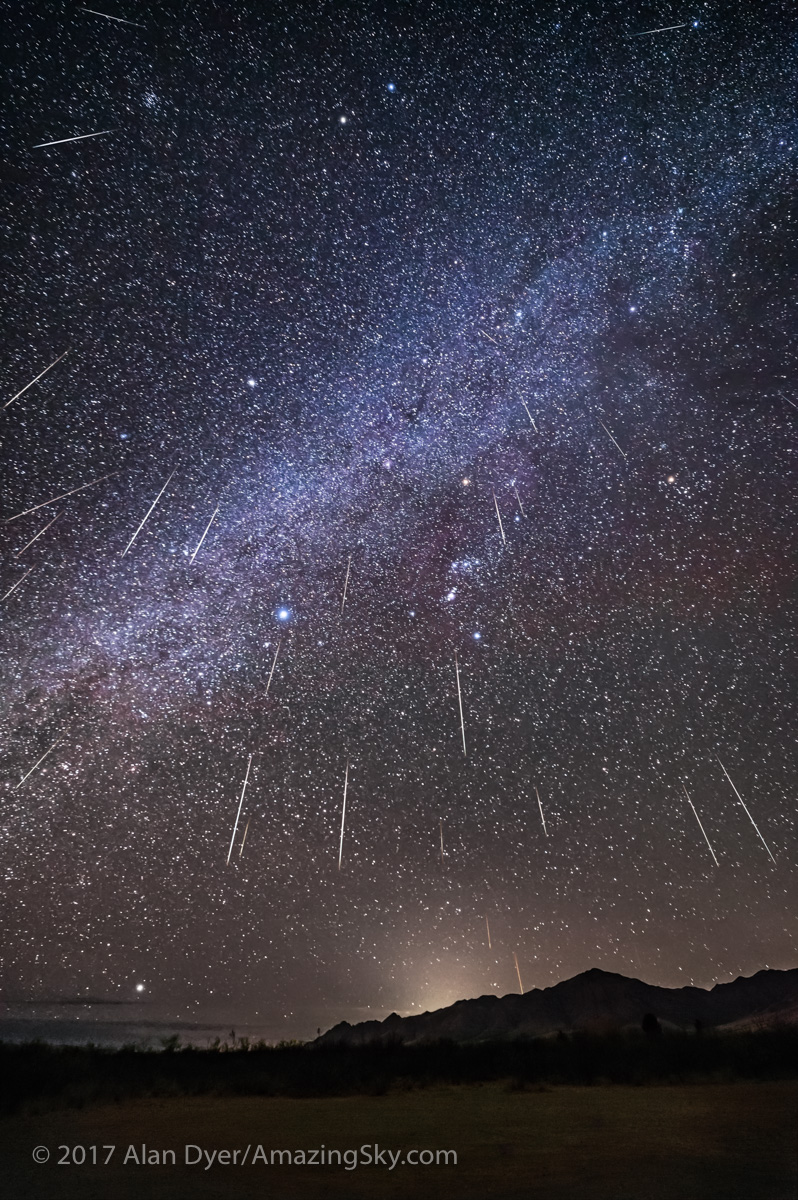
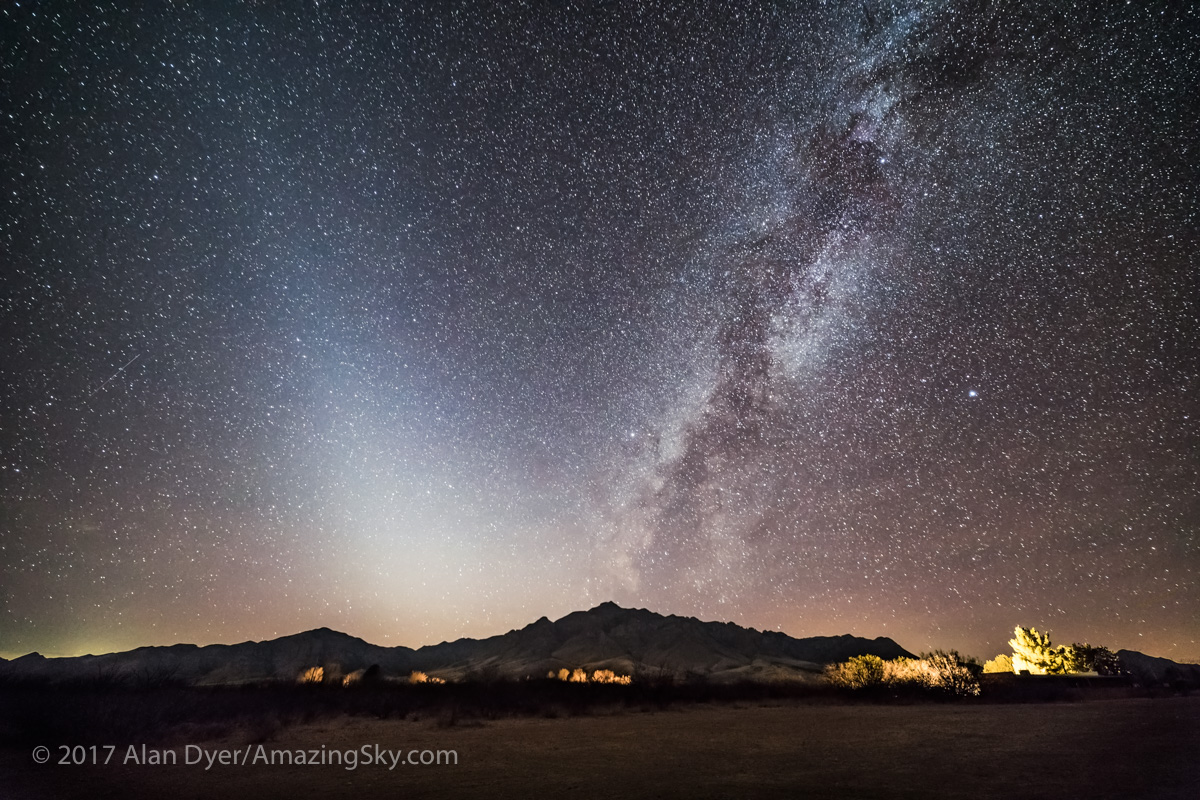
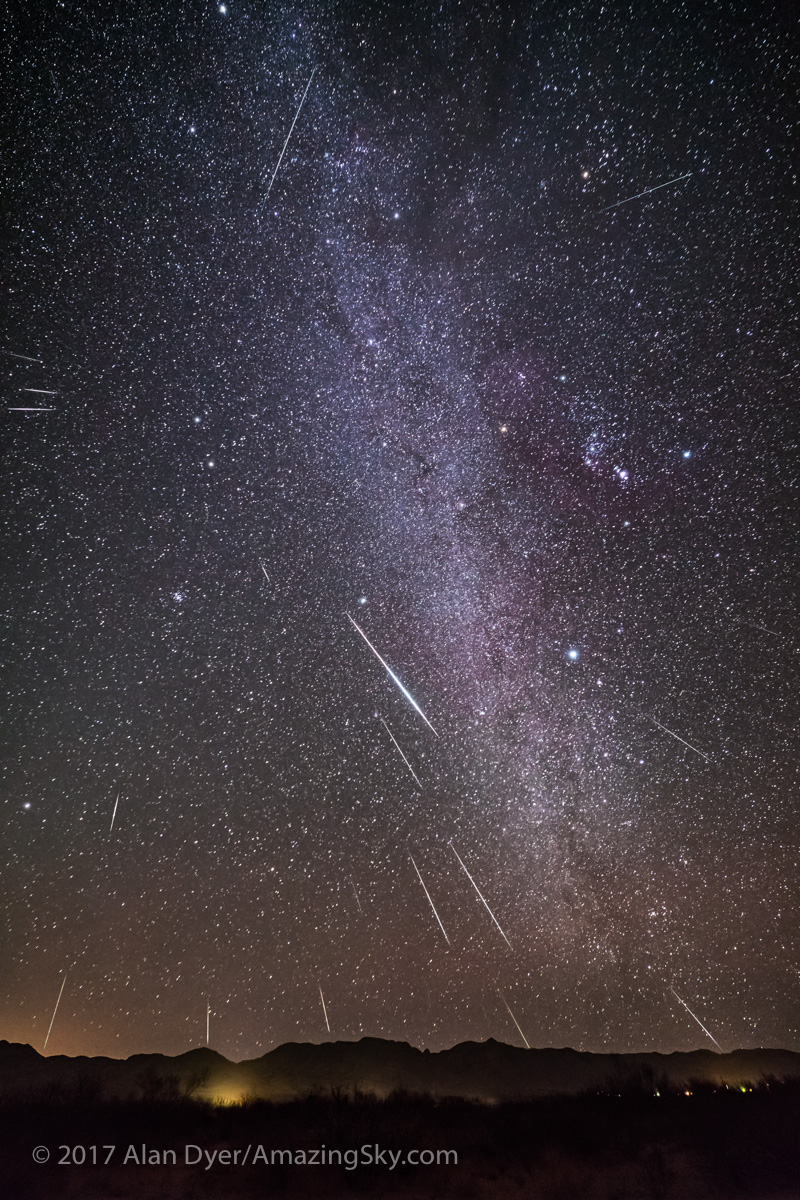
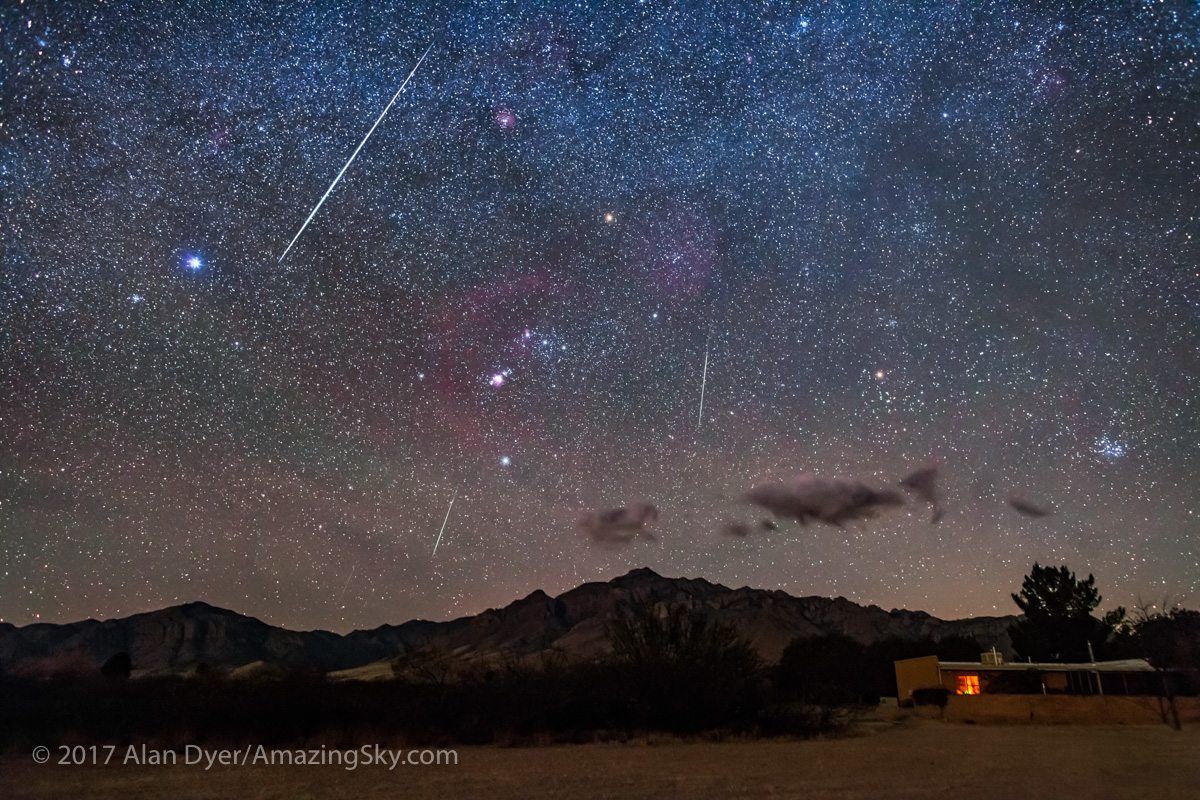
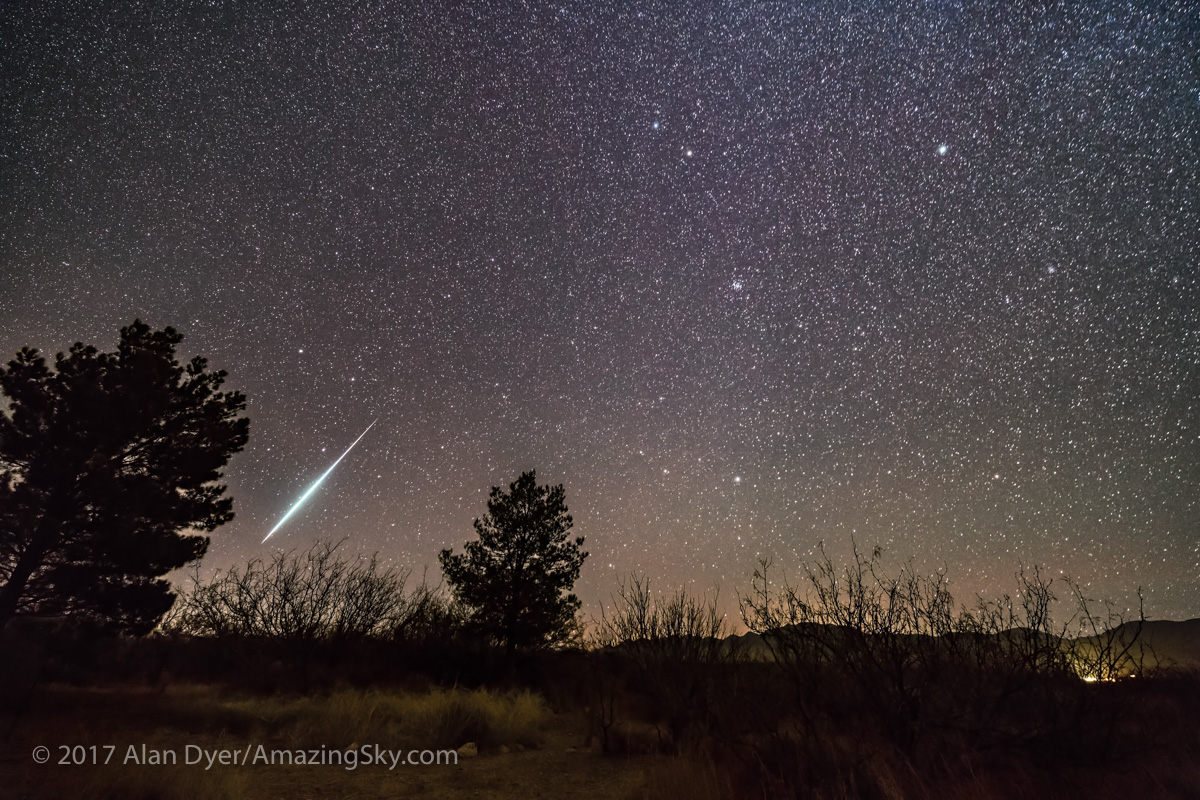
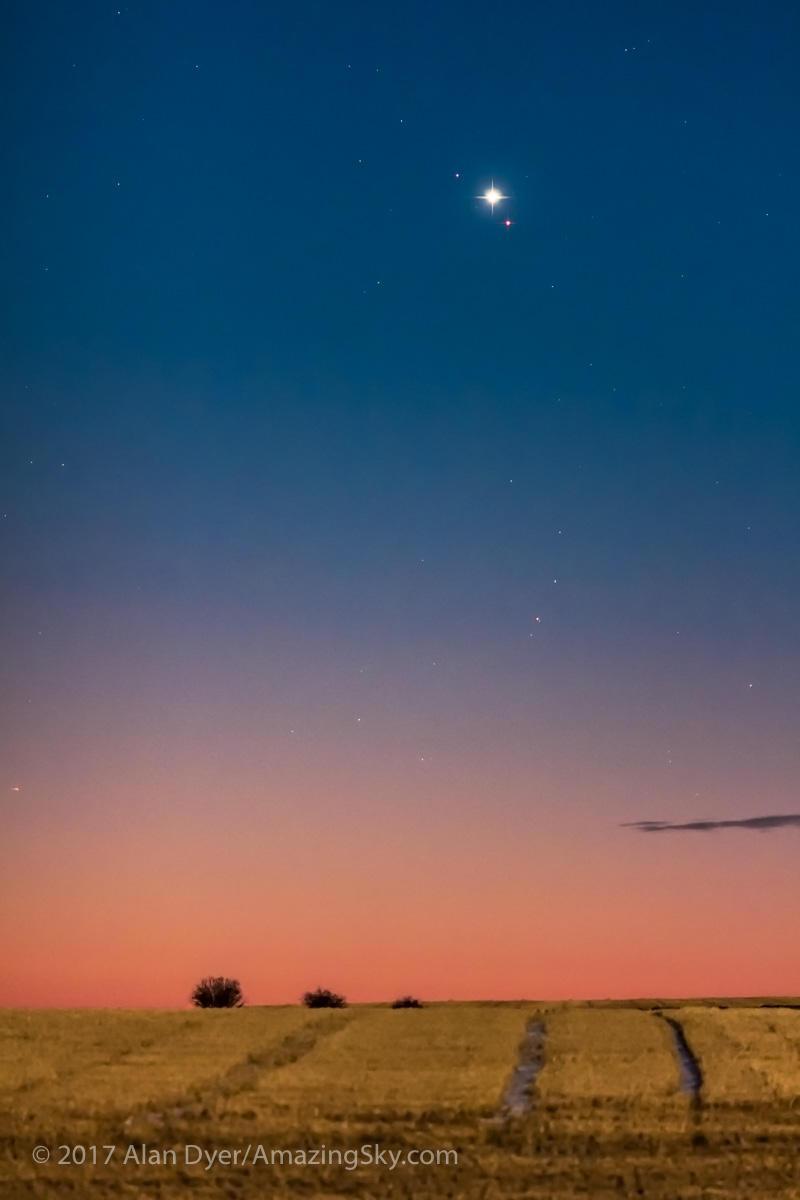
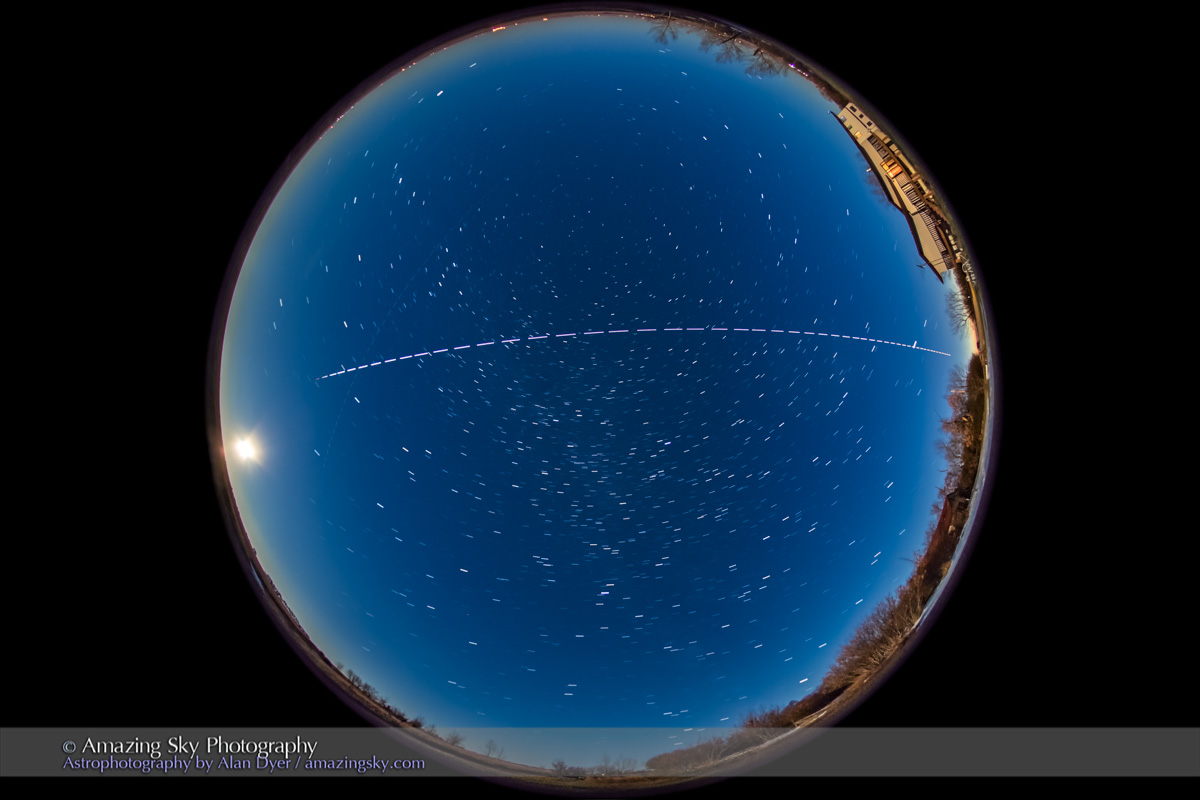

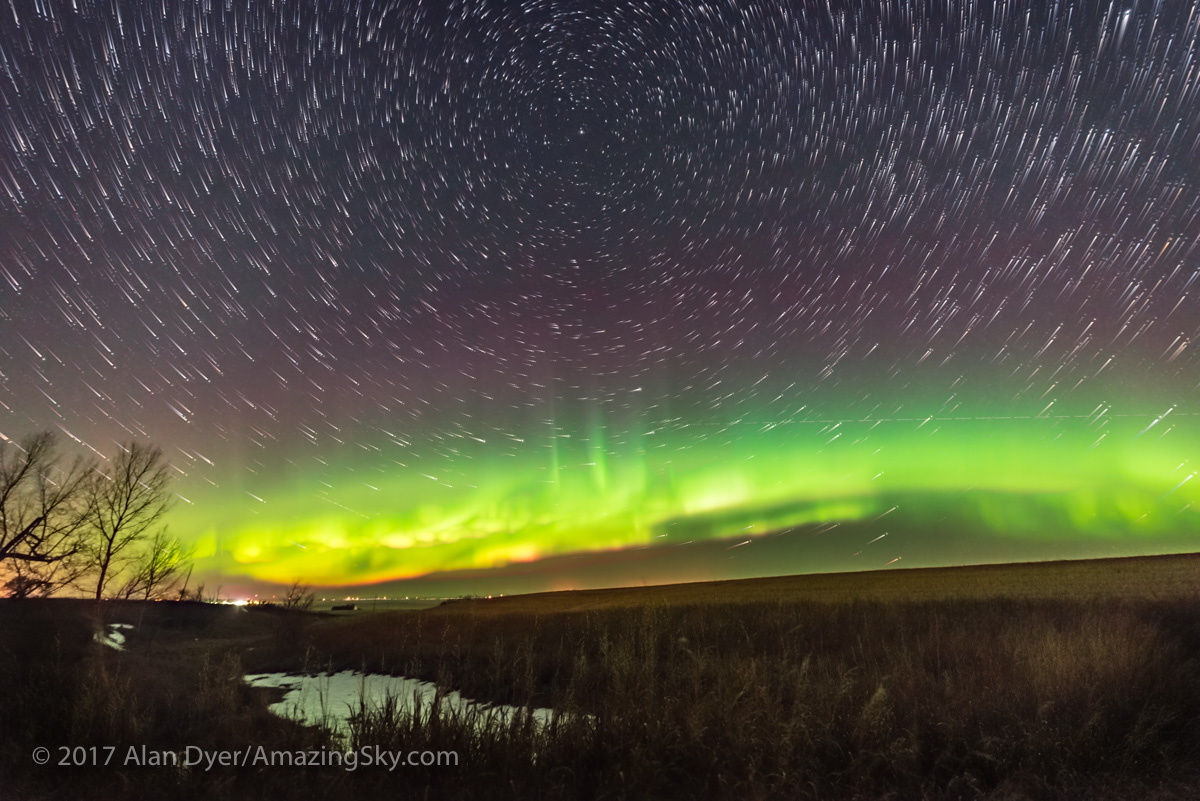

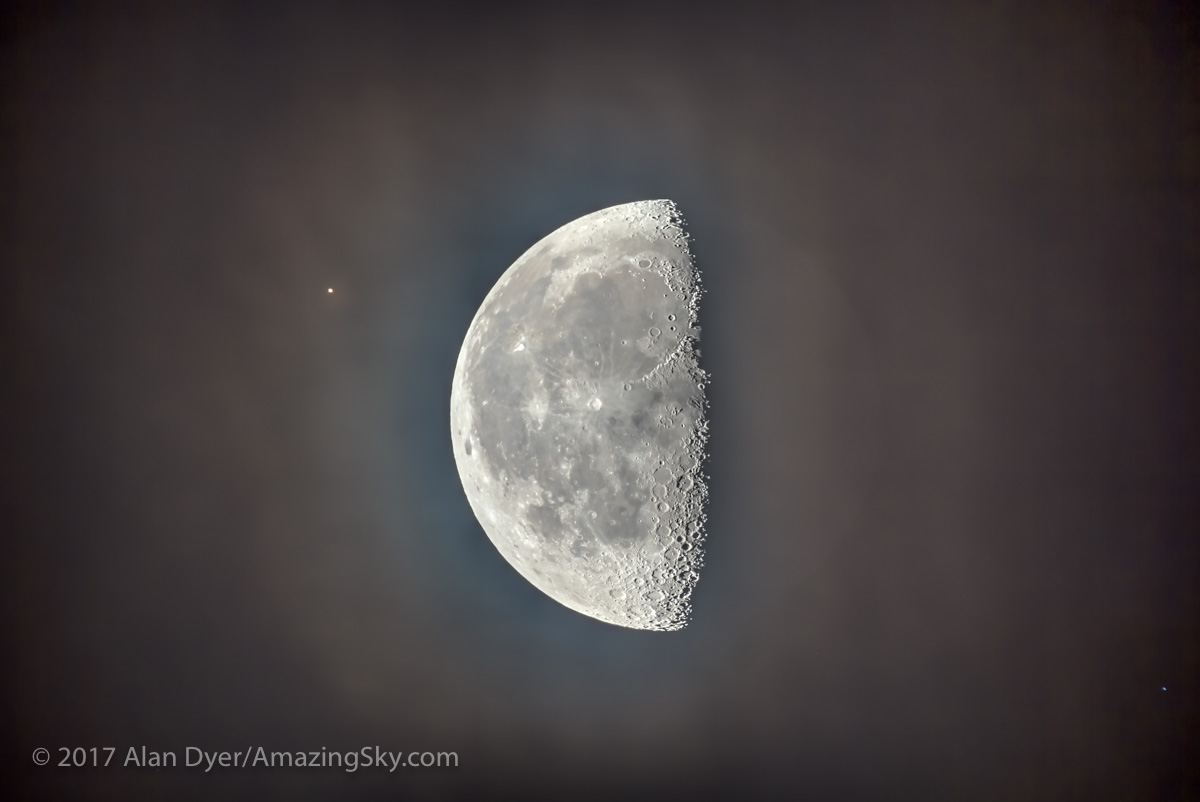
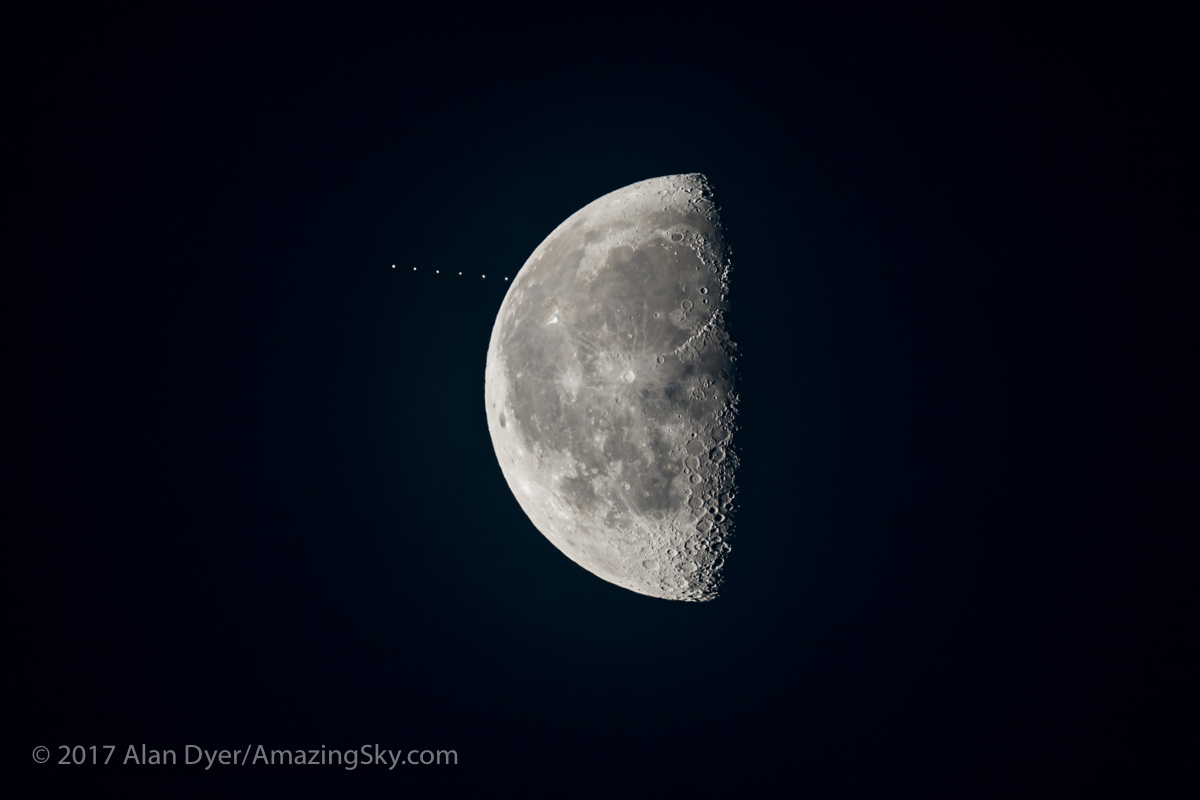
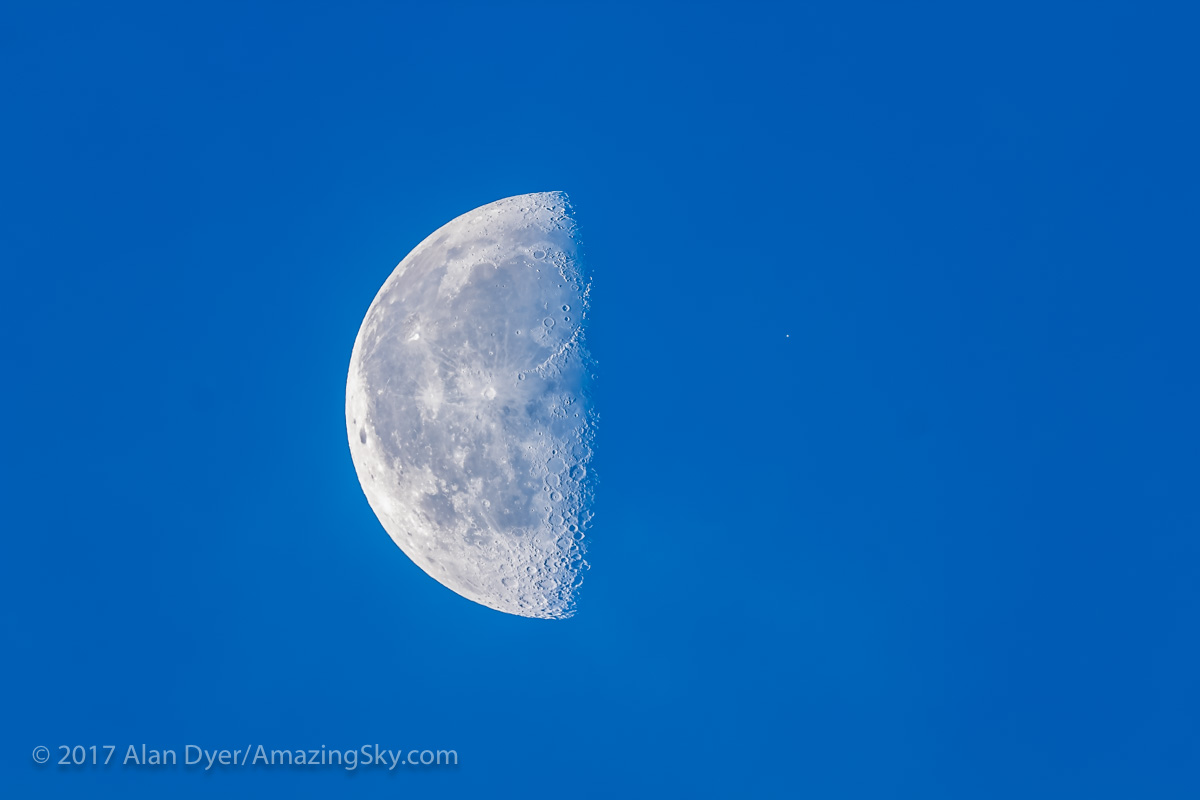

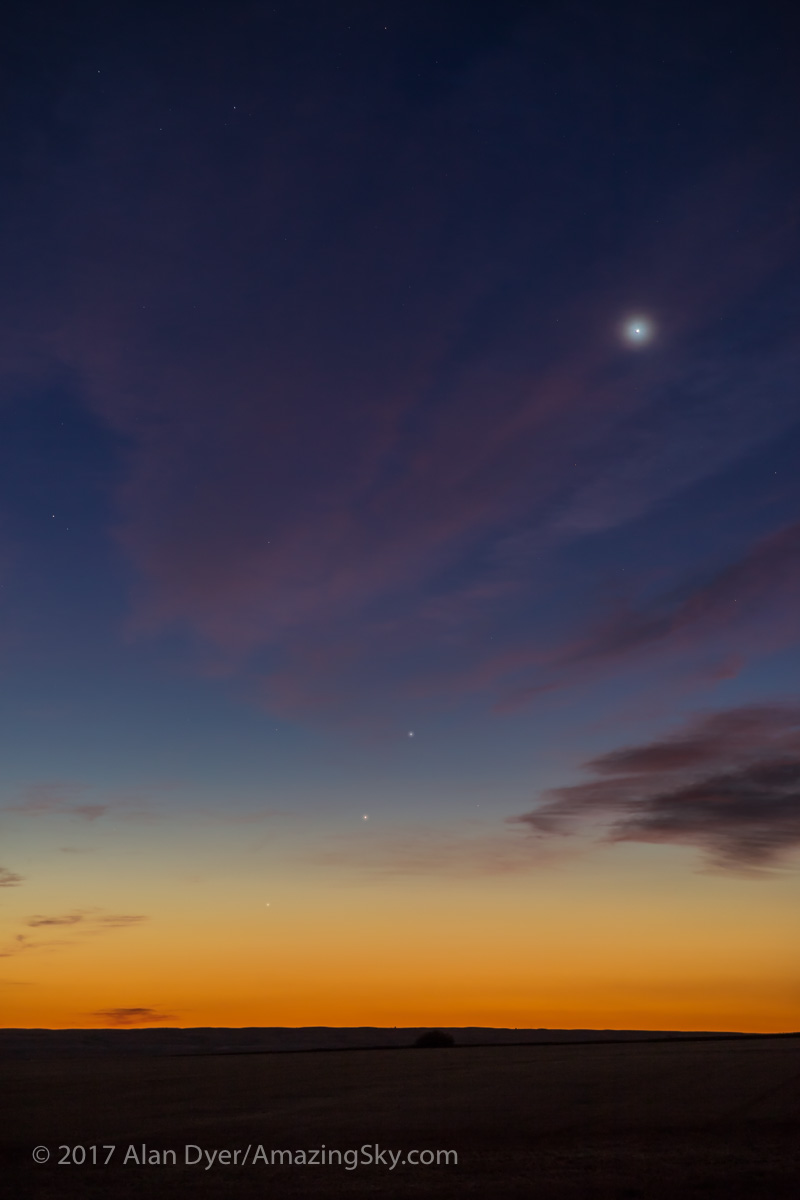


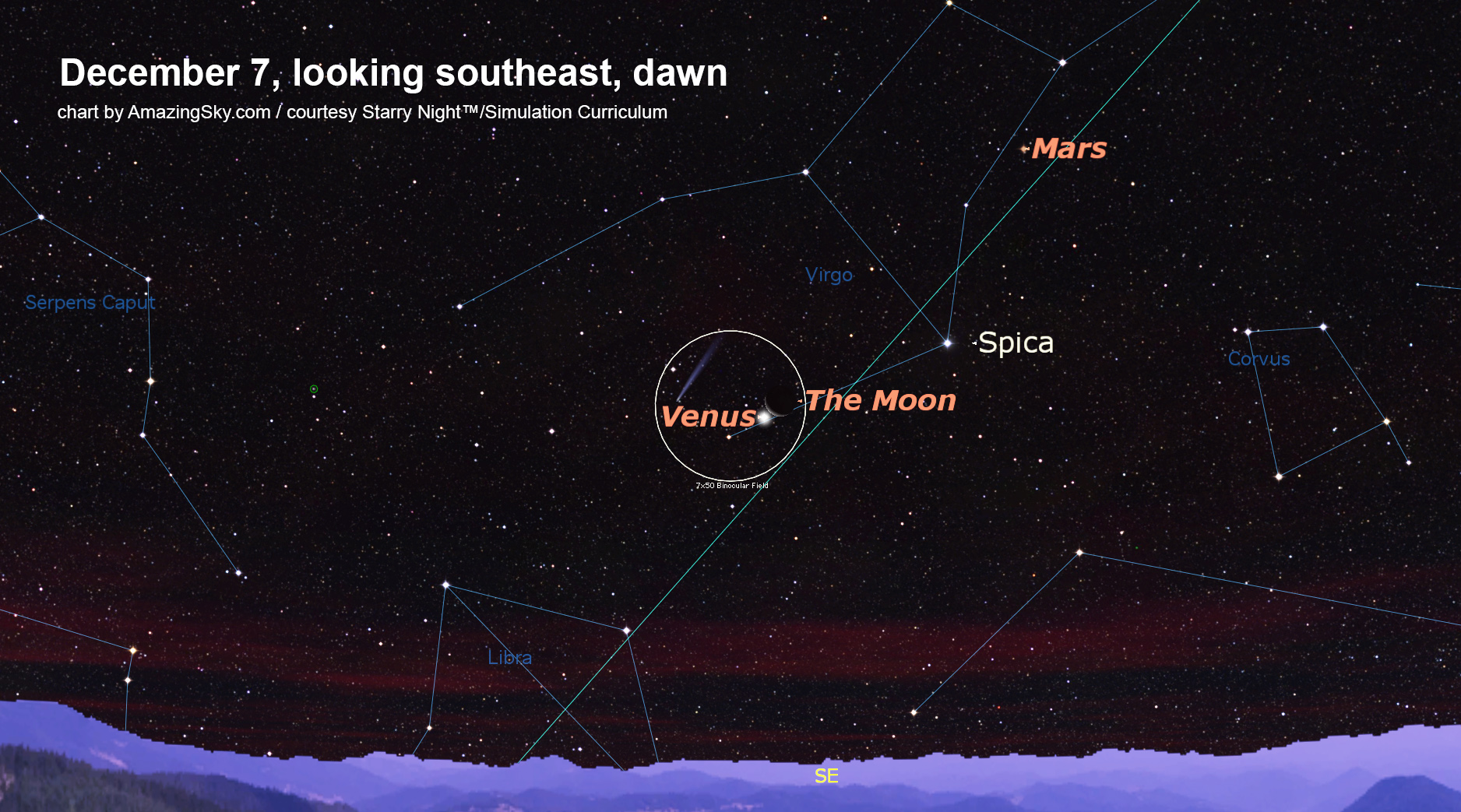
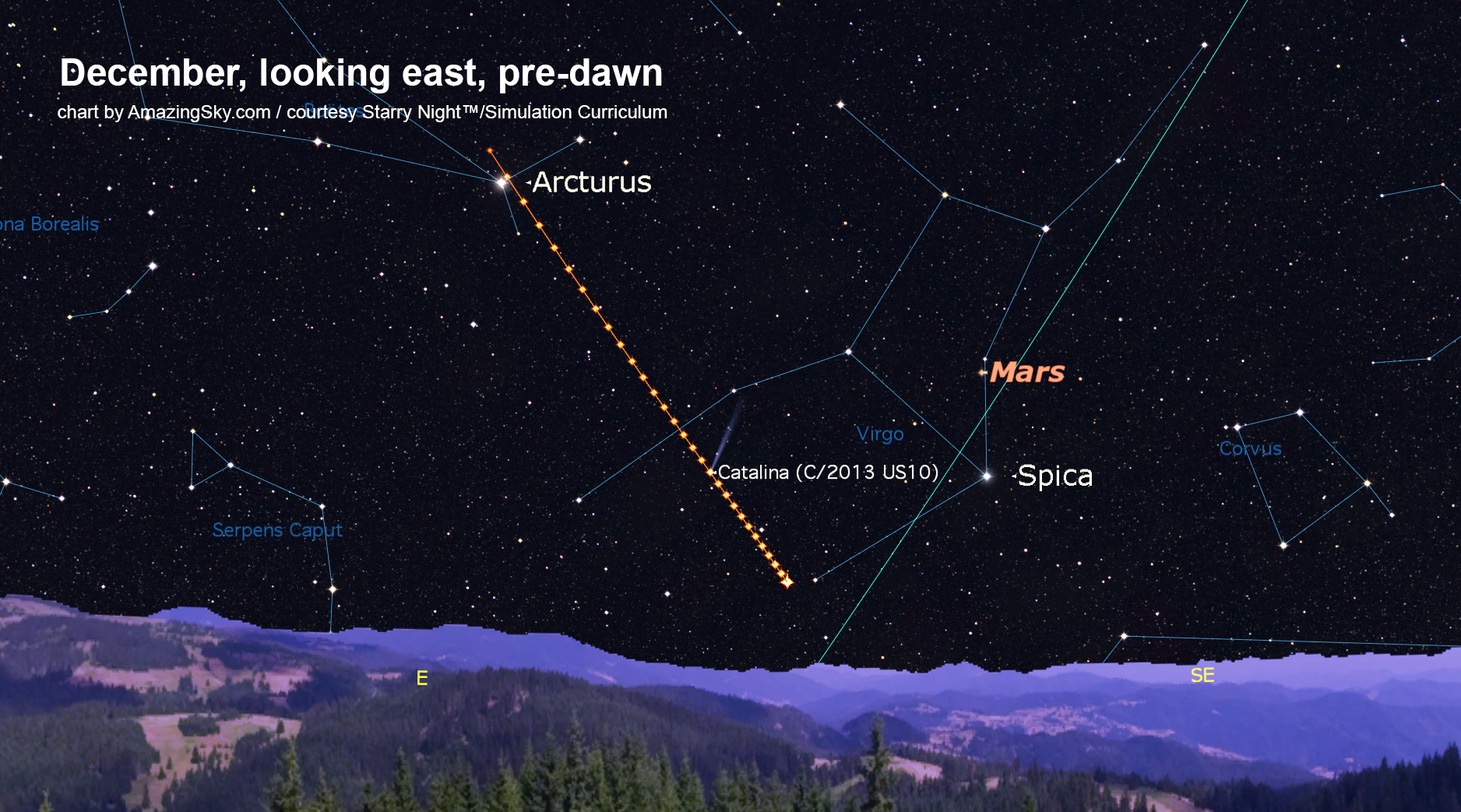



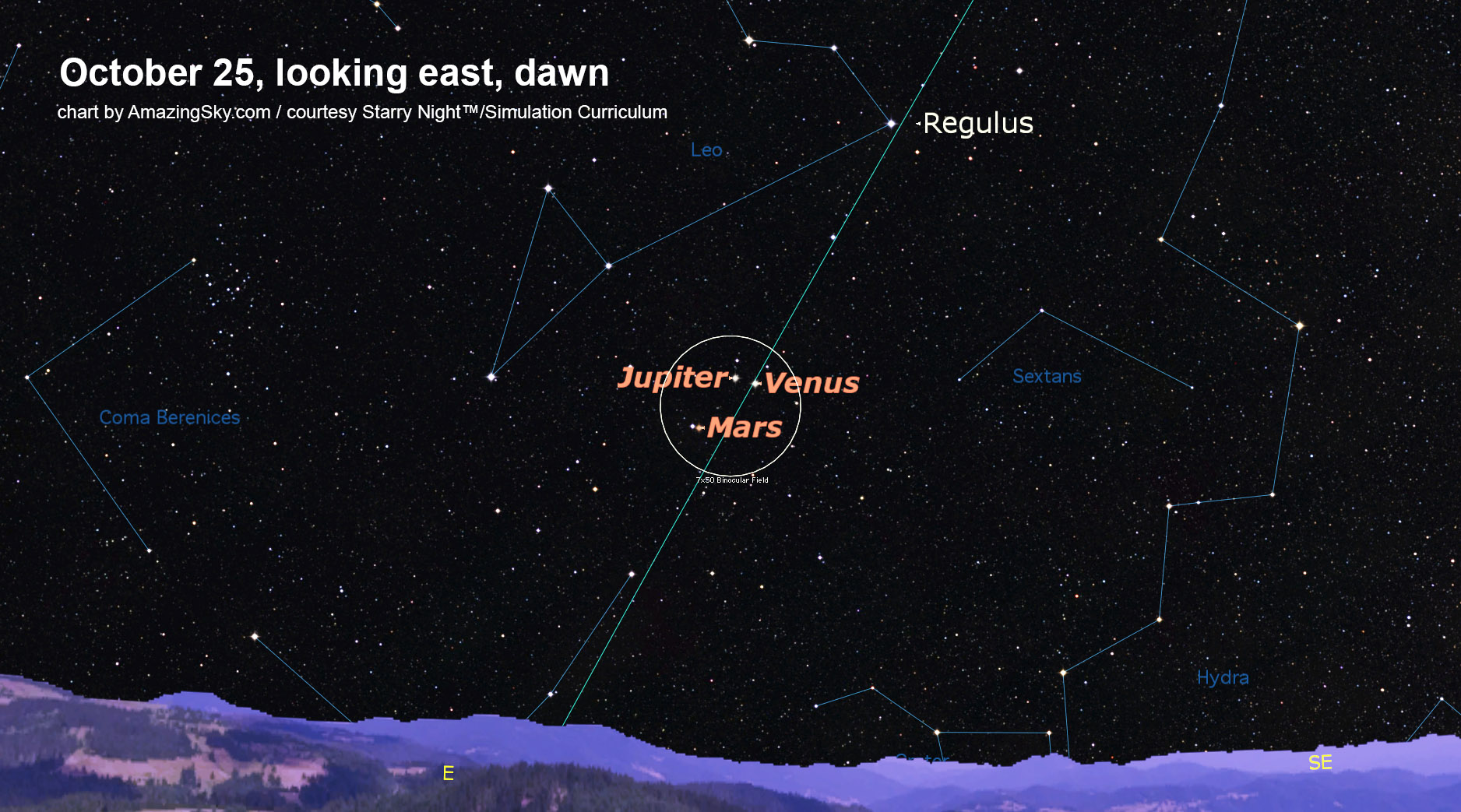
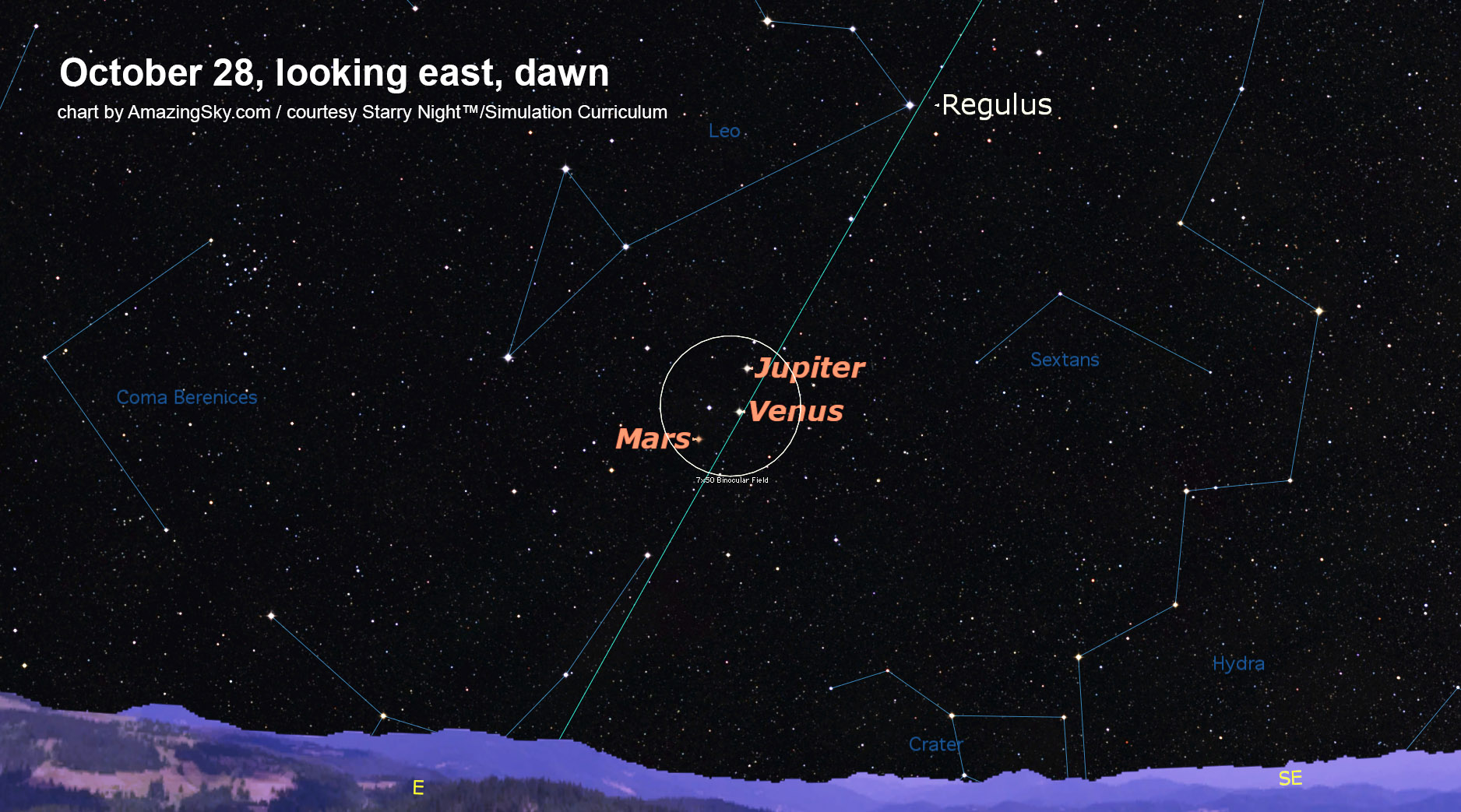
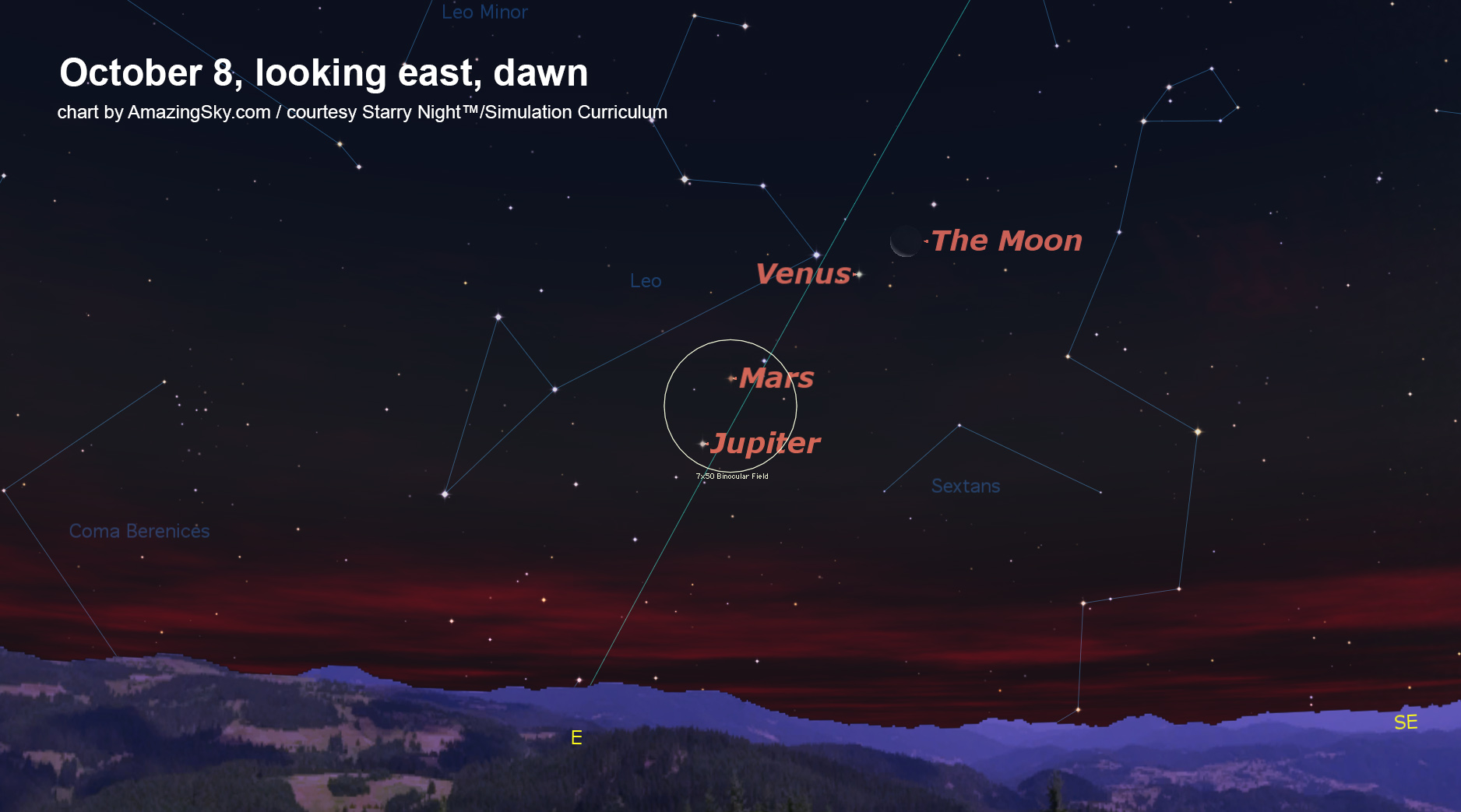

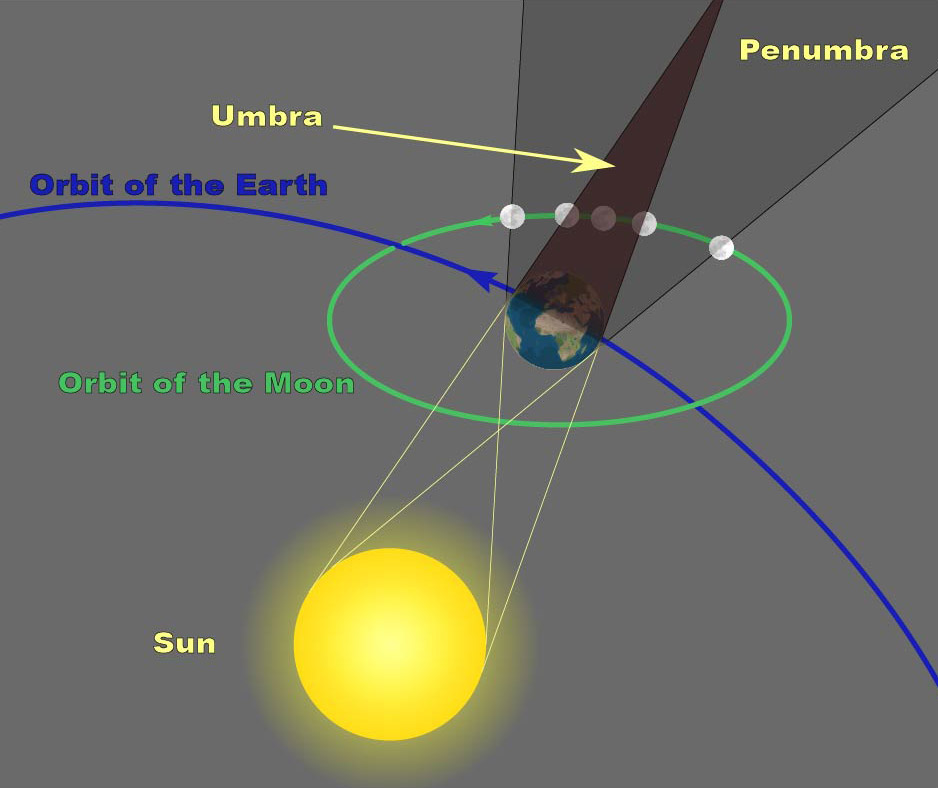
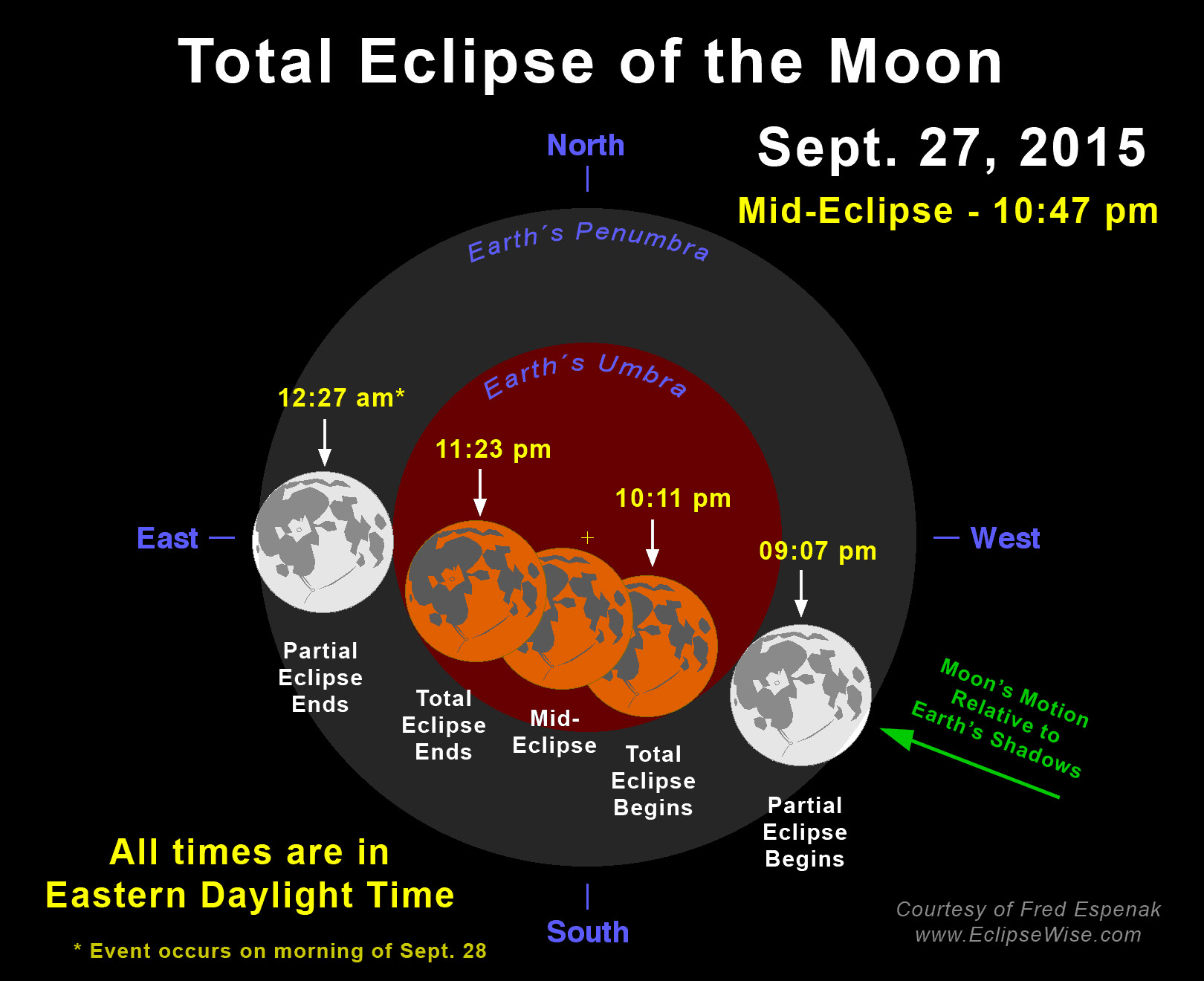
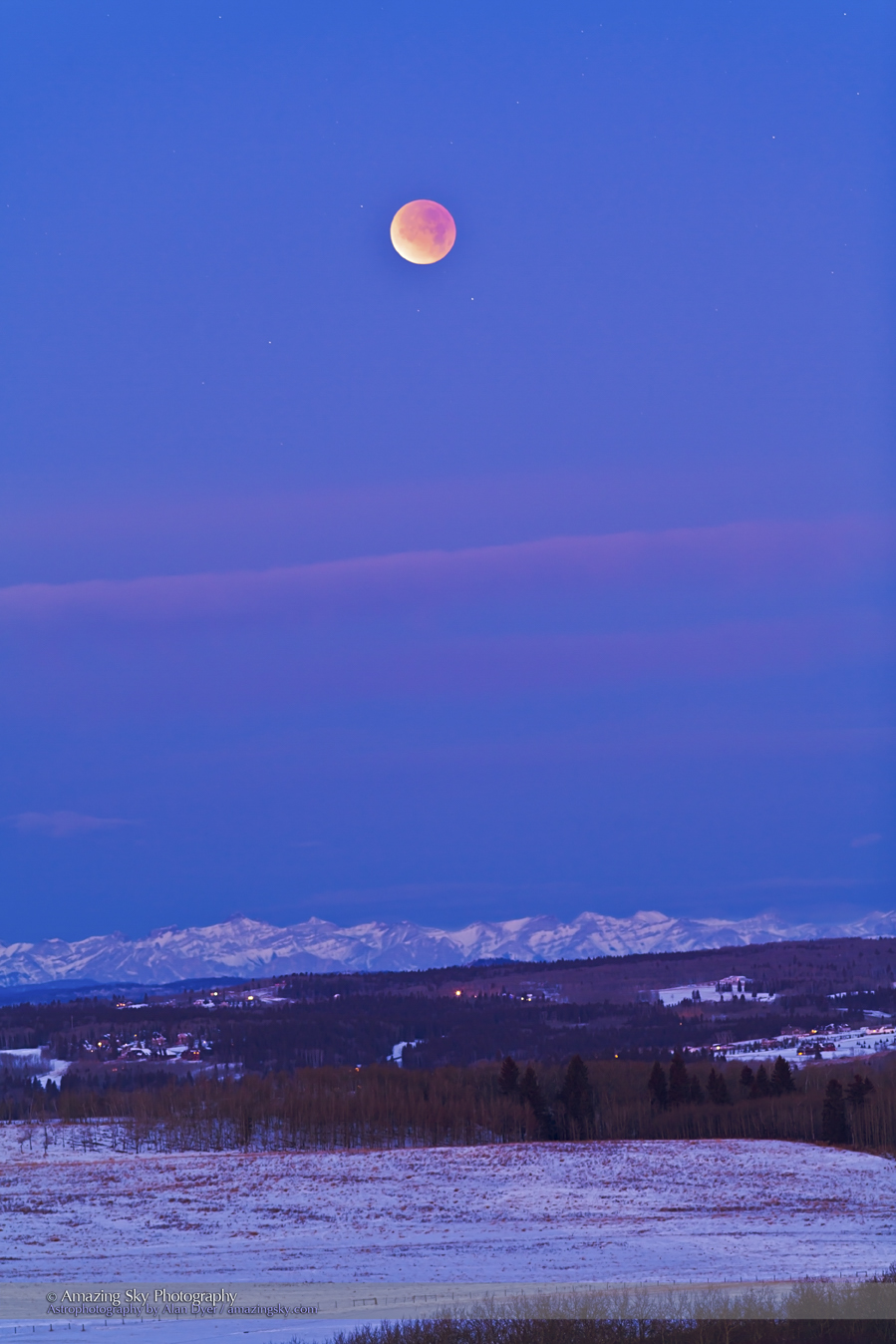


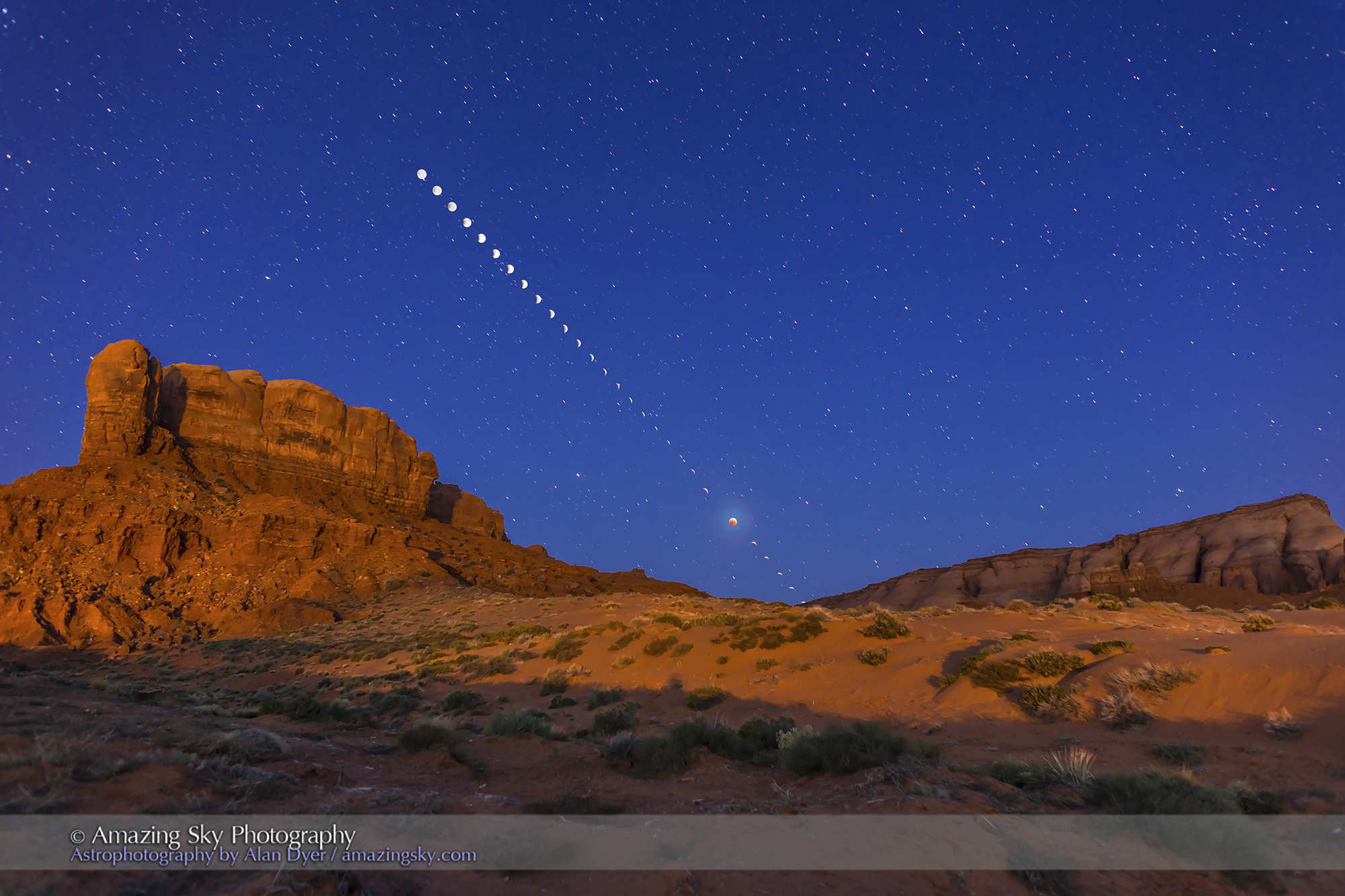
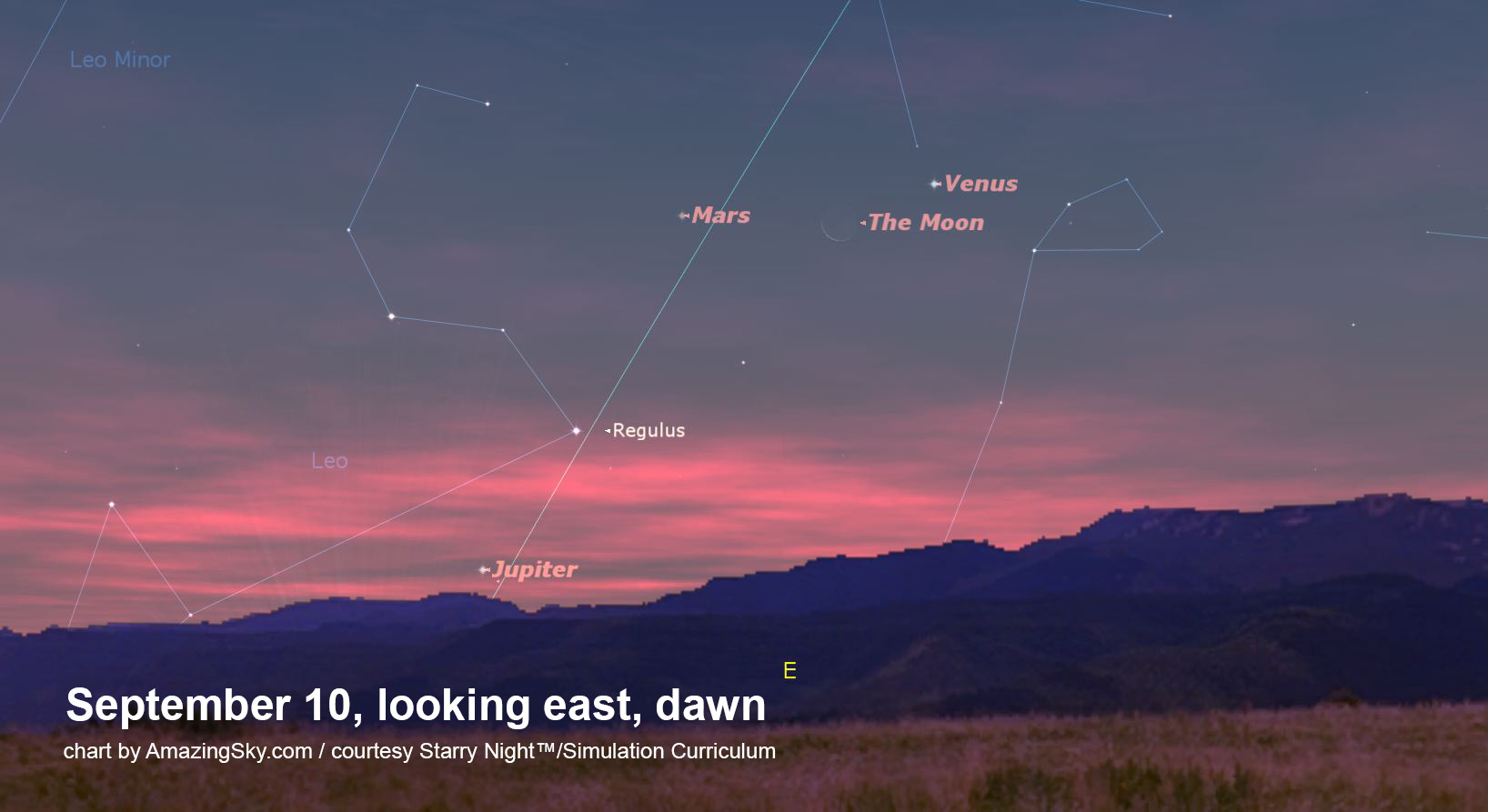
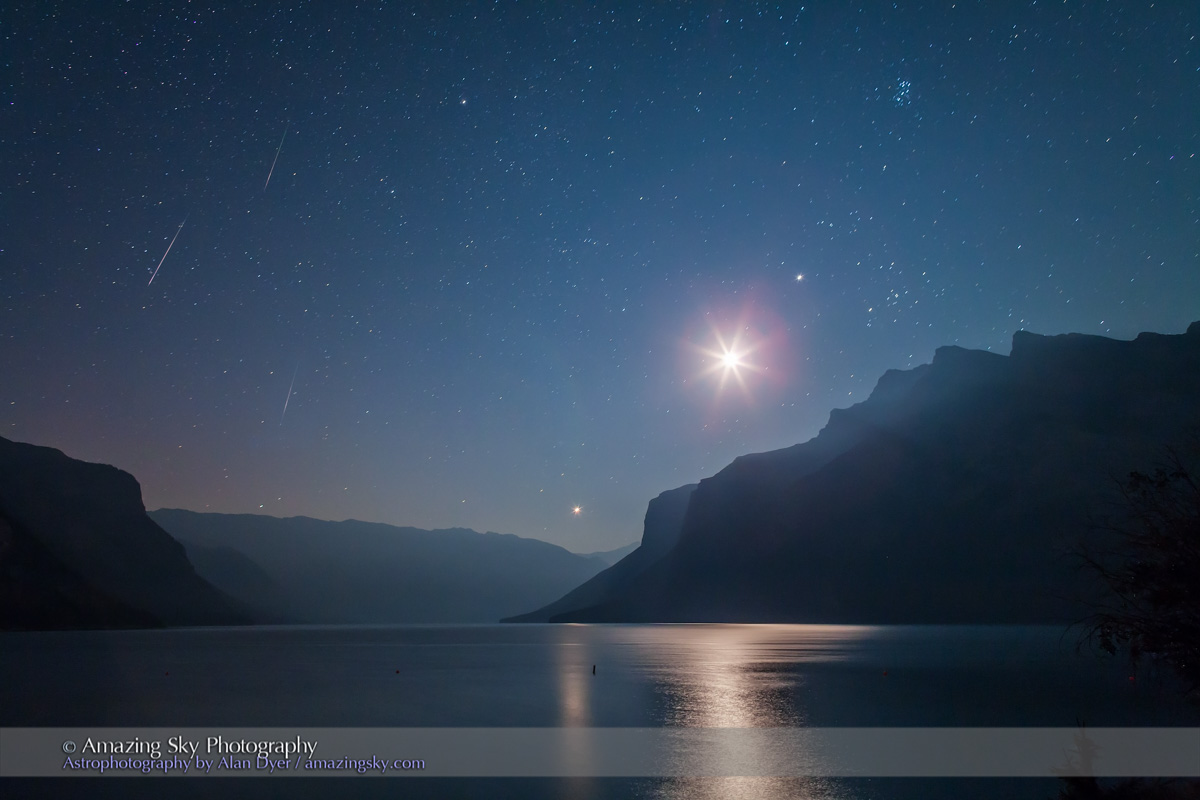


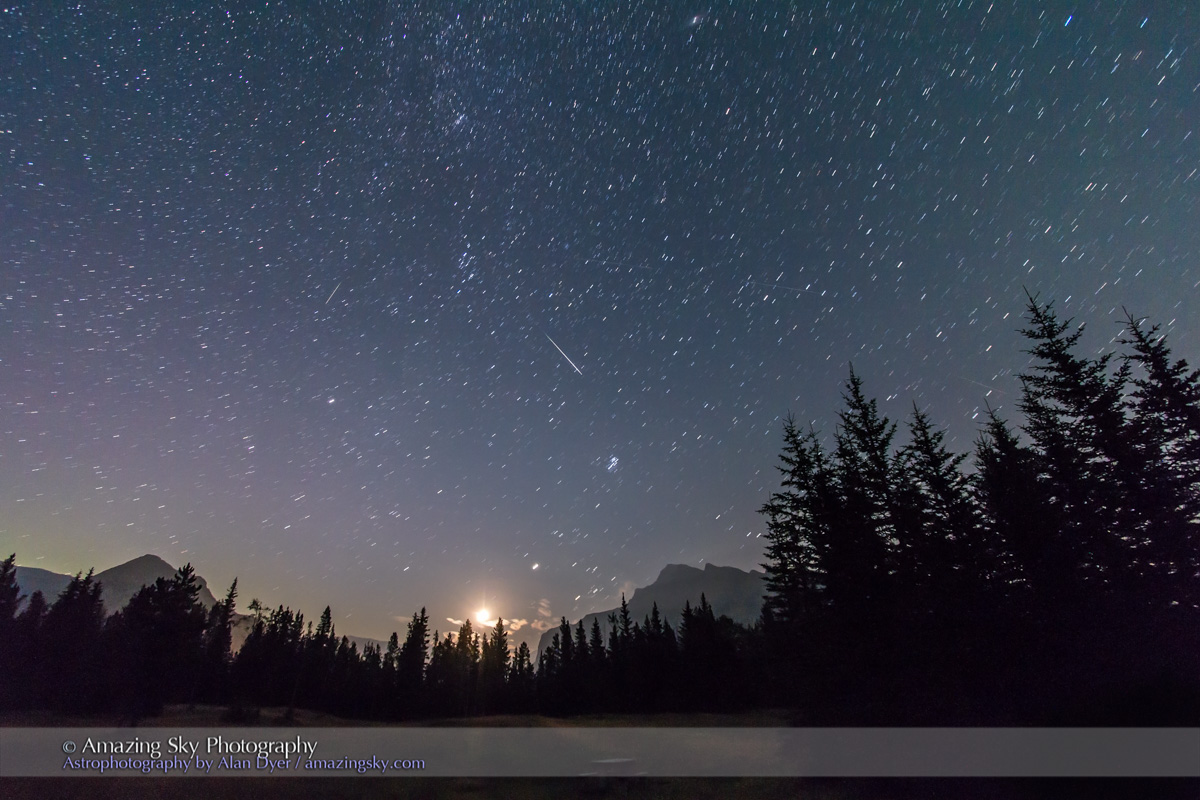
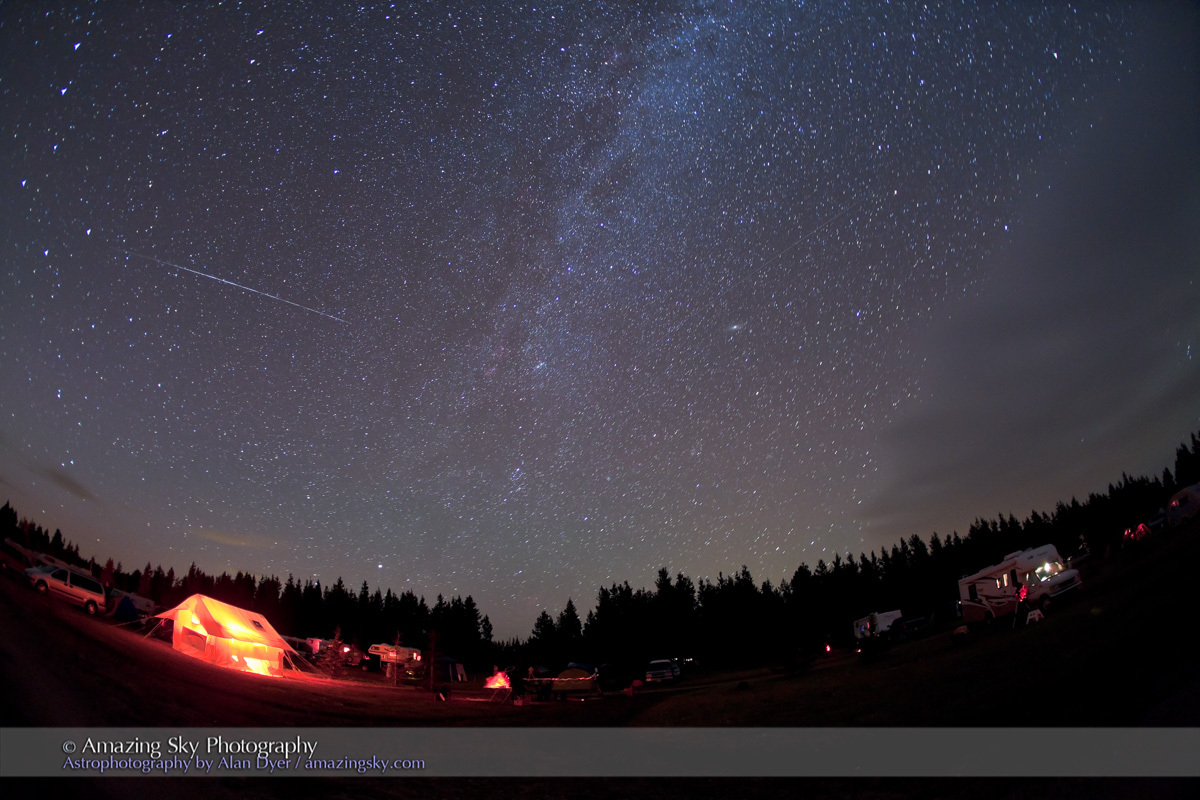


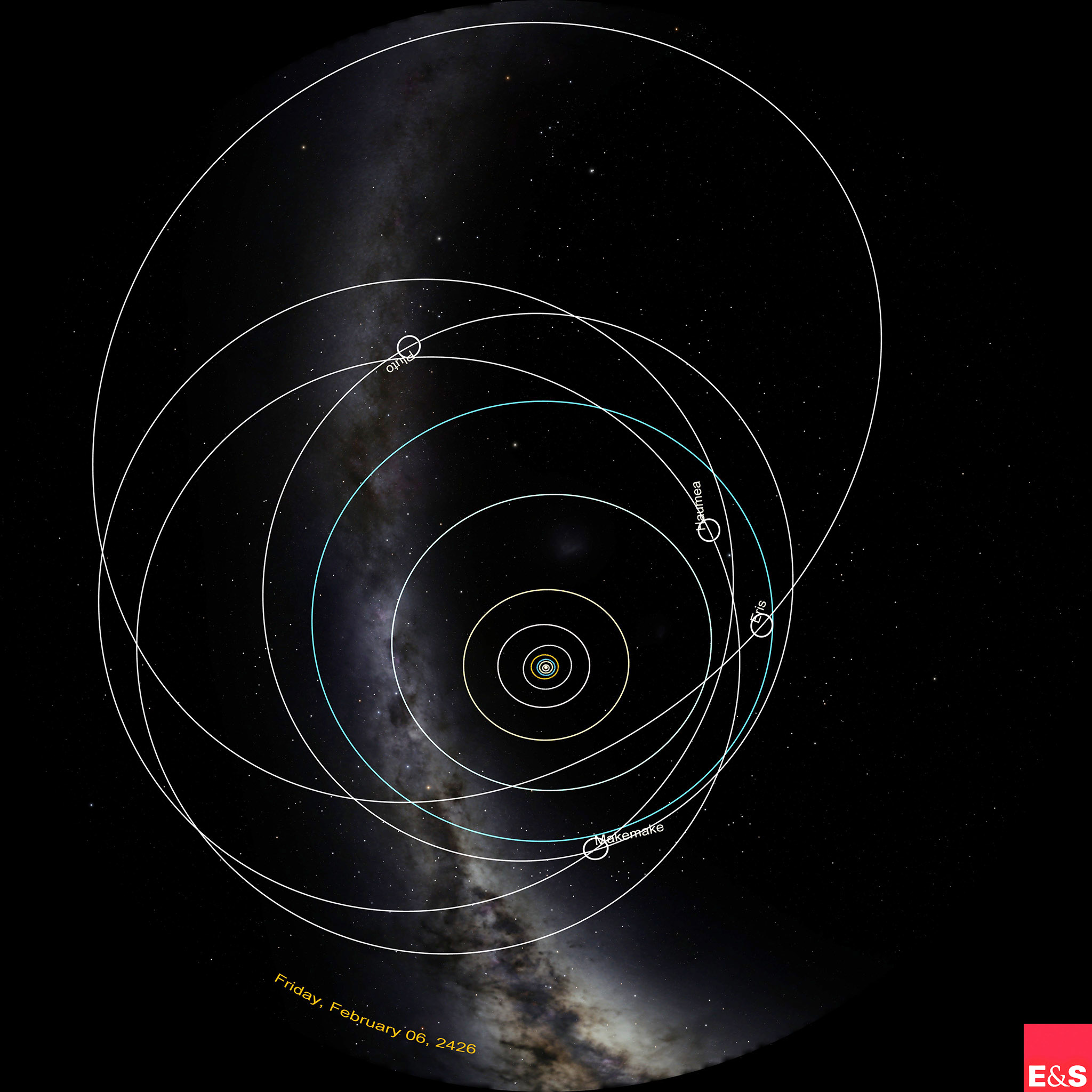
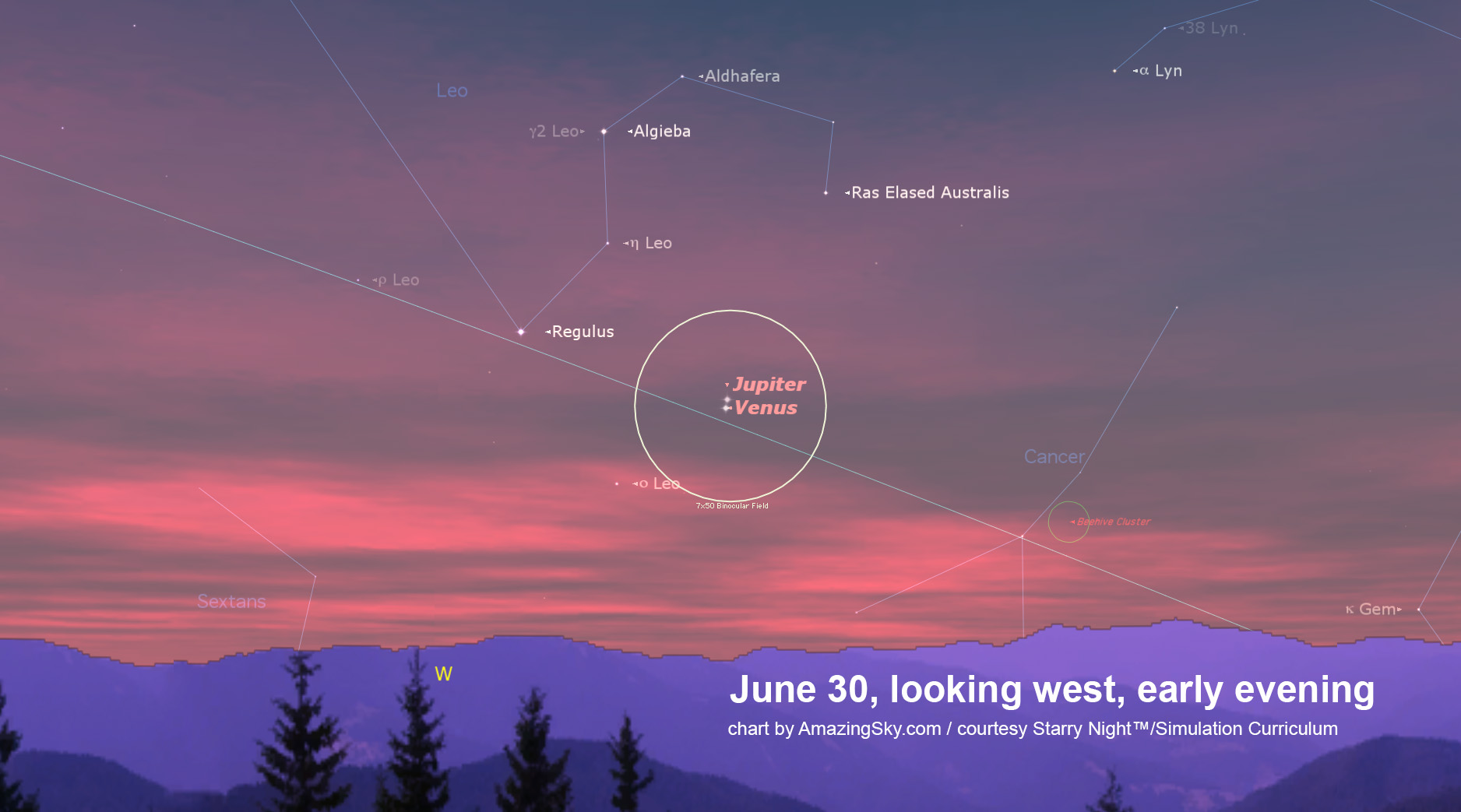

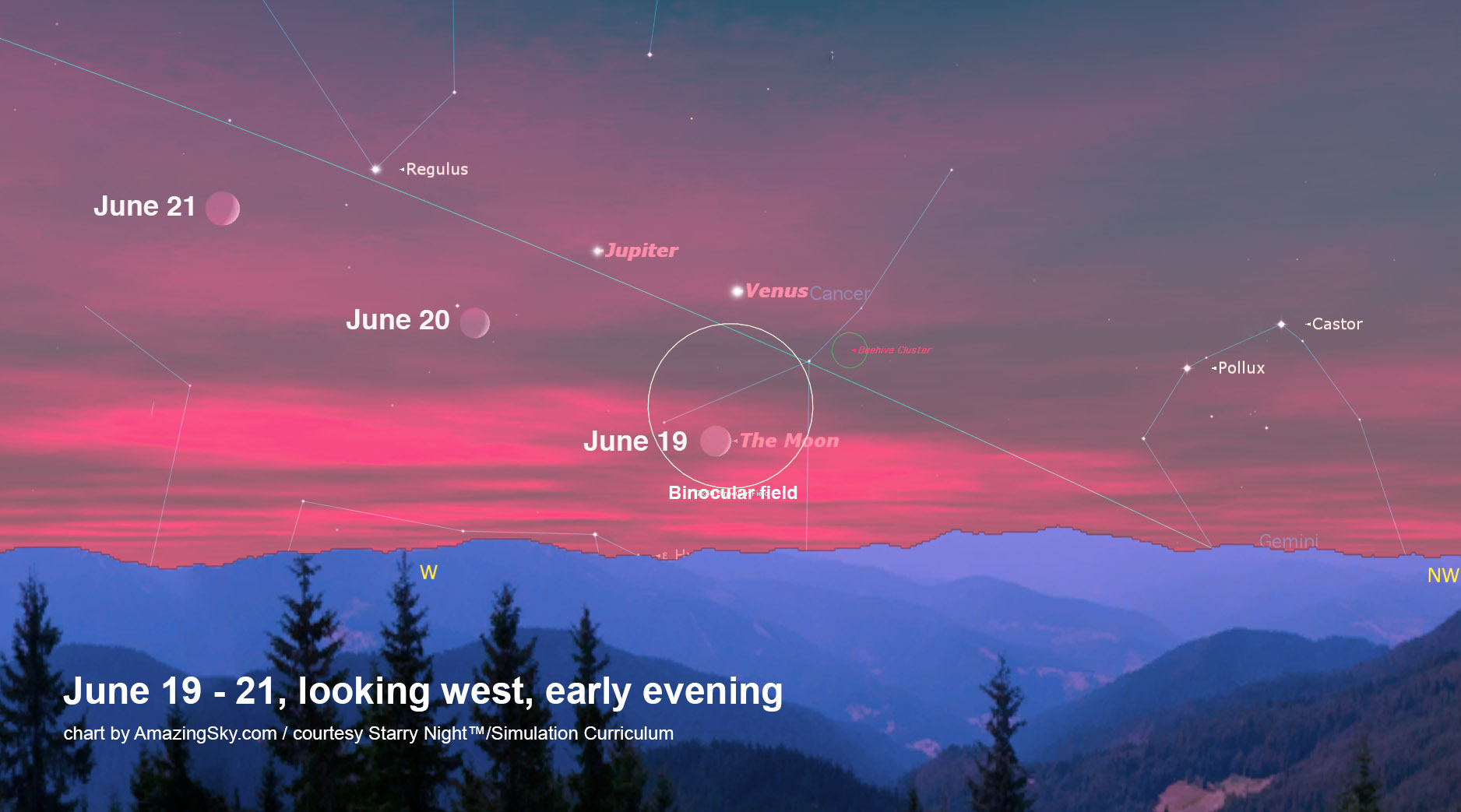
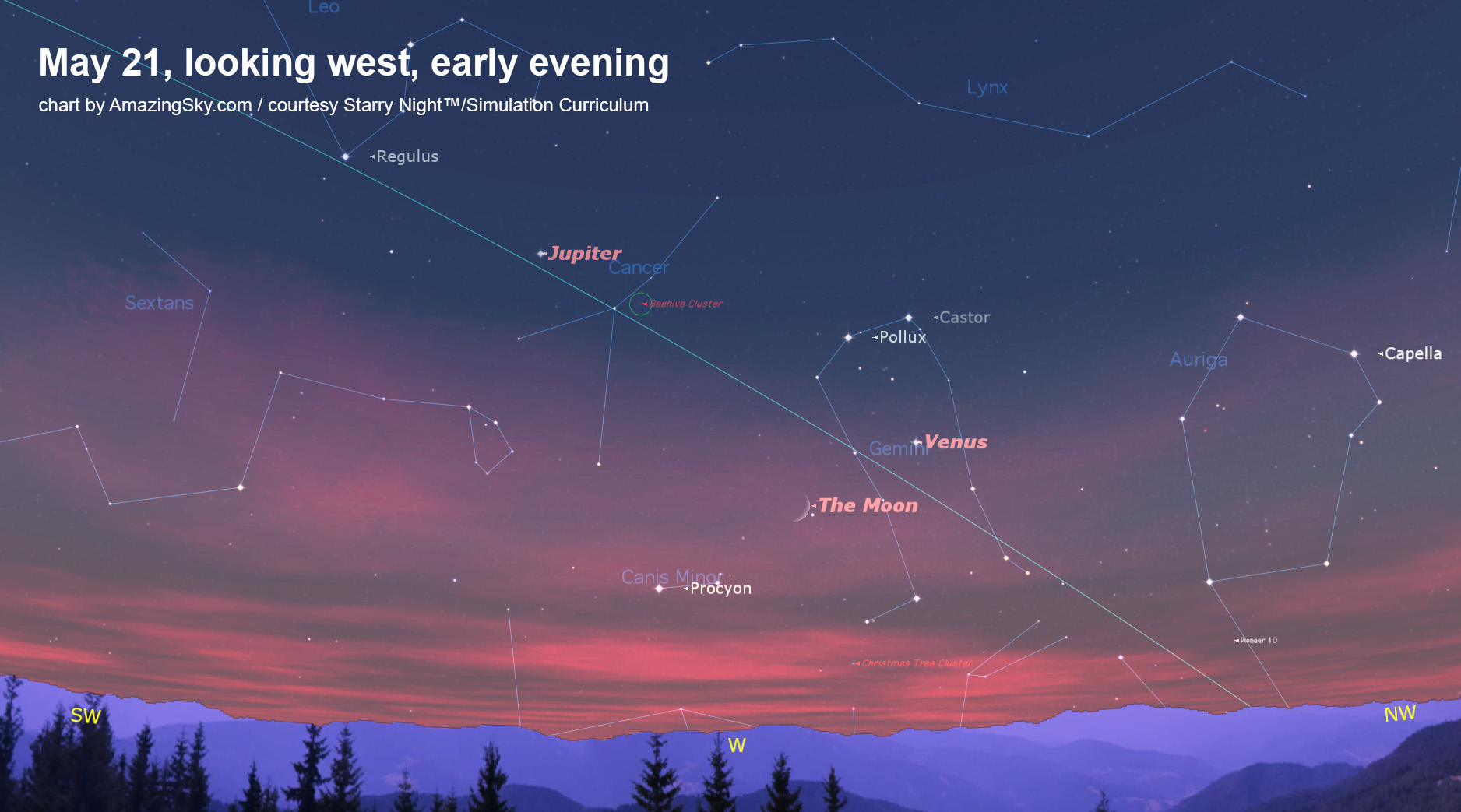
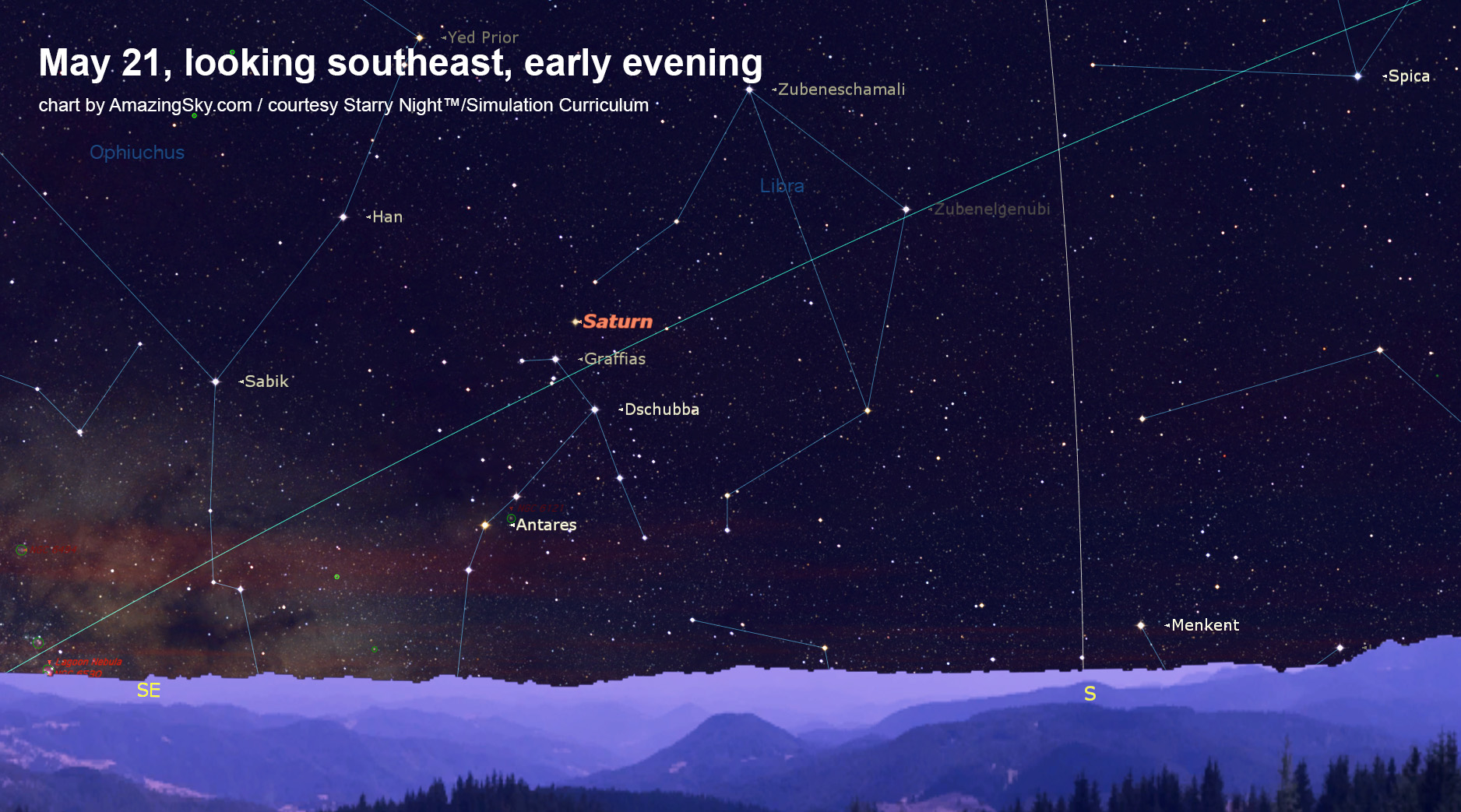
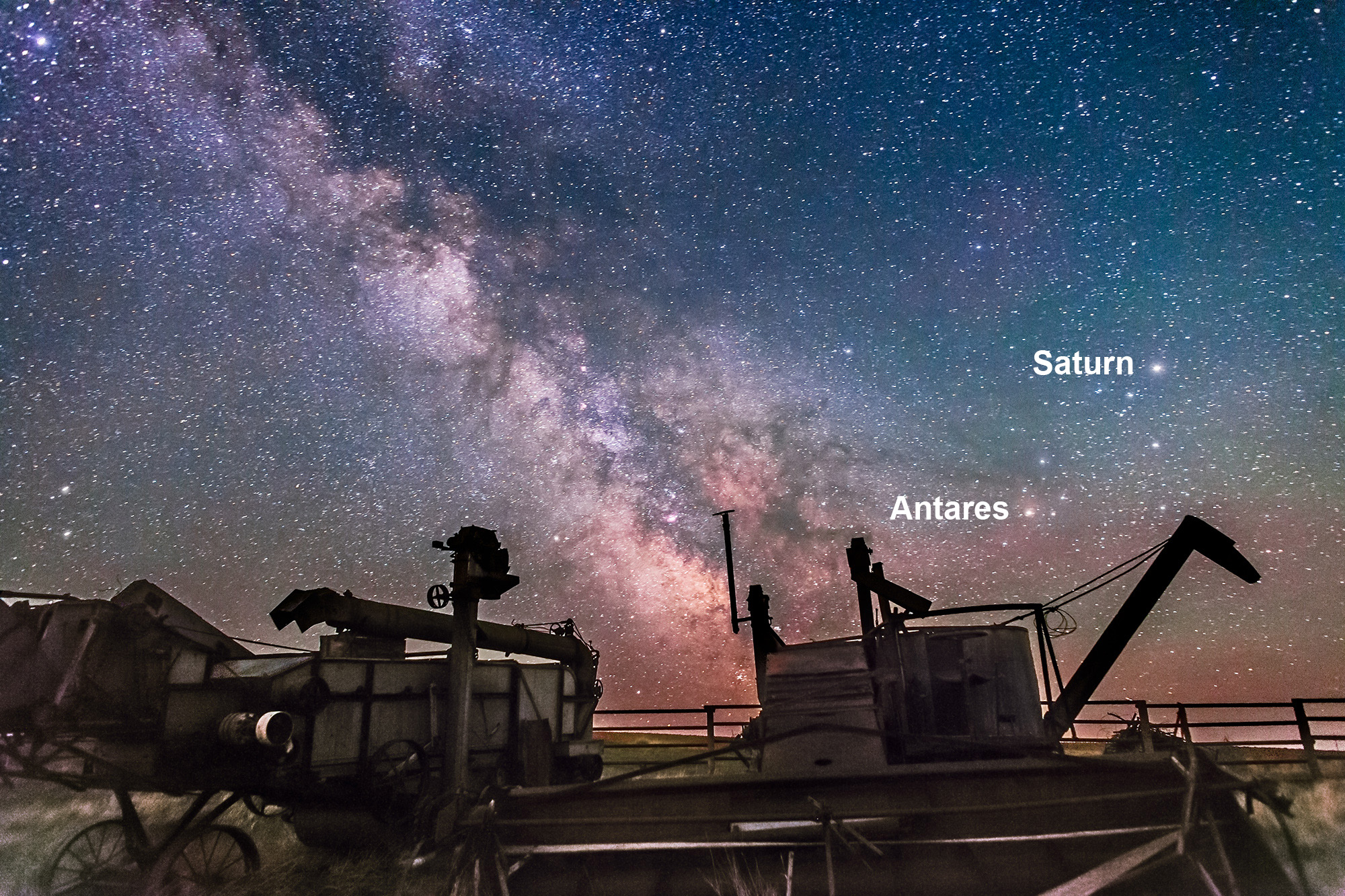

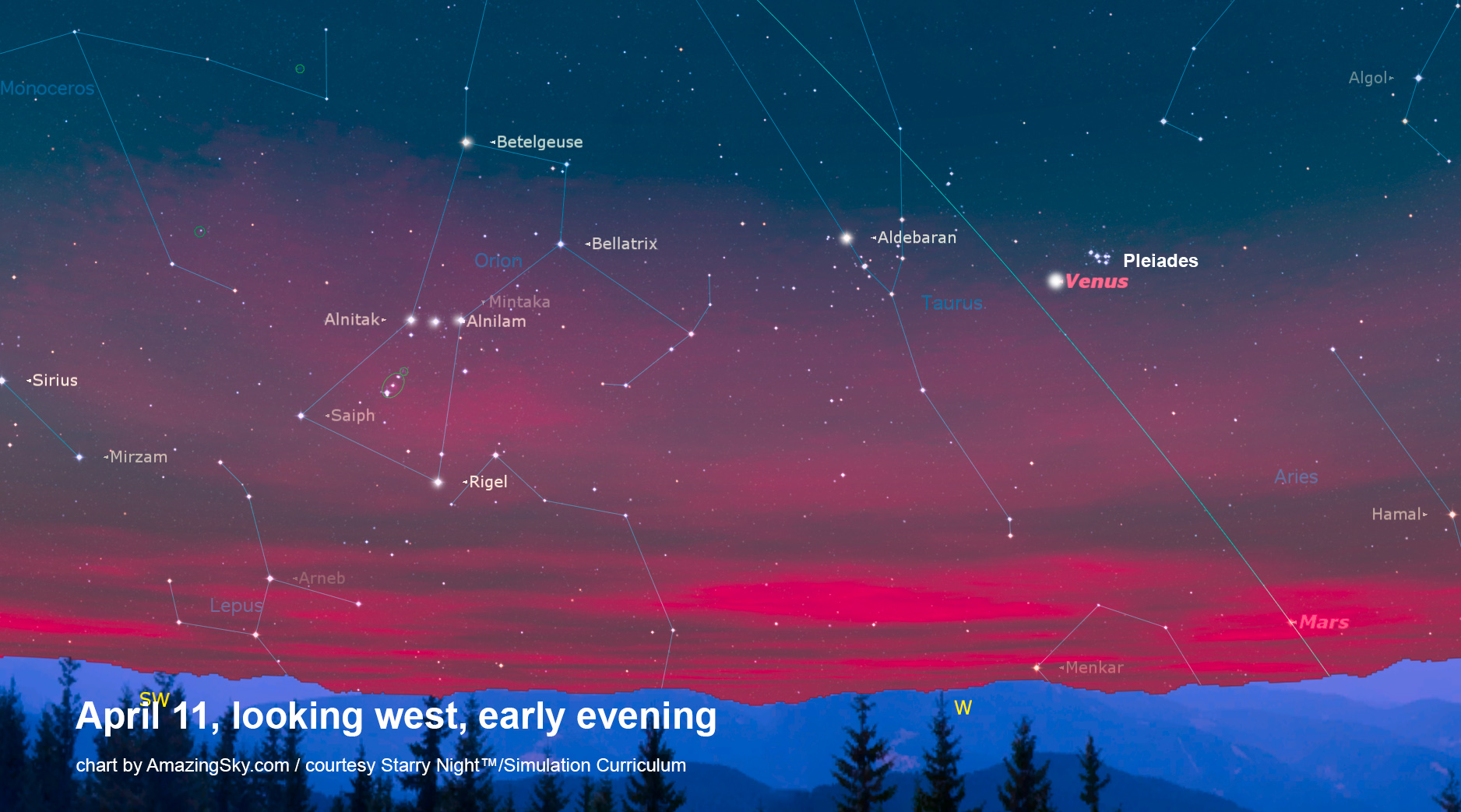
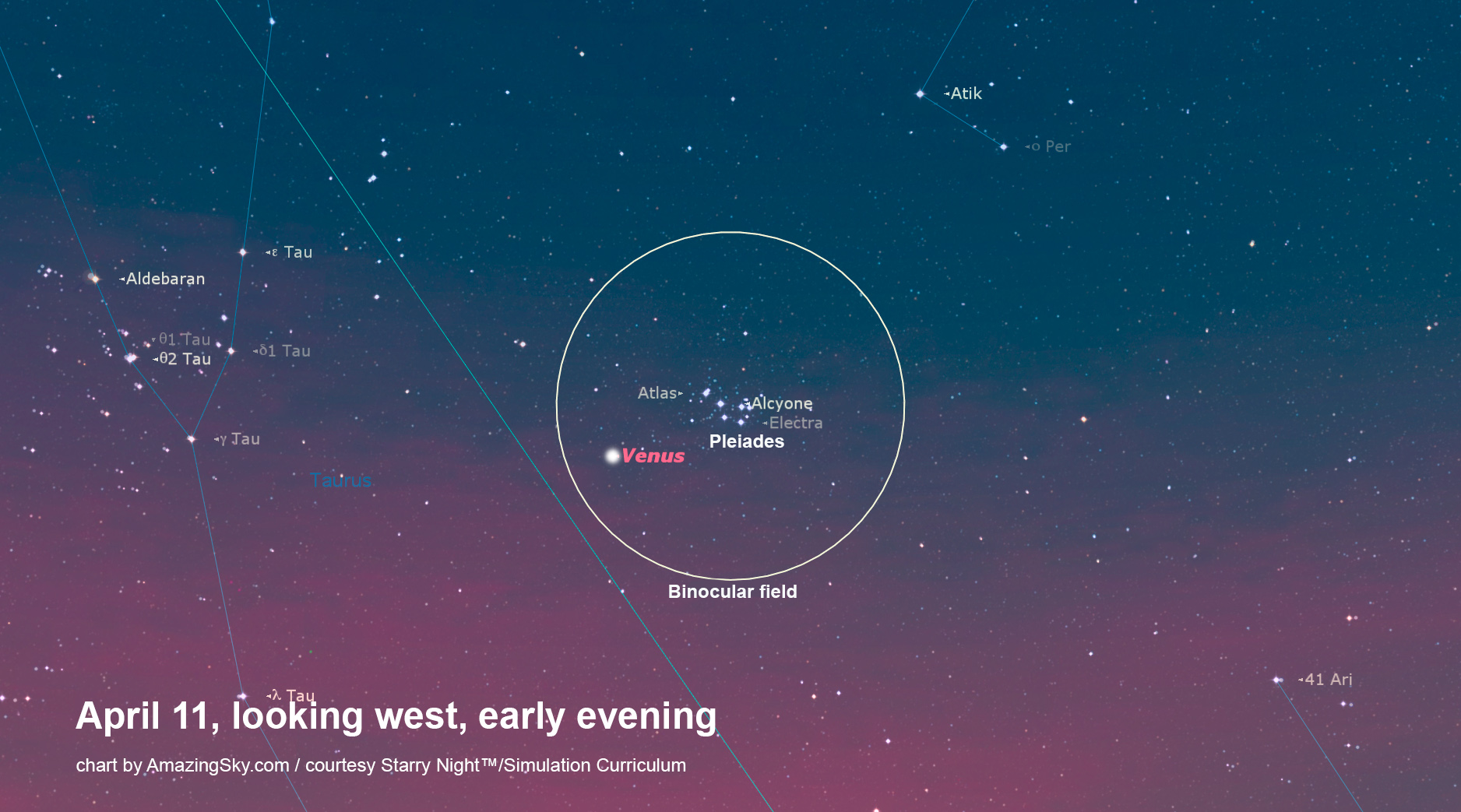
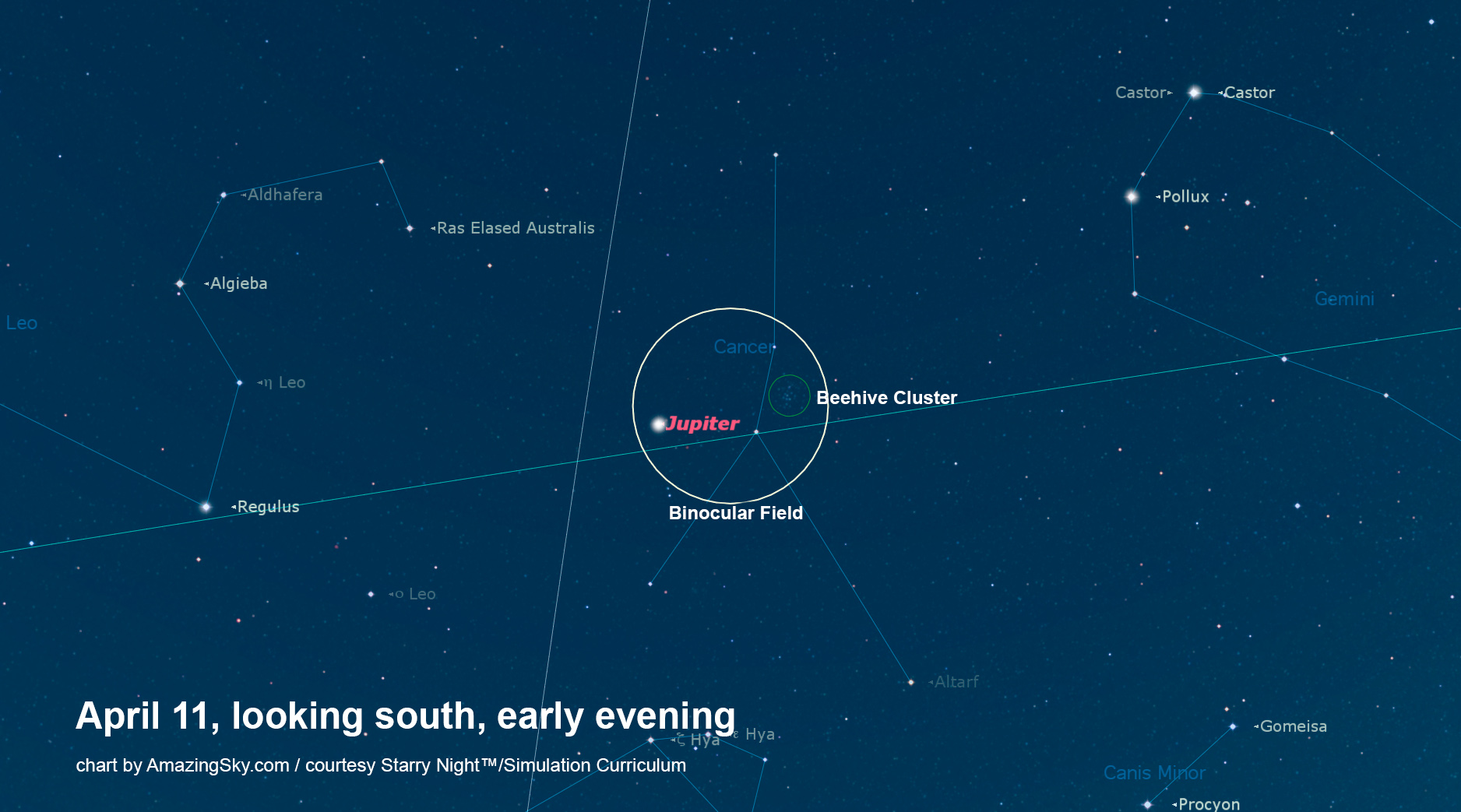
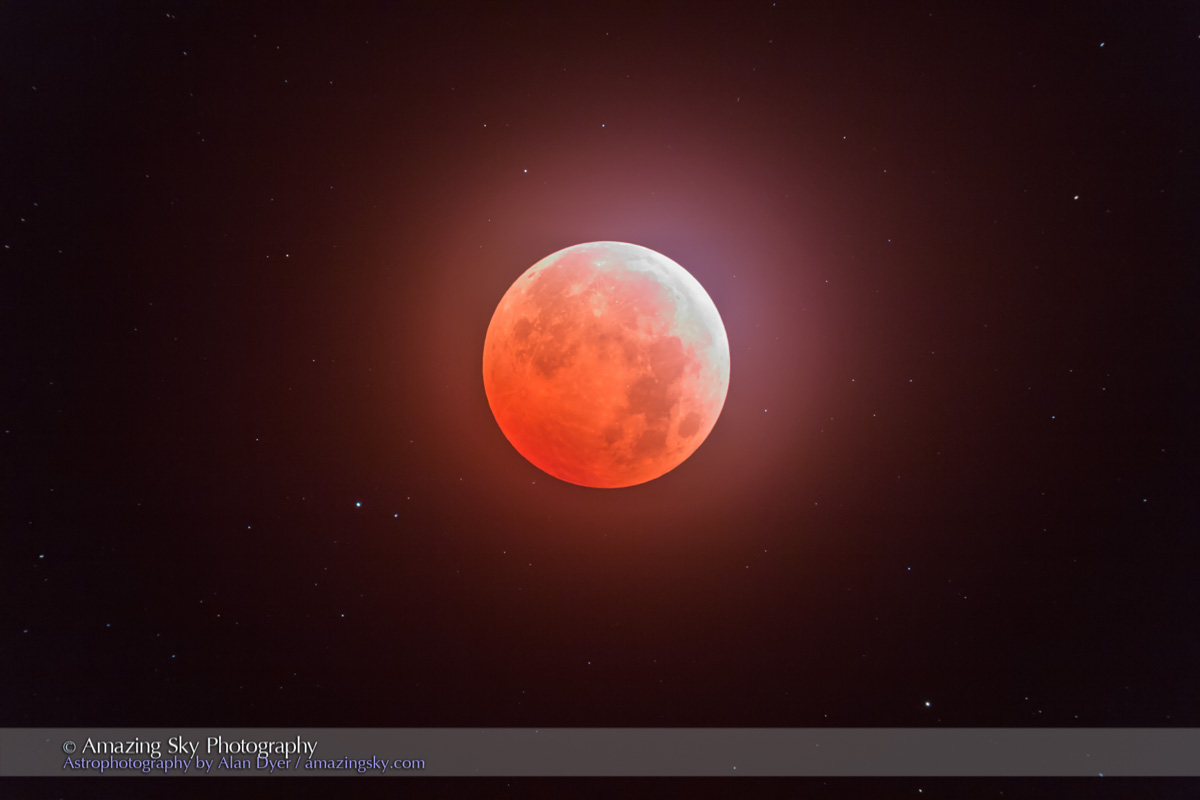
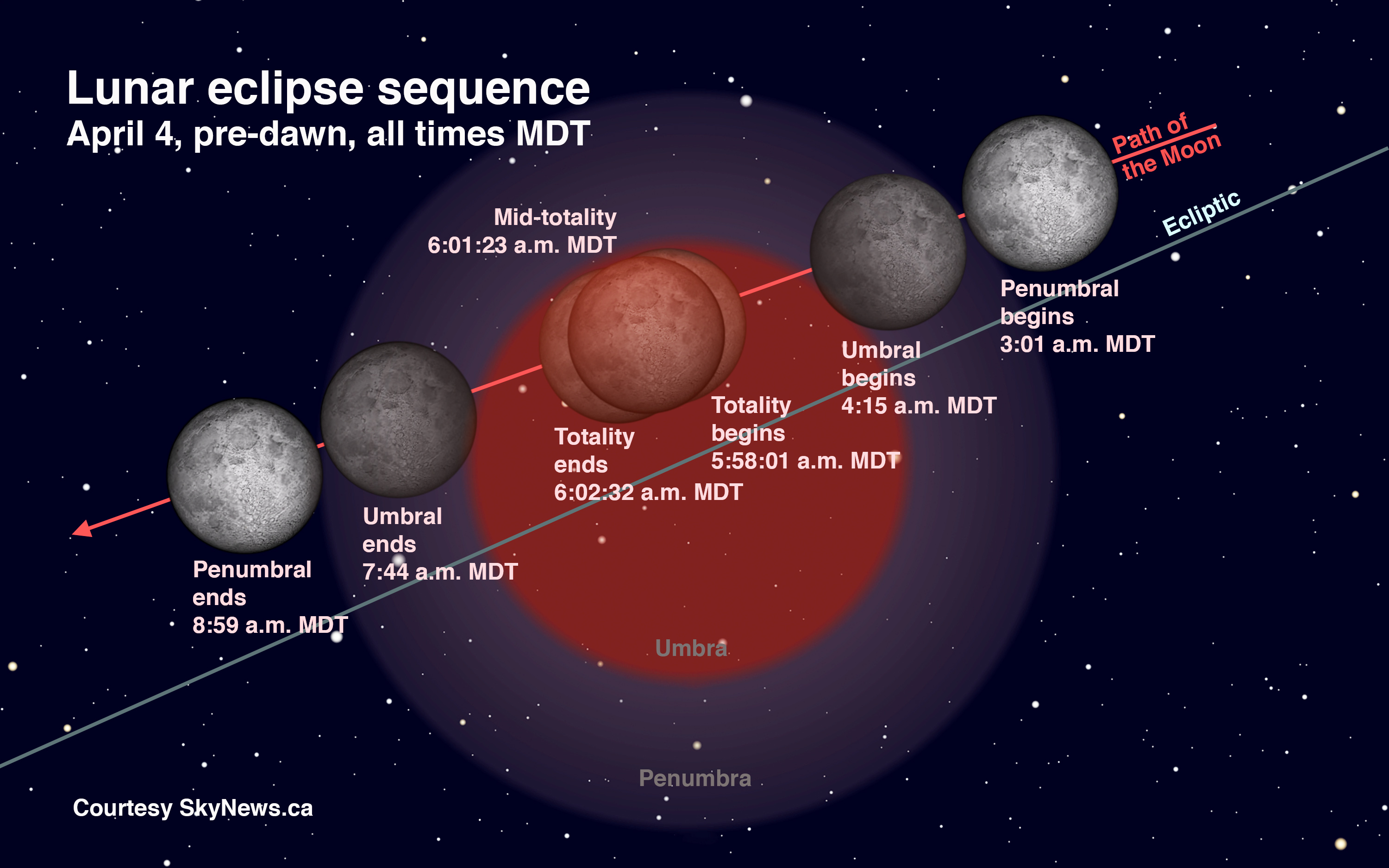
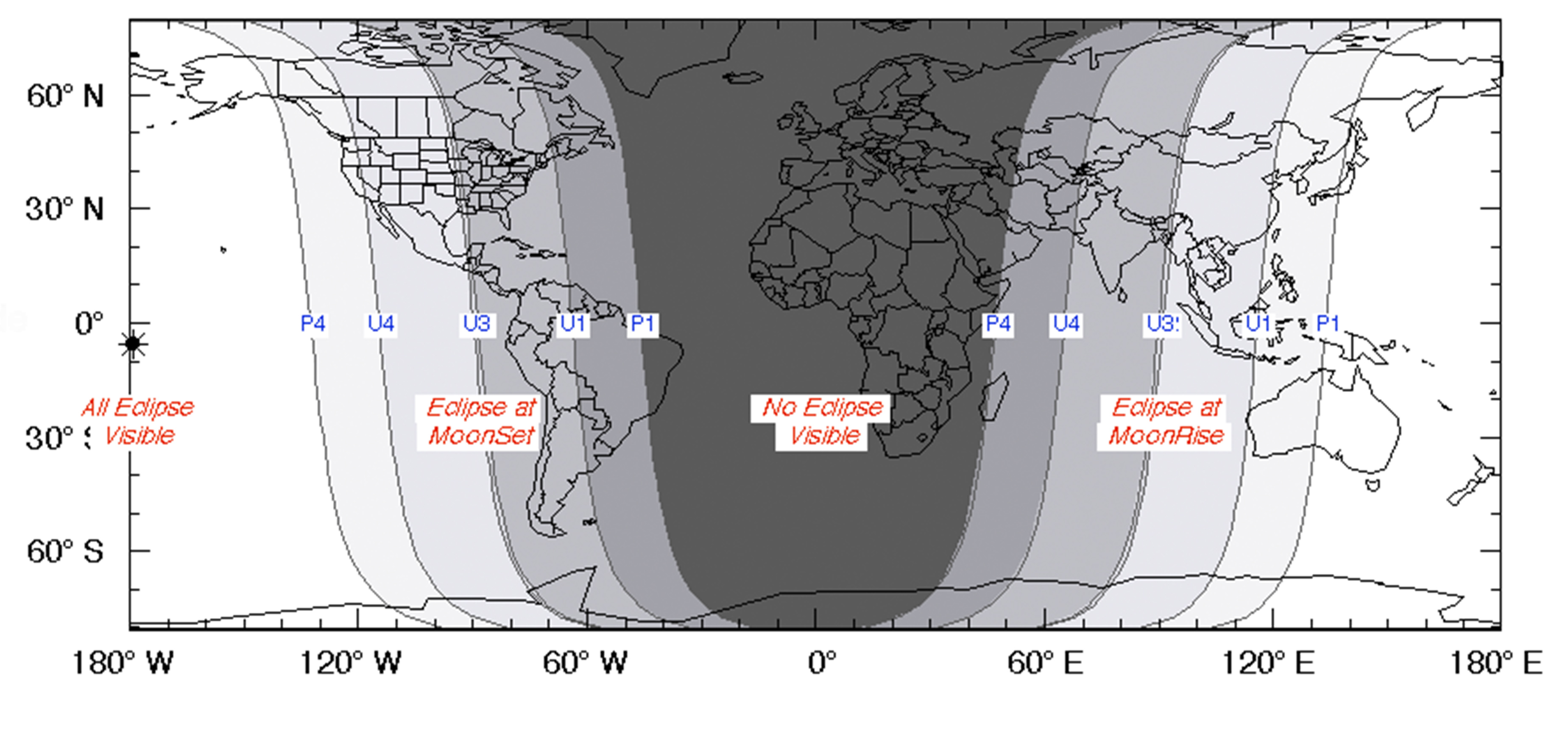
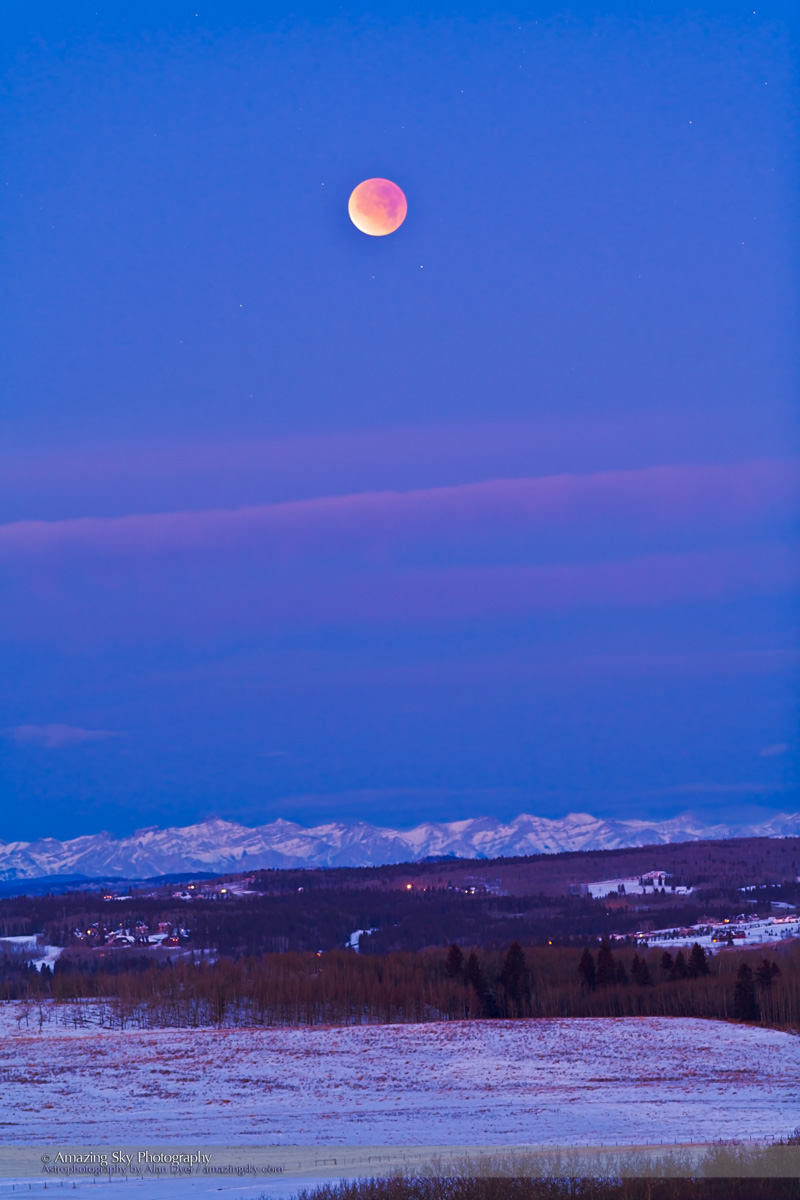
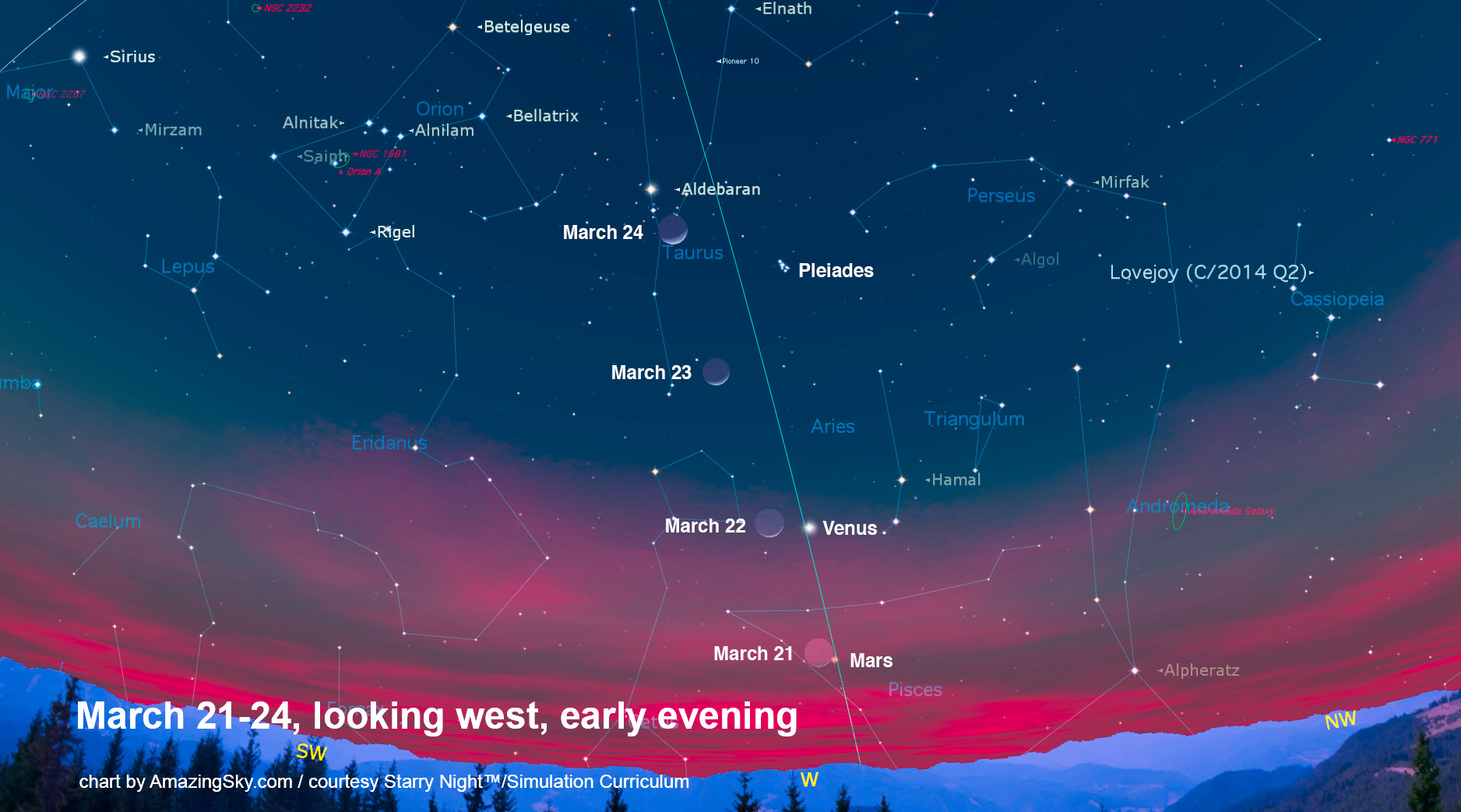
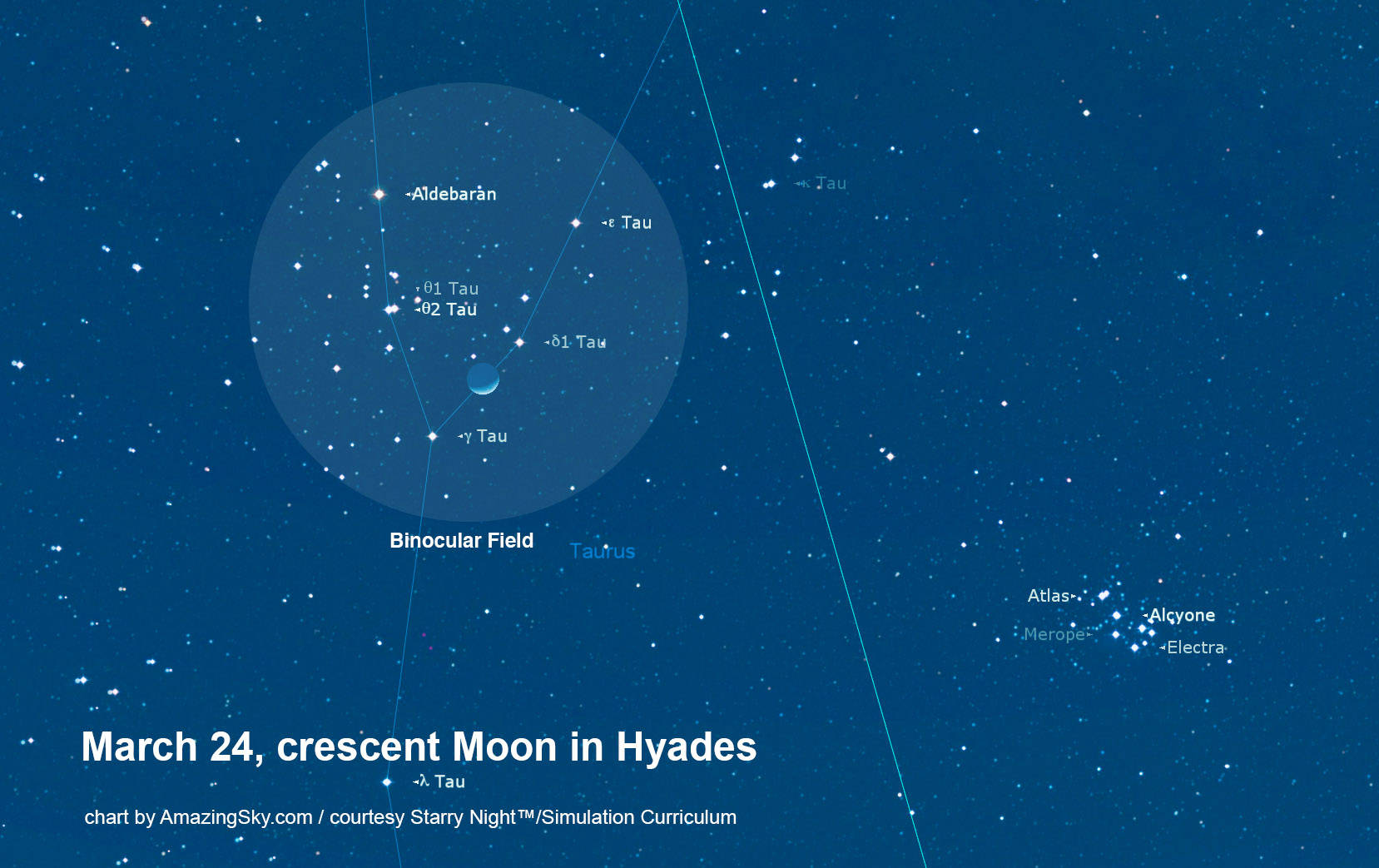
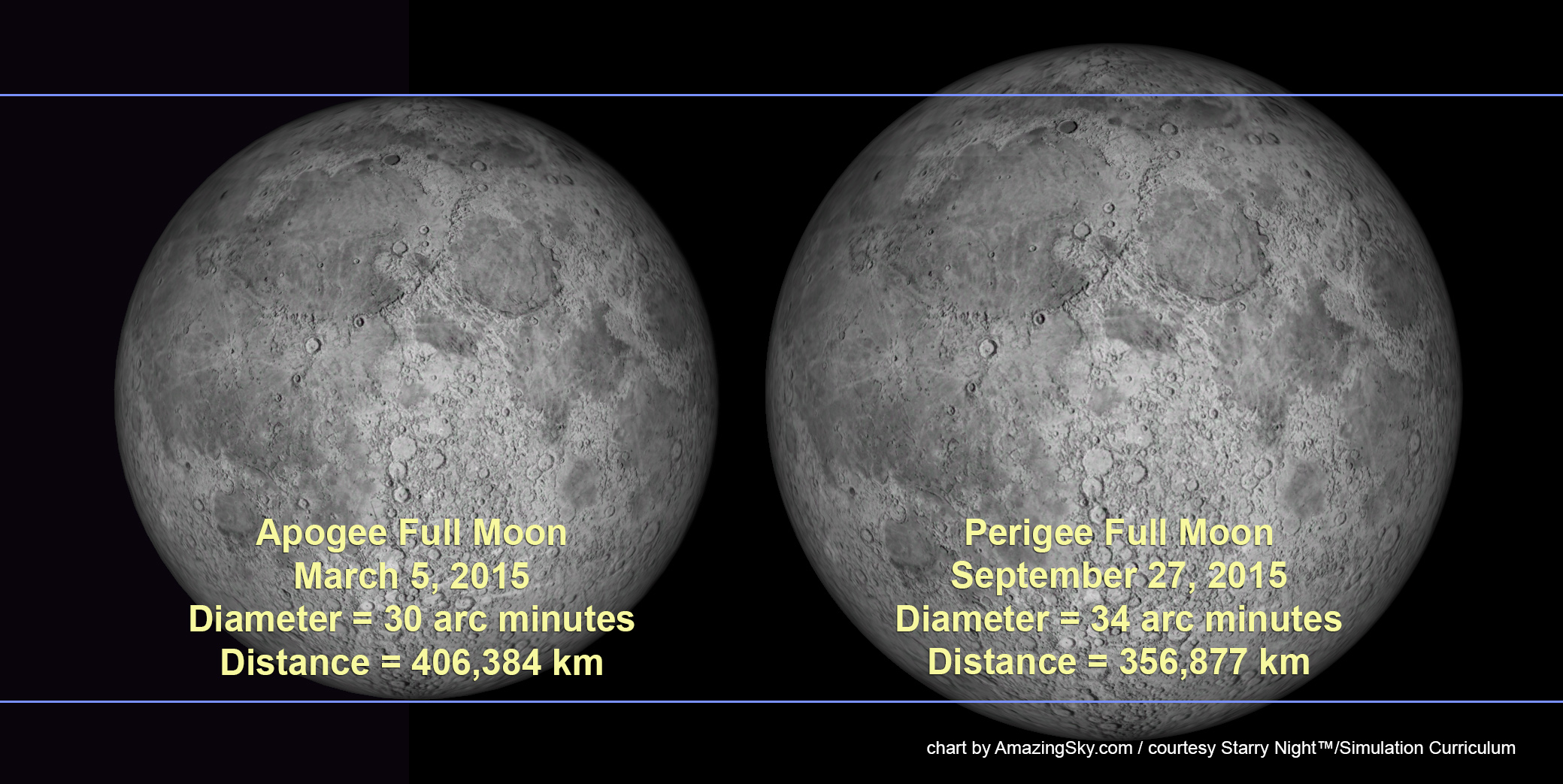
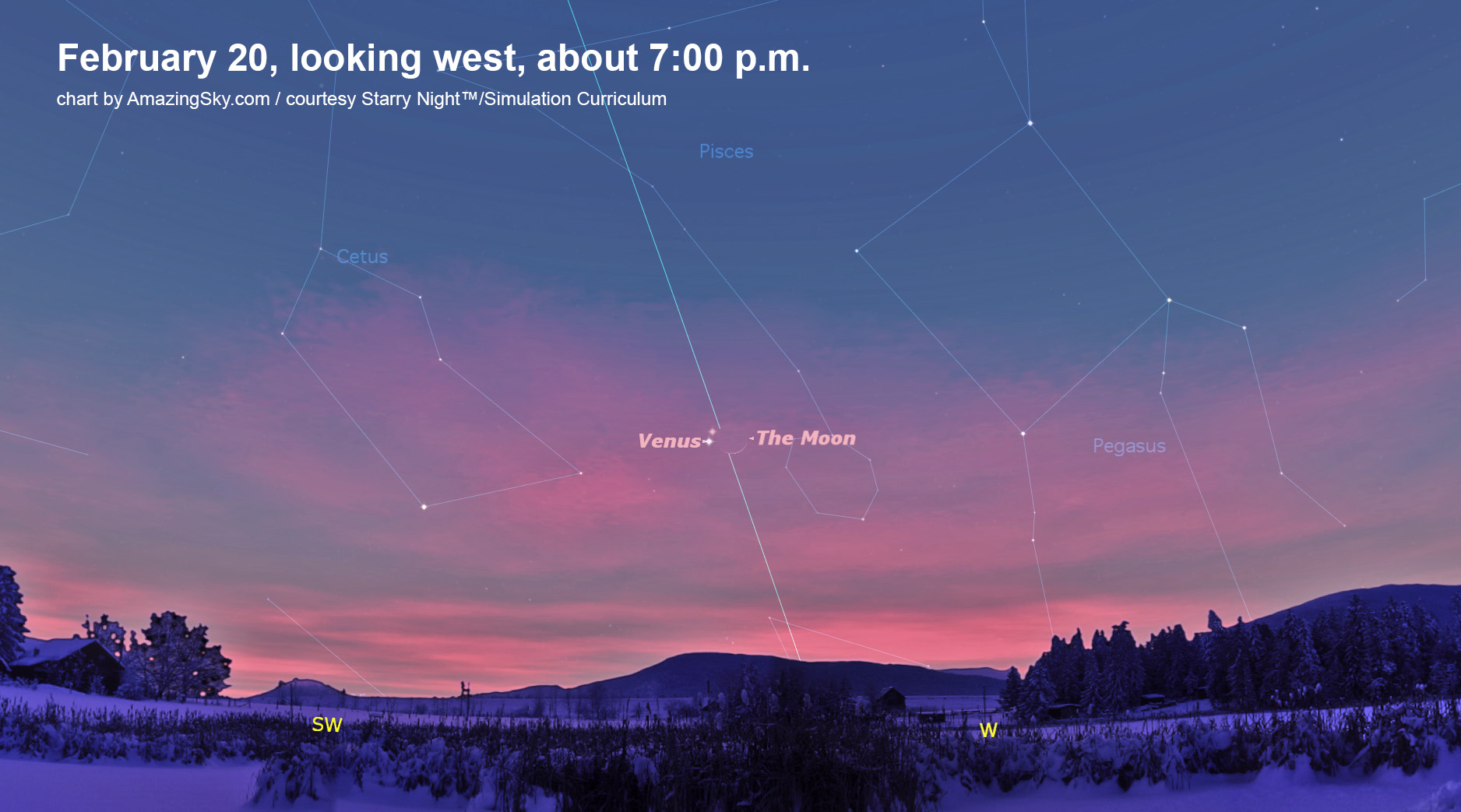
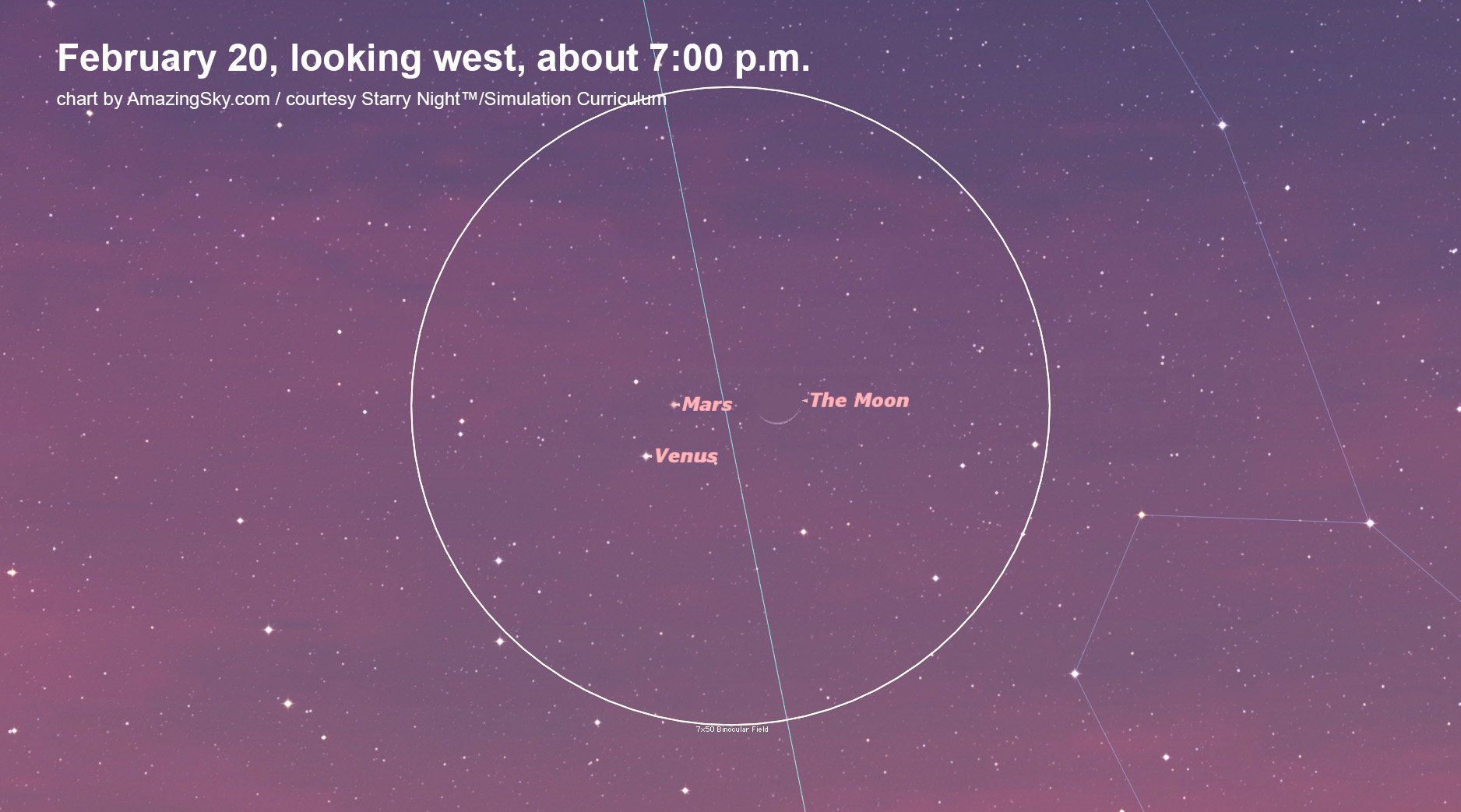

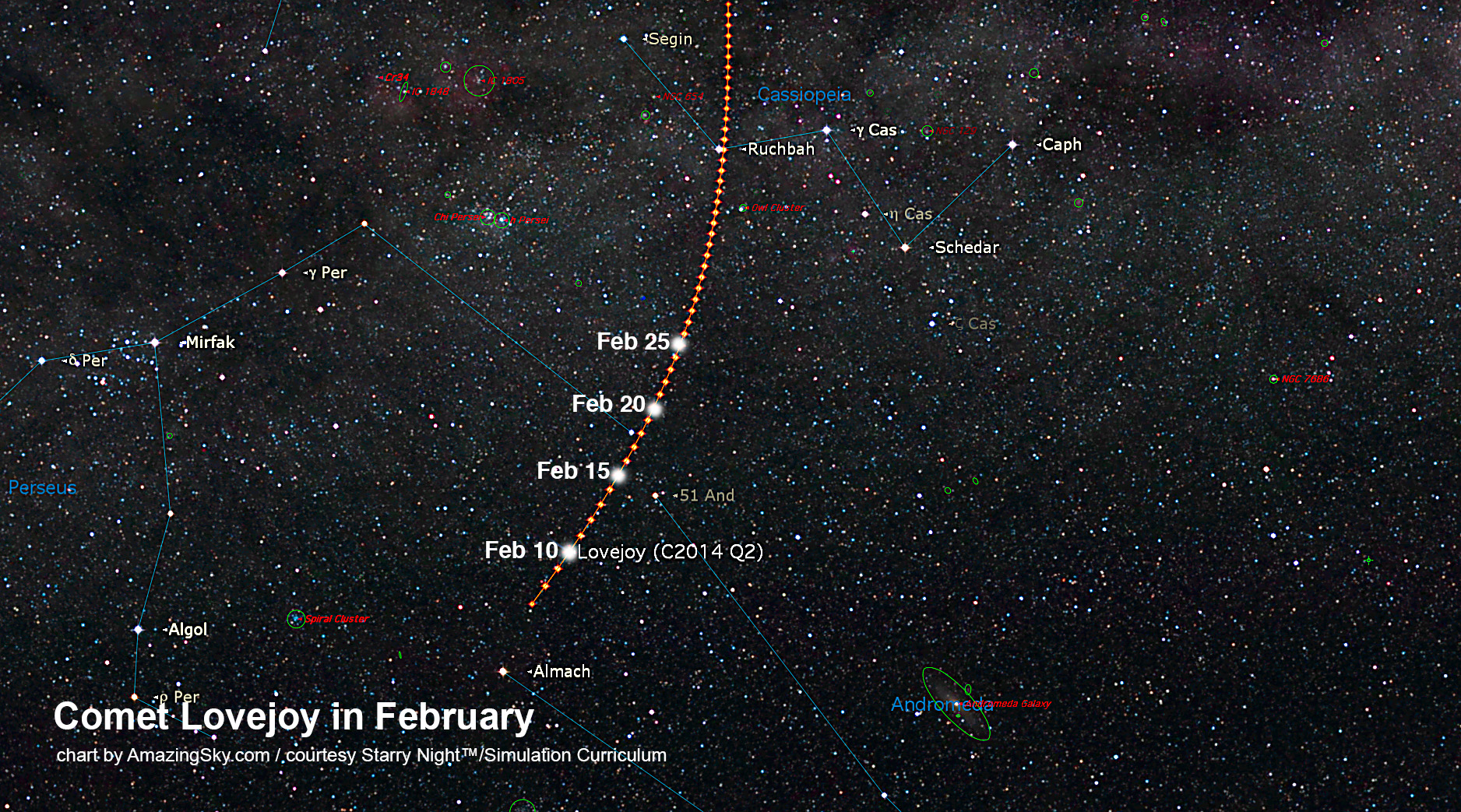

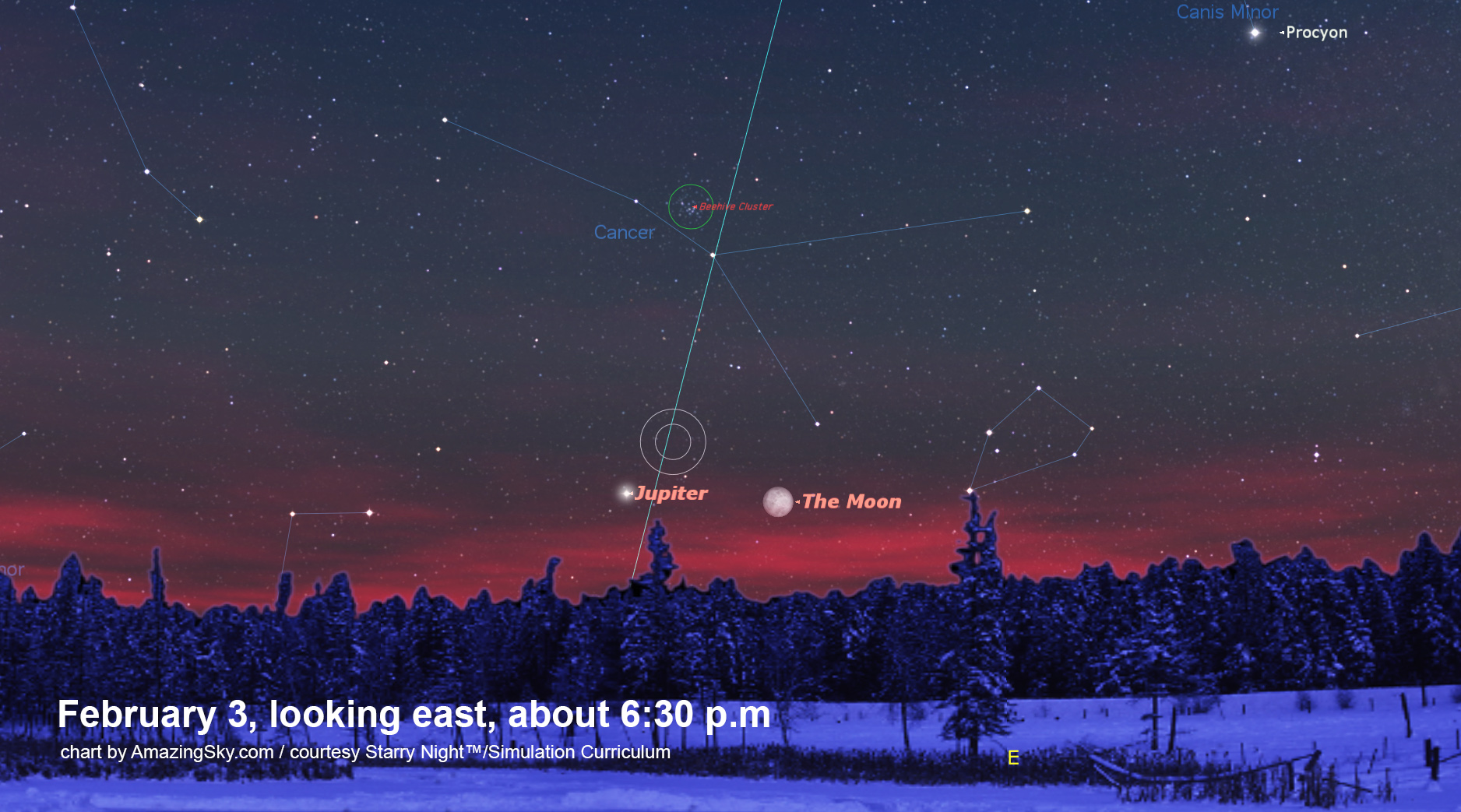

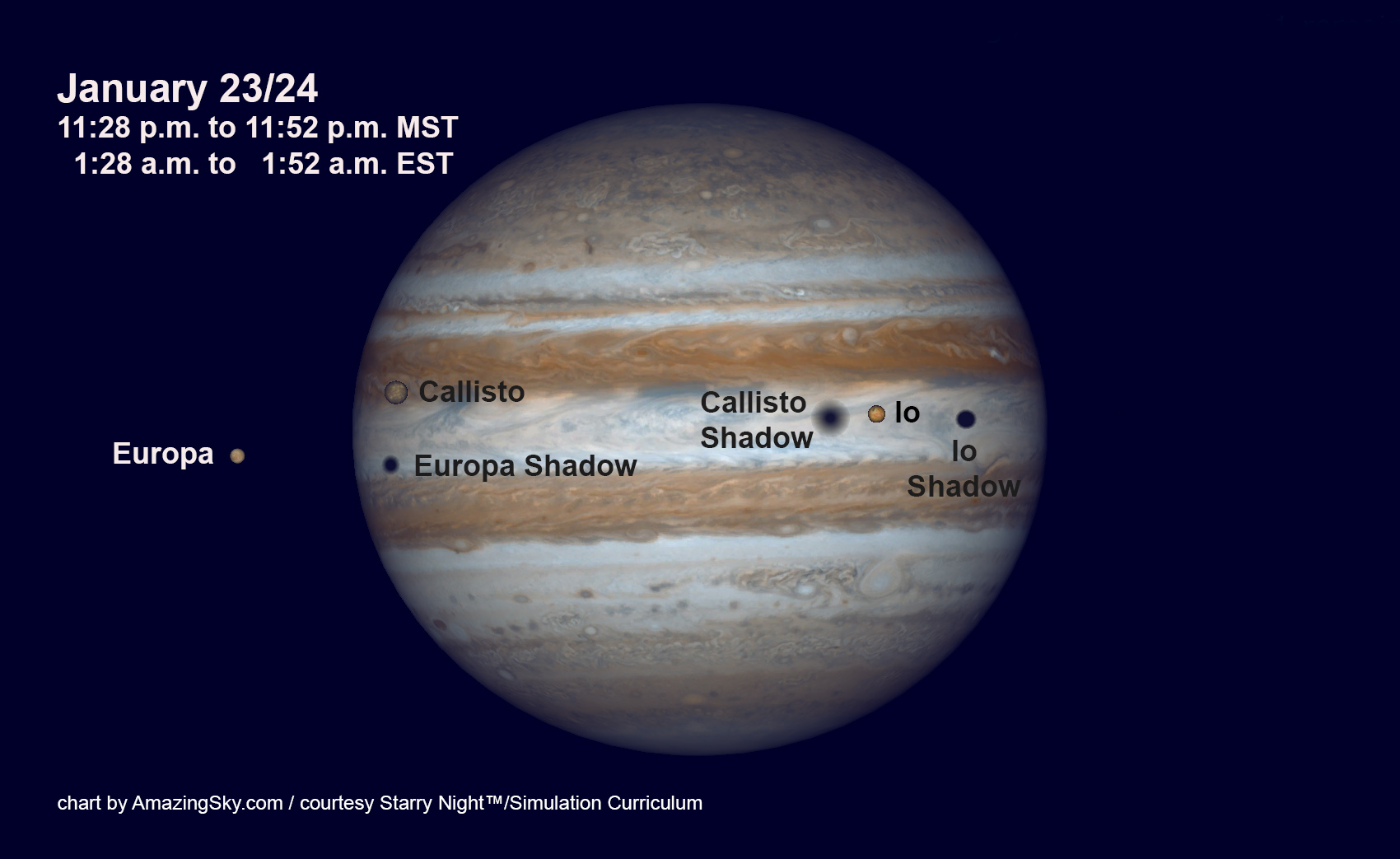
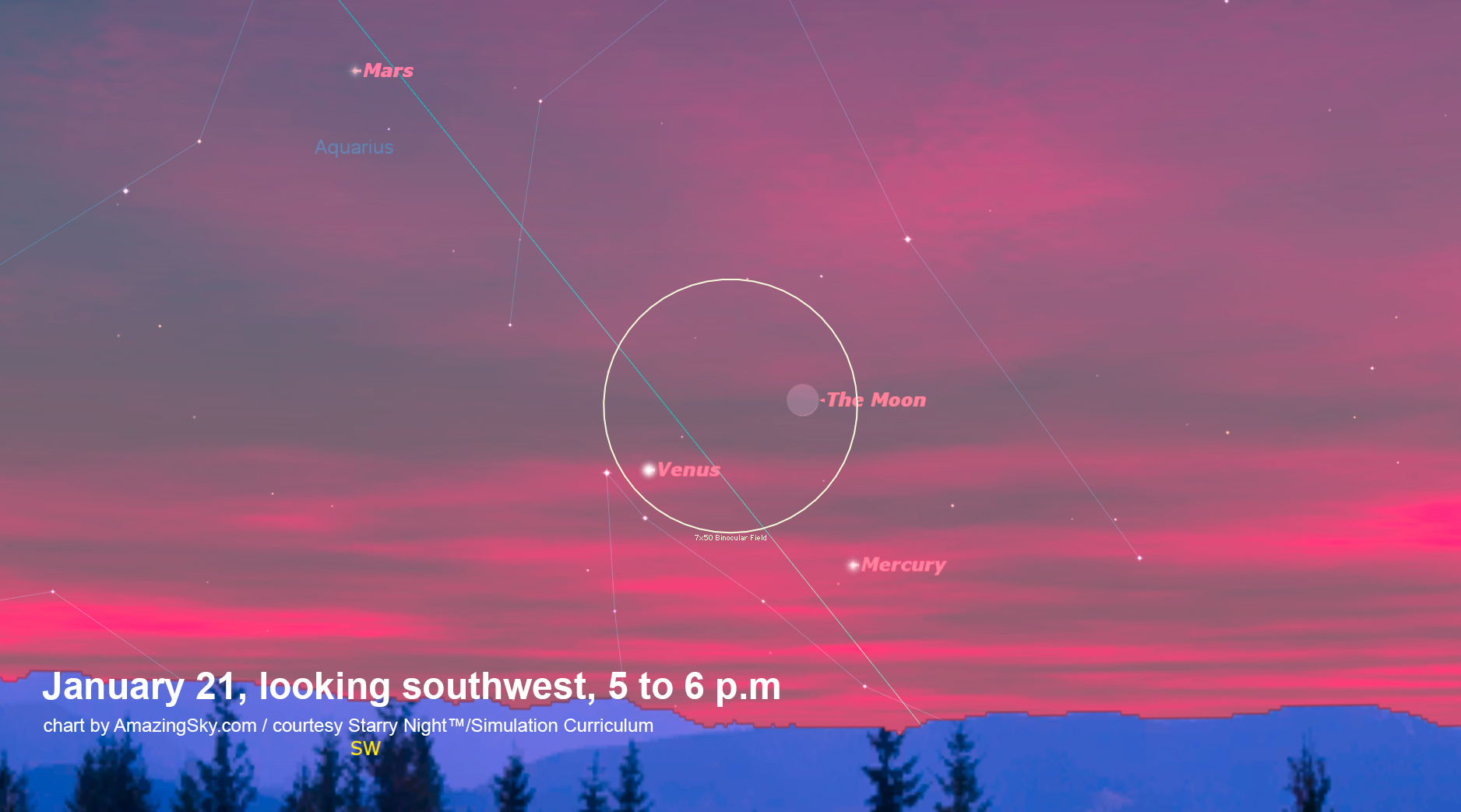
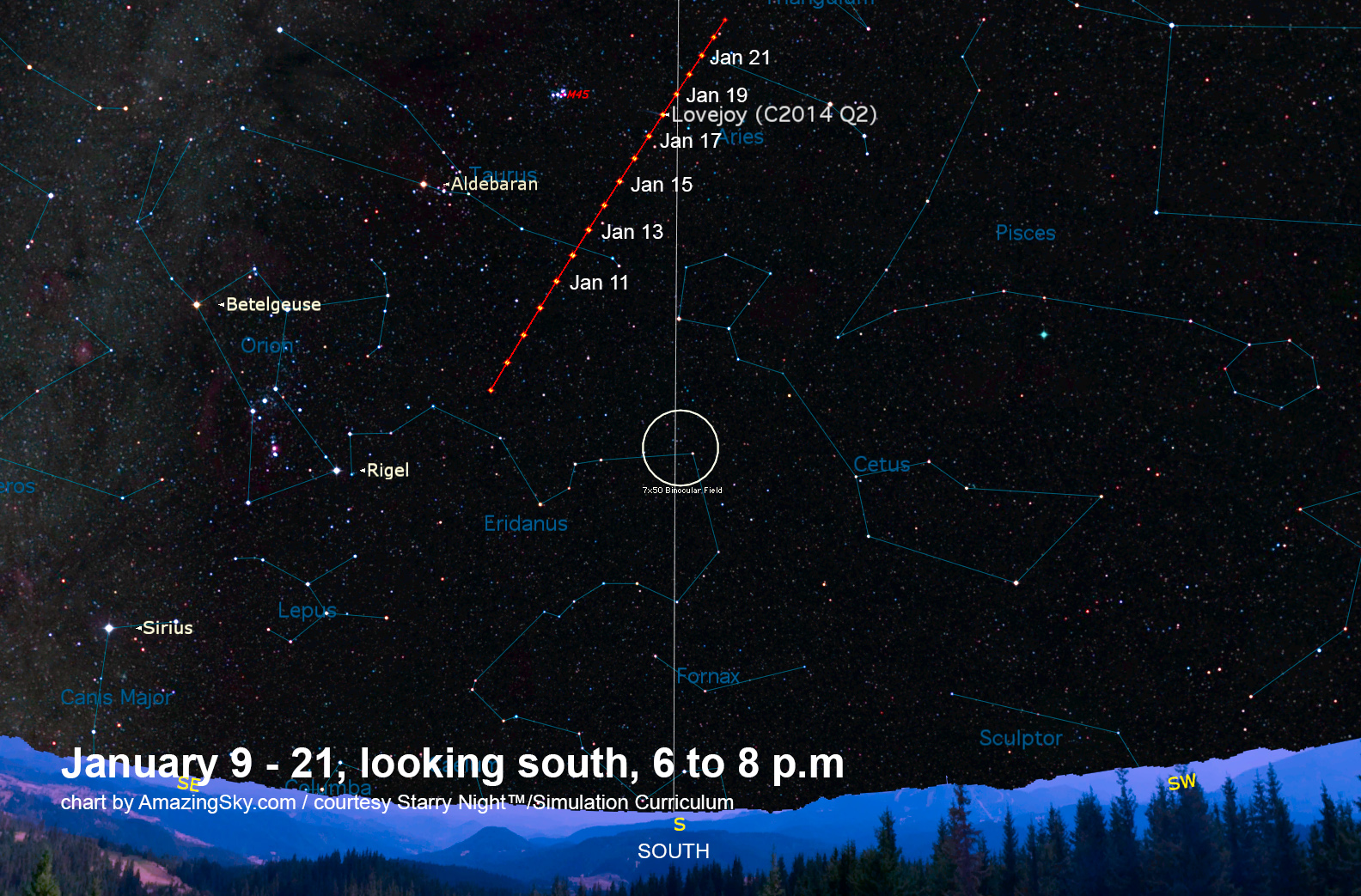
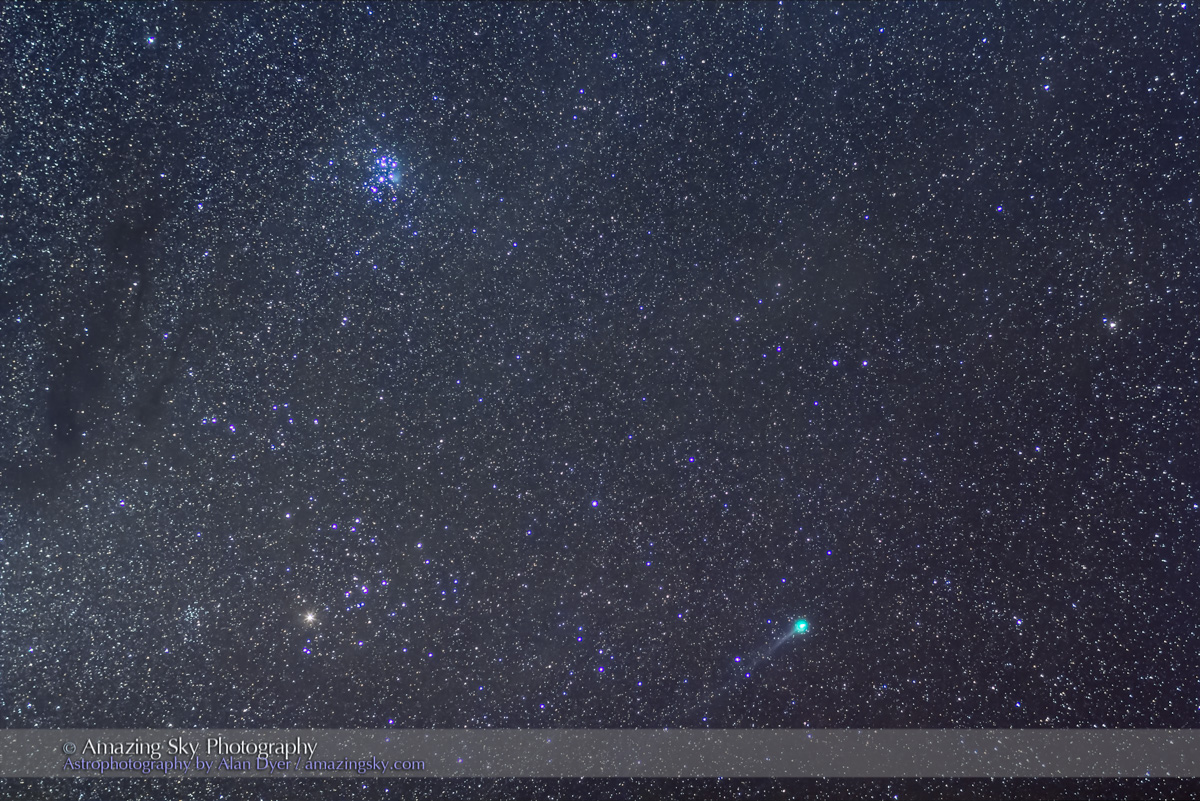
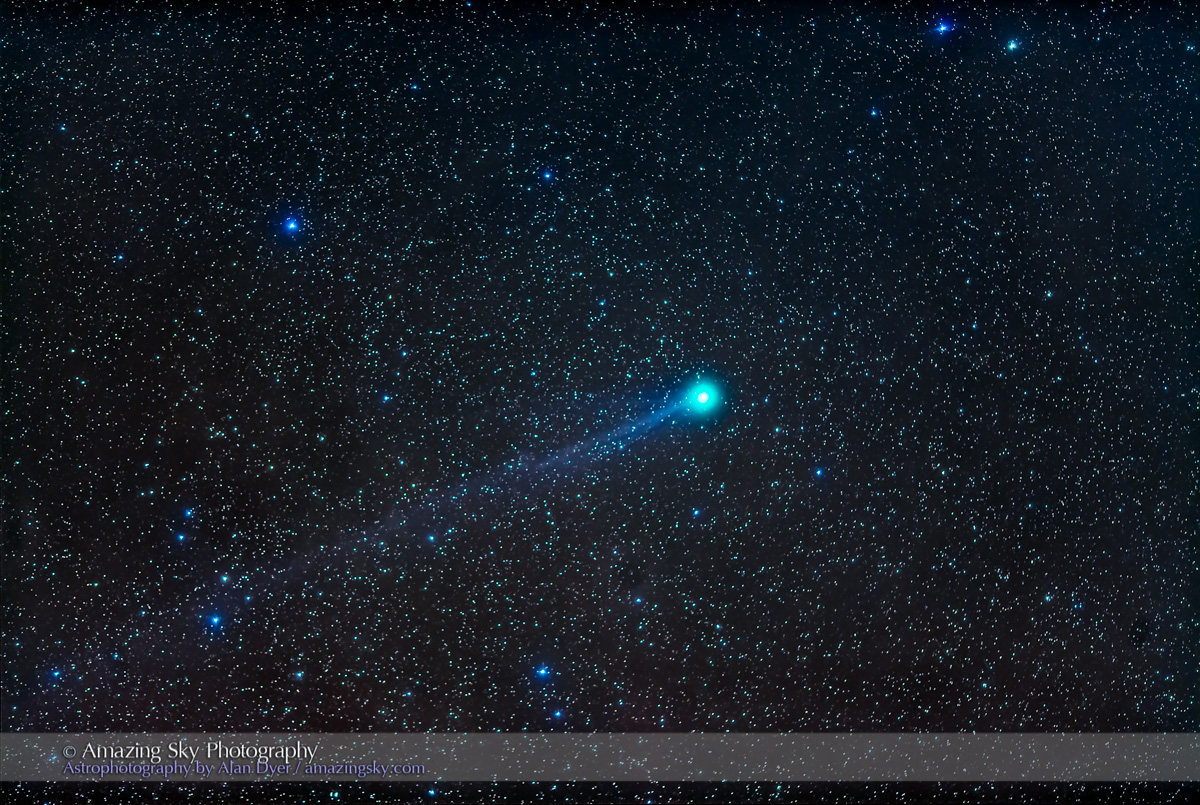
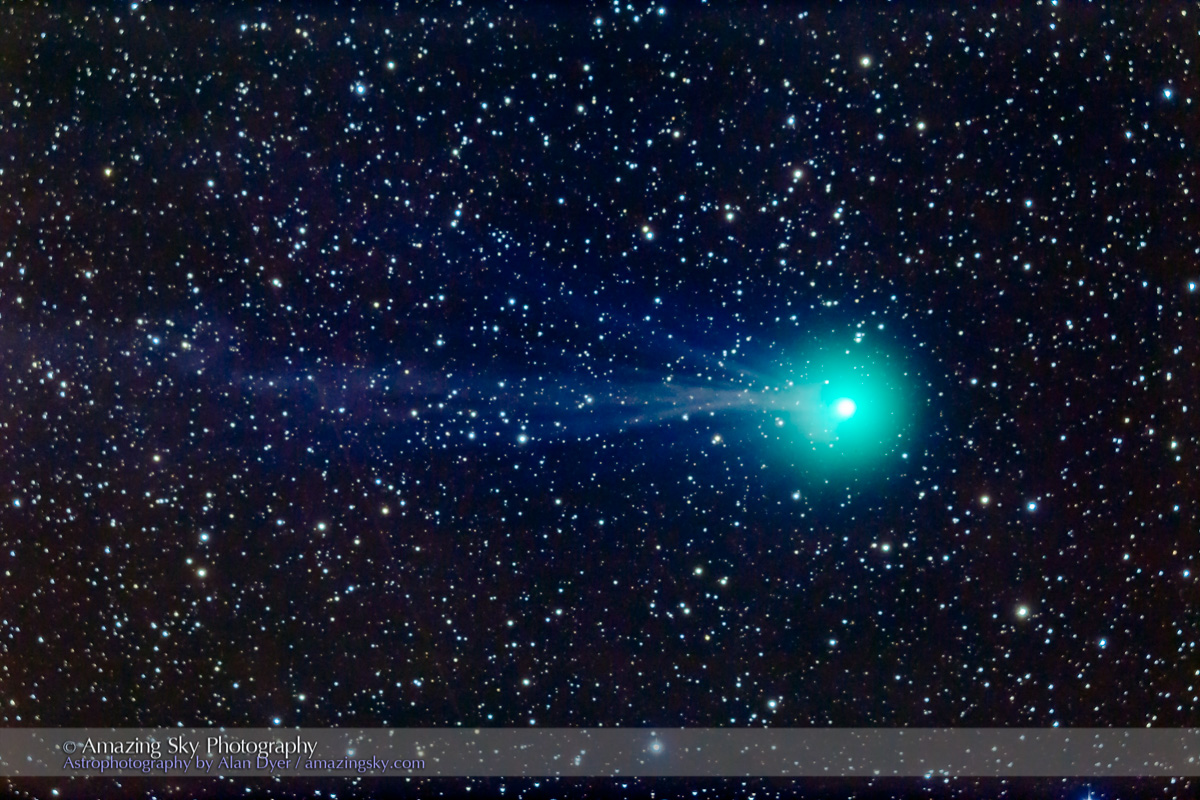
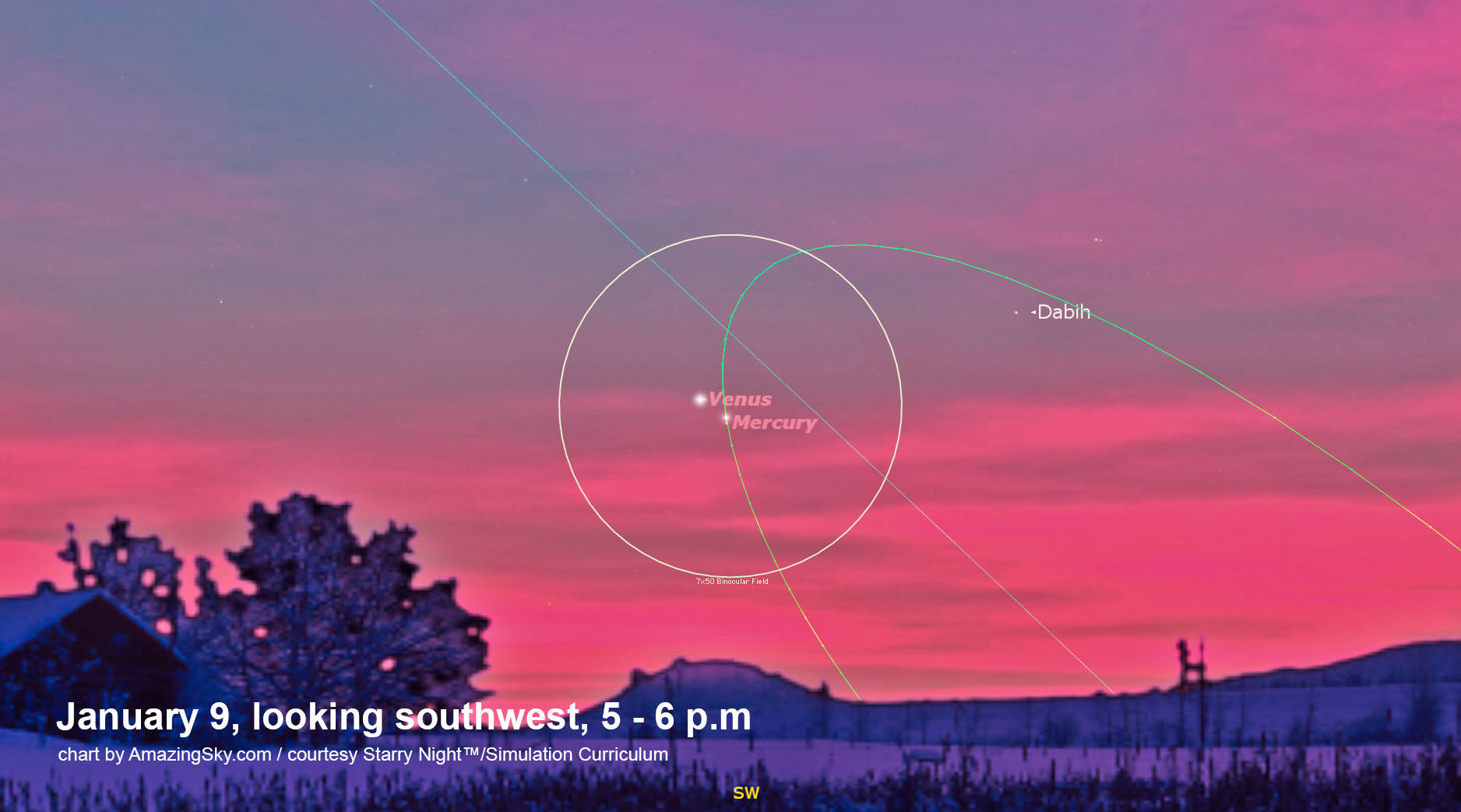
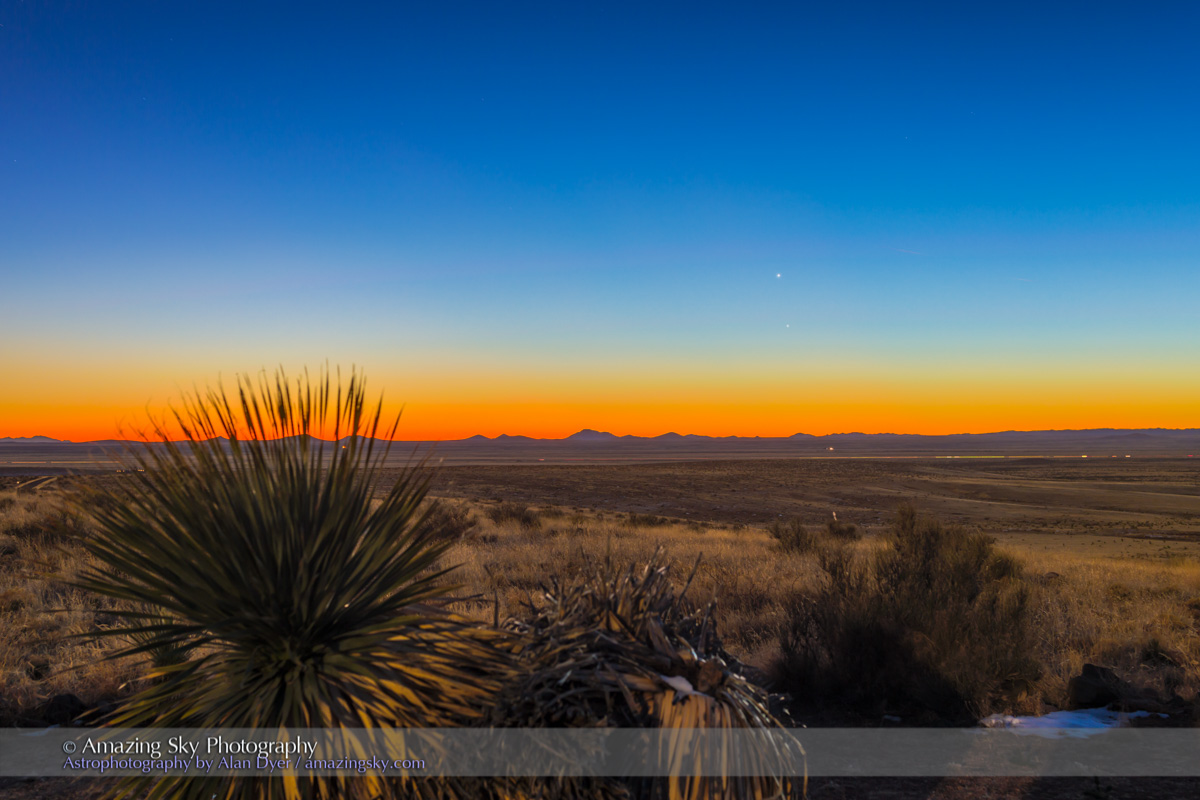
 The Amazing Sky