If you saw the total eclipse in 2024 (or you missed it!) you have three chances in the next three years to see another. But you will have to travel.
Typically, total eclipses of the Sun occur about 18 to 24 months apart. Unusually, in the next three years, we have a trio of total eclipses each only a year apart. Or to be precise, a lunar year — 12 lunar phase cycles — apart.
The map above (courtesy EclipseAtlas.com) plots the paths of all central solar eclipses (annulars, totals and hybrids) from 2021 to 2030. Included are the paths of the 2023 annular and 2024 total in North America you might have seen.
But the next total eclipse in populated North America is not until August 2044, then again in August 2045. To see a total eclipse in the next few years, those of us in the Americas will have to travel.
However, those in Europe can drive to the next eclipse, to their first total eclipse at home since August 1999.
A year from now as I write this, the Moon’s umbral shadow will intercept the Earth for the first time since April 8, 2024. The path of this next total eclipse is unusual in that it starts in northern Russia, travels north over the North Pole, then sweeps down from the north to cross eastern Greenland, nipping the west coast of Iceland, then crossing Spain, to end at sunset over the Balearic Islands of Spain.
Weather prospects are surprisingly good for the several cruise ships planning to be in a Greenland fjord. Iceland is iffy, but had the eclipse been this year (on August 12, 2025) many people would have seen it. Spain was the opposite — statistically it has the best weather prospects along the 2026 path, but on August 12, 2025 most of the country was beset by storms.
From northern Spain, where I intend to be and as I show above, the Sun will be low in the west in the early evening sky, for a relatively short 1m40s of totality. A low eclipse can be spectacular, but riskier as there’s a greater chance of clouds hiding a low Sun.
This and the other images of the Sun’s position at each eclipse are pages from my eclipse ebook, described below.
Twelve new Moons later, the lunar shadow again crosses the Earth, this time passing over North Africa where skies are almost always clear in summer. But the days are hot! The shadow crosses the Strait of Gibraltar and passes over Morocco, Algeria, Tunisia, Libya, Egypt, and Saudi Arabia. In addition to the good weather, the attraction is that this is the longest total eclipse for the rest of the 21st century.
The spectacular temples of Luxor, Egypt are at the point of maximum eclipse, with an unusual 6m23s of totality with the Sun high overhead. Even at Gibraltar, totality is 4m35s, seven seconds longer than the maximum in Mexico in 2024.
From Tunisia, as I show above, the Sun is 55º high over the Mediterranean, and totality is a generous 5m44s.
Another 12 lunar months later, the Moon shadow sweeps across the southern hemisphere, for another generously long eclipse. Remote Western Australia enjoys 5m10s of totality on a winter’s day.
But millions lie in the path in New South Wales, where Sydneysiders can watch a total eclipse over Sydney Harbour lasting 3m48s. The sky scene is below, with a late afternoon winter Sun heading down in the west. From Farm Cove, the eclipsed Sun will be over the Opera House and Harbour Bridge, for a never-to-be-repeated photo op.
The South Island of New Zealand sees a sunset eclipse (the shadow passes over Milford Sound) that lasts 2m55s, longer than the 2017 eclipse in the United States.
Coincidentally, Australia also hosts the next total eclipse to follow, after a gap of 28 months, on November 25, 2030. And the lunar shadow crosses Australia on July 13, 2037 and December 26, 2038 — a Boxing Day eclipse down under. So Australia is the place to be for the next decade or so.
But between 2026 and 2028, Spain is host to three eclipses, as the 2027 total crosses Spanish territory, and the January 26, 2028 annular eclipse ends at sunset in western Spain. At this eclipse the Moon is not large enough to completely hide the Sun, so at mid-eclipse we see a bright ring of light, similar to the annular eclipse here in North America on October 14, 2023.
My Plans
Where will I be? For 2026 I have signed onto a trip to Spain with the well-travelled photo tour company CaptureTheAtlas.com.
They are planning a very photo-centric tour to Spain for viewing the eclipse from a winery near Burgos. I’ll be one of the instructors, among a stellar line-up of eclipse veterans and astrophoto experts. I invite you to check out the details of the tour here at its webpage. We’d love to have you join us!
For 2027 I am planning to be in Tunisia, on the Mediterranean coast, with a tour group from Astro-Trails.com.
The path of totality passes just a few kilometres from Coonabarabran, the “Astronomy Capital of Australia,” as the Siding Spring Observatory is just down the Timor Road in the path. In July the Milky Way is at its best, with the centre of the Galaxy high overhead at nightfall. That’s a sight equal to an eclipse for bucket-list spectacle.
My EBook
The cover of my new 400-page ebook
For 2017’s eclipse I prepared an ebook on how to photograph it. It proved popular, and so for the 2023 and 2024 eclipses I revised it to cover both the annular and total eclipses.
Its popularity prompted me to revise it again, this time to cover the coming trio of eclipses, plus I included pages on the January 2028 annular, as many who visit Spain for the totals may plan to return for the sunset annular (low annulars are also the most spectacular!).
My new ebook is 40 pages larger than the previous edition, with most of the added content in the 100-page chapter on processing eclipse images, from wide-angles, to time-lapses, and to blended exposures of totality close-ups. I include lots of information on choosing the right gear — filters, camera, lenses, telescopes, and tracking mounts.
The slide show above presents images of sample pages. Do page through the gallery for a look at the content.
But for all the details and links to buy the book (from Apple Books or as a PDF for all platforms) see its webpage at my website.
It will be a busy three years for eclipse chasers, as rarely do we get three-in-a-row like this. The diversity of locations and eclipse circumstances make this an exciting trio to chase. But you can just go back to Spain to see most of them!
2024 brought us a total eclipse of the Sun, superb auroras, and a naked-eye comet, three top highlights of a wonderful year of celestial attractions. Maybe the best!
In our book The Backyard Astronomer’s Guide (which we revised this year), Terence Dickinson and I created an Aah! Factor scale with various celestial sights ranked from:
• 1, evoking just a smile, to …
• 10, a life-changing event!
Our book’s Aah! Factor Scale in Chapter 1
Coming in at an 8 is a naked-eye comet. Deserving a 9 is an all-sky display of an aurora. The only sight to rate a top 10 is a total eclipse of the Sun.
2024 brought all three, and more!
Here’s my look back at what I think was one of the greatest years of stargazing.
NOTE: The images might take a while to all load. All can be enlarged to full screen. Just click or tap on them.
January
A Winter Moonrise to Begin the Year
The rising of the winter “Wolf” Moon, the Full Moon of January, over the frozen Crawling Lake Reservoir, in southern Alberta.
Now, this was not any form of rare event. But seeing and shooting any sky sight in the middle of a Canadian winter is an accomplishment. This is the rising of the Full Moon of January, popularly called the Wolf Moon, over a frozen lake near home in Alberta, Canada 🇨🇦.
It serves to bookend the collection with a Full Moon I captured eleven months later in December.
February
Auroras from Churchill, Manitoba
Had this been my only chance to see the Northern Lights fill the sky this year, I would have been happy. As we often see in Churchill, the aurora covered the sky on several nights, a common sight when you are underneath the main band of aurora borealis that arcs across the northern part of the globe.
This is a vertical panorama of the sky-filling aurora of February 10, 2024, as seen from the Churchill Northern Studies Centre, in Churchill, Manitoba.
I attended to two aurora tour groups at the Churchill Northern Studies Centre who both got good displays to check “seeing the Northern Lights” off their bucket list. Join me in 2025!
March
Under the Austral Sky
Ranking a respectable 7 on our Aah! Factor scale is the naked-eye sight of the galactic centre overhead, with the Milky Way arcing across the sky. That’s possible from a latitude of about 30° South. That’s where I went in March, back to Australia 🇦🇺 for the first time since 2017.
This is a framing of the most spectacular area of the southern Milky Way, from Centaurus at left, to Carina at right, with Crux, the Southern Cross, at centre.
I wrote about it in my previous blog, where I present a tour along the southern Milky Way, and wide-angle views of the Milky Way (the images here are framings of choice regions).
This frames the southern Milky Way from Canis Major and its bright star Sirius at top, to Carina and its bright star Canopus at bottom, the two brightest stars in the night sky. The large red complex is the Gum Nebula.
It is a magical latitude that all northern astronomers should make a pilgrimage to, if only to just lie back and enjoy the view of our place in the outskirts of the Galaxy. I was glad to be back Down Under, to check this top sky sight off my bucket list for 2024.
April
A Total Eclipse of the Sun
No sooner had I returned home from Oz, when it was time to load up the car with telescope gear and drive to the path of the April 8 total solar eclipse, the first “TSE” in North America since 2017, which was the last total eclipse I had seen, in a trip to Idaho.
This is a composite of telescopic close-ups of the April 8, 2024 total eclipse, with a multi-exposure blend for the corona at centre, flanked by the diamond rings.
But where? I started south to Texas, my Plan A. Poor weather forecasts there prompted a hasty return to Canada, to drive east across the country to … I ended up in Québec. My blog about my cross-continental chase is here. My final edited music video is linked to below.
It was gratifying to see a total eclipse from “home” in Canada, only the third time I’ve been able to do that (previously in 1979 – Manitoba, and 2008 – Nunavut). If the rest of the year had been cloudy except for this day I wouldn’t have complained. Much.
This definitely earned a 10 on the Aah! Factor scale. Total eclipses are overwhelming and addictive. I’ve made my bookings for 2026 in Spain 🇪🇸 and 2027 in Tunisia 🇹🇳.
May
The Sky’s On Fire
It had been several years since I had seen an aurora from my backyard with colours as vivid and obvious as they were this night. But on May 10, the sky erupted with a fabulous display of aurora that much of the world saw, as aurora borealis in the north and aurora australis in the south.
This is a 300º panorama of the May 10, 2024 Northern Lights display, when the Kp Index reached 8 (out of 9), bringing aurora to the southern U.S.
This was the first of several all-sky shows this year. I blogged about the year’s great auroras here, where there are links to the movies I produced that capture the Northern Lights as only movies can, recording changes so rapid it can be hard to take it all in. Check off a 9 here!
So not even half way through the year, I had seen three of the top sky sights: the Milky Way core overhead (7), an all-sky aurora (9), and a total eclipse of the Sun (10).
But there was more to come! Including an Aah! Factor 8.
June
World Heritage Nightscape Treks
This is a panorama of the arch of the Milky Way rising over the Badlands of Dinosaur Provincial Park, Alberta, with a sky tinted with twilight and airglow.
The sky took a break from presenting spectacles, allowing me to head off on short local trips, to favourite nightscape sites in southern Alberta, which we have in abundance. The Badlands of Dinosaur Provincial Park are just an hour away, the site for the scene above.
A panorama at sunset at Writing-on-Stone Provincial Park (Áísínai’pi) in Alberta, with the Milk River below and the Sweetgrass Hills in the distance in Montana. Note the people at far right.
The rock formations of Writing-on-Stone Provincial Park are a bit farther, requiring a couple of days commitment to shoot. Clouds hid the main attraction, the Milky Way, this night, but did provide a fine sunset.
The Milky Way rises over Mt. Blakiston, in Waterton Lakes National Park, Alberta. This was June 10, 2024, so snow remains at high altitudes.
A little further west down the highway is Waterton Lakes National Park, another great spot I try to visit at least once each year.
All locations I hit this month are U.N. World Heritage Sites, thus the theme of my blog from June. People travel from all over the world to come here, to sites I can visit in a few hours drive.
July
Mountains by Starlight
In summer we now often contend with smoke from forest fires blanketing the sky, hiding not just the stars by night, but even the Sun by day.
The Andromeda Galaxy at centre is rising above Takakkaw Falls, in Yoho National Park. Above is the W of stars marking Cassiopeia.
But before the smoke rolled in this past summer I was able to visit a spot, Yoho National Park in British Columbia, that had been on my shot list for several years. The timing with clear nights at the right season and Moon phase has to work out. In July it did, for a shoot by starlight at Takakkaw Falls, among the tallest in Canada.
This is the Milky Way core and a bonus meteor over the peaks and valleys at Saskatchewan River Crossing, in Banff National Park, Alberta.
The following nights I was in Banff National Park, at familiar spots on the tourist trail, but uncrowded and quiet at night. It was a pleasure to enjoy the world-class Rocky Mountain scenery under the stars on perfect nights.
August
The All-Sky Auroras Return
In August I headed east to Saskatchewan and the annual Summer Star Party staged by the astronomy clubs in Regina and Saskatoon. It is always a pleasure to attend the SSSP in the beautiful Cypress Hills. The sky remained clear post-party for a trip farther east to the little town of Val Marie, where I stayed at a former convent, and had a night to remember out in Grasslands National Park, one of Canada’s first, and finest, dark sky preserves.
The Northern Lights in a superb all-sky Kp6 to 7 display on August 11-12, 2024, in Grasslands National Park, Saskatchewan.
The plan was to shoot the August 11 Perseid meteor shower, but the aurora let loose again for a stunning show over 70 Mile Butte. My earlier blog has more images and movies from this wonderful month of summertime Northern Lights.
We are fortunate in western Canada 🇨🇦 to be able to see auroras year-round, even in summer. Farther north at the usual Northern Lights destinations, the sky is too bright at night in summer.
September
Back to Deep Sky Wonders …
This is a framing of the rich starfield in Sagittarius and Serpens containing a mix of bright star clouds, glowing nebulas, and dark dust in the Milky Way.
September is the month for another astronomical party in the Cypress Hills, but on the Alberta side. At the wonderful Southern Alberta Star Party under its very dark skies, I was able to shoot some favourite deep-sky fields along the Milky Way with new gear I was testing at the time.
This frames the complex region of emission nebulas in central Cygnus near the star Gamma Cygni, at lower left. The Crescent Nebula is at centre.
And from home, September brought skies dark and clear enough (at least when there was no aurora!) for more captures of colourful nebulas (above and below) along the summer Milky Way.
This frames all the photogenic components of the bright Veil Nebula in Cygnus, a several-thousand-year-old supernova remnant.
We invest a lot of money into the kind of specialized gear needed to shoot these targets (and I’m not nearly as “committed” as some are, believe me!), only to find the nights when it all comes together can be few and far between.
… Plus, A Very Minor Eclipse of the Moon
I had to include this, if only for stark contrast with the spectacular solar eclipse six months earlier.
We had an example of the most minor of lunar eclipses on March 24, 2024, with a so-called “penumbral” eclipse of the Moon, an eclipse so slight it’s hard to tell anything unusual is happening. (So I’ve not even included an image here, though I was able to shoot it.)
Me at another successful eclipse chase … to my backyard to capture the partial lunar eclipse on September 17, 2024. The Moon is rising in the southeast.
On September 17, we had our second eclipse of the Moon in 2024. This time the Earth’s umbral shadow managed to take a tiny bite out of the Full Moon. Nothing spectacular to be sure. But at least this eclipse expedition was to no farther away than my rural backyard. A clear eclipse of any kind, even a partial eclipse, especially one seen from home, is reason to celebrate. I did!
Of course, a total eclipse of the Moon, when the Full Moon is completely engulfed in Earth’s umbra and turns red, is what we really want to see. They rate a 7 on our Aah! Factor scale. We haven’t had a “TLE” since November 8, 2022, blogged about here.
We knew early in 2024 that the then newly-discovered Comet Tsuchinshan-ATLAS had the potential to perform this month. I planned a trip south to favourite spots in Utah and Arizona to take advantage of what we hoped would be a fine autumn comet.
This is Comet Tsuchinshan-ATLAS (C/2023 A3) at its finest in the evening sky, on October 14, two days after its closest approach to Earth, and with it sporting a 10º- to 15º-long dust tail, and a short narrow anti-tail pointed toward the horizon. The location was Turret Arch in the Windows area of Arches National Park, Utah.
It blossomed nicely, especially as it entered into the evening sky in mid-October, as above. Despite the bright moonlight, it was easy to see with the unaided eye, a celestial rarity we get only once a decade, on average, if we are lucky. My blog of my comet chase is here.
This is a panorama of Comet Tsuchinshan-ATLAS over Arches National Park, Utah, on a moonlit night, October 15, 2024, with the comet easy to see with the unaided eye.
A naked-eye comet ranks an 8 on our Aah! Factor scale. So now 2024 had delivered all four of our Top 4 sky sights.
This 360° panorama captures a rare SAR (Stable Auroral Red) arc across the Arizona sky in the pre-dawn hours of October 11, 2024. The SAR arc was generated in the high atmosphere as part of the global geomagnetic storm of October 10/11, 2024, with a Kp8 rating that night.
But … just as a bonus, there was another fabulous aurora on October 10, seen in my case from the unique perspective of southern Arizona, with an appearance of a bright “SAR” arc more prominent than I had ever seen before. So that view was a rarity, too, so unusual it doesn’t even make our Aah! list, as SARs are typically not visible to the eye.
November
Back to Norway for Northern Lights
2024 was notable for travel getting “back to normal,” at least for me, with two long-distance drives, and now my second overseas trip. This one took me north to Norway 🇳🇴, which I had been visiting twice a year as an enrichment lecturer during pre-pandemic years.
A green and red aurora appears over the coast of Norway, with Jupiter bright at right. This was from the Hurtigruten ship m/s Nordkapp on November 10, 2024, on a coastal cruise with a Road Scholar tour group.
The auroras were excellent, though nothing like the great shows of May and October. But the location sailing along the scenic coast and fjords makes up for any shortfall in the Lights. It was good to be back. I plan to return in 2025 for two cruises in October. Join me there, too!
December
A Winter Moonrise to End the Year
As I write this, December has been nothing but cloud. Almost. A clear hour on Full Moon night allowed a capture of the “Cold Moon,” with the Moon near Jupiter, then at its brightest for the year. So that’s the other lunar bookend to the year, shot from the snowy backyard.
This is the Full Moon of December 14, 2024, near the planet Jupiter at lower right. Both were rising into the eastern sky in the early evening.
However, I did say after the clear total eclipse in April that if the rest of 2024 had been cloudy I wouldn’t complain. So I’m not.
And there’s no reason to, as 2024 did deliver the best year of stargazing I can remember. 2017 had a total solar eclipse. 2020 had a great comet. But we have to go back to 2003 for aurora shows as widespread and as a brilliant as we’ve seen this year. 2024 had them all. And more!
After an absence of seven years it was great to be back under the fabulous sky of the Southern Hemisphere, home to the best deep-space splendours. Here’s my sky tour…
From 2000 to 2017, the year of my last previous trip Down Under, I had been travelling to the Southern Hemisphere, sometimes to Chile but most often to Australia, once a year or biennially. There’s just so much to see and photograph in the southern sky.
This is a panorama of the southernmost portion of the Milky Way, from the stars Alpha and Beta Centauri at far left, to Sirius, the brightest nighttime star, at far right. The second brightest star, Canopus, is at bottom. This is a panorama of 3 segments, each a stack of 10 to 20 sub-frames, each 4 minutes at ISO 800 with the Canon Ra and Canon RF28-70mm lens at f/2.
While the deep-south sky represents perhaps just 30 percent of the entire celestial sphere, it contains arguably the best of everything in the sky: the best nebulas, the best star clusters, the best galaxies, and certainly the best view of our own galaxy, the Milky Way.
No astronomical life is complete without a visit (or two or more!) to the lands south of the equator, ideally to a latitude of about 20° to 35° South. For the first time since 2017, I headed south this past March, in 2024. My belated blog takes you on a tour of the great southern sky.
NOTE: My blog is illustrated with lots of images, so it might take a while to load. Click or tap on an image to bring it up full screen. For the technically curious, I have included gear and exposure details in the captions.
Far Away in Australia
Yes, it’s long way to go — a 15-hour-flight from Canada. But Australia is my favourite destination down under. I can speak the language (sort of!), and have learned to drive on the left. Even after a seven year absence, my brain took only a few minutes to adjust once again to most of the car, and opposing traffic, being on the “wrong side” of me.
After a visit with the “relos” (Aussie for “relatives”) in Sydney and on the Central Coast of New South Wales, I loaded up all the telescope gear my folks had been kindly storing for me for two decades, and headed inland. Not really Outback. And not really “bush.”
My destination in March, as it usually has been on my many visits (this was my 12th time to Australia), was Coonabarabran in the Central West of NSW. It bills itself as the “Astronomy Capital of Australia.”
And rightly so, as nearby is the Siding Spring Observatory, Australia’s largest complex of optical telescopes (check the slide show above). I had a great tour again — thanks, Blake! — of the big 4-metre AAT that towers over the rest of the observatories on the mountain.
The Upside-Down Sky
A pano of Mirrabook Cottage, my astronomy retreat site.
My home for the first week in “Coona,” as the waning Moon got out of the way, was the Mirrabook Cottage off Timor Road, ideal as an astrophoto retreat. The view to the east and south (the view above) is partly obscured by gum trees, but not enough to prevent shooting targets around the South Celestial Pole, such as the Magellanic Clouds, as I show below.
The scope came with me this time, but the mount had been in Oz for 20 years.
The first order of the day upon arriving was to sort out my gear, to see if it was all working. My main Oz telescope, a legendary Astro-Physics Traveler refractor that I had stored in Australia since the early 2000s, came home with me in 2017, for use at the 2017, 2023, and 2024 solar eclipses in North America (the links take you to blogs for those eclipses) .
So this year I brought another little refractor with me, the diminutive Sharpstar 61mm EDPH III. Many of the images I present here I shot with the Sharpstar, on the veteran Astro-Physics AP400 mount I show above, which had lived in Australia for two decades. It came home with me this time, to use the very next month at the April total eclipse in Quebec. My blog with the final music video from that eclipse is here.
But I also brought a little star tracker, an MSM Nomad, which I reviewed here, just in case the old iOptron tracker I had in Australia, but hadn’t used since 2017, did not work. I needn’t have feared. It was the new Nomad that had issues, with the iOptron serving me well as a back-up for wide-angle Milky Way images.
This is a wide-angle view of the constellations of the northern hemisphere winter, but seen from the southern hemisphere looking north on an austral autumn night, March 3, 2024. Shot on the MSM Nomad tracker, for a blend of 4 x 2-minutes tracked at ISO 1600 for the sky and 2 x 2-minutes untracked at ISO 800 for the ground.
From Mirrabook looking north affords a fine view of a sky familiar to us northerners — if we stand on our heads! Orion and the stars of “winter” are there but upside-down for us, with the constellations that are overhead for us at home, now low in the north.
I shot all the images presented here during my two-week Oz astrophoto extravaganza. I had clear skies every night, bar for a couple that were welcome breaks!
This is a wide-angle view of the southern Milky Way, here from Carina and Crux at lower left up to Orion and Monoceros at upper right. On the MSM Nomad tracker, for a stack of 10 x 3-minute exposures at ISO 800 with the TTArtisan 11mm lens on the Canon Ra.
South of Orion, and overhead from Australia (as I show above), is the dimmer section of the Milky Way passing through constellations once part of the huge celestial ship Argo Navis, now broken into Puppis the Aft Deck, Vela the Sails, and Carina the Keel, the latter containing the second brightest star in the night sky, Canopus, second only to Sirius nearby in Canis Major.
Puppis and Vela
Though somewhat obscure and hard to pick out as distinctive patterns, Puppis and Vela are filled with deep-sky wonders.
The biggest is so vast it covers as much sky as a hand length, held at arm’s length. But it is totally invisible to the eye, even aided by optics.
This is a framing of the vast Gum Nebula in the southern Milky Way, that sprawls over the constellations of Vela and Puppis. This is a stack of 12 x 5 minutes at ISO 1600 and f/2 with the Astronomik 12nm H-alpha clip-in filter, blended onto the base unfiltered images from a stack of 14 x 3 minutes at f/2.8, all with the Canon RF28-70mm lens at 28mm on the red-sensitive Canon Ra camera, and on the MSM Nomad tracker.
This is the huge Gum Nebula, discovered in 1955 by Australian astronomer Colin Gum, working at the Mt. Stromlo Observatory near Canberra. It might be a star-forming nebula shaped by stellar winds, or it might be the exploded debris of a nearby supernova star.
Within the Gum Nebula in Vela is a smaller complex of arcs and fragments I show below. This definitely is a supernova remnant, one that exploded about 11,000 years ago some 900 light years away. But it, too, is large, making it a perfect target for the little refractor, and a telephoto lens, with both versions below.
This frames most of the intricate arcs and loops of the Vela Supernova Remnant (SNR). This is a stack of 8 x 10-minute exposures shot through an IDAS NBZ dual narrowband filter to bring out the nebulosity, blended with a stack of 12 x 5-minute exposures with no filter. All with the filter-modified Canon EOS R camera, on the Sharpstar 61 EDPH III refractor at f/4.4. This is the large Vela Supernova Remnant in a stack of 15 x 2-minute exposures with the Canon RF135mm lens at f/2 on the Canon Ra at ISO 1000. With a broadband filter.
The area is also home to rich fields of bright star clusters (two are below), many intertwined with wreaths of star-forming nebulosity. These rival or exceed the more famous northern targets of the Messier Catalogue compiled between 1774 and 1781 by Charles Messier. It took several more decades before astronomers from the north catalogued the sky to the south.
This is the bright, large and colourful naked-eye star cluster NGC 2516 in Carina, aka the Southern Beehive Cluster, near the bright star Avior (Epsilon Carinae) in Carina. This is a stack of 8 x 5 minute exposures with the Sharpstar 61mm refractor at f/4.4 and the Canon R at ISO 800.This frames a pair of contrasting and superb star clusters in Puppis: rich NGC 2477 on the left and sparse but bright NGC 2451 on the right, the latter centred on the orange star c Puppis. This is a stack of 8 x 5 minute exposures with the Sharpstar 61mm refractor at f/4.4 and the modified Canon R at ISO 800.
Carina and Crux
Continuing deeper down the Milky Way we come to its most southerly portion rich in nebulas and clusters that outclass anything up north. This is also the brightest part of the Milky Way after the Galactic Centre.
This is the showpiece nebula of the southern skies, the Carina Nebula. The bright and rich Football Cluster, aka the Black Arrow Cluster or Pincushion Cluster, is at upper left. With the Sharpstar refractor at f/4.4 and filter-modified Canon R at ISO 3200 for narrowband filtered shots and ISO 800 for unfiltered shots.
The Carina Nebula is larger than the more famous Orion Nebula farther north. In the eyepiece it is a glowing cloud painted in shades of grey and crossed by intersecting dark lanes of dust. Photographs reveal even more intricate details, and the magenta tints of glowing hydrogen.
At upper left is the “Football Cluster,” as Aussies call it, or the Black Arrow Cluster, aka NGC 3532. It is surely one of the finest open star clusters in the sky. John Herschel, who in the 19th century compiled the first thorough catalogue of southern objects, thought so. I agree!
This is the Southern Pleiades star cluster surrounding the naked eye star Theta Carinae. This is a stack of 8 x 5 minute exposures with the Sharpstar 61mm refractor at f/4.4 and the Canon R at ISO 800.
Below the Carina Nebula is a brighter and bluer star cluster known as the Southern Pleiades, or IC 2602. Like many of the targets I show here, it is visible to the unaided eye and is a fine sight in binoculars, which are all you need to enjoy most of the southern splendours.
This two-segment telephoto lens panorama extends from the colourful stars of Crux, the Southern Cross at left, to Carina at right. This is a panorama of two segments, each a stack of 12 x 2-minute exposures with the Canon RF135mm lens at f/2 on Canon Ra at ISO 800.
East of the constellation of Carina is the iconic and colourful Southern Cross, or Crux, a star pattern on the flags of Australia, New Zealand and several other austral nations.
This frames the dark Coal Sack nebula in Crux, the Southern Cross. This is a stack of 8 x 5 minute exposures with the Sharpstar 61mm refractor at f/4.4 and the filter-modified Canon R at ISO 800.
Next to Crux is the darkest patch in the Milky Way, called the Coal Sack. Looking like a dark hole to the eye, in photos it breaks up into streaky dust lanes surrounded by famous star clusters, like the Jewel Box above it. Like many southern clusters, the aptly named (by Herschel) Jewel Box contains a variety of colourful stars.
This is the region around the star Lambda Centauri, with the Running Chicken Nebula or IC 2948, at bottom, surrounding the star Lambda Centauri and the loose open star cluster IC 2944. This is a stack of 12 x 5 minute exposures with the Sharpstar 61mm at f/4.4 and filter-modified Canon EOS R camera at ISO 800.
Between Carina and Crux sits another wonderful field of clusters and nebulas, among them the more recently named Running Chicken Nebula. Can you see it? Above it is the Pearl Cluster, NGC 3766, also notable for its colourful member stars.
This frames the small constellation of Musca the Fly below the Southern Cross, with the dark nebula called the Dark Doodad, part of the Musca Dark Nebula Complex. This is a stack of 12 x 2 minute exposures with the Canon RF135mm lens at f/2 on the Canon Ra at ISO 800.
Below Crux is the little constellation of Musca the Fly (many southern constellations are named for rather mundane creatures and objects). One of Musca’s prime sights is the long finger of dusty darkness called the Dark Doodad — yes, that’s its official name!
The Magellanic Clouds
All the targets I’ve shown so far reside in our Milky Way. The next two objects, named for 16th century explorer Ferdinand Magellan, are extra-galactic.
This is the southern Milky Way in Carina, Crux and Centaurus arcing over Mirrabook Cottage. At right are the Large and Small Magellanic Clouds. This is looking south to the South Celestial Pole which is near centre here.
The Clouds are other galaxies beyond ours, but nearby. They are among the closest galaxies and are considered satellites of the Milky Way. Both are visible to the unaided eye, looking like detached bits of the Milky Way. For deep-sky aficionados, they are reason enough to visit the Southern Hemisphere!
This frames the entire Small Magellanic Cloud, a member of the Local Group of galaxies and a companion of our Milky Way Galaxy. The field is 7.5 by 5º. This is a blend of a stack of 8 x 10-minute exposures at ISO 3200 through an IDAS NBZ narrowband filter, and a stack of 12 x 5 minute unfiltered exposures at ISO 800, all with the Sharpstar 61mm refractor at f/4.4 and the filter-modified Canon R.
The Small Magellanic Cloud contains many star-forming nebulas that glow in hydrogen red and oxygen cyan. It is most famous for its spectacular neighbour, the great globular star cluster called 47 Tucanae, here at right. It is not actually part of the SMC — 47 Tuc is more than ten times closer, on the outskirts of our Galaxy.
As rich as the Small Cloud is, it pales in comparison to its bigger neighbour, the LMC. The Large Magellanic Cloud is almost a universe unto itself. Astronomers have devoted their careers to studying it.
This is the Large Magellanic Cloud, some 160,000 light years away. This is with the Sharpstar refractor in a stack of 12 x 10-minute exposures at ISO 3200 through an IDAS NBZ dual-band (OIII and H-a) filter that adds most of the nebulosity, blended with a stack of 20 x 5-minute exposures at ISO 800 with no filter for the main “natural light” background content.
The biggest attraction in the LMC, one visible to the eye, is the Tarantula Nebula, the mass of cyan at left here. Many of the LMC’s nebulas emit light primarily from oxygen, not hydrogen. But figuring out which object is which can be tough. The LMC is filled with so many nebulas and clusters — and nebulous clusters — that no two catalogues of its contents ever quite agree on the identity and labels of all of them.
Northern Fields
The Magellanic Clouds are in the deep south, close to the Celestial Pole. A trip south of the equator is needed to see them. But on my trips to Australia I often like to shoot “northern” fields that I can’t get well at home in Canada.
This frames the variety of bright nebulas and dark dust clouds in and around the Belt and Sword of Orion. It shows how the bright Orion Nebula is really just the visible tip of a vast complex of gas and dust in Orion. This is a stack of 14 x 2 minute exposures with the Canon RF135mm lens at f/2 and on the Canon Ra at ISO 800. The lens had an 82mm URTH Night broadband filter on it to enhance nebulas somewhat.
This is the Belt and Sword of Orion the Hunter surrounded by interstellar clouds. It’s low in my south from home, but high in the north down under. This is with a telephoto lens, not the telescope, captured under better and more comfortable skies than I have in winter in Canada.
This is the nebula-rich region of Monoceros the Unicorn, containing the bright Rosette Nebula, NGC 2237, below the fainter and larger complex of nebulosity, NGC 2264, which contains the small (on this scale) Cone Nebula. This is a stack of 16 x 2 minute exposures with the Canon RF135mm lens at f/2 and on the Canon Ra at ISO 800.
Nearby is another nebulous field but fainter, in Monoceros the Unicorn, containing the popular target, the Rosette Nebula, at bottom here. But there’s much more in the area that shows up only in long exposures under dark skies.
At top is the large Seagull Nebula, an area of mostly red hydrogen-alpha emission and is a region of star formation. At bottom is the small Thor’s Helmet, mostly emitting cyan oxygen III light. This is a blend of a stack of 12 x 10-minute exposures at ISO 3200 with the IDAS NBZ filter, and a stack of 12 x 5-minute exposures at ISO 800 with no filter. All with the Sharpstar 61mm refractor at f/4.4 and Canon EOS R camera.
A target I’ve often had difficulty shooting for one technical reason or another is the Seagull Nebula straddling the border between Monoceros and Canis Major. I got it this time, together with a contrasting blue-green nebula called Thor’s Helmet, at lower left. It’s the expelled outer layers of a hot but aging giant star called a Wolf-Rayet star.
The OzSky Star Party
After a successful week at Mirrabook, I packed up and moved down the road to the Warrumbungles Mountain Motel, home to the annual OzSky Star Safari I have now attended six times over the years. (I see as of this writing it is almost sold out for 2025!)
A colorful sunset over the telescope field at the OzSky star party, March 15, 2024, at the Warrumbungles Mountain Motel, near Coonabarabran, NSW, Australia.
Handheld with the RF28-70mm lens at 28mm on the Canon R.
Limited to about 30 people, OzSky (flip through the slide show above) caters to ardent amateur astronomers from overseas who want to revel in the southern sky, aided by the presence on site of a field of giant telescopes, delivered and set up by a great group of Australian astronomers, who show everyone how to run the computer-equipped scopes. And with tips on what to look at beyond the top “eye candy” targets I’m presenting here.
The views of the southern splendours through these 18- to 25-inch telescopes are well worth the price of admission!
Our group photo of the 2024 OzSky T-shirted attendees and hosts.
It is always a great week of stargazing and camaraderie. If you are thinking of “doing the southern sky,” I can think of no better way than by attending OzSky. While it is primarily geared to visual observers, a growing number of attendees have been lured into the “dark side” of astrophotography.
March and April, austral autumn, are good months to go anywhere down under, as you get views of the best of what the southern sky has to offer. The Milky Way is up all night, just as it is six months later in our northern autumn. That’s when I made my complementary Arizona pilgrimage this year, blogged about here.
The Dark Emu Rising
One of the great naked-eye sights at OzSky in its usual months of March or April is the Dark Emu rising after midnight.
This frames the Australian Aboriginal “Dark Emu” made of dark dust lanes in the Milky Way as it rises in the east. This is a blend of four tracked exposures for the sky and one untracked for the ground, all two minutes at ISO 1600 with the TTArtisan 11mm full-frame fish-eye lens on the Canon EOS R camera.
It is an Australian Aboriginal constellation made of lanes of obscuring interstellar dust, from the Coal Sack on down the Milky Way to past the Galactic Centre. It is obvious to the eye — a constellation made of darkness.
Sagittarius and Scorpius
Late at night in the austral autumn months, the centre of the Galaxy region in Sagittarius and Scorpius comes up, presenting such a wealth of fields and targets it is hard to know where to begin.
There’s no richer and more colourful area of the sky than this field encompassing the Galactic Center in Sagittarius, at left, and the constellation of Scorpius seen in full here at centre and at right. This is a stack of 6 x 2 minute exposures with the Canon RF 28-70mm lens at f/2 on the Canon Ra at ISO 800.
Yes, we can see this area from up north, but there’s nothing like seeing Scorpius crawling up the sky head first, and then shining from high overhead by dawn.
This is a mosaic of the tail of Scorpius — from the bright star cluster Messier 7 at upper left embedded in bright Milky Way starclouds, to the large star cluster NGC 6124 amid dusty dark lanes at lower right. This is a stitch of 3 segments: each a stack of 6 x 2 minute exposures with the Canon RF135mm at f/2 on the Canon Ra at ISO 800.
Fields like this in the Tail of Scorpius are below my northern horizon at home. And it would still be low from a southern U.S. site, where natural green or red airglow can spoil images. I’ve never had an issue with airglow in Australia. Oz skies are as dark and clean as I have ever experienced.
The Southern Milky Way
The grand finale of a night at OzSky, or anywhere in the southern hemisphere in autumn, is the celestial sight that I think ranks as one of the sky’s best, up there with a total solar eclipse.
This is an all-sky view of the centre of the Galaxy region in Sagittarius and Scorpius nearly overhead before dawn on an austral autumn morning in March 2024. The Milky Way stretches from Aquila at bottom left to Crux and Carina at upper right. This is a stack of 4 x 4 minute tracked exposures, at f/2.8 with the TTArtisan 11mm full-frame fish-eye lens on the filter-modified Canon EOS R at ISO 800.
That sight is the jaw-dropping pre-dawn panorama of our Galaxy stretched across the sky, with the bright core overhead and its spiral arms out to either side. It is obvious as a giant edge-on galaxy, with us far off-centre. The image above frames the entire Dark Emu.
One of my projects this year, for a moonless night with little likelihood of clouds coming through, was to work photographically along the Milky Way, down from Orion into Puppis and Vela, through Carina and Crux, and into Centaurus, then finishing with the galactic core area of Scorpius and Sagittarius.
This panorama takes in a 180° sweep of the Milky Way: from Sagittarius, Scorpius and the Galactic Centre at left, to Orion, Gemini and near the galactic anti-centre at right. This is a panorama of 11 segments, each a stack of 8 to 12 exposures, of 2 or 3 minutes each, with the Canon RF28-70mm lens at f/2.2 or f/2.8 on the Canon Ra at ISO 800.
The resulting 180º panorama, made of 11 segments shot at 32° South, was an all-night affair, interrupted by a nearby tree and the oncoming dawn. It complements one I shot six months later from 32° North in Arizona. That panorama is included in my Comet Chasing blog.
The Moon Returns
OzSky, as are all star parties, is timed for the dark of the Moon. By the end of the week, with everyone well and truly satiated by starlight and dark skies, the crescent Moon was beginning to appear in the west. (Yes, that’s a young waxing evening Moon, here near Jupiter on March 14, 2024.)
The waxing crescent Moon near Jupiter in the western twilight sky on an austral autumn evening. This is a blend of exposures to retain the detail around the bright Moon and corona glow: long (2.5s) for the sky and stars, and three shorter (0.6s, 0.3s and 1/6s) exposures for the Moon.
It was time to pack the telescopes into their trailers, and for everyone to head back home, whether that be in Australia or elsewhere in the world.
If You Go…
If you travel to the Southern Hemisphere, at the very least take binoculars and star charts, especially simple “beginner” charts, as you’ll be starting over again identifying a new set of patterns and stars.
For astrophotography, a star tracker is all you need, plus of course a camera and lenses. Focal lengths from fish-eye to telephoto can all be put to use. But many of the best fields are suitable for framing with no more than a 135mm lens, as I used for some of the images here.
But take good charts to identify the location of the South Celestial Pole in Octans the Octant. With no bright “South Star,” it can be tricky getting that field into your polar alignment sighting scope. Once aligned, I tend to leave my rig set up where it is, and not have to repeat the process each night. That’s why it’s nice to base yourself under dark skies at a cottage like Mirrabook, and not be on the road and at a different site every night.
The Sharpstar 61mm scope on the Star Adventurer GTi mount.
If you want to have a telescope with you, one of the current generation of small (50mm to 70mm) apo refractors is ideal, either to look through or shoot through. For imaging, a small equatorial mount is essential, but can be tough to pack with its tripod. And you need to power it. The little Sky-Watcher Star Adventurer GTi powered by its internal 8 AA batteries, but on a collapsible carbon fibre tripod, is a good choice.
For visual tours, the OzSky Star Safari will provide all the eyepiece time on big scopes you could ask for. It is imaging where you are on your own to come fully equipped and self-contained.
When will I be back? Perhaps not in 2025. But 2026 is a possibility, maybe a little later in austral autumn to get the Galactic Centre up sooner and higher before dawn. I’ve been to Australia in the winter months of June and July and it’s too cold! May perhaps.
My Oz observing site — with camera gear accompanied by a roo. Or a wallaby? Note the cover over my aligned tracker rig at right.
If you go once, you will be bitten (we hope not literally by one of Oz’s killer critters!) by the southern sky passion.
The only downside is that when I get home, often to poor weather, but even when skies are clear, I find that the home skies tend to lose their excitement and attraction. They just can’t compare to the great southern skies.
I present a new 4-minute music video (in 4K resolution) featuring time-lapses of the Milky Way.
One of the most amazing sights is the Milky Way slowly moving across the sky. From Canada we see the brightest part of the Milky Way, its core region in Sagittarius and Scorpius moving across the souther horizon in summer.
But from the southern hemisphere, the galactic core rises dramatically and climbs directly overhead, providing a jaw-dropping view of our edge-on Galaxy stretching across the sky. It is a sight all stargazers should see.
I shot the time-lapses from Alberta, Canada and from Australia, mostly in 2016 and 2017.
I include a still-image mosaic of the Milky Way from Aquila to Crux shot in Chile in 2011.
Do watch in 4K if you can! And in Full-Screen mode.
Locations include Writing-on-Stone and Police Outpost Provincial Parks, and Banff and Jasper National Parks in Alberta.
In Australia I shot from the Victoria coast and from inland in New South Wales near Coonabarabran, with some scenes from the annual OzSky Star Safari held each April.
The latitude of 30° South is the magic latitude on Earth for seeing the Milky Way.
From that region of the world – southern Australia, central South America, southern Africa – the centre of the Galaxy passes overhead, and you see the view at top.
You see the galactic core glowing brightly at the zenith, and the arms of the Milky Way stretching off to the horizon on either side of the core – to Aquila at left, for the northern half of the Galaxy, and to Carina at right, for the southern half of the Galaxy. That area of the Galaxy is always below the horizon for viewers at northern latitudes.
The image below focuses in on just the southern portion of the Milky Way, framing what in Australia is called the “Dark Emu,” a constellation made of the dark lanes along the Milky Way, from his head at right in Crux, to his tail at left in Scutum.
This is the most amazing region of the Milky Way, and is worth the trip south of the equator just to see, by lying back and looking up. You can easily see we live in a vast Galaxy, and not in the centre, but off to one side looking back at the core glowing overhead.
I would say there are three sky sights that top the list for spectacle:
• A bright all-sky aurora
• A total solar eclipse
• and the naked eye view of the Galaxy with its centre overhead and its arms across the sky from horizon to horizon.
I’ve checked off two this year! One more to go in August!
From the southern hemisphere the Moon appears “upside-down” and higher each night in the northern sky as it waxes from crescent to Full.
These are scenes from the last week as the Moon rose higher into the evening sky as seen from Australia.
A northerner familiar with the sky would look at these and think these are images of the waning Moon at dawn in the eastern sky.
The “upside-down” waxing crescent Moon in the evening sky from Victoria, Australia, at Cape Conran, West Cape area, on the Gippsland Coast, at latitude 37° South. Earthshine lights the dark side of the Moon. This was March 31, 2017. The Moon lights a glitter path on the water. This is a single 1.3-second exposure at f/2 with the 85mm Rokinon lens, and Canon 5D MkII at ISO 400.
But no, these are of the waxing Moon (the phases from New to Full) with the Moon in the evening sky.
From the southern hemisphere the ecliptic – the path of the planets – and the path of the Moon arcs across the northern sky. So as the Moon waxes from New to Full phase it appears to the right of the Sun, which still sets in the west. The world still spins the same way down under!
So the Moon appears upside down and with the crescent phase the “wrong” way for us northerners.
A 240° panorama from 16 segments.
This panorama taken April 4 sweeps from northwest to southeast, but looks north at centre, to capture the scene at sunset of the waxing 8-day gibbous Moon in the northern sky as seen from the southern hemisphere.
The angle between the Sun and Moon is just over 90°, shown here by the angle between the right-angle arms of the wharf, pointed to the west at left, to the north at centre, and to the east at right.
The Sun has set just north of west, while the Moon sits 13° east of due north. The Earth’s shadow rises as the blue arc at far right to the east opposite the Sun.
A 240° panorama from 15 segments.
The next night, April 5, I shot this panorama from Philip Island south of Melbourne. Again, it shows the waxing gibbous Moon in the north far to the right of the setting Sun in the west (at left).
Getting used to the motion of the Sun and Moon across the northern sky, and the Moon appearing on the other side of the Sun than we are used to, is one of the challenges of getting to know the southern sky.
Things just don’t appear where nor move as you expect them to. But that’s one of the great delights of southern star gazing.
This post shows that same area of sky (here at top) also setting into the west. But that’s the only area of sky familiar to northern hemisphere stargazers.
Everything below Orion and Sirius is new celestial territory for the northern astronomer. Welcome to the fabulous southern hemisphere sky.
And to the autumn sky – From home it is spring. From here in the southern hemisphere summer is giving way to cool nights of autumn.
Straight up, at centre, is the faint Milky Way area containing the constellations of Puppis and Vela, formerly in the constellation of Argo Navis.
Below, the Milky Way brightens in Carina and Crux, the Southern Cross, where dark lanes divide the Milky Way.
At right, the two patches of light are the Large and Small Magellanic Clouds, satellite galaxies of our Milky Way.
The bright object at left is Jupiter rising over the Tasman Sea.
I shot this 360° panorama on March 31, 2017 from Cape Conran on the Gippsland Coast of Victoria, Australia, at a latitude of 37° South.
I’ve turned the panorama so Orion appears as we’re used to seeing him, head up and feet below. But here in the southern hemisphere the image below despicts what he looks like, as he dives headfirst into the west in the evening twilight.
The bright object here is the waxing crescent Moon, here in Taurus. Taurus is below Orion, while Sirius (the bright star at top) and the stars of Canis Major are above Orion.
This view above takes in more of Canis Major. Note the Pleiades to the right of the Moon.
Visiting the southern hemisphere is a wonderful experience for any stargazer. The sky is disorienting, but filled with new wonders to see and old sights turned quite literally on their heads!
Nothing amazes even the most inveterate skywatcher more than traveling to another hemisphere and seeing sky move. It moves the wrong way!
Whether you are from the southern hemisphere traveling north, or as I do, travel south from the Northern Hemisphere, watching how the sky moves can be disorienting.
Here I present a video montage of time-lapses shot last April in Australia, at the annual OzSky Star Party near Coonabarabran in New South Wales.
Select HD and Enlarge button to view at full screen at best quality.
You’ll see the sky set in the west but traveling in arcs from right to left, then in the next clip, rise in the east, again moving from right to left. That’s the wrong angle for us northerners.
Looking north you see the seasonal constellations, the ones that rise and set over a night and that change with the seasons. In this case, the night starts with Orion (upside-down!) to the north but setting over in the west, followed by Leo and bright Jupiter. The sky is moving from east to west, but that’s from right to left here. The austral Sun does the same thing by day.
Looking south, we see the circumpolar constellations, the ones that circle the South Celestial Pole. Only there’s no bright “South Star” to mark the pole.
The sky, including the two Magellanic Clouds (satellite galaxies to the Milky Way) and the spectacular Milky Way itself, turns around the blank pole, moving clockwise – the opposite direction to what we see up north.
I shot the sequences over four nights in early April, as several dozen stargazers from around the world revelled under the southern stars, using an array of impressive telescopes supplied by the Three Rivers Foundation, Australia, for us to explore the southern sky.
The sky and sea present an ever-changing panorama of light and colour from the view point of an Australian lighthouse.
Last week I spent a wonderful four nights at the Smoky Cape Lighthouse, in Hat Head National Park, on the Mid-North Coast of New South Wales. I was after panoramas of seascapes and cloudscapes, and the skies didn’t disappoint.
At sunset, as below, the sky to the east glowed with twilight colours, with the bright clouds providing a beautiful contrast against the darkening sky. The kangaroo at far right was an added bonus as he hopped into frame just at the right time.
A 270° or so panorama of the Smoky Cape Lighthouse near South West Rocks on Trial Bay, NSW, Australia, and in Hat Head National Park. This is a stitch of 12 segments, each a single 1.6-second exposure at f/8 with the 35mm lens in landscape orientation. Stitching with Adobe Camera Raw.
At sunrise, the Sun came up over the ocean to the east, providing a stunning scene to begin the day.
I shot this at dawn on April 28, 2016. This is a 7-section panorama with each section being a 5-exposure HDR stack, all stacked and stitched in Adobe Camera Raw.
The Smoky Cape Lighthouse was lit up for the first time in 1891. It was staffed for decades by three keepers and their families who lived in the cottages visible in the panoramas above. They tended to the kerosene lamps, to cleaning the lenses, and to winding the weight-driven clockwork mechanism that needed resetting every two hours to keep the reflector and lens assembly turning. By day, they would draw the curtains across to keep the Sun from heating up the optics.
The huge optical assembly uses a set of nine lenses, each a massive fresnel lens, to shot focused beams out to sea. The optics produce a trio of beams, in three sets.
Each night you could see the nine beams sweeping across the sky and out to sea, producing a series of three quick flashes followed by a pause, then another three flashes, the characteristic pattern of the Smoky Bay Light. Each lighthouse has its own flashing pattern.
Beams from the Smoky Cape Lighthouse in the twilight sky, beaming out beside the stars of the Southern Cross and the Pointers (Alpha and Beta Centauri) below, rising into the southeast sky in the deepening blue twilight. This is a single 0.6-second exposure at f/2.8 with the 35mm lens and Canon 6D at ISO 6400.
The lead photo, repeated above, shows the beams in the twilight, with the stars of the Southern Cross as a backdrop. Three beams are aimed toward the camera while the other two sets of beam trios are shooting away out to sea.
The image below shows the beam trio shining out over the water toward one of the dangerous rocks off shore.
The trio of beams from the Smoky Cape Lighthouse scanning across the sea and sky in an exposure shot as short as possible to freeze the beams. This is a single 1.6-second exposure at f/1.4 and ISO 12800, wide and fasrt to keep the beams from blurring too much.
The Lighthouse was converted to electricity in 1962, when staff was reduced. Then in the 1980s all lighthouses were automated and staff were no longer needed.
While we might romanticize the life of a lighthouse keeper, it was a lonely and hard life. Keepers were usually married, perhaps with children. While that may have lessened the isolation, it was still a difficult life for all.
Today, some of the cottages have been converted into rentable rooms. I stayed in the former house of the main light keeper, filled with memorabilia from the glory days of staffed lighthouses.
The Southern Cross, Crux, and the Pointer Stars, Alpha and Beta Centauri, above in the moonlight of the waning gibbous Moon before dawn, from the Smoky Cape Lighthouse looking southwest, on the coast of New South Wales, Australia. The Cape was named by James Cook in 1770 for the fires he saw on shore here. This is a single 5-second exposure at f/2.8 with the 35mm lens and Canon 6D at ISO 1000.
The image above takes in the Southern Cross over the moonlit beach in the dawn twilight.
The last image below is my final astrophoto taken on my current trip to Australia, a 360° panorama of the Milky Way and Zodiacal Light from the back garden of the Lighthouse overlooking the beach at Hat Head National Park.
A 360° panorama and from horizon to zenith of the southern sky and Milky Way from Smoky Cape and the grounds of the Lighthouse and Cottages. The panorama is a stitch of 9 segments, each shot with the 15mm full-frame fish-eye lens in portrait orientation, and at f/2.8 with the Canon 6D at ISO 3200. All exposures 1 minute, untracked on a tripod. Stitched in PTGui using equirectangular projection.
It’s been a superb trip, with over half a terabyte of images shots and processed! The last few blogs have featured some of the best, but many more are on the drives for future posts.
When visiting southern latitudes nothing disorients a northern hemisphere astronomer more than seeing our familiar Moon turned “the wrong way!”
With the Moon now dominating the night sky, my photo attention in Australia turns to it as my celestial subject.
It’s wonderful to see the Moon as a crescent phase in the evening sky, but now flipped around so it looks like the Moon we see from home up north when it is a waning crescent in the morning.
However, the lead image above actually shows the waxing crescent in the evening. It shines above the volcanic hills near Warrumbungles National Park, with the added silhouette of the dome of the Australian Astronomical Telescope, the largest optical telescope in Australia.
After a lifetime of seeing the Moon in its northerly orientation, seeing the austral Moon throws off your sense of time and direction. Are we looking west in the evening? Or east in the morning? The Moon just doesn’t make sense!
This is a two-exposure composite: a long exposure for the sky and ocean, and a short exposure for the disk of the Moon itself, to preserve some detail in the disk, specifically the mare areas to show the face of the Moon and not an overexposed white disk. Both with the 135mm telephoto and Canon 6D, from Woolgoolga, NSW.
Then there’s the Full Moon. It rises in the east, as does the Sun. But like the Sun, the “down under Moon” moves from right to left across the northern, not southern sky. And the familiar “Man in the Moon” figure is upside down, as seen above.
The photo above is from Friday night, and shows the Full Moon rising in the northeast over the Pacific Ocean.
The apogee Full Moon of April 22, 2016 rising over the Pacific Ocean and lighting the waters with a golden glitter path of reflected moonlight. I shot this from the Woolgoolga Headlands viewpoint, with the 135mm telephoto and Canon 6D. This is a high dynamic range stack of 5 exposures to compress the range in brightness. Even so, the Moon itself is still overexposed.
This “HDR” image above from earlier in the evening captures the golden glitter path of moonlight on the ocean waves. I photographed these Full Moon scenes from the Headlands viewpoint at Woolgoolga, a great spot for panoramic seascapes.
The Full Moon this night was the apogee Full Moon of 2016 – the smallest and most distant Full Moon of the year, the opposite of a “supermoon.”
This is a high dynamic range stack of 7 exposures to preserve the range in brightness between the bright sky and Moon, and the dark ground in the dim twilight.
Earlier in the week I was inland, high on the New England Tablelands in New South Wales. This image shows the waxing gibbous Moon in the evening twilight over Ebor Falls on the Guy Fawkes River, one of the few waterfalls on the famed Waterfall Way in New Soith Wales that has water flowing year round.
From southern latitudes the most amazing region of the sky shines overhead late on austral autumn nights.
There is no more spectacular part of the Milky Way than the regions around its galactic centre. Or at least in the direction of the galaxy’s core.
We can’t see the actual centre of the Galaxy, at least not with the cameras and telescopes at the disposal of amateur photographers such as myself.
It takes large observatory telescopes equipped with infrared cameras to see the stars orbiting the actual centre of the Milky Way. Doing so over many years reveals stars whipping around an invisible object with an estimated 4 million solar masses packed into the volume no larger than the solar system. It’s a black hole.
By comparison, looking in that direction with our eyes and everyday cameras, we see a mass of stars in glowing clouds intersected by lanes of dark interstellar dust.
The top image shows a wide view of the Milky Way toward the galactic centre, taking in most of Sagittarius and Scorpius and their incredible array of nebulas, star clusters and rivers of dark dust, all located in the dense spiral arms between us and the galactic core.
This is a mosaic of 6 segments, each segment being a stack of 4 x 3-minute exposures at f/2.8 with the 135mm Canon L-Series
Zooming into that scene reveals a panoramic close-up of the Milky Way around the galactic centre, from the Eagle Nebula in Serpens, at left, to the Cat’s Paw Nebula in Scorpius, at right.
This is the richest hunting ground for stargazers looking for deep-sky wonders. It’s all here, with field after field of telescopic and binocular sights in an area of sky just a few binocular fields wide.
The actual galactic core area is just right of the centre of the frame, above the bright Sagittarius StarCloud.
This is a stack of 5 x 5 minute exposures with the Borg 77mm f/4 astrograph and filter-modified Canon 5D MkII at ISO 1600, taken from Tibuc Cottage near Coonabarabran, NSW, Australia.
Zooming in again shows just that region of sky in an even closer view. The contrast between the bright star fields at left and the dark intervening dust at right is striking even in binoculars – perhaps especially in binoculars.
The visual impression is of looking into dark canyons of space plunging off bright plateaus of stars.
In fact, it is just the opposite. The dark areas are created by dust much closer to us, hiding more distant stars. It is where the stars are most abundant, in the dust-free starclouds, that we see farthest into the galaxy.
In the image above the galactic centre is at right, just above the small diffuse red nebula. In that direction, some 28,000 light years away, lurks the Milky Way’s monster black hole.
This is a stack of 5 x 6-minute tracked exposures with the 15mm fish-eye lens at f/4 and Canon 5D MKII at ISO 1600. The trees appear to be swirling around the South Celestial Pole at lower right above the Cottage.
To conclude my tour of the galactic centre, I back out all the way to see the entire sky and the Milky Way stretching from horizon to horizon, with the galactic centre nearly overhead in this view from 3 a.m. earlier this week.
Only from a latitude of about 30° South can you get this impressive view, what I consider one of the top “bucket-list” sights the sky has to offer.
Mars outshines his rival red star Antares in the heart of the Scorpion.
This was the view last night from my observing site in Australia, of red Mars shining near the red star Antares, whose very name means “rival of Mars.” But as Mars nears its closest approach to Earth next month it is already far brighter than Antares, easily winning the rivalry now.
The view takes in the head of Scorpius, one of the most colourful areas of the night sky when photographed in long exposures. Uniquely, Antares illuminates a nearby dust cloud with its light which is more yellow than red.
Other dust clouds reflect the blue light of hot young stars in this section of the Milky Way. Red nebulas are emitting their own light from glowing hydrogen.
The area around Antares is also streaked with lanes of dark dust that absorb light and at best appear a dull brown.
Mars reaches its closest point to Earth since 2005 on May 30. All through May and June Mars will shine as a brilliant red star near Antares. A telescope will provide the best view of the red planet we’ve had in a decade.
This is a stack of 4 x 3 minute exposures with the 135mm telephoto lens at f/2.8 and filter-modified Canon 5D MkII at ISO 1600, shot April 14, 2016 from Tibuc Cottage, Australia.
While you are in the area aim your telescope a little to the east to catch Saturn, also in the area, though technically over the border in the constellation of Ophiuchus the Serpent Bearer.
In the view above, Saturn is the bright “star” to the left of Mars. Saturn reaches its closest to Earth in early June. Its rings are now wide open and a spectacular picture postcard sight in any telescope.
This is a stack of 2 x 30-second exposures for the sky and ground, both tracked, plus a 30-second exposure through the Kenko Softon A filter to add the star glows to make the constellation pattern stand out. All with the 35mm lens at f/2 and Canon 6D at ISO 1600. Taken from Tibuc Cottage, Australia.
This final view shows Mars and Saturn rising with Scorpius in the moonlight from two nights ago. From my current latitude of 32° south, Scorpius comes up on his side.
Last week, northerners marvelled at the splendours of the southern hemisphere sky from a dark site in Australia.
I’ve attended the OzSky Sky Safari several times and have always come away with memories of fantastic views of deep-sky wonders visible only from the southern hemisphere.
This year was no exception, as skies stayed mostly clear for the seven nights of the annual star party near Coonabarabran, New South Wales.
About 35 people from the U.S., Canada and the U.K. attended, to take in views through large telescopes supplied by the Australian branch of the Texas-based Three Rivers Foundation. The telescopes come with the best accessory of all: knowledgeable Aussies who know the southern sky and are delighted to present its splendours to us visiting sky tourists.
Here are a few of the night scenes from last week.
The lead image above shows a 360° panorama of the observing field and sky from early in the evening, as Orion sets in the west to the right, while Scorpius rises in the east to the left. The Large Magellanic Cloud is at centre, while the Southern Cross shines to the upper left in the Milky Way.
This is a stitch of 8 panels, each with the 14mm Rokinon lens at f/2.8 and mounted vertical in portrait orientation. Each exposure was 2.5 minutes at ISO 3200 with the Canon 5D MkII, with the camera tracking the sky on the iOptron Sky Tracker. Stitched with PTGui software with spherical projection.
This panorama, presented here looking south in a fish-eye scene, is from later in the night as the galactic core rises in the east. Bright Jupiter and the faint glow of the Gegenschein are visible at top to the north.
Each night observers used the big telescopes to gaze at familiar sights seen better than ever under Australian skies, and new objects never seen before.
This is a stack of 4 x 5 minute exposures with the Rokinon 14mm lens at f/2.8 and Canon 5D MkII at ISO 1600, all tracked on the iOptron Sky Tracker, plus one 5-minute exposure untracked of the ground to prevent it from blurring. The trees are blurred at the boundary of the two images, tracked and untracked.
The Dark Emu of aboriginal sky lore rises above some of the 3RF telescopes.
This is a single untracked 13-second exposure with the 35mm lens at f/2 and Canon 6D at ISO 6400.
Carole Benoit from Calgary looks at the Orion Nebula as an upside-down Orion sets into the west.
This is a single untracked 10-second exposure with the 35mm lens at f/2 and Canon 6D at ISO 6400.
John Bambury hunts down an open cluster in the rich southern Milky Way near Carina and Crux.
This is a single 13-second untracked exposure with the 35mm lens at f/2 and Canon 6D at ISO 6400.
David Batagol peers at a faint galaxy below the Large Magellanic Cloud, a satellite galaxy to our Milky Way.
The Southern Cross, the iconic constellation of the southern sky, shines high in the south on austral autumn nights.
I’m in one of my favourite places, Australia, in particular at its self-proclaimed “astronomy capital,” Coonabarabran in New South Wales. Down the road from me is the Siding Spring Observatory.
But for 3 weeks I’m using my own telescope gear to observe and photograph the fabulous southern skies.
For part of my time here I’m attending the annual OzSky Star Party, a small and rather exclusive event for observers from around the world who come here to revel in celestial wonders visible only from southern latitudes.
The lead image at top is a 7-panel panorama of the star party in action, on the grounds of the Warrumbungles Mountain Motel, with a dozen or more large and premium telescopes set up for our use.
Overhead is the arch of the southern Milky Way, with the Southern Cross here at its highest about local midnight now in early April at the start of autumn. Below the Milky Way is the Large Magellanic Cloud, a companion galaxy to the Milky Way, itself a superb target for telescopes.
To the far right in the Milky Way is Sirius amid the gum trees, and the stars of Canis Major diving into the west. To the far left are the bright star clouds of Scorpius and Sagittarius rising in the east, bringing the glowing core of our Galaxy high into the austral sky. Bright Mars and Saturn shine in and around Scorpius.
This is a view of the Milky Way everyone should see – it is should be one of the top items on any amateur astronomer’s bucket list.
Circumpolar star trails over the OzSky star party near Coonabarabran, NSW, Australia, on April 3, 2016. This is a stack of 49 frames, each 45 seconds at f/2.8 with the 15mm fish-eye lens on the Canon 6D at ISO 4000. The ground comes from three frames in the sequence. Stacked with Advanced Stacker Plus actions using Streaks mode.
Here, above, I’ve stacked images from a time-lapse to create a star trail scene with the stars of the southern sky rotating about the blank South Celestial Pole. Again, the Southern Cross is at top.
The deep south Milky Way from Alpha and Beta Centauri (at left) to the False Cross in Vela and Carina (at right). This is a stack of 5 x 4 minute exposures at f/2.8 with the 35mm Canon L-series lens and filter-modified Canon 5D MkII at ISO 1000, with an additional similar exposure layered in taken through the Kenko Softon A filter to provide the star glows. Tracked on the iOptron Sky Tracker.
This view, above, focuses on the Milky Way of the deep south, from Vela to Centaurus, passing through Carina and Crux, with the bright Carina Nebula, the Southern Cross, and the dark Coal Sack front and centre.
A 3-panel mosaic of the Southern Cross, Crux, shot April 5, 2016 from Tibuc Cottage, Coonabarabran, NSW, Australia. This is a moasic of 3 panels, each a stack of 4 x 4-minute exposures with the Borg 77mm f/4 astrograph and filter-modified Canon 5D MkII at ISO 1600. Stacked and stitched in Photoshop.
Here I zoom into the Southern Cross itself, in a mosaic of 3 panels to cover the smallest constellation using a high-resolution astrograph, a 300mm f/4 lens. The Coal Sack is at lower left while numerous star clusters lie embedded within and around the Cross, including the famous “Jewel Box” at left, next to Beta Cruxis, aka Becrux.
The deep southern Milky Way arching across the sky, from Puppis and Vela at upper right, to Centaurus at lower left. The two Magellanic Clouds are at lower centre, with the Large Cloud at top. This is a stack of 5 x 1.5-minute exposures, all tracked on the iOptron Sky Tracker, at f/2.8 with the 15mm fish-eye lens, and Canon 5D MkII at ISO 3200. The ground comes from just one of the tracked exposures to minimize blurring. Taken from the Tibuc Gardens Cottage near Coonabarabran, NSW, Australia on March 30, 2016.
I shot the Crux mosaic from my cottage site at Tibuc Gardens, a superb dark sky site and home to a new cottage built after the devastating bush fires of 2013 which destroyed all the other cottages I had stayed at in previous years.
There’s much more to come, as I rapidly fill up my hard drive with time-lapses and deep-sky images of the southern sky. I already have several blogs worth of images processed or about to be. In the meantime, check my Flickr site for the latest images hot off the hard drive and uploaded as best my Oz internet connectivity allows.
The southern Milky Way is populated by the sky’s best clusters of stars.
Here are three of the southern sky’s best star clusters, in portraits I took earlier this month from Australia.
At top, my main image takes in a great contrasting pair of star clusters. Both lie in the constellation of Puppis, once part of the ship Argo Navis.
At left is the stunningly rich NGC 2477, so packed with stars it almost ranks as a globular cluster, not one of the sparser open clusters. At least that’s the impression it gives in the eyepiece. But instead of containing hundreds of thousands of stars, as do globulars, NGC 2477 “only” has 300 stellar members. They are just very tightly packed in one of the richest open star clusters in the sky. If it had been farther north NGC 2477 would certainly rate as one of the top 100 sky sights, and carry some memorable name after a fanciful resemblance to who knows what! Instead, it carries but a catalog number.
Next to it, at right, is NGC 2451, more typical of open clusters. It has a central bright star, this one naked eye, surrounded by 40 or so lesser stars of contrasting colour and brightness. The two clusters make a great side-by-side comparison in any low-power telescope.
Much farther along the southern Milky Way is this rich open cluster (above), NGC 6067, in Norma, itself embedded in one of the richest star clouds of the southern Milky Way, the Norma Star Cloud. Here you are gazing for 6800 light years toward the cluster which shines suspended against the background of the even more distant inner arms of our spiral galaxy.
So NGC 6067 looks a little like an island of blue stars amid the dust-reddened background of more distant stars in the Milky Way — an island in a sea of stars.
This is what’s left of a star that exploded in ancient times.
This is the Vela Supernova Remnant, an object in the southern sky in the constellation of Vela the Sail. The wispy tendrils of magenta and cyan are all that’s left of the outer layers of giant star that exploded about 12,000 years ago.
Cluttering the field at left are amorphous patches of star-forming nebulosity that are part of the much larger Gum Nebula complex.
The supernova was only about 800 light years away so it would have been a brilliant sight in the sky to neolithic observers, far outshining any other stars. But no record exists of anyone seeing it.
The star didn’t destroy itself completely – its core collapsed to form a pulsar, an ultra-dense ball of neutrons, in this case spinning about 11 times a second. The pulsar is in this field but it’s much too faint to show up in visible light.
I shot this earlier this month from Australia where Vela sails directly overhead. The field is about 6° by 4°, the amount of sky framed by high power binoculars. The brighter parts of the Vela Remnant can be picked out in large amateur telescopes – I’ve seen bits of it in my 10-inch telescope – but this is certainly a challenging object to see, even with aided eyes.
Scorpius, one of the most photogenic of constellations, contains a wealth of amazing sky sights.
My trip to the land down under is coming to an end but I’m still working through the dozens of deep-sky images I was able to take under the southern stars. The wide-field scene above takes in all of Scorpius, shot with the constellation sitting directly overhead in the pre-dawn hours of an austral autumn. You can trace the scorpion’s winding shape down from his head and claws at top, to his curving stinger tail at bottom.
Off the stinger of the scorpion shine two naked-eye star clusters, Messier 6 and 7 (the close-up photo above). M6 is the Butterfly Cluster, seen here sitting in a dark region of the Milky Way at upper right. Its companion, M7, a.k.a. Ptolemy’s Cluster at left of the frame, is lost amid the bright star fields that mark the direction of the galactic core.
In the curving tail of the scorpion lie two patches of nebulosity. At upper left is NGC 6357, but the triple-lobed NGC 6334 at bottom right is also known as the Cat’s Paw Nebula.
Further up the tail of the scorpion sits this fabulous region of space that is a stunning sight in binoculars. NGC 6231 is the blue star cluster at bottom, which garnered the name The False Comet Cluster back in early 1986 when many people mistook its fuzzy naked eye glow for Comet Halley then passing through the area. The camera reveals the region filled with glowing hydrogen gas.
But the standout region of Scorpius lies at its heart. Here, the yellow-orange star Antares lights up a dusty nebula surrounding it, reflecting its yellow glow. At top, another dusty nebula surrounds the star Rho Ophiuchi, reflecting its blue light. Glowing hydrogen gas adds its characteristic magenta tints. This is one of the most colourful regions of the Milky Way.
I shot these images with 50mm normal and 300mm telephoto lenses two weeks ago during the OzSky Star Safari near Coonabarabran, NSW, Australia. For all I used a filter-modified (by Hutech) Canon 5D Mark II camera.
The eclipsed red Moon rises over the waters of Lake Macquarie on the east coast of Australia.
I was still in Australia for this eclipse and managed to see and shoot it, but only just!
I was on the Central Coast of New South Wales, where clouds and rain have been prevalent all week, in part caused by departing remnants of Cyclone Ita. The prospects for seeing this eclipse from the coast looked bleak indeed.
From eastern Australia, the Moon rose at sunset in mid-eclipse on our evening of April 15. I was with family in Australia and so we made an evening picnic of the event, joining a few others in the lakeside park who were there to also see the eclipsed Moon over Lake Macquarie, Australia’s largest salt water lake. I wanted to catch this eclipse over water, to see the effect above — the “glitter path” from the Moon but one turned red by the eclipsed Moon.
As we were about to give up, I caught sight of the Moon as it rose into breaks in the cloud, revealing the red Moon near Spica and Mars. We saw the last of totality and the early stages of the final partial eclipse. But later in the evening clouds rolled in again and the rain poured down. Indeed, I took my last images of the eclipse with light rain falling and the cameras getting wet. This isn’t the first eclipse I’ve watched in the rain!
I shot with fixed cameras with 50mm and 135mm lenses. The top image is a 135mm telephoto shot, the other three are with the 50mm lens.
The southern Milky Way arches across the sky, with the centre of the Galaxy overhead at dawn.
This was the sky at 4:30 this morning, as Venus rose in the east (to the right) amid the zodiacal light, and with the Milky Way soaring overhead. This image is a 360° panorama of the scene, with the zenith, the overhead point, at the top centre of the frame.
The location is the Two Styx Cabins, on the border of New England National Park in New South Wales, Australia. The cabin with the light on (I left it on on purpose for the photo) is where I stayed for two nights in splendid isolation.
The panorama is a stitch of 6 frames shot with an 8mm fish-eye lens, each 1-minute exposures on an untracked tripod. I used the PTGui software program to assemble the pan.
Below is an alternative rendering, in spherical format, to create the more classic “fish-eye” view, but one extending well below the horizon. So this is not one image but a stitch of six.
In this version you can more readily see the spectacle of the Milky Way at dawn in the southern hemisphere autumn months, with the bulge of the galactic core directly overhead as seen from this latitude of 30° south. It is a wonderful sight.
This is my last view of it for this trip. Till next year!
The waxing Moon shines amid twilight clouds from Australia.
While it looks like a waning morning Moon, this is the waxing evening Moon, inverted compared to northern hemisphere views. I shot this two evenings ago as the crescent Moon enters the evening sky.
With the return of the Moon to the sky, my dark sky observing sessions end. Next on the agenda is the total eclipse of the Full Moon on April 15. I hope to shoot that over the ocean from the Australian coast.
Venus shines brightly amid the glow of Zodiacal Light below the Milky Way.
At dawn from Australia this was the last view I saw each night on my run of southern sky observing nights. This is Venus, high in the morning sky, amid the faint pillar of light called the Zodiacal Light. The glow is sunlight reflected off cometary dust in the inner solar system.
Above is the centre of the Galaxy area of Sagittarius. This scene was a wonderful way to end a night of perfect astronomy under the southern stars.
Mars and Spica form a contrasting pair of stars in the east, as Mars reaches its closest point to Earth.
This was the scene two nights ago, April 5, as Mars and Spica rose together in the east. Mars is now near opposition, its closest point to Earth making Mars extra bright. Its reddish tint contrasts nicely with blue-white Spica, the brightest star in Virgo.
If the arrangement of Mars and Spica looks unusual, it’s because I took this from Australia. So the relative position of Mars and Spica looks “upside down” compared to a northern hemisphere view. Moonlight from the waxing Moon light the gum trees.
The Milky Way of the southern hemisphere contains some astonishing deep-sky sights.
The lead image above shows the section of the Milky Way that extends farthest south, and so is visible only from tropical latitudes in the north and, of course, from the southern hemisphere. I shot these images this past week in Australia.
The wide-angle image above takes in the southern Milky Way from Vela, at right, to Centaurus, at left. In the middle is the Southern Cross (left of centre), the Carina Nebula complex and surrounding clusters, and the False Cross at right of frame. The close-ups below zoom into selected regions of this area of the Milky Way. All are spectacular sights in binoculars or any telescope.
This image frames the left side of Crux, the Southern Cross. The bright stars are Becrux (top) and Acrux (bottom). Just below Becrux is the compact and brilliant Jewel Box cluster, aka NGC 4755. Below it are the dark clouds of the Coal Sack, which in photos breaks up into discrete segments and patches.
This region is a favourite of mine for images and for visual scanning in any telescope. The large nebula is the Lambda Centauri complex, also labelled the Running Chicken Nebula. Can you see its outline? Above it is the beautiful Pearl Cluster, aka NGC 3766.
This is the standout object in the deep south – the Carina Nebula complex. I’ve shot this many times before but this is my best take on it. At upper left is the Football Cluster, NGC 3532, while at upper right is the Gem Cluster, NGC 3293.
Seeing this area in person is worth the trip to the southern hemisphere. There are now many photographers up north who have shot marvellous images of Carina but using robotic telescopes. They have never actually seen the object for themselves. They print the images upside down or sideways, a sign of their detachment from the real sky.
You have to stand under the southern stars to really appreciate the magnificence of the Milky Way. All else is just data taking.
A series of closer images zooms us into the Milky Way looking toward the centre of our Galaxy
Here are some images I took this past week at the OzSky Star Safari near Coonabarabran, Australia. The lead image above is a wide-angle lens image of all of Scorpius (above and to the right) and Sagittarius (below and to the left) straddling the Milky Way and its bright glowing core. The direction of the galactic centre is just left of centre of the image. We can’t see the actual centre of the Milky Way with our eyes and normal cameras because there are just too many stars and obscuring dust lanes in between us and the core.
The dust forms marvellous patterns across the glowing Milky Way — see the Dark Horse prancing at left? Long tendrils of dust reach from the feet of the Horse to the bright yellow star at top, Antares, the heart of Scorpius.
This image with a longer lens zooms in closer to the bright Sagittarius Starcloud around the heart of the Galaxy. All along it you can see red and pink nebulas, from the Cat’s Paw at upper right to the Eagle Nebula at lower left. The larger pink object at centre is the Lagoon Nebula.
The next image zooms into the area at the centre of the above shot, just right of the Lagoon.
This is the star-packed Sagittarius Starcloud. Everything you see is stars. Millions of stars.
I took this shot with a 300mm telephoto — a small telescope actually, the gear shown below. It’s what I was using most of this past week to shoot the Australian southern sky.
This is some of my Oz gear, the equipment (except for the camera and autoguider on top) that stays in Australia for use every year or two. The mount is an Astro-Physics 400 and the scope is the Borg 77mm f/4 astrograph. I used it for the close-up photo.
The gear all worked great this time. I’ll have more photos to post shortly as my connection allows. Tonight, I am at the Parkes Radio Observatory where the internet connection is as good as it gets!
The centre of our Galaxy rises above the gum trees of Australia.
This was the scene at 3 a.m. this week at our OzSky star party, as the stars of Scorpius and Sagittarius rise into the eastern sky, a magnificent view of the bright core of the Milky Way rising into view.
The image shows the intricate lacework of dark dust that lines the Milky Way – the stardust of which we are made. The bright star at upper left is Antares, the heart of the Scorpion.
This is one of the views you travel to the southern hemisphere to see. It is an unforgettable sight, one of the best the sky has to offer.
The Milky Way arches over our observing field at the OzSky star party in Australia.
What an amazing few nights it has been. We’ve enjoyed several clear nights under the fabulous southern Milky Way. About 40 people from around the world have had access to telescopes from 14-inch to 30-inch aperture to explore the wonders of the southern sky from a dark site near Coonabarabran, New South Wales.
I’ve seen lifetime-best views of the Tarantula Nebula, the Carina Nebula, the Horsehead Nebula, the Omega Centauri cluster, and on and on! But the views of Mars have been incredible, the best I’ve seen the planet in a decade as it is now close to Earth and high in our southern sky.
The panorama above is a stitch of 6 untracked segments taken with a Canon 60Da and 8mm fish-eye lens. Each segment is a 60-second exposure at ISO 3200.
The 360° panorama takes in the Milky Way from Canis Major setting at right, over to Scorpius and Sagittarius and the centre of the Galaxy rising at left. At top centre is the wonderful Carina and Crux area. The two Magellanic Clouds are just above the trees at centre.
At upper left is Mars, and just to the left of it is a diffuse glow – the Gegenschein, sunlight reflected of comet dust in the direction opposite the Sun. Mars is near that point now. You can just see a faint band running from the Gegenschein to the Milky Way — the Zodiacal Band of comet dust.
Here, one of our observers takes in a view through a 24-inch reflector telescope under the stars of the Southern Cross, the pattern in the Milky Way behind him.
The nights have been warm and wonderful, though a little damp and dewy after midnight. However, rain is in the forecast again, a welcome relief for most local residents who want the rain. They can have it now. We’re happy!
The Milky Way arches across the pre-dawn sky on a morning in Australia.
This was the view this morning, Saturday, March 29, at about 4:00 a.m. from my observing site near Coonabarabran, Australia. What a sight! The Milky Way extends from Aquila, in our northern sky at left, all the way across the heavens to Crux and Carina, in the southern sky at right. Just left of centre high in the south lies the bright centre of the Galaxy, in Sagittarius and Scorpius.
My ultrawide-angle image frames the “Dark Emu,” made of dark lanes and dust clouds in the Milky Way and prominent in aboriginal sky lore in Australia. His head is the Coal Sack at upper right, his neck the curving dust lane from Alpha Centauri to Scorpius right of centre, and his tail and feet are in the dust lanes left of the galactic centre on the left side of the image. He extends all the way across the sky.
Venus is just coming over the gum trees at lower left. The glow of zodiacal light – sunlight reflected off comet dust in the inner solar system – extends up from Venus to the Milky Way.
After three days of rain – cheered by the residents here! – the skies have cleared and the big telescopes have all arrived for our star party this week. It should be a superb week of stargazing, off to a great start with this view in the Australian dawn.
One of our nearest galactic neighbours contains an astonishing collection of nebulas and star clusters.
This is the money shot — top of my list for targets on this trip to Australia. This is the Large Magellanic Cloud, a satellite galaxy of our Milky Way. At “just” 160,000 light years away, the LMC is in our galactic backyard. Being so close, even the small 77mm telescope I used to take this image resolves numerous nebulas, star clusters, and a mass of individual stars. The image actually looks “noisy” from being filled with so many stars.
I’ve oriented and framed the Cloud to take in most of its main structure and objects. One can spend many nights just visually exploring all that the LMC contains. It alone is worth the trip to the southern hemisphere.
At left is the massive Tarantula Nebula, a.k.a. NGC 2070. At upper right is the LMC’s second best nebula, the often overlooked NGC 1763, also known as the LMC Lagoon. In between are many other magenta and cyan tinted nebulas.
I’ve shot this object several times but this is my best shot so far I think, and my first with this optical system in several years.
I used a Borg 77mm aperture “astrograph,” a little refractor telescope optimized for imaging. It is essentially a 330mm f/4 telephoto lens, but one that is tack sharp across the entire field, far outperforming any camera telephoto lens.
This shot is a stack of six 10-minute exposures at ISO 800 with the filter-modified Canon 5D MkII camera. The autoguider worked perfectly. And yet, I shot this in clear breaks between bands of clouds moving though last night. The night was humid but when the sky was clear it was very clear.
Next target when skies permit: the Vela Supernova Remnant.
The Carina Nebula glows among the colourful southern stars.
I’ve shot this field many times over the years in visits to the southern hemisphere but never with a result quite like this. Last night the sky was hazy with high cloud but I shot anyway. The result is a “dreamy” rendition of the Carina Nebula and its surrounding clusters of stars. At upper left is the Football Cluster, NGC 3532, while at upper right is the Gem Cluster, NGC 3293.
As with my previous post, the haze brings out the star colours, filling the field with pastel shades. It is one of the finest fields in the sky, worth the trip down under.
Alas, skies have clouded up tonight with only a few bright stars and Mars shining through. And the forecast is for rain for the next few days. So I may get lots of writing done at my Aussie retreat.
As a technical note: I shot this with the little 77mm Borg Astrograph, essentially a 300mm f/4 telephoto lens that is tack sharp across a full frame camera, like the Canon 5D MkII I used here. It was riding on my Astro-Physics 400 mount and guided flawlessly with the Santa Barbara SG4 auto-guider. The image is a stack of four 8-minute exposures. All the gear, much of it stored here in Australia between my visits, is working perfectly.
Two icons of the southern hemisphere sky shine side by side in the Milky Way.
Last night was a hazy one at my site in Australia, with high clouds drifting through all evening. I made the best of it and shot some constellations, including the most famous in the southern sky, the Southern Cross, or Crux. It stands at left in the frame, with its distinctive four main stars, three of the blue and the top star of the cross, Gacrux, a very orange tint.
To the left of and below Crux the Milky Way is marred by a dark cloud of interstellar dust, the Coal Sack.
To the right of the frame you can see the pink “flower” of the Carina Nebula, one of the largest star forming regions in the sky. It is flanked by several star clusters, notably the very blue Southern Pleiades, or IC 2602, shining below the Carina Nebula.
The natural haze in the sky added glows around the stars, accentuating their colours.
In all, this is one of the richest and most colourful areas of the sky. It’s a highlight of any southern sky tour.
The Milky Way of the southern hemisphere arches across the sky from the Southern Cross to Orion.
I’ve arrived at my dark sky site near Coonabarabran, Australia, with a very clear night to start my two-week session under the southern stars. Tonight I had just a 2-hour window between end of twilight and moonrise. But I made good use of it by taking some ultra-wide-angle views of the Milky Way we never see from up north.
This horizon-to-horizon scene looks straight up and stretches from the Southern Cross at far left (in the east) through Vela and Puppis to Orion at right (in the west). This sweep includes much of the Milky Way forever below our horizon from northern latitudes. At centre is the wide loop of the Gum Nebula. At lower left is the Large Magellanic Cloud, a satellite galaxy of the Milky Way.
At upper right is Jupiter in Gemini. The two bright stars near the centre are Canopus (left of centre) and Sirius (right of centre).
This is a stack of five 5-minute exposures at f/4 with the 15mm full-frame fish-eye lens on the Canon 5D MkII at ISO 1000. The camera was on the iOptron Skytracker, its first time in the southern hemisphere and my first time aligning it on the South Celestial Pole. It took a few minutes but I got it! The tracker worked great.
The forecast is for clouds and rain the next few days. But I’m here for over two weeks, and the weather can’t be any worse than it was in 2010 when the area was flooding. So with luck there will be more images to come from down under.
The Full Moon rises over the Pacific Ocean, exerting its pull on the ocean tides.
This was the scene last night, Monday, March 17, 2014 from the headlands at Woolgoolga, New South Wales, Australia. The views overlook the Pacific Ocean with the Full Moon rising. If the Moon looks a little odd, it’s because I took these images from “down under,” where the Moon appears upside down compared to what we northerners are familiar with.
However, no matter your hemisphere, the Moon exerts a tidal pull on the globe, which manifests itself most obviously as the twice-daily rise and fall of the ocean tides at shorelines like this. When I took these shots at moonrise, the tide was just past its minimum and was beginning to come in again, for a peak later that night with the Moon high in the north.
This image was from a few minutes earlier, with the Moon having just risen and looking a little more pale against the darkening twilight of the eastern horizon.
I’m in Australia for the next few weeks, to shoot lots of images of the southern autumn sky, skies permitting.
Word has reached me that my favourite observing site in the world is gone.
Over the weekend, devastating bush fires swept through Warrumbungles National Park and surrounding areas near Coonabarabran, NSW, Australia. Several dozen homes were lost. Some were homes of friends I’ve made there in my many visits to the area in the last 12 years. Among the buildings burned and lost, Timor Cottage, the rental cottage where I stayed in 2010 and in 2012. Previous posts have extolled the virtues of this site. I’m told it is now ashes. Ironically, just last week I confirmed my booking for it, for a stay in early 2014.
Fortunately, all residents were evacuated safely. No one lost a life, just property.
The nearby Siding Spring Observatory managed to survive the fires largely intact, due in no small part to the fire suppression safeguards implemented in the last 10 years since the fires of January 18, 2003 that destroyed Australia’s other major optical astronomy site, the Mt. Stromlo Observatory. Some lessons were learned. However, they did not help the people living near by, many of whom were Observatory employees. It was, and is, a wonderful astronomy community along Timor Road. I wish them the best in their efforts to rebuild their homes and their lives.
It is life in unforgiving Australia — one month paradise, the next hell on Earth.
As we end 2012 and start a new year, I wish everyone a very happy 2013 and leave you with this view of a very amazing sky.
This is a 360° panorama of the Milky Way over Timor Cottage on a very clear night in mid-December in New South Wales, Australia. May all your skies be as wonderful and as inspiring as this in the coming year.
Indeed, we have some potentially remarkable sights to look forward to, with the prospects of two bright comets in 2013: Comet PANSTARRS in March and Comet ISON in November and December.
Let’s hope for more amazing skies in 2013. Keep looking up!
In the third instalment in my trilogy of Canis Major zooms, I present this close-up of another neat nebula in the Great Hunting Dog, called Thor’s Helmet.
You can tell just by the colour that this is a different type of nebula than the typical red hydrogen gas clouds, such as the Seagull Nebula of my previous post. Yes, this is glowing gas but this nebula originates from a different source than most. Rather than being a site where stars form this is a nebula surrounding an aging star, a massive superhot star that is shedding shells of gas in an effort to lose weight – or mass as we should say.
Intense winds from the star blow the gas into bubbles, and cause it to fluoresce in shades of cyan. The central star is one of a rare stellar type called a Wolf-Rayet star, named for the pair of French astronomers who discovered this class of star in the 19th century. WR stars are likely candidates to explode as supernovas.
This particular Wolf-Rayet nebula, catalogued as NGC 2359, has a complex set of intersecting bubbles that, through the eyepiece, do take on the appearance of a Viking helmet with protruding horns, like you see in the Bugs Bunny cartoon operas! It’s a neat object to look at with as big a telescope as you can muster. And, as you can see, it’s rather photogenic as well, embedded in a rich field with faint star cluster companions.
The catalog number for this object is IC 2177, but the bright round nebula at right (the head of the Seagull?) is object #1 in the catalog of Australian astronomer Colin Gum. It’s also object #2327 in the familiar NGC listing that all stargazers use.
Some of this nebulosity is just visible through a small telescope, especially with the aid of a nebula filter than accentuates the emission lines – the colours – emitted by these kinds of glowing gas clouds.
This is certainly a photogenic field, with a nice mix of pinks, blues, purples and deep reds.
I used my 4-inch (105mm aperture) f/5.8 apo refractor to shoot this target, so the field is fairly narrow, framing what a telescope would show at very low power.
(FYI – The image info listed at left, automatically picked off the image’s EXIF data by the WordPress blog software, fails to record the focal length of the optics properly, as I didn’t use a standard camera lens but a telescope the camera doesn’t know about.)
I’ve been after a good shot of this object for some years, but haven’t been successful until this past observing run in Australia, in December 2012. While I can see and shoot the Seagull Nebula from home in Alberta, it’s always very low in my home sky. From Australia the challenge was framing the field with the Seagull overhead at the zenith. Just looking through the camera aimed straight up took some ground grovelling effort. Plus avoiding having the telescope hit the tripod as it tracked the object over the hour or so worth of exposures – typically 4 to 5 that I then stack to reduce noise.
My last post featured a wide view of Canis Major. Here, we zoom in closer to one of the most interesting regions in that constellation, filled with nebulas and clusters.
The prominent red arc is the Seagull Nebula, aka IC 2177. Above and to the right of the Seagull is a clump of stars called Messier 50, which lies over the border in the constellation of Monoceros the Unicorn.
At the lower left edge of the frame sits a pair of dissimilar star clusters, Messier 46 (the left one) and Messier 47 (the right one). M46 is a dense rich cluster of stars while M47 is brighter but looser and more scattered.
Several other non-Messier clusters punctuate the field. This is a great area of sky to explore with binoculars.
Just below centre you might see a small green-blue patch. That’s the nebula called Thor’s Helmet, or NGC 2359, a fine telescopic object.
If you get a clear night this season when the Moon is out of the way and you can head to a dark sky, Canis Major, the Hunting Dog, is a great hunting ground for deep-sky fans.
As the data at left shows, I shot this with a 135mm telephoto lens, giving a field of view similar to what binoculars would show.
Shining in the southern sky these nights are the stars of Canis Major, the big hunting dog of Orion the Hunter. Among them is the famous Dog Star, Sirius, the brightest star in the night sky.
Can you see a dog outlined in stars? Sirius marks his head – or it is sometimes depicted as a jewel in his collar. His hind legs and tail are at the bottom of the frame.
I shot this earlier this month from Australia, where Sirius and Canis Major stand high overhead. From northern latitudes you can see these stars due south low in the sky about midnight. Sirius is hard to miss, often sparkling through many colours as our atmosphere distorts its light. But as the photo shows, it is really a hot blue-white star. While it is intrinsically a bright star, much of its brilliance in our sky comes from its proximity, only 9 light years away from us.
For this portrait of the celestial canine I used a 50mm “normal” lens. The atmosphere provided some natural haze this night, to add the glows around the stars accentuating their colours.
This area of sky also contains several nebulas, notably the red arc of the Seagull Nebula to the left of Sirius. Below Sirius you can also see the star cluster Messier 41, a good target for binoculars.
Toward the left edge of the frame you can see a pair of star clusters, Messier 46 and Messier 47, two other excellent binocular objects in the Milky Way, which runs down the frame to the left of Canis Major. The dog is just climbing out of the Milky Way after a swim in this river of stars.
The current night sky contains another seasonal sight, a cluster of stars called the Christmas Tree Cluster. Turn the image upside down and you might see it!
The bright star lies at the base of the Christmas tree and at the bottom of a tall triangle of blue and yellow stars that outlines – or decorates – the tree. At the top of the tree sits the dark Cone Nebula. The Tree also encompasses a bright blue dusty nebula reflecting the light of nearby stars and swirls of pink glowing hydrogen. At right sits a rich cluster of stars dimmed yellow by intervening dust. At bottom (south) in this photo you can also see a small V-shaped object. That’s Hubble’s Variable Nebula, a dust cloud studied by Edwin Hubble, one that varies in intensity with fluctuations in the main star embedded at its tip.
This rich area of sky lies above (north of) the subject of my previous post, the Rosette Nebula in the constellation of Monoceros the Unicorn. Very little of this is visible to the eye. The magic of photography is how it coaxes detail out of the sky that the eye alone cannot see.
This is the Rosette Nebula, a celestial wreath 5,000 light years in the northern winter sky.
It is one of the most photogenic of nebulas, but is barely visible to even an aided eye as a ghostly grey arc of light around the central star cluster. Winds from the group of hot stars at the centre of the Rosette are blowing a hole in the cloud, creating the wreath-like shape of the Rosette.
While I shot this earlier this month from Australia, the Rosette lies far enough north in the constellation of Monoceros that northerners can see this cosmic wreath on any dark and clear winter night. It makes a beautiful decoration in our holiday sky.
To northern eyes this looks like an old Moon in the morning sky, but this is really a young Moon in the evening sky – seen from Australia.
This was the waxing crescent Moon a few nights ago in the early evening sky. Because I took this from a latitude of 30° south, the Moon is turned over almost 90° from the way northern hemisphere viewers would see it from Canada or the northern U.S.
For this image, I shot ten exposures from 1/30s to 15 seconds and merged them into one “high dynamic range” composite using Photomatix Pro software. The result is an image with detail in both the bright sunlit crescent and in the dark side of the Moon visible here lit by Earthshine, sunlight reflected off the Earth. The resulting “HDR image” compressed the wide range of brightness into one image, to show the Moon the way your eye would see it but that photo technology is still not capable of recording in one exposure.
Swirls of pink, red and blue nebulas surround the Belt and Sword of Orion the Hunter.
For this closeup of Orion I used a 135mm telephoto lens under dark Australian skies to grab long exposures to reveal not only the bright Orion Nebula at bottom in Orion’s Sword, but also the Horsehead Nebula (below the left star of Orion’s Belt), Barnard’s Loop (at left) and the mass of red nebulosity between the Loop and the Belt & Sword. At right is a faint blue nebula reflecting the light of the hot blue stars in the area.
This is a gorgeous area of sky for the camera, but only the brightest nebulas, the tip of the cosmic iceberg, are visible to the eye even with the aid of a telescope.
The constellation Orion is a hotbed of star formation, from masses of colourful clouds.
I shot this portrait of Orion the Hunter a few nights ago in Australia where Orion stands upside down compared to our view from up north. But I’ve turned around the photo here to put him right side up with head at the top and feet at the bottom.
The three stars in a row in the middle are his famous Belt stars. Below shines the nebulas that outline his Sword, among them the Orion Nebula, the subject of an earlier post last week.
The giant arc is Barnard’s Loop, a bubble blown in space by the winds from hot new stars. The bubble around Orion’s head at top is a similar interstellar bubble. Most stars here are blue-white and hot, but the distinctively orange star is the red giant Betelgeuse, a good candidate for a supernova explosion.
Orion stands high in the sky at midnight these nights, summer here in Australia, but winter at home in Canada.
Amid a maze of glowing nebulas sits a tracery of magenta and cyan that was once a star.
This image takes in the Vela Supernova Remnant. You can see it as the lacework of gas in the centre of the field. Oddly enough, it sits in the middle of the vast Gum Nebula, the subject of my previous post, an object also thought to be a supernova remnant but one much older and closer. The Vela Supernova Remnant here likely comes from a supergiant star that exploded about 10,000 years ago. It, too, would have been quite a sight to the earliest of civilizations.
The field in the southern constellation of Vela also contains many other classic red and pink nebulas, but ones that are forming new stars, not the remains of dead ones. Most carry designations from astronomer Colin Gum’s catalog from the 1950s and have no numbers from the more familiar NGC or IC catalogs amateur stargazers refer to in their scanning of the skies. Yet, these Gum nebulas show up easily in photos.
I used a 135mm telephoto lens to take this image and it encompasses a field similar to what binoculars would frame. Except, it takes long exposure photos to show these nebulas. I looked last night at the Vela SNR with my 25cm reflector telescope and could just barely see the main arc of nebulosity as a grey ghost in the eyepiece. And that was under perfect dark Australian sky conditions.
This horizon-to-horizon image takes in a broad sweep of the southern Milky Way from Orion to the Southern Cross.
At upper left shines bright Jupiter in Taurus and the stars of Orion, upside down. To the right of Orion is Sirius in Canis Major, the brightest star in the night sky. To the right of Sirius above the Milky Way is Canopus, the second brightest star in the night sky and one we don’t see from up north. The two satellite galaxy Magellanic Clouds are at upper right. Below them is the bright Milky Way through Carina and Crux, the Southern Cross. Alpha and Beta Centauri are just above the dark trees at right. This is the entire Milky Way you see on an early austral summer night from down under.
What stands out is the huge red bubble of gas called the Gum Nebula in Vela and Carina. It is strictly a photographic object but shows up well on red-sensitive digital cameras.
I shot this with a filter-modified Canon 5D Mark II camera and a 15mm wide-angle lens on a mount tracking the stars. It is a stack of four 6-minute exposures, shot from Australia a few nights ago under nearly perfect sky conditions.
My Australian nights are proving to be frequently and thankfully clear enough that I’ve got the luxury of shooting some familiar “home sky” objects. This is the famous Orion Nebula in the Sword of Orion, about 1500 light years away.
I’ve shot this nebula many times from the northern hemisphere but my Australian skies are darker than at home, and the nights a lot warmer than when this object is up in our winter sky.
The Orion Nebula is a complex consisting of Messier 42, the main nebula, M43, a small nebula attached to the north (above) and the bluish Running Man Nebula (can you see his dark figure?) at top that is officially catalogued as NGC 1973-5-7. Together, these make up the largest region of star formation in our corner of the Milky Way. It’s easy to see with the unaided eye on a dark night.
To shoot this, I blended three different exposures, short (4 x 1 minute), medium (4 x 5 minutes) and long (4 x 15 minutes), to preserve all the details from the intensely bright core our to the faint tendrils extending into deep space. I stacked the 4 frames taken at each of the exposure times, then blended those stacks using masks in Photoshop CS6 (and its wonderful and editable Refine Mask function) to mask out the overexposed area of the longer exposure and let the shorter exposure content shine through. The result is that the core still shows the little cluster of stars, the Trapezium, and the characteristic green tint of the core. But I applied lots of Curves to bring out the fainter bits and swirls in the periphery.
I shot this through my Astro-Physics Traveler 105mm refractor at f/5.8 using the filter-modified Canon 5D MkII camera, at ISO 400. This turned out to be certainly my best shot of Orion yet in my library.
At the end of a nearly perfect night of southern stargazing, I shot this wide-angle portrait of the southern Milky Way embedded in the deep blue of morning twilight.
In December at dawn, the southern Milky Way extends from Orion (at the extreme right) down through Canis Major, Puppis and Vela (where you can see a large faint red bubble-shaped nebula high in the south) then continues east (left) into Carina and Crux. The red Carina Nebula sits in the Milky Way and the Southern Cross is at left, rising before the two Pointer Stars, Alpha and Beta Centauri. The Magellanic Clouds sits above the cottage I’m using as my southern hemisphere home for stargazing while I am in Australia.
The Carina Nebula ranks as one of the most spectacular sights in the southern sky.
I shot this last night under perfect conditions. I’ve shot this nebula many times before but had to have a go at it again – I think this version is the best yet of many I’ve taken over the years of coming to the southern hemisphere to shoot the sky. I shot this through my 4-inch apo refractor with a filter-modified Canon 5D MkII camera. It’s a stack of five 12-minute exposures at ISO 400.
This massive nebula is the site of loads of star formation, and home to one massive young star, Eta Carinae, that is a prime candidate for a supernova explosion sometime soon. That will certainly stir things up in Carina. This object sits over 6,000 light years away in the next spiral arm in from ours, the Carina-Sagittarius Arm of the Milky Way.
Through the telescope it fills the field with intricate shades of grey — the colours show up only in photos – with one bright yellow star at the centre, Eta Carinae itself shrouded in the golden-hued nebula it cast off during its last explosive outburst in the 1840s.
Like the Large Magellanic Cloud, this is one object worth the trip to southern skies just to see for yourself.
This is one of the most spectacular areas of the southern sky, around the lair of the Tarantula Nebula.
I shot this close up of the Large Magellanic Cloud last night, December 10, 2012 to frame the most interesting part of the LMC, the massive Tarantula Nebula. This star-forming region is much larger than any in our Milky Way, yet exists in a small dwarf galaxy that is a satellite of our Milky Way. But tidal forces from our Milky Way are torturing the Magellanic Clouds and stirring up massive amounts of star formation. If the Tarantula were as close to us as is the Orion Nebula some 1500 light years from us, the Tarantula would cover 30° of sky and cast shadows at night. Good thing perhaps that the wicked Tarantula is 160,000 light years away.
I shot this with my 105mm apo refractor. It’s a stack of 5 x 12 minute guided exposures, using the filter-modified Canon 5D MkII camera.
This is a wonderful region of sky to explore with any telescope. I had a great look at it through my 10-inch Dobsonian reflector last night. Well worth the trip to the southern hemisphere to see!
This is the southern hemisphere sky in a 360° panorama.
From left to right in the sky, you can see:
– in the South: the two Magellanic Clouds, satellite galaxies of the Milky Way
– in the West: the diagonal glow of Zodiacal Light
– in the North: Orion, Jupiter and the Pleiades above the outline of Timor Rock
– in the East: the southern Milky Way just rising
I shot this last night in the early evening, Sunday, December 9, from my observing site in Australia, Timor Cottage at Coonabarabran, NSW. It’s a panorama of 8 images, each a 1 minute untracked exposure with the 10-22mm lens at 10mm. I’m amazed at how well the sections join together, considering the stars are moving from one frame to the next and about 16 minutes separates the beginning and end frames.
From a truly dark sky site, subtle sky glows become obvious. This is the Zodiacal Light of evening.
The Sun has long set and the very last glow of twilight is colouring the sky just above the hills. But reaching up from the sunset point in the northwest is a long triangular glow extending far to the south. This is called the Zodiacal Light – it does not originate in our atmosphere but is from sunlight reflecting off comet dust orbiting the inner solar system in the same plane as Earth’s orbit. Or at least that’s where we see it appearing the brightest, as a glow brightest near the Sun and extending along the ecliptic plane, where we find the constellations of the Zodiac. Here it appears in Capricornus and Aquarius.
I shot this two nights ago, from Coonabarabran, Australia, so the orientation of the Zodiacal Light is different from what we see from the Northern Hemisphere. Here it extends up from left to right. From home in Canada – and you can see the Light from northern latitudes on a dark night – it would be angled up from right to left, a mirror image of what we see here.
The subtle glow of Zodiacal Light is best seen in the evening sky in spring, no matter your hemisphere. I took this on December 6, 2012, still officially spring in the southern hemisphere if you assume southern summer starts on the solstice, December 21. However, Australians say summer begins December 1, so this is a portrait of the Zodiacal Light on a warm summer evening down under.
On Friday I had the pleasure and privilege of giving a talk at “The Dish.”
This is the Parkes Radio Telescope, a big 64-metre diameter dish antenna used to explore the radio sky. To the public it is famous for starring in the Australian movie, The Dish, that told the story, somewhat accurately but with liberal license throughout, of how the The Dish was used to receive the first TV signals from the Apollo 11 moon landing in 1969.
Next week The Dish celebrates an important anniversary, 50 years since December 14, 1962 when Parkes received the signals from the first successful interplanetary probe, Mariner 2, flying past Venus, revealing that planet’s hellish conditions for the first time.
While The Dish is called upon occasionally to serve as a ground station for planet probes, its primary mission is to record natural radio signals from deep space objects, notably pulsars, spinning neutron stars. CSIRO’s website presents lots of information on the Parkes telescope.
Last night I presented a talk and picture show about the wonderful sky events in 2012, highlighted by the Great Australian Eclipse, to a nearly full house of local amateur astronomers at the Visitor Centre, where I took this photo. The talk was part of the monthly meeting, open to the public, of the Central West Astronomical Society, a very active club of which I am proud to be an honourary member. Whenever I am in Australia I try to get to Parkes on the club’s meeting night, to give a talk to the group and to meet up again with many of my Australian astronomy friends. It was a great evening. Thank you all!
If this was the only unique object in the southern sky that we couldn’t see from up North, then it would still be worth travelling south of the equator to see the southern sky.
This is the Large Magellanic Cloud, a satellite galaxy to our Milky Way. Being “just” 160,000 light years away (as opposed to millions of light years for most galaxies) this object is large (it fills the field of binoculars) and is rich in detail. Just look at all the pinkish nebulas dotting its ragged structure. The biggest is near the bottom, the massive Tarantula Nebula. Through a telescope there is so much to see in this object it takes careful comparisons with charts and atlases over several nights just to figure out what all the nebulas and clusters are in the eyepiece. It is a deep-sky observer’s dream object. While several professional astronomers have made their careers studying just the Magellanic Clouds.
Once classed as an irregular, ragged galaxy, the “LMC” is now thought of as a barred spiral. I think this photo suggests the two spiral arms coming off the top and bottom of the central elongated bar.
I shot this last night, under a perfect night of viewing in Coonabarabran, Australia, using a 135mm telephoto lens. The field is similar to what you see in binoculars though the long exposure (this is a stack of ten 5-minute tracked exposures) brings out more detail than the eye can see. Compare this wide view with a higher magnification shot I took two years ago from the same location. Both are good but I like this wider view better as it sets this big object into the celestial frame of the surrounding night sky.
Here’s what heaven on Earth looks like to an amateur astronomer.
It’s a cottage all to myself under some of the darkest skies on Earth, and in the southern hemisphere where all the best stuff is in the sky. This is Timor Cottage near Coonabarabran, NSW, Australia, the self-proclaimed Astronomy Capital of Australia. Near Coona sits Siding Spring Observatory, home to Australia’s largest collection of optical research telescopes. I’m staying nearby, at this cottage under the stars doing my own southern sky explorations.
I was here in December 2010 but had to contend with torrential rains and floods two years ago. As you can see, the weather is much better in 2012!
This is a one minute exposure looking south, toward the most prominent objects in the southern evening sky at this time of year: the two Magellanic Clouds. They look like detached parts of the Milky Way but are separate dwarf galaxies orbiting our Galaxy and in the process of being ripped apart by our Galaxy’s tidal forces.
The red light at left is my other camera taking a shot of the Clouds through a telescope, the subject of my next blog.
It’s a perfect night when the only clouds in the sky are the Magellanic Clouds!
This was a perfect sunset for displaying the subtle shades of twilight.
On this evening the sky over the ocean showed off the classic sunset gradient from deep orange though yellow, purple and into deep twilight blue. I shot this on the water on my cruise around the Whitsunday Islands on board the Solway Lass. Note the dark reflections of clouds in the water.
We’re looking west, of course – the Sun still sets in the west in the southern hemisphere! – which is back toward the mainland of Queensland, Australia.
One of the great joys of sailing and being out on the water is the wonderful sunsets. In this case, sunset included a fine moonrise.
This is the gibbous Moon of November 26 in the evening sky over the Whitsunday Islands in Australia. On this evening we were moored in Baur Bay, at South Molle Island. The bright waxing Moon shines amid the red clouds in the east still lit by the last rays of the setting Sun from the west. It is everyday scenes like this, painted with the wonderful palette of colours only the sky can provide, that you begin to appreciate all the more – or more to the point, simply see – as you become “sky aware.” So no great science lessons to learn here – just some beautiful colours to soothe the soul as gentle waves lap against the side of the ship.
Not so long ago sailors used the Moon, Jupiter and the stars to chart their course on Earth. All are in this moonlit seascape.
I took this shot on November 27, as we set sail toward Hook Passage in the Whitsunday Islands, Queensland, Australia. The ship is the Solway Lass, a 110-year-old sailing ship that is now the oldest commercial ship plying the waters around Australia. It has been modernized and refitted, and at night runs with engines, not sails. And today, of course, GPS keeps the skipper informed of where the ship is. But before GPS and radio navigation, sailors used the sky to determine where on Earth they were.
Sextant sightings of the Sun and stars could give them their latitude and longitude. One star often used was Canopus, visible at far right in this image. Canopus has long been associated with the sea. It is the brightest star in Carina the Keel, once part of the sprawling constellation Argo Navis, the ship in the Greek legend of Jason and the Argonauts. Today, Canopus is still sighted by robot spacecraft bound for the planets to help them determine their position in the solar system.
Sirius and the stars of Orion (lying on his side here at a latitude of 20° South) appear through the rigging. At upper left is the bright glow of the nearly Full Moon, near the star Aldebaran and the Hyades star cluster.
Before the acceptance in the late 1700s of the chronometer as an accurate time-keeping device, the position of the Moon near bright stars served as an astronomical clock in the sky to provide sailors with local time. Another source of time (more for land-based navigators) was the changing positions of the moons of Jupiter — Jupiter is the bright star-like object at left.
I just finished a superb 6 days of sailing around the Whitsundays and will have 2 or 3 more sea-bound posts from this wonderful area of the world.
Oh, to be on the beach in the tropics now that winter’s here at home.
That’s where I was tonight, at the same beach on Magnetic Island, Queensland where I shot last night’s images of cloud shadows. You can see some of the same effect here, as the few darker clouds cast their dark shadows across the twilight. But in the clearer sky tonight, the classic colours of twilight are more pronounced than they were the previous night. The sunset sky goes from deep yellow near the horizon, through pinkish-purple and into deep blue high in the sky. The “twilight purple” is caused by red sunlight still illuminating the high atmosphere.
We see the same colour effects at temperate latitudes. It’s just a lot more pleasant enjoying a sunset on a warm beach in winter.
I went to the beach to shoot the sunset and saw one of the best examples of cloud shadows I’d ever seen.
These are called “crepuscular rays,” and are shadows cast across the atmosphere by clouds, in this case in the west blocking the light of the setting Sun. However, here I’m shooting east in the direction opposite the sunset, to see the shadows converging on the anti-Sun point.
The effect is really stunning, yet I doubt anyone on the beach paid much attention to it. But then again, that’s the whole point of my AmazingSky blog — to call attention to neat stuff you can see in the sky if you only look up.
The site is Horseshoe Bay on the north end of Magnetic Island, off the coast of Queensland, near Townsville. I’m here for two days enjoying the island life. It has now been one week since the total eclipse of the Sun. Hard to imagine!
This is the “director’s cut” movie of the November 14 total eclipse of the Sun in Australia, unabridged and unedited.
I shot this movie of the eclipse through a telescope to provide a frame-filling closeup view of totality. This is the entire eclipse, from just before totality until well after. So it includes both diamond rings: at the onset of totality and as totality ends.
A few seconds into the movie I remove the solar filter which produces a flash of light until the camera readjusts to the new exposure. Then you really see the eclipsed Sun!
We got 1m28s of totality from our viewing site near Lakeland Downs, Queensland. But the movie times out at slightly less, because at several points where you hear a shutter click, I took a still frame which interrupts the movie. You can see some of those still images in earlier blog posts.
My timing was a little off, as I opened up the exposure to reveal more of the outer corona only moments before the end of totality, so the first moment of the final diamond ring is a little overexposed. During totality I was looking with binoculars, and made the mistake of going over and checking on my other wide-angle time-lapse camera. That wasted time needlessly. I should have spent more time attending to the movie camera and taking more stills at various exposures. No eclipse every goes quite as planned. Losing 30 seconds of totality in order to seek out clearer skies did cost me some images and enjoyment time in the umbra. But our experience was far less stressful than those who dodged clouds (or failed to miss the clouds, in some cases) at sites closer to or at the coast.
The original of this movie is in full 1920 x 1080 HD, shot with the Canon 60Da through the 105mm f/5.8 Astro-Physics apo refractor, on an equatorial mount tracking the Sun. I rarely have the luxury of shooting an eclipse through such extravagant gear, as I would never haul that type of hefty gear now on an aircraft to remote sites. But this equipment emigrated to Australia in 2002 for the total eclipse in South Australia and has been here down under ever since. So this is its second Australian eclipse. Mine, too!
On the eve of the November 14 total eclipse of the Sun, I was able to shoot the Milky Way setting amid the vertical glow of the evening Zodiacal Light.
This scene looks west toward the sunset point, but was taken well after sunset. The Milky Way and the area of Sagittarius where the centre of the Galaxy lies is just setting. The same area of sky contains a vertical pillar of light, very subtle, called the Zodiacal Light. This is sunlight reflected off dust particles orbiting the inner solar system and deposited by passing comets. The Zodiacal Light is best seen in the evening sky on dark moonless nights in spring, no matter what your hemisphere. But in this case it is November, spring in the southern hemisphere.
At left are the two Magellanic Clouds, satellite galaxies of the Milky Way, and visible at their best only from south of the equator. In this case we are at 16° South latitude.
The site is a lookout on the Mulligan Highway inland from Port Douglas where we made for the day before the eclipse and camped out overnight, along with a parking lot full of fellow eclipse chasers. But the morning still brought worrying clouds in the direction of the Sun, so we moved farther north to the site you see in my earlier Great Australian Eclipse blogs.
During last week’s total eclipse, Venus was obvious above the Sun well before the shadow descended and the sky darkened. But during totality other stars and planets appeared.
But I suspect few noticed! During an eclipse your eyes are transfixed on the Sun and its corona. And on the other phenomena of light and shadow happening around you. However, I inspected my wide-angle frames and found faint images of Saturn and the stars Spica, Alpha and Beta Centauri, and three stars of the Southern Cross. I’ve labeled them here but you might not be able to pick them out on screen in the reduced resolution that appears in the blog. Similarly, I doubt anyone saw them visually. If you did you were wasting your time looking at the wrong stuff!
I began my journey to Australia with a visit to the replica of James Cook’s ship Endeavour in Sydney. I’m ending this part of my trip with a visit to where Cook beached the HMBEndeavour for repairs at what is now Cooktown in far north Queensland. This is where Cook spent the most time in Australia, though not by intention.
In 1770 Cook was sailing north along the Queensland coast, after visiting Tahiti the year before to see the transit of Venus. He inadvertently discovered the Great Barrier Reef. Endeavour ran aground on what is now called Endeavour Reef. The crew was able to repair the ship well enough and save themselves by getting Endeavour to this harbour at what is now Cooktown where the Cook River meets the Coral Sea. There, with the ship beached, they were able to effect more permanent repairs to its damaged hull.
The site is just below this viewpoint at an idyllic harbour. They stayed there for two months in July and August 1770, effecting repairs and sighting, among other curiosities, kangaroos for the first time.
I visited Cooktown yesterday as part of a 4WD trek up the Bloomfield Track north of Cape Tribulation and through the Daintree Rain Forest. At Cooktown its museum, converted from an old convent, contains the original main anchor and one of the large canons from Endeavour, recovered from where the crew tossed them overboard to lighten the ship’s load and gain draft to sail off the reef. They are some of the few pieces of Endeavour that still remain.
This is 6 minutes of pre- and post-eclipse – and the all too short eclipse itself – compressed into 30 seconds. You can see the dark blue shadow of the Moon sweeping across the sky.
The long oval shadow comes in from behind us from the west and comes down to meet the Sun which is rising in the east. That moment when the shadow edge meets the Sun is second contact when totality begins in a diamond ring effect, and the Sun is entirely hidden behind the Moon.
The shadow then moves off to the right. As its left edge hits the Sun, the Sun emerges in another diamond ring and the eclipse is over. All too soon. Even at mid-eclipse the Sun is not centred in the oval shadow because we were not centred in the path of the shadow but instead drive well north of the centreline, to avoid cloud farther south. We saw 1m28s of totality, 30 seconds less than people at the centreline or on the coast. But we had no annoying clouds to worry about.
Also note Venus at upper left. And the hugs and kisses at the end!
OK, one last eclipse post! Here’s our happy band of Canadian chasers, post-eclipse.
Some were seeing their first eclipse. A few others, myself included, were chalking up eclipse #14. Eclipse virgin or veteran, the experience is always breathtaking and unbelievable. Moments after the eclipse ends you cannot believe you saw what you did – the sight is so unearthly. And you want to see another. The next total eclipse of the Sun is November 3, 2013, in the mid-Atlantic and over central Africa.
This is the sight eclipse chasers hate to see, yet celebrate the most! It is the diamond ring that ends totality.
This was the “third contact” diamond ring when the Sun returned in an explosion of light from behind the edge of the Moon.
Compare this view to my earlier blog, and you’ll see that the second diamond ring at the end of totality did not happen opposite the first diamond ring. That’s because we were well off the centreline of the Moon’s shadow, so from our perspective the Moon travelled across the Sun’s disk slightly off-centre.
From where we ended up in our chase for clear skies, we experienced 1m28s of totality, well under the 2 minutes maximum that others saw near the centreline. But we felt 1m28s of clear skies was better than 2 minutes under partly cloudy skies. Indeed, some on the coast saw the Sun only briefly during totality, or not at all.
Instead, while the last minute move was stressing, once we were set up, we had relaxed assurance we were going to see the whole show!
For this shot I overexposed the inner corona on purpose to reveal more of the extent of the streamers in the Sun’s outer corona.
The pink at left is the chromosphere layer shining from behind the Moon just before the Moon uncovered the blindingly bright photosphere with a burst of light, the diamond ring.
It takes a lot of specialized processing, far beyond what I’ve done here, and stacking of multiple exposures to reveal the delicacy of structures that you can see with your aided eyes during a total eclipse. There is nothing more astonishing in the sky for its complexity and yet subtleness than the Sun’s corona. It is the main attraction at any total solar eclipse. You have not lived astronomically until you have seen the corona of the Sun with your own eyes.
Taken shortly into totality, this shot shows some of the complex structure of the Sun’s corona, and a cluster of red prominences peaking out from behind the bottom edge of the Moon.
For the November 14, 2012 eclipse I shot two cameras. One, with a wide-angle lens, was automatically taking a frame every second. Three of those frames are in a previous blog. For this shot I used a second camera looking through a 4-inch refractor telescope I keep stored in Australia. It worked great! I seldom get to shoot an eclipse through a telescope, as so many eclipses are in remote locations where carting a telescope and mount are impractical. But for an Oz eclipse (I’ve seen two from Australia now, in 2002 and now in 2012) I get to use my Oz gear.
Because the Sun is nearing solar maximum its corona appeared evenly distributed around the Sun, with streamers reaching out in all directions. At solar minima eclipses the corona extends just east-west with little over the poles.
This image, like the other closeups I’m posting, are still frames shot while the camera was taking an HD movie. Firing the shutter while the movie is recording interrupts the movie but records a full-resolution still frame, a very nice way to get two forms of media with one camera.
The last bit of the Sun shines from behind the ragged edge of the Moon as the total eclipse begins in Australia.
This is “second contact,” and the first diamond ring effect that heralds the start of totality. The Moon (the dark disk) is just about to completely cover the Sun. You can see the pink chromosphere layer of the Sun’s surface and a flame-like prominence at 4 o’clock position. The Sun’s atmosphere, the corona, is just beginning to show.
I took this November 14, 2012 from a site near Lakeland Downs, Queensland, Australia. While we did look through some thin cirrus clouds, they didn’t hamper viewing at all, and were not the concern that the thicker clouds were at other sites, especially at the beaches.
It wouldn’t be an eclipse without a chase. But in the end we had a nearly perfect and cloudless view of the entire eclipse — the Great Australian Eclipse. We were ecstatic!
This collage of wide-angle shots shows the motion of the Moon’s conical shadow. At top, you can see the bottom edge of the shadow just touching the Sun. This was second contact and the diamond ring that begins totality. The middle frame was taken near mid-eclipse and shows the bright horizon beyond the Moon’s shadow. However, the Sun is not centred on the shadow because we ended up well north of the centreline, sacrificing as much as 30+ seconds of totality to get assured clear skies. The bottom frame was taken at the end of totality as the first bit of sunlight bursts out from behind the Moon at third contact and the final diamond ring. Notice the Sun sitting at the well-defined left edge of the Moon’s shadow. The shadow moved off to the right.
Why did we end up off-centre? Clouds! The day before, at our 11 am weather briefing meeting, we decided not to stay on the beach but to move inland to one of the sites we selected from the previous day’s reconnaissance. The forecast was not even accurately “predicting” the current conditions at the time, saying the sky should then have been clear. It was raining. We did not trust the predictions that skies would clear by eclipse time on Wednesday morning.
We drove inland on Tuesday afternoon, getting to our choice site at the James Earl Lookout on the Development Road about 4 pm, to avoid driving in the dark and to get there before the parking area filled up. It was a good plan. We arrived to find a few people there but with room for all our cars filled with 20+ Canadians. We staked our ground with tripods, did a little stargazing after dark, then settled in to spend the night in our cars.
At dawn we got everything ready to go, only to see puffs of orographic clouds forming over the hills in the direction of the Sun. I did not like it. So with an hour to go before totality we packed up and moved down onto the plains away from the hills to a site near Lakeland Downs, the site you see here. Apart from some high cirrus clouds, skies were superb.
As it turned out, folks a few miles away at the Lookout did see it, but by the skin of their teeth. Clouds obscured the Sun just before and just after totality. That’s too nerve-wracking for me. And from the beaches, some people were clouded out, others saw all of totality, others saw just a portion of the main event. It was hit and miss. From home at Oak Beach we might have seen it but only just. We were very happy with our decisions to move and flexibility to be able to do so.
I’ll post some close-up shots of the eclipse shortly.
Nothing could be farther from an astrophoto than this, but this is what it takes to get a great shot – planning!
Here is our little group of Canadian eclipse chasers sitting around the patio table planning alternate viewing sites that we had inspected earlier that day on the Monday, two days before the eclipse. Maps, photos and weather forecasts all go into the mix to make a decision where best to be for the total eclipse of the Sun.
We found some good inland sites but getting to those would require leaving the comforts of home the afternoon before the eclipse to be in place for dawn on Wednesday and avoid driving the roo and cattle infested outback roads at night. We would prefer to stay on the beach, and weather prospects are improving. But if the eclipse had been this morning we would not have seen it from this location.
I’m in eclipse country here, as the sign proclaims, just about on the centreline of the coming Moon’s shadow.
Today we drove 3 to 4 hours out onto what is called the Development Road or the Mulligan Highway, inland from the beaches where we are staying. This is the road that goes up to Cooktown (where Captain James Cook beached the Endeavour in 1770) from Port Douglas, but via the inland route. As you can see it is dry! That’s a good thing. While the coast was cloudy and rainy today, Monday, the inland sites we inspected were sunny, with word from the locals that the morning at eclipse time was perfectly clear. As it always is they promised us!
So we have some Plan B sites selected, and checked out with the local Queensland Police to make sure we’re OK to use them. However, weather forecasts for Wednesday morning at eclipse time are promising clear skies on the coast where we would prefer to stay in convenient comfort.
Not far from here, near the Palmer River Roadhouse, some 8,000 people have gathered in the dusty Outback for a festival of music and “new age healing.” We’re seeing lots of the participants on the road (often driving beat-up vans) looking like they’ve been transported by time machine from the 1960s and Woodstock. Eclipses attract many people of all interests to the track of the Moon’s shadow. Good luck to them … and us, two days from now.
This was the sky at eclipse time, two days prior to the total eclipse of the Sun.
Had the eclipse been today we likely would have missed it. The Sun broke through briefly but minutes later the rain seen here off shore was over us. But a few minutes later it was clear and sunny again. It will be a game of chance to be sure.
Today, we travel inland to scout out viewing sites 3 hours away over the Dividing Range on the Development Road as a Plan B.
This is stargazing in the tropics — on the beach, in shorts and sandals.
Here’s some of our eclipse chasing group enjoying a view of the southern hemisphere night sky, albeit though clouds. Jupiter is the bright object at left, Orion is rising on his side in the middle, Sirius is just above our stargazers, while Canopus is at far right. The Pleiades is at far left. We’re looking east, from a latitude of 16° south of the equator, where the sky takes on a completely new appearance that baffles and delights even seasoned northern stargazers.
Skies and spirits brightened this morning as we were greeted to a wonderfully clear sunrise.
I took this moments ago on the morning of Sunday, November 11, three days before the total eclipse. If the eclipse had been this morning we would have seen it in grand style.
Nevertheless, we will continue our scouting of inland locations over the Dividing Range, at sites some 2 to 3 hours drive away. If the weather forecast looks gloomy the day before we will make a run for it inland but will have to make that call the afternoon before the eclipse to avoid driving in the dark with roos on the road. The eclipse happens an hour after sunrise on Wednesday, with the Sun a little higher than its position here. Ideally, we watch the eclipse from where I took this photo! But one must always have a Plan B and C in pocket.
This is sunrise, four days before the November 14 total eclipse of the Sun, from our preferred viewing site on the coast of Queensland, Australia.
In four days, the Moon, which you can see as a waning crescent at upper left, will pass across the face of the Sun.
We’re here at our Beach House at Oak Beach, just south of Port Douglas, right on the eclipse centreline. The site is fantastic and we may have the beach pretty much to ourselves, or at least just for the residents of the beach houses long Oak Beach Road. However, the clouds are worrying. A system moving through is blanketing the area in cloud but promises to move off by eclipse morning. The total eclipse occurs about an hour after sunrise. So this is the view we’ll have, though we have a kilometre of beach to pick from.
However, we just spent one of several days scouting out alternative Plan B sites along the coast and inland. Mobility is often the key to success when chasing eclipses. It is a chase after all, and being able to see an eclipse right from your front yard (or in our case, front beach) is always the ideal plan. But plans often change.
There are lots of eclipse chasers here — about 40,000 have converged on Port Douglas area, which even at peak tourist season (which it is not now) handles only 10,000 people at a given time.
Today on my drive north to the path of the November 14 total eclipse in Australia, I crossed the Tropic of Capricorn and am now officially in the tropics.
This is one of the many monuments that the demarcates this important line around the world, all located at 23.5° south latitude (or thereabouts). This one is in Rockhampton, Queensland. It’s actually at 23° 23′ 59″ S but that’s close enough for tourists. For photos of other Tropic of Capricorn monuments see Wikipedia’s page.
The Tropic of Capricorn is one of the world’s four main lines of latitude defined by the tilt of the Earth: The Arctic and Antarctic Circles at 66.5° N and S, and the Tropics of Cancer and Capricorn, at 23.5° N and S. The names for the Tropic lines come from the two constellations where the Sun used to be located millennia ago on the June and December solstices: Cancer and Capricornus. The precession motion of the Earth’s axis has since moved the Sun into Gemini and Sagittarius on those key annual dates.
The Tropic of Capricorn is the southernmost latitude on our planet where the Sun can appear directly overhead at the zenith, and then only on one day, the December solstice. I was here close to that date a few years ago and can attest to the lack of shadows at “high noon” at solstice on a Tropic line.
The zone on Earth between the two Tropic lines, between 23.5° N and 23.5° S, is of course called the Tropics. While the Sun may not always be overhead in the tropics it certainly is always high at mid-day. And hot!
Next stop: Magnetic Island, named by James Cook in 1770 as he thought the island was affecting his compass in strange ways.
Here’s my first astrophoto from the land down under in 2012.
I’m in Australia for the solar eclipse, now two weeks away. With luck we will see the Sun disappear in a spectacular early morning event. But for now, here’s the Sun creating a solar halo shining in the sky over the icon of Australia, the Sydney Opera House.
After a couple of days in Sydney I head up the coast, collect and check out my telescope gear in storage for the last couple of years, and then begin the long drive up to northern Queensland and the rendezvous with friends … and the Moon’s shadow.
It sits not far away in the deep southern sky from its larger counterpart, but it must feel rather inferior and sadly neglected. Pity as this object does have lots to offer.
This is the Small Magellanic Cloud, a satellite galaxy to the Milky Way and a companion to the Large Magellanic Cloud — each is named for Ferdinand Magellan who noted them on his pioneering circumnavigation voyage of the world in the 16th century. The Small Cloud doesn’t contain the number and complexity of nebulas and clusters as does its larger brother, but it does have some lovely offerings, like the complex of cyan-coloured nebulas and related clusters at top.
However, the notable sights in this area of sky aren’t actually part of the SMC. The two globular clusters in the field lie much closer to us. NGC 362 is a nice globular at top, but it pales in comparison (every such object does) next to the amazing object known as 47 Tucanae, or NGC 104, the huge globular cluster at right. It is a wonderful sight in any telescope.
This is a stack of five 7-minute exposures with the Borg 77mm f/4 astrograph and Canon 5D MkII at ISO 800. I took this on my astrophoto trip to Australia in December 2010, a season when this object is ideally placed for viewing. Most times of the year, the SMC is dragging close to the horizon and lost in the murk, as least for shooting. That’s another reason the poor old SMC gets no respect!
It occupies only a binocular field or two in the sky but … Wow! What a field it is! This is one of the objects that makes a trip to the southern hemisphere for astronomy worth the trek alone. This satellite galaxy of our Milky Way is visible only from south of the equator. It contains so many clusters and nebulas, many in the same telescope field, that just sorting out what you are looking at takes a good star atlas (most don’t plot this region well). This is one of my best shots of the “LMC,” taken on my December Oz trip. It is with the Borg 77mm f/4 astrographic lens/telescope and the filter-modified Canon 5D MkII, that picks up much more red nebulosity (that emits deep red wavelengths) that stock cameras don’t record well.
Even so, I’m always amazed at how so many nebulas in the LMC, and in its smaller counterpart, the nearby Small Magellanic Cloud, record as magenta or cyan, rather than deep red. The most prominent object is the Tarantula Nebula at left of centre. It is an amazing sight in any telescope, especially with a nebula filter.
This is a stack of five 7-minute exposures at ISO 800, with the scope on the AP 400 mount and guided with the SG-4 autoguider. This is a single image, framed to take in all the best stuff of the LMC. But to really get it all in with any detail requires a multi-panel mosaic. I’ve done those on previous trips and was hoping to re-do one on this last trip, with the better, sharper camera, the 5D MkII, and with the LMC higher in the sky than on earlier trips. But the lack of clear nights curtailed my plans.
But I’m happy with this one. Nice and sharp and with oodles of nebulosity. But one can never exhaust what this object has to offer, both for imaging and for just looking with the eyepiece. So there’s always next time!
I like shooting in Australia as I have the good fortune of having family there who kindly allow me to store equipment down under. On each trip over the last decade or so, I’ve brought down various bits of gear, not to mention clothing and other necessities, to be left on site for the next shooting expedition. Now, when I go, I just have to take camera gear, a computer & gadgets, and a couple of days clothing. All else is already there: an Astro-Physics 400 mount, an AP Traveler 105mm apo refractor, a 10-inch compact Dobsonian reflector, and all kinds of accessories, eyepieces, power supplies, adapters, etc. etc. The gear fills several watertight and dust proof storage bins as well as a large golf case brought down originally in 2002.
Each trip usually means taking a new autoguider system as well, since the technology changes so much from trip to trip. In December 2010 I brought two systems, the Santa Barbara Instruments SG-4, shown here, with its e-finder lens, and the Orion Starshoot with a small Borg 50mm guidescope, as a back up just in case the stand-alone SG-4 did not work in the southern hemisphere on a mount it had not been calibrated on and had never “seen” before. I needn’t of worried – the SG-4 worked beautifully — perfectly guided shots with a push of a button. Stunning!
But it is an item I have to take back and forth — like the cameras, it’s all a little too costly to have multiple copies in both the northern and southern hemispheres, at least vs. the size and weight involved in packing and carrying them. With mounts and scopes there is no question — yes, they are costly but there is no way I’m hauling all that gear back and forth for every trip. So at home, I have other mounts and scopes to take the role of the wonderful AP gear that has emigrated to Oz.
I have not managed to get back to Australia since 2008, and had long planned for a trip in the November-December period, to get the Magellanic Clouds and “winter” Milky Way area of Orion, Canis Major, Puppis and friends, regions of the sky not well-placed in the usual months of my Oz trips in March and April. I planned a trip for late 2010, a month under southern skies, with 2 weeks at my favourite dark site, Coonabarabran, NSW, which bills itself as the Astronomy Capital of Australia — the Siding Spring Observatory, Oz’s major optical observatory complex is down the Timor Road. I rented a cottage for the period, which worked out great. The site could not have been better. The weather could not have been worse!
I go to Oz prepared to lose about 50% of nights to cloud, but this time, out of 15 nights in Coona, only 2 were clear and usable. Torrential rains deluged the area of the Central West of NSW, causing severe flooding all around me. On one trip back from Parkes, I had to detour 200 or 300 km around through the Hunter Valley just to avoid washed out roads and get back home. Indeed, at one point I had to plough through one town whose main streets were being inundated with a torrent of water. When it did clear, it was humid! But I got two nights of great shooting in. The skies were transparent. The one thing about Oz — when skies are clear they are dark and clean. The best I’ve ever seen.
This is a single, tripod-mounted shot of the southern Milky Way and Magellanic Clouds, over the cottage that was my retreat and home for two weeks. Would I go back? You bet! It is still astronomy paradise for me. Even if skies are cloudy it is a chance to enjoy a writing retreat and a time to quietly work on projects long put off.
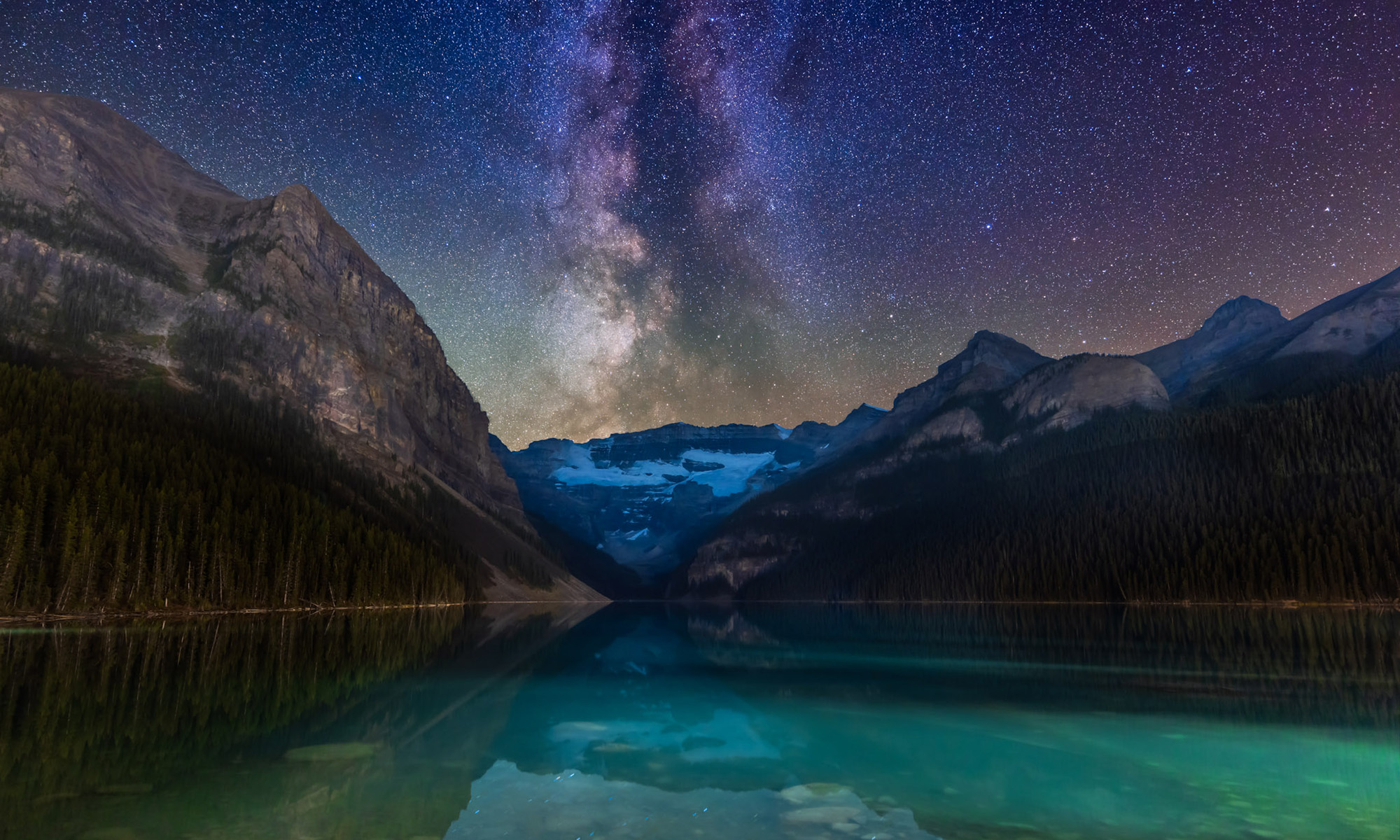
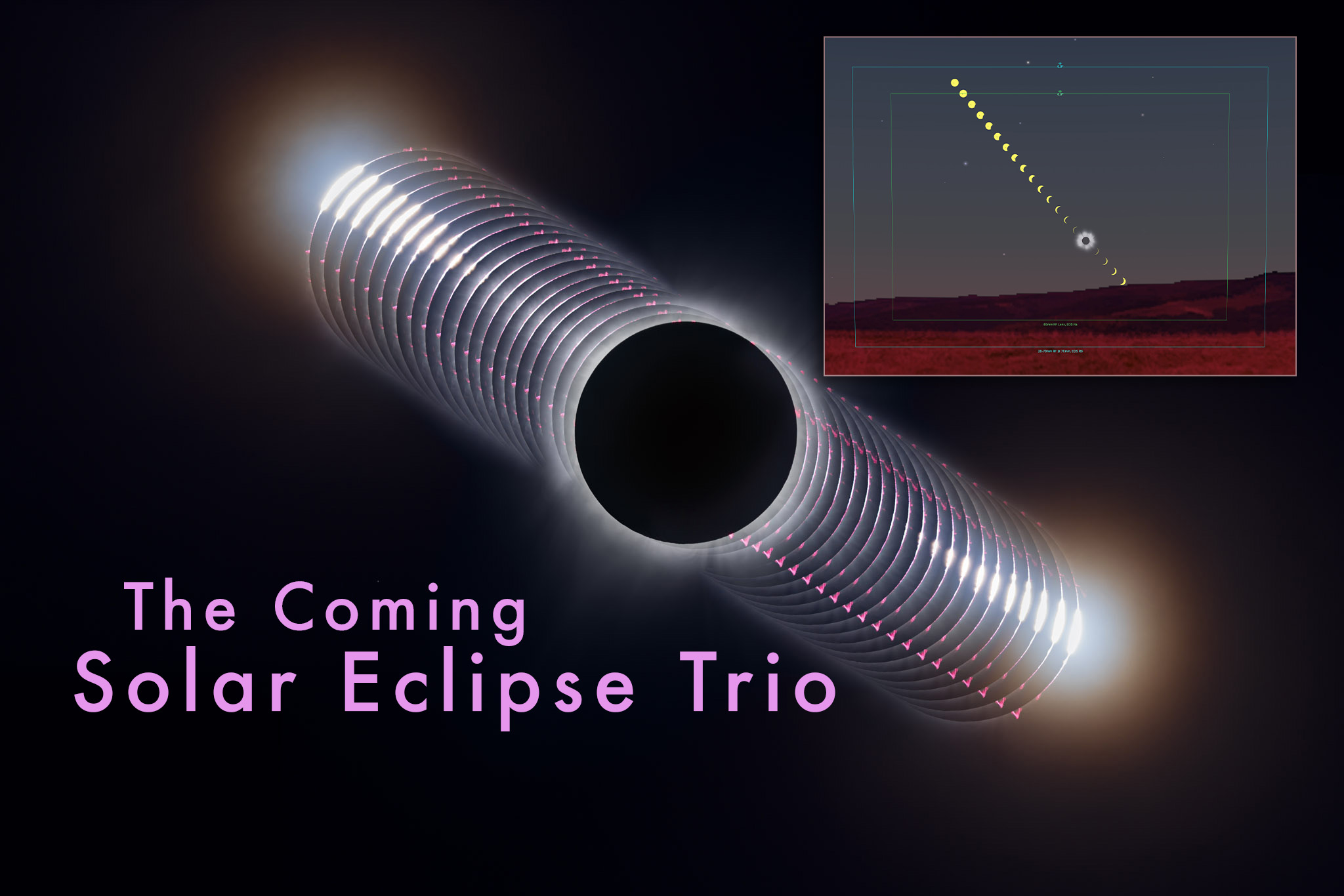
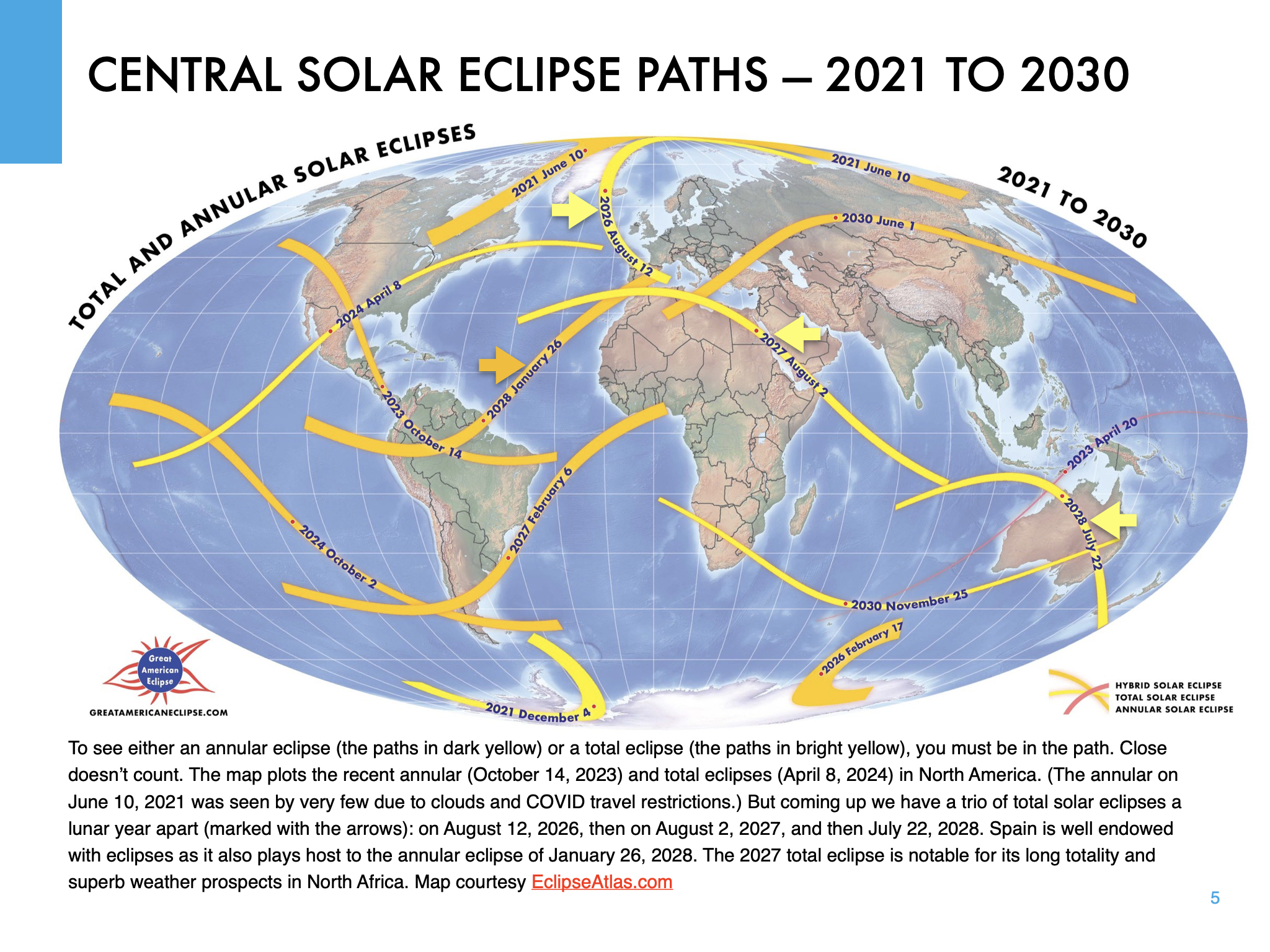
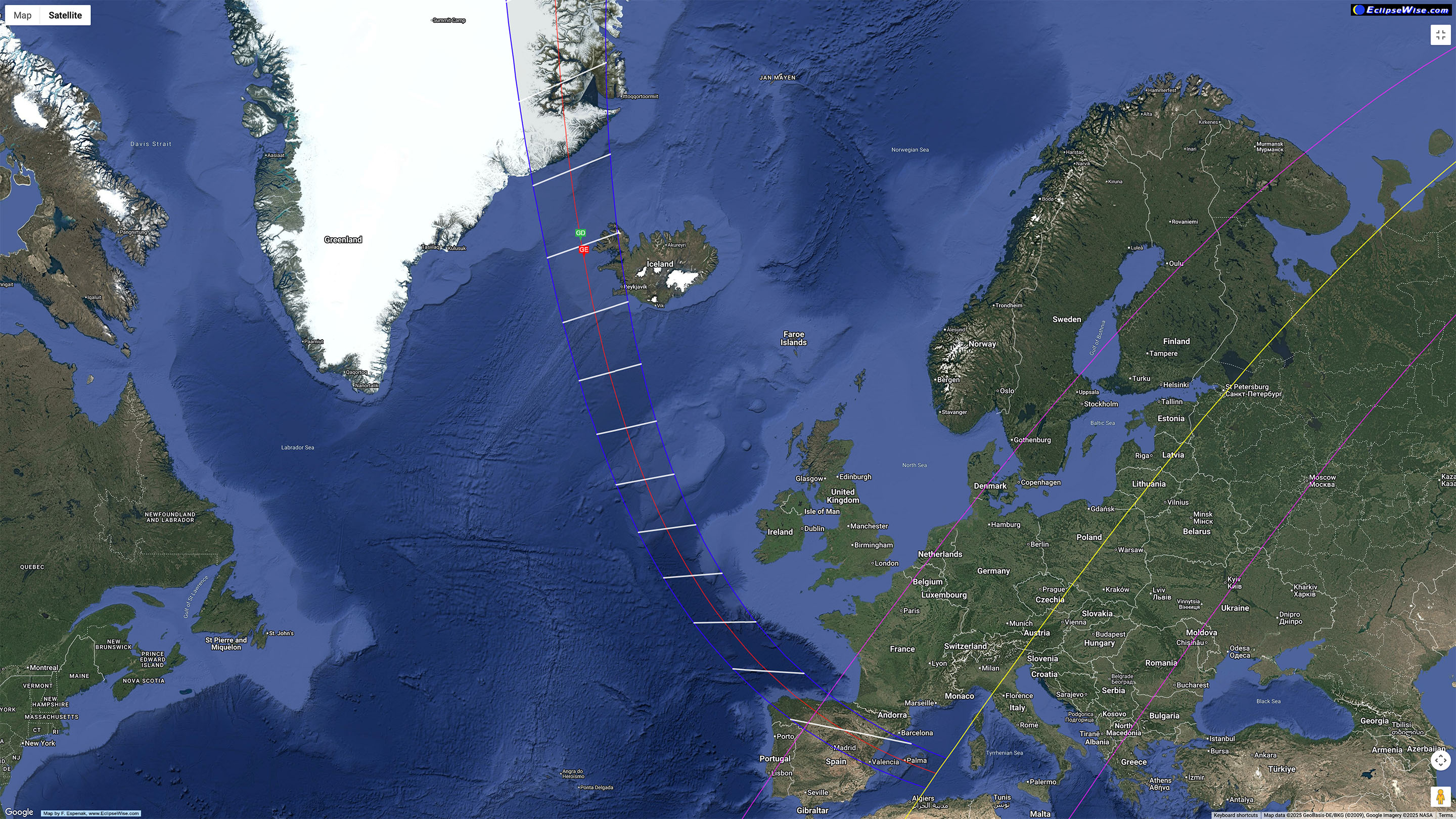
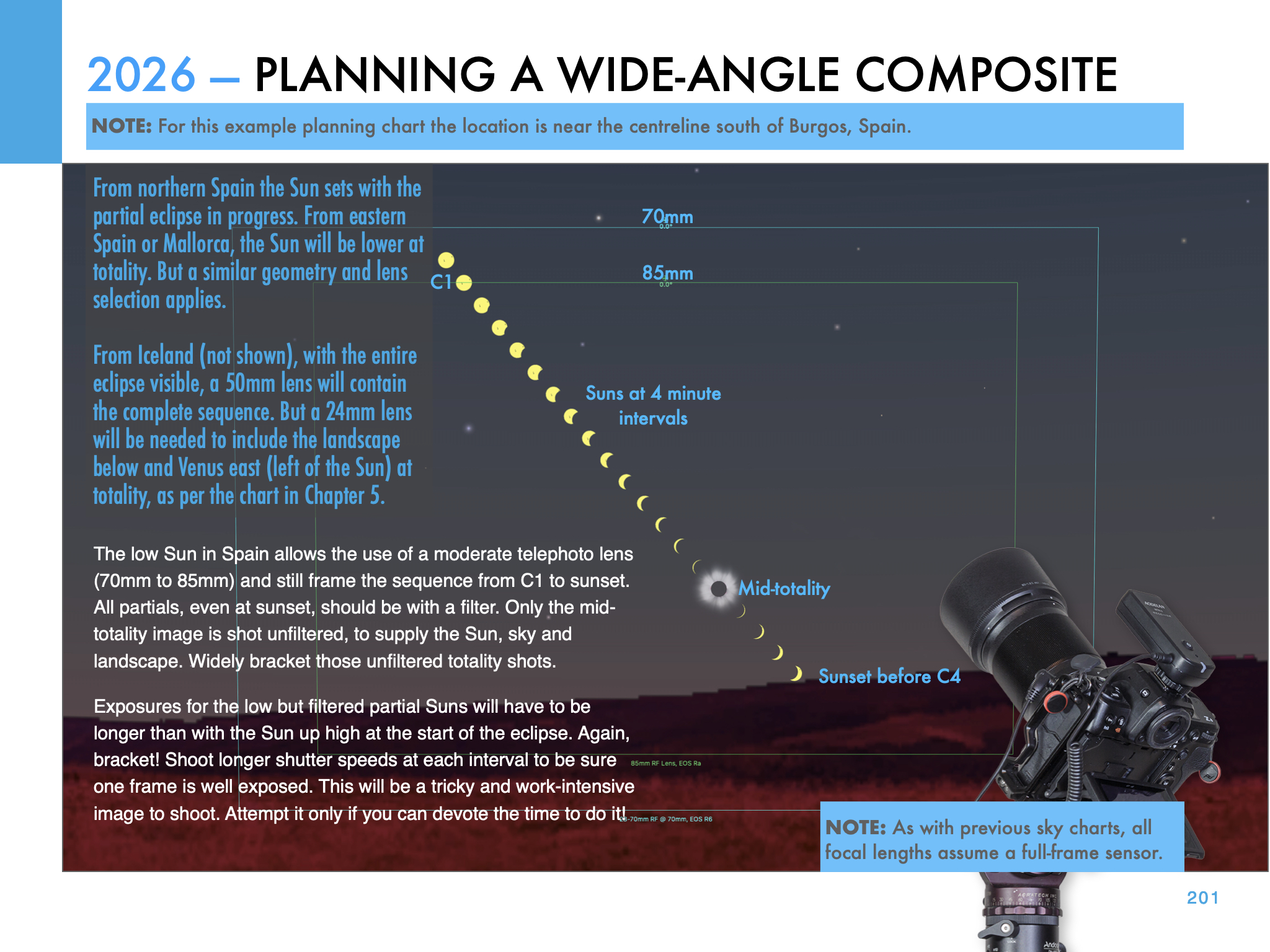
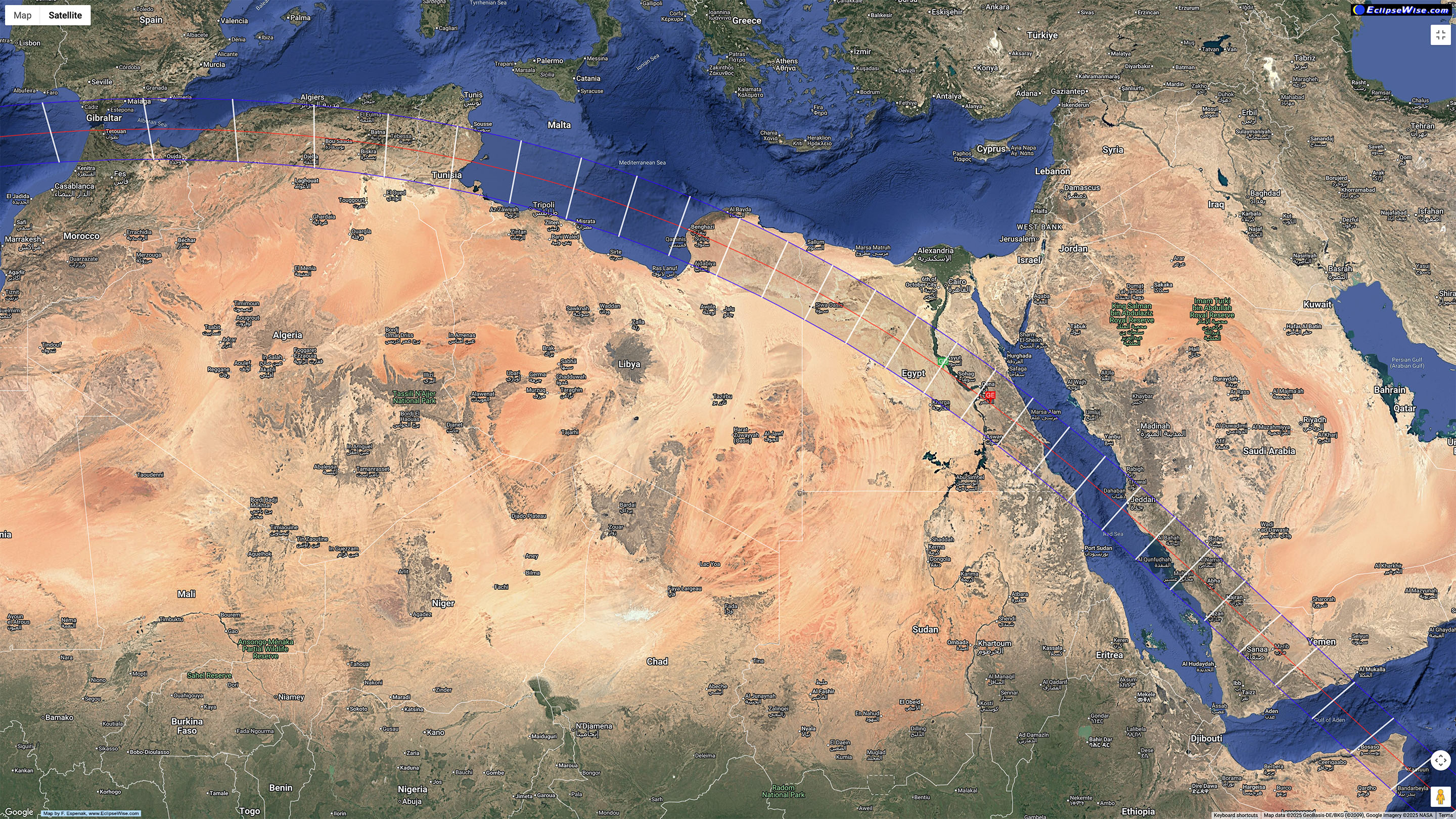
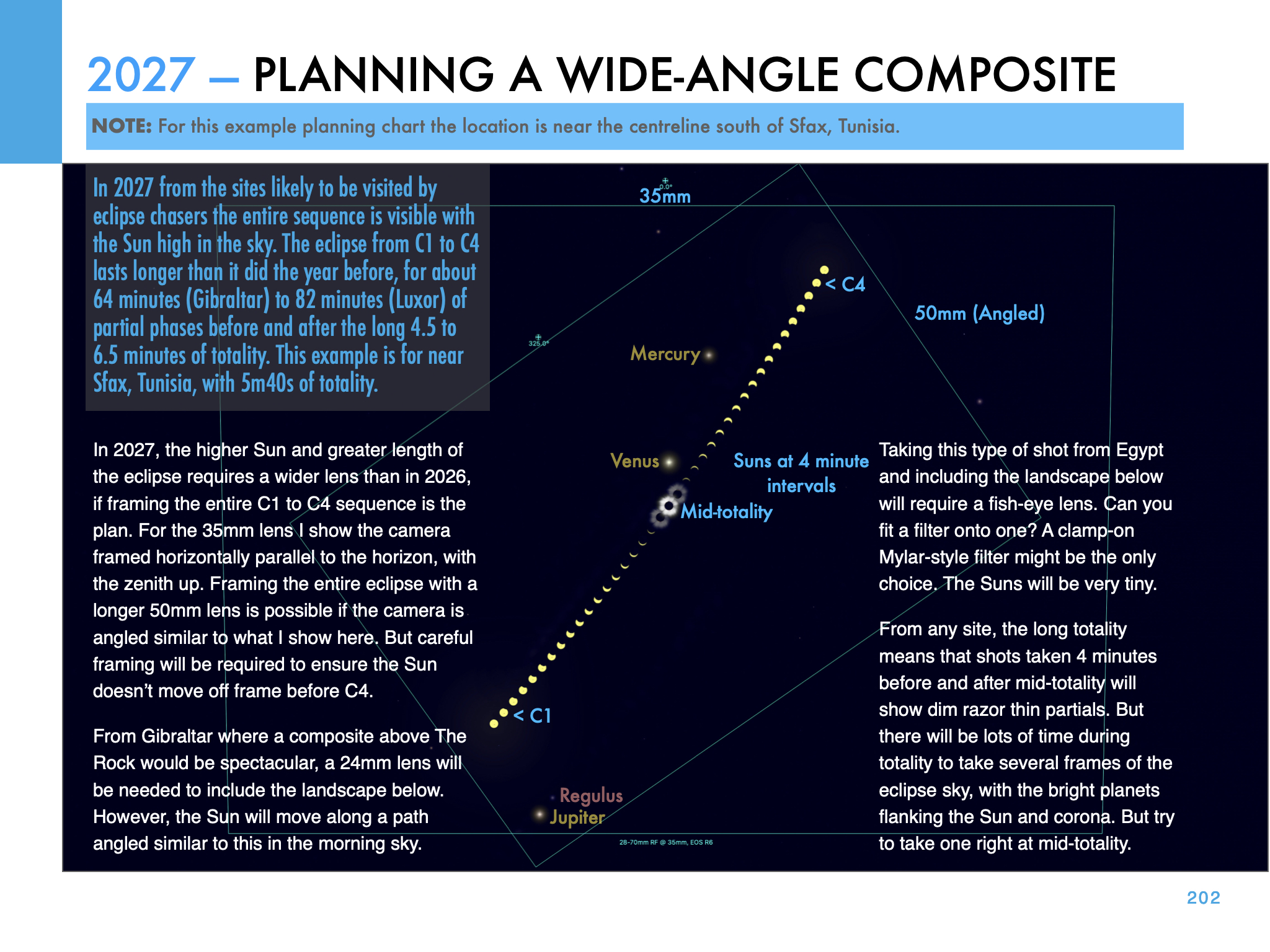
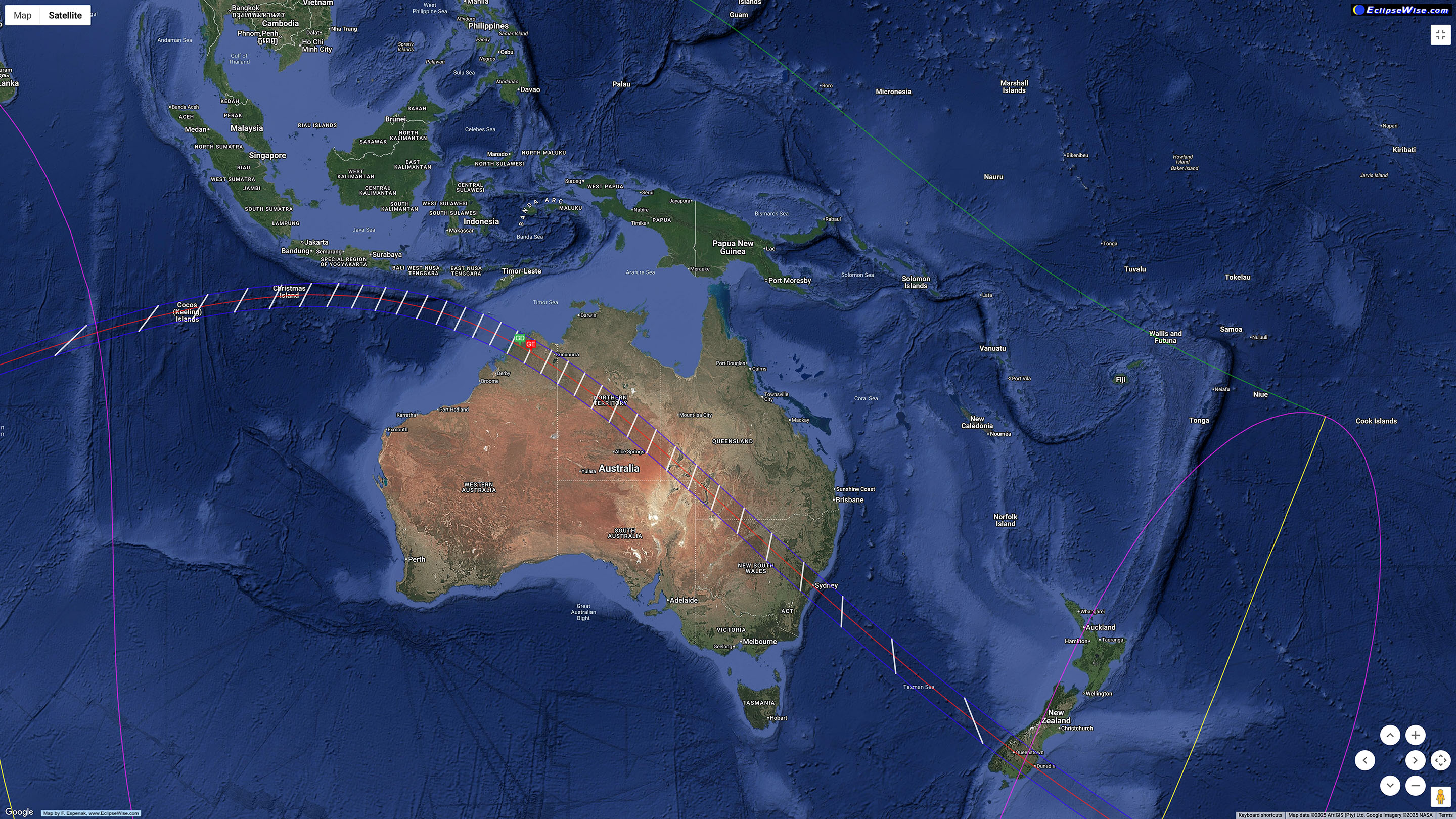
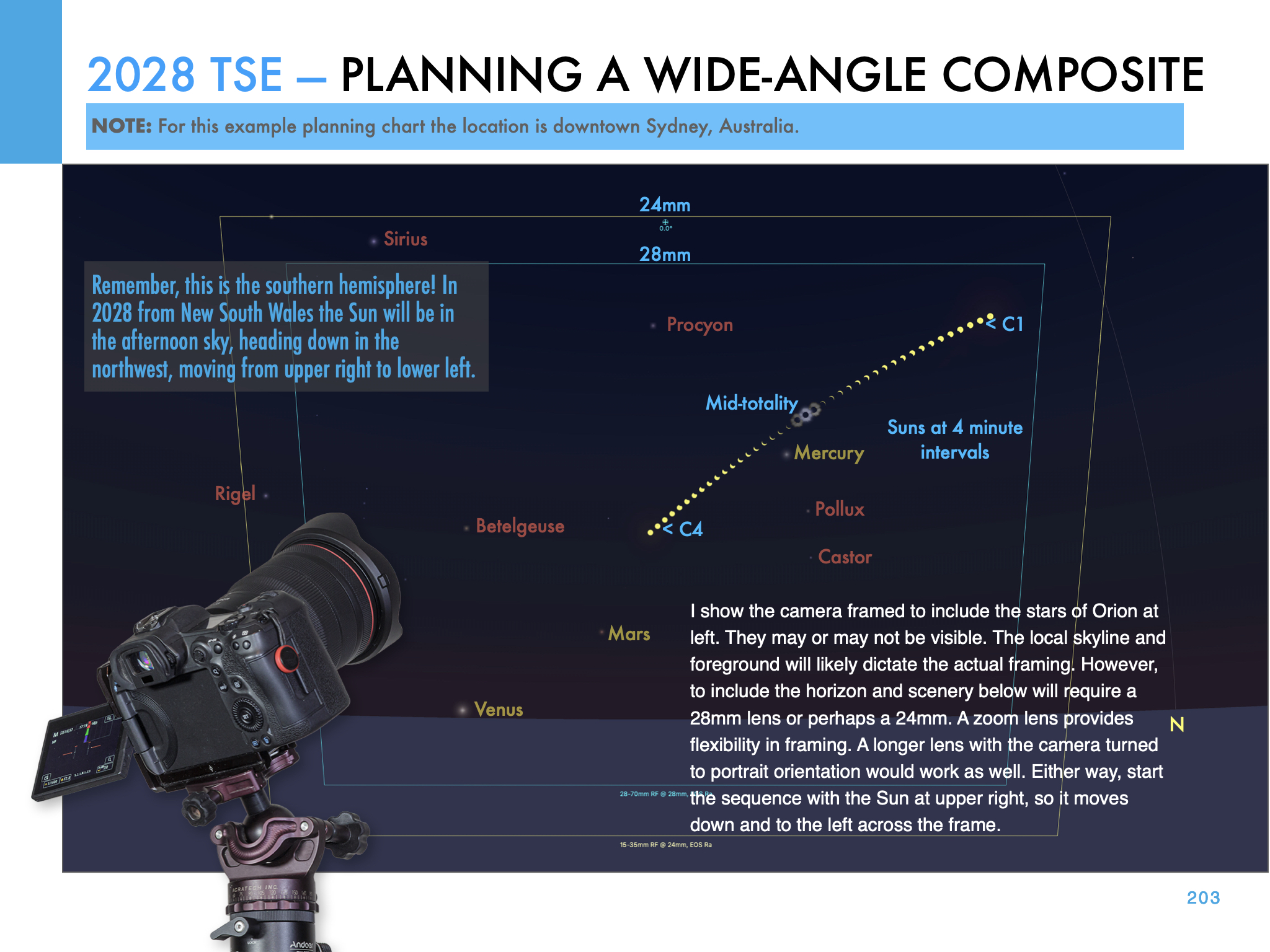
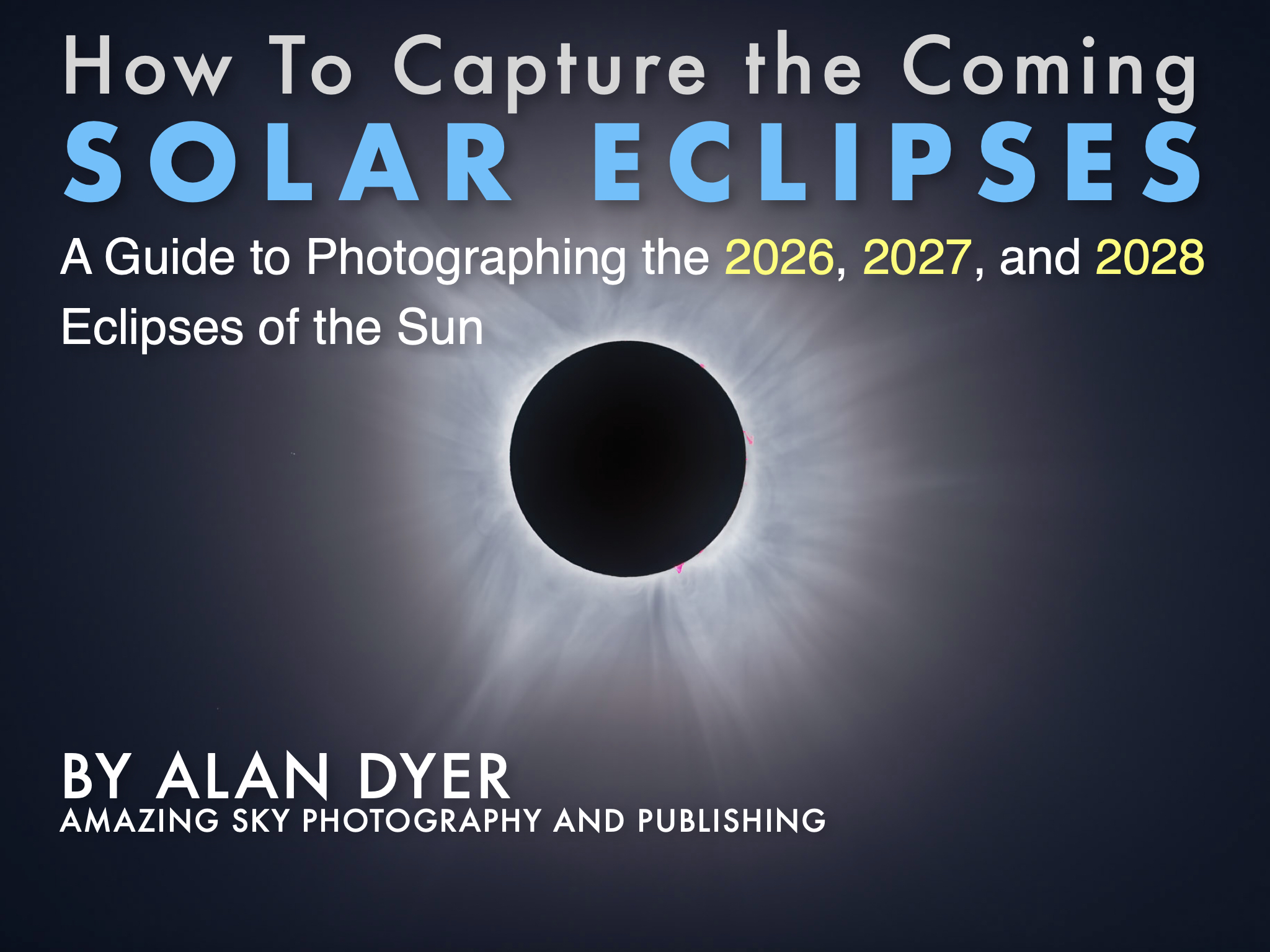
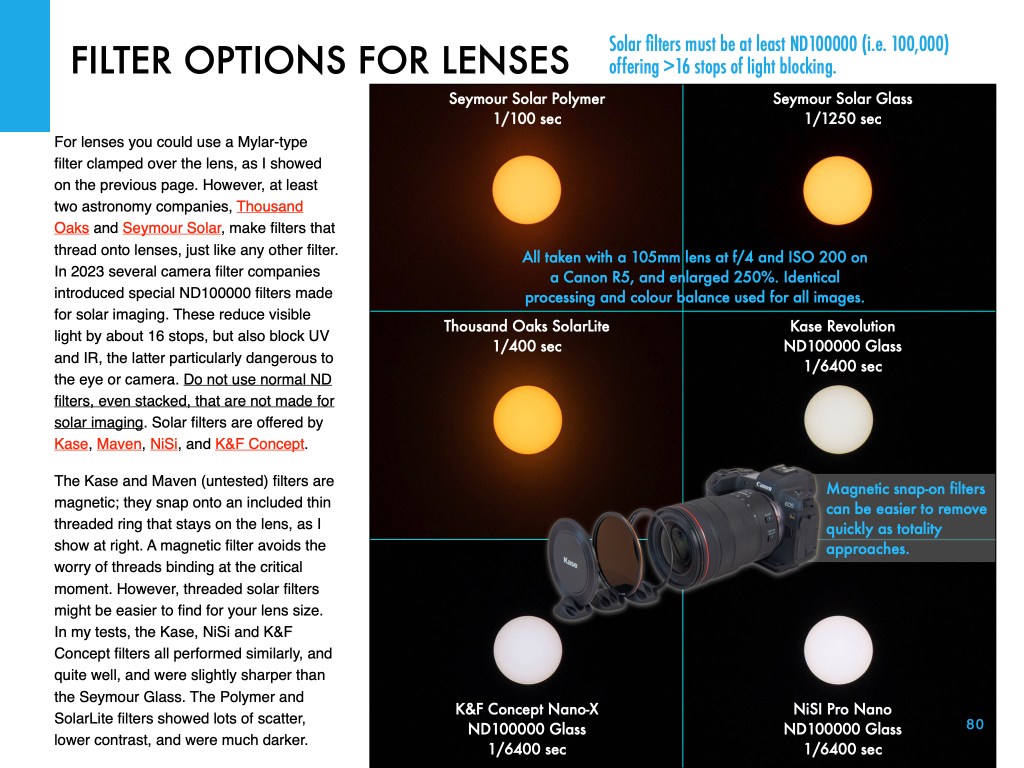
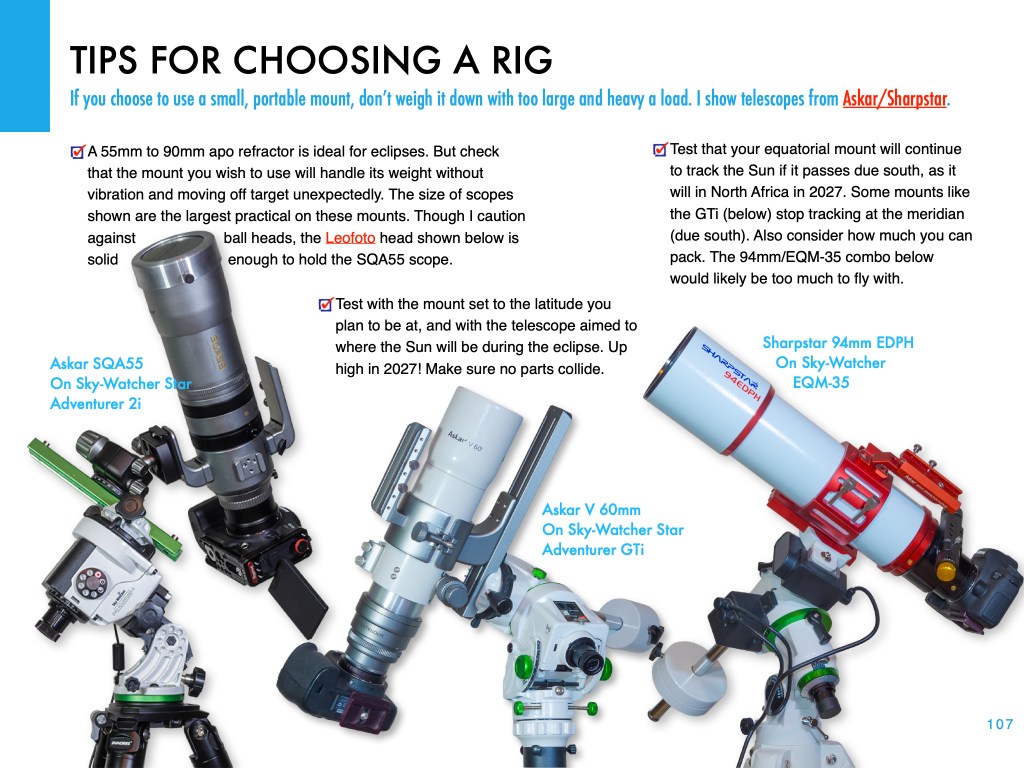
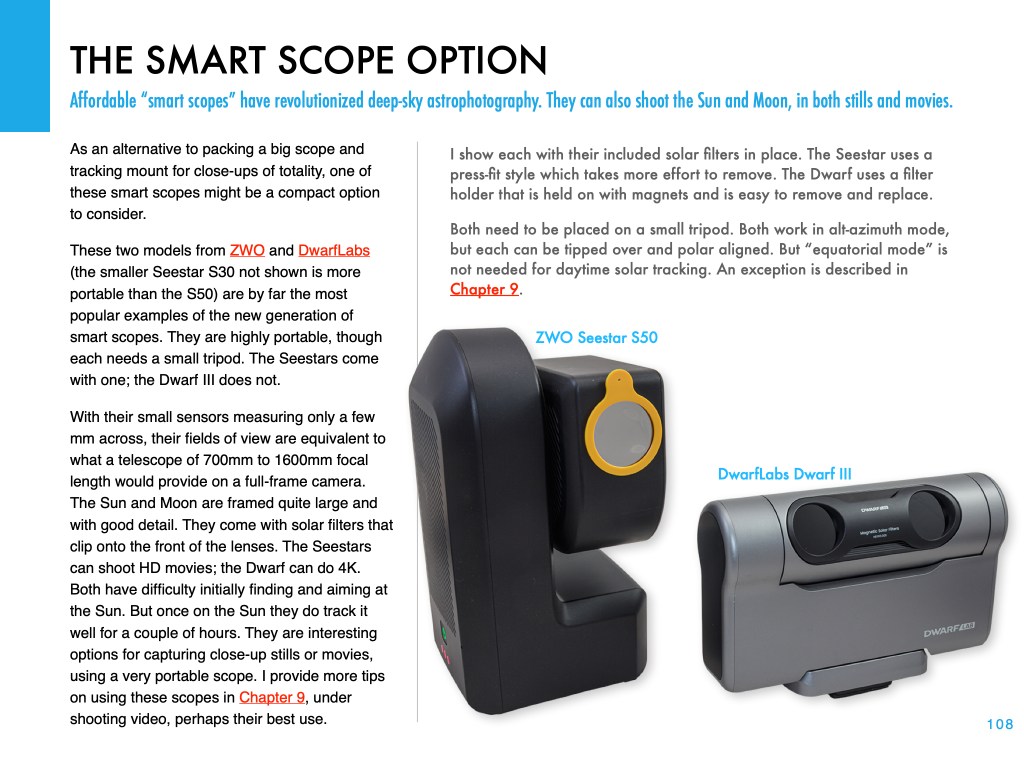
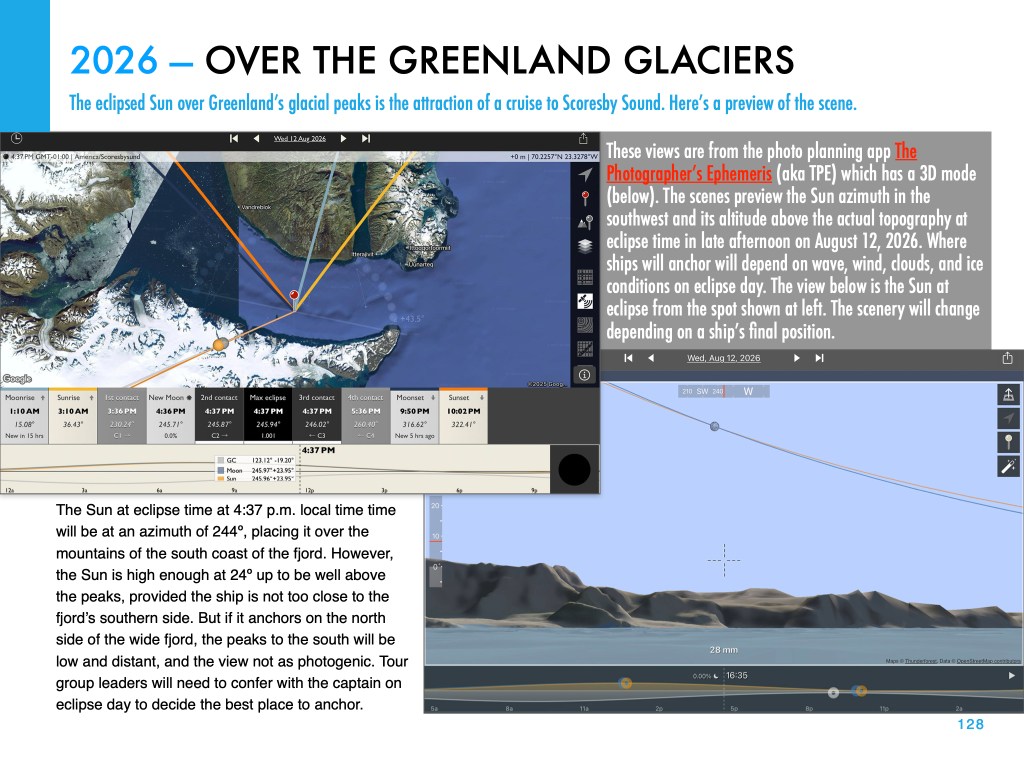
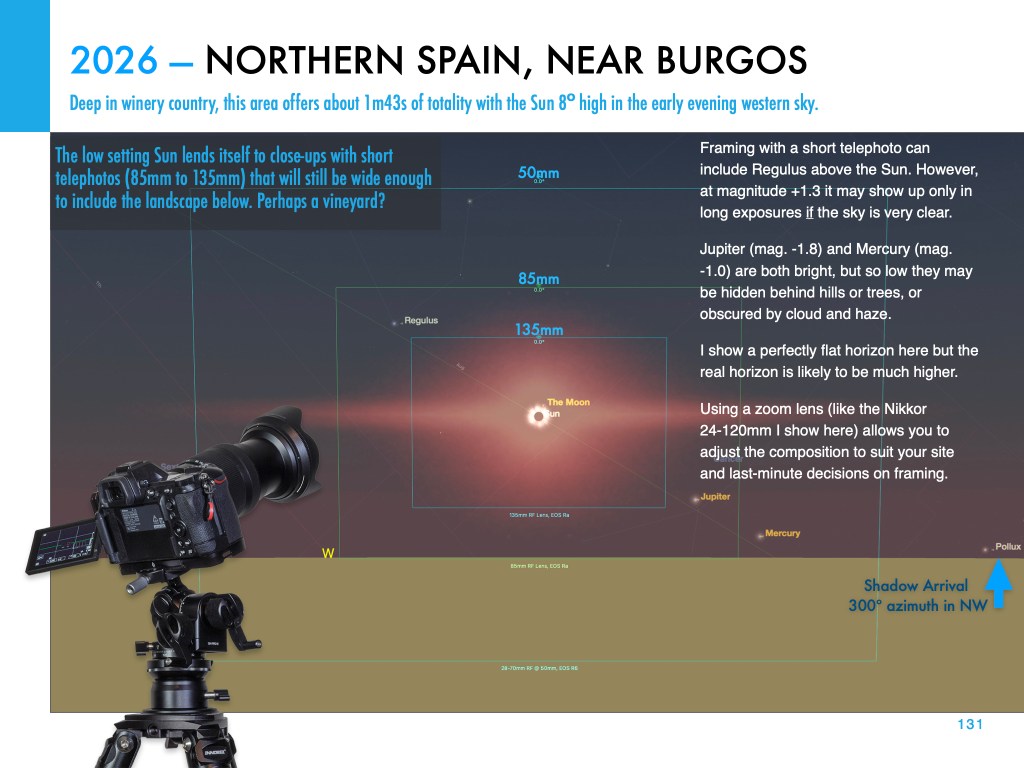
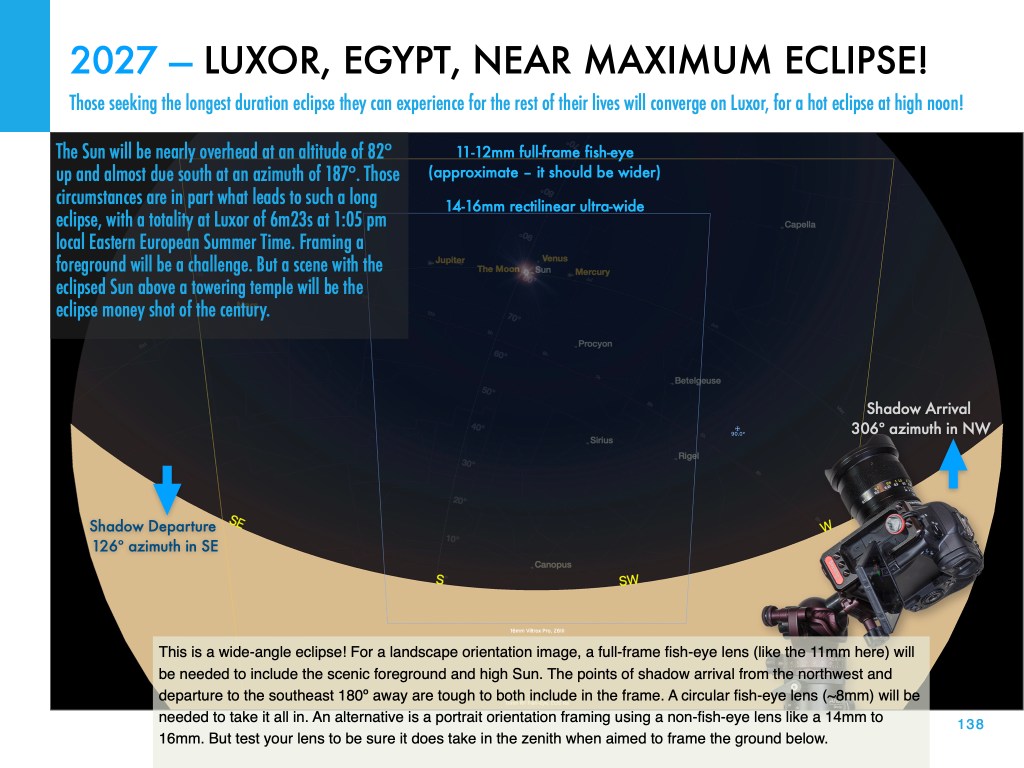
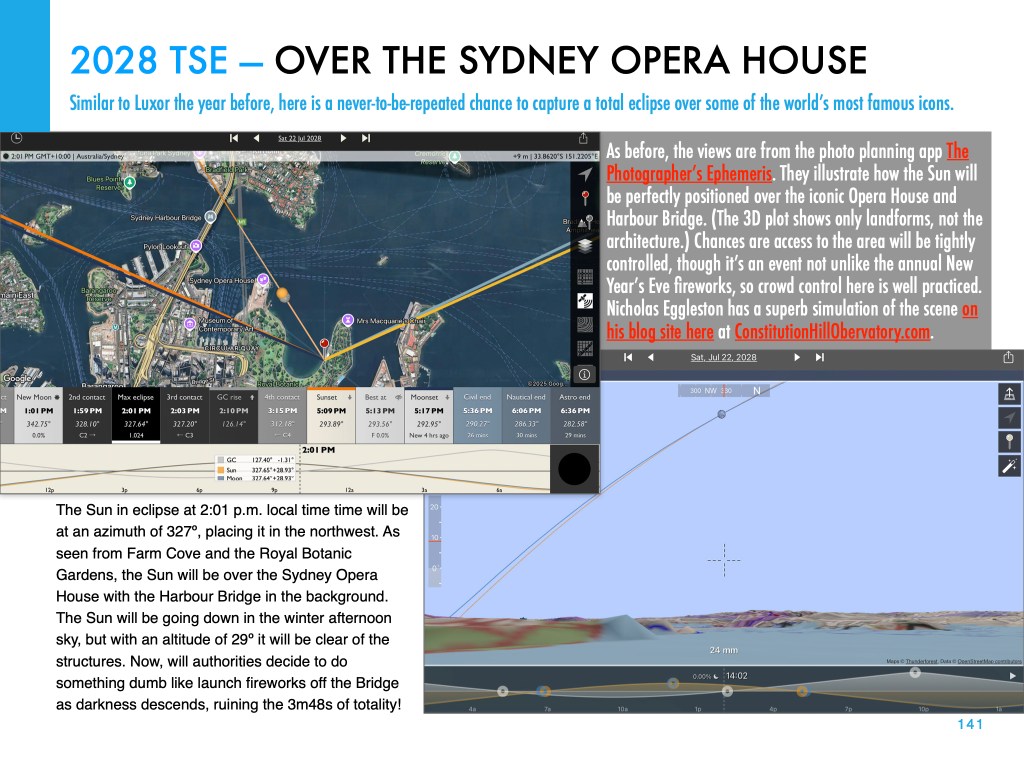
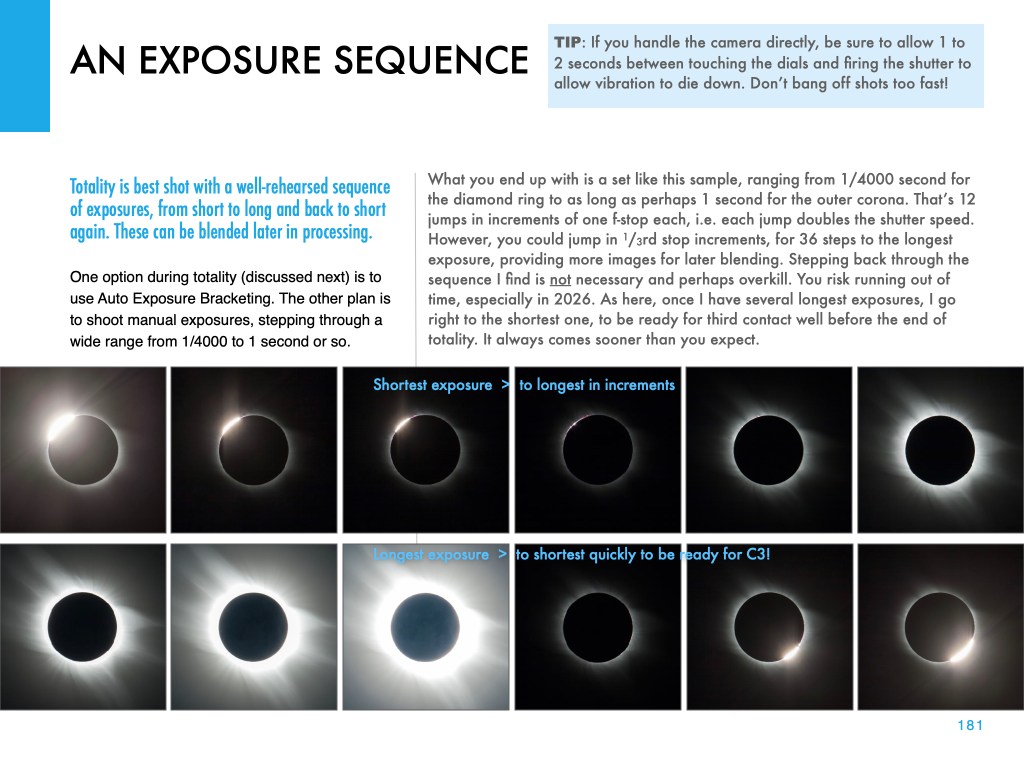
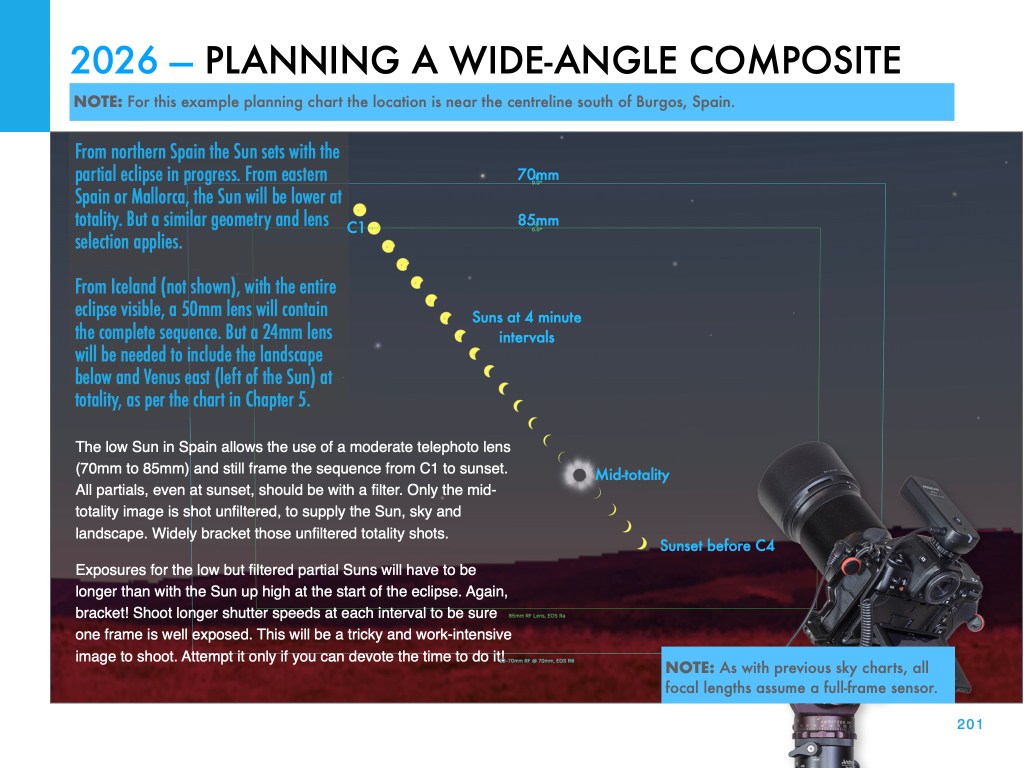
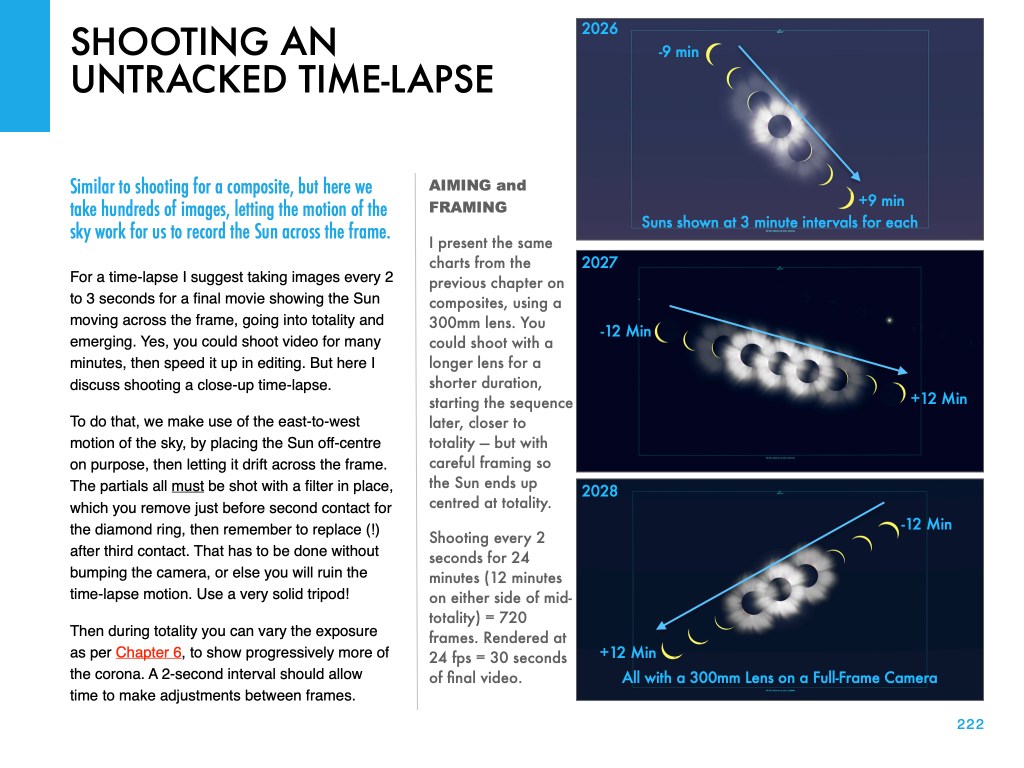
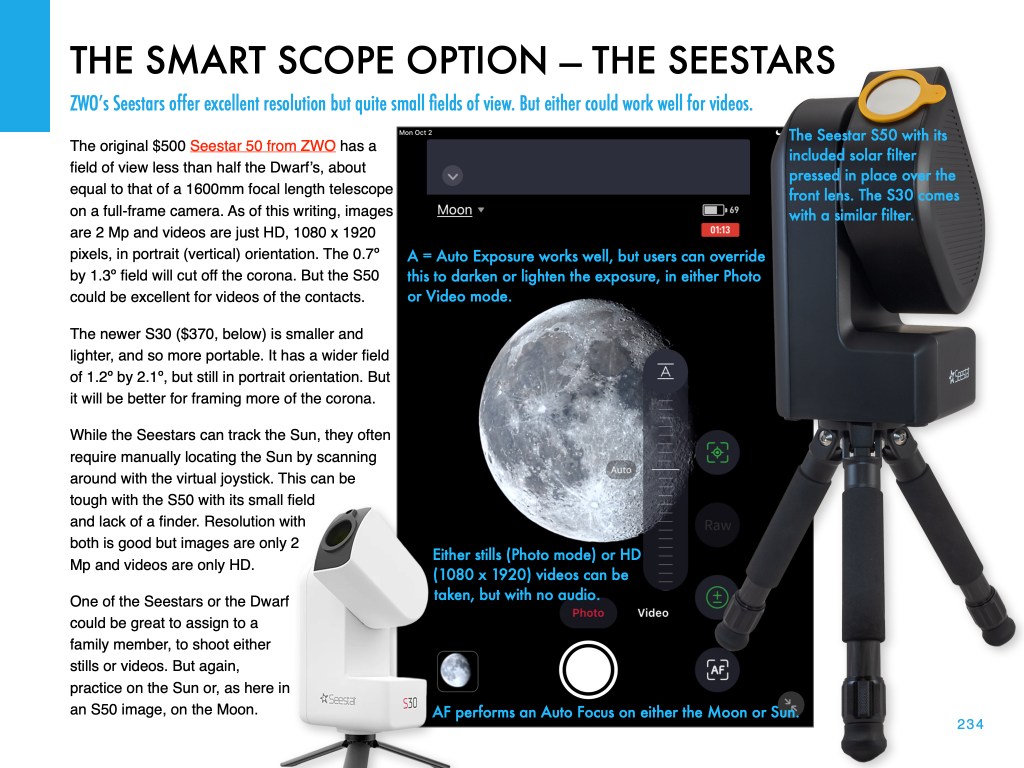
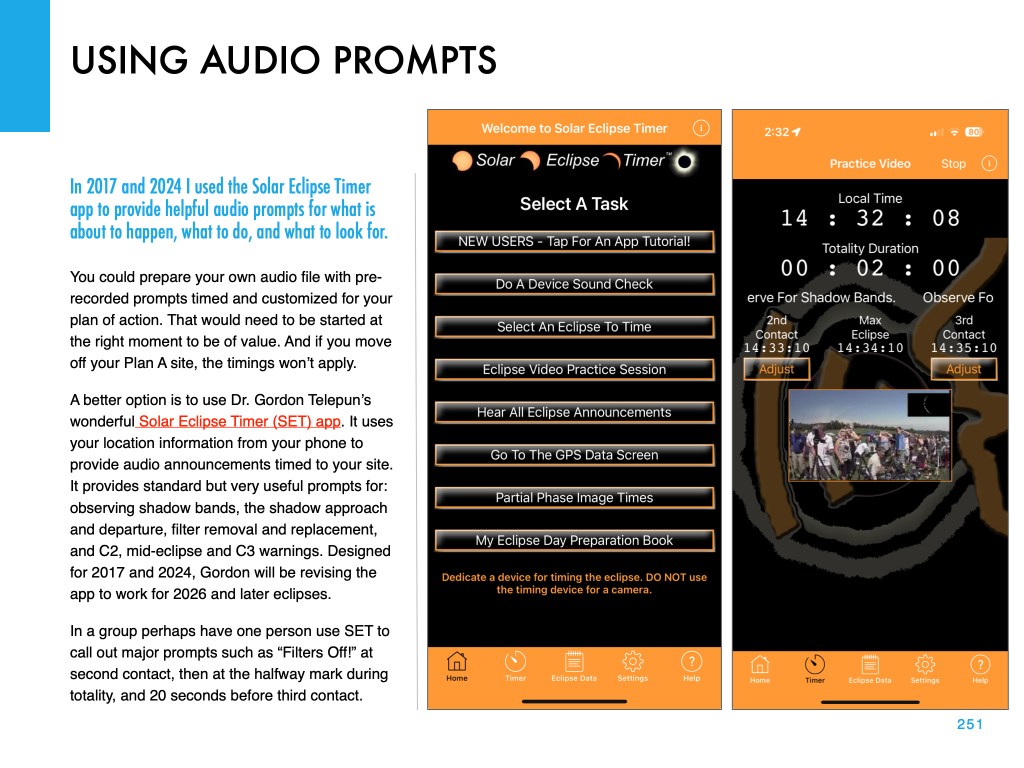
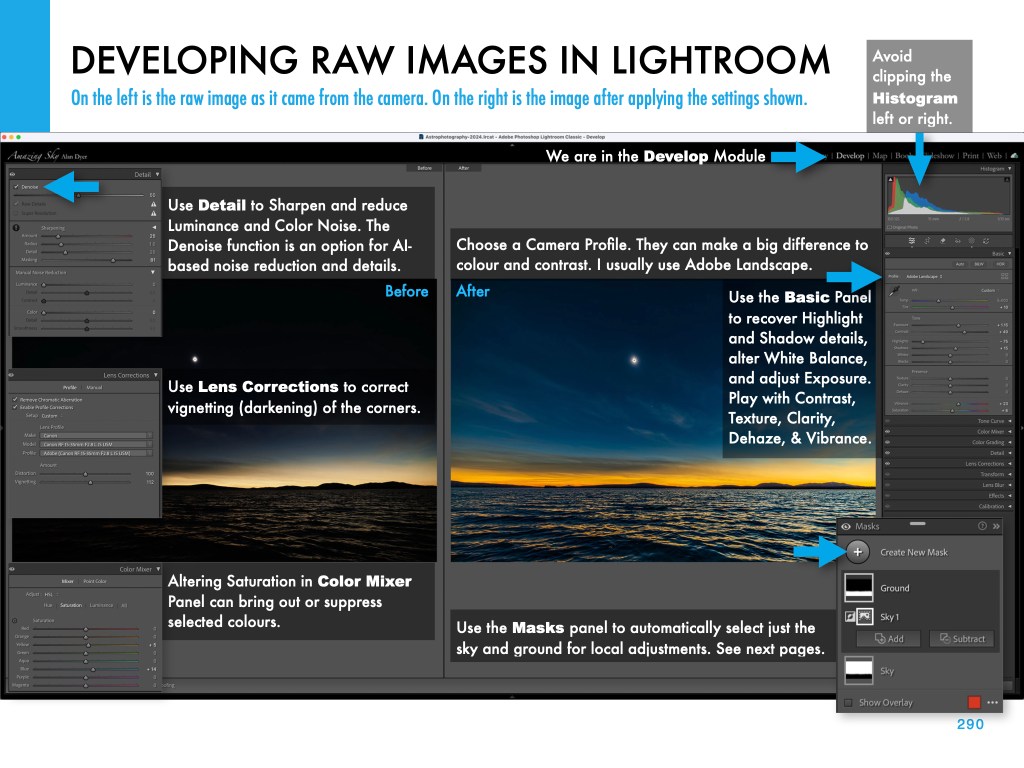
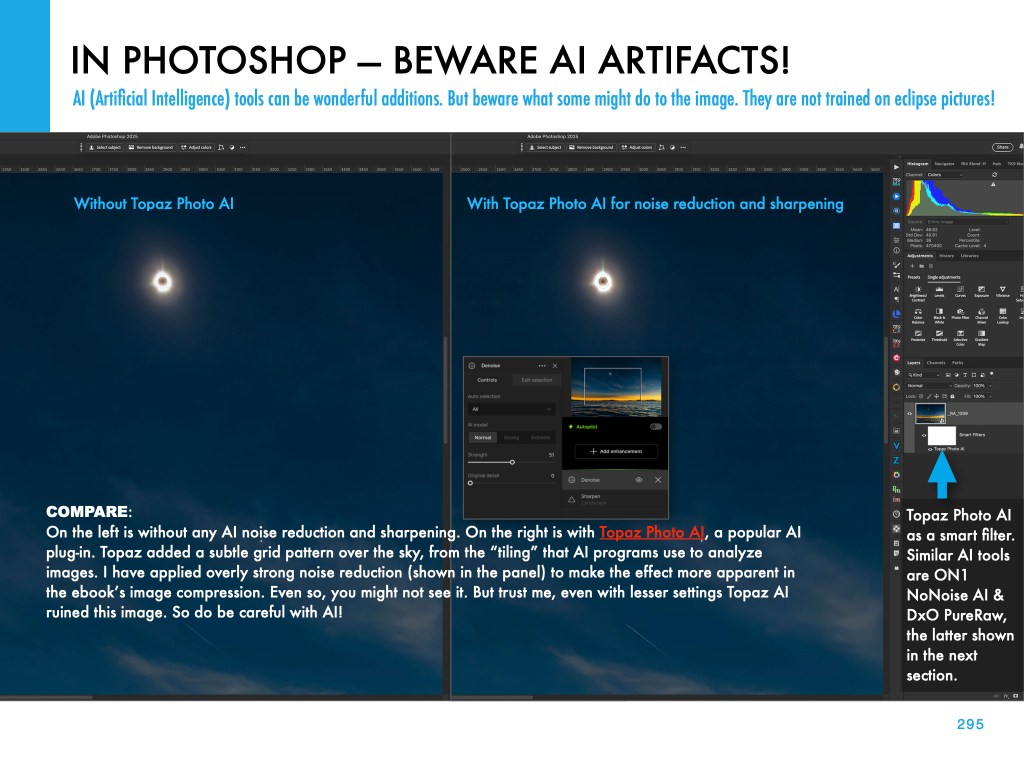
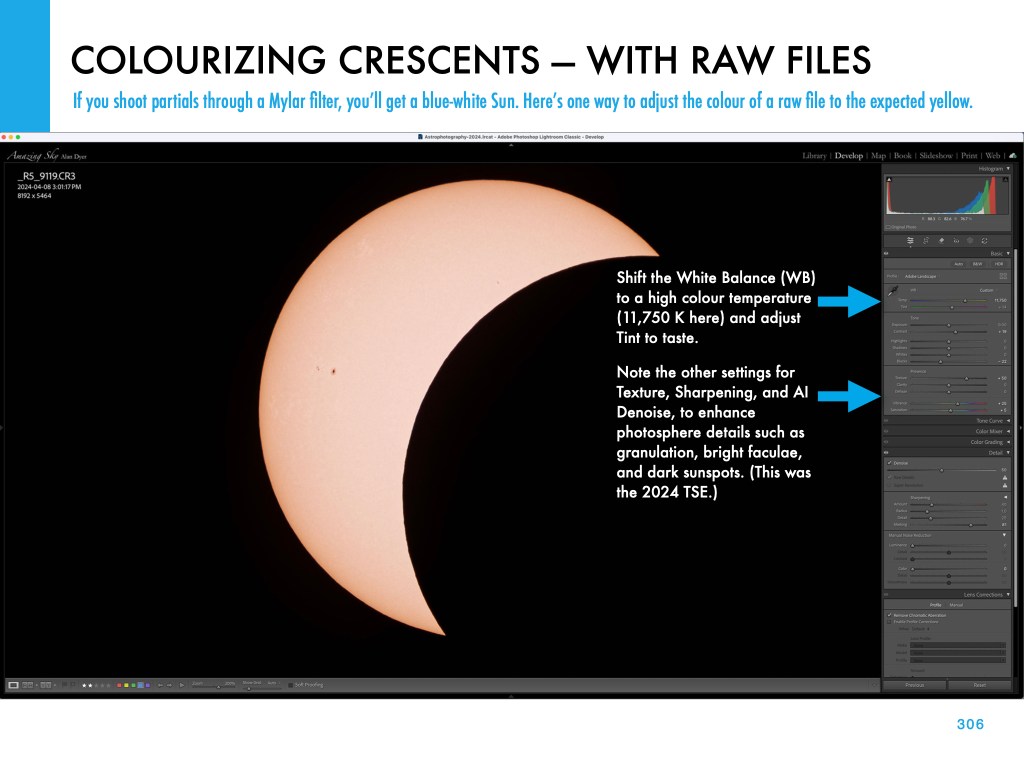
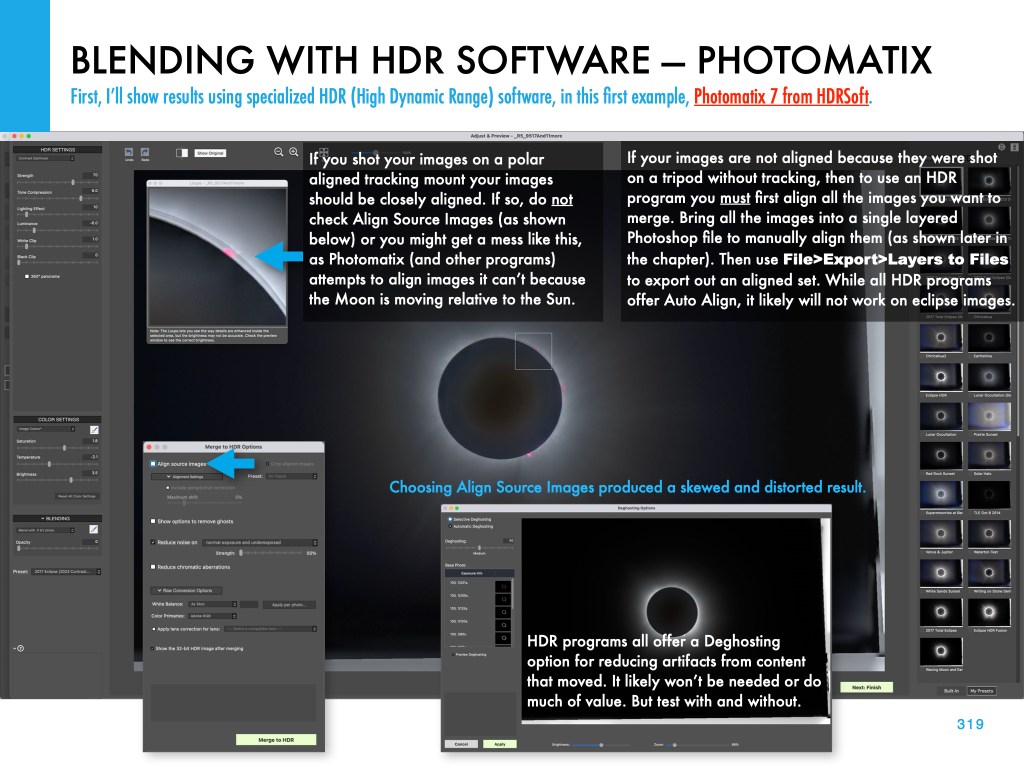
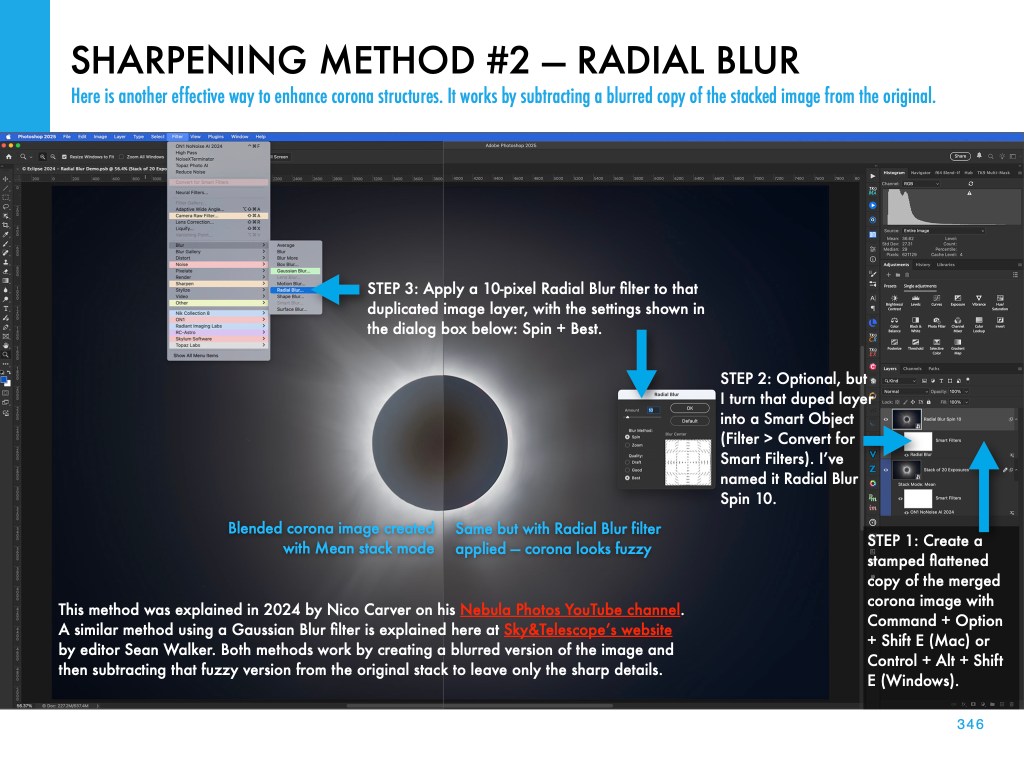
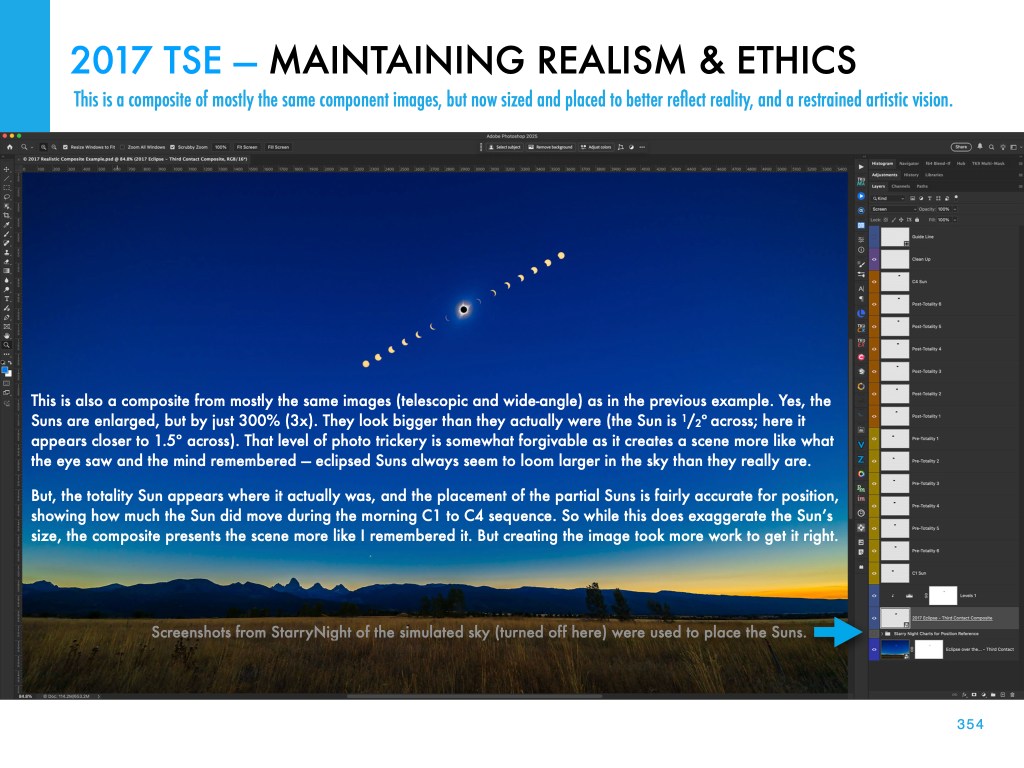
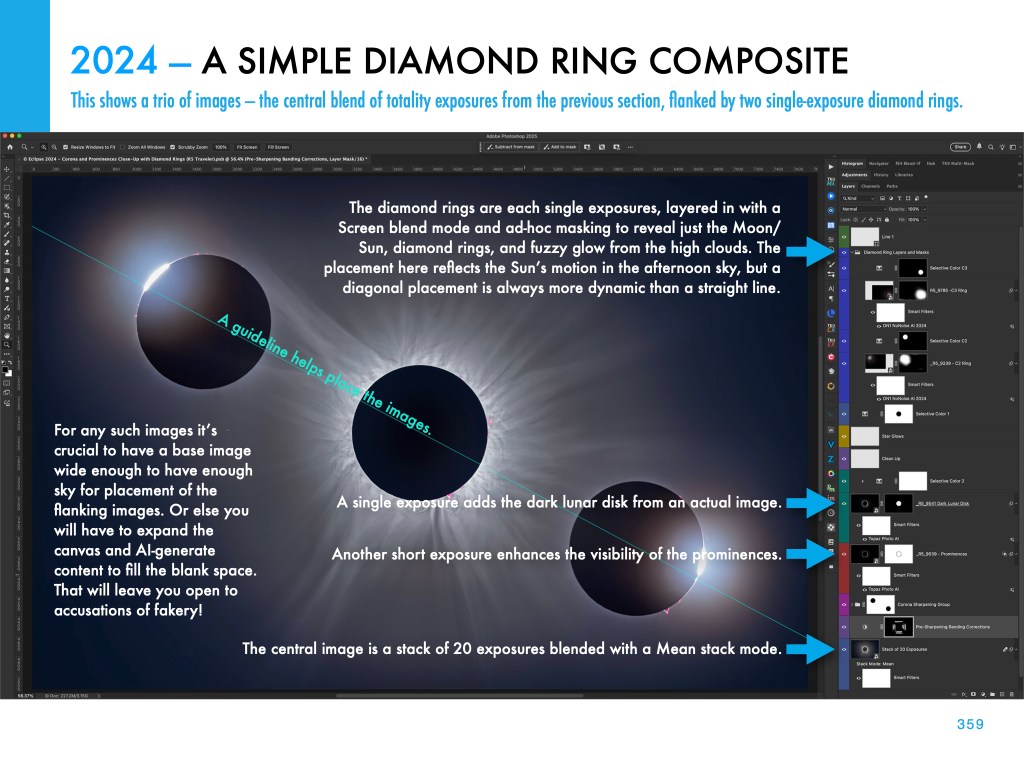

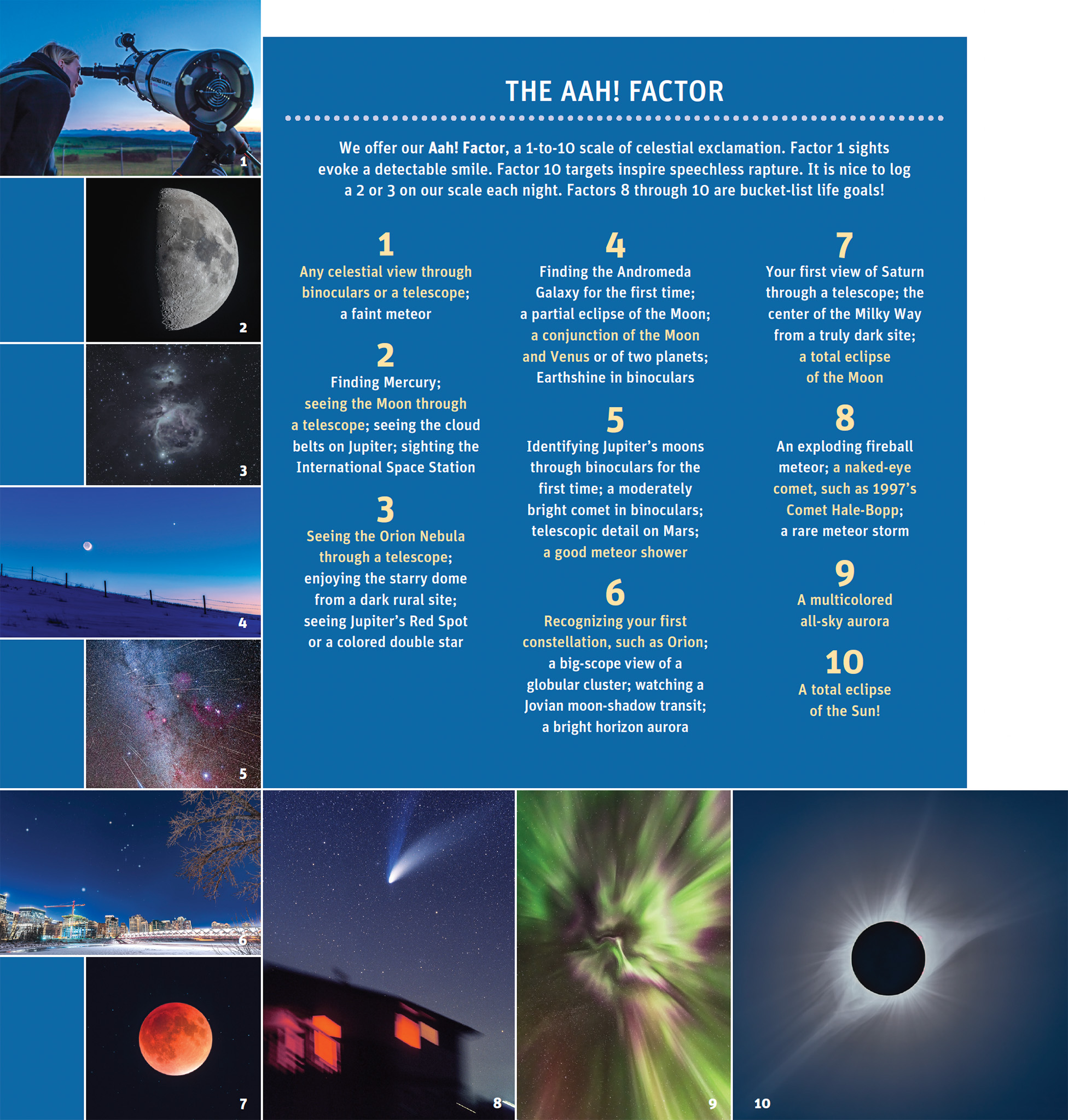
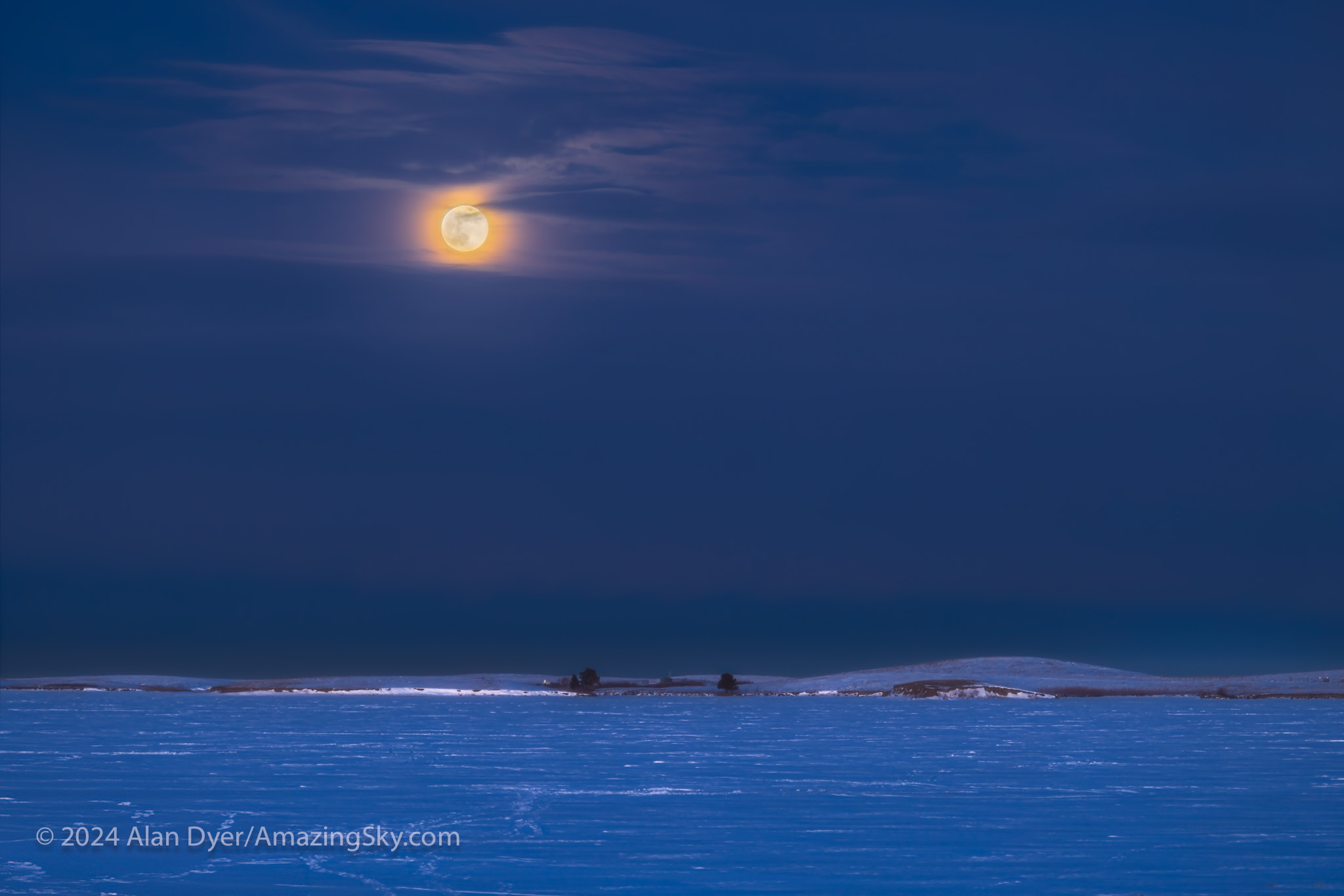
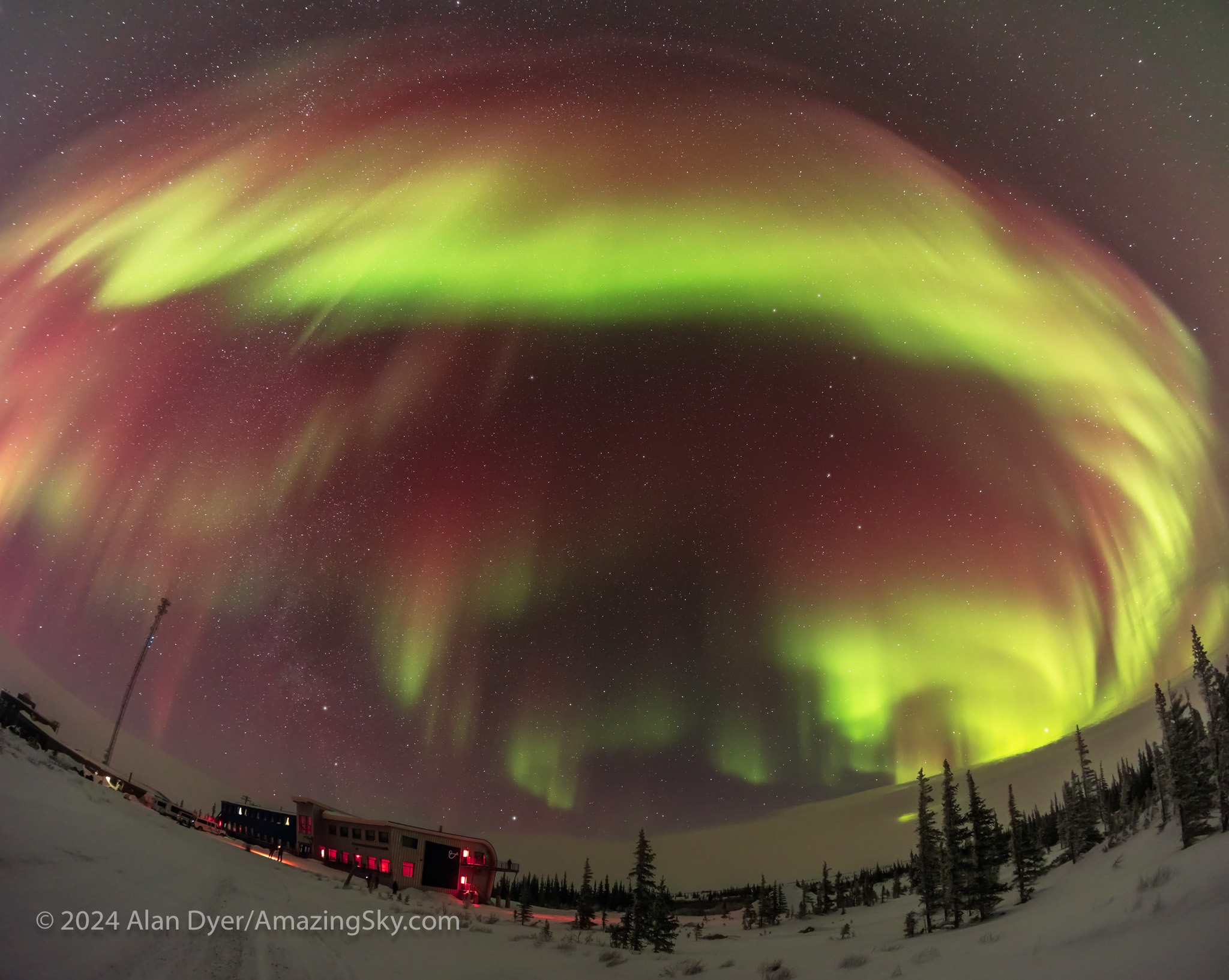
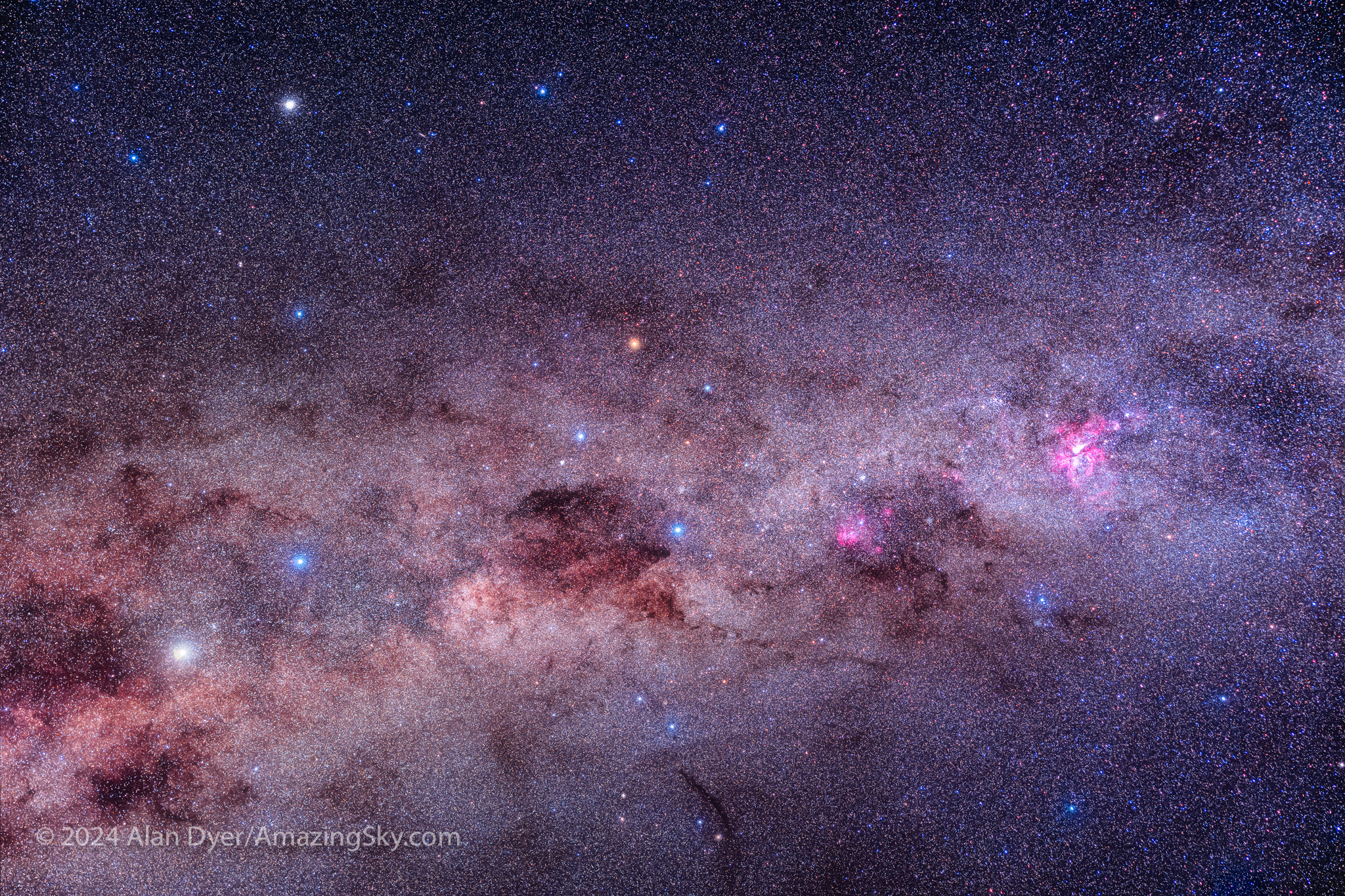
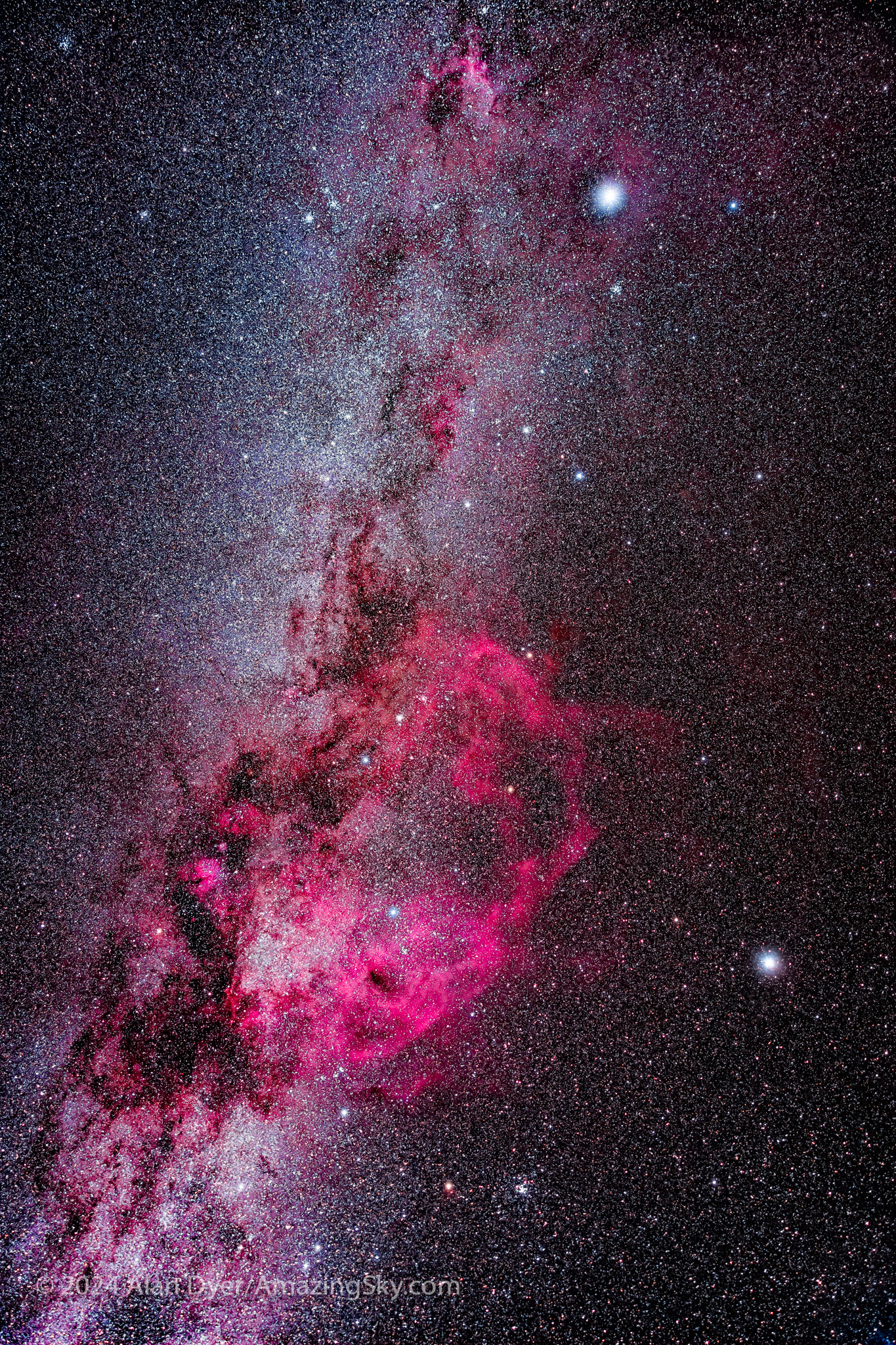
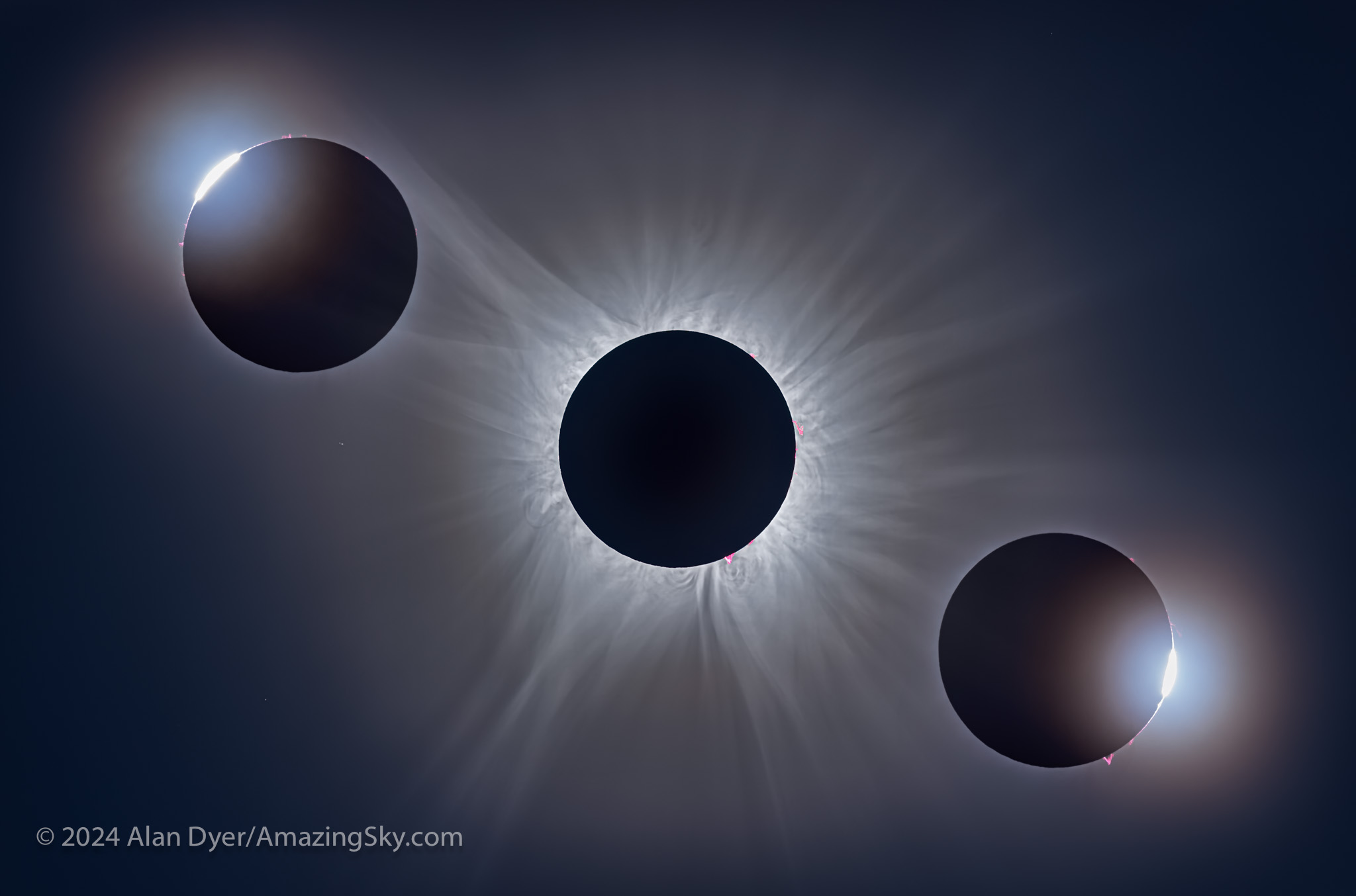
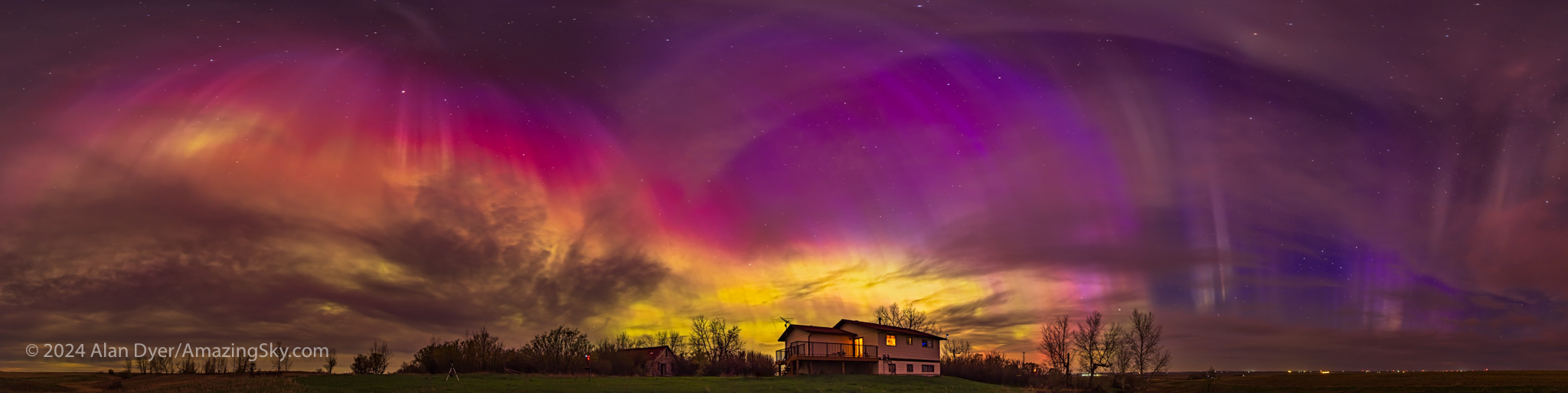
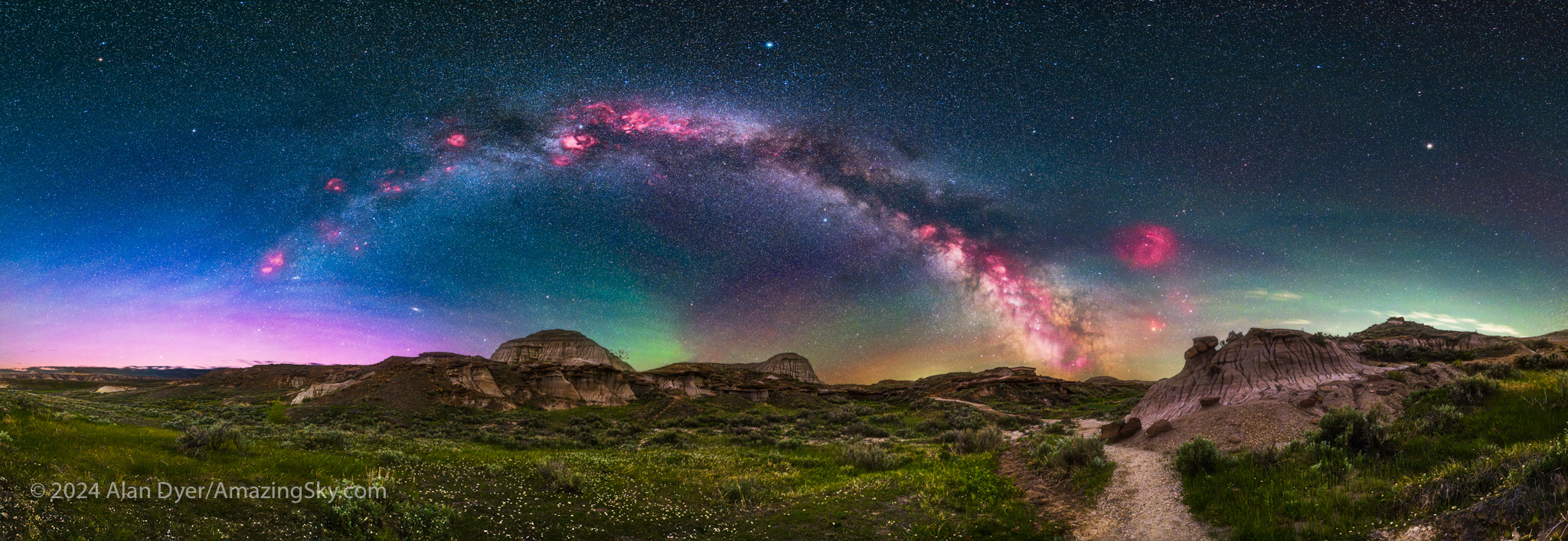
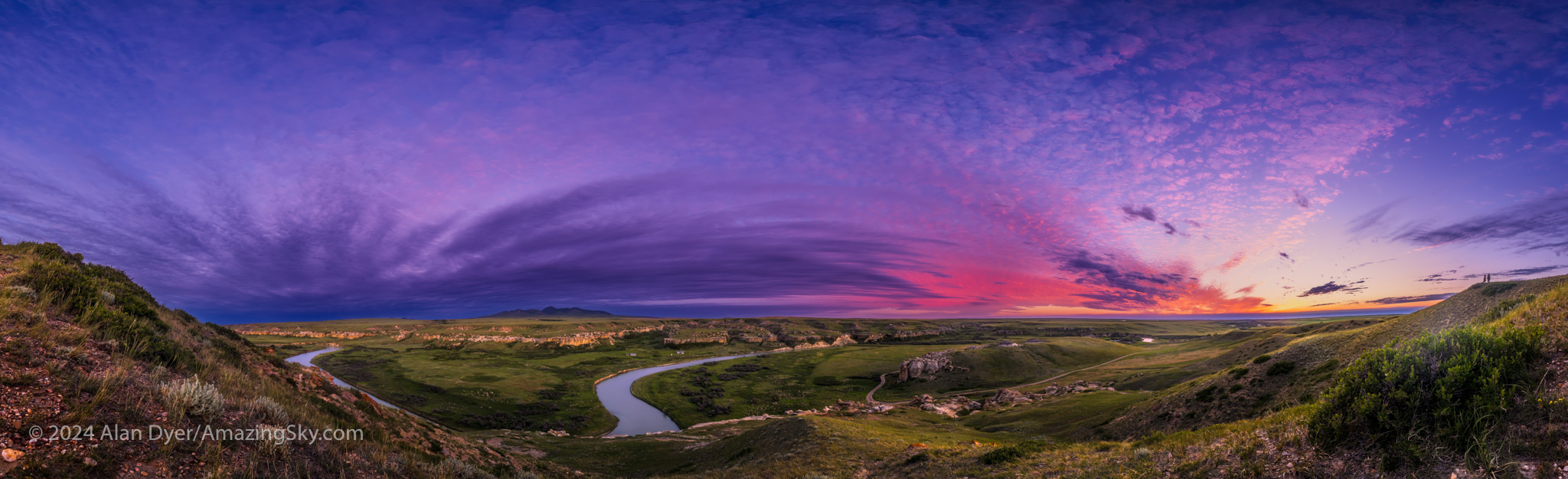
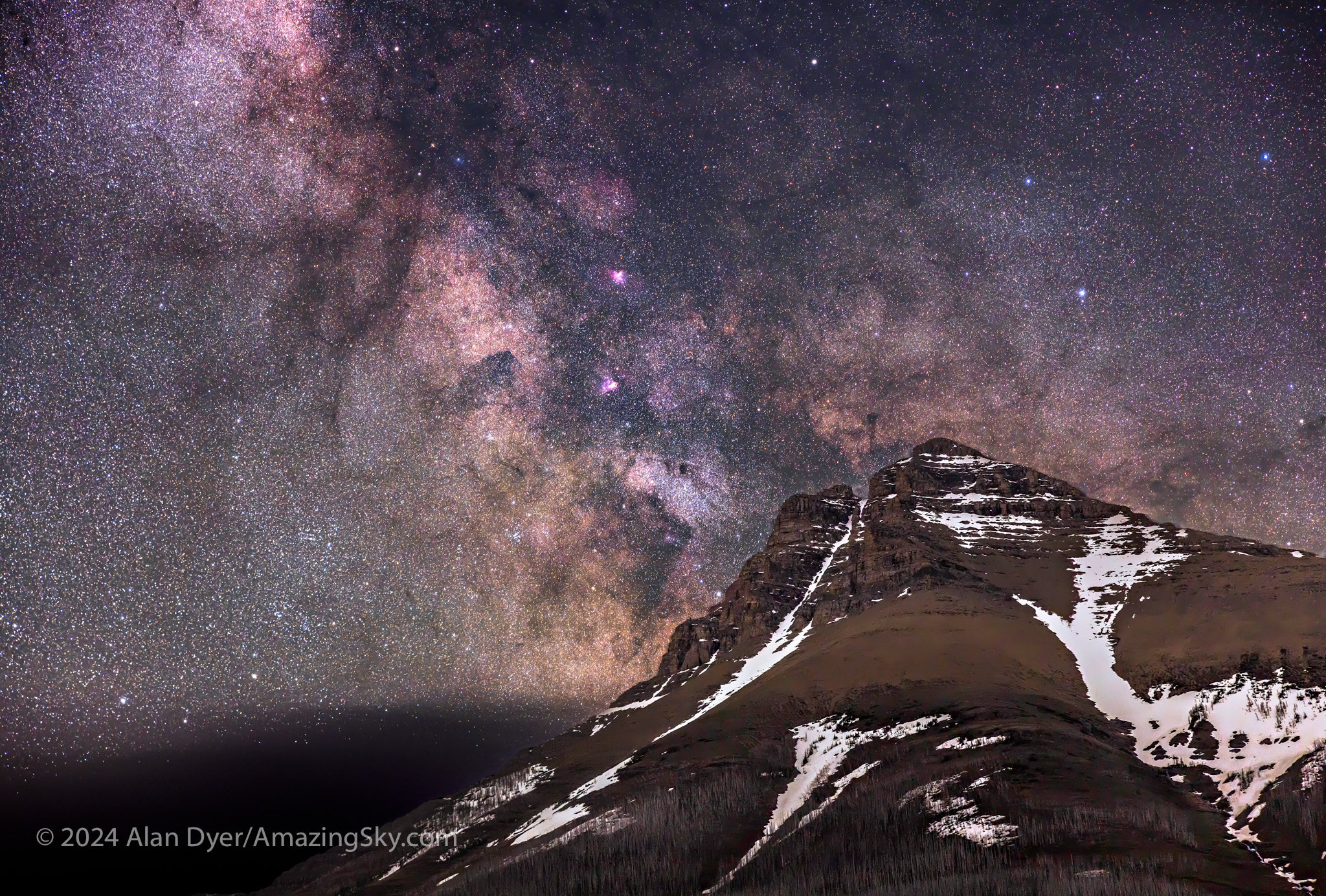
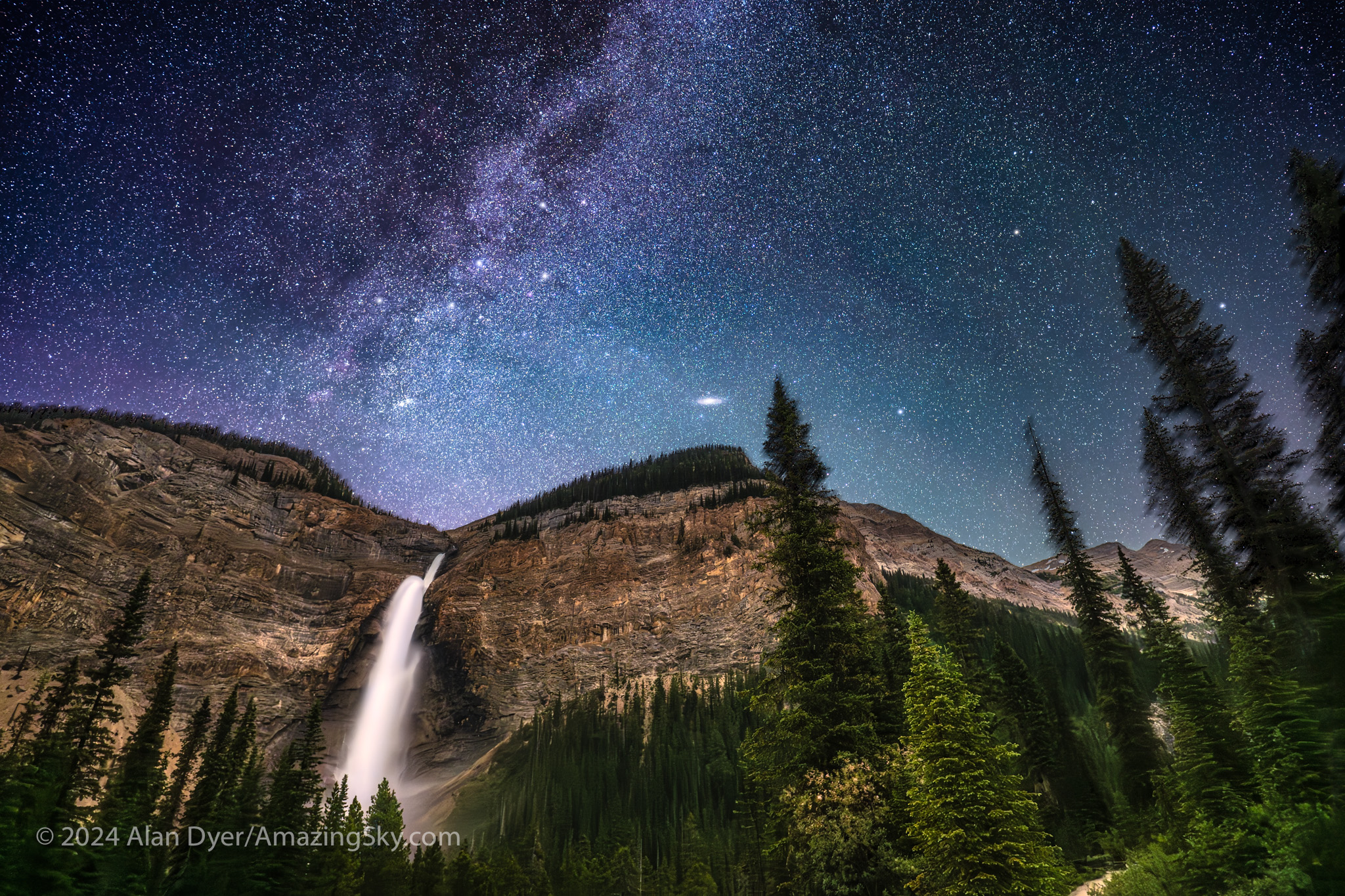
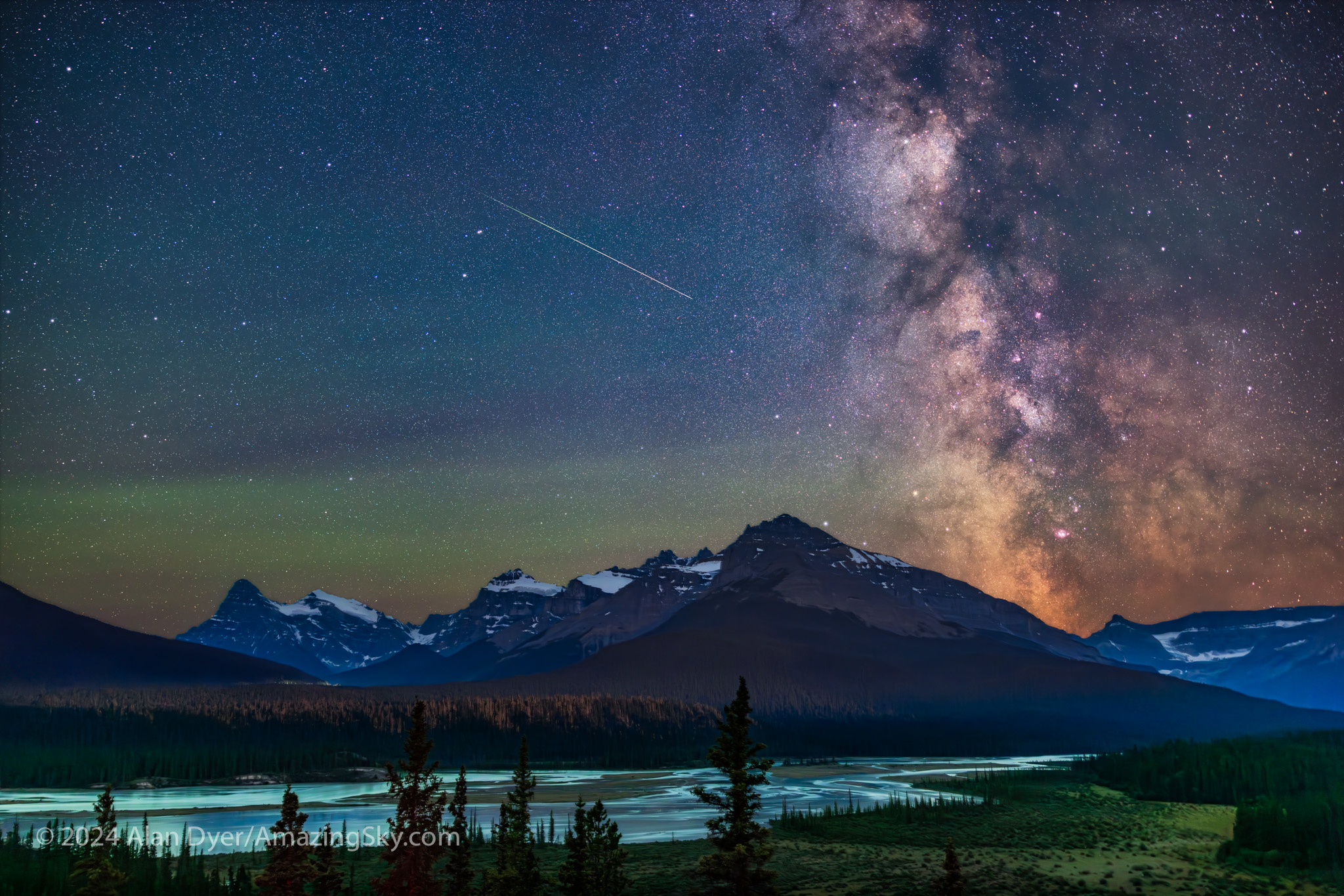
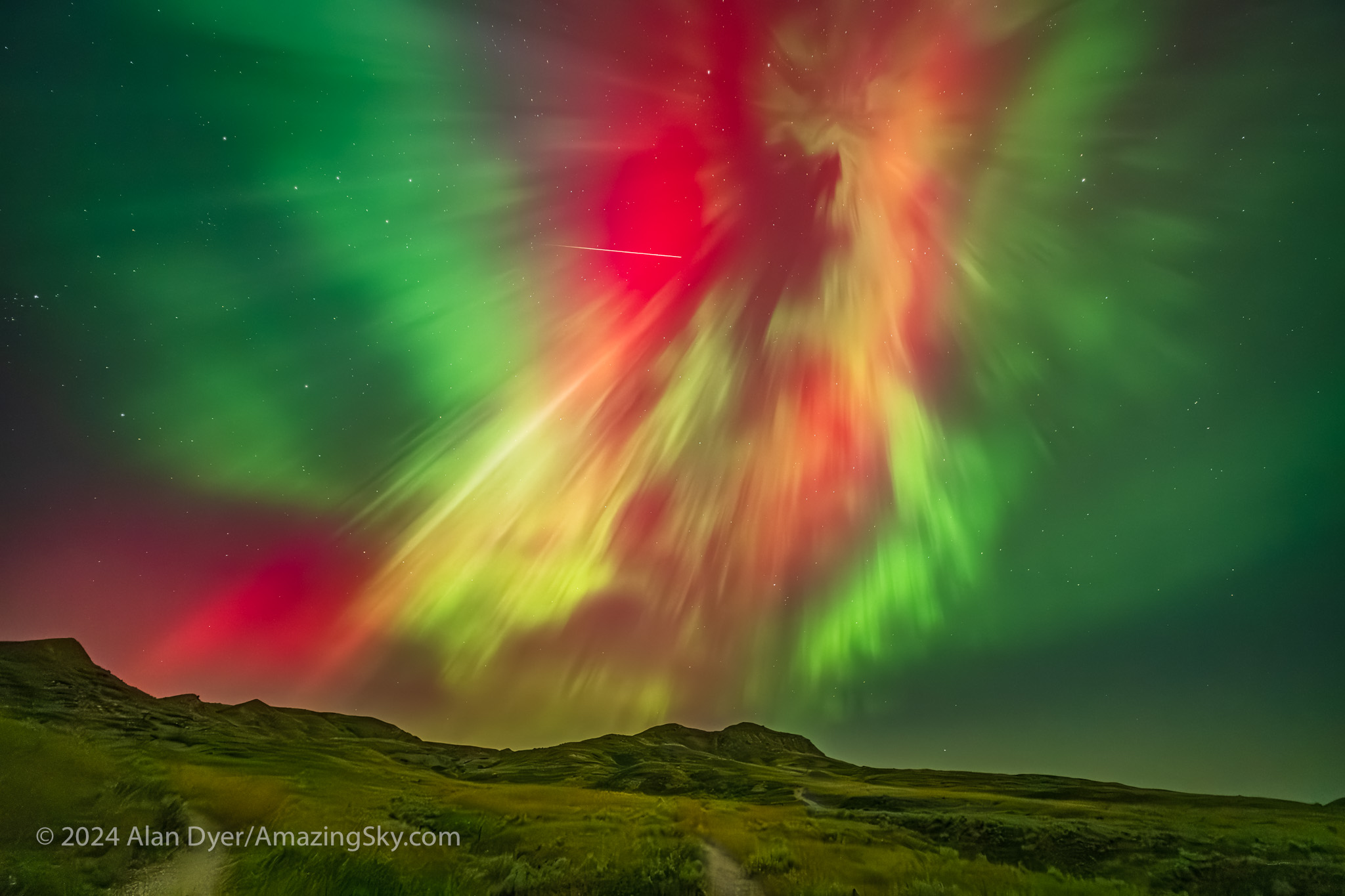
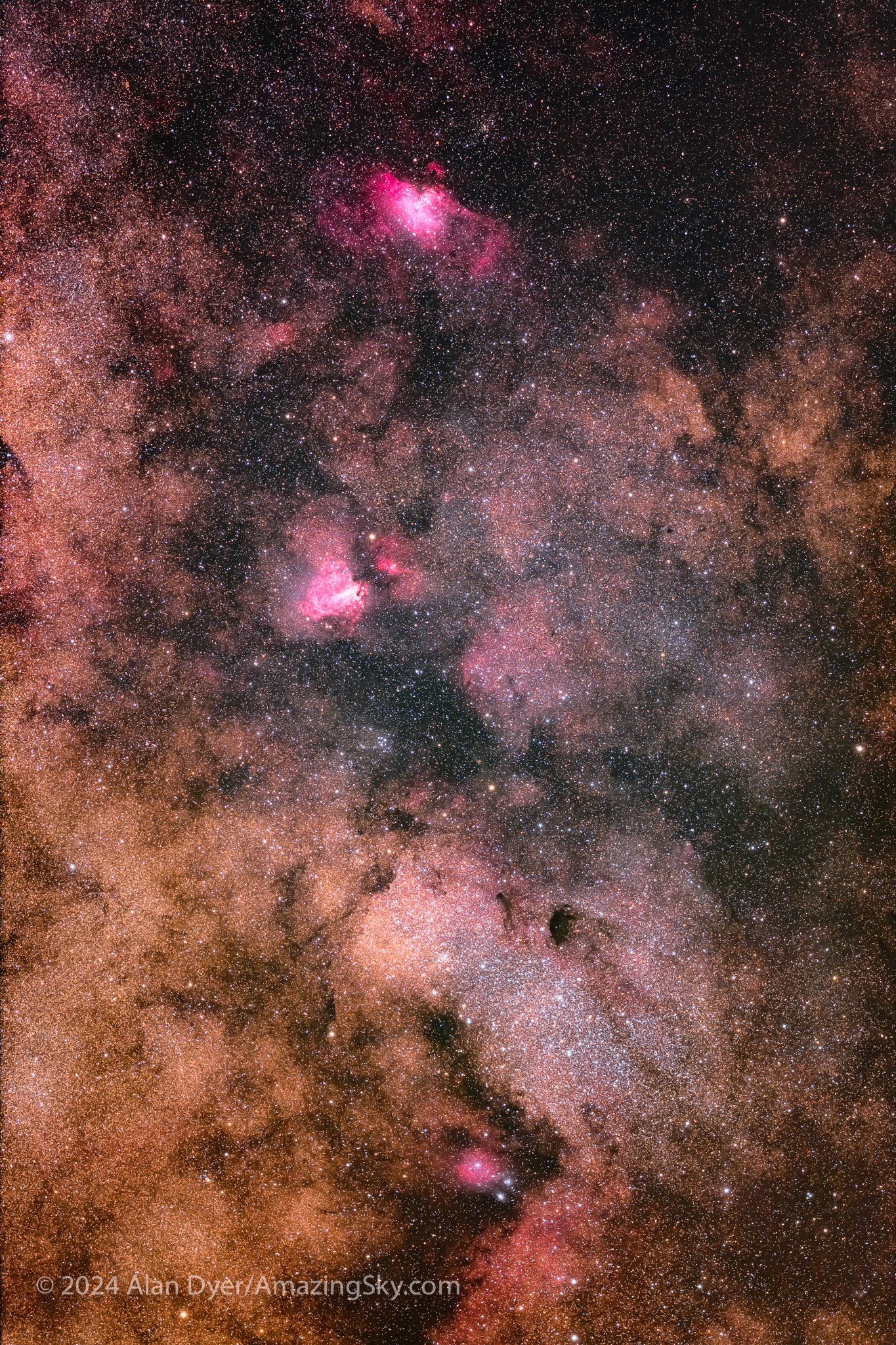
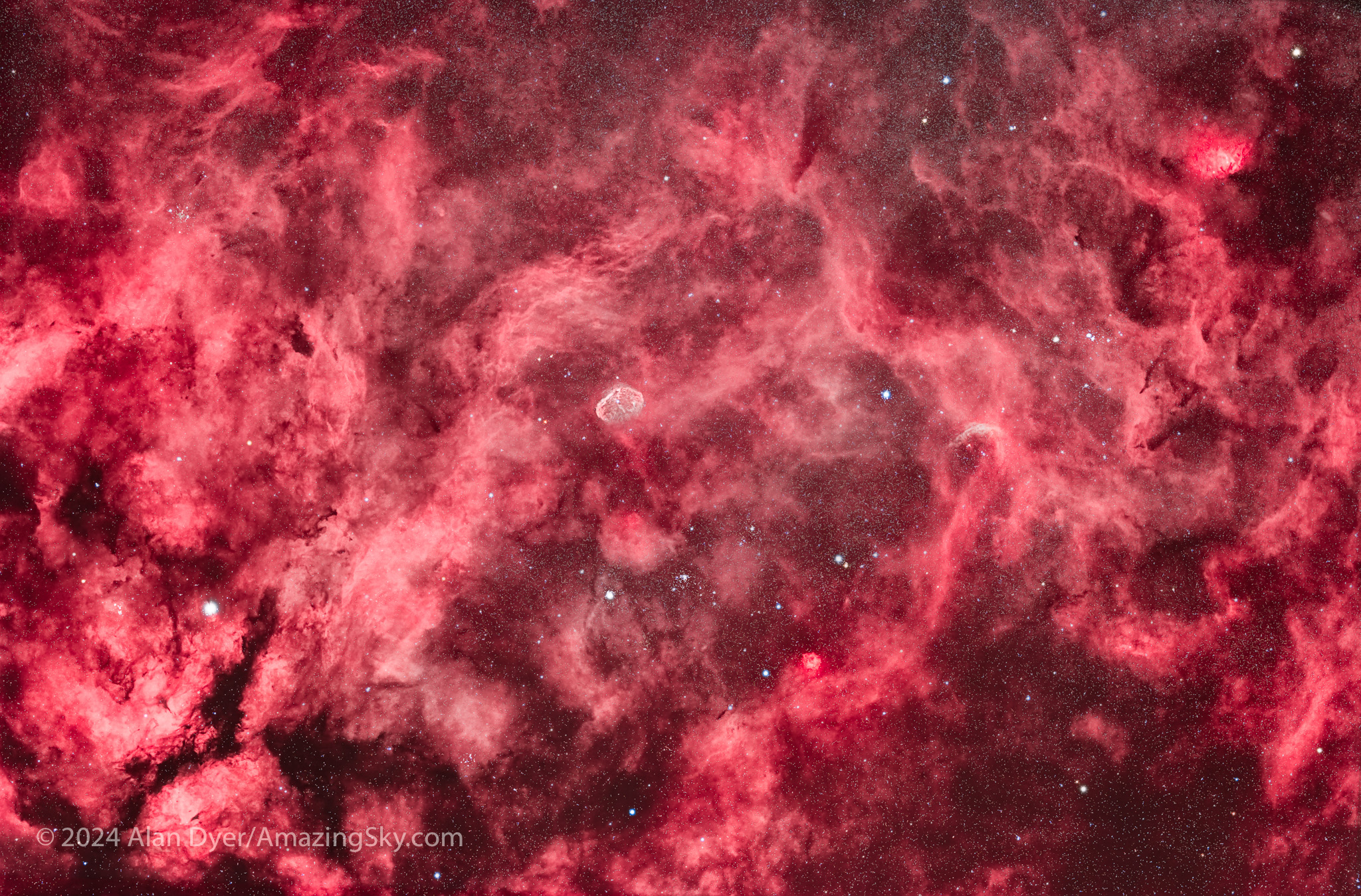
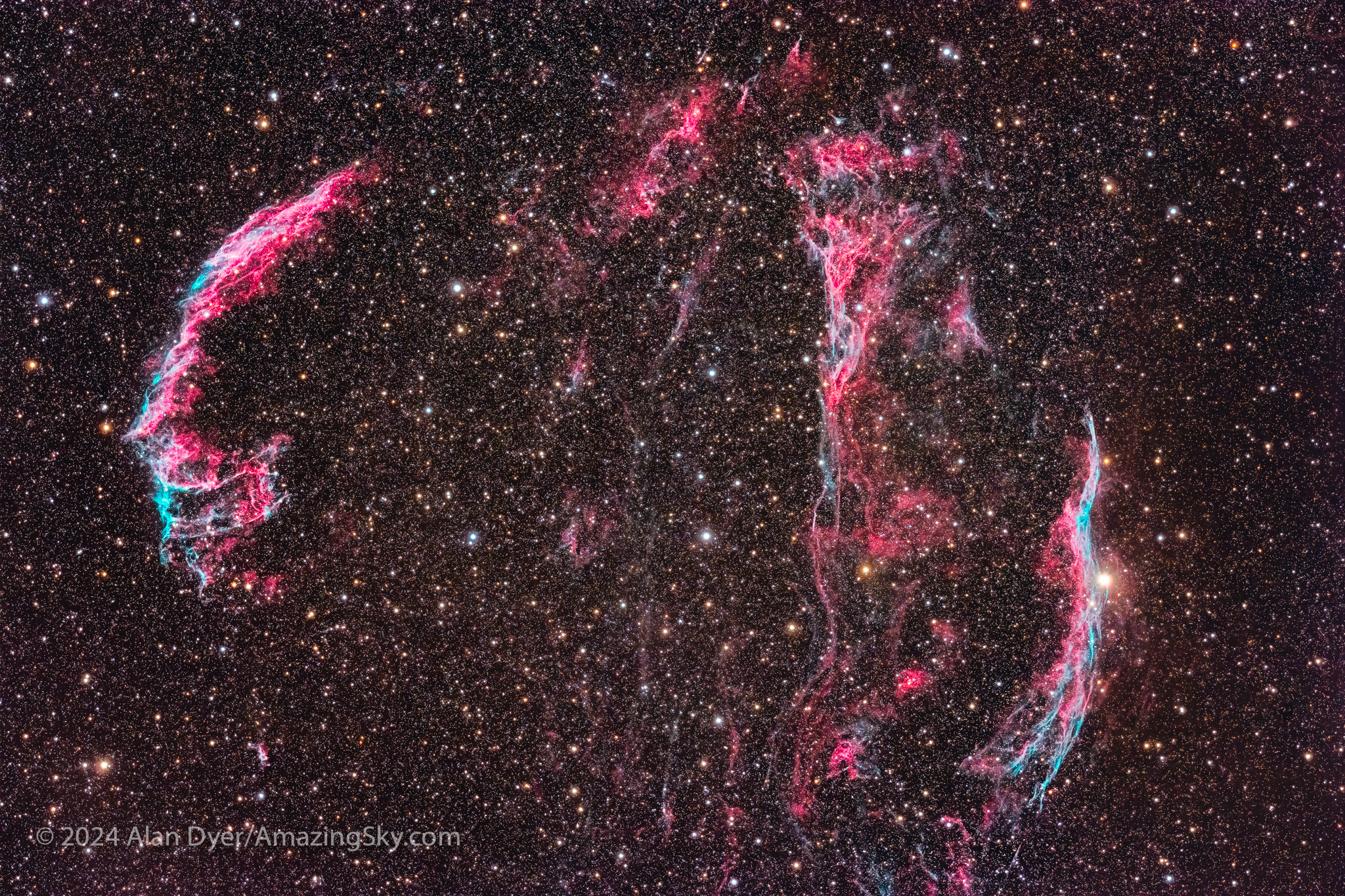
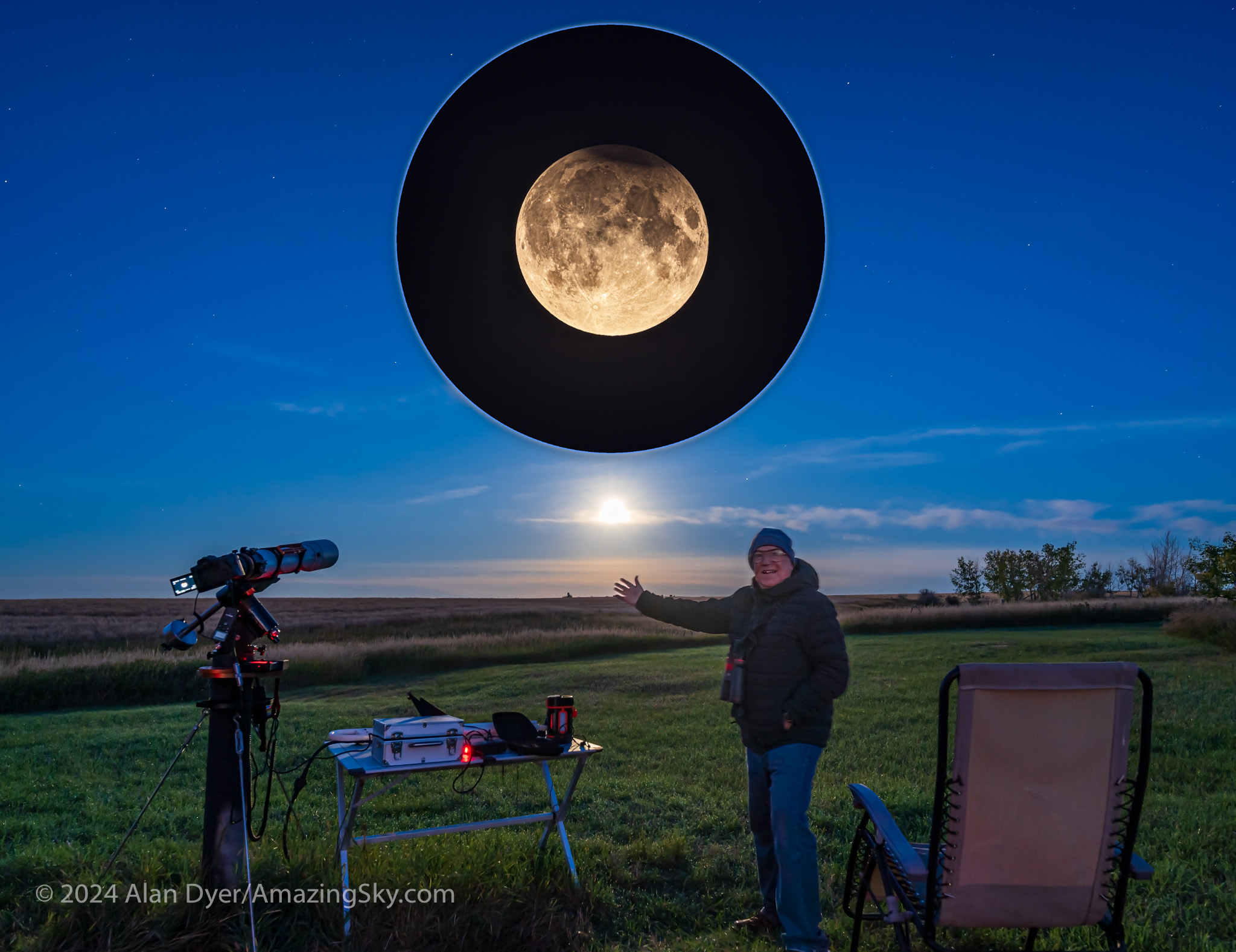
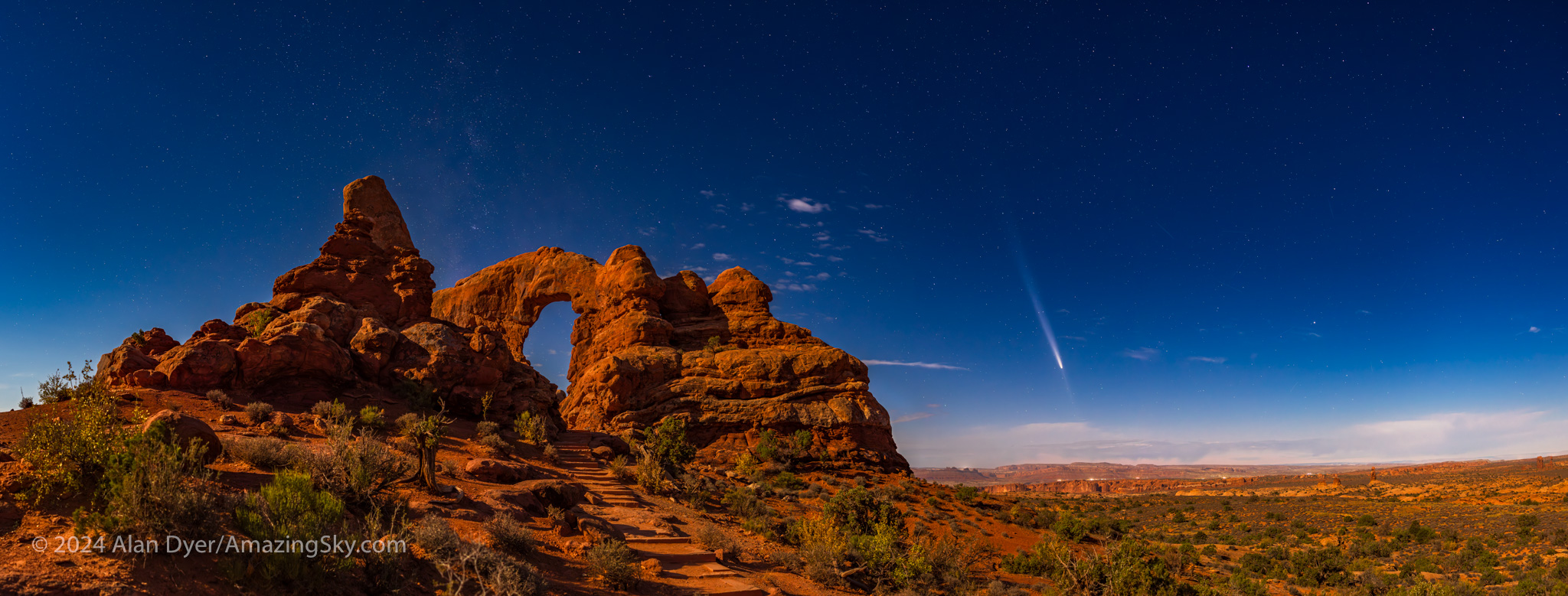
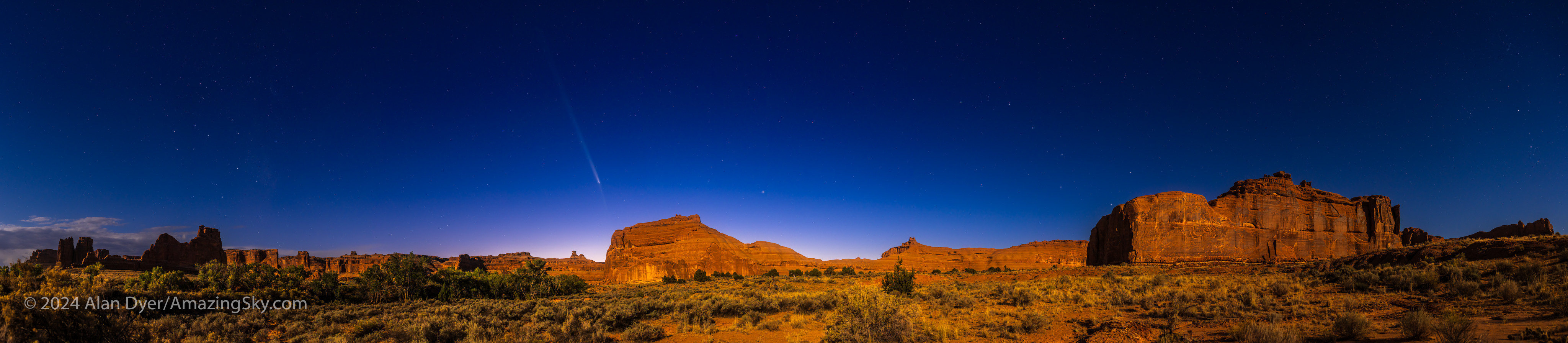
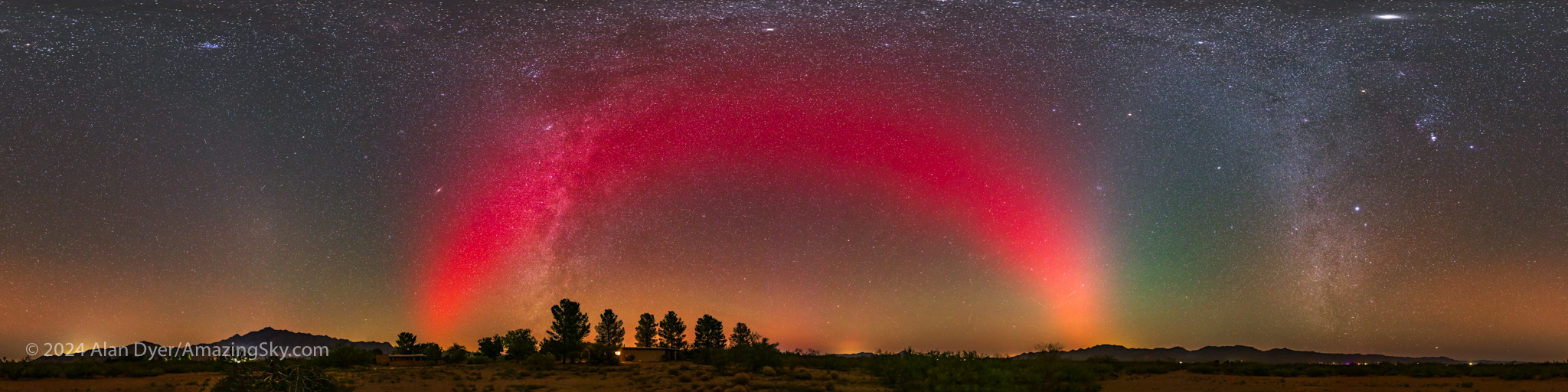
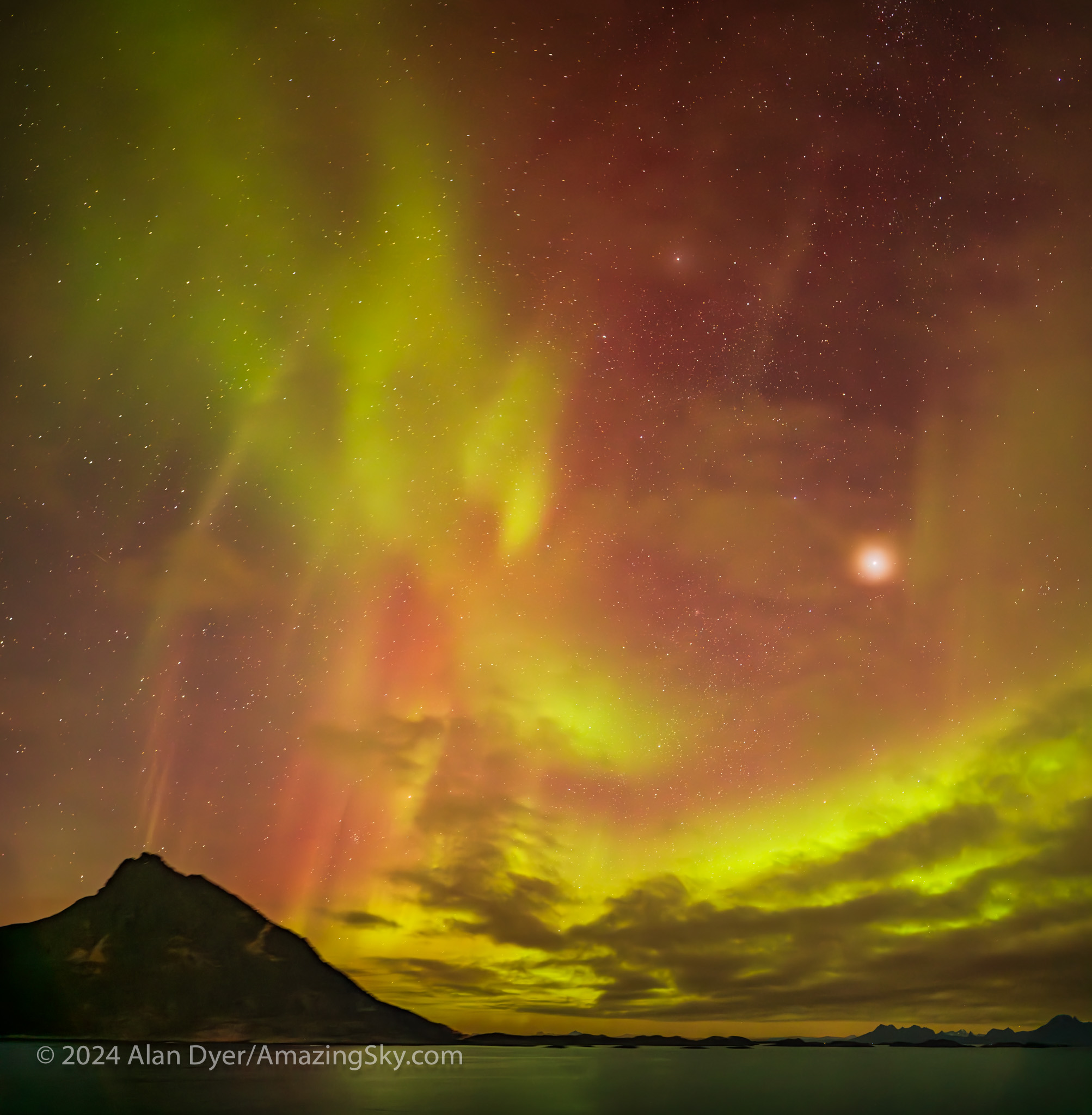
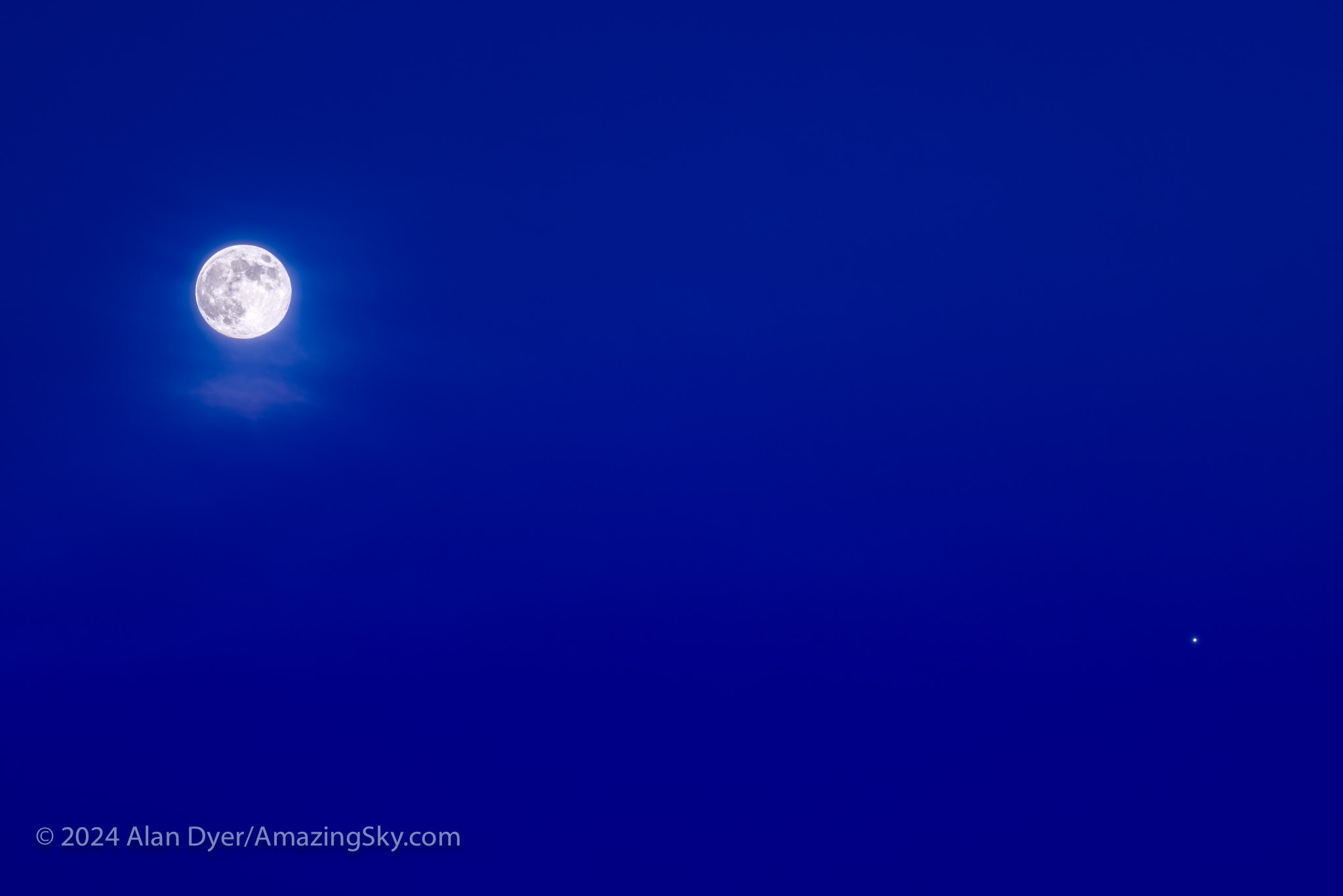

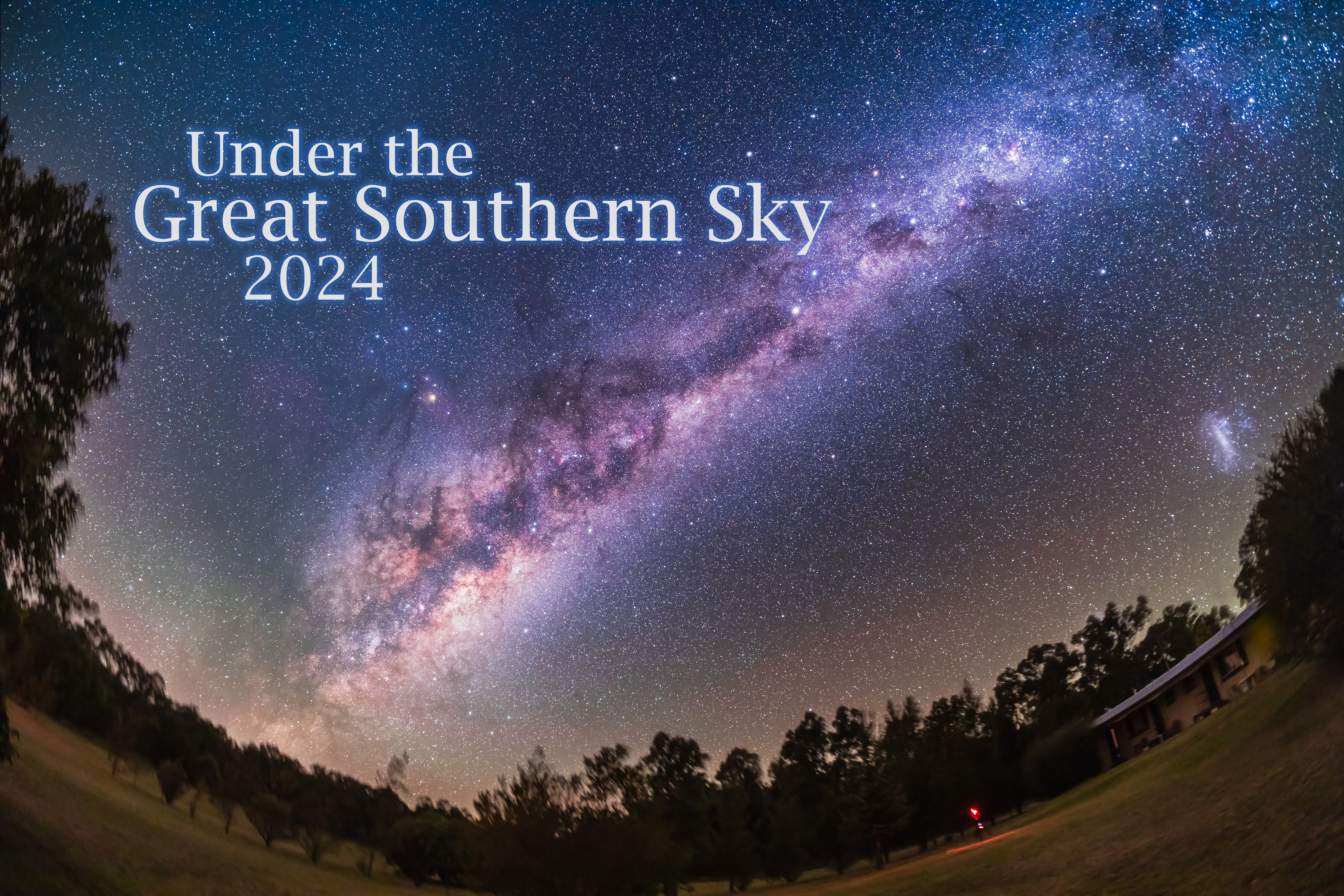
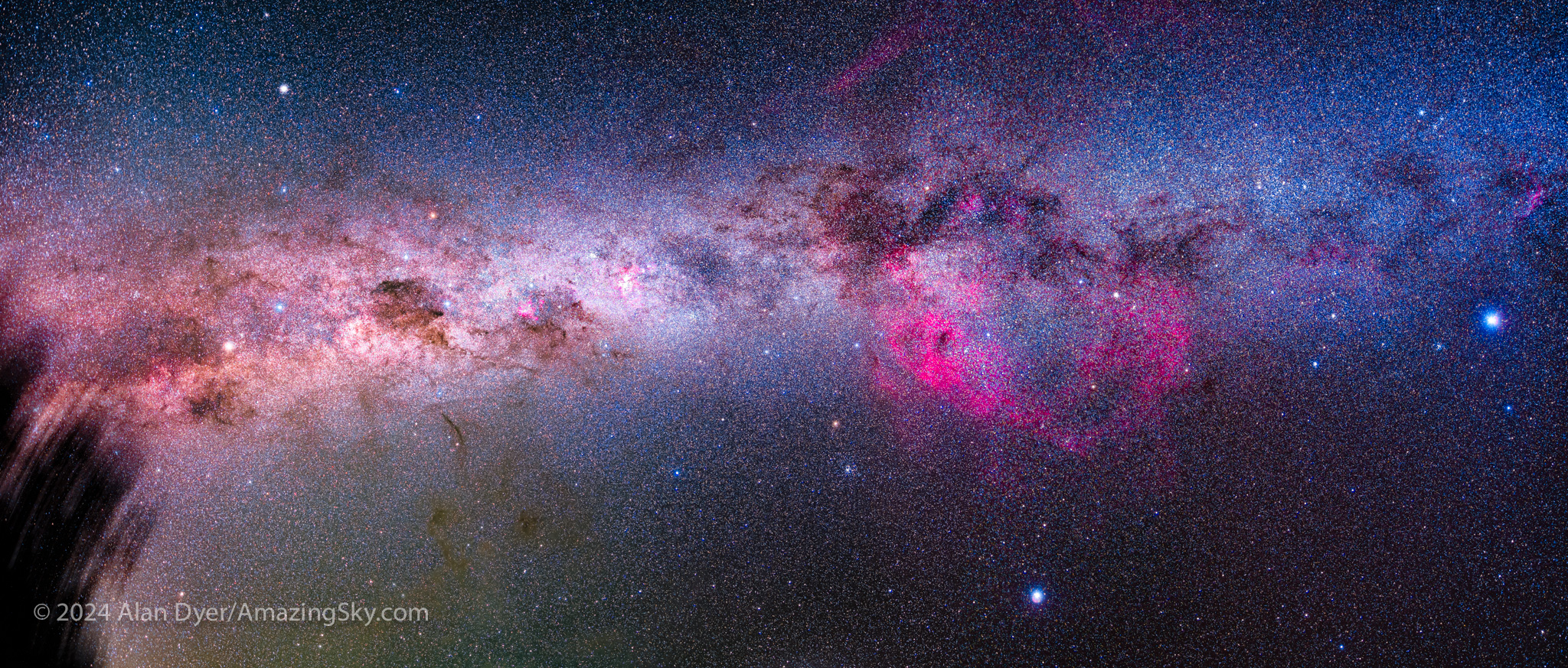
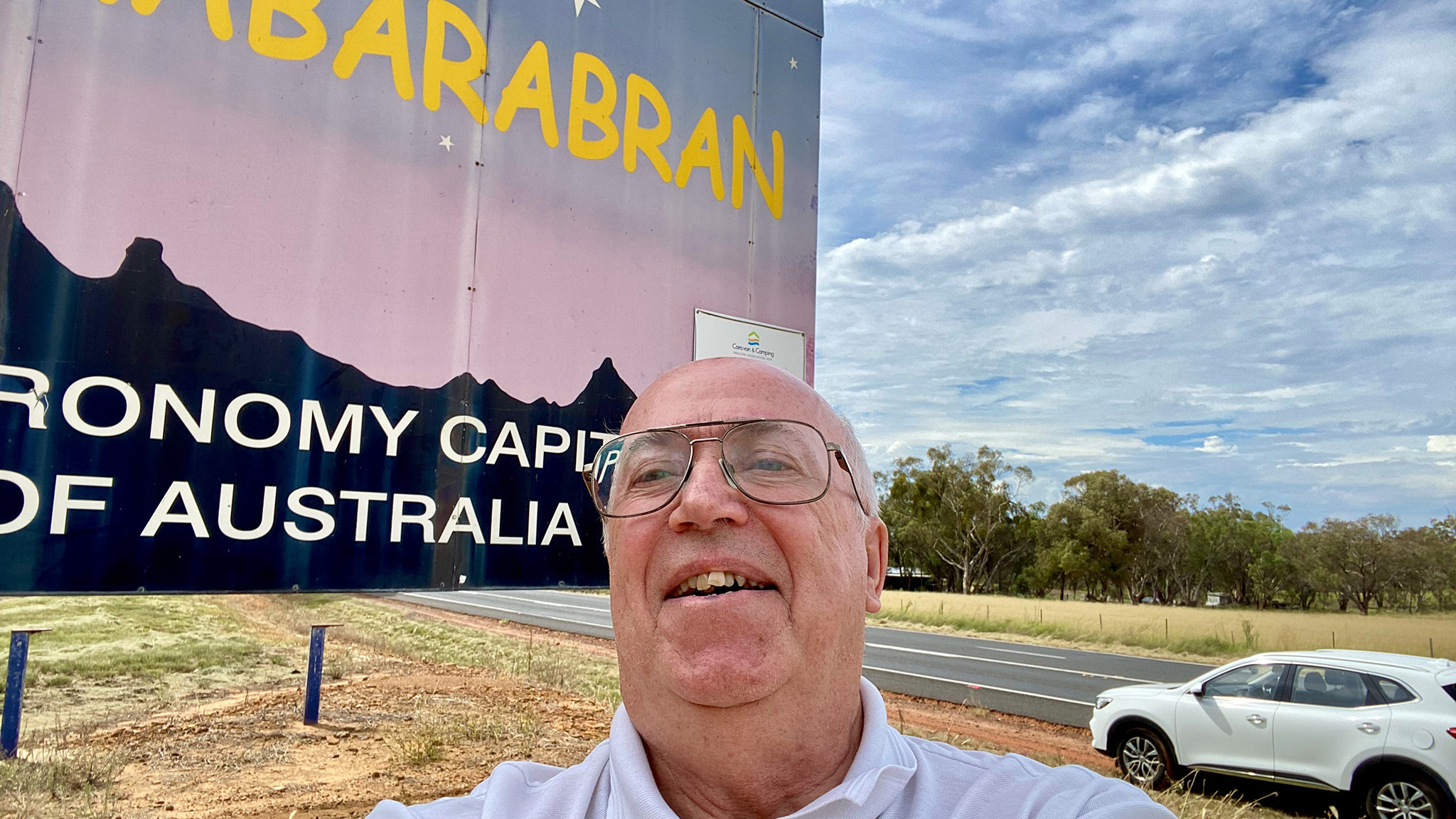
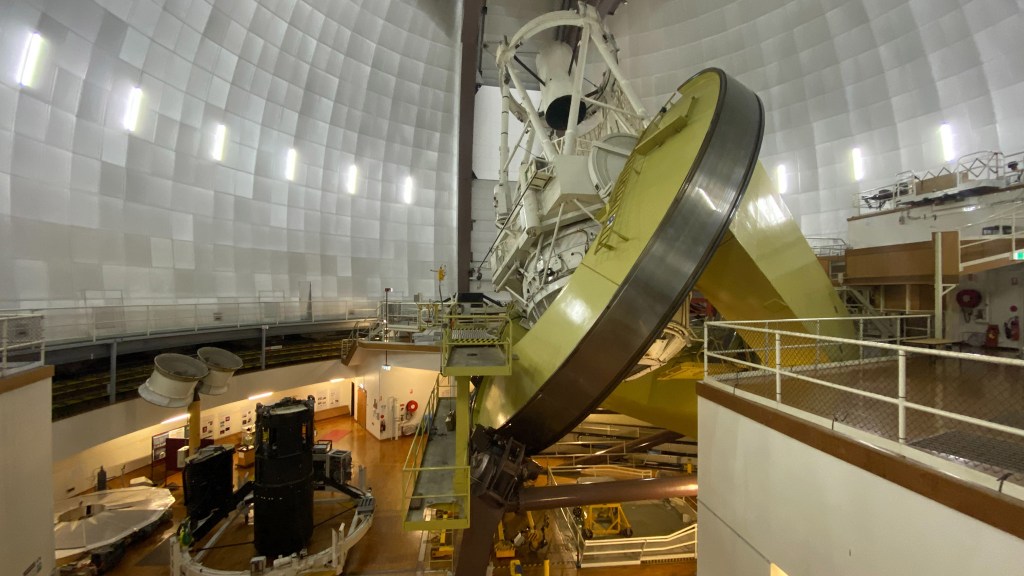
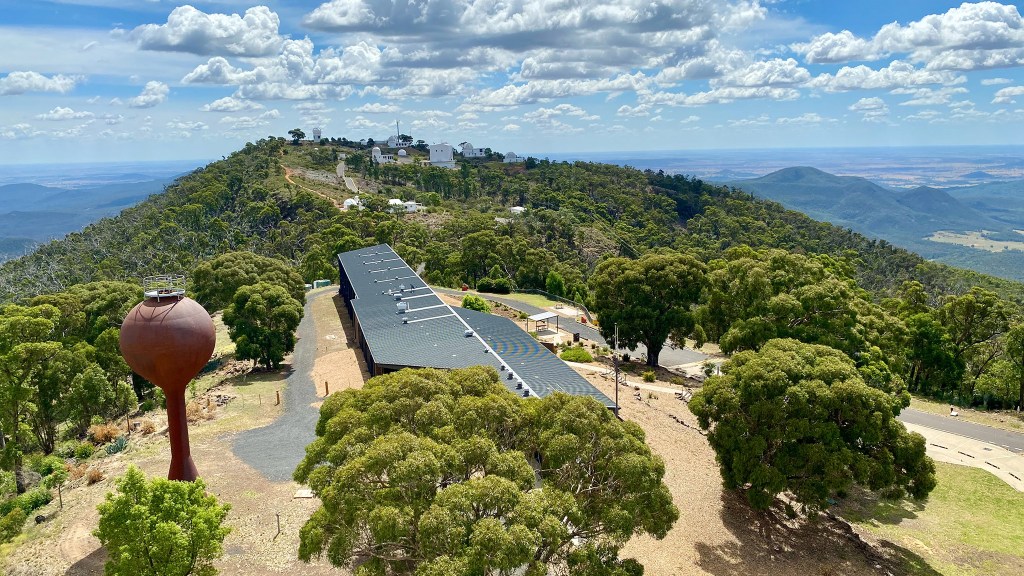
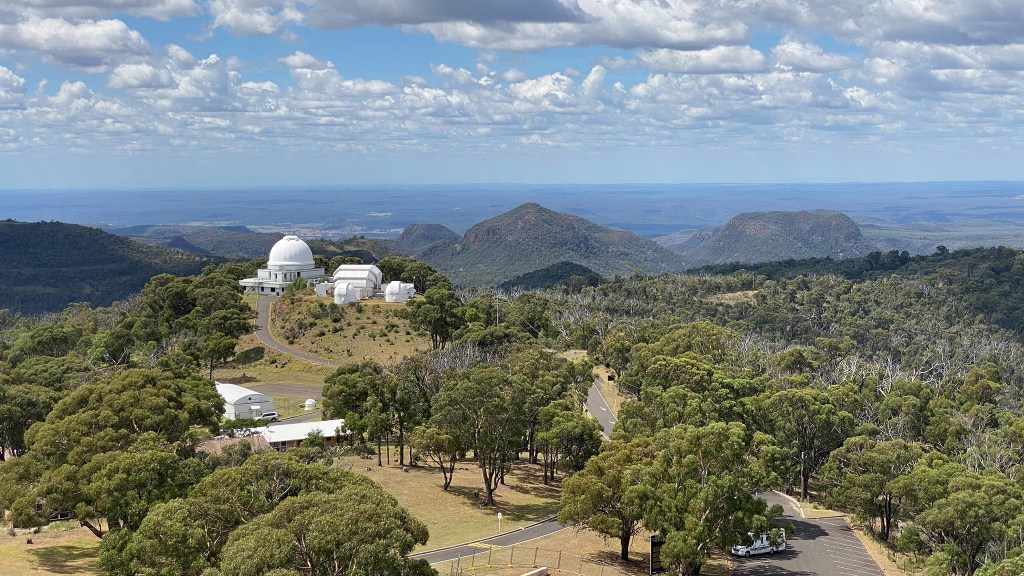
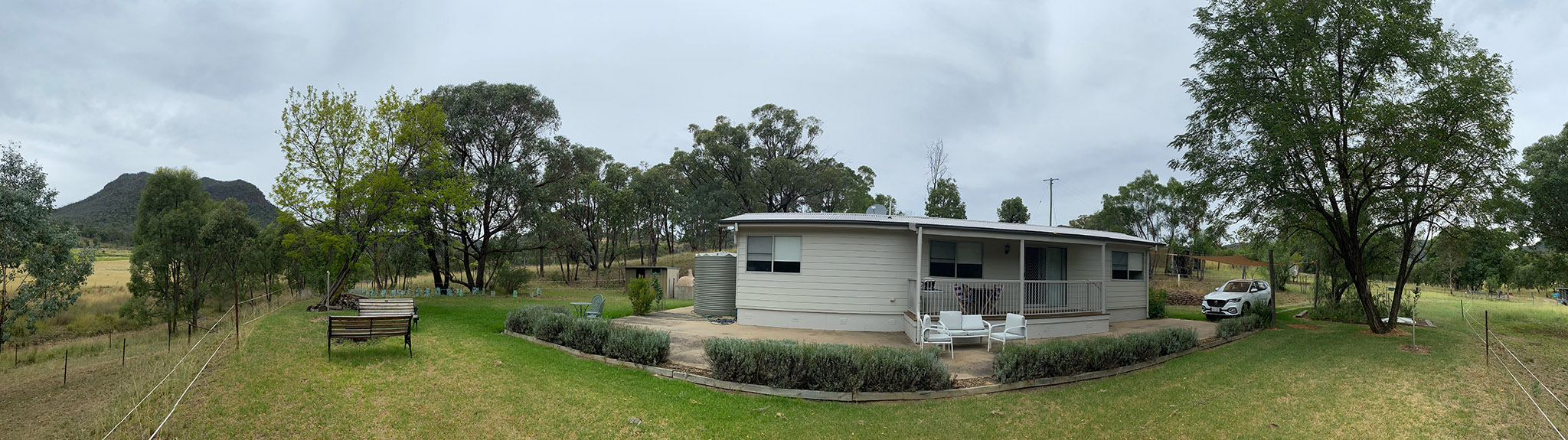
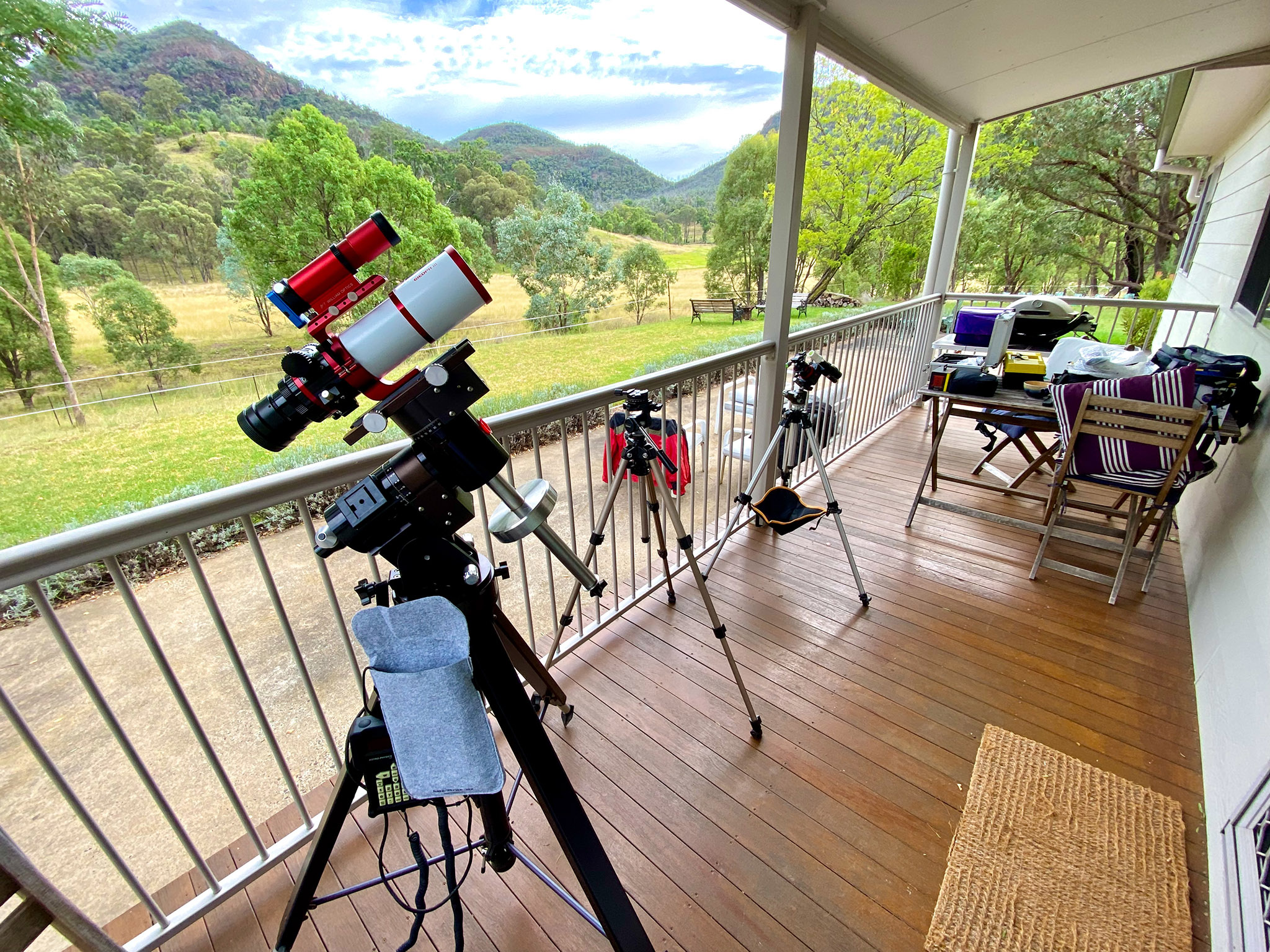
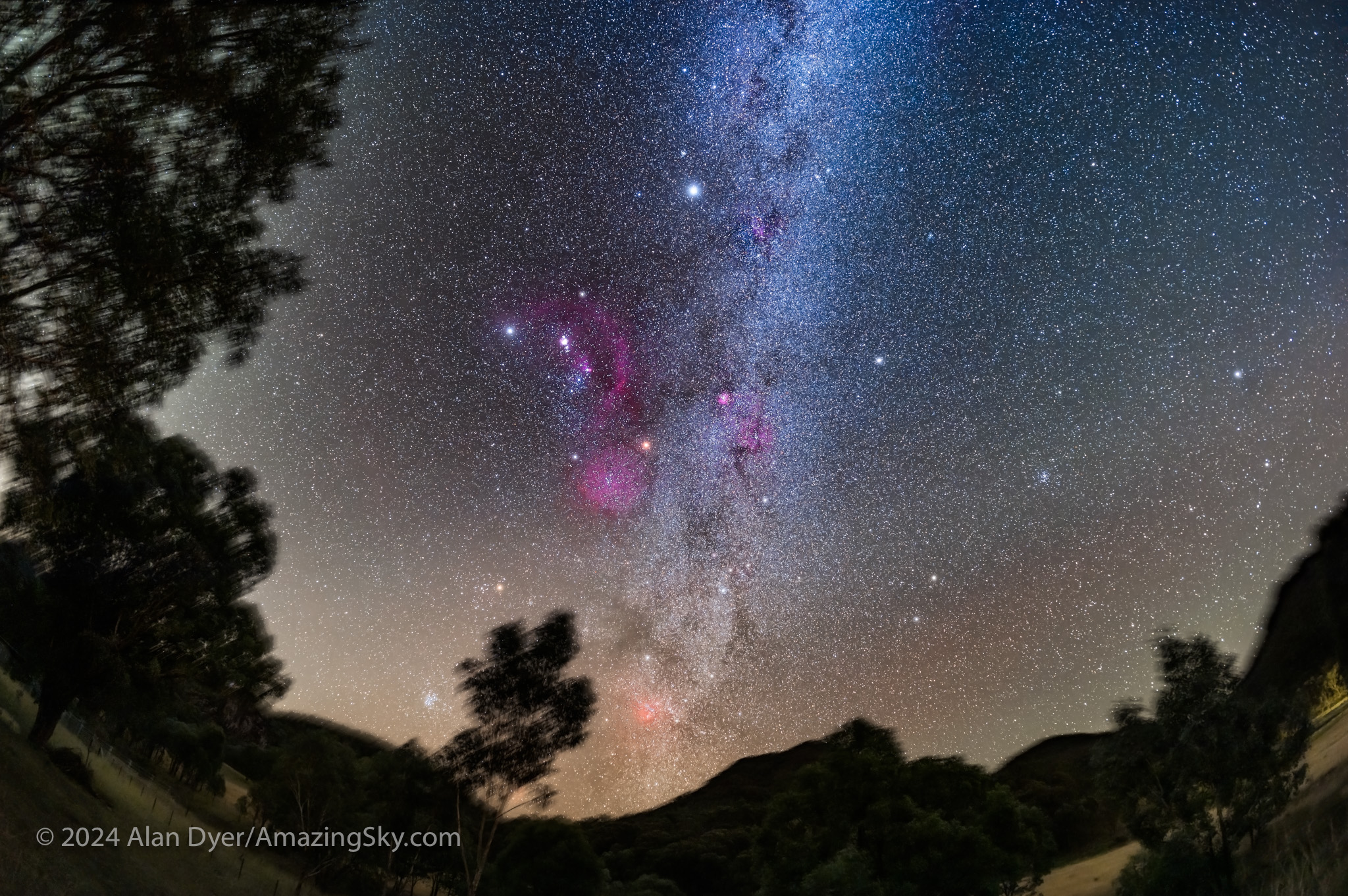
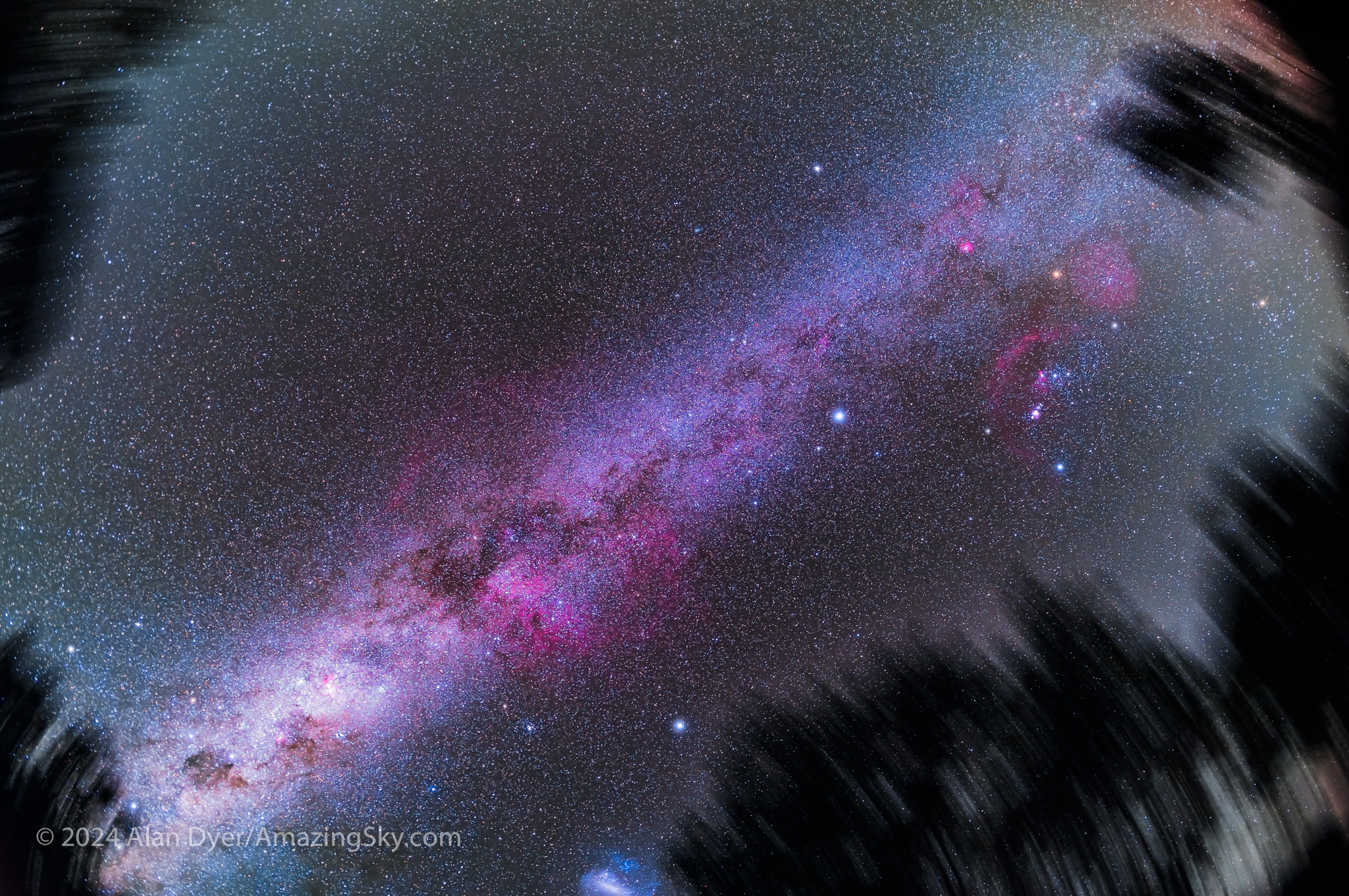
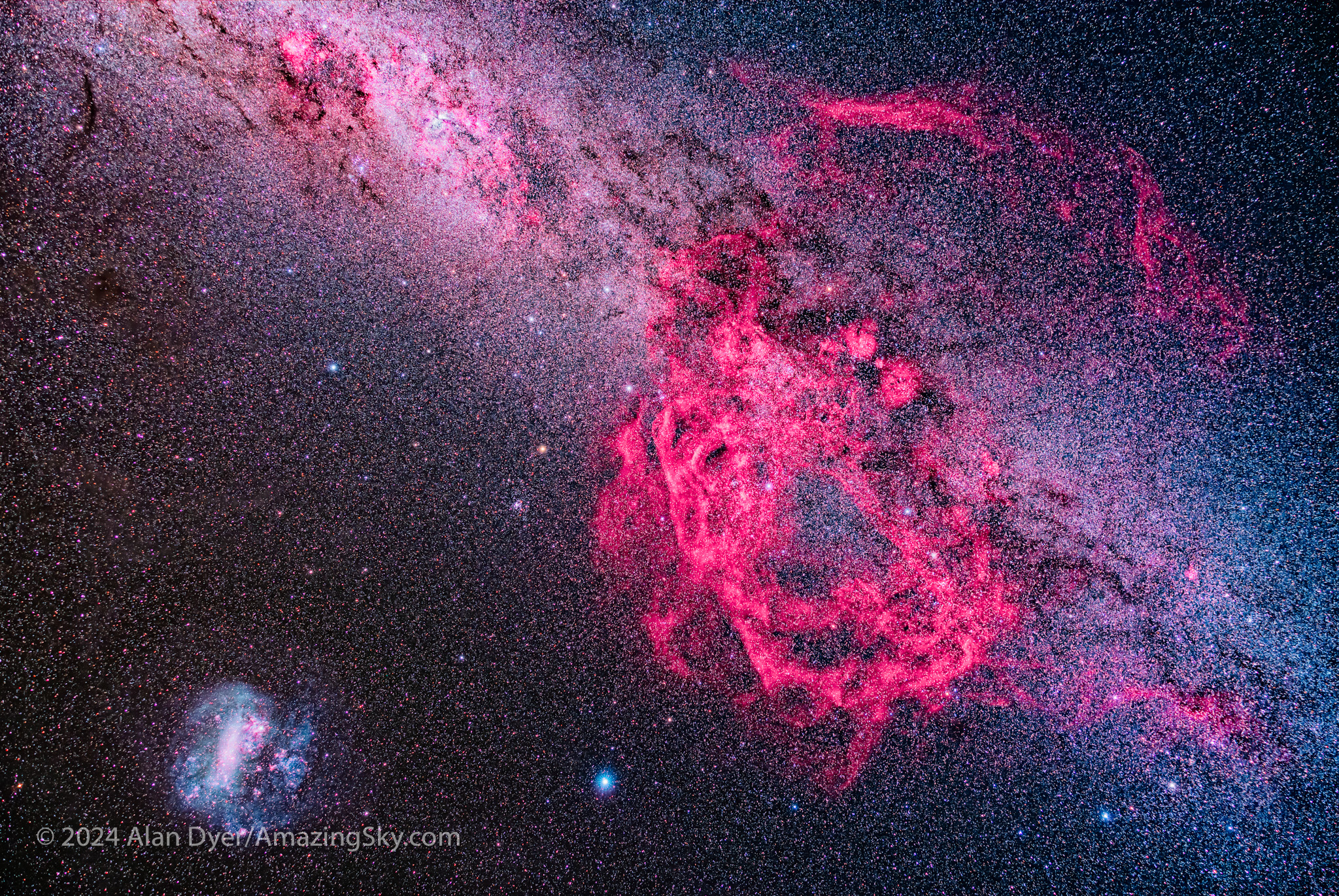
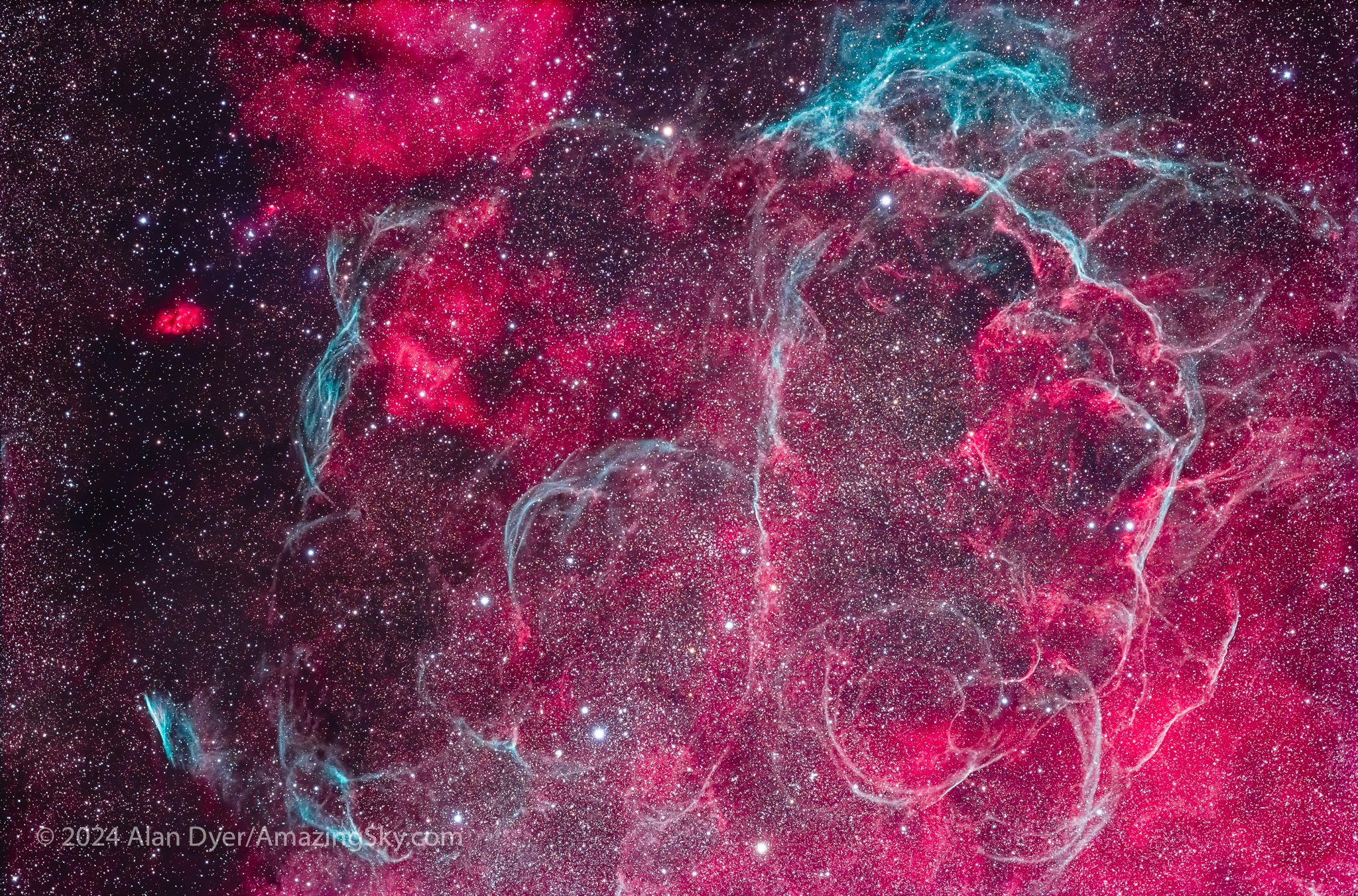
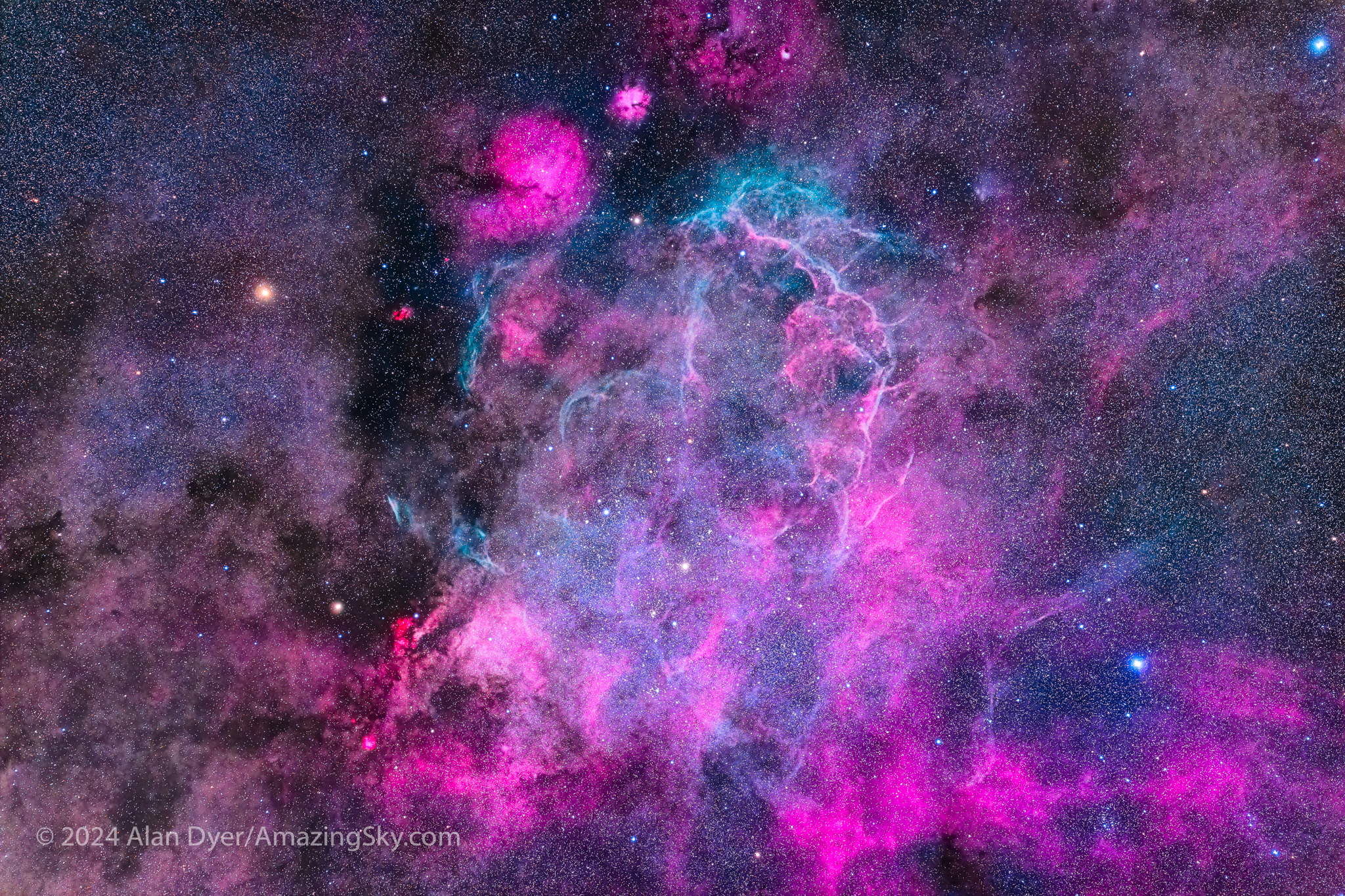
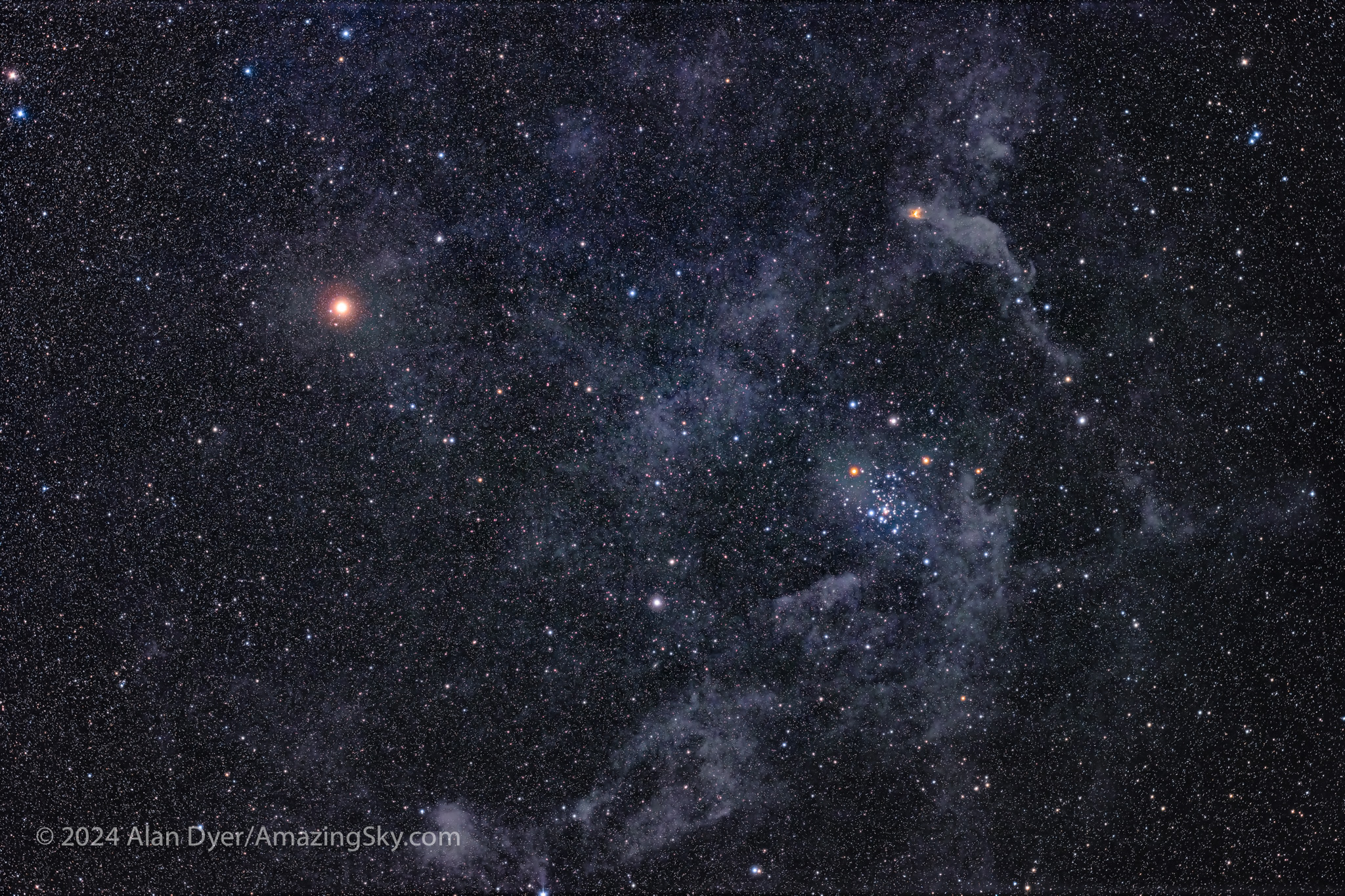
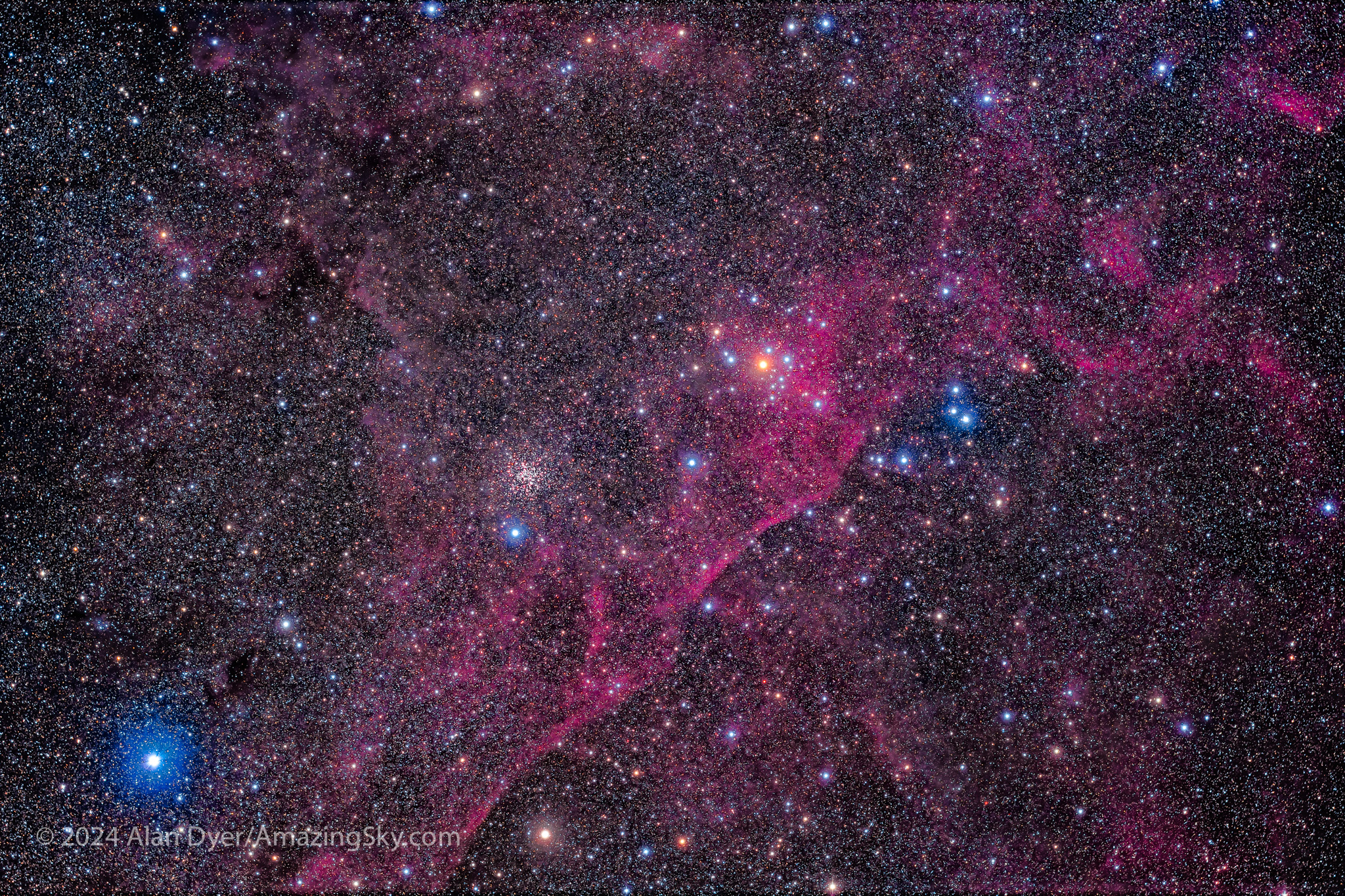
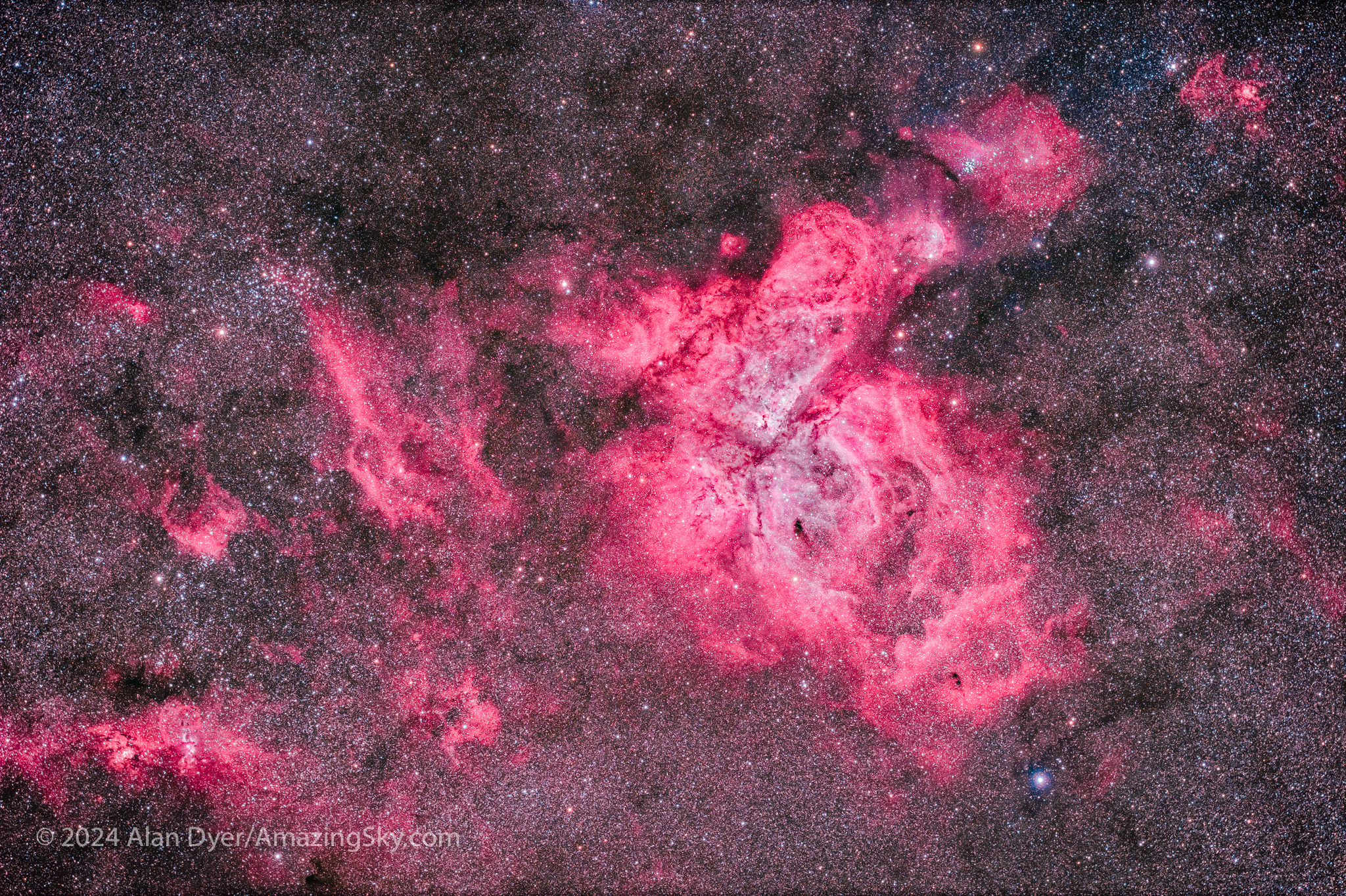
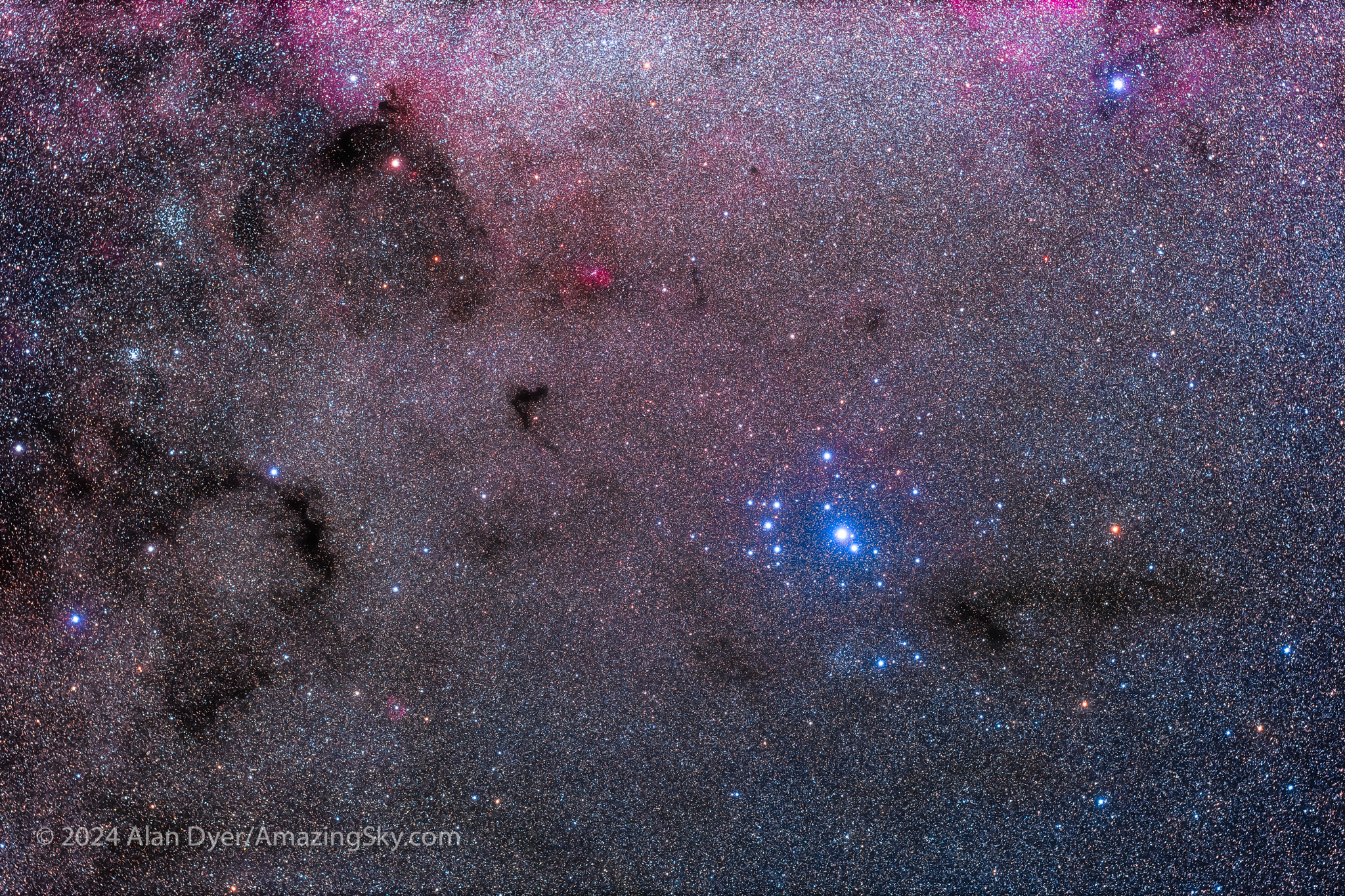
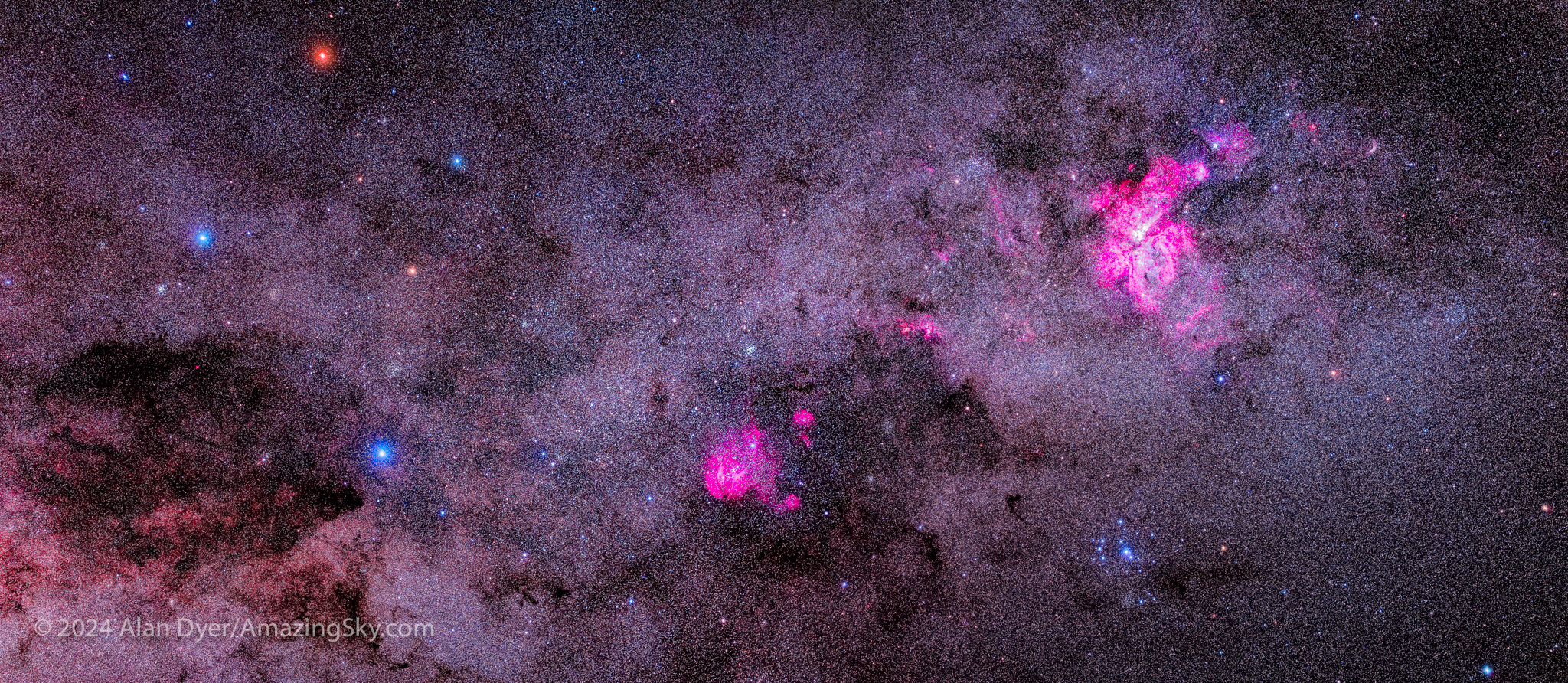
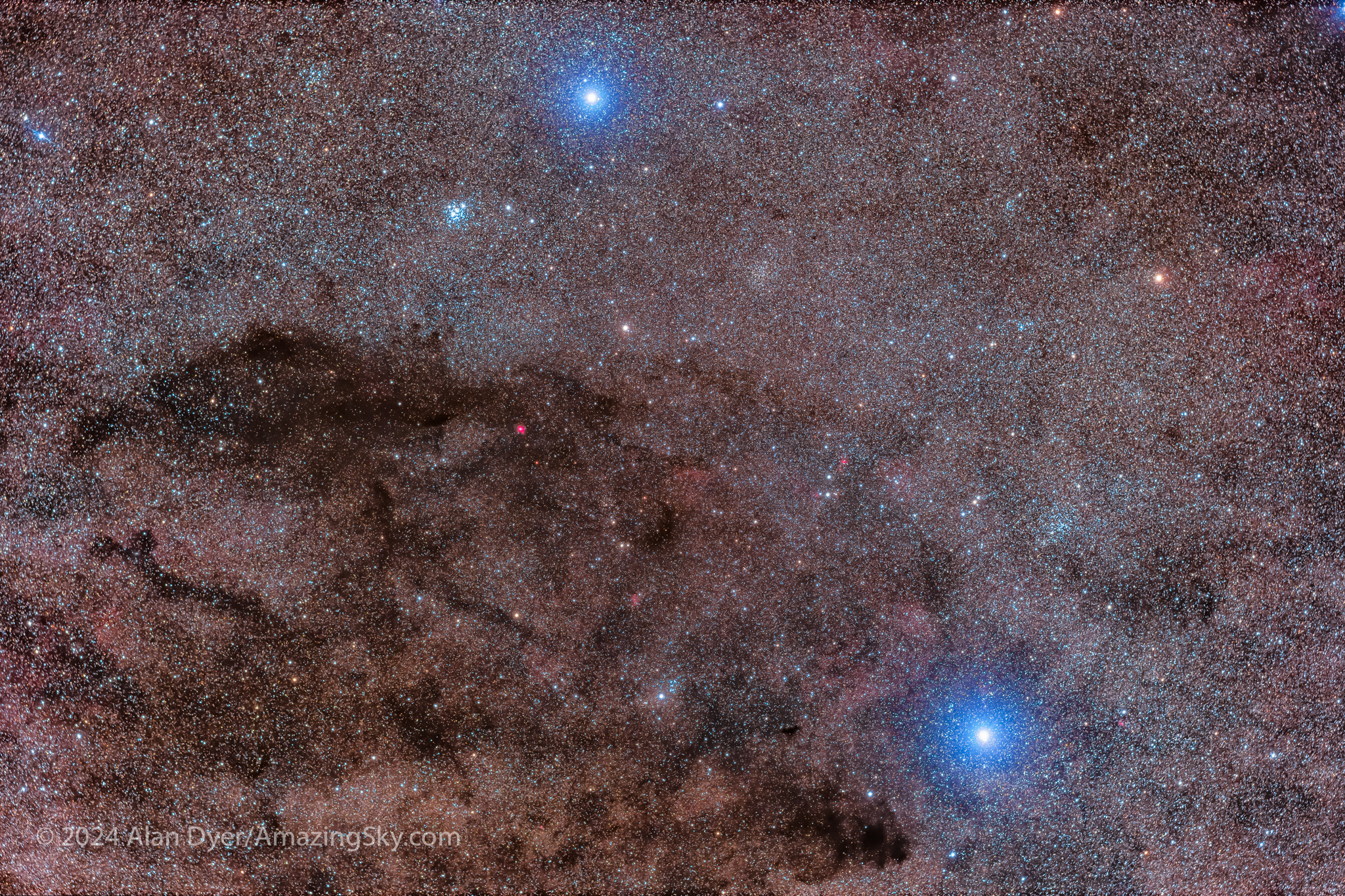
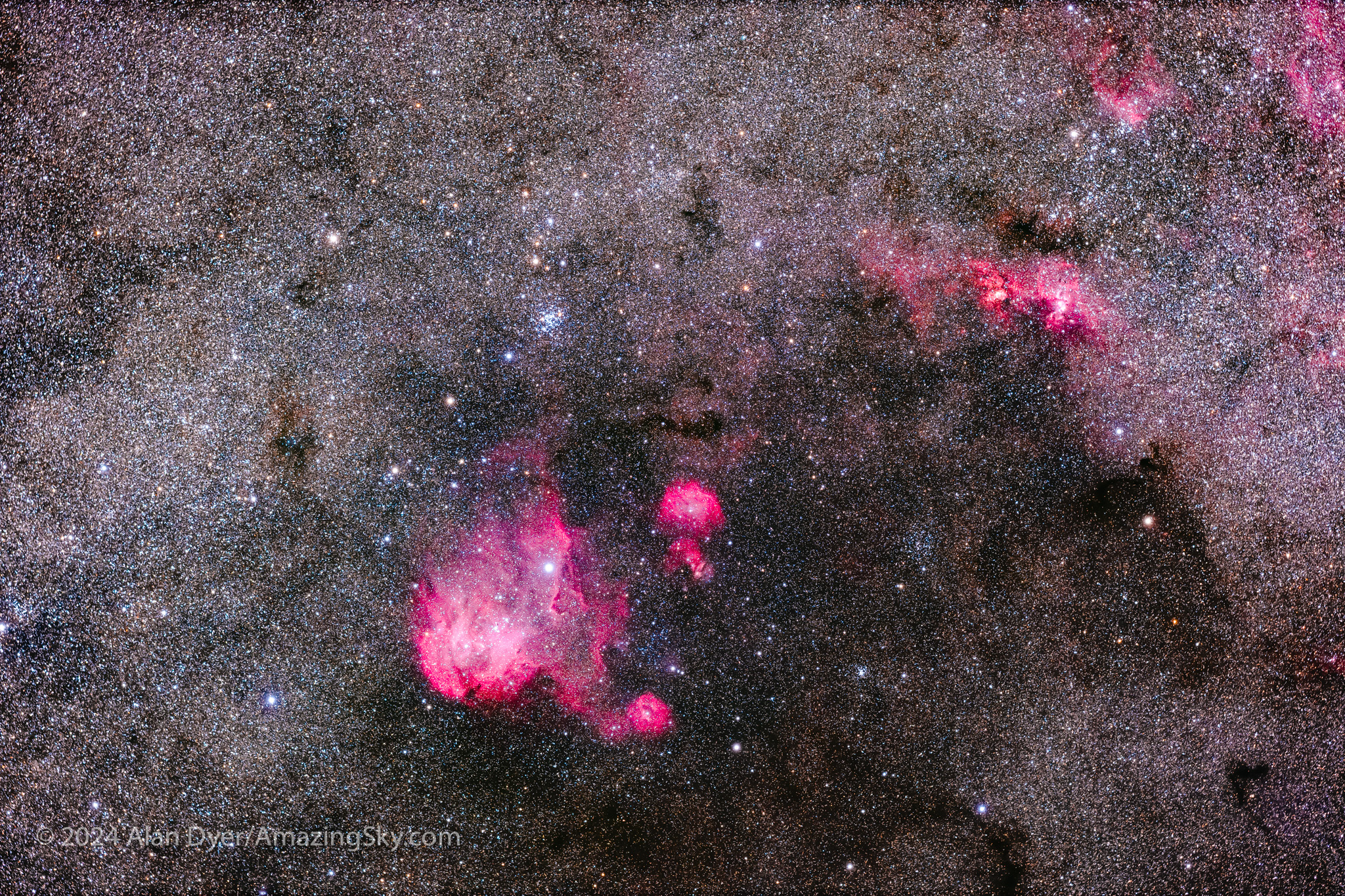
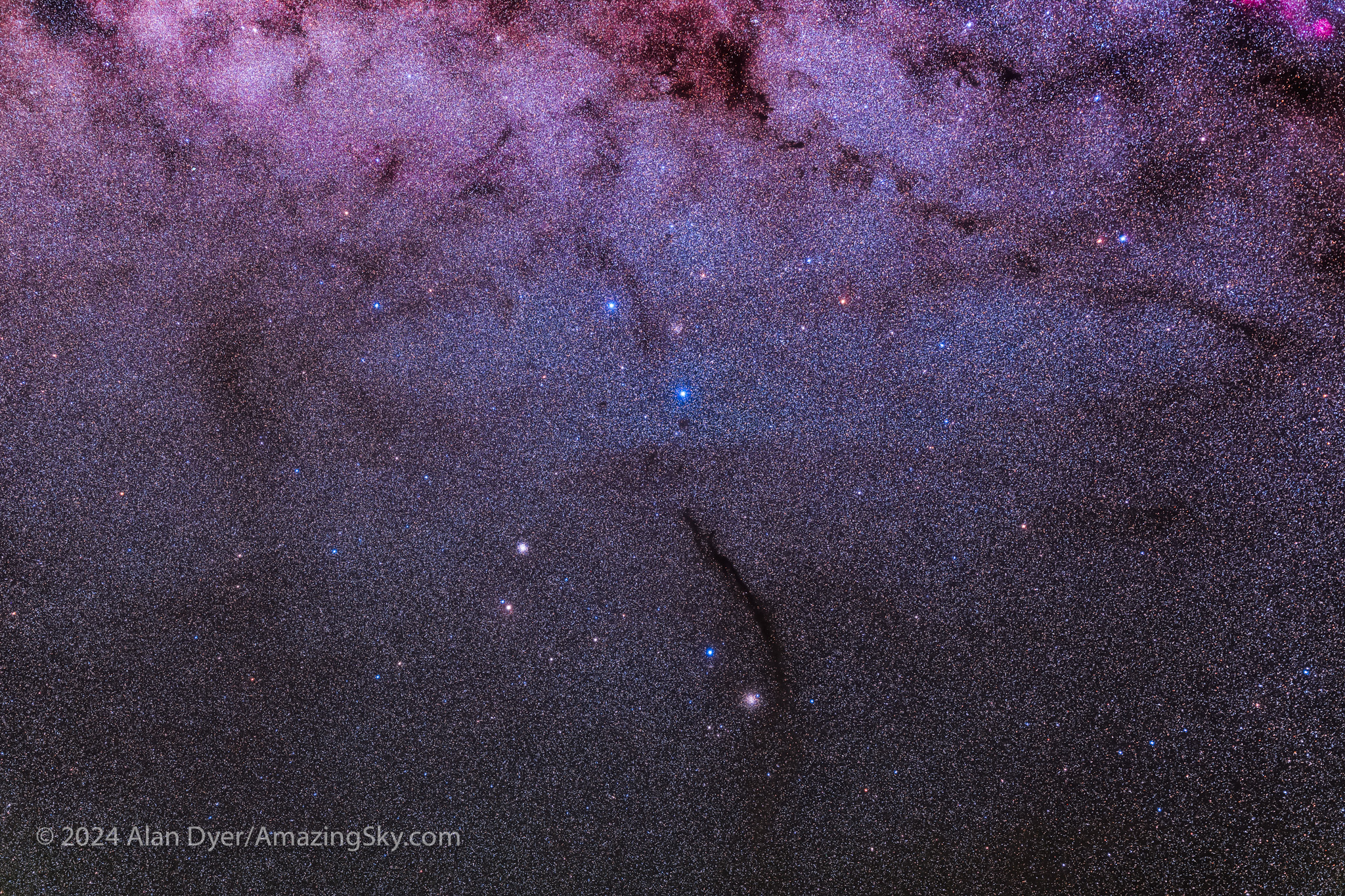
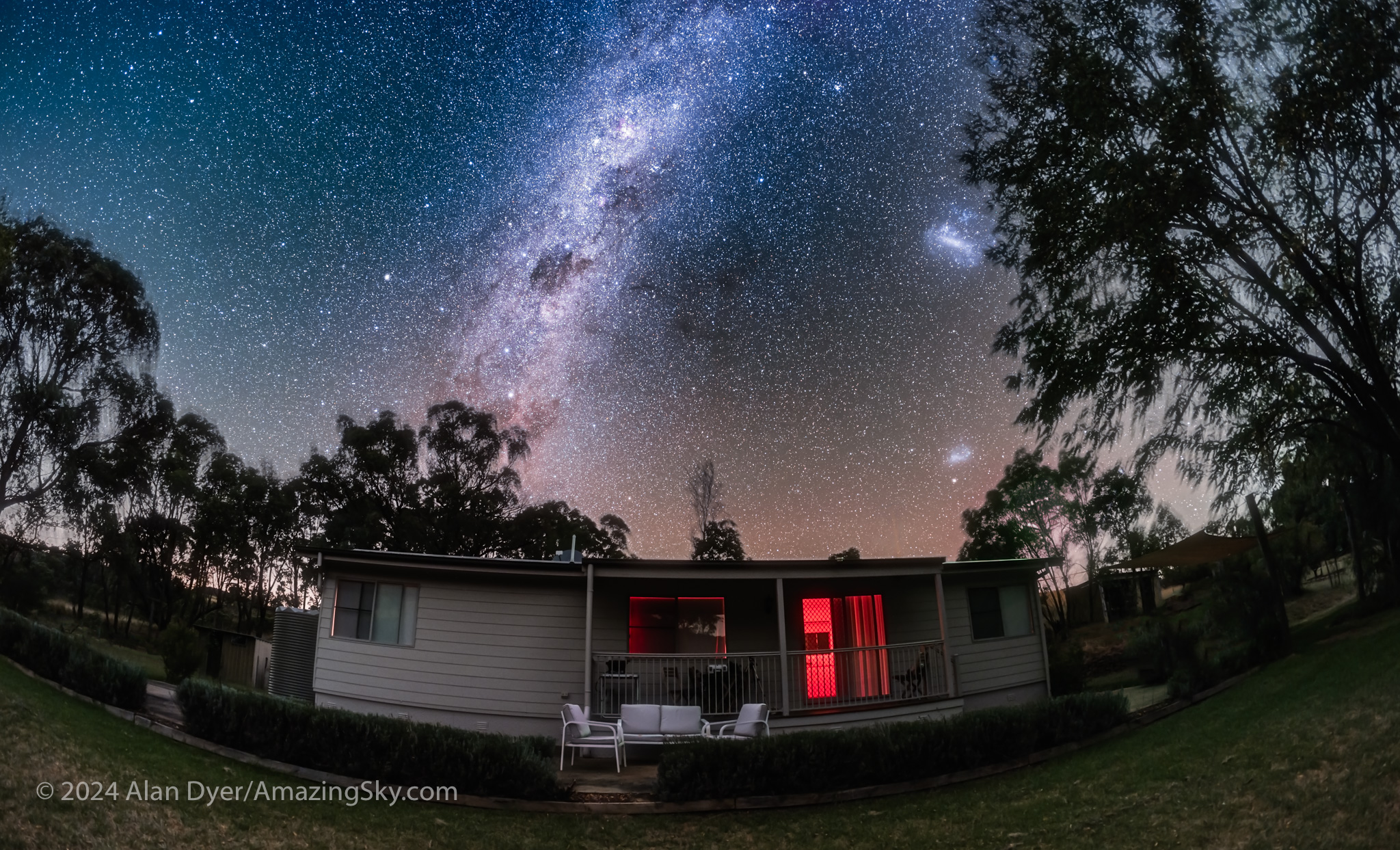
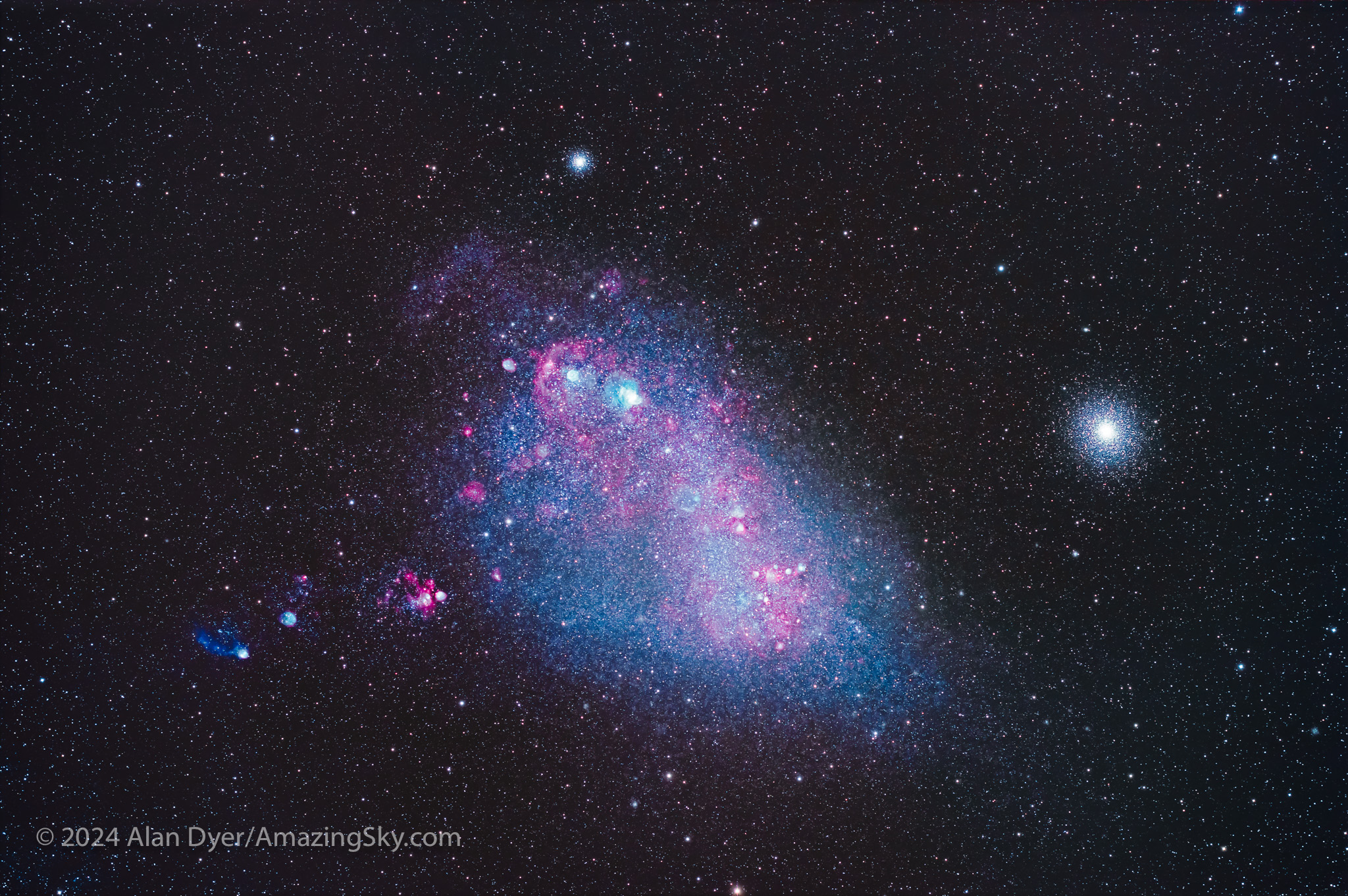
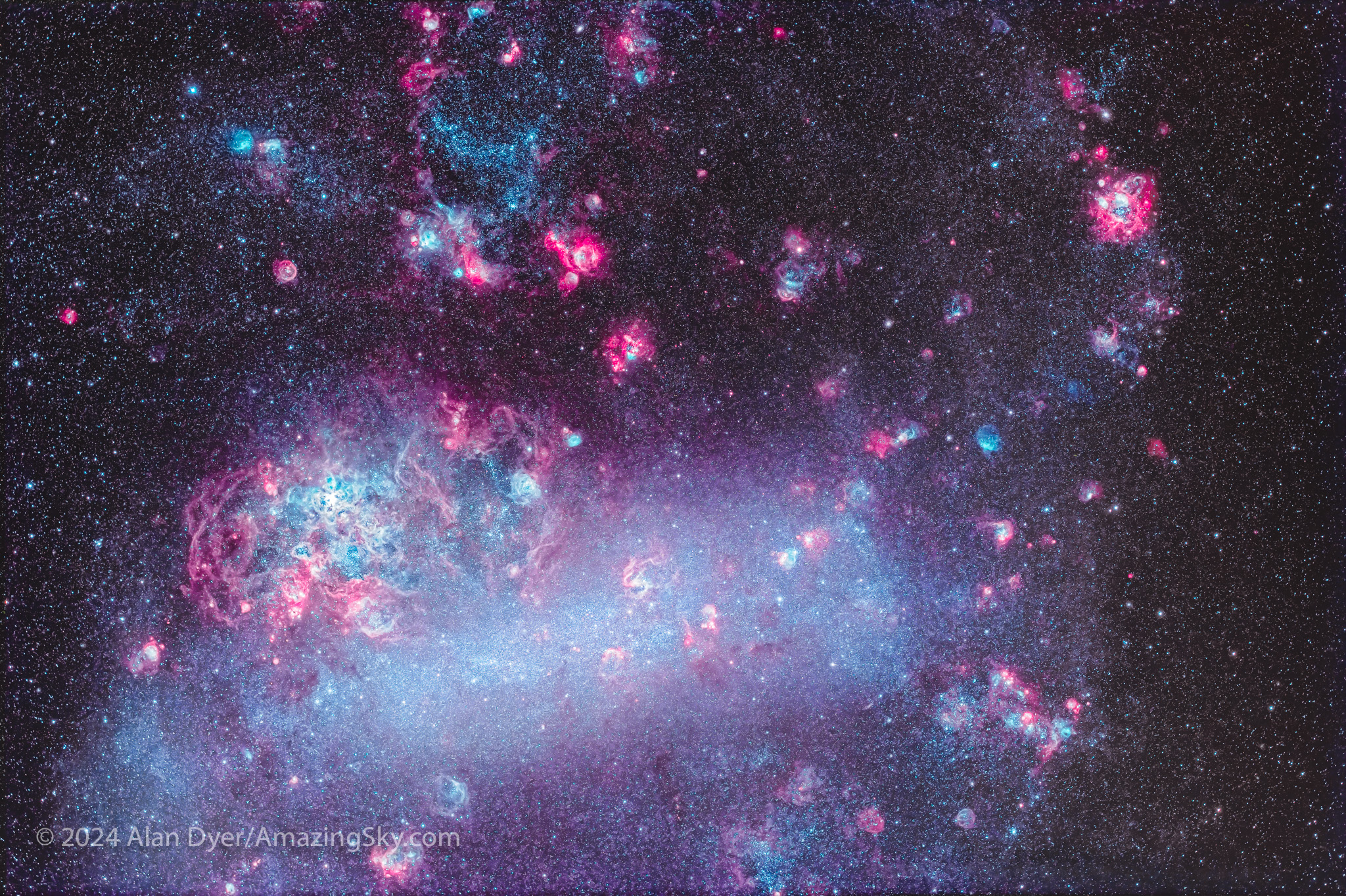
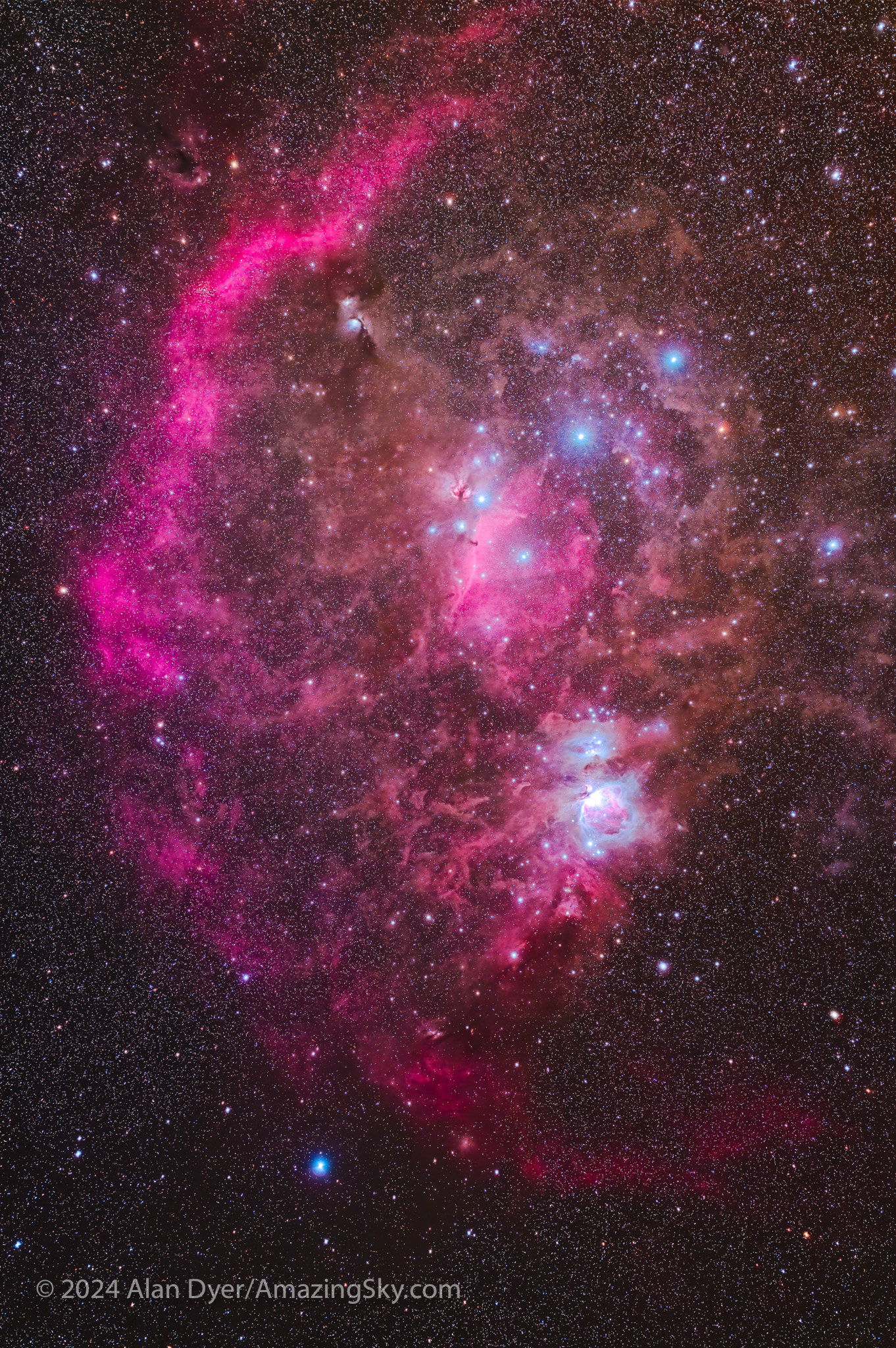
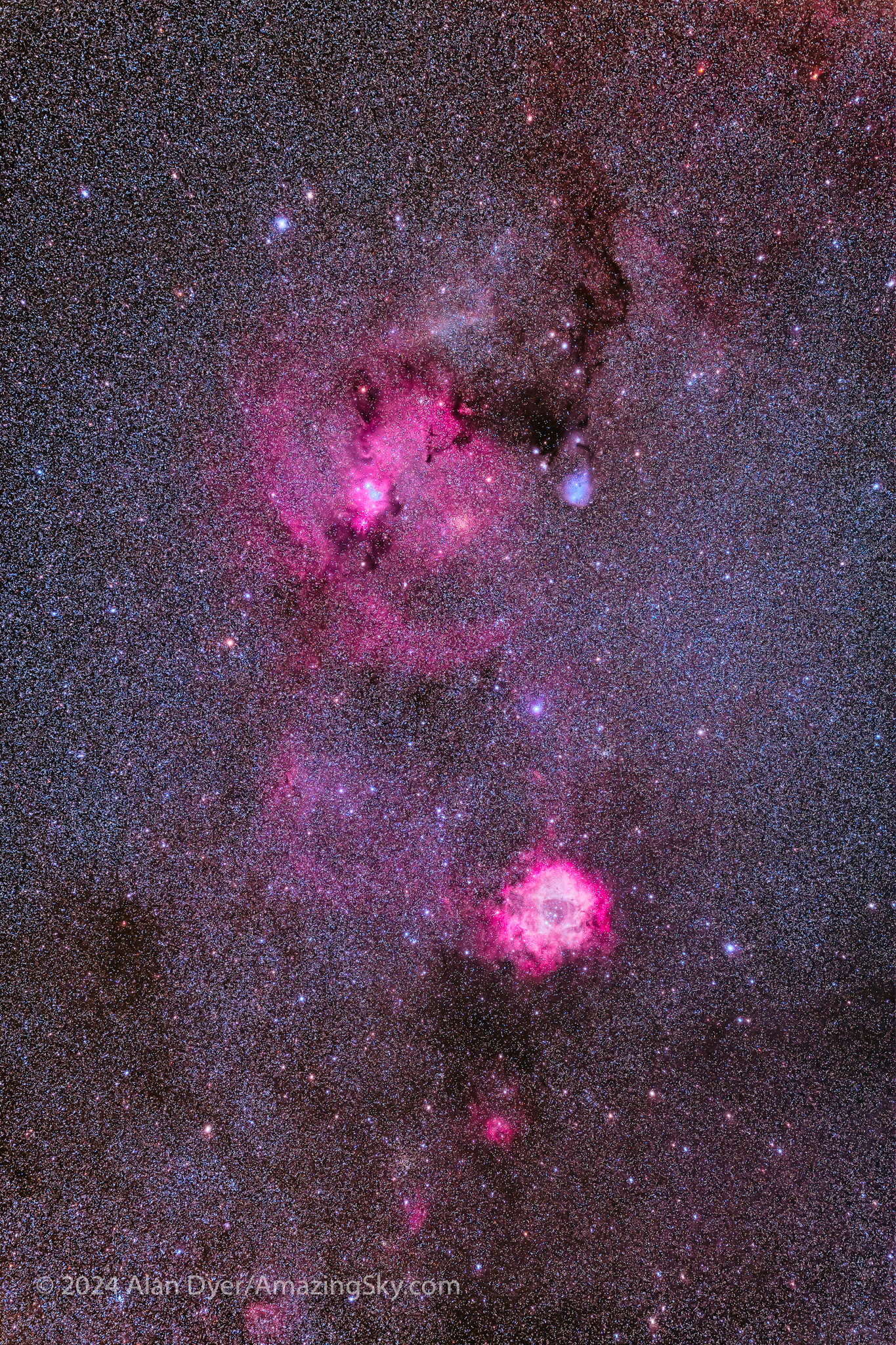
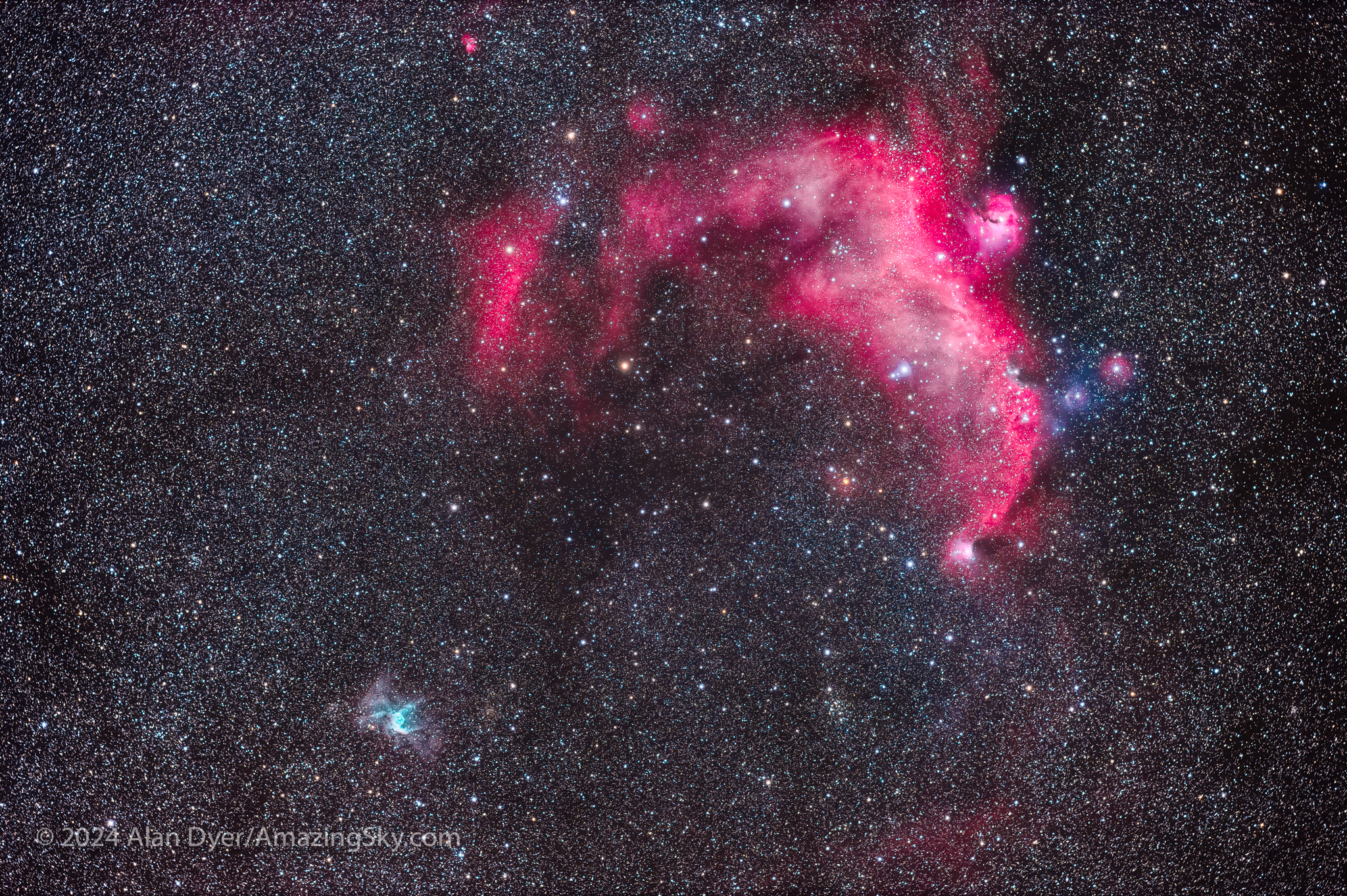
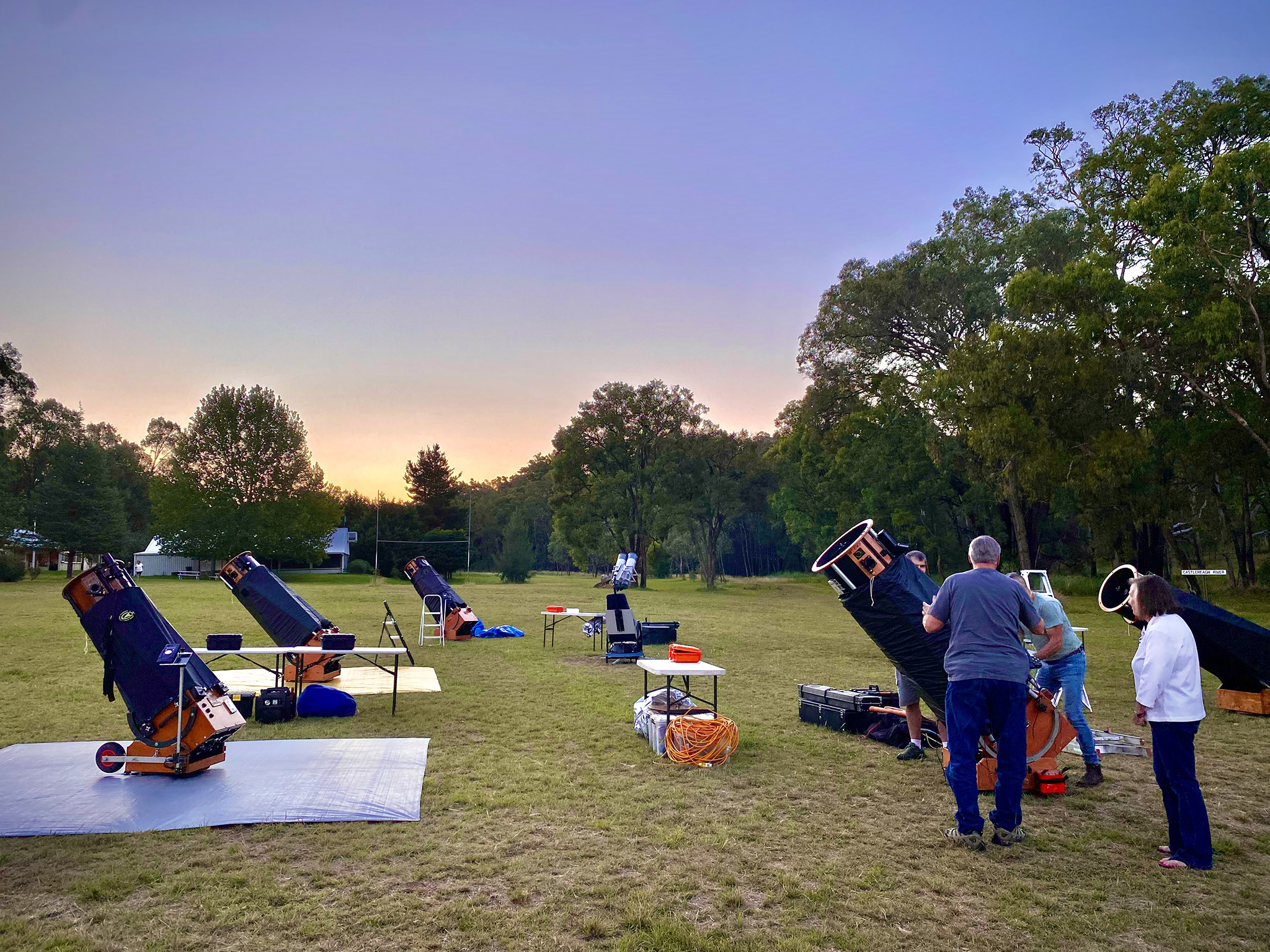
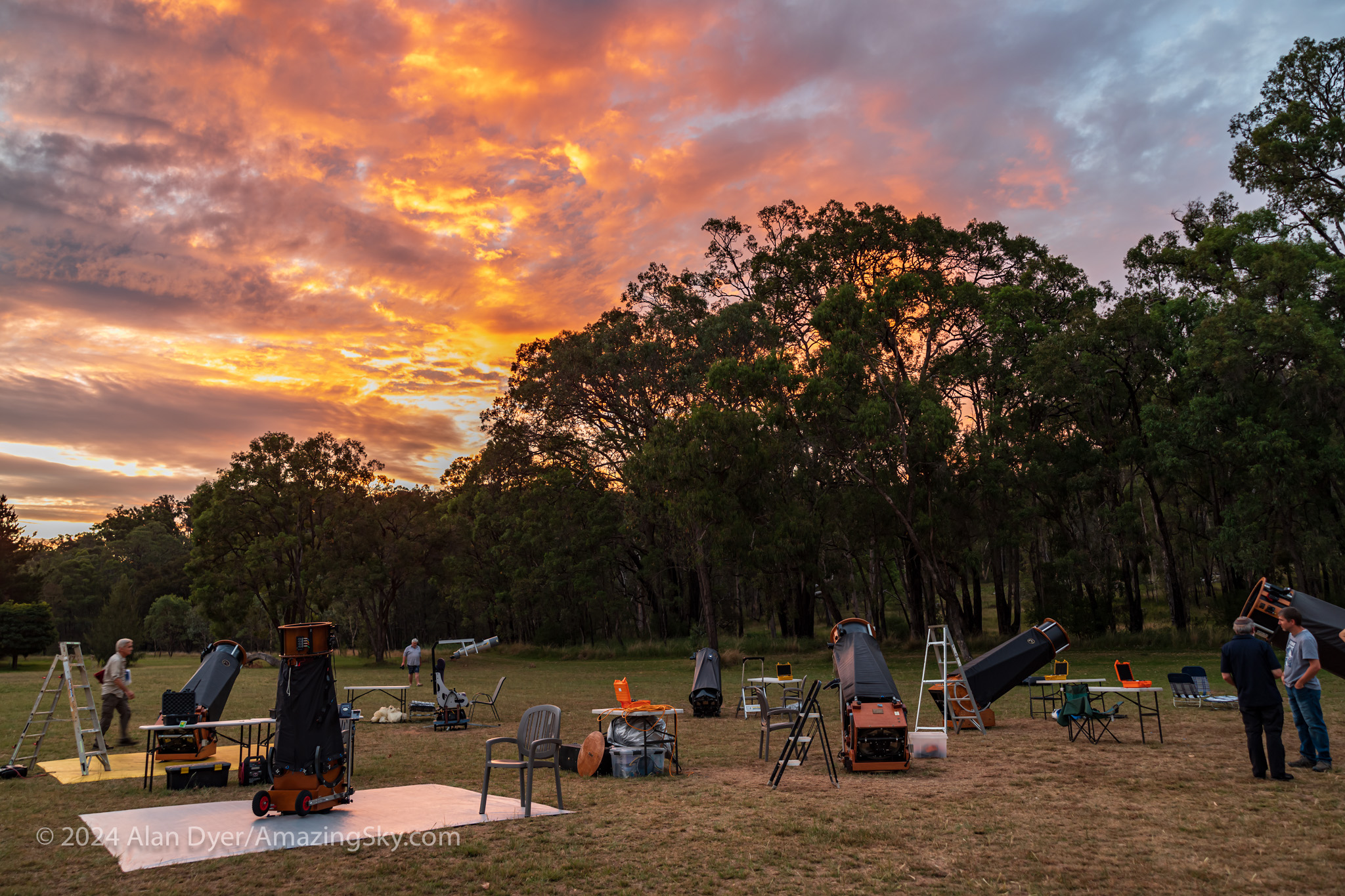
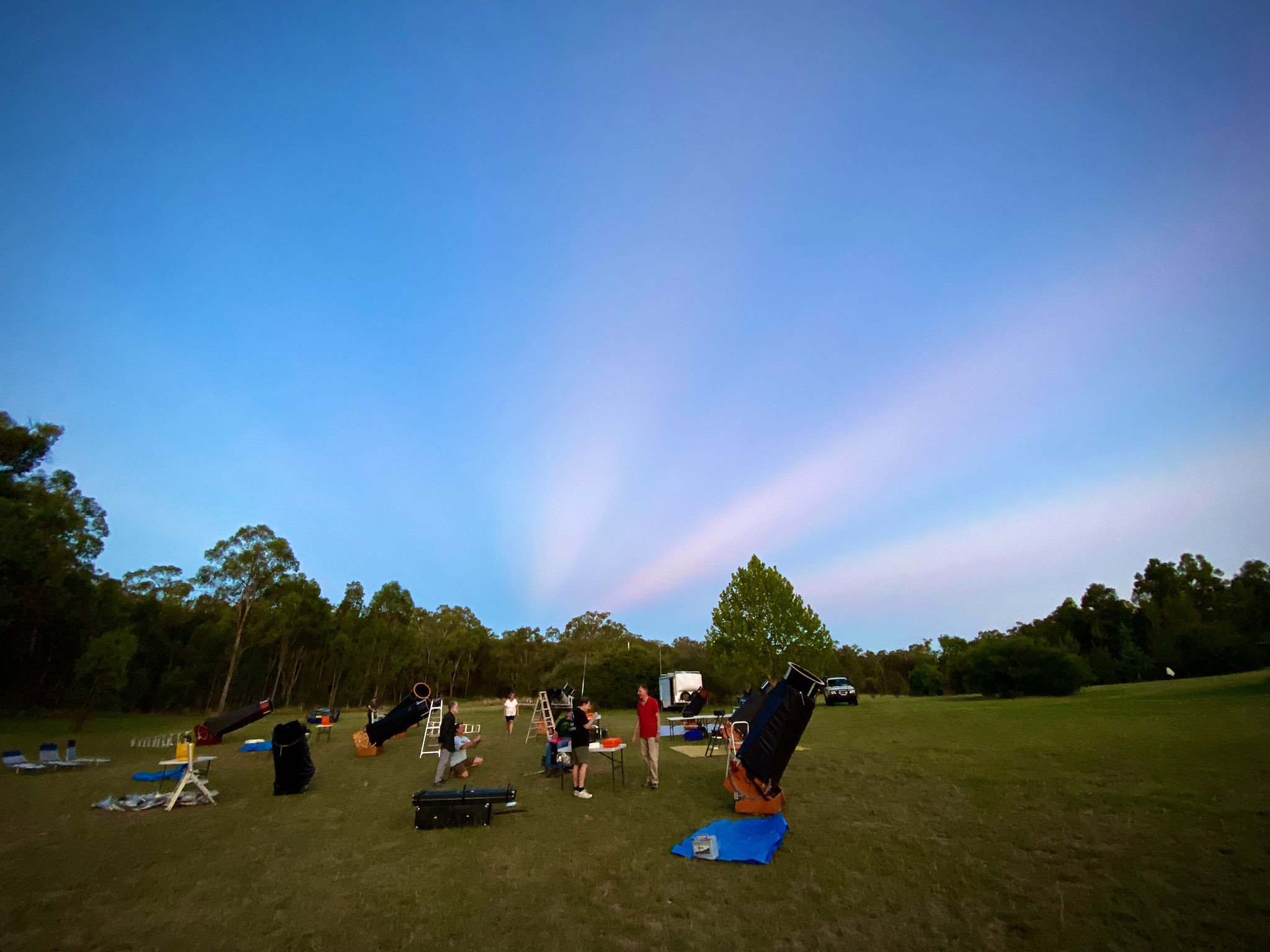

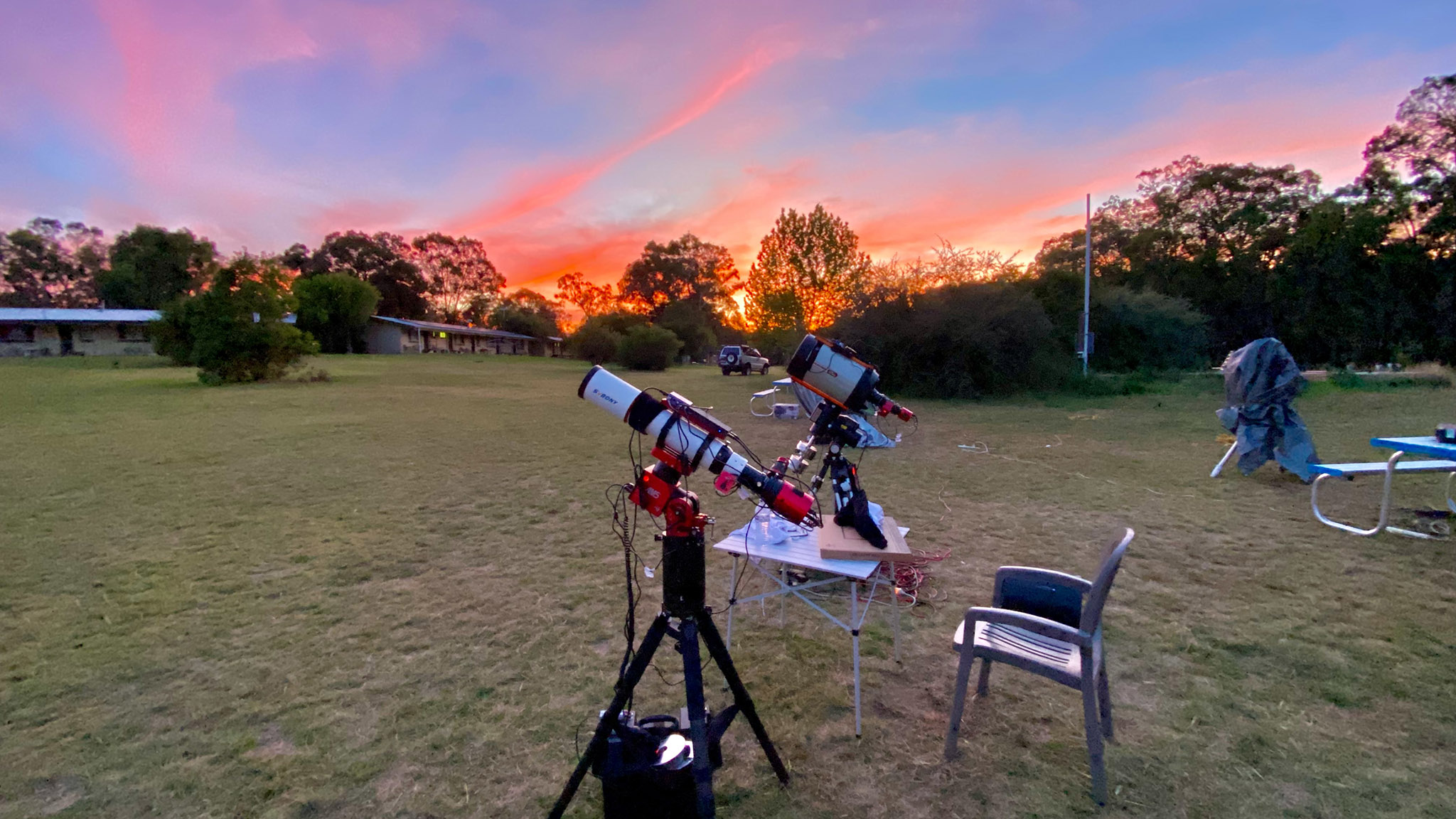
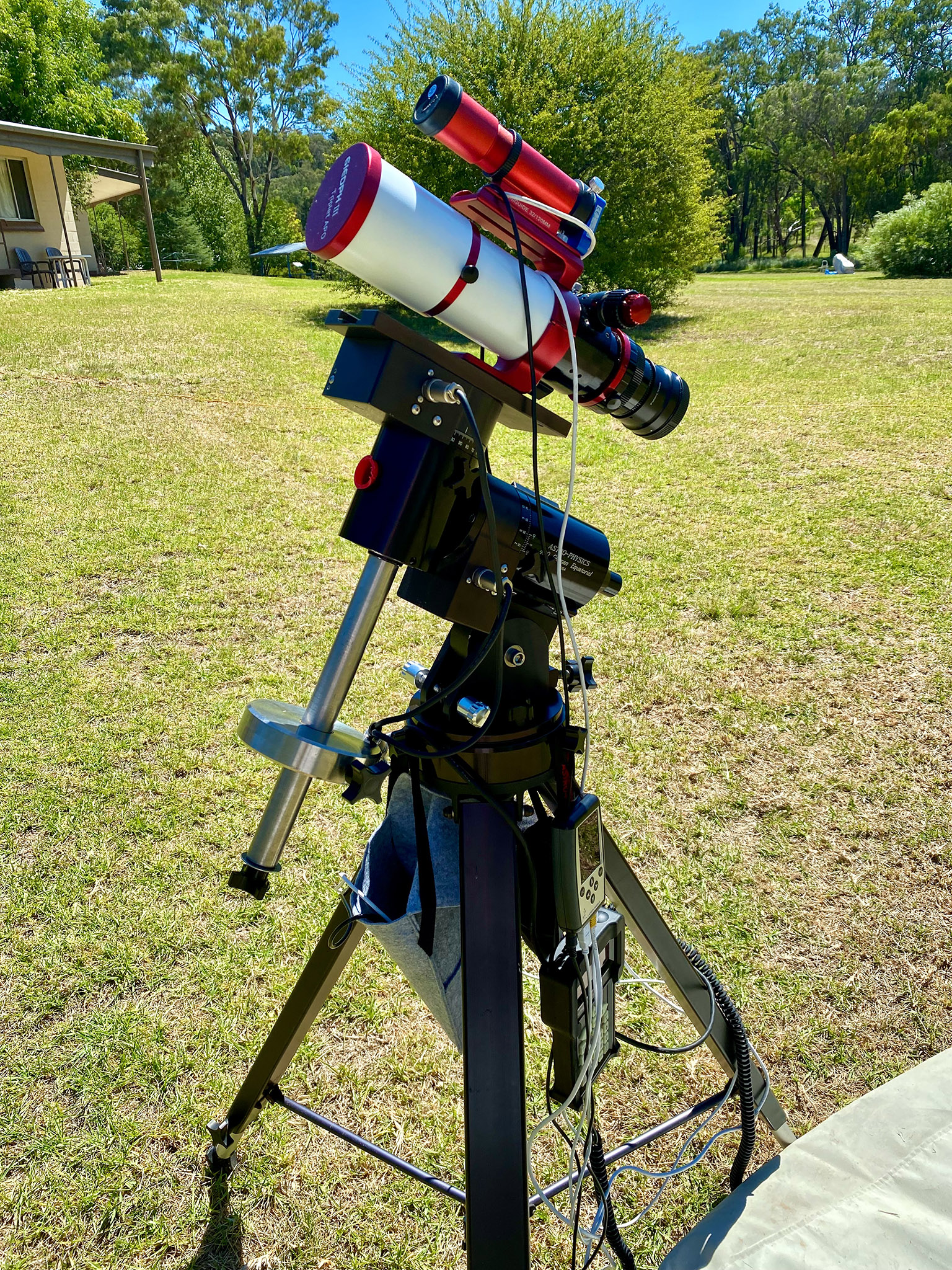
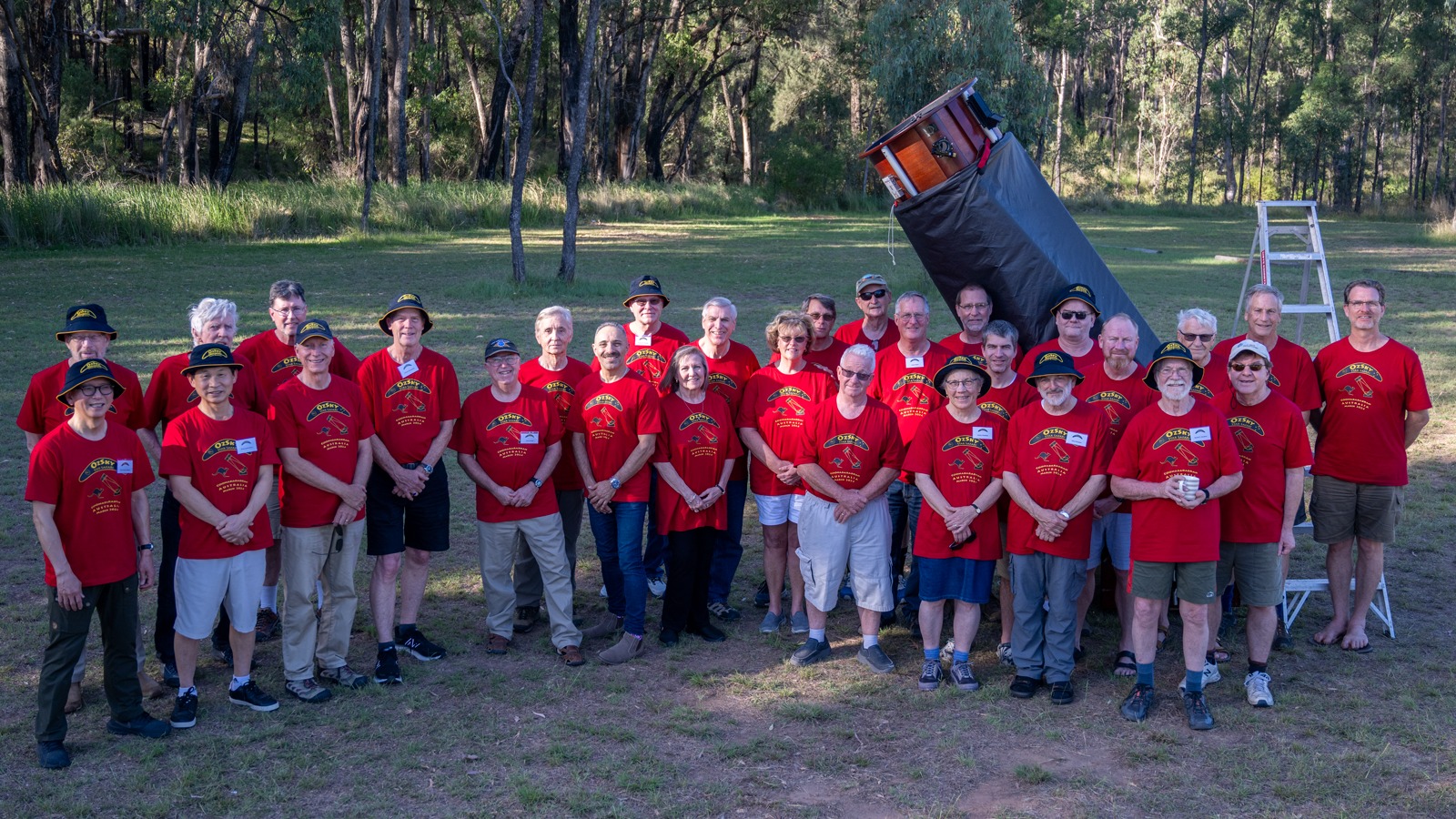

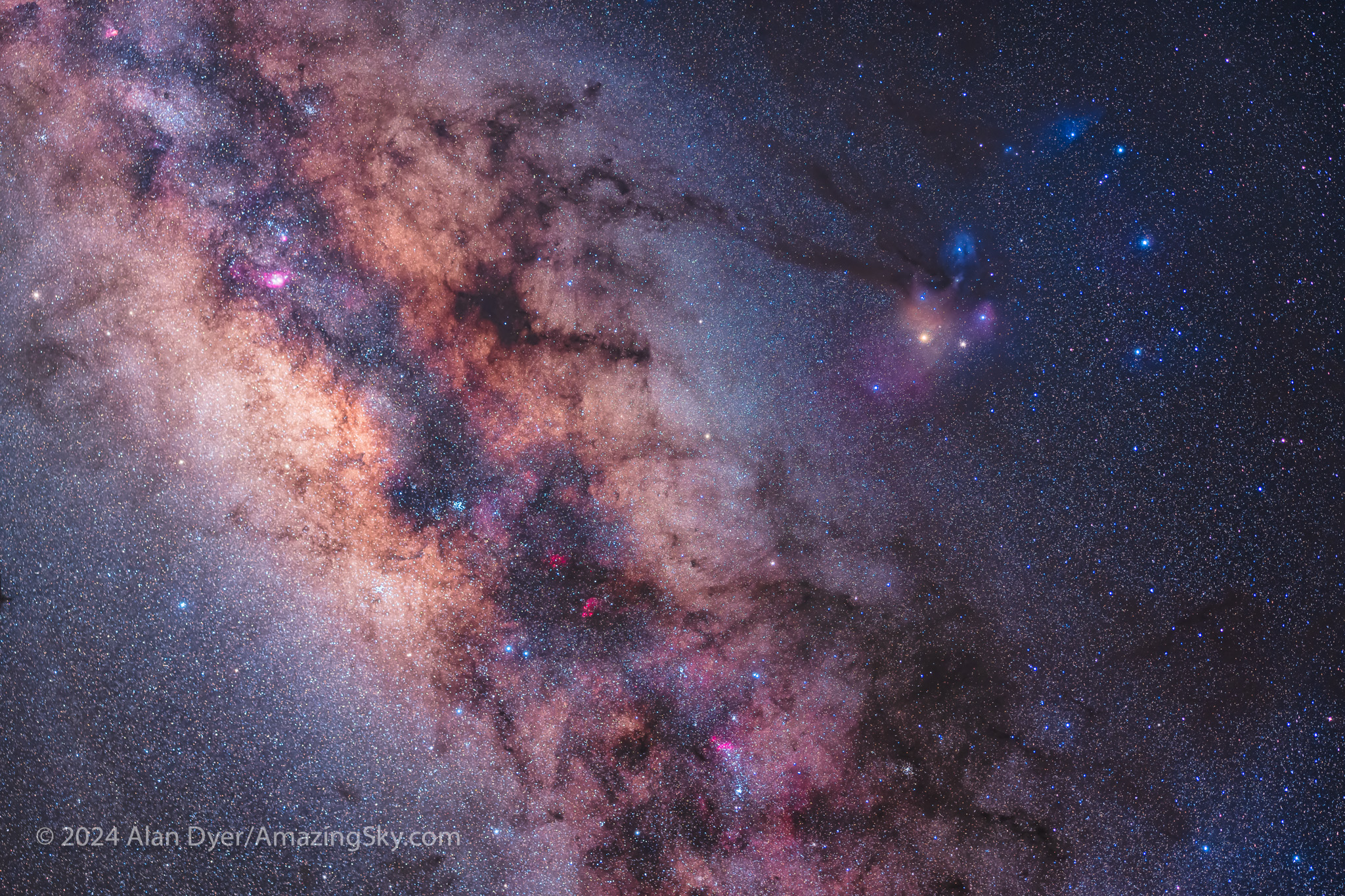
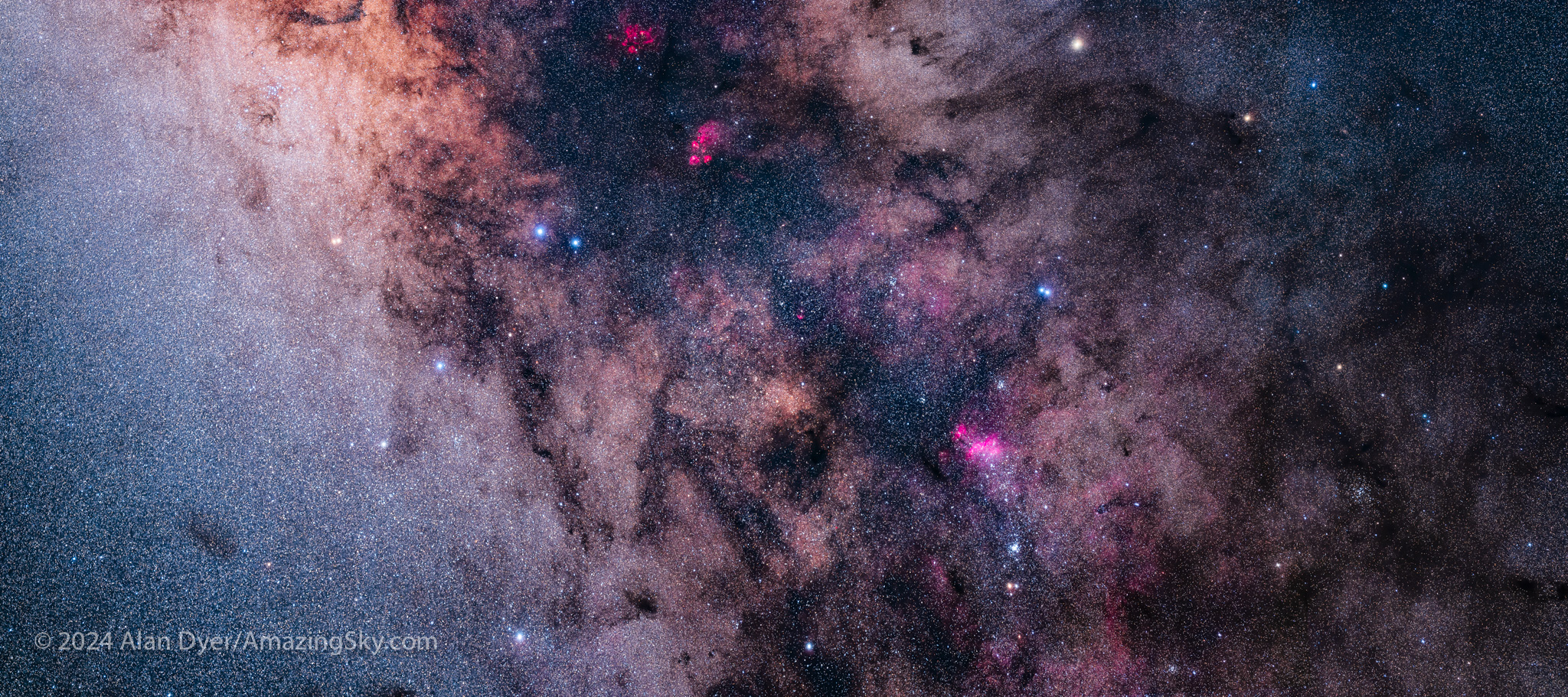
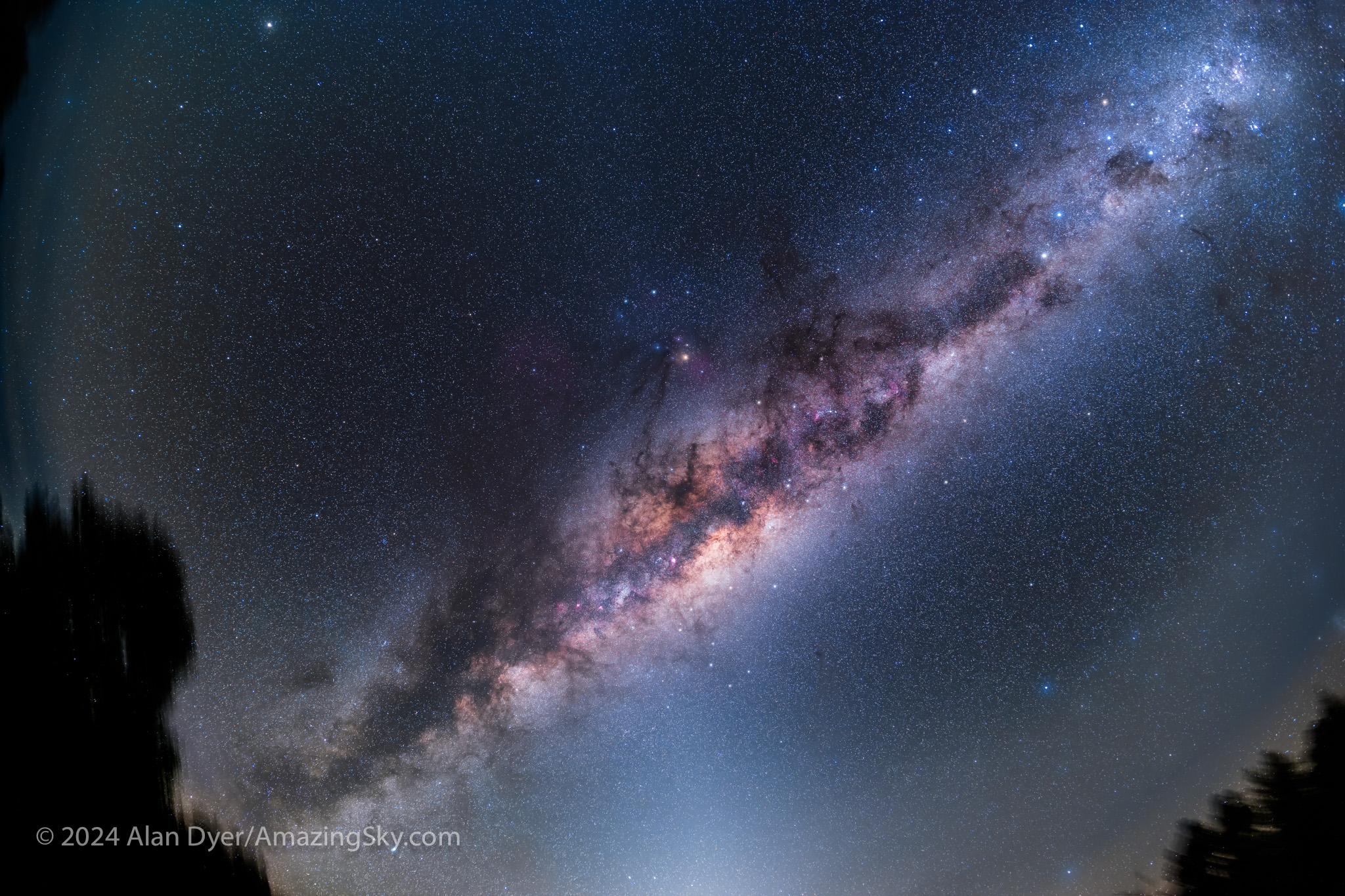
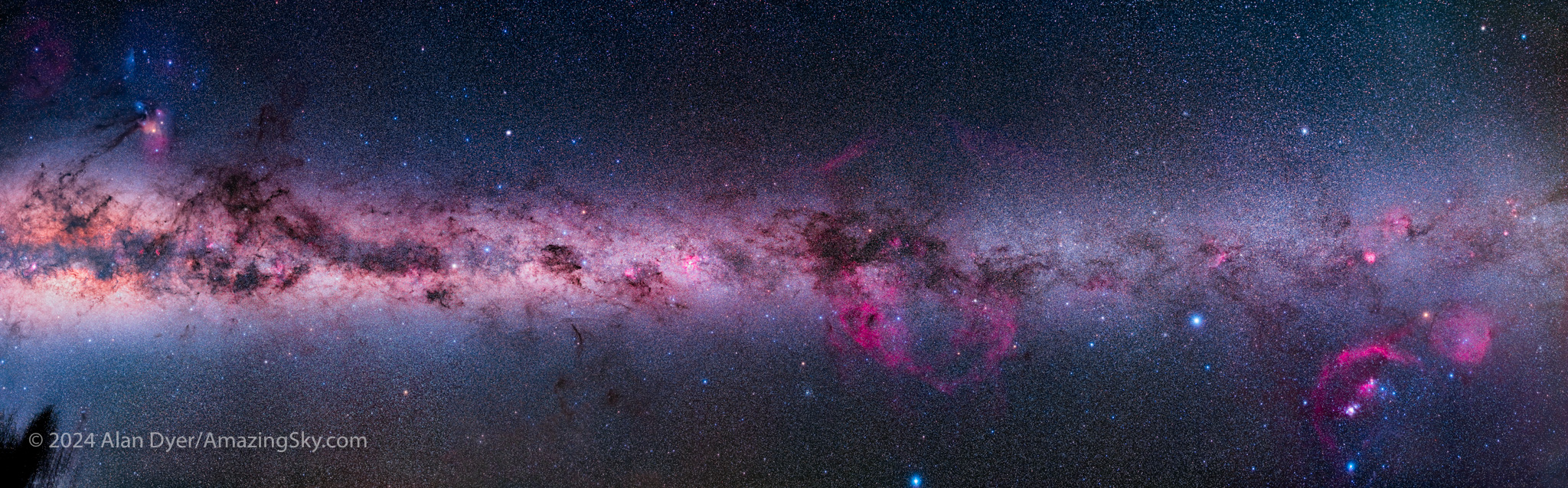
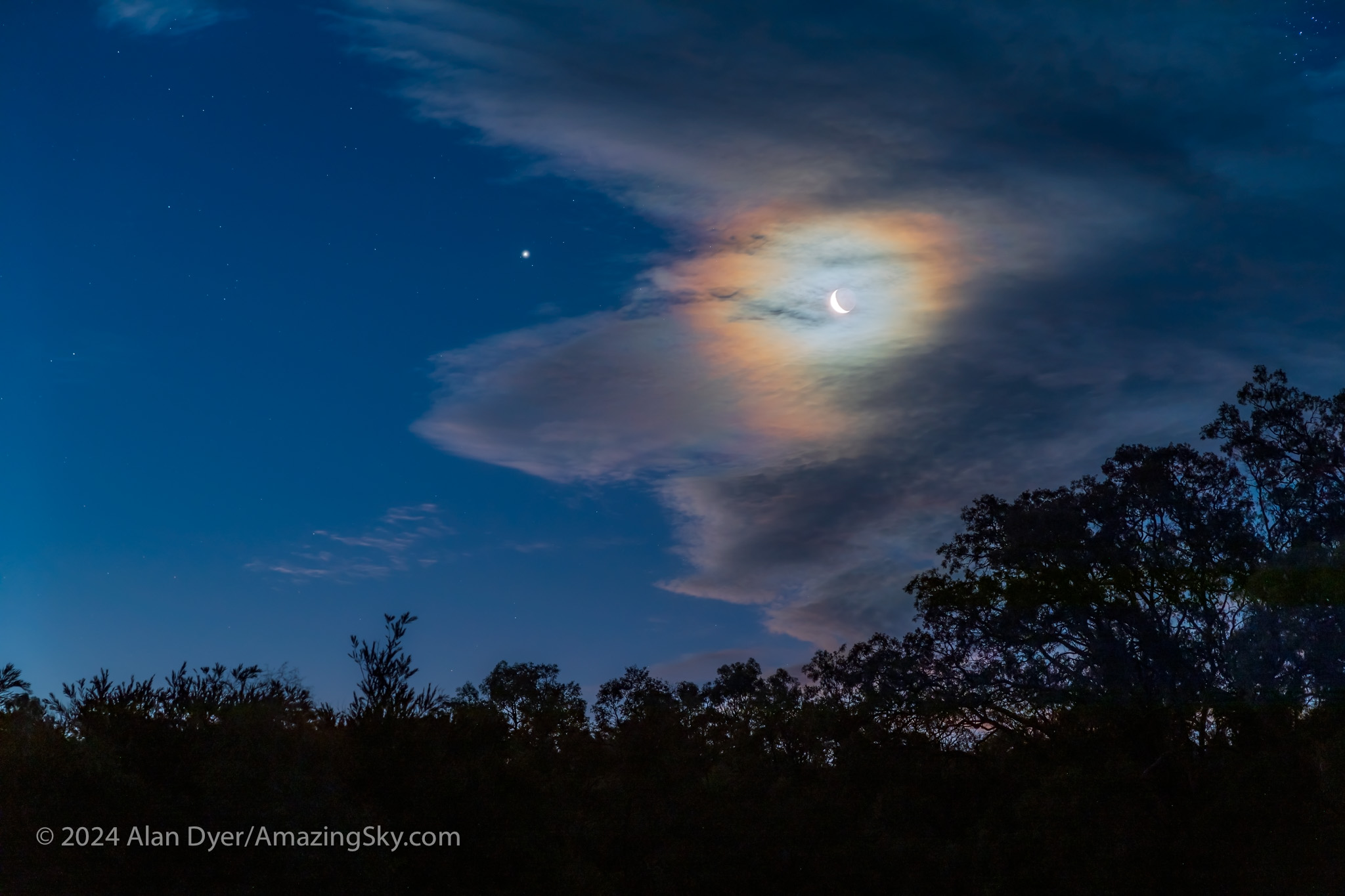
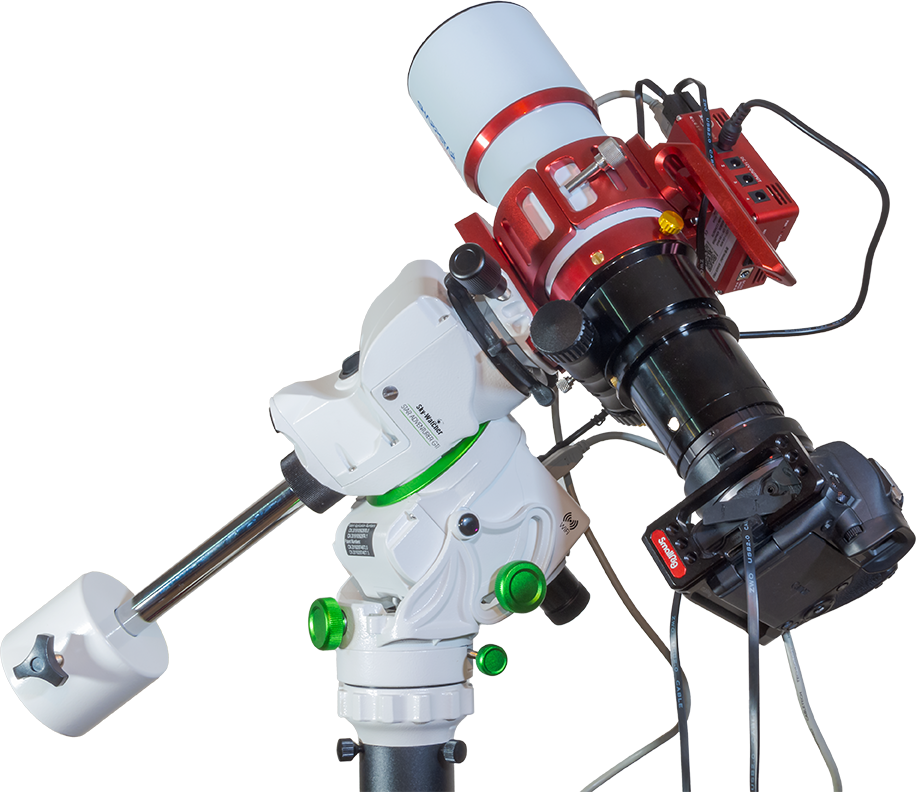
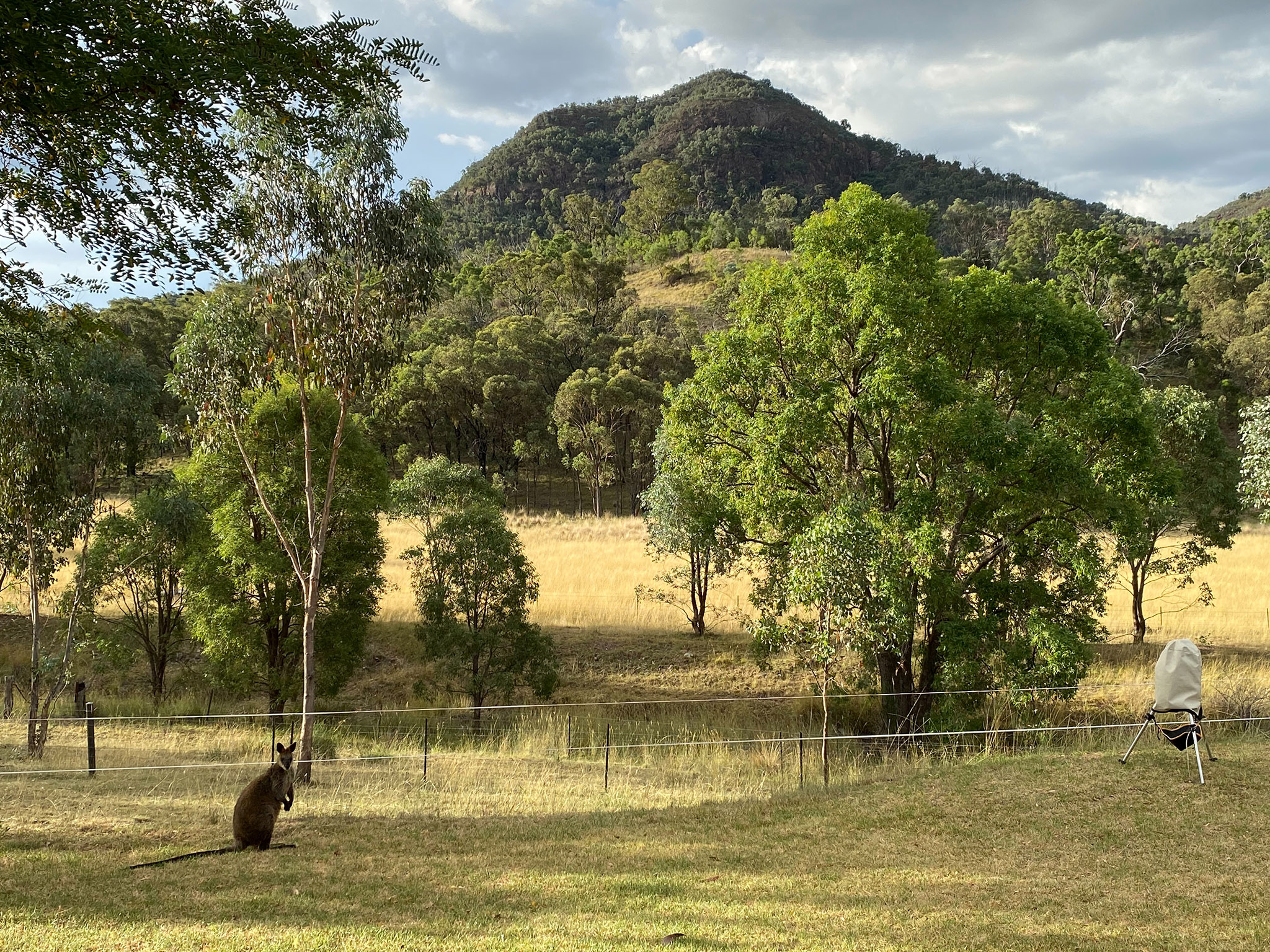

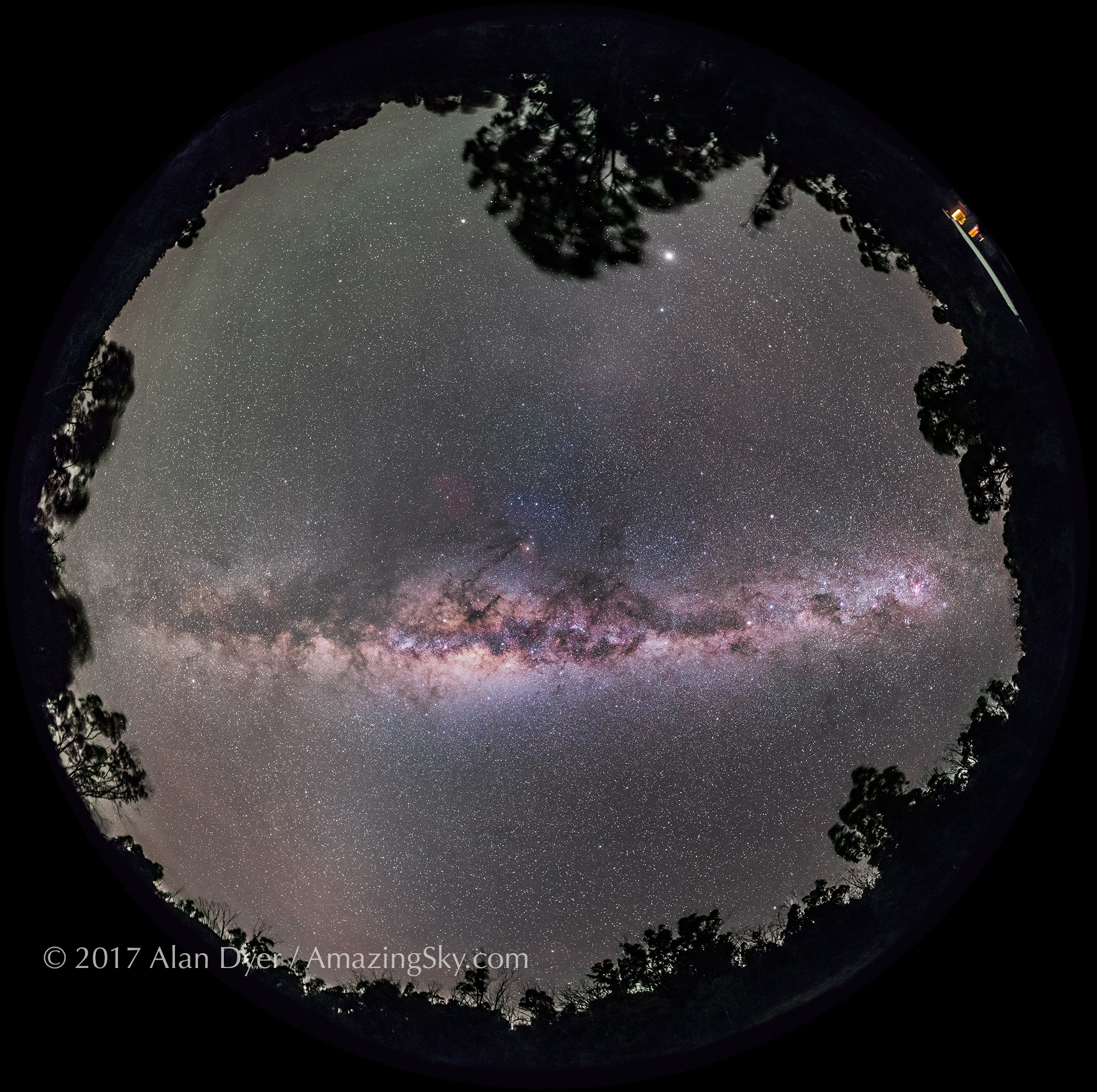
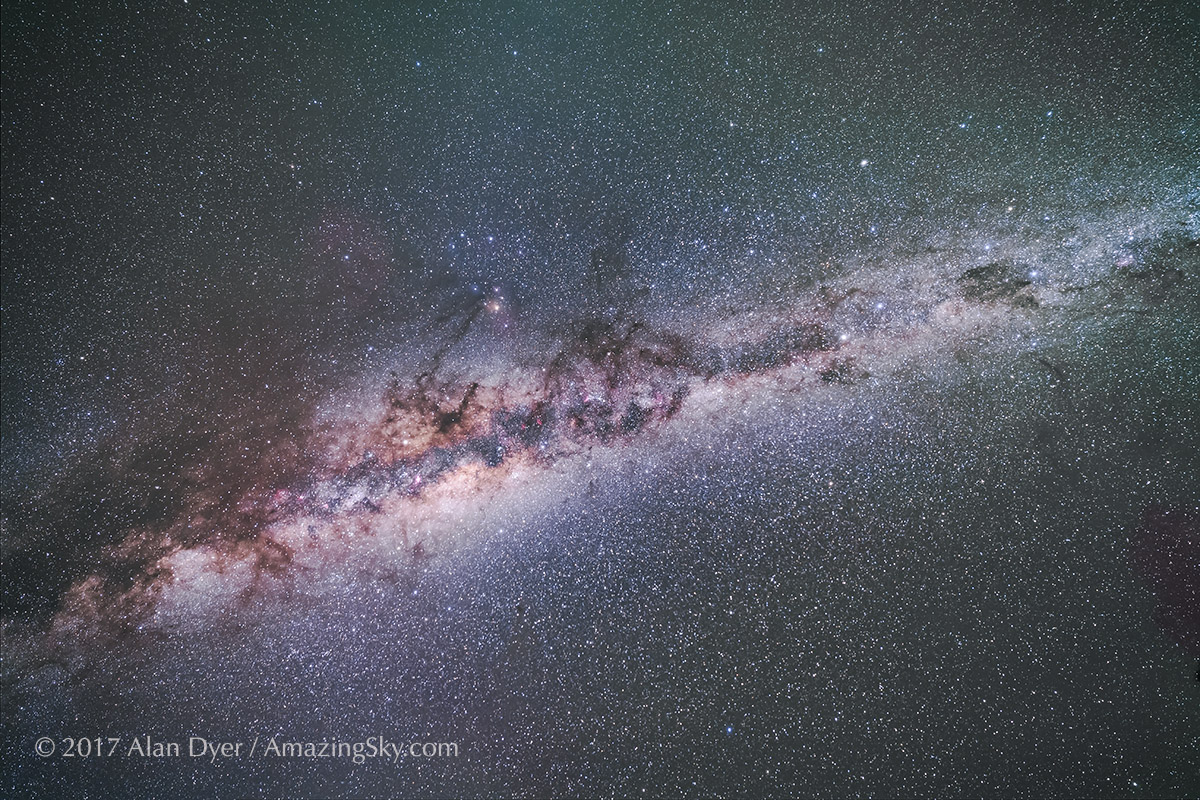


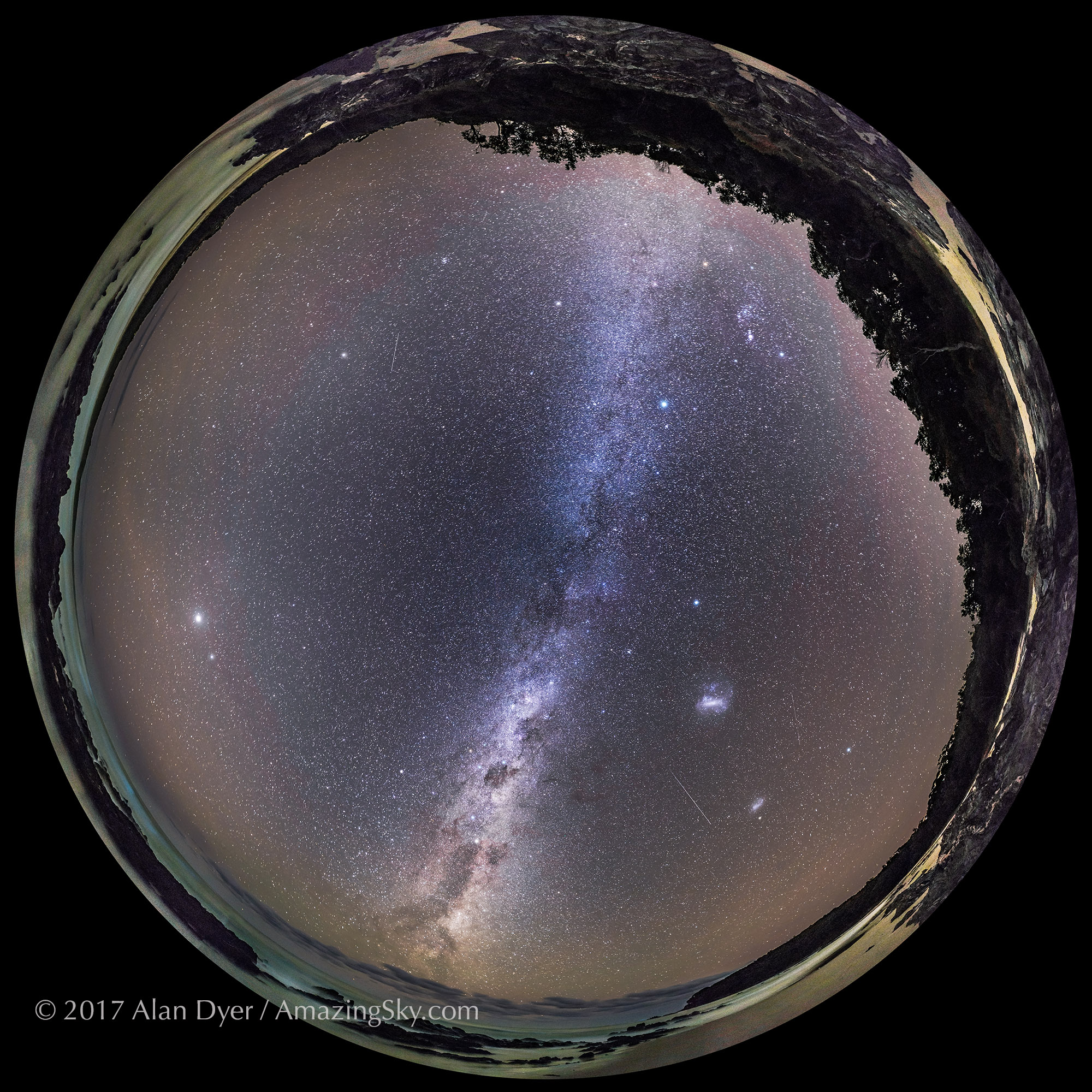

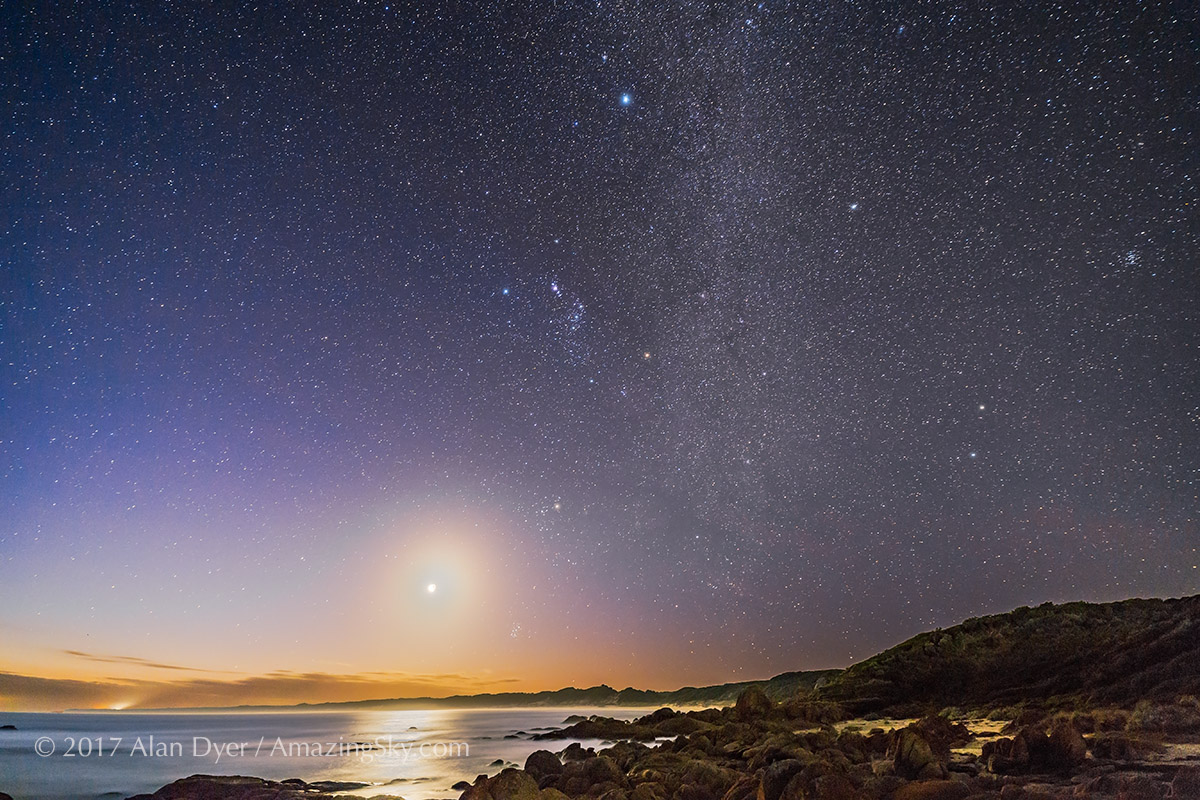
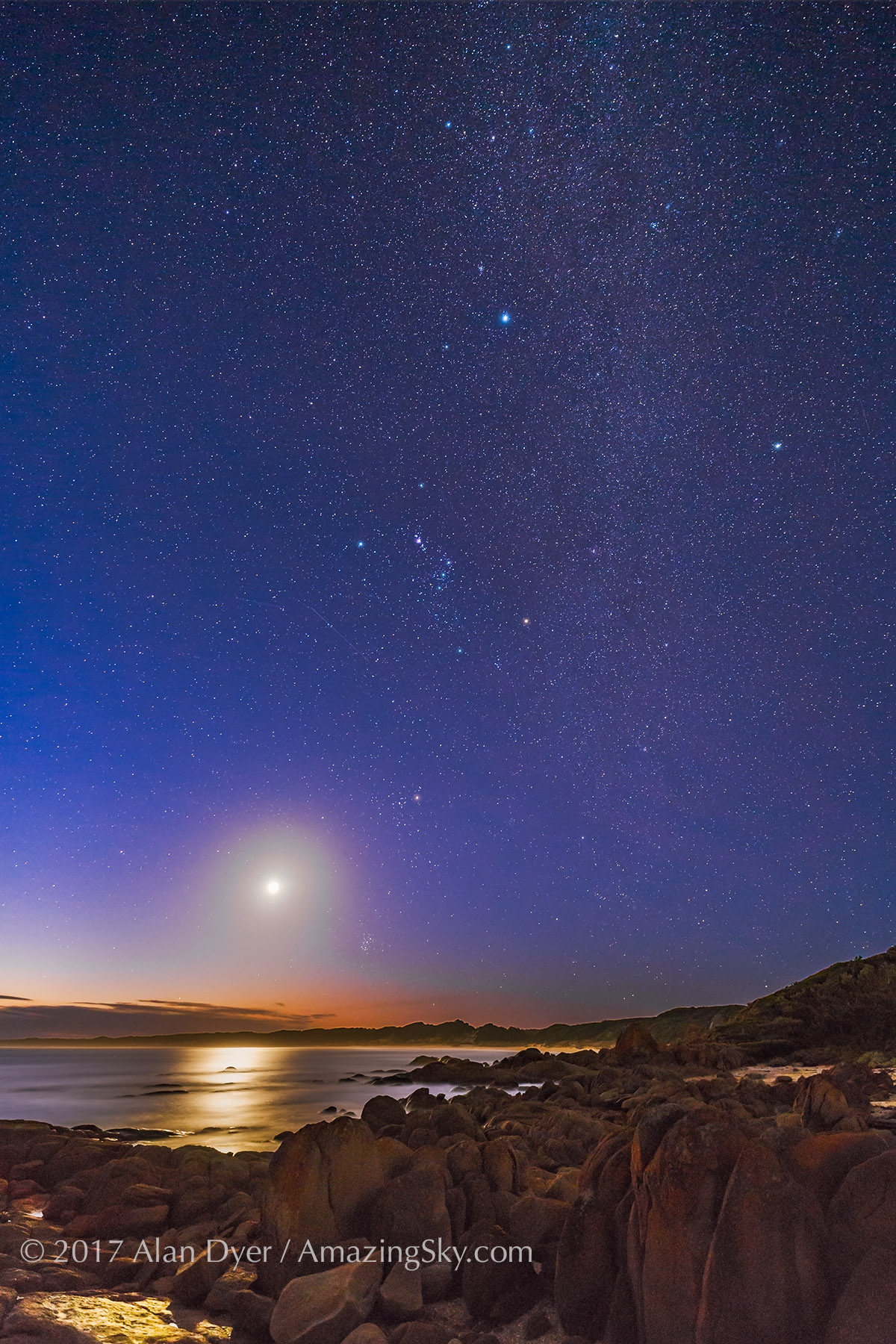

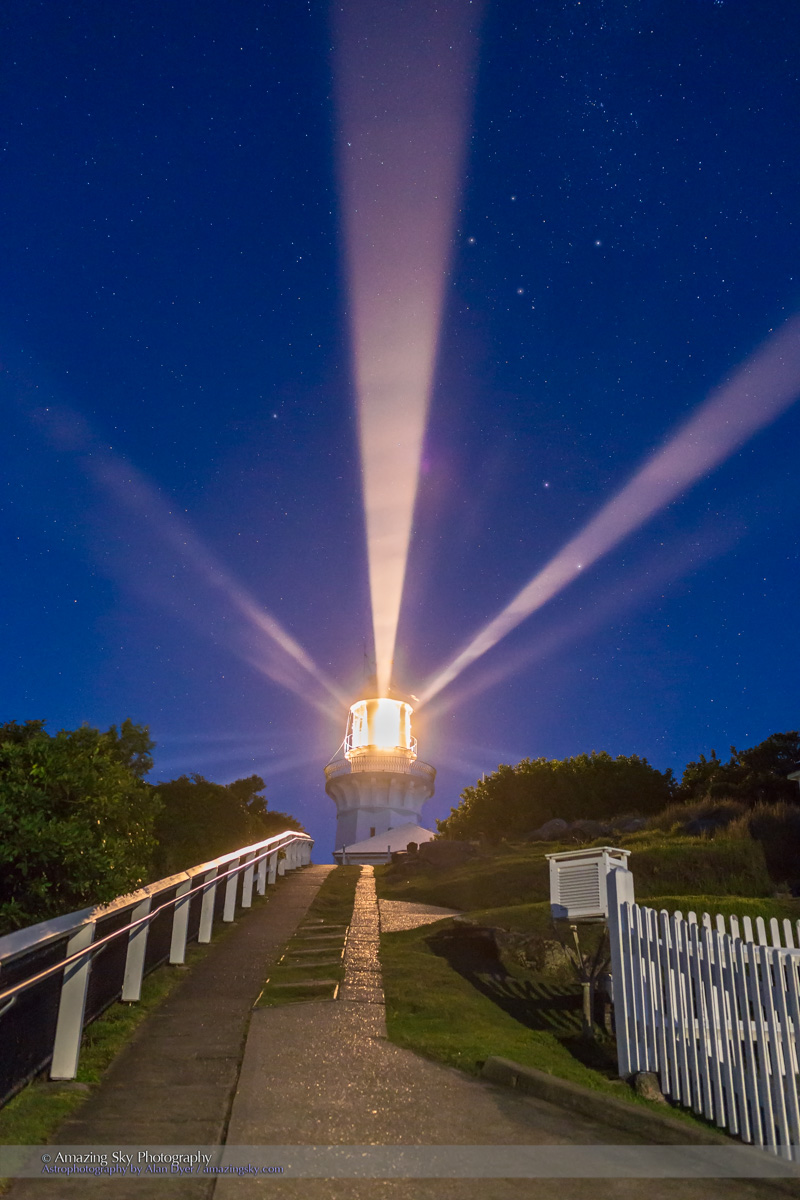


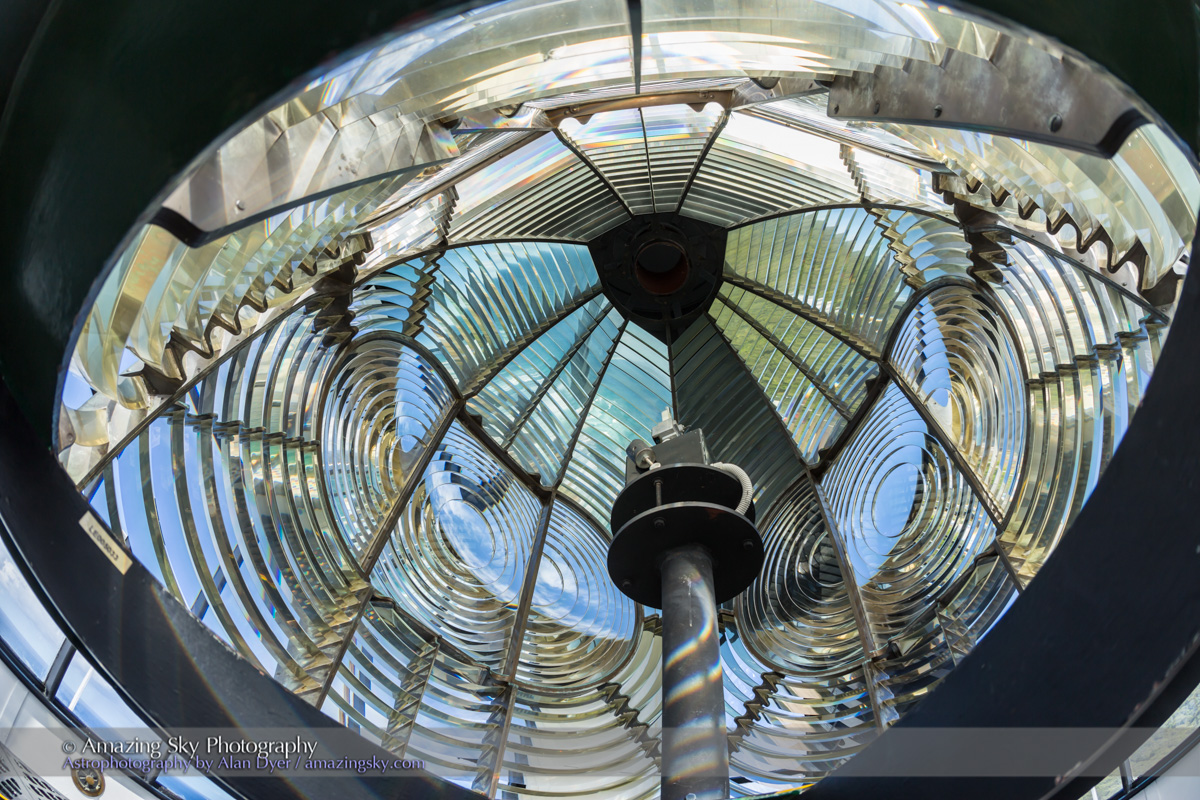
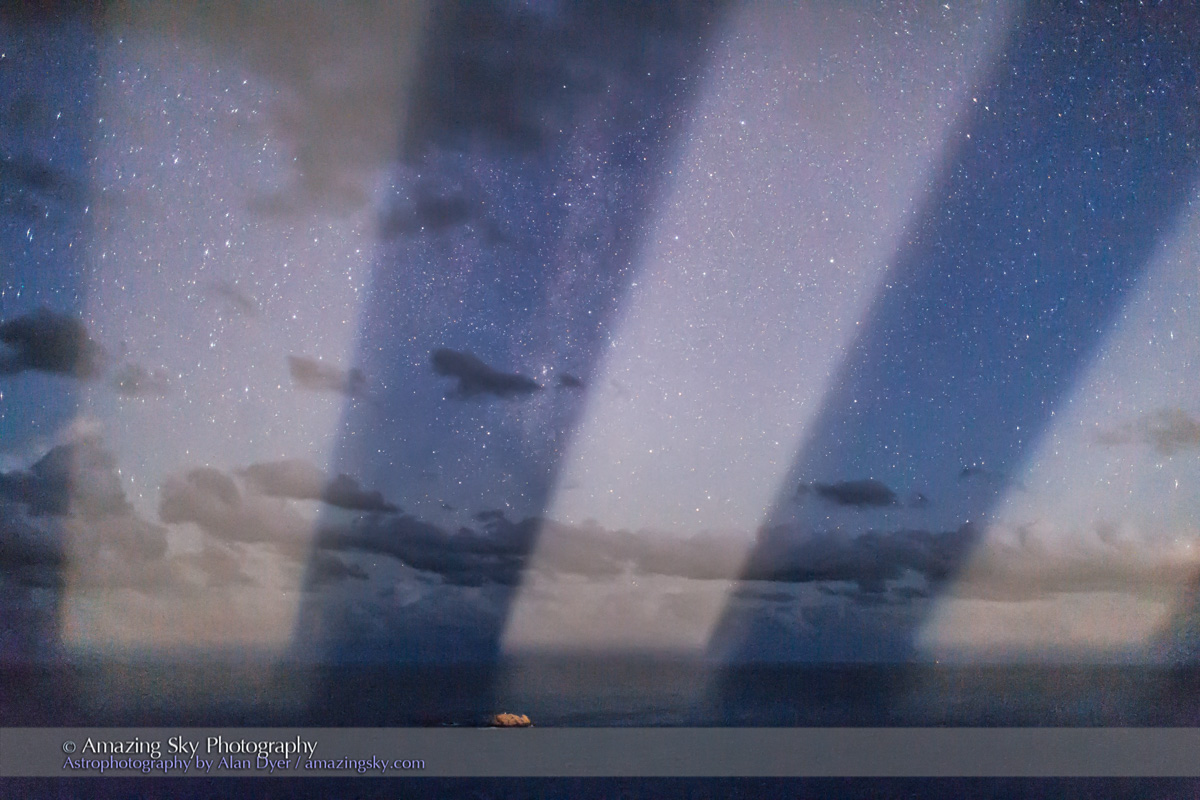

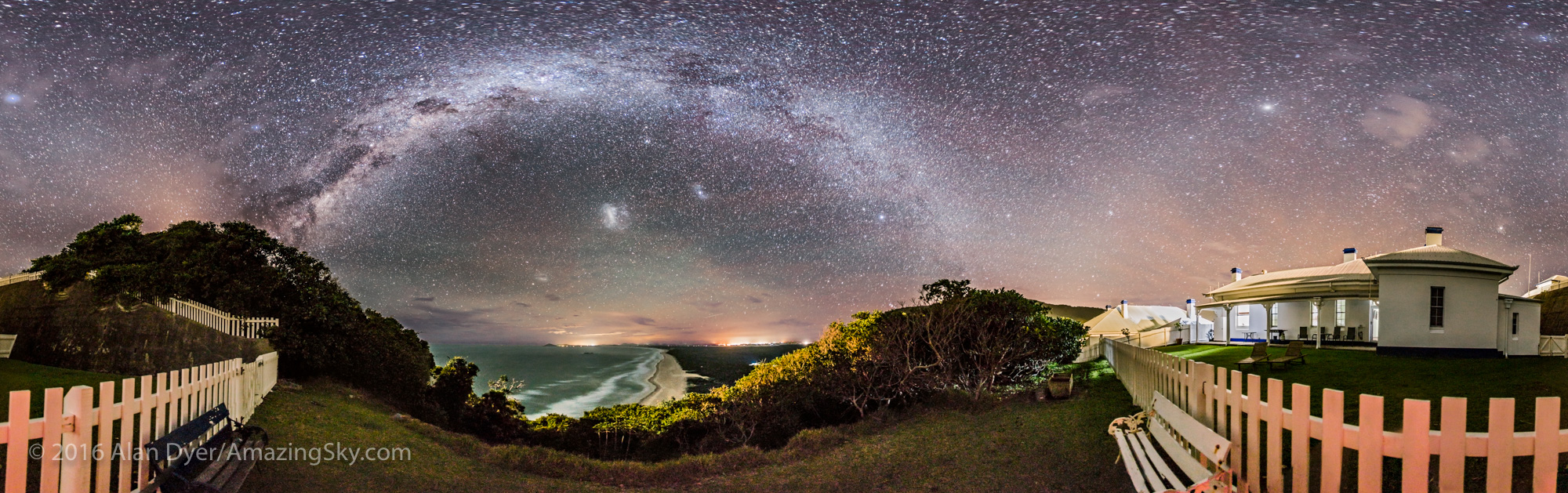
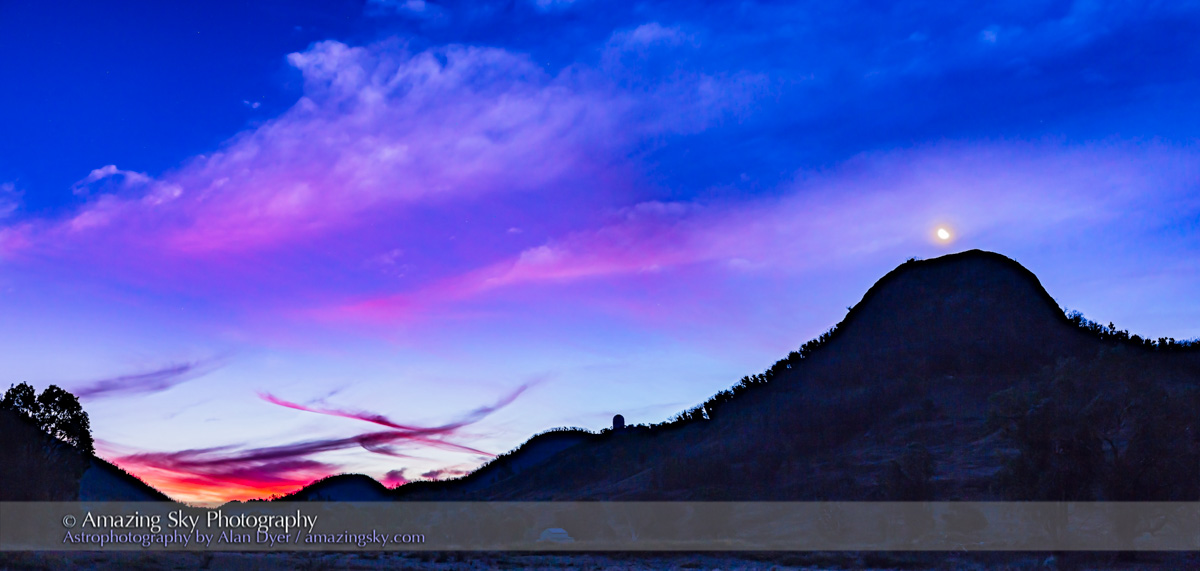
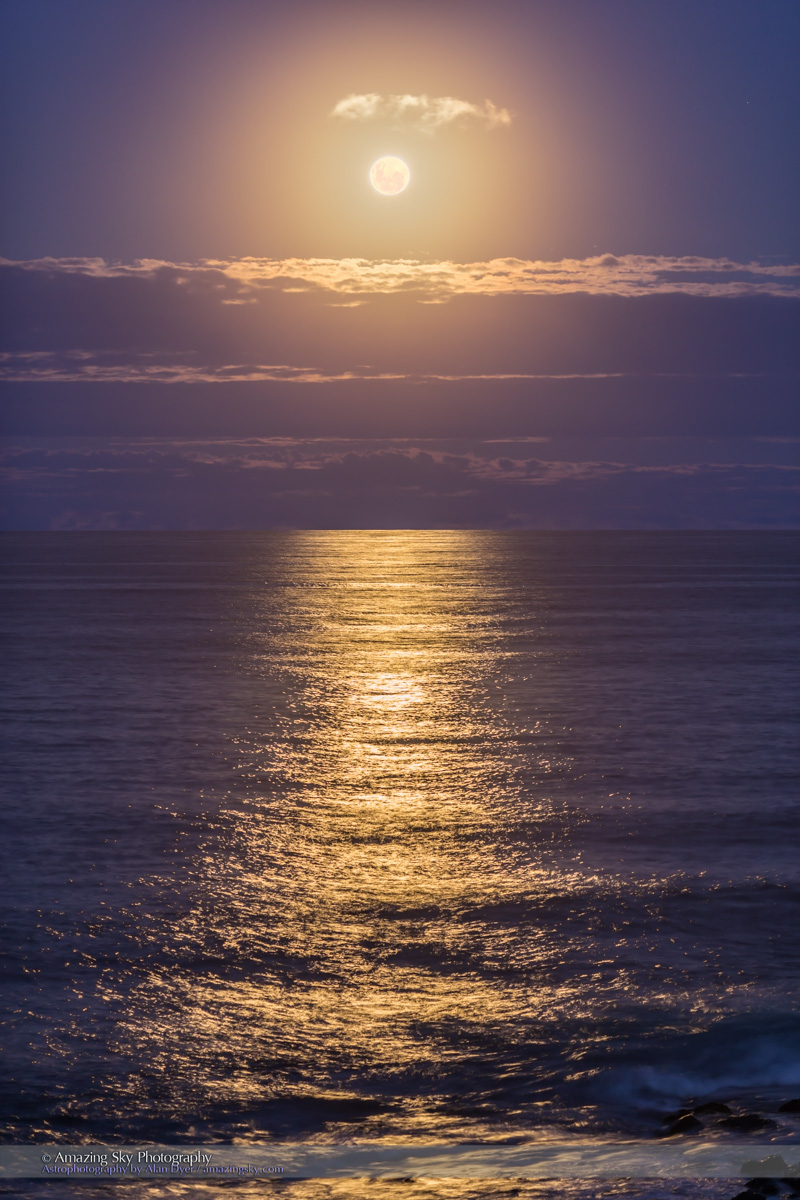
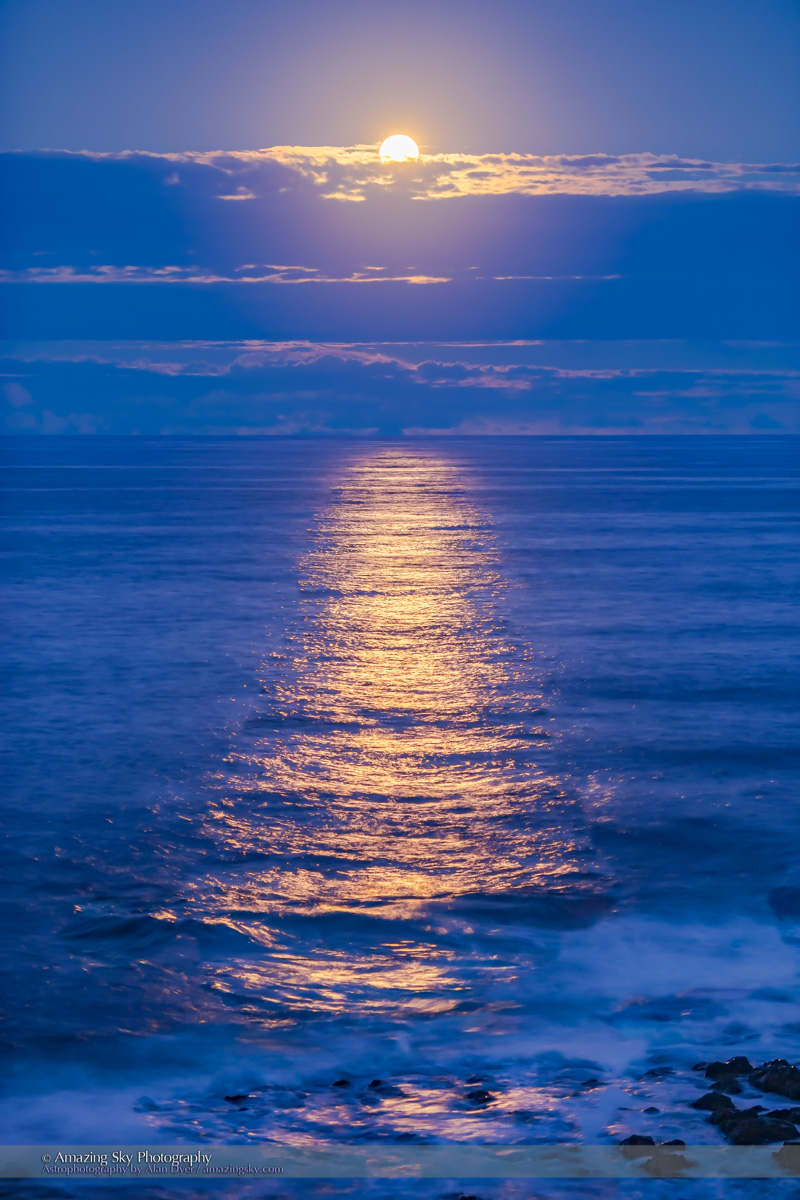
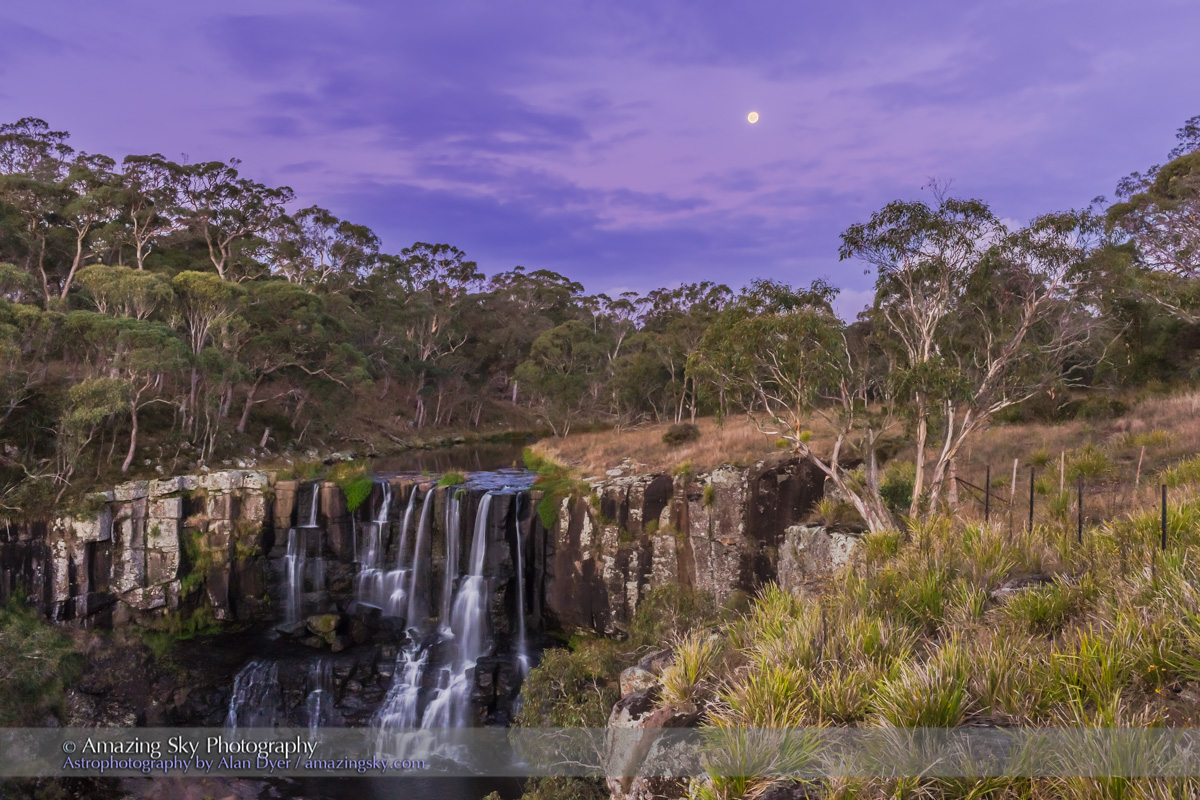
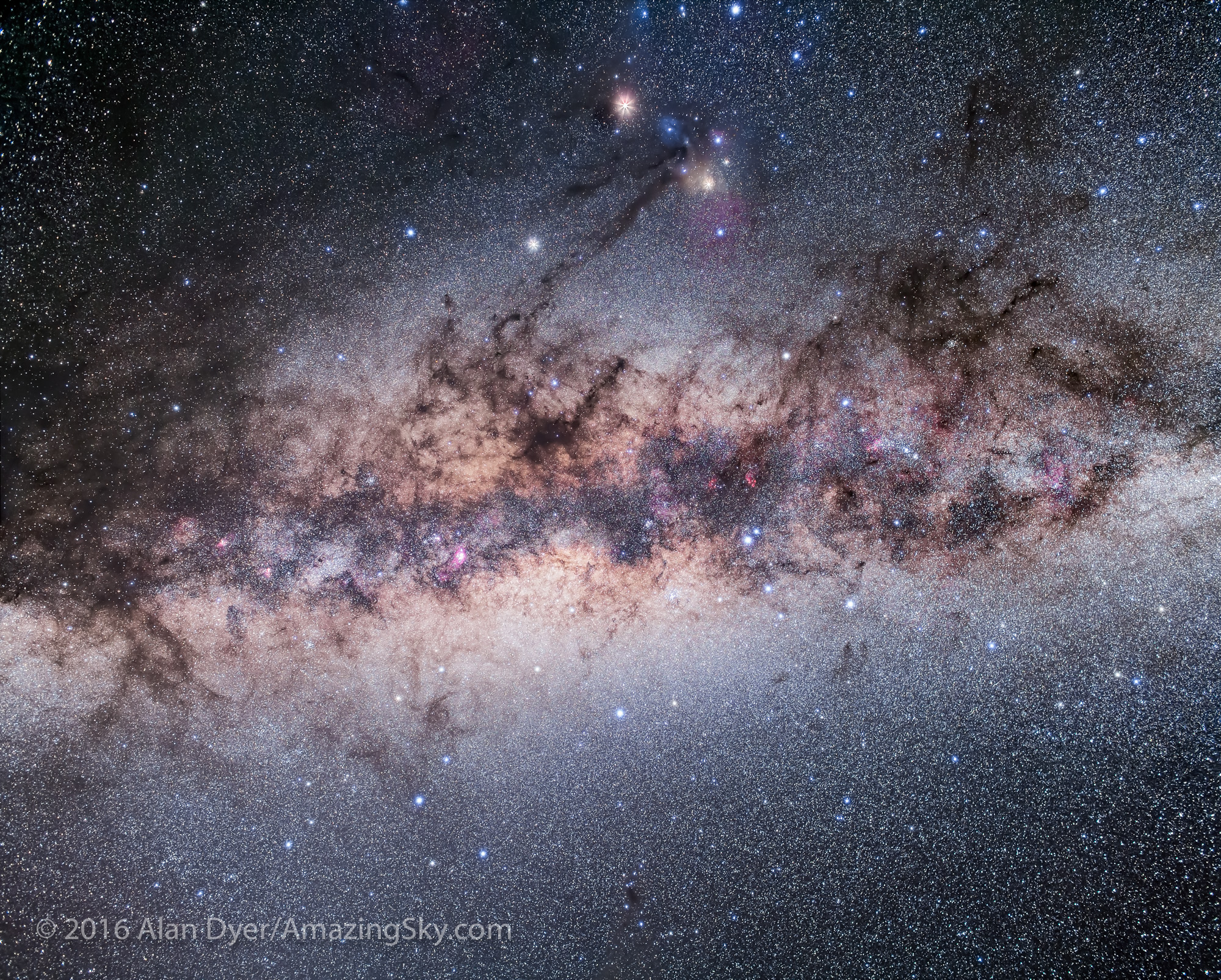
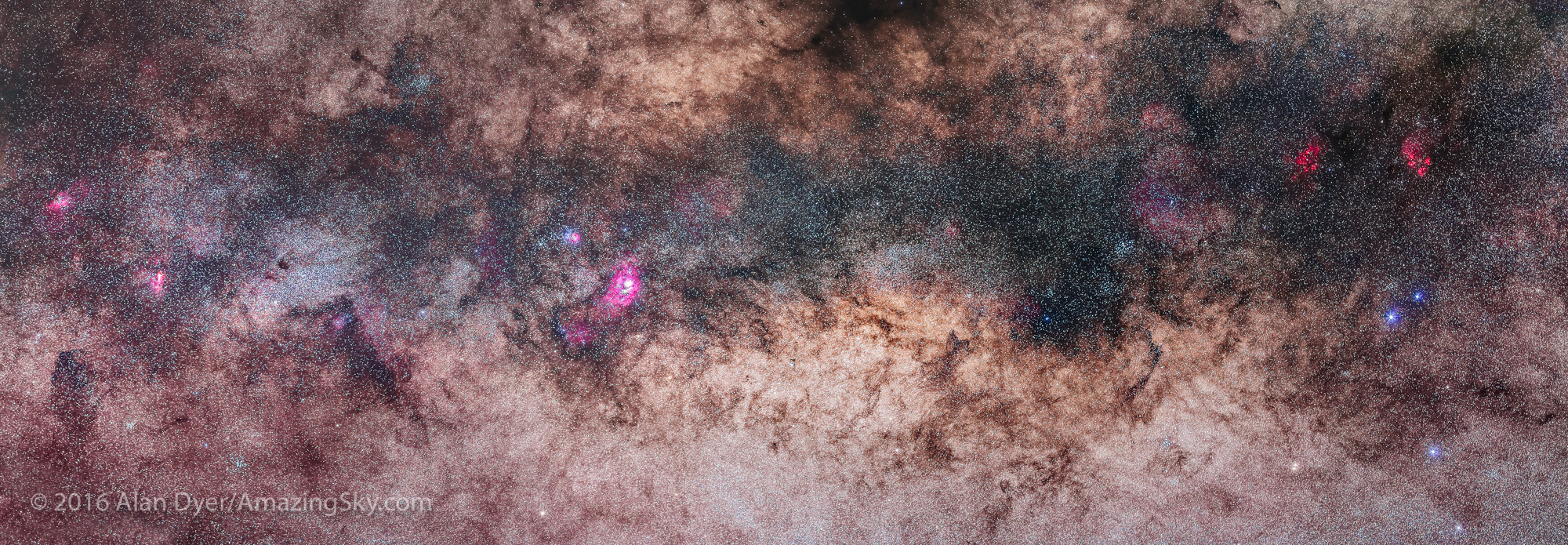
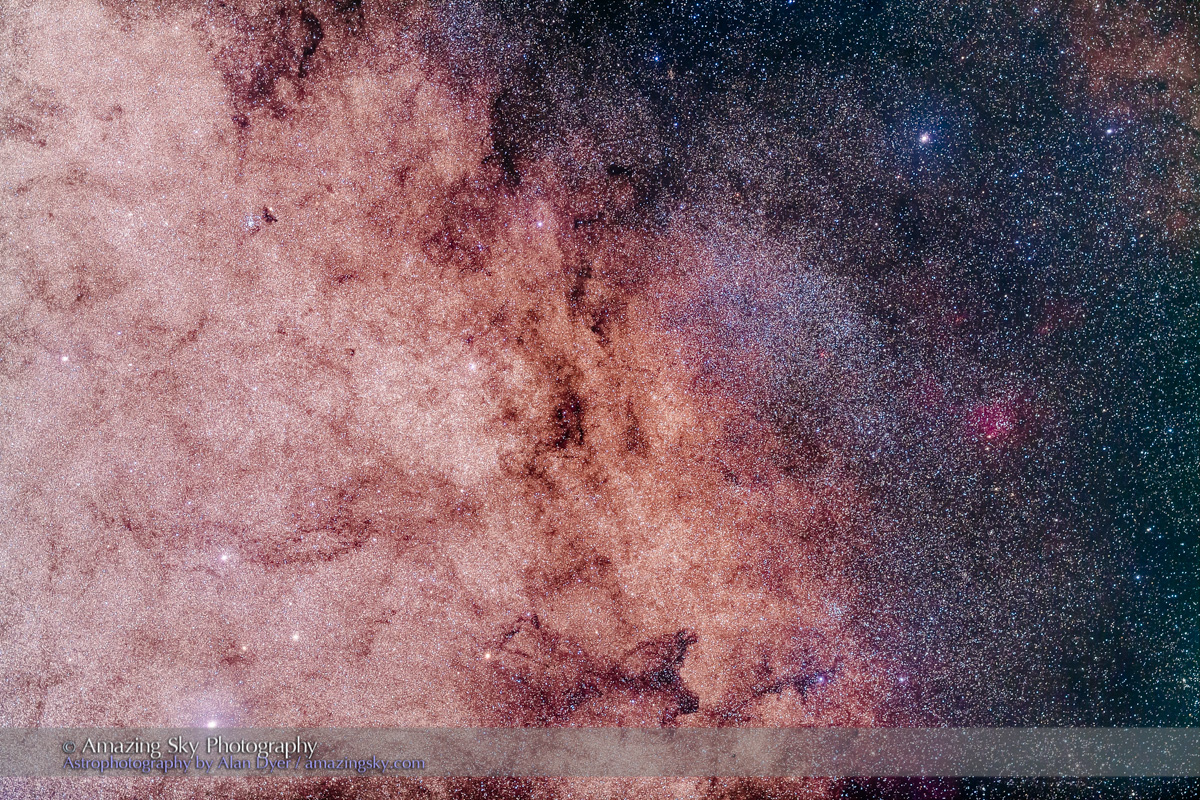

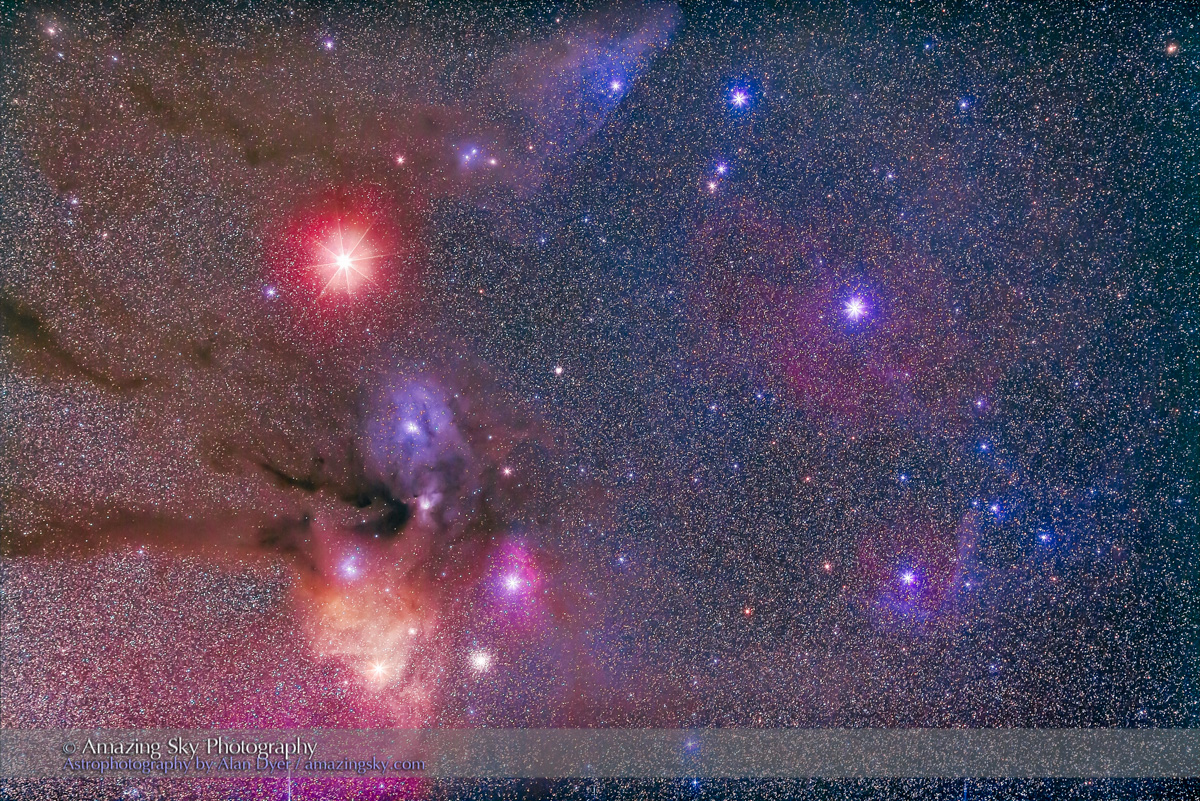
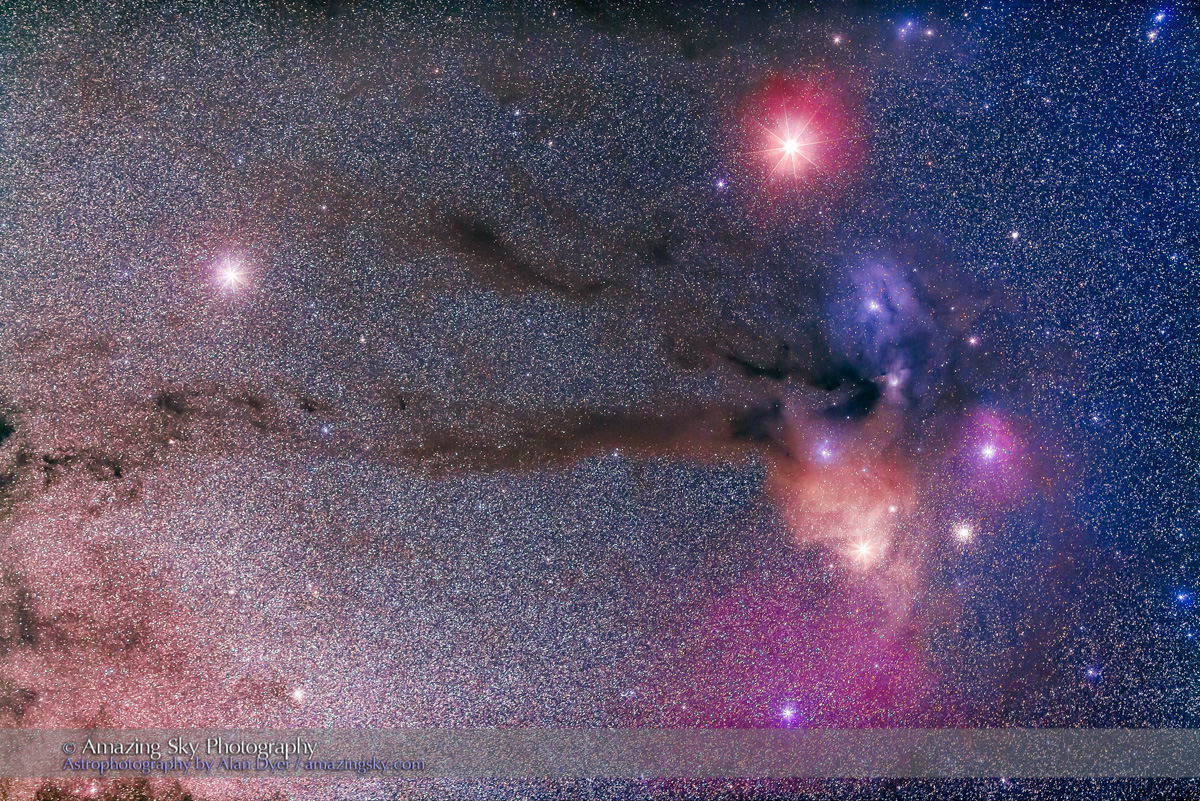
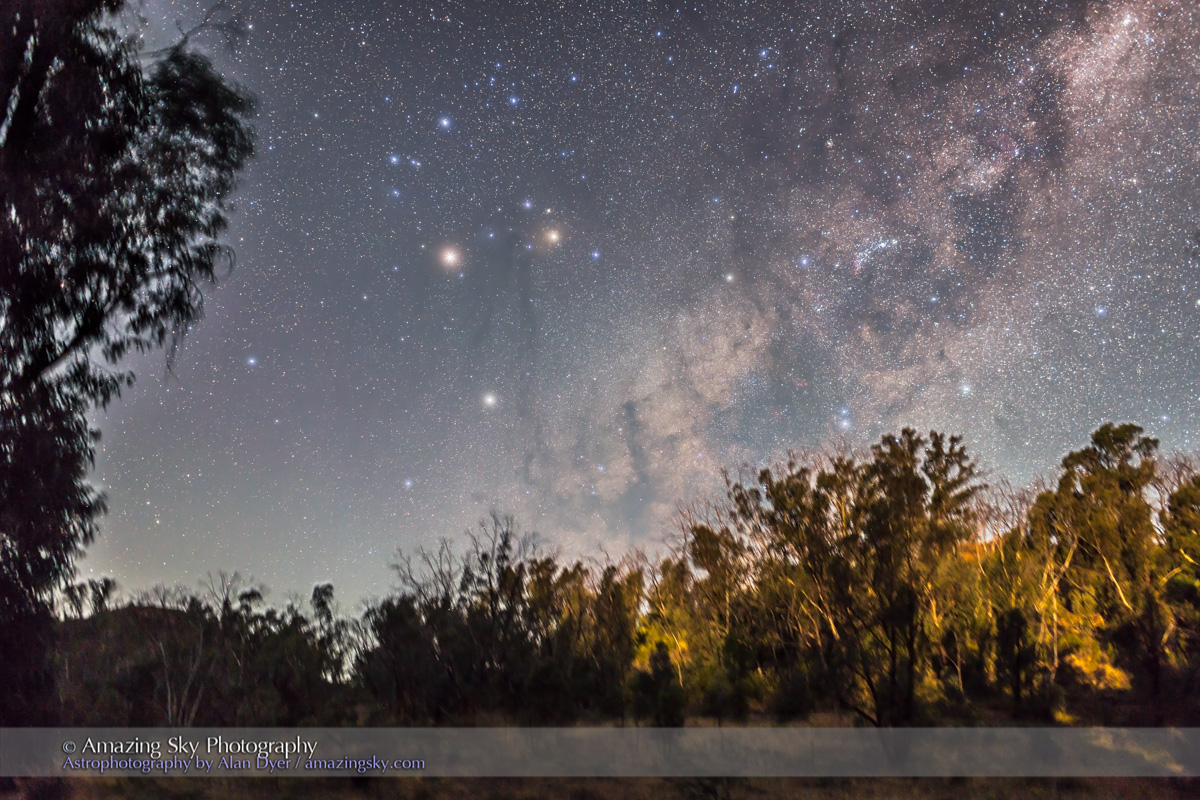
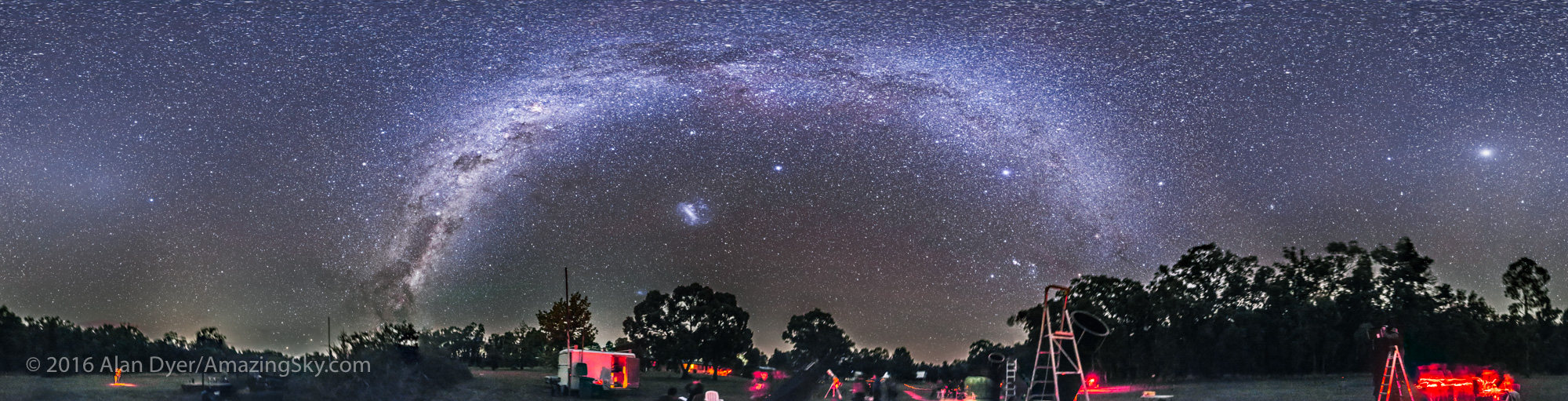
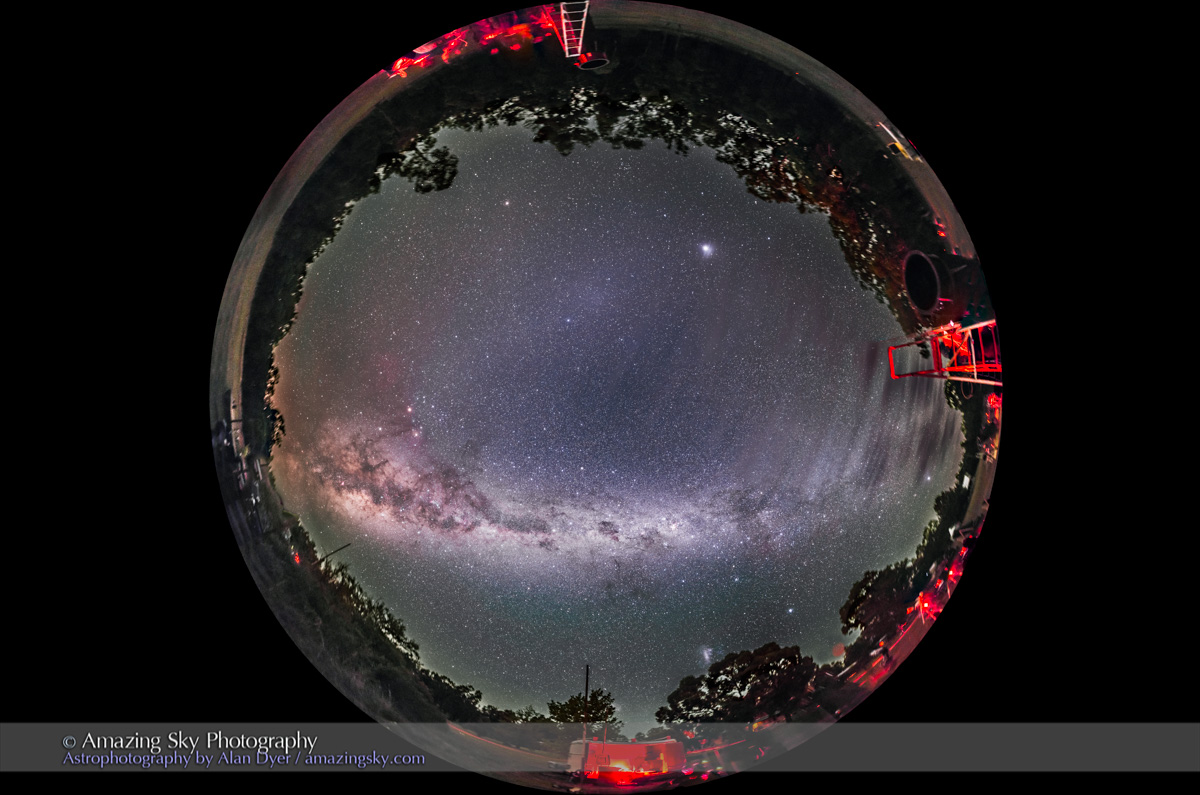
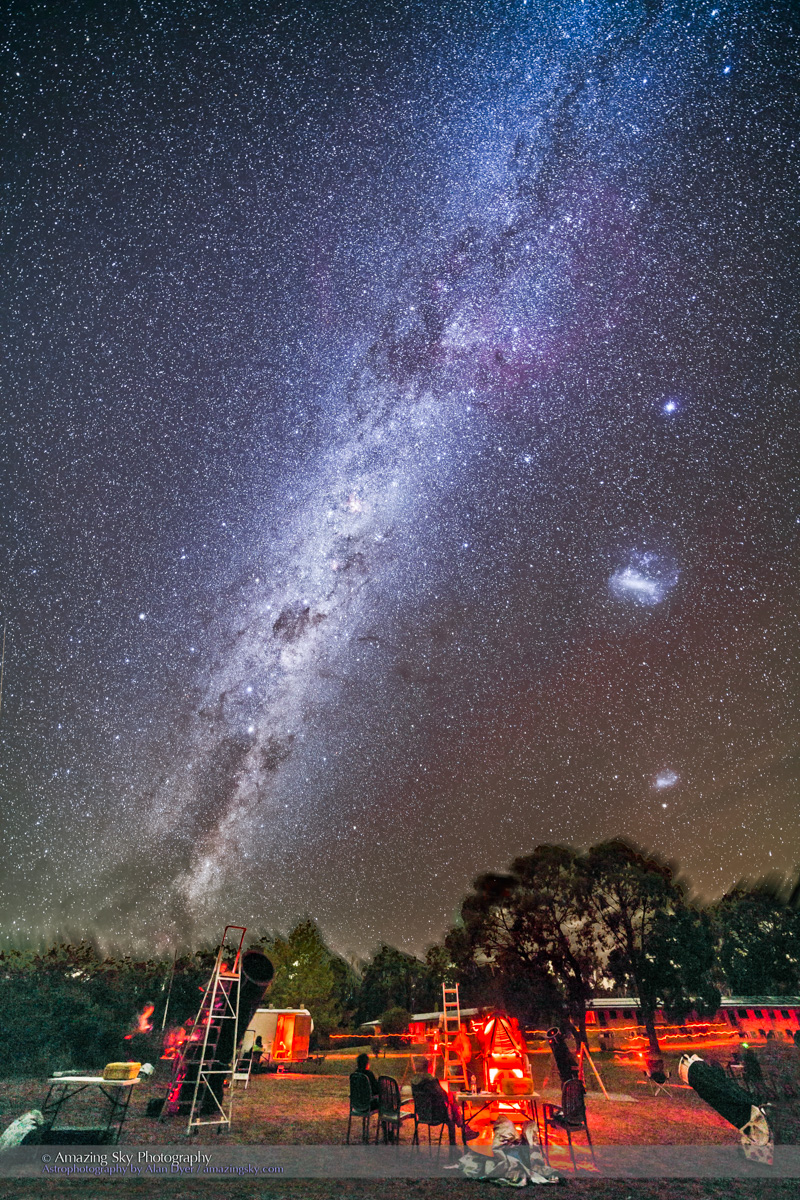
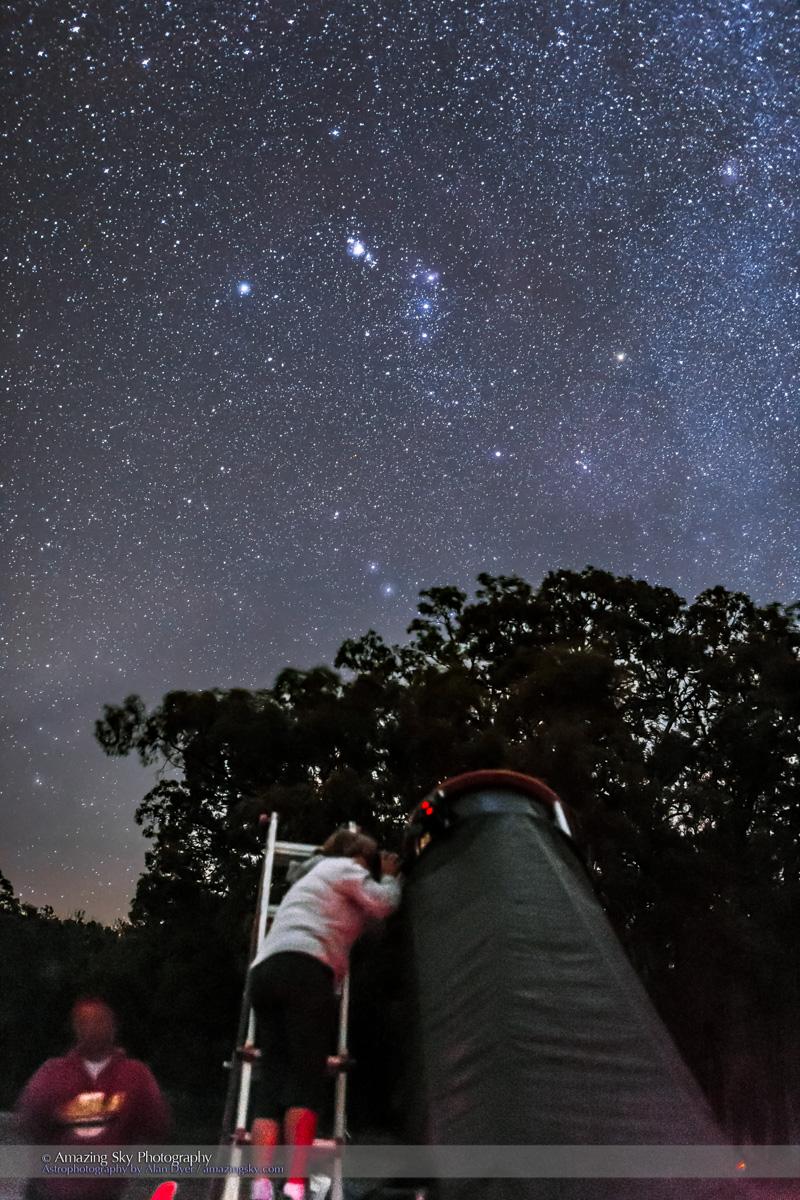
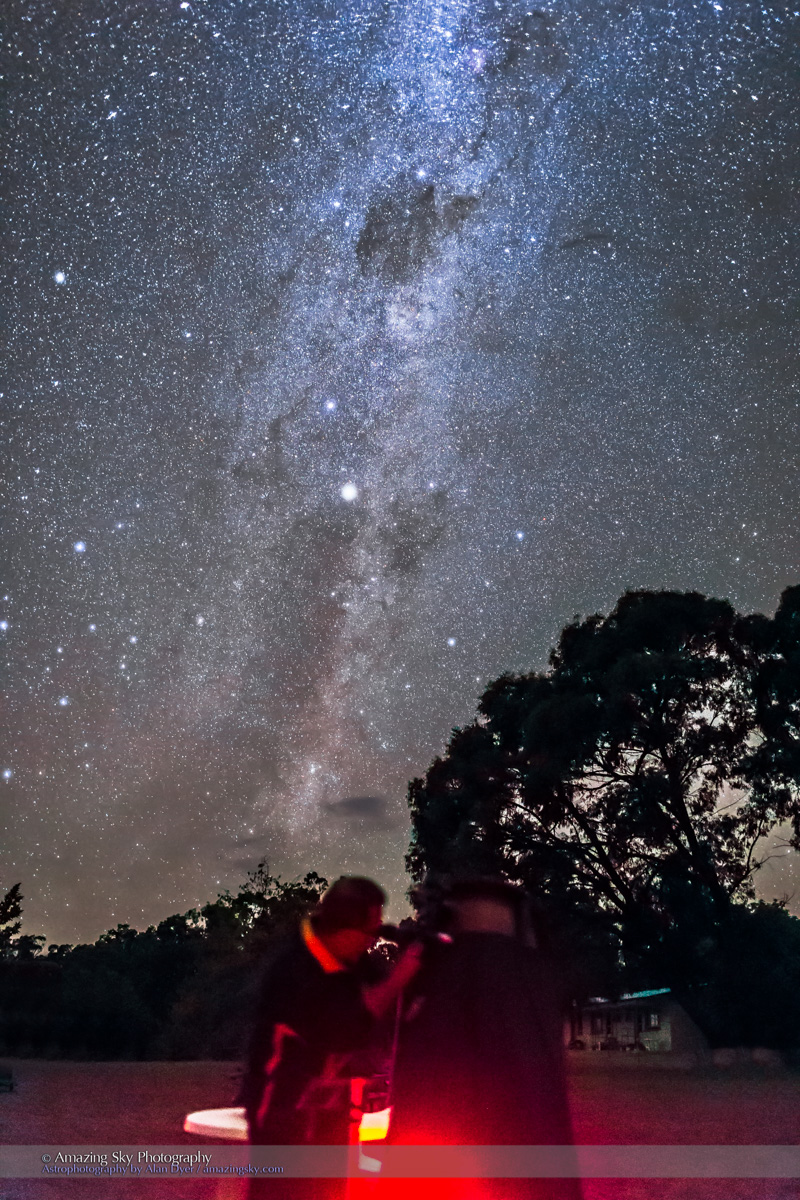
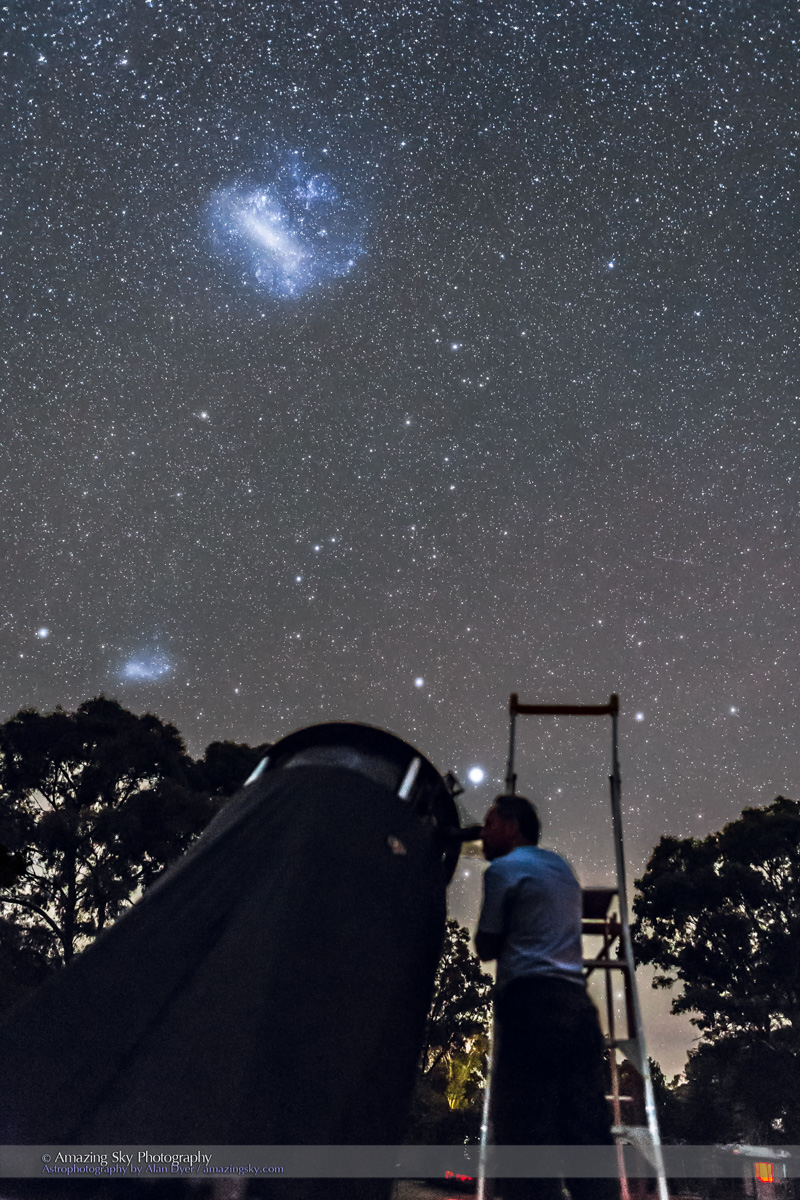
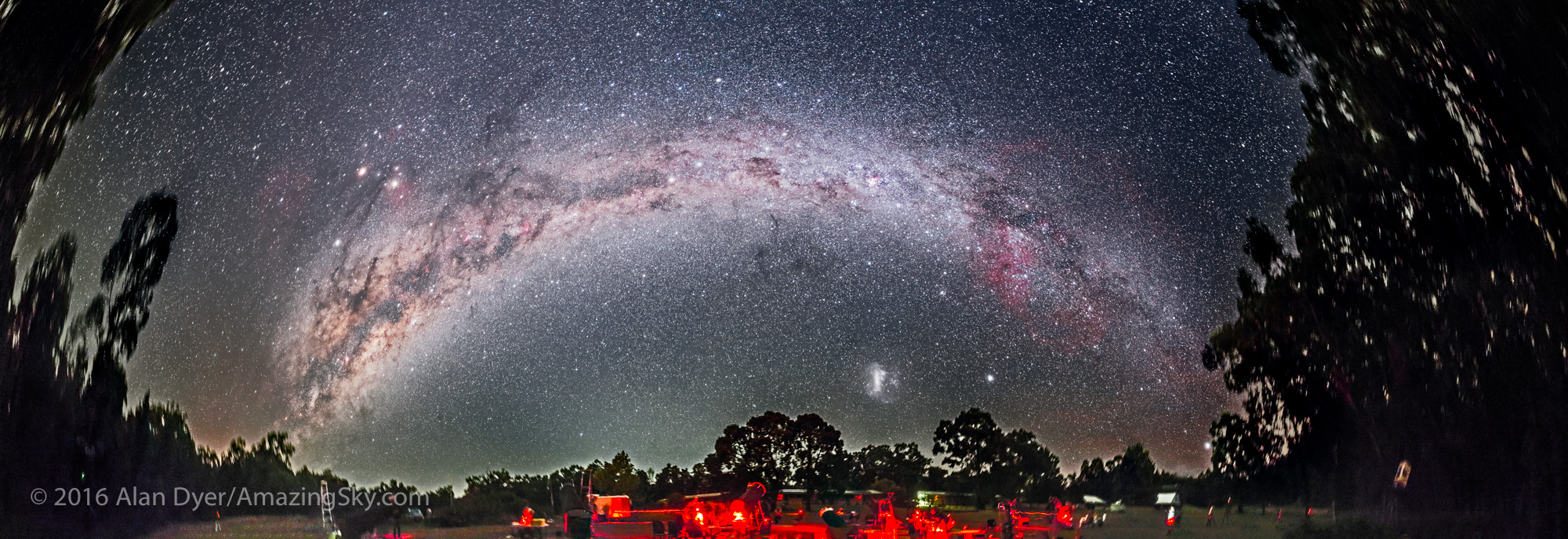
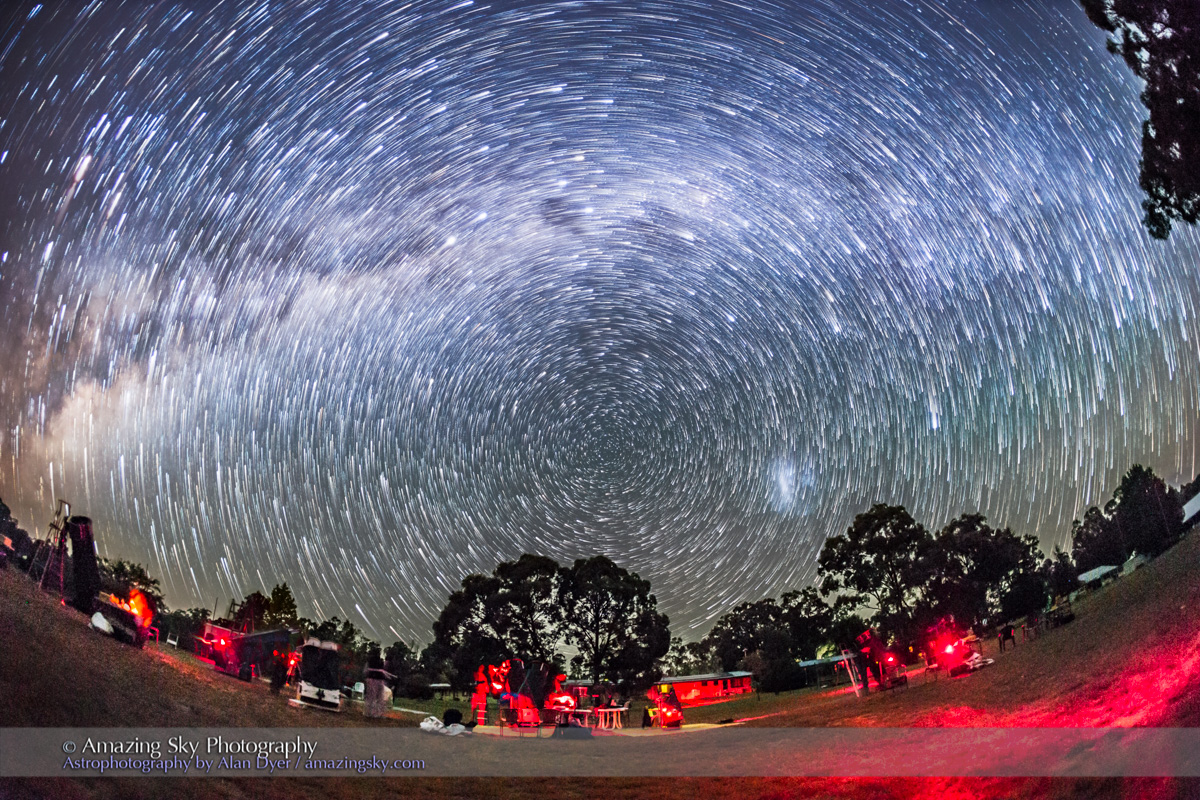
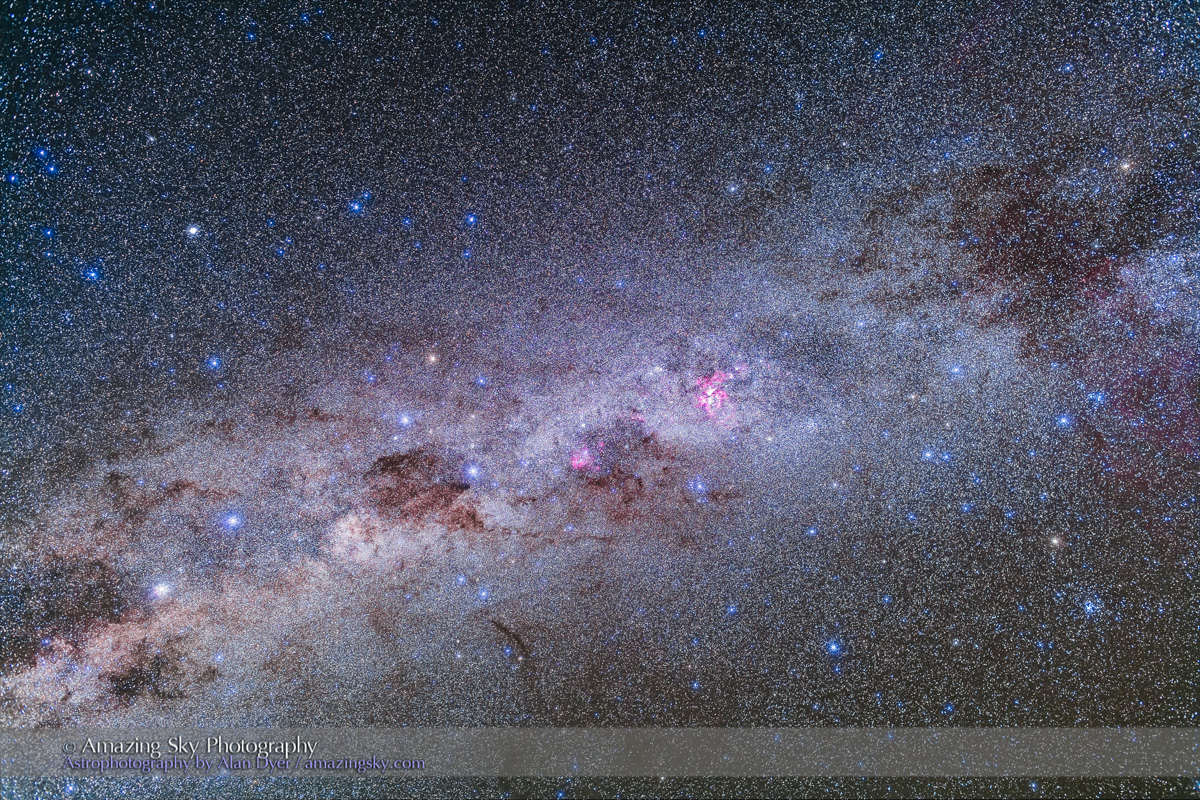
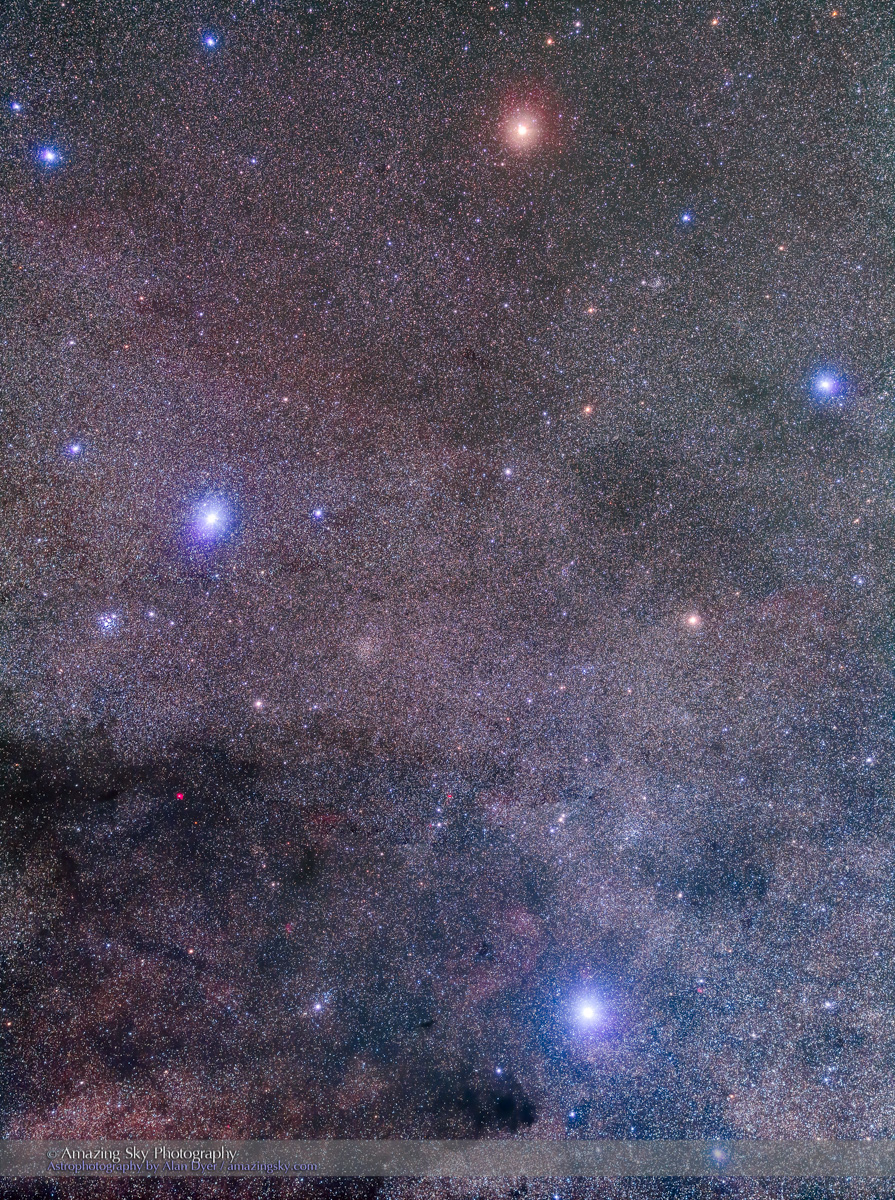
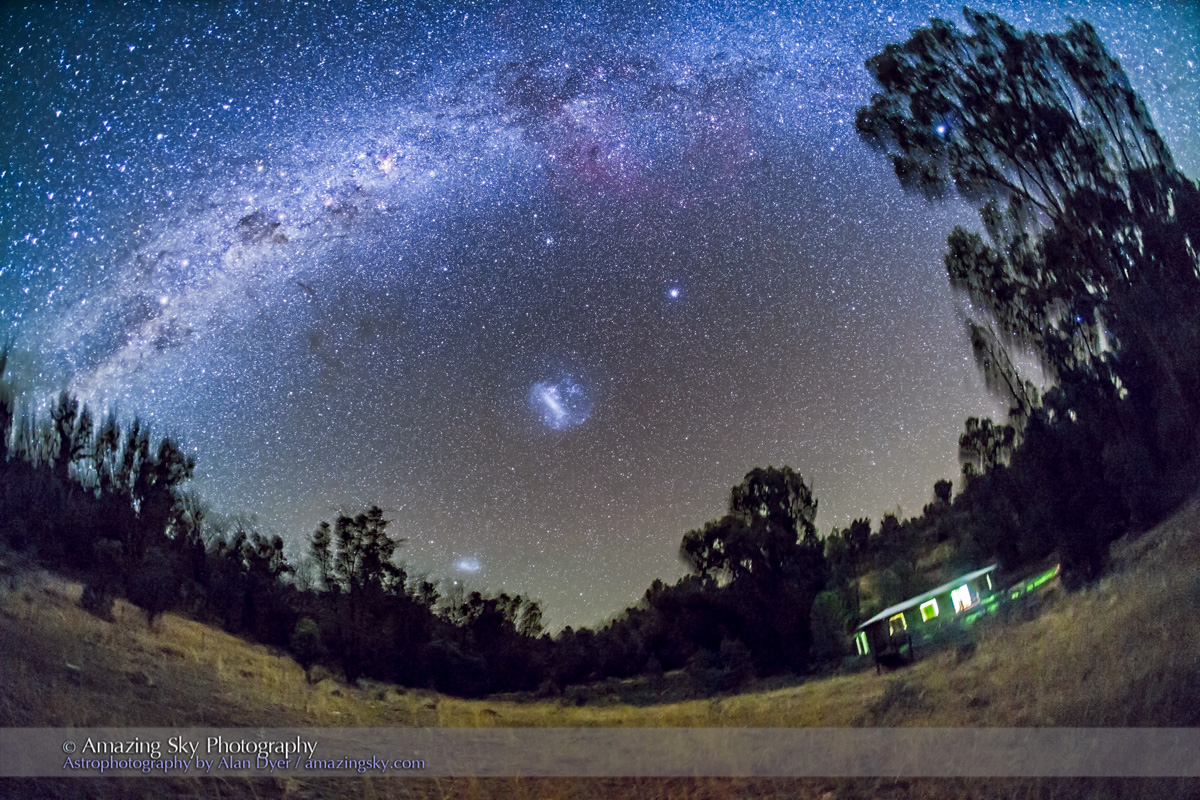
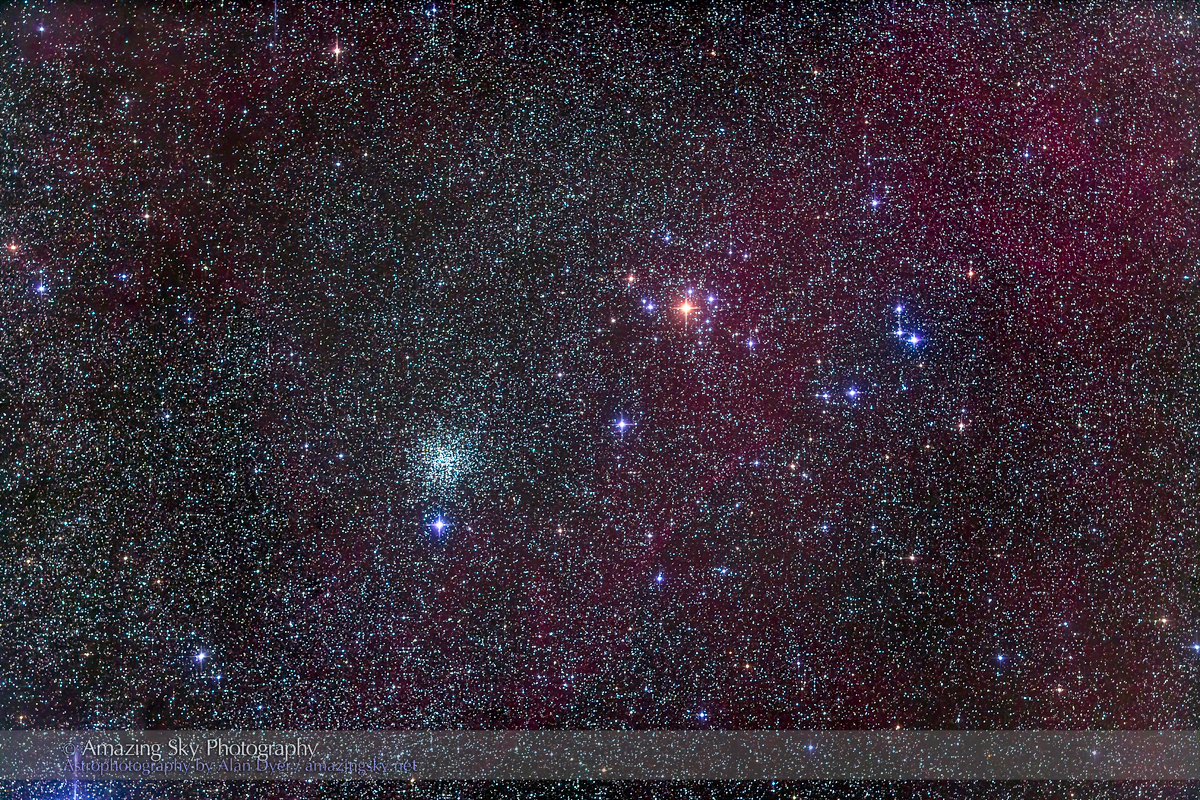
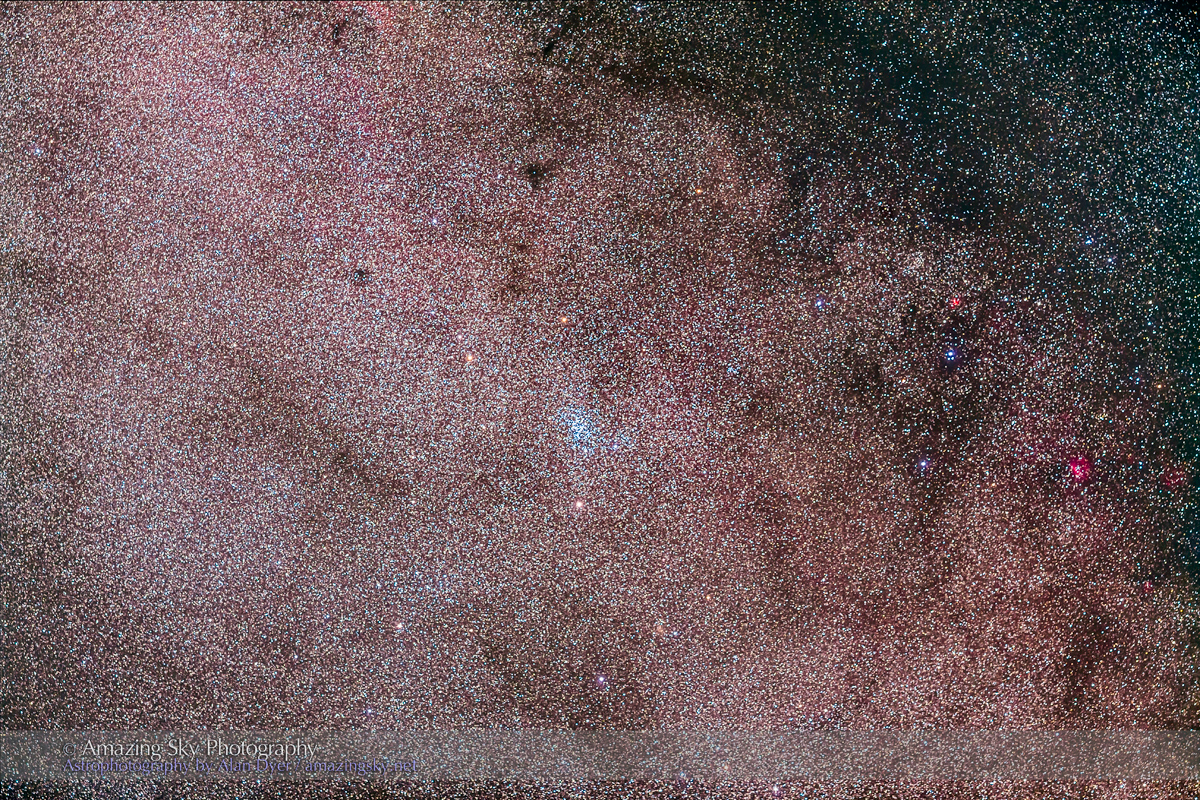
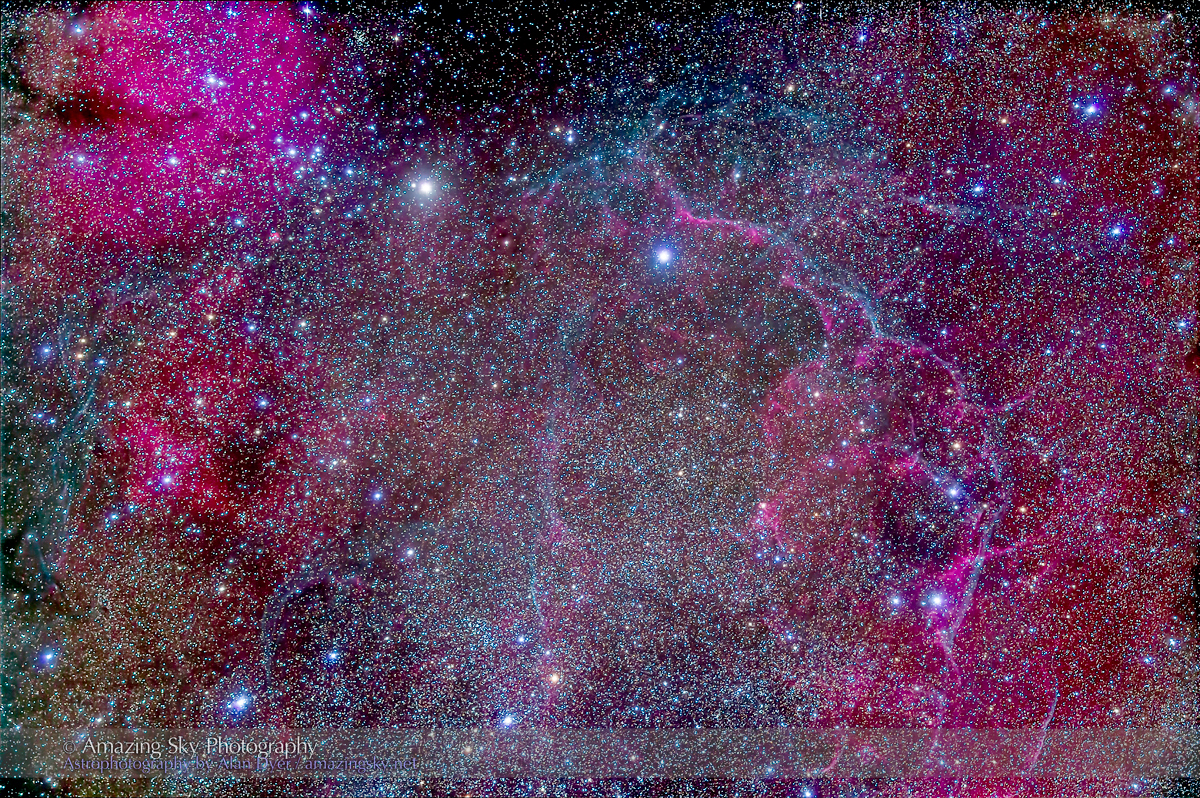

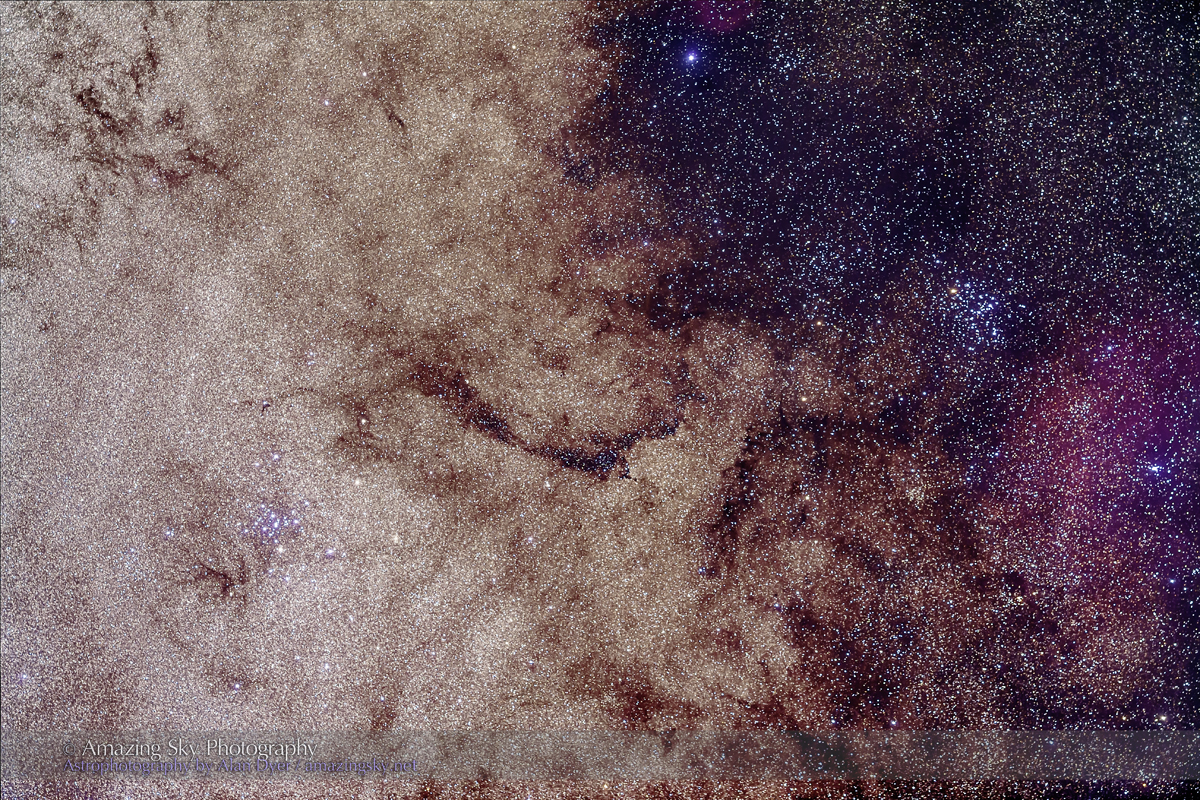
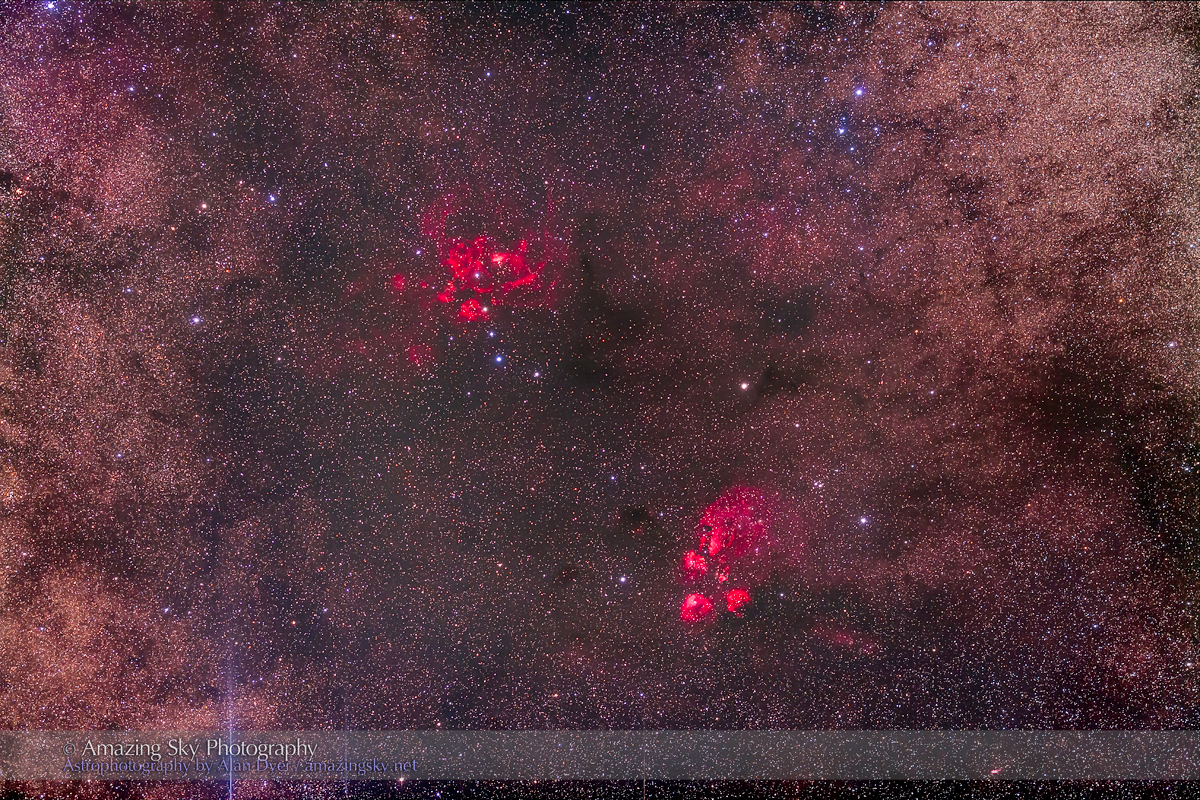
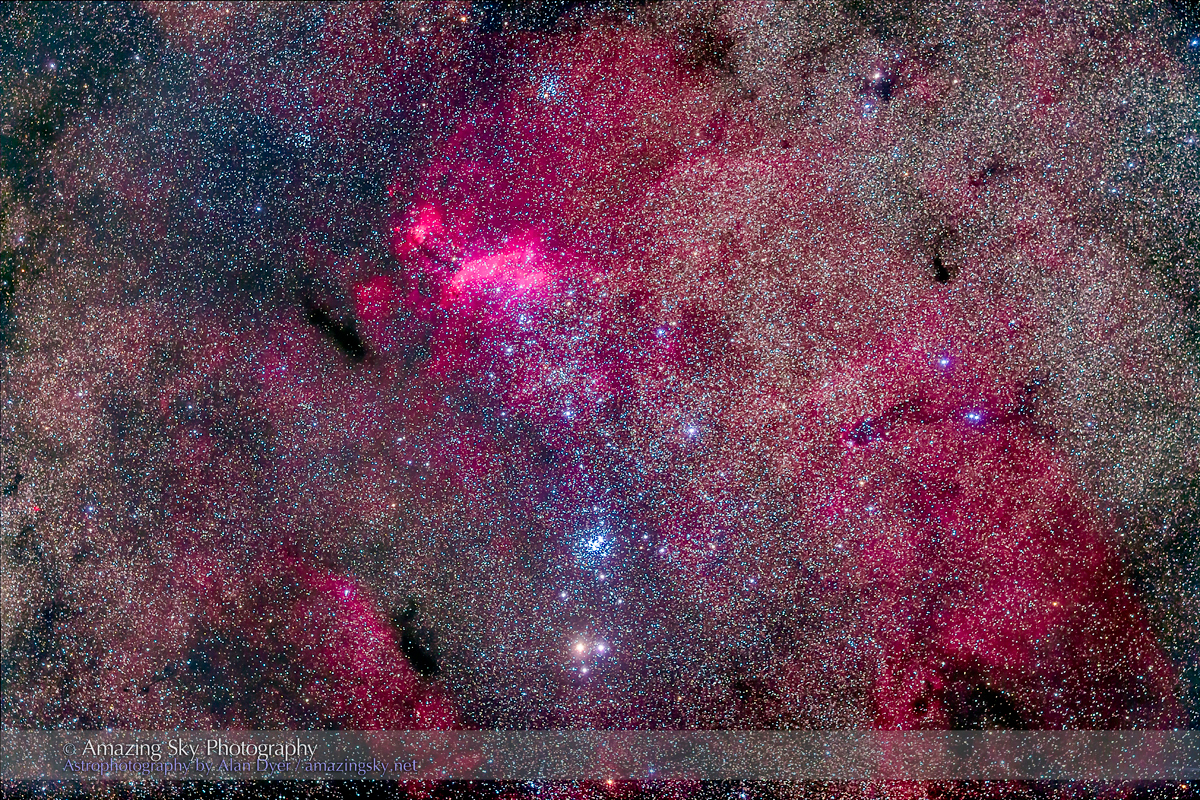
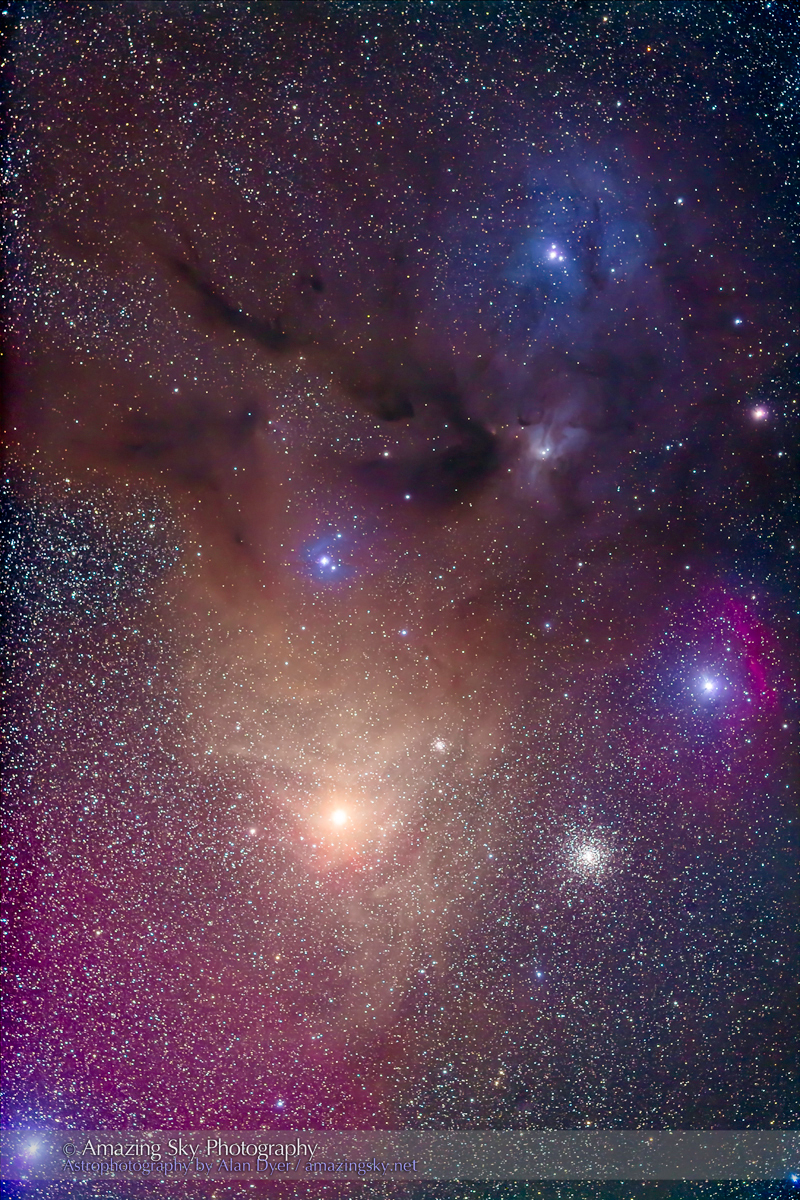
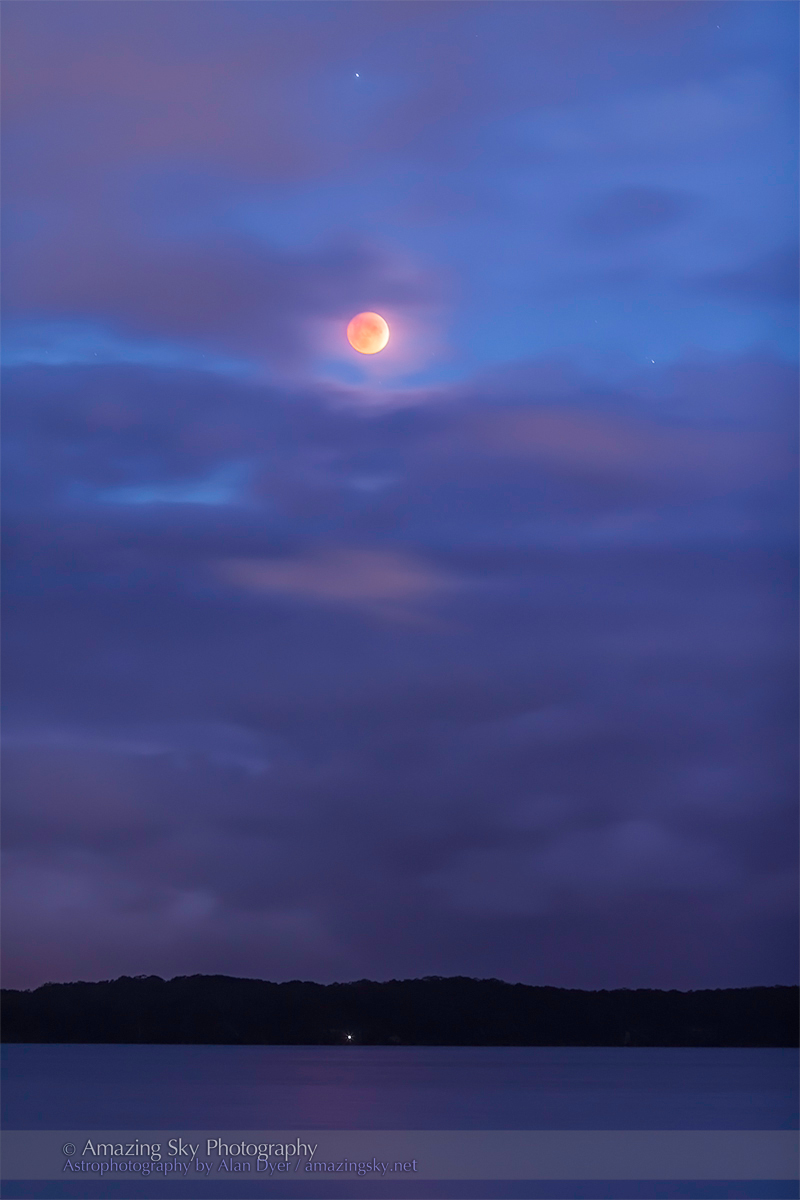

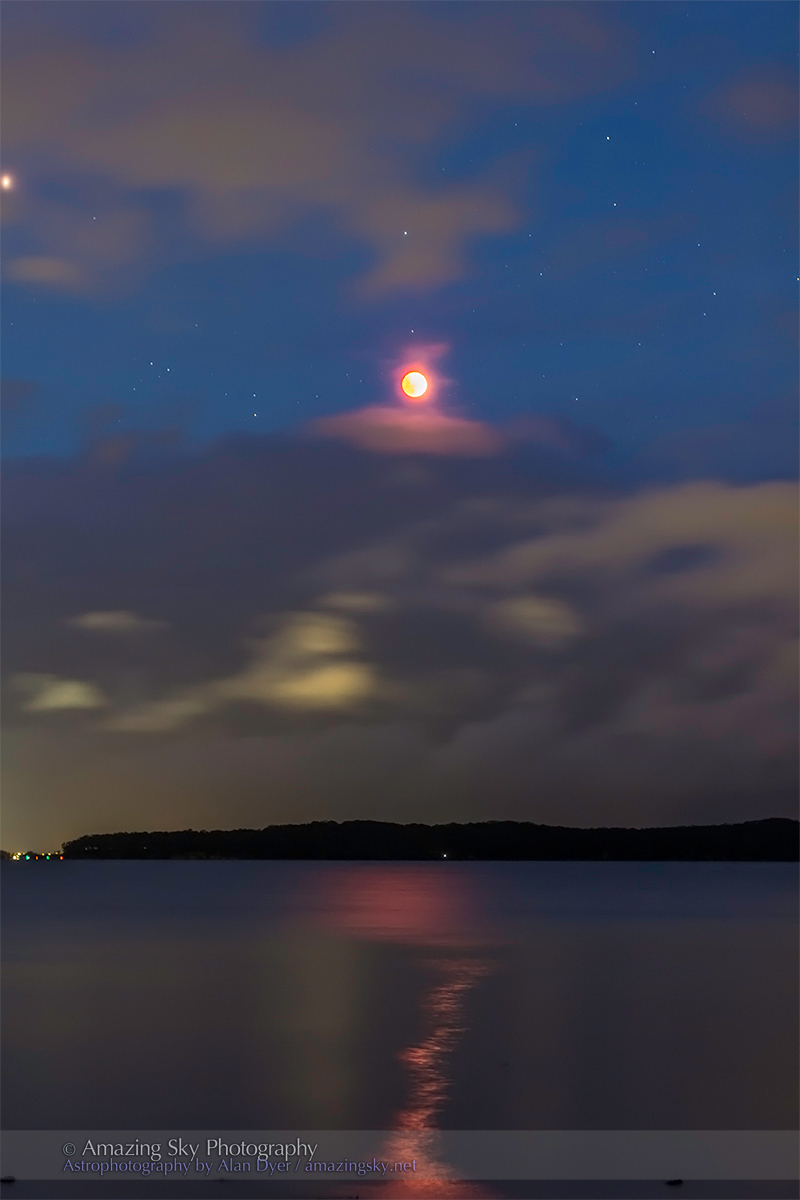
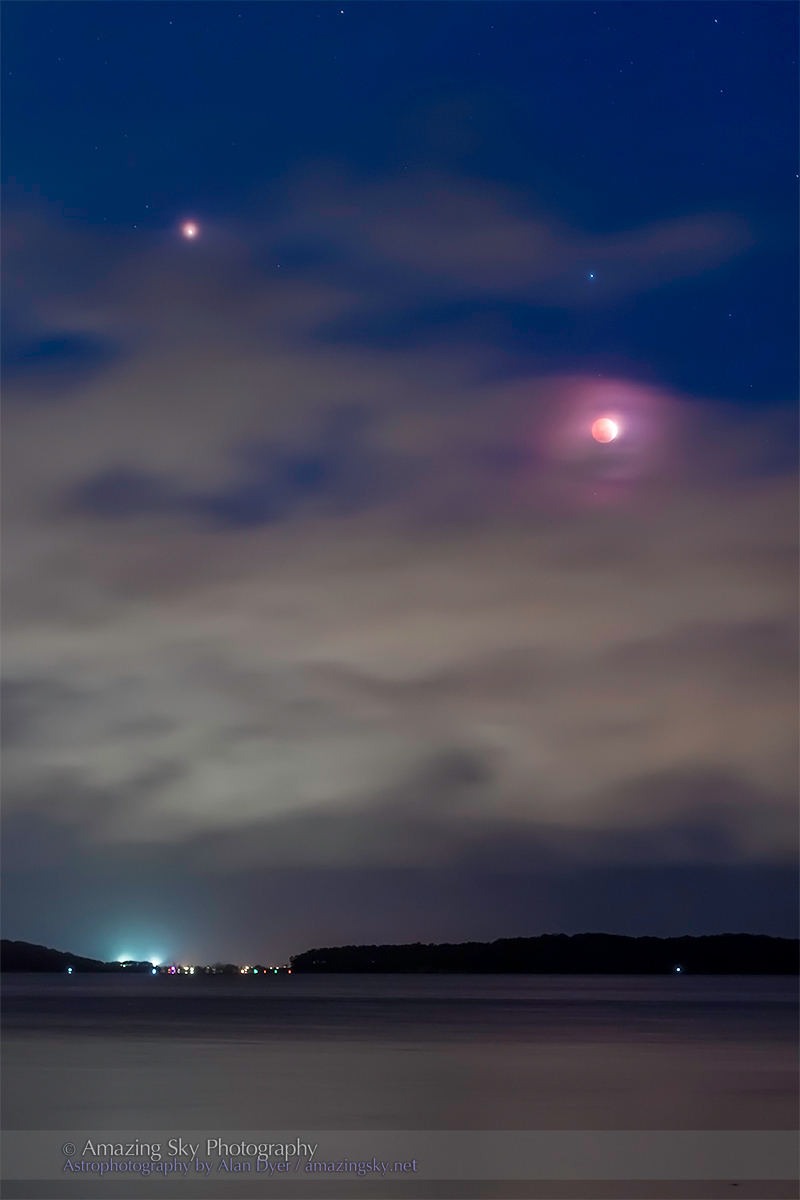
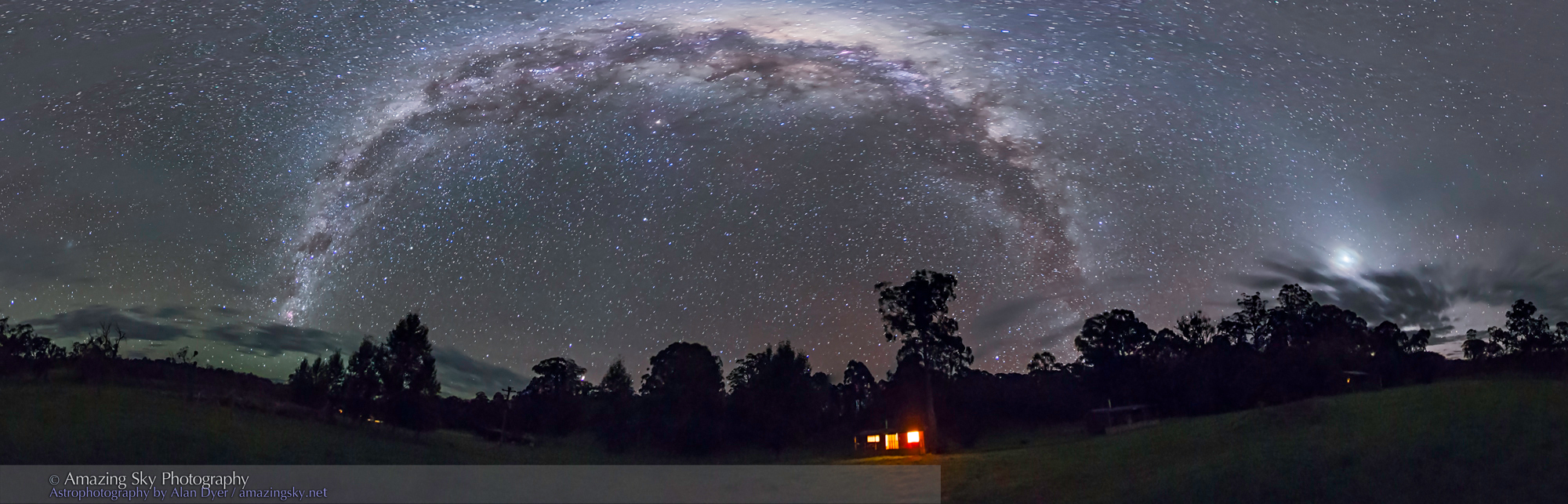
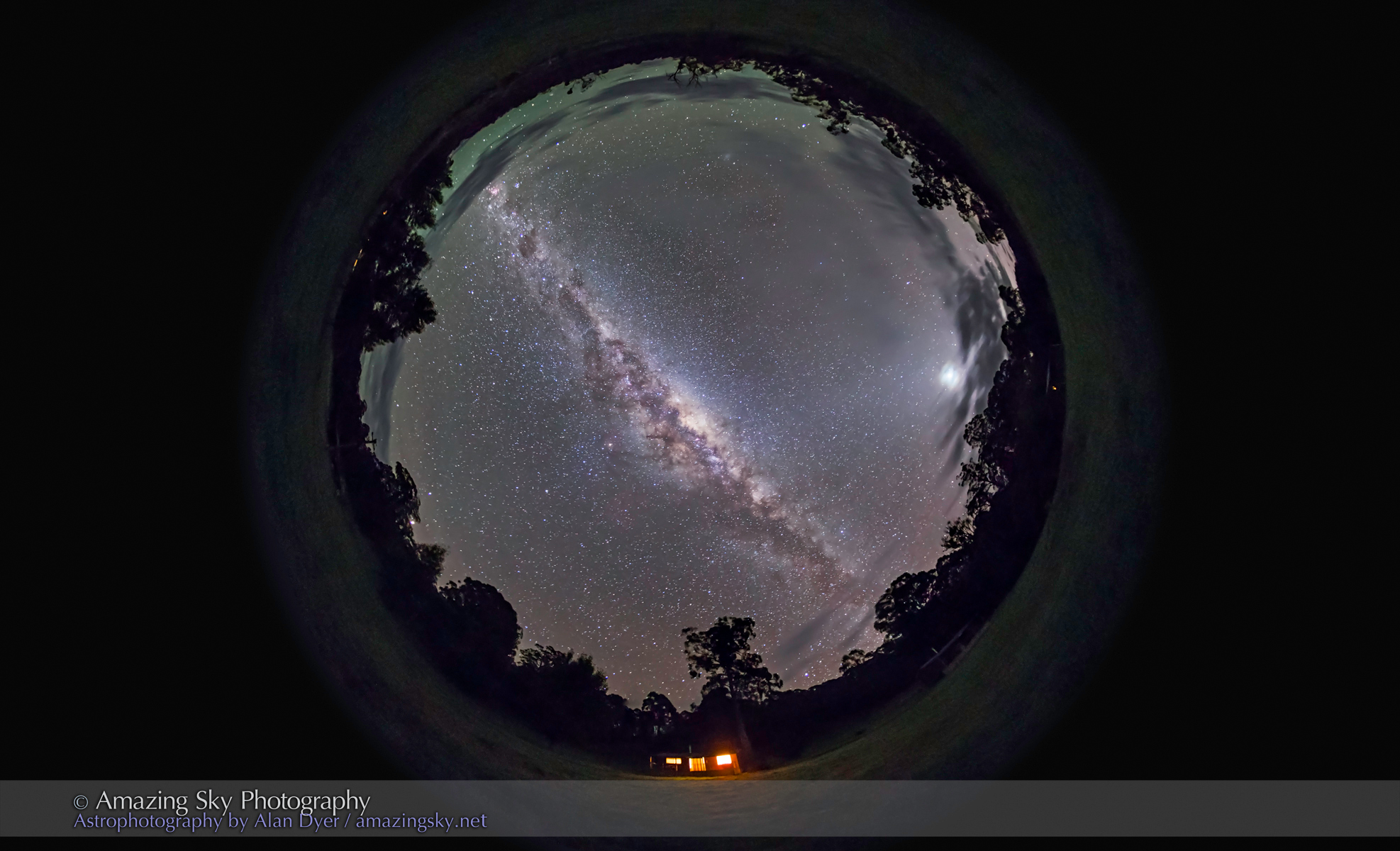
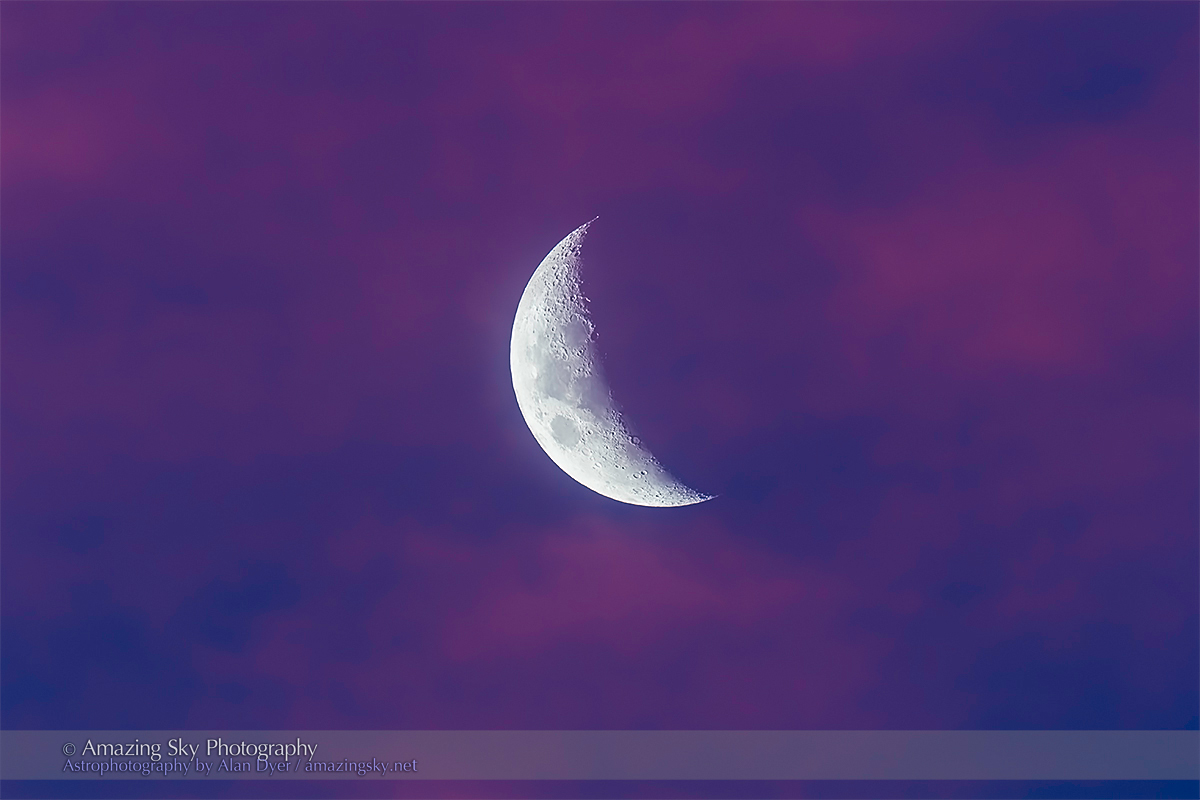
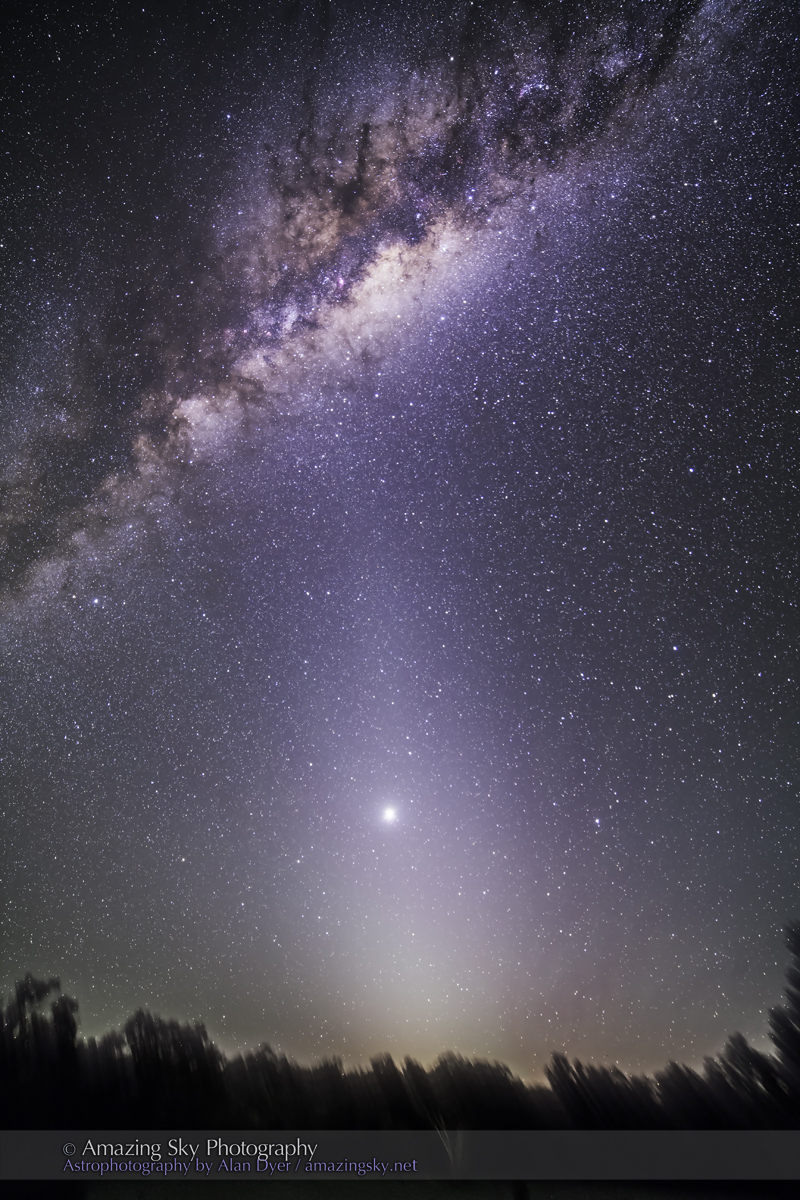

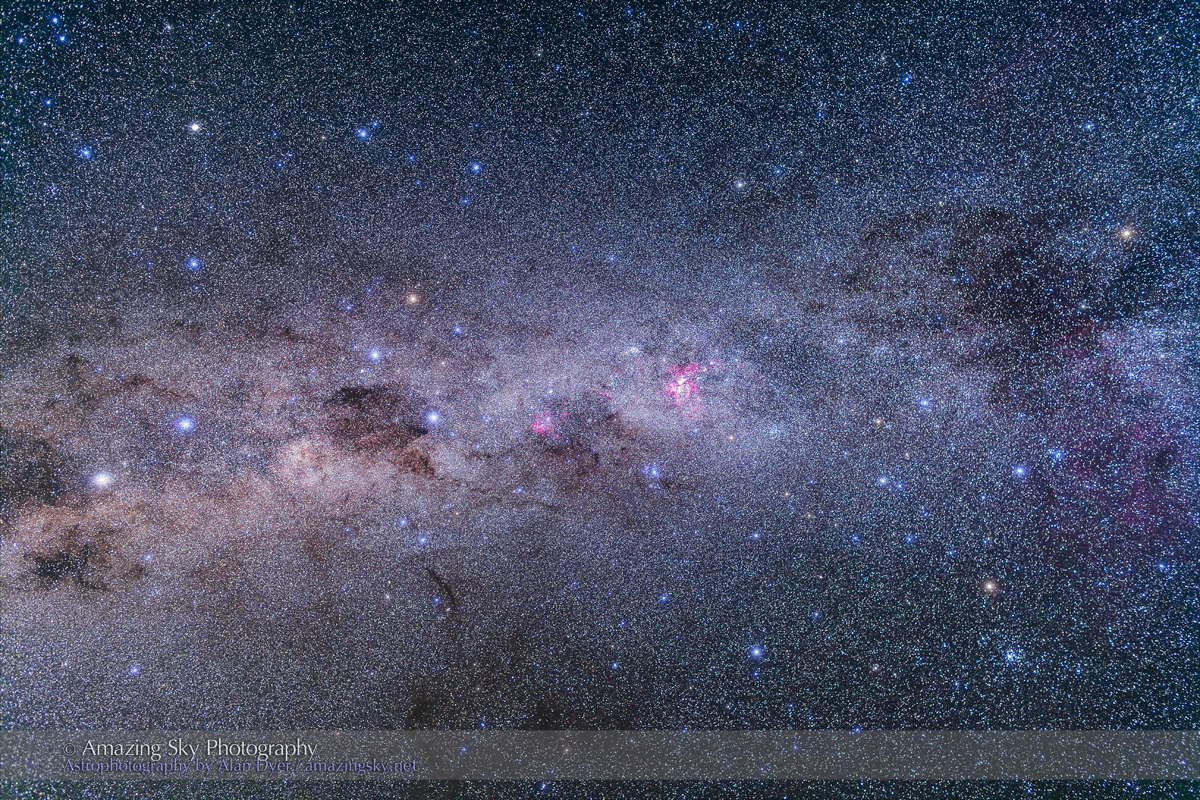
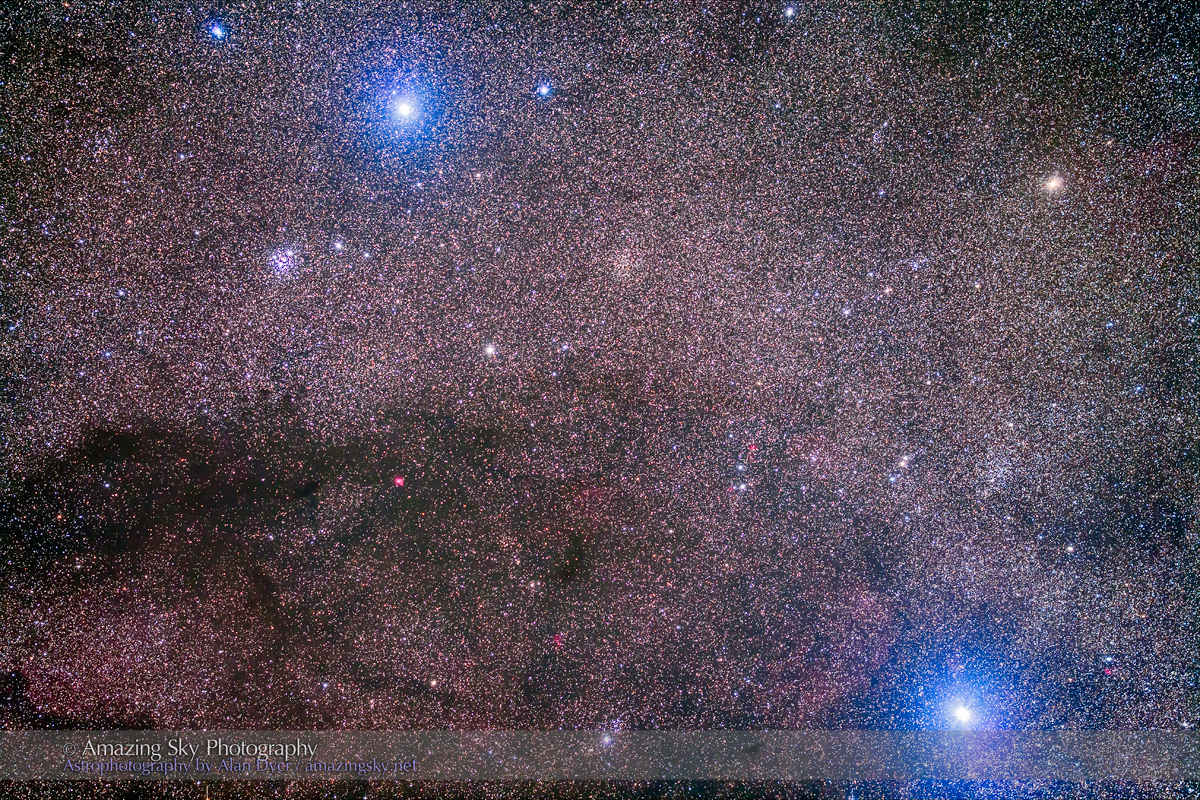

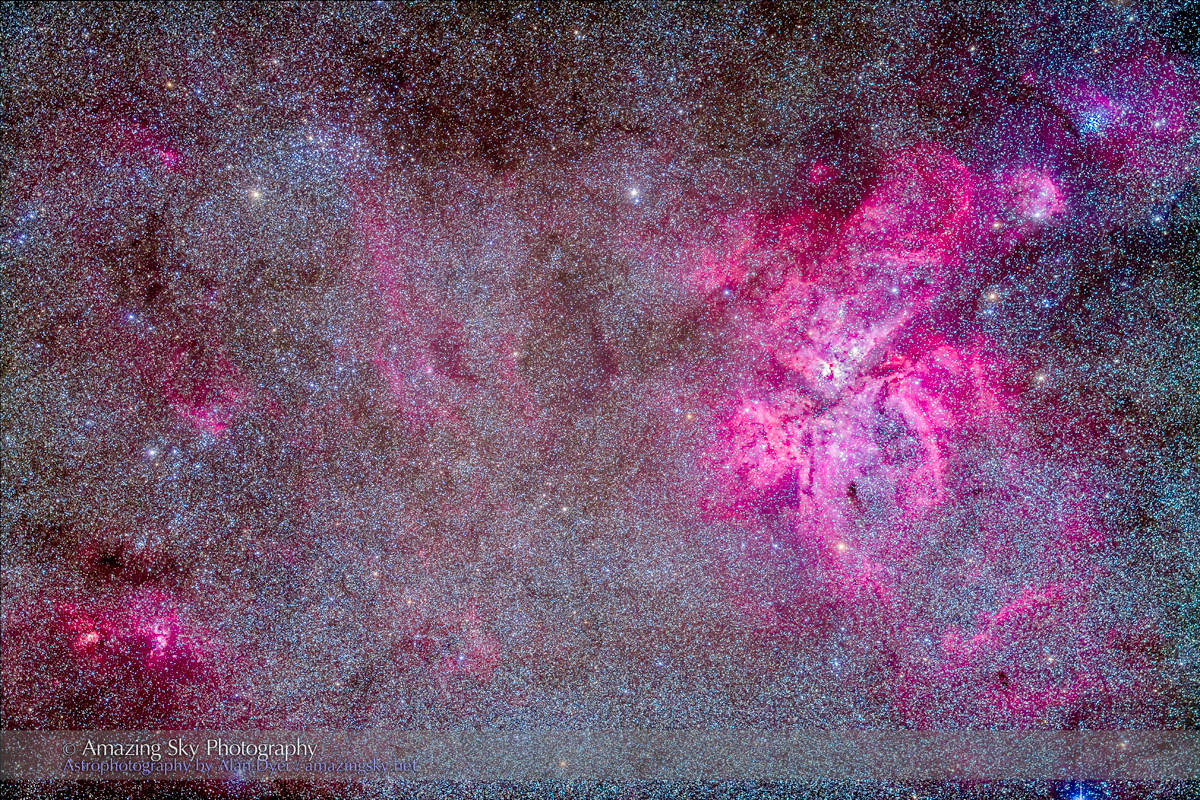


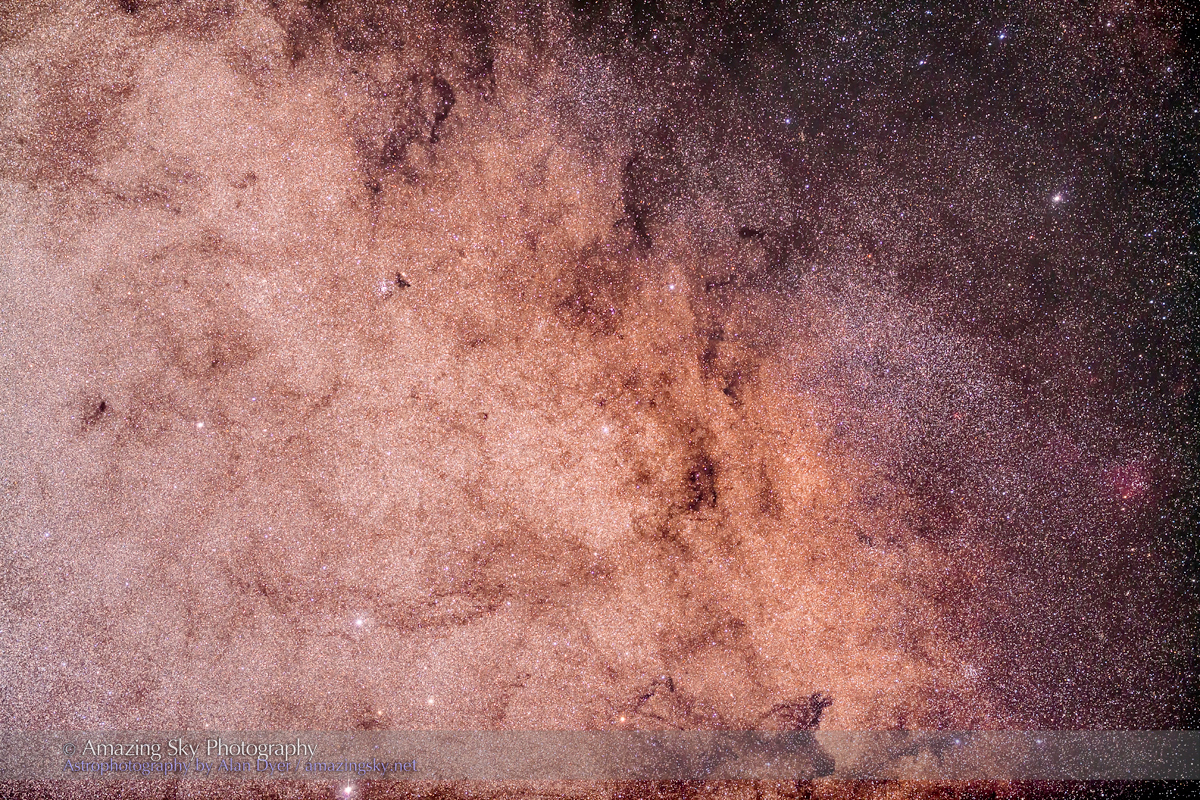
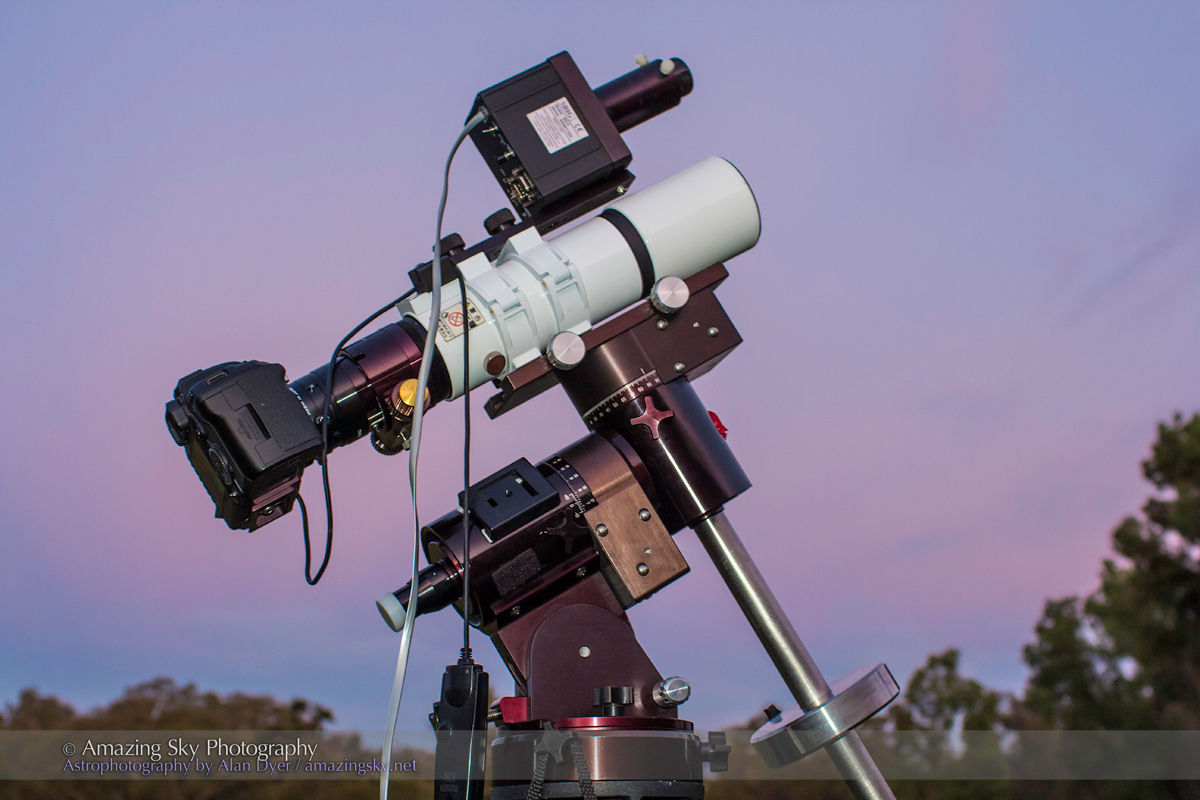
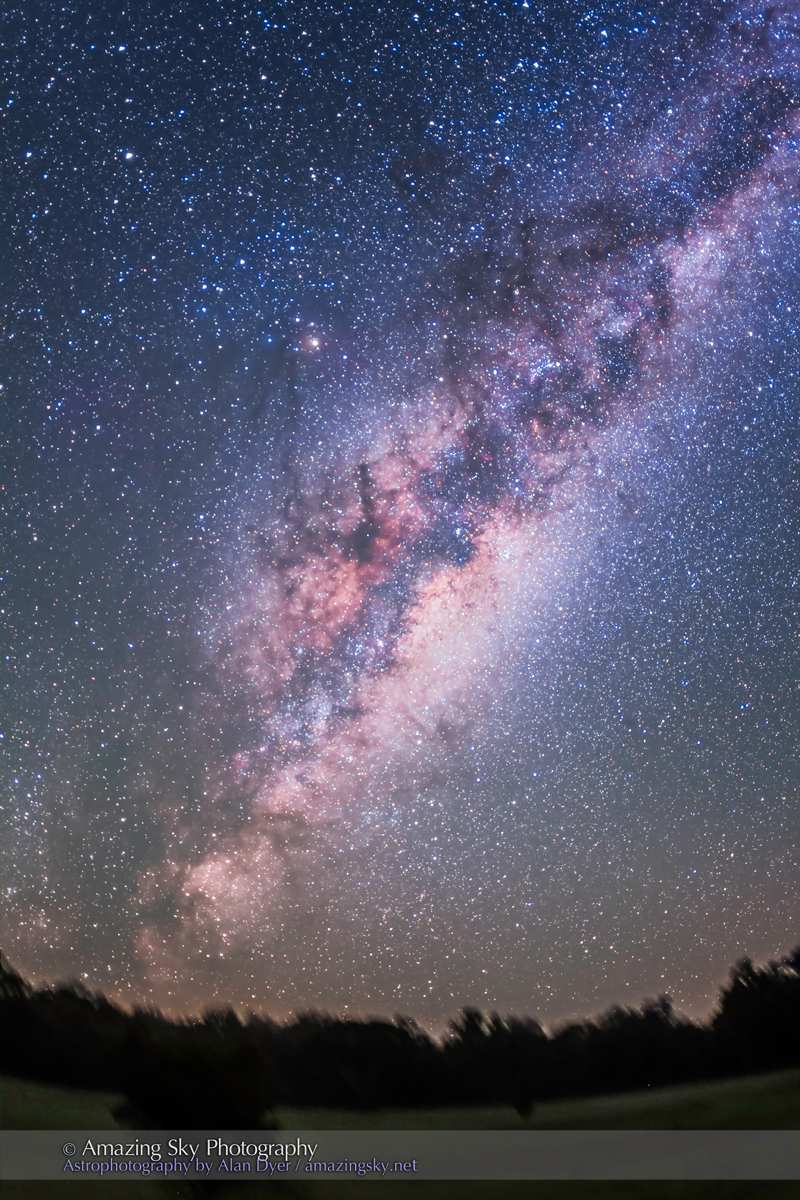
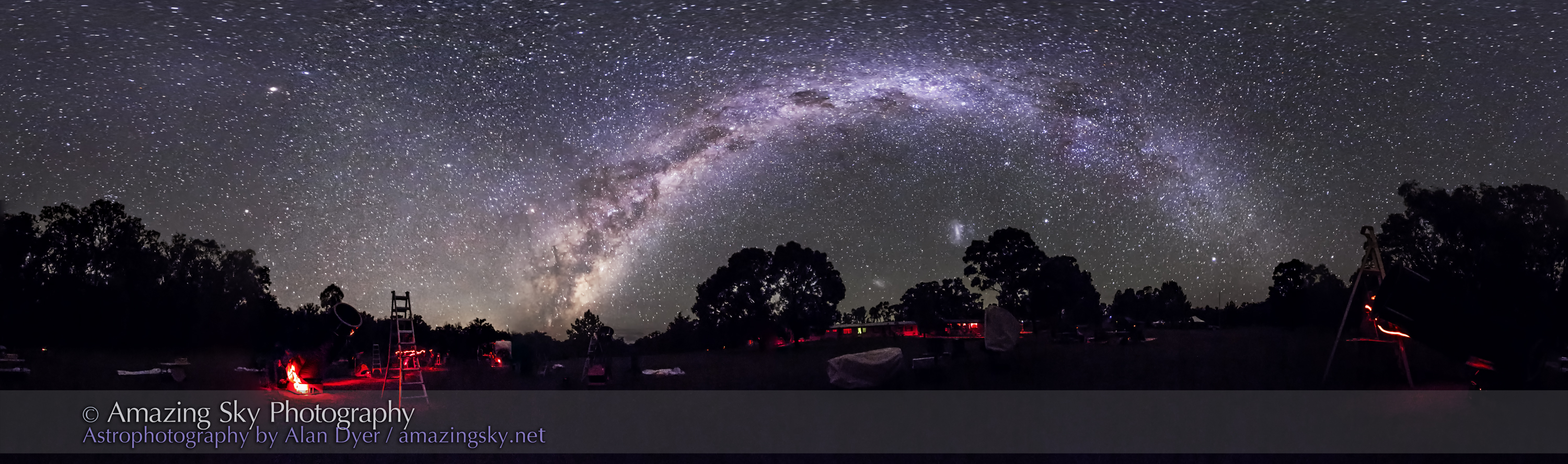
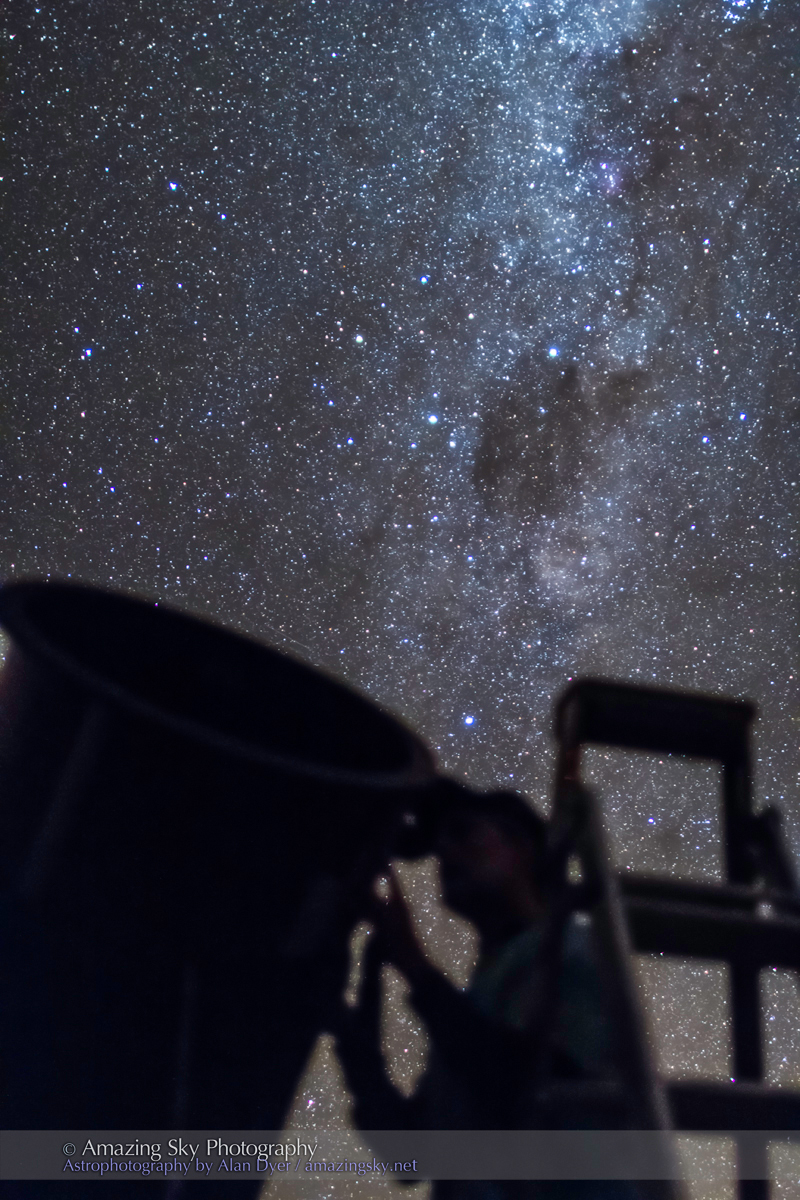
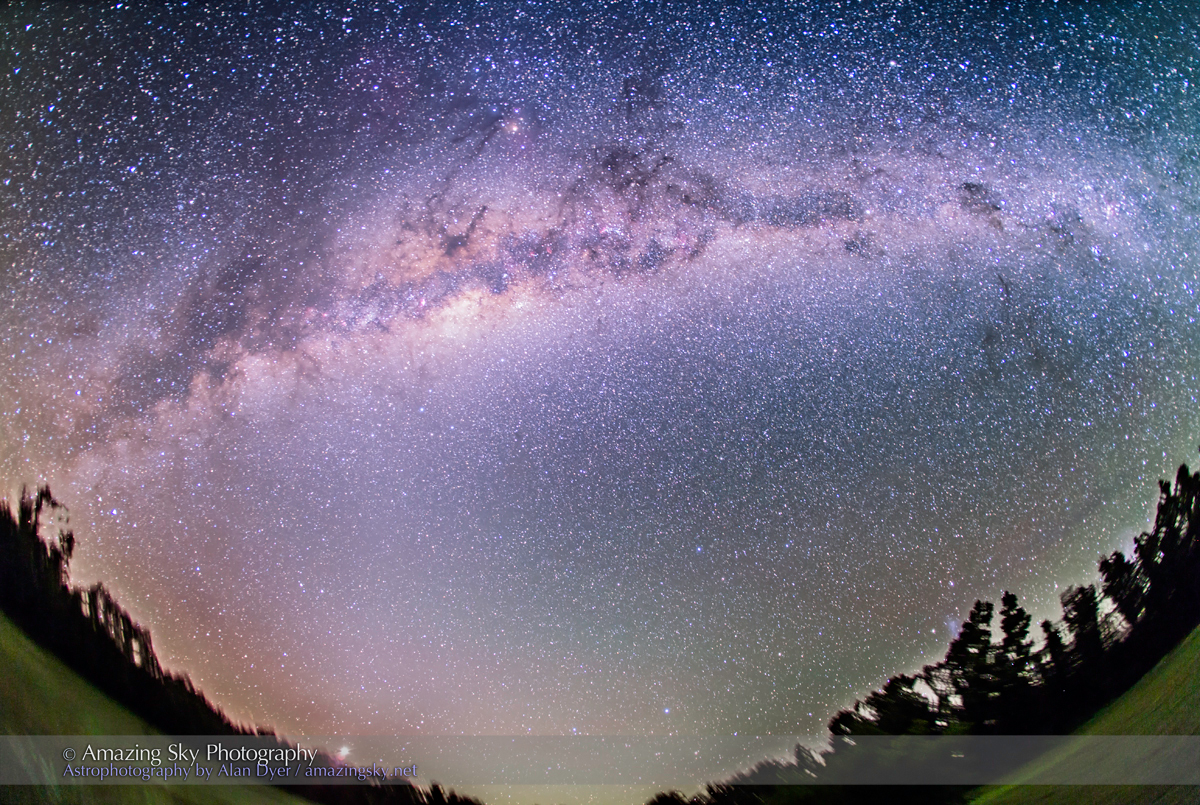
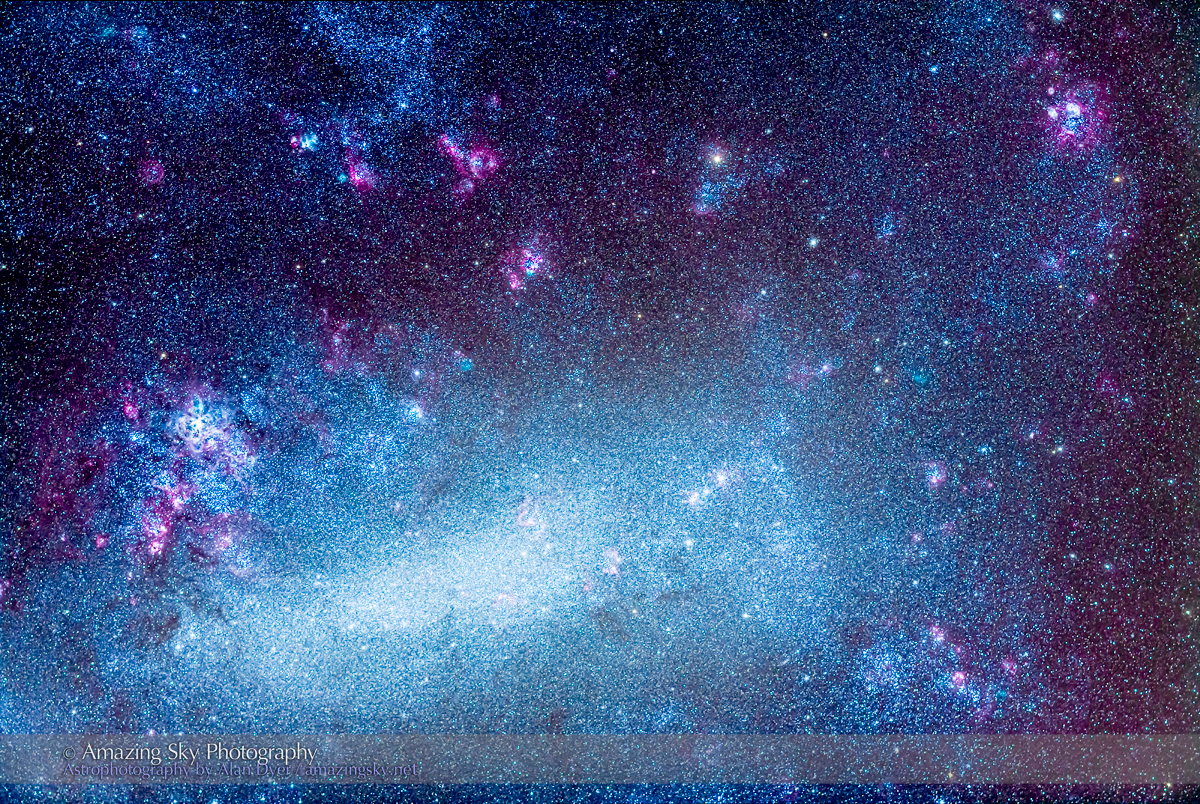


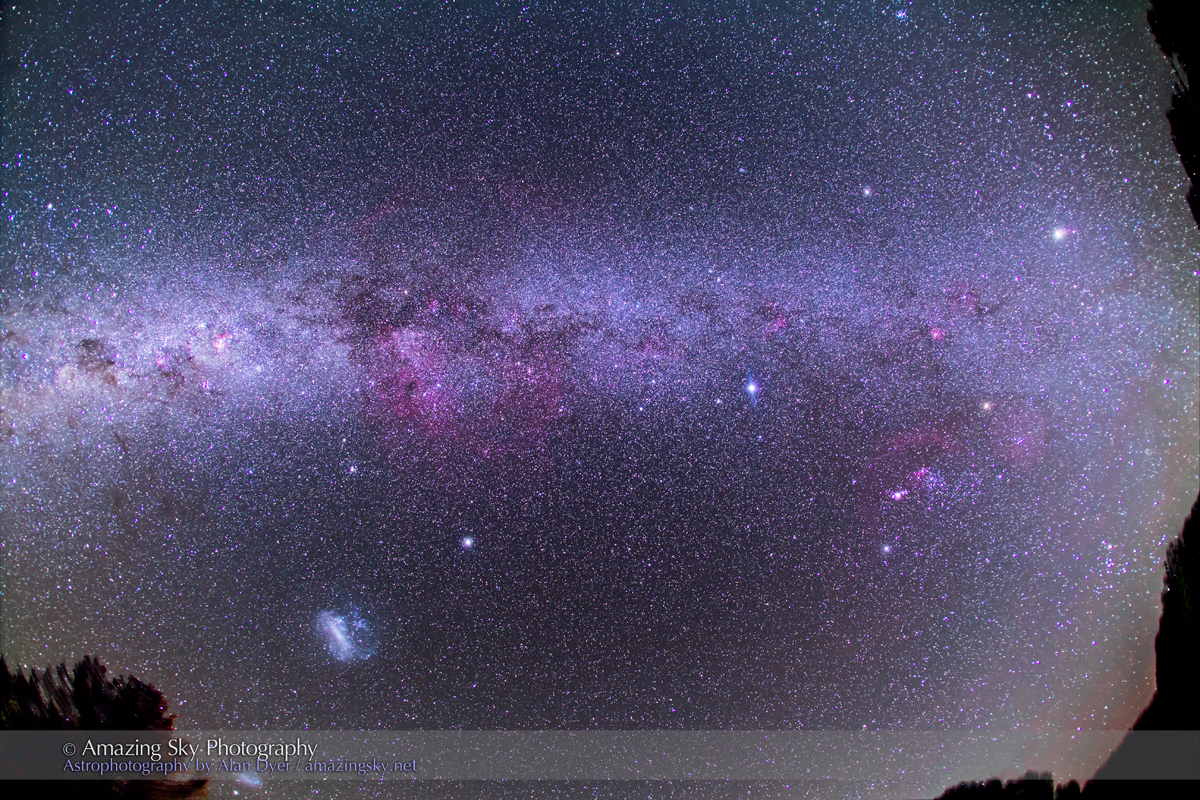

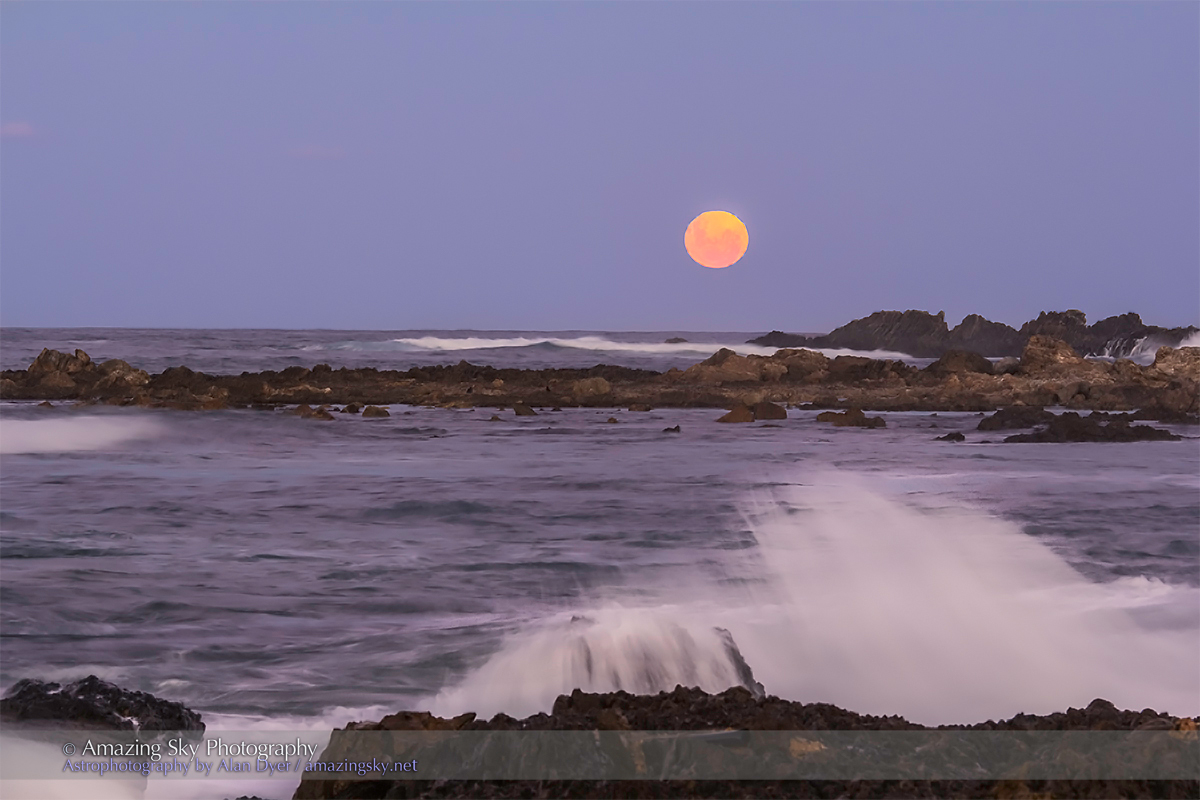
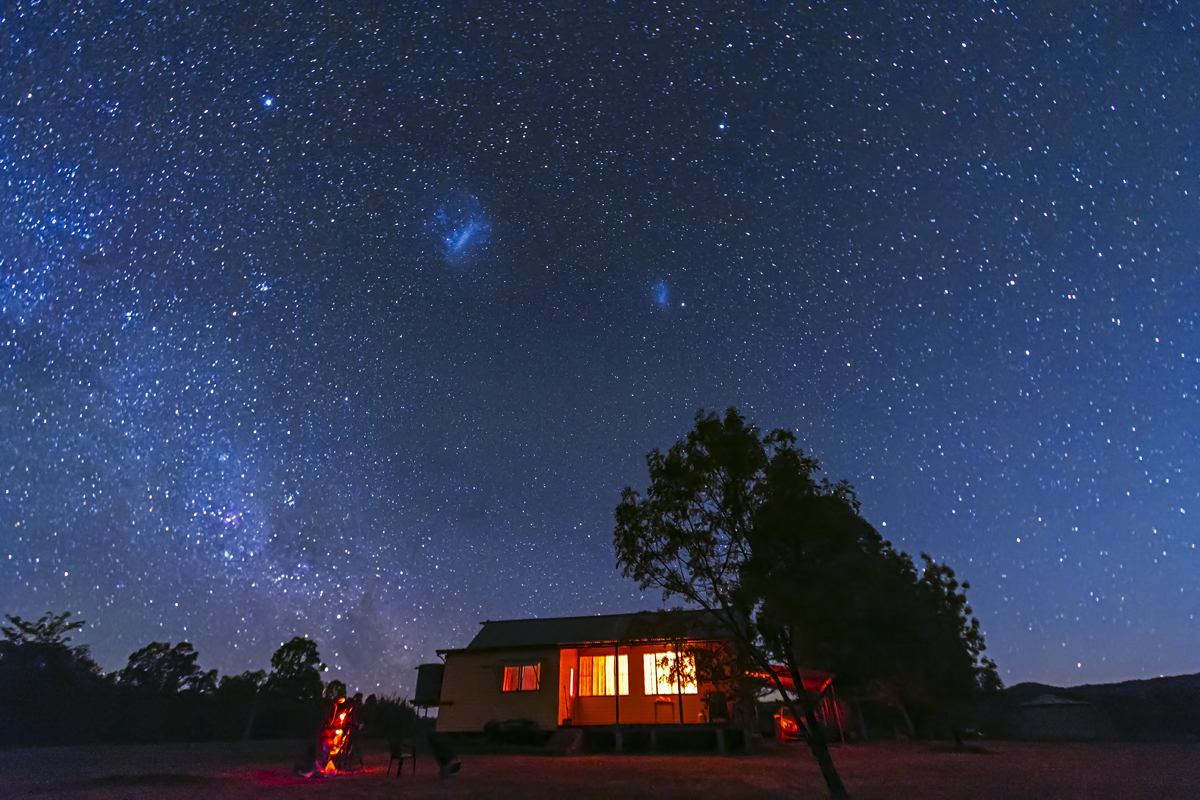
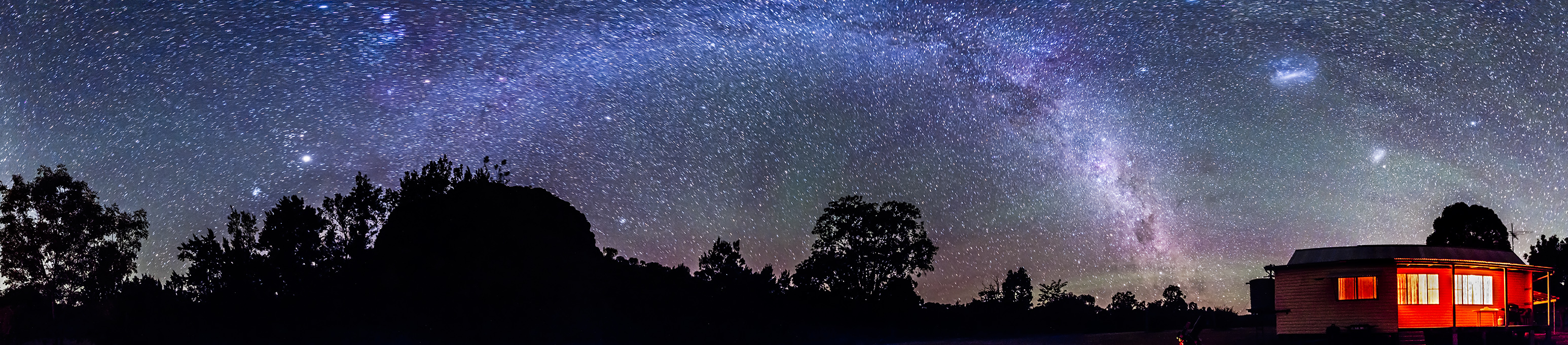
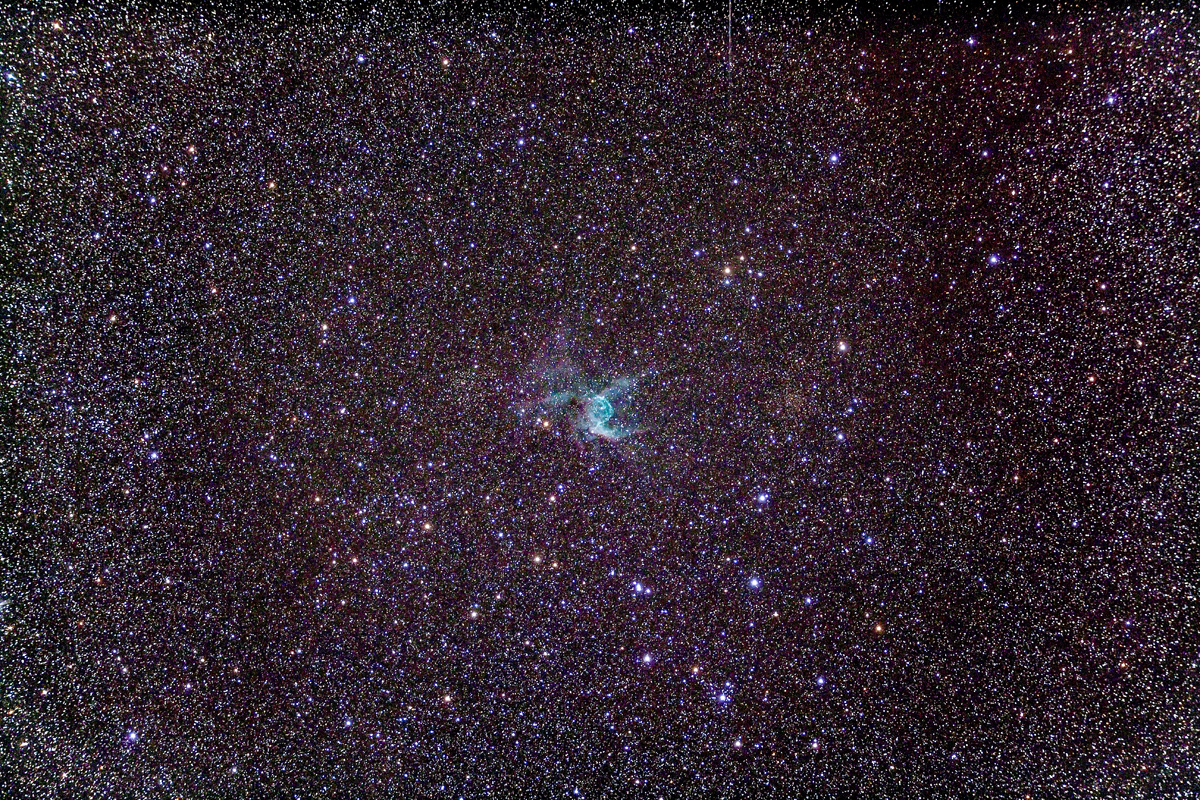

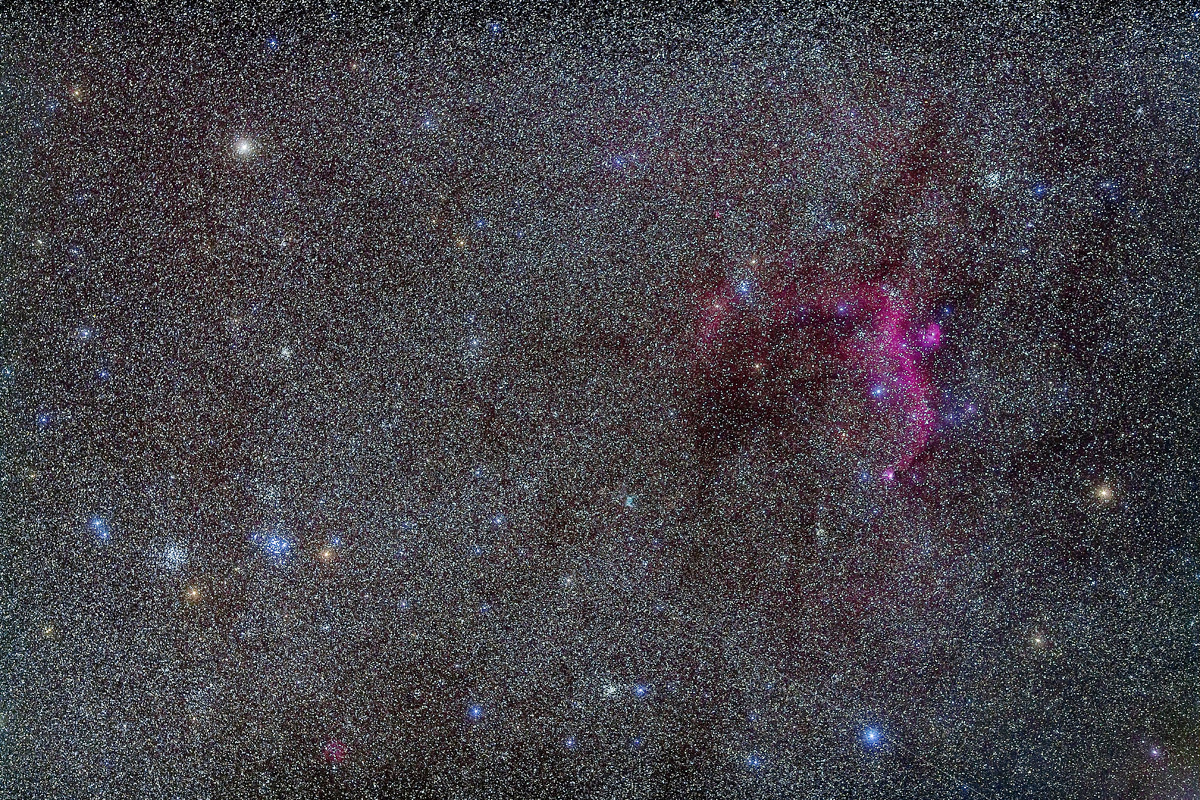


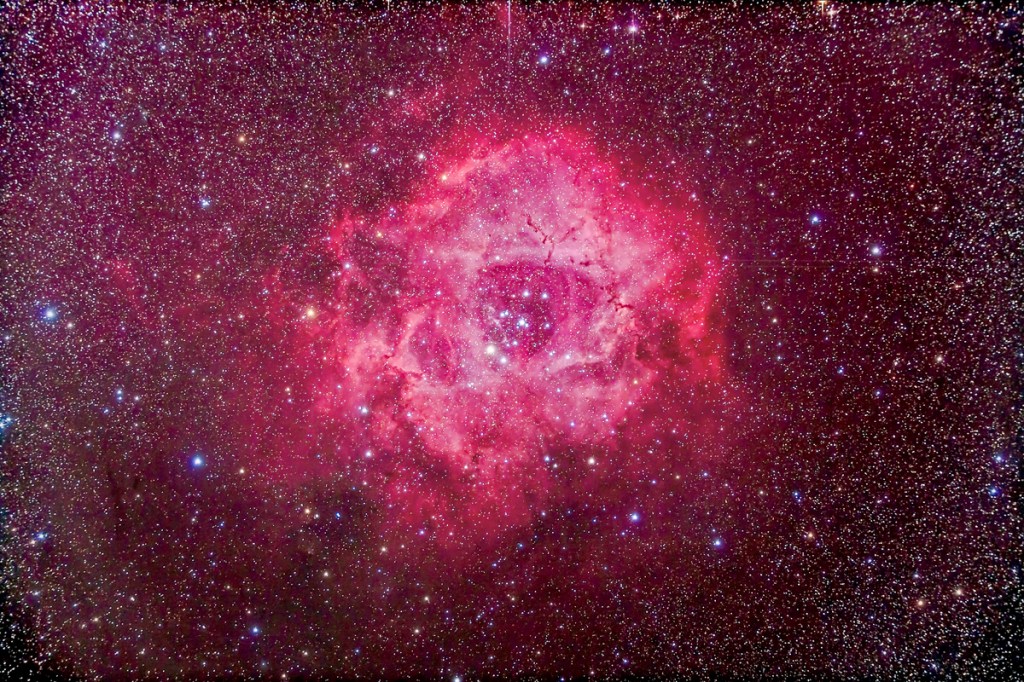
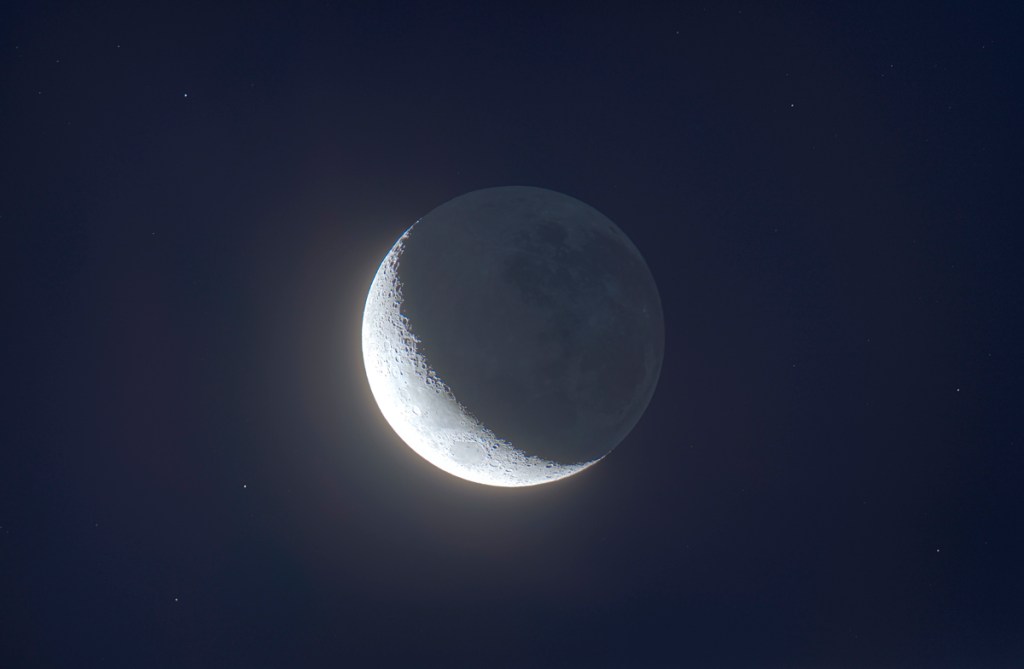
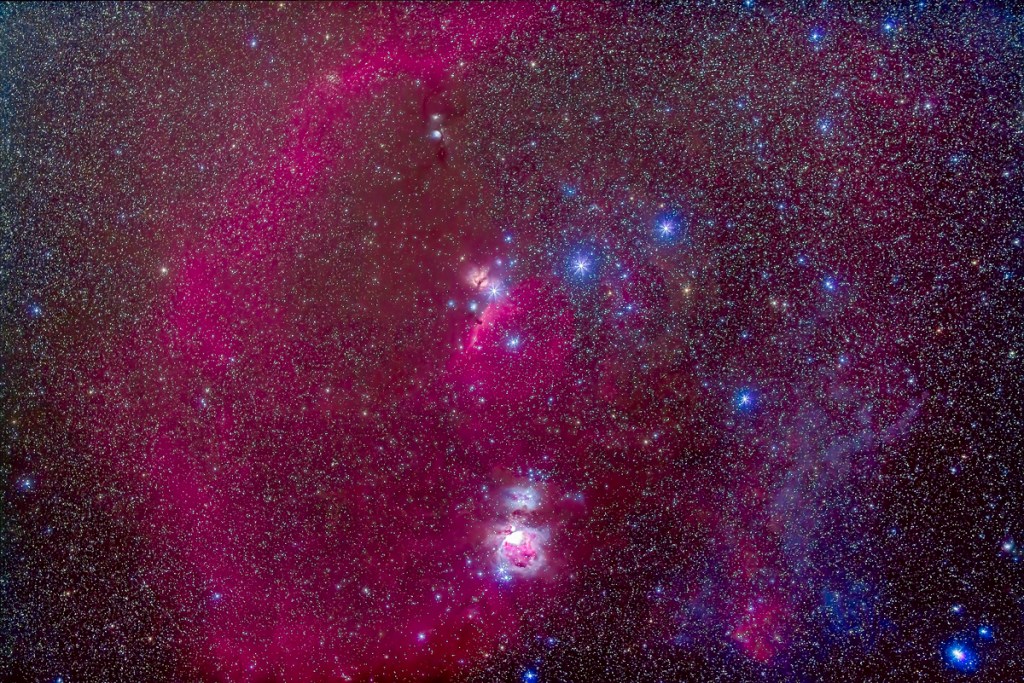
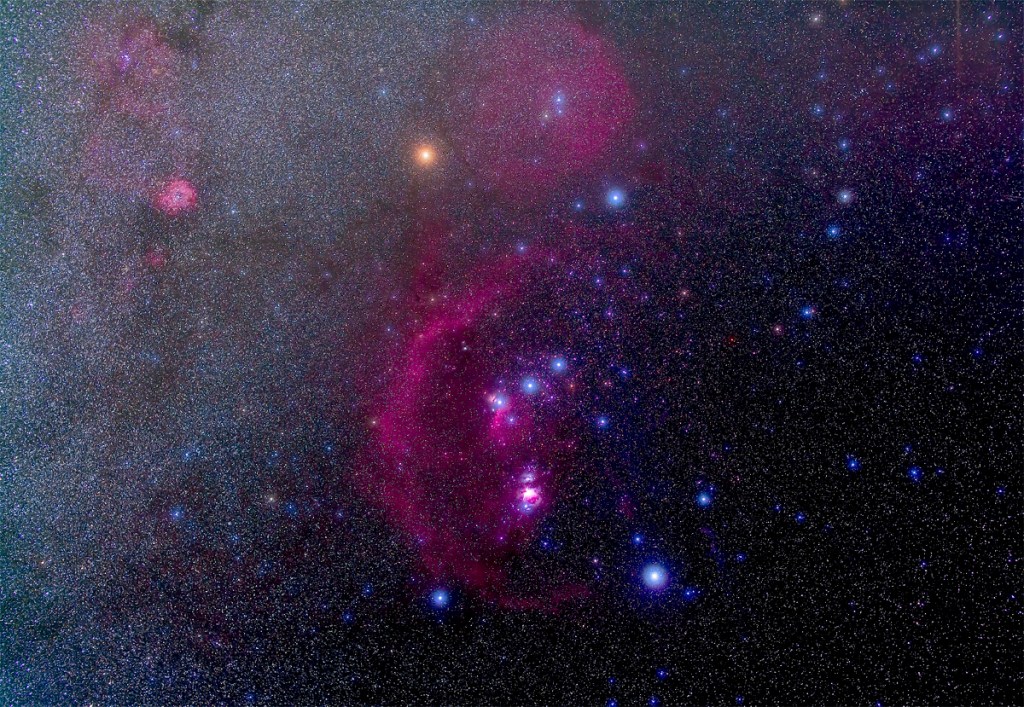

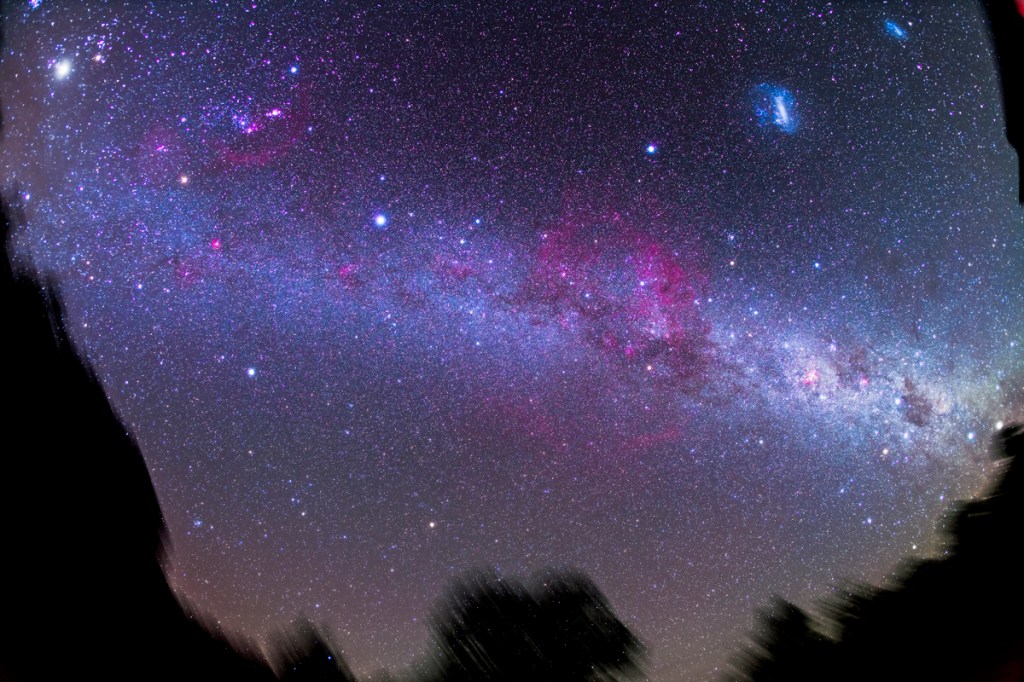

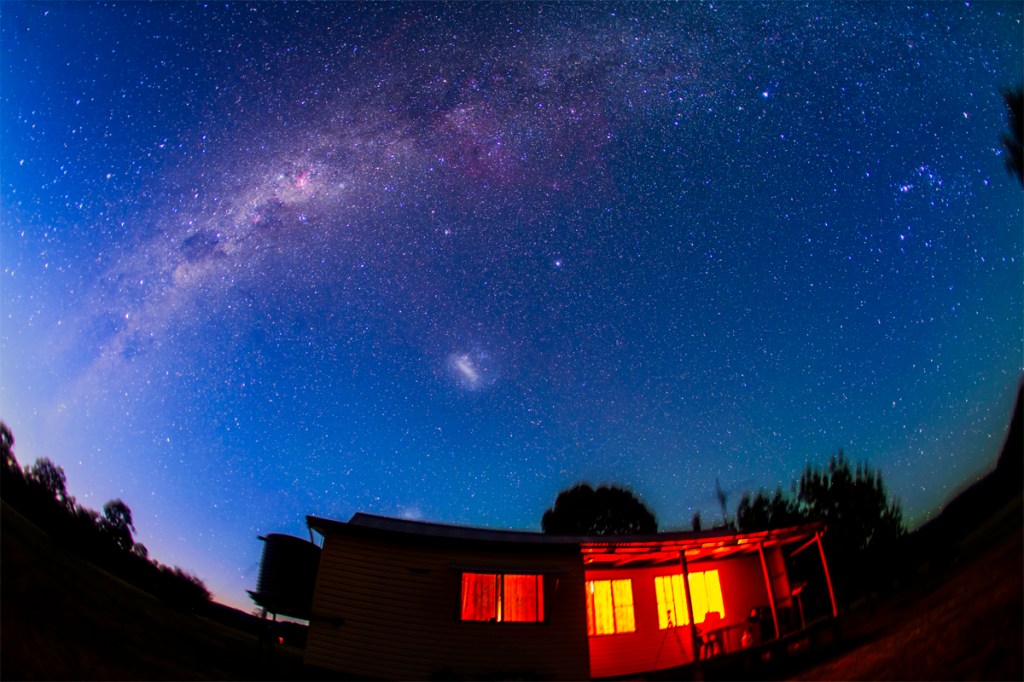



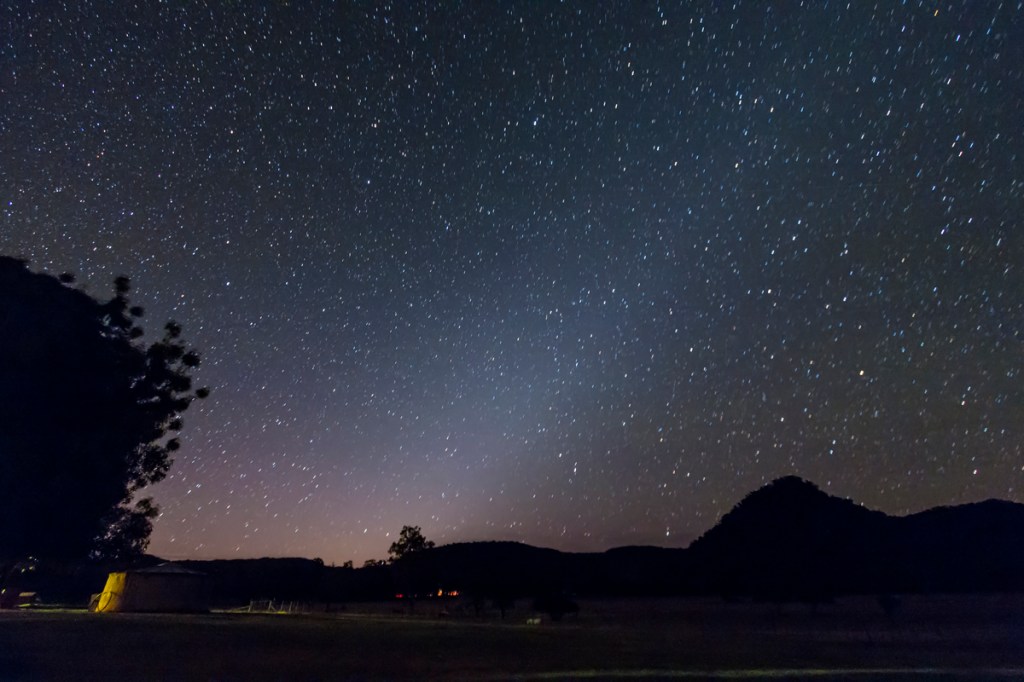
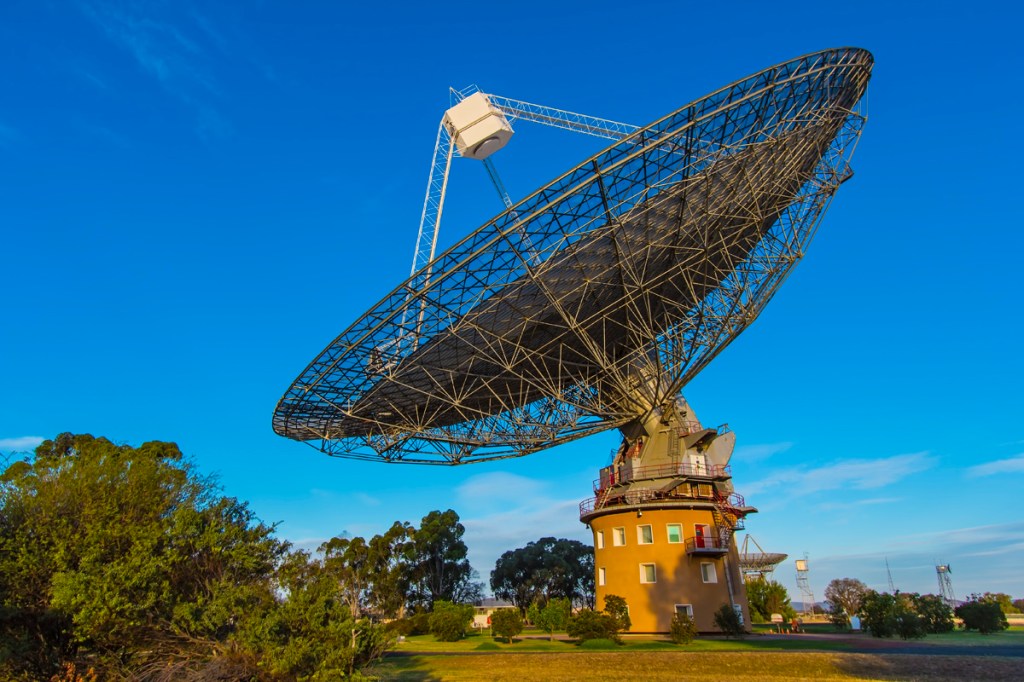

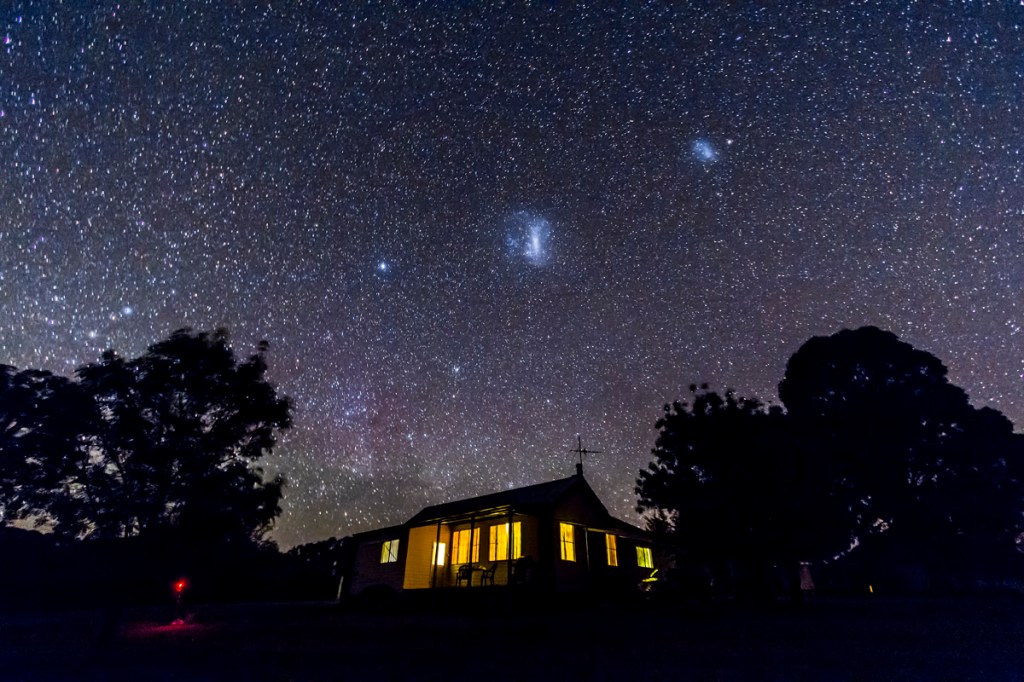
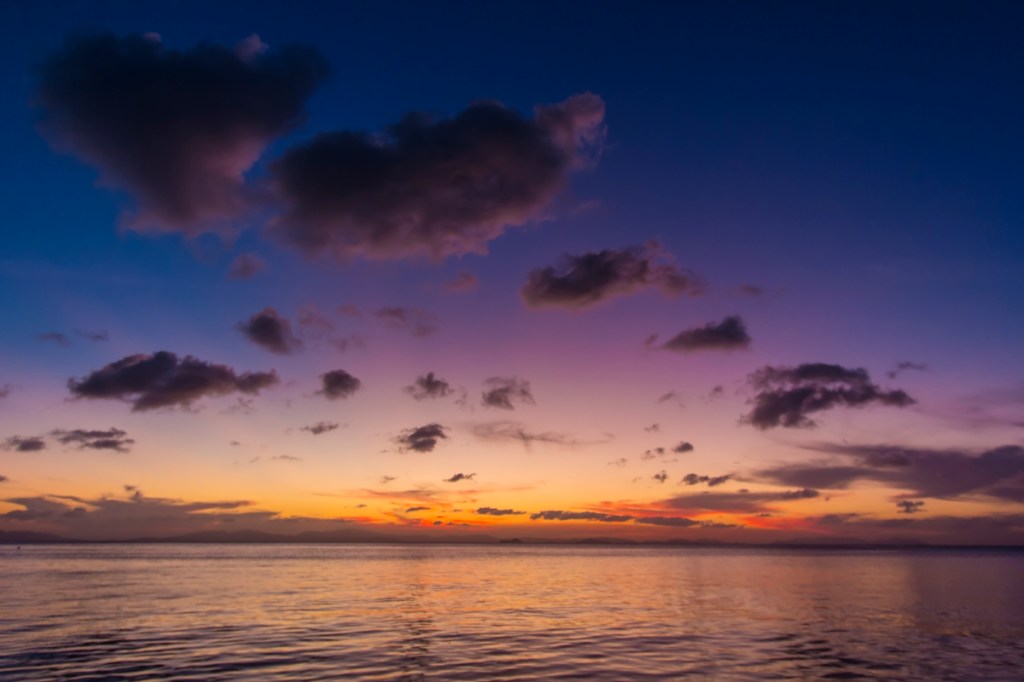

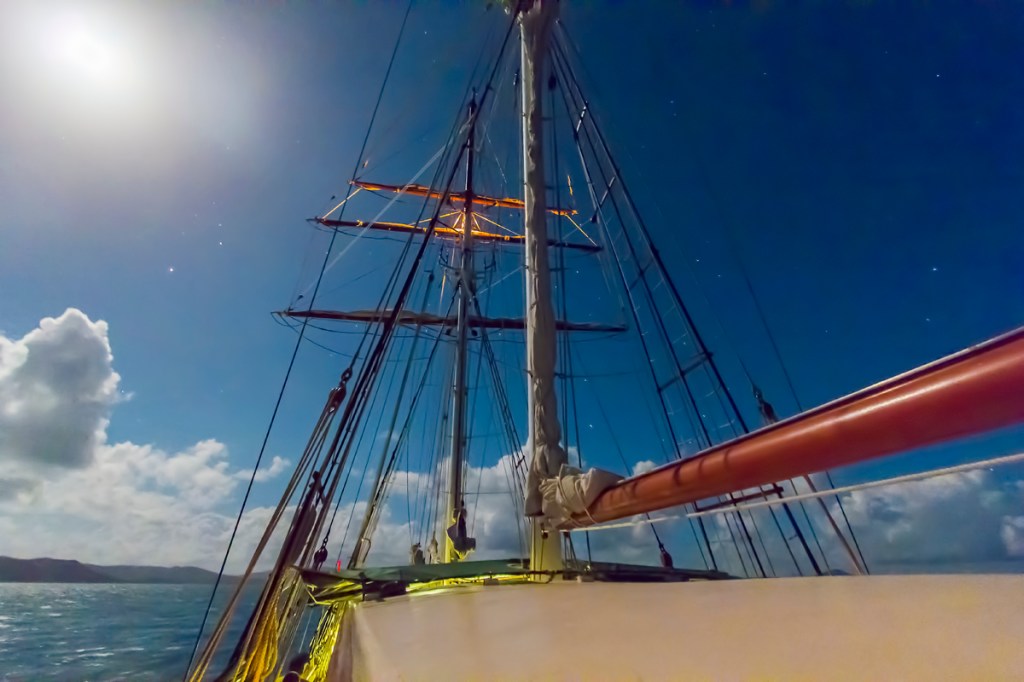

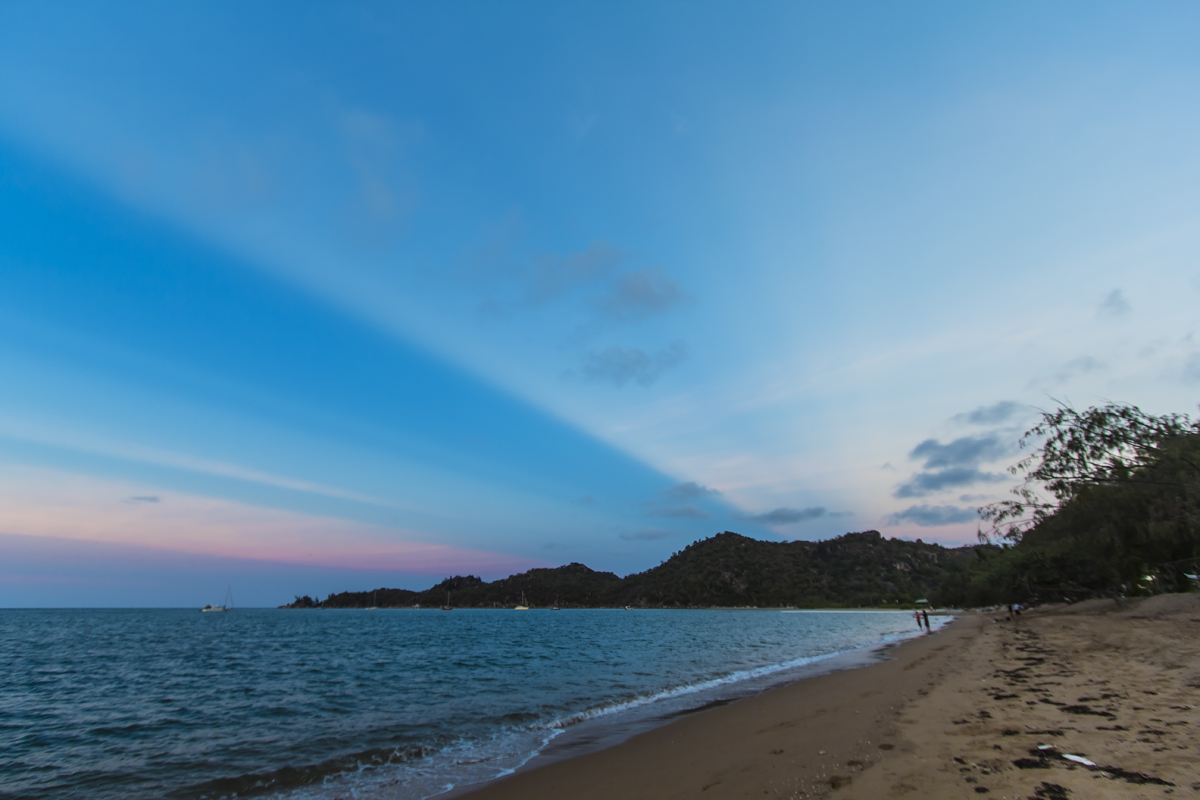


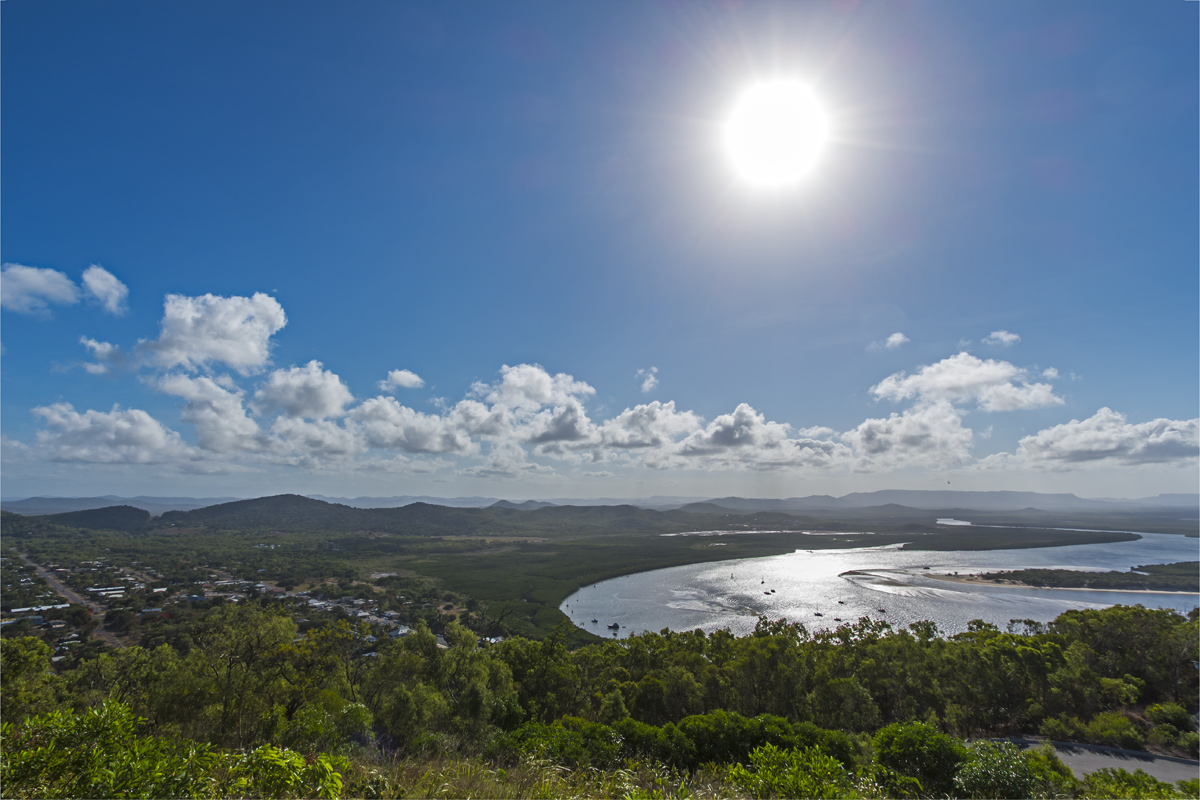

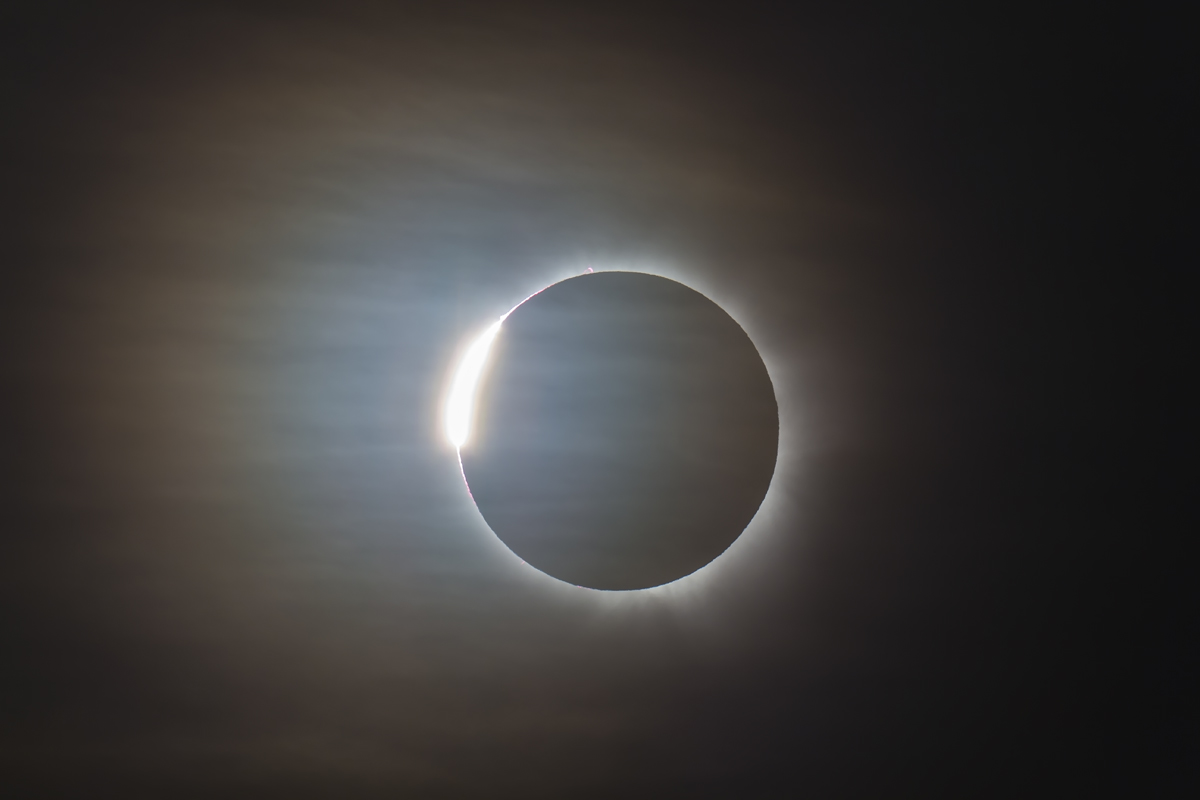

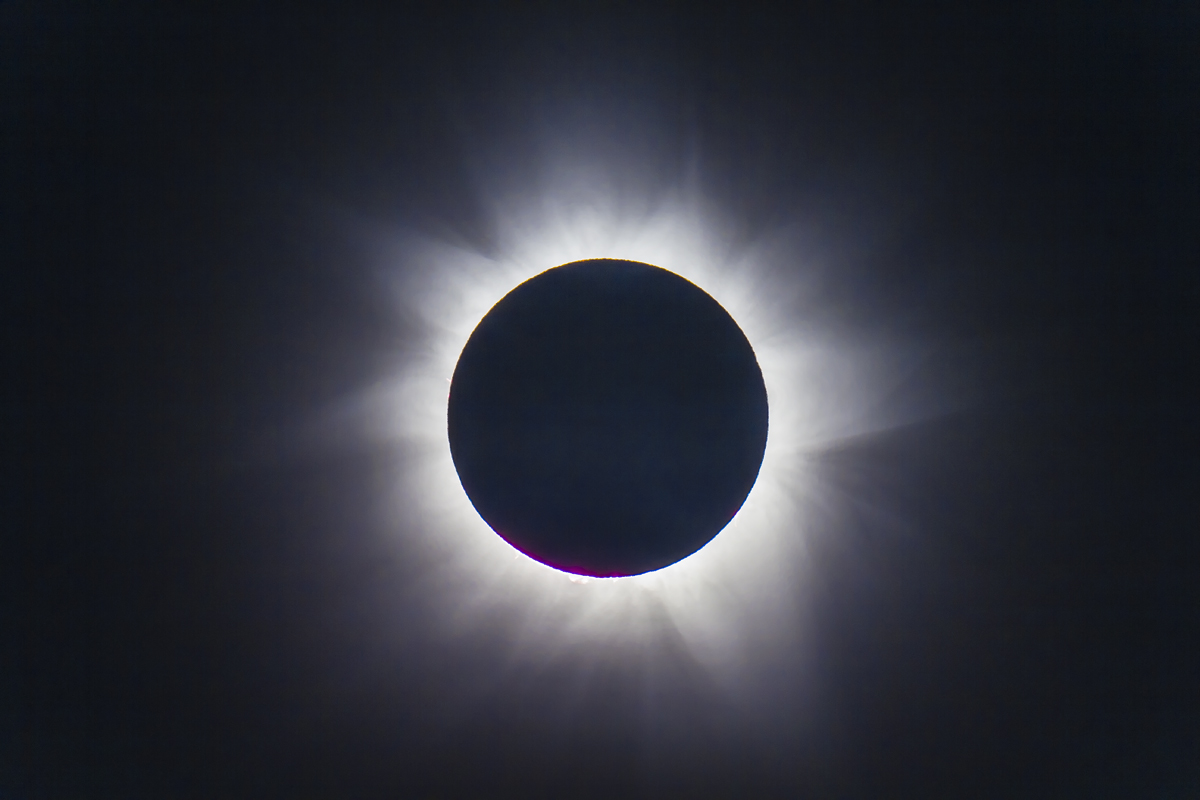
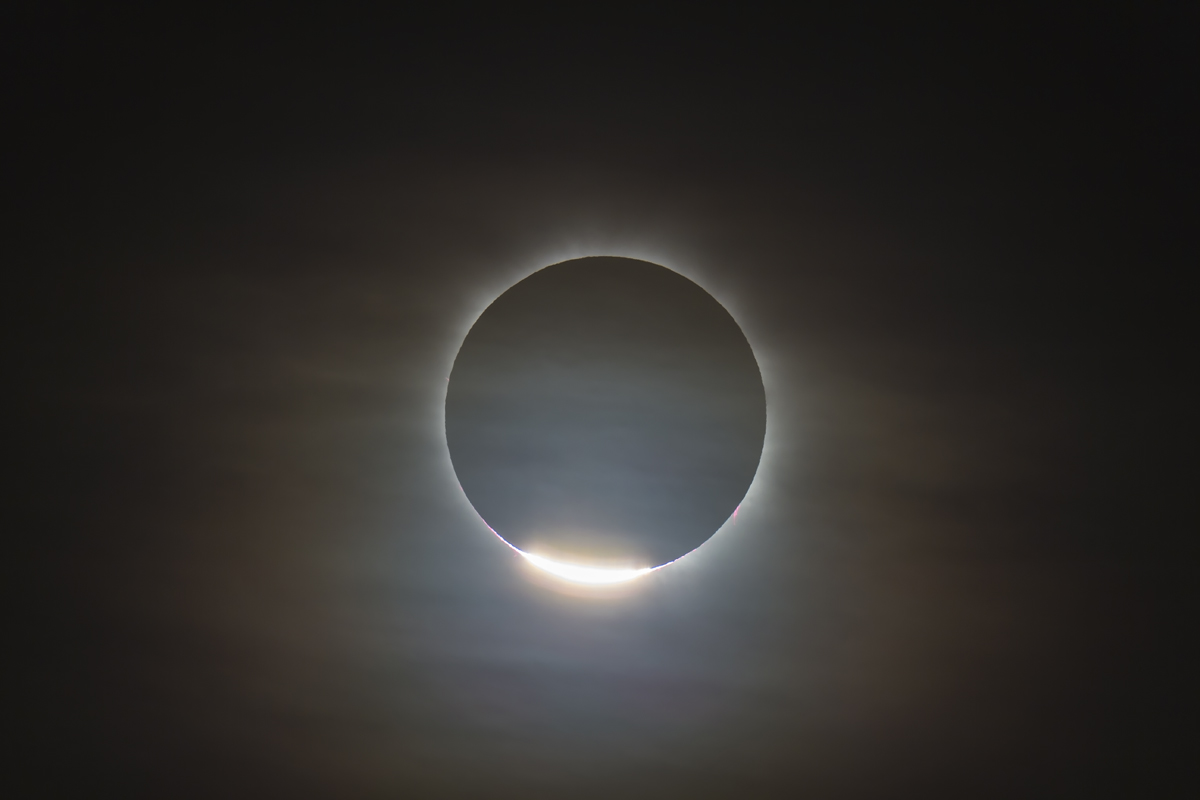


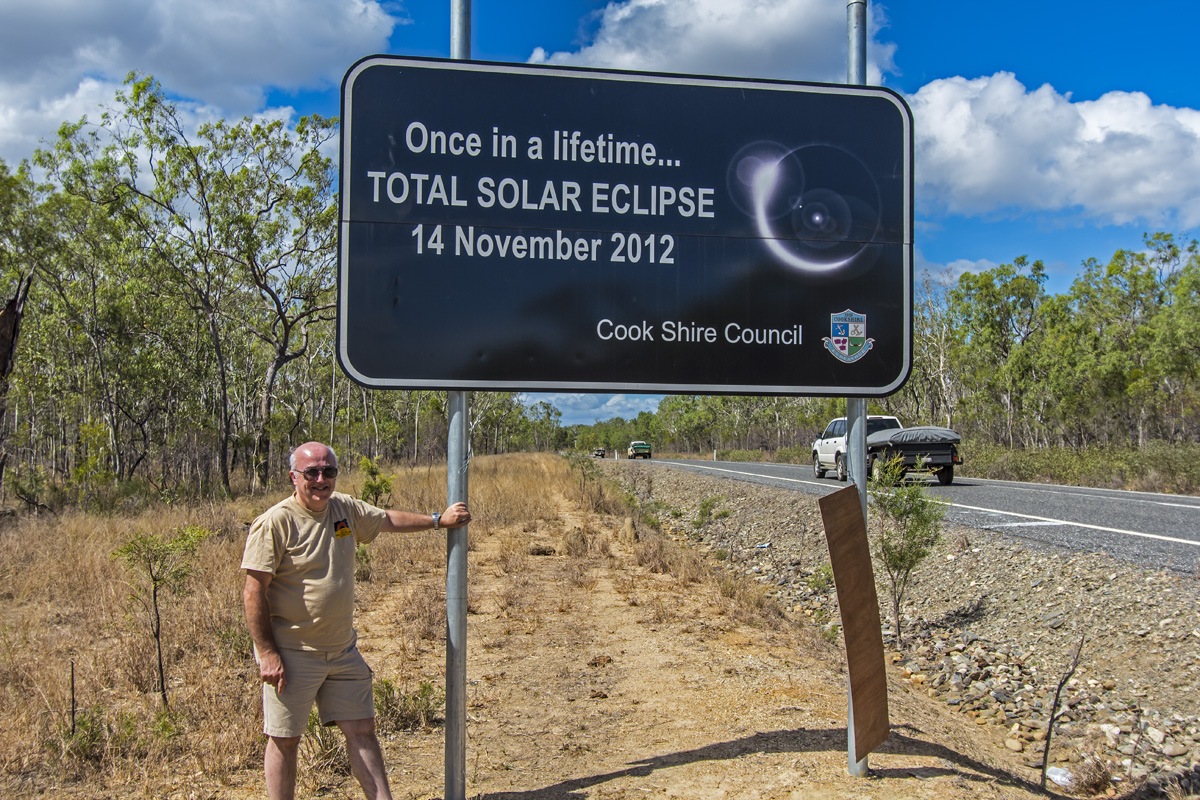

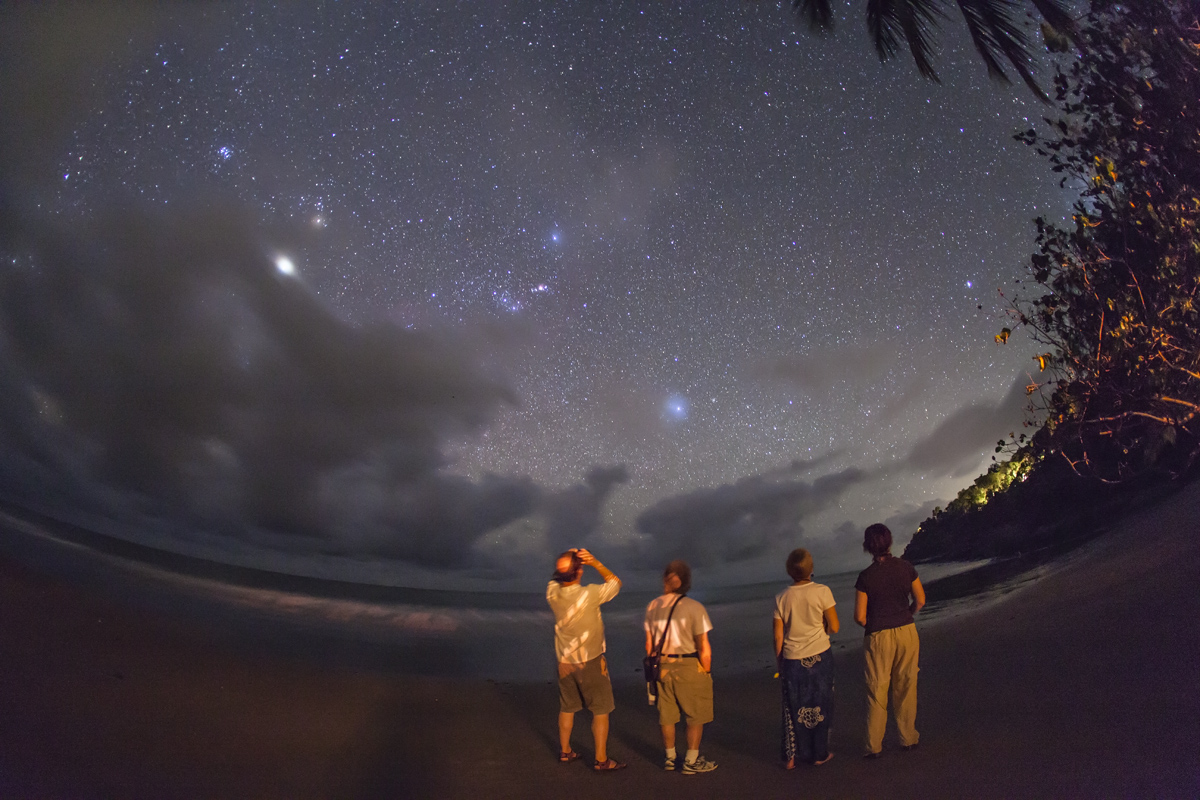



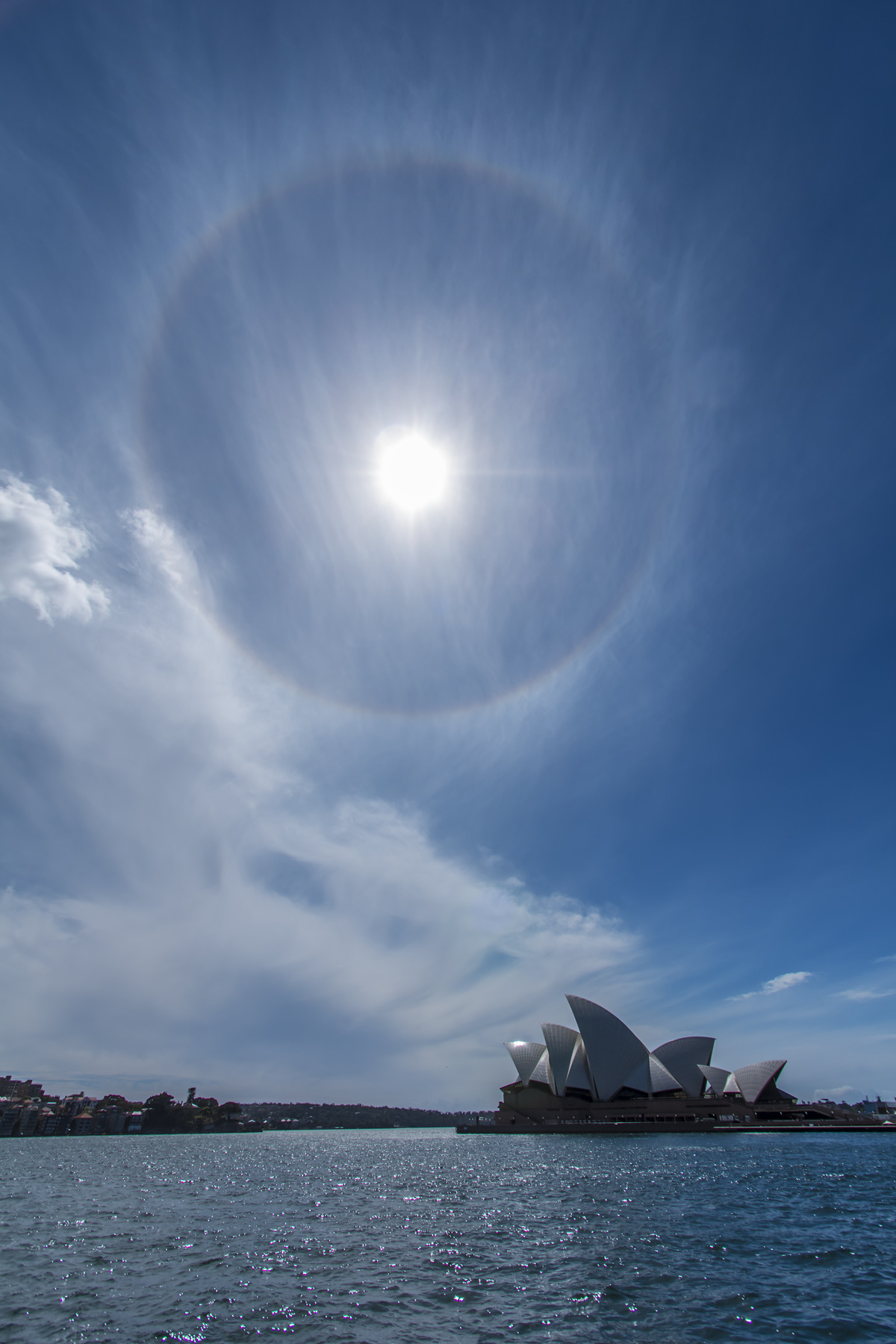

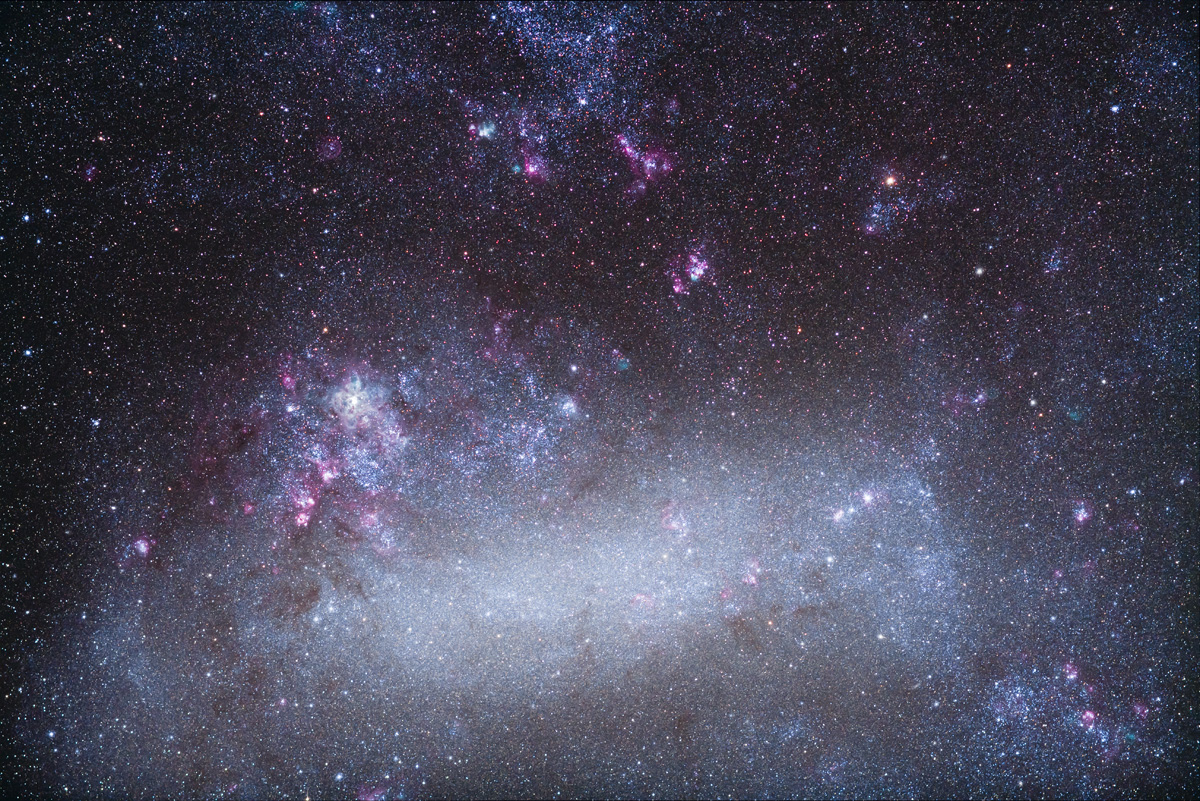


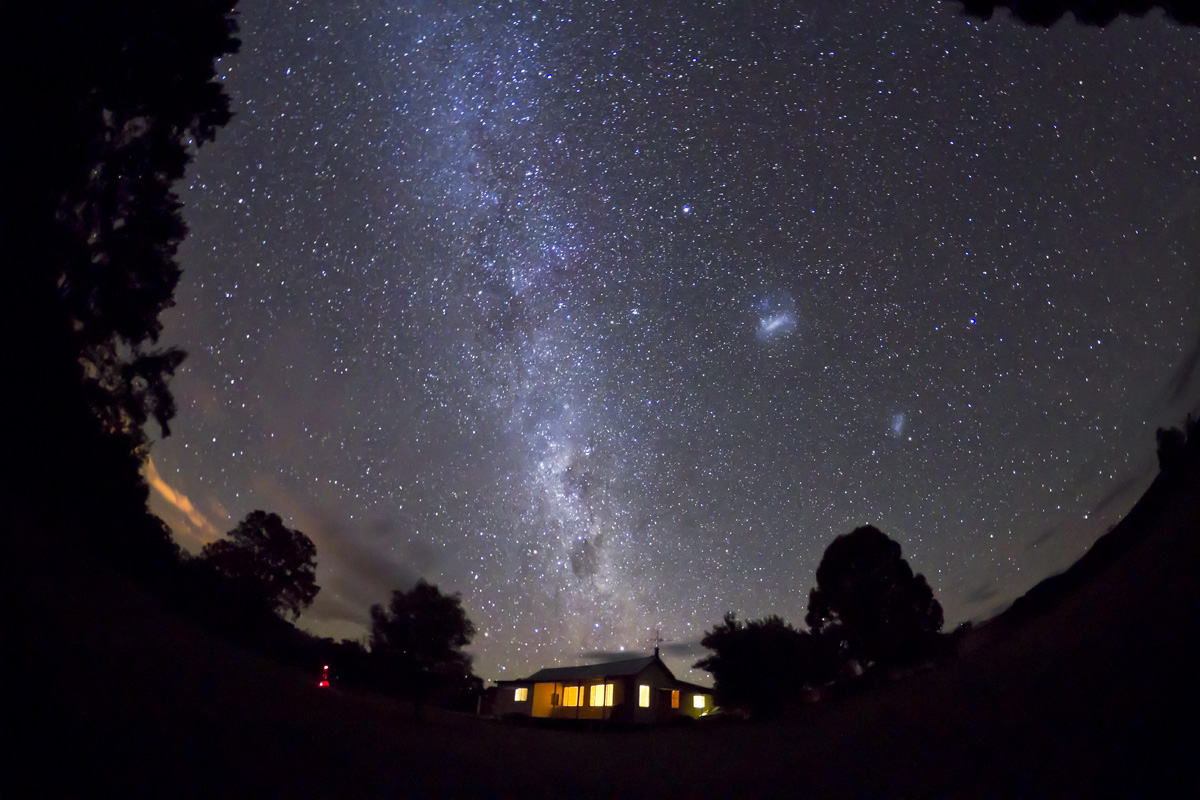
 The Amazing Sky